Understanding the Number Needed to Treat (NNT) in Medicine

A “New” Clinical Numeric

DR. DAVID EDWARD MARCINKO MBA MEd

This physician-led medical website  http://www.thennt.com/ seeks to explain to patients and physicians how well a particular treatment or medicine is likely to work based on a statistical model called the “Number Needed to Treat.”

Calculation

This is not really a new calculation, as it has been know for many years. In fact, I review and teach it in several of my undergraduate, graduate and business school courses [healthcare administration, statistics, epidemiology, infection control, community, public and population health, etc], and have been doing so for a few years now. My students are always amazed by it.

Brief Definition

The NNT is “a measurement of the impact of a medicine or therapy by estimating the number of patients that need to be treated in order to have an impact on one person.”

Detailed Definition

According to wikipedia; the number needed to treat (NNT) is an epidemiological measure used in assessing the effectiveness of a health-care intervention, typically a treatment with medication. The NNT is the number of patients who need to be treated in order to prevent one additional bad outcome (i.e. the number of patients that need to be treated for one to benefit compared with a control in a clinical trial). It is defined as the inverse of the absolute risk reduction.

The NNT was first described in 1988. The ideal NNT is 1, where everyone improves with treatment and no-one improves with control. The higher the NNT, the less effective is the treatment. Variants are sometimes used for more specialized purposes.

One example is number needed to vaccinate. NNT values are time-specific. For example, if a study ran for 5 years and it was found that the NNT was 100 during this 5 year period, in one year the NNT would have to be multiplied by 5 to correctly assume the right NNT for only the one year period (in the example the one year NNT would be 500).

Source: http://en.wikipedia.org/wiki/Number_needed_to_treat

Assessment

For more information:

http://www.physiciansnews.com/2010/10/06/new-website-by-docs-shows-data-on-treatment-outcomes/

Conclusion

And so, your thoughts and comments on this ME-P are appreciated. Give em’ a click and tell us what you think http://www.thennt.com? Do you use the concept of NNT in your clinical medical practice; why or why not? Feel free to review our top-left column, and top-right sidebar materials, links, URLs and related websites, too. Then, subscribe to the ME-P. It is fast, free and secure.

Channel Surfing

Have you visited our other topic channels? Established to facilitate idea exchange and link our community together, the value of these topics is dependent upon your input. Please take a minute to visit. And, to prevent that annoying spam, we ask that you register.

Speaker: If you need a moderator or speaker for an upcoming event, Dr. David E. Marcinko; MBA – Publisher-in-Chief of the Medical Executive-Post – is available for seminar or speaking engagements. Contact: MarcinkoAdvisors@msn.com

OUR OTHER PRINT BOOKS AND RELATED INFORMATION SOURCES:

Sponsors Welcomed: And, credible sponsors and like-minded advertisers are always welcomed.

***

Product DetailsProduct DetailsProduct Details

***

What If You Could Start From Scratch – Doctor?

How would you restart your career in medicine?

[By Dr. David Edward Marcinko MBA MEd CMP™]

We’ve known this physician-client-friend for 10 years, and while he didn’t tell us what he wanted to discuss, we knew it was important.

After exchanging pleasantries, he shocked me: He said he’s totally unfulfilled in his current job and wants to do something new.

We were floored because he is an outstanding doctor – at the top of his game. From the outside looking in, he appears to be “living the dream”.

After that bombshell, we asked him the question we couldn’t get out of our mind: “Are you afraid?”

“Yes,” he said; “Afraid and relieved.”

His relief stemmed from the fact that he is going to shed the tremendous demands of being a doctor at the highest levels. He was afraid because he didn’t know what was next.

We thought afterward, “What a courageous and totally refreshing move.”

ME-P Doctors, Advisors and Consultants

A Fantasy Reboot

That dialogue triggered a larger internal conversation within; and with others.

  • What would you do if you could start from scratch?
  • How would you proceed if you could just wipe the slate clean and restart your career in medicine?

For those quietly pondering a similar path, three great opportunities seem crystal clear.

First, we would create our own practice playbook. Discard the ready-made choices served up by your old practice. For the independent physician today, there’s almost infinite variety. The pleasure in creating your own approach is that there are so many options. Your patients will appreciate the greater choice and flexibility, too.

Second, we would whole-heartedly embrace technology; but not necessarily EHRs at this time. Rather, build your own HIT framework to complement your medical practice. Innovate across your entire operations – everything from medical records, to online appointment access, secure FAX machines, to patient portals and laboratory results reporting to your own mobile phone app. Freeing yourself from your current archaic technology will be life altering by itself.

5 new rules for how doctors interact with health care IT

Third, cull the difficult people from your life. These are the naysayers who weigh you down – superiors, colleagues or patients. Negativity is corrosive, and it always lingers. It also distracts you from giving others your best. While you’re at it, cull the skills you mastered to survive in your career so you can focus on those that really matter.

Non-Traditional Doctors

Case Model

So, we wanted to share one of the all-time greatest reboots we know because it shows what is possible if you believe in yourself.

A decade ago, one of our osteopathic physician clients delivered some bad news. She was quitting her job as a medical associate, to transition into her own direct pay concierge practice.

At the time, this was unheard of: No one walked away from a potential medical practice partnership to become a solo physician. But, Sue had a different vision. She wasn’t fulfilled and she knew it. With the support of her husband, she decided there was a better way. So she started from scratch.

How did it work out?

Unbelievably well – but NOT overnight!

With our meager assistance, Sue’s been cash flow positive for the last 7 years, and now earns more money than before, with less stress; and she is the captain of her ship. A few colleagues who have worked with her have even gone on to achieve comparable success. She’s become a role model to others too, and she remains one our heroes.

The Decision

Starting from scratch may or may not translate into more money, but it often means this: More happiness in your life. Sue’s decision, just like our friend who bared his soul to us over coffee, were both made for the right reasons.

We wish our friend well on his journey, confident knowing that a happy ending is just over the horizon for him, too.

Product DetailsProduct Details

Assessment

Send us your own success/failure story, so we might learn from you. Would you even stay in medicine or transition/begin another career; anew?

Conclusion

Your thoughts and comments on this ME-P are appreciated. Feel free to review our top-left column, and top-right sidebar materials, links, URLs and related websites, too. Then, subscribe to the ME-P. It is fast, free and secure.

Speaker: If you need a moderator or speaker for an upcoming event, Dr. David E. Marcinko; MBA – Publisher-in-Chief of the Medical Executive-Post – is available for seminar or speaking engagements. Contact: MarcinkoAdvisors@msn.com

OUR OTHER PRINT BOOKS AND RELATED INFORMATION SOURCES:
Financial Planning MDs 2015

Comprehensive Financial Planning Strategies for Doctors and Advisors: Best Practices from Leading Consultants and Certified Medical Planners™

EFFECTS: Halo and Hero Placebo

COGNITIVE BIASES

By Staff Reporters

***

***

 
The following are two common psychological biases.  Some biases are learned while others are genetically determined (and often socially reinforced).  They are prevalent in most areas in life.

Halo Effect

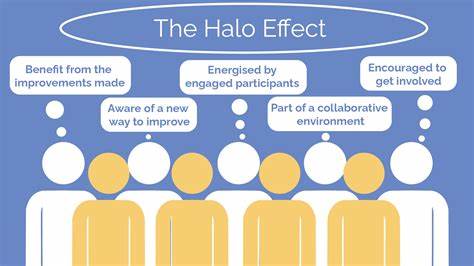
The halo effect is the cognitive bias where the perception of one positive trait influences the perception of other traits. It’s like assuming a good-looking person is also kind and smart. This mental shortcut simplifies our judgments but often leads to inaccurate assessments.

Marketers and politicians love the halo effect, using it to create a positive overall impression.

To counteract the halo effect, consciously separate individual traits and evaluate them independently. Remember: not everything that shines is gold.

Hero Placebo Effect

The hero placebo effect is the phenomenon where believing in the efficacy of a hero or leader enhances their perceived effectiveness. It’s like thinking a charismatic coach makes the team better just by being there. This belief can boost morale and performance, creating a self-fulfilling prophecy.

However, it can also lead to overestimating the hero’s actual impact. So, while it’s great to have inspiring leaders, remember: true success comes from collective effort, not just the aura of a single hero.

COMMENTS APPRECIATED

Thank You

***

***

ANCHORING: Initial Mental Brain Trickery

COGNITIVE BIASES

By Staff Reporters

***

***

According to colleague Dan Ariely PhD, anchoring is the mental trick your brain plays when it latches onto the first piece of information it gets, no matter how irrelevant. You might know this as ‘ first impressions ’ – when someone relies on their own first idea of a person or situation.

Imagine you’re buying a car, and the salesperson starts with a high price. That number sticks in your mind and influences all your subsequent negotiations. Anchoring can skew our decisions and perceptions, making us think the first offer is more important than it is. Or, subsequent offers lower than they really are.

So, the next time you’re haggling or making a big decision, be aware of that initial anchor dragging you down.

COMMENTS APPRECIATED

Thank You

***

***

On the Revival of Individual House Call Doctors

Re-Thinking a Popular Practice from the Past

By Dr. David Edward Marcinko; MBA, MEd, CMP™

[Publisher-in-Chief]

More personal than a corporate home care medical business model, most people view house calls as a popular practice from the past.

Although less than 5% of the nation’s doctors regularly make house calls today, the medical house call industry is swiftly picking up momentum once again. It is a move that is greatly benefiting physicians and patients alike.

Why House Calls?

It’s because we live in a society that has become technology focused. While this emergence has benefited many in terms of medical advancements, there are a growing number of patients who are uncomfortable with next-generation medical practices. These people, particularly the rapidly aging elders of the nation, want to be cared for in a friendly, nurturing, and convenient way. As people age and fall ill, it becomes increasingly difficult to leave the home for office visits. Not to mention, there are many handicapped patients as well who have to arrange for wheelchair vans or ambulances just to visit the doctor. The COVID pandemic and tele-health are illustrative.

Meeting a Niche Market Need

Thanks to the desire of physicians seeking to open their own medical house call practices, these patient needs are slowly being met. Some of these physicians are strictly open for house call visits only and have no physical office. They commonly take appointment requests via phone calls and emails with the overall goal to combine the service of an old-time, small town doctor with the latest technology designed to meet people’s emotional, and financial, needs. Patients are also able to save a considerable amount of time by not having to leave the house to go to the doctor’s office, and not having to fill prescriptions. After all, many medical house call physicians travel along with certain medications that can be dispensed on location. Narcotics, however, will likely still need to be filled with a paper or e-prescription.

While highly convenient for patients who wish to receive medical house call services, the reviving industry is fitting for physicians. In recent years, Medicare has increased its level or reimbursements for physicians who travel to patients. Just in the past few years alone, Medicare has been billed approximately $1.75 million annually for house calls. 

Enter the DNPs and NPs

Even nurse practitioners [NPs] and Doctors of Nursing Practice [DNPs] who make a small number of house calls are typically unaware that they can maximize profit potential with medical house calls. Some NPs have even offset operating expenses by offering house calls to make their office based practice more appealing to their patients.

Link: Front Matter BoMP – 3

Technology Enabled

Also, significant advances in technology have enabled popular medical equipment to be smaller and portable. Physicians are able to perform standard procedures, such as skin biopsies and blood draws while outside the office. They are also able to easily access patient medical records through usage of a laptop, as well as resources such as the Physicians’ Desk Reference [PDS] through usage of a hand-held personal digital assistant or smart cell phone.

Assessment

For example, this firm educates patients and supports physicians who are ready to make a transition from office-based positions to medical house call practices. There are no royalty or membership fees, and this is not a franchise. It helps transition to a reportedly more pleasing, profitable way to practice medicine today.

LINK: https://www.resurgia.com

Conclusion

Your thoughts and comments on this ME-P are appreciated. Feel free to review our top-left column, and top-right sidebar materials, links, URLs and related websites, too. Then, subscribe to the ME-P. It is fast, free and secure.

Speaker: If you need a moderator or speaker for an upcoming event, Dr. David E. Marcinko; MBA – Publisher-in-Chief of the Medical Executive-Post – is available for seminar or speaking engagements. Contact: MarcinkoAdvisors@msn.com

OUR OTHER PRINT BOOKS AND RELATED INFORMATION SOURCES:

Product DetailsProduct DetailsProduct Details

Product Details  Product Details

   Product Details 


“Meaningful” Endowment Effect

By Staff Reporters

***

***

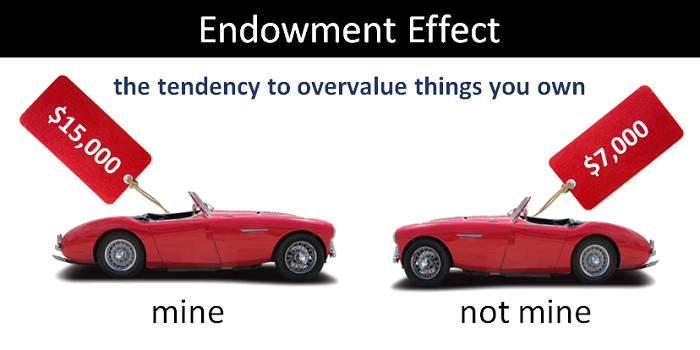
The Meaningful Endowment Effect is the tendency to value things more highly when they’re personally meaningful. It’s why a homemade gift can feel priceless while a store-bought one feels ordinary. Or, a coveted sports car, etc.

***

***

JAGUAR: https://medicalexecutivepost.com/2014/01/08/the-jaguar-touring-sedan-one-of-the-finest-luxury-cars-built-yesterday/

Our brains attach emotional significance to objects, inflating their value. This effect explains why we hang onto mementos and keepsakes, even if they’re not objectively valuable.

So, next time you’re de-cluttering, remember: it’s not just stuff, it’s meaningful stuff.

COMMENTS APPRECIATED

Thank You

***

***

NINE: Psychological Reasons We Do Dumb Things with Money [$$$$]

Yep – Even the Smart Folks!

By Lon Jefferies MBA CMP® CFP®

Dr. David Edward Marcinko MBA MEd CMP®

Lon Jeffries

In the Business Insider, Mandi Woodruff describes nine mental blocks that cause smart people to do dumb things. Review the list and itemize the factors that have negatively impacted your finances.

The Factors

  • Anchoring happens when we place too much emphasis on the first piece of information we receive regarding a given subject. For instance, when shopping for a wedding ring a salesman might tell us to spend three months’ salary. After hearing this, we may feel like we are doing something wrong if we stray from this advice, even though the guideline provided may cause us to spend more than we can afford.
  • Myopia (or nearsightedness) makes it hard for us to imagine what our lives might be like in the future. For example, because we are young, healthy, and in our prime earning years now, it may be hard for us to picture what life will be like when our health depletes and we know longer have the earnings necessary to support our standard of living. This short-sightedness makes it hard to save adequately when we are young, when saving does the most good.
  • Gambler’s fallacy occurs when we subconsciously believe we can use past events to predict the future. It is common for the hottest sector during one calendar year to attract the most investors the following year. Of course, just because an investment did well last year doesn’t mean it will continue to do well this year. In fact, it is more likely to lag the market.
  • Avoidance is simply procrastination. Even though you may only have the opportunity to adjust your health care plan through your employer once per year, researching alternative health plans is too much work and too boring for us to get around to it. Consequently, we stick with a plan that may not be best for us.
  • Confirmation bias causes us to place more emphasis on information that supports the opinion we already have. Consequently, we tend to ignore or downplay opinions that don’t mirror our own, leading us to make uninformed decisions.

NOTE: An interesting example of the confirmation bias is the case of David Rosenberg, who is one of the most well-known perpetual bears on Wall Street. In October, Mr. Rosenberg’s analysis forced him to warm to the current investment environment. His fans and followers, rather than appreciating his research and ability to adjust to new information, criticized him for changing his opinion.

As it turned out Mr. Rosenberg had fans not because of his expert analysis, but because he added intellectual heft to his followers pessimism and quasi-political desire for the system to collapse. Their view was that things were in permanent decline and his analysis, charts, and voice added respectability to their pre-existing bias. Mr. Rosenberg has now lost his fan base not because he was wrong for the last four years, but because he changed his mind.

head

  • Loss aversion affected many investors during the crash of 2008. During the crash, many people decided they couldn’t afford to lose more and sold their investments. Of course, this caused the investors to sell at market troughs and miss the quick, dramatic recovery.
  • Overconfident investing happens when we believe we can out-smart other investors via market timing or through quick, frequent trading. Data convincingly shows that people who trade most often underperform the market by a significant margin over time.
  • Mental accounting takes place when we assign different values to money depending on where we get it from. For instance, even though we may have an aggressive saving goal for the year, it is likely easier for us to save money that we worked for than money that was given to us as a gift.
  • Herd mentality makes it very hard for humans to not take action when everyone around us does. For example, we may hear stories of people making significant profits buying, fixing up, and flipping homes and have the desire to get in on the action, even though we have no experience in real estate.

Assessment

The good news is that being aware of these tendencies can help us avoid mistakes. We’ll never be perfect, but avoiding detrimental decisions based on mental prejudices can give us an advantage in our financial and retirement planning efforts.

Conclusion

Your thoughts and comments on this ME-P are appreciated. Feel free to review our top-left column, and top-right sidebar materials, links, URLs and related websites, too. Then, subscribe to the ME-P. It is fast, free and secure.

Speaker: If you need a moderator or speaker for an upcoming event, Dr. David E. Marcinko; MBA – Publisher-in-Chief of the Medical Executive-Post – is available for seminar or speaking engagements. Contact: MarcinkoAdvisors@msn.com

OUR OTHER PRINT BOOKS AND RELATED INFORMATION SOURCES:

ADVISORS: www.CertifiedMedicalPlanner.org
BLOG: www.MedicalExecutivePost.com

Risk Management, Liability Insurance, and Asset Protection Strategies for Doctors and Advisors: Best Practices from Leading Consultants and Certified Medical Planners™8Comprehensive Financial Planning Strategies for Doctors and Advisors: Best Practices from Leading Consultants and Certified Medical Planners™

Invite Dr. Marcinko

***

BIAS: The Gambler’s Fallacy

By Staff Reporters

***

***

The Gambler’s Fallacy occurs when we subconsciously believe we can use past events to predict the future. It is also called the Monte Carlo Fallacy, after the Casino de Monte-Carlo in Monaco where it was observed in 1913

For example, it is common for the hottest sector during one calendar year to attract the most investors the following year.

Of course, just because an investment did well last year doesn’t mean it will continue to do well this year. In fact, it is more likely to lag the market.

Related: https://medicalexecutivepost.com/2024/06/17/what-physician-investors-need-to-know-about-monte-carlo-simulation/

COMMENTS APPRECIATED

Thank You

***

***

Do Doctors Use ChatGPT in Clinical Decisions?

By Staff Reporters

***

***

Are doctors using publicly available tools like ChatGPT? The answer, Fierce Healthcare finds, is yes. In the first in-depth look of its kind into physician use of public genAI tools, Fierce Healthcare spoke with nearly two dozen doctors, students, AI experts and regulators, and helped conduct a survey of more than 100 physicians. The reporting confirms that some doctors are turning to tools intended for non-clinical uses to make clinical decisions. 

More: https://jamanetwork.com/journals/jamainternalmedicine/fullarticle/2804309

A collaborative survey between Fierce Healthcare and physician social network Sermo found that 76% of respondents reported using general-purpose LLMs in clinical decision-making. With no standardized guidelines, lagging physician training and regulators racing to try to keep up with rapidly changing technology, guardrails to protect patients appear to be years behind current rates of utilization.

Source: Fierce Healthcare [10/8/24]

COMMENTS APPRECIATED

Thank You

***

***

FAST FACTS: Retirement Income in the USA

http://www.MarcinkoAssociates.com

By Staff Reporters

***

***

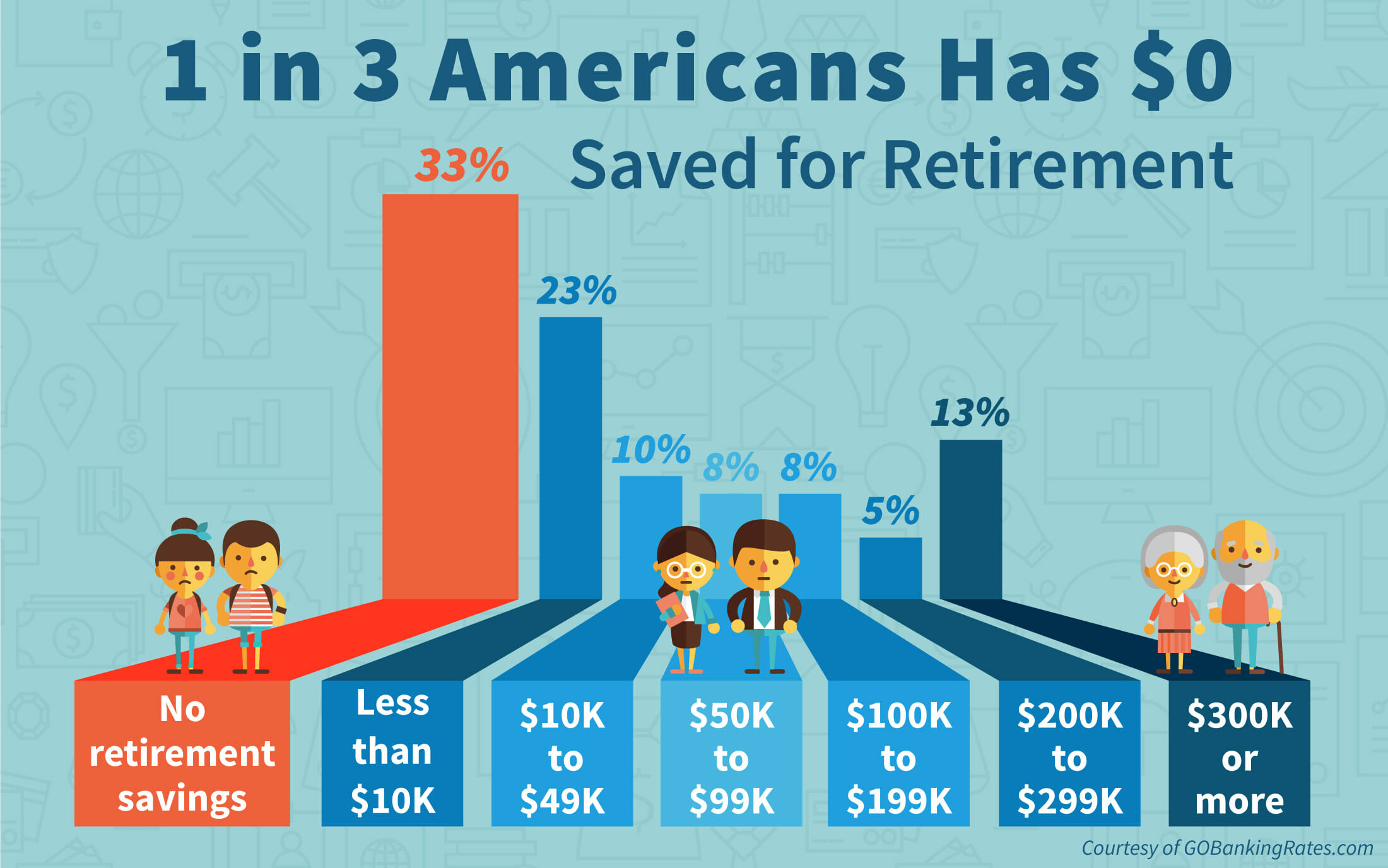
According to the National Institute on Retirement Security, almost 40 million households have no retirement savings at all. The Employee Benefit Research Institute (EBRI) estimates in its 2019 Retirement Security Projection Model that America’s current retirement savings deficit is $3.8 trillion.

What does that mean? Well, the EBRI report aggregates the savings deficit of all U.S. households headed by someone between the ages of 35 and 64, inclusive. In total, those households have $3.8 trillion fewer dollars in savings than they should have for retirement.

For more recent data, Fidelity Investments reported that in the third quarter of 2022 the average account balance for an IRA was $101,900. Employees with a 401(k) averaged $97,200, while those with a 403(b) had $87,400.

Fidelity also estimated that “an average retired couple age 65 in 2022 may need approximately $315,000 saved (after tax) to cover health care expenses in retirement.”  Keeping in mind that more Americans are also living longer than ever before, they will face more challenges to cover medical expenses in retirement.

COMMENTS APPRECIATED

Thank You

***

***

2024 NOBEL PRIZE ECONOMICS: Daron Acemoglu, James Robinson and Simon Johnson

By Staff Reporters

***

***

Authors of the seminal textbook Why Nations Fail, Daron Acemoglu, James Robinson, and former International Monetary Fund chief economist Simon Johnson will split the roughly $1 million cash prize for their research, which found a link between a country’s prosperity and the institutions it established during European colonization.

CITE: https://www.r2library.com/Resource/Title/0826102549

According to the award-winning research:

  • Places developed either “inclusive” or “extractive” institutions based on population density. The former allowed for inclusive governance (i.e., democracy), while the latter extracted resources to benefit a small group of elites.
  • Countries that developed inclusive institutions have experienced long-term prosperity; those with exclusive institutions haven’t. “Broadly speaking, the work that we have done favors democracy,” Acemoglu said.

Eample: In the twin cities of Nogales, on the US-Mexico border, the north and south parts of the transborder city have the same climate and the same resources, but the section in the US is far richer because of the country’s institutions, according to the researchers.

Critics. Some academics argue the Nobel winners’ premise ignores the effects of culture on prosperity. Others point to an irrefutable counterexample: China continues to experience explosive growth despite having an autocratic government.

COMMENTS APPRECIATED

Thank You

***

***

CRISPR: Play-by-Play of an Experiment

Scientists in Jennifer Doudna’s lab pull back the veil on their gene-editing process

***

Clustered Regularly InterSpaced Palindromic Repeat

By Hayden Field

***

***

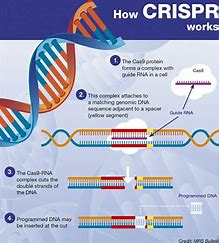
CRISPR is a family of DNA sequences found in the genomes of prokaryotic organisms such as bacteria and archaea. These sequences are derived from DNA fragments of bacteriophages that had previously infected the prokaryote. They are used to detect and destroy DNA from similar bacteriophages during subsequent infections

CITE: https://www.amazon.com/Dictionary-Health-Information-Technology-Security/dp/0826149952/ref=sr_1_5?ie=UTF8&s=books&qid=1254413315&sr=1-5

And, we’ve posted about CRISPR before: https://medicalexecutivepost.com/2021/07/08/on-crispr-gene-editing/

So now, what is the use of CRISPR for antiobiotics?

READ: https://www.emergingtechbrew.com/stories/2022/07/26/from-infant-poop-to-trance-music-here-s-a-play-by-play-of-a-crispr-experiment?mid=349b552221c994e2540a304649746d7c

***

COMMENTS APPRECIATED

Thank You

***

FINANCIAL PLANNING: https://www.routledge.com/Comprehensive-Financial-Planning-Strategies-for-Doctors-and-Advisors-Best/Marcinko-Hetico/p/book/9781482240283

***

CHARITY LURE: Identifiable Victim Effect

IDENTIFIABLE PERPETRATOR EFFECT

By Staff Reporters

***

***

According to colleague Dan Ariely PhD, the The Identifiable Victim Effect [IVE] is why we’re more moved by one person’s story than by statistics. It’s easier to empathize with a single, identifiable victim than with a faceless group. Charities know this and often highlight individual stories to tug at our heartstrings. It’s a powerful reminder that our compassion is wired for personal connections.

The identifiable victim effect has two components. People are more inclined to help an identified victim than an unidentified one, and people are more inclined to help a single identified victim than a group of identified victims. Although helping an identified victim may be commendable, the identifiable victim effect is considered a cognitive bias. From a consequential point of view, the cognitive error is the failure to offer N times as much help to N unidentified victims.

The identifiable victim effect has a mirror image that is sometimes called the identifiable perpetrator effect. Research has shown that individuals are more inclined to mete out punishment, even at their own expense, when they are punishing a specific, identified perpetrator.

So, when you hear a touching story that makes you want to help, remember: it’s your brain responding to the power of a single, human face.

COMMENTS APPRECIATED

Thank You

***

***

AVOIDANT BEHAVIOR: Disease and Illness

COMMON SENSE PUBLIC AND POPULATION HEALTH

By Staff Reporters

***

***

According to colleague Dan Ariely PhD, Disease Avoidant Behavior are the actions we take to avoid illness, often driven by instinctive or learned responses. It’s why we wash our hands obsessively during flu season, wear a balaclava mask and/or avoid people who are sneezing or coughing.

Note: A balaclava is a form of cloth headgear designed to expose only part of the face, usually the eyes and mouth. Depending on style and how it is worn, only the eyes, mouth and nose, or just the front of the face are unprotected. Versions with enough of a full face opening may be rolled into a hat to cover the crown of the head or folded down as a collar around the neck.

This behavior is rooted in our evolutionary survival instincts, helping us steer clear of contagious health threats like RSV, COVID and the winter flu. While it’s usually a good thing, excessive disease avoidant behavior can lead to anxiety and social isolation.

So, balance caution with common sense and public/population health directives to stay healthy and sane.

COMMENTS APPRECIATED

Thank You

***

***

What is Stock Market “Front-Running”?

What is Is – How it Works

dem-at-wharton2.jpg

By Dr. David E. Marcinko MBA MEd CMP

http://www.MarcinkoAssociates.com

According to Wikipedia, Front Running, also known as Tailgating, is the prohibited practice of entering into an equity (stock) trade, option, futures contract, derivative, or security-based swap to capitalize on advance, nonpublic knowledge of a large pending transaction that will influence the price of the underlying security.

Front running is considered a form of market manipulation in many markets. Cases typically involve individual brokers or brokerage firms trading stock in and out of undisclosed, un-monitored accounts of relatives or confederates. Institutional and individual investors may also commit a front running violation when they are privy to inside information. A front running firm either buys for its own account before filling customer buy orders that drive up the price, or sells for its own account before filling customer sell orders that drive down the price.

Front running is prohibited since the front-runner profits from nonpublic information, at the expense of its own customers, the block trade, or the public market.

Scandals

In 2003, several hedge fund and mutual fund companies became embroiled in an illegal late trading scandal made public by a complaint against Bank of America brought by New York Attorney General Eliot Spitzer. A resulting U.S. Securities and Exchange Commission investigation into allegations of front-running activity implicated Edward D. Jones & Co., Inc., Goldman Sachs, Morgan Stanley, Strong Mutual Funds, Putnam Investments, Invesco, and Prudential Securities.

Following interviews in 2012 and 2013, the FBI said front running had resulted in profits of $50 million to $100 million for the bank. Wall Street traders may have manipulated a key derivatives market by front running Fannie Mae and Freddie Mac.

Term Origins

The terms originate from the era when stock market trades were executed via paper carried by hand between trading desks. The routine business of hand-carrying client orders between desks would normally proceed at a walking pace, but a broker could literally run in front of the walking traffic to reach the desk and execute his own personal account order immediately before a large client order.

Likewise, a broker could tail behind the person carrying a large client order to be the first to execute immediately after. Such actions amount to a type of insider trading, since they involve non-public knowledge of upcoming trades, and the broker privately exploits this information by controlling the sequence of those trades to favor a personal position.

Assessment

So, was front-running implicated in the market drop today? OR, a technical correction or Panic selling? Any thoughts.

MORE: Investing “Tips” on Initial Public Offerings  https://medicalexecutivepost.com/2017/12/18/initial-public-offerings/

Conclusion

Your thoughts and comments on this ME-P are appreciated. Feel free to review our top-left column, and top-right sidebar materials, links, URLs and related websites, too. Then, subscribe to the ME-P. It is fast, free and secure.

Speaker: If you need a moderator or speaker for an upcoming event, Dr. David E. Marcinko; MBA – Publisher-in-Chief of the Medical Executive-Post – is available for seminar or speaking engagements.

Book Marcinko: https://medicalexecutivepost.com/dr-david-marcinkos-bookings/

https://www.crcpress.com/Comprehensive-Financial-Planning-Strategies-for-Doctors-and-Advisors-Best/Marcinko-Hetico/p/book/9781482240283

Risk Management, Liability Insurance, and Asset Protection Strategies for Doctors and Advisors: Best Practices from Leading Consultants and Certified Medical Planners™8Comprehensive Financial Planning Strategies for Doctors and Advisors: Best Practices from Leading Consultants and Certified Medical Planners™

COMPASSION FATIGUE: Be Aware & Beware!

AND … BURNOUT

By Staff Reporters

***

***

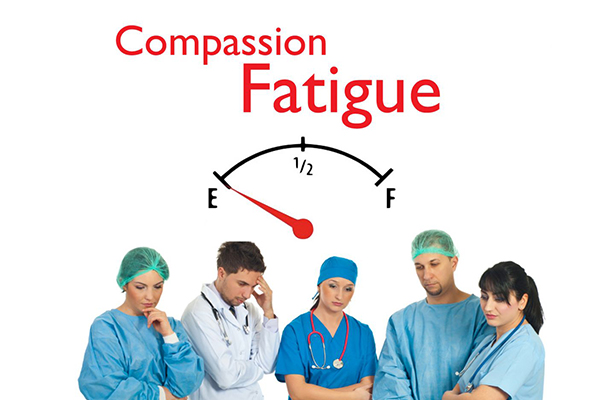
Compassion fatigue is emotional exhaustion caused by the repeated exposure to others’ suffering. It’s like burning out your empathy circuits. Caregivers, doctors, nurses, healthcare workers and anyone in the helping professions are especially susceptible.

When you’re constantly giving support, it’s easy to feel drained and detached. To combat compassion fatigue, practice self-care and set healthy boundaries.

So, remember, you can’t pour from an empty cup – take care of yourself so you can take care of others.

BURNOUT COACH: https://medicalexecutivepost.com/2024/07/28/medical-coaching-physician-burnout-and-career-change/

COMMENTS APPRECIATED

Thank You

***

***

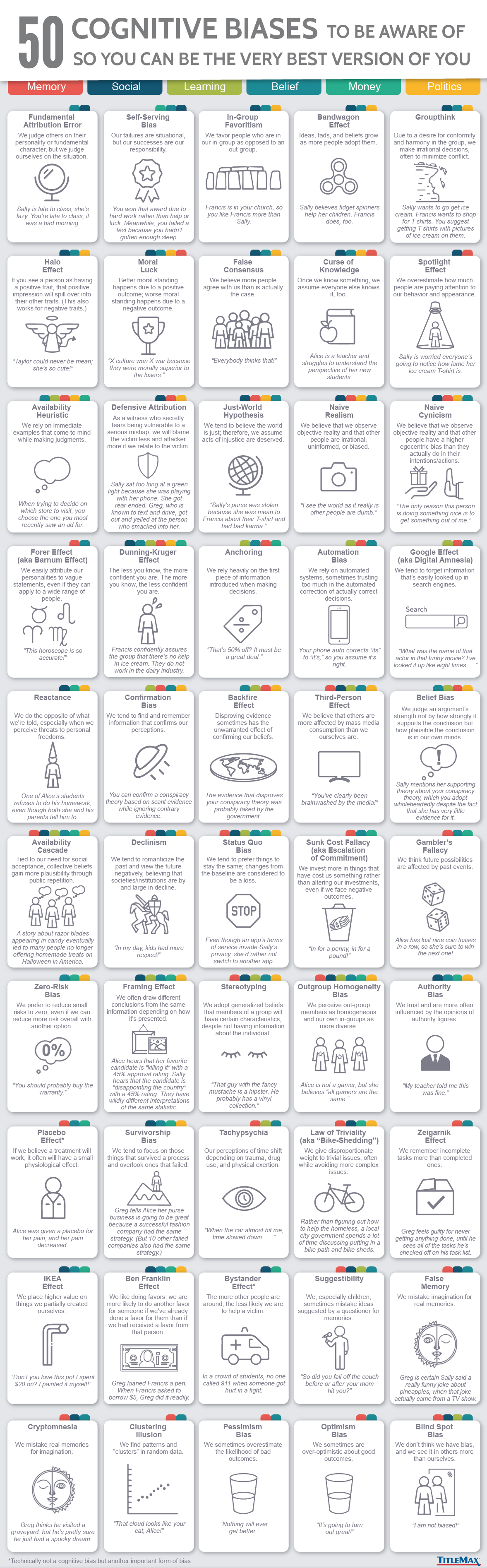
Be Aware of Your Cognitive Biases!

Top Fifty [50] to Know

[By staff reporters]

***

***

Assessment: Your thoughts are appreciated.

THANK YOU

***

Product DetailsProduct Details

***

UNITEDHEALTHGROUP: Recent Pros and Cons of UNH

By Staff Reporters

***

SPONSOR: http://www.MarcinkoAssociates.com

A class action lawsuit has been filed in Minnesota against UnitedHealth Group (NYSE:UNH) over allegations that the health insurer and its subsidiary, NaviHealth, used a faulty algorithm to deny rehabilitation care for Medicare Advantage beneficiaries. California-based Clarkson Law Firm filed the lawsuit in the U.S. District Court of Minnesota on Tuesday following an investigative report published by the health-focused news site Stat.

It alleges that UnitedHealth and its subsidiary, NaviHealth, used the computer algorithm named nH Predict to “systematically deny claims” of patients recovering from debilitating illnesses in nursing homes. According to the lawsuit, despite its 90% error rate, the company used the algorithm to deny claims, knowing that only 0.2% would appeal its decision. According to Stat, Humana (HUM), the nation’s second-largest player in the Medicare Advantage market behind UnitedHealth (UNH), also uses nH Predict. UnitedHealth (UNH) denied it used the NaviHealth predict tool to arrive at coverage decisions.

***

***

Ironically, UnitedHealth’s (NYSE:UNH) Optum Rx unit announced plans to move eight insulin products to “preferred” status on formularies to further expand the number of patients benefiting from $35 or less monthly out-of-pocket costs for the lifesaving therapy.

Optum Rx, UNH’s pharmacy benefit manager (PBM), said that effective January 1, 2024, all short- and rapid-acting insulins will move to Tier 1 in commercial formularies, a list of drugs the company maintains to indicate coverage for insured patients.

CITE: https://www.r2library.com/Resource

COMMENTS APPRECIATED

Thank You

***

***

OPINIONS: Secure Unbiased Financial Planning -or- Economic Practice Management Advice

***

Dr. David Edward Marcinko MBA MEd CMP®

Certified Medical Planner®

SPONSOR: http://www.CertifiedMedicalPlanner.org

CMP logo

***

FINANCIAL PLANNING

CAREER DEVELOPMENT

MEDICAL PRACTICE BUY IN / OUT

INVESTMENT ANALYSIS

PORTFOLIO MANAGEMENT

MERGERS AND ACQUISITIONS

PRACTICE APPRAISALS AND VALUATIONS

RETIREMENT PLANNING

FEE-ONLY

***

CONTACT: Ann Miller RN MHA CMP®

EMAIL: MarcinkoAdvisors@msn.com

***

NOBEL PRIZE CHEMISTRY: David Baker, Demis Hassabis and John Jumper in 2024

BREAKING NEWS

By Staff Reporters

***

***

he 2024 Nobel Prize in chemistry has been awarded to a trio of scientists who used artificial intelligence to “crack the code” of almost all known proteins, the “chemical tools of life.”

The Nobel Committee lauded David Baker, a US biochemist, for completing “the almost impossible feat of building entirely new kinds of proteins,” along with Demis Hassabis and John Jumper, who work at Google DeepMind, for developing an AI model to predict proteins’ complex structures – a problem that had been unsolved for 50 years.

“The potential of their discoveries is enormous,” the committee said as the award was just announced in Sweden. The prize, seen as the pinnacle of scientific achievement, carries a cash award of 11 million Swedish kronor ($1 million).

READ: https://www.nobelprize.org

COMMENTS APPRECIATED

Thank You

***

***

NOBEL PRIZE PHYSICS: John Hopfield and Geoffrey Hinton in 2024

BREAKING NEWS

By Staff Reporters

***

***

The Nobel Prize in Physics has been awarded to two researchers who helped build the foundations of the artificial intelligence that surrounds us today.

John Hopfield and Geoffrey Hinton both worked on machine learning techniques that would go on to power products such as ChatGPT.

Hopfield’s research is carried out at Princeton University and Hinton works at the University of Toronto.

MORE: https://www.nobelprize.org/

COMMENTS APPRECIATED

Thank You

***

***

Dental Managed Care is Substandard Care

 Dental Managed Care [DMC] is Substandard Care – count on it!

1-darrellpruittBy D. Kellus Pruitt DDS

Have you noticed most employer-sponsored dental plans boast savings of 30% and more on dental care, without mentioning how unsustainable discounts harms their employees?

Dental Managed Care [DMC] is substandard care: Discount dentistry, like virtually all underfunded handwork, has always been substandard … Or perhaps someone would like to argue that intricate surgery in sensitive mouths of nervous patients is improved when rushed.

Discounts are popular

Those who market obscure, hard to understand managed care plans to clueless, perhaps non-caring employers, do not control the quality of the discounted dentistry they sell.

Think about it: Discount dentistry without quality control. Can you think of a worse idea in healthcare?

What’s more, not one Delta Dental, Humana or Cigna executive can be held accountable for causing harm to equally clueless dental patients through under financed dentistry they sell. Employees who must choose their dentists from preferred provider lists have forfeited freedom of choice, whether they realize it or not. Their underfunded, substandard dentistry is subsidized by tax payers as a special tax-free benefit, benefiting unaccountable third parties most of all.

For example:

  • Want to know what you get with managed care dentistry? Quick prophys. 
  • How many of you get your teeth cleaned in 30 minutes or less? Do they feel clean?

One Hour

l always allowed my hygienists 1 hour to clean patients’ teeth simply because it often takes that long to do the job right – regardless what insurers say hygienists’ time is worth. The economic climate is tough on fee-for-service.

As I am considering signing on as a preferred provider – not because I want to – I notice that the fees allowed by insurers do not cover the hourly rate of most hygienists… unless they can “clean” teeth, take x-rays, take blood pressure, go over patients’ medical history, allow time for the doctor to do a quick exam and turn around the room in less than 30 minutes.

***

retro dental exam room

***

Assessment 

The motto of my practice is “Dentistry Unhurried.” I don’t want to compete in a race to the bottom which uninformed dental patients always lose.

Conclusion

Your thoughts and comments on this ME-P are appreciated. Feel free to review our top-left column, and top-right sidebar materials, links, URLs and related websites, too. Then, subscribe to the ME-P. It is fast, free and secure.

Speaker: If you need a moderator or speaker for an upcoming event, Dr. David E. Marcinko; MBA – Publisher-in-Chief of the Medical Executive-Post – is available for seminar or speaking engagements. Contact: MarcinkoAdvisors@msn.com

OUR OTHER PRINT BOOKS AND RELATED INFORMATION SOURCES:

Product DetailsProduct Details

 ***

NOBEL PRIZE MEDICINE: Victor Ambros and Gary Ruvkun in 2024

BREAKING NEWS!

By Staff Reporters

***

***

STOCKHOLM (AP) — Two scientists won the Nobel Prize in physiology or medicine on Monday for their discovery of microRNA, tiny bits of genetic material that offer a way for scientists to control what’s happening in our cells and that could lead to new ways of detecting and treating diseases including cancer. The work by Americans Victor Ambros and Gary Ruvkun is “proving to be fundamentally important for how organisms develop and function,” according to a panel that awarded the prize in Stockholm.

NOBEL PRIZE: https://www.nobelprize.org/

Ambros and Ruvkun were initially interested in genes that control the timing of different genetic developments, ensuring that cell types develop at the right time. Their discovery ultimately “revealed a new dimension to gene regulation, essential for all complex life forms,” the panel said.

COMMENTS APPRECIATED

Thank You

***

***

SMART PHONES: Not for All Financial Advisors or Doctors

DUMB PHONES ANYONE?

By Anonymous Reporter[s]

***

***

Allow us [me] to suggest the use of Android and iOS shortcuts that disable bio-metric unlocking on your cell phone.  

“If you use a bio-metric phone sensor [eye scan or fingerprint], you can be compelled to decrypt your device for law enforcement because a bio-metric is something you are,” lawyer Riana Pfefferkorn said in a 2019 talk at the Defcon security conference.

But, “If you use a pass-code to decrypt, typically, you can’t be compelled to unlock, because a pass-code is something that you know.” Her talk did not cover how claiming to have forgotten a pass-code would affect those issues. 

In either case, if your cell phone becomes in possession of federal investigators, you may faces the risk of them determining the unlock code through other means, like using such third-party tools as Cellebrite’s unlocking kits to defeat the phone’s security.

Stay Legal! Or simply invoked your Fifth Amendment right against self-incrimination; if needed. 

In conclusion: I [we] advise the awareness of cell phone privacy risks involved in having so much of your life stored on personal smart cell phone devices that you take almost everywhere. Stay Safe!

COMMENTS APPRECIATED

Thank You

***

***

ECONOMICS: Price Gouging VS. Supply & Demand

NEBULOUS DEFINITIONS

By Staff Reporters

***

***

The simplest model of a market involves two things, supply and demand, and the price and quantity of the goods sold in the market are a function of both. When a natural disaster hits like Hurricane Helene, the immediate effect can be two-fold. In such situations, it is not unusual that the demand for certain products may increase. For example, if everyone is trying to leave the area, demand for gas may rise. The other effect is that supply for certain products may decrease. And, it may be more costly to transport gas in areas affected by a natural disaster, thus decreasing the supply of gas and in turn, increasing the price.

CITE: https://www.r2library.com/Resource

When supply decreases, the price of the good increases. And when demand increases, again the price of the good increases. So we would predict that the market price of gas, for example, would increase in areas recently affected by a hurricane. And in fact we do see this.

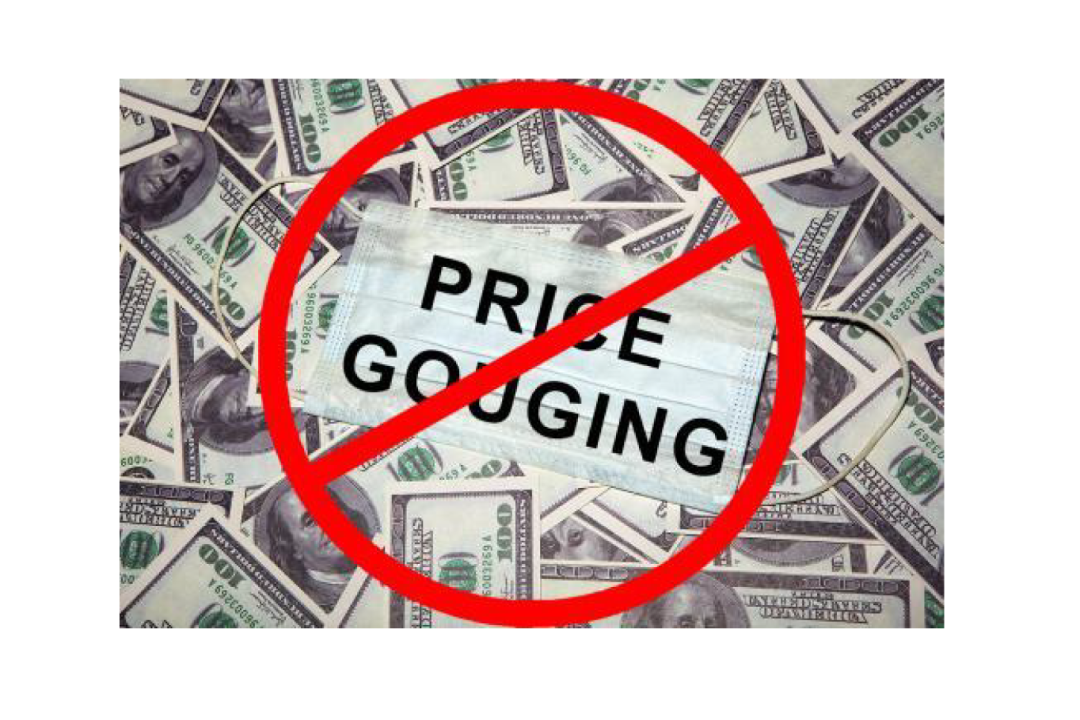
Price-gouging occurs when companies raise prices to unfair levels. There is no rule for what qualifies as price-gouging, but it is not an uncommon occurrence. For example in medicine, EpiPen costs is a current example of price increases that have been labeled unfair. 

Note: An epinephrine auto-injector (or adrenaline auto-injector, also known by the trade mark EpiPen) is a medical device for injecting a measured dose or doses of epinephrine (adrenaline) by means of auto-injector technology. It is most often used for the treatment of anaphylaxis. The first epinephrine auto-injector was brought to market in 1983.

Cite: https://tinyurl.com/55kmum86


COMMENTS APPRECIATED

Subscribe Today

***

***

DAILY UPDATE: MSFT, J&J and CVS as Stock Markets Lag

MEDICAL EXECUTIVE-POST TODAY’S NEWSLETTER BRIEFING

***

Essays, Opinions and Curated News in Health Economics, Investing, Business, Management and Financial Planning for Physician Entrepreneurs and their Savvy Advisors and Consultants

Serving Almost One Million Doctors, Financial Advisors and Medical Management Consultants Daily

A Partner of the Institute of Medical Business Advisors , Inc.

http://www.MedicalBusinessAdvisors.com

SPONSORED BY: Marcinko & Associates, Inc.

***

http://www.MarcinkoAssociates.com

Daily Update Provided By Staff Reporters Since 2007.
How May We Serve You?
© Copyright Institute of Medical Business Advisors, Inc. All rights reserved. 2024

REFER A COLLEAGUE: MarcinkoAdvisors@msn.com

SPONSORSHIPS AVAILABLE: https://medicalexecutivepost.com/sponsors/

ADVERTISE ON THE ME-P: https://tinyurl.com/ytb5955z

Your Referral Count -0-

Rosh Hashanah, the Jewish New Year, begins tonight and ends on Friday. Shana Tova to those celebrating.

Microsoft overhauled its Copilot AI assistant, adding voice and vision capabilities to make it more personalized.


A new report from Deloitte reveals improving health equity could increase the country’s GDP by $2.8 trillion by 2040 and increase U.S.-based corporate profits by $763 billion.


And … Johnson & Johnson’s is not moving forward with implementation of its proposed rebate model after HRSA push-back.  

CITE: https://www.r2library.com/Resource

What’s up stocks

  • Caesars Entertainment popped 5.27% after it announced it will buy back $500 million in common shares while also offering $1 billion in senior notes to raise money.
  • Joby Aviation surged 27.92% on the news that Toyota will invest another $500 million in the aviation startup as it attempts to build a flying electric taxi.
  • Lamb Weston Holdings rose 2.62% thanks to a strong earnings report and a comprehensive restructuring plan for the french fry titan.
  • Novavax soared 19.16% following a glowing report from Jefferies analysts citing the pharma company’s strong vaccine sales.

What’s down stocks

  • Tesla sank 3.49% after revealing that auto deliveries for the third quarter came in lower than analysts expected.
  • Ford fell 2.51% for pretty much the same reason, reporting disappointing sales growth in the third quarter.
  • It’s never a good thing when a company pulls its guidance, and that was certainly true for Nike today. Shares dropped 6.77% after the company postponed its investor day and reported a 10% year over year decline in sales.
  • Nike’s report was so bad that shares of Foot Locker and Dick’s Sporting Goods fell 2.97% and 0.23%, respectively.
  • Humana plummeted 11.79% on the news that membership in its 4 star-rated Medicare Advantage plans plunged 94%.
  • Conagra Brands dropped 8.07% after the packaged food giant missed on both sales and earnings estimates last quarter.

CITE: https://tinyurl.com/2h47urt5

Here’s where the major benchmarks ended:

  • The S&P 500® index (SPX)was little changed at 5,709.54; the Dow Jones Industrial Average ($DJI) rose 39.55 points (0.09%) to 42,196.52; the NASDAQ Composite® ($COMP) gained 14.76 points (0.08%) to 17,925.12.
  • The 10-year Treasury note yield (TNX) added 5 basis points to 3.78%. 
  • The CBOE Volatility Index® (VIX) edged 0.4 points lower to 18.86.

CITE: https://tinyurl.com/tj8smmes

CVS is laying off nearly 3,000. The healthcare giant is conducting a strategic review as its stock has fallen more than 20% this year, the Wall Street Journal reported

COMMENTS APPRECIATED

PLEASE SUBSCRIBE: MarcinkoAdvisors@msn.com

Thank You

***

***

***

***

EDUCATIONAL TEXTBOOKS: https://tinyurl.com/4zdxuuwf

***

PODCAST: The Opioid Crisis Exposed By Mises Senior Fellow Dr. Mark Thornton

By Free Man Beyond the Wall

***

***

We welcomes Senior Mises Institute Fellow Dr. Mark Thornton to the show. Dr. Thornton recently gave a talk at the Mises Institute Supporters Summit on the opioid crisis that is plaguing the United States. Dr. Thornton lays out a short history of this tragic epidemic that is taking lives every day.

CITE: https://www.r2library.com/Resource/Title/0826102549

He addresses how doctors prescribe these drugs, how government regulates them and explains what happens when people are forced into the “black market” to sustain their addiction.

CITE: https://www.amazon.com/Dictionary-Health-Insurance-Managed-Care/dp/0826149944/ref=sr_1_4?ie=UTF8&s=books&qid=1275315485&sr=1-4

PODCAST HERE: https://freemanbeyondthewall.libsyn.com/episode-169-the-opioid-crisis

***

COMMENTS APPRECIATED

Thank You

***

ADVICE: Financial, Investment or Medical Practice Management Second Fiduciary Opinions

***

MARCINKO & ASSOCIATES, Inc.

SPONSOR: http://www.MARCINKOASSOCIATES.com

Dr. David Edward Marcinko MBA MEd CMP®

Certified Medical Planner®

SPONSOR: http://www.CertifiedMedicalPlanner.org

CMP logo

***

FINANCIAL PLANNING

CAREER DEVELOPMENT

MEDICAL PRACTICE BUY IN / OUT

INVESTMENT ANALYSIS

PORTFOLIO MANAGEMENT

MERGERS AND ACQUISITIONS

PRACTICE APPRAISALS AND VALUATIONS

RETIREMENT PLANNING

FEE-ONLY

***

CONTACT: Ann Miller RN MHA

EMAIL: MarcinkoAdvisors@msn.com

***

DAILY UPDATE: MyChart, Meta, Zelle and Acadia as the DJIA Rises

MEDICAL EXECUTIVE-POST TODAY’S NEWSLETTER BRIEFING

***

Essays, Opinions and Curated News in Health Economics, Investing, Business, Management and Financial Planning for Physician Entrepreneurs and their Savvy Advisors and Consultants

Serving Almost One Million Doctors, Financial Advisors and Medical Management Consultants Daily

A Partner of the Institute of Medical Business Advisors , Inc.

http://www.MedicalBusinessAdvisors.com

SPONSORED BY: Marcinko & Associates, Inc.

***

http://www.MarcinkoAssociates.com

Daily Update Provided By Staff Reporters Since 2007.
How May We Serve You?
© Copyright Institute of Medical Business Advisors, Inc. All rights reserved. 2024

REFER A COLLEAGUE: MarcinkoAdvisors@msn.com

SPONSORSHIPS AVAILABLE: https://medicalexecutivepost.com/sponsors/

ADVERTISE ON THE ME-P: https://tinyurl.com/ytb5955z

Your Referral Count -0-

Stat: 150. That’s how many health systems use AI to help draft replies on MyChart, sometimes without disclosing this to patients. (the New York Times)

Contained in a roughly 200-page quarterly filing from JPMorgan Chase last month were eight words that underscore how contentious the bank’s relationship with the government has become. The lender disclosed that the Consumer Financial Protection Bureau could punish JPMorgan for its role in Zelle, the giant peer-to-peer digital payments network. The bank is accused of failing to kick criminal accounts off its platform and failing to compensate some scam victims.

CITE: https://www.r2library.com/Resource

Stocks Up

Bristol-Myers Squibb rose 1.56% after the FDA approved its new drug for schizophrenia, the first new treatment of its kind in decades. Some analysts expect the drug, Cobenfy, to bring in $6 billion in peak annual revenue.

  • Trump Media gained 5.58% despite a co-founder of its Truth Social platform cashing out nearly all of his shares—worth about $100 million at current prices.
  • Chinese EV maker Nio added another 12.80% to bring its weekly gains to nearly 25%. It’s benefiting from the overall euphoria around Chinese stocks and anticipation over its quarterly delivery numbers due next week.
  • Speaking of the Chinese government’s stimulus measures, investors are wagering that the Macau locations of Las Vegas Sands Corp. (up 5.59%) and Wynn Resorts (up 7.24%) will see more visitors.
  • IonQ, a quantum computing company based in College Park, MD (go Terps), shot up 20.47% after inking a contract with the US Air Force Research Lab.

Stocks down

  • Nvidia dropped 2.17%. Bloomberg reported that the Chinese government is ramping up the pressure on local tech companies to move away from using Nvidia AI chips and lean more on domestic suppliers.
  • WeightWatchers, whose shares are down more than 90% this year, booted its CEO Sima Sistani, who pivoted the company to weight-loss drugs. Investors aren’t betting a change at the top will lead to a turnaround, sending shares 2.11% lower on the day.
  • Globe Life sank 4.74% after the US Equal Employment Opportunity Commission found that the life insurance company tolerated a “pervasive pattern of harassing conduct” at one of its top sales agencies, per Business Insider.

CITE: https://tinyurl.com/2h47urt5

Here’s where the major benchmarks ended:

  • The S&P 500® index (SPX) lost 7.20 points (–0.13%) to 5,738.17 to end the week up 0.62%; the Dow Jones Industrial Average® ($DJI) added 137.89 points (0.33%) to 42,313.00 to end the week up 0.59%; the NASDAQ Composite® ($COMP) fell 70.70 points (–0.39%) to 18,119.59 to end the week up 0.95%.
  • The 10-year Treasury note yield (TNX) fell four basis points to 3.75%, up two basis points for the week.
  • The CBOE Volatility Index® (VIX) jumped to 16.64.

CITE: https://tinyurl.com/tj8smmes

Meta is facing a fine of $102 million for storing some users’ passwords in “plaintext”. The social media giant has admitted to poor password management.

Acadia and the Department of Justice just reached a ~$20M agreement to settle accusations that the company billed Medicare, Medicaid, and TRICARE for medically unnecessary inpatient mental health services. Acadia found itself under pressure after a New York Times investigation published earlier in September allegedly found that the company kept patients in facilities against their will to maximize insurance payments.

COMMENTS APPRECIATED

PLEASE SUBSCRIBE: MarcinkoAdvisors@msn.com

Thank You

***

***

***

***

EDUCATIONAL TEXTBOOKS: https://tinyurl.com/4zdxuuwf

***

CMS: A New Primary Care Medicine Model

“MAKING CARE PRIMARY”

By Health Capital Consultants, LLC

***

***

CMS Announces New Primary Care Model

On June 8, 2023, the Centers for Medicare and Medicaid Services (CMS) announced the establishment of Making Care Primary (MCP) Model, a voluntary primary care model that will be tested in Colorado, Massachusetts, Minnesota, New Mexico, North Carolina, New York, New Jersey, and Washington.

Launched on July 1, 2024, the 10 ½ year model will seek to improve the coordination and management of care, enable primary care clinicians to form relationships with healthcare specialists, and form community-based connections to address the health needs of patients, as well as health-related social needs such as nutrition and housing.
CITE: https://www.r2library.com/Resource

This Health Capital Topics article will discuss the new MCP Model and its implications for the healthcare industry. (Read more...)

***

***

COMMENTS APPRECIATED

Thank You

***

PODCAST: Patient Trust In Healthcare

By Eric Bricker MD

COMMENTS APPRECIATED

***

***

What is the “Butterfly” Effect?

What is it – How it works

[By Dr. David E. Marcinko MBA MEd and staff reporters]

The butterfly effect refers to a concept that small causes can have large effects. Initially, it was used with weather prediction but later the term became a metaphor used in and out of science.

***

[Copyright 2019 iMBA, Inc. All rights reserved. USA.]

***

The term, closely associated with the work of Edward Lorenz, is derived from the metaphorical example of the details of a tornado (the exact time of formation, the exact path taken) being influenced by minor perturbations such as the flapping of the wings of a distant butterfly several weeks earlier. Lorenz discovered the effect when he observed that runs of his weather model with initial condition data that was rounded in a seemingly inconsequential manner would fail to reproduce the results of runs with the unrounded initial condition data. A very small change in initial conditions had created a significantly different outcome.

NOTE: Edward Lorenz is not to be confused with the scientist Max Lorenz: https://medicalexecutivepost.com/2018/01/26/about-the-lorenz-curve/

In Chaos Theory

In chaos theory, the butterfly effect is the sensitive dependence on initial conditions in which a small change in one state of a deterministic nonlinear system can result in large differences in a later state.

In Psychology / Psychiatry

Although I first learned about the Butterfly Effect is high school physics class, I also later learned that it relates to psychological/psychiatry in medical school. It seems the effect serves as a metaphor for life in a chaotic world. Specifically, it suggests that small events can have very large psychological / psychiatric effects.

In Insurance and Risk Management

As a health economist, and  former financial advisor, I also know that the Butterfly Effect is related to the insurance and financial service industries; as weill as risk management theory in general.

***

Risk Management, Liability Insurance, and Asset Protection Strategies for Doctors and Advisors: Best Practices from Leading Consultants and Certified Medical Planners™

***

Assessment: Your thoughts are appreciated.

***

Invite Dr. Marcinko

***

Dr. Richard H. Thaler and Behavioral Economics

A behavioral scientist

By Rick Kahler MS CFP®

Human beings make most of our decisions—including financial ones—emotionally, not logically. Unfortunately, too much of the time, our emotions lead us into financial choices that aren’t good for our financial well-being. This is hardly news to financial planners or financial therapists. Nor is it a surprise to any parent who has ever struggled to teach kids how to manage money wisely.

Economic Model Assumptions

Yet many of the economic models and theories related to investing are based on assumptions that, when it comes to money, people act rationally and in their own best interests. There’s a wide gulf between the way economists assume people behave around money and the way people actually make money choices. This doesn’t encourage financial advisors to rely on what economists say about financial patterns, trends, and what to expect from markets or consumers.

2017 Nobel Prize in Economics

It’s significant, then, that the 2017 Nobel Prize in Economics went to Dr. Richard H. Thaler, professor of behavioral science and economics at the University of Chicago Booth School of Business. Dr. Thaler’s work has focused on the differences between logical economic assumptions and real-world human behavior. His research not only demonstrates that people behave emotionally when it comes to money; it also shows that in many ways our irrational economic behavior is predictable.

This predictability can help advisors and organizations find ways to encourage people to make financial decisions in their own better interest. The book Nudge, by Dr. Thaler and Cass R. Sunstein, describes some of those methods.

Example:

One example is making participation the default option for company retirement programs like 401(k)’s. Employees are free to opt out, of course, but they need to actively choose to do so.

A second example is the “Save More Tomorrow” plan, which offers employees the option of automatically increasing their savings whenever they receive raises in the future.

Both of these examples rely on a predictable behavior—human inertia. Most of us tend to postpone, ignore, or forget to take action even when that action would be good for us. So if a system is set up so not taking action leaves us with the choice that serves us better, we are “nudged” toward helping ourselves toward a healthier financial future.

Integration

As one of the pioneers in integrating the emotional aspect of money behavior into the practice of financial planning, I’ve long since come to understand that managing money is about much more than numbers. The world of investing may seem to be cold and calculating, but it’s actually driven by emotions. I’m familiar with the work of researchers who have demonstrated that some 90% of all financial decisions are made emotionally rather than logically.

I was pleased in 2002 when one of those researchers, psychologist Daniel Kahneman, won the Nobel prize in economics for his studies of human behavioral biases and systematic irrational behaviors. (That research was done jointly with psychologist Amos Tversky, who died in 1996.)

I’m even more pleased to see the economics Nobel prize go to a behavioral researcher for the second time. Maybe the realm of economics is beginning to integrate the untidy realities of human emotions into its theories. Eventually, this might lead to new economic models that take into account the emotions that shape people’s money decisions and the fact that money is one of the most emotionally charged aspects of our lives.

Assessment

Perhaps economists are beginning to appreciate the truth of the statement Dr. Thaler made at a news conference after his prize was announced. “In order to do good economics, you have to keep in mind that people are human.”

Conclusion

Your thoughts and comments on this ME-P are appreciated. Feel free to review our top-left column, and top-right sidebar materials, links, urls and related websites, too. Then, subscribe to the ME-P. It is fast, free and secure.

Speaker: If you need a moderator or speaker for an upcoming event, Dr. David E. Marcinko; MBA – Publisher-in-Chief of the Medical Executive-Post – is available for seminar or speaking engagements.

EDITOR

Contact: MarcinkoAdvisors@msn.com

Subscribe: MEDICAL EXECUTIVE POST for curated news, essays, opinions and analysis from the public health, economics, finance, marketing, I.T, business and policy management ecosystem.

***

PODCAST: Suicide Financial Crisis Risk?

By Rick Kahler MS CFP

***

***

I lost over $450,000, I cannot pay the bank, I’ll become homeless. Suicide is the only way out.”

This desperate plea summarizes one of the top posts a few months ago on a Reddit forum for the cryptocurrency Terra Luna. Like other cryptocurrencies, it has recently lost more than 99% of its value.

Over the past five years I have written several columns and given a number of media interviews on the risks of speculating in cryptocurrencies. My most recent one generated a conversation with several of my financial planning peers about the recent crypto meltdown. One of them called my attention to the discussions about suicide on cryptocurrency forums, where some members were posting suicide prevention phone numbers.

READ HERE: https://kahlerfinancial.com/financial-awakenings/money-psychology/financial-crisis-and-the-risk-of-suicide

***

COMMENTS APPRECIATED

Thank You

***

ORDER: https://www.routledge.com/Comprehensive-Financial-Planning-Strategies-for-Doctors-and-Advisors-Best/Marcinko-Hetico/p/book/9781482240283

****

DAILY UPDATE: Visa, Coca-Cola, Cardinal & Advocate Health and Obesity as Markets Fall

MEDICAL EXECUTIVE-POST TODAY’S NEWSLETTER BRIEFING

***

Essays, Opinions and Curated News in Health Economics, Investing, Business, Management and Financial Planning for Physician Entrepreneurs and their Savvy Advisors and Consultants

Serving Almost One Million Doctors, Financial Advisors and Medical Management Consultants Daily

A Partner of the Institute of Medical Business Advisors , Inc.

http://www.MedicalBusinessAdvisors.com

SPONSORED BY: Marcinko & Associates, Inc.

***

http://www.MarcinkoAssociates.com

Daily Update Provided By Staff Reporters Since 2007.
How May We Serve You?
© Copyright Institute of Medical Business Advisors, Inc. All rights reserved. 2024

REFER A COLLEAGUE: MarcinkoAdvisors@msn.com

SPONSORSHIPS AVAILABLE: https://medicalexecutivepost.com/sponsors/

ADVERTISE ON THE ME-P: https://tinyurl.com/ytb5955z

Your Referral Count -0-

***

Cardinal Health has agreed in principle to acquire Integrated Oncology Network for more than $1.1 billion.


And … Advocate Health announced it will wipe clean more than 11,500 judgment liens on patients’ homes and real estate.

CITE: https://www.r2library.com/Resource

What’s up

  • Flutter Entertainment, parent company of betting app FanDuel, popped 5.06% after it revealed its impressive growth plans.
  • Hewlett Packard Enterprise rose 5.05% thanks to an upgrade from Barclays analysts who think that rising AI demand will increase the company’s server revenue.
  • Trump Media & Technology Group gained 10.48% after shareholders panicked that the end of its lockup period would mean big selling by insiders, fears that haven’t materialized.
  • Progress Software climbed 11.85% after a strong beat-and-raise earnings report.

What’s down

  • Southwest Airlines stumbled 4.57% after announcing it will cut service to and from Atlanta, a major hub for air travel, as it looks to save money ahead of a showdown with activist investor Elliott Investment Management.
  • Bank of America fell just 0.51% on the revelation that Warren Buffett can’t stop selling the stock.
  • KB Home sank 5.35% after the homebuilder beat revenue estimates but missed on earnings. It also issued a downbeat forecast for the rest of its fiscal year.
  • Global Payments dropped 6.37% thanks to a downgrade from BTIG analysts who were unimpressed by the payment provider’s near-term growth plans.

CITE: https://tinyurl.com/2h47urt5

  • The S&P 500® index (SPX) fell 10.68 points (–0.19%) to 5,722.25; the Dow Jones Industrial Average® ($DJI) dropped 293.47 points (–0.70%) to 41,914.75; the NASDAQ Composite® ($COMP) added 7.68 points (0.04%) to 18,082.21.
  • The 10-year Treasury note yield (TNX) climbed five basis points to 3.78% and seems stuck in a range between 3.7% and 3.8%.
  • The CBOE Volatility Index® (VIX) rose slightly to 15.51, still near its September lows.

CITE: https://tinyurl.com/tj8smmes

Coca-Cola pulled its new flavor, Spiced, from shelves after just six months because of dis-interest in it.

Visa was sued by the Justice Department for antitrust violations. The DOJ alleged in a complaint filed in Manhattan federal court that the payments giant is illegally monopolizing the debit card market by penalizing merchants who try to use alternatives, Bloomberg reported.

For the first time in more than a decade, the nationwide number of people with obesity hasn’t gone up, according to new CDC data showing that the condition appears in about 40% of US adults.

Visualize: How private equity tangled banks in a web of debt, from the Financial Times.

COMMENTS APPRECIATED

PLEASE SUBSCRIBE: MarcinkoAdvisors@msn.com

Thank You

***

***

***

***

EDUCATIONAL TEXTBOOKS: https://tinyurl.com/4zdxuuwf

***

PODCAST: How Does Medical Debt Impact Your Credit Report?

By Eric Bricker MD

***

***

COMMENTS APPRECIATED

Thank You

***

***

DAILY UPDATE: FTC Insulin Prices, Open AI Funding, Disney Slack Hack and Private Equity Banks

MEDICAL EXECUTIVE-POST TODAY’S NEWSLETTER BRIEFING

***

Essays, Opinions and Curated News in Health Economics, Investing, Business, Management and Financial Planning for Physician Entrepreneurs and their Savvy Advisors and Consultants

Serving Almost One Million Doctors, Financial Advisors and Medical Management Consultants Daily

A Partner of the Institute of Medical Business Advisors , Inc.

http://www.MedicalBusinessAdvisors.com

SPONSORED BY: Marcinko & Associates, Inc.

***

http://www.MarcinkoAssociates.com

Daily Update Provided By Staff Reporters Since 2007.
How May We Serve You?
© Copyright Institute of Medical Business Advisors, Inc. All rights reserved. 2024

REFER A COLLEAGUE: MarcinkoAdvisors@msn.com

SPONSORSHIPS AVAILABLE: https://medicalexecutivepost.com/sponsors/

ADVERTISE ON THE ME-P: https://tinyurl.com/ytb5955z

Your Referral Count -0-

The Federal Trade Commission hit the three largest companies that negotiate drug prices with a lawsuit claiming they’ve artificially inflated the cost of insulin for patients. The companies—UnitedHealth Group’s Optum Rx, CVS Health’s Caremark, and Cigna’s Express Scripts—together administer ~80% of all US prescriptions, the agency said. The suit alleges they increased profits by steering patients toward higher-priced insulin with bigger rebates so they could pocket the cash that drug companies gave back.

CITE: https://www.r2library.com/Resource

OpenAI has so many interested investors it’ll have to turn some away from an expected $6.5 billion funding round that values the company at $150 billion.

CITE: https://tinyurl.com/2h47urt5

Disney employees will have to stop using Slack in the wake of a hack that leaked the company’s chat logs.

CITE: https://tinyurl.com/tj8smmes

Visualize: How private equity tangled banks in a web of debt, from the Financial Times.

COMMENTS APPRECIATED

PLEASE SUBSCRIBE: MarcinkoAdvisors@msn.com

Thank You

***

***

***

***

EDUCATIONAL TEXTBOOKS: https://tinyurl.com/4zdxuuwf

***

KITCHEN SINK: Stock Market Disclosures

By Staff Reporters

***

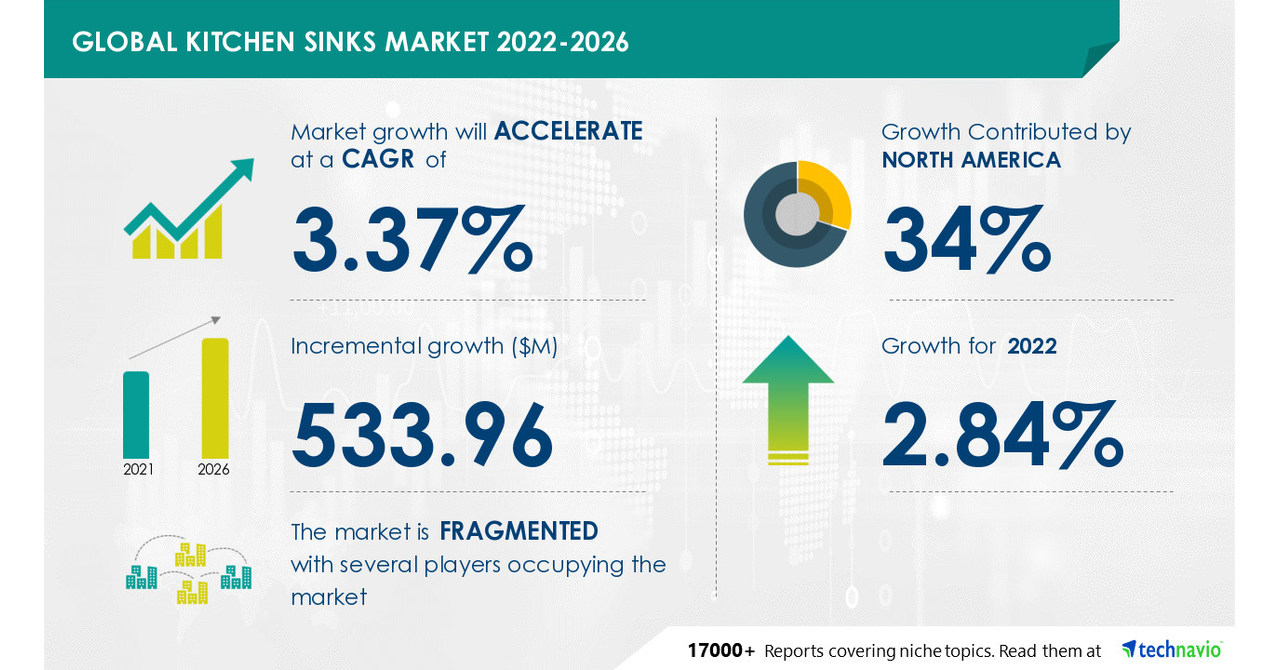
Technavio has announced its latest market research report titled Kitchen Sinks Market by End-user and Geography – Forecast and Analysis 2022-2026

***

Kitchen Sink stock market disclosures are a communication technique commonly used by political parties, public companies and businesses, although it’s not so well known by the public. The idea is to release all of your bad news at the same time rather than creating a drip-drip effect over an extended period of time.

CITE: https://www.r2library.com/Resource

Steven Barnett, professor of communications at the University of Westminster, says it’s used by organizations when they have some really shocking news they know they are not going to get away with burying. “You’re saying: ‘Let’s just sweep up every piece of bad news we’ve got, put it all in one place, take all of the flak and deal with it at the same time'”. “When you’re announcing the worst figures in your corporate history, you know it’s never going to be a page two story.”

It’s the opposite of the “dead cat” strategy where you distract people from something that is garnering a lot of attention. The idea being that, by placing a dead cat on the table, you make people look in a different direction.

CITE: https://medicalexecutivepost.com/2022/09/29/what-is-a-dead-cat-bounce/

“If you know that you have pretty appalling news, it makes absolute sense to get it all out at the same time because the speed and intensity of the news cycle demands that the agenda moves on so you know you’ll be out of the spotlight within 48 hours.”

COMMENTS APPRECIATED

Please Subscribe

***

***

DAILY UPDATE: Nike CEO Out, Cancer and Drug Deaths Down as Stock Markets Pause

MEDICAL EXECUTIVE-POST TODAY’S NEWSLETTER BRIEFING

***

Essays, Opinions and Curated News in Health Economics, Investing, Business, Management and Financial Planning for Physician Entrepreneurs and their Savvy Advisors and Consultants

Serving Almost One Million Doctors, Financial Advisors and Medical Management Consultants Daily

A Partner of the Institute of Medical Business Advisors , Inc.

http://www.MedicalBusinessAdvisors.com

SPONSORED BY: Marcinko & Associates, Inc.

***

http://www.MarcinkoAssociates.com

Daily Update Provided By Staff Reporters Since 2007.
How May We Serve You?
© Copyright Institute of Medical Business Advisors, Inc. All rights reserved. 2024

REFER A COLLEAGUE: MarcinkoAdvisors@msn.com

SPONSORSHIPS AVAILABLE: https://medicalexecutivepost.com/sponsors/

ADVERTISE ON THE ME-P: https://tinyurl.com/ytb5955z

Your Referral Count -0-

Overdose deaths in the US are plummeting. According to new public health data, drug-related deaths fell more than 10% in the 12 months ending in April, a massive improvement from double-digit increases seen in recent years, NPR just reported.

CITE: https://www.r2library.com/Resource

What’s up

  • Nike popped 6.84% once CEO John Donahoe announced he will step down after four years on the job. Turns out when they say “Just do it,” “it” means resigning in disgrace after tarnishing an iconic brand.
  • Intel rose 3.31% on the news that Qualcomm approached the company with a buyout offer. Qualcomm sank 2.87% on the revelation.
  • Constellation Energy are the geniuses behind turning Three Mile Island back on, which shareholders love—the stock soared 22.29% today.
  • Vistra jumped 16.60% on the news that the Texas-based utilities provider is acquiring the remaining 15% stake of its subsidiary Vistra Vision that it doesn’t already own.

What’s down

  • UPS sank 2.67% after FedEx announced poor quarterly results and cut its earnings forecast.
  • Lennar fell 5.33% in spite of beating earnings estimates last quarter. The problem is that shareholders don’t like the homebuilder’s forecast of no growth next quarter.
  • Chewy tumbled 4.34% on the news that the pet products retailer will kick off an underwritten offering of $500 million of shares from a private equity partner, and buy back $300 million in shares—effectively reducing the company’s private equity ownership stake.
  • Novo Nordisk dipped 5.46% after the pharmaceutical giant announced mixed results from the latest trial of a new weight-loss drug.
  • ASML declined 3.97% thanks to a downgrade by Morgan Stanley analysts citing a slowdown in demand across the semiconductor industry.
  • Trump Media & Technology Group continued to fall today, dropping another 7.82% now that the early investor lockup period has concluded.

CITE: https://tinyurl.com/2h47urt5

Here’s where the major benchmarks ended:

  • The S&P 500® index (SPX) slipped 11.09 points (–0.19%) to 5,702.53, ending the week 1.36% higher; the Dow Jones Industrial Average® ($DJI) added 38.17 points (0.09%) to 42,063.36, ending the week 1.60% higher; the Nasdaq Composite® ($COMP) lost 65.66 points (–0.36%) to 17,948.32, ending the week 1.60% higher.
  • The 10-year Treasury note yield (TNX) slipped one basis point to 3.73% but finished the week up eight basis points and outgained the 2-year yield by four basis points.
  • The Cboe Volatility Index® (VIX) ended at 16.1, its lowest close this month.

CITE: https://tinyurl.com/tj8smmes

Nike CEO John Donahoe will retire on October 13th and be replaced by longtime executive Elliott Hill, the company announced yesterday.

Stat: 33%. That’s how much the US cancer death rate fell from 1991 to 2021, equaling about 4.1 million lives saved, according to the latest Cancer Progress Report. (CBS News).

COMMENTS APPRECIATED

PLEASE SUBSCRIBE: MarcinkoAdvisors@msn.com

Thank You

***

***

***

***

EDUCATIONAL TEXTBOOKS: https://tinyurl.com/4zdxuuwf

***

GOING PRIVATE: 23andMe?

By Staff Reporters

***

***

On September 16th, 2024, ancestry and genetics-testing company 23andMe has agreed to pay a $30 million settlement after a class-action lawsuit was brought against the company for last year’s data breach.

The settlement, which is pending a judge’s approval, comes after the company confirmed in October that “threat actors” used about 14,000 accounts, approximately 0.1% of the company’s user base, to access the ancestry data of 6.9 million connected profiles. Leaked data included users’ account information, location, ancestry reports, DNA matches, family names, profile pictures, birth dates and more.

CEO’s plan to take it private?

And so, all seven of the struggling DNA testing company’s independent directors just stepped down from its board of directors, leaving only founder and CEO Anne Wojcicki. A committee formed by the board had previously rejected Wojcicki’s plan to take the company private, concluding that it didn’t offer a high enough premium to shareholders. Wojcicki persisted with her efforts, but in their resignation, the directors said they still hadn’t seen a “fully financed, fully diligenced, actionable proposal,” so they couldn’t agree on the strategic direction forward.

The CEO said in a memo to employees that she was “surprised and disappointed” by their decision.

COMMENTS APPRECIATED

Thank You

***

***

Fractional Reserve VERSUS Gerbil Banking

Cons from the Austrian School of Economics

By Staff Reporters

***

***

According to Coinmena, fractional reserve banking is a system in which banks are only required to have a fraction of bank deposits from their customers backed by actual cash on hand or available for withdrawal. This is done to expand the economy by enabling banks to free idle capital for commercial lending while keeping a sufficient amount for customer withdrawals.

The creation of the fractional reserve?

The fractional reserve system was first established by the Swedish Riksbank in 1668 after establishing the first central bank in the world. The idea came about after banks realized that there is a minimal chance that all the customers would come to claim their money from the bank at once; therefore, instead of hoarding the money in a vault, it could be used to grow and expand the economy through commercial loans. Fractional reserve banking became more popular around the world after the U.S. enacted The Federal Reserve Act of 1913, which created the Federal Reserve Bank, now known as the U.S. Central bank.

CITE: https://www.r2library.com/Resource/Title/0826102549

How does it work?

When a customer deposits money into their bank account, the money is no longer directly theirs. The bank holds custody of the customer deposits, and they provide the customer with a deposit account that they can withdraw their money from upon demand.

The bank now has full control of the money as the custodian. The bank can opt to reserve a small percentage of the deposited amount (fractional reserve) and loan the rest or use it for another commercial purpose. The reserve amount usually ranges between 3% to 10%. Although, during harsh economic times, the central banks can lower this reserve requirement to 0%. The Covid-19 pandemic forced central banks around the world to lower the reserve requirement to help stimulate the economy.

 Example

  • Customer A deposits 100,000 AED in Bank 1. Bank 1 loans Customer B 90,000 AED
  • Customer B deposits 90,000 AED in Bank 2. Bank 2 loans Customer C 81,000 AED
  • Customer C deposits 81,000 AED in Bank 3. Bank 3 loans Customer D 72,900 AED
  • Customer D deposits 72,900 AED in Bank 4. Bank 4 loans Customer E 65,610 AED
  • Customer E deposits 65,610 AED in Bank 5. Bank 5 loans Customer F 59,049 AED

 As you can see, the original amount of 100,000 AED has been expanded to represent deposited money for five accounts, and the total existing money supply is 468,559 AED, including the final loan. This is a basic representation of the money multiplier effect.

The system works on the basic principles of debt. The money deposited into the bank by a customer is considered a debt (liability) on the bank to the customer and an asset for the customer. The banks then loan out this money with an interest rate to make a profit for themselves and have the principal amount to pay back their original debt to the depositor (customer).

Pros & Cons of fractional reserve

Banks have the most benefit from a fractional reserve system as this is the way they make their profits. Additionally, customers can also earn interest through their savings or deposit account paid from the interest profits made by the bank. Governments also support this system because it encourages spending and provides economic stability and growth.

Economists from the Austrian School of Economics argue that this system is unsustainable and risky given that most countries rely on a credit-based system and not hard money. Additionally, a fractional reserve system runs the risk of a bank run. Essentially, if people lose faith in a bank to be able to pay back all the depositor’s money, it would trigger a  “run on the banks” or “bank run.” It is not typical behavior for customers to go claim their money from the bank all at once, but it has happened in the past, with the most notorious example being the 1929 Great Depression in the U.S. In this case, the banks would only be able to pay out only 3% of depositors, equal to the fractional reserve requirement.

More: https://www.sofi.com/learn/content/what-is-fractional-reserve-banking/

Related: https://www.washingtonpost.com/washington-post-live/2023/03/21/former-fdic-chair-sheila-bair-global-banking-system/?utm_campaign=mb&utm_medium=newsletter&utm_source=morning_brew

***

GERBIL BANKING

Link: https://fortune.com/2023/03/23/gerbil-banking-preceded-the-great-depression-were-seeing-it-again-today/

COMMENTS APPRECIATED

Thank You

***

ORDER: https://www.routledge.com/Comprehensive-Financial-Planning-Strategies-for-Doctors-and-Advisors-Best/Marcinko-Hetico/p/book/9781482240283

***

DAILY UPDATE: Walgreens, Mental Health, M&As, Pfizer and Eli Lilly as the Markets Tank

MEDICAL EXECUTIVE-POST TODAY’S NEWSLETTER BRIEFING

***

Essays, Opinions and Curated News in Health Economics, Investing, Business, Management and Financial Planning for Physician Entrepreneurs and their Savvy Advisors and Consultants

Serving Almost One Million Doctors, Financial Advisors and Medical Management Consultants Daily

A Partner of the Institute of Medical Business Advisors , Inc.

http://www.MedicalBusinessAdvisors.com

SPONSORED BY: Marcinko & Associates, Inc.

***

http://www.MarcinkoAssociates.com

Daily Update Provided By Staff Reporters Since 2007.
How May We Serve You?
© Copyright Institute of Medical Business Advisors, Inc. All rights reserved. 2024

REFER A COLLEAGUE: MarcinkoAdvisors@msn.com

SPONSORSHIPS AVAILABLE: https://medicalexecutivepost.com/sponsors/

ADVERTISE ON THE ME-P: https://tinyurl.com/ytb5955z

Your Referral Count -0-

Stat: $106.8 million. That’s how much Walgreens agreed to pay the federal government to settle claims that the company fraudulently billed government programs for prescriptions that were never dispensed. (the Wall Street Journal)

Quote: “We put a Band-Aid on a chronic situation and that Band-Aid isn’t going to last.”—Roland Behm, co-founder of the Georgia Mental Health Policy Partnership advocacy group, on the shortage of mental health care services following the Apalachee High School shooting (KFF Health News)

EY’s latest monthly M&A report found that in August, the total value of large deals (worth $100+ million) reached $1.1 trillion, a 26% YoY jump. This was thanks in part to a 44% YoY increase in deal value last month, to $137 billion, according to the report.

CITE: https://www.r2library.com/Resource

What’s up

  • US Steel gained 1.57% as the battle over the future of the legacy steelmaker continues.
  • Intuitive Machines skyrocketed 38.33% thanks to a deal between the space communications company and NASA worth over $4.8 billion.
  • Victoria’s Secret popped 3.63% after Barclays analysts upgraded shares from “Underweight” to “Equal Weight.”
  • Barclays analysts were active today, boosting VF Corp. 3.89% by upgrading the shoewear company from “Equal Weight” to “Overweight.”
  • Duolingo rose 3.20% to a new all-time high, and though there was no news propelling the multilingual app higher, shares have continued to rise ever since its strong earnings announcement in early August.

What’s down

  • ResMed tumbled 5.12% thanks to a downgrade from Wolfe Research due to concerns that a new drug from Eli Lilly may eat into the med tech company’s share of the CPAP machine market.
  • eBay sank 2.64% after its CFO sold over $1.9 million in company stock.
  • Cencora fell 2.58% on the news that the drug distributor paid hackers $75 million in ransom over the course of three bitcoin installments, the largest cyberattack extortion payment ever.

CITE: https://tinyurl.com/2h47urt5

Here’s where the major benchmarks ended:

  • The S&P 500® index (SPX) fell 16.32 points (–0.29%) to 5,618.26; the Dow Jones Industrial Average® ($DJI) lost 103.08 points (–0.25%) to 41,503.10; the NASDAQ Composite® ($COMP) decreased 54.76 points (–0.31%) to 17,573.30.
  • The 10-year Treasury note yield rose four basis points to 3.69%.
  • The CBOE Volatility Index® (VIX) climbed to 18.23, the highest since September 10.

CITE: https://tinyurl.com/tj8smmes.

At the end of August, pharmaceutical giant Pfizer announced a new website called PfizerForAll, which provides information on common health issues like migraines or the flu and connects patients to tele-health services and prescription delivery services so they can get treatments and diagnostic tests delivered to their homes. Pfizer promotes some of its own therapies, including Paxlovid for Covid-19 and Nurtec for migraines, on the site.

And, that move came after rival pharmaceutical company Eli Lilly started LillyDirect in January, through which the company delivers prescriptions straight to patients. Eli Lilly also partnered with Amazon Pharmacy in March to deliver some of its medications to consumers’ doorsteps, including Ozempic competitor Zepbound, a GLP-1 weight loss drug.

COMMENTS APPRECIATED

PLEASE SUBSCRIBE: MarcinkoAdvisors@msn.com

Thank You

***

***

***

***

EDUCATIONAL TEXTBOOKS: https://tinyurl.com/4zdxuuwf

***

The Artificial Intelligence [AI] Revolution

By Vitaliy Katsenelson CFA

***

***

READ MORE HERE: The AI Revolution

COMMENTS APPRECIATED

Thank You

***

***

Financially Egalitarian Dating, Marriage and Divorce Mediation for Doctors

By Staff Reporters and Anju D. Jessani MBA

***

***

In 1972, husbands were the primary or sole breadwinners in 85% of U.S. married households, while 5% of wives made all or most of the money, and 11% of married couples had equal salaries. According to the Pew Research Center, things have changed quite a bit in 50 years.

Today, 55% of husbands are now the primary or sole financial supporters (a 35% drop). Financially egalitarian marriages have risen to 29% (more than a 160% increase), and 16% of married women provide the lioness’ share of family finances (a 220% increase).

MORE: https://medicalexecutivepost.com/2023/04/14/physician-salary-pay-gap/

RELATED: https://medicalexecutivepost.com/2021/12/14/new-study-compares-medicare-commercial-payment-gaps-by-specialty/

DIVORCE: https://medicalexecutivepost.com/2016/02/11/a-step-wise-approach-to-the-divorce-mediation-process-for-mds/

***

COMMENTS APPRECIATED

Thank You

***

ORDER: https://www.routledge.com/Risk-Management-Liability-Insurance-and-Asset-Protection-Strategies-for/Marcinko-Hetico/p/book/9781498725989

***

AMA: Calls Out Skinny Health Insurance Networks!

By Staff Reporters

***

***

Patients aren’t the only ones voicing concerns over the state of the US health insurance industry. The American Medical Association’s (AMA) policy making arm just called for new oversight and standards that ensure health plans don’t improperly limit patient access to in-network care.

The AMA House of Delegates voted to establish and enforce health insurance network adequacy standards as it met in National Harbor, Maryland, last year. The body adopted the proposal—along with several others—as part of the AMA’s continued efforts to ensure health plans meet patient needs and are held accountable for narrow networks.

The association said inadequate networks can create difficulties for patients in need of new or continued care. They can further limit patient choice when it comes to who is able to treat them and where they can be treated.

COMMENTS APPRECIATED

Thank You

***

***

INDEX: Social Frailty of Life?

COMPREHENSIVE GERIATRIC ASSESSMENT

How likely are you to die within the next four years?

By Staff Reporters

***

***

A CGA social frailty index showing where you lie on a predicted mortality curve. If you’re under 45, we recommend using 45 as your age when you submit your answers, or the curve widget may not function properly.

You’ll notice a common theme if you take the quiz. This team understood the importance of family, social engagement, community and even fleeting relationships between strangers or acquaintances. It’s a refreshing take.

While many popular studies emphasize diet, lifestyle and self-destructive habits, this approach acknowledges the importance of the connections forming our lives’ foundations.

LINK: https://agsjournals.onlinelibrary.wiley.com/doi/epdf/10.1111/jgs.17446

***

ORDER: https://www.routledge.com/Risk-Management-Liability-Insurance-and-Asset-Protection-Strategies-for/Marcinko-Hetico/p/book/9781498725989

***

COMMENTS APPRECIATE

Thank You

***

FEELING WEALTHY: How Much is [Really] Enough?

By Staff Reporters

***

***

At the most general level, economists may define wealth as “the total of anything of value” that captures both the subjective nature of the idea and the idea that it is not a fixed or static concept. Various definitions and concepts of wealth have been asserted by various people in different contexts. Defining wealth can be a normative process with various ethical implications, since often wealth maximization is seen as a goal or is thought to be a normative principle of its own. A community, region or country that possesses an abundance of such possessions or resources to the benefit of the common good is known as wealthy.

What does wealth mean to you?

In a recent survey by Edelman Financial Engines, 57% of respondents said they’d feel wealthy if they had $1 million in the bank. But for many people, that’s not enough.

Among those with $500,000 and $3 million in assets, 53% said it would take over $3 million in the bank for them to feel wealthy, and 33% said it would take over $5 million. Given that these are amounts some people will never even come close to amassing in their lifetimes, it may be hard to wrap your head around these answers.

***

ORDER: https://www.routledge.com/Comprehensive-Financial-Planning-Strategies-for-Doctors-and-Advisors-Best/Marcinko-Hetico/p/book/9781482240283

***

COMMENTS APPRECIATED

Thank You

***

DAILY UPDATE: Unemployment Rate, Banking Rules and Mental Health as the Markets Continue to Rise

MEDICAL EXECUTIVE-POST TODAY’S NEWSLETTER BRIEFING

***

Essays, Opinions and Curated News in Health Economics, Investing, Business, Management and Financial Planning for Physician Entrepreneurs and their Savvy Advisors and Consultants

Serving Almost One Million Doctors, Financial Advisors and Medical Management Consultants Daily

A Partner of the Institute of Medical Business Advisors , Inc.

http://www.MedicalBusinessAdvisors.com

SPONSORED BY: Marcinko & Associates, Inc.

***

http://www.MarcinkoAssociates.com

Daily Update Provided By Staff Reporters Since 2007.
How May We Serve You?
© Copyright Institute of Medical Business Advisors, Inc. All rights reserved. 2024

REFER A COLLEAGUE: MarcinkoAdvisors@msn.com

SPONSORSHIPS AVAILABLE: https://medicalexecutivepost.com/sponsors/

ADVERTISE ON THE ME-P: https://tinyurl.com/ytb5955z

Your Referral Count -0-

After rising for more than a year, the unemployment rate fell to 4.2% in August from 4.3% in July, the Bureau of Labor Statistics reported. That dip matched Wall Street’s consensus forecast, but the 142,000 new jobs added fell short of the 160,000 that analysts had expected, according to FactSet data cited by CNN.

The Biden administration released a final rule this week that would require payers to cover behavioral health services, including addiction care, to the same extent that they’d cover all other forms of healthcare. The move comes amid a rising mental health crisis in the US and in light of the fact that the vast majority of people with substance use disorders don’t receive treatment.

CITE: https://www.r2library.com/Resource

What’s up

  • Dave & Busters Entertainment popped 4.66% after announcing strong sales and earnings growth last quarter, along with opening 13 new locations (more tokens for everyone!).
  • Petco Health and Wellness roared 32.90% despite mixed earnings last quarter, though shareholders wagged their tails at new CEO Joel Anderson’s plans to improve profitability.
  • Viking Therapeutics rose 11.31% thanks to JP Morgan initiating coverage of the company with a bullish overweight rating.

What’s down

  • Bank of America slipped 0.71% after a new filing revealed that Warren Buffett sold more shares of the company last quarter.
  • Rentokil Initial plummeted 21.07% once the pest control company made it clear that slow sales and currency exchange rates will take a $105 million toll on full-year profits.

CITE: https://tinyurl.com/2h47urt5

Here’s where the major benchmarks ended:

  • The SPX rose 59 points (1.0%) to 5,554.13; the Dow Jones Industrial Average® ($DJI) gained 125 points (0.3%) to 40,861.71; the NASDAQ Composite® ($COMP)rose 370 points (2.17%) to 17,395.53.
  • The 10-year Treasury note yield (TNX) climbed just under two basis points to 3.66%.
  • The CBOE Volatility Index® (VIX) fell to 17.7, the lowest close so far this month.

CITE: https://tinyurl.com/tj8smmes

Planned Fed rules are a win for big banks. The likes of JPMorgan and Bank of America celebrated the Fed walking back some of its proposals for tighter banking rules yesterday

Visualize: How private equity tangled banks in a web of debt, from the Financial Times.

COMMENTS APPRECIATED

PLEASE SUBSCRIBE: MarcinkoAdvisors@msn.com

Thank You

***

***

***

***

EDUCATIONAL TEXTBOOKS: https://tinyurl.com/4zdxuuwf

***