How Much Money Defines Poor, Middle Class and Rich Folks?

By Dr. David Edward Marcinko; MBA MEd

SPONSOR: http://www.MarcinkoAssociates.com

***

***

Money shapes how people live, what choices they can make, and how secure they feel. Yet the categories poor, middle class, and rich are often used loosely, without clear definitions. While income is a major factor, wealth, stability, and access to opportunity matter just as much. Still, it is possible to outline general financial ranges that help explain where people fall economically. These ranges vary by region, cost of living, and lifestyle, but they offer a useful framework for understanding how money defines each group.

Defining Poor Folks

People considered poor typically earn low or unstable income, often below what is needed to cover basic living expenses. In many parts of the United States, this means earning under $35,000 per year for an individual or under $50,000 for a family. But income alone does not capture the full picture.

Poor folks usually have:

  • Little or no savings
  • No emergency fund
  • High exposure to financial shocks
  • Limited access to credit or affordable loans
  • Difficulty covering essentials like rent, food, and transportation

A defining characteristic of poverty is the absence of financial cushion. Even if someone earns slightly above the poverty line, they may still be considered poor if they cannot absorb unexpected expenses. A car repair, medical bill, or job loss can push them into crisis.

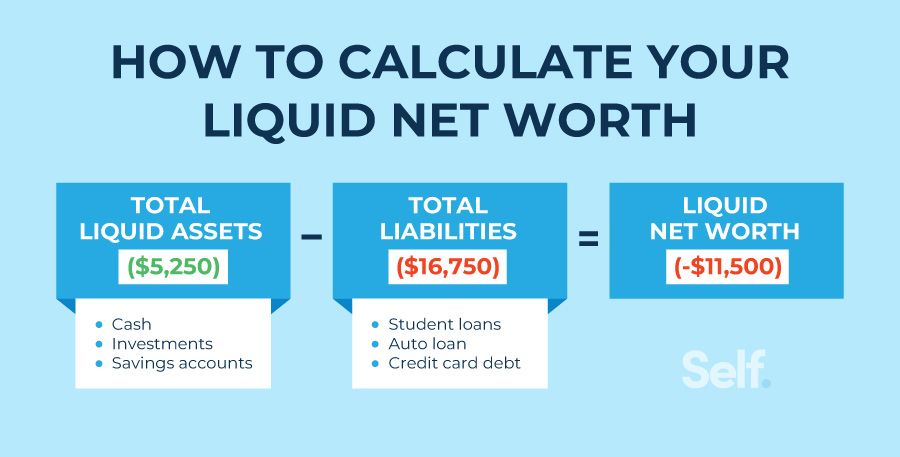
Another key factor is net worth, which for poor individuals is often zero or negative. They may owe more than they own due to student loans, medical debt, or high‑interest credit cards. Without assets, they cannot build long‑term stability.

In short, poor folks are defined not just by low income but by lack of security, lack of assets, and lack of financial breathing room.

Defining Middle‑Class Folks

The middle class is broader and more complex. It includes people who earn enough to cover their needs, enjoy modest comforts, and plan for the future. In many regions, middle‑class income ranges from $50,000 to $150,000 per year for households, depending on location and family size.

Middle‑class individuals typically have:

  • Stable jobs or reliable income
  • Some savings and retirement contributions
  • Access to credit
  • Ability to afford housing, transportation, and healthcare
  • Discretionary spending for vacations, dining out, or hobbies

However, the middle class is often defined more by lifestyle and stability than by income alone. A household earning $120,000 in an expensive city may feel financially stretched, while a household earning $70,000 in a low‑cost area may feel comfortable.

Net worth also plays a role. Middle‑class folks often have:

  • Positive net worth
  • Home equity
  • Retirement accounts
  • Moderate debt that is manageable

But the middle class is fragile. Many families live paycheck to paycheck despite earning decent incomes. They may have:

  • High mortgage payments
  • Student loans
  • Childcare costs
  • Medical expenses
  • Lifestyle inflation

This means that while middle‑class people enjoy stability, they do not necessarily enjoy security. A major financial setback—job loss, illness, divorce—can push them downward quickly.

The middle class is defined by comfort with limits, stability without abundance, and access without freedom.

Defining Rich Folks

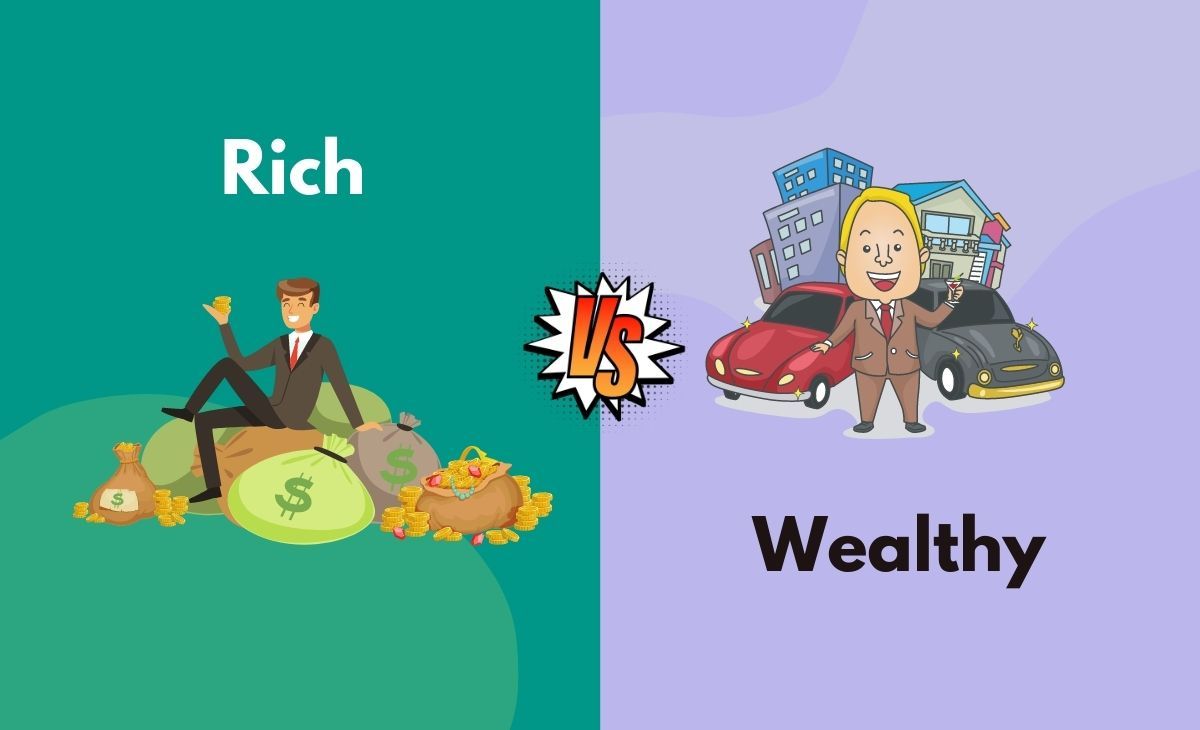
Rich individuals are defined not just by high income but by high net worth, financial independence, and access to opportunity. In many parts of the country, being rich typically means earning over $250,000 per year or having a net worth above $2 million. But these numbers only scratch the surface.

Rich folks usually have:

  • Multiple income streams
  • Significant investments
  • Real estate holdings
  • Business ownership
  • Large retirement accounts
  • Low or strategic debt

Income matters, but assets matter more. A person earning $300,000 but spending $290,000 is not truly rich. Meanwhile, someone earning $150,000 but owning $5 million in assets is unquestionably wealthy.

The defining characteristic of being rich is financial freedom. Rich individuals can:

  • Live without relying solely on wages
  • Invest aggressively
  • Take risks
  • Buy time through delegation
  • Access elite networks
  • Pass wealth to future generations

Rich folks also benefit from compounding advantages. Wealth attracts opportunity, and opportunity attracts more wealth. They can invest early, buy appreciating assets, and leverage capital in ways the middle class cannot.

Being rich is defined by control, independence, and long‑term security, not just high income.

Income vs. Net Worth: The Real Divider

Income determines lifestyle, but net worth determines class.

  • A poor person has low income and low net worth.
  • A middle‑class person has moderate income and moderate net worth.
  • A rich person has high net worth, regardless of income.

This is why some high earners feel broke—they have income but no assets. And why some retirees with modest income feel wealthy—they have assets that generate stability.

The Role of Location

Money means different things in different places. A $100,000 income in rural Georgia may provide a comfortable middle‑class lifestyle. The same income in Manhattan may barely cover rent. Cost of living shapes class as much as income does.

The Real Definitions

Ultimately, the categories break down like this:

  • Poor: No financial cushion, no assets, income consumed by survival.
  • Middle class: Stability, some assets, limited freedom, vulnerable to setbacks.
  • Rich: High net worth, financial independence, access to opportunity and time freedom.

Money defines these groups, but security, control, and opportunity are what truly separate them.

EDUCATION: Books

SPEAKING: Dr. Marcinko will be speaking and lecturing, signing and opining, teaching and preaching, storming and performing at many locations throughout the USA this year! His tour of witty and serious pontifications may be scheduled on a planned or ad-hoc basis; for public or private meetings and gatherings; formally, informally, or over lunch or dinner. All medical societies, financial advisory firms or Broker-Dealers are encouraged to submit an RFP for speaking engagements: CONTACT: Ann Miller RN MHA at MarcinkoAdvisors1738@outlook.com -OR- http://www.MarcinkoAssociates.com

Like, Refer and Subscribe

HOSPITALS: http://www.crcpress.com/product/isbn/9781466558731

CLINICS: http://www.crcpress.com/product/isbn/9781439879900

ADVISORS: www.CertifiedMedicalPlanner.org

FINANCE:Financial Planning for Physicians and Advisors

INSURANCE:Risk Management and Insurance Strategies for Physicians and Advisors

Dictionary of Health Economics and Finance

Dictionary of Health Information Technology and Security

Dictionary of Health Insurance and Managed Care

***

FIREFIGHTERS: Why Some Are Rich?

By Dr. David Edward Marcinko; MBA MEd

SPONSOR: http://www.MarcinkoAssociates.com

***

***

Firefighters are often imagined solely as public servants who work long, dangerous hours for modest pay. While it is true that many firefighters earn middle‑class incomes, it may surprise people to learn that some firefighters become genuinely wealthy. Their financial success is not usually the result of a single factor but rather a combination of strategic choices, unique job benefits, disciplined habits, and opportunities that come with the profession. Understanding why some firefighters become rich requires looking beyond stereotypes and examining the structural advantages and personal decisions that shape their financial outcomes.

One of the most important reasons some firefighters accumulate significant wealth is the stability and predictability of their career path. Firefighting offers steady employment, strong union protections, and reliable benefits. This stability allows firefighters to plan long‑term, invest consistently, and avoid the financial volatility that affects many other professions. When someone knows their income will not suddenly disappear, they can make confident financial decisions, such as buying property, contributing heavily to retirement accounts, or building investment portfolios. Over decades, this stability compounds into real wealth.

Another major factor is overtime and specialty pay. Firefighters often have opportunities to earn substantial overtime, especially in large cities or departments with staffing shortages. Some firefighters double their base salary through extra shifts, special assignments, or emergency deployments. Others earn additional income through roles such as paramedic, inspector, or hazardous‑materials technician. When this extra income is saved or invested rather than spent, it becomes a powerful wealth‑building engine.

Firefighters also benefit from exceptional retirement systems. Many departments offer pensions that pay a significant percentage of salary for life, often starting as early as age 50. A firefighter who retires with a strong pension can continue earning income through a second career, business venture, or investments while still receiving guaranteed monthly payments. This combination of pension income and post‑retirement earnings can create a level of financial security that many private‑sector workers never experience.

***

***

Another reason some firefighters become rich is their access to real estate opportunities. Firefighters typically work 24‑hour shifts followed by extended days off, giving them time to pursue side businesses or investment projects. Many firefighters use this schedule to buy, renovate, and manage rental properties. Real estate is a natural fit for the profession: it offers passive income, long‑term appreciation, and tax advantages. Over time, a firefighter who acquires multiple properties can build substantial net worth.

Firefighters also tend to develop strong financial discipline, often out of necessity. The job teaches patience, teamwork, and long‑term thinking—traits that translate well into money management. Many firefighters live below their means, avoid excessive debt, and prioritize saving. Their culture often emphasizes stability and responsibility, which can lead to smart financial habits. When combined with steady income and strong benefits, disciplined behavior becomes a powerful wealth‑building formula.

Another advantage is the availability of side businesses. Firefighters frequently start small companies in fields such as construction, landscaping, home inspection, or emergency training. Their schedule gives them time to operate these businesses, and their reputation for reliability helps attract customers. Some firefighters grow these ventures into highly profitable enterprises, earning far more from their business than from their fire department salary.

Firefighters also benefit from community trust and strong networks. They are viewed as dependable, honorable, and service‑oriented. This reputation opens doors to partnerships, investment opportunities, and mentorships that may not be available to others. When people trust you, they are more willing to collaborate, lend support, or share knowledge. Over time, these relationships can lead to financial growth.

Finally, some firefighters become rich simply because they start early and stay consistent. They contribute to retirement accounts from their first year on the job, invest in index funds, buy property, and avoid lifestyle inflation. Wealth rarely comes from dramatic events; it comes from steady habits practiced over decades. Firefighters who understand this principle often reach retirement with high net worth, even if their salary was never extraordinary.

In the end, the reason some firefighters become rich is not luck or privilege. It is the combination of stable employment, strong benefits, disciplined habits, strategic investments, and the unique opportunities that come with the profession. Firefighters who leverage these advantages thoughtfully can build impressive financial futures. Their wealth is not a contradiction to their role—it is a testament to the power of consistency, planning, and resilience.

EDUCATION: Books

SPEAKING: Dr. Marcinko will be speaking and lecturing, signing and opining, teaching and preaching, storming and performing at many locations throughout the USA this year! His tour of witty and serious pontifications may be scheduled on a planned or ad-hoc basis; for public or private meetings and gatherings; formally, informally, or over lunch or dinner. All medical societies, financial advisory firms or Broker-Dealers are encouraged to submit an RFP for speaking engagements: CONTACT: Ann Miller RN MHA at MarcinkoAdvisors1738@outlook.com -OR- http://www.MarcinkoAssociates.com

Like, Refer and Subscribe

HOSPITALS: http://www.crcpress.com/product/isbn/9781466558731

CLINICS: http://www.crcpress.com/product/isbn/9781439879900

ADVISORS: www.CertifiedMedicalPlanner.org

FINANCE:Financial Planning for Physicians and Advisors

INSURANCE:Risk Management and Insurance Strategies for Physicians and Advisors

Dictionary of Health Economics and Finance

Dictionary of Health Information Technology and Security

Dictionary of Health Insurance and Managed Care

***

K-SHAPED ECONOMY: An Uneven and Divided World

By Dr. David Edward Marcinko MBA MEd

***

***

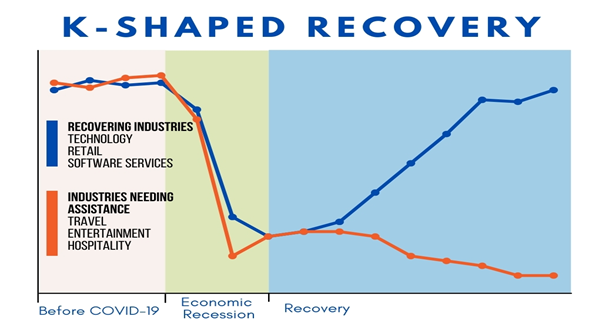
The term “K-shaped economy” emerged during the COVID-19 pandemic to describe a recovery marked by stark divergence—where some sectors and social groups rebound rapidly while others continue to decline. Unlike traditional V-shaped or U-shaped recoveries, which imply uniform economic improvement, the K-shaped model reflects a split trajectory: the upward arm of the “K” represents those who thrive, while the downward arm captures those left behind. This phenomenon has profound implications for economic policy, social equity, and long-term stability.

At the heart of the K-shaped economy is inequality. High-income individuals, white-collar professionals, and large corporations often benefit from technological advances, remote work flexibility, and access to capital. For example, tech giants like Apple, Microsoft, and Alphabet saw record profits during the pandemic, fueled by digital transformation and cloud services. Meanwhile, lower-income workers—especially in hospitality, retail, and service industries—faced job losses, reduced hours, and limited access to healthcare or financial safety nets. This divergence widened existing income and wealth gaps, exacerbating social tensions.

Sectoral performance also illustrates the K-shaped divide. Industries such as e-commerce, software, and logistics surged, while travel, entertainment, and small businesses struggled. The rise of automation and artificial intelligence further tilted the scales, favoring companies that could invest in innovation while displacing low-skilled labor. In education, students from affluent families adapted to online learning with ease, while those from disadvantaged backgrounds faced digital barriers and learning loss. These disparities underscore how economic recovery is not just uneven—it’s structurally imbalanced.

Geography plays a role too. Urban centers with diversified economies and strong tech sectors rebounded faster than rural or manufacturing-heavy regions. Housing markets in affluent areas soared, driven by low interest rates and remote work migration, while renters and first-time buyers faced affordability crises. Even within cities, neighborhoods with better infrastructure and public services recovered more quickly, deepening the urban-suburban divide.

Policymakers face a daunting challenge in addressing the K-shaped recovery. Traditional stimulus measures may not reach the most vulnerable populations without targeted interventions. Expanding access to education, healthcare, and digital infrastructure is essential to leveling the playing field. Progressive taxation, wage support, and small business aid can help bridge the gap, but require political will and fiscal discipline. Central banks must balance inflation control with inclusive growth, avoiding policies that disproportionately benefit asset holders.

The long-term consequences of a K-shaped economy are significant. Persistent inequality can erode trust in institutions, fuel populism, and hinder social mobility. Economic growth may slow if large segments of the population remain underemployed or financially insecure. To build a resilient and inclusive future, governments, businesses, and civil society must collaborate to ensure that recovery lifts all boats—not just the yachts.

COMMENTS APPRECIATED

EDUCATION: Books

SPEAKING: Dr. Marcinko will be speaking and lecturing, signing and opining, teaching and preaching, storming and performing at many locations throughout the USA this year! His tour of witty and serious pontifications may be scheduled on a planned or ad-hoc basis; for public or private meetings and gatherings; formally, informally, or over lunch or dinner. All medical societies, financial advisory firms or Broker-Dealers are encouraged to submit an RFP for speaking engagements: CONTACT: Ann Miller RN MHA at MarcinkoAdvisors@outlook.com -OR- http://www.MarcinkoAssociates.com

Like, Refer and Subscribe

***

***

NET WORTH: Defined for Physicians

By Staff Reporters

SPONSOR: http://www.CertifiedMedicalPlanner.org

***

***

What does net worth really mean?

Net worth is everything you own of significance (Assets) minus what is owed in debts (Liabilities). Assets include cash and investments, real estate, cars and anything else of value.

BROKE DOCTORS: https://medicalexecutivepost.com/2025/08/02/doctors-going-broke-and-living-paycheck-to-paycheck/

How is net worth calculated? Assets – Debt = Net Worth. Net worth is calculated by adding all owned assets (anything of value) and then subtracting all of your liabilities.

Is net worth yearly? No, net worth is not yearly. Net worth isn’t inherently yearly but is often tracked on an annual basis to assess financial progress year over year.

What net worth is considered wealthy, rich and upper class?
In the U.S. salary average is around $59,000, and only 20% of Americans have a household income of $100,000 or more.

MONEY ADDICTION: https://medicalexecutivepost.com/2025/08/07/moiney-addicted-physicians-the-investing-and-trading-personality-of-doctors/

Is net worth the same as net income? No, net worth is not the same as net income. Net income is what you actually bring home after taxes and payroll deductions, like Social Security and 401(k) contributions.

Can one measure their net worth if they don’t have many assets or a high income? Yes. Knowing your net worth isn’t about the amount you have; it’s about understanding your financial position. It helps you track your progress, informs your financial decisions, and motivates you to improve your financial health, regardless of where you start.

HEDGE FUNDS: https://medicalexecutivepost.com/2025/06/08/hedge-funds-defined-for-doctors/

COMMENTS APPRECIATED

Like and Subscribe

***

***

FEELING WEALTHY: How Much is [Really] Enough?

By Staff Reporters

***

***

At the most general level, economists may define wealth as “the total of anything of value” that captures both the subjective nature of the idea and the idea that it is not a fixed or static concept. Various definitions and concepts of wealth have been asserted by various people in different contexts. Defining wealth can be a normative process with various ethical implications, since often wealth maximization is seen as a goal or is thought to be a normative principle of its own. A community, region or country that possesses an abundance of such possessions or resources to the benefit of the common good is known as wealthy.

What does wealth mean to you?

In a recent survey by Edelman Financial Engines, 57% of respondents said they’d feel wealthy if they had $1 million in the bank. But for many people, that’s not enough.

Among those with $500,000 and $3 million in assets, 53% said it would take over $3 million in the bank for them to feel wealthy, and 33% said it would take over $5 million. Given that these are amounts some people will never even come close to amassing in their lifetimes, it may be hard to wrap your head around these answers.

***

ORDER: https://www.routledge.com/Comprehensive-Financial-Planning-Strategies-for-Doctors-and-Advisors-Best/Marcinko-Hetico/p/book/9781482240283

***

COMMENTS APPRECIATED

Thank You

***

DOCTORS FEELING WEALTHY: How Much is [Really] Enough?

By Staff Reporters

SPONSOR: http://www.MARCINKOASSOCIATES.com

***

***

What does wealth mean to you?

In a recent survey by Edelman Financial Engines, 57% of respondents said they’d feel wealthy if they had $1 million in the bank. But for many people, like doctors, that may not be enough.

Among those with $500,000 and $3 million in assets, 53% said it would take over $3 million in the bank for them to feel wealthy, and 33% said it would take over $5 million. Given that these are amounts some people will never even come close to amassing in their lifetimes, it may be hard to wrap your head around these answers.

***

***

COMMENTS APPRECIATED

Thank You

***