Support our online development, and advance our onground research initiatives in free market economics, as we seek to showcase the brightest Next-Gen minds.
THE ME-P DISCLAIMER: Posts, comments and opinions do not necessarily represent iMBA, Inc., but become our property after submission. Copyright © 2006 to-date. iMBA, Inc allows colleges, universities, medical and financial professionals and related clinics, hospitals and non-profit healthcare organizations to distribute our proprietary essays, photos, videos, audios and other documents; etc. However, please review copyright and usage information for each individual asset before submission to us, and/or placement on your publication or web site. Attestation references, citations and/or back-links are required. All other assets are property of the individual copyright holder.
Support our online development, and advance our onground research initiatives in free market economics, as we seek to showcase the brightest Next-Gen minds.
THE ME-P DISCLAIMER: Posts, comments and opinions do not necessarily represent iMBA, Inc., but become our property after submission. Copyright © 2006 to-date. iMBA, Inc allows colleges, universities, medical and financial professionals and related clinics, hospitals and non-profit healthcare organizations to distribute our proprietary essays, photos, videos, audios and other documents; etc. However, please review copyright and usage information for each individual asset before submission to us, and/or placement on your publication or web site. Attestation references, citations and/or back-links are required. All other assets are property of the individual copyright holder.


By Dr. David Edward Marcinko; MBA MEd
SPONSOR: http://www.MarcinkoAssociates.com
***
***
Money shapes how people live, what choices they can make, and how secure they feel. Yet the categories poor, middle class, and rich are often used loosely, without clear definitions. While income is a major factor, wealth, stability, and access to opportunity matter just as much. Still, it is possible to outline general financial ranges that help explain where people fall economically. These ranges vary by region, cost of living, and lifestyle, but they offer a useful framework for understanding how money defines each group.
Defining Poor Folks
People considered poor typically earn low or unstable income, often below what is needed to cover basic living expenses. In many parts of the United States, this means earning under $35,000 per year for an individual or under $50,000 for a family. But income alone does not capture the full picture.
Poor folks usually have:
- Little or no savings
- No emergency fund
- High exposure to financial shocks
- Limited access to credit or affordable loans
- Difficulty covering essentials like rent, food, and transportation
A defining characteristic of poverty is the absence of financial cushion. Even if someone earns slightly above the poverty line, they may still be considered poor if they cannot absorb unexpected expenses. A car repair, medical bill, or job loss can push them into crisis.
Another key factor is net worth, which for poor individuals is often zero or negative. They may owe more than they own due to student loans, medical debt, or high‑interest credit cards. Without assets, they cannot build long‑term stability.
In short, poor folks are defined not just by low income but by lack of security, lack of assets, and lack of financial breathing room.
Defining Middle‑Class Folks
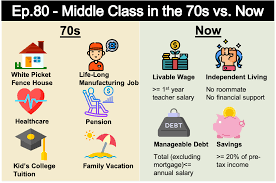
The middle class is broader and more complex. It includes people who earn enough to cover their needs, enjoy modest comforts, and plan for the future. In many regions, middle‑class income ranges from $50,000 to $150,000 per year for households, depending on location and family size.
Middle‑class individuals typically have:
- Stable jobs or reliable income
- Some savings and retirement contributions
- Access to credit
- Ability to afford housing, transportation, and healthcare
- Discretionary spending for vacations, dining out, or hobbies
However, the middle class is often defined more by lifestyle and stability than by income alone. A household earning $120,000 in an expensive city may feel financially stretched, while a household earning $70,000 in a low‑cost area may feel comfortable.
Net worth also plays a role. Middle‑class folks often have:
- Positive net worth
- Home equity
- Retirement accounts
- Moderate debt that is manageable
But the middle class is fragile. Many families live paycheck to paycheck despite earning decent incomes. They may have:
- High mortgage payments
- Student loans
- Childcare costs
- Medical expenses
- Lifestyle inflation
This means that while middle‑class people enjoy stability, they do not necessarily enjoy security. A major financial setback—job loss, illness, divorce—can push them downward quickly.
The middle class is defined by comfort with limits, stability without abundance, and access without freedom.
Defining Rich Folks
Rich individuals are defined not just by high income but by high net worth, financial independence, and access to opportunity. In many parts of the country, being rich typically means earning over $250,000 per year or having a net worth above $2 million. But these numbers only scratch the surface.
Rich folks usually have:
- Multiple income streams
- Significant investments
- Real estate holdings
- Business ownership
- Large retirement accounts
- Low or strategic debt
Income matters, but assets matter more. A person earning $300,000 but spending $290,000 is not truly rich. Meanwhile, someone earning $150,000 but owning $5 million in assets is unquestionably wealthy.
The defining characteristic of being rich is financial freedom. Rich individuals can:
- Live without relying solely on wages
- Invest aggressively
- Take risks
- Buy time through delegation
- Access elite networks
- Pass wealth to future generations
Rich folks also benefit from compounding advantages. Wealth attracts opportunity, and opportunity attracts more wealth. They can invest early, buy appreciating assets, and leverage capital in ways the middle class cannot.
Being rich is defined by control, independence, and long‑term security, not just high income.
Income vs. Net Worth: The Real Divider
Income determines lifestyle, but net worth determines class.
- A poor person has low income and low net worth.
- A middle‑class person has moderate income and moderate net worth.
- A rich person has high net worth, regardless of income.
This is why some high earners feel broke—they have income but no assets. And why some retirees with modest income feel wealthy—they have assets that generate stability.
The Role of Location
Money means different things in different places. A $100,000 income in rural Georgia may provide a comfortable middle‑class lifestyle. The same income in Manhattan may barely cover rent. Cost of living shapes class as much as income does.
The Real Definitions
Ultimately, the categories break down like this:
- Poor: No financial cushion, no assets, income consumed by survival.
- Middle class: Stability, some assets, limited freedom, vulnerable to setbacks.
- Rich: High net worth, financial independence, access to opportunity and time freedom.
Money defines these groups, but security, control, and opportunity are what truly separate them.
SPEAKING: Dr. Marcinko will be speaking and lecturing, signing and opining, teaching and preaching, storming and performing at many locations throughout the USA this year! His tour of witty and serious pontifications may be scheduled on a planned or ad-hoc basis; for public or private meetings and gatherings; formally, informally, or over lunch or dinner. All medical societies, financial advisory firms or Broker-Dealers are encouraged to submit an RFP for speaking engagements: CONTACT: Ann Miller RN MHA at MarcinkoAdvisors1738@outlook.com -OR- http://www.MarcinkoAssociates.com
Like, Refer and Subscribe
HOSPITALS: http://www.crcpress.com/product/isbn/9781466558731
CLINICS: http://www.crcpress.com/product/isbn/9781439879900
ADVISORS: www.CertifiedMedicalPlanner.org
FINANCE:Financial Planning for Physicians and Advisors
INSURANCE:Risk Management and Insurance Strategies for Physicians and Advisors
Dictionary of Health Economics and Finance
Dictionary of Health Information Technology and Security
Dictionary of Health Insurance and Managed Care
***
Share this:

Filed under: iMBA, Inc. | Tagged: economics, finance, folks, how-much-money-defines-poor, Investing, Marcinko, middle class, middle-class-and-rich-folks, money, personal-finance, poor, rich | Leave a comment »