







 Support our online development, and advance our onground research initiatives in free market economics, as we seek to showcase the brightest Next-Gen minds.
THE ME-P DISCLAIMER: Posts, comments and opinions do not necessarily represent iMBA, Inc., but become our property after submission. Copyright © 2006 to-date. iMBA, Inc allows colleges, universities, medical and financial professionals and related clinics, hospitals and non-profit healthcare organizations to distribute our proprietary essays, photos, videos, audios and other documents; etc. However, please review copyright and usage information for each individual asset before submission to us, and/or placement on your publication or web site. Attestation references, citations and/or back-links are required. All other assets are property of the individual copyright holder.
Support our online development, and advance our onground research initiatives in free market economics, as we seek to showcase the brightest Next-Gen minds.
THE ME-P DISCLAIMER: Posts, comments and opinions do not necessarily represent iMBA, Inc., but become our property after submission. Copyright © 2006 to-date. iMBA, Inc allows colleges, universities, medical and financial professionals and related clinics, hospitals and non-profit healthcare organizations to distribute our proprietary essays, photos, videos, audios and other documents; etc. However, please review copyright and usage information for each individual asset before submission to us, and/or placement on your publication or web site. Attestation references, citations and/or back-links are required. All other assets are property of the individual copyright holder.


By Dr. David Edward Marcinko; MBA MEd
SPONSOR: http://www.MarcinkoAssociates.com
***
***
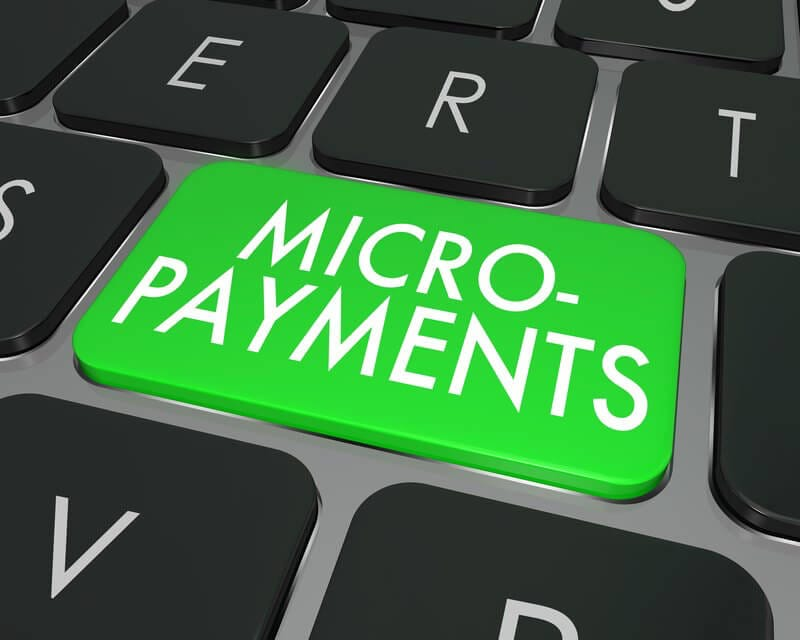
The Evolution and Impact of Micropayments in the Digital Economy
The internet was originally designed to facilitate the free and seamless exchange of information, but it lacked a built-in mechanism for exchanging small amounts of value. As the digital landscape matured, content creators, developers, and service providers found themselves in a perpetual struggle to monetize their work without alienating users.
For decades, the dominant solutions were subscription models and intrusive digital advertising. However, subscriptions demand an upfront commitment that casual consumers are often unwilling to make, while advertisements clutter user interfaces and compromise privacy. To bridge this gap, the concept of micropayments emerged. Generally defined as financial transactions involving very small sums of money—often ranging from a fraction of a cent to a few dollars—micropayments are fundamentally reshaping how value is transferred, consumed, and appreciated in the modern digital economy.
The underlying infrastructure supporting micropayments has undergone a massive transformation. Historically, traditional financial networks like credit cards and bank wires were entirely unsuited for micro-transactions. The fixed processing fees associated with standard credit card transactions could easily exceed the total value of a fifty-cent payment, making the model economically unviable. To circumvent these high friction costs, early digital platforms relied on centralized aggregation models. Companies like Apple, through the iTunes ecosystem, aggregated small digital purchases into single, larger bills. In recent years, however, technological breakthroughs have introduced decentralized networks and layer-2 blockchain solutions, such as the Bitcoin Lightning Network. These innovations allow for near-instantaneous transactions with practically negligible fees, finally unlocking the true technological potential of peer-to-peer micro-billing.
The most profound impact of micropayments is felt in the realm of digital journalism and creative content creation. Under the current paradigm, internet users frequently encounter hard paywalls that demand monthly or annual subscriptions just to read a single article. This “subscription fatigue” restricts access to information and hurts publishers who lose casual readers. Micropayments offer an elegant alternative by introducing a pay-per-article or pay-per-minute model. A reader can seamlessly authorize a payment of five cents to read an insightful editorial, allowing them to curate their media consumption across dozens of platforms without committing to a single one. This empowers independent creators, bloggers, and musicians to directly monetize their niche audiences, shifting the economic power away from massive media conglomerates back to individual artists.
Beyond traditional media, micropayments are a foundational element of the rapidly expanding gaming and software-as-a-service (SaaS) industries. In modern gaming, the “free-to-play” model relies entirely on microtransactions. Players download games at no cost but routinely spend small sums on virtual cosmetics, extra lives, or character upgrades. While this model has faced criticism regarding predatory design, it undeniably demonstrates the immense consumer willingness to engage in small, frictionless purchases. In software engineering and cloud computing, micropayments allow users to pay precisely for the resources they utilize. Instead of paying a steep monthly fee for an artificial intelligence tool, a developer can pay a hundredth of a cent for every line of code generated, creating a highly efficient, utility-based pricing environment.
***
***
Despite the obvious benefits, the widespread adoption of micropayments faces notable psychological and technical hurdles. Chief among these is the “cognitive transaction cost.” Behavioral economics shows that every time a consumer must decide whether or not to spend money—even a trivial sum—it triggers a micro-moment of mental stress and hesitation. If a user has to actively approve every five-cent transaction while browsing a website, the resulting decision fatigue ruins the browsing experience. To overcome this barrier, modern systems utilize automated, pre-authorized wallets that stream fractions of a cent in the background as a user scrolls through a webpage or listens to a podcast, removing the conscious burden of payment execution.
Looking forward, micropayments are poised to serve as the economic backbone of the emerging Machine-to-Machine (M2M) economy and the Internet of Things (IoT). In an interconnected world, smart devices will need to transact with one another autonomously. For instance, an electric vehicle could automatically stream micropayments to a smart toll road or a charging station while driving, or a smart weather sensor could sell localized atmospheric data to a meteorological agency for a fraction of a penny per second. By providing a highly scalable, low-cost method to transfer tiny amounts of wealth, micropayments are quietly transforming the internet from a network of free information into a hyper-efficient, liquid marketplace for global digital value.
SPEAKING: Dr. Marcinko will be speaking and lecturing, signing and opining, teaching and preaching, storming and performing at many locations throughout the USA this year! His tour of witty and serious pontifications may be scheduled on a planned or ad-hoc basis; for public or private meetings and gatherings; formally, informally, or over lunch or dinner. All medical societies, financial advisory firms or Broker-Dealers are encouraged to submit an RFP for speaking engagements: CONTACT: Ann Miller RN MHA at MarcinkoAdvisors1738@outlook.com -OR- http://www.MarcinkoAssociates.com
Like, Refer and Subscribe
SEND IN YOUR TOPIC IEAS, TODAY!
HOSPITALS: http://www.crcpress.com/product/isbn/9781466558731
CLINICS: http://www.crcpress.com/product/isbn/9781439879900
ADVISORS: www.CertifiedMedicalPlanner.org
FINANCE:Financial Planning for Physicians and Advisors
INSURANCE:Risk Management and Insurance Strategies for Physicians and Advisors
Dictionary of Health Economics and Finance
Dictionary of Health Information Technology and Security
Dictionary of Health Insurance and Managed Care
***
Share this:

Filed under: iMBA, Inc. | Tagged: AI, artificial intelligence, blockchain, business, Marcinko, micro-payments, payments, Technology |


Navigating the shift toward remote work and digital freelancing has shown me just how important reliable income streams are, especially for those looking to build financial stability from home. While traditional freelance gigs are great, exploring proof based micro tasks has opened up entirely new doors for quick supplementary earnings. Having platforms that offer transparent management systems makes a massive difference in avoiding unpaid work or unfair rejections.
Winifred Udekwe
LikeLike