







 Support our online development, and advance our onground research initiatives in free market economics, as we seek to showcase the brightest Next-Gen minds.
THE ME-P DISCLAIMER: Posts, comments and opinions do not necessarily represent iMBA, Inc., but become our property after submission. Copyright © 2006 to-date. iMBA, Inc allows colleges, universities, medical and financial professionals and related clinics, hospitals and non-profit healthcare organizations to distribute our proprietary essays, photos, videos, audios and other documents; etc. However, please review copyright and usage information for each individual asset before submission to us, and/or placement on your publication or web site. Attestation references, citations and/or back-links are required. All other assets are property of the individual copyright holder.
Support our online development, and advance our onground research initiatives in free market economics, as we seek to showcase the brightest Next-Gen minds.
THE ME-P DISCLAIMER: Posts, comments and opinions do not necessarily represent iMBA, Inc., but become our property after submission. Copyright © 2006 to-date. iMBA, Inc allows colleges, universities, medical and financial professionals and related clinics, hospitals and non-profit healthcare organizations to distribute our proprietary essays, photos, videos, audios and other documents; etc. However, please review copyright and usage information for each individual asset before submission to us, and/or placement on your publication or web site. Attestation references, citations and/or back-links are required. All other assets are property of the individual copyright holder.


By Dr. David Edward Marcinko; MBA MEd
SPONSOR: http://www.MarcinkoAssociates.com
***
***
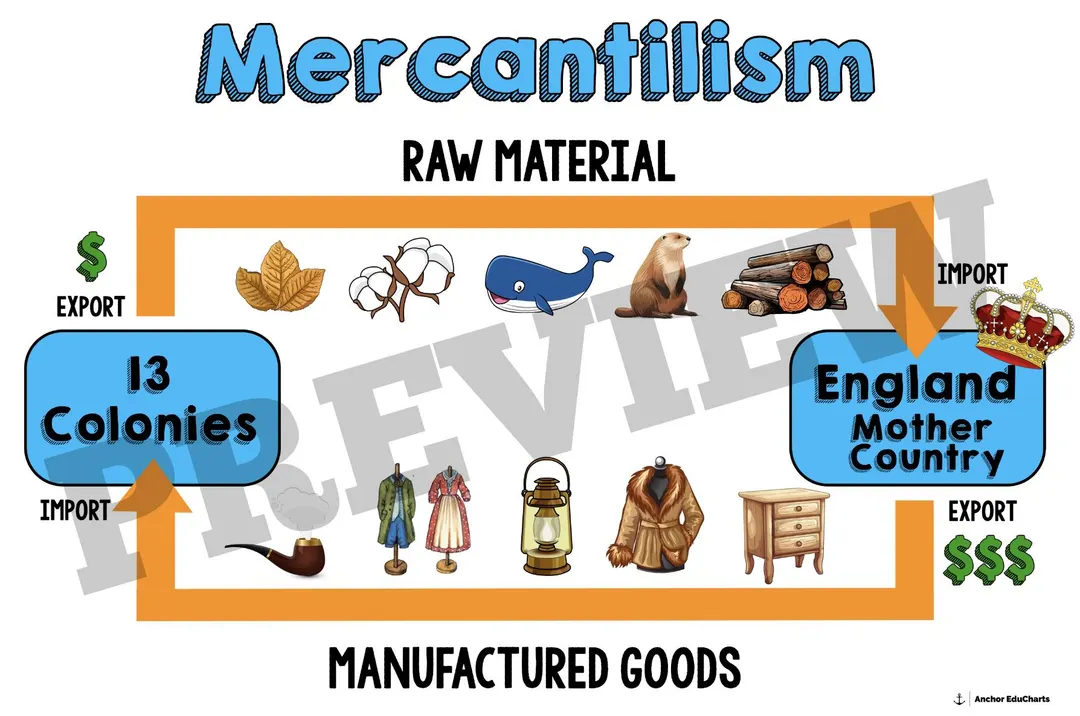
Mercantilism is an economic system where governments regulate trade and the economy to maximize national wealth, primarily through accumulating gold and silver and maintaining a favorable balance of trade.
Definition and Core Principles
Mercantilism is an economic theory and practice that emphasizes government control over the economy to strengthen national power at the expense of rival nations. Wealth was measured in terms of precious metals like gold and silver, and nations sought to export more than they imported to achieve a positive trade balance and accumulate bullion This system is often associated with economic nationalism and protectionist policies, including high tariffs and restrictions on imports.
Key principles include:
• Accumulation of wealth through bullionism (gold and silver reserves).
• Favorable balance of trade, exporting more than importing.
• Government regulation of production, trade, and colonies.
• Colonial exploitation, where colonies supplied raw materials and served as markets for the mother country’s manufactured goods.
• Population growth to provide labor, markets, and soldiers.
Historical Context
Mercantilism was dominant in Europe from the 16th to the 18th centuries, practiced by countries such as France, Spain, Portugal, Italy, Britain, Germany, and the Netherlands It often led to the creation of monopolistic trading companies, like the East India Company, and contributed to colonial expansion and military conflicts over trade dominance. England, for example, implemented mercantilist policies during the Elizabethan Era to build a strong navy and merchant fleet while increasing bullion reserves.
Economic Effects
Mercantilism encouraged industrial development in the mother country, restricted manufacturing in colonies, and often caused high prices and trade friction. It was a zero-sum view of trade, assuming that one nation’s gain came at another’s expense These policies sometimes led to smuggling, colonial unrest, and wars, such as tensions that contributed to the American Revolution.
Modern Perspective
While classical mercantilism declined with the rise of free trade and classical economics, some argue that neomercantilist practices persist in modern economies through trade protectionism and economic interventionism.
In summary, mercantilism is a historical economic system focused on state-controlled trade, accumulation of precious metals, and national power, shaping European economic and colonial policies for several centuries.
SPEAKING: Dr. Marcinko will be speaking and lecturing, signing and opining, teaching and preaching, storming and performing at many locations throughout the USA this year! His tour of witty and serious pontifications may be scheduled on a planned or ad-hoc basis; for public or private meetings and gatherings; formally, informally, or over lunch or dinner. All medical societies, financial advisory firms or Broker-Dealers are encouraged to submit an RFP for speaking engagements: CONTACT: Ann Miller RN MHA at MarcinkoAdvisors1738@outlook.com -OR- http://www.MarcinkoAssociates.com
Like, Refer and Subscribe
HOSPITALS: http://www.crcpress.com/product/isbn/9781466558731
CLINICS: http://www.crcpress.com/product/isbn/9781439879900
ADVISORS: www.CertifiedMedicalPlanner.org
FINANCE:Financial Planning for Physicians and Advisors
INSURANCE:Risk Management and Insurance Strategies for Physicians and Advisors
Dictionary of Health Economics and Finance
Dictionary of Health Information Technology and Security
Dictionary of Health Insurance and Managed Care
***
Share this:

Filed under: iMBA, Inc. |


Leave a Reply