







 Support our online development, and advance our onground research initiatives in free market economics, as we seek to showcase the brightest Next-Gen minds.
THE ME-P DISCLAIMER: Posts, comments and opinions do not necessarily represent iMBA, Inc., but become our property after submission. Copyright © 2006 to-date. iMBA, Inc allows colleges, universities, medical and financial professionals and related clinics, hospitals and non-profit healthcare organizations to distribute our proprietary essays, photos, videos, audios and other documents; etc. However, please review copyright and usage information for each individual asset before submission to us, and/or placement on your publication or web site. Attestation references, citations and/or back-links are required. All other assets are property of the individual copyright holder.
Support our online development, and advance our onground research initiatives in free market economics, as we seek to showcase the brightest Next-Gen minds.
THE ME-P DISCLAIMER: Posts, comments and opinions do not necessarily represent iMBA, Inc., but become our property after submission. Copyright © 2006 to-date. iMBA, Inc allows colleges, universities, medical and financial professionals and related clinics, hospitals and non-profit healthcare organizations to distribute our proprietary essays, photos, videos, audios and other documents; etc. However, please review copyright and usage information for each individual asset before submission to us, and/or placement on your publication or web site. Attestation references, citations and/or back-links are required. All other assets are property of the individual copyright holder.


By Dr. David Edward Marcinko; MBA MEd
SPONSOR: http://www.MarcinkoAssociates.com
***
***
Virtual Reality in Economics
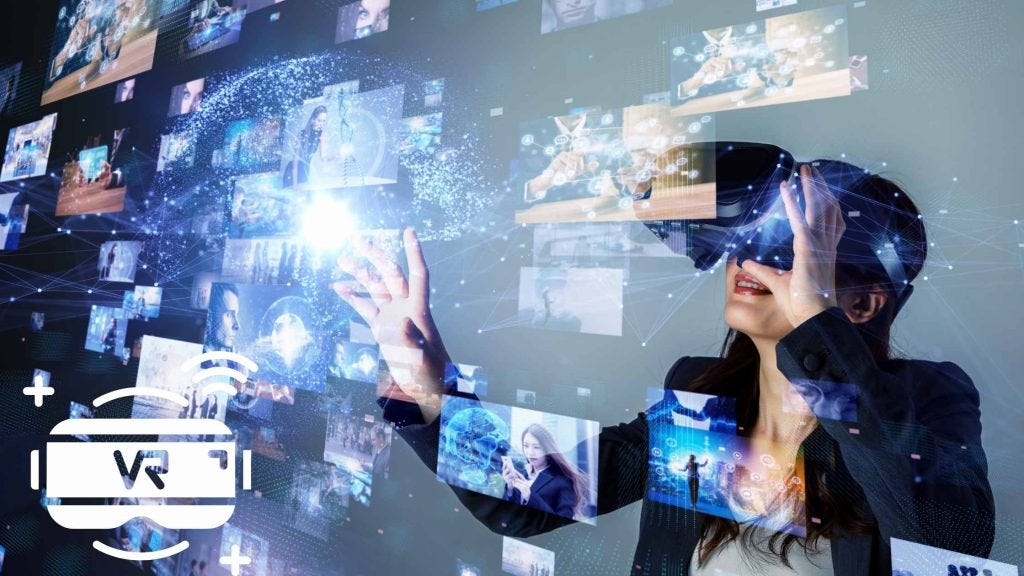
Virtual reality (VR) is fundamentally altering how economists visualize data, simulate market behavior, and train the future workforce. Long confined to the realms of gaming and entertainment, immersive technology has emerged as a powerful tool for understanding complex economic systems.
By transforming abstract theoretical frameworks into tangible, interactive environments, virtual reality bridges the gap between mathematical modeling and human behavior. As global economies become increasingly digitalized, the integration of VR into economics offers unprecedented opportunities for experimental research, consumer analysis, and macroeconomic forecasting.
At its core, economics relies on the study of how individuals make choices under conditions of scarcity. Traditional economic experiments often struggle to replicate the messy reality of human decision-making, forcing researchers to rely on simplified lab settings or retrospective survey data. Virtual reality completely changes this dynamic by allowing researchers to construct highly controlled, hyper-realistic experimental environments. In a virtual storefront, for example, economists can manipulate subtle variables—such as the layout of products, the behavior of virtual bystanders, or real-time price fluctuations—to observe authentic consumer reactions. Because participants experience a genuine sense of presence, their choices mirror real-world behavioral economic patterns much more accurately than responses to a hypothetical questionnaire. This high degree of experimental control combined with ecological validity provides policymakers and businesses with deeper, data-driven insights into consumer psychology and market anomalies.
Beyond microeconomic experiments, virtual reality serves as a revolutionary mechanism for data visualization. Modern economic data is incredibly vast, high-dimensional, and difficult to conceptualize through traditional two-dimensional charts or spreadsheets. Using VR data spaces, analysts can literally walk through complex datasets, observing multidimensional clusters of inflation rates, employment statistics, and supply chain bottlenecks simultaneously. By mapping data points as physical objects in a 3D environment, anomalies and correlations that were previously obscured by the sheer volume of text become instantly recognizable. This spatial interaction allows central banks, corporate leaders, and financial institutions to grasp macroeconomic trends more intuitively, leading to faster, more robust policy decisions during times of financial instability.
***
***
Furthermore, virtual reality is rewriting the rules of labor economics and workplace productivity. The technology enables immersive remote collaboration, allowing global teams to work together in shared virtual spaces without the logistical costs, time constraints, or environmental impacts of physical travel. In terms of human capital development, VR drastically lowers the marginal cost of high-skill job training. Medical students can practice complex surgeries, engineers can test expensive industrial equipment, and retail workers can experience high-stress scenario management all within a zero-risk virtual simulation. By reducing the physical capital required for education and minimizing training accidents, VR accelerates skill acquisition, boosts structural productivity, and shifts the long-run aggregate supply curve outward.
However, the widespread adoption of virtual reality also introduces novel economic challenges that theorists must navigate. As digital assets, virtual real estate, and immersive commerce continue to expand, they create entirely new digital economies. These virtual ecosystems require their own regulatory frameworks, property rights enforcement, and taxation strategies. Central banks may eventually need to consider how virtual currencies and transactions impact broader monetary policy and inflation metrics in the physical world. Additionally, unequal access to premium VR hardware could exacerbate the digital divide, creating disparities in education and employment opportunities that reinforce existing socio-economic inequalities.
In conclusion, virtual reality is no longer a futuristic novelty; it is a transformative economic catalyst. By providing a playground for realistic behavioral experimentation and offering intuitive ways to navigate massive datasets, VR enhances our understanding of financial systems. Simultaneously, its capacity to optimize labor training and remote work promises to drive tangible productivity gains in the real world. As economists and policymakers adapt to this immersive frontier, they must balance the immense analytical and productive benefits of virtual reality against the regulatory and ethical hurdles of a dual physical-digital economy. Ultimately, those who master the virtual landscape will hold the keys to navigating the complex economic realities of tomorrow.
SPEAKING: Dr. Marcinko will be speaking and lecturing, signing and opining, teaching and preaching, storming and performing at many locations throughout the USA this year! His tour of witty and serious pontifications may be scheduled on a planned or ad-hoc basis; for public or private meetings and gatherings; formally, informally, or over lunch or dinner. All medical societies, financial advisory firms or Broker-Dealers are encouraged to submit an RFP for speaking engagements: CONTACT: Ann Miller RN MHA at MarcinkoAdvisors1738@outlook.com -OR- http://www.MarcinkoAssociates.com
Like, Refer and Subscribe
SEND IN YOUR TOPIC IEAS, TODAY!
HOSPITALS: http://www.crcpress.com/product/isbn/9781466558731
CLINICS: http://www.crcpress.com/product/isbn/9781439879900
ADVISORS: www.CertifiedMedicalPlanner.org
FINANCE:Financial Planning for Physicians and Advisors
INSURANCE:Risk Management and Insurance Strategies for Physicians and Advisors
Dictionary of Health Economics and Finance
Dictionary of Health Information Technology and Security
Dictionary of Health Insurance and Managed Care
***
Share this:

Filed under: iMBA, Inc. | Tagged: AI, artificial intelligence, economics, Marcinko, news, philosophy, Technology |


Leave a Reply