







 Support our online development, and advance our onground research initiatives in free market economics, as we seek to showcase the brightest Next-Gen minds.
THE ME-P DISCLAIMER: Posts, comments and opinions do not necessarily represent iMBA, Inc., but become our property after submission. Copyright © 2006 to-date. iMBA, Inc allows colleges, universities, medical and financial professionals and related clinics, hospitals and non-profit healthcare organizations to distribute our proprietary essays, photos, videos, audios and other documents; etc. However, please review copyright and usage information for each individual asset before submission to us, and/or placement on your publication or web site. Attestation references, citations and/or back-links are required. All other assets are property of the individual copyright holder.
Support our online development, and advance our onground research initiatives in free market economics, as we seek to showcase the brightest Next-Gen minds.
THE ME-P DISCLAIMER: Posts, comments and opinions do not necessarily represent iMBA, Inc., but become our property after submission. Copyright © 2006 to-date. iMBA, Inc allows colleges, universities, medical and financial professionals and related clinics, hospitals and non-profit healthcare organizations to distribute our proprietary essays, photos, videos, audios and other documents; etc. However, please review copyright and usage information for each individual asset before submission to us, and/or placement on your publication or web site. Attestation references, citations and/or back-links are required. All other assets are property of the individual copyright holder.


By Dr. David Edward Marcinko; MBA MEd
By Eugene Schmuckler; PhD MBA MEd
SPONSOR: http://www.MarcinkoAssociates.com
***

***
Transformational leadership is a leadership approach that focuses on inspiring individuals to achieve meaningful goals while encouraging personal growth, innovation, and positive change. Unlike traditional leadership styles that may rely heavily on rules, rewards, or authority, transformational leadership emphasizes motivation, vision, trust, and shared values. Transformational leaders seek not only to accomplish organizational objectives but also to develop the people they lead. This approach is widely relevant in businesses, educational institutions, healthcare organizations, and community settings because it can help organizations adapt to change and encourage individuals to reach their full potential.
One of the most important characteristics of transformational leadership is the ability to create and communicate a clear vision. A transformational leader gives people a sense of purpose by explaining what the organization hopes to achieve and why those goals matter. Instead of simply telling employees what tasks they must complete, the leader connects everyday responsibilities to a larger purpose. When people understand how their contributions affect the overall organization, they may become more committed and motivated. A strong vision can also provide direction during periods of uncertainty and change.
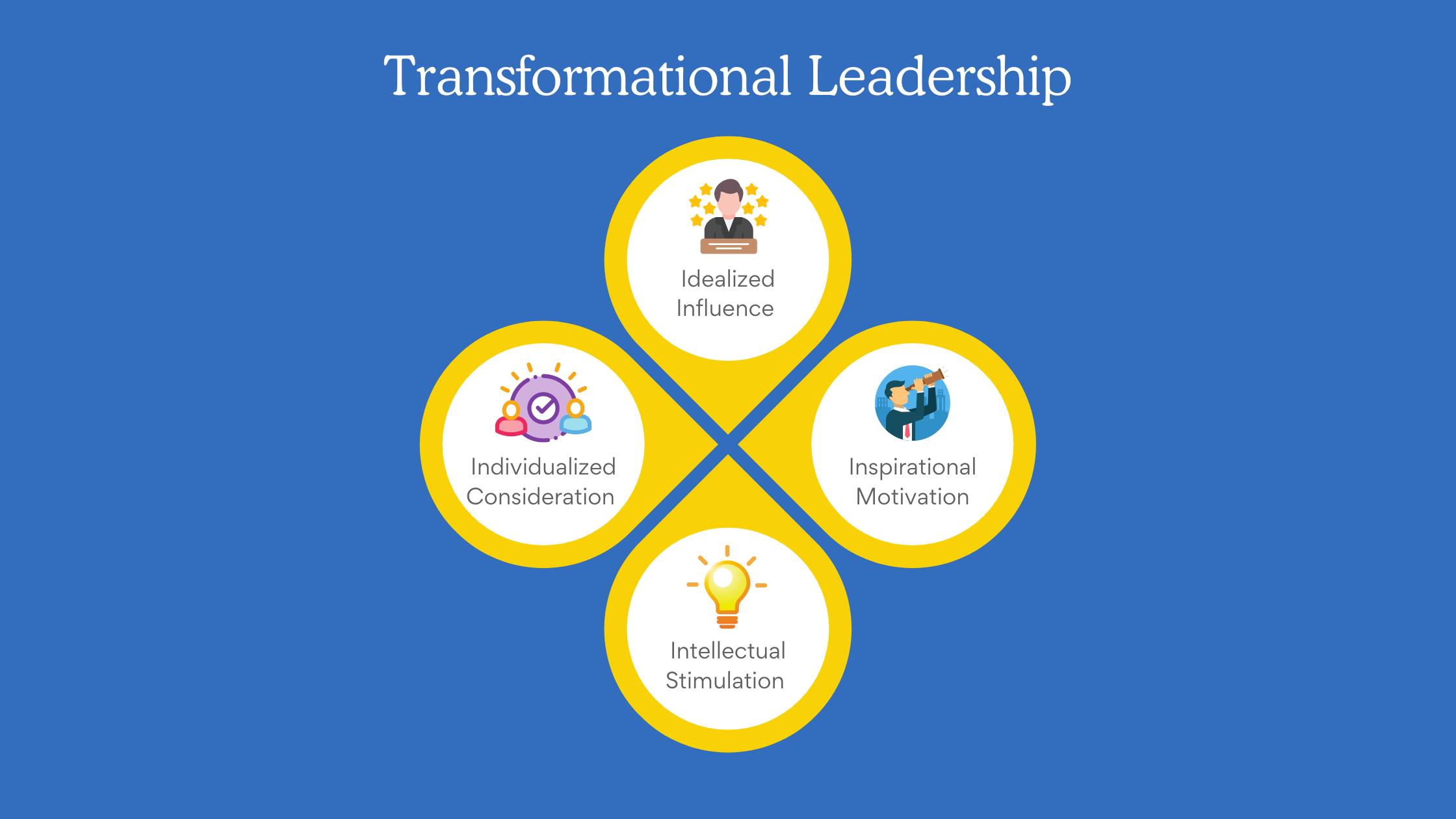
Another important element of transformational leadership is inspiration. Transformational leaders encourage people to challenge themselves and believe that improvement is possible. They often demonstrate enthusiasm, confidence, and commitment to organizational goals. Their behavior can influence employees to become more engaged in their work. However, inspiration is not simply about giving motivational speeches. Effective transformational leaders demonstrate the values and behaviors they expect from others. By acting with integrity, responsibility, and dedication, they can establish credibility and encourage others to follow their example.
***
***
Transformational leadership also places significant emphasis on intellectual stimulation. Leaders using this approach encourage employees to think creatively, question existing practices, and develop new solutions to problems. Rather than assuming that established procedures are always the best, transformational leaders create an environment in which people can offer ideas and explore alternative approaches. This can be especially valuable in organizations facing technological developments, changing customer expectations, or competitive pressures. Allowing employees to participate in problem-solving can also increase their sense of responsibility and involvement.
Individualized consideration is another central feature of transformational leadership. Transformational leaders recognize that employees have different abilities, experiences, interests, and professional goals. Instead of treating everyone in exactly the same way, they provide guidance and support according to individual needs. This may involve mentoring an employee, providing constructive feedback, offering opportunities for professional development, or helping someone overcome a challenge. By investing in individual development, leaders can strengthen both employee capabilities and organizational performance.
Transformational leadership can have several benefits for organizations. It can contribute to higher levels of employee engagement, teamwork, creativity, and commitment. Employees who feel respected and valued may be more willing to contribute ideas and take initiative. The approach can also help organizations respond to change because employees are encouraged to think beyond established routines. Furthermore, developing employees can create a stronger pool of future leaders, helping organizations maintain continuity as responsibilities change.
Despite its advantages, transformational leadership also has limitations. A strong emphasis on vision and change can sometimes create unrealistic expectations if leaders do not provide sufficient resources, planning, and support. Leaders may also become overly focused on organizational goals and unintentionally overlook practical concerns faced by employees. In addition, transformational leadership depends heavily on trust and credibility. If a leader communicates an inspiring vision but fails to demonstrate the behaviors necessary to achieve it, employees may become skeptical. Therefore, transformational leadership should be supported by effective communication, realistic planning, accountability, and attention to employee well-being.
In conclusion, transformational leadership is an approach that seeks to create positive change by motivating people, communicating a meaningful vision, encouraging innovation, and supporting individual development. Its emphasis on inspiration and personal growth distinguishes it from leadership approaches based primarily on authority or external rewards. When practiced effectively, transformational leadership can help individuals and organizations adapt, learn, and pursue shared objectives. Ultimately, successful transformational leadership is not simply about leading people toward a particular goal; it is about helping people understand the purpose behind that goal, develop their abilities, and become active participants in achieving meaningful organizational change.
SPEAKING: Dr. Marcinko will be speaking and lecturing, signing and opining, teaching and preaching, storming and performing at many locations throughout the USA this year! His tour of witty and serious pontifications may be scheduled on a planned or ad-hoc basis; for public or private meetings and gatherings; formally, informally, or over lunch or dinner. All medical societies, financial advisory firms or Broker-Dealers are encouraged to submit an RFP for speaking engagements: CONTACT: Ann Miller RN MHA at MarcinkoAdvisors1738@outlook.com -OR- http://www.MarcinkoAssociates.com
Like, Refer and Subscribe
SEND IN YOUR TOPIC IEAS, TODAY!
HOSPITALS: http://www.crcpress.com/product/isbn/9781466558731
CLINICS: http://www.crcpress.com/product/isbn/9781439879900
ADVISORS: www.CertifiedMedicalPlanner.org
FINANCE:Financial Planning for Physicians and Advisors
INSURANCE:Risk Management and Insurance Strategies for Physicians and Advisors
Dictionary of Health Economics and Finance
Dictionary of Health Information Technology and Security
Dictionary of Health Insurance and Managed Care
***
Share this:

Filed under: iMBA, Inc. | Tagged: business, leadership, Management, Marcinko, mental health, personal-development, transformational-leadership | Leave a comment »

