







 Support our online development, and advance our onground research initiatives in free market economics, as we seek to showcase the brightest Next-Gen minds.
THE ME-P DISCLAIMER: Posts, comments and opinions do not necessarily represent iMBA, Inc., but become our property after submission. Copyright © 2006 to-date. iMBA, Inc allows colleges, universities, medical and financial professionals and related clinics, hospitals and non-profit healthcare organizations to distribute our proprietary essays, photos, videos, audios and other documents; etc. However, please review copyright and usage information for each individual asset before submission to us, and/or placement on your publication or web site. Attestation references, citations and/or back-links are required. All other assets are property of the individual copyright holder.
Support our online development, and advance our onground research initiatives in free market economics, as we seek to showcase the brightest Next-Gen minds.
THE ME-P DISCLAIMER: Posts, comments and opinions do not necessarily represent iMBA, Inc., but become our property after submission. Copyright © 2006 to-date. iMBA, Inc allows colleges, universities, medical and financial professionals and related clinics, hospitals and non-profit healthcare organizations to distribute our proprietary essays, photos, videos, audios and other documents; etc. However, please review copyright and usage information for each individual asset before submission to us, and/or placement on your publication or web site. Attestation references, citations and/or back-links are required. All other assets are property of the individual copyright holder.


By Dr. David Edward Marcinko; MBA MEd
SPONSOR: http://www.MarcinkoAssociates.com
***
***
How Virtual Reality is Reshaping Finance
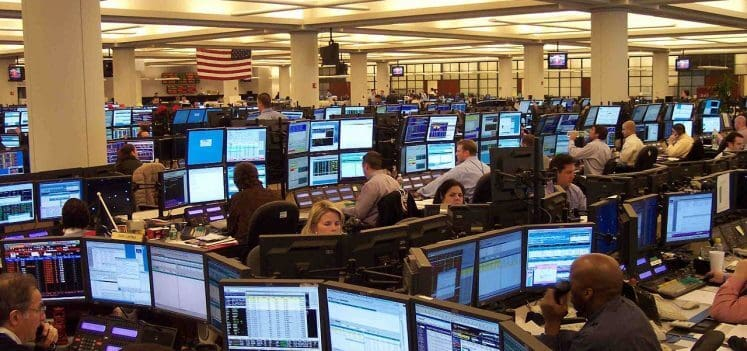
The financial services industry has historically been defined by physical spaces, from the bustling, chaotic trading floors of Wall Street to the imposing stone architecture of retail banks.
However, the digital revolution quietly dismantled these physical structures, replacing them with abstract algorithms, complex spreadsheets, and glowing flat screens. While this transition maximized operational efficiency, it stripped away the intuitive, spatial, and collaborative elements of human decision-making. Enter Virtual Reality (VR): an immersive technology that is no longer confined to the realms of gaming and entertainment. Today, VR is emerging as a powerful, transformative tool in finance, fundamentally altering how data is visualized, how global teams collaborate, and how institutions interact with their clients.
At the core of finance lies data—massive, fast-moving, and multidimensional data. For decades, analysts and portfolio managers have relied on traditional two-dimensional monitors to track market trends, risk variables, and asset correlations. This approach creates a cognitive bottleneck, as humans must mentally stitch flat charts together to understand complex market ecosystems. Virtual reality shatters this limitation by translating abstract numbers into immersive three-dimensional landscapes. In a VR environment, an entire investment portfolio can be visualized as a living corporate city. The height of a building might represent an asset’s market capitalization, its color could dictate real-time price fluctuations, and its proximity to other structures could visualize risk correlation. By stepping inside their data, financial professionals can utilize natural spatial awareness to spot anomalies, recognize structural patterns, and assess systemic risk far more quickly than would be possible scrolling through thousands of spreadsheet rows.
Beyond sophisticated data analysis, virtual reality is redefining collaboration within global financial institutions. The modern financial sector relies on seamless communication between decentralized teams scattered across New York, London, Tokyo, and beyond. Traditional video conferencing, while functional, lacks the nuance of shared physical presence and limits real-time collaborative modeling. VR bridges this geographic divide through virtual trading floors and immersive boardrooms. Equipped with VR headsets, traders and executives from around the world can gather as avatars in a singular digital workspace. They can collectively manipulate 3D data models, simulate macroeconomic scenarios, and execute complex strategies simultaneously. This level of immersion reproduces the high-energy, spontaneous collaboration of legacy trading pits while maintaining the precision and compliance of automated digital systems.
Simultaneously, VR is transforming the consumer-facing side of finance by reinventing retail banking and wealth management. As physical bank branches continue to close due to rising operational costs, institutions risk losing personal connections with their customers. VR provides a compelling middle ground by enabling virtual bank branches. Clients can step into a digital branch from the comfort of their living rooms to meet face-to-face with a financial advisor. This is particularly impactful for wealth management and financial planning. Instead of reviewing static retirement projections on a piece of paper, clients can view interactive, immersive timelines of their financial futures. An advisor can visually demonstrate how shifting savings rates or market downturns will alter a client’s long-term lifestyle goals, making abstract financial planning tangible and emotionally resonant.
Furthermore, the technology plays an increasingly vital role in institutional training and onboarding. The compliance-heavy, high-stakes nature of finance means that mistakes are exceptionally costly. VR offers a risk-free sandbox environment where junior traders, compliance officers, and customer service representatives can sharpen their skills. Trainees can be dropped into high-pressure scenarios, such as a simulated market crash or a volatile client confrontation, allowing them to build muscle memory, emotional resilience, and split-second decision-making capabilities without risking a single dollar of institutional capital.
In conclusion, virtual reality is evolving from a novel tech gimmick into a foundational pillar of modern financial infrastructure. By humanizing complex data, dismantling geographic barriers to collaboration, restoring personal touch to digital banking, and optimizing professional training, VR addresses the modern limitations of a purely flat digital economy. As hardware becomes more accessible and processing power continues to scale, the institutions that successfully integrate spatial computing into their daily workflows will capture a distinct competitive edge. The future of finance is no longer bound to a screen; it is an immersive environment waiting to be explored.
SPEAKING: Dr. Marcinko will be speaking and lecturing, signing and opining, teaching and preaching, storming and performing at many locations throughout the USA this year! His tour of witty and serious pontifications may be scheduled on a planned or ad-hoc basis; for public or private meetings and gatherings; formally, informally, or over lunch or dinner. All medical societies, financial advisory firms or Broker-Dealers are encouraged to submit an RFP for speaking engagements: CONTACT: Ann Miller RN MHA at MarcinkoAdvisors1738@outlook.com -OR- http://www.MarcinkoAssociates.com
Like, Refer and Subscribe
SEND IN YOUR TOPIC IEAS, TODAY!
HOSPITALS: http://www.crcpress.com/product/isbn/9781466558731
CLINICS: http://www.crcpress.com/product/isbn/9781439879900
ADVISORS: www.CertifiedMedicalPlanner.org
FINANCE:Financial Planning for Physicians and Advisors
INSURANCE:Risk Management and Insurance Strategies for Physicians and Advisors
Dictionary of Health Economics and Finance
Dictionary of Health Information Technology and Security
Dictionary of Health Insurance and Managed Care
***
Share this:

Filed under: iMBA, Inc. | Tagged: AI, artificial intelligence, business, finance, Marcinko, stocks, Technology, trading-floor, Wall Street |


Leave a comment