






 Support our online development, and advance our onground research initiatives in free market economics, as we seek to showcase the brightest Next-Gen minds.
THE ME-P DISCLAIMER: Posts, comments and opinions do not necessarily represent iMBA, Inc., but become our property after submission. Copyright © 2006 to-date. iMBA, Inc allows colleges, universities, medical and financial professionals and related clinics, hospitals and non-profit healthcare organizations to distribute our proprietary essays, photos, videos, audios and other documents; etc. However, please review copyright and usage information for each individual asset before submission to us, and/or placement on your publication or web site. Attestation references, citations and/or back-links are required. All other assets are property of the individual copyright holder.
Support our online development, and advance our onground research initiatives in free market economics, as we seek to showcase the brightest Next-Gen minds.
THE ME-P DISCLAIMER: Posts, comments and opinions do not necessarily represent iMBA, Inc., but become our property after submission. Copyright © 2006 to-date. iMBA, Inc allows colleges, universities, medical and financial professionals and related clinics, hospitals and non-profit healthcare organizations to distribute our proprietary essays, photos, videos, audios and other documents; etc. However, please review copyright and usage information for each individual asset before submission to us, and/or placement on your publication or web site. Attestation references, citations and/or back-links are required. All other assets are property of the individual copyright holder.


By Dr. David Edward Marcinko; MBA MEd
SPONSOR: http://www.MarcinkoAssociates.com
***
***
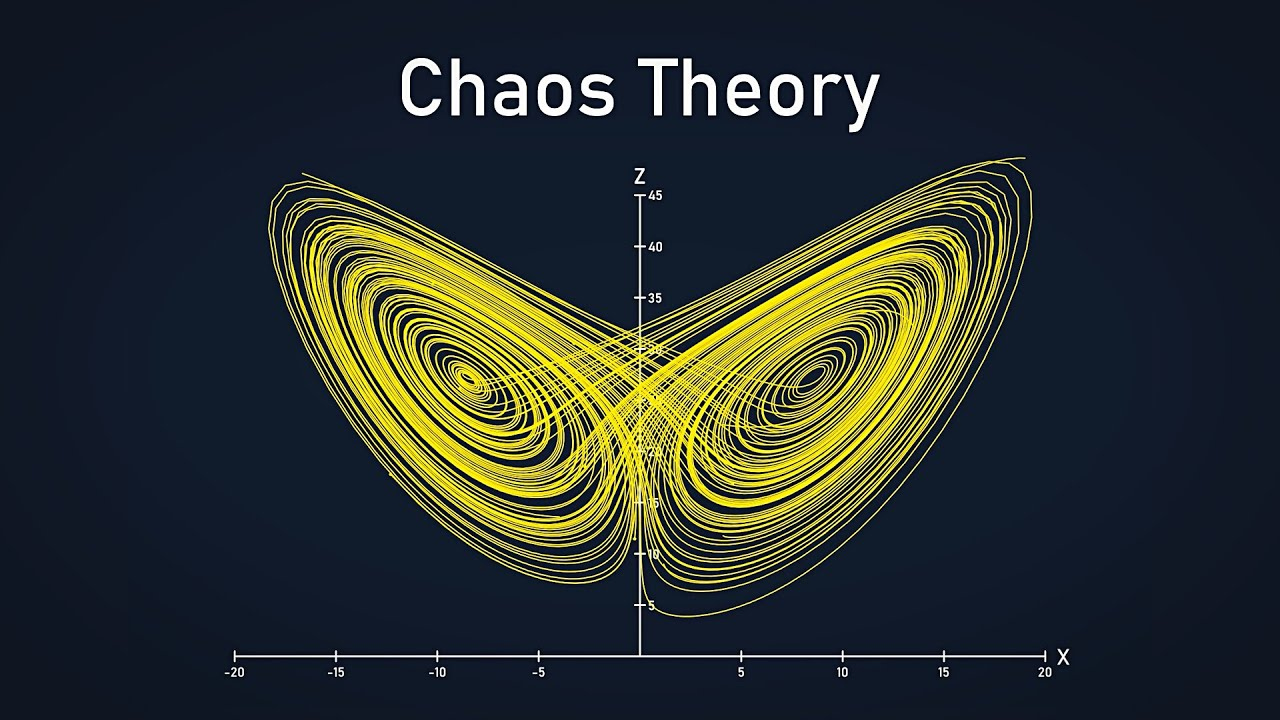
Chaos theory in microeconomics is ultimately a way of seeing markets not as tidy, predictable machines but as living systems where small actions by individual agents can cascade into large, unexpected outcomes. Microeconomics traditionally focuses on how consumers, firms, and workers make decisions under constraints. It often assumes rational behavior, smooth curves, and stable equilibria. Chaos theory disrupts that picture. It argues that even when individuals follow simple, deterministic rules, their interactions can produce nonlinear, unstable, and highly sensitive dynamics. In other words, micro-level decisions can generate macro-level unpredictability.
The foundation of chaos theory is sensitivity to initial conditions—the idea that tiny differences at the start can lead to dramatically different outcomes later. In microeconomics, this plays out in markets where individual choices interact through feedback loops. A slight change in consumer preference, a small shift in a firm’s pricing strategy, or a minor adjustment in expectations can ripple outward. These ripples can amplify, collide, and transform into large market movements. The classic supply-and-demand diagram suggests smooth adjustments, but real markets often behave more like turbulent ecosystems.
Consider consumer behavior. Traditional microeconomic models assume stable preferences and predictable responses to price changes. Chaos theory suggests something more dynamic. Preferences evolve, are influenced by social networks, and can shift suddenly. A small trend—say, a handful of consumers adopting a new product—can explode into widespread demand if social feedback loops kick in. Conversely, a tiny reputational shock can collapse demand. These nonlinear patterns resemble chaotic systems where outcomes depend heavily on initial conditions and interactions rather than simple price signals.
Firms also operate within chaotic dynamics. A slight change in cost structure, a small innovation, or a minor strategic adjustment can set off competitive cascades. One firm’s price cut may trigger retaliatory cuts, shifting the entire market equilibrium. A small technological improvement can destabilize established industries. Chaos theory helps explain why industries sometimes experience sudden shakeups, why dominant firms can fall quickly, and why competitive landscapes evolve unpredictably. Even when firms behave rationally, their interactions can produce chaotic outcomes.
Market competition itself often resembles a chaotic system. In models where firms repeatedly adjust prices or quantities based on competitors’ actions, the resulting dynamics can oscillate, diverge, or behave unpredictably. Instead of converging to a stable equilibrium, markets may cycle endlessly or shift abruptly. Chaos theory shows that even simple strategic rules—like adjusting output based on last period’s profits—can generate complex patterns. This challenges the assumption that markets naturally gravitate toward stability.
Chaos theory also reshapes how economists think about supply chains. Microeconomics traditionally treats supply chains as linear sequences of production. In reality, they are networks of interdependent agents. A small disruption at one node—a delayed shipment, a minor shortage, a slight increase in demand—can propagate through the network. These ripples can amplify, producing large swings in inventory, pricing, and production. The “bullwhip effect,” where small changes in consumer demand cause large fluctuations upstream, is a classic example of chaotic dynamics in microeconomic systems.
Expectations play a central role in microeconomic chaos. Individuals and firms make decisions based not only on current conditions but on beliefs about the future. These beliefs are influenced by limited information, heuristics, and social cues. A small rumor or a slight shift in sentiment can alter expectations, which then alter behavior. This feedback loop can generate chaotic patterns in markets. For example, a minor concern about future prices can trigger hoarding, which then drives actual price increases. Chaos theory helps explain why expectations-driven markets—like housing, cryptocurrency, or collectibles—often behave unpredictably.
Labor markets also exhibit chaotic dynamics. A small change in hiring practices, a slight shift in worker preferences, or a minor technological adjustment can reshape job flows. Workers respond to wages, working conditions, and expectations, while firms respond to productivity, costs, and competition. These interactions can produce nonlinear outcomes: sudden shortages, rapid wage spikes, or unexpected declines in labor participation. Chaos theory highlights how sensitive labor markets are to small changes and how difficult it is to predict their evolution.
Even bargaining and negotiation reflect chaotic principles. In microeconomic models of bargaining, small differences in information, timing, or expectations can lead to vastly different outcomes. Chaos theory suggests that negotiation dynamics may not converge smoothly but may jump between equilibria depending on subtle shifts in strategy. This helps explain why seemingly minor details—tone, timing, or framing—can dramatically influence economic outcomes in real-world negotiations.
***
***
Chaos theory also intersects with behavioral microeconomics. Human decision-making is nonlinear, emotional, and context-dependent. Small psychological triggers can produce large changes in behavior. When millions of individuals behave this way simultaneously, the aggregate effects can be chaotic. Herd behavior, fads, and sudden shifts in sentiment all reflect nonlinear micro-level dynamics. Chaos theory provides a framework for understanding why markets sometimes behave irrationally and why small nudges can produce large outcomes.
Ultimately, chaos theory in microeconomics is not about rejecting traditional models. It is about enriching them. It acknowledges that individual agents operate within complex networks of interactions, feedback loops, and evolving expectations. It teaches that micro-level decisions can produce macro-level unpredictability and that stability is often an illusion. Chaos theory encourages economists to embrace complexity, recognize the limits of prediction, and design policies and strategies that are robust to uncertainty.
In practice, this perspective fosters humility and creativity. It reminds us that markets are not mechanical systems but dynamic human environments. It encourages economists, policymakers, and businesses to pay attention to small details, subtle signals, and emerging patterns. Chaos theory does not offer simple answers, but it provides a powerful lens for understanding why microeconomic systems behave the way they do—and why small actions can matter enormously.
SPEAKING: Dr. Marcinko will be speaking and lecturing, signing and opining, teaching and preaching, storming and performing at many locations throughout the USA this year! His tour of witty and serious pontifications may be scheduled on a planned or ad-hoc basis; for public or private meetings and gatherings; formally, informally, or over lunch or dinner. All medical societies, financial advisory firms or Broker-Dealers are encouraged to submit an RFP for speaking engagements: CONTACT: Ann Miller RN MHA at MarcinkoAdvisors1738@outlook.com -OR- http://www.MarcinkoAssociates.com
Like, Refer and Subscribe
SEND IN YOUR TOPIC IEAS, TODAY!
HOSPITALS: http://www.crcpress.com/product/isbn/9781466558731
CLINICS: http://www.crcpress.com/product/isbn/9781439879900
ADVISORS: www.CertifiedMedicalPlanner.org
FINANCE:Financial Planning for Physicians and Advisors
INSURANCE:Risk Management and Insurance Strategies for Physicians and Advisors
Dictionary of Health Economics and Finance
Dictionary of Health Information Technology and Security
Dictionary of Health Insurance and Managed Care
***
Share this:

Filed under: iMBA, Inc. | Tagged: AI, chaos, chaos-theory-in-micro-economics, economics, Marcinko, philosophy, politics, Science, Technology |


Leave a Reply