Support our online development, and advance our onground research initiatives in free market economics, as we seek to showcase the brightest Next-Gen minds.
THE ME-P DISCLAIMER: Posts, comments and opinions do not necessarily represent iMBA, Inc., but become our property after submission. Copyright © 2006 to-date. iMBA, Inc allows colleges, universities, medical and financial professionals and related clinics, hospitals and non-profit healthcare organizations to distribute our proprietary essays, photos, videos, audios and other documents; etc. However, please review copyright and usage information for each individual asset before submission to us, and/or placement on your publication or web site. Attestation references, citations and/or back-links are required. All other assets are property of the individual copyright holder.
Support our online development, and advance our onground research initiatives in free market economics, as we seek to showcase the brightest Next-Gen minds.
THE ME-P DISCLAIMER: Posts, comments and opinions do not necessarily represent iMBA, Inc., but become our property after submission. Copyright © 2006 to-date. iMBA, Inc allows colleges, universities, medical and financial professionals and related clinics, hospitals and non-profit healthcare organizations to distribute our proprietary essays, photos, videos, audios and other documents; etc. However, please review copyright and usage information for each individual asset before submission to us, and/or placement on your publication or web site. Attestation references, citations and/or back-links are required. All other assets are property of the individual copyright holder.


The ER Billed Her Anyway
By Michelle Andrews
September 29th, 2026
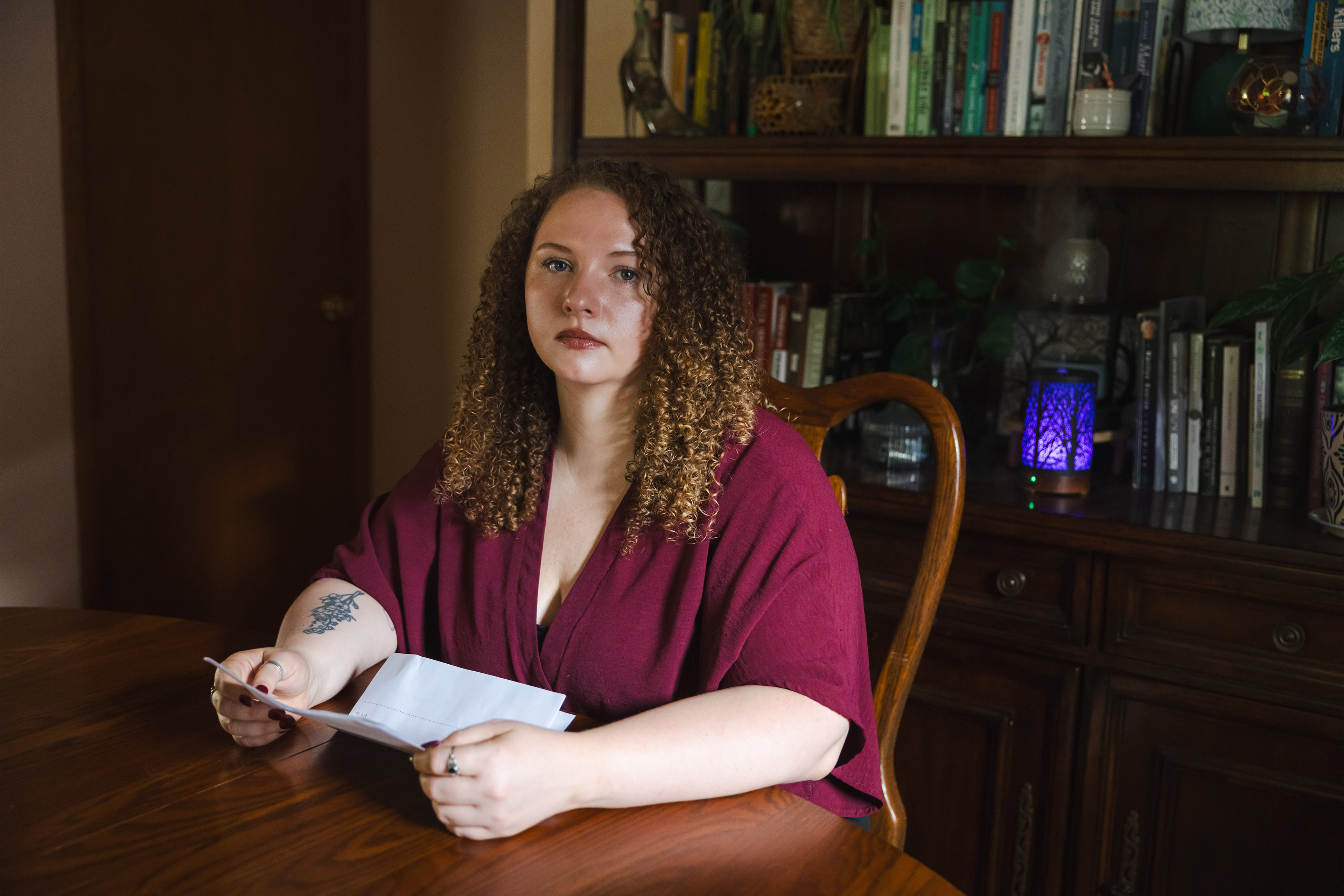
Autumn Daniels is no stranger to migraine headaches, which have troubled her since childhood.
The migraine tormenting the 32-year-old in April was even worse than usual. After a week of piercing head pain, she went to an urgent care center near her home in Champaign, Illinois, and received an injection of Toradol, a non-steroidal anti-inflammatory drug that usually helps with her symptoms. The doctor at the clinic told her that if the pain didn’t improve, she should go to an emergency room the next day.
It didn’t improve. So the next morning, Daniels’ sister took her to a nearby ER, at Carle Foundation Hospital in Urbana. She said the ER didn’t seem very busy when she registered at the front desk and was taken briefly to an exam room, where a staffer checked her vital signs and asked whether she had migraines frequently. Then they told her to sit in the waiting room until she was called.
She and her sister waited. And waited. By then, Daniels said, she was vomiting every 10 minutes, a not-uncommon occurrence during one of her serious migraine attacks.
After four hours, with no indication that Daniels would be seen anytime soon, her sister took her to another hospital. There, after a wait of about an hour and a half, Daniels was seen and received treatment, including more Toradol and anti-nausea medication.
Having left Carle without getting treatment, Daniels didn’t expect to be charged.
Then the bill came.
The Medical Service
Daniels said a staffer checked her pulse, temperature, and blood pressure when she arrived at Carle. She said she received no other services, nor was she seen by a doctor.
At one point while they sat in the waiting room, Daniels said, her sister asked for an ice pack for her head, but the staff wouldn’t provide one.
“ER triage is driven by risk of death or serious harm, not by level of suffering,” said Jennifer Robblee, a neurologist at the Barrow Neurological Institute in Phoenix and a board member at the Association of Migraine Disorders. “Migraine patients without red flags are unlikely to be prioritized, as they are not at immediate risk of dying.”
The Bill
$410 for an “Emergency Room Level 1” visit. Daniels said she requested an itemized bill showing how the hospital arrived at that figure but never received one.
This is not the first time that a patient has complained to KFF Health News’ “Bill of the Month” about receiving a bill after leaving a Carle Health emergency room without being treated. In 2023, Maggi Wettstein took her toddler to a different Carle Health hospital and was billed $445 for a nasal swab test for covid and influenza. They, too, left before getting treatment.
The Billing Problem: What Counts as Care?
Though Daniels left the emergency room after a four-hour wait without being treated, the hospital billed her anyway. Her health plan, provided through her job as a state employee, paid for her treatment at the second hospital but denied the Carle claim, leaving her on the hook for the charges.
“Under the terms of her health plan, claims associated with a patient leaving the facility against medical advice are not eligible for coverage,” Leslie Porras, a spokesperson for HealthLink, which administers Daniels’ plan, said in a statement.
When Daniels asked about her bill, a Carle representative responded in an email that said: “Effective March 1, 2026, Emergency Department visits may result in charges even if you are not seen directly by a provider. When you arrive at the Emergency Department, your visit begins as soon as care is initiated.”
The email said “care” could mean registration and nursing assessment, in addition to diagnostic testing and treatment. It said that even if patients leave without being seen by a provider, they may still be charged, because the hospital is using resources to maintain its staff, space, and equipment.
Carle Health declined to discuss Daniels’ bill or her care with KFF Health News, even though Daniels signed a privacy waiver that authorized it to do so.
In a statement, Carle Health spokesperson Brittany Simon said, “Our Emergency Department has consistent billing practices for triage care,” referring to the process through which patients are evaluated to ensure the most critical cases are treated first.
“Carle Health takes patient concerns seriously and supports transparency in our billing processes,” she said.
Typically, an ER bill would include separate dollar amounts for physician charges and hospital charges, said Amber Padron, assistant director of case management at the Patient Advocate Foundation, a nonprofit that assists patients with chronic or life-threatening conditions.
Daniels’ bill listed a single charge, for $410. Under the description, it said “Emergency Room Level 1” and included the current procedural terminology code “99281.” CPT codes are used to bill for evaluation and management, or E/M, services provided by a medical professional. Level 1 is the lowest level of emergency care.
But there’s a catch: According to the American Medical Association’s CPT guide, “Triage alone is not an E/M service; therefore, it cannot be reported with an E/M code.”
It gets murkier. According to Robert Mills, a spokesperson for the AMA, the physician charge for an emergency visit under that CPT code would generally be significantly less than $410.
“It is likely the hospital consolidated the provider-billed charge with a facility fee,” Mills said, referring to a fee that hospitals tack onto bills to cover their overhead costs, such as utilities.
Amid the billing uncertainty, Daniels is clear about one thing: The decision to charge ER patients who leave without getting treatment is recent.
In 2025, she went to the same emergency room with gastrointestinal problems. After waiting for several hours, she went elsewhere for care. She said that before leaving, her mother, who accompanied her that day, confirmed with the front desk that Daniels wouldn’t be charged if they left then. And she wasn’t.
“So when I went in for this visit in April, I had no idea I was going to be charged, because it was a very similar set of circumstances,” Daniels said.
The health system didn’t respond to a question about why it changed its policy.
The Resolution
Carle didn’t budge. According to the health system’s email to Daniels, “the charges have been determined to be accurate and fully supported by the medical record documentation.”
Daniels said she paid $25 of the $410 bill and has applied for financial assistance.
Meanwhile, according to HealthLink’s statement to KFF Health News, Daniels can contest her health plan’s denial: “Ms. Daniels has the right to appeal the decision through the established appeals process.”
She’s considering it, but she remains outraged about what happened.
“How is it ethical or even legal for a hospital to essentially bill for occupying a waiting room?” she asked.

The Takeaway
Don’t assume you won’t be billed if you leave a hospital before receiving medical care. You can check with the front desk about the facility’s policy, as well as ask your insurer whether it provides coverage for such bills.
If the hospital billing department isn’t giving you information about what services you’re being billed for, request your medical records, said Padron, of the Patient Advocate Foundation.
Furthermore, when your health plan processes a claim, you should receive an explanation of benefits informing you of that and explaining what you may owe. Keep an eye on your mail and your insurance portal.
When a claim is denied, filing an appeal with your health plan is always a smart idea, Padron said.
“It’s always going to be a no if you don’t appeal,” she said.
Bill of the Month is a crowdsourced investigation by KFF Health News and The Washington Post’s Well+Being that dissects and explains medical bills. Since 2018, this series has helped many patients and readers get their medical bills reduced, and it has been cited in statehouses, at the U.S. Capitol, and at the White House. Do you have a confusing or outrageous medical bill you want to share? Tell us about it!
KFF Health News is a national newsroom that produces in-depth journalism about health issues and is one of the core operating programs at KFF—an independent source of health policy research, polling, and journalism. Learn more about KFF.
This article first appeared on KFF Health News and is republished here under a Creative Commons Attribution-NonCommercial-NoDerivatives 4.0 International License.
SPEAKING: Dr. Marcinko will be speaking and lecturing, signing and opining, teaching and preaching, storming and performing at many locations throughout the USA this year! His tour of witty and serious pontifications may be scheduled on a planned or ad-hoc basis; for public or private meetings and gatherings; formally, informally, or over lunch or dinner. All medical societies, financial advisory firms or Broker-Dealers are encouraged to submit an RFP for speaking engagements: CONTACT: Ann Miller RN MHA at MarcinkoAdvisors1738@outlook.com -OR- http://www.MarcinkoAssociates.com
Like, Refer and Subscribe
SEND IN YOUR TOPIC IDEAS, TODAY!
HOSPITALS: http://www.crcpress.com/product/isbn/9781466558731
CLINICS: http://www.crcpress.com/product/isbn/9781439879900
ADVISORS: www.CertifiedMedicalPlanner.org
FINANCE:Financial Planning for Physicians and Advisors
INSURANCE:Risk Management and Insurance Strategies for Physicians and Advisors
Dictionary of Health Economics and Finance
Dictionary of Health Information Technology and Security
Dictionary of Health Insurance and Managed Care
***
Share this:

Filed under: iMBA, Inc. | Leave a comment »