BOARD CERTIFICATION EXAM STUDY GUIDES Lower Extremity Trauma
[Click on Image to Enlarge]
ME-P Free Advertising Consultation
The “Medical Executive-Post” is about connecting doctors, health care executives and modern consulting advisors. It’s about free-enterprise, business, practice, policy, personal financial planning and wealth building capitalism. We have an attitude that’s independent, outspoken, intelligent and so Next-Gen; often edgy, usually controversial. And, our consultants “got fly”, just like U. Read it! Write it! Post it! “Medical Executive-Post”. Call or email us for your FREE advertising and sales consultation TODAY [678.779.8597] E-mail: MarcinkoAdvisors1738@outlook.com
Medical & Surgical e-Consent Forms
ePodiatryConsentForms.com
iMBA Inc., OFFICES
Suite #5901 Wilbanks Drive, Norcross, Georgia, 30092 USA [1.678.779.8597]. Our location is real and we are now virtually enabled to assist new long distance clients and out-of-town colleagues.
ME-P Publishing
SEEKING INDUSTRY INFO PARTNERS?
If you want the opportunity to work with leading health care industry insiders, innovators and watchers, the “ME-P” may be right for you? We are unbiased and operate at the nexus of theoretical and applied R&D. Collaborate with us and you’ll put your brand in front of a smart & tightly focused demographic; one at the forefront of our emerging healthcare free marketplace of informed and professional “movers and shakers.” Our Ad Rate Card is available upon request [678-779-8597].
A cognitive scientist studies how the mind works—covering perception, memory, language, reasoning, and decision‑making—using interdisciplinary methods from psychology, neuroscience, linguistics, computer science, and philosophy.
What a Cognitive Scientist Does
Investigates mental processes such as perception, memory, attention, language, and problem‑solving.
Builds computational or theoretical models of how the mind represents and processes information. conducts experiments. (behavioral, computational, or neuroimaging) to test hypotheses about cognition.
Applies findings to fields like AI, education, human‑computer interaction, and decision science.
Interdisciplinary Foundations
Cognitive science integrates:
Psychology — experimental methods for studying behavior and mental processes. Neuroscience — brain imaging (fMRI, EEG) to link cognition to neural activity.
Linguistics — structure and processing of language.
Computer Science & AI — computational models of thought and intelligent systems.
Philosophy — foundational questions about mind, consciousness, and knowledge.
Typical Research Questions
How does the brain construct perception from sensory input?
How do humans learn, store, and retrieve knowledge?
How is language acquired and processed?
How are decisions made under uncertainty?
How do emotions and social context shape thinking?
Methods Used
Behavioral experiments.
Eye‑tracking.
EEG, fMRI, MEG.
Computational modeling.
Virtual reality and field studies.
Career Paths
Cognitive scientists work in:
Academia — research and teaching.
Industry — AI, UX research, neurotechnology, human‑factors engineering.
SPEAKING: Dr. Marcinko will be speaking and lecturing, signing and opining, teaching and preaching, storming and performing at many locations throughout the USA this year! His tour of witty and serious pontifications may be scheduled on a planned or ad-hoc basis; for public or private meetings and gatherings; formally, informally, or over lunch or dinner. All medical societies, financial advisory firms or Broker-Dealers are encouraged to submit an RFP for speaking engagements: CONTACT: Ann Miller RN MHA at MarcinkoAdvisors1738@outlook.com -OR-http://www.MarcinkoAssociates.com
String theory, one of the most ambitious frameworks in theoretical physics, proposes that the fundamental constituents of reality are not point-like particles but tiny vibrating strings, whose different modes of oscillation give rise to the particles and forces we observe. Developed primarily to reconcile general relativity with quantum mechanics, string theory operates at scales far removed from anything directly observable in biology or medicine—the Planck length, roughly 10⁻³⁵ meters, dwarfs even the smallest cellular structures by many orders of magnitude. And yet, the conceptual apparatus of string theory has begun to seep, in indirect and often speculative ways, into how some scientists think about biological systems and medical technology.
A Speculative Bridge Between Physics and Healing
The most honest starting point is to acknowledge that string theory has no established, direct clinical application. No drug has been designed using string theory, no diagnostic tool depends on it, and no disease mechanism has been explained by it. The connection between string theory and medicine is almost entirely mediated through mathematics, computational tools, and a handful of speculative research programs rather than through direct physical mechanisms. Understanding this distinction is essential to avoid overstating the relationship.
Where the influence does show up is in the mathematical machinery string theory has produced. String theorists developed powerful techniques for handling extremely complex, high-dimensional systems—tools from areas like topology, geometry, and statistical mechanics. Some of these mathematical methods have found their way into computational biology, particularly in modeling the folding behavior of proteins. Protein folding is a problem of staggering combinatorial complexity: a single protein chain can theoretically adopt an astronomical number of configurations before settling into its functional shape. Techniques borrowed from the study of energy landscapes in theoretical physics, including ideas that overlap with string theory’s treatment of multidimensional spaces, have informed some algorithms used to predict how proteins fold. This matters medically because misfolded proteins are implicated in diseases such as Alzheimer’s, Parkinson’s, and certain prion disorders. The connection here is not that string theory explains folding directly, but that the mathematical culture it fostered has cross-pollinated with computational biology.
A second, more speculative avenue involves quantum biology, a small but growing field examining whether quantum mechanical effects—coherence, tunneling, entanglement—play functional roles in biological processes like photosynthesis, enzyme catalysis, or even neural function. String theory is one of several frameworks physicists use to think about the deep structure of quantum mechanics, and some researchers exploring quantum biology draw loosely on concepts from high-energy theoretical physics when trying to model how quantum effects might survive in the warm, noisy environment of a living cell. This remains a contested and largely unproven area of science. If quantum effects do turn out to meaningfully influence processes like enzymatic reactions or neural signaling, the theoretical toolkit built for string theory could conceivably offer modeling approaches, but this is a possibility on the horizon rather than a demonstrated medical reality.
A third area worth mentioning is more metaphorical than scientific: string theory has entered public and academic discourse as a symbol of unifying disparate scales and forces into a single coherent framework. Some researchers and writers have used this idea as an inspirational analogy when discussing systems medicine or integrative approaches to health—the notion that seemingly separate biological systems (immune, endocrine, neural) might be understood through a more unified, interconnected framework, much as string theory seeks to unify gravity with quantum forces. This is a rhetorical borrowing rather than a scientific one, and it should not be mistaken for a genuine physical mechanism linking the two fields.
***
***
It is also worth noting the role of nanomedicine and materials science, where string theory’s parent discipline, particle physics, has had real technological spillover. Techniques developed for particle accelerators and detectors, informed by the broader theoretical physics ecosystem in which string theory sits, have contributed to imaging technologies such as PET scans and to the development of novel materials used in targeted drug delivery. Here again, the relationship is diffuse: string theory itself did not produce these technologies, but it exists within the same intellectual and institutional ecosystem that did.
In sum, string theory’s relevance to medicine today is real but modest, and it is important not to inflate a handful of indirect mathematical and cultural connections into a substantive medical discipline. The strings of string theory operate at a scale and in a domain so far removed from clinical biology that a direct causal bridge does not currently exist. What does exist is a set of borrowed mathematical tools, a speculative overlap with quantum biology, and a loose metaphorical resonance with systems-level thinking in medicine. Framing the relationship honestly—as suggestive and early-stage rather than established—serves both scientific accuracy and the broader public’s understanding of how theoretical physics and medicine actually intersect.
SPEAKING: Dr. Marcinko will be speaking and lecturing, signing and opining, teaching and preaching, storming and performing at many locations throughout the USA this year! His tour of witty and serious pontifications may be scheduled on a planned or ad-hoc basis; for public or private meetings and gatherings; formally, informally, or over lunch or dinner. All medical societies, financial advisory firms or Broker-Dealers are encouraged to submit an RFP for speaking engagements: CONTACT: Ann Miller RN MHA at MarcinkoAdvisors1738@outlook.com -OR-http://www.MarcinkoAssociates.com
String theory, a cornerstone of modern theoretical physics, has long been celebrated for its ambition to unify quantum mechanics and general relativity into a single, coherent framework. At its core, string theory posits that the fundamental constituents of reality are not zero-dimensional particles but rather one-dimensional “strings” whose vibrational modes correspond to different particles and forces. While originally developed to understand the microscopic fabric of the universe, string theory has inspired conceptual and mathematical innovations that extend beyond physics, including in the realm of financial modeling. Applying string-theoretic ideas to finance is less a matter of literal particle strings and more a matter of importing the analytical sophistication and multidimensional perspective of string theory to understand the complex, interconnected dynamics of global markets.
Financial markets are intrinsically complex systems characterized by nonlinear interactions, stochastic dynamics, and high-dimensional interdependencies. Conventional models, such as the Black-Scholes paradigm, rely on simplifying assumptions that often fail to capture the full scope of market behavior. The stochastic calculus underpinning most financial models treats assets as point-like entities, interacting primarily through price changes over time. In contrast, string theory introduces the notion of extended objects that can encode multiple degrees of freedom along a spatial manifold, providing a framework to represent continuous and correlated variations along a financial “worldsheet.” By conceptual analogy, an asset can be thought of not merely as a discrete value fluctuating in time but as a continuum with internal vibrational patterns, reflecting hidden correlations, stressors, and market microstructure effects that conventional models might ignore.
One of the primary contributions of string-inspired methods in finance is the multidimensional treatment of risk. Traditional portfolio risk models often rely on covariance matrices and linear correlations, which break down under extreme events, systemic shocks, or rapid market evolutions. String-theoretic metaphors extend the dimension of analysis by suggesting multiple, potentially hidden modes of volatility. In practice, this translates into modeling market instruments as “strings” with internal vibration modes corresponding to latent risk factors. For instance, variations along one segment of a string could encapsulate price shifts due to macroeconomic news, while another segment could encode high-frequency trading impacts. This approach enables the construction of richer stochastic differential equations, capturing both localized and systemic fluctuations in a unified formalism.
Another fascinating aspect relates to topological features and symmetry. In string theory, topology determines the allowable vibrational modes and thus the spectrum of physical particles. When applied metaphorically to finance, topological constraints can model connectivity between markets, asset classes, or trading strategies. For instance, financial networks can be embedded onto geometric manifolds wherein the “loops” correspond to closed chains of arbitrage or feedback cycles. Studying the stability and symmetry of these loops informs predictions about systemic risk, contagion, and market resilience. Such insights allow practitioners to move beyond point estimates of risk and valuation to a more holistic understanding of market behavior as a dynamically constrained system influenced by both local interactions and global structure.
The notion of dualities, central in string theory, also offers fertile ground for financial application. Duality symmetries in physics relate seemingly distinct phenomena under a common underlying framework. In finance, this suggests that disparate market behaviors—such as equity and derivative dynamics or bond yields and credit spreads—might be viewed as dual expressions of a deeper underlying structure. By mapping complex problems into a dual representation, analysts can uncover hidden equivalences, reduce computational complexity, or identify opportunities for hedging and strategy optimization that are not immediately apparent in the original domain.
Practical implementation of string-inspired models is challenging, mainly due to computational intensity and the abstract nature of the formalism. Techniques such as lattice discretization of the worldsheet, perturbative expansions, and numerical simulations borrowed from high-energy physics can be adapted to simulate multi-asset interactions. Agent-based modeling frameworks can incorporate string-like interactions, allowing synthetic markets to exhibit emergent properties analogous to vibrational patterns of strings. While the field remains highly theoretical, preliminary studies suggest that these approaches improve the modeling of extreme events, path-dependent options, and correlated asset behaviors—situations where conventional models often fail.
Finally, the philosophical implications of string theory in finance should not be underestimated. By embracing the notion that markets are continuous, high-dimensional, and vibrational systems, analysts cultivate a mindset attentive to subtle, interwoven patterns rather than isolated price movements. This perspective encourages adaptability, a recognition of systemic fragility, and the search for mathematical structures that capture the essence of market complexity. String-inspired thinking pushes the boundaries of risk analysis, valuation, and financial engineering, merging deep theoretical principles with practical market challenges.
In conclusion, while string theory originates in the pursuit of fundamental physical truths, its conceptual and mathematical richness provides valuable lenses through which to view financial systems. By extending the dimensionality of analysis, incorporating vibrational modes, exploring topological constraints, and leveraging duality symmetries, string-inspired frameworks offer a novel approach to understanding market dynamics, systemic risk, and portfolio behavior. Far from a literal physical application, the translation of string-theoretic principles into finance emphasizes abstraction, creativity, and a multidisciplinary approach, aligning theoretical sophistication with the inherently complex nature of global financial markets. In an era of heightened interconnectedness and uncertainty, such perspectives offer promising avenues for modeling, analysis, and strategic foresight beyond conventional methodologies.
SPEAKING: Dr. Marcinko will be speaking and lecturing, signing and opining, teaching and preaching, storming and performing at many locations throughout the USA this year! His tour of witty and serious pontifications may be scheduled on a planned or ad-hoc basis; for public or private meetings and gatherings; formally, informally, or over lunch or dinner. All medical societies, financial advisory firms or Broker-Dealers are encouraged to submit an RFP for speaking engagements: CONTACT: Ann Miller RN MHA at MarcinkoAdvisors1738@outlook.com -OR-http://www.MarcinkoAssociates.com
A hypothesis is one of the most fundamental tools in the process of inquiry, serving as the bridge between curiosity and systematic investigation. At its core, a hypothesis is a tentative explanation or prediction that a researcher proposes in response to an observed phenomenon. It is not a random guess but an informed statement grounded in prior knowledge, observation, or logical reasoning. The purpose of a hypothesis is to provide a clear direction for research by identifying what the investigator expects to find and how different factors might relate to one another. Without a hypothesis, research would lack focus, and the process of gathering and interpreting data would become aimless and disorganized.
A hypothesis is valuable because it transforms a broad question into a specific, testable claim. When a researcher notices something interesting—such as a pattern, a change, or a difference—they begin by asking why it might be happening. The hypothesis offers a possible answer to that question. For example, if a student observes that plants near a window grow faster than those in a darker corner, they might hypothesize that increased sunlight leads to faster growth. This statement is not only clear but also testable, meaning that an experiment can be designed to determine whether the prediction holds true. The ability to test a hypothesis is essential because it allows researchers to gather evidence that either supports or challenges their initial idea.
A strong hypothesis has several important characteristics. It must be specific, meaning it clearly identifies the variables involved and the expected relationship between them. It must also be measurable so that data can be collected in a meaningful way. Most importantly, a hypothesis must be falsifiable. This means that there must be a possible outcome that would show the hypothesis is incorrect. Falsifiability is crucial because it ensures that the hypothesis can be evaluated objectively rather than accepted as true without evidence. A statement that cannot be proven wrong is not a hypothesis but an opinion or belief, and it does not belong in scientific inquiry.
In many forms of research, especially in the sciences, hypotheses are divided into two main types: the null hypothesis and the alternative hypothesis. The null hypothesis states that there is no relationship or effect between the variables being studied. It serves as the default assumption that researchers test against. The alternative hypothesis proposes that there is a relationship or effect. These paired statements help structure the research process by clarifying what the investigator is looking for and how the results will be interpreted. If the evidence contradicts the null hypothesis, the researcher may accept the alternative hypothesis as a more accurate explanation.
The process of forming a hypothesis is closely tied to the scientific method. After making an observation and reviewing existing information, the researcher develops a hypothesis that explains what they expect to happen. They then design an experiment or study to test the hypothesis, collect data, and analyze the results. Based on the findings, the hypothesis may be supported, rejected, or revised. Even when a hypothesis is not supported, it still contributes to knowledge by eliminating incorrect explanations and guiding future research in new directions. This iterative process is essential to scientific progress because it encourages continuous refinement of ideas.
A hypothesis also plays an important role beyond the sciences. In fields such as psychology, education, economics, and even everyday problem‑solving, hypotheses help people make predictions and test their assumptions. For instance, a teacher might hypothesize that students learn better when lessons include hands‑on activities. A business owner might hypothesize that offering discounts will increase customer traffic. In each case, the hypothesis provides a starting point for gathering evidence and making informed decisions.
Ultimately, a hypothesis is more than a statement; it is a tool for thinking. It encourages curiosity, clarity, and critical evaluation. By proposing a possible explanation and inviting scrutiny, a hypothesis pushes researchers to explore the world more deeply and systematically. Whether it is eventually supported or disproven, every hypothesis contributes to a broader understanding of how things work. In this way, hypotheses are essential building blocks of knowledge, guiding inquiry and shaping the development of theories that help explain the complexities of the world around us.
SPEAKING: Dr. Marcinko will be speaking and lecturing, signing and opining, teaching and preaching, storming and performing at many locations throughout the USA this year! His tour of witty and serious pontifications may be scheduled on a planned or ad-hoc basis; for public or private meetings and gatherings; formally, informally, or over lunch or dinner. All medical societies, financial advisory firms or Broker-Dealers are encouraged to submit an RFP for speaking engagements: CONTACT: Ann Miller RN MHA at MarcinkoAdvisors@outlook.com -OR-http://www.MarcinkoAssociates.com
Surgery theory is a branch of topology that studies how one can systematically modify manifolds to understand their structure, classify them, or transform them into more manageable forms. At its core, surgery theory provides a procedure for cutting and pasting along embedded spheres to change the topology of a space in a controlled way. The central idea is that by removing a neighborhood of an embedded sphere and replacing it with another piece that has the same boundary, one can alter the manifold while preserving smoothness or topological coherence. This method has become one of the most powerful tools in high‑dimensional topology, particularly for dimensions five and above.
The basic move in surgery theory begins with an embedded sphere inside an -dimensional manifold . One removes the product , which is a tubular neighborhood of the sphere, and glues in along their common boundary. This operation is called a surgery step. The replacement piece has the same boundary as the removed piece, ensuring that the resulting space is again a manifold. Although this sounds like a simple geometric maneuver, its consequences for the topology of the manifold can be profound. Surgery can change homotopy groups, modify intersection forms, or even alter the manifold’s differentiable structure.
One of the major achievements of surgery theory is its role in the classification of manifolds. In high dimensions, manifolds are often classified up to homotopy equivalence, and surgery theory provides a method to refine this classification to homeomorphism or diffeomorphism. The process typically begins with a manifold that is homotopy equivalent to a desired model. Through a sequence of surgeries, one attempts to eliminate obstructions to improving this equivalence into an actual homeomorphism. These obstructions live in algebraic objects such as L‑groups, which encode quadratic forms over group rings. The appearance of such algebraic structures is one of the striking features of surgery theory: it translates geometric problems into algebraic ones, allowing classification questions to be attacked with algebraic tools.
Another important application is the study of cobordism. Two manifolds are cobordant if they form the boundary of a higher‑dimensional manifold. Surgery theory provides a systematic way to modify a cobordism to achieve desirable properties, such as making a map between manifolds into a homotopy equivalence. This is central to the proof of the h‑cobordism theorem, which in turn underlies the classification of simply connected manifolds in high dimensions. The h‑cobordism theorem states that if a cobordism between simply connected manifolds has certain homotopy properties, then it is actually a product. Surgery theory provides the mechanism for adjusting the cobordism so that these homotopy conditions are satisfied.
Surgery theory also plays a role in understanding exotic smooth structures. In dimensions greater than four, surgery can often be used to show that manifolds have unique smooth structures. However, in dimension four, the situation becomes dramatically more complicated. While surgery theory still provides insights, it cannot fully resolve the classification of smooth structures in this dimension. This limitation highlights both the power and the boundaries of the method.
Overall, surgery theory is a unifying framework that connects geometry, algebra, and topology. It provides a toolkit for transforming manifolds, resolving classification problems, and revealing deep structural relationships. Its influence spans from the foundations of geometric topology to modern developments in manifold theory. If you want to explore a specific aspect next, you might look at L‑groups or the h‑cobordism theorem.
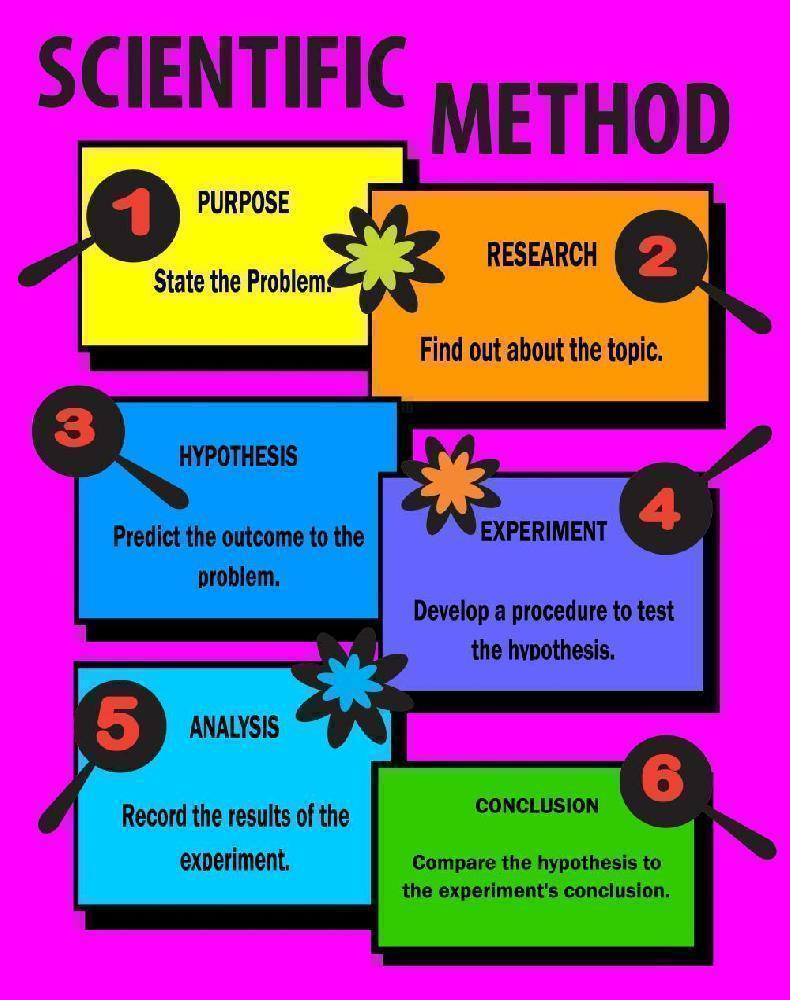
The scientific method stands as one of humanity’s most powerful intellectual achievements, providing a systematic way to investigate natural phenomena, test ideas, and build reliable knowledge. Although often presented as a simple sequence of steps—observation, hypothesis, experimentation, and conclusion—the scientific method is far richer, more flexible, and more nuanced than this linear model suggests. It is both a philosophy and a practice, shaped by centuries of refinement, debate, and discovery. At its core, the scientific method is a disciplined approach to understanding the world by grounding explanations in evidence rather than intuition, tradition, or authority.
The process typically begins with observation, the careful noticing of patterns, anomalies, or questions that arise from the natural world. Observation is not passive; it requires curiosity, attention, and often specialized tools. A scientist might observe the behavior of a chemical reaction, the motion of a planet, or the spread of a disease. These observations lead to questions, which form the intellectual spark that drives scientific inquiry. A well‑formed scientific question is specific, measurable, and focused on understanding a relationship or mechanism.
From these questions emerges the hypothesis, a tentative explanation that can be tested. A hypothesis is not a guess but a reasoned proposition based on prior knowledge, logic, and available evidence. Crucially, a hypothesis must be falsifiable, meaning it can be proven wrong through observation or experiment. This requirement distinguishes scientific ideas from beliefs or opinions. A hypothesis such as “all swans are white” can be falsified by observing a single black swan; a claim that cannot be tested or potentially disproven does not belong to the realm of science.
Once a hypothesis is established, the next step is prediction. Predictions translate the hypothesis into specific, testable outcomes. If the hypothesis is correct, then certain results should follow under defined conditions. Predictions help guide the design of experiments and clarify what evidence would support or contradict the hypothesis.
Experimentation is the heart of the scientific method. An experiment is a controlled procedure designed to test the predictions derived from the hypothesis. Good experiments isolate variables, use appropriate controls, and rely on precise measurement. The goal is to determine whether the observed results align with the predicted outcomes. Experiments may be conducted in laboratories, in the field, or through computational models, depending on the discipline. Regardless of the setting, the emphasis is on reproducibility: other researchers should be able to repeat the experiment and obtain similar results.
After data are collected, scientists engage in analysis, interpreting the results to determine whether they support or refute the hypothesis. This stage often involves statistical methods to assess the reliability and significance of the findings. A single experiment rarely provides definitive proof; instead, it contributes to a growing body of evidence. If the results contradict the hypothesis, the scientist must revise or abandon it. If the results support the hypothesis, it gains credibility but is never considered absolutely proven. Scientific knowledge is always provisional, open to revision in light of new evidence.
The final step is communication, an essential but sometimes overlooked component of the scientific method. Scientists share their findings through publications, presentations, and peer review. Peer review subjects the research to scrutiny by other experts, helping ensure that methods are sound, conclusions are justified, and errors are identified. This communal aspect of science allows knowledge to accumulate, refine, and evolve over time.
***
***
Although the scientific method is often portrayed as a rigid sequence, in practice it is highly flexible. Scientists may move back and forth between steps, refine hypotheses mid‑experiment, or generate new questions from unexpected results. Serendipity—unexpected discoveries—has played a major role in scientific progress, from penicillin to cosmic microwave background radiation. The method is less a strict recipe and more a guiding framework that emphasizes evidence, logic, and transparency.
Historically, the scientific method emerged from a long tradition of philosophical inquiry. Ancient thinkers such as Aristotle emphasized observation and classification, while medieval scholars in the Islamic world advanced experimental techniques. The Scientific Revolution of the 16th and 17th centuries marked a turning point, as figures like Francis Bacon and Galileo Galilei championed empirical investigation and systematic experimentation. Over time, the method evolved to incorporate mathematical modeling, statistical reasoning, and technological innovation.
Today, the scientific method underpins virtually every scientific discipline, from physics and biology to psychology and environmental science. It has enabled breakthroughs that transformed human life: vaccines, electricity, computers, and countless other advancements trace their origins to systematic inquiry. Beyond its practical achievements, the scientific method embodies a deeper philosophical commitment: the belief that the natural world is understandable through careful study, and that knowledge should be grounded in evidence rather than authority.
In an era of rapid technological change and widespread misinformation, the principles of the scientific method remain as vital as ever. Its emphasis on skepticism, transparency, and reproducibility provides a safeguard against error and bias. By teaching and applying the scientific method, society cultivates critical thinking, nurtures innovation, and strengthens the foundation of informed decision‑making.
Ultimately, the scientific method is more than a tool for scientists; it is a way of thinking that encourages curiosity, humility, and a relentless pursuit of truth. It reminds us that knowledge is not static but continually refined through questioning, testing, and discovery. Through this process, humanity expands its understanding of the universe and its place within it.
SPEAKING: Dr. Marcinko will be speaking and lecturing, signing and opining, teaching and preaching, storming and performing at many locations throughout the USA this year! His tour of witty and serious pontifications may be scheduled on a planned or ad-hoc basis; for public or private meetings and gatherings; formally, informally, or over lunch or dinner. All medical societies, financial advisory firms or Broker-Dealers are encouraged to submit an RFP for speaking engagements: CONTACT: Ann Miller RN MHA at MarcinkoAdvisors@outlook.com -OR-http://www.MarcinkoAssociates.com
Chaos theory is the study of how small, almost invisible changes in a system can lead to massive, unpredictable outcomes. At its core, chaos theory shows that the world is far less orderly than it appears, even in systems governed by strict rules. Although it sounds abstract, chaos theory shapes how we understand weather patterns, ecosystems, financial markets, and even human behavior. Its central insight is simple but profound: sensitivity to initial conditions—often illustrated through the famous butterfly effect—means that perfect prediction is impossible in many real‑world systems.
Chaos theory emerged in the mid‑20th century, but it gained momentum when meteorologist Edward Lorenz discovered that tiny rounding differences in his weather model produced dramatically different forecasts. This sensitivity revealed that deterministic systems—those governed by fixed rules—could still behave unpredictably. Lorenz’s work showed that even if we know the rules of a system, we may never be able to predict its long‑term behavior with precision. This insight reshaped meteorology and laid the foundation for modern nonlinear science.
A key concept in chaos theory is the butterfly effect, the idea that a minuscule event, like the flap of a butterfly’s wings, could influence large‑scale outcomes such as a storm weeks later. While the metaphor is poetic, the underlying principle is mathematical: small variations in initial conditions grow exponentially over time. This exponential divergence is what makes chaotic systems so difficult to forecast. Weather is the classic example, but the same principle applies to population dynamics, chemical reactions, and even the spread of ideas.
Another essential idea is the presence of strange attractors. In many chaotic systems, the system’s behavior never repeats exactly, yet it still follows a recognizable pattern. Lorenz’s attractor—an iconic butterfly‑shaped figure—shows how a system can be both structured and unpredictable. Strange attractors reveal that chaos is not randomness; it is patterned unpredictability. The system is constrained, but its path within those constraints is endlessly varied.
Chaos theory also highlights the importance of nonlinear systems. In linear systems, outputs are proportional to inputs. Nonlinear systems, by contrast, amplify or dampen changes in ways that are not straightforward. Most natural systems are nonlinear, which is why chaos theory has become so influential across scientific fields. Nonlinearity allows for feedback loops, tipping points, and emergent behavior—phenomena that cannot be captured by simple equations.
One of the most fascinating implications of chaos theory is its challenge to traditional ideas of prediction and control. For centuries, science operated under the assumption that with enough information, the future could be forecast with precision. Chaos theory undermines this assumption. It shows that uncertainty is not always the result of ignorance; sometimes it is built into the structure of the system itself. This realization has philosophical weight, suggesting that the universe is not a perfectly predictable machine but a dynamic interplay of order and disorder.
Chaos theory also offers a new way to think about creativity and complexity. Systems that exhibit chaotic behavior often generate intricate patterns, from the branching of trees to the rhythms of the human heart. These patterns emerge not from randomness but from the interplay of simple rules and nonlinear interactions. In this sense, chaos theory bridges the gap between mathematics and the natural world, revealing hidden structures in what once seemed like noise.
In everyday life, chaos theory helps explain why long‑term predictions—whether in weather, economics, or human behavior—are so unreliable. It reminds us that small actions can have far‑reaching consequences, and that systems we assume to be stable may be more fragile than they appear. At the same time, it shows that unpredictability does not mean disorder; even chaotic systems have underlying patterns that can be studied and understood.
SPEAKING: Dr. Marcinko will be speaking and lecturing, signing and opining, teaching and preaching, storming and performing at many locations throughout the USA this year! His tour of witty and serious pontifications may be scheduled on a planned or ad-hoc basis; for public or private meetings and gatherings; formally, informally, or over lunch or dinner. All medical societies, financial advisory firms or Broker-Dealers are encouraged to submit an RFP for speaking engagements: CONTACT: Ann Miller RN MHA at MarcinkoAdvisors@outlook.com -OR-http://www.MarcinkoAssociates.com
The mirror test is one of the most influential methods used to explore self‑awareness in humans and other animals. Developed in 1970 by psychologist Gordon Gallup Jr., the test aims to determine whether an individual can recognize its own reflection as an image of itself rather than another being. Although the procedure is simple, the implications are profound, touching on questions about consciousness, identity, and the evolution of cognition.
The test typically involves placing a visible mark on an animal’s body in a location it cannot see without a mirror, such as the forehead. The animal is then given access to a mirror. If it uses the reflection to investigate or touch the mark on its own body, this behavior is interpreted as evidence of self-recognition. The logic behind this conclusion is that the animal must understand that the image in the mirror corresponds to its own body, not to another creature. This ability is considered a key component of self-awareness, suggesting the presence of an internal sense of identity.
Human children usually begin to pass the mirror test between 18 and 24 months of age. Before this developmental stage, infants may smile at or reach toward the reflection as if interacting with another child. When they eventually touch the mark on their own face after seeing it in the mirror, it signals a cognitive shift: they have formed a mental model of themselves as a distinct physical being. This milestone is often used in developmental psychology to track the emergence of self-concept.
A small but notable group of nonhuman species has also passed the mirror test. These include great apes such as chimpanzees, bonobos, and orangutans, as well as dolphins, elephants, and certain bird species like magpies. The diversity of these animals suggests that self-recognition may evolve in different evolutionary contexts. For example, dolphins and elephants live in complex social environments where understanding others—and oneself—may offer survival advantages. Magpies, despite being evolutionarily distant from mammals, display advanced problem‑solving abilities that may support similar cognitive processes.
However, passing the mirror test does not necessarily imply that an animal possesses human‑like consciousness. Instead, it indicates that the animal has achieved a specific form of self-awareness related to bodily recognition. Self-awareness itself is a layered concept that includes emotional awareness, social understanding, and introspection. The mirror test captures only one dimension of this broader cognitive landscape.
The test has also faced significant criticism. One major limitation is that it relies heavily on vision. Species that navigate the world primarily through smell, sound, or touch may not find mirrors meaningful. Dogs, for instance, typically fail the mirror test, but this does not mean they lack self-awareness. Research shows that dogs respond differently to their own scent compared to the scent of other dogs, suggesting a form of olfactory self-recognition that the mirror test cannot measure. Similarly, animals that avoid direct eye contact, such as some gorillas, may not engage with mirrors even if they are capable of recognizing themselves.
Another critique is that the mirror test may underestimate intelligence in species that do not naturally interact with reflective surfaces. An animal might understand the mirror image but lack the motivation to investigate the mark. Some species may also interpret the mirror as a social threat or simply ignore it. These behavioral differences complicate the interpretation of test results and highlight the need for multiple methods to assess self-awareness.
Despite its limitations, the mirror test remains a landmark in the study of cognition. It challenges assumptions about the uniqueness of human consciousness and encourages researchers to explore the minds of other species with greater nuance. The test also inspires new approaches to studying self-awareness, such as scent‑based tests for dogs or problem‑solving tasks that reveal how animals perceive themselves in relation to their environment.
Ultimately, the mirror test invites us to reconsider our place in the natural world. If other animals can recognize themselves, then the boundary between human and nonhuman minds becomes less rigid. This realization encourages a deeper appreciation for the cognitive richness of the animal kingdom and raises important ethical questions about how we treat other species. The mirror test, simple as it is, opens a window into the complex and varied ways that minds can understand themselves.
SPEAKING: Dr. Marcinko will be speaking and lecturing, signing and opining, teaching and preaching, storming and performing at many locations throughout the USA this year! His tour of witty and serious pontifications may be scheduled on a planned or ad-hoc basis; for public or private meetings and gatherings; formally, informally, or over lunch or dinner. All medical societies, financial advisory firms or Broker-Dealers are encouraged to submit an RFP for speaking engagements: CONTACT: Ann Miller RN MHA at MarcinkoAdvisors@outlook.com -OR-http://www.MarcinkoAssociates.com
Posted on January 16, 2026 by Dr. David Edward Marcinko MBA MEd CMP™
***
***
By Dr. David Edward Marcinko MBA MEd
The phrase “Hobson’s choice” refers to a situation where a person is offered only one option disguised as a free choice. It’s the classic “take it or leave it” scenario—where declining the offer results in no alternative, making the choice effectively compulsory. Though it may sound paradoxical, Hobson’s choice is a powerful concept that reveals much about human decision-making, power dynamics, and the illusion of autonomy.
The term originates from Thomas Hobson, a 16th-century livery stable owner in Cambridge, England. Hobson rented horses to university students and townsfolk, but to prevent his best horses from being overused, he implemented a strict rotation system. Customers could only take the horse nearest the stable door—or none at all. While it appeared that Hobson was offering a choice, in reality, there was no real alternative. This practice became so well-known that “Hobson’s choice” entered the English lexicon as a metaphor for constrained decision-making.
In modern contexts, Hobson’s choice appears in various forms. In business, a company might present a single product or service as if it were part of a broader selection. In politics, voters may feel they are choosing between candidates, but if all options represent similar policies or ideologies, the choice is superficial. Even in personal relationships or workplace settings, individuals may be given decisions that seem voluntary but are shaped by pressure, necessity, or lack of alternatives.
Philosophically, Hobson’s choice challenges the notion of free will. It forces us to ask: Is a decision truly free if the consequences of refusal are unacceptable? This dilemma is particularly relevant in ethical debates, such as informed consent in medicine or coercion in legal contracts. When someone is pressured to accept terms under duress or limited options, the legitimacy of their consent becomes questionable.
Moreover, Hobson’s choice is often used rhetorically to justify decisions that limit others’ autonomy. For example, a government might present a controversial policy as the only viable solution to a crisis, framing dissent as irresponsible. In such cases, the illusion of choice masks the exercise of power and control.
Despite its negative connotations, Hobson’s choice can also serve as a tool for efficiency and fairness. Hobson’s original intent was to protect his horses and ensure equal access for all customers. In systems where resources are limited, offering a single standardized option may prevent exploitation or favoritism.
In conclusion, Hobson’s choice is more than a historical anecdote—it’s a lens through which we can examine the boundaries of freedom, the ethics of decision-making, and the subtle ways power operates in everyday life. Whether in politics, business, or personal relationships, recognizing Hobson’s choice helps us navigate the complex terrain between autonomy and constraint.
SPEAKING: ME-P Editor Dr. David Edward Marcinko MBA MEd will be speaking and lecturing, signing and opining, teaching and preaching, storming and performing at many locations throughout the USA this year! His tour of witty and serious pontifications may be scheduled on a planned or ad-hoc basis; for public or private meetings and gatherings; formally, informally, or over lunch or dinner. All medical societies, financial advisory firms or Broker-Dealers are encouraged to submit an RFP for speaking engagements: CONTACT: Ann Miller RN MHA at MarcinkoAdvisors@outlook.com -OR-http://www.MarcinkoAssociates.com







 Support our online development, and advance our onground research initiatives in free market economics, as we seek to showcase the brightest Next-Gen minds.
THE ME-P DISCLAIMER: Posts, comments and opinions do not necessarily represent iMBA, Inc., but become our property after submission. Copyright © 2006 to-date. iMBA, Inc allows colleges, universities, medical and financial professionals and related clinics, hospitals and non-profit healthcare organizations to distribute our proprietary essays, photos, videos, audios and other documents; etc. However, please review copyright and usage information for each individual asset before submission to us, and/or placement on your publication or web site. Attestation references, citations and/or back-links are required. All other assets are property of the individual copyright holder.
Support our online development, and advance our onground research initiatives in free market economics, as we seek to showcase the brightest Next-Gen minds.
THE ME-P DISCLAIMER: Posts, comments and opinions do not necessarily represent iMBA, Inc., but become our property after submission. Copyright © 2006 to-date. iMBA, Inc allows colleges, universities, medical and financial professionals and related clinics, hospitals and non-profit healthcare organizations to distribute our proprietary essays, photos, videos, audios and other documents; etc. However, please review copyright and usage information for each individual asset before submission to us, and/or placement on your publication or web site. Attestation references, citations and/or back-links are required. All other assets are property of the individual copyright holder.