STRING THEORY: In Medicine

By Dr. David Edward Marcinko; MBA MEd

SPONSOR: http://www.MarcinkoAssociates.com

***
String theory, one of the most ambitious frameworks in theoretical physics, proposes that the fundamental constituents of reality are not point-like particles but tiny vibrating strings, whose different modes of oscillation give rise to the particles and forces we observe. Developed primarily to reconcile general relativity with quantum mechanics, string theory operates at scales far removed from anything directly observable in biology or medicine—the Planck length, roughly 10⁻³⁵ meters, dwarfs even the smallest cellular structures by many orders of magnitude. And yet, the conceptual apparatus of string theory has begun to seep, in indirect and often speculative ways, into how some scientists think about biological systems and medical technology.

A Speculative Bridge Between Physics and Healing

The most honest starting point is to acknowledge that string theory has no established, direct clinical application. No drug has been designed using string theory, no diagnostic tool depends on it, and no disease mechanism has been explained by it. The connection between string theory and medicine is almost entirely mediated through mathematics, computational tools, and a handful of speculative research programs rather than through direct physical mechanisms. Understanding this distinction is essential to avoid overstating the relationship.

Where the influence does show up is in the mathematical machinery string theory has produced. String theorists developed powerful techniques for handling extremely complex, high-dimensional systems—tools from areas like topology, geometry, and statistical mechanics. Some of these mathematical methods have found their way into computational biology, particularly in modeling the folding behavior of proteins. Protein folding is a problem of staggering combinatorial complexity: a single protein chain can theoretically adopt an astronomical number of configurations before settling into its functional shape. Techniques borrowed from the study of energy landscapes in theoretical physics, including ideas that overlap with string theory’s treatment of multidimensional spaces, have informed some algorithms used to predict how proteins fold. This matters medically because misfolded proteins are implicated in diseases such as Alzheimer’s, Parkinson’s, and certain prion disorders. The connection here is not that string theory explains folding directly, but that the mathematical culture it fostered has cross-pollinated with computational biology.

A second, more speculative avenue involves quantum biology, a small but growing field examining whether quantum mechanical effects—coherence, tunneling, entanglement—play functional roles in biological processes like photosynthesis, enzyme catalysis, or even neural function. String theory is one of several frameworks physicists use to think about the deep structure of quantum mechanics, and some researchers exploring quantum biology draw loosely on concepts from high-energy theoretical physics when trying to model how quantum effects might survive in the warm, noisy environment of a living cell. This remains a contested and largely unproven area of science. If quantum effects do turn out to meaningfully influence processes like enzymatic reactions or neural signaling, the theoretical toolkit built for string theory could conceivably offer modeling approaches, but this is a possibility on the horizon rather than a demonstrated medical reality.

A third area worth mentioning is more metaphorical than scientific: string theory has entered public and academic discourse as a symbol of unifying disparate scales and forces into a single coherent framework. Some researchers and writers have used this idea as an inspirational analogy when discussing systems medicine or integrative approaches to health—the notion that seemingly separate biological systems (immune, endocrine, neural) might be understood through a more unified, interconnected framework, much as string theory seeks to unify gravity with quantum forces. This is a rhetorical borrowing rather than a scientific one, and it should not be mistaken for a genuine physical mechanism linking the two fields.

***

***

It is also worth noting the role of nanomedicine and materials science, where string theory’s parent discipline, particle physics, has had real technological spillover. Techniques developed for particle accelerators and detectors, informed by the broader theoretical physics ecosystem in which string theory sits, have contributed to imaging technologies such as PET scans and to the development of novel materials used in targeted drug delivery. Here again, the relationship is diffuse: string theory itself did not produce these technologies, but it exists within the same intellectual and institutional ecosystem that did.

In sum, string theory’s relevance to medicine today is real but modest, and it is important not to inflate a handful of indirect mathematical and cultural connections into a substantive medical discipline. The strings of string theory operate at a scale and in a domain so far removed from clinical biology that a direct causal bridge does not currently exist. What does exist is a set of borrowed mathematical tools, a speculative overlap with quantum biology, and a loose metaphorical resonance with systems-level thinking in medicine. Framing the relationship honestly—as suggestive and early-stage rather than established—serves both scientific accuracy and the broader public’s understanding of how theoretical physics and medicine actually intersect.

EDUCATION: Books

SPEAKING: Dr. Marcinko will be speaking and lecturing, signing and opining, teaching and preaching, storming and performing at many locations throughout the USA this year! His tour of witty and serious pontifications may be scheduled on a planned or ad-hoc basis; for public or private meetings and gatherings; formally, informally, or over lunch or dinner. All medical societies, financial advisory firms or Broker-Dealers are encouraged to submit an RFP for speaking engagements: CONTACT: Ann Miller RN MHA at MarcinkoAdvisors1738@outlook.com -OR- http://www.MarcinkoAssociates.com

Like, Refer and Subscribe

HOSPITALS: http://www.crcpress.com/product/isbn/9781466558731

CLINICS: http://www.crcpress.com/product/isbn/9781439879900

ADVISORS: www.CertifiedMedicalPlanner.org

FINANCE:Financial Planning for Physicians and Advisors

INSURANCE:Risk Management and Insurance Strategies for Physicians and Advisors

Dictionary of Health Economics and Finance

Dictionary of Health Information Technology and Security

Dictionary of Health Insurance and Managed Care

***

STRING THEORY: In Finance

By Dr. David Edward Marcinko; MBA MEd

SPONSOR: http://www.MarcinkoAssociates.com

***

***

String theory, a cornerstone of modern theoretical physics, has long been celebrated for its ambition to unify quantum mechanics and general relativity into a single, coherent framework. At its core, string theory posits that the fundamental constituents of reality are not zero-dimensional particles but rather one-dimensional “strings” whose vibrational modes correspond to different particles and forces. While originally developed to understand the microscopic fabric of the universe, string theory has inspired conceptual and mathematical innovations that extend beyond physics, including in the realm of financial modeling. Applying string-theoretic ideas to finance is less a matter of literal particle strings and more a matter of importing the analytical sophistication and multidimensional perspective of string theory to understand the complex, interconnected dynamics of global markets.

Financial markets are intrinsically complex systems characterized by nonlinear interactions, stochastic dynamics, and high-dimensional interdependencies. Conventional models, such as the Black-Scholes paradigm, rely on simplifying assumptions that often fail to capture the full scope of market behavior. The stochastic calculus underpinning most financial models treats assets as point-like entities, interacting primarily through price changes over time. In contrast, string theory introduces the notion of extended objects that can encode multiple degrees of freedom along a spatial manifold, providing a framework to represent continuous and correlated variations along a financial “worldsheet.” By conceptual analogy, an asset can be thought of not merely as a discrete value fluctuating in time but as a continuum with internal vibrational patterns, reflecting hidden correlations, stressors, and market microstructure effects that conventional models might ignore.

One of the primary contributions of string-inspired methods in finance is the multidimensional treatment of risk. Traditional portfolio risk models often rely on covariance matrices and linear correlations, which break down under extreme events, systemic shocks, or rapid market evolutions. String-theoretic metaphors extend the dimension of analysis by suggesting multiple, potentially hidden modes of volatility. In practice, this translates into modeling market instruments as “strings” with internal vibration modes corresponding to latent risk factors. For instance, variations along one segment of a string could encapsulate price shifts due to macroeconomic news, while another segment could encode high-frequency trading impacts. This approach enables the construction of richer stochastic differential equations, capturing both localized and systemic fluctuations in a unified formalism.

Another fascinating aspect relates to topological features and symmetry. In string theory, topology determines the allowable vibrational modes and thus the spectrum of physical particles. When applied metaphorically to finance, topological constraints can model connectivity between markets, asset classes, or trading strategies. For instance, financial networks can be embedded onto geometric manifolds wherein the “loops” correspond to closed chains of arbitrage or feedback cycles. Studying the stability and symmetry of these loops informs predictions about systemic risk, contagion, and market resilience. Such insights allow practitioners to move beyond point estimates of risk and valuation to a more holistic understanding of market behavior as a dynamically constrained system influenced by both local interactions and global structure.

The notion of dualities, central in string theory, also offers fertile ground for financial application. Duality symmetries in physics relate seemingly distinct phenomena under a common underlying framework. In finance, this suggests that disparate market behaviors—such as equity and derivative dynamics or bond yields and credit spreads—might be viewed as dual expressions of a deeper underlying structure. By mapping complex problems into a dual representation, analysts can uncover hidden equivalences, reduce computational complexity, or identify opportunities for hedging and strategy optimization that are not immediately apparent in the original domain.

Practical implementation of string-inspired models is challenging, mainly due to computational intensity and the abstract nature of the formalism. Techniques such as lattice discretization of the worldsheet, perturbative expansions, and numerical simulations borrowed from high-energy physics can be adapted to simulate multi-asset interactions. Agent-based modeling frameworks can incorporate string-like interactions, allowing synthetic markets to exhibit emergent properties analogous to vibrational patterns of strings. While the field remains highly theoretical, preliminary studies suggest that these approaches improve the modeling of extreme events, path-dependent options, and correlated asset behaviors—situations where conventional models often fail.

Finally, the philosophical implications of string theory in finance should not be underestimated. By embracing the notion that markets are continuous, high-dimensional, and vibrational systems, analysts cultivate a mindset attentive to subtle, interwoven patterns rather than isolated price movements. This perspective encourages adaptability, a recognition of systemic fragility, and the search for mathematical structures that capture the essence of market complexity. String-inspired thinking pushes the boundaries of risk analysis, valuation, and financial engineering, merging deep theoretical principles with practical market challenges.

In conclusion, while string theory originates in the pursuit of fundamental physical truths, its conceptual and mathematical richness provides valuable lenses through which to view financial systems. By extending the dimensionality of analysis, incorporating vibrational modes, exploring topological constraints, and leveraging duality symmetries, string-inspired frameworks offer a novel approach to understanding market dynamics, systemic risk, and portfolio behavior. Far from a literal physical application, the translation of string-theoretic principles into finance emphasizes abstraction, creativity, and a multidisciplinary approach, aligning theoretical sophistication with the inherently complex nature of global financial markets. In an era of heightened interconnectedness and uncertainty, such perspectives offer promising avenues for modeling, analysis, and strategic foresight beyond conventional methodologies.

EDUCATION: Books

SPEAKING: Dr. Marcinko will be speaking and lecturing, signing and opining, teaching and preaching, storming and performing at many locations throughout the USA this year! His tour of witty and serious pontifications may be scheduled on a planned or ad-hoc basis; for public or private meetings and gatherings; formally, informally, or over lunch or dinner. All medical societies, financial advisory firms or Broker-Dealers are encouraged to submit an RFP for speaking engagements: CONTACT: Ann Miller RN MHA at MarcinkoAdvisors1738@outlook.com -OR- http://www.MarcinkoAssociates.com

Like, Refer and Subscribe

HOSPITALS: http://www.crcpress.com/product/isbn/9781466558731

CLINICS: http://www.crcpress.com/product/isbn/9781439879900

ADVISORS: www.CertifiedMedicalPlanner.org

FINANCE:Financial Planning for Physicians and Advisors

INSURANCE:Risk Management and Insurance Strategies for Physicians and Advisors

Dictionary of Health Economics and Finance

Dictionary of Health Information Technology and Security

Dictionary of Health Insurance and Managed Care

***

SURGERY: A Math Theory?

By Dr. David Edward Marcinko; MBA MEd

By Dr. Gary L. Bode; CPA MSA

SPONSOR: http://www.CertifiedMedicalPlanner.org

***

***

Surgery theory is a branch of topology that studies how one can systematically modify manifolds to understand their structure, classify them, or transform them into more manageable forms. At its core, surgery theory provides a procedure for cutting and pasting along embedded spheres to change the topology of a space in a controlled way. The central idea is that by removing a neighborhood of an embedded sphere and replacing it with another piece that has the same boundary, one can alter the manifold while preserving smoothness or topological coherence. This method has become one of the most powerful tools in high‑dimensional topology, particularly for dimensions five and above.

The basic move in surgery theory begins with an embedded sphere Sk inside an n-dimensional manifold Mn. One removes the product Sk×Dnk, which is a tubular neighborhood of the sphere, and glues in Dk+1×Snk1 along their common boundary. This operation is called a surgery step. The replacement piece has the same boundary as the removed piece, ensuring that the resulting space is again a manifold. Although this sounds like a simple geometric maneuver, its consequences for the topology of the manifold can be profound. Surgery can change homotopy groups, modify intersection forms, or even alter the manifold’s differentiable structure.

One of the major achievements of surgery theory is its role in the classification of manifolds. In high dimensions, manifolds are often classified up to homotopy equivalence, and surgery theory provides a method to refine this classification to homeomorphism or diffeomorphism. The process typically begins with a manifold that is homotopy equivalent to a desired model. Through a sequence of surgeries, one attempts to eliminate obstructions to improving this equivalence into an actual homeomorphism. These obstructions live in algebraic objects such as L‑groups, which encode quadratic forms over group rings. The appearance of such algebraic structures is one of the striking features of surgery theory: it translates geometric problems into algebraic ones, allowing classification questions to be attacked with algebraic tools.

Another important application is the study of cobordism. Two manifolds are cobordant if they form the boundary of a higher‑dimensional manifold. Surgery theory provides a systematic way to modify a cobordism to achieve desirable properties, such as making a map between manifolds into a homotopy equivalence. This is central to the proof of the h‑cobordism theorem, which in turn underlies the classification of simply connected manifolds in high dimensions. The h‑cobordism theorem states that if a cobordism between simply connected manifolds has certain homotopy properties, then it is actually a product. Surgery theory provides the mechanism for adjusting the cobordism so that these homotopy conditions are satisfied.

Surgery theory also plays a role in understanding exotic smooth structures. In dimensions greater than four, surgery can often be used to show that manifolds have unique smooth structures. However, in dimension four, the situation becomes dramatically more complicated. While surgery theory still provides insights, it cannot fully resolve the classification of smooth structures in this dimension. This limitation highlights both the power and the boundaries of the method.

Overall, surgery theory is a unifying framework that connects geometry, algebra, and topology. It provides a toolkit for transforming manifolds, resolving classification problems, and revealing deep structural relationships. Its influence spans from the foundations of geometric topology to modern developments in manifold theory. If you want to explore a specific aspect next, you might look at L‑groups or the h‑cobordism theorem.

***

QUANTUM MECHANICS: Unlocking the Secrets of the Microscopic Universe

By Artificial Intelligence

***

***

Quantum mechanics is a fundamental branch of physics that explores the behavior of matter and energy at the smallest scales—typically atomic and subatomic levels. Unlike classical physics, which deals with predictable and continuous phenomena, quantum mechanics reveals a world governed by probabilities, uncertainties, and strange dualities. It challenges our intuitive understanding of reality and has revolutionized both science and technology.

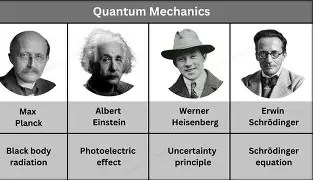
The origins of quantum mechanics trace back to the early 20th century, when classical theories failed to explain certain experimental results. Max Planck’s work on black-body radiation in 1900 introduced the idea that energy is quantized, meaning it comes in discrete packets called “quanta.” This concept laid the foundation for quantum theory. Soon after, Albert Einstein explained the photoelectric effect by proposing that light itself is made of particles—later called photons—further reinforcing the idea of quantization.

One of the most striking features of quantum mechanics is wave-particle duality. According to this principle, particles such as electrons and photons exhibit both wave-like and particle-like behavior depending on how they are observed. This duality was famously demonstrated in the double-slit experiment, where particles create an interference pattern typical of waves when not observed, but behave like particles when measured.

Another cornerstone of quantum mechanics is Heisenberg’s uncertainty principle, which states that certain pairs of physical properties—like position and momentum—cannot both be known precisely at the same time. This introduces a fundamental limit to measurement and implies that the act of observing a system can alter its state.

Quantum mechanics also introduces the concept of superposition, where particles can exist in multiple states simultaneously until measured. This idea is illustrated by Schrödinger’s cat thought experiment, in which a cat in a sealed box is both alive and dead until the box is opened and the cat is observed. Though metaphorical, this paradox highlights the non-intuitive nature of quantum systems.

Perhaps the most mysterious phenomenon in quantum mechanics is entanglement. When particles become entangled, their states are linked regardless of the distance between them. A change in one particle instantly affects the other, defying classical notions of locality. This “spooky action at a distance,” as Einstein called it, has been experimentally confirmed and is the basis for emerging technologies like quantum cryptography and quantum teleportation.

Quantum mechanics is not just theoretical—it has practical applications that shape our modern world. Technologies such as lasers, semiconductors, MRI machines, and atomic clocks all rely on quantum principles. Moreover, quantum computing promises to revolutionize information processing by using quantum bits (qubits) that can represent multiple states simultaneously, enabling calculations far beyond the reach of classical computers.

In conclusion, quantum mechanics is a profound and essential framework for understanding the universe at its most fundamental level. It challenges our perceptions, fuels technological innovation, and continues to inspire scientists and philosophers alike. As research advances, quantum mechanics may unlock even deeper mysteries of reality, reshaping our understanding of existence itself.

COMMENTS APPRECIATED

EDUCATION: Books

Like, Refer and Subscribe

***

***

QUANTUM COMPUTERS: A Peek into the Future?

NIST, A.I. and Staff Reporters

***

***

SPONSOR: http://www.CertifiedMedicalPlanner.org

A computer that could break the encryption that safeguards your private information on the internet. A machine that can design powerful new drugs by precisely simulating the behavior of individual molecules. A device that optimizes complex supply chains to help companies get the parts they need and assemble them in the most efficient way possible.

These are all examples of how an emerging technology — the quantum computer — could change our world.

These computers work by harnessing quantum physics — the strange, often counterintuitive laws that govern the universe at its smallest scales and coldest temperatures. Today’s quantum computers are rudimentary and error-prone. But if more advanced and robust versions can be made, they have the potential to rapidly crunch through certain problems that would take current computers years. That’s why governments, companies and research labs around the world are working feverishly toward this goal.

Quantum computers will not replace our familiar “classical” computers. Rather, the two types of machines could work together to solve problems that stymie classical computers, potentially supercharging scientific research in fields such as materials and drug discovery, giving a boost to industry and upending cybersecurity as we know it.

So, let’s explore how quantum computers work.

MORE: https://www.nist.gov/quantum-information-science/quantum-computing-explained

COMMENTS APPRECIATED

EDUCATION: Books

Like, Refer and Subscribe

***

***

NOBEL PRIZE PHYSICS: John Hopfield and Geoffrey Hinton in 2024

BREAKING NEWS

By Staff Reporters

***

***

The Nobel Prize in Physics has been awarded to two researchers who helped build the foundations of the artificial intelligence that surrounds us today.

John Hopfield and Geoffrey Hinton both worked on machine learning techniques that would go on to power products such as ChatGPT.

Hopfield’s research is carried out at Princeton University and Hinton works at the University of Toronto.

MORE: https://www.nobelprize.org/

COMMENTS APPRECIATED

Thank You

***

***

2023 NOBEL PRIZE: MEDICINE Katalin Karikó and Drew Weissman PHYSICS Pierre Agostini, Ferenc Krausz and Anne L’Huillier

MEDICINE: By Staff Reporters

***

***

Dr. Katalin Karikó and Drew Weissman MD PhD just received the Nobel Prize in medicine. Their study of mRNA led to the development of the Covid-19 vaccine.

Oiginally from Hungary, Kariko joined the University of Pennsylvania as a research assistant professor in 1989 to study mRNA. Her grant proposals were constantly rejected, while the rest of the scientific community was slow to catch on to her groundbreaking research. She was never paid more than $60,000 a year. And it was only through a chance encounter at the photocopier that she began to work with Weissman, currently the director of the Penn Institute for RNA Innovation.

The two made the discovery of a lifetime in 2005—that mRNA can be manipulated and injected into the body to activate an immune response. The major academic journals Science and Nature rejected their paper, which received little fanfare even after being published in a less prestigious journal.

So, in 2013, Karikó left Penn for a job at BioNTech where she still works today. And, of course, their breakthrough came in handy during the global pandemic.

Thanks largely to Karikó and Weissman, mRNA vaccine technology, Moderna and BioNTech are working on mRNA vaccines for RSV, HIV, Zika, malaria, shingles, flu, and cancer.

RSV Tests: https://medicalexecutivepost.com/2023/09/25/rsv-vaccine-cdc-oks-pfizer-maternal-shots/

DNA: Testing: https://wordpress.com/post/medicalexecutivepost.com/395273

DANGER: DNA Self-Testing: https://medicalexecutivepost.com/2021/04/25/the-potential-dangers-of-testing-your-own-dna/

***

***

PHYSICS: By Staff Reporters

And, three scientists won the Nobel Prize in physics yesterday for their work on how electrons move around the atom during the tiniest fractions of seconds, a field that could one day lead to better electronics or disease diagnoses.

The award went to Pierre Agostini, Ferenc Krausz and Anne L’Huillier for their study of the tiny part of each atom that races around the center and that is fundamental to virtually everything: chemistry, physics, our bodies and our gadgets.

The movements of electrons inside atoms and molecules are so rapid that they are measured in attoseconds – an almost incomprehensibly short unit of time. “An attosecond is to one second as one second is to the age of the universe,” the committee explained.

“They were able to, in a sense, provide an illumination tool that allows us to watch the assembly of molecules: how things come together to make a molecule,” Bob Rosner, president of the American Physical Society and a professor at the University of Chicago, told CNN.

***

COMMENTS APPRECIATED

Thank You

***

***