







 Support our online development, and advance our onground research initiatives in free market economics, as we seek to showcase the brightest Next-Gen minds.
THE ME-P DISCLAIMER: Posts, comments and opinions do not necessarily represent iMBA, Inc., but become our property after submission. Copyright © 2006 to-date. iMBA, Inc allows colleges, universities, medical and financial professionals and related clinics, hospitals and non-profit healthcare organizations to distribute our proprietary essays, photos, videos, audios and other documents; etc. However, please review copyright and usage information for each individual asset before submission to us, and/or placement on your publication or web site. Attestation references, citations and/or back-links are required. All other assets are property of the individual copyright holder.
Support our online development, and advance our onground research initiatives in free market economics, as we seek to showcase the brightest Next-Gen minds.
THE ME-P DISCLAIMER: Posts, comments and opinions do not necessarily represent iMBA, Inc., but become our property after submission. Copyright © 2006 to-date. iMBA, Inc allows colleges, universities, medical and financial professionals and related clinics, hospitals and non-profit healthcare organizations to distribute our proprietary essays, photos, videos, audios and other documents; etc. However, please review copyright and usage information for each individual asset before submission to us, and/or placement on your publication or web site. Attestation references, citations and/or back-links are required. All other assets are property of the individual copyright holder.


By Professor Eugene Schmuckler; PhD MBA MEd CTS
By Dr. David Edward Marcinko; MBA MEd CMP
SPONSOR: http://www.HealthDictionarySeries.org
***
***
WHAT IQ CAPTURES
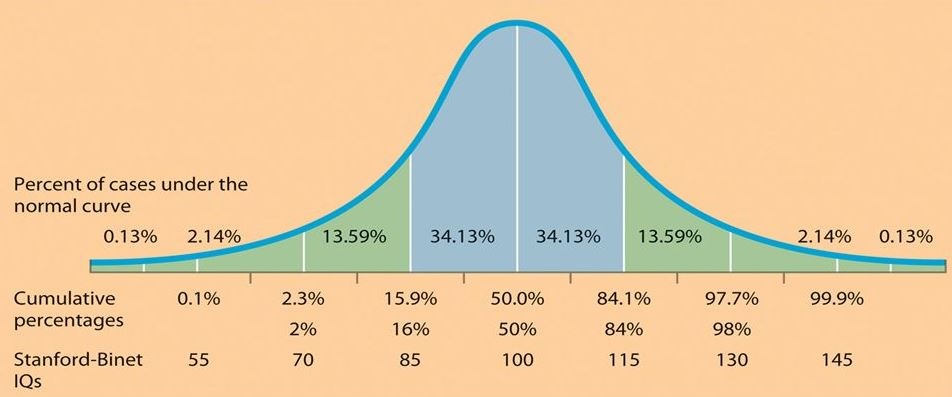
IQ, or Intelligence Quotient, is often treated as a shorthand for intelligence, yet it captures only a narrow slice of human cognitive ability. While IQ tests can reveal certain strengths, they cannot define the full richness of human intellect. Understanding what IQ measures—and what it does not—helps us use it responsibly rather than as a universal judgment of ability. What IQ Actually MeasuresIQ tests evaluate specific mental skills: logical reasoning, pattern recognition, verbal comprehension, and working memory. These abilities are tested through puzzles, analogies, memory tasks, and problem‑solving exercises. The average score is set at 100, with most people falling within a standard range around that midpoint. Because these tests focus on analytical and abstract thinking, they are good predictors of performance in academic environments and professions that rely heavily on structured reasoning. Fields like engineering, mathematics, and theoretical sciences often reward the same cognitive skills that IQ tests measure.
IQ can also be helpful in educational settings. When used carefully, it can identify students who may need additional support or those who might benefit from more advanced material. In this sense, IQ is a practical tool for understanding certain learning needs.
What IQ Fails to Capture
Despite its usefulness, IQ is far from a complete measure of intelligence. It does not assess creativity, emotional insight, social awareness, artistic ability, practical problem‑solving, or moral reasoning. A person may be gifted at understanding others’ emotions, inventing new ideas, or navigating complex real‑world situations yet score only average on an IQ test.
Human intelligence is multidimensional. A musician composing original music, a leader inspiring a community, a skilled mechanic diagnosing a subtle engine issue, or a caregiver calming a distressed child—all demonstrate forms of intelligence that IQ tests cannot quantify. These abilities matter deeply in everyday life and often shape success more than abstract reasoning alone.
Why IQ Is Controversial
IQ has long been debated, partly because it is influenced by more than innate ability. Factors such as education, socioeconomic background, stress, and environment can affect test performance. This challenges the idea that IQ is fixed or purely biological.
Cultural bias is another concern. Some critics argue that IQ tests reflect the values and assumptions of the cultures that created them, potentially disadvantaging people from different backgrounds. While modern tests attempt to reduce bias, no test can be entirely culture‑free.
The biggest problem arises when IQ is treated as a measure of personal worth or potential. Reducing a person to a single number oversimplifies the complexity of human minds and can reinforce harmful stereotypes. Intelligence is not a fixed trait, nor is it fully captured by standardized testing.
***
***
A More Complete View of Intelligence
A more balanced perspective recognizes IQ as one tool among many. It provides useful information about certain cognitive strengths, but it should not be treated as a universal measure of capability. People excel in different environments and express intelligence in diverse ways. A society that values multiple forms of intelligence—creative, emotional, practical, social, and analytical—is better equipped to support individual growth and innovation.
Understanding intelligence as multifaceted encourages us to appreciate people for the full range of their abilities. It also helps us avoid the trap of assuming that a high IQ guarantees success or that a lower score limits potential. Human development is dynamic, shaped by experience, effort, environment, and opportunity.
Conclusion
IQ remains a widely used and informative metric, but it is not a complete picture of intelligence. It measures specific cognitive skills that matter in academic and analytical contexts, yet it overlooks creativity, emotional depth, practical wisdom, and social understanding. The ongoing debate around IQ reflects a broader truth: human intelligence is too rich and varied to be captured by a single number. Recognizing this complexity allows us to value people more fully and to understand intelligence as a diverse and evolving human trait.
COMMENTS APPRECIATED
SPEAKING: Dr. Marcinko will be speaking and lecturing, signing and opining, teaching and preaching, storming and performing at many locations throughout the USA this year! His tour of witty and serious pontifications may be scheduled on a planned or ad-hoc basis; for public or private meetings and gatherings; formally, informally, or over lunch or dinner. All medical societies, financial advisory firms or Broker-Dealers are encouraged to submit an RFP for speaking engagements: CONTACT: Ann Miller RN MHA at MarcinkoAdvisors@outlook.com -OR- http://www.MarcinkoAssociates.com
Like, Refer and Subscribe
***
Share this:

Filed under: iMBA, Inc. | Tagged: AI, artificial intelligence, Emotional Intelligence, IQ, Marcinko, mental health, philosophy, schmuckler |


Leave a comment