







 Support our online development, and advance our onground research initiatives in free market economics, as we seek to showcase the brightest Next-Gen minds.
THE ME-P DISCLAIMER: Posts, comments and opinions do not necessarily represent iMBA, Inc., but become our property after submission. Copyright © 2006 to-date. iMBA, Inc allows colleges, universities, medical and financial professionals and related clinics, hospitals and non-profit healthcare organizations to distribute our proprietary essays, photos, videos, audios and other documents; etc. However, please review copyright and usage information for each individual asset before submission to us, and/or placement on your publication or web site. Attestation references, citations and/or back-links are required. All other assets are property of the individual copyright holder.
Support our online development, and advance our onground research initiatives in free market economics, as we seek to showcase the brightest Next-Gen minds.
THE ME-P DISCLAIMER: Posts, comments and opinions do not necessarily represent iMBA, Inc., but become our property after submission. Copyright © 2006 to-date. iMBA, Inc allows colleges, universities, medical and financial professionals and related clinics, hospitals and non-profit healthcare organizations to distribute our proprietary essays, photos, videos, audios and other documents; etc. However, please review copyright and usage information for each individual asset before submission to us, and/or placement on your publication or web site. Attestation references, citations and/or back-links are required. All other assets are property of the individual copyright holder.


By Dr. David Edward Marcinko; MBA MEd
SPONSOR: http://www.MarcinkoAssociates.com
***
***
Laissez‑faire capitalism is an economic philosophy built on the belief that the best outcomes emerge when markets operate with minimal government intervention. The term itself comes from the French phrase meaning “let do” or “let it be,” capturing the idea that individuals, firms, and voluntary exchanges should shape economic life rather than state planners or regulatory authorities. At its core, laissez‑faire capitalism assumes that people pursuing their own interests within a framework of private property and free exchange will generate prosperity, innovation, and social progress more effectively than any centralized authority could. This vision has influenced political debates, shaped national economies, and sparked enduring controversy over the proper balance between freedom and regulation.
The foundation of laissez‑faire capitalism rests on several key principles. The first is private property, which allows individuals to own resources, accumulate wealth, and make decisions about how to use their assets. Without secure property rights, markets cannot function because people lack the incentive to invest, innovate, or engage in long-term planning. The second principle is voluntary exchange, the idea that transactions should occur only when all parties consent. This ensures that trade is mutually beneficial, as each participant believes they are better off after the exchange. The third principle is competition, which acts as a natural regulator by rewarding efficiency and punishing waste. When firms must compete for customers, they are pushed to lower prices, improve quality, and develop new products. These principles together form the backbone of a system that relies on decentralized decision-making rather than government direction.
Supporters of laissez‑faire capitalism argue that this system unleashes human creativity and drives economic growth. They contend that when individuals are free to pursue their own goals, they discover new technologies, create businesses, and respond quickly to changing consumer needs. Government bureaucracies, by contrast, are often seen as slow, inefficient, and prone to political pressures that distort economic decisions. Advocates also claim that laissez‑faire capitalism protects personal freedom. Economic liberty—choosing where to work, what to buy, and how to invest—is viewed as inseparable from broader civil liberties. In this view, excessive regulation or state control threatens not only prosperity but also individual autonomy.
Another argument in favor of laissez‑faire capitalism is its ability to coordinate vast amounts of information without centralized planning. Prices act as signals that reflect scarcity, demand, and opportunity. When prices rise, producers are encouraged to supply more; when prices fall, resources shift elsewhere. This spontaneous order emerges from countless decisions made by individuals, none of whom needs to understand the entire system. Supporters see this as evidence that markets are more adaptable and intelligent than any government agency could ever be.
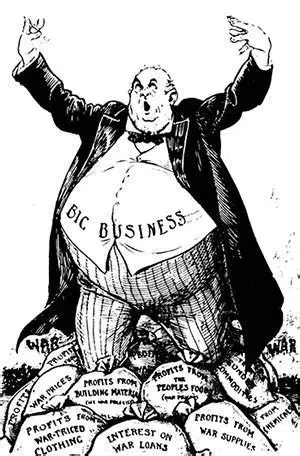
However, laissez‑faire capitalism has long faced criticism from those who believe that unregulated markets can produce harmful outcomes. One major critique is that markets do not always account for externalities, such as pollution or environmental degradation. When firms are free to pursue profit without restrictions, they may impose costs on society that are not reflected in market prices. Critics argue that government intervention is necessary to protect public health, natural resources, and future generations.
Another concern is economic inequality. Laissez‑faire capitalism rewards talent, risk-taking, and innovation, but it can also concentrate wealth in the hands of a few. Critics worry that extreme inequality undermines social cohesion, limits opportunities for those born into poverty, and gives wealthy individuals disproportionate political influence. While supporters argue that inequality is a natural and even beneficial outcome of freedom, opponents believe that some redistribution or regulation is needed to ensure fairness and stability.
A further critique focuses on market failures, such as monopolies or financial crises. Without oversight, powerful firms may dominate entire industries, stifling competition and exploiting consumers. Financial markets, driven by speculation and herd behavior, can create bubbles that burst with devastating consequences for workers and families. Critics argue that prudent regulation is essential to prevent abuses, maintain stability, and protect vulnerable populations.
Despite these disagreements, laissez‑faire capitalism remains a central concept in debates about economic policy. Some nations embrace a relatively pure form of the philosophy, emphasizing deregulation, low taxes, and limited government. Others adopt a mixed approach, combining market freedom with social safety nets and regulatory frameworks. The tension between these models reflects deeper questions about human nature, justice, and the role of the state.
Ultimately, laissez‑faire capitalism is more than an economic system; it is a vision of how society should function. It assumes that individuals, when left free, will create a dynamic and prosperous world. Its critics counter that freedom without responsibility can lead to exploitation and instability. The ongoing debate between these perspectives continues to shape political discourse, influence public policy, and define the economic landscape of modern societies.
SPEAKING: Dr. Marcinko will be speaking and lecturing, signing and opining, teaching and preaching, storming and performing at many locations throughout the USA this year! His tour of witty and serious pontifications may be scheduled on a planned or ad-hoc basis; for public or private meetings and gatherings; formally, informally, or over lunch or dinner. All medical societies, financial advisory firms or Broker-Dealers are encouraged to submit an RFP for speaking engagements: CONTACT: Ann Miller RN MHA at MarcinkoAdvisors1738@outlook.com -OR- http://www.MarcinkoAssociates.com
Like, Refer and Subscribe
HOSPITALS: http://www.crcpress.com/product/isbn/9781466558731
CLINICS: http://www.crcpress.com/product/isbn/9781439879900
ADVISORS: www.CertifiedMedicalPlanner.org
FINANCE:Financial Planning for Physicians and Advisors
INSURANCE:Risk Management and Insurance Strategies for Physicians and Advisors
Dictionary of Health Economics and Finance
Dictionary of Health Information Technology and Security
Dictionary of Health Insurance and Managed Care
***
Share this:

Filed under: iMBA, Inc. | Tagged: capitalism-laissez-faire, economics, economy, history, Marcinko, philosophy, politics |


Leave a comment