







 Support our online development, and advance our onground research initiatives in free market economics, as we seek to showcase the brightest Next-Gen minds.
THE ME-P DISCLAIMER: Posts, comments and opinions do not necessarily represent iMBA, Inc., but become our property after submission. Copyright © 2006 to-date. iMBA, Inc allows colleges, universities, medical and financial professionals and related clinics, hospitals and non-profit healthcare organizations to distribute our proprietary essays, photos, videos, audios and other documents; etc. However, please review copyright and usage information for each individual asset before submission to us, and/or placement on your publication or web site. Attestation references, citations and/or back-links are required. All other assets are property of the individual copyright holder.
Support our online development, and advance our onground research initiatives in free market economics, as we seek to showcase the brightest Next-Gen minds.
THE ME-P DISCLAIMER: Posts, comments and opinions do not necessarily represent iMBA, Inc., but become our property after submission. Copyright © 2006 to-date. iMBA, Inc allows colleges, universities, medical and financial professionals and related clinics, hospitals and non-profit healthcare organizations to distribute our proprietary essays, photos, videos, audios and other documents; etc. However, please review copyright and usage information for each individual asset before submission to us, and/or placement on your publication or web site. Attestation references, citations and/or back-links are required. All other assets are property of the individual copyright holder.


By Dr. David Edward Marcinko; MBA MEd
SPONSOR: http://www.CertifiedMedicalPlanner.org
***
***
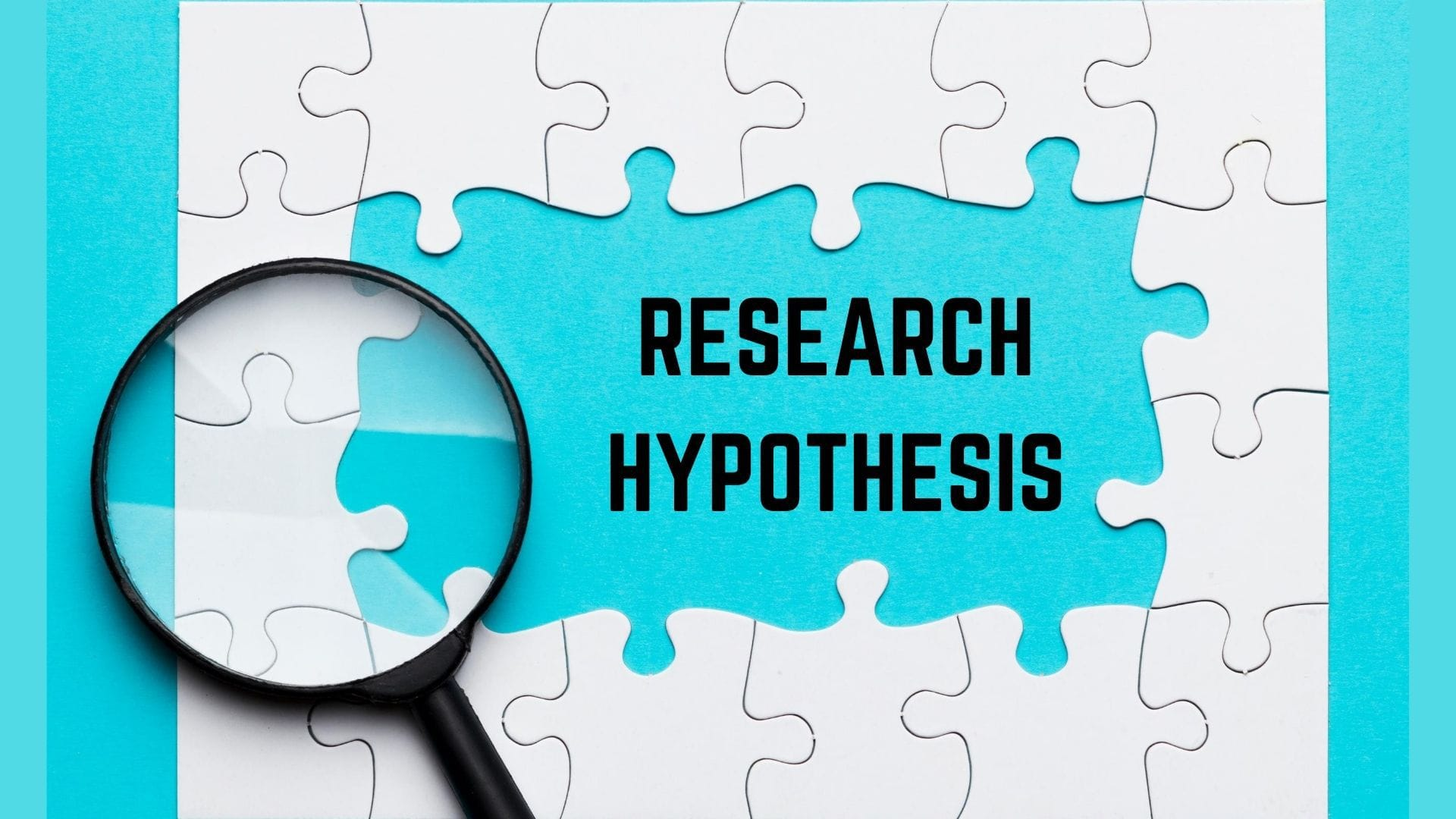
A hypothesis is one of the most fundamental tools in the process of inquiry, serving as the bridge between curiosity and systematic investigation. At its core, a hypothesis is a tentative explanation or prediction that a researcher proposes in response to an observed phenomenon. It is not a random guess but an informed statement grounded in prior knowledge, observation, or logical reasoning. The purpose of a hypothesis is to provide a clear direction for research by identifying what the investigator expects to find and how different factors might relate to one another. Without a hypothesis, research would lack focus, and the process of gathering and interpreting data would become aimless and disorganized.
A hypothesis is valuable because it transforms a broad question into a specific, testable claim. When a researcher notices something interesting—such as a pattern, a change, or a difference—they begin by asking why it might be happening. The hypothesis offers a possible answer to that question. For example, if a student observes that plants near a window grow faster than those in a darker corner, they might hypothesize that increased sunlight leads to faster growth. This statement is not only clear but also testable, meaning that an experiment can be designed to determine whether the prediction holds true. The ability to test a hypothesis is essential because it allows researchers to gather evidence that either supports or challenges their initial idea.
A strong hypothesis has several important characteristics. It must be specific, meaning it clearly identifies the variables involved and the expected relationship between them. It must also be measurable so that data can be collected in a meaningful way. Most importantly, a hypothesis must be falsifiable. This means that there must be a possible outcome that would show the hypothesis is incorrect. Falsifiability is crucial because it ensures that the hypothesis can be evaluated objectively rather than accepted as true without evidence. A statement that cannot be proven wrong is not a hypothesis but an opinion or belief, and it does not belong in scientific inquiry.
In many forms of research, especially in the sciences, hypotheses are divided into two main types: the null hypothesis and the alternative hypothesis. The null hypothesis states that there is no relationship or effect between the variables being studied. It serves as the default assumption that researchers test against. The alternative hypothesis proposes that there is a relationship or effect. These paired statements help structure the research process by clarifying what the investigator is looking for and how the results will be interpreted. If the evidence contradicts the null hypothesis, the researcher may accept the alternative hypothesis as a more accurate explanation.
The process of forming a hypothesis is closely tied to the scientific method. After making an observation and reviewing existing information, the researcher develops a hypothesis that explains what they expect to happen. They then design an experiment or study to test the hypothesis, collect data, and analyze the results. Based on the findings, the hypothesis may be supported, rejected, or revised. Even when a hypothesis is not supported, it still contributes to knowledge by eliminating incorrect explanations and guiding future research in new directions. This iterative process is essential to scientific progress because it encourages continuous refinement of ideas.
A hypothesis also plays an important role beyond the sciences. In fields such as psychology, education, economics, and even everyday problem‑solving, hypotheses help people make predictions and test their assumptions. For instance, a teacher might hypothesize that students learn better when lessons include hands‑on activities. A business owner might hypothesize that offering discounts will increase customer traffic. In each case, the hypothesis provides a starting point for gathering evidence and making informed decisions.
Ultimately, a hypothesis is more than a statement; it is a tool for thinking. It encourages curiosity, clarity, and critical evaluation. By proposing a possible explanation and inviting scrutiny, a hypothesis pushes researchers to explore the world more deeply and systematically. Whether it is eventually supported or disproven, every hypothesis contributes to a broader understanding of how things work. In this way, hypotheses are essential building blocks of knowledge, guiding inquiry and shaping the development of theories that help explain the complexities of the world around us.
COMMENTS APPRECIATED
SPEAKING: Dr. Marcinko will be speaking and lecturing, signing and opining, teaching and preaching, storming and performing at many locations throughout the USA this year! His tour of witty and serious pontifications may be scheduled on a planned or ad-hoc basis; for public or private meetings and gatherings; formally, informally, or over lunch or dinner. All medical societies, financial advisory firms or Broker-Dealers are encouraged to submit an RFP for speaking engagements: CONTACT: Ann Miller RN MHA at MarcinkoAdvisors@outlook.com -OR- http://www.MarcinkoAssociates.com
Like, Refer and Subscribe
HOSPITALS: http://www.crcpress.com/product/isbn/9781466558731
CLINICS: http://www.crcpress.com/product/isbn/9781439879900
ADVISORS: www.CertifiedMedicalPlanner.org
FINANCE:Financial Planning for Physicians and Advisors
INSURANCE:Risk Management and Insurance Strategies for Physicians and Advisors
Dictionary of Health Economics and Finance
Dictionary of Health Information Technology and Security
Dictionary of Health Insurance and Managed Care
***
Share this:

Filed under: iMBA, Inc. | Tagged: artificial intelligence, consciousness, history, hypothesis, Marcinko, philosophy, Science |


Leave a comment