SURGERY: A Math Theory?

By Dr. David Edward Marcinko; MBA MEd

By Dr. Gary L. Bode; CPA MSA

SPONSOR: http://www.CertifiedMedicalPlanner.org

***
***

Surgery theory is a branch of topology that studies how one can systematically modify manifolds to understand their structure, classify them, or transform them into more manageable forms. At its core, surgery theory provides a procedure for cutting and pasting along embedded spheres to change the topology of a space in a controlled way. The central idea is that by removing a neighborhood of an embedded sphere and replacing it with another piece that has the same boundary, one can alter the manifold while preserving smoothness or topological coherence. This method has become one of the most powerful tools in high‑dimensional topology, particularly for dimensions five and above.

The basic move in surgery theory begins with an embedded sphere Sk inside an n-dimensional manifold Mn. One removes the product Sk×Dnk, which is a tubular neighborhood of the sphere, and glues in Dk+1×Snk1 along their common boundary. This operation is called a surgery step. The replacement piece has the same boundary as the removed piece, ensuring that the resulting space is again a manifold. Although this sounds like a simple geometric maneuver, its consequences for the topology of the manifold can be profound. Surgery can change homotopy groups, modify intersection forms, or even alter the manifold’s differentiable structure.

One of the major achievements of surgery theory is its role in the classification of manifolds. In high dimensions, manifolds are often classified up to homotopy equivalence, and surgery theory provides a method to refine this classification to homeomorphism or diffeomorphism. The process typically begins with a manifold that is homotopy equivalent to a desired model. Through a sequence of surgeries, one attempts to eliminate obstructions to improving this equivalence into an actual homeomorphism. These obstructions live in algebraic objects such as L‑groups, which encode quadratic forms over group rings. The appearance of such algebraic structures is one of the striking features of surgery theory: it translates geometric problems into algebraic ones, allowing classification questions to be attacked with algebraic tools.

Another important application is the study of cobordism. Two manifolds are cobordant if they form the boundary of a higher‑dimensional manifold. Surgery theory provides a systematic way to modify a cobordism to achieve desirable properties, such as making a map between manifolds into a homotopy equivalence. This is central to the proof of the h‑cobordism theorem, which in turn underlies the classification of simply connected manifolds in high dimensions. The h‑cobordism theorem states that if a cobordism between simply connected manifolds has certain homotopy properties, then it is actually a product. Surgery theory provides the mechanism for adjusting the cobordism so that these homotopy conditions are satisfied.

Surgery theory also plays a role in understanding exotic smooth structures. In dimensions greater than four, surgery can often be used to show that manifolds have unique smooth structures. However, in dimension four, the situation becomes dramatically more complicated. While surgery theory still provides insights, it cannot fully resolve the classification of smooth structures in this dimension. This limitation highlights both the power and the boundaries of the method.

Overall, surgery theory is a unifying framework that connects geometry, algebra, and topology. It provides a toolkit for transforming manifolds, resolving classification problems, and revealing deep structural relationships. Its influence spans from the foundations of geometric topology to modern developments in manifold theory. If you want to explore a specific aspect next, you might look at L‑groups or the h‑cobordism theorem.

***

SCIENTIFIC METHOD: Defined

By Dr. David Edward Marcinko; MBA MEd

SPONSOR: http://www.CertifiedMedicalPlanner.org

***

A Foundation of Modern Inquiry

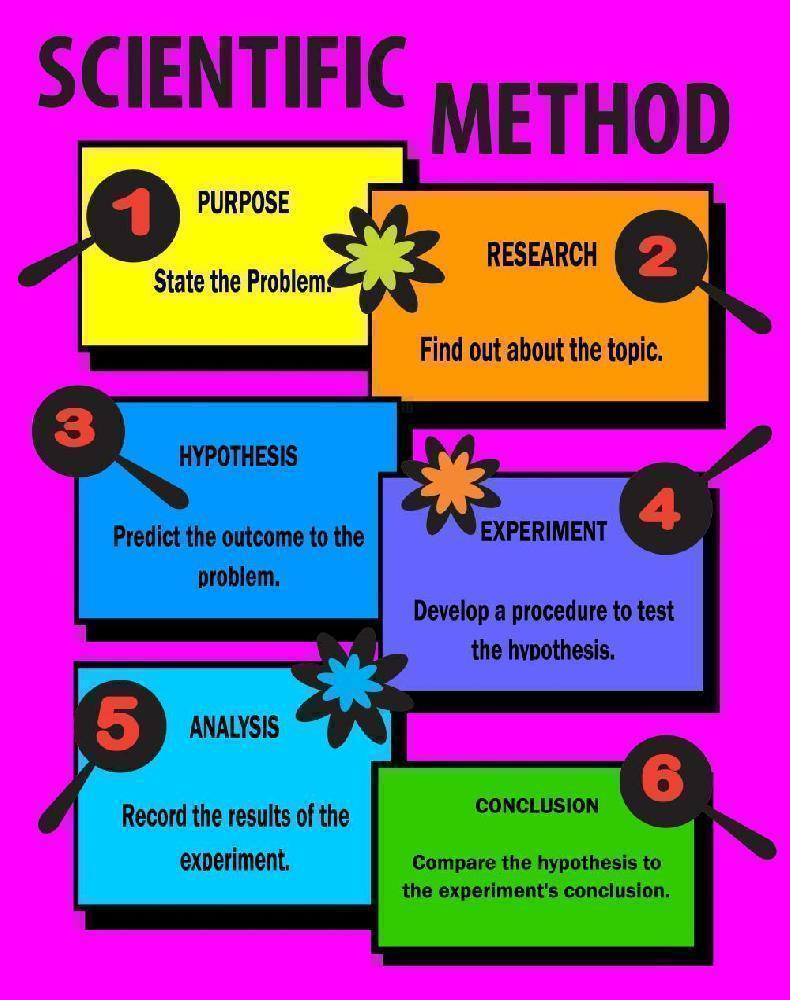
The scientific method stands as one of humanity’s most powerful intellectual achievements, providing a systematic way to investigate natural phenomena, test ideas, and build reliable knowledge. Although often presented as a simple sequence of steps—observation, hypothesis, experimentation, and conclusion—the scientific method is far richer, more flexible, and more nuanced than this linear model suggests. It is both a philosophy and a practice, shaped by centuries of refinement, debate, and discovery. At its core, the scientific method is a disciplined approach to understanding the world by grounding explanations in evidence rather than intuition, tradition, or authority.

The process typically begins with observation, the careful noticing of patterns, anomalies, or questions that arise from the natural world. Observation is not passive; it requires curiosity, attention, and often specialized tools. A scientist might observe the behavior of a chemical reaction, the motion of a planet, or the spread of a disease. These observations lead to questions, which form the intellectual spark that drives scientific inquiry. A well‑formed scientific question is specific, measurable, and focused on understanding a relationship or mechanism.

From these questions emerges the hypothesis, a tentative explanation that can be tested. A hypothesis is not a guess but a reasoned proposition based on prior knowledge, logic, and available evidence. Crucially, a hypothesis must be falsifiable, meaning it can be proven wrong through observation or experiment. This requirement distinguishes scientific ideas from beliefs or opinions. A hypothesis such as “all swans are white” can be falsified by observing a single black swan; a claim that cannot be tested or potentially disproven does not belong to the realm of science.

Once a hypothesis is established, the next step is prediction. Predictions translate the hypothesis into specific, testable outcomes. If the hypothesis is correct, then certain results should follow under defined conditions. Predictions help guide the design of experiments and clarify what evidence would support or contradict the hypothesis.

Experimentation is the heart of the scientific method. An experiment is a controlled procedure designed to test the predictions derived from the hypothesis. Good experiments isolate variables, use appropriate controls, and rely on precise measurement. The goal is to determine whether the observed results align with the predicted outcomes. Experiments may be conducted in laboratories, in the field, or through computational models, depending on the discipline. Regardless of the setting, the emphasis is on reproducibility: other researchers should be able to repeat the experiment and obtain similar results.

After data are collected, scientists engage in analysis, interpreting the results to determine whether they support or refute the hypothesis. This stage often involves statistical methods to assess the reliability and significance of the findings. A single experiment rarely provides definitive proof; instead, it contributes to a growing body of evidence. If the results contradict the hypothesis, the scientist must revise or abandon it. If the results support the hypothesis, it gains credibility but is never considered absolutely proven. Scientific knowledge is always provisional, open to revision in light of new evidence.

The final step is communication, an essential but sometimes overlooked component of the scientific method. Scientists share their findings through publications, presentations, and peer review. Peer review subjects the research to scrutiny by other experts, helping ensure that methods are sound, conclusions are justified, and errors are identified. This communal aspect of science allows knowledge to accumulate, refine, and evolve over time.

***

***

Although the scientific method is often portrayed as a rigid sequence, in practice it is highly flexible. Scientists may move back and forth between steps, refine hypotheses mid‑experiment, or generate new questions from unexpected results. Serendipity—unexpected discoveries—has played a major role in scientific progress, from penicillin to cosmic microwave background radiation. The method is less a strict recipe and more a guiding framework that emphasizes evidence, logic, and transparency.

Historically, the scientific method emerged from a long tradition of philosophical inquiry. Ancient thinkers such as Aristotle emphasized observation and classification, while medieval scholars in the Islamic world advanced experimental techniques. The Scientific Revolution of the 16th and 17th centuries marked a turning point, as figures like Francis Bacon and Galileo Galilei championed empirical investigation and systematic experimentation. Over time, the method evolved to incorporate mathematical modeling, statistical reasoning, and technological innovation.

Today, the scientific method underpins virtually every scientific discipline, from physics and biology to psychology and environmental science. It has enabled breakthroughs that transformed human life: vaccines, electricity, computers, and countless other advancements trace their origins to systematic inquiry. Beyond its practical achievements, the scientific method embodies a deeper philosophical commitment: the belief that the natural world is understandable through careful study, and that knowledge should be grounded in evidence rather than authority.

In an era of rapid technological change and widespread misinformation, the principles of the scientific method remain as vital as ever. Its emphasis on skepticism, transparency, and reproducibility provides a safeguard against error and bias. By teaching and applying the scientific method, society cultivates critical thinking, nurtures innovation, and strengthens the foundation of informed decision‑making.

Ultimately, the scientific method is more than a tool for scientists; it is a way of thinking that encourages curiosity, humility, and a relentless pursuit of truth. It reminds us that knowledge is not static but continually refined through questioning, testing, and discovery. Through this process, humanity expands its understanding of the universe and its place within it.

COMMENTS APPRECIATED

EDUCATION: Books

SPEAKING: Dr. Marcinko will be speaking and lecturing, signing and opining, teaching and preaching, storming and performing at many locations throughout the USA this year! His tour of witty and serious pontifications may be scheduled on a planned or ad-hoc basis; for public or private meetings and gatherings; formally, informally, or over lunch or dinner. All medical societies, financial advisory firms or Broker-Dealers are encouraged to submit an RFP for speaking engagements: CONTACT: Ann Miller RN MHA at MarcinkoAdvisors@outlook.com -OR- http://www.MarcinkoAssociates.com

Like, Refer and Subscribe

HOSPITALS: http://www.crcpress.com/product/isbn/9781466558731

CLINICS: http://www.crcpress.com/product/isbn/9781439879900

ADVISORS: www.CertifiedMedicalPlanner.org

FINANCE:Financial Planning for Physicians and Advisors

INSURANCE:Risk Management and Insurance Strategies for Physicians and Advisors

Dictionary of Health Economics and Finance

Dictionary of Health Information Technology and Security

Dictionary of Health Insurance and Managed Care

***