FICO Score – Defined

By Dr. David Edward Marcinko; MBA MEd

SPONSOR: http://www.CertifiedMedicalPlanner.org

***
***

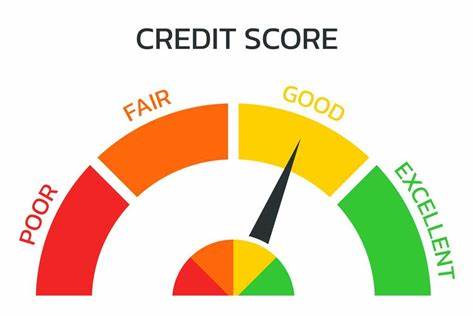
A FICO score is one of the most influential tools in modern consumer finance, shaping how individuals access credit, the cost of borrowing, and even broader life opportunities. Developed by the Fair Isaac Corporation, the score condenses a person’s credit history into a three‑digit number ranging from 300 to 850. While deceptively simple on the surface, this number reflects a complex evaluation of financial behavior and risk. Over time, the FICO score has become a central mechanism through which lenders make decisions, and its influence extends into housing, employment, insurance, and beyond.

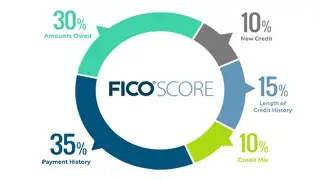
At its core, a FICO score attempts to answer a single question: How likely is a borrower to repay a loan on time? To estimate this, the scoring model analyzes several categories of credit information. The most significant factor is payment history, which accounts for a substantial portion of the score. Late payments, defaults, and collections signal higher risk, while consistent on‑time payments demonstrate reliability. The second major factor is credit utilization, or the percentage of available revolving credit that a person is currently using. High utilization suggests financial strain, while low utilization indicates stability. Other components include the length of credit history, the mix of credit types, and recent credit inquiries. Together, these elements form a predictive model that lenders rely on to assess risk quickly and consistently.

The importance of the FICO score lies in its widespread adoption. Banks, credit unions, mortgage lenders, auto lenders, and credit card issuers all use it as a primary decision‑making tool. A higher score typically leads to lower interest rates, better loan terms, and greater access to credit products. Conversely, a lower score can result in higher borrowing costs or outright denial of credit. This dynamic creates a powerful incentive for consumers to understand and manage their credit behavior carefully. In many ways, the FICO score functions as a financial reputation — a shorthand that follows individuals throughout their economic lives.

Beyond lending, the FICO score has expanded into other domains. Landlords often use credit scores to evaluate rental applicants, viewing them as indicators of reliability. Some employers, particularly in financial sectors, review credit reports (though not always the score itself) as part of background checks. Insurance companies may use credit‑based insurance scores to set premiums. These broader applications mean that a person’s credit behavior can influence not only their financial opportunities but also their housing stability, employment prospects, and cost of living. The score’s reach underscores its role as a structural component of economic mobility.

Despite its usefulness, the FICO score is not without criticism. One major concern is that it can reinforce existing inequalities. Individuals with limited credit histories — often young adults, immigrants, or those from low‑income backgrounds — may struggle to achieve high scores, not because they are irresponsible, but because they lack access to traditional credit products. Negative financial events, such as medical debt or job loss, can disproportionately affect vulnerable populations and depress scores for years. Critics argue that the model does not fully account for context, such as systemic barriers or unexpected hardships. As a result, the score can sometimes reflect circumstances rather than character or capability.

Another critique centers on transparency. While the general factors influencing a FICO score are publicly known, the exact algorithms are proprietary. This opacity can make it difficult for consumers to understand precisely how their actions will affect their score. Although educational tools and credit monitoring services have become more common, many people still find the system confusing or intimidating. The complexity of the scoring model can lead to misconceptions, such as the belief that carrying a balance improves a score or that checking one’s own credit is harmful. These misunderstandings can hinder effective credit management.

Despite these challenges, the FICO score remains deeply embedded in the financial system. Efforts to improve credit scoring have emerged, including models that incorporate alternative data such as rent payments, utility bills, or banking activity. These innovations aim to create a more inclusive and accurate picture of financial behavior. However, the traditional FICO score continues to dominate lending decisions, and its influence is unlikely to diminish in the near future.

Ultimately, the FICO score is both a practical tool and a symbol of the broader credit system. It rewards consistent, responsible financial behavior, but it also reflects structural realities that can advantage some individuals over others. Understanding how the score works empowers consumers to navigate the financial landscape more effectively. By managing payment history, keeping credit utilization low, maintaining long‑standing accounts, and avoiding unnecessary credit inquiries, individuals can strengthen their financial profile and expand their opportunities.

In a society where credit access plays a central role in economic life, the FICO score functions as a key determinant of financial possibility. It is a number that can open doors or close them, shape futures, and influence the trajectory of a person’s financial journey. While not perfect, it remains a powerful indicator of creditworthiness and a critical component of modern financial identity.

COMMENTS APPRECIATED

EDUCATION: Books

SPEAKING: Dr. Marcinko will be speaking and lecturing, signing and opining, teaching and preaching, storming and performing at many locations throughout the USA this year! His tour of witty and serious pontifications may be scheduled on a planned or ad-hoc basis; for public or private meetings and gatherings; formally, informally, or over lunch or dinner. All medical societies, financial advisory firms or Broker-Dealers are encouraged to submit an RFP for speaking engagements: CONTACT: Ann Miller RN MHA at MarcinkoAdvisors@outlook.com -OR- http://www.MarcinkoAssociates.com

Like, Refer and Subscribe

HOSPITALS: http://www.crcpress.com/product/isbn/9781466558731

CLINICS: http://www.crcpress.com/product/isbn/9781439879900

ADVISORS: www.CertifiedMedicalPlanner.org

FINANCE:Financial Planning for Physicians and Advisors

INSURANCE:Risk Management and Insurance Strategies for Physicians and Advisors

Dictionary of Health Economics and Finance

Dictionary of Health Information Technology and Security

Dictionary of Health Insurance and Managed Care

***

FINANCING: Non-Recourse

By Dr. David Edward Marcinko MBA MEd

***

***

An Overview

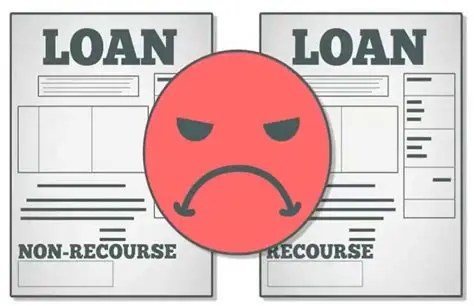
Introduction In the world of finance, the distinction between recourse and non-recourse loans is critical. Non-recourse financing refers to loans in which the lender’s rights are limited strictly to the collateral pledged for the loan. If the borrower defaults, the lender cannot pursue the borrower’s personal assets or income beyond the collateral. This structure makes non-recourse loans particularly attractive to borrowers who want to protect their broader financial portfolio, though it comes with trade-offs such as higher interest rates and stricter eligibility requirements.

Definition and Core Features

A non-recourse loan is secured by collateral, typically real estate or high-value assets. Unlike recourse loans, where lenders can seize collateral and pursue additional assets if the collateral does not cover the debt, non-recourse loans restrict recovery to the collateral alone.

Key features include:

  • Collateral-based repayment: Only the pledged asset can be seized.
  • Borrower protection: Other personal or business assets remain untouched.
  • Higher lender risk: Because recovery is limited, lenders face greater exposure.
  • Higher interest rates: To offset risk, lenders often charge more.

Applications in Real Estate and Project Financing

Non-recourse financing is most common in commercial real estate and large-scale projects. For example, developers building shopping centers or office towers often rely on non-recourse loans because repayment depends on future rental income once the project is complete. Similarly, infrastructure projects with long lead times—such as energy plants or toll roads—use non-recourse financing to align repayment with project revenues.

This structure allows borrowers to undertake ambitious projects without risking personal bankruptcy if the venture fails. It also encourages investment in sectors where upfront costs are high and returns are delayed.

Comparison with Recourse Loans

The difference between recourse and non-recourse loans lies in risk allocation:

  • Recourse loans: Lenders can seize collateral and pursue other assets. These loans are lower risk for lenders and typically carry lower interest rates.
  • Non-recourse loans: Lenders are limited to collateral. Borrowers gain protection, but lenders demand higher rates and stricter terms.

This trade-off means non-recourse loans are less common and usually reserved for borrowers with strong creditworthiness or projects with predictable revenue streams.

Advantages of Non-Recourse Financing

  • Risk limitation for borrowers: Protects personal wealth and other business assets.
  • Encourages investment: Makes large-scale, high-risk projects feasible.
  • Predictable liability: Borrowers know their maximum exposure is limited to collateral.

Disadvantages and Risks

  • Higher costs: Interest rates and fees are higher due to lender risk.
  • Strict eligibility: Only borrowers with strong financial standing or valuable collateral qualify.
  • Collateral dependency: If the collateral loses value, lenders face significant losses.
  • Bad boy carve-outs: Certain clauses allow lenders to pursue borrowers if fraud, misrepresentation, or intentional misconduct occurs.

Legal and Financial Implications

Non-recourse financing is shaped by legal frameworks that define lender rights. In many jurisdictions, lenders cannot pursue deficiency judgments beyond collateral. However, exceptions exist through “bad boy carve-outs,” which hold borrowers personally liable for misconduct such as misappropriation of funds or environmental violations.

Conclusion

Non-recourse financing is a powerful tool in modern finance, particularly for commercial real estate and infrastructure projects. By limiting borrower liability to collateral, it enables ambitious ventures while protecting personal assets. However, this protection comes at the cost of higher interest rates, stricter eligibility, and potential carve-outs that reintroduce personal liability. Ultimately, non-recourse loans represent a balance between borrower protection and lender risk, shaping the way large-scale projects are funded and developed.

COMMENTS APPRECIATED

EDUCATION: Books

SPEAKING: Dr. Marcinko will be speaking and lecturing, signing and opining, teaching and preaching, storming and performing at many locations throughout the USA this year! His tour of witty and serious pontifications may be scheduled on a planned or ad-hoc basis; for public or private meetings and gatherings; formally, informally, or over lunch or dinner. All medical societies, financial advisory firms or Broker-Dealers are encouraged to submit an RFP for speaking engagements: CONTACT: Ann Miller RN MHA at MarcinkoAdvisors@outlook.com -OR- http://www.MarcinkoAssociates.com

Like, Refer and Subscribe

***

***

PHYSICIAN CREDIT: Ratings, Scoring, Errors and Repair Services

ALMOST ALL ABOUT CREDIT

By Staff Reporters

***

***

Credit Rating and Scoring

The category in which a credit agency classifies you is based upon payment history.  Recently, credit reporting agencies have shifted away from ratings to a system known as credit scoring. Your score is determined by proprietary formulas that are based on your credit history, the higher the better. The practical benefits of this scoring system are numerous.

First, medical professionals do not need to be experts at deciphering credit reports since the same scoring system is used by many different companies.

Correcting Credit Report Errors

A credit bureau is not the place to get an item to be fixed on your credit report. Rather, you must take it up directly with the credit issuer. In any case, a late payment noted on a credit report by a durable medical equipment vendor, for example, has to be addressed directly with that merchant. The DME merchant then has 30 days to acknowledge your complaint and respond to you. In the meantime, you do not have to pay for the disputed items.  Most credit errors cannot be reported or kept on your credit report for more than seven years.

For legitimate late payments you should contact the credit grantor and negotiate to take one of the following steps. Be tenacious, and either remove the late payment or write a letter explaining that the problem has been resolved and you now are a good credit risk again. This letter is a powerful tool and should be saved with other permanent financial records. The industry term for it is a letter of correction.

Credit Repair Services

Credit repair services are oversold and their claims tend to be exaggerated. They do not have an inside track to the consumer reporting agencies.  Good credit repair services are experienced in communicating with creditors and can help with legitimate repairs.  They cannot restore your credit rating or your good name. 

However, realize that with some time and effort you can accomplish the same results yourself.

CITE: https://www.r2library.com/Resource/Title/0826102549

COMMENTS APPRECIATED

Please Like, Refer and Subscribe!

***

***

CREDIT: All About Contractual Agreements

By Staff Reporters

SPONSOR: http://www.MarcinkoAssociates.com

DEFINITIONS

What Is CREDIT? Credit is a contractual agreement in which a borrower receives a sum of money or something else of value and commits to repaying the lender later, typically with interest. Credit is also the creditworthiness or credit history of an individual or a company. Good credit tells lenders you have a history of reliably repaying what you owe on loans. Establishing good credit is essential to getting a loan.

***

Credit Analysis is a form of financial analysis used primarily to determine the financial strength of the issuer of a security, and the ability of that issuer to provide timely payment of interest and principal to investors in the issuer’s debt securities. Credit analysis is typically an important component of security analysis and selection in credit-sensitive bond sectors such as the corporate bond market and the municipal bond market.

Credit Default Swap Index (CDX) is a credit derivative, based on a basket of CDS, which can be used to hedge credit risk or speculate on changes in credit quality.

Credit Default Swaps (CDS) are credit derivative contracts between two counter parties that can be used to hedge credit risk or speculate on changes in the credit quality of a corporation or government entity.

Credit Quality reflects the financial strength of the issuer of a security, and the ability of that issuer to provide timely payment of interest and principal to investors in the issuer’s securities. Common measurements of credit quality include the credit ratings provided by credit rating agencies such as Standard & Poor’s and Moody’s. Credit quality and credit quality perceptions are a key component of the daily market pricing of fixed-income securities, along with maturity, inflation expectations and interest rate levels.

Credit Rating Agency (CRA) is a company that assigns credit ratings for issuers of certain types of debt obligations as well as the debt instruments themselves. In the United States, the Securities and Exchange Commission (SEC) permits investment banks and broker-dealers to use credit ratings from “Nationally Recognized Statistical Rating Organizations” (NRSRO) for similar purposes. As of January 2012, nine organizations were designated as NRSROs, including the “Big Three” which are Standard and Poor’s, Moody’s Investor Services and Fitch Ratings.

A Credit Rating Downgrade by a credit rating agency (such as Standard & Poor’s, Moody’s or Fitch), of reducing its credit rating for a debt issuer and/or security. This is based on the agency’s evaluation, indicating, to the agency, a decline in the issuer’s financial stability, increasing the possibility of default (defined below). A downgrade should not to be confused with a default; a debt security can be downgraded without defaulting. (And, conversely, a debt issuer can suddenly default without being downgraded first–credit ratings and credit rating agencies are not infallible.)

Credit Ratings are measurements of credit quality provided by credit rating agencies). Those provided by Standard & Poor’s typically are the most widely quoted and distributed, and range from AAA (highest quality; perceived as least likely to default) down to D (in default). Securities and issuers rated AAA to BBB are considered/perceived to be “investment-grade”; those below BBB are considered/perceived to be non-investment-grade or more speculative.

Credit Risk is the risk that the inability or perceived inability of the issuers of debt securities to make interest and principal payments will cause the value of those securities to decrease. Changes in the credit ratings of debt securities could have a similar effect.

Credit Risk Transfer Securities (CRTS) are the unsecured obligations of the GSEs (Government Sponsored Enterprises). Although cash flows are linked to prepays and defaults of the reference mortgage loans, the securities are unsecured loans, backed by general credit rather than by specified assets.

CITE: https://www.r2library.com/Resource/Title/0826102549

COMMENTS APPRECIATED

Please Subscribe!

***

***

PODCAST: How Does Medical Debt Impact Your Credit Report?

By Eric Bricker MD

***

***

COMMENTS APPRECIATED

Thank You

***

***