Support our online development, and advance our onground research initiatives in free market economics, as we seek to showcase the brightest Next-Gen minds.
THE ME-P DISCLAIMER: Posts, comments and opinions do not necessarily represent iMBA, Inc., but become our property after submission. Copyright © 2006 to-date. iMBA, Inc allows colleges, universities, medical and financial professionals and related clinics, hospitals and non-profit healthcare organizations to distribute our proprietary essays, photos, videos, audios and other documents; etc. However, please review copyright and usage information for each individual asset before submission to us, and/or placement on your publication or web site. Attestation references, citations and/or back-links are required. All other assets are property of the individual copyright holder.
Support our online development, and advance our onground research initiatives in free market economics, as we seek to showcase the brightest Next-Gen minds.
THE ME-P DISCLAIMER: Posts, comments and opinions do not necessarily represent iMBA, Inc., but become our property after submission. Copyright © 2006 to-date. iMBA, Inc allows colleges, universities, medical and financial professionals and related clinics, hospitals and non-profit healthcare organizations to distribute our proprietary essays, photos, videos, audios and other documents; etc. However, please review copyright and usage information for each individual asset before submission to us, and/or placement on your publication or web site. Attestation references, citations and/or back-links are required. All other assets are property of the individual copyright holder.


By Dr. David Edward Marcinko; MBA MEd
SPONSOR: http://www.CertifiedMedicalPlanner.org
***
***
A FICO score is one of the most influential tools in modern consumer finance, shaping how individuals access credit, the cost of borrowing, and even broader life opportunities. Developed by the Fair Isaac Corporation, the score condenses a person’s credit history into a three‑digit number ranging from 300 to 850. While deceptively simple on the surface, this number reflects a complex evaluation of financial behavior and risk. Over time, the FICO score has become a central mechanism through which lenders make decisions, and its influence extends into housing, employment, insurance, and beyond.
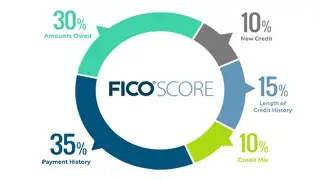
At its core, a FICO score attempts to answer a single question: How likely is a borrower to repay a loan on time? To estimate this, the scoring model analyzes several categories of credit information. The most significant factor is payment history, which accounts for a substantial portion of the score. Late payments, defaults, and collections signal higher risk, while consistent on‑time payments demonstrate reliability. The second major factor is credit utilization, or the percentage of available revolving credit that a person is currently using. High utilization suggests financial strain, while low utilization indicates stability. Other components include the length of credit history, the mix of credit types, and recent credit inquiries. Together, these elements form a predictive model that lenders rely on to assess risk quickly and consistently.
The importance of the FICO score lies in its widespread adoption. Banks, credit unions, mortgage lenders, auto lenders, and credit card issuers all use it as a primary decision‑making tool. A higher score typically leads to lower interest rates, better loan terms, and greater access to credit products. Conversely, a lower score can result in higher borrowing costs or outright denial of credit. This dynamic creates a powerful incentive for consumers to understand and manage their credit behavior carefully. In many ways, the FICO score functions as a financial reputation — a shorthand that follows individuals throughout their economic lives.
Beyond lending, the FICO score has expanded into other domains. Landlords often use credit scores to evaluate rental applicants, viewing them as indicators of reliability. Some employers, particularly in financial sectors, review credit reports (though not always the score itself) as part of background checks. Insurance companies may use credit‑based insurance scores to set premiums. These broader applications mean that a person’s credit behavior can influence not only their financial opportunities but also their housing stability, employment prospects, and cost of living. The score’s reach underscores its role as a structural component of economic mobility.
Despite its usefulness, the FICO score is not without criticism. One major concern is that it can reinforce existing inequalities. Individuals with limited credit histories — often young adults, immigrants, or those from low‑income backgrounds — may struggle to achieve high scores, not because they are irresponsible, but because they lack access to traditional credit products. Negative financial events, such as medical debt or job loss, can disproportionately affect vulnerable populations and depress scores for years. Critics argue that the model does not fully account for context, such as systemic barriers or unexpected hardships. As a result, the score can sometimes reflect circumstances rather than character or capability.
Another critique centers on transparency. While the general factors influencing a FICO score are publicly known, the exact algorithms are proprietary. This opacity can make it difficult for consumers to understand precisely how their actions will affect their score. Although educational tools and credit monitoring services have become more common, many people still find the system confusing or intimidating. The complexity of the scoring model can lead to misconceptions, such as the belief that carrying a balance improves a score or that checking one’s own credit is harmful. These misunderstandings can hinder effective credit management.
Despite these challenges, the FICO score remains deeply embedded in the financial system. Efforts to improve credit scoring have emerged, including models that incorporate alternative data such as rent payments, utility bills, or banking activity. These innovations aim to create a more inclusive and accurate picture of financial behavior. However, the traditional FICO score continues to dominate lending decisions, and its influence is unlikely to diminish in the near future.
Ultimately, the FICO score is both a practical tool and a symbol of the broader credit system. It rewards consistent, responsible financial behavior, but it also reflects structural realities that can advantage some individuals over others. Understanding how the score works empowers consumers to navigate the financial landscape more effectively. By managing payment history, keeping credit utilization low, maintaining long‑standing accounts, and avoiding unnecessary credit inquiries, individuals can strengthen their financial profile and expand their opportunities.
In a society where credit access plays a central role in economic life, the FICO score functions as a key determinant of financial possibility. It is a number that can open doors or close them, shape futures, and influence the trajectory of a person’s financial journey. While not perfect, it remains a powerful indicator of creditworthiness and a critical component of modern financial identity.
COMMENTS APPRECIATED
SPEAKING: Dr. Marcinko will be speaking and lecturing, signing and opining, teaching and preaching, storming and performing at many locations throughout the USA this year! His tour of witty and serious pontifications may be scheduled on a planned or ad-hoc basis; for public or private meetings and gatherings; formally, informally, or over lunch or dinner. All medical societies, financial advisory firms or Broker-Dealers are encouraged to submit an RFP for speaking engagements: CONTACT: Ann Miller RN MHA at MarcinkoAdvisors@outlook.com -OR- http://www.MarcinkoAssociates.com
Like, Refer and Subscribe
HOSPITALS: http://www.crcpress.com/product/isbn/9781466558731
CLINICS: http://www.crcpress.com/product/isbn/9781439879900
ADVISORS: www.CertifiedMedicalPlanner.org
FINANCE:Financial Planning for Physicians and Advisors
INSURANCE:Risk Management and Insurance Strategies for Physicians and Advisors
Dictionary of Health Economics and Finance
Dictionary of Health Information Technology and Security
Dictionary of Health Insurance and Managed Care
***
Share this:

Filed under: iMBA, Inc. | Tagged: credit, credit score, FICO, finance, Marcinko, personal-finance, real-estate | Leave a comment »