BOARD CERTIFICATION EXAM STUDY GUIDES Lower Extremity Trauma
[Click on Image to Enlarge]
ME-P Free Advertising Consultation
The “Medical Executive-Post” is about connecting doctors, health care executives and modern consulting advisors. It’s about free-enterprise, business, practice, policy, personal financial planning and wealth building capitalism. We have an attitude that’s independent, outspoken, intelligent and so Next-Gen; often edgy, usually controversial. And, our consultants “got fly”, just like U. Read it! Write it! Post it! “Medical Executive-Post”. Call or email us for your FREE advertising and sales consultation TODAY [678.779.8597] E-mail: MarcinkoAdvisors1738@outlook.com
Medical & Surgical e-Consent Forms
ePodiatryConsentForms.com
iMBA Inc., OFFICES
Suite #5901 Wilbanks Drive, Norcross, Georgia, 30092 USA [1.678.779.8597]. Our location is real and we are now virtually enabled to assist new long distance clients and out-of-town colleagues.
ME-P Publishing
SEEKING INDUSTRY INFO PARTNERS?
If you want the opportunity to work with leading health care industry insiders, innovators and watchers, the “ME-P” may be right for you? We are unbiased and operate at the nexus of theoretical and applied R&D. Collaborate with us and you’ll put your brand in front of a smart & tightly focused demographic; one at the forefront of our emerging healthcare free marketplace of informed and professional “movers and shakers.” Our Ad Rate Card is available upon request [678-779-8597].
Posted on June 6, 2026 by Dr. David Edward Marcinko MBA MEd CMP™
By Staff Reporters
***
***
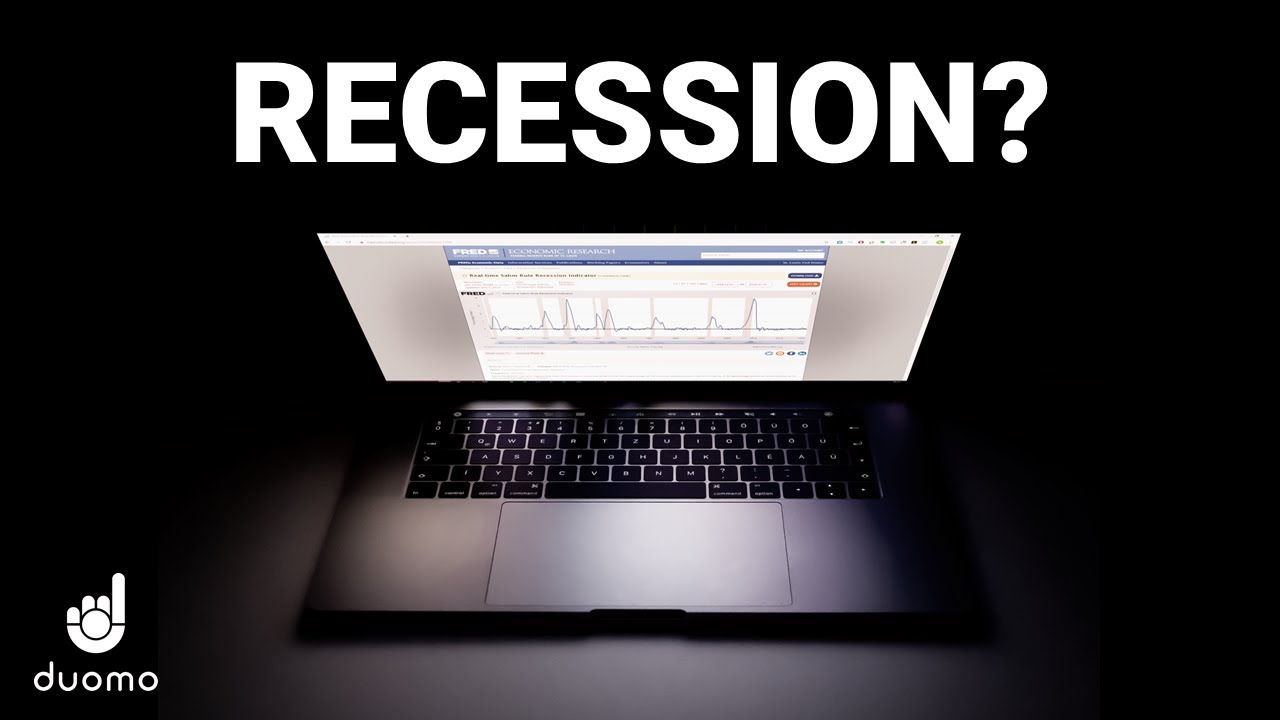
In October 2024, Bloomberg economists predicted a 100% chance of a recession coming in the following 12 months. But it didn’t happen. And recently, Goldman Sachs lowered estimation of the odds of the economy tipping into a recession in the next year to 15%. The bank’s chief economist described that number as the “unconditional long-term average”—which means there’s no more chance of the economy tanking now than in any other normal conditions.
***
In macroeconomics, the Sahm rule, or Sahm rule recession indicator, is a heuristic measure by the United States’ Federal Reserve for determining when an economy has entered a recession. It is useful in real-time evaluation of the business cycle and relies on monthly unemployment data from the Bureau of Labor Statistic (BLS). It is named after economist Claudia Sahm, formerly of the Federal Reserve and Council of Economic Advisors.
The Sahm rule states:When the three month moving average of the national unemployment rate is 0.5 percentage point or more above its low over the prior twelve months, we are in the early months of recession.
Posted on October 31, 2025 by Dr. David Edward Marcinko MBA MEd CMP™
By Vitaliy Katsenelsen CFA
***
***
One of the biggest hazards of being a professional money manager is that you are expected to behave in a certain way.
One of the biggest hazards of being a professional money manager is that you are expected to behave in a certain way: You have to come to the office every day, work long hours, slog through countless emails, be on top of your portfolio (that is, check performance of your securities minute by minute), watch business TV and consume news continuously, and dress well and conservatively, wearing a rope around the only part of your body that lets air get to your brain. Our colleagues judge us on how early we arrive at work and how late we stay. We do these things because society expects us to, not because they make us better investors or do any good for our clients.
Somehow we let the mindless, Henry Ford–assembly-line, 8:00 a.m. to 5:00 p.m., widgets-per-hour mentality dictate how we conduct our business thinking. Though car production benefits from rigid rules, uniforms, automation and strict working hours, in investing — the business of thinking — the assembly-line culture is counterproductive. Our clients and employers would be better off if we designed our workdays to let us perform our best.
Investing is not an idea-per-hour profession; it more likely results in a few ideas per year. A traditional, structured working environment creates pressure to produce an output — an idea, even a forced idea. Warren Buffett once said at a Berkshire Hathaway annual meeting: “We don’t get paid for activity; we get paid for being right. As to how long we’ll wait, we’ll wait indefinitely.”
How you get ideas is up to you. I am not a professional writer, but as a professional money manager, I learn and think best through writing. I put on my headphones, turn on opera and stare at my computer screen for hours, pecking away at the keyboard — that is how I think. You may do better by walking in the park or sitting with your legs up on the desk, staring at the ceiling.
I do my best thinking in the morning. At 3:00 in the afternoon, my brain shuts off; that is when I read my emails. We are all different. My best friend is a brunch person; he needs to consume six cups of coffee in the morning just to get his brain going. To be most productive, he shouldn’t go to work before 11:00 a.m.
And then there’s the business news. Serious business news that lacked sensationalism, and thus ratings, has been replaced by a new genre: business entertainment (of course, investors did not get the memo). These shows do a terrific job of filling our need to have explanations for everything, even random events that require no explanation (like daily stock movements). Most information on the business entertainment channels — Bloomberg Television, CNBC, Fox Business — has as much value for investors as daily weather forecasts have for travelers who don’t intend to go anywhere for a year.
Yet many managers have CNBC, Fox or Bloomberg TV/Internet streaming on while they work.
US government mulls 10% stake in Intel as Softbank invests $2b.
According to Morning Brew, Bloomberg and the Wall Street Journal reported recently that the government is considering becoming one of the beleaguered chipmaker’s biggest shareholders by converting grants the company was given under the Biden-era Chips Act into an equity stake.
At Intel’s current valuation, a 10% stake would be worth ~$10.5 billion—though the exact size of the stake and whether the government will move forward with the plan remains to be determined.
Meanwhile, over in the private sector, Softbank agreed to buy $2 billion worth of Intel stock, giving it a ~2% stake. Intel has been trying to turn itself around after losing ground to other semiconductor companies
UnitedHealth Group soared almost 12%, its biggest one-day gain in nearly five years, after getting the “Buffett Bounce.” Buffett’s Berkshire Hathaway revealed it bought ~5 million shares worth nearly $1.6 billion, giving a much-needed vote of confidence to the struggling health giant.
The White House is considering buying part of Intel, Bloomberg reported this week, which would be the latest big business deal the president pursues on behalf of the government. The Trump administration might acquire a stake in the struggling computer chip-maker using CHIPS Act funding—nearly $11 billion of which was already earmarked for Intel.
Saudi Arabia’s Public Investment Fund took an $8 billion write-down on five mega-projects it’s building, due to lower oil prices and higher costs.
Pimco, the asset management giant, warned that President Trump’s plan to IPO Fannie Mae and Freddie Mac could push mortgage rates higher.
Posted on July 29, 2025 by Dr. David Edward Marcinko MBA MEd CMP™
MEDICAL EXECUTIVE-POST–TODAY’SNEWSLETTERBRIEFING
***
Essays, Opinions and Curated News in Health Economics, Investing, Business, Management and Financial Planning for Physician Entrepreneurs and their Savvy Advisors and Consultants
“Serving Almost One Million Doctors, Financial Advisors and Medical Management Consultants Daily“
A Partner of the Institute of Medical Business Advisors , Inc.
Stocks: Investors cheered the news of an EU & US trade deal over the weekend, pushing the S&P 500 above 6,400 for the first time ever. But the index gave up most of its gains late in the day as attention turned to a huge week of data ahead (more on that in a minute).
Trade: Today was the first day of discussions between US and Chinese negotiators in Stockholm to keep the trade war truce alive. Elsewhere, President Trump foresees a baseline 15% to 20% tariff rate for the rest of the world.
Commodities: Gold fell as trade deal hopes heightened investors’ risk appetite, while oil spiked higher after Trump gave Russia a 10- to 12-day deadline to sign a truce with Ukraine.
According to Bloomberg, 83% of the S&P 500 companies that have reported earnings have outpaced Wall Street’s estimates, putting the index on pace for its best season of beats since the second quarter of 2021.
Bitcoin notched another all-time record yesterday, beating the previous record that was set two days ago.
Goldman Sachs plans to ask junior bankers to certify their loyalty every three months in order to prevent poaching by private equity firms, Bloomberg reported.
Deals: Stocks popped at the open yesterday on the news that Canada has rescinded the digital services tax in order to lure the US back to the negotiating table. Meanwhile, Bloomberg reported that the EU will accept a 10% universal tariff in exchange for some key concessions.
Stocks: The S&P 500 and the NASDAQ both hit new record highs today, with the S&P 500 wrapping up its best quarter since Q4 20
The Fed: President Trump published a handwritten note asking Jerome Powell to cut interest rates, even as the White House considers new ways to replace the Fed Chair. Meanwhile, Goldman Sachs now sees the chances of the Fed cutting interest rates in September as “somewhat above 50%.”
Posted on June 27, 2025 by Dr. David Edward Marcinko MBA MEd CMP™
By Staff Reporters
***
***
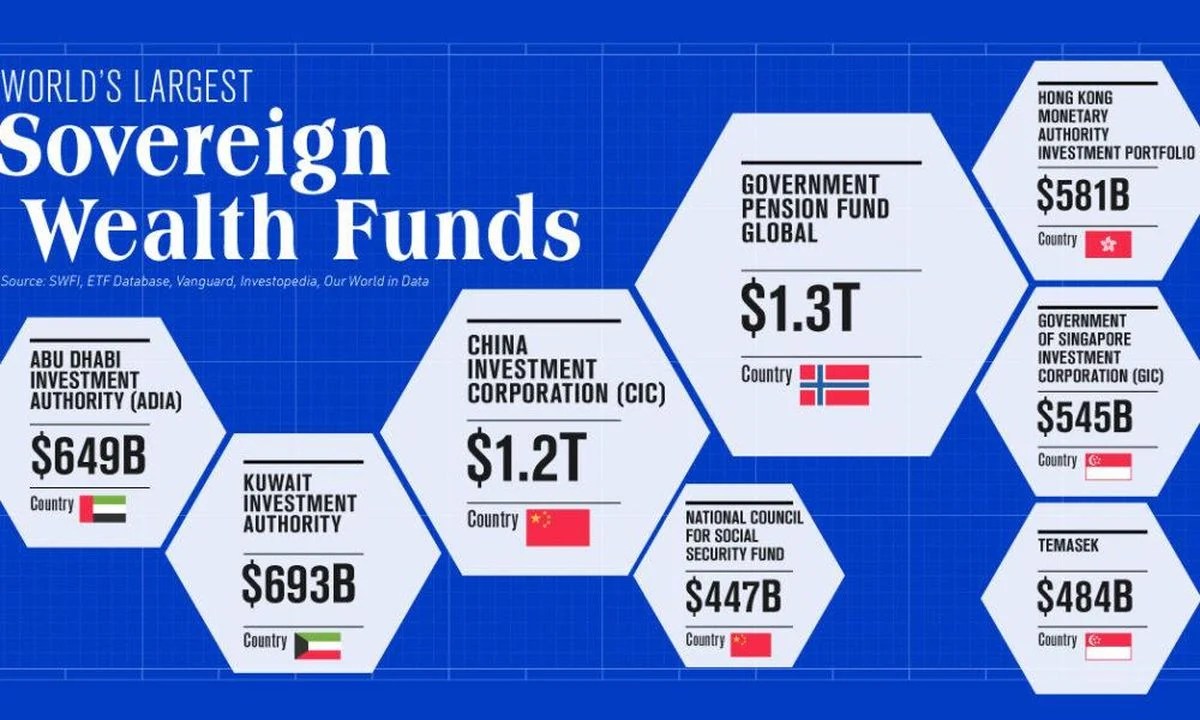
A SWF is essentially an investment fund run by the government. Similar to how a hedge fund or a private equity firm operates, the government would set aside a pot of money and invest it in assets such as stocks, bonds, startups, or real estate.
The idea of the US establishing a sovereign wealth fund akin to Norway’s or Abu Dhabi’s gained momentum recently across the political spectrum. Former President Trump endorsed the concept during a speech on his economic policy agenda for a second term, and the Biden administration has been quietly cheffing up a proposal for a wealth fund over the past several months, Bloomberg reported.
Trump and Biden officials described the fund as a key tool the country could deploy to win the global technological arms race and better compete against geopolitical rivals like China.
For example, the wealth fund could finance capital-intensive sectors such as shipbuilding, nuclear fission, and quantum cryptography that don’t offer near-term ROI for private investors.
However, disadvantages of a SWF include:
Non-Guaranteed Returns, with the Risk of Total Loss
Influence on Foreign Exchange Rates, Introducing Uncertainty
Potential Mismanagement of Funds Due to a Lack of Transparency
Dependency on Global Economic Conditions, Impacting Fund Performance
Challenges in Maintaining Accountability and Addressing Ethical Concerns
Posted on June 16, 2025 by Dr. David Edward Marcinko MBA MEd CMP™
BREAKING NEWS!
***
***
Markets: Brace for +/- volatility as US markets reopen this morning, with the escalating Israel–Iran conflict dominating investors’ Bloomberg Terminals.
Stocks fell the most in nearly a month on Friday, and the prospect of an oil supply shock sent crude prices 7% higher, their biggest one-day gain in years. Through it all, the S&P 500 is less than 3% from its record high.
Combined, both the DOW and NASDAQ are up over 750 points, today!
Markets: Stocks fell yesterday as investors readied themselves for today’s jobs report. The May jobs report is expected to show hiring slowed while the unemployment rate held flat. The data release will come as investors closely watch for any further signs of slowing in the US labor market.
The Bureau of Labor Statistics data is slated for release at 8:30 a.m. ET, today. Economists expect non-farm payroll to have risen by 125,000 in May and the unemployment rate to have held steady at 4.2%, according to consensus estimates compiled by Bloomberg.
Posted on May 12, 2025 by Dr. David Edward Marcinko MBA MEd CMP™
By Staff Reporters and ChatGPT
***
***
President Trump to bring down prescription costs
In a Sunday post to Truth Social, President Trump signed an executive order at 9 am today to institute a most-favored-nation policy with pharmaceutical companies that he predicted could lower drug prices by 30% to 80%.
“The United States will pay the same price as the Nation that pays the lowest price anywhere in the World,”
While Americans pay more for pharmaceuticals than any other country, Bloomberg reported that the American market fuels innovation and drives growth in the industry. Drug makers have pushed back on previous efforts to revamp the system in the US, saying it would make revenue evaporate and hinder the development of potentially lifesaving drugs.
Posted on April 24, 2025 by Dr. David Edward Marcinko MBA MEd CMP™
MEDICAL EXECUTIVE-POST–TODAY’SNEWSLETTERBRIEFING
***
Essays, Opinions and Curated News in Health Economics, Investing, Business, Management and Financial Planning for Physician Entrepreneurs and their Savvy Advisors and Consultants
“Serving Almost One Million Doctors, Financial Advisors and Medical Management Consultants Daily“
A Partner of the Institute of Medical Business Advisors , Inc.
OpenAI would be open to buying Chrome if Google is forced by a federal court to sell the web browser, the company’s ChatGPT head said yesterday.
The FDA suspended milk quality tests in some dairy products due to reduced capacity stemming from federal workforce cuts, Reuters reported.
Roche, the Swiss pharmaceutical giant, is investing $50 billion in US manufacturing to circumvent President Trump’s tariffs, the company said yesterday.
Rite Aid is preparing to sell itself in pieces ahead of a possible second bankruptcy, Bloomberg reported.
Oklo gained 8.60% after OpenAI CEO Sam Altman announced he’s stepping down as chairman of the board of the nuclear power startup.
Duolingo popped 10.01% after Morgan Stanley initiated coverage of the language learning company, calling it a “best-in-class consumer internet asset.”
Cava climbed 6.29% due to an upgrade from analysts at Bernstein, who think the bowl slop stock will not only survive but thrive in an economic downturn.
Amphenol rose 8.21% thanks to impressive earnings for the high-speed cable company, coupled with a solid fiscal outlook.
Vertiv Holdings jumped 8.60% after the data center company posted an impressive quarterly profit and raised its fiscal forecast.
Stocks surged first thing this morning after President Trump said the media blew things out of proportion and that he has “no intention” of firing Jerome Powell. He also said he would be “very nice” to China in tariff negotiations.
Treasury Secretary Scott Bessent also did some damage control, touting the opportunity for a “big deal” between the US and China.
The combination sent a relief rally sweeping through markets, and while the euphoria faded by mid-afternoon, all three indexes ended the day in the green.
Gold fell and bitcoin rose as investors took on more risk (see below), while oil dropped on reports that OPEC+ may hike its crude output after its meeting next month.
Posted on April 9, 2025 by Dr. David Edward Marcinko MBA MEd CMP™
By Staff Reporters
***
***
Just after midnight, President Trump’s “reciprocal” tariffs went into effect against 86 countries. Analysts have estimated that the new US average effective tariff rate is north of 20%, the highest in more than 100 years. Ahead of the tariff deadline, markets swung violently, mostly way down: According to Bloomberg’s Cameron Crise, yesterday was the fourth straight trading day when the S&P 500’s trading range was 5% or more. That’s only happened in 1987, 2008, and 2020.
***
***
The Apple A18 and Apple A18 Pro are a pair of 64-bit ARM-based system on a chip (SoC) designed by Apple Inc., part of the Apple silicon series. They are used in the iPhone 16 and iPhone 16 Pro lineups and the iPhone 16e, and built on a second generation 3 nm process by TSMC.
***
Yesterday, for several hours on Tuesday, it looked like stocks were going to regain some of the ground lost during the market’s very bad week. But after the Trump administration made it clear that its increased tariffs on China would go into effect, all three indexes plunged. Apple, which makes most of its iPhones in China, was hit harder than many of its Big Tech peers.
So shoppers are thinking it’s better to have an Apple A18 processor and not need it, than to need it and not have it. Apple customers are scrambling to buy new iPhones out of fear that the company could raise prices to offset President Trump’s tariffs.
Employees at locations throughout the US said they’re being bombarded with questions about potential price hikes and have witnessed customers panic-buying phones. Though Apple declined to comment to Bloomberg, its retail stores reportedly saw higher sales over the last weekend than in previous years.
Posted on March 18, 2025 by Dr. David Edward Marcinko MBA MEd CMP™
MEDICAL EXECUTIVE-POST–TODAY’SNEWSLETTERBRIEFING
***
Essays, Opinions and Curated News in Health Economics, Investing, Business, Management and Financial Planning for Physician Entrepreneurs and their Savvy Advisors and Consultants
“Serving Almost One Million Doctors, Financial Advisors and Medical Management Consultants Daily“
A Partner of the Institute of Medical Business Advisors , Inc.
A group of current and former employees of JPMorgan Chase (NYSE:JPM) has filed a lawsuit alleging that the company, through its prescription drug plan run by CVS Health (NYSE:CVS), overpaid for medicines, resulting in higher expenses for its workers, according to Bloomberg News.
The S&P 500 (^GSPC) gained about 0.6% to rebound for a second day in row, while the Dow Jones Industrial Average (^DJI) gained more than 350 points, or more than 0.8%. The tech-heavy NASDAQ Composite (^IXIC) rose 0.3% as “Magnificent 7” stocks, including Nvidia (NVDA) and Tesla (TSLA), faltered.
Posted on March 8, 2025 by Dr. David Edward Marcinko MBA MEd CMP™
MEDICAL EXECUTIVE-POST–TODAY’SNEWSLETTERBRIEFING
***
Essays, Opinions and Curated News in Health Economics, Investing, Business, Management and Financial Planning for Physician Entrepreneurs and their Savvy Advisors and Consultants
“Serving Almost One Million Doctors, Financial Advisors and Medical Management Consultants Daily“
A Partner of the Institute of Medical Business Advisors , Inc.
Walgreens Boots Alliance says it has agreed to be acquired by private equity firm Sycamore Partners as the struggling retailer looks to turn itself around after years of losing money. Walgreens said Thursday that Sycamore will pay $11.45 per share, giving the deal an equity value just under $10 billion. Shareholders could eventually receive up to an
Posted on February 13, 2025 by Dr. David Edward Marcinko MBA MEd CMP™
MEDICAL EXECUTIVE-POST–TODAY’SNEWSLETTERBRIEFING
***
Essays, Opinions and Curated News in Health Economics, Investing, Business, Management and Financial Planning for Physician Entrepreneurs and their Savvy Advisors and Consultants
“Serving Almost One Million Doctors, Financial Advisors and Medical Management Consultants Daily“
A Partner of the Institute of Medical Business Advisors , Inc.
Consumer prices overall increased 3% from a year earlier, up from 2.9% the previous month, according to the Labor Department’s consumer price index, a measure of goods and service costs across the U.S. That’s the most since June and above the 2.9% expected by economists surveyed by Bloomberg.
Most U.S. stocks fell Wednesday after a report showed inflation is unexpectedly worsening for Americans.
The S&P 500 dropped 0.3%, though it had been on track for a much worse loss of 1.1% at the start of trading. The Dow Jones Industrial Average sank 225 points, or 0.5%, while the NASDAQ composite edged higher by less than 0.1%
The Bloomberg U.S. Universal Index represents the union of the U.S. Aggregate Index, U.S. Corporate High Yield Index, Investment Grade 144A Index, Eurodollar Index, U.S. Emerging Markets Index, and the non-ERISA eligible portion of the CMBS Index.
The index covers USD-denominated, taxable bonds that are rated either investment grade or high-yield. Some Bloomberg U.S. Universal Index constituents may be eligible for one or more of its contributing sub-components that are not mutually exclusive. These securities are not double-counted in the index.
The Bloomberg U.S. Universal Index was created on January 1st, 1999, with index history back-filled to January 1st, 1990.
Posted on September 30, 2024 by Dr. David Edward Marcinko MBA MEd CMP™
MEDICAL EXECUTIVE-POST–TODAY’SNEWSLETTERBRIEFING
***
Essays, Opinions and Curated News in Health Economics, Investing, Business, Management and Financial Planning for Physician Entrepreneurs and their Savvy Advisors and Consultants
“Serving Almost One Million Doctors, Financial Advisors and Medical Management Consultants Daily“
A Partner of the Institute of Medical Business Advisors , Inc.
Markets: It’s been a September to remember for the stock market after the S&P 500 and Dow Jones hit fresh highs last week. Thursday was the 42nd record-high close for the S&P 500 this year, and on Friday, the Dow notched its 32nd record-high close, per CNN Business. Recent data indicates that all the ingredients are coming together for a “soft landing”: The economy is staying strong while inflation has continued to fall. And more rate cuts are on their way.
Stock spotlight: Meta’s rally this year has been fruitful for its CEO’s bank account. The net worth of Mark Zuckerberg, who owns a 13% stake in his company, climbed above $200 billion for the first time, per Bloomberg. He’s now the fourth-richest person in the world.
Posted on September 26, 2024 by Dr. David Edward Marcinko MBA MEd CMP™
MEDICAL EXECUTIVE-POST–TODAY’SNEWSLETTERBRIEFING
***
Essays, Opinions and Curated News in Health Economics, Investing, Business, Management and Financial Planning for Physician Entrepreneurs and their Savvy Advisors and Consultants
“Serving Almost One Million Doctors, Financial Advisors and Medical Management Consultants Daily“
A Partner of the Institute of Medical Business Advisors , Inc.
Flutter Entertainment, parent company of betting app FanDuel, popped 5.06% after it revealed its impressive growth plans.
Hewlett Packard Enterprise rose 5.05% thanks to an upgrade from Barclays analysts who think that rising AI demand will increase the company’s server revenue.
Trump Media & Technology Group gained 10.48% after shareholders panicked that the end of its lockup period would mean big selling by insiders, fears that haven’t materialized.
Southwest Airlines stumbled 4.57% after announcing it will cut service to and from Atlanta, a major hub for air travel, as it looks to save money ahead of a showdown with activist investor Elliott Investment Management.
Bank of America fell just 0.51% on the revelation that Warren Buffett can’t stop selling the stock.
KB Home sank 5.35% after the homebuilder beat revenue estimates but missed on earnings. It also issued a downbeat forecast for the rest of its fiscal year.
Global Payments dropped 6.37% thanks to a downgrade from BTIG analysts who were unimpressed by the payment provider’s near-term growth plans.
The S&P 500® index (SPX) fell 10.68 points (–0.19%) to 5,722.25; the Dow Jones Industrial Average® ($DJI) dropped 293.47 points (–0.70%) to 41,914.75; the NASDAQ Composite® ($COMP) added 7.68 points (0.04%) to 18,082.21.
The 10-year Treasury note yield (TNX) climbed five basis points to 3.78% and seems stuck in a range between 3.7% and 3.8%.
The CBOE Volatility Index® (VIX) rose slightly to 15.51, still near its September lows.
Coca-Colapulled its new flavor, Spiced, from shelves after just six months because of dis-interest in it.
Visa was sued by the Justice Department for antitrust violations.The DOJ alleged in a complaint filed in Manhattan federal court that the payments giant is illegally monopolizing the debit card market by penalizing merchants who try to use alternatives, Bloomberg reported.
For the first time in more than a decade, the nationwide number of people with obesity hasn’t gone up, according to new CDC data showing that the condition appears in about 40% of US adults.
Visualize: How private equity tangled banks in a web of debt, from the Financial Times.
Posted on September 6, 2024 by Dr. David Edward Marcinko MBA MEd CMP™
MEDICAL EXECUTIVE-POST–TODAY’SNEWSLETTERBRIEFING
***
Essays, Opinions and Curated News in Health Economics, Investing, Business, Management and Financial Planning for Physician Entrepreneurs and their Savvy Advisors and Consultants
“Serving Almost One Million Doctors, Financial Advisors and Medical Management Consultants Daily“
A Partner of the Institute of Medical Business Advisors , Inc.
A bad day for Nvidia got even worse on Tuesday when Bloomberg reported that the Department of Justice subpoenaed the chipmaker as part of its investigation into whether the world’s hottest company unfairly wields its industry dominance. Yesterday, Nvidia denied it was technically subpoenaed. Bloombergfollowed up to say that Nvidia was merely splitting hairs about the type of request it received from the DOJ but that it was in fact asked to answer questions about its empire.
Nio—the Chinese EV maker, not the Keanu Reeves character—soared 14.52% after reporting record deliveries last quarter and forecasting a stronger quarter ahead.
US Steel continued its roller coaster ride today, rising 1.97% on the rumor that President Biden will block its acquisition by Japan’s Nippon Steel.
Shoe Carnival, which sells shoes and isn’t in fact a poorly scripted horror film, popped 8.20% thanks to a back-to-school shopping boom.
What’s down
C3.ai, which sounds like the name of a new Star Wars droid, sank 8.21% after the enterprise software company announced that subscription revenue fell short of expectations last quarter.
Hewlett Packard Enterprise staggered 6.02% after posting record AI revenue but paying the price for it.
Copart dropped 6.67% once the online car auctioneer reported solid revenue growth but missed earnings expectations last quarter.
Toro Company, makers of your dad’s favorite lawnmower, fell 10.09%. Sales to residential customers rose last quarter, but sales to professionals, who buy more expensive equipment, fell.
The SPX fell 16.66 points (–0.30%) to 5,503.41; the Dow Jones Industrial Average® ($DJI) dropped 219.22 points (–0.54%) to 40,755.75; the NASDAQ Composite®($COMP) added 43.36 points (0.25%) to 17,127.66.
The 10-year Treasury note yield (TNX)slid to 3.73%, its lowest close since August 5 following today’s jobs-related data.
The CBOE Volatility Index® (VIX)fell to just above 20, near its historic average.
The president is gearing up to blockJapan’s Nippon Steel from acquiring US Steel, according to the Washington Post—a move that could end the highly politicized deal.
Visualize: How private equity tangled banks in a web of debt, from the Financial Times.
Posted on July 25, 2024 by Dr. David Edward Marcinko MBA MEd CMP™
By Staff Reporters
***
***
What it is: The NASDAQ Composite is an index composed of 2,500+ stocks as well as other equities such as American Depository Receipts [ADRs] and Real Estate Investment Trusts [REITs].
How it works: Unlike the DJIA, the NASDAQ weights by market cap (number of outstanding shares a company has multiplied by the share price), a setup that gives extra-large companies an extra-large impact. The NASDAQ is also heavily skewed toward tech companies, which account for nearly half the index’s total value.
Why it matters: As the world’s first electronic [e]-exchange, the NASDAQ has historically attracted more tech-focused companies. While the index tracks more stocks than the S&P and Dow combined, tech’s heavy influence means the NASDAQ doesn’t always illustrate how other industries are faring. The index can also be volatile because it includes more small, speculative companies.
And so, Big Tech and the NASDAQ suffered big losses yesterday after Tesla and Alphabet posted disappointing quarterly results the day before.
The Magnificent Seven tech stocks lost a combined $750 billion in market cap for their worst day ever, while the S&P 500 and the NASDAQ had their worst days since 2022—with the S&P ending its longest streak without a 2% dip since the financial crisis began in 2007, as per Bloomberg.
Posted on July 21, 2024 by Dr. David Edward Marcinko MBA MEd CMP™
MEDICAL EXECUTIVE-POST–TODAY’SNEWSLETTERBRIEFING
***
Essays, Opinions and Curated News in Health Economics, Investing, Business, Management and Financial Planning for Physician Entrepreneurs and their Savvy Advisors and Consultants
“Serving Almost One Million Doctors, Financial Advisors and Medical Management Consultants Daily“
A Partner of the Institute of Medical Business Advisors , Inc.
CrowdStrike saw its share price plummet Friday, although it is still up ~24% YTD. At $74.2 billion, CrowdStrike has the second-largest market cap in the IT security industry, behind only Palo Alto Networks ($107.1 billion), and reported $900 million in revenue for the quarter ending in April, per Reuters. It’s got ~29,000 customers, which is part of why the outage caused so much havoc.
Crowdstrike Banks: Some traders at JPMorgan Chase, UBS, Bloomberg, and other financial institutions couldn’t execute orders yesterday morning, with one unnamed senior trader telling the Financial Times that it was “the biggest upset in years.”
Crowdstrike Healthcare: Many hospitals—including some of the largest in Europe and the US—were forced to cancel all elective operations, routine appointments, and walk-ins, and online portals for most UK general practitioners went down.
Posted on July 10, 2024 by Dr. David Edward Marcinko MBA MEd CMP™
MEDICAL EXECUTIVE-POST–TODAY’SNEWSLETTERBRIEFING
***
Essays, Opinions and Curated News in Health Economics, Investing, Business, Management and Financial Planning for Physician Entrepreneurs and their Savvy Advisors and Consultants
“Serving Almost One Million Doctors, Financial Advisors and Medical Management Consultants Daily“
A Partner of the Institute of Medical Business Advisors , Inc.
The S&P 500 index®(SPX) rose 4.13 points (0.1%) to 5,576.98; the Dow Jones Industrial Average® ($DJI) fell 52.82 points (0.1%) to 39,291.97; the NASDAQ Composite® ($COMP) climbed 25.55 points (0.1%) to 18,429.9.
The 10-year Treasury note yield increased two basis points to 4.29%.
The CBOE Volatility Index® (VIX) inched up to 12.49, still near recent lows.
What’s up
Tesla rose 3.71%, putting the company squarely in the green year to date as investors continue to celebrate the automaker’s strong delivery numbers.
Corning rose yet another 3.76%, extending the glassmaker’s gains as it quickly becomes the new hot AI stock du jour.
KymeraTherapeutics shot 23.40% higher after its partner Sanofi gave the go-ahead for further studies of its experimental skin disease treatment.
Jumia Technologies soared 29.79% after Benchmark analysts initiated coverage of the African e-commerce company with a “buy” rating.
Sony rose 4.46% on the news that it has nothing to do with the merger of Paramount and Skydance as shareholders celebrate dodging a Paramount-shaped bullet.
What’s down
Albemarle dropped 8.76% after Baird analysts warned that lower lithium demand will translate to lower profits for the miner in its upcoming second quarter.
BP sank 4.80% after management warned of lower-than-expected profits and a writedown of its German refining facility to the tune of up to $2 billion.
Helios Technologies fell 10.94% on the news that the CEO of the industrial manufacturer had been placed on paid leave for potentially violating the company’s code of ethics.
OpenAI’s venture fund and Arianna Huffington’s Thrive Global are jointly funding a new startup that aims to build an AI health coach to promote healthier lifestyles.
Function Health, a health tech company focused on preventive medicine, recently closed a series A round led by Andreessen Horowitz (a16z) Bio + Health along with a slew of celebrity investors.
Posted on May 14, 2024 by Dr. David Edward Marcinko MBA MEd CMP™
MEDICAL EXECUTIVE-POST–TODAY’SNEWSLETTERBRIEFING
***
Essays, Opinions and Curated News in Health Economics, Investing, Business, Management and Financial Planning for Physician Entrepreneurs and their Savvy Advisors and Consultants
“Serving Almost One Million Doctors, Financial Advisors and Medical Management Consultants Daily“
A Partner of the Institute of Medical Business Advisors , Inc.
The S&P 500® index (SPX) fell 1.26 points (0.02%) to 5,221.42; the Dow Jones Industrial Average lost 81.33 points (0.2%) to 39,431.51; the NASDAQ Composite® ($COMP) gained 47.37 points (0.3%) to 16,388.24.
The 10-year Treasury note yield (TNX) dropped almost 2 basis points to 4.487%.
The CBOE Volatility Index® (VIX) surged 1.05 to 13.60.
Biotechnology and food and beverage shares were among the market’s strongest sectors Monday, while communication services stocks were among the biggest laggards. Energy shares took pressure despite a jump of 1.2% in WTI Crude Oil (/CL) futures, which ended above $79 per barrel after slumping last week to two-month lows.
Moderna is “bleeding money” as its forthcoming RSV vaccine doesn’t appear to deliver better results than other RSV shots already on the market. (Bloomberg)
***
It’s ChatGPT-4o’s time to shine. The “o” stands for omni, and it’s the latest iteration of OpenAI’s signature chatbot. According to the company, it’s much faster with enhanced “capabilities across text, vision, and audio.”
Posted on April 29, 2024 by Dr. David Edward Marcinko MBA MEd CMP™
MEDICAL EXECUTIVE-POST–TODAY’SNEWSLETTERBRIEFING
***
Essays, Opinions and Curated News in Health Economics, Investing, Business, Management and Financial Planning for Physician Entrepreneurs and their Savvy Advisors and Consultants
“Serving Almost One Million Doctors, Financial Advisors and Medical Management Consultants Daily“
A Partner of the Institute of Medical Business Advisors , Inc.
Last week stocks shrugged off the news that the Fed’s favorite inflation gauge ticked up last month as strong earnings reports from Big Tech pushed them higher giving the NASDAQ and the S&P 500 their best weeks since November. Google parent Alphabet had its best day since July 2015 after showing that some of its Artificial Intelligence investments are paying off for its first-ever dividend distribution.
The New York Stock Exchange (NYSE) recently asked market participants to share how they’d feel about trading 24/7.
According to Morning Brew, The tradition-shattering proposal by the world’s busiest stock exchange, which operates from 9:30am to 4pm ET Monday–Friday, would make stocks no different from other assets that never stop trading, like crypto and government bonds.
The NYSE’s curiosity comes as the startup 24 Exchange, backed by Mets owner Steve Cohen, is seeking SEC permission to launch a round-the-clock stock exchange. 24 Exchange wants to cater to the growing contingent of amateur investors, some of whom prefer to trade after their kids go to bed. If the NYSE decides to become an exchange that never sleeps, it’d likely upend the day-to-day of the pros on Wall Street. So, let’s consider what 24/7 trading would look like, who’d be in the green, and who’s kept up at night by the prospect. For example:
The NYSE currently allows people to trade stocks outside regular hours from 4am until the market opens and after the closing bell until 8pm, but there are fewer participants trading, and those transactions often come with higher fees. Meanwhile, brokerages like Robinhood and Interactive Brokers have found success in letting investors put in orders for many stocks and stock indexes overnight.
Robinhood recently said its overnight trading options are a hit, with trading outside of the NYSE’s regular hours accounting for as much as 25% of activity on the platform.
Many customers aren’t used to waiting around for the NYSE to “ding a bell two times a day,” Robinhood’s Chief Brokerage Officer Steve Quirk told Bloomberg.
Many of these nocturnal transactions on brokerage apps happen because of the time difference with the Asia Pacific region, where investors are increasingly eager to tap into the US stock market when most Americans are asleep. The trades are enabled by organizations like Blue Ocean, which are seeing skyrocketing demand for cross-border services. Having the NYSE run 24/7 would make it easier for investors in different time zones to participate in the US stock market.
Proponents also say it could make morning trading less volatile by allowing investors to react to big news (like an Elon Musk tweet about Tesla) as soon as it happens rather than waiting for markets to open.
Meanwhile, stocks popped off last week thanks to Big Tech’s impressive earnings, with the S&P 500 and NASDAQ posting their best weeks since November. Nvidia notched its best weekly gain in almost a year (up 15%), adding nearly $290 billion in market capitalization.
Posted on April 13, 2024 by Dr. David Edward Marcinko MBA MEd CMP™
MEDICAL EXECUTIVE-POST–TODAY’SNEWSLETTERBRIEFING
***
Essays, Opinions and Curated News in Health Economics, Investing, Business, Management and Financial Planning for Physician Entrepreneurs and their Savvy Advisors and Consultants
“Serving Almost One Million Doctors, Financial Advisors and Medical Management Consultants Daily“
A Partner of the Institute of Medical Business Advisors , Inc.
Medical colleague and our financial planning for physicians textbook contributor Michael Burry MD predicted a second inflation surge, and price growth re-accelerated in March,. 2024.
The “Big Short” investor first warned of inflation in April 2020, over two years before it peaked.
Burry expected a recession, rate cuts, and stimulus spending to reignite inflation.
A growing number of drugs are in short supply around the U.S., according to pharmacists.
In the first three months of the year, there were 323 active medication shortages, surpassing the previous high of 320 shortages in 2014, according to a survey by the American Society of Health-System Pharmacists (ASHP) and Utah Drug Information Service. It also amounts to the most shortages since the trade group started keeping track in 2001. “All drug classes are vulnerable to shortages. Some of the most worrying shortages involve generic sterile injectable medications, including cancer chemotherapy drugs and emergency medications stored in hospital crash carts and procedural areas,” ASHP said in a statement.
Scheduling an appointment with a primary care doctor who belongs to a large health system might cause an increase in health care spending, according to a recent study. Such physicians tend to make more referrals to specialists, and emergency room visits and hospitalizations sometimes increase, according to the research out of Harvard T.H. Chan School of Public Health.
In short, physicians who work for health care systems like hospitals are more likely to recommend that patients use other services within those systems, compared with independent physicians. For the study — which was published in JAMA Health Forum, a journal of the American Medical Association — researchers analyzed the experiences of more than 4 million patients in Massachusetts.
UnitedHealth ChairmanStephen Hemsley and other executives sold $102 million in company stock months before a federal antitrust probe became public, Bloomberg reported.
***
Small physician practices are still struggling in the wake of February’s Change Healthcare cyberattack, according to an American Medical Association (AMA) survey released Wednesday.
More than half of ~1,400 respondents (55%) reported that they’ve had to use personal funds to cover their practice’s expenses due to the cyberattack’s effects on cash flow. Practices across the country have been unable to fill prescriptions or process insurance claims as Change Healthcare systems went offline, Healthcare Brew previously reported. About two-thirds of respondents said they’ve experienced restrictions to core functions, such as suspending claim payments (36%), not being able to submit claims (32%), and not being able to obtain electronic remittance advice (39%), according to the survey.
The S&P 500 index fell 75.65 points (1.5%) to 5,123.41, down 1.6% for the week; the Dow Jones Industrial Averagelost 475.84 points (1.2%) to 37,983.24, down 2.4% for the week; the NASDAQ Composite® ($COMP) dropped 267.10 points (1.6%) to 16,175.09, down 0.5% for the week.
The 10-year Treasury note yield (TNX) fell more than 5 basis points to 4.52%, still up about 12 basis points for the week.
The CBOE Volatility Index® (VIX) rose 2.38 to 17.30.
Semiconductor shares were also among the weakest performers Friday as chip makers reversed Thursday’s sharp gains. The Philadelphia Semiconductor Index (SOX) dropped more than 3% and ended with its third straight weekly decline. Energy companies were also under pressure after crude oil prices retreated from the morning rally. Oil futures are still up 20% this year. The small-cap Russell 2000® Index (RUT) lost 1.9% and posted a 2.9% drop for the week.
In other markets, the U.S. dollar index (DXY) strengthened to a five-month high and gained 1.7% this week, reflecting beliefs the hotter-than-expected inflation readings earlier this week will keep interest rates elevated. Volatility based on the VIX jumped to its highest level since late October.
Posted on February 8, 2024 by Dr. David Edward Marcinko MBA MEd CMP™
By Staff Reporters
***
***
Billionaire Michael Bloomberg is taking a swing at the healthcare staffing shortage. His philanthropy arm recently dedicated $250 million to create high schools that move grads straight into healthcare jobs. The schools plan to partner directly with big-name health systems, including Mass General Brigham and Northwell Health.
Stocks climbed as investors got good news from companies reporting their quarterly earnings, including Chipotle and Ford. NY Community Bancorp continued its wild ride since reporting surprise Q4 losses, finishing on an upward swing yesterday after reassuring investors about its liquidity and deposits—though it’s still down 31% from the beginning of the month.
Here’s where the major benchmarks ended:
The S&P 500 index rose 40.83 points (0.8%) to 4,995.06; the Dow Jones Industrial Average gained 156.00 points (0.4%) to 38,677.36; the NASDAQ Composite® (COMP) added 147.65 points (1.0%) to 15,756.64.
The 10-year Treasury note yield (TNX) rose slightly more than 2 basis points to 4.117%.
The CBOE Volatility Index® (VIX) fell 0.23 to 12.83.
Transportation shares were among the strongest performers behind gains in trucking companies like XPO, Inc. (XPO), which rallied 18% after reporting stronger-than-expected earnings before Wednesday’s open. The Dow Jones Transportation Average (DJT) rose 0.4% and hit its highest level since mid-August. Consumer discretionary and semiconductor shares also ranked among the strongest sectors.
Posted on December 20, 2023 by Dr. David Edward Marcinko MBA MEd CMP™
By Staff Reporters
***
***
Supermarket chain Kroger is moving into primary care for seniors. The company is partnering with Better Health Group to test out a value-based, primary care model at eight of its in-store clinics in Atlanta.
***
As the Artificial Intelligence race heats up, Google unveiled this week new AI models called MedLM purpose-built for healthcare use cases like summarizing patient-doctor interactions. HCA Healthcare is already testing out the technology.
***
And … Cigna is attracting plenty of interest for the rumored sale of its Medicare Advantage business, Bloomberg reported, here: who’s competing to scoop up the MA segment.
Finally, more than two dozen healthcare payers and providers are making voluntary safety, security and transparency commitments to the White House regarding the use of artificial intelligence.
Posted on December 3, 2023 by Dr. David Edward Marcinko MBA MEd CMP™
By Staff Reporters
***
***
With the Fed’s aggressive rate hikes to curb inflation looking like they’ve finally come to an end thanks to encouraging data on prices falling, investors are starting to look forward to when the central bankers start slashing rates again.
But Jerome Powell sought to pour some cold water on the rate cut hype cycle during a speech at Spelman College in Atlanta, Georgia yesterday, saying that it was too soon “to speculate on when policy might ease.” However, investors still think he’ll come around: Markets are putting the odds that the Fed will cut rates in March above 50% and are totally convinced it’ll happen by May, according to Bloomberg.
As we reported, the S&P 500 had its best day of the year on Friday as stocks kept their November rally rolling right into December. Pfizer, however, fell to its lowest since March 2020 after announcing that it’s pulling the plug on its experimental twice-a-day weight loss pill because it caused too many negative side effects even as pharmaceutical companies are rushing to serve the growing weight loss market.
***
And, Panera Breadfiled IPO paperwork, the Financial Times reported. And it’s not the only household name that’s anticipated to hit brokerage apps next year as more companies are once again considering going public. The past two years have been an IPO stale mate as rising interest rates led to a tepid market for newcomers. Last year, Panera itself aborted a public listing it was planning via a special purpose acquisition company [SPAC] due to harsh market conditions.
But, things might be different in 2024. Fast-fashion behemoth Shein also recently filed paperwork for what could be a blockbuster IPO that raises as much as $90 billion, per Bloomberg. The publication says that more companies are rumored to be thinking about joining the potential IPO bonanza. For example:
Kim Kardashian might list her $4 billion undergarment brand, Skims.
Reddit is supposedly flirting with the idea of going public. It would be the first major social media IPO in years, and it’s been in the offing since last year, when Reddit was valued at $15 billion.
However, all IPOs have not done well:
The Birkenstock and Instacart IPOs fell short of expectations according to investment data from Dealogic
Three out of four companies that IPOed this year were trading below their offer prices as of the middle of last month.
Companies debuting on the public markets raised a meager $20 billion so far this year, a slight rebound from 2022 but a ~90% decline from 2021.
Many wanted to discount Black Friday this year, but discounts only made it stronger. Despite analysts’ tepid outlook, the shopping holiday generated a record $9.8 billion in online sales in the US, a 7.5% increase over a year ago, according to Adobe Analytics
Here is where the major benchmarks ended the month:
The S&P 500 has had a sensational month—up nearly 8.7%. It’s one of the best Novembers on record. Since 1928, the S&P has gained more than 8% in November fewer than 10 times, per Bloomberg.
And, don’t expect things to slow today—Adobe predicts a record $12 billion in sales on Cyber Monday, a 5.4% increase over last year and the biggest online shopping day in US history. Retailers are set to cut prices by 30% on electronics, one of the biggest sales drivers over the past week.
Posted on October 24, 2023 by Dr. David Edward Marcinko MBA MEd CMP™
By Staff Reporters
***
***
The already booming market for weight loss treatments like Ozempic might get even bigger as drug companies seek to make them available for children. The CDC estimates that ~20% of kids 6+ in the US have obesity, and manufacturers are working to make their weight loss drugs available for that age group.
According to Bloomberg, Novo Nordiskis testing its Saxenda in kids as young as six, and Eli Lilly is getting ready for similar trials of Mounjaro. That could give the companies lifelong customers since the drugs only keep weight off as long as people take them—and Goldman Sachs’s recent estimate that the drug category would make $100 billion by 2030 didn’t even take sales to children into account.
Posted on October 2, 2023 by Dr. David Edward Marcinko MBA MEd CMP™
By Staff Reporters
The stock markets ended Q3 last week with a whimper despite new data showing that the Fed’s favorite CPI inflation measure cooled in August. September was the worst month of the year for the S&P 500 and the NASDAQ. But Blue Apron soared on the news that it’s being bought by Wonder Group, a food delivery startup helmed by a former Walmart exec.
America’s debt today stands at $33 trillion, a figure some politicians, finance mavens and everyday citizens find astonishingly high.
***
Carmot Therapeutics, which is developing drugs for diabetes and weight-loss, is reportedly mulling an IPO or possible sale to a large pharmaceutical company at a valuation of at least $1B. The biotech company has two injectable GLP-1 drug candidates in Phase 2 development for type 1 and type 2 diabetes, according to the company’s website.
Carmot enlisted JP Morgan and Bank of America as underwriters on an IPO, which could come as early as this year if market conditions are favorable. The company has also received “takeover interest” from large drug makers at a valuation of over $1B, according to a Bloomberg report. Carmot had a post-money valuation of $1.25B following a $150M funding round in May, Bloomberg added.
Posted on September 19, 2023 by Dr. David Edward Marcinko MBA MEd CMP™
By Staff Reporters
***
***
$5.6 billion. That’s the estimated economic impact should the United Auto Workers strike against Detroit’s Big Three automakers last 10 days, according to the Anderson Economic Group. (Bloomberg)
***
Here is where the major benchmarks ended:
The S&P 500® Index (SPX) was up 3.21 points (0.1%) at 4,453.53; the Dow Jones Industrial Average (DJIA) was up 6.06 points at 34,624.30; the NASDAQ Composite (COMP) was up 1.90 points at 13,710.24.
The 10-year Treasury note yield (TNX) was down about 1 basis point at 4.311%.
CBOE’s Volatility Index (VIX) was up 0.25 at 14.04.
Energy shares were once again one of the market’s strongest performers thanks to an extended rally in crude oil futures, which rose to a 10-month high of more than $92 a barrel Monday.
Regional banks and consumer discretionary stocks were among the weakest sectors. The 10-year Treasury yield climbed near a 16-year high posted in August before pulling back later in the session.
Posted on September 8, 2023 by Dr. David Edward Marcinko MBA MEd CMP™
By Staff Reporters
APPLE
The NASDAQ fell for the fourth-straight session as Apple stock—its biggest component—comes under major pressure.
Apple has lost ~$200 billion in market value over the past two days since Bloomberg reported the Chinese government was going to widen its ban on using iPhones. Any threat to Apple’s business in China is going to worry investors—it’s the company’s biggest international market and a production hub.
Kroger and Albertsons plan to sell stores that are in the Pacific Northwest, the Mountain states and in California, Texas, Illinois, and the East Coast, Reuters reported. A deal could be announced as early as this week.
***
Here is where the major benchmarks ended:
The S&P 500® Index (SPX) was down 14.34 points (0.3%) at 4,451.14; the Dow Jones Industrial Average (DJIA) was up 57.54 points (0.2%) at 34,500.73; the NASDAQ Composite was down 123.64 points (0.9%) at 13,748.83.
The 10-year Treasury note yield (TNX) was down about 4 basis points at 4.252%.
CBOE’s Volatility Index (VIX) was down 0.05 at 14.40.
Technology shares were among the market’s weakest performers Thursday, as the Philadelphia Semiconductor Index (SOX) fell nearly 2%. Regional banks and small-cap stocks were also under pressure, with the Russell 2000 (RUT) dropping near a two-week low. Utilities were among the few sectors to post gains.
The U.S. dollar index (DXY) climbed for the fifth consecutive day and touched a six-month high amid ideas interest rates will remain elevated for a prolonged period.
Posted on September 3, 2023 by Dr. David Edward Marcinko MBA MEd CMP™
By Staff Reporters
***
***
Hiring unexpectedly picked up in August as employers added 187,000 jobs despite high interest rates and inflation but totals for the prior two months were revised down sharply. The unemployment rate, which is calculated from a separate survey of households, rose from 3.5% to 3.8%, the Labor Department said Friday. That’s because of a surge of Americans into the labor force, which includes people working and looking for jobs. Economists surveyed by Bloomberg had estimated that 168,000 jobs were added.
***
Stock spotlight:Dell had its best day since going public (for a second time) in 2018 after far surpassing expectations for Q2. Analysts called it an early winner in the AI boom.
Posted on August 26, 2023 by Dr. David Edward Marcinko MBA MEd CMP™
By Staff Reporters
***
Housing affordability Getting Worse
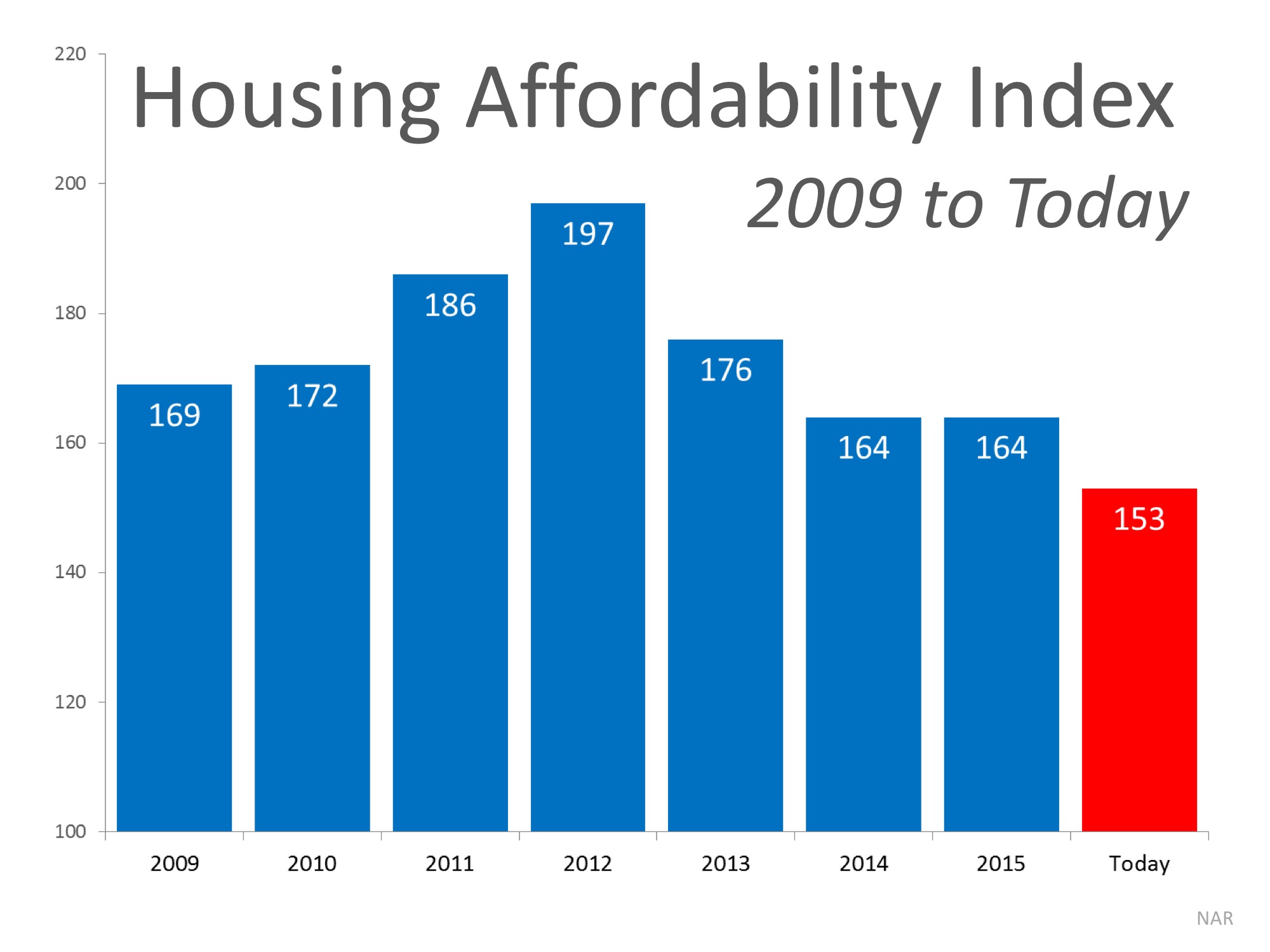
Surging bond yields are playing out in a bad way in the housing market, where the average mortgage rate in the US jumped to 7.09%, its highest level since 2002, per Freddie Mac. Combine those eye-watering borrowing costs with an inventory crunch that’s driven up prices, and you get the worst housing affordability conditions in four decades, Bloomberg reports.
Roughly 75% of US homeowners have mortgage rates of less than 4%, according to JPMorgan, so you can imagine why no one is eager to move and pay upward of 7% on a new place.
Posted on August 5, 2023 by Dr. David Edward Marcinko MBA MEd CMP™
By Staff Reporters
***
***
Hiring roughly held steady in July as employers added 187,000 jobs despite high interest rates and inflation. The unemployment rate, which is calculated from a separate survey of households, dipped from 3.6% to 3.5%, the Labor Department said Friday. Economists surveyed by Bloomberg had estimated that 200,000 jobs were added last month.
***
The geopolitics: Major oil producer Saudi Arabia said yesterday it would extend its output cuts into September and could even deepen those cuts after that, according to state media. By curbing supply, Saudi Arabia hopes to prop up the price of oil—which gives it critical revenue to spend on futuristic cities. But the cuts are angering the White House because they could lead to an uptick in US inflation.
***
Apple’s sales are slumping. The iPhone-maker reported its third straight quarter of revenue declines as fewer people join the blue-text mafia. But while Apple is struggling to sell iPhones, it’s doing a great job monetizing its existing customers. The services unit—home to the App Store, Apple TV+, Apple Music, and more—hit a record $21 billion in sales. Amazon was the other Big Tech company to report earnings yesterday: Its glowing financials knocked Wall Street’s socks off.
***
Here is where the major benchmarks ended for the day and week:
The S&P 500 Index ended 24 points lower (0.53%) at 4,478.03 and was down 2.27% for the week; the Dow Jones Industrial Average ended 150 points lower (0.43%) at 35,065.62 and was down 1.11% for the week; the NASDAQ Composite ended 50 points lower (0.36%) at 13,909.24 and was down nearly 3% for the week.
The 10-year Treasury note yield (TNX) pulled back 12 points to 4.055%.
CBOE’s Volatility Index (VIX) rose 1 point to 17.33.
Posted on July 30, 2023 by Dr. David Edward Marcinko MBA MEd CMP™
By Staff Reporters
***
***
The average price for a gallon of gasoline in the US just rose to an eight-month high of $3.71, as per AAA. While that’s far below last summer’s peak of $5.02 per gallon, gas prices have been creeping up due to refineries going offline unexpectedly and higher demand for oil at a time when supply isn’t there to meet it.
Bloomberg Opinion’s oil guru, Javier Blas, notes that global oil consumption has likely reached a record high.
Posted on July 25, 2023 by Dr. David Edward Marcinko MBA MEd CMP™
By StaffReporters
***
***
Recession: Last October, economists surveyed by Bloomberg were predicting a 100% chance of a Recession. But currently, the Dow is riding a 10-day winning streak, and the S&P 500 is just over 5% away from its all-time high. This week, Wall Street will be glued to the Fed’s interest rate announcement and a heavy slate of earnings.
Final Fed rate hike? The Federal Reserve will likely announce another interest rate increase this week, but this could be the final hike in its 16-month quest to bring down inflation. If the Fed hikes 25 basis points as expected, interest rates would be at their highest level since 2001.
Earnings galore: Corporate America’s A-list will report Q2 earnings this week, including Meta, Alphabet, Microsoft, McDonald’s, Coca-Cola, and Exxon Mobil. In all, about one-third of companies in the S&P 500 will give financial updates over the next five days, so we should get a good look into the health of a bunch of different industries.
Posted on July 17, 2023 by Dr. David Edward Marcinko MBA MEd CMP™
By Staff Reporters
***
***
A near-$10 trillion rally for global stocks this year will face a make-or-break moment as hundreds of companies report earnings over the next few weeks.
S&P 500 firms are expected to post a 9% drop in profits in the second quarter, making it the worst season since 2020, according to data compiled by Bloomberg Intelligence.
In Europe, it may be even worse, with a projected 12% slump. But with the bar already low — and some indicators suggesting an earnings recovery next year — strategists are split on how the markets will react.
Posted on July 12, 2023 by Dr. David Edward Marcinko MBA MEd CMP™
By Staff Reporters
***
***
BofA must refund $100 million to customers, pay $90 million in penalties to the Consumer Financial Protection Bureau and $60 million to the Office of the Comptroller of the Currency. “Bank of America wrongfully withheld credit card rewards, double-dipped on fees, and opened accounts without consent,” said CFPB Director Rohit Chopra, in a statement.
“These practices are illegal and undermine customer trust.”
Combined, it is one of the highest financial penalties in years against Bank of America, which has largely spent the last 15 years trying to clean up its reputation and market itself to the public as a bank focused on financial health and not on overdraft fee income and financial trickery.
***
The latest reading ion core inflation indicates a notable cool-down in June but still exceeds the Federal Reserve’s inflation target of 2%.
Data just released exceeded the expectations of economists surveyed by Bloomberg, who expected inflation to have fallen to 3.1% in June. Inflation rose a modest 0.2% on a monthly basis, accelerating from a 0.1% increase in May. Despite the encouraging report, core inflation — which strips out volatile food and energy prices — rose 4.8%.
Food prices, meanwhile, continued to accelerate faster than overall inflation, rising 5.7% in June compared to a year ago. and, the price of flour rose about 12% in June compared to a year ago, roughly quadruple of the overall inflation rate; while the price of bakery products rose 9.5% over that period and the price of cookies rose nearly 9%.
Posted on July 10, 2023 by Dr. David Edward Marcinko MBA MEd CMP™
By Staff Reporters
***
***
Want to know why there are seemingly no houses for sale in the US these days? These numbers should help explain:
The average rate on a 30-year mortgage climbed to 6.81% last week, its highest level of 2023, according to Freddie Mac. At the same time, almost 92% of US homeowners with mortgages have an interest rate of less than 6%, Redfin reported.
So, not many current homeowners are willing to ditch their lower mortgage rates for the higher one that would come with a new house.
***
Markets: As Wall Street heads into another earnings season this week, no one has much of a clue where stocks will go from here. Bloomberg notes there’s a whopping 50% difference between the most bullish analyst forecast for the S&P 500 for the rest of 2023 and the most bearish.
Posted on June 12, 2023 by Dr. David Edward Marcinko MBA MEd CMP™
By Staff Reporters
***
***
The US economy remains “very, very hot,” though not as much as it was six to 12 months ago, said former Treasury Secretary Lawrence Summers. “The United States is, today, an underlying 4.5-5% inflation country,” Summers said, speaking via video link at the start of the two-day Caixin Asia New Vision Forum in Singapore. At the same time, soft landings “represent the triumph of hope over experience,” and commercial real estate is one area where there are likely to be “pockets of distress,” said Professor Summers of Harvard University.
At its meeting this week, the Federal Reserve is expected to do something it hasn’t done in the last 15 months: not raise interest rates. Chair Jerome Powell suggested it might be time to take a breather as a series of rate hikes filters through the economy.
***
Last week, the S&P 500 reached its fourth consecutive winning week and the NASDAQ seventh as investors find fewer things to be worried about. In a sign of that cautious optimism, Goldman Sachs slashed its probability of a recession in the next year from 35% to 25%.
Crypto: SEC Chair Gary Gensler dramatically escalated his war on crypto-currency last week, and prices took a big hit. Four of the 10 most valuable cryptocurrencies fell by at least 15%, per CoinMarketCap.
Posted on May 16, 2023 by Dr. David Edward Marcinko MBA MEd CMP™
By Staff Reporters
***
***
Vice Media filed for bankruptcy
The company, which was valued at $5.7 billion in 2017, filed for Chapter 11 bankruptcy protection yesterday and plans to sell itself to a group of creditors for $225 million. It’s the latest in a string of digital media companies to stumble recently after advertising revenue became harder to come by.
Vice’s filing also made it one of seven large companies to head to bankruptcy court in a 48-hour period—the largest number of filings during a two-day period since 2008, according to Bloomberg.
Posted on April 21, 2023 by Dr. David Edward Marcinko MBA MEd CMP™
By Staff Reporters
(Bloomberg) — A US debt default would threaten “a basic anchor” of the global financial system and “must not happen,” BlackRock Inc. Vice Chairman Philipp Hildebrand warned Thursday at the Bloomberg New Economy Gateway Europe forum.
“All we can do is to pray that everyone in the United States understands how important the sanctity of the sovereign signature of the leading currency, of the leading bond market, of the leading economy in the world is,” Hildebrand, a former president of the Swiss central bank, said during an on-stage interview. “This is not something you want to mess with.”
The 10-year Treasury yield hit a four-week high above 3.60% earlier this week, up from a seven-month low of 3.278% on April 4th.
The S&P 500 Index was down 24.73 (0.6%) at 4129.79; the Dow Jones industrial average was down 110.39 (0.3%) at 33,786.62; the NASDAQ Composite was down 97.67 (0.8%) at 12,059.56.
The 10-year Treasury yield was down about 7 basis points at 3.534%.
CBOEs Volatility Index was up 0.73 at 17.19.
Energy companies were among the weakest performers Thursday, as crude oil prices extended this week’s sell-off, with benchmark WTI futures down more than 2% to under $78 per barrel—a low for the month.
The real estate and technology sectors also lagged, while consumer staples and transportation sectors held up better.
Posted on April 20, 2023 by Dr. David Edward Marcinko MBA MEd CMP™
By Staff Reporters
***
***
Meta Platforms, the billionaire’s social media empire, will reportedly cut thousands more jobs. And the bloodbath is not over, according to the latest reports. Meta plans to eliminate thousands more jobs. According to Bloomberg News, an internal memo has been sent to managers, asking them to prepare for tough new announcements. The job cuts, which total 4,000, are expected to affect Facebook, WhatsApp and Instagram. They would also affect Reality Labs, the division that houses the group’s Metaverse projects — Quest virtual-reality headsets. In 2021 and 2022, Reality Labs, which is supposed to build the company’s next big thing, recorded a cumulative loss of nearly $24 billion, including $13.7 billion just last year.
And, Walt Disney Company plans to cut thousands of jobs next week, in another lay-off round that includes about 15% of the staff in its entertainment division, according to people familiar with the plans. Disney Entertainment will bear a significant chunk of the job cuts – with approximately 15% of the division’s staffers set to exit next week, according to a report. Disney has more than 200,000 employees across its various businesses.
***
And now, the Markets:
The S&P 500 Index fell 0.35 point to 4154.52; the Dow Jones industrial average was down 79.62 (0.2%) at 33,897.01; the NASDAQ Composite was up 3.81 at 12,157.23.
The 10-year Treasury yield was up about 2 basis points at 3.60%.
CBOE’s Volatility Index was down 0.37 at 16.46.
Transportation was one of the top gainers among S&P 500 sectors yesterday, thanks in part to strength in United Airlines (UAL) and other top carriers. Real estate and financials were also higher, while oilfield services stocks were among the weakest performers due to a sharp drop in crude oil prices. WTI futures fell below $80, their lowest level in nearly three weeks.
Oil prices rallied at the start of this month after members of OPEC+ announced a production cut.
Posted on April 2, 2023 by Dr. David Edward Marcinko MBA MEd CMP™
By Staff Reporters
***
***
A disastrous month of March is what Charles Schwab has just experienced. An avalanche of bad news fell on the firm. The stock fell 33% between Feb. 28 and Mar. 31. At the end of February, Charles Schwab’s shares were trading at around $77.92. A month later the price is now $52.38. The difference translates to more than $47 billion in market capitalization wiped out in just one month. According to Bloomberg News, this is Charles Schwab’s worst month since the October 1987 stock market crash, known as Black Monday. That day, the Dow Jones index lost 508 points, a decline of 22.6% and the largest daily decline in a stock market index at the time. Only the drop by 76% of the Icelandic stock market in 2008 would exceed this record.
VERSUS
With the first quarter of 2023 behind us, and despite wild fluctuation due to continuous rate hikes from the Fed and an unexpected bank panic, stocks and bonds managed to turn in a pretty, pretty, pretty good performance for the quarter. The S&P 500 gained 7%, and the Dow Jones Industrial Average gained 0.4%. But if the market’s metaphorical report card is impressive, tech companies were indisputably the honors students.
Wall Street rewarded tech companies’ layoffs and other cost cutting measures, giving tech stocks a resurgence. And with ChatGPT becoming a household name, investors have their money on generative AI as the next big bet. As of last night:
The tech-heavy NASDAQ Composite index rose a whopping 18% since January 1, its largest quarterly gain in two years.
Stocks of the tech giants leading the charge in AI-powered search, Microsoft and Alphabet, are up 20% and 16%, respectively.
Bank stocks were a delight for short sellers, who made $2 billion betting against the sector in the past three months.
Smaller institutions were most badly injured by the bank panic: The SPRD S&P Regional Banking ETF, which consists of non-behemoth banks, had more than a quarter of its value wiped out in Q1.
Large banks are feeling the pinch of rising interest rates: Global merger and acquisition deals suffered the biggest first-quarter decline since 2001, according to data analyzed by the Financial Times.
Posted on March 25, 2023 by Dr. David Edward Marcinko MBA MEd CMP™
By Staff Reporters
***
***
Jack Dorsey’s wealth tumbled after Hindenburg Research targeted his payments company Block, per Bloomberg. The short seller alleged Block misled investors “with inflated metrics” Block’s share price tumbled as much as 22% on Thursday on Hindenburg’s report.
Short seller Hindenburg Research has hit another billionaire’s fortune with a report. Jack Dorsey, the co-founder of payments company Block and Twitter, saw his net worth tumble by $526 million, or 11%, to $4.4 billion after the US-based research firm led by Nathan Anderson accused Block of misleading investors in a March 23 report, according to Bloomberg. Dorsey isn’t on the list of the world’s 500 richest persons on the Bloomberg Billionaires Index currently. He was previously featured at number 456 with a net worth of $5.41 billion on March 22nd, per Insider’s scan of the Index on Wednesday.
***
Investors sparked a furious selloff in Deutsche Bank AG and thrust one of Europe’s most important lenders into the center of concerns about the health of the global financial system. Shares of Germany’s largest lender tumbled as much as 15%, their third consecutive day of losses, though they later regained some ground and were recently down 10%. The cost to insure against its default using credit-default swaps soared to their highest levels since 2020.
***
Chairman Jerome Powell was ambiguous this week about future Federal Reserve moves, suggesting “some additional policy firming may be needed.”
Treasury yields dropped near seven-month lows, a seeming indication of escalating recession worries after the Fed raised its benchmark lending rate nine times to a range of 4.75% to 5% over the past year. The release next week of updated data on consumer confidence, inflation, and economic growth will likely be in focus.
The swings in stock prices this week “were consistent with the unclear outlook for monetary policy, the banking system, and the broader economy,” says Kevin Gordon, senior investment strategist at Charles Schwab. “More time needs to pass before we know the true impact of the expected tightening in credit conditions.”
The S&P 500® Index was up 22.27 (0.6%) at 3970.99; the Dow Jones industrial average was up 132.28 (0.4%) at 32,237.53; the NASDAQ Composite was up 36.56 (0.3%) at 11,823.96.
The 10-year Treasury yield was little changed at about 3.374%.
CBOE’s Volatility Index was down 0.87 at 21.74.
The real estate sector led the gainers Friday, followed by consumer staples and health care. Financials and consumer discretionary stocks edged lower, and technology stocks were little changed, though the tech-focused NASDAQ Composite still notched its second straight weekly gain. Gold and crude oil futures both declined, while the U.S. dollar strengthened.







 Support our online development, and advance our onground research initiatives in free market economics, as we seek to showcase the brightest Next-Gen minds.
THE ME-P DISCLAIMER: Posts, comments and opinions do not necessarily represent iMBA, Inc., but become our property after submission. Copyright © 2006 to-date. iMBA, Inc allows colleges, universities, medical and financial professionals and related clinics, hospitals and non-profit healthcare organizations to distribute our proprietary essays, photos, videos, audios and other documents; etc. However, please review copyright and usage information for each individual asset before submission to us, and/or placement on your publication or web site. Attestation references, citations and/or back-links are required. All other assets are property of the individual copyright holder.
Support our online development, and advance our onground research initiatives in free market economics, as we seek to showcase the brightest Next-Gen minds.
THE ME-P DISCLAIMER: Posts, comments and opinions do not necessarily represent iMBA, Inc., but become our property after submission. Copyright © 2006 to-date. iMBA, Inc allows colleges, universities, medical and financial professionals and related clinics, hospitals and non-profit healthcare organizations to distribute our proprietary essays, photos, videos, audios and other documents; etc. However, please review copyright and usage information for each individual asset before submission to us, and/or placement on your publication or web site. Attestation references, citations and/or back-links are required. All other assets are property of the individual copyright holder.


















 What’s down