More Americans Are Getting Prenups

By Dr. David Edward Marcinko; MBA MEd

SPONSOR: http://www.MarcinkoAssociates.com

***

***

Even If They Aren’t Rich

Prenuptial agreements were once seen as tools reserved for the wealthy—documents drafted to protect mansions, trust funds, and sprawling investment portfolios. For decades, the idea of a prenup carried a certain stigma, suggesting mistrust or an expectation that a marriage might fail. Yet in recent years, a noticeable shift has taken place. More Americans, including those without significant wealth, are choosing to sign prenuptial agreements before walking down the aisle. This trend reflects changing attitudes about marriage, money, and personal security in a world where financial complexity has become the norm.

One of the biggest drivers behind the rise of prenups among everyday couples is the changing nature of personal finances. Younger adults often enter marriage with student loan debt, credit card balances, or financial obligations that did not exist at the same scale for previous generations. A prenup can clarify how these debts will be handled, preventing one partner from unexpectedly becoming responsible for the other’s financial burdens. Rather than being a tool for protecting wealth, prenups increasingly serve as a way to manage liabilities.

Another factor is the growing number of people who marry later in life. When individuals marry in their thirties or forties, they often bring established careers, savings accounts, retirement plans, and personal assets into the relationship. Even if these assets are modest, couples may want to outline how they will be treated in the event of divorce. A prenup can specify what remains separate and what becomes marital property, reducing uncertainty and potential conflict. For many, the goal is not to shield wealth but to preserve fairness.

The rise of entrepreneurship has also contributed to the trend. More Americans operate small businesses, freelance careers, or side ventures that generate income. These enterprises may not be worth millions, but they represent personal effort and future potential. A prenup can protect a business from becoming entangled in divorce proceedings, ensuring that ownership and control remain clear. This is especially important for individuals who rely on their business as their primary source of income.

Cultural attitudes toward marriage have evolved as well. Today’s couples tend to view marriage as a partnership that blends emotional connection with practical planning. Conversations about finances, once considered uncomfortable or taboo, have become more common. Many couples see prenups not as pessimistic but as responsible—similar to buying insurance or drafting a will. The agreement becomes a tool for communication, forcing partners to discuss expectations, values, and long‑term goals before tying the knot.

The increasing normalization of prenups also reflects a broader shift toward transparency. In an era where financial literacy is emphasized and personal finance content is widely accessible, people are more aware of the importance of planning. Couples want to avoid surprises, protect themselves from unforeseen circumstances, and ensure that both partners understand the financial framework of their marriage. A prenup can provide clarity, reducing the likelihood of disputes later on.

Another reason prenups are gaining popularity is the rise of blended families. Individuals who have children from previous relationships may want to ensure that certain assets are preserved for their children. A prenup can outline inheritance expectations, helping to protect family interests and reduce potential conflict. Even without substantial wealth, parents may feel strongly about safeguarding what they have for their children’s future.

Importantly, the stigma surrounding prenups has diminished. What once carried a sense of distrust now feels pragmatic. Many couples view prenups as a way to strengthen their relationship by addressing difficult topics upfront. Rather than assuming the worst, they see the agreement as a way to protect both partners and reduce stress. The conversation itself can build trust, demonstrating a willingness to be open and honest about financial realities.

Critics argue that prenups can introduce a transactional tone to marriage, but supporters counter that financial clarity enhances emotional stability. When couples understand their financial responsibilities and rights, they are less likely to experience conflict driven by money—a leading cause of marital strain. In this sense, prenups can serve as preventative tools, helping couples navigate challenges before they arise.

The growing popularity of prenuptial agreements among Americans who are not wealthy reflects a broader cultural shift toward financial responsibility, transparency, and proactive planning. As personal finances become more complex and societal norms evolve, prenups have transformed from symbols of mistrust into instruments of stability. They allow couples to enter marriage with confidence, clarity, and a shared understanding of how to manage both assets and obligations. In a world where financial uncertainty is common, prenups offer a sense of security that resonates with couples across income levels.

EDUCATION: Books

SPEAKING: Dr. Marcinko will be speaking and lecturing, signing and opining, teaching and preaching, storming and performing at many locations throughout the USA this year! His tour of witty and serious pontifications may be scheduled on a planned or ad-hoc basis; for public or private meetings and gatherings; formally, informally, or over lunch or dinner. All medical societies, financial advisory firms or Broker-Dealers are encouraged to submit an RFP for speaking engagements: CONTACT: Ann Miller RN MHA at MarcinkoAdvisors1738@outlook.com -OR- http://www.MarcinkoAssociates.com

Like, Refer and Subscribe

HOSPITALS: http://www.crcpress.com/product/isbn/9781466558731

CLINICS: http://www.crcpress.com/product/isbn/9781439879900

ADVISORS: www.CertifiedMedicalPlanner.org

FINANCE:Financial Planning for Physicians and Advisors

INSURANCE:Risk Management and Insurance Strategies for Physicians and Advisors

Dictionary of Health Economics and Finance

Dictionary of Health Information Technology and Security

Dictionary of Health Insurance and Managed Care

***

ESTATE PLANS: When Physicians Should Review

By J. Chris Miller JD

***

***

Your personal and financial life is constantly changing.  Significant changes always necessitate the need to review your life.  However, a few key events trigger the need to review your estate plan.  If any of the events below have occurred since you reviewed your estate plan, see a competent adviser to help you achieve your goals.

  1. Birth of a child or grandchild. 
  2. Death of a spouse, beneficiary, guardian, trustee or personal representative. 
  3. Marriage of you or your children.
  4. Divorce.  (Review beneficiary designations and asset titling)
  5. Move out of state.  An estate is settled under the laws of the state in which the decedent resided.  Certain provisions of a will that are valid in one state may not be in another.
  6. Change in estate value.  A large increase or decrease in the size of an estate may greatly affect some of the strategies that were implemented.
  7. Changes in business.  Starting, buying or selling a medical practice or other business has an impact on your estate. The addition or death of a business owner will cause a review.
  8. Tax law changes.  EGTRRA has dramatically changed the way we plan for estate taxes.  It is important to note that only planning for estate taxes has been effected.  Estate planning involves much more than just the motivation to reduce or eliminate taxes.  Assuring that your family is financially taken care of, that children have the opportunity to go to college, that your debts are paid, that charitable desires are achieved, provisions for a needy child, proper selection of a guardian, the list goes on.  Please do not use the new law as an excuse to not plan your estate.

***

OVERHEARD IN THE FINANCIAL ADVISOR’S LOUNGE

From my perspective, estate planning is a team sport, and lawyers rely on financial advisers all the time to spot issues for clients. We do not share the opinion that non-lawyers are incapable of giving good advice. 

-J. Chris Miller JD

COMMENTS APPRECIATED

Subscribe, Read and Refer

EDUCATION: Books

***

***

LIMERENCE Romantic Attachment Intensity

VERSUS MERETRICIOUS RELATIONSHIPS

DEFINED

By Staff Reporters

***

***

Limerence is an intense romantic obsession that can feel all-consuming, marked by daydreaming and emotional highs. It’s often mistaken for love, though it may not lead to a lasting relationship.

Limerence is a state of mind resulting from romantic feelings for another person. It typically involves intrustive and melancholic thoughts, or tragic concerns for the object of one’s affection, along with a desire for the reciprocation of one’s feelings and to form a relationship with the object of love.

According to colleague Dan Ariely PhD, the focus in limerence is more on idealization than on genuine connection, making it feel overwhelming but often one-sided.

***

***

Meretricious, on the other hand, describes a situation where two people live together in a relationship that resembles marriage but lacks the official legal status of marriage. This means they may share a home, finances, and a life together, but they haven’t gone through the legal process to be recognized as married. This concept is often discussed in family law and property law, especially when these “live-in-lover” relationships come to an end.

When a meretricious relationship ends, it can lead to disputes about how to divide shared property and whether one partner should provide financial support to the other. Courts look at several factors to help decide these issues. For instance, they consider how long the couple has been together, how they managed their finances, and whether they intended to be committed to each other like a married couple. These factors help the court understand the nature of the relationship and the expectations of both parties.

COMMENTS APPRECIATED

Subscribe and Refer

***

***

Financially Egalitarian Dating, Marriage and Divorce Mediation for Doctors

By Staff Reporters and Anju D. Jessani MBA

***

***

In 1972, husbands were the primary or sole breadwinners in 85% of U.S. married households, while 5% of wives made all or most of the money, and 11% of married couples had equal salaries. According to the Pew Research Center, things have changed quite a bit in 50 years.

Today, 55% of husbands are now the primary or sole financial supporters (a 35% drop). Financially egalitarian marriages have risen to 29% (more than a 160% increase), and 16% of married women provide the lioness’ share of family finances (a 220% increase).

MORE: https://medicalexecutivepost.com/2023/04/14/physician-salary-pay-gap/

RELATED: https://medicalexecutivepost.com/2021/12/14/new-study-compares-medicare-commercial-payment-gaps-by-specialty/

DIVORCE: https://medicalexecutivepost.com/2016/02/11/a-step-wise-approach-to-the-divorce-mediation-process-for-mds/

***

COMMENTS APPRECIATED

Thank You

***

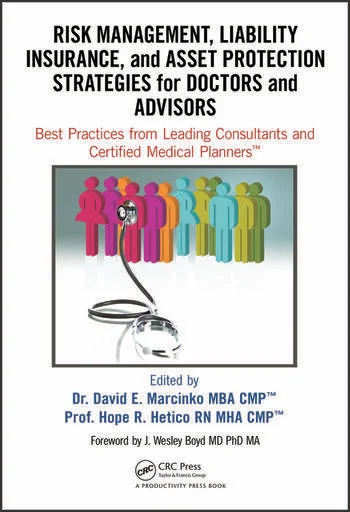
ORDER: https://www.routledge.com/Risk-Management-Liability-Insurance-and-Asset-Protection-Strategies-for/Marcinko-Hetico/p/book/9781498725989

***

The Dating and Money Conversation for Medical Students

Join Our Mailing List 

Honey, We Need to Talk … About Finances!

By Rick Kahler MS CFP® http://www.KahlerFinancial.com

Rick Kahler CFPWe are al aware of the student debt load crisis in this country.

But, one of the challenges at the beginning of a romantic relationship is having “the conversation” about an equally important issue for any couple: money.

Even more so for medical students, interns, residents, nurses, young doctors and medical professionals!

For example:

  1. What is okay to ask a potential partner about money, and when?
  2. How do you bring the subject up without seeming like a braggart, a coldhearted miser, or someone looking for a meal ticket?

There really ought to be some rules of etiquette for exploring this essential topic; something like, “by the sixth date, it’s appropriate to start undressing financially.” Unfortunately, we don’t have such guidelines.

The Money Minefield

Money is a topic fraught with emotional richness. In other words, it’s a minefield. Money is one of the top sources of conflict for couples, so if you’re dating, it’s crucial to learn a potential partner’s earnings, net worth, money habits, and financial beliefs. At the same time, talking specifically about money is so forbidden in our culture that we have no idea how to initiate a conversation about it.

Here are a few suggestions that might help:

1. Figure out your own money beliefs first. Before you even sign up with a dating site or accept your friend’s offer to set you up with her brother-in-law’s second cousin, think about what you want and need financially from a partner. Do you care if someone’s net worth is much higher or lower than yours? Is a certain level of debt a deal-breaker? What lifestyle are you comfortable with?

2. Tell before you ask. Begin with appropriate self-disclosure, in small steps, about your earnings, your long-term financial goals, or your beliefs about debt or spending. See how potential partners react. If they don’t disclose in turn, seem very uncomfortable with the conversation, or have beliefs or money habits much different from yours, you may be seeing red flags.

3. Observe. Watch how people handle money. Are there any patterns around spending or the use of credit cards that seem to indicate either overspending or excessive frugality? Do they throw cash around, or do they leave restaurant tips that Ebenezer Scrooge would be proud of?

Does someone’s home show signs of hoarding or stinginess? (A candlelight dinner of takeout Chinese at a card table is one thing for college students, but quite another for middle-aged professionals.) Do their cars or houses seem poorly maintained? Does their lifestyle seem more lavish than the typical earnings in their career field would support?

4. Listen. Despite the taboo on talking directly about money, we indirectly reveal a lot about our money beliefs by what we say. Notice how dates talk about saving or spending. Do they seem worried about money or reluctant to spend it even on basic needs? Do they seem angry about money or resentful of successful people? Do they boast about financial successes, things they own, or get-rich-quick schemes?

5. Ask. Even if everything else is all moonlight and roses. When you meet someone who seems like “the one,” don’t set aside everything that matters to you about money. Instead, remember how important this issue is to the long-term health of a relationship. Even if you can’t do it gracefully, ask the money questions. Talk frankly about debt, spending, saving for retirement, and each other’s expectations around lifestyles and careers.

Dating Currency

Assessment

Being the one to initiate that difficult money conversation doesn’t mean you’re coldhearted, unromantic, or greedy. It simply means you recognize that money is too important a topic to ignore. When we enter into a romantic relationship, it’s tempting to think that love means not having to talk about money. In truth, love means having the courage to talk about money.

Conclusion

Your thoughts and comments on this ME-P are appreciated. Feel free to review our top-left column, and top-right sidebar materials, links, URLs and related websites, too. Then, subscribe to the ME-P. It is fast, free and secure.

Speaker: If you need a moderator or speaker for an upcoming event, Dr. David E. Marcinko; MBA – Publisher-in-Chief of the Medical Executive-Post – is available for seminar or speaking engagements. Contact: MarcinkoAdvisors@msn.com

OUR OTHER PRINT BOOKS AND RELATED INFORMATION SOURCES:

  Product Details

***

Risk Management, Liability Insurance, and Asset Protection Strategies for Doctors and Advisors: Best Practices from Leading Consultants and Certified Medical Planners™8Comprehensive Financial Planning Strategies for Doctors and Advisors: Best Practices from Leading Consultants and Certified Medical Planners™

***

Invite Dr. Marcinko

***