Transform Your Financial Insights into Lasting Change

Turn Financial A-Ha Moments Into Lasting Change With Memory Re-Consolidation

By Rick Kahler MSFS CFP

***

***

Have you ever had a light bulb moment about money?

Maybe you leave a workshop, a therapy session, or a conversation with a financial advisor, feeling as if you have finally cracked the code. You understand why you keep overspending. You see the pattern that keeps you procrastinating about saving and investing. You feel the reason you panic about money, even when you know you are okay. In that moment, it all seems so clear.

Yet a week later, you are right back at it. Swiping the credit card. Avoiding the budget. Losing sleep over the same worries you thought you had just solved. What happened to that breakthrough? Why did it not last?

BRAIN ANCHORING: https://medicalexecutivepost.com/2024/10/22/anchoring-initial-mental-brain-trickery/

I’ve experienced this myself, more times than I’d like to admit. Recently, I found a book that explains why: Unlocking the Emotional Brain by Bruce Ecker, Robin Ticic, and Laurel Hulley. The authors explain that lasting change happens through something called “memory re-consolidation.” It is the brain’s way of updating emotional patterns we have carried for years—often since childhood.

Most of us have old money stories tucked away in our emotional memory. Suppose, for example, as a child you were scolded for asking a neighbor how much money they earned. This and other similar experiences that left you feeling shamed or dismissed taught you that it was rude to talk about money.

Such early experiences are filed away as emotional truths. They shape what feels true, even years later as an adult, whether or not that “truth” is still relevant.

NEUROLINK: https://medicalexecutivepost.com/2023/03/07/neurolink-brain-chips-rejected-by-the-fda/

As an adult, you may have come to understand that talking about money is often essential for your emotional and financial well being. But when the moment comes to have a money conversation, your body still freezes up. That is not weakness. That is your brain pulling up the old file.

Here is where memory re-consolidation comes in. The brain does not update the file just because you think new thoughts. It updates when you have a new experience that feels different. Maybe someone listens without judgment, or you realize you are talking about money and still feel safe. That emotional mismatch tells the brain, “Maybe this file is not true anymore.”

But the update is not finished. To make the change stick, you have to hold both the old belief and the new experience together for a little while. It is like showing your brain two pictures: here is how it used to feel, and here is how it feels now. That moment of holding both is when the rewrite happens.

Even more interesting, the brain keeps the file open for several hours after the shift. What you do in that window can help the change settle in—or not. If you rush back into busyness or distractions, you might accidentally let the old version save itself again.

BRAIN HEALTH: https://medicalexecutivepost.com/2025/02/19/brain-health-bilingualism/

So what can we do to give those shifts a better chance of sticking? I have noticed that insights gained during a retreat or workshop, with ample time to focus and reflect, are more likely to last. Even in our everyday lives, we can slow down, even for a few minutes, to write about what we felt, check in with our bodies, or talk with someone who supports us. We can protect a little bit of quiet space before diving back into the noise.

The next time you have a money breakthrough, try giving yourself that space. Consciously notice both the old belief and the new experience. Give the re-consolidation time to settle in.

Then, the next time your brain pulls up that old money story, you’ll have access to the updated, more accurate version.

COMMENTS APPRECIATED

EDUCATION: Books

Like and Refer

***

***

FINANCIAL PLANNERS: Part Time Employment Difficulties

By Staff Reporters

SPONSOR: http://www.CertifiedMedicalPlanner.org

***

***

Why It Is Difficult to Be a Part-Time Financial Planner Today

In theory, part-time financial planning offers flexibility and work-life balance, making it an attractive option for professionals seeking reduced hours. However, in practice, the role of a financial planner has evolved into a demanding, full-time commitment. The complexity of financial markets, client expectations, regulatory requirements, and technological advancements make part-time financial planning increasingly difficult to sustain.

One of the primary challenges is client relationship management. Financial planning is deeply personal and trust-based. Clients expect consistent communication, timely updates, and proactive advice. A part-time planner may struggle to maintain the same level of responsiveness as full-time counterparts, especially during volatile market conditions or life-changing events like retirement, divorce, or inheritance. Delayed responses or limited availability can erode client confidence and damage long-term relationships.

***

***

Another obstacle is the rapid pace of financial change. Tax laws, investment products, insurance regulations, and retirement planning strategies are constantly evolving. Staying current requires ongoing education, certifications, and industry engagement. For part-time planners, keeping up with these changes while managing clients and administrative tasks can be overwhelming. Falling behind risks offering outdated or suboptimal advice, which could lead to compliance issues or client dissatisfaction.

Regulatory compliance adds another layer of complexity. Financial planners must adhere to strict standards set by organizations like FINRA, the SEC, and state regulators. These include documentation, disclosures, fiduciary responsibilities, and continuing education. Compliance is non-negotiable and time-consuming, regardless of hours worked. Part-time planners face the same scrutiny and liability as full-time professionals, but with fewer hours to manage the workload.

Technology, while a powerful tool, also presents challenges. Clients increasingly expect digital access to their portfolios, real-time updates, and virtual meetings. Managing these platforms requires technical proficiency and regular maintenance. Part-time planners may find it difficult to keep systems updated, troubleshoot issues, or provide tech support, especially if they lack dedicated staff.

Business development is another hurdle. Building and maintaining a client base requires networking, marketing, and referrals. Part-time planners often have limited time to attend events, follow up with leads, or cultivate relationships. This can hinder growth and make it difficult to compete with full-time advisors who are more visible and accessible.

Finally, there’s the issue of income and scalability. Many financial planners earn through commissions, assets under management (AUM), or fee-based models. Part-time work often means fewer clients and lower revenue, which can make it hard to justify the costs of licensing, insurance, software, and office space. Without scale, profitability becomes a challenge.

In conclusion, while the idea of part-time financial planning may seem appealing, the realities of the profession make it difficult to execute effectively. The demands of client care, compliance, education, and business development require consistent attention and availability. Unless the industry adapts to support flexible models, part-time financial planners will continue to face significant barriers to success.

COMMENTS APPRECIATED

EDUCATION: Books

SPEAKING: ME-P Editor Dr. David Edward Marcinko MBA MEd will be speaking and lecturing, signing and opining, teaching and preaching, storming and performing at many locations throughout the USA this year! His tour of witty and serious pontifications may be scheduled on a planned or ad-hoc basis; for public or private meetings and gatherings; formally, informally, or over lunch or dinner. All medical societies, financial advisory firms or Broker-Dealers are encouraged to submit an RFP for speaking engagements: CONTACT: Ann Miller RN MHA at MarcinkoAdvisors@outlook.com -OR- http://www.MarcinkoAssociates.com

Like, Refer and Subscribe

***

***

Understanding Investment Fees: A Guide for Physicians

SPONSOR: http://www.MarcinkoAssociates.com

By Dr. David Edward Marcinko MBA MEd CMP™

***

***

MEDICAL COLLEAGUES BEWARE!

Investment fees still matter for physicians and all of us, despite dropping dramatically over the past several decades due to computer automation, algorithms and artificial intelligence, etc. And, they can make a big difference to your financial health. So, before buying any investment thru a financial advisor, planner, manager, stock broker, etc., it’s vital to understand these two often confusing costs.

***

***

Fee Only: Paid directly by clients for their services and can’t receive other sources of compensation, such as payments from fund providers. Act as a fiduciary, meaning they are obligated to put their clients’ interests first

Fee Based: Paid by clients but also via other sources, such as commissions from financial products that clients purchase. Brokers and dealers (registered representatives) are simply required to sell products that are “suitable” for their clients. Not a fiduciary.

EDUCATION: Books

SPEAKING: Dr. Marcinko will be speaking and lecturing, signing and opining, teaching and preaching, storming and performing at many locations throughout the USA this year! His tour of witty and serious pontifications may be scheduled on a planned or ad-hoc basis; for public or private meetings and gatherings; formally, informally, or over lunch or dinner. All medical societies, financial advisory firms or Broker-Dealers are encouraged to submit a RFP for speaking engagements: MarcinkoAdvisors@outlook.com 

COMMENTS APPRECIATED

Refer, Like and Subscribe

***

***

Understanding Asset Allocation for Investment Success

Delving Deeper into Asset Allocation

SPONSOR: http://www.CERTIFIEDMEDICALPLANNER.org

By Lon Jefferies MBA CFP® CMP®

Lon JeffriesAsset allocation is one of the key factors contributing to long-term investment success.

When designing a portfolio that represents their risk tolerance, investors should be aware that a portfolio that is 50% stocks is likely to obtain approximately half of the gain when the market advances but suffer only half the loss when the market declines.

This general principle frequently holds true over extended investing cycles, but can waiver during shorter holding periods.

Case Model

For example, a fairly typical physician client of mine who has a 50% stock, 50% bond portfolio has obtained a return of 4.62% over the last 12 months, while the S&P 500 has obtained a return of 14.31% over the same time period (as of 10/30/14).

An investor expecting to obtain half the return of the index would anticipate a return of 7.15%, and by this measuring stick, has underperformed the market by over 2.50% during the last year.

What caused this differential?

Answer

The issue resides in how we define “the market.” In this example, we use the S&P 500 index as a measure for how the market as a whole is performing. As you may know, the S&P 500 (and the Dow Jones Industrial Average, for that matter) consists solely of large company U.S. stocks.

Of course, a diversified portfolio owns a mixture of large, mid, and small cap U.S. stocks, as well as international and emerging market equities. Consequently, comparing the performance of a basket of only large cap stocks to the performance of a diversified portfolio made up of a variety of different asset classes isn’t an apples-to-apples comparison.

***

Stock_Market

***

Frequently, the diversified portfolio will outperform the non-diversified large cap index because several of the components of the diversified portfolio will obtain higher returns than those achieved by large cap holdings.

However, the past 12 months has been a case where a diversified portfolio underperformed the large cap index because large cap stocks were the best performing asset class over the time period. In fact, over the last twelve months, there has been a direct correlation between company size and stock performance (as of 10/30/14):

  • Large Cap Stocks (S&P 500): 14.92%
  • Mid Cap Stocks (Russell Mid Cap): 11.08%
  • Small Cap Stocks (Russell 2000): 4.45%
  • International Stocks (Dow Jones Developed Markets): -1.05%
  • Emerging Market Stocks (iShares MSCI Emerging Markets): -1.04%

Since large cap stocks were the best performing element of a diversified portfolio over the last 12 months, in retrospect, an investor would have obtained a superior return by owning only large cap stocks during the period as opposed to owning a diversified mix of different equities. Does this mean owning only large cap stocks rather than a diversified portfolio is the best investment approach going forward? Of course not.

Year after year, we don’t know which asset category will provide the best return and a diversified portfolio ensures we have exposure to each year’s big winner. Additionally, although large caps were this year’s winner, they could easily be next year’s big loser, and a diversified portfolio ensures we don’t have all our investment eggs in one basket.

Financial Planning MDs 2015

Comprehensive Financial Planning Strategies for Doctors and Advisors: Best Practices from Leading Consultants and Certified Medical Planners™

Assessment

Don’t be overly concerned if your diversified portfolio is underperforming a non-diversified benchmark over a short period of time. As always, long-term results should be more heavily weighted than short-term swings, and having a diversified portfolio is likely to maximize the probability of coming out ahead over an extended period.

Conclusion

Your thoughts and comments on this ME-P are appreciated. Feel free to review our top-left column, and top-right sidebar materials, links, URLs and related websites, too. Then, subscribe to the ME-P. It is fast, free and secure.

Speaker: If you need a moderator or speaker for an upcoming event, Dr. David E. Marcinko; MBA – Publisher-in-Chief of the Medical Executive-Post – is available for seminar or speaking engagements. Contact: MarcinkoAdvisors@msn.com

OUR OTHER PRINT BOOKS AND RELATED INFORMATION SOURCES:

Product Details  Product Details

Why [Too Many] Physician Colleagues Don’t Get Rich?

Subscribe to continue reading

Subscribe to get access to the rest of this post and other subscriber-only content.

PARADOX of Financial Health

By Dr. David Edward Marcinko MBA MEd

SPONSOR: http://www.CertifiedMedicalPlanner.org

***

***

FINANCIAL HEALTH

Classic Definition: Research from Ernst-Young [Nikhil Lele and Yang Shim] uncovered a chasm between how consumer patients think they’re doing financially, and the actual state of their finances. Even more striking, their study suggested that improving consumers’ financial health will become one of the top imperatives in reframing consumer financial services.

Modern Circumstance: For example, the study asked consumers to rate their own financial health, and 83 percent rated themselves “good,” “very good” or “excellent.”  Now, contrast this figure with what is known about their actual situation:

  • 60 percent of Americans say they are financially stressed.
  • 56 percent of Americans have less than $10,000 saved for retirement.
  • 40 million American families have no retirement savings at all.
  • 40 percent of Americans are not prepared to meet a $400 short-term emergency.

Paradox Example: Fortunately, even though the vast majority of consumers rate themselves as financially healthy, the study found that most still want to improve. Importantly for health economists, the attractive 25-34 and 35-49 year-old age groups were most likely to be extremely or very interested in improving their financial and economic health.

Paradox Example: Massively affluent consumer patients are even more interested in improving this paradox than their mass market counterparts.

COMMENTS APPRECIATED

Like and Subscribe

***

***

Beware of Borrowing That Helps Your Advisor – Not You

By Rick Kahler MSFP CFP

***

***

When Maria needed $400,000 for a down payment on a new home, her broker at a large Wall Street firm offered a solution: “Don’t sell investments and trigger capital gains. Just take out a margin loan.”

A margin loan is a line of credit from a brokerage firm, secured by the client’s investment portfolio. It offers quick access to cash with no immediate tax consequences and minimal paperwork. But the convenience comes at a cost. As of mid-2025, margin loan interest rates range from 6.25% to over 11%.

Margin loan recommendations are often presented by brokers as tax-savvy strategies that allow clients to access “tax-free” cash while keeping their portfolios intact. In many cases, however, the math benefits the advisor more than the investor. The cost of borrowing often exceeds what an investor is likely to earn by holding on.

For example, let’s assume an interest rate of 7.5% on Maria’s $400,000 margin loan. While borrowing delayed the payment of $20,000 in capital gains tax, she will eventually have to pay that tax anyway unless she holds the investments until her death. Two years later, with portfolio returns of 4% annually, she had earned around $32,000 from the $400,000 in investments she might have sold. Meanwhile, she had paid $60,000 in interest—leaving her some $28,000 worse off. That’s without factoring in ongoing interest payments, or the risks of a margin call if the investments securing the loan drop in value.

Why do advisors keep recommending margin loans? Because selling investments reduces the portfolio size and the advisor’s fee. Borrowing keeps the portfolio intact and the compensation unchanged—while the firm receives additional income from interest on the loan. In some cases, advisors suggest using margin loans to buy more investments, increasing both the portfolio and the fee they collect.

None of this is illegal. But when the borrowing cost is higher than expected returns and the advisor benefits financially, the ethics are questionable. The client takes the risk, while the advisor keeps the revenue.

This kind of conflict appears more often in portfolios where compensation is tied to asset volume and the company’s primary culture rewards gathering assets over delivering unbiased advice. By contrast, fee-only financial planning and investment advisors typically operate on simpler hourly, flat, or tiered fee structures. Their compensation doesn’t depend on whether a client borrows, sells, or holds. The culture of the firm focuses on conflict-free advice aligned with the client’s best interest.

Wall Street brokers are often held to a fiduciary standard, but structure still matters. In 2024 the SEC reported their examinations of brokers would continue to focus on advisor recommendations unduly influenced by the company’s compensation and incentives.

There are rare situations where a margin loan may be appropriate. A client with large unrealized gains might use a short-term margin loan to minimize taxes. An elderly investor might borrow tax-free rather than sell assets that will receive a step-up in basis at their death. Even in those cases, the math must be exact and the client must clearly understand the risks, including the possibility of a margin call.

If your advisor recommends a margin loan, especially to buy more investments, ask strong questions. What’s the interest rate? What return is realistic? What are the tax consequences of selling? How does this affect the advisor’s income?

If you don’t get direct answers, that’s a warning sign.

In a high-rate, low-return environment, margin loans rarely favor the client. The exceptions are narrow. The risks are significant. And the conflict of interest is measurable.

Sometimes the smartest move is the simplest: sell what you need, pay the tax, and leave leverage out of your plan.

COMMENTS APPRECIATED

Like and Subscribe

***

***

Do Political Biases Shape Your Financial Planner’s Advice?

Subscribe to continue reading

Subscribe to get access to the rest of this post and other subscriber-only content.

FINANCIAL LIFE PLANNING? For Physicians and Medical Professionals

SPONSOR: http://www.MarcinkoAssociates.com

By Dr. David Edward Marcinko; MBA MEd CMP

***

***

SPONSOR: http://www.CertifiedMedicalPlanner.org

Life planning and behavioral finance as proposed for physicians and integrated by the Institute of Medical Business Advisors Inc., is unique in that it emanates from a holistic union of personal financial planning, human physiology and medical practice management, solely for the healthcare space.  Unlike pure life planning, pure financial planning, or pure management theory, it is both a quantitative and qualitative “hard and soft” science, with an ambitious economic, psychological and managerial niche value proposition never before proposed and codified, while still representing an evolving philosophy. Its’ first-mover practitioners are called Certified Medical Planners™.

Life planning, in general, has many detractors and defenders. Formally, it has been defined by Mitch Anthony, Gene R. Lawrence, AAMS, CFP© and Roy T. Diliberto, ChFC, CFP© of the Financial Life Institute, in the following trinitarian way.

Financial Life Planning is an approach to financial planning that places the history, transitions, goals, and principles of the client at the center of the planning process.  For the financial advisor or planner, the life of the client becomes the axis around which financial planning develops and evolves.

Financial Life Planning is about coming to the right answers by asking the right questions. This involves broadening the conversation beyond investment selection and asset management to exploring life issues as they relate to money.

Financial Life Planning is a process that helps advisors move their practice from financial transaction thinking, to life transition thinking. The first step is aimed to help clients “see” the connection between their financial lives and the challenges and opportunities inherent in each life transition.

But, for informed physicians, life planning’s quasi-professional and informal approach to the largely isolate disciplines of financial planning and medical practice management is inadequate. Today’s practice environment is incredibly complex, as compressed economic stress from HMOs managed care, financial insecurity from insurance companies, ACOs and VBC, Washington DC and Wall Street; liability fears from attorneys, criminal scrutiny from government agencies, and IT mischief from malicious electronic medical record [eMR] hackers. And economic bench marking from hospital employers; lost confidence from patients; and the Patient Protection and Affordable Care Act [PP-ACA] more than a decade ago. All promote “burnout” and converge to inspire a robust new financial planning approach for physicians and most all medical professionals. 

The iMBA Inc., approach to financial planning, as championed by the Certified Medical Planner™ professional certification designation program, integrates the traditional concepts of financial life planning, with the increasing complex business concepts of medical practice management. The former topics are presented in this textbook, the later in our recent companion text: The Business of Medical Practice [Transformational Health 2.0 Skills for Doctors].

***

***

For example, views of medical practice, personal lifestyle, investing and retirement, both what they are and how they may look in the future, are rapidly changing as the retail mentality of medicine is replaced with a wholesale and governmental philosophy. Or, how views on maximizing current practice income might be more profitably sacrificed for the potential of greater wealth upon eventual practice sale and disposition. 

Or, how the ultimate fear represented by Yale University economist Robert J. Shiller, in The New Financial Order: Risk in the 21st Century, warns that the risk for choosing the wrong profession or specialty, might render physicians obsolete by technological changes, managed care systems or fiscally unsound demographics. OR, if a medical degree is even needed for future physicians?

Say, what medical license?

Dr. Shirley Svorny, chair of the economics department at California State University, Northridge, holds a PhD in economics from UCLA. She is an expert on the regulation of health care professionals who participated in health policy summits organized by Cato and the Texas Public Policy Foundation. She argues that medical licensure not only fails to protect patients from incompetent physicians, but, by raising barriers to entry, makes health care more expensive and less accessible. Institutional oversight and a sophisticated network of private accrediting and certification organizations, all motivated by the need to protect reputations and avoid legal liability, offer whatever consumer protections exist today.

Yet, the opportunity to revise the future at any age through personal re-engineering, exists for all of us, and allows a joint exploration of the meaning and purpose in life. To allow this deeper and more realistic approach, the informed transformation advisor and the doctor client, must build relationships based on trust, greater self-knowledge and true medical business management and personal financial planning acumen.

[A] The iMBA Philosophy

As you read this ME-P website, we hope you will embrace the opportunity to receive the focused and best thinking of some very smart people. Hopefully, along the way you will self-saturate with concrete information that proves valuable in your own medical practice and personal money journey. Maybe, you will even learn something that is so valuable and so powerful, that future reflection will reveal it to be of critical importance to your life.  The contributing authors certainly hope so.

At the Institute of Medical Business Advisors, and thru the Certified Medical Planner™ program, we suggest that such an epiphany can be realized only if you have extraordinary clarity regarding your personal, economic and [financial advisory or medical] practice goals, your money, and your relationship with it. Money is, after only, no more or less than what we make of it. 

Ultimately, your relationship with it, and to others, is the most important component of how well it will serve you. 

COMMENTS APPRECIATED

Read, Subscribe, Like and Refer

EDUCATION: Books

SPEAKING: Dr. Marcinko will be speaking and lecturing, signing and opining, teaching and preaching, storming and performing at many locations throughout the USA this year! His tour of witty and serious pontifications may be scheduled on a planned or ad-hoc basis; for public or private meetings and gatherings; formally, informally, or over lunch or dinner. All medical societies, financial advisory firms or Broker-Dealers are encouraged to submit a RFP for speaking engagements: CONTACT: MarcinkoAdvisors@outlook.com 

***

ASSET PROTECTION: Records Verification

By Rick Kahler MSFP CFP®

***

***

OVER HEARD IN THE FINANCIAl ADVISOR’S LOUNGE

A basic strategy for asset protection is to hold various assets in different entities. Putting real estate, small businesses, and other assets into trusts, corporations, or limited liability companies (LLCs) is effective protection that is relatively easy to put into practice. Not only do I recommend this strategy to clients, I use it myself. Recently, however, I discovered a potential downside.

About 25 years ago, I invested in some rare coins in a corporation I owned and put them into a safe deposit box owned by the corporation. When my business relocated 12 years ago, the safe deposit box billing was not forwarded to the new address and was never paid again. Last year I went to retrieve the coins from the safe deposit box, which I had not visited in 25 years. I discovered the box had been drilled open three years earlier and my collection turned over to the unclaimed property division of the State Treasurer’s office.

I was told getting the coins back would be simple enough. I just needed to verify that I owned the company which owned them by providing the corporation’s tax ID number. However, the corporation no longer existed. I didn’t have a record of its tax ID number. The IRS wouldn’t verify the number without my giving them the address the company had used. That address was a post office box number that I no longer used and couldn’t remember. The state’s position was “no tax ID, no coins.” The only verification of my identity as owner of the corporation was my signature on the bank’s safe deposit box application. Eventually, with the support of bank officers who were willing to swear that I was who I claimed to be, I got my coin collection back.  The hassle involved in this process was a reminder of an important component of asset protection. Maintain accurate records so you don’t end up hiding assets from yourself.

***

***

A good start is to create a master file of all the entities that hold your assets. This can be any system that’s easy for you to use: a computer spreadsheet, a set of file folders, or a single paper list. Share it as appropriate with your CPA, attorney, or financial planner. The master list should include the name of each company, its date of incorporation, tax ID number, address, and other relevant information like phone or bank account numbers. Also keep an inventory of the assets each company owns.

Once you’ve created a master list, it’s essential to keep it up to date as you buy or sell assets, close companies, or transfer ownership. Set up a system, as well, to remind yourself of tasks like filing tax returns, completing minutes of annual meetings, and paying the annual safe deposit box rent. Make your record-keeping easier by eliminating unnecessary complications.

For example, you probably don’t need a separate address for each trust, corporation, or LLC. Instead of creating a separate company for each asset, you might consider grouping smaller assets within one entity. I’d suggest first discussing the pros and cons with an attorney or financial planner. For larger assets like real estate, I do recommend holding each one separately.

When I talk to clients about asset protection, I mention that part of the price we pay for it is an increase in paperwork. It’s easy to accept that idea with casual good intentions. The case of my reclaimed coin investment is a good reminder of the importance of keeping up with that paperwork. If we don’t, we might protect ourselves right out of access to our own assets.

COMMENTS APPRECIATED

Subscribe, Refer and Like

***

***

Why Tariffs Won’t Bring Back the “Good Old Days”

By Rick Kahler MSFP CFP

***

***

If I had a dollar for every time someone referred to the “good old days,” of the American economy, I could probably buy a vintage diner, jukebox and all, and still have enough left for a slice of apple pie.

The newest round of on-again, off-again tariffs is built around that same kind of nostalgia. Slapping big taxes on goods from other countries will supposedly protect American jobs and industries. The aim is to bring factories back, boost wages, and make the country more self-reliant.

This is a powerful story that taps into a deep feeling that we’ve lost control. Supporters argue that the U.S. has opened its markets and played by the rules, allowing many other countries to prosper at its expense, while America has been in a long, slow economic decline. This story frames the U.S. as a victim, with tariffs a form of payback to punish countries that have “taken advantage of us.”

Except that story is a myth. Rather than punishing foreign economies, the pain of tariffs hits Americans at home. Our businesses face costlier goods, consumers pay higher prices at the store, and the ripple effects include falling sales, layoffs, and frayed trade relationships.

In addition, the U.S. economy has actually been booming. Over the past three decades, the U.S. has pulled far ahead of most developed nations. In 2008, the American economy was about the same size as the Eurozone’s. Today, it’s nearly twice as large. Wages have risen. Even the poorest U.S. state now has a higher per-person income than countries like France, Japan, or the U.K.

So why do so many people still feel like we’re falling behind?

First, the growth hasn’t reached everyone, especially in rural America. In some areas and industries, jobs have disappeared and opportunities have dwindled.

Second, many people who are doing okay themselves have bought into a powerful, repeated myth that things are going terribly for everyone else.

This narrative takes hold in people’s internal voices, the parts of themselves shaped by past pain, fear, or frustration. Tariffs, then, can feel like a way to stand up and take action. It makes perfect sense to want to relieve anxiety by shutting the world out and protecting what is left.

Yet, when we act from fear or anger without pausing to reflect, we tend to overcorrect or trade one set of problems for another. This is what many economists and business leaders see happening with tariffs. Even supporters of tariffs are beginning to admit they’re a gamble. Many are still willing to take that gamble if it means restoring something they feel they’ve lost, a sense of purpose, security, and control.

Reacting out of fear in this way is not likely to create lasting solutions. A more challenging but more productive approach would be to take time to listen with compassion to those inner voices, helping them move past anxiety to find answers based in truth rather than myth. Maybe real liberation comes from letting go of narratives that no longer serve us, choosing a future built on connection, courage, and clarity.

Because if we keep heading down an isolationist path, turning inward out of fear, the future might not be the golden age we imagine. It might look a lot more like the actual 1950s, before the civil rights movement, before women fully entered the workforce, before the innovations that made the U.S. economy a global leader. A time more isolated, less equal, and far less dynamic than the one we’ve come to idealize.

That’s a version of the past we don’t need to relive, no matter what nostalgic song is playing on the jukebox.

COMMENTS APPRECIATED

Like and Refer

***

***

SOCIAL SECURITY: Is Not a Ponzi Scheme

By Rick Kahler CFP

***

***

Lately, I’ve been hearing the same question from clients and readers alike: “Is Social Security even going to be there in five years?” Fueling this concern is a recent viral comment from Elon Musk, who told Joe Rogan that Social Security is “the biggest Ponzi scheme of all time.” That quote has been repeated in every corner of the internet, stirring up uncertainty and fear.

Elon Musk is a genius, but his brilliance in technology and innovation doesn’t automatically translate into expertise in public policy. When it comes to Social Security, he’s outside his lane. Calling it a Ponzi scheme may make for a great soundbite, but it’s a fundamental mischaracterization.

Social Security is not a Ponzi scheme. Not even close.

A Ponzi scheme is a form of financial fraud that lures investors with the promise of high returns. Instead of earning those returns through legitimate investments, the scheme pays earlier investors using money from newer ones. Eventually, the model collapses when there aren’t enough new participants to keep it going, leaving most people with significant losses. This is what happened to those who trusted Bernie Madoff, operator of one of the worst Ponzi schemes in history. Ponzi schemes are illegal, deceptive, and doomed from the start.

Social Security, in contrast, is a government-run, pay-as-you-go tax program. It’s fully transparent; you know exactly where your money is going. The payroll taxes you and your employer pay are used to provide income to today’s retirees, people with disabilities, and surviving family members of deceased workers. This isn’t a con, it’s a social contract.

So why the confusion? Part of the issue is that Social Security does, on the surface, resemble the flow of a Ponzi scheme: money coming in from the young to support the old. But similarity in structure doesn’t make it fraudulent. The program does not promise high returns, it promises a modest, inflation-adjusted benefit to support people as they age.

Social Security does face challenges. The trust fund reserves, built up during years when payroll taxes exceeded payouts, are projected to run dry around 2033. If Congress does nothing, benefits will need to be cut by about 20%. That’s serious, but it’s a solvency issue, not a scam.

And the solvency issue is fixable. There are numerous bipartisan proposals to shore up the system for the long term, from raising the payroll tax cap to gradually adjusting benefits. These aren’t radical ideas, they’re common-sense repairs. A bipartisan mix of 100 CFPs in a room could work out a solution in two days.

When clients ask me if the system will be around in five years, what they’re really asking is: Can I trust it? Can I trust the government? Can I trust that my years of work and tax payments will mean something in retirement? These are not just policy questions. They are emotional questions based on fear of scarcity and a desire for security. When someone with Elon Musk’s influence wrongly calls Social Security a Ponzi scheme, his attention-grabbing soundbite shakes the emotional foundation of that trust.

If we’re serious about preserving Social Security, let’s start by calling it what it is: a commitment to our elders. A tax-supported promise to care for one another across generations.

Social Security is not a fraud, it’s a shared responsibility based on the kind of society we want and woven into the fabric of American life. Yes, it needs some adjustments, but it’s not broken. Rather than eroding public trust with misleading comparisons, we should be focused on debating public policy and how we can strengthen and sustain the program for future generations.

***

ME-P NOTE: An increase in Social Security benefits is on the horizon, providing a potential financial cushion against rising inflation. The Cost of Living Adjustment (COLA) for 2025 is set at 2.5% monthly, translating to an average annual increase of approximately $600 for beneficiaries. This adjustment is based on the Consumer Price Index for Urban Wage Earners and Clerical Workers. While not guaranteed annually, COLA has historically been implemented in most years due to persistent inflationary trends.

COMMENTS APPRECIATED

Like and Refer

***

***

The DOCTOR EFFECT

Dr. David Edward Marcinko; MBA MEd CMP™

Medical Colleagues Beware the Advisors

***

***

SPONSOR: http://www.MarcinkoAssociates.com

Several years ago a group of highly trusted and deeply  experienced financial advisors, insurance service professionals and estate planners noted that far too many of their mature retiring physician clients, using traditional stock brokers, management consultants and financial advisors, seemed to be less successful than those who went it alone. These Do-it-Yourselfers [DIYs] had setbacks and made mistakes, for sure. But, the ME Inc doctors seemed to learn from their mistakes and did not incur the high management and service fees demanded from general or retail one-size-fits-all “advisors.”

In fact, an informal inverse related relationship was noted, and dubbed the Doctor Effect.” In others words, the more consultants an individual doctor retained; the less well they did in all disciplines of the financial planning and medical practice management, continuum.

Of course, the reason for this discrepancy eluded many of them as Wall Street brokerages and wire-houses flooded the media with messages, infomercials, print, radio, TV, texts, tweets, dinners and internet ads to the contrary. Rather than self-learn the basics, the prevailing sentiment seemed to purse the holy grail of finding the “perfect financial advisor.”  This realization confirmed the industry culture which seemed to be:

Bread for the advisor – Crumbs for the client!

And so, Marcinko Associates formed a cadre’ of technology focused and highly educated multi-degreed doctors, nurses, financial advisors, attorneys, accountants, psychologists and educational visionaries who decided there must be a better way for their healthcare colleagues to receive financial planning advice, products and related advisory services within a culture of fiduciary responsibility.

We trust you agree with this specific niche knowledge, and collegial consulting philosophy, as illustrated thru our firm and these two books.

EDUCATION: Books

SPEAKING: Dr. Marcinko will be speaking and lecturing, signing and opining, teaching and preaching, storming and performing at many locations throughout the USA this year! His tour of witty and serious pontifications may be scheduled on a planned or ad-hoc basis; for public or private meetings and gatherings; formally, informally, or over lunch or dinner. All medical societies, financial advisory firms or Broker-Dealers are encouraged to submit a RFP for speaking engagements: MarcinkoAdvisors@outlook.com 

COMMENTS APPRECIATED

Like, Refer and Subscribe

***

***

***

PHYSICIAN: Financial Education Lacking in Medical School

FRANKLY SPEAKING MY MIND!

By Dr. David Edward Marcinko MBA MEd CMP

SPONSOR: http://www.CertifiedMedicalPlanner.org

***

SPONSOR: http://www.MarcinkoAssociates.com

***

The vast majority of physicians and medical professionals major in one of the hard science while in college; biology, engineering, chemistry, mathematics, computer science or physics; etc. Few take undergraduate courses in finance, business management, securities analysis, accounting or economics; although this paradigm is changing with modernity. These course are not particularly difficult for the pre-medical baccalaureate major, they are just not on the radar screen for time compressed and highly competitive students; nor are they needed for medical or nursing school admission, or the many related allied health professional schools.

In fact, William C. Roberts MD, originally from Emory University in Atlanta, and former editor for the Baylor University Medical Center Proceedings and The American Journal of Cardiology, opined just a decade ago:

“Of the 125 medical schools in the USA, only one of them to my knowledge offers a class related to saving or investing money.”

And so, it is important to review some basic principles of economics, finance and accounting as they relate to financial planning in thees two textbooks; and this ME-P.

COMMENTS APPRECIATED

Refer and Subscribe

***

***

***

CRYPTOCURRENCY: Real Money-or Not?

By Rick Kahler CFP®

http://www.KahlerFinancial.com

***

***

Is cryptocurrency really money?

For years, I thought of cryptocurrency as a digital replacement for traditional money. After all, Bitcoin has “coin” right in the name. But let’s be honest: if Bitcoin is a currency, then my mother’s old Beanie Baby collection is a retirement fund.

A real currency needs to be stable. It should allow you to buy a coffee today without wondering whether, by tomorrow, that same amount could buy a car—or be worth nothing at all. Bitcoin and its kin like Ethereum and Dogecoin fail this test spectacularly.

Recently I have realized that cryptocurrency might be something even bigger and stranger than currency. It is not just digital money; it’s a bet on the huge global demand for financial autonomy.

In an age where every dollar is tracked, crypto offers an escape from traditional financial oversight. That makes it attractive not just to cybercriminals and tax evaders, but also to privacy advocates, speculators, and people living under restrictive financial policies. It doesn’t replace traditional money, it sidesteps it. It allows people to move, store, create, and destroy wealth outside of conventional banking systems. Some use it for transactions. Others see it as a hedge against inflation or a bet on the future of decentralized finance. Governments and banks don’t quite know what to do with it.

Crypto exists in a financial gray zone. It’s not widely accepted for everyday purchases, yet it can hold immense value. Unlike cash, which is limited by geography, or gold, which requires secure storage, crypto can be transferred globally in seconds. That’s part of its appeal, especially in countries with strict capital controls or volatile economies.

At the heart of cryptocurrency’s identity is the way it is produced. Crypto isn’t just a speculative asset—it’s an industrialized wealth-creation system. Imagine a massive warehouse filled with powerful computers “manufacturing” cryptocurrency. These mining operations exist solely to create new “coins” and process transactions, consuming enormous amounts of electricity in the process. The larger the operation, the more crypto it produces.

This is not how traditional currencies work. Fiat currencies are managed by central banks aiming for economic stability. Crypto, by contrast, is controlled by a decentralized network of miners and participants [block-chain]. Its supply is fixed, immune to government intervention. Some see this as a weakness. Others argue it is crypto’s greatest strength.

As Bitcoin and other major cryptocurrencies become more integrated into mainstream finance, the risks evolve. Even as regulators warn about crypto’s role in illicit activity, major corporations and investment firms are offering crypto-backed products. Some politicians, including President Trump, are discussing national Bitcoin reserves. This growing legitimacy makes crypto harder to ignore. But if crypto-backed funds become widespread, a crash could ripple far beyond crypto traders. That said, crypto remains a small fraction of global finance. Unless institutional adoption grows significantly, even a major downturn likely wouldn’t trigger systemic collapse.

Crypto’s increasing presence in finance does not make it a sound retirement investment. It is still a speculation. And speculations—whether in Bitcoin, meme stocks, or dot-com startups—are high-risk and not suitable for long-term financial security. Retirement portfolios should be built on diversification, stability, and predictable returns. Crypto offers none of these.

For years, I saw crypto as a failed currency. What I now think it to be is a decentralized speculative asset, driven by a growing demand to bypass traditional financial systems. Its future remains uncertain. As regulation increases and mainstream adoption expands, its role will continue to shift. But crypto is no longer just a niche experiment. It has become a financial force that governments, institutions, and individuals must reckon with—whether they embrace it or try to control it.

COMMENTS APPRECIATED

Read, Like, Refer and Subscribe

***

***

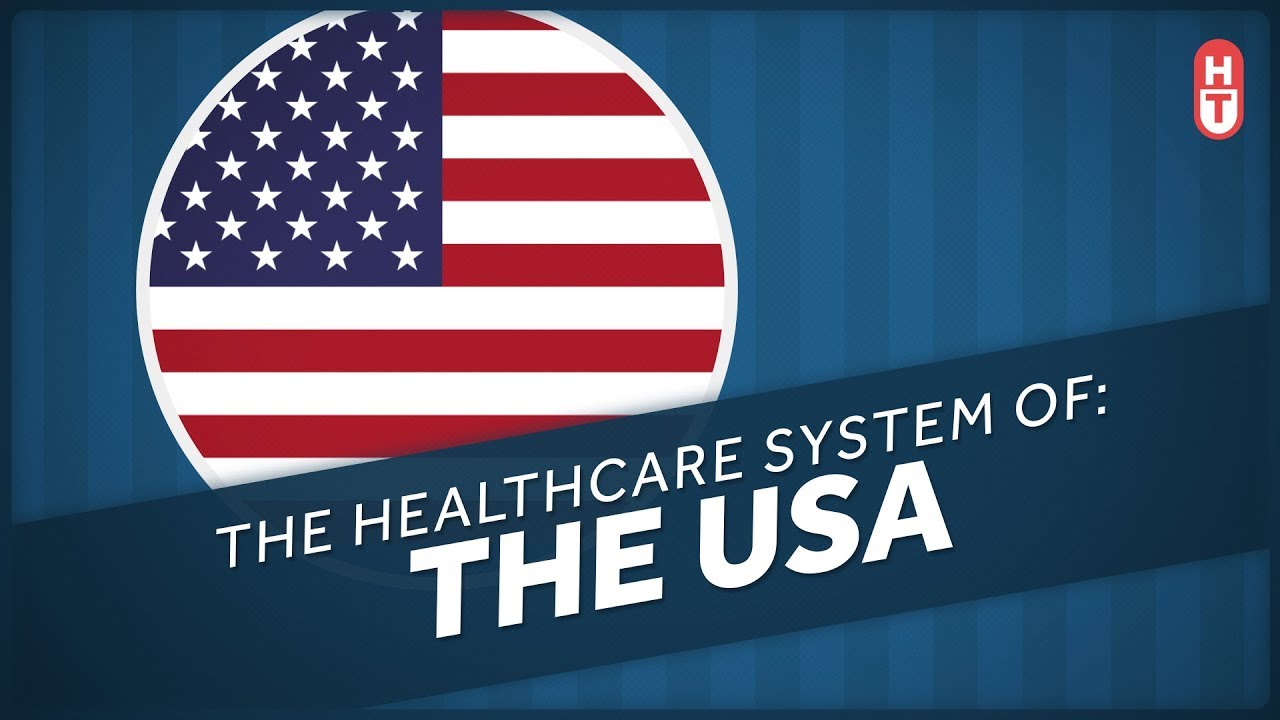
The Missing Piece in America’s Health Care Debate

By Rick Kahler CFP™

http://www.KahlerFinancial.com

***

The recent horrifying murder of UnitedHealthcare Group CEO Brian Thompson has called attention to the anger many Americans feel about our health care system. This tragedy has thrust the very real issue of health care costs back into the headlines.

One article on the topic, from Ken Alltucker for USA Today, offered seven reasons why Americans pay so much for health care with such poor results. When I saw the headline, I thought, “Finally, someone’s going to bring up the elephant in the room: taxes.”

The seven reasons included bloated administrative costs, lack of price transparency, overpaid specialists, higher prescription drug prices, and more. But I didn’t see a word about how, compared to other developed nations with “cheaper” health care, Americans pay far lower taxes. That omission feels like leaving a critical piece of the puzzle off the table.

***

***

In reality, countries with universal health care are not pulling off some magic trick of efficiency. They are simply collecting the money differently—through significantly higher taxes. Americans, on the other hand, pay for health care more directly, through out-of-pocket costs and insurance premiums.

In a column last year, I did the math. Americans spend about 17.8% of GDP on health care, plus 27.7% of GDP in taxes. That’s a total of 45.5%. Now compare that to twelve European countries with universal health care. They spend a median of 11.5% of GDP on health care and collect 41.9% of GDP in taxes. Total? 53.4%. In other words, Americans are spending 7.9% less overall on healthcare and taxes combined.

The saving isn’t what it appears, though. A fair comparison of healthcare costs and taxes needs to account for the fact that universal healthcare systems cover 100% of their populations, while the U.S. system currently leaves about 8% uninsured. If you factor in the cost of covering our uninsured residents, the U.S. likely spends a comparable percentage of income on healthcare as European countries with universal systems.

***

***

Our system is far from perfect. As the USA Today article points out, administrative costs are bloated. Harvard’s David Cutler estimates up to 25% of our health spending goes toward paperwork, phone calls, and processing. Price transparency is practically nonexistent. The cost of a diagnostic test might vary from $300 to $3,000 depending on where you go. We pay much more for prescription drugs and many procedures than those same treatments cost in other developed nations. Another issue is the fee-for-service model that rewards doctors for ordering more tests and procedures, whether or not patients get better.

We can do better. Innovations like value-based care, where providers are paid for outcomes rather than procedures, could help shift the system toward real results. Greater price transparency would empower patients to make informed choices and force providers to compete. And addressing administrative inefficiencies could save billions.

Yet fixing the system requires being honest about trade-offs. If we want universal health care at European price rates, we need to accept European tax rates. That’s the part of the conversation that often gets left out. It’s easy to be angry at hospitals, insurance companies, and drug manufacturers—and yes, they all have plenty to answer for. But we also need to face the reality that we’ve chosen a system that prioritizes lower taxes over centralized health care.

Anger may have put the flaws in our health care system in the spotlight. Finding genuine solutions will require moving beyond expressions of anger and frustration. It will demand thoughtful discussions about what kind of health care system, as individuals and as a nation, that we want and how we are willing to fund it.

EDUCATION: Books

COMMENTS APPRECIATED

Refer and Subscribe

***

***

FINANCIAL ADVISORS: Real Monetary Worth?

BY DR. DAVID EDWARD MARCINKO; MBA MEd CMP®

***

SPONSOR: http://www.MarcinkoAssociates.com

***

SO – HOW MUCH IS A “FINANCIAL ADVISOR” REALLY WORTH?

This blog holds a rather uncomplimentary opinion of financial advisors, and the financial services and brokerage industry as a whole; deserved, or not? The entire site hints at this attitude as well, in favor of a going it alone or ME, Inc investing when possible. Nevertheless, it is reasonable to wonder how much boost in net-returns might an educated and informed, fee transparent and honest, fiduciary focused “financial advisor” add to a clients’ investment portfolio; all things being equal [ceteris paribus].

And, can it be quantified?

Well, according to Vanguard Brokerage Services®, perhaps as much as 3%? In a decade long paper from the Valley Forge, PA based mutual fund and ETF giant, Vanguard said financial advisors can generate returns through a framework focused on five wealth management principles:

Being an effective behavioral coach: Helping clients maintain a long-term perspective and a disciplined approach is arguably one of the most important elements of financial advice. (Potential value added: up to 1.50%).

Applying an asset location strategy: The allocation of assets between taxable and tax-advantaged accounts is one tool an advisor can employ that can add value each year. (Potential value added: from 0% to 0.75%).

Employing cost-effective investments: This component of every advisor’s tool kit is based on simple math: Gross return less costs equals net return. (Potential value added: up to 0.45%).

Maintaining the proper allocation through rebalancing: Over time, as investments produce various returns, a portfolio will likely drift from its target allocation. An advisor can add value by ensuring the portfolio’s risk/return characteristics stay consistent with a client’s preferences. (Potential value added: up to 0.35%).

Implementing a spending strategy: As the retiree population grows, an advisor can help clients make important decisions about how to spend from their portfolios. (Potential value added: up to 0.70%).

Source: Financial Advisor Magazine, page 20, April 2014.

Assessment

However, Vanguard notes that while it’s possible all of these principles could add up to 3% in net returns for clients, it’s more likely to be an intermittent number than an annual one because some of the best opportunities to add value happen during extreme market lows and highs when angst or giddiness [fear and greed] can cause investors to bail on their well-thought-out investment plans.

And, is the study applicable to doctors and allied healthcare providers? Doe Vanguard have a vested interest in the topic. What about fee based versus fee-only financial advice?

Conclusion

Finally, recognize the plethora of other financial planning life-cycle topics addressed in this ME-P were not included in the Vanguard investment portfolio-only study a decade ago. 

And what about today with contemporaneous internet advising, chat-rooms, linkedin, robo-advisors, reddit and the like?

COMMENTS APPRECIATED

Read, Subscribe and Like

EDUCATION: Books

***

***

INSURANCE: How To Get Results On Homeowner Claims

By Rick Kahler; CFP®

http://www.KahlerFinancial.com

***

***

If you have ever filed a homeowners insurance claim, you know it can feel more like an endurance test than a straightforward process. While insurers are legally required to honor valid claims, they have strong financial incentives to delay, underpay, or deny them whenever possible.

Over the years, I’ve learned this the hard way. The most recent lesson started when a hailstorm hit my home in June 2023. I promptly filed an insurance claim. I also made up a story that leaving someone more qualified than me in charge would free me from a part-time job as a contractor, so I relied on a roofing contractor to handle the whole claim, including the gutter and siding damage. That was my first mistake.

About 15 months later, my roof and gutters were replaced, but the siding repairs and painting remained undone. Every time the insurance company reassigned my claim to a new adjuster, I had to start over. When I called the contractor after a period of inactivity, they said the adjuster had ghosted them, so they’d given up—and I still owed them the full roofing bill.

At that point, I had two choices: pay out of pocket for the unfinished work or escalate. I chose the latter. I filed a complaint with the state insurance division, contacted my agent, reached out to the last adjuster, hired my own painter, and withheld final payment to the contractor. I also made it clear that I was prepared to take legal action if necessary. That was not a bluff.

Within a week, things started moving. Seven days later, the insurance company reinspected my home and sent a check covering all but $3,000 of the painting costs. After nearly two years of delays and excuses, progress finally happened when I took matters into my own hands.

Delay is a common insurer tactic. They’ll repeatedly ask for more documentation, take months to respond, or swap adjusters to force you to restart the process—all in hopes that you’ll give up or accept a lower payout.

Another common tactic is the lowball offer. Insurers often rely on software that underestimates damages or send adjusters unfamiliar with actual repair costs. Accepting their first offer without question can be a costly mistake. It’s wise to get independent repair estimates or even hire a public adjuster who works for you rather than the insurance company.

Insurers also deny claims based on fine print, arguing that damage was pre-existing, caused by poor maintenance, or excluded under some obscure clause. Knowing your policy inside out and keeping pre-loss photos can help you counter these claims.

Another trick? Steering homeowners toward “preferred” contractors who work at discounted rates and may prioritize the insurer’s interests over yours. Getting independent estimates ensures repairs are done properly.

For homeowners stuck in an insurance battle, persistence is key. Withholding final payment until work is complete, filing a complaint with the state insurance division, and even considering small claims court can help push a claim forward. If the dispute is within your state’s small claims limit—often between $10,000 and $25,000—filing may push the insurer to settle.

Assuming my contractor would handle everything was my biggest mistake, and it cost me nearly two years of frustration. Even though progress happened quickly once I took control, my claim isn’t over. I suspect I will be filing legal action in small claims court against the insurance company, contractor, and insurance agent.

If you need to navigate an insurance claim, be persistent and attentive. Keeping records, pushing back on delays, and escalating when necessary can mean the difference between being shortchanged and getting the settlement you deserve.

COMMENTS APPRECIATED

Subscribe, Refer and Like

***

***

A NEW NORM: Revising Financial Planning Principles for Physicians?

DR. DAVID EDWARD MARCINKO; MBA MEd CMP

SPONSOR: http://www.MarcinkoAssociates.com

***

In 1972, Nobel Laureate Kenneth J. Arrow, PhD shocked academe’ by identifying health economics as a separate and distinct field. Yet, the seemingly disparate insurance, tax, risk management and financial planning principles that he also studied are just now becoming transparent to some medical professionals and their financial advisors. Despite the fact that a basic, but hardly promoted premise of this new wave financial planning era, is imprecision.

More: https://medicalexecutivepost.com/2024/11/09/arrow-information-paradox/

Nevertheless, to informed cognoscenti like Certified Medical Planners™, the principles served as predecessors to the modern physician-focused financial advisory niche sector. In 2004, Arrow was selected as one of eight recipients of the National Medal of Science for his innovative views.

More: http://www.CertifiedMedicalPlanner.org

And now, as a long bull market may be over, and if the current “new-normal” prevails – meaning a 4.5% real annualized rate of return on equities and a 1.5% real rate on bonds – wealth accumulation for all may be reduced.

An Imprecise Science

There is a major variable, dominant in any marketplace that pushes an economy in a forward direction. It is called consumerism. This became apparent while waiting in a doctor’s office one recent afternoon.

Scenario:

The front office receptionist, who appeared to be about 21 years old, was breaking for lunch and her replacement, who appeared not much older, came over to assist. Realizing the propensity for a long wait, one was taken by the size of waiting room and the number of patients coming in and out of the office. [Americans consume healthcare and a lot of it]. There was another notable peculiarity. The sample prescription bags being carried out the door were no match for the bags under everyone’s eyes, including the doctor’s. The office staff was probably working overtime, if not two jobs, and the doctor was working harder and faster in a managed care system.

Assessment

Why? So they all could afford to buy and voraciously consume for their children and themselves. Americans indeed work longer hours than any other industrialized nation.

Conclusion

Finally, as women medical professionals entered the workforce in unprecedented numbers, the stock markets reached an all time high in 2025, even as money was spent at a feverish pace as the Federal Reserve pumped out money in inflammatory fashion.

EDUCATION: Books

SPEAKING: Dr. Marcinko will be speaking and lecturing, signing and opining, teaching and preaching, storming and performing at many locations throughout the USA this year! His tour of witty and serious pontifications may be scheduled on a planned or ad-hoc basis; for public or private meetings and gatherings; formally, informally, or over lunch or dinner. All medical societies, financial advisory firms or Broker-Dealers are encouraged to submit a RFP for speaking engagements: CONTACT: MarcinkoAdvisors@outlook.com 

COMMENTS APPRECIATED

Refer, Like and Subscribe

***

***

Bielard, Biehl and Kaiser: Five-Way Investor Personality Model

BEHAVIORAL PSYCHOLOGY AND PROFESSIONAL FINANCIAL ADVICE

By Staff Reporters

SPONSOR: http://www.MarcinkoAssociates.com

***

***

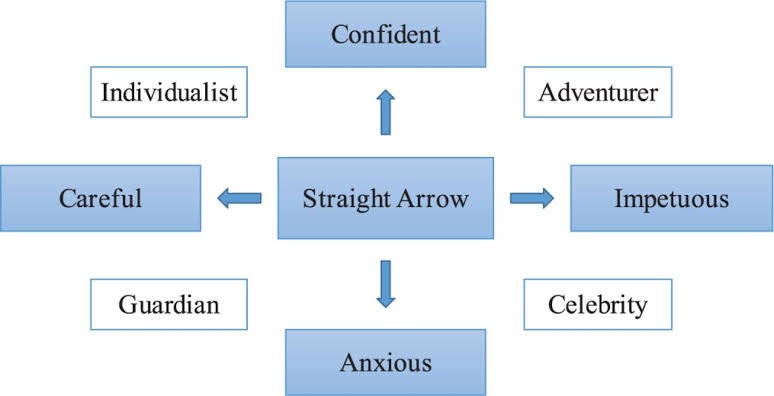
Fund managers Tom Bailard, Larry Biehl and Ron Kaiser identified five types of investors, each type characterized by their investment preferences and actions. These 5 types are: Individualists, Adventurers, Celebrities, Guardians and Straight Arrows. Key to the different categories is their different attitude to seeking professional financial advice. Defined below:

Individualists have faith in their own investment abilities so do not approach a financial adviser. But they are also cautious.

Adventurers are what may be called high rollers, in that they like big bets, tend not to diversify and are happy to put all their eggs in one basket. They, too, are unlikely to seek financial advice.

Celebrities tend to follow the crowd in investment terms but are aware of their lack of expertise so frequently consult advisers.

Guardians are fearful of losing money, thus prefer rock-solid investments such as government bonds. They, too, are likely to seek professional investment advice.

Straight Arrows exhibit some of the characteristics of individualists and some of adventurers.

COMMENTS APPRECIATED

Refer and Subscribe

***

***

CFP versus CFA

CERTIFIED FINANCIAL PLANNER versus CERTIFIED FINANCIAL ANALYST

By Staff Reporters

SPONSOR: http://www.MarcinkoAssociates.com

***

***

Certified Financial Planner (CFP®)

A certified financial planner (CFP®) helps individuals plan their financial futures. CFPs are not focused only on investments; they help their clients achieve specific long-term financial goals, such as saving for retirement, buying a house, or starting a college fund for their children.

To become a CFP®, a person must complete a course of study and then pass a two-part examination. The exam covers wealth management, tax palnning, insurance, retirement planning, estate planning, and other basic personal finance topics. These topics are all important for someone seeking to help clients achieve financial goals.

Chartered Financial Analyst (CFA)

A CFA, on the other hand, conducts investing in larger settings, normally for large investment firms on both the buy side and the sell side, mutual funds or hedge funds. CFAs can also provide internal financial analysis for corporations that are not in the investment industry. While a CFP® focuses on wealth management and planning for individual clients, a CFA focuses on wealth management for a corporation.

To become a CFA, a person must complete a rigorous course of study and pass three examinations over the course of two or more years. In addition, the candidate must adhere to a strict code of ethics and have four years of work experience in an investment decision-making setting.

COMMENTS APPRECIATED

Refer and Subscribe

***

***

EDUCATION: Niche Specific, Timely, Online, Asynchronous and Affordable

For Financial Advisors & Financial Planners, CPAs, CFPs, CFAs, Stock-Brokers, Insurance Agents, Attorneys, Wealth Managers and Related Advisors!

By Staff Reporters

***

***

FINANCIAL EDUCATION PODCAST: CMPs™ are In … Are CPAs Out?

CERTIFIED MEDICAL PLANNER™: Education for Financial Planners to Thrive with Doctor Clients!

MICRO-CERTIFICATIONS: Education for Financial Advisors Seeking Physician-Client Prospecting Success?

***

CONTACT: Ann Miller RN MHA CMP

Email: MarcinkoAdvisors@outlook.com

***

OUTCOME: Bias

By Staff Reporters

***

***

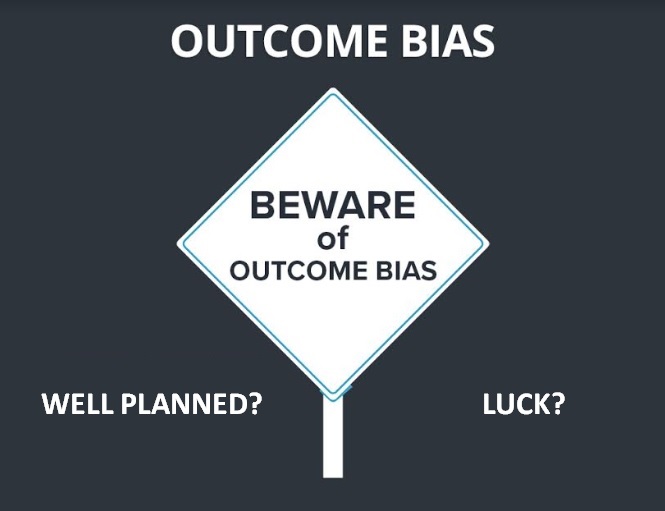
Outcome bias is judging a decision based on its result rather than the quality of the decision at the time it was made.

It’s like saying a bad poker play was smart because you won the hand. Or, a bad stock picker or financial advisor was good because the price went up!

According to psychologist and colleague Dan Ariely PhD, this bias ignores the process and focuses solely on the outcome. It’s why we celebrate lucky breaks and criticize thoughtful risks that didn’t pan out.

So, the next time you’re evaluating a decision, focus on the reasoning behind it, not just the end result.

COMMENTS APPRECIATED

Subscribe Today!

***

***

COUNTDOWN: To End of Year BOI Reporting?

Beneficial Ownership Information

By Staff Reporters

***

***

Small business owners face severe penalties if they don’t report to the federal government by year’s end. And, thousands of businesses may not realize they are subject to a new reporting process mandated under the Corporate Transparency Act, which went into effect in January 2024. Even lawyers, doctors, financial advisors and accountants are affected; along with “mom and pop”business owners.

For most eligible businesses, the filing deadline is Jan. 1, 2025, according to the U.S. Chamber of Commerce. “Those who fail to file by this deadline — or fail to update this information if needed — could face up to two years imprisonment and fines up to $10,000, in addition to civil penalties of up to $591 per day,” the U.S. Chamber of Commerce website reads.

Businesses that meet the reporting criteria must submit a Beneficial Ownership Information Report to the U.S. Department of Treasury’s Financial Crimes Enforcement Network (FinCEN), according to the U.S. Chamber of Commerce.

The law was created “to combat illicit activity including tax fraud, money laundering and financing for terrorism by capturing more ownership information for specific U.S. businesses operating in or accessing the country’s market,” the chamber website explained.

COMMENTS APPRECIATED

BREAKING NEWS

A federal court has ruled that the beneficial ownership information (BOI) reporting requirements established by the Corporate Transparency Act (CTA) are unconstitutional123. The decision is currently under appeal1.

Subscribe and Refer Today

***

***

OCTOBER: “Financial Planning” Month for Doctors

DR. DAVID EDWARD MARCINKO MBA MEd CMP™

http://www.MarcinkoAssociates.com

History for Us All

http://www.CertifiedMedicalPlanner.org

***

***

History of Financial Planning Month

Financial planning as a concept has been around for a long time, but not as we know it today. When Loren Dunton set up the Society for Financial Counseling Ethics in 1969, or when the first graduating class of the College of Financial Planning graduated in 1973, financial planning was very different. It was centered around selling limited partnerships, which came to end with the Tax Reform Act of 1986.

However, financial planning re-emerged — all thanks to Richard Averitt III. The certified financial planner gave new meaning to financial planning, this time with a focus on who the client is and what their needs are. This approach was purely methodological in nature.

Soon after, financial planning picked up again. According to the Certified Financial Planner (C.F.P.) Board of Standards in Denver, today, there are more than 94,000 C.F.P.s worldwide, including over 48,000 in the U.S. Additionally, there are also organizations that have been set up for C.F.P.s, such as the Financial Planning Association (FPA), which has approximately 22,000 members.

And, don’t forget the emerging Certified Medical Planner professional fiduciary designation for physicians, dentists, nurses and allied healthcare clients.

Financial planning, as we know it now, includes investing, tax planning, retirement planning, and basically other ways to get your finances in order and create mindful budgets to ensure a safe and secure future. Getting a step ahead of your spending and finances is beneficial in the long run and Financial Planning Month in October is the perfect time to do that.

MORE: https://medicalexecutivepost.com/2022/10/27/october-national-financial-planning-month/

***

COMMENTS APPRECIATED

Thank You

***

ORDER: https://www.routledge.com/Comprehensive-Financial-Planning-Strategies-for-Doctors-and-Advisors-Best/Marcinko-Hetico/p/book/9781482240283

****

Selecting Financial Advisors the Risky Way

Physician Due Diligence is Important

[By Daniel B. Moisand; CFP®, and the ME-P Staff]Tall Shadows

While the merits of hiring the right financial advisor [FA] may be clear, hiring the wrong one can be devastating. Medical professionals still tend to have higher incomes and are an attractive target for most financial institutions and scam artists. This fear is a poor excuse for not getting the assistance necessary. Advice about who to engage for financial assistance comes from a hodge-podge of disjointed sources. This leads to good intentions and bad results. Take caution when using the following as sources of advice.

Relying on Family and Friends

By far more people seek financial advice from trusted family members and friends than any other source.  This is only natural. It is essential to trust that you are getting advice from a source that means well. It is also important that you get along well with your advisors. Hesitating to communicate with your advisor, even a great advisor, can cause problems even more problematic that getting bad advice from someone you like. While these sources have a good handle on the essential elements of trust and rapport, it is the competence of the advice that is most often the issue. The life and money experiences of those who are close to you certainly have value, but they are not necessarily relevant to your unique goals and circumstances. THINK: Bernie Madoff.

Media

A few years ago, the dominant media force in consumer oriented financial matters was the print media.  Magazines and newsletters proliferated with the bull market. More recently however, television has supplanted print even in the bear market. For example, a study now estimates that 80 percent of what the average American knows about current events comes from TV. Why wait three weeks for the next issue when you can get a commentary instantly on the television? There is nothing wrong with watching shows that cover the markets or subscribing to a consumer finance magazine. It is certainly a good idea to be informed. However, be wary of the quality and applicability of information put out by the media.

The Internet

It is easy to run across an ad for prescriptions drugs on television. Images prance across the screen followed by a litany of potential side effects and the obligatory, “Ask your doctor about”. With the expansion of the information superhighway, more and more companies are going direct to the consumer in some manner or another.

Financially speaking this information can be of great benefit but should also generate more concern. It is very easy to project a particular image via the web. The webmaster controls the interaction from what you see to what you hear. One of the results of this is that the Internet has already garnered a reputation as a breeding ground for new scams. More prevalent, however, is the presentation of information meant to be useful that is simply wrong, misinterpreted, or misapplied. The most terrifying source of misinformation on the net is the chat rooms. Here the entire interaction is clouded by anonymity. Some people enter chat rooms because there is a comfort in anonymity when asking a question. There is also a danger in an anonymous answer. When it comes to something as important as your finances or your health, the prudent course should be to take all the advice with a grain of salt. A great deal of consideration to the quality of the source is in order. It is also essential that one understand the level of accountability a source may possess.   fp-book2

Assessment

Much has been written on financial advisor selection, here on the ME-P and elsewhere; but little on how not to select an advisor. We trust this information will be of assistance to the medical professional in some small increment. Send in your FA stories; both good and bad.

Channel Surfing the ME-P

Have you visited our other topic channels? Established to facilitate idea exchange and link our community together, the value of these topics is dependent upon your input. Please take a minute to visit. And, to prevent that annoying spam, we ask that you register. It is fast, free and secure.

Conclusion

Your thoughts and comments on this ME-P are appreciated. Feel free to review our top-left column, and top-right sidebar materials, links, URLs and related websites, too. Then, subscribe to the ME-P. It is fast, free and secure.

Speaker: If you need a moderator or speaker for an upcoming event, Dr. David E. Marcinko; MBA – Publisher-in-Chief of the Medical Executive-Post – is available for seminar or speaking engagements. Contact: MarcinkoAdvisors@msn.com

OUR OTHER PRINT BOOKS AND RELATED INFORMATION SOURCES:

Product Details  Product Details

Comprehensive Financial Planning Strategies for Doctors and Advisors: Best Practices from Leading Consultants and Certified Medical Planners™

***

RE-BROADCAST: An Interview with Fiduciary Bennett Aikin AIF®

On Financial Fiduciary Accountability

[By Dr. David E. Marcinko MBA MEd CMP™]

[By Ann Miller; RN, MHA]

Currently, there is a growing dilemma in the financial sales and services industry. It goes something like this:

  • What is a financial fiduciary?
  • Who is a financial fiduciary?
  • How can I tell if my financial advisor is a fiduciary?

Now, in as much as this controversy affects laymen and physician-investors alike, we went right to the source for up-to-date information regarding this often contentious topic, for an email interview and Q-A session, with Ben Aikin.ben-aikin

About Bennett Aikin AIF® and fi360.com

Bennett [Ben] Aikin is the Communications Coordinator for fi360.com. He oversees all communications for fi360. His responsibilities include messaging, brand management, copyrights and trademarks, and publications. Mr. Aikin received his BA in English from Virginia Tech in 2003 and is currently an MS candidate in Journalism from Ohio University.

Q. Medical Executive Post 

You have been very helpful and gracious to us. So, let’s get right to it, Ben. In the view of many; attorneys, doctors, CPAs and the clergy are fiduciaries; most all others who retain this title seem poseurs; sans documentation otherwise.

A. Mr. Aikin

You are correct. Attorneys, doctors and clergy are the prototype fiduciaries. They have a clear duty to put the best interests of their clients, patients, congregation, etc., above their own. [The duty of a CPA isn’t as clear to me, although I believe you are correct]. Furthermore, this is one of the first topics we address in our AIF training programs, and what we call the difference between a profession and an industry.  The three professions you name have three common characteristics that elevate them from an industry to a profession:

  1. Recognized body of knowledge
  2. Society depends upon practitioners to provide trustworthy advice
  3. Code of conduct that places the clients’ best interests first

Q. Medical Executive Post 

It seems that Certified Financial Planner®, Chartered Financial Analysts, Registered Investment Advisors and their representatives, Registered Representative [stock-brokers] and AIF® holders, etc, are not really financial fiduciaries, either by legal statute or organizational charter. Are we correct, or not? Of course, we are not talking ethics or morality here. That’s for the theologians to discuss.

A. Mr. Aikin

One of the reasons for the “alphabet soup”, as you put it in one of your white papers [books, dictionaries and posts] on financial designations, is that while there is a large body of knowledge, there is no one recognized body of knowledge that one must acquire to enter the financial services industry.  The different designations serve to provide a distinguisher for how much and what parts of that body of knowledge you do possess.  However, being a fiduciary is exclusively a matter of function. 

In other words, regardless of what designations are held, there are five things that will make one a fiduciary in a given relationship:

  1. You are “named” in plan or trust documents; the appointment can be by “name” or by “title,” such as CFO or Head of Human Resources
  2. You are serving as a trustee; often times this applies to directed trustees as well
  3. Your function or role equates to a professional providing comprehensive and continuous investment advice
  4. You have discretion to buy or sell investable assets
  5. You are a corporate officer or director who has authority to appoint other fiduciaries

So, if you are a fiduciary according to one of these definitions, you can be held accountable for a breach in fiduciary duty, regardless of any expertise you do, or do not have. This underscores the critical nature of understanding the fiduciary standard and delegating certain duties to qualified “professionals” who can fulfill the parts of the process that a non-qualified fiduciary cannot.

Q. Medical Executive Post 

How about some of the specific designations mentioned on our site, and elsewhere. I believe that you may be familiar with the well-known financial planner, Ed Morrow, who often opines that there are more than 98 of these “designations”? In fact, he is the founder of the Registered Financial Consultants [RFC] designation. And, he wrote a Foreword for one of our e-books; back-in-the-day. His son, an attorney, also wrote as a tax expert for us, as well. So, what gives?

A. Mr. Aikin

As for the specific designations you list above, and elsewhere, they each signify something different that may, or may not, lend itself to being a fiduciary: For example:

• CFP®: The act of financial planning does very much imply fiduciary responsibility.  And, the recently updated CFP® rules of conduct does now include a fiduciary mandate:

• 1.4 A certificant shall at all times place the interest of the client ahead of his or her own. When the certificant provides financial planning or material elements of the financial planning process, the certificant owes to the client the duty of care of a fiduciary as defined by CFP Board. [from http://www.cfp.net/Downloads/2008Standards.pdf]

•  CFA: Very dependent on what work the individual is doing.  Their code of ethics does have a provision to place the interests of clients above their own and their Standards of Practice handbook makes clear that when they are working in a fiduciary capacity that they understand and abide by the legally mandated fiduciary standard.

• FA [Financial Advisor]: This is a generic term that you may find being used by a non-fiduciary, such as a broker, or a fiduciary, such as an RIA.

• RIA: Are fiduciaries.  Registered Investment Advisors are registered with the SEC and have obligations under the Investment Advisers Act of 1940 to provide services that meet a fiduciary standard of care.

• RR: Registered Reps, or stock-brokers, are not fiduciaries if they are doing what they are supposed to be doing.  If they give investment advice that crosses the line into “comprehensive and continuous investment advice” (see above), their function would make them a fiduciary and they would be subject to meeting a fiduciary standard in that advice (even though they may not be properly registered to give advice as an RIA).

• AIF designees: Have received training on a process that meets, and in some places exceeds, the fiduciary standard of care.  We do not require an AIF® to always function as a fiduciary. For example, we allow registered reps to gain and use the AIF® designation. In many cases, AIF designees are acting as fiduciaries, and the designation is an indicator that they have the full understanding of what that really means in terms of the level of service they provide.  We do expect our designees to clearly disclose whether they accept fiduciary responsibility for their services or not and advocate such disclosure for all financial service representatives.

Q. Medical Executive Post 

Your website, http://www.fi360.com, seems to suggest, for example, that banks/bankers are fiduciaries. We have found this not to be the case, of course, as they work for the best interests of the bank and stockholders. What definitional understanding are we missing?

A. Mr. Aikin

Banks cannot generally be considered fiduciaries.  Again, it is a matter of function. A bank may be a named trustee, in which case a fiduciary standard would generally apply.  Banks that sell products are doing so according to their governing regulations and are “prudent experts” under ERISA, but not necessarily held to a fiduciary standard in any broader sense.

Q. Medical Executive Post 

And so, how do we rectify the [seemingly intentional] industry obfuscation on this topic. We mean, our readers, subscribers, book and dictionary purchasers, clients and colleagues are all confused on this topic. The recent financial meltdown only stresses the importance of understanding same.

For example, everyone in the industry seems to say they are the “f” word. But, our outreach efforts to contact traditional “financial services” industry pundits, CFP® practitioners and other certification organizations are continually met with resounding silence; or worse yet; they offer an abundance of parsed words and obfuscation but no confirming paperwork, or deep subject-matter knowledge as you have kindly done. We get the impression that some FAs honesty do-not have a clue; while others are intentionally vague.

A. Mr. Aikin

All of the evidence you cite is correct.  But that does not mean it is impossible to find an investment advisor who will manage to a fiduciary standard of care and acknowledge the same. The best way to rectify confusion as it pertains to choosing appropriate investment professionals is to get fiduciary status acknowledged in writing and go over with them all of the necessary steps in a fiduciary process to ensure they are being fulfilled. There also are great resources out there for understanding the fiduciary process and for choosing professionals, such as the Department of Labor, the SEC, FINRA, the AICPA’s Personal Financial Planning division, the Financial Planning Association, and, of course, Fiduciary360.

We realize the confusion this must cause to those coming from the health care arena, where MD/DO clearly defines the individual in question; as do other degrees [optometrist, clinical psychologist, podiatrist, etc] and medical designations [fellow, board certification, etc.]. But, unfortunately, it is the state of the financial services industry as it stands now.

Q. Medical Executive Post 

It is as confusing for the medical community, as it is for the lay community. And, after some research, we believe retail financial services industry participants are also confused. So, what is the bottom line?

A. Mr. Aikin

The bottom line is that lay, physician and all clients have a right to expect and demand a fiduciary standard of care in the managing of investments. And, there are qualified professionals out there who are providing those services.  Again, the best way to ensure you are getting it is to have fiduciary status acknowledged in writing, and go over the necessary steps in a fiduciary process with them to ensure it is being fulfilled.

Q. Medical Executive Post 

The “parole-evidence” rule, of contract law, applies, right? In dealing with medical liability situations, the medics and malpractice attorneys have a rule: “if it wasn’t written down, it didn’t happen.”  

A. Mr. Aikin

An engagement contract accepting fiduciary status should trump a subsequent attempt to claim the fiduciary standard didn’t apply. But, to reiterate an earlier point, if someone acts in one of the five functional fiduciary roles, they are a fiduciary whether they choose to acknowledge it or not.  I have attached a sample acknowledgement of fiduciary status letter with copies of our handbook, which details the fiduciary process we instruct in our programs, and our SAFE, which is basically a checklist that a fiduciary should be able to answer “Yes” to every question to ensure the entire fiduciary process is being covered.

Q. Medical Executive Post 

It is curious that you mention checklists. We have a post arguing that very theme for doctors and hospitals as they pursue their medial error reduction, and quality improvement, endeavors. And, we applaud your integrity, and wish only for clarification on this simple fiduciary query?

A. Mr. Aikin

Simple definition: A fiduciary is someone who is managing the assets of another person and stands in a special relationship of trust, confidence, and/or legal responsibility.

Q. Medical Executive Post 

Who is a financial fiduciary and what, if any, financial designation indicates same?

A. Mr. Aikin

Functional definition: See above for the five items that make you a fiduciary.

Financial designations that unequivocally indicate fiduciary duty: Short answer is none, only function can determine who is a fiduciary. 

Q. Medical Executive Post 

Please repeat that?

A. Mr. Aikin

Financial designations that indicate fiduciary duty: none. It is the function that determines who is a fiduciary.  Now, having said that, the CFP® certification comes close by demanding their certificants who are engaged in financial planning do so to a fiduciary standard. Similarly, other designations may certify the holder’s ability to perform a role that would be held to a fiduciary standard of care.  The point is that you are owed a fiduciary standard of care when you engage a professional to fill that role or they functionally become one.  And, if you engage a professional to fill a non-fiduciary role, they will not be held to a fiduciary standard simply because they have a particular designation.  One of the purposes the designations serve is to inform you what roles the designation holder is capable of fulfilling.

It is also worth keeping in mind that just being a fiduciary doesn’t equate to a full knowledge of the fiduciary standard. The AIF® designation indicates having been fully trained on the standard.

Q. Medical Executive Post 

Yes, your website mentions something about fiduciaries that are not aware of same! How can this be? Since our business model mimics a medical model, isn’t that like saying “the doctor doesn’t know he is doctor?” Very specious, with all due respect!

A. Mr. Aikin

I think it is first important to note that this statement is referring not just to investment professionals.  Part of the audience fi360 serves is investment stewards, the non-professionals who, due to facts and circumstances, still owe a fiduciary duty to another.  Examples of this include investment committee members, trustees to a foundation, small business owners who start 401k plans, etc.  This is a group of non-sophisticated investors who may not be aware of the full array of responsibilities they have. 

However, even on the professional side I believe the statement isn’t as absurd as it sounds.  This is basically a protection from both ignorant and unscrupulous professionals.  Imagine a registered representative who, either through ignorance or design, begins offering comprehensive and continuous investment advice.  Though they may deny or be unaware of the fact, they have opened themselves up to fiduciary liability. 

Q. Medical Executive Post 

Please clarify the use of arbitration clauses in brokerage account contracts for us. Do these disclaim fiduciary responsibility? If so, does the client even know same?

A. Mr. Aikin

By definition, an engagement with a broker is a non-fiduciary relationship.  So, unless other services beyond the scope of a typical brokerage account contract are specified, fiduciary responsibility is inherently not applicable.  Unfortunately, I do imagine there are clients who don’t understand this. Furthermore, AIF® designees are not prohibited from signing such an agreement and there are some important points to understand the reasoning.

First, by definition, if you are entering into such an agreement, you are entering into a non-fiduciary relationship. So, any fiduciary requirement wouldn’t apply in this scenario.

Second, if this same question were applied into a scenario of a fiduciary relationship, such as with an RIA, this would be a method of dispute resolution, not a practice method. So, in the event of dispute, the advisor and investor would be free to agree to the method of resolution of their choosing. In this scenario, however, typically the method would not be discussed until the dispute itself arose.

Finally, it is important to know that AIF/AIFA designees are not required to be a fiduciary. It is symbolic of the individuals training, knowledge and ongoing development in fiduciary processes, but does not mean they will always be acting as a fiduciary.

Q. Medical Executive Post 

Don’t the vast majority of arbitration hearings find in favor of the FA; as the arbitrators are insiders, often paid by the very same industry itself?

A. Mr. Aikin

Actual percentages are reported here: http://www.finra.org/ArbitrationMediation/AboutFINRADR/Statistics/index.htm However, brokerage arbitration agreements are a dispute resolution method for disputes that arise within the context of the securities brokerage industry and are not the only means of resolving differences for all types of financial advisors.  Investment advisers, for example, are subject to respond to disputes in a variety of forums including state and federal courts.  Clients should look at their brokerage or advisory agreement to see what they have agreed to. If you wanted to go into further depth on this question, we would recommend contacting Brian Hamburger, who is a lawyer with experience in this area and an AIFA designee. Bio page: http://www.hamburgerlaw.com/attorneys/BSH.htm.

Q. Medical Executive Post 

What about our related Certified Medical Planner® designation, and online educational program for financial advisors and medical management consultants? Is it a good idea – reasonable – for the sponsor to demand fiduciary accountability of these charter-holders? Cleary, this would not only be a strategic competitive advantage, but advance the CMP™ mission to put medical colleagues first and champion their cause www.CertifiedMedicalPlanner.org above all else. 

A. Mr. Aikin

I think it is a good idea for any plan sponsor to demand fiduciary status be acknowledged from anyone engaged to provide comprehensive and continuous investment advice.  I also think it is a good idea to be proactive in verifying that the fiduciary process is being followed.

Q. Medical Executive Post 

Is there anything else that we should know about this topic?

A. Mr. Aikin

Yes, a further note about fi360’s standards. I wrote generically about the fiduciary standard, because there is one that is defined by multiple sources of regulation, legislation and case law.  The process defined in our handbooks, we call a Fiduciary Standard of Excellence, because it covers that minimum standard and also best practice standards that go above and beyond.  All of our Practices, which comprise that standard, are legally substantiated in our Legal Memoranda handbook, which was written by Fred Reish’s law firm, who is considered a leading ERISA attorney.

Additional resources:

Q. Medical Executive Post 

Thank you so much for your knowledge and willingness to frankly share it with the Medical-Executive-Post.

Assessment

All are invited to continue the conversation with Mr. Aikin, asynchronously online, or thru this contact information:

fi360.com
438 Division Street
Sewickley, PA 15143
412-741-8140 Phone
866-390-5080 Toll-free phone
412-741-8142 Fax

Conclusion

Your thoughts and comments on this ME-P are appreciated. Feel free to review our top-left column, and top-right sidebar materials, links, URLs and related websites, too. Then, subscribe to the ME-P. It is fast, free and secure.

Speaker: If you need a moderator or speaker for an upcoming event, Dr. David E. Marcinko; MBA – Publisher-in-Chief of the Medical Executive-Post – is available for seminar or speaking engagements. Contact: MarcinkoAdvisors@msn.com

OUR OTHER PRINT BOOKS AND RELATED INFORMATION SOURCES:

HOSPITALS: http://www.crcpress.com/product/isbn/9781466558731
CLINICS: http://www.crcpress.com/product/isbn/9781439879900
ADVISORS: www.CertifiedMedicalPlanner.org
BLOG: www.MedicalExecutivePost.com

Product DetailsProduct DetailsProduct Details

Product Details  Product Details

Product DetailsProduct Details

Product Details

Risk Management, Liability Insurance, and Asset Protection Strategies for Doctors and Advisors: Best Practices from Leading Consultants and Certified Medical Planners™8Comprehensive Financial Planning Strategies for Doctors and Advisors: Best Practices from Leading Consultants and Certified Medical Planners™

CERTIFIED MEDICAL PLANNER™ Niche Financial Advisor Professional Designation

Think Different – Be Different  – Thrive

[By Ann Miller RN MHA]

Letterhead CMP

http://www.CertifiedMedicalPlanner.org

Dear Physician Focused Financial Advisors

Did you know that desperate doctors of all ages are turning to knowledgeable financial advisors and medical management consultants for help? Symbiotically too, generalist advisors are finding that the mutual need for knowledge and extreme niche synergy is obvious.

***

planning

***

But, there was no established curriculum or educational program; no corpus of knowledge or codifying terms-of-art; no academic gravitas or fiduciary accountability; and certainly no identifying professional designation that demonstrated integrated subject matter expertise for the increasingly unique healthcare focused financial advisory niche … Until Now! 

***

CMP logo

http://www.CertifiedMedicalPlanner.org

Enter the CMPs

“The informed voice of a new generation of fiduciary advisors for healthcare”

Think Different

 [Think Different – Be Different – Thrive]

InfoGraphic

http://e.infogr.am/enter_the_certified_medical_planner?src=embed

CMP logo

http://www.CertifiedMedicalPlanner.org

***

So, if you are looking to supplement your knowledge, income and designations; and find other qualified professionals you may want to consider the CMP® program.

Enter the Certified Medical Planner™ charter professional designation. And, CMPs™ are FIDUCIARIES, 24/7.

Channel Surfing the ME-P

Have you visited our other topic channels? Established to facilitate idea exchange and link our community together, the value of these topics is dependent upon your input. Please take a minute to visit. And, to prevent that annoying spam, we ask that you register. It is fast, free and secure.

Conclusion

Your thoughts and comments on this ME-P are appreciated. Feel free to review our top-left column, and top-right sidebar materials, links, URLs and related websites, too. Then, subscribe to the ME-P. It is fast, free and secure.

***

Become a CMP

***

Speaker: If you need a moderator or speaker for an upcoming event, Dr. David E. Marcinko; MBA – Publisher-in-Chief of the Medical Executive-Post – is available for seminar or speaking engagements. Contact: MarcinkoAdvisors@msn.com

OUR OTHER PRINT BOOKS AND RELATED INFORMATION SOURCES:

 Comprehensive Financial Planning Strategies for Doctors and Advisors: Best Practices from Leading Consultants and Certified Medical Planners(TM)* 8

DEAR COLLEAGUES: Are You a Financial Advisor’s “Customer” or “Client”?

By Dr. David Edward Marcinko MBA CMP

SPONSOR: http://www.MarcinkoAssociates.com

First – a little “insider expert” background on the confusion. It exists largely because of the influence that large financial institutions (who earn revenue through the sale of financial products) have on legislators.

The Investment Advisors Act of 1940 requires that anyone giving investment advice must be acting in a fiduciary capacity. The intent was to separate the financial salespeople, who had significant conflicts of interest, from the investment advisors, who had few to none. If you know very little about financial products, would you rather be educated as the customer of a commissioned salesperson or the client of a fee-for-service advisor? Hands down, you’d want the fee-for-service advisor.

Of course, the financial institutions selling products understood this. They were able to influence the drafting of the 1940 Investment Advisors Act, to exclude “any broker or dealer whose performance of such [advisory] services is solely incidental to the conduct of his business as a broker or dealer.” So if salespeople just happen to give some financial advice that is “incidental” to the sale of a product, they and their companies are not held to the fiduciary standard. Our U.S. Congress allows financial companies to advertise as if they are fiduciaries while their sales forces are not held to a fiduciary standard.

Now, according to Rick Kahler CFP®, the same conflict arises in some professional designations, like the Certified Financial Planner® designation conferred by the CFP® Board. The designation initially certified the completion of training in financial planning. In 2008 the Board added a fiduciary requirement to the designation.

However, CFP®’s are only held to a fiduciary requirement when they are doing what the CFP® Board defines as financial planning. If a CFP® professional is giving advice to a client, the fiduciary standard applies. Yet the same professional can sell the same client an annuity with high fees and high commissions, even if the product may not be in the client’s best interest, as long as no “financial planning” is part of the transaction. The result is significant confusion for consumers.

The bottom line is this: when you look for financial advice or financial products, don’t assume the advisor is looking out for you. It’s your responsibility to find out whether any financial professional owes you a fiduciary duty.

So, I suggest you ask directly, “Am I a customer or a client?” The answer is almost always “a client,” as most financial services salespeople honestly don’t know the difference. After you explain that difference, ask them to verify their fiduciary duty in writing. That five-minute solution may have a lasting impact on your financial well-being.

Better yet, consider speaking to your fiduciary focused and fee-only Certified Medical Planner® professional colleagues at D.E. Marcinko & Associates.

“By Doctors – For Doctors”

CMP: http://www.CertifiedMedicalPlanner.org***

COMMENTS APPRECIATED

Thank You

***

***

Dig Deeper Than CFP® To Find a Financial Planner

CFP® is a Designation  – Not a Guarantee!

By Rick Kahler CFP®

I have long recommended that consumers look for a Certified Financial Planning (CFP) certificant when shopping for a financial planner.

But don’t stop there. A CFP is no guarantee that someone is a competent, ethical, fiduciary professional. It only ensures that you are choosing from a pool of 85,000 financial services providers who are educated in the technical aspects of financial planning. It doesn’t mean the person is engaged in financial planning, is a fiduciary, or has a spotless ethical history.

In a troubling Wall Street Journal article on August 9, 2019, columnist Jason Zwieg writes that the “CFP Board’s online search directory neglected to inform the public that thousands of planners listed” have known “customer complaints, criminal histories, financial problems or regulatory proceedings.”

“Among these CFPs were 499 who have faced criminal charges, 324 who left a previous firm amid allegations of misconduct, 323 who had been disciplined or investigated by regulators and 68 who filed bankruptcy within the past 10 years,” Zweig notes. Yet none were ever disciplined by the CFP Board.

Let’s not lose perspective—these “bad apples” amount to less than 2% of CFP certificants. Every profession has those few who use its licensing and credentialing as a cover to manipulate, deceive, and abuse consumers. No amount of regulation or oversight will ever eliminate all the crooks.

In addition, you cannot simply assume because a professional has a certain license, designation, or formal degree that they are competent. In the graduate class I teach at Golden Gate University, not all students earn As and Bs. Many earn Cs. A few earn Ds and Fs. While I am not sure the D and F group ever graduate, I am sure I would not want them doing my financial planning without convincing evidence that their poor performance in my class was a one-off due to extenuating circumstances.

As the consumer, you cannot know if a prospective financial planner was that student. Nor can you know if they have a tainted criminal background, unless you dig deeper.

That digging includes looking for any past criminal or disciplinary charges brought by licensing agencies. It also includes determining whether the advisor is legally bound to a fiduciary standard—required to put your interests ahead of theirs—but has any conflicts of interest, especially by making a significant amount of their income from commissions on the sale of financial products.

Here are a few tips for digging deeper:

  1. Go to brokercheck.finra.org to see if FINRA has brought disciplinary actions against the advisor.
  2. Go to the SEC’s website to look for disciplinary actions.
  3. Have the prospective advisor sign a written disclosure that you are a client and they have a fiduciary duty to put your interests above their own, rather than a customer where they have no such obligation and will usually put the interests of their company first. Many advisors, especially those not legally bound to be fiduciaries, don’t understand the difference, so insist on getting this assurance in writing.
  4. Have the prospective advisor sign a statement disclosing what percentage of their company’s gross revenues comes from fees charged to clients.  These might be paid as hourly fees, annual retainers, or separate charges for advice. The lower the percentage of income from fees, the greater the chance of a significant conflict of interest. I recommend finding firms receiving over 90% of gross revenue from fees; I prefer 100% because such firms advertise themselves as “fee-only” or will offset any commissions against a flat fee.

Assessment

To find a trustworthy financial planner, I still recommend the CFP designation. Just remember that it’s a starting point, not a guarantee.

Conclusion

Your thoughts and comments on this ME-P are appreciated. Feel free to review our top-left column, and top-right sidebar materials, links, URLs and related websites, too. Then, subscribe to the ME-P. It is fast, free and secure.

Speaker: If you need a moderator or speaker for an upcoming event, Dr. David E. Marcinko; MBA – Publisher-in-Chief of the Medical Executive-Post – is available for seminar or speaking engagements. Contact: MarcinkoAdvisors@msn.com

Risk Management, Liability Insurance, and Asset Protection Strategies for Doctors and Advisors: Best Practices from Leading Consultants and Certified Medical Planners™8Comprehensive Financial Planning Strategies for Doctors and Advisors: Best Practices from Leading Consultants and Certified Medical Planners™

***

PODCAST: Hedge Fund Manager Michael Burry MD

In The Subprime of His Life – My Story

By Dr. David Edward Marcinko MBA, CMP™

[Editor-in-Chief]

I am a long time fan of financial industry journalist Michael Lewis [Liars’ Poker, Moneyball and others] who just released a new book. The Big Short is a chronicle of four players in the subprime mortgage market who had the foresight [and testosterone] to short the diciest mortgage deals: Steve Eisner of FrontPoint, Greg Lippmann at Deutsche Bank, the three partners at Cornwall Capital, and most indelibly, Wall Street outsider Michael Burry MD of Scion Capital.

They all walked away from the disaster with pockets full of money and reputations as geniuses.

About Mike

Now, I do not know the first three folks, but I do know a little something about my colleague Michael Burry MD; he is indeed a very smart guy. Mike is a nice guy too, who also has a natural writing style that I envy [just request and read his quarterly reports for a stylized sample]. He gave me encouragement and insight early in my career transformation – from doctor to “other”.

And, he confirmed my disdain for the traditional financial services [retail sales] industry, Wall Street and their registered representatives and ‘training’ system, and sad broker-dealer ethos [suitability versus fiduciary accountability] despite being a hedge fund manager himself.

I mentioned him in my book: “Insurance and Risk Management Strategies” [For Physicians and their Advisors].

http://www.amazon.com/Insurance-Management-Strategies-Physicians-Advisors/dp/0763733423/ref=sr_1_2?ie=UTF8&s=books&qid=1269254153&sr=1-2

He ultimately helped me eschew financial services organizations, “certifications”, “designations” and ”colleges”, and their related SEO rules, SEC regulations and policy wonks; and above all to go with my gut … and go it alone!

And so, I rejected my certified financial planner [marketing] designation status as useless for me, and launched the www.CertifiedMedicalPlanner.org on-line educational program for physician focused financial advisors and management consultants interested in the healthcare space … who wish to be fiduciaries.

And I thank Mike for the collegial good will. By the way, Mike is not a CPA, nor does he posses an MBA or related advanced degree or designation. He is not a middle-man FA. He is a physician. Unlike far too many other industry “financial advisors” he is not a lemming.

IOW: We are not salesman. We are out-of-the-box thinkers, innovators and contrarians by nature. www.MedicalBusinessAdvisors.com

From a Book Review

According to book reviewer Michael Osinski, writing in the March 22-29 issue of Businessweek.com, Lewis is at his best working with characters and Burry is rendered most vividly.

A loner from a young age, in part because he has a glass eye that made it difficult to look people in the face, Burry excelled at topics that required intense and isolated concentration. Originally, investing was just a hobby while he pursued a career in medicine. As a resident neurosurgeon at Stanford Hospital in the late 1990s, Burry often stayed up half the night typing his ideas onto a message board. Unbeknownst to him, professional money managers began to read and profit from his freely dispensed insight, and a hedge fund eventually offered him $1 million for a quarter of his investment firm, which consisted of a few thousand dollars from his parents and siblings. Another fund later sent him $10 million”.

“Burry’s obsession with finding undervalued companies eventually led him to realize that his own home in San Jose, Calif., was grossly overpriced, along with houses all over the country. He wrote to a friend: “A large portion of the current [housing] demand at current prices would disappear if only people became convinced that prices weren’t rising. The collateral damage is likely to be orders of magnitude worse than anyone now considers.” This was in 2003.

“Through exhaustive research, Burry understood that subprime mortgages would be the fuse and that the bonds based on these mortgages would start to blow up within as little as two years, when the original “teaser” rates expired. But Burry did something that separated him from all the other housing bears—he found an efficient way to short the market by persuading Goldman Sachs (GS) to sell him a CDS against subprime deals he saw as doomed. A unique feature of these swaps was that he did not have to own the asset to insure it, and over time, the trade in these contracts overwhelmed the actual market in the underlying bonds”.

“By June 2005, Goldman was writing Burry CDS contracts in $100 million lots, “insane” amounts, according to Burry. In November, Lippmann contacted Burry and tried to buy back billions of dollars of swaps that his bank had sold. Lippmann had noticed a growing wave of subprime defaults showing up in monthly remittance reports and wanted to protect Deutsche Bank from potentially massive losses. All it would take to cause major pain, Lippmann and his analysts deduced, was a halt in price appreciation for homes. An actual fall in prices would bring a catastrophe. By that time, Burry was sure he held winning tickets; he politely declined Lippmann’s offer”

And the rest, as they say, is history.

Link: http://www.businessweek.com/magazine/content/10_12/b4171094664065.htm

My Story … Being a Bit like Mike

I first contacted Mike, by phone and email, more than a decade ago. His hedge fund, Scion Capital, had no employees at the time and he outsourced most of the front and back office activities to concentrate on position selection and management. Early investors were relatives and a few physicians and professors from his medical residency days. Asset gathering was a slosh, indeed. And, in a phone conversation, I remember him confirming my impressions that doctors were not particularly astute investors. For him, they generally had sparse funds to invest as SEC “accredited investors” and were better suited for emerging tax advantaged mutual funds. ETFs were not significantly on the radar screen, back then, and index funds were considered unglamorous. No, his target hedge-fund audience was Silicon Valley.

And, much like his value-hero Warren Buffett [also a Ben Graham and David Dodd devotee], his start while from the doctor space, did not derive its success because of them.

Moreover, like me, he lionized the terms “value investing”, “margin of safety” and “intrinsic value”.

Co-incidentally, as a champion of the visually impaired, I was referred to him by author, attorney and blogger Jay Adkisson www.jayadkisson.com Jay is an avid private pilot having earned his private pilot’s license after losing an eye to cancer.

Join Our Mailing List

Mike again re-entered my cognitive space while doing research for the first edition of our successful print book: “Financial Planning Handbook for Physicians and Advisors” and while searching for physicians who left medicine for alternate careers!

In fact, he wrote the chapter on hedge funds in our print journal and thru the third book edition before becoming too successful for such mundane stuff. We are now in our fourth edition, with a fifth in progress once the Obama administration stuff [healthcare and financial services industry “reform” and new tax laws] has been resolved

http://www.amazon.com/Financial-Planning-Handbook-Physicians-Advisors/dp/0763745790/ref=sr_1_1?ie=UTF8&s=books&qid=1269211056&sr=1-1

Assessment

News: Dr. Burry appeared on 60 Minutes Sunday March 14th, 2010. His activities with Scion Capital are portrayed in Michael Lewis’s newest book, The Big Short.  An excerpt is available in the April 2010 issue of Vanity Fair magazine, and at VanityFair.com 

Video of Dr. Burry: http://www.cbsnews.com/video/watch/?id=6298040n&tag=contentBody;housing

Video of Dr. Burry: http://www.cbsnews.com/video/watch/?id=6298038n&tag=contentBody;housing

PS: Michael Osinski retired from Wall Street and now runs Widow’s Hole Oyster Co. in Greenport, NY http://www.widowsholeoysters.com

And, our www.MedicalBusinessAdvisors.com related books can be reviewed here: http://www.amazon.com/s/ref=nb_sb_noss?url=search-alias%3Dstripbooks&field-keywords=david+marcinko

Assessment

Visit Scion Capital LLC and tell us what you think http://www.scioncapital.com.

And to Mike himself, I say “Mazel Tov” and congratulations? I am sure you will be a good and faithful steward. The greatest legacy one can have is in how they treated the “little people.” You are a champ. Call me – let’s do lunch. And, I am still writing: www.BusinessofMedicalPractice.com for the conjoined space we both LOVE.

Conclusion

Your thoughts and comments on this ME-P are appreciated. Feel free to review our top-left column, and top-right sidebar materials, links, URLs and related websites, too. Then, subscribe to the ME-P. It is fast, free and secure.

Link: http://feeds.feedburner.com/HealthcareFinancialsthePostForcxos

Speaker: If you need a moderator or speaker for an upcoming event, Dr. David E. Marcinko; MBA – Publisher-in-Chief of the Medical Executive-Post – is available for seminar or speaking engagements. Contact: MarcinkoAdvisors@msn.com

OUR OTHER PRINT BOOKS AND RELATED INFORMATION SOURCES:

Product DetailsProduct DetailsProduct Details

Product Details  Product Details

   Product Details 

[PHYSICIAN FOCUSED FINANCIAL PLANNING AND RISK MANAGEMENT COMPANION TEXTBOOK SET]

  Risk Management, Liability Insurance, and Asset Protection Strategies for Doctors and Advisors: Best Practices from Leading Consultants and Certified Medical Planners™  Comprehensive Financial Planning Strategies for Doctors and Advisors: Best Practices from Leading Consultants and Certified Medical Planners™

[Dr. Cappiello PhD MBA] *** [Foreword Dr. Krieger MD MBA]

***

RECAST: An Interview with Fiduciary Bennett Aikin AIF®

On Financial Fiduciary Accountability

[By Dr. David E. Marcinko MBA CMP™]

[By Ann Miller; RN, MHA]

Currently, there is a growing dilemma in the financial sales and services industry. It goes something like this:

  • What is a financial fiduciary?
  • Who is a financial fiduciary?
  • How can I tell if my financial advisor is a fiduciary?

Now, in as much as this controversy affects laymen and physician-investors alike, we went right to the source for up-to-date information regarding this often contentious topic, for an email interview and Q-A session, with Ben Aikin.ben-aikin

About Bennett Aikin AIF® and fi360.com

Bennett [Ben] Aikin is the Communications Coordinator for fi360.com. He oversees all communications for fi360. His responsibilities include messaging, brand management, copyrights and trademarks, and publications. Mr. Aikin received his BA in English from Virginia Tech in 2003 and is currently an MS candidate in Journalism from Ohio University.

Q. Medical Executive Post 

You have been very helpful and gracious to us. So, let’s get right to it, Ben. In the view of many; attorneys, doctors, CPAs and the clergy are fiduciaries; most all others who retain this title seem poseurs; sans documentation otherwise.

A. Mr. Aikin

You are correct. Attorneys, doctors and clergy are the prototype fiduciaries. They have a clear duty to put the best interests of their clients, patients, congregation, etc., above their own. [The duty of a CPA isn’t as clear to me, although I believe you are correct]. Furthermore, this is one of the first topics we address in our AIF training programs, and what we call the difference between a profession and an industry.  The three professions you name have three common characteristics that elevate them from an industry to a profession:

  1. Recognized body of knowledge
  2. Society depends upon practitioners to provide trustworthy advice
  3. Code of conduct that places the clients’ best interests first

Q. Medical Executive Post 

It seems that Certified Financial Planner®, Chartered Financial Analysts, Registered Investment Advisors and their representatives, Registered Representative [stock-brokers] and AIF® holders, etc, are not really financial fiduciaries, either by legal statute or organizational charter. Are we correct, or not? Of course, we are not talking ethics or morality here. That’s for the theologians to discuss.

A. Mr. Aikin

One of the reasons for the “alphabet soup”, as you put it in one of your white papers [books, dictionaries and posts] on financial designations, is that while there is a large body of knowledge, there is no one recognized body of knowledge that one must acquire to enter the financial services industry.  The different designations serve to provide a distinguisher for how much and what parts of that body of knowledge you do possess.  However, being a fiduciary is exclusively a matter of function. 

In other words, regardless of what designations are held, there are five things that will make one a fiduciary in a given relationship:

  1. You are “named” in plan or trust documents; the appointment can be by “name” or by “title,” such as CFO or Head of Human Resources
  2. You are serving as a trustee; often times this applies to directed trustees as well
  3. Your function or role equates to a professional providing comprehensive and continuous investment advice
  4. You have discretion to buy or sell investable assets
  5. You are a corporate officer or director who has authority to appoint other fiduciaries

So, if you are a fiduciary according to one of these definitions, you can be held accountable for a breach in fiduciary duty, regardless of any expertise you do, or do not have. This underscores the critical nature of understanding the fiduciary standard and delegating certain duties to qualified “professionals” who can fulfill the parts of the process that a non-qualified fiduciary cannot.

Q. Medical Executive Post 

How about some of the specific designations mentioned on our site, and elsewhere. I believe that you may be familiar with the well-known financial planner, Ed Morrow, who often opines that there are more than 98 of these “designations”? In fact, he is the founder of the Registered Financial Consultants [RFC] designation. And, he wrote a Foreword for one of our e-books; back-in-the-day. His son, an attorney, also wrote as a tax expert for us, as well. So, what gives?

A. Mr. Aikin

As for the specific designations you list above, and elsewhere, they each signify something different that may, or may not, lend itself to being a fiduciary: For example:

• CFP®: The act of financial planning does very much imply fiduciary responsibility.  And, the recently updated CFP® rules of conduct does now include a fiduciary mandate:

• 1.4 A certificant shall at all times place the interest of the client ahead of his or her own. When the certificant provides financial planning or material elements of the financial planning process, the certificant owes to the client the duty of care of a fiduciary as defined by CFP Board. [from http://www.cfp.net/Downloads/2008Standards.pdf]

•  CFA: Very dependent on what work the individual is doing.  Their code of ethics does have a provision to place the interests of clients above their own and their Standards of Practice handbook makes clear that when they are working in a fiduciary capacity that they understand and abide by the legally mandated fiduciary standard.

• FA [Financial Advisor]: This is a generic term that you may find being used by a non-fiduciary, such as a broker, or a fiduciary, such as an RIA.

• RIA: Are fiduciaries.  Registered Investment Advisors are registered with the SEC and have obligations under the Investment Advisers Act of 1940 to provide services that meet a fiduciary standard of care.

• RR: Registered Reps, or stock-brokers, are not fiduciaries if they are doing what they are supposed to be doing.  If they give investment advice that crosses the line into “comprehensive and continuous investment advice” (see above), their function would make them a fiduciary and they would be subject to meeting a fiduciary standard in that advice (even though they may not be properly registered to give advice as an RIA).

• AIF designees: Have received training on a process that meets, and in some places exceeds, the fiduciary standard of care.  We do not require an AIF® to always function as a fiduciary. For example, we allow registered reps to gain and use the AIF® designation. In many cases, AIF designees are acting as fiduciaries, and the designation is an indicator that they have the full understanding of what that really means in terms of the level of service they provide.  We do expect our designees to clearly disclose whether they accept fiduciary responsibility for their services or not and advocate such disclosure for all financial service representatives.

Q. Medical Executive Post 

Your website, http://www.fi360.com, seems to suggest, for example, that banks/bankers are fiduciaries. We have found this not to be the case, of course, as they work for the best interests of the bank and stockholders. What definitional understanding are we missing?

A. Mr. Aikin

Banks cannot generally be considered fiduciaries.  Again, it is a matter of function. A bank may be a named trustee, in which case a fiduciary standard would generally apply.  Banks that sell products are doing so according to their governing regulations and are “prudent experts” under ERISA, but not necessarily held to a fiduciary standard in any broader sense.

Q. Medical Executive Post 

And so, how do we rectify the [seemingly intentional] industry obfuscation on this topic. We mean, our readers, subscribers, book and dictionary purchasers, clients and colleagues are all confused on this topic. The recent financial meltdown only stresses the importance of understanding same.

For example, everyone in the industry seems to say they are the “f” word. But, our outreach efforts to contact traditional “financial services” industry pundits, CFP® practitioners and other certification organizations are continually met with resounding silence; or worse yet; they offer an abundance of parsed words and obfuscation but no confirming paperwork, or deep subject-matter knowledge as you have kindly done. We get the impression that some FAs honesty do-not have a clue; while others are intentionally vague.

A. Mr. Aikin

All of the evidence you cite is correct.  But that does not mean it is impossible to find an investment advisor who will manage to a fiduciary standard of care and acknowledge the same. The best way to rectify confusion as it pertains to choosing appropriate investment professionals is to get fiduciary status acknowledged in writing and go over with them all of the necessary steps in a fiduciary process to ensure they are being fulfilled. There also are great resources out there for understanding the fiduciary process and for choosing professionals, such as the Department of Labor, the SEC, FINRA, the AICPA’s Personal Financial Planning division, the Financial Planning Association, and, of course, Fiduciary360.

We realize the confusion this must cause to those coming from the health care arena, where MD/DO clearly defines the individual in question; as do other degrees [optometrist, clinical psychologist, podiatrist, etc] and medical designations [fellow, board certification, etc.]. But, unfortunately, it is the state of the financial services industry as it stands now.

Q. Medical Executive Post 

It is as confusing for the medical community, as it is for the lay community. And, after some research, we believe retail financial services industry participants are also confused. So, what is the bottom line?

A. Mr. Aikin

The bottom line is that lay, physician and all clients have a right to expect and demand a fiduciary standard of care in the managing of investments. And, there are qualified professionals out there who are providing those services.  Again, the best way to ensure you are getting it is to have fiduciary status acknowledged in writing, and go over the necessary steps in a fiduciary process with them to ensure it is being fulfilled.

Q. Medical Executive Post 

The “parole-evidence” rule, of contract law, applies, right? In dealing with medical liability situations, the medics and malpractice attorneys have a rule: “if it wasn’t written down, it didn’t happen.”  

A. Mr. Aikin

An engagement contract accepting fiduciary status should trump a subsequent attempt to claim the fiduciary standard didn’t apply. But, to reiterate an earlier point, if someone acts in one of the five functional fiduciary roles, they are a fiduciary whether they choose to acknowledge it or not.  I have attached a sample acknowledgement of fiduciary status letter with copies of our handbook, which details the fiduciary process we instruct in our programs, and our SAFE, which is basically a checklist that a fiduciary should be able to answer “Yes” to every question to ensure the entire fiduciary process is being covered.

Q. Medical Executive Post 

It is curious that you mention checklists. We have a post arguing that very theme for doctors and hospitals as they pursue their medial error reduction, and quality improvement, endeavors. And, we applaud your integrity, and wish only for clarification on this simple fiduciary query?

A. Mr. Aikin

Simple definition: A fiduciary is someone who is managing the assets of another person and stands in a special relationship of trust, confidence, and/or legal responsibility.

Q. Medical Executive Post 

Who is a financial fiduciary and what, if any, financial designation indicates same?

A. Mr. Aikin

Functional definition: See above for the five items that make you a fiduciary.

Financial designations that unequivocally indicate fiduciary duty: Short answer is none, only function can determine who is a fiduciary. 

Q. Medical Executive Post 

Please repeat that?

A. Mr. Aikin

Financial designations that indicate fiduciary duty: none. It is the function that determines who is a fiduciary.  Now, having said that, the CFP® certification comes close by demanding their certificants who are engaged in financial planning do so to a fiduciary standard. Similarly, other designations may certify the holder’s ability to perform a role that would be held to a fiduciary standard of care.  The point is that you are owed a fiduciary standard of care when you engage a professional to fill that role or they functionally become one.  And, if you engage a professional to fill a non-fiduciary role, they will not be held to a fiduciary standard simply because they have a particular designation.  One of the purposes the designations serve is to inform you what roles the designation holder is capable of fulfilling.

It is also worth keeping in mind that just being a fiduciary doesn’t equate to a full knowledge of the fiduciary standard. The AIF® designation indicates having been fully trained on the standard.

Q. Medical Executive Post 

Yes, your website mentions something about fiduciaries that are not aware of same! How can this be? Since our business model mimics a medical model, isn’t that like saying “the doctor doesn’t know he is doctor?” Very specious, with all due respect!

A. Mr. Aikin

I think it is first important to note that this statement is referring not just to investment professionals.  Part of the audience fi360 serves is investment stewards, the non-professionals who, due to facts and circumstances, still owe a fiduciary duty to another.  Examples of this include investment committee members, trustees to a foundation, small business owners who start 401k plans, etc.  This is a group of non-sophisticated investors who may not be aware of the full array of responsibilities they have. 

However, even on the professional side I believe the statement isn’t as absurd as it sounds.  This is basically a protection from both ignorant and unscrupulous professionals.  Imagine a registered representative who, either through ignorance or design, begins offering comprehensive and continuous investment advice.  Though they may deny or be unaware of the fact, they have opened themselves up to fiduciary liability. 

Q. Medical Executive Post 

Please clarify the use of arbitration clauses in brokerage account contracts for us. Do these disclaim fiduciary responsibility? If so, does the client even know same?

A. Mr. Aikin

By definition, an engagement with a broker is a non-fiduciary relationship.  So, unless other services beyond the scope of a typical brokerage account contract are specified, fiduciary responsibility is inherently not applicable.  Unfortunately, I do imagine there are clients who don’t understand this. Furthermore, AIF® designees are not prohibited from signing such an agreement and there are some important points to understand the reasoning.

First, by definition, if you are entering into such an agreement, you are entering into a non-fiduciary relationship. So, any fiduciary requirement wouldn’t apply in this scenario.

Second, if this same question were applied into a scenario of a fiduciary relationship, such as with an RIA, this would be a method of dispute resolution, not a practice method. So, in the event of dispute, the advisor and investor would be free to agree to the method of resolution of their choosing. In this scenario, however, typically the method would not be discussed until the dispute itself arose.

Finally, it is important to know that AIF/AIFA designees are not required to be a fiduciary. It is symbolic of the individuals training, knowledge and ongoing development in fiduciary processes, but does not mean they will always be acting as a fiduciary.

Q. Medical Executive Post 

Don’t the vast majority of arbitration hearings find in favor of the FA; as the arbitrators are insiders, often paid by the very same industry itself?

A. Mr. Aikin

Actual percentages are reported here: http://www.finra.org/ArbitrationMediation/AboutFINRADR/Statistics/index.htm However, brokerage arbitration agreements are a dispute resolution method for disputes that arise within the context of the securities brokerage industry and are not the only means of resolving differences for all types of financial advisors.  Investment advisers, for example, are subject to respond to disputes in a variety of forums including state and federal courts.  Clients should look at their brokerage or advisory agreement to see what they have agreed to. If you wanted to go into further depth on this question, we would recommend contacting Brian Hamburger, who is a lawyer with experience in this area and an AIFA designee. Bio page: http://www.hamburgerlaw.com/attorneys/BSH.htm.

Q. Medical Executive Post 

What about our related Certified Medical Planner® designation, and online educational program for financial advisors and medical management consultants? Is it a good idea – reasonable – for the sponsor to demand fiduciary accountability of these charter-holders? Cleary, this would not only be a strategic competitive advantage, but advance the CMP™ mission to put medical colleagues first and champion their cause www.CertifiedMedicalPlanner.org above all else. 

A. Mr. Aikin

I think it is a good idea for any plan sponsor to demand fiduciary status be acknowledged from anyone engaged to provide comprehensive and continuous investment advice.  I also think it is a good idea to be proactive in verifying that the fiduciary process is being followed.

Q. Medical Executive Post 

Is there anything else that we should know about this topic?

A. Mr. Aikin

Yes, a further note about fi360’s standards. I wrote generically about the fiduciary standard, because there is one that is defined by multiple sources of regulation, legislation and case law.  The process defined in our handbooks, we call a Fiduciary Standard of Excellence, because it covers that minimum standard and also best practice standards that go above and beyond.  All of our Practices, which comprise that standard, are legally substantiated in our Legal Memoranda handbook, which was written by Fred Reish’s law firm, who is considered a leading ERISA attorney.

Additional resources:

Q. Medical Executive Post 

Thank you so much for your knowledge and willingness to frankly share it with the Medical-Executive-Post.

Assessment

All are invited to continue the conversation with Mr. Aikin, asynchronously online, or thru this contact information:

fi360.com
438 Division Street
Sewickley, PA 15143
412-741-8140 Phone
866-390-5080 Toll-free phone
412-741-8142 Fax

Conclusion

Your thoughts and comments on this ME-P are appreciated. Feel free to review our top-left column, and top-right sidebar materials, links, URLs and related websites, too. Then, subscribe to the ME-P. It is fast, free and secure.

Link: http://feeds.feedburner.com/HealthcareFinancialsthePostForcxos

Speaker: If you need a moderator or speaker for an upcoming event, Dr. David E. Marcinko; MBA – Publisher-in-Chief of the Medical Executive-Post – is available for seminar or speaking engagements. Contact: MarcinkoAdvisors@msn.com

OUR OTHER PRINT BOOKS AND RELATED INFORMATION SOURCES:

LEXICONS: http://www.springerpub.com/Search/marcinko
PRACTICES: www.BusinessofMedicalPractice.com
HOSPITALS: http://www.crcpress.com/product/isbn/9781466558731
CLINICS: http://www.crcpress.com/product/isbn/9781439879900
ADVISORS: www.CertifiedMedicalPlanner.org
BLOG: www.MedicalExecutivePost.com

Product DetailsProduct DetailsProduct Details

Product Details  Product Details

Product DetailsProduct Details

Product Details

Risk Management, Liability Insurance, and Asset Protection Strategies for Doctors and Advisors: Best Practices from Leading Consultants and Certified Medical Planners™8Comprehensive Financial Planning Strategies for Doctors and Advisors: Best Practices from Leading Consultants and Certified Medical Planners™

UPDATE: Stock Markets, the Economy and Pandemic

By Staff Reporters

CMP logo

SPONSOR: http://www.CertifiedMedicalPlanner.org

***

  • Stock Markets: US stocks staged a big afternoon comeback for the second day in a row … but still not big enough to close in the green. American Express was the top performer in both the S&P and the Dow after the company reported its highest billings volume ever in Q4. And, enthusiasm over meme stocks more broadly appears to be dwindling along with cryptos. And, while NASDAQ took a hit, Microsoft reported quarterly sales of more than $50 billion for the first time ever.
  • Economy: The weight of the financial world is on Jerome Powell’s shoulders today. The Federal Reserve chair will provide an update on the central bank’s views on sky-high inflation and its plan for interest rate hikes this year (though none are expected until March).
  • Pandemic: Pfizer and BioNTech started clinical trials for an Omicron-specific vaccine yesterday. The results will help the pharma partners decide whether to replace their current jab formula with one that targets the most dominant Covid variant. The new vaccine is being tested both as a three-shot series for un-vaccinated participants and as a booster for the already vaccinated.
  • CITE: https://www.r2library.com/Resource/Title/082610254

***

COMMENTS APPRECIATED

Thank You

Subscribe to the Medical Executive-Post

***

***

Dig Deeper Than CFP® To Find a Financial Planner

CFP® is a Designation  – Not a Guarantee!

By Rick Kahler CFP®

I have long recommended that consumers look for a Certified Financial Planning (CFP) certificant when shopping for a financial planner.

But don’t stop there. A CFP is no guarantee that someone is a competent, ethical, fiduciary professional. It only ensures that you are choosing from a pool of 85,000 financial services providers who are educated in the technical aspects of financial planning. It doesn’t mean the person is engaged in financial planning, is a fiduciary, or has a spotless ethical history.

In a troubling Wall Street Journal article on August 9, 2019, columnist Jason Zwieg writes that the “CFP Board’s online search directory neglected to inform the public that thousands of planners listed” have known “customer complaints, criminal histories, financial problems or regulatory proceedings.”

“Among these CFPs were 499 who have faced criminal charges, 324 who left a previous firm amid allegations of misconduct, 323 who had been disciplined or investigated by regulators and 68 who filed bankruptcy within the past 10 years,” Zweig notes. Yet none were ever disciplined by the CFP Board.

Let’s not lose perspective—these “bad apples” amount to less than 2% of CFP certificants. Every profession has those few who use its licensing and credentialing as a cover to manipulate, deceive, and abuse consumers. No amount of regulation or oversight will ever eliminate all the crooks.

In addition, you cannot simply assume because a professional has a certain license, designation, or formal degree that they are competent. In the graduate class I teach at Golden Gate University, not all students earn As and Bs. Many earn Cs. A few earn Ds and Fs. While I am not sure the D and F group ever graduate, I am sure I would not want them doing my financial planning without convincing evidence that their poor performance in my class was a one-off due to extenuating circumstances.

As the consumer, you cannot know if a prospective financial planner was that student. Nor can you know if they have a tainted criminal background, unless you dig deeper.

That digging includes looking for any past criminal or disciplinary charges brought by licensing agencies. It also includes determining whether the advisor is legally bound to a fiduciary standard—required to put your interests ahead of theirs—but has any conflicts of interest, especially by making a significant amount of their income from commissions on the sale of financial products.

Here are a few tips for digging deeper:

  1. Go to brokercheck.finra.org to see if FINRA has brought disciplinary actions against the advisor.
  2. Go to the SEC’s website to look for disciplinary actions.
  3. Have the prospective advisor sign a written disclosure that you are a client and they have a fiduciary duty to put your interests above their own, rather than a customer where they have no such obligation and will usually put the interests of their company first. Many advisors, especially those not legally bound to be fiduciaries, don’t understand the difference, so insist on getting this assurance in writing.
  4. Have the prospective advisor sign a statement disclosing what percentage of their company’s gross revenues comes from fees charged to clients.  These might be paid as hourly fees, annual retainers, or separate charges for advice. The lower the percentage of income from fees, the greater the chance of a significant conflict of interest. I recommend finding firms receiving over 90% of gross revenue from fees; I prefer 100% because such firms advertise themselves as “fee-only” or will offset any commissions against a flat fee.

Assessment

To find a trustworthy financial planner, I still recommend the CFP designation. Just remember that it’s a starting point, not a guarantee.

Conclusion

Your thoughts and comments on this ME-P are appreciated. Feel free to review our top-left column, and top-right sidebar materials, links, URLs and related websites, too. Then, subscribe to the ME-P. It is fast, free and secure.

Link: http://feeds.feedburner.com/HealthcareFinancialsthePostForcxos

Speaker: If you need a moderator or speaker for an upcoming event, Dr. David E. Marcinko; MBA – Publisher-in-Chief of the Medical Executive-Post – is available for seminar or speaking engagements. Contact: MarcinkoAdvisors@msn.com

Risk Management, Liability Insurance, and Asset Protection Strategies for Doctors and Advisors: Best Practices from Leading Consultants and Certified Medical Planners™8Comprehensive Financial Planning Strategies for Doctors and Advisors: Best Practices from Leading Consultants and Certified Medical Planners™

***

Join the Medical Executive-Post

Publishing and Peer-Review Opportunities Always Available

By Ann Miller; RN, MHAME-P Logo.2

If you have academic credentials and experience like those of our contributing authors, subject matter experts and “thought-leaders – and would like to contribute to our blog or become a peer reviewer – please contact us today!

CV Required

We’d be happy to review your CV, submission and/or a copy of you previously published works. OR, just point us to your own blog, wiki, or website; etc. You may also use the contact form, below.

Phone: 770-448-0769

Email: MarcinkoAdvisors@msn.com

Channel Surfing

Have you visited our other topic channels? Established to facilitate idea exchange and link our community together, the value of these 50 topics is dependent upon your input. Please take a minute to visit. And, to prevent that annoying spam, we ask that you register.  

Link: http://feeds.feedburner.com/HealthcareFinancialsthePostForcxos

Speaker: If you need a moderator or speaker for an upcoming event, Dr. David E. Marcinko; MBA – Publisher-in-Chief of the Executive-Post – is available for seminar or speaking engagements. Contact: MarcinkoAdvisors@msn.com

Sponsors Welcomed

And, credible sponsors and like-minded advertisers are always welcomed.

Link: https://healthcarefinancials.wordpress.com/2007/11/11/advertise

CONTACT US!

Go back

Your message has been sent

Warning
Warning
Warning
Warning

Warning.

Why we cannot assume CFP® equals “Fiduciary”

Join Our Mailing List

Rick Kahler MS CFP

By Rick Kahler MS CFP®

One of the most important ways to find competent and trustworthy investment advisers is to be sure they owe you a fiduciary duty.

This means the advisers’ legal and ethical responsibility is to act in your best interests, not their own or their employer’s.

An ongoing legal case featured in an October 31 article by Ann Marsh in the online Financial Planning magazine highlights both the importance and the difficulty of finding a fiduciary adviser. (Disclosure: I am one of several advisers quoted in the article.)

The whistleblower case against J. P. Morgan involves an adviser and former J. P. Morgan employee, Johnny Burris, who says he was fired after refusing to give in to pressure to sell some of his employer’s high-priced products that he did not believe to be in his clients’ best interest.

Importance?

Here is why this case is important to anyone looking for financial advice: many advisers at investment firms like J. P. Morgan hold the Certified Financial Planner (CFP) designation. According to the website of the CFP Board of Standards, the organization that awards the certification, CFP’s are required “to put your interests ahead of their own at all times and to provide their financial planning services as a ‘fiduciary’—acting in the best interest of their financial planning clients.”

This sounds straightforward enough. Since 2008, the CFP Board has positioned the CFP designation as an indicator that an adviser will put clients’ interest first.

Unfortunately, that isn’t quite accurate.

Here is the tricky part: Advisers who sell financial products are allowed to “wear two hats” in their interaction with consumers. Any time they are giving financial advice and acting as financial planners (as defined by the CFP Board), they are expected to act in the best interest of the client/customer.

Yet if they don’t give any financial advice other than what is ancillary to the sale (a very confusing concept) of financial products to the same client/customer, that fiduciary requirement does not apply. The consumer is apparently expected to have the exceptional discernment and knowledge to know which hat is being worn at any given time.

As a consumer, you can assume that advisers holding the CFP® designation have completed many hours of education and passed tests to assess their professional competence.

However, because of the CFP Board’s hairsplitting, you cannot assume “CFP” equals “fiduciary.”

You still have to ask two essential questions:

The first is “In this engagement with me, who are you primarily responsible to, me or your company?” An adviser employed by a brokerage house or investment bank is very likely to be held most responsible to their company and expected to sell that firm’s financial products. This sets up a conflict of interest, in that the products with the highest fees will make the most money for the firm and the adviser, while those with lower fees may well be in the best interest of the clients.

A CFP® adviser who works for an independent financial planning firm may be less likely to be pressured to sell a given line of products. They also may do enough financial planning to be required to be a fiduciary.

However, you still need to ask the second question: “How do you get paid?” Any adviser who receives income from selling financial products cannot fully represent clients as a fiduciary without first overcoming an inherent conflict of interest.

***

stock market

***

Assessment

An adviser who doesn’t sell any products, who gives investment advice, and whose income comes solely from client fees is answerable and responsible to those clients as a fiduciary. You can trust that such a fee-only adviser will genuinely put your interests first. 

Conclusion

Your thoughts and comments on this ME-P are appreciated. Feel free to review our top-left column, and top-right sidebar materials, links, URLs and related websites, too. Then, subscribe to the ME-P. It is fast, free and secure.

Speaker: If you need a moderator or speaker for an upcoming event, Dr. David E. Marcinko; MBA – Publisher-in-Chief of the Medical Executive-Post – is available for seminar or speaking engagements. Contact: MarcinkoAdvisors@msn.com

OUR OTHER PRINT BOOKS AND RELATED INFORMATION SOURCES:

Risk Management, Liability Insurance, and Asset Protection Strategies for Doctors and Advisors: Best Practices from Leading Consultants and Certified Medical Planners™     Comprehensive Financial Planning Strategies for Doctors and Advisors: Best Practices from Leading Consultants and Certified Medical Planners™

***

Is the CFP-BOD, and the CFP® mark, in Jeopardy? [VOTE]

Join Our Mailing List

Early CFP® Board Leader Says Future of Certification in Jeopardy

[By Staff Reporters]

The CFP® Board’s strategy of punishing some certificate holders over compensation disclosure issues in what critics charge is an arbitrary manner threatens the future of the CFP® designation, according to one of the early leaders of the board who also chaired its disciplinary commission.

Please vote

And so, we ask this question.

Assessment 

Link: http://www.financial-planning.com/news/early-cfp-board-leader-says-future-of-certification-in-jeopardy-2686698-1.html?ET=financialplanning:e14975:86235a:&st=email&utm_source=editorial&utm_medium=email&utm_campaign=FP_Weekend__092713

Read More:

Read even more:

2016 Update:


Conclusion

Your thoughts and comments on this ME-P are appreciated. Feel free to review our top-left column, and top-right sidebar materials, links, URLs and related websites, too. Then, subscribe to the ME-P. It is fast, free and secure.

Link: http://feeds.feedburner.com/HealthcareFinancialsthePostForcxos

Speaker: If you need a moderator or speaker for an upcoming event, Dr. David E. Marcinko; MBA – Publisher-in-Chief of the Medical Executive-Post – is available for seminar or speaking engagements. Contact: MarcinkoAdvisors@msn.com

OUR OTHER PRINT BOOKS AND RELATED INFORMATION SOURCES:

DICTIONARIES: http://www.springerpub.com/Search/marcinko
PHYSICIANS: www.MedicalBusinessAdvisors.com
PRACTICES: www.BusinessofMedicalPractice.com
HOSPITALS: http://www.crcpress.com/product/isbn/9781466558731
CLINICS: http://www.crcpress.com/product/isbn/9781439879900
BLOG: www.MedicalExecutivePost.com
FINANCE: Financial Planning for Physicians and Advisors
INSURANCE: Risk Management and Insurance Strategies for Physicians and Advisors

Product DetailsProduct DetailsProduct Details

Product Details  Product Details

Product DetailsProduct Details

Are “Financial Advisors” True Professionals or Employed Sales Representatives for Retail Products?

Join Our Mailing List 

White House Sides With Sales Reps On Overtime

Dr. David Edward Marcinko MBA CMP™

[ME-P Editor-in-Chief]

www.CertifiedMedicalPlanner.org

As the US Supreme Court is preparing to review the contentious debate about overtime pay for sales reps, the US Solicitor General has filed an amicus curaie, or friend of the court brief, and sided with pharma reps. The move is not surprising, given that the US Department of Labor has, several times, taken a similar step in federal courts around the country where cases were heard.

Far Reaching Implications?

The review is expected to have far-reaching implications for the pharmaceutical industry, and I believe the financial services industry, as well. Why?

Both sectors have been fighting a growing number of cases nationwide over the past several years, but has had mixed results as the issue has continually divided the courts. At the same time, drug makers, Wall Street and broker-dealers have been laying off thousands of sales reps – “financial advisors”, “wealth managers” and stock brokers – as they try to cut costs and alter their business models to prepare for some level of fiduciary accountability.

The Issue

At issue is whether drug reps, and FAs by extension, are exempt from overtime provisions of the Fair Labor Standards Act. The FLSA overtime compensation requirement does not apply to employees who work as outside salespeople, but the law does require employers to pay overtime for hours worked beyond 40 hours a week, unless a FLSA exemption applies.

Link: http://www.pharmalot.com/2012/02/white-house-sides-with-sales-reps-on-overtime/?utm_source=feedburner&utm_medium=feed&utm_campaign=Feed%3A+Pharmalot+%28Pharmalot%29

My Issue

And so, does this mean that most “financial advisors” are really stock-brokers and product pushers after all? At least in medicine, we doctors know what a pharmaceutical rep is – and we understand his/ her roll is to push pharma products, DME and drug sales.

Shouldn’t a salesman – be a salesman – and an “advisor” – be an RIA or RIA rep? I don’t often agree with the White House, but I do on this one.

FAs can’t be independent client advocates – and employees – at the same time

Now, isn’t it time for the public to know that the vast majority of FAs are just salesmen [still SBs], too? Just selling retail financial products to doctors and others; not drugs. After all, FAs can’t be independent client advocates – and employees – at the same time.  And, it appears with this potential filing and ruling; that they truly wish to be the later. Now FAs, admit it!

Assessment

Why do you think FAs are licensed as “registered representatives”? Rarely; a fiduciary among them!

Conclusion

Your thoughts and comments on this ME-P are appreciated. Feel free to review our top-left column, and top-right sidebar materials, links, URLs and related websites, too. Then, subscribe to the ME-P. It is fast, free and secure.

Speaker: If you need a moderator or speaker for an upcoming event, Dr. David E. Marcinko; MBA – Publisher-in-Chief of the Medical Executive-Post – is available for seminar or speaking engagements. Contact: MarcinkoAdvisors@msn.com

OUR OTHER PRINT BOOKS AND RELATED INFORMATION SOURCES:

Product Details  Product Details

Comprehensive Financial Planning Strategies for Doctors and Advisors: Best Practices from Leading Consultants and Certified Medical Planners™

How to Become A Financial Advisor [Learned Profession or Professional Sales Force?]

Join Our Mailing List

A Recent E-mail that I Received

By Dr. David Edward Marcinko MBA, CMP™

www.CertifiedMedicalPlanner.com

[Editor-in-Chief]

As a former certified financial planner for almost 15 years, I was surprised to recently receive the following unedited e-mail correspondence.

Dear Marcinko,

If you are clever, have a way with people, or are a born salesperson, then becoming financial advisor could be your ticket to paradise.

Maybe not exactly paradise, but you could definitely have a ticket to a rewarding career. If you’re thinking about starting out as a new financial advisor – you may already be half the way there.

Why?

Because it’s an occupation where your life challenges will give you the understanding and empathy needed to work with your clients. Have you ever been in the position where you had to figure out a budget for your children’s education? Or manage an over extended credit card? These life situations will aid an individual on the path to become a financial consultant.

Requirements to Be a Financial Advisor

Even though a formal education is not a necessity to become financial adviser, it helps if you’ve taken certain courses.

What degree do you need to become a financial advisor? A bachelor’s degree in Finance, Economics, Accounting, Commerce, Business or Marketing would be a good start. A degree won’t assure you of a startling career but it may help get your foot in the door.

Rumor has it that a degree in psychology is also an asset as financial advising is as much about counseling as it is about advising. There are a plethora of people with all sorts of emotional entanglements around their financial lives.

Licenses

So, what licenses do you need to be a financial advisor? Some companies will assist a newbie in the financial advisory business and place them into a special program that will help them to obtain the required regulatory licenses such as a Series 66, this license permits them to vend annuities and mutual funds. It’s also possible to manage your own training. You can take part-time courses in order to qualify for the CFP (Certified Financial Planner) exam.

There are roughly over 286 universities and colleges that will assist you in preparing for the CFP exam. How long does it take to become a financial advisor? In order to qualify for the exam you will also need three years full-time working experience with a financial planning establishment.

Statistics state that over 40% regularly fail this all important exam. Its worth the time and effort as with this certification you are deemed as a certified financial planner and demand a higher salary.

Assessment

Hot tip: Stay away from insurance companies for financial employment. They’ll insist that you sign everyone including the dog and your grandmother. Then get rid of you if you don’t procure sufficient business. Banks are better they will bring in the clients for you.

Conclusion

And so, your thoughts and comments on this ME-P are appreciated. Are financial advisors true professionals; or a truely professional sales force?

Please review our top-left column, and top-right sidebar materials, links, URLs and related websites, too. Then, subscribe to the ME-P. It is fast, free and secure. Are financial advisors true professionals, or a professional sales force?

Link: http://feeds.feedburner.com/HealthcareFinancialsthePostForcxos

Speaker: If you need a moderator or speaker for an upcoming event, Dr. David E. Marcinko; MBA – Publisher-in-Chief of the Medical Executive-Post – is available for seminar or speaking engagements. Contact: MarcinkoAdvisors@msn.com

Our Other Print Books and Related Information Sources:

Health Dictionary Series: http://www.springerpub.com/Search/marcinko

Practice Management: http://www.springerpub.com/product/9780826105752

Physician Financial Planning: http://www.jbpub.com/catalog/0763745790

Medical Risk Management: http://www.jbpub.com/catalog/9780763733421

Healthcare Organizations: www.HealthcareFinancials.com

Physician Advisors: www.CertifiedMedicalPlanner.com

Subscribe Now: Did you like this Medical Executive-Post, or find it helpful, interesting and informative? Want to get the latest ME-Ps delivered to your email box each morning? Just subscribe using the link below. You can unsubscribe at any time. Security is assured.

Link: http://feeds.feedburner.com/HealthcareFinancialsthePostForcxos

Sponsors Welcomed: And, credible sponsors and like-minded advertisers are always welcomed.

Link: https://healthcarefinancials.wordpress.com/2007/11/11/advertise

Product Details  Product Details

The One-Woman Physician Investors Should Not Trust

Join Our Mailing List

Why We Should “Run” from the SEC’s Mary Schapiro

By Dr. David Edward Marcinko MBA CMP™

[Publisher-in-Chief]

OK, I’ve opined about fiduciary accountability for stock brokers, FAs and FPs – as well as Mary Schapiro [Chairman of the SEC] before – on this ME-P. And usually, in not so glowing terms!

But now, Mary really chaps my ethical and linguistic sensibilities.

Why I’m So P…… Off!

According to Bloomberg, and Advisor One [a financial services industry trade magazine], the chairwoman is considering something called the “business model neutral” rule that retains proprietary financial products, and brokerage sales commissions.

This concept of ‘business neutral’ is the one sought by many in the brokerage and insurance industry in order to redefine the term ‘fiduciary’ as an enhanced form of ‘suitability’ with opt-out provisions.

But, it is not sought by me, and should not be accepted by physicians.

Definitions

Suitability Rule – According to the Free Dictionary:

A stated or implied requirement by a regulatory body that a broker or investment adviser must reasonably believe that a certain investment decision will benefit a client before making a recommendation to him/her. That is, the broker or investment adviser must act in good faith, and may not knowingly recommend bad investments. Different regulators and self-regulating organizations incorporate suitable rules in different places in their bylaws. Two commonly referenced suitability rules are Rule 2310 for the Financial Industry Regulatory Authority and Rule 405 for the NYSE. See also: Due diligence, Prudent-person rule, Twisting.

Fiduciary Rule – According to the Free Dictionary:

A uniform standard for financial advisors that requires them to put retail customer interests ahead of their own financial interests.

This is clearly a higher duty [level of care] than suitability. Insurance agents, stock brokers, BDs and most “financial advisors” hate it.

Link: http://www.advisorone.com/2011/12/09/reaction-to-schapiro-comments-on-fiduciary-rule-ar?ref=hp

“Suitability on Steroids”

Some pundits suggest we think of this new “business model neutral” rule as “suitability on steroids.”

However, as most of us in medicine know, steroids are not a panacea and are typically used as a quick fix for short term gain, only.

Otherwise, the excessive use of anabolic steroids is bad for our physical health. Just like Mary Schapiro is bad for our fiscal health. But, a Certified Medical Planner™ is a fiduciary at all times http://www.CertifiedMedicalPlanner.org

More: Enter the CMPs

Assessment       

And so, your thoughts and comments on this ME-P are appreciated. I was an insurance agent and certified financial planner for almost 15 years [Series 7, 63 and 65] before I resigned all – in disgust over the fiduciary flap.

Doctors are fiduciaries. I am a fiduciary, a doctor, and a financial advisor. Shouldn’t all physician-investors demand same from their own financial advisors [NASD-FINRA, RIAs, RIA-Reps]?

But hey – I’m just a medical provider.

Conclusion

Your thoughts and comments on this ME-P are appreciated. Feel free to review our top-left column, and top-right sidebar materials, links, URLs and related websites, too. Then, subscribe to the ME-P. It is fast, free and secure.

Speaker: If you need a moderator or speaker for an upcoming event, Dr. David E. Marcinko; MBA – Publisher-in-Chief of the Medical Executive-Post – is available for seminar or speaking engagements. Contact: MarcinkoAdvisors@msn.com

OUR OTHER PRINT BOOKS AND RELATED INFORMATION SOURCES:

Product DetailsProduct DetailsProduct Details

Financial Planning MDs 2015

Comprehensive Financial Planning Strategies for Doctors and Advisors: Best Practices from Leading Consultants

Front Matter with Foreword by Jason Dyken MD MBA

[BY DOCTORS – FOR DOCTORS – PEER REVIEWED – NICHE FOCUSED]

***

Mike Kitces asks: What Can Financial Planners Learn from Suze Orman and Dave Ramsey?

Join Our Mailing List

Follow Paretto’s Law – or Learn Something Unique and Compete?

By Dr. David Edward Marcinko; FACFAS, MBA, CMP™

[Publisher-in-Chief]

Michael Kitces is an industry pundit, and well known certified financial planner [CFP], who writes for a financial advisory and financial planner audience at thewebsite Nerd’s Eye View:

http://www.kitces.com

He is a bright guy, who holds the following professional degrees and designations:

  • MSFS – Master of Science in Financial Services
  • MTAX – Master’s in Taxation
  • CFP – Certified Financial Planner
  • CLU – Chartered Life Underwriter
  • ChFC – Chartered Financial Consultant
  • RHU – Registered Health Underwriter
  • REBC – Registered Employee Benefits Consultant
  • CASL – Chartered Advisor of Senior Living
  • CWPP – Chartered Wealth Preservation Planner

Yet, in a recent essay, he laments that all the CFPs® in the country added together don’t have as much reach, or impact, as three mass marketing gurus: Suze Orman, David Bach, and Dave Ramsey. And, he is correct.

Markets Vary

These gurus, and the CFPs®, serve different markets for sure. The gurus’ products are free or inexpensive. Their messages are simple and actionable. Once you go beyond the simple messages, however, you will find the gurus no longer satisfying. So, it’s no coincidence that the three gurus focus on controlling spending and getting out of debt. Why?

Eighty percent of us do need to get out of debt and control our spending, period!

Link: Do Financial Planners Have Something To Learn From Suze Orman and Dave Ramsey?

Pareto’s Law

Here is where the mass market is located, said economist V. Pareto PhD more than a century ago. The Pareto principle (also known as the 80-20 rule, the law of the vital few, or the principle of scarsity) states that, for many events, roughly 80% of the effects come from 20% of the causes. It is a common thumb-rule in business; e.g., “80% of your sales come from 20% of your clients”.

Look, most clients can’t control their income but they can be taught to control spending and debt habits [needs versus wants]. Most patients need a family doctor; not a brain surgeon.  And, most of us do not have Einstein’s intelligence, Gate’s wealth, or Hercules’s strength.

But, our lives can vastly be improved by 80%, with just 20% more effort and cost. This is what the gurus know – most of us are average – not so the CFPs® who believe we all need a comprehensive financial plan and have the ability to pay for it and the time to execute and monitor it.

Assessment

And so, CFPs® can’t charge an 80% premium – to 80% of the population – when clients don’t need or want a comprehensive financial plan. Or, when clients can be better off by 80%, and such success can be had for 20% of the cost and effort offered by the CFPs®.

Basic supply-demand economics 101! Ford autos are fine – we all don’t need or want a Mercedes.

More confusing is the fact that even the CFPs® themselves are suspect since prior to 2008 a college degree was not required for the certification mark. And, having same allows the practitioner no additional diagnostic or interventional tools.

IOW: Whatever a CFP® can do – a non-CFP® can do.  And, it is increasingly considered by the well-informed …. to be a marketing mark …. to hold a marketing mark. This is akin to being famous; for being famous.  That’s why I resigned my CFP® mark years ago.

Full Disclosure: I am the Founder of the: http://www.CertifiedMedicalPlanner.org online program. CMP™ certificants – like doctors – hold fiduciary accountability at all times and with unique healthcare industry specificity.

Conclusion

Your thoughts and comments on this ME-P are appreciated. Feel free to review our top-left column, and top-right sidebar materials, links, URLs and related websites, too. Then, subscribe to the ME-P. It is fast, free and secure.

Speaker: If you need a moderator or speaker for an upcoming event, Dr. David E. Marcinko; MBA – Publisher-in-Chief of the Medical Executive-Post – is available for seminar or speaking engagements. Contact: MarcinkoAdvisors@msn.com

OUR OTHER PRINT BOOKS AND RELATED INFORMATION SOURCES:


Product DetailsProduct Details

  Product Details

   Product Details 

Calling All Financial Advisors, Brokers, EAs, CFPs, CPAs, CFAs and RIAs to Contribute

Contribute Your Insights to the ME-P

By Ann Miller RN MHA

[Executive-Director]

Join Our Mailing List 

You are cordially invited to contribute to the ME-P; one of the nation’s fastest growing professional networks for financial advisors, accountants, stock brokers, RIAs and their physician and medical professional clients.

Send in a Post or Comment

Original posts or comments are encouraged.

Read why: https://medicalexecutivepost.com/why-post-with-us/

Sample post: https://medicalexecutivepost.com/2010/06/10/current-retirement-investment-options-for-physicians/

Assessment

So, send in your original posts or comments, today!

Become a thought-leader for the ME-P.

[picapp align=”none” wrap=”false” link=”term=wall+street&iid=292970″ src=”http://view1.picapp.com/pictures.photo/image/292970/new-york-city-street-signs/new-york-city-street-signs.jpg?size=500&imageId=292970″ width=”320″ height=”480″ /]

Address: MarcinkoAdvisors@msn.com

Get our Widget: Get this widget!

Our Other Print Books and Related Information Sources:

Health Dictionary Series: http://www.springerpub.com/Search/marcinko

Practice Management: http://www.springerpub.com/product/9780826105752

Physician Financial Planning: http://www.jbpub.com/catalog/0763745790

Medical Risk Management: http://www.jbpub.com/catalog/9780763733421

Healthcare Organizations: www.HealthcareFinancials.com

Physician Advisors: www.CertifiedMedicalPlanner.com

Subscribe Now: Did you like this Medical Executive-Post, or find it helpful, interesting and informative? Want to get the latest ME-Ps delivered to your email box each morning? Just subscribe using the link below. You can unsubscribe at any time. Security is assured.

Link: http://feeds.feedburner.com/HealthcareFinancialsthePostForcxos

Sponsors Welcomed: And, credible sponsors and like-minded advertisers are always welcomed.

Link: https://healthcarefinancials.wordpress.com/2007/11/11/advertise

Product DetailsProduct DetailsProduct Details       

Product Details  Product Details

On American Health Care and Financial Services Competitiveness

A MEMORIAL DAY OPINION – EDITORIAL

[Innovation – Not Nationalization – Can Again Lead]

By Dr. David Edward Marcinko; FACFAS, MBA, CPHQ, CMP™

[Publisher-in-Chief]

By Hope Rachel Hetico; RN, MHA, CPHQ, CMP™

[Managing Editor]

Ann Miller; RN, MHA

[Executive-Director]

American Flag

On this 2010 Memorial Day weekend, please allow us to directly reflect for a moment on the decline of the healthcare, banking and financial services industry in America. And; then somewhat indirectly comment on the hopeful emergence of the web 2.0 phenomena of which we all are a part. The competitive applicability to these sectors should be appreciated by the insightful ME-P reader.

Collapse of Command and Control Monopolies and Oligarchies   

Old monopolies everywhere are crumbling because of tougher new competitors and the transparency wrought by electronic connectedness. For example, our old newspaper has to compete with the internet, your electric utility company battles low-cost local start-ups, telephone companies must begin installing fiber optic lines to fend off cable companies; and RIAs and fiduciary focused financial advisors [FAs] will supplant BDs and stock brokers in the financial services sector.

www.CertifiedMedicalPlanner.com

cmp-logo

The airline industry collapsed a few years ago, the banking industry has just collapsed, and the auto industry is recovering as we pen this post. [We have a particular affinity for the auto sector however, as the son of a UAW member and step-daughter of Michiganders]. Regardless, the rush to more intense competition cannot be stopped. As a doctor, FA or other business competitor; you either keep pace or get crushed by quasi-oligarchic organizations like the American Medical Association [AMA], American Podiatric Medical Association [FPMA], American Dental Association [ADA], American Osteopathic Medical Association AOMA], Financial Planning Association [FPA], Certified Financial Planner Board of Standards [CFP BoS], College for Financial Planning [CFP] or the National Association of Personal Financial Advisors [NAPFA], etc. What have they, and Wall Street, done for you … lately? Scandal, taint, doubt, lost-credibility, a business-as-usual ennui, lethargy and ruin! Enter www.Sermo.com

Link: https://healthcarefinancials.wordpress.com/2009/04/19/calling-for-cfp%c2%ae-fiduciary-status-real-education-and-higher-duty/#comment-4136

Health Insurance Companies

In the last-generation of health insurance companies and related fraternal medical organizations, patients exercised great control over physician selection, had quicker access to specialists and encountered fewer restrictions on care. The reverse was true with financial services. But, because of advancing technology, aging demographics, intense R&D, global manufacturing, and escalating domestic HR costs – competitive market forces against traditional and structured staff model managed care companies – many industry analysts [like us] predicted growth would decline [Yes, greed was also involved as healthcare was presumed a recession-proof sector; and didn’t we all own behemoth big-pharma and HMO stocks in our 401-K, and 403-B plans]? But now, many former stock-brokers and FAs are going rogue; er – independent!

“Although inefficiencies in any business often open up in the short term, and can be greatly exploited by creative and visionary entrepreneurs – as in most business structures – market forces will prevail in the long run”.

Leo F. Mullin, MBA

[Former CEO – Delta Airlines]Shadows

Next-Gen with “Fly”

Fortunately, a new generation of enlightened physician and FA entrepreneurs is coming “out-of-the-shadows” as new-wave web 2.0 corporations and RIAs are becoming more flexible, competitive and market responsive. Simultaneously, monolithic and collectivist political ideas keep trying to regulate the medical and financial services workplace with rules, regulations and contracts to control entire populations. Yet, in the new healthcare economy, this new generation of doctors and FAs with “fly,” is headed toward more competition; not less – with more collaboration with patients and clients – regaining self autonomy.

Physician and FA Advocates

Meanwhile, as medical professionals, FAs and patient advocates, we must all choose between staying flexible to ride out tough times – or – adopting a hard, brittle line that will crack under the pressure of competition. We know where we stand at the ME-P, do you?

Flexibility and Virtual Reality

In recent years, many large corporations and top-down business models were not market responsive and change was not inherent in their DNA. These traditional organizations represented a rigid or “used-to-be” mentality, not a flexible or “wanna-be” mindset; according to business columnist Alan Webber. Some financial advisory corporations, and today’s emerging health 2.0 initiatives, may possess the market nimbleness that cannot be recreated in a controlled or collectivist [nationalistic] environment. And so, going forward, it is not difficult to imagine the following new rules for the new financial and virtual medical ecosystem.

[A] Rule No. 1

Forget about “SEC suitability and FINRA rules”, large office suites, surgery centers, fancy equipment, larger hospitals and the bricks and mortar that comprised traditional medical practices or financial product delivery systems. One doctor or niche focused FA with a great idea, good bedside manners or competitive advantage, can outfox a slew of public servants, the AMA, SEC, ADA or FINRA “faux copy-cat examiners”, while still serving the public – and patients – and making money. It’s now a unit-of-one economy where “Me Inc.”, is the standard. Physicians and FAs must maneuver for advantages that boost their standing and credibility among patients, peers, payers, customers and clients. Examples include patient satisfaction surveys; outcomes research analysis, evidence-based-medicine, physician economics credentialing and true integrated fiduciary-focused financial planning.

However, we should also realize the power of networking, vertical integration and the establishment of virtual RIAs or medical practices, which come together to treat a patient, or help a client, and then disband when a successful outcome is achieved. Job security is earned with more successful outcomes; not necessarily a degree, automatic AUMs, certifications or onsite presence. In fact, some competition experts, like Shirley Svorny PhD, a professor of economics and chair of the Department of Economics at California State University, wonder if a medical degree is a barrier – rather than enabler – of affordable healthcare.

Link: https://healthcarefinancials.wordpress.com/2009/01/08/medical-licensing-obstacle-to-affordable-quality-care

Others even presume the establishment of virtual medical schools and hospitals, where students and doctors learn and practice their art on cyber-entities that look and feel like real patients, but are generated electronically through the wonders of virtual reality units. The same can be said for the financial services industry, although much farther down-line given its current slow rate of real education and quasi-professional acceptance.

[B] Rule No. 2

Challenge conventional wisdom, think outside the traditional box, recapture your dreams and ambitions, disregard conventional gurus and work harder than you have ever worked before. Remember the old saying, “if everyone is thinking alike, then nobody is thinking”. Do collective-nistas and nationalized healthcare advocates react rationally; or irrationally? [THINK: Wall Street, medical unions]

[C] Rule No 3

Differentiate yourself among your healthcare and financial advisory peers. Do or learn something new and unknown by your competitors. Market your accomplishments and let the world know. Be a non-conformist. Conformity is an operational standard and a straitjacket on creativity. Doctors and FAs should create and innovate, not blindly follow organization or political “union” leaders [shop stewards, BDs, etc] into oblivion.

[D] Rule No 4

Realize that the present situation is not necessarily the future. Attempt to see the future and discern your place in it. Master the art of the quick change with fast but informed decision making. Do what you love, disregard what you don’t, and let the fates have their way with you. Then, decide for yourself if you are of this ilk – and adhere to any of the above rules? Or, just become an employed [government, BD] doctor or FA shill. Just remember that the political party, or monopoly that can give you a job, can also take it away [THINK: LB, ML, Wachovia, national healthcare, etc].

CP 1

Memorial Day Considerations

Finally, on this Memorial Day weekend, consider that life and career is a journey, and that in this country we have the choice to ponder or pursue any, and all of the above options, and more. We have the ability to think, cogitate and ruminate, as we have done here today. So – please – thank those who have helped turn this idealistic philosophy, into pragmatic daily reality.

For us personally, we thank Bonze Star Medal Winner Captain Cecelia T. Perez, RN. Now – ponder and consider – who do you thank? If no one has impacted you up-close on this Memorial Day weekend and national holiday, please visit our military channel to reflect, comment and opine.

Link: https://healthcarefinancials.wordpress.com/category/military-medicine

Conclusion

And so, your thoughts and comments on this Medical Executive-Post are appreciated. Feel free to review our top-left column, and top-right sidebar materials, links, URLs and related websites, too. Then, be sure to subscribe to the ME-P. It is fast, free and secure.

Link: http://feeds.feedburner.com/HealthcareFinancialsthePostForcxos

Speaker: If you need a moderator or speaker for an upcoming event, Dr. David E. Marcinko; MBA – Publisher-in-Chief of the Executive-Post – is available for seminar or speaking engagements. Contact: MarcinkoAdvisors@msn.com  or Bio: www.stpub.com/pubs/authors/MARCINKO.htm

Get our Widget: Get this widget!

Our Other Print Books and Related Information Sources:

Practice Management: http://www.springerpub.com/prod.aspx?prod_id=23759

Physician Financial Planning: http://www.jbpub.com/catalog/0763745790

Medical Risk Management: http://www.jbpub.com/catalog/9780763733421

Healthcare Organizations: www.HealthcareFinancials.com

Health Administration Terms: www.HealthDictionarySeries.com

Physician Advisors: www.CertifiedMedicalPlanner.com

Subscribe Now: Did you like this Medical Executive-Post, or find it helpful, interesting and informative? Want to get the latest ME-Ps delivered to your email box each morning? Just subscribe using the link below. You can unsubscribe at any time. Security is assured.

Link: http://feeds.feedburner.com/HealthcareFinancialsthePostForcxos

Financial Advisory Reform Going Down in Flames

A [False] Hobson’s Choice*

By Staff Reporters

In political Washington DC, according to Ian Salisbury, almost anything will fly if you can make an argument it will benefit the middle class. It worked in the fight against requiring advisors to act in clients’ best interests … Say what?

Is this the case of a classic Hobson’s choice?

[picapp align=”none” wrap=”false” link=”term=bank+reform&iid=8227139″ src=”c/3/0/3/Sen_Dodd_Discusses_655e.jpg?adImageId=12270785&imageId=8227139″ width=”380″ height=”570″ /]

The Strategy

Yep, its true! At least, this strategy worked for the National Association of Insurance and Financial Advisors [NAIFA], which fought a recent proposal that would have made all financial advisors act in clients’ best interests … you know – the “F” word.

Assessment

It seems that there are few protections for the public from unscrupulous FAs, stockbrokers, and insurance agents. And, few wish to become fiduciaries.

http://www.fa-mag.com/online-extras/5406-a-phony-argument.html

*A Hobson’s choice is a free, usually economic, choice in which only one option is offered.

Conclusion

And so, your thoughts and comments on this ME-P are appreciated. Please visit: www.CertifiedMedicalPlanner.com

As former certified financial planner, insurance agent, stockbroker, surgeon and this ME-P publisher Dr. David Edward Marcinko MBA, CMP™ has always opined to physician colleagues: it is “buyer-beware” out there!

Feel free to review our top-left column, and top-right sidebar materials, links, URLs and related websites, too. Then, be sure to subscribe to the ME-P. It is fast, free and secure.

Speaker: If you need a moderator or speaker for an upcoming event, Dr. David E. Marcinko; MBA – Publisher-in-Chief of the Medical Executive-Post – is available for seminar or speaking engagements. Contact: MarcinkoAdvisors@msn.com

Get our Widget: Get this widget!

Our Other Print Books and Related Information Sources:

Practice Management: http://www.springerpub.com/prod.aspx?prod_id=23759

Physician Financial Planning: http://www.jbpub.com/catalog/0763745790

Medical Risk Management: http://www.jbpub.com/catalog/9780763733421

Healthcare Organizations: www.HealthcareFinancials.com

Health Administration Terms: www.HealthDictionarySeries.com

Physician Advisors: www.CertifiedMedicalPlanner.com

Subscribe Now: Did you like this Medical Executive-Post, or find it helpful, interesting and informative? Want to get the latest ME-Ps delivered to your email box each morning? Just subscribe using the link below. You can unsubscribe at any time. Security is assured.

Link: http://feeds.feedburner.com/HealthcareFinancialsthePostForcxos

Sponsors Welcomed

And, credible sponsors and like-minded advertisers are always welcomed.

Link: https://healthcarefinancials.wordpress.com/2007/11/11/advertise

Modern Retirement Planning and “Banding” for Physicians

Join Our Mailing List

The “AgeBander” Approach Presents a More Accurate Portrayal

[By Somnath Basu, PhD, MBA]

A convergence of mega-trends will forever change the face of retirement planning and raise its importance in the pantheon of physician retirement planning and most all employee benefits. Chief among them: longer life expectancy, advances in medicine, healthier lifestyles and mounting concern about years of abysmally low savings rates.

What it all Means in Practical Terms

What this means in practical terms for future retired physicians and most all retirees is the need for employers, service providers and financial advisers [FAs] to plot a more accurate and thoughtful course to planning for retirement that acknowledges the necessity of pursuing an “age-banded” approach. The idea behind this new approach is that individuals undergo various changes in lifestyles during retirement that last for finite or “age-banded”, periods.

Example:

For example, doctors like most people spend more time and money on leisurely activities early on in retirement, while health care needs dominate the latter years. Further, the costs associated with these lifestyles also change at differential inflation rates than from the basic inflation rate. While the basic inflation rate is about 3%, the U.S. Census Bureau noted that annual recreation costs increased at 7.14% though most of the 1990s. Health care costs also increased by much higher rates than the basic rate. Since the traditional model bundles all costs (including leisure, health care, basic living, etc) and extrapolates at the basic rate, it tends to underestimate retirement expenses. The traditional model’s “static” approach to retirement can have dangerous implications since it may lead to under-funded retirement plans, especially those earmarked for the critical years.

A Flawed Model?

In a research paper published by the Association for Financial Counseling and Planning Education, I detailed the reasons why an age-banded approach is superior to the traditional view of retirement planning. This new model provides for a more accurate portrayal of retirement expenses and an algorithm to calculate the income-replacement ratio, as well as smaller resource requirements and greater flexibility in managing risk. It also allows easier incorporation of long-term care insurance (LTCI) and significantly reduces funding needs. Indeed, the funding needs of a husband and wife who are both age 60 and presumably five years away from retirement are reduced by more than 16% and contributions for a 35-year-old single woman are reduced by 42% compared with previous approaches.

Traditional Retirement Planning Weaknesses

There are five inherent weaknesses to the traditional approach to retirement planning. They include the assumption that all living expenses will increase at the overall rate of inflation as measured by the Consumer Price Index (CPI), bundling all expenses together and not allowing them to change based on the life-cycle, estimating those expenses as a fixed percentage (replacement ratio) of pre-retirement costs, investing in low-return assets and failing to consider contingencies such as LTCI benefits, which can have a significant impact on the amount of funding required for retirement.

Financial Advisory Estimates

When financial planners estimate how much income a client needs in retirement, the calculation hinges on their income just prior to retirement. The pre-retirement income is adjusted downward by 10% to 35%. This adjustment reflects the income necessary to maintain one’s standard of living and incorporates reductions in taxes and other work-related expenses that cease upon retirement. Unfortunately, there’s no objective way to estimate the replacement ratio. Aggressive financial planners typically use large ratios and conservative planners use smaller ones.

30-year Retirement Window

Under the age-banded model, an individual typically lives about 30 years in retirement (e.g., age 65 to 95) and experiences a lifestyle change every 10 years at 65, 75 and 85. Of course, both the retirement period and the width of the age bands are arbitrary but can be subjectively changed to fit each retiree as closely as possible. In addition, a number of steps are taken to produce a clearer picture of retirement costs by categorizing them based on taxes, living expenses, health care and leisure, as well as calculating anticipated expenses using the appropriate rate of inflation for each category, which is adjusted to reflect post-retirement lifestyle changes.

Those expenses are extrapolated through 30 years of retirement and the present value of post-retirement expenses are calculated at an amount deemed sufficient to finance the three following decade (each age band). Instead of discounting these values to the year of retirement (the traditional model), the age banding considers them to be three retirement portfolios that require funding.

Since the portfolio required to fund the expenses during the years 86 to 95 is 20 years behind the first band (66 to 75), investors can seek marginally higher rates of return to reflect the longer terms. Contributions toward these amounts can now be calculated.

Example:

For example, the couple mentioned earlier is able to seek higher rates of return for longer-term investment portfolios which more than mitigate the effects of escalating health care costs. In the case  of the 35-year-old single woman, since the funds required for these three portfolios are 30, 40 and 50 years away she should be willing to take on more risk since she has ample time to manage the portfolio risk.

The expenses for the age-banded method become considerably higher at the latter stages of retirement as compared to the traditional model. This is desirable since the over-funding is associated with an age at which one cannot afford to be out of funds. The higher estimate of the age band comes from higher inflation rates for health care and the incorporation of lifestyle changes that imply accelerated costs such as increased leisure spending upon retirement and higher health care costs in the latter years.

Thus, these higher costs are not only more realistic but they incorporate the dynamics of a retired life, unlike the traditional model. Incredible as it might seem, the ability to assume a marginally higher risk leads to an actual decrease in the funding requirements versus the traditional plan.

Join Our Mailing List 

Assessment

One caveat that doctors need to know, and that financial planners will need to keep in mind, is that their clients may be reticent to buy equities when markets are underperforming. Clear explanations are required regarding why it may still be beneficial for the long run and that the risk will be managed on an ongoing basis. But, the results will be well worth the effort for the multiple stakeholders involved in assuring that tomorrow’s retirees are able to live more comfortable after their working years. It’s a small price to pay for the peace of mind associated with knowing retirement expenses will be portrayed more accurately and plan participants will be afforded greater flexibility in managing their risk.

Table [Comparison of growth in retirement expenses]

Link: Age-Banded Retirement Planning FINAL[1]

Editor’s Note: Somnath Basu PhD is program director of the California Institute of Finance in the School of Business at California Lutheran University where he’s also a professor of finance. He can be reached at (805) 493 3980 or basu@callutheran.edu. See the agebander at work at www.agebander.com

Conclusion

And so, your thoughts and comments on this ME-P are appreciated. Financial advisors please chime in on the debate? Is Basu correct; why or why not? Review our top-left column, and top-right sidebar materials, links, URLs and related websites, too. Then, be sure to subscribe to the ME-P. It is fast, free and secure.

Speaker: If you need a moderator or speaker for an upcoming event, Dr. David E. Marcinko; MBA – Publisher-in-Chief of the Medical Executive-Post – is available for seminar or speaking engagements. Contact: MarcinkoAdvisors@msn.com

OUR OTHER PRINT BOOKS AND RELATED INFORMATION SOURCES:

Product Details  Product Details

Risk Management, Liability Insurance, and Asset Protection Strategies for Doctors and Advisors: Best Practices from Leading Consultants and Certified Medical Planners™8Comprehensive Financial Planning Strategies for Doctors and Advisors: Best Practices from Leading Consultants and Certified Medical Planners™

***

About the Covestor Mutual Fund Portfolio Sharing Service

Certified Medical Planner

What it is – How it works

By Dr. David Edward Marcinko; MBA, CMP™

[Publisher-in-Chief]

Covestor, with offices in New York and London, is a web platform started by entrepreneurs Perry Blancher, Richard Tachta and Simon Veingard http://www.covestor.com. Their belief was that salaried mutual fund managers have no monopoly on investment talent and shouldn’t have a lock on the rewards that come with investment success. As financial services, and online netizens, they also believed in democratizing the investment management industry and helping proven self-investors compete with the large institutions. This is known as the power of “crowd-sourcing.” All core philosophies seem to be shared by this ME-P.

What it is

According to their website, Covestor is both a portfolio sharing service for proven self-investors and for those wishing to track them; where data is private, secure and anonymous. With Covestor, one can coat-tail successful investors and follow their real trade activity. Or, have their moves auto-traded for you by Covestor Investment Management. Members can also keep track of their investments andBuild a free track record comparable to professional mutual funds. Members earn fees for their hard work, and Manage a model that their clients can mirror thru shared management fees.

Profit Sharing Investors

Covestor investors sharing portfolios include professionals, full time amateurs and industry specialists. They are a serious bunch with an average reported portfolio size of over $200,000 (excluding cash). Positions are typically held in over 5,000 different equities; are based in 50 countries and span the full range of ages, backgrounds and styles.

Issues

As a doctor-investor, health economist and former certified financial planner, there are at least three issues needed to be raised about this firm.

The first is SEC/NASD/FINRA rules and applicable SRO and state regulations for brokers, RIAs, FAs and related others? The status of suitability versus fiduciary accountability for ERISA regulated plans is also questioned. The third [and least important] is the potential negative impact on traditional financial services “professionals.”

In other words, is this another example of how technology will flatten the “intermediary curve” and reduce the profit of middle sales-men and sales-women? Oh! What about medical specificity for our target audience?

www.CertifiedMedicalPlanner.org

Assessment

I am sure there are other issues as well. Your thoughts and comments on this ME-Pare appreciated; especially from financial services “professionals”, lawyers and FAs, etc, Give em’ a click and tell us what you think http://www.covestor.com?

Conclusion

Your thoughts and comments on this ME-P are appreciated. Feel free to review our top-left column, and top-right sidebar materials, links, URLs and related websites, too. Then, subscribe to the ME-P. It is fast, free and secure.

Link: http://feeds.feedburner.com/HealthcareFinancialsthePostForcxos

Speaker: If you need a moderator or speaker for an upcoming event, Dr. David E. Marcinko; MBA – Publisher-in-Chief of the Medical Executive-Post – is available for seminar or speaking engagements. Contact: MarcinkoAdvisors@msn.com

OUR OTHER PRINT BOOKS AND RELATED INFORMATION SOURCES:

DICTIONARIES: http://www.springerpub.com/Search/marcinko
PHYSICIANS: www.MedicalBusinessAdvisors.com
PRACTICES: www.BusinessofMedicalPractice.com
HOSPITALS: http://www.crcpress.com/product/isbn/9781466558731
CLINICS: http://www.crcpress.com/product/isbn/9781439879900
BLOG: www.MedicalExecutivePost.com

FINANCE: Financial Planning for Physicians and Advisors
INSURANCE: Risk Management and Insurance Strategies for Physicians and Advisors

Product Details  Product Details