How Crypto Connects to the Traditional Financial System

By Dr. David Edward Marcinko; MBA MEd

SPONSOR: http://www.MarcinkoAssociates.com

***

***

Cryptocurrency is often presented as an alternative to the traditional financial system. Bitcoin, Ethereum, stablecoins, and other digital assets operate through blockchain networks rather than relying entirely on banks, payment companies, or governments. However, crypto does not exist in isolation. It connects to traditional finance through exchanges, banking services, investment products, payment systems, lending markets, and government regulation. These connections have made cryptocurrency more accessible, but they have also exposed it to many of the risks and pressures found in conventional finance.

The most basic connection occurs when people exchange government-issued currency for cryptocurrency. Most users purchase crypto with dollars, euros, pounds, or other national currencies through an exchange or financial application. To process these purchases, crypto platforms often rely on banks, card networks, and electronic payment systems. When users sell their crypto, they usually convert it back into traditional money and transfer it to a bank account. These entry and exit points, commonly known as on-ramps and off-ramps, demonstrate that the crypto economy still depends heavily on existing financial infrastructure.

Stablecoins create another important bridge. A stablecoin is designed to maintain a steady value, often by being linked to a national currency such as the US dollar. Many stablecoin issuers hold reserves in bank deposits, government securities, or other traditional financial assets. As a result, the stability of these digital tokens may depend on the quality and availability of assets held outside the blockchain. Stablecoins allow traders to move money quickly between crypto platforms, but they are also increasingly used for payments, international transfers, and savings in places where local currencies are unstable.

Traditional financial institutions have also become involved in cryptocurrency. Banks and investment firms may provide custody services, helping customers store digital assets securely. Some institutions offer crypto trading, research, lending, or wealth-management products. This participation can make the market appear more legitimate and may attract investors who are uncomfortable using unfamiliar crypto platforms. At the same time, financial institutions must address risks involving cybersecurity, fraud, asset valuation, and compliance before expanding their crypto services.

Investment products further connect the two systems. Rather than purchasing cryptocurrency directly, investors can gain exposure through funds, trusts, derivatives, and shares in companies connected to blockchain technology. Exchange-traded products allow crypto exposure through regular brokerage accounts, making digital assets available within familiar investment structures. Futures and options also allow professional traders to speculate on price movements or manage risk. These products bring crypto closer to stock and commodity markets, although they may also increase speculation and transmit volatility between different parts of the financial system.

Crypto lending and decentralized finance resemble many services offered by banks and investment companies. Users can lend digital assets, borrow against collateral, trade tokens, or earn returns through blockchain-based applications. The main difference is that some decentralized finance services use computer programs called smart contracts to enforce transactions instead of relying on a central institution. Nevertheless, their economic functions remain familiar. Borrowers provide collateral, lenders expect compensation, and platforms attempt to manage liquidity. Problems such as excessive leverage, insufficient reserves, and sudden withdrawals can therefore affect crypto markets just as they affect traditional financial institutions.

Payments are another major area of connection. Crypto can be used to transfer value across borders without the same chain of correspondent banks involved in traditional international payments. This may reduce transaction times and costs, especially for remittances or business payments. However, merchants usually price goods in national currencies, and many want to receive traditional money rather than a volatile digital asset. Payment processors solve this problem by converting crypto into local currency during a transaction. In this model, blockchain technology functions behind the scenes while the customer and merchant continue to use familiar financial units.

Regulation connects the systems by requiring crypto businesses to follow rules similar to those governing banks, brokers, and payment providers. Depending on their activities, crypto companies may be required to verify customers, monitor suspicious transactions, protect consumer assets, disclose risks, and pay taxes. Governments also determine whether particular digital assets should be treated as securities, commodities, currencies, or another type of property. These classifications influence which agencies supervise the market and what obligations companies must meet. Regulation can protect users and improve confidence, although unclear or inconsistent rules can restrict innovation.

The relationship between crypto and traditional finance also creates shared risks. A crypto company may lose access to banking services, a stablecoin issuer may face problems with its reserves, or investors may sell both digital and conventional assets during periods of fear. Because the two systems increasingly share customers, institutions, and markets, difficulties in one can influence the other. Greater integration may improve efficiency, but it can also make financial relationships more complex.

Ultimately, cryptocurrency is neither completely separate from traditional finance nor simply a digital version of it. It introduces decentralized networks, programmable assets, and new methods of transferring value, yet it continues to depend on banks, national currencies, financial markets, and legal systems. Its long-term role will likely be shaped by this interaction. Rather than fully replacing traditional finance, crypto may become another layer within it, changing how people invest, borrow, save, and make payments while remaining connected to the institutions it was originally designed to challenge.

EDUCATION: Books

SPEAKING: Dr. Marcinko will be speaking and lecturing, signing and opining, teaching and preaching, storming and performing at many locations throughout the USA this year! His tour of witty and serious pontifications may be scheduled on a planned or ad-hoc basis; for public or private meetings and gatherings; formally, informally, or over lunch or dinner. All medical societies, financial advisory firms or Broker-Dealers are encouraged to submit an RFP for speaking engagements: CONTACT: Ann Miller RN MHA at MarcinkoAdvisors1738@outlook.com -OR- http://www.MarcinkoAssociates.com

Like, Refer and Subscribe

HOSPITALS: http://www.crcpress.com/product/isbn/9781466558731

CLINICS: http://www.crcpress.com/product/isbn/9781439879900

ADVISORS: www.CertifiedMedicalPlanner.org

FINANCE:Financial Planning for Physicians and Advisors

INSURANCE:Risk Management and Insurance Strategies for Physicians and Advisors

Dictionary of Health Economics and Finance

Dictionary of Health Information Technology and Security

Dictionary of Health Insurance and Managed Care

***

CRYPTOCURRENCY: Real Money-or Not?

By Rick Kahler CFP®

http://www.KahlerFinancial.com

***

***

Is cryptocurrency really money?

For years, I thought of cryptocurrency as a digital replacement for traditional money. After all, Bitcoin has “coin” right in the name. But let’s be honest: if Bitcoin is a currency, then my mother’s old Beanie Baby collection is a retirement fund.

A real currency needs to be stable. It should allow you to buy a coffee today without wondering whether, by tomorrow, that same amount could buy a car—or be worth nothing at all. Bitcoin and its kin like Ethereum and Dogecoin fail this test spectacularly.

Recently I have realized that cryptocurrency might be something even bigger and stranger than currency. It is not just digital money; it’s a bet on the huge global demand for financial autonomy.

In an age where every dollar is tracked, crypto offers an escape from traditional financial oversight. That makes it attractive not just to cybercriminals and tax evaders, but also to privacy advocates, speculators, and people living under restrictive financial policies. It doesn’t replace traditional money, it sidesteps it. It allows people to move, store, create, and destroy wealth outside of conventional banking systems. Some use it for transactions. Others see it as a hedge against inflation or a bet on the future of decentralized finance. Governments and banks don’t quite know what to do with it.

Crypto exists in a financial gray zone. It’s not widely accepted for everyday purchases, yet it can hold immense value. Unlike cash, which is limited by geography, or gold, which requires secure storage, crypto can be transferred globally in seconds. That’s part of its appeal, especially in countries with strict capital controls or volatile economies.

At the heart of cryptocurrency’s identity is the way it is produced. Crypto isn’t just a speculative asset—it’s an industrialized wealth-creation system. Imagine a massive warehouse filled with powerful computers “manufacturing” cryptocurrency. These mining operations exist solely to create new “coins” and process transactions, consuming enormous amounts of electricity in the process. The larger the operation, the more crypto it produces.

This is not how traditional currencies work. Fiat currencies are managed by central banks aiming for economic stability. Crypto, by contrast, is controlled by a decentralized network of miners and participants [block-chain]. Its supply is fixed, immune to government intervention. Some see this as a weakness. Others argue it is crypto’s greatest strength.

As Bitcoin and other major cryptocurrencies become more integrated into mainstream finance, the risks evolve. Even as regulators warn about crypto’s role in illicit activity, major corporations and investment firms are offering crypto-backed products. Some politicians, including President Trump, are discussing national Bitcoin reserves. This growing legitimacy makes crypto harder to ignore. But if crypto-backed funds become widespread, a crash could ripple far beyond crypto traders. That said, crypto remains a small fraction of global finance. Unless institutional adoption grows significantly, even a major downturn likely wouldn’t trigger systemic collapse.

Crypto’s increasing presence in finance does not make it a sound retirement investment. It is still a speculation. And speculations—whether in Bitcoin, meme stocks, or dot-com startups—are high-risk and not suitable for long-term financial security. Retirement portfolios should be built on diversification, stability, and predictable returns. Crypto offers none of these.

For years, I saw crypto as a failed currency. What I now think it to be is a decentralized speculative asset, driven by a growing demand to bypass traditional financial systems. Its future remains uncertain. As regulation increases and mainstream adoption expands, its role will continue to shift. But crypto is no longer just a niche experiment. It has become a financial force that governments, institutions, and individuals must reckon with—whether they embrace it or try to control it.

COMMENTS APPRECIATED

Read, Like, Refer and Subscribe

***

***

The M1 and M2 Money Supply

By Staff Reporters

***

***

DEFINITION: In macro-economics, the money supply (or money stock) refers to the total volume of currency held by the public at a particular point in time. There are several ways to define “money”, but standard measures usually include currency in circulation (i.e. physical cash) and demand deposits (depositors’ easily accessed assets on the books of financial institutions . The Central Bank [FOMC] of a country may use a definition of what constitutes legal tender for its purposes.

CITE: https://www.r2library.com/Resource

***

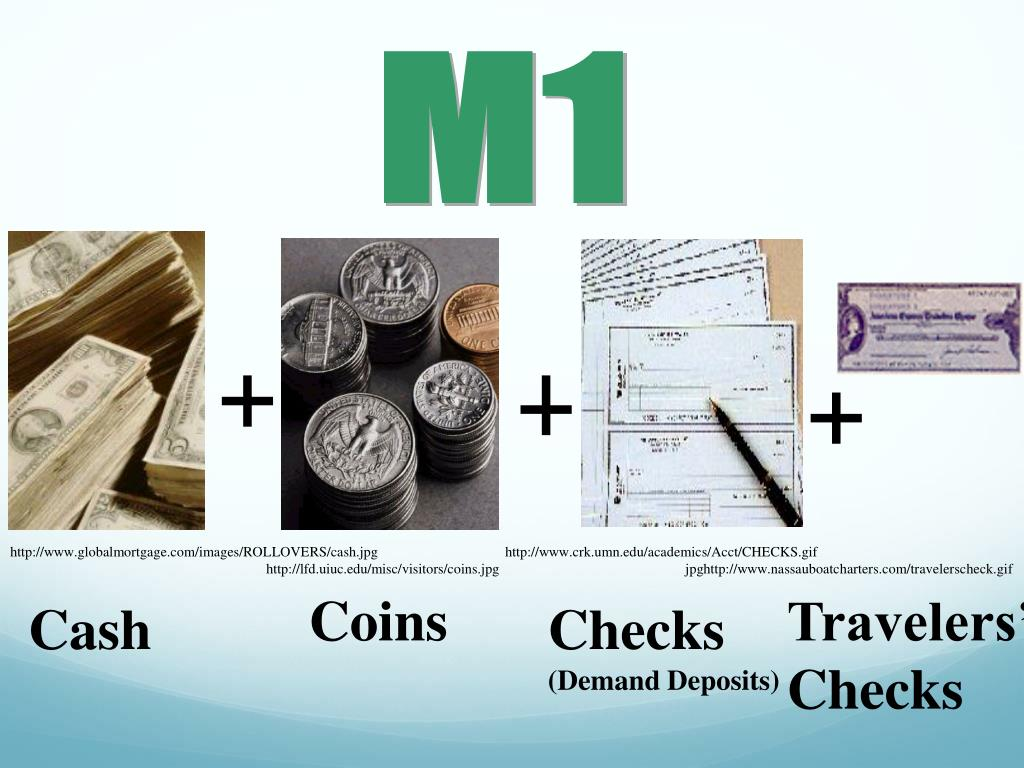
Though there are a few variations of money supply, most economists tend to focus on M1 and M2. The former takes into account cash and coins in circulation, as well as demand deposits in checking accounts and traveler’s checks. In other words, money that’s either in your hand or can be accessed very easily.

Meanwhile, M2 accounts for everything in M1 and adds savings accounts, money market funds, and certificates of deposit (CDs) below $100,000. It’s money you have access to, but it takes a little extra effort to put this capital to work. It’s M2 money supply that’s raising eyebrows on Wall Street and making history.

***

What’s of interest is what’s happened to M2 money supply over the trailing year. Following a peak of $21.7 trillion in July 2022, M2 has fallen to a fresh reading of $20.81 trillion, as of May 2023. Although the May reading was higher than April and broke a nine-month downtrend, we’ve still witnessed a 4.1% aggregate drop in M2 from its all-time high. 

Considering that M2 enjoyed a historic expansion during the pandemic, it’s certainly possible that a 4.1% decline can be shrugged off as nothing more than money supply reverting back to the mean. But history suggests otherwise.

Though history rarely repeats itself on Wall Street, it often rhymes. We haven’t seen a meaningful year-over-year decline in M2 money supply since the Great Depression in 1933.

***

And so, based on what we’re seeing from M2 money supply, commercial bank lending, and domestic banks tightening their lending standards for C&I loans, the ingredients for a U.S. recession are most definitely there. Stock losses have, historically, been most pronounced in the months that follow the official declaration of a recession by the eight-economist panel of the National Bureau of Economic Research.

However, Wall Street’s performance is largely dependent on your investment time frame. If you’re patient, these and other potentially worrisome money metrics represent nothing more than temporary white noise.

***

COMMENTS APPRECIATED

Thank You

***

***

UPDATE: IRS Interest Rates Rising, Currency Inflation and Upcoming Earning Reports, etc.

By Staff Reporters

****

IRS: The IRS sent out a notice on February 23rd, warning taxpayers about a price hike coming in the next few months. The tax agency said that interest rates will increase for the calendar quarter starting April 1st, 2022. You can accrue interest on two types of payments: over-payment or underpayment. So starting in April, over-payments will have an interest rate of 4 percent, except for corporations which will earn a 3 percent rate and a 1.5 percent rate for the portion of a corporate over-payment that exceeds $10,000. In terms of underpayments, the interest rate will increase to 4 percent overall and 6 percent for large corporate underpayments.

“Under the Internal Revenue Code, the rate of interest is determined on a quarterly basis,” the IRS website explained. The tax agency did not change interest rates in this last quarter, which began Jan. 1, 2022. Before they get changed in April, the rates are currently 3 percent for general over-payments and 2 percent for corporation over-payments, with a 0.5 percent rate for the portion of a corporate over-payment exceeding $10,000. The underpayment interest is 3 percent right now, expect for large corporations which have a 5 percent rate.

***

***

CURRENCY INFLATION: Inflation may occur when the Federal Reserve, or another central bank, adds fiat currency into circulation at a rate that exceeds that of the economy’s growth rate. That creates a situation in which there are more dollars bidding on fewer goods and services. The result is that goods and services cost more. One reason that inflation has been a constant in the US since 1933 is that the FOMC has continually increased the money supply. In response to the 2008 financial crisis, the Fed dropped its lending rate close to zero as a way to inject more liquidity into the economy, which led to increased inflation but not hyperinflation. While those increases have usually moved in step with growth, that hasn’t always been the case.

CITE: https://www.r2library.com/Resource/Title/0826102549

And so, in response to the COVID-19 pandemic and subsequent lock-downs, the Federal Reserve released the equivalent of $3.8 trillion in new liquidity in 2020. That amount was equal to roughly 20% of the dollars previously in circulation. And it is one reason why many investors were watching the CPI closely in 2021.

EARNING REPORTS:

Monday: India GDP data; Earnings from Lordstown Motors, Groupon, HP, SmileDirectClub and Zoom Video

Tuesday: US and China manufacturing data; Earnings from AutoZone, Baidu, Domino’s Pizza, Hostess Brands, J.M. Smucker, Kohl’s, Target, AMC Entertainment and Salesforce

Wednesday: European inflation data; Earnings from Abercrombie & Fitch, Dine Brands, Dollar Tree, Snowflake and Victoria’s Secret

Thursday: ISM Non-Manufacturing Index; Earnings from Best Buy, Weibo, Costco and Gap

Friday: US jobs report

10-Year: Treasuries rallied to 1.902%.

Oil: The rise in oil prices is spilling over at the gas pump: The average gas price in the US has jumped 10 cents, to $3.64/gallon, in the past two weeks.

Partial SWIFT ban: Western governments put aside their hesitations and proposed banning some Russian lenders from SWIFT, the global messaging service that facilitates cross-border transactions. It’s a move that could cause turmoil across global financial markets.

***

COMMENTS APPRECIATED

Thank You

Subscribe to the Medical Executive-Post

***

***

CURRENCY: Devaluation versus Depreciation

KNOW THE FINANCIAL DIFFERENCE

****

BY DR. DAVID E. MARCINKO MBA CPM®

INVITE: https://medicalexecutivepost.com/dr-david-marcinkos-bookings/

Competitive World 27

CMP logo

SPONSOR: http://www.CertifiedMedicalPlanner.org

Devaluation is the deliberate downward adjustment of the value of a country’s money related to another currency, group of currencies or currency standard. It is often confused with depreciation and is the opposite of revaluation which refers to the readjustment of a currency exchange rate.

CITE: https://www.r2library.com/Resource/Title/0826102549

Definition

The government of a country may decide to devalue its currency and like depreciation it is not the result of non-governmental activities.

One reason a country made devalue its currency is to combat a trade imbalance. Devaluation reduces the cost of a country’s export rendering them more competitive in the Global market which is which in turn increases the cost of imports.

If imports are more expensive domestic consumers are less likely to purchase them further strengthening domestic businesses because exports increase and imports decrease there is typically a better balance of payments because the trade deficit shrinks. In short a country that devalue its currency can produce is difficult because there is a greater demand for cheaper exports.

***

***

In accountancy, depreciation refers to two aspects of the same concept: first, the actual decrease of fair value of an asset, such as the decrease in value of factory equipment each year as it is used and wear, and second, the allocation in accounting statements of the original cost of the assets to periods in which the assets are used (depreciation with the matching principle).

Depreciation is thus the decrease in the value of assets and the method used to reallocate, or “write down” the cost of a tangible asset (such as equipment) over its useful life span. Businesses depreciate long-term assets for both accounting and tax purposes. The decrease in value of the asset affects the balance sheet of a business or entity, and the method of depreciating the asset, accounting-wise, affects the net income, and thus the income statement that they report.

CITE: https://www.r2library.com/Resource/Title/0826102549

Generally, the cost is allocated as depreciation expense among the periods in which the asset is expected to be used.

YOUR COMMENTS ARE APPRECIATED.

Thank You

***

ORDER TEXT: https://www.routledge.com/Comprehensive-Financial-Planning-Strategies-for-Doctors-and-Advisors-Best/Marcinko-Hetico/p/book/9781482240283

***