







 Support our online development, and advance our onground research initiatives in free market economics, as we seek to showcase the brightest Next-Gen minds.
THE ME-P DISCLAIMER: Posts, comments and opinions do not necessarily represent iMBA, Inc., but become our property after submission. Copyright © 2006 to-date. iMBA, Inc allows colleges, universities, medical and financial professionals and related clinics, hospitals and non-profit healthcare organizations to distribute our proprietary essays, photos, videos, audios and other documents; etc. However, please review copyright and usage information for each individual asset before submission to us, and/or placement on your publication or web site. Attestation references, citations and/or back-links are required. All other assets are property of the individual copyright holder.
Support our online development, and advance our onground research initiatives in free market economics, as we seek to showcase the brightest Next-Gen minds.
THE ME-P DISCLAIMER: Posts, comments and opinions do not necessarily represent iMBA, Inc., but become our property after submission. Copyright © 2006 to-date. iMBA, Inc allows colleges, universities, medical and financial professionals and related clinics, hospitals and non-profit healthcare organizations to distribute our proprietary essays, photos, videos, audios and other documents; etc. However, please review copyright and usage information for each individual asset before submission to us, and/or placement on your publication or web site. Attestation references, citations and/or back-links are required. All other assets are property of the individual copyright holder.


Dr. David Edward Marcinko; MBA MEd
SPONSOR: http://www.MarcinkoAssociates.com
***

***
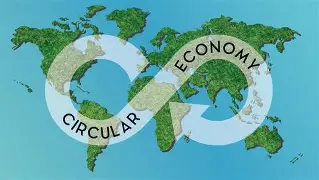
Circular financing is best understood as a financial approach designed to support a circular economy, where resources are kept in use for as long as possible, waste is minimized, and economic value is regenerated rather than depleted. At its core, circular financing aligns capital with business models that prioritize reuse, repair, remanufacturing, and recycling instead of the traditional linear pattern of “take–make–dispose.” This shift requires not only new technologies and business practices but also new ways of structuring financial flows, assessing risk, and measuring value. An 800‑word exploration of circular financing highlights why it matters, how it works, and what challenges and opportunities it presents.
What Circular Financing Means
Circular financing refers to financial mechanisms—loans, investments, insurance models, and public funding—that enable circular business models to grow and scale. Traditional financing tends to favor linear production because it is predictable: companies buy materials, produce goods, sell them once, and generate revenue. Circular models disrupt this pattern. A company might lease a product instead of selling it, take back used items for refurbishment, or design goods to be disassembled and reused. These models often require higher upfront investment, longer payback periods, and new forms of risk assessment. Circular financing adapts financial tools to these realities.
Three principles define circular financing:
- Value preservation — prioritizing investments that extend the life of materials and products.
- Regenerative capital flows — directing funds toward systems that restore natural and economic resources.
- Lifecycle-based risk assessment — evaluating financial performance across multiple use cycles rather than a single transaction.
These principles help shift the financial system from supporting short-term extraction to long-term sustainability.
Why Circular Financing Matters
The global economy faces increasing pressure from resource scarcity, climate change, and waste accumulation. Linear production models intensify these pressures by relying on constant extraction and generating large volumes of discarded material. Circular financing matters because it enables the transition to a system that reduces environmental impact while creating new economic opportunities.
Economically, circular models can unlock new revenue streams. Leasing, subscription services, and product‑as‑a‑service models generate recurring income rather than one-time sales. Refurbishment and remanufacturing reduce material costs and create secondary markets. These opportunities are attractive to investors seeking stable, long-term returns.
Environmentally, circular financing supports activities that reduce carbon emissions, conserve resources, and minimize waste. By funding repair networks, recycling infrastructure, and circular supply chains, financial institutions help build systems that are more resilient and less dependent on volatile raw material markets.
Socially, circular financing can stimulate job creation in repair, maintenance, and local manufacturing. These jobs often require specialized skills and support community-level economic development.
***
***
How Circular Financing Works in Practice
Circular financing takes many forms, each tailored to different stages of the circular economy.
- Green loans and sustainability-linked loans tie interest rates to circular performance metrics such as recycled content, product take-back rates, or waste reduction.
- Impact investment funds allocate capital to companies whose business models inherently support circularity, such as textile recycling firms or modular electronics manufacturers.
- Leasing and product‑as‑a‑service financing help companies shift from selling products to providing ongoing access. This model requires financing structures that account for asset ownership, maintenance costs, and long-term revenue.
- Public grants and incentives support early-stage innovation, infrastructure development, and pilot programs that may be too risky for private investors alone.
- Insurance models are evolving to cover refurbished goods, leased assets, and extended product lifecycles, reducing risk for both businesses and financiers.
These mechanisms work together to create a financial ecosystem that rewards durability, circular design, and resource efficiency.
Challenges in Implementing Circular Financing
Despite its promise, circular financing faces several obstacles.
- Valuation difficulties arise because circular assets often generate value over longer periods and through multiple use cycles. Traditional accounting systems do not always capture this.
- Higher upfront costs can deter investors accustomed to quick returns. Circular models may require investment in product redesign, reverse logistics, or new technology.
- Uncertain secondary markets make it difficult to predict the resale value of refurbished goods or recycled materials.
- Regulatory gaps can slow adoption, especially when waste classification laws or product standards do not support reuse and remanufacturing.
- Cultural and organizational inertia within financial institutions can limit innovation, as many lenders rely on established risk models that favor linear production.
Overcoming these challenges requires collaboration between businesses, governments, and financial institutions.
Opportunities and the Future of Circular Financing
As awareness of environmental and economic pressures grows, circular financing is becoming more mainstream. Financial institutions are developing new tools to measure circular performance, such as lifecycle assessments and circularity indicators. Digital technologies—blockchain, IoT sensors, and AI—are improving traceability and enabling more accurate valuation of circular assets.
Governments are increasingly integrating circular principles into economic policy, creating incentives for circular investment and setting standards that encourage product longevity and recyclability. Meanwhile, consumer demand for sustainable products is rising, strengthening the business case for circular models.
COMMENTS APPRECIATED
SPEAKING: Dr. Marcinko will be speaking and lecturing, signing and opining, teaching and preaching, storming and performing at many locations throughout the USA this year! His tour of witty and serious pontifications may be scheduled on a planned or ad-hoc basis; for public or private meetings and gatherings; formally, informally, or over lunch or dinner. All medical societies, financial advisory firms or Broker-Dealers are encouraged to submit an RFP for speaking engagements: CONTACT: Ann Miller RN MHA at MarcinkoAdvisors@outlook.com -OR- http://www.MarcinkoAssociates.com
Like, Refer and Subscribe
***
***
Share this:

Filed under: iMBA, Inc. | Tagged: david marcinko |


Leave a comment