VILLAGES HEALTH SYSTEM: Files Chapter 11 Bankruptcy

By A.I.

BREAKING NEWS!

***

***

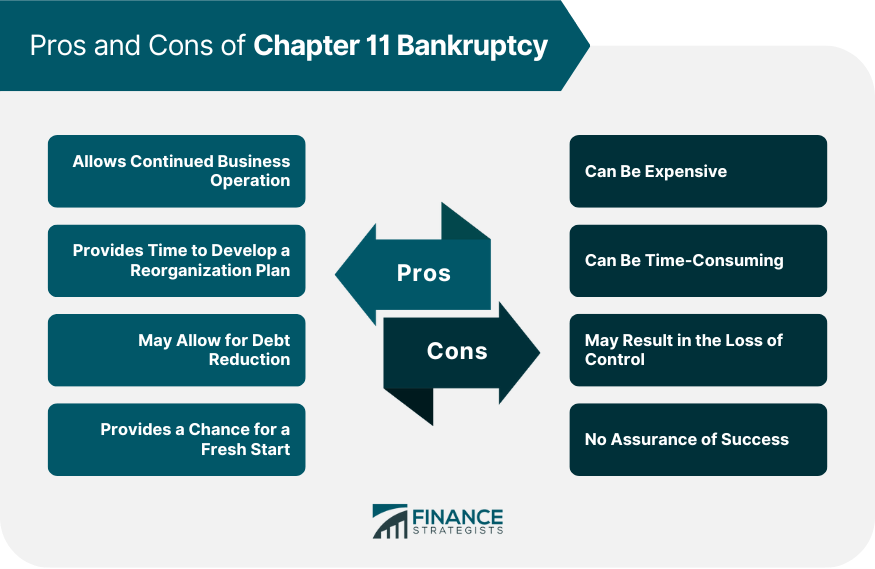
The Villages Health System, LLC, a health care provider operating in The Villages, Florida, filed for Chapter 11 bankruptcy protection on July 3rd, 2025, in the United States Bankruptcy Court for the Middle District of Florida.

“The bankruptcy petition indicates significant financial challenges, with assets estimated between $50 million and $100 million and liabilities between $100 million and $500 million. The United States of America is listed as the largest creditor with a contingent, unliquidated claim of approximately $361 million. The filing indicates that funds will be available for distribution to unsecured creditors,”

RK Consultants reported on X, the former Twitter. 

COMMENTS APPRECIATED

Like and Subscribe

***

***

OREGON BANS: Corporate Control of Physicians

By Health Capital Consultants LLC

***

***

On June 9th, 2025, Oregon’s governor signed into law the country’s strictest corporate practice of medicine (CPOM) prohibition. Senate Bill (SB) 951 will severely curtail the involvement of private equity firms and other corporations in the state’s medical practices.

This Health Capital Topics reviews the bill and discusses the implications on the healthcare industry. (Read more…)

COMMENTS APPRECIATED

Like and Subscribe

+++

***

UNHAPPY HOSPITALS: One Big Beautiful Bill Act!

SPONSOR: http://www.CertifiedMedicalPlanner.org

***

***

One Big Beautiful Bill Act (OBBBA; OBBB; BBB), or the Big Beautiful Bill, is a budget reconciliation bill in the 119th US Congress.

Hospitals are not happy with the health care provisions of the bill, which would reduce the support they receive from states to care for Medicaid enrollees and leave them with more uncompensated care costs for treating uninsured patients.

“The real-life consequences of these nearly $1 trillion in Medicaid cuts – the largest ever proposed by Congress – will result in irreparable harm to our health care system, reducing access to care for all Americans and severely undermining the ability of hospitals and health systems to care for our most vulnerable patients,” said Rick Pollack, CEO of the American Hospital Association.

The association said it is “deeply disappointed” with the bill, even though it contains a $50 billion fund to help rural hospitals contend with the Medicaid cuts, which hospitals say is not nearly enough to make up for the shortfall.

COMMENTS APPRECIATED

Like and Subscribe

***

***

“BIG BEAUTIFUL BILL”: Not So for Healthcare?

By Health Capital Consultants; LLC

***

***

On May 22, 2025, the U.S. House of Representatives moved President Trump’s budget proposal forward, sending to the Senate a budget reconciliation bill (with a one-vote margin) – the One Big Beautiful Bill Act of 2025 – that renews expiring tax cuts and enacts new ones at a cost of almost $4 trillion. These costs would largely be paid for by cuts to other programs, including to federal healthcare programs, which cuts will have significant ramifications for the healthcare industry.

This Health Capital Topics article reviews the current status of the budget bill and healthcare industry implications. (Read more…)

COMMENTS APPRECIATED

Like and Refer

***

***

FINANCIAL COACHING: For Physicians!

By Staff Reporters

SPONSOR: http://www.MarcinkoAssociates.com

***

***

DEAR COLLEAGUES

If you are just starting out managing your finances and don’t know where to begin, a financial coach may be a good option for you. They are helpful for someone who wants to become proficient in the basics of finance, from learning how to budget or save money to building an emergency fund or creating a plan for paying off debt. If you have short-term money goals, like saving for a big purchase or just practicing better money habits, a financial coach can help you reach them by working with you to create a plan and holding you accountable. Even more for physicians and most all medical professionals.

Pros and Cons of Working with a Financial Coach
A financial coach can have a positive impact on your financial well–being and your life in a number of ways:

  • Financial coaches see the bigger picture of how you relate to money. They can help you develop better habits, resulting in positive personal growth.
  • By providing education and encouragement, they can reduce financial stress, confusion, and what it is about money that overwhelms you.
  • Through accountability and support, they can help you accomplish your goals and help you feel more confident in your finances.
  • Available 24/7/365.
  • Modest fees.

At you service.
Dr. David Edward Marcinko MBA MEd CMP

CONTACT: MarcinkoAdvisors@outlook.com

LINK: https://medicalexecutivepost.com/2025/01/23/personal-coaching-dr-marcinko-at-your-service/

COMMENTS APPRECIATED

REFER AND SUBSCRIBE

***

***

DAILY UPDATE: Health Insurance Options as Bull Market Edges Upward

MEDICAL EXECUTIVE-POST TODAY’S NEWSLETTER BRIEFING

***

Essays, Opinions and Curated News in Health Economics, Investing, Business, Management and Financial Planning for Physician Entrepreneurs and their Savvy Advisors and Consultants

Serving Almost One Million Doctors, Financial Advisors and Medical Management Consultants Daily

A Partner of the Institute of Medical Business Advisors , Inc.

http://www.MedicalBusinessAdvisors.com

SPONSORED BY: Marcinko & Associates, Inc.

***

http://www.MarcinkoAssociates.com

Daily Update Provided By Staff Reporters Since 2007.
How May We Serve You?
© Copyright Institute of Medical Business Advisors, Inc. All rights reserved. 2025

REFER A COLLEAGUE: MarcinkoAdvisors@outlook.com

SPONSORSHIPS AVAILABLE: https://medicalexecutivepost.com/sponsors/

ADVERTISE ON THE ME-P: https://tinyurl.com/ytb5955z

Your Referral Count -0-

***

CITE: https://www.r2library.com/Resource

A June 11th report from global professional services firm Alvarez & Marsal (A&M) predicts that more beneficiaries might soon ditch insurance coverage for options like short-term, limited duration plans or healthcare sharing ministries (HCSMs), which aren’t regulated like health insurance and aren’t required to comply with ACA protections like covering maternity care or pre-existing conditions.

CITE: https://tinyurl.com/2h47urt5

🟢 What’s up

  • Nvidia extended its winning streak to five days, rising another 1.73% as the AI trade continues to recover.
  • EchoStar climbed 13.16% after the parent company of Dish TV disclosed that President Trump did in fact prod the FCC to make a deal.
  • Cyngn soared another 20.07% following a big day of gains after the company that makes self-driving tech for industrial vehicles announced a partnership with Nvidia.
  • Strong earnings from Nike (more on that later) propelled sporting goods stocks higher today. ON Holdings rose 1.74%, while Dick’s Sporting Goods climbed 3.59%.
  • Domestic power producers popped on reports that Trump is planning to issue an executive order increasing energy production to meet AI demand. Vistra gained 2.44%, GE Vernova climbed 2.54%, and Vertiv added 2.71%.

What’s down

  • Coinbase Global ended its winning streak, tumbling 5.77% after GENIUS Act hype propelled the crypto stock skyward all week long. Traders took profits in Circle as well, pushing the stablecoin stock down 15.54%.
  • Chinese EV maker Li Auto fell 1.93% on its weaker-than-expected deliveries forecast for the second quarter.
  • Fellow Chinese EV maker Xiaomi stunned markets with reports that it received 240,000 orders for its new SUV within 18 hours of its debut, but shares still sank 4%.
  • Pony.ai lost 6.31% on a report that Uber is considering helping its founder Travis Kalanick fund his acquisition of the US subsidiary of the Chinese autonomous vehicle company.
  • Gold miners tumbled while the price of the precious metal fell as investors took a risk-on stance. Newmont lost 4.11%, Barrick Mining fell 3.44%, and Kinross Gold shed 6.18%.
  • Today’s trade deal reopens the door for Chinese rare earth imports, bad news for US producers like MP Materials (down 8.59%) and USA Rare Earth (down 12.14%).

CITE: https://tinyurl.com/tj8smmes

Visualize: How private equity tangled banks in a web of debt, from the Financial Times.

COMMENTS APPRECIATED

PLEASE SUBSCRIBE: MarcinkoAdvisors@outlook.com

Thank You

***

***

***

***

EDUCATIONAL TEXTBOOKS: https://tinyurl.com/4zdxuuwf

***

HEALTHCARE INSURANCE: Marketplace Consumer Fraud

By AI

SPONSOR: http://www.CertifiedMedicalPlanner.org

***

***

Consumer Fraud in the Health Insurance Marketplace

Don’t be a Victim of Consumer Fraud in the Health Care Marketplace 

Beware of…

People asking for money to enroll you in Marketplace or “Obamacare” insurance. Legitimate enrollment agents will NOT ask for money.

High-pressure visits, mail solicitations, e-mails, and phone calls from people pretending to work for the government. No one should threaten you with legal action if you do not sign up for a plan. Always ask for identification if someone comes to your door.

People you did not contact who request personal information. They may be trying to steal your identity. No one from the government will call or email you to sell you an insurance plan or ask for personal identifying information. Be careful when giving out personal information, such as credit card, banking, or Social Security numbers.

Sham websites. Always look for official government seals, logos or website addresses.

Note: If you are a Medicare beneficiary, you do NOT need to buy insurance in the new Health Insurance Marketplace.

Report Marketplace Consumer Fraud: 1-800-318-2596

For more information about using the Marketplace, visit HealthCare.gov . This is the official Marketplace website.

COMMENTS APPRECIATED

Like, Refer and Subscribe

***

***

CORRELATION: Diversification in Finance and Investments

By Staff Reporters

SPONSOR: http://www.MarcinkoAssociates.com

DEFINITION

***

***

Correlation measures the relationship between two investments–the higher the correlation, the more likely they are to move in the same direction for a given set of economic or market events. Correlation, in the finance and investment industries, is a statistic that measures the degree to which two securities move in relation to each other. Correlations are used in advanced portfolio management, computed as the correlation coefficient which has a value that must fall between -1.0 and +1.0.

So if two securities are highly positively correlated, they will move in the same direction the vast majority of the time. Negatively correlated investments do the opposite–as one security rises, the other falls, and vice versa. No correlation means there is no relationship between the movement of two securities–the performance of one security has no bearing on the performance of the other.

CAUSATION: https://medicalexecutivepost.com/2024/06/05/correlation-is-not-causation/

Correlation is an important concept for portfolio diversification--combining assets with low or negative correlations can improve risk-adjusted performance over time by providing a diversity of payouts under the same financial conditions.

COMMENTS APPRECIATED

Thank You

***

***

MARCINKO ASSOCIATES: How our Second Investment Portfolio Opinions are Different?

SPONSOR: http://www.MarcinkoAssociates.com

***

***

We make second investment portfolio opinions affordable

Approximately 1 million allopathic physicians, 150,000 dentists, 200,000 osteopaths, 15,000 podiatrists and 6 million nurses often find it difficult to get an unbiased and fiduciary second opinion on their retirement or brokerage accounts. By offering second opinions for a flat fee, the monetary barriers that prevented colleagues from receiving a second opinion in the past have been removed.

We make second investment portfolio opinions convenient

Here’s how we work: you book an initial appointment with us, answer a few preliminary questions and email us your portfolio information. We then provide a second opinion. It is then up to you to incorporate or not.

INVESTMENT ADVISORY: https://medicalexecutivepost.com/2025/05/04/investment-advisory-portfolio-second-opinions-for-physician-colleagues/

We make second investment portfolio opinions timely

Financial markets, jobs and colleague age change like the weather. It is not always okay to wait a week, year or more, to seek a professional second financial portfolio opinion. You need to receive an opinion now. That’s where we come in. We are standing by, ready to take your email [MarcinkoAdvisors@outlook.com] and schedule a free initial consultation within two or three days, or less.

ASSET ALLOCATION: https://medicalexecutivepost.com/2024/10/23/musings-on-a-famous-portfolio-asset-allocation-study-3/

We make second investment portfolio opinions accurate

Fiduciary and non-sales orientated second opinions have the power to change financial lives in the long term. We’ve seen it happen many times. What characterizes a good second opinion? Three things: the opinion must be individualized to your investment portfolio[s], informed and results-oriented. That’s the informed fiduciary approach we take. We are colleagues and look forward to working with you.

PORTFOLIO MANAGEMENT: https://medicalexecutivepost.com/2025/05/27/physicians-personal-portfolio-management/

CONTACT: Ann Miller RN MHA CPHQ: Email: MarcinkoAdvisors@outlook.com

Invite Dr. Marcinko

COMMENTS APPRECIATED

EDUCATION: Books

Like and Refer

***

***

CMMI’s Evolving Strategy: Initial Indications from Recent Actions

By Health Capital Consultants, LLC

***

***

On May 13th, 2025, the CMS Center for Medicare & Medicaid Innovation (CMMI) introduced a new strategic plan for its models going forward. After ending four payment models early and canceling two not-yet-implemented models in March 2025, the agency had promised to release a new strategy. Nearly two weeks later, CMMI released that strategy, as well as a preliminary evaluation of, and changes to, one of its core payment models.

This Health Capital Topics article will review CMMI’s recent actions and what initial indications these actions provide. (Read more…) 

LTC: https://medicalexecutivepost.com/2025/06/05/cms-proposes-increasing-inpatient-long-term-care-payments-2/

COMMENTS APPRECIATED

Like and Refer

***

***

PRIVATE EQUITY: Role in Vascular Medical Care

***

***

Role of Private Equity in Vascular Care,” authored by HCC’s Todd A. Zigrang and Jessica Bailey-Wheaton, as well as Bhagwan Satiani, MD, and Hiranya A. Rajasinghe, MD, was featured in the recent issue of the Journal of Vascular Surgery – Vascular Insights published by the Society of Vascular Surgery.

 Read Here

COMMENTS APPRECIATED

Like and Refer

EDUCATION: Books

***

***

CMS Proposes Increasing Inpatient & Long Term Care Payments

By Health Capital Consultants, LLC

***

***

On April 11th, 2025, the Centers for Medicare & Medicaid Services (CMS) released its proposed rules for the payment and policy updates for the Medicare inpatient prospective payment system (IPPS) and long-term care hospital prospective payment system (LTCH PPS) for fiscal year (FY) 2026.

This Health Capital Topics article will discuss the proposed rule and the implications for stakeholders. (Read more…)

***

OAK Street: https://medicalexecutivepost.com/2025/05/16/oak-street-health-agrees-to-pay-60m-to-resolve-alleged-false-claims-act-liability-for-paying-kickbacks-to-insurance-agents-in-medicare-advantage-patient-recruitment-scheme/

COMMENTS APPRECIATED

Like and Refer

***

***

The Shift to Value-Based Care: Evidence of Progress

By Health Capital Consultants, LLC

***

***

A recent joint report by the National Association of Accountable Care Organizations (NAACOS) and Innovaccer Inc., a healthcare artificial intelligence (AI) company, found tangible evidence that the U.S. healthcare delivery system is indeed moving toward value-based care (VBC).

Fifteen years after the passage of the Patient Protection and Affordable Care Act (ACA), which promoted VBC through the advent of ACOs and other alternative payment models, there is finally evidence that providers are actually moving in that direction.

This Health Capital Topics article reviews the joint report on “The State and Science of Value-based Care 2025.” (Read more…)

***

PARADOX VBC: https://medicalexecutivepost.com/2024/10/25/paradox-value-based-care/

VBC: https://medicalexecutivepost.com/2018/12/07/the-state-of-value-based-care-vbc/

RN CAPITATION: https://medicalexecutivepost.com/2024/07/07/on-nursing-capitation-reimbursement/

COMMENTS APPRECIATED

Like and Refer

***

***

ABOUT: Marcinko Associates; Inc.

By Dr. David Edward Marcinko; MBA MEd CMP

PRACTICE MANAGEMENT AND FINANCIAL PLANNING ADVICE FOR MEDICAL PROFESSIONALS

***

***

At http://www.MarcinkoAssociates.com, we follow Fiduciary Standards for your protection:

Embrace the legal fiduciary obligation to place Medical colleague clients’ interests first

Deliver comprehensive financial planning and practice management advice for medical professionals

Provide fee-only advice; not fee-based advice

Do not accept commissions or assets under management

Be transparent on client costs, fees, and terms at all times

Provide transparency on portfolios and investment suggestions

Remain independent from any bank, broker dealer, insurance provider, RIA or custodian

Measure client performance returns using independent third parties

Do not create products to sell or price any public securities

Do not physically hold or possess any client assets, securities, or money for management

Investment and financial planning advice only!

OUR EDUCATION: Books

SPEAKING: Dr. Marcinko will be speaking and lecturing, signing and opining, teaching and preaching, storming and performing at many locations throughout the USA this year! His tour of witty and serious pontifications may be scheduled on a planned or ad-hoc basis; for public or private meetings and gatherings; formally, informally, or over lunch or dinner. All medical societies, financial advisory firms or Broker-Dealers are encouraged to submit a RFP for speaking engagements: MarcinkoAdvisors@outlook.com 

COMMENTS APPRECIATED

Read, Like, Refer and Subscribe

***

***

FINANCIAL LIFE PLANNING? For Physicians and Medical Professionals

SPONSOR: http://www.MarcinkoAssociates.com

By Dr. David Edward Marcinko; MBA MEd CMP

***

***

SPONSOR: http://www.CertifiedMedicalPlanner.org

Life planning and behavioral finance as proposed for physicians and integrated by the Institute of Medical Business Advisors Inc., is unique in that it emanates from a holistic union of personal financial planning, human physiology and medical practice management, solely for the healthcare space.  Unlike pure life planning, pure financial planning, or pure management theory, it is both a quantitative and qualitative “hard and soft” science, with an ambitious economic, psychological and managerial niche value proposition never before proposed and codified, while still representing an evolving philosophy. Its’ first-mover practitioners are called Certified Medical Planners™.

Life planning, in general, has many detractors and defenders. Formally, it has been defined by Mitch Anthony, Gene R. Lawrence, AAMS, CFP© and Roy T. Diliberto, ChFC, CFP© of the Financial Life Institute, in the following trinitarian way.

Financial Life Planning is an approach to financial planning that places the history, transitions, goals, and principles of the client at the center of the planning process.  For the financial advisor or planner, the life of the client becomes the axis around which financial planning develops and evolves.

Financial Life Planning is about coming to the right answers by asking the right questions. This involves broadening the conversation beyond investment selection and asset management to exploring life issues as they relate to money.

Financial Life Planning is a process that helps advisors move their practice from financial transaction thinking, to life transition thinking. The first step is aimed to help clients “see” the connection between their financial lives and the challenges and opportunities inherent in each life transition.

But, for informed physicians, life planning’s quasi-professional and informal approach to the largely isolate disciplines of financial planning and medical practice management is inadequate. Today’s practice environment is incredibly complex, as compressed economic stress from HMOs managed care, financial insecurity from insurance companies, ACOs and VBC, Washington DC and Wall Street; liability fears from attorneys, criminal scrutiny from government agencies, and IT mischief from malicious electronic medical record [eMR] hackers. And economic bench marking from hospital employers; lost confidence from patients; and the Patient Protection and Affordable Care Act [PP-ACA] more than a decade ago. All promote “burnout” and converge to inspire a robust new financial planning approach for physicians and most all medical professionals. 

The iMBA Inc., approach to financial planning, as championed by the Certified Medical Planner™ professional certification designation program, integrates the traditional concepts of financial life planning, with the increasing complex business concepts of medical practice management. The former topics are presented in this textbook, the later in our recent companion text: The Business of Medical Practice [Transformational Health 2.0 Skills for Doctors].

***

***

For example, views of medical practice, personal lifestyle, investing and retirement, both what they are and how they may look in the future, are rapidly changing as the retail mentality of medicine is replaced with a wholesale and governmental philosophy. Or, how views on maximizing current practice income might be more profitably sacrificed for the potential of greater wealth upon eventual practice sale and disposition. 

Or, how the ultimate fear represented by Yale University economist Robert J. Shiller, in The New Financial Order: Risk in the 21st Century, warns that the risk for choosing the wrong profession or specialty, might render physicians obsolete by technological changes, managed care systems or fiscally unsound demographics. OR, if a medical degree is even needed for future physicians?

Say, what medical license?

Dr. Shirley Svorny, chair of the economics department at California State University, Northridge, holds a PhD in economics from UCLA. She is an expert on the regulation of health care professionals who participated in health policy summits organized by Cato and the Texas Public Policy Foundation. She argues that medical licensure not only fails to protect patients from incompetent physicians, but, by raising barriers to entry, makes health care more expensive and less accessible. Institutional oversight and a sophisticated network of private accrediting and certification organizations, all motivated by the need to protect reputations and avoid legal liability, offer whatever consumer protections exist today.

Yet, the opportunity to revise the future at any age through personal re-engineering, exists for all of us, and allows a joint exploration of the meaning and purpose in life. To allow this deeper and more realistic approach, the informed transformation advisor and the doctor client, must build relationships based on trust, greater self-knowledge and true medical business management and personal financial planning acumen.

[A] The iMBA Philosophy

As you read this ME-P website, we hope you will embrace the opportunity to receive the focused and best thinking of some very smart people. Hopefully, along the way you will self-saturate with concrete information that proves valuable in your own medical practice and personal money journey. Maybe, you will even learn something that is so valuable and so powerful, that future reflection will reveal it to be of critical importance to your life.  The contributing authors certainly hope so.

At the Institute of Medical Business Advisors, and thru the Certified Medical Planner™ program, we suggest that such an epiphany can be realized only if you have extraordinary clarity regarding your personal, economic and [financial advisory or medical] practice goals, your money, and your relationship with it. Money is, after only, no more or less than what we make of it. 

Ultimately, your relationship with it, and to others, is the most important component of how well it will serve you. 

COMMENTS APPRECIATED

Read, Subscribe, Like and Refer

EDUCATION: Books

SPEAKING: Dr. Marcinko will be speaking and lecturing, signing and opining, teaching and preaching, storming and performing at many locations throughout the USA this year! His tour of witty and serious pontifications may be scheduled on a planned or ad-hoc basis; for public or private meetings and gatherings; formally, informally, or over lunch or dinner. All medical societies, financial advisory firms or Broker-Dealers are encouraged to submit a RFP for speaking engagements: CONTACT: MarcinkoAdvisors@outlook.com 

***

Physician V. Doctor V. Provider V. Prescriber V. Medical Others

HEALTHCARE DEFINITIONS

By Staff Reporters

SPONSOR: http://www.CertifiedMedicalPlanner.org

***

***

When you visit health clinic or hospital for a medical appointment, you’ll be seen by a doctor, healthcare provider and/or medical prescriber. But what do these words really mean?

***

***

Doctors / Physicians

Doctor of Medicine (MD), Doctor of Podiatric Medicine (DPM), Doctor of Osteopathy (DO, or Doctor of Dental Surgery (DDS/DMD). Doctors, also known as physicians, have extensive prescription privileges across various specialties. They can diagnose medical conditions, prescribe medication, and oversee the overall management of patient care. Doctors include general practitioners, specialists such as cardiologists or dermatologists, and surgeons. Their prescription authority encompasses a wide range of medications to address acute and chronic health conditions, ranging from antibiotics to specialized treatments for complex diseases.

MORE: https://medicalexecutivepost.com/2023/06/17/the-md-versus-do-degree/

***

***

Medical Providers

A medical provider is a general term that encompasses a wide range of education levels, skill-sets, and specializations. A provider could be a Physician Assistant (PA), Nurse Practitioner (NP), Clinical Nurse Specialist (CNS), Doctor of Medicine (MD), Doctor of Podiatric Medicine (DPM), Dentist (DDSDMD) or Doctor of Osteopathy (DO).

***

Medical Drug Prescribers

Generally, psychologists and therapists do not have prescription privileges. They focus on psychotherapy and counseling rather than medication management. However, some jurisdictions may grant limited prescription rights to psychologists who undergo additional training and certification. Like psychologists, therapists typically do not have prescription privileges. They focus on providing counseling and psychotherapy to address mental health issues and emotional concerns.

PHARMACISTS: https://medicalexecutivepost.com/2025/02/12/pharmd-doctor-of-pharmacy/

Psychiatrists are medical doctors (MD/DO) who specialize in the diagnosis and treatment of mental health disorders. They have full prescription privileges and can prescribe a wide range of medications to manage psychiatric conditions.

In most cases, physical therapists do not have the authority to prescribe medication. They primarily focus on rehabilitation and physical interventions to improve mobility and function.

MORE: https://medicalexecutivepost.com/2025/02/23/doctorate-physical-therapy/

Nurse practitioners are advanced practice nurses with the authority to diagnose, treat, and prescribe medication independently in many states and countries. They undergo extensive education and training, which allows them to provide a wide range of healthcare services, including medication management.

Similar to nurse practitioners, psychiatric nurse practitioners have the authority to prescribe medication for mental health conditions. They specialize in psychiatric and mental health care, offering comprehensive treatment that may include medication management.

Chiropractors primarily focus on diagnosing and treating musculoskeletal disorders through manual adjustments and therapies. They do not have surgical or prescription privileges in most jurisdictions.

Optometrists are trained to diagnose and treat vision problems, including prescribing corrective lenses and medications for certain eye conditions such as infections or inflammation.

Registered nurses typically do not have prescription privileges. They work under the direction of physicians and nurse practitioners, assisting with patient care but not prescribing medication themselves.

Dentists have limited prescription privileges related to dental care, such as antibiotics or pain medications for dental procedures. However, they do not have the authority to prescribe general medications outside of their scope of practice.

Nutritionists typically do not have prescription privileges. They specialize in providing dietary advice and counseling to promote health and well-being through nutrition but do not prescribe medication.

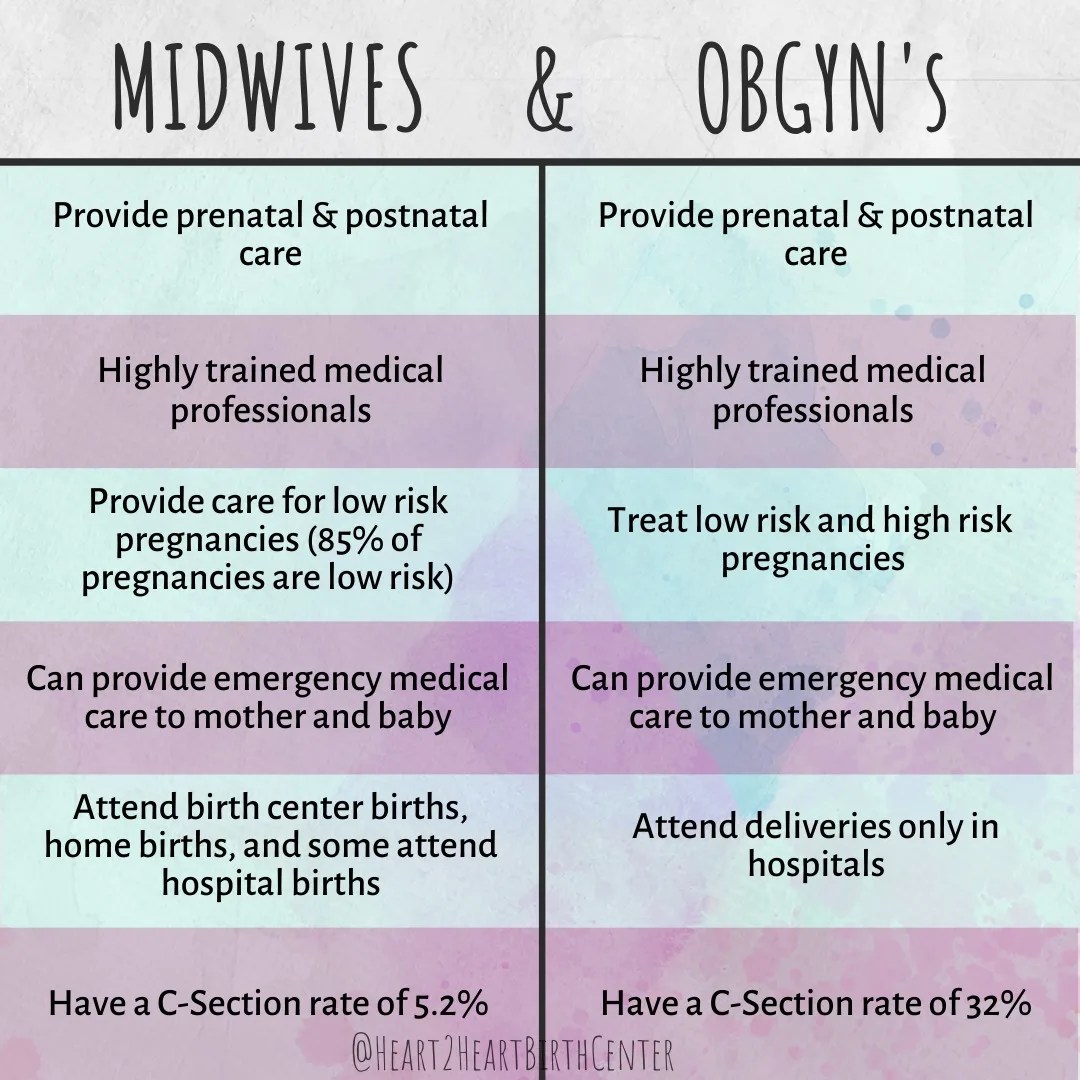
Depending on their scope of practice and legal regulations in their jurisdiction, nurse midwives may have limited prescription privileges for certain medications related to prenatal care, childbirth, and postpartum care.

MORE: http://www.HealthDictionarySeries.org

COMMENTS APPRECIATED

Like and Refer

***

***

CLEVELAND CLINIC: Controversial New Health Insurance Co-Payment Policy

By Staff Reporters

***

***

Health Insurance Co-Payments Upfront or Lose Your Appointment

Definition: A co-payment is a fixed amount you pay each time you get a particular type of healthcare service, and co-pays will generally be quite a bit smaller than deductibles. However, deductibles and co–pays are both fixed amounts, as opposed to coinsurance, which is a percentage of the claim.

***

On some health plans, certain services are covered with a co-pay before you’ve met the deductible, while other health insurance plans have co-pays only after you’ve met your deductible. And, the pre-deductible versus post-deductible co-pay rules often vary based on the type of medical service you’re receiving.

PRE-PAID PLANS: https://medicalexecutivepost.com/2025/04/17/health-insurance-pre-paid-plans/

***

Starting in June 2025, Cleveland Clinic patients who can’t pay their co-pay on the spot will have non-emergency appointments rescheduled or cancelled. This new policy could make it harder for low-income people who prefer to be billed to see a clinic doctor, and create delays that could lead to medical emergencies down the road.

For example, a delay in care can mean six to eight more weeks of a tumor growing or a blood clot developing or an infection brewing.

Source: Julie Washington, cleveland.com [5/13/25]

COMMENTS APPRECIATED

Like and Refer

***

***

OAK STREET HEALTH: Agrees to Pay $60M to Resolve Alleged False Claims Act Liability for Paying Kickbacks to Insurance Agents in Medicare Advantage Patient Recruitment Scheme

By Staff Reporters

***

***

Oak Street Health, headquartered in Chicago and a wholly-owned subsidiary of CVS Health since 2023, has agreed to pay $60 million to resolve allegations that it violated the False Claims Act by paying kickbacks to third-party insurance agents in exchange for recruiting seniors to Oak Street Health’s primary care clinics.

Part C: https://medicalexecutivepost.com/2024/05/03/eschew-medicare-advantage-part-c-plans-now/

The Anti-Kickback Statute prohibits anyone from offering or paying, directly or indirectly, any remuneration — which includes money or any other thing of value — to induce referrals of patients or to provide recommendations of items or services covered by Medicare, Medicaid and other federally funded programs. Under the Medicare Advantage (MA) Program, also known as Part C, Medicare beneficiaries have the option to obtain their health care through privately-operated insurance plans known as MA plans. Some MA Plans contract with health care providers, including Oak Street Health, to provide their plan members with primary care services.

Medicare Advantage Rates: https://medicalexecutivepost.com/2025/04/28/medicare-advantage-plan-rates-substantially-increased-for-2026/

The United States alleged that, in 2020, Oak Street Health developed a program to increase patient membership called the Client Awareness Program. Under the Program, third-party insurance agents contacted seniors eligible for or enrolled in Medicare Advantage and delivered marketing messages designed to generate interest in Oak Street Health. Agents then referred interested seniors to an Oak Street Health employee via a three-way phone call, otherwise known as a “warm transfer,” and/or an electronic submission.

In exchange, Oak Street Health paid agents typically $200 per beneficiary referred or recommended. These payments incentivized agents to base their referrals and recommendations on the financial motivations of Oak Street Health rather than the best interests of seniors. The settlement resolves allegations that, from September 2020 through December 2022, Oak Street Health knowingly submitted, and caused the submission of, false claims to Medicare arising from kickbacks to agents that violated the Anti-Kickback Statute.

US Department of Justice: https://www.justice.gov/archives/opa/pr/oak-street-health-agrees-pay-60m-resolve-alleged-false-claims-act-liability-paying-kickbacks

COMMENTS APPRECIATED

Like and Refer

***

***

SPINAL CORD: Injury Awareness Day 2025

By Staff Reporters

***

***

History of Spinal Cord Injury Awareness Day

The first mention of spinal cord injuries was in the ancient Egyptian Edwin Smith’s papyrus from 2,500 B.C. The ancient Egyptian physicians described the injury as “untreatable.”

The first treatment for spinal cord injuries occurred in ancient India, where Hindu doctors used traction techniques to straighten the spine. The Greeks also employed the same technique as the Hindus. For example, Hippocrates — born in the 5th century B.C. — developed traction devices that helped straighten patients’ spines. It wasn’t until the second century A.D. that Galen, a Greek physician, discovered the relation between spinal cord injuries and loss of autonomic function and sensation.

Paul of Aegina, born in 625 A.D., became the first physician to pioneer surgical techniques for spinal cord injuries. He employed laminectomy to relieve pressure on the spine and recommended using a windlass to reduce the dislocation. The notion and treatment remained the same until the latter half of the 20th century; physicians continued to believe that spinal cord injuries were incurable. Although during the Renaissance, Leonardo da Vinci and Andreas Vesalius, made contributions to S.C.I. through their accurate depiction of the human spine and nerves.

In 1981, the Canadians Albert Aguayo and Sam David ended the millennia-long belief that S.C.I. is incurable. Through experiments on rats, they showed that axons could regenerate in the central nervous system in the right environment. The introduction of imaging, surgery, medical care, and rehabilitation medicine in the mid-20th century helped improve the care for spinal cord injuries and increased the life expectancy of those living with the condition.

CHIROPRACTORS: https://medicalexecutivepost.com/2014/10/14/career-advice-for-those-interested-in-chiropracty/

Finally, the creation of emergency medical transport services in the 1970s contributed to these improvements in S.C.I. treatment.

COMMENTS APPRECIATED

Like and Refer

***

***

UNITEDHEALTH GROUP CEO: Quits and Suspends Annual Forecast

By Staff Reporters

BREAKING NEWS

***

***

UnitedHealth Group just announced the exit of CEO Andrew Witty and suspended its 2025 forecast due to surging medical costs, sending its shares down more than 10%. Chairman Stephen Hemsley will become CEO, effective immediately.

Medicare Advantage: https://medicalexecutivepost.com/2024/10/11/medicare-advantage-part-c-plans-face-headwinds/

The fourth-largest U.S company big revenue in 2024, Minnetonka-based UnitedHealth has experienced a turbulent year that saw the shock killing of United Healthcare CEO Brian Thompson in New York City, and a cyberattack that affecting an estimated 190 million people and cost the company an estimated $3.1 billion dollars.

UnitedHealth: https://medicalexecutivepost.com/2025/04/17/unitedhealth-stock-dives/

COMMENTS APPRECIATED

Subscribe, Like and Refer

***

***

OMADA: Digital Health Company Files for IPO

By Staff Reporters

SPONSOR: http://www.MarcinkoAssociates.com

***

***

Virtual chronic care provider Omada Health has filed to go public in the United States, the latest in a string of healthcare listings expected this year. Omada did not disclose the details as to how much it plans to raise from its IPO.

IPO: https://medicalexecutivepost.com/2025/03/02/ipo-road-show-with-pros-and-cons/

The San Francisco, California-based company, which last raised $192 million in a Series E funding round in 2022, reported a 38% increase in revenue to $169.8 million for 2024, according to its IPO paperwork. For the first quarter of 2025, the company posted a 56.6% year-on-year jump in revenue to $55 million. Omada has applied to list its common stock on the NASDAQ under the symbol “OMDA”.

Healthcare IPOs on U.S. exchanges have fetched $7.1 billion in 2024, compared with $2.8 billion a year earlier, according to data compiled by LSEG.

Invite Dr. Marcinko

COMMENTS APPRECIATED

Like and Refer

***

***

MEDICAL DEMAND: Health Care Elasticity

DEFINITION

By Staff Reporters

***

***

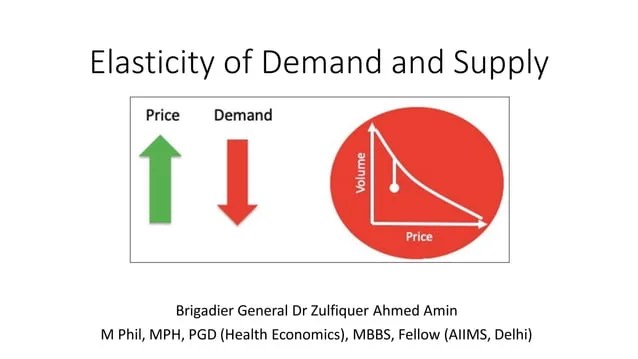
Classic: Despite a wide variety of empirical methods and data sources, the demand for health care is consistently found to be price inelastic

Modern: If you are sick, you will not be very price sensitive. There are exceptions to this rule (e.g., elective surgery such as plastic surgery, purchases of eyeglasses) but most studies find that patients are fairly insensitive to changes in health care prices.

Examples: For instance, the RAND Health Insurance Experiment found that the price elasticity of medical expenditures is -0.2.

***

The Medical Executive-Post is a  news and information aggregator and social media professional network for medical and financial service professionals. Feel free to submit education content to the site as well as links, text posts, images, opinions and videos which are then voted up or down by other members. Comments and dialog are especially welcomed. Daily posts are organized by subject. ME-P administrators moderate the activity. Moderation may also conducted by community-specific moderators who are unpaid volunteers.

Refer and Like

COMMENTS APPRECIATED

***

***

2 Fast 2 Furious: HHS Cuts on the Horizon

By Health Capital Consultants LLC

***

***

During the first 90 days of the Republican Party’s government trifecta (controlling the White House, Senate, and House of Representatives), both the Trump Administration and Congress have laid the groundwork for seismic change to the U.S. healthcare industry.

In an attempt to track the latest actions of the federal government’s legislative and executive branches affecting the healthcare industry since the first installment in our February issue, this Health Capital Topics article summarizes recent events in Washington and the impact of these changes on providers and patients. (Read more…)

COMMENTS APPRECIATED

Like and Refer

***

***

NATIONAL NURSES IN BUSINESS ASSOCIATION: Empowering Nurses Through Entrepreneurship

By Staff Reporters

***

***

The National Nurses in Business Association (NNBA) is the premier nursing organization for nurse entrepreneurs, and a springboard for nurses transitioning from employees to entrepreneurs and business owners. The NNBA is an invaluable resource for existing nurse business owners seeking to expand, and maximize their business success.

Members’ resumes include thousands of nurse owned businesses, local, national and international awards, and millions of dollars in revenue. The experience, knowledge and impact of the NNBA community is amazing, as well as the support provided to fellow nurse entrepreneurs and aspiring entrepreneurs.

As the forerunner of the nurse entrepreneur movement, the NNBA provides valuable business information customized for nurses on how to start, plan, expand and grow your nurse owned business. They provide expert guidance, marketing and promotional opportunities, and continuing education in professional growth and career development.

MORE: https://nursesbusiness.com/

COMMENTS APPRECIATED

Like and Refer

***

***

DAILY UPDATE: Meta, Eli Lilly, Microsoft, Amazon, Apple and the Roaring Markets

MEDICAL EXECUTIVE-POST TODAY’S NEWSLETTER BRIEFING

***

Essays, Opinions and Curated News in Health Economics, Investing, Business, Management and Financial Planning for Physician Entrepreneurs and their Savvy Advisors and Consultants

Serving Almost One Million Doctors, Financial Advisors and Medical Management Consultants Daily

A Partner of the Institute of Medical Business Advisors , Inc.

http://www.MedicalBusinessAdvisors.com

SPONSORED BY: Marcinko & Associates, Inc.

***

http://www.MarcinkoAssociates.com

Daily Update Provided By Staff Reporters Since 2007.
How May We Serve You?
© Copyright Institute of Medical Business Advisors, Inc. All rights reserved. 2025

REFER A COLLEAGUE: MarcinkoAdvisors@outlook.com

SPONSORSHIPS AVAILABLE: https://medicalexecutivepost.com/sponsors/

ADVERTISE ON THE ME-P: https://tinyurl.com/ytb5955z

Your Referral Count -0-

Meta Platforms jumped 4.23% after the big tech giant reported that its advertising revenue came in at $41.39 billion, beating analyst projections of $40.44 billion, thanks to higher ad price growth than expected. Daily active users rose to 3.43 billion, up from 3.35 billion last quarter, while nearly 1 billion people use its digital AI assistant every month. Management expects Q2 sales to come in between $42.5 billion and $45.5 billion, in-line with analyst forecasts of $44.03 billion.

  • EPS: $6.43 per share, crushing estimates of $5.28
  • Revenue: $42.31 billion, above the $41.10 expected

Microsoft leaped 7.63% after reporting its profit jumped a staggering 18% from a year earlier. That wasn’t the only good news: Revenue from Microsoft’s Azure cloud software grew 33% year over year, higher than the 31% expected by analysts. But perhaps the best news of all was management’s upbeat guidance—Microsoft projected revenue between $73.15 billion and $74.25 billion for the current quarter, well above expectations of $72.26 billion.

  • EPS: $3.46 per share, beating forecasts of $3.22
  • Revenue: $70.07 billion, above the $68.42 billion projected

Eli Lilly dropped 11.66% today, despite the fact that the pharmaceutical giant reported that sales skyrocketed 45% year over year thanks to its lucrative GLP-1 drugs, Zepbound and Mounjaro. Two things spooked investors today: The company lowered its profit outlook well below its preview estimate due its acquisition of a cancer drug from Scorpion Therapeutics, and CVS Health dropped Zepbound from its preferred drug list in lieu of arch-rival Novo Nordisk’s Wegovy this morning.—LB

  • EPS: $3.34 adjusted, beating the $3.02 expected
  • Revenue: $12.73 billion, compared to the $12.67 projected

CITE: https://www.r2library.com/Resource

🟢 What’s up

  • Kohls popped 7.76% after the retailer fired its brand-new CEO for unethical behavior.
  • CVS Health not only beat earnings expectations but raised its fiscal guidance, pushing shares of the pharmacy chain up 4.11%.
  • Wayfair rose 3.65% on surprisingly strong earnings for an online furniture seller that analysts were convinced would be hit hard by tariffs.
  • Roblox gained 2.91% as people checked out of reality and hit the metaverse in higher numbers than ever.
  • CoreWeave popped 7.31% thanks to key customer Microsoft’s strong capex guidance.
  • Carrier Global climbed 11.61% after the air conditioning company boosted its fiscal forecast. Turns out everyone needs AC regardless of economic uncertainty.
  • People also need straight teeth: Dental products manufacturer Align Technology rose 1.98% on solid earnings.
  • Quanta Services gained 9.99% after the construction engineering company beat Wall Street estimates on both the top and bottom line.

What’s down
  • Qualcomm may have beaten earnings expectations, but shares fell 8.92% after investors were disappointed by the chipmaker’s lower guidance.
  • GM was in the same boat: Earnings beat forecasts, but poor guidance and warnings that tariffs could cost the company up to $5 billion this year pushed shares 0.42% lower.
  • Robinhood Markets enjoyed a 50% increase in revenue last quarter as traders played the volatile market, but the stock still sank 5.07%.
  • Moderna fell 5.29% after the vaccine maker missed revenue expectations and said it’s planning another $1.5 billion in cost cuts.
  • Church & Dwight, maker of household goods like Arm & Hammer Baking Soda, missed revenue forecasts last quarter and sank 6.87%.
  • Becton Dickinson & Co. lost 18.13% after the medical device maker warned of the adverse effects of, what else, tariffs.

CITE: https://tinyurl.com/2h47urt5

Amazon plans to invest about $4 billion into its rural delivery network across the US.

Apple is in hot water after a judge ruled it violated a court order to reform the App Store.

The Department of Justice sued several big health insurers, alleging they used illegal kickbacks to nudge members into Medicare programs.

CITE: https://tinyurl.com/tj8smmes

Visualize: How private equity tangled banks in a web of debt, from the Financial Times.

COMMENTS APPRECIATED

PLEASE SUBSCRIBE: MarcinkoAdvisors@outlook.com

Thank You

***

***

***

***

EDUCATIONAL TEXTBOOKS: https://tinyurl.com/4zdxuuwf

***

HEALTHCARE LEADERSHIP ON THE BRINK: Executives Eyeing the Exits

By Health Capital Consultants LLC

***

***

While the healthcare industry has been dealing with high employee turnover since the start of the COVID-19 pandemic, that turnover was largely among clinical staff.

However, a recent survey found that significant healthcare leadership turnover may also be on the horizon. AMN Healthcare subsidiary B.E. Smith found that nearly half of healthcare executives plan to leave their organization in the next year.

This Health Capital Topics article reviews the survey and the reasons behind the intended exits. (Read more…) 

COMMENTS APPRECIATED

Like and Refer

***

***

MEDICARE ADVANTAGE PLANS: Rates Substantially Increased for 2026

By Health Capital Consultants LLC

***

***

On April 7, 2025, the Centers for Medicare & Medicaid Services (CMS) published their 2026 Rate Announcement for Medicare Advantage (MA) and Medicare Part D Prescription Drug Plans.

For 2026, the payment rate to MA plans will increase 5.06%, the largest increase in the past ten years, and up significantly from the 2.2% rate increase proposed by the Biden Administration.

This Health Capital Topics article will review the Rate Announcement. (Read more…)

COMMENTS APPRECIATED

Like and Refer

***

***

ECONOMIC COMPETITION MODELS: In Medicine and Health Care

By Staff Reporters

SPONSOR: http://www.CertifiedMedicalPlanner.org

***

***

HEALTH CARE ECONOMIC COMPETITION MODELS

In a discussion of competitive healthcare economic models, assumptions must include normal demand quantities, many fully informed patients and the fact that physicians cannot directly influence demand for medical care. These assumptions, although fluid, also preclude that patient buyers are large enough to have any influence over price and result in the following”:

  • In a “pure monopoly”, there is only one provider with a unique service. The doctor   is a “price maker” and charges whatever s/he wishes.
  • In an “oligopoly”, there are a few physicians who provide similar services. For example, when it becomes clear to Dr. Smith and Dr. Jones that neither can win their price war, oli-gopolists return prices to prior, but still inflated levels!  
  • In “monopolistic competition”, there are many providers with differentiated services. For example, should Dr. Jones decide to have evening hours, she may charge a premium for her fees if Dr. Jones doe not follow suit.
  • Finally, when “pure competition” occurs, there are many physicians, providing providing similar and substitutable services. Marketing and advertising does not affect fees, and prices are determined by supply and demand. The doctors become “price takers” by accepting fees arrived at by practicing competitively.

COMMENTS APPRECIATED

The Medical Executive-Post is a  news and information aggregator and social media professional network for medical and financial service professionals.

Feel free to submit education content to the site as well as links, text posts, images, opinions and videos which are then voted up or down by other members. Comments and dialog are especially welcomed.

Daily posts are organized by subject. ME-P administrators moderate the activity. Moderation may also conducted by community-specific moderators who are unpaid volunteers.

Like and Refer

***

***

***

AOMB: Assignment of Medical Benefits

By Staff Reporters

SPONSOR: http://www.CertifiedMedicalPlanner.org

***

 
Classic: An arrangement by which a patient requests that their health benefit payments be made directly to a designated person or facility, such as a physician or hospital. It is a legally binding agreement between patient and Insurance company asking them to send your reimbursement checks directly to your doctor.
 
Modern: To accept assignment means that the provider agrees to accept what ever the insurance company allows or approves as payment in full for the claim. The patient signs paperwork requiring his health insurance provider to pay his physician or hospital directly.
 
EXAMPLES:
 
CMS: The approved amount, also known as the Medicare-approved amount, is the fee that Medicare sets as how much a provider or supplier should be paid for a particular service or item. Original Medicare calls this “assignment.”
 
Tardiness: When a medical office accepts an assignment of benefits, the insured patients may have to wait several months for their insurance reimbursement to arrive.

 COMMENTS APPRECIATED

Refer and Like

***

***

DAILY UPDATE: UnitedHealth Group Members Appear Sicker as Stock Markets Edge Up

MEDICAL EXECUTIVE-POST TODAY’S NEWSLETTER BRIEFING

***

Essays, Opinions and Curated News in Health Economics, Investing, Business, Management and Financial Planning for Physician Entrepreneurs and their Savvy Advisors and Consultants

Serving Almost One Million Doctors, Financial Advisors and Medical Management Consultants Daily

A Partner of the Institute of Medical Business Advisors , Inc.

http://www.MedicalBusinessAdvisors.com

SPONSORED BY: Marcinko & Associates, Inc.

***

http://www.MarcinkoAssociates.com

Daily Update Provided By Staff Reporters Since 2007.
How May We Serve You?
© Copyright Institute of Medical Business Advisors, Inc. All rights reserved. 2025

REFER A COLLEAGUE: MarcinkoAdvisors@outlook.com

SPONSORSHIPS AVAILABLE: https://medicalexecutivepost.com/sponsors/

ADVERTISE ON THE ME-P: https://tinyurl.com/ytb5955z

Your Referral Count -0-

CITE: https://www.r2library.com/Resource

A recent study published in the Annals of Internal Medicine found that in 2021, UnitedHealth Group received just under $14 billion in extra Medicare Advantage payments after using a code that made its members appear sicker. It’s another tough break for the plan and provider that has faced allegations of illegally taking additional money from patients and taxpayers, especially after its CEO was fatally shot in early December.

CITE: https://tinyurl.com/2h47urt5

US stocks edged higher on Monday as investors focused on tech’s temporary reprieve from President Trump’s tariffs.

The S&P 500 (^GSPC) trimmed bigger gains to rise a healthy 0.8%. The tech-heavy NASDAQ (^IXIC) also closed off its session high, up 0.6%. The Dow Jones Industrial Average (^DJI) was up around 0.7%, or more than 300 points.

CITE: https://tinyurl.com/tj8smmes

Visualize: How private equity tangled banks in a web of debt, from the Financial Times.

COMMENTS APPRECIATED

PLEASE SUBSCRIBE: MarcinkoAdvisors@outlook.com

Thank You

***

***

***

***

EDUCATIONAL TEXTBOOKS: https://tinyurl.com/4zdxuuwf

***

MEDICAL PRACTICE: As a Financial Asset Class?

SPONSOR: http://www.MarcinkoAssociates.com

**

***

By Dr. David Edward Marcinko; MBA MEd CMP

***

What Is an Alternative Investment?

An alternative investment is a financial asset that does not fall into one of the conventional investment categories. Conventional categories include stocks, bonds, and cash. Alternative investments can include private equity or venture capital, hedge funds, managed futures, art and antiques, commodities, and derivatives contracts. Real estate is also often classified as an alternative investment.

QUESTION: But what about a medical, podiatric or dental practice?

***

***

An Alternate Asset Class Surrogate?

A medical practice is much like an alternative investment [AI], or alternate asset class in, two respects.

  • First, it provides the work environment that generates personal income which has been considered generous, to date. 
  • Second, it has inherent appreciation and sales value that can be part of an exit (retirement) or succession planning transfer strategy.

Conclusion

So, unlike the emerging thought that offers Social Security payments as a surrogate for an asset classes; or a federally insured AAA bond – a medical practice might also be considered by some folks as an asset class within a well diversified modern investment portfolio.

EDUCATION: Books

SPEAKING: Dr. Marcinko will be speaking and lecturing, signing and opining, teaching and preaching, storming and performing at many locations throughout the USA this year! His tour of witty and serious pontifications may be scheduled on a planned or ad-hoc basis; for public or private meetings and gatherings; formally, informally, or over lunch or dinner. All medical societies, financial advisory firms or Broker-Dealers are encouraged to submit a RFP for speaking engagements: MarcinkoAdvisors@outlook.com 

COMMENTS APPRECIATED

Read, Like, Refer and Subscribe

***

***

FINANCIAL MODELING TERMS: All Physicians Should Review and Know

By Staff Reporters

SPONSOR: http://www.CertifiedMedicalPlanner.org

***

***

Financial Modeling is one of the most highly valued, but thinly understood, skills in financial analysis. The objective of financial modeling is to combine accounting, finance, and business metrics to create a forecast of a company’s future results.

According to Jeff Schmidt, a financial model is simply a spreadsheet, usually built in Microsoft Excel, that forecasts a business’s financial performance into the future. The forecast is typically based on the company’s historical performance and assumptions about the future and requires preparing an income statement, balance sheet, cash flow statement, and supporting schedules (known as a three-statement model, one of many types of approaches to financial statement modeling). From there, more advanced types of models can be built such as discounted cash flow analysis (DCF model), leveraged buyout (LBO), mergers and acquisitions (M&A), and sensitivity analysis

***

DEFINED TERMS

Discounted Cash Flow (DCF): A valuation method used to estimate the value of an investment based on its expected future cash flows, adjusted for the time value of money. It’s like deciding whether a treasure chest is worth diving for now, based on the gold coins you’ll be able to cash in later.

Sensitivity Analysis: This involves changing one variable at a time to see how it affects an outcome. Imagine tweaking your coffee-to-water ratio each morning to achieve the perfect brew strength.

Budget – A budget is the amount of money a department, function, or business can spend in a given period of time. Usually, but not always, finance does this annually for the upcoming year.

Rolling ForecastA rolling forecast maintains a consistent view over a period of time (often 12 months). When one period closes, finance adds one more period to the forecast.

Topside – A topside adjustment is an overlay to a forecast. This is typically completed by the corporate or headquarter team. As individual teams submit a forecast, the consolidated result might not make sense or align with expectations. When this occurs, the high-level teams use a topside adjustment to streamline or adjust the consolidated view.

Monte Carlo Simulation: Picture yourself at the casino, but instead of gambling your savings away, you’re using this technique to predict different outcomes of your business decisions based on random variables. It’s like playing financial roulette with the odds in your favor.

What-If Analysis: Ever daydream about what would happen if you took that leap of faith with your business? This tool allows you to explore various scenarios without risking a dime. It’s like trying on outfits in a virtual dressing room before making a purchase.

Leveraged Buyout (LBO) Model: This is a bit like orchestrating a heist, but legally. It’s about acquiring a company using borrowed money, with plans to pay off the debts with the company’s own cash flows. High stakes, high rewards.

Mergers and Acquisitions (M&A) Model: Picture two puzzle pieces coming together. This model evaluates how combining companies can create a new, more valuable entity. It’s the corporate version of a matchmaker.

Three Statement Model: The holy trinity of financial modeling, linking the income statement, balance sheet, and cash flow statement. It’s like weaving a tapestry where each thread is crucial to the overall picture.

Capital Asset Pricing Model (CAPM): A formula that calculates the expected return on an investment, considering its risk compared to the market. It’s like choosing the best roller coaster in the park, balancing thrill and safety.

Cash Flow Forecasting: This is your financial weather forecast, predicting the cash flow climate of your business. It helps you plan for sunny days and save for the rainy ones.

Cost of Capital: The price of financing your business, whether through debt or equity. It’s like the interest rate on your growth engine, pushing you to maximize every dollar invested.

Debt Schedule: A timeline of your business’s debts, showing when and how much you owe. It’s your roadmap to becoming debt-free, one milestone at a time.

Equity Valuation: Determining the value of a company’s shares. It’s like assessing the worth of a rare gemstone, ensuring investors pay a fair price for a piece of the treasure.

Financial Leverage: Using debt to amplify returns on investment. It’s like using a lever to lift a heavy object, increasing force but also risk.

Forecast Model: A crystal ball for your finances, projecting future performance based on past and present data. It’s your guide through the financial wilderness, helping you navigate with confidence.

Operating Model: A detailed blueprint of how a business generates value, mapping out operational activities and their financial impact. It’s like laying out the inner workings of a clock, ensuring every gear turns smoothly.

Revenue Growth Model: This tracks potential increases in sales over time, charting a course for expansion. It’s like plotting your ascent up a mountain, anticipating the effort required to reach the summit.

COMMENTS APPRECIATED

Subscribe, Like, Refer and Learn

***

***

ACO REACH: A New Model

ACCOUNTABLE CARE ORGANIZATIONS

Realizing Equity, Access, and Community Health

By Staff Reporters

***

***

Model Overview

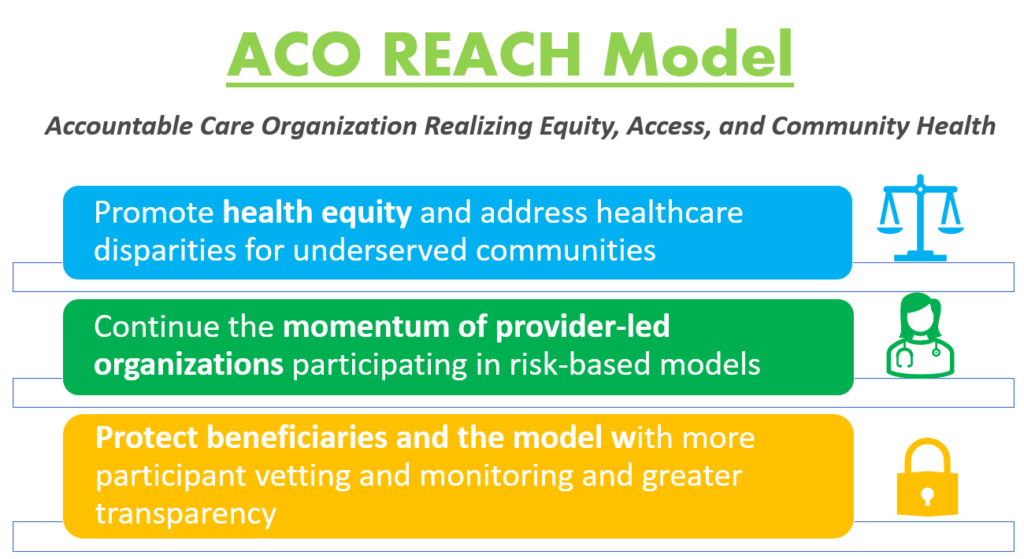
The ACO REACH Model provides novel tools and resources for health care providers to work together in an ACO to improve the quality of care for people with Traditional Medicare. REACH ACOs are comprised of different types of providers, including primary and specialty care physicians.

The ACO REACH Model makes important changes to the previous Global and Professional Direct Contracting (GPDC) Model which include:  

***

***

  1. Promote Provider Leadership and Governance. The ACO REACH Model includes policies to ensure doctors and other health care providers continue to play a primary role in accountable care. At least 75% control of each ACO’s governing body generally must be held by participating providers or their designated representatives, compared to 25% during the first two Performance Years of the GPDC Model. In addition, the ACO REACH Model goes beyond prior ACO initiatives by requiring at least two beneficiary advocates on the governing board (at least one Medicare beneficiary and at least one consumer advocate), both of whom must hold voting rights. 
     
  2. Protect Beneficiaries and the Model with More Participant Vetting, Monitoring and Greater Transparency. CMS will ask for additional information on applicants’ ownership, leadership, and governing board to gain better visibility into ownership interests and affiliations to ensure participants’ interests align with CMS’s vision. We will employ increased up-front screening of applicants, robust monitoring of participants, and greater transparency into the model’s progress during implementation, even before final evaluation results, and will share more information on the participants and their work to improve care. Last, CMS will also explore stronger protections against inappropriate coding and risk score growth. 

MORE: https://www.cms.gov/priorities/innovation/innovation-models/aco-reach

COMMENTS APPRECIATED

Refer and Subscribe

***

***

PHYSICIAN PAYMENT INCREASE: Excluded by Continuing Resolution

By Health Capital Consultants, LLC

***

Continuing Resolution Excludes Physician Payment Increase Again

On March 15th, 2025, President Donald Trump signed a continuing resolution (CR) that avoided a government shutdown and funds the federal government for the rest of the fiscal year, i.e., through September 30th, 2025.
Perhaps more notable than what was included in the spending bill was what was once again excluded. While the COVID-era tele-health waivers were temporarily extended, Medicare physician payment rates were not addressed, meaning physicians will continue experiencing a 2.93% pay cut for 2025.

This Health Capital Topics article discusses the healthcare provisions included in and excluded from the CR, and the impacts on healthcare providers. (Read more…)

COMMENTS APPRECIATED

Like, Refer, Subscribe and Refer

***

***

***

OBTAIN: An Unbiased Second Financial Planning Opinion

By Ann Miller RN MHA CPHQ CMP

***

***

Finally … Fiduciary second investing and financial planning opinions right here!

Telephonic or electronic advice for medical professionals that is:

  • Objective, affordable, medically focused and financially personalized
  • Rendered by a pre-screened financial consultant for doctors and medical professionals
  • Offered on a pay-as-you-go basis, by phone or secure e-mail transmission

The iMBA Discussion Forum™ is a physician-to-financial advisor telephone or e-mail portal that connects independent financial professionals to doctors, nurses or healthcare executives desiring affordable and unbiased financial planning advice.

Medical professionals and healthcare executives can now receive direct access to pre-screened iMBA professionals in the areas of Investing, Financial Planning, Asset Allocation, Portfolio Management, Insurance, Mortgage and Lending, Human Resources, Retirement Planning and Employee Benefits. To assist our medical professional and healthcare executive members, we can be contracted with per-minute or per-project fees, and contacted by client phone, email or secure instant messaging.

***

http://www.MARCINKOASSOCIATES.com

E-mail CONTACT: MarcinkoAdvisors@outlook.com

***

***

Thank You

MEDICARE: Four Payment Models Ended Early

By Health Capital Consultants, LLC

***

***

Four Medicare Payment Models Ended Early

In the latest iteration of Trump Administration healthcare cuts, the Centers for Medicare & Medicaid Services (CMS) announced on March 12th, 2025 that four Center for Medicare and Medicaid Innovation (CMMI) payment models would be sunset at the end of 2025, earlier than originally scheduled.

Cutting these models, which decision was based on “a comprehensive and data-driven review of [CMS’s] model portfolio,” are anticipated to save nearly $750 million (although the source of these savings was not detailed).

This Health Capital Topics article discusses the models being ended and the impact on healthcare stakeholders. (Read more…)

COMMENTS APPRECIATED

Read, Like Refer and Subscribe

***

***

***

HOSPITAL: Finances Hold Steady in 2025

By Health Capital Consultants, LLC

***

Hospital Finances Held Steady in First Month of 2025

In the first month of 2025, hospital revenue and expenses both increased, balancing each other out and resulting in continued steady financial performance for hospitals, according to Kaufman Hall’s January 2025 National Hospital Flash Report.

Revenues grew more quickly in the inpatient setting, as more patients were treated in the hospital and emergency department than in outpatient settings. While expense increases were largely driven by drug costs, the rate of that growth has significantly slowed.

This Health Capital Topics article reviews the report and the current state of hospital operations. (Read more…) 

COMMENTS APPRECIATED

Subscribe, Read, Like and Refer

***

***

***

CELEBRATE: National Physicians Week 2025

EDITOR-IN-CHIEF

By Dr. David Edward Marcinko; FACFAS MBA MEd

***

***

NATIONAL PHYSICIANS WEEK

National Physicians Week sets out March 25-31 to honor the healers dedicated to the art of medicine. In 2017, National Physicians Week highlighted the shortage of physicians in the United States against a growing landscape of minorities joining the ranks.

#NationalPhysiciansWeek

“In hindsight, I am proud of what we have accomplished in a short period of time, including raising the recognition of our group and spotlighting the years of sacrifice by those in our profession to serve our patients. We are poised to initiate actionable efforts to engage and educate our physician community.”

Cite: Dr. Kimberly Funches Jackson, President

Today in 2025, let’s explore the invaluable contributions of physicians, celebrate their hard work during National Physicians Week, and highlight the essential role that locum doctors play in enhancing healthcare delivery.

A Week to Honor All Physicians

National Physicians Week is a celebration of the remarkable work that doctors do every single day. From diagnosing complex conditions to providing life-saving treatments, physicians dedicate themselves to improving the health and well-being of their patients. It’s a week for healthcare professionals, patients, and communities to come together and show appreciation for the doctors who make a difference in our lives.

Physicians work long hours, face immense pressure, and make critical decisions daily. Their contributions go beyond the walls of the hospital, as many are also involved in research, teaching, and community outreach.

So, this week, it’s important to acknowledge not only their professional expertise but also the compassion and resilience they exhibit in their work.

EDUCATION: Books

SPEAKING: Dr. Marcinko will be speaking and lecturing, signing and opining, teaching and preaching, storming and performing at many locations throughout the USA this year! His tour of witty and serious pontifications may be scheduled on a planned or ad-hoc basis; for public or private meetings and gatherings; formally, informally, or over lunch or dinner. All medical societies, financial advisory firms or Broker-Dealers are encouraged to submit a RFP for speaking engagements: CONTACT: MarcinkoAdvisors@outlook.com 

COMMENTS APPRECIATED

Subscribe, Read, refer and Subscribe

***

***

DENTAL Care “Deserts”

By Staff Reporters

***

***

Dental care in America divides people into two camps: those who can afford regular preventive care and cleanings, and those who can’t.

These so-called dental deserts contribute to a deep disparity in overall health. People who live in these places are more likely to get tooth decay and develop severe health problems. They also spend more money on care, and more time seeking health assistance in an emergency.

***

***

Stat: 25 million. That’s how many US residents live in areas without enough dentists, according to a recent Harvard University study.

A growing movement against fluoride is adding to the risk of tooth decay in these “dental deserts.” (NPR)

COMMENTS APPRECIATED

Read, Refer, Like and Subscribe

***

***

ECONOMIC THEORY: Congestion Pricing and Charges

By Wikipedia and Staff Reporters

***

***

Congestion pricing or congestion charges is a system of surcharging users of public goods that are subject to congestion through excess demand, such as through higher peak charges for use of bus services, electricity, railways, telephones, and road pricing to reduce traffic congestion; airlines and shipping companies may be charged higher fees for slots at airports and through canals at busy times. This pricing strategy regulates demand, making it possible to manage congestion without increasing supply.

According to the economic theory behind congestion pricing, the objective of this policy is to use the price mechanism to cover the social cost of an activity where users otherwise do not pay for the negative externalities they create (such as driving in a congested area during peak demand).

By setting a price on an over-consumed product, congestion pricing encourages the redistribution of the demand in space or in time, leading to more efficient outcomes.

EDUCATION: Books

COMMENTS APPRECIATED

Refer and Subscribe

***

***

HOSTILE COMPANY TAKEOVER: Definition, Defense & Pharmaceutical Company Example

By Staff Reporters

SPONSOR: http://www.MarcinkoAssociates.com

***

SPONSOR: http://www.HealthDictionarySeries.org

**

A hostile takeover happens when an entity takes control of a company without the knowledge and against the wishes of the company’s management. A hostile takeover is an acquisition strategy requiring that the entity acquire and control more than 50% of the voting shares issued by the company.

In mergers and acquisitions (M&A), a hostile takeover is the acquisition of a target company by an acquiring company that goes directly to the target company’s shareholders, either by making a tender offer or through a proxy vote.

Ideally, an entity interested in acquiring a company should seek approval from the target company’s Board of Directors. The difference between a hostile and a friendly takeover is that, in a friendly takeover, the target company’s board of directors approve of the transaction and recommend shareholders vote in favor of the deal.

Defenses against a hostile takeover

These defense mechanisms can be preemptive or reactive, depending on how prepared the company is for the possibility of a hostile bid.

Poison pill is one of the most common defenses against a hostile takeover. Officially known as a “shareholder rights plan,” the poison pill allows existing shareholders to purchase additional shares at a discount, diluting the ownership interest of the acquiring company. The goal is to make it prohibitively expensive for the acquirer to complete the takeover.

A golden parachute is another defense strategy, which involves providing lucrative compensation packages (bonuses, severance pay, stock options, etc.) to key executives in the event they are terminated as a result of the takeover. This creates a financial disincentive for the acquiring company, as it would need to pay out these large sums upon completing the takeover.

In a Crown jewel defense, the target company sells or threatens to sell its most valuable assets—its “crown jewels”—if the takeover is completed. This reduces the attractiveness of the company to the acquirer, as the most desirable assets would no longer be part of the deal.

The Pac-Man defenses a more aggressive strategy in which the target company turns the tables by attempting to buy shares of the acquiring company, effectively launching a counter-takeover. While rare, this defense can deter hostile bids by making the takeover battle more costly and complex.

A White-Knight defense involves the target company seeking out a more favorable acquirer, or “white knight,” to make a friendly takeover bid. This allows the target company to avoid the hostile acquirer while still securing the benefits of a merger or acquisition.

EXAMPLE: Sanofi-Aventis and Genzyme Corp. Year: 2011 Deal value: $20.1 billion Industry: Pharmaceutical

The hostile takeover between Sanofi-Aventis and Genzyme Corp. occurred in 2010 when Sanofi, a French pharmaceutical company, wanted to buy Genzyme, a US biotech firm specializing in rare diseases. Genzyme resisted the offer, leading to conflict. Sanofi started a public campaign to pressure Genzyme’s shareholders into selling.

After months of negotiations, the two companies reached a deal in 2011. Sanofi agreed to pay $74 per share, with additional payments tied to Genzyme’s future performance, bringing the total deal value to around $20.1 billion. This acquisition allowed Sanofi to expand into the lucrative market for rare disease treatment.

MORE: https://www.law.cornell.edu/wex/hostile_takeover

COMMENTS APPRECIATED

Refer and Subscribe

***

***

WORKER’S COMPENSATION: Physician Insurance

By Staff Reporters

***

***

While some medical practitioners and facilities can operate without Professional Liability Insurance coverage, one business related insurance that cannot / should not be avoided is Worker’s Compensation.  Employers in all but seven states – so-called “monopolistic” states because they have their own state funds, are under statutory obligation to provide coverage for their employees.  Historically, Worker’s Compensation pre-dates Social Security entitlements and well before the emergence of employer sponsored group benefits.

The coverage under worker’s compensation provides for lost income due to on-the-job accidents or work-related disability or death and the amount of benefits vary by state.  In some instances, the coverage will reimburse the employee for medical expenses incurred with the accident. 

The four general benefits covered under Worker’s Compensation are:

Medical Care – for expenses incurred usually without limitations on amount or period of care.

Disability Income – payable for both total and partial disability and is usually based on 66 2/3 percent of their wage base.

Death Benefits – generally fall into two categories; one a flat amount for “burial” insurance; and two, survivor benefits.  Though varying by state, these benefits are similar to the disability payment (a percentage of weekly base wages) but may be capped as to total benefit, such as $50,000 or a period, such as 10 years

Rehabilitation Benefits – includes not only medical rehabilitation, but vocational rehabilitation, vocational counseling, retraining or educational benefits, and job placement

Traditionally, the secondary purpose of Worker’s Compensation was to reduce potential litigation because employees accepting the benefits from a Worker’s Compensation claim generally waived their right to sue their employer. 

***

***

However, in our litigious society, this “protective shelter” has been severely tested and is crumbling.

Employers may provide their Worker’s Compensation three ways:

  • Private commercial insurance
  • State government funds
  • Self-insurance

Very few factors drive the premium structure – the occupation of the workers is the single most important determinant of premiums.  An office worker may have premiums as low as $.10 per hundred of wages and a coal miner may exceed $50.00 per hundred of wages.  Generally speaking, however, Worker’s Compensation premiums for the medical profession or healthcare worker are among the lowest available.

Therefore, for the medical practice, some physicians may consider self-insurance because the weekly benefits are typically below $500, thus making this decision attractive. 

Alternatively, because officers and owners can elect not to be covered by Worker’s Compensation, the decision to purchase coverage from a private insurance company may afford inexpensive assurance that the benefits will be conveniently provided, and administered, by a private insurance company for their employees.

COMMENTS APPRECIATED

Read, Refer, Like and Subscribe

***

***

ABOUT State Medical Licensing Boards

A CONTROVERSY?

By Staff Reporters

***

***

DEFINITION

State medical boards are the agencies that license medical doctors, investigate complaints, discipline physicians who violate the medical practice act, and refer physicians for evaluation and rehabilitation when appropriate. The overriding mission of medical boards is to serve the public by protecting it from incompetent, unprofessional, and improperly trained physicians. Medical boards accomplish this by striving to ensure that only qualified physicians are licensed to practice medicine and that those physicians provide their patients with a high standard of care.

The right to practice medicine is a privilege granted by the state. Each state has laws and regulations that govern the practice of medicine and specify the responsibilities of the medical board in regulating that practice. These regulations are laid out in a state statute, usually called a medical practice act. State medical boards establish the standards for the profession through their interpretation and enforcement of this act.

Assembling a quality physician population to meet the needs of the public begins with licensure. During the process of evaluating applicants for medical licensure, state medical boards’ primary focus is on a physician’s qualifications, including undergraduate and graduate medical education, work history, and personal character.

Candidates for licensure also must successfully complete a rigorous examination designed to assess their ability to apply knowledge, concepts, and principles of health and disease that constitute the basis for safe and effective patient care.

The Federation of State Medical Boards of the United States, Inc., and the National Board of Medical Examiners (NBME) have collaborated to establish a single, 3-step examination for medical licensure in the United States, known as the United States Medical Licensing Examination (USMLE). The USMLE provides state medical boards with a common evaluation system for all licensure applicants. To assure the continued relevance of the exam, the NBME uses basic science and clinical faculty from the nation’s medical schools as well as practicing physicians, some of whom serve on state medical boards, to generate the examinations.

Cite: https://journalofethics.ama-assn.org/article/role-state-medical-boards/2005-04

***

***

OPINIONS

“… I am persuaded that licensure has reduced both the quantity and quality of medical practice…It has reduced the opportunities for people to become physicians, it has forced the public to pay more for less satisfactory service, and it has retarded technological development…I conclude that licensure should be eliminated as a requirement for the practice of medicine”

-Milton Friedman, Nobel prize-winning economist

“As a rule, regulation is acquired by the industry and is designed and operated primarily for its benefit”

-George J. Stigler Nobel Prize-winning economist

“Licensing has served to channel the development of health care services by granting an exclusive privilege and high status to practitioners relying on a particular approach to health care, a disease-oriented intrusive approach rather than a preventive approach….By granting a monopoly to a particular approach to health care, the licensing laws may serve to assure an ineffective health care system”

-Lori B. Andrews, Professor of Law, Chicago-Kent College

“Let us allow physicians, hospitals and schools to spring up where they’re needed, abolish the restrictive licensure laws, and simply invoke the laws against fraud to insure honesty among all providers of health care …That will make health care affordable for everyone”

-Ron Paul, MD former Texas Congressman

COMMENTS APPRECIATED

Subscribe, Refer and Like

***

***

DAILY UPDATE: Medicare TeleHealth Coverage as Wall Street Stock Markets Rise

MEDICAL EXECUTIVE-POST TODAY’S NEWSLETTER BRIEFING

***

Essays, Opinions and Curated News in Health Economics, Investing, Business, Management and Financial Planning for Physician Entrepreneurs and their Savvy Advisors and Consultants

Serving Almost One Million Doctors, Financial Advisors and Medical Management Consultants Daily

A Partner of the Institute of Medical Business Advisors , Inc.

http://www.MedicalBusinessAdvisors.com

SPONSORED BY: Marcinko & Associates, Inc.

***

http://www.MarcinkoAssociates.com

Daily Update Provided By Staff Reporters Since 2007.
How May We Serve You?
© Copyright Institute of Medical Business Advisors, Inc. All rights reserved. 2025

REFER A COLLEAGUE: MarcinkoAdvisors@outlook.com

SPONSORSHIPS AVAILABLE: https://medicalexecutivepost.com/sponsors/

ADVERTISE ON THE ME-P: https://tinyurl.com/ytb5955z

Your Referral Count -0-

CITE: https://www.r2library.com/Resource

Stocks on Wall Street shook off a weak start and closed slightly higher Friday, snapping a four-week losing streak.

CITE: https://tinyurl.com/2h47urt5

The S&P 500 edged up 0.1%. The index finished with a 0.5% gain for the week. It’s still down 4.8% so far this month. The Dow Jones Industrial Average eked out a 0.1% gain, while the NASDAQ composite rose 0.5%.

CITE: https://tinyurl.com/tj8smmes

It appears Medicare coverage for tele-health is here to stay—at least for the next six months. When the House of Representatives and Senate passed a budget on March 11t and 14th, respectively, they not only avoided a government shutdown, but also extended a resolution for Medicare to cover non-behavioral health tele-health appointments until September 30th.

Visualize: How private equity tangled banks in a web of debt, from the Financial Times.

COMMENTS APPRECIATED

PLEASE SUBSCRIBE: MarcinkoAdvisors@outlook.com

Thank You

***

***

***

***

EDUCATIONAL TEXTBOOKS: https://tinyurl.com/4zdxuuwf

***

HEALTHCARE VALUATION: Terms and Definitions

By Health Capital Consultants, LLC

***

***

The term “value” has many different meanings and definitions to different parties. Therefore, at the outset of each valuation engagement, it is critical to define appropriately (and have all parties agree to) the standard of value to be employed in developing the valuation opinion.

The standard of value defines the type of value to be determined and answers the question “value to whom?” There are several standards of value that may be sought, including: Fair Market Value (FMV), Fair Value, Investment Value, and Liquidation Value. (Read more...) 

COMMENTS APPRECIATED

Refer, Subscribe and Like

***

***

MEDICAL PRACTICE: Valuation Adjustments

NET INCOME STATEMENT AND BALANCE SHEET ADJUSTMENTS

By Dr. David Edward Marcinko; MBA MEd CMP®

***

***

SPONSOR: http://www.MarcinkoAssociates.com

Net Income Statement Adjustments

When analyzing a set of financial statements to determine practice value, adjustments (normalizations) generally are needed to produce a clearer picture of likely future income and distributable cash flow. It also allows more of an “apples to apples” line item comparison. This normalization process usually consists of making three main adjustments to a medical practice’s net income (profit and loss) statement.

1. Non-Recurring Items: Estimates of future distributable cash flow should exclude non-recurring items. Proceeds from the settlement of litigation, one-time gains/losses from the selling of assets or equipment, and large write-offs that are not expected to reoccur, each represent potential nonrecurring items. The impact of nonrecurring events should be removed from the practice’s financial statements to produce a clearer picture of likely future income and cash flow.

2. Perquisites: The buyer of a medical practice may plan to spend more or less than the current doctor-owner for physician executive compensation, travel and entertainment expenses, and other perquisites of current management. When determining future distributable cash flow, income adjustments to the current level of expenditures should be made for these items.

3. Non-cash Expenses: Depreciation expense, amortization expense, and bad debt expense are all non-cash items which impact reported profitability. When determining distributable cash flow, you must analyze the link between non-cash expenses and expected cash expenditures.

The annual depreciation expense is a proxy for likely capital expenditures over time. When capital expenditures and depreciation are not similar over time, an adjustment to expected cash flow is necessary. Some practices reduce income through the use of bad debt expense rather than direct write-offs. Bad debt expense is a non-cash expense that represents an estimate of the dollar volume of write-offs that are likely to occur during a year. If bad debt expense is understated, practice profitability will be overstated.

***

***

Balance Sheet Adjustments

Adjustments also can be made to a practice’s balance sheet to remove non-operating assets and liabilities, and to restate asset and liability value at market rates (rather than cost rates). Assets and liabilities that are unrelated to the core practice being valued should be added to or subtracted from the value, depending on whether they are acquired by the buyer.

Examples include the asset value less outstanding debt of a vacant parcel of land, and marketable securities that are not needed to operate the practice. Other non-operating assets, such as the cash surrender value of officer life insurance, generally are liquidated by the seller and are not part of the business transaction.

EDUCATION: Books

SPEAKING: Dr. Marcinko will be speaking and lecturing, signing and opining, teaching and preaching, storming and performing at many locations throughout the USA this year! His tour of witty and serious pontifications may be scheduled on a planned or ad-hoc basis; for public or private meetings and gatherings; formally, informally, or over lunch or dinner. All medical societies, financial advisory firms or Broker-Dealers are encouraged to submit a RFP for speaking engagements: CONTACT: MarcinkoAdvisors@outlook.com 

COMMENTS APPRECIATED

Subscribe, Refer and Like

***

***

PROSPECT THEORY: Physician-Client Empowerment for Financial Decision Making

BEHAVIORAL ECONOMICS

By Staff Reporters

***

***

Prospect theory is a psychological and behavioral economics theory developed by Daniel Kahneman and Amos Tversky in 1979. It explains how people make decisions when faced with alternatives involving risk, probability, and uncertainty. According to this theory, decisions are influenced by perceived losses or gains.

Example:

Amanda, a DO client, was just informed by her financial advisor that she needed to re-launch her 403-b retirement plan. Since she was leery about investing, she quietly wondered why she couldn’t DIY. Little does her FA know that she doesn’t intend to follow his advice, anyway! So, what went wrong?

The answer may be that her advisor didn’t deploy a behavioral economics framework to support her decision-making. One such framework is the “prospect theory” model that boils client decision-making into a “three step heuristic.”
 
Prospect theory makes the unspoken biases that we all have more explicit. By identifying all the background assumptions and preferences that clients [patients] bring to the office, decision-making can be crafted so that everyone [family, doctor and patient] or [FA, client and spouse] is on the same page. Briefly, the three steps are:

1. Simplify choices by focusing on the key differences between investment [treatment] options such as stock, bonds, cash, and index funds. 

2. Understanding that clients [patients] prefer greater certainty when it comes to pursuing financial [health] gains and are willing to accept uncertainty when trying to avoid a loss [illness].

3. Cognitive processes lead clients and patients to overestimate the value of their choices thanks to survivor bias, cognitive dissonance, appeals to authority and hindsight biases.

Assessment

Much like healthcare today, the current mass-customized approaches to the financial services industry falls short of recognizing more personalized advisory approaches like prospect theory and assisted client-centered investment decision-making.

 Jaan E. Sidorov MD [Harrisburg, PA]   

COMMENTS APPRECIATED

Read, Refer and Subscribe

***

***

AMAZON: Healthcare Pivot

By Health Capital Consultants, LLC

***

***

Amazon’s Healthcare Pivot

During the January 2025 J.P. Morgan Healthcare Conference, Teladoc’s executives announced the company has partnered with Amazon Health Services, joining its Health Benefits Connector program. The program was rolled out in January 2024 and connects Amazon customers with virtual care benefits covered by their insurance plan or employer; if eligible, customers are able to apply to join the program(s).

Teladoc is the fifth company to join Amazon’s Health Benefits Connector program (formerly known as Health Conditions Programs), along with digital physical therapy company Hinge Health; chronic condition management company Omada; online therapy and mental health firm Rula; and behavioral healthcare provider Talkspace. (Read more…) 

COMMENTS APPRECIATED

Refer and Subscribe

***

***

FACILITY CHARGE: Healthcare Service Fees

DEFINITION

By Staff Reporters

***

***

FACILITY CHARGE DEFINED

Classic: Service fee submitted for payment by a healthcare facility, such as a clinic, hospital or ambulatory care center.

Modern: Facility fees are expenses charged by hospitals to cover their overhead – the funding needed to keep the lights on, machines running, and doors open, etc. People who receive outpatient care at hospital-owned buildings are charged a facility fee, in addition to treatment costs and fees charged, individually, by doctors.

Examples: How to Fight Facility Fees:

  • Check with your health agent or insurer. Many insurers don’t cover facility fees or cover only a portion. 
  • Talk to your doctor. It’s hard to tell whether a facility is hospital-run or whether your doctor works for a health system.
  • Negotiate hard.

COMMENTS APPRECIATED

Refer, Like and Subscribe

***

***