MEME STOCK: Prices

By Dr. David Edward Marcinko MBA MEd

SPONSOR: http://www.MarcinkoAssociates.com

***

***

According to the Daily Beast, First Lady Melania Trump was allegedly used as “window dressing” in a multi-million-dollar memecoin scheme that deceived investors and enriched its crypto creators, according to a lawsuit filed in federal court. The suit involves the $Melania coin, which the 55-year-old First Lady promoted to her social media on the eve of President Donald Trump’s inauguration in January, writing, “The Official Melania Meme is live! You can buy $MELANIA now.” Many of Trump’s supporters purchased the coin, pushing it to trade at an all-time high price of $13.73 apiece. $Melania was trading at less than 10 cents per coin by Wednesday—a staggering crash in value. Investors in the coin filed a federal class action lawsuit in April against Benjamin Chow, co-founder of crypto exchange Meteora, and Hayden Davis, co-founder of crypto venture capital firm Kelsier Labs, among others, WIRED reported Tuesday.

***

Meme stock prices have shown dramatic volatility, with the Roundhill MEME ETF reflecting sharp swings driven by retail investor sentiment and social media hype.

The phenomenon of meme stocks—equities that gain popularity through online communities rather than traditional financial metrics—has reshaped market dynamics since early 2021. Companies like GameStop and AMC became emblematic of this trend, as retail investors coordinated on platforms like Reddit to drive prices to unprecedented highs. To capture this movement, the Roundhill Meme Stock ETF (ticker: MEME) was launched, bundling popular meme stocks into a single investment vehicle.

The price history of the MEME ETF illustrates the volatility inherent in meme stock investing. In October 2025 alone, the ETF experienced dramatic fluctuations. On October 13, it closed at $10.85, marking a 14.57% gain from the previous day. Just three days later, on October 16, it dropped to $9.97, an 8.95% decline. These swings reflect the influence of social media sentiment, short squeezes, and speculative trading rather than company fundamentals.

Over the past year, the MEME ETF has seen a 74.5% decline, underscoring the risks of investing in stocks driven by hype rather than earnings or growth potential. Despite occasional rallies, the overall trend has been downward, with the ETF trading around $8.93 as of the latest close.

This price history highlights the speculative nature of meme stocks. While they can offer short-term gains, they are highly susceptible to rapid reversals. Investors drawn to meme stocks should be aware of the emotional and social dynamics that drive their prices, and consider whether such volatility aligns with their risk tolerance and investment goals.

In essence, meme stock price history is a story of community-driven market disruption, where traditional valuation models are often sidelined in favor of viral momentum.

The MEME ETF serves as a barometer for this cultural shift, capturing both the excitement and the instability of this new investing frontier.

COMMENTS APPRECIATED

EDUCATION: Books

SPEAKING: Dr. Marcinko will be speaking and lecturing, signing and opining, teaching and preaching, storming and performing at many locations throughout the USA this year! His tour of witty and serious pontifications may be scheduled on a planned or ad-hoc basis; for public or private meetings and gatherings; formally, informally, or over lunch or dinner. All medical societies, financial advisory firms or Broker-Dealers are encouraged to submit an RFP for speaking engagements: CONTACT: Ann Miller RN MHA at MarcinkoAdvisors@outlook.com -OR- http://www.MarcinkoAssociates.com

Like, Subscribe and Refer

***

***

Understanding 4 Key Financial Psychological Biases

By Staff Reporters

SPONSOR: http://www.MarcinkoAssociates.com

***

***

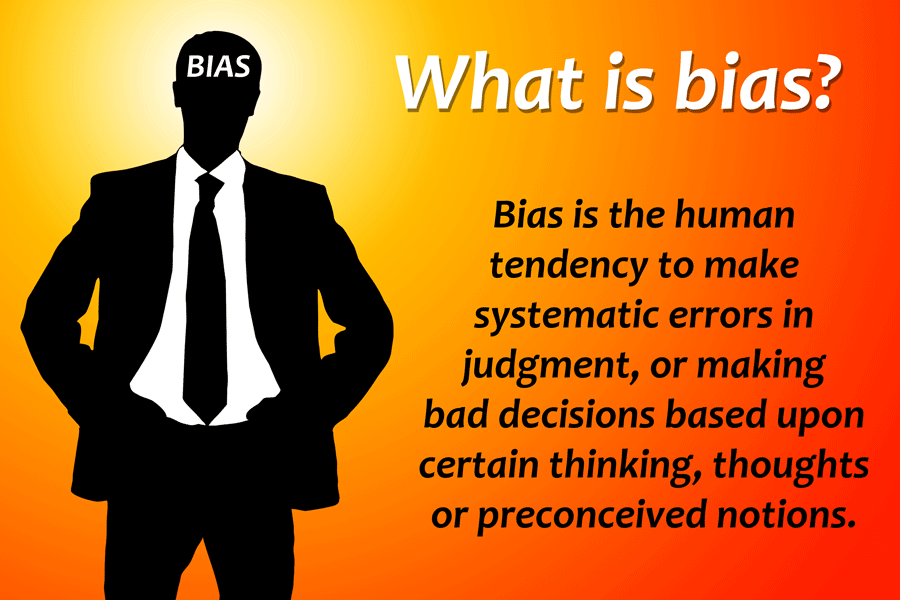
The following are 4 common financial psychological biases.  Some are learned while others are genetically determined (and often socially reinforced).  While this essay focuses on the financial and investing implications of these biases, they are prevalent in most areas in life.

STOCK MARKET: https://medicalexecutivepost.com/2024/10/13/stock-market-a-zero-sum-bias/

Loss aversion affected many investors during the stock market crash of 2007-08 or the flash crash of May 6, 2010 also known as the crash of 2:45. During the crash, many people decided they couldn’t afford to lose more and sold their investments.

Of course, this caused the investors to sell at market troughs and miss the quick, dramatic recovery.

Overconfident investing happens when we believe we can out-smart other investors via market timing or through quick, frequent trading.

Data convincingly shows that people who trade most often under-perform the market by a significant margin over time.

Mental accounting takes place when we assign different values to money depending on where we got it.

For instance, even though we may have an aggressive saving goal for the year, it is likely easier for us to save money that we worked for than money that was given to us as a gift.

Herd mentality makes it very hard for humans to not take action when everyone around us does.

For example, we may hear stories of people making significant profits buying, fixing up, and flipping homes and have the desire to get in on the action, even though we have no experience in real estate.

CITE: https://www.r2library.com/Resource/Title/0826102549

COMMENTS APPRECIATED

Thank You

***

***

CRYPTO-CURRENCY: Crisis Risks

By Staff Reporters and A.I.

SPONSOR: http://www.CertifiedMedialPlanner.org

***

***

The Looming Cryptocurrency Crisis: Risks on the Horizon

Cryptocurrency has revolutionized the financial landscape, offering decentralized alternatives to traditional banking and investment systems. However, as digital assets become more integrated into global markets, concerns about a potential future cryptocurrency crisis are mounting. From regulatory uncertainty to systemic vulnerabilities, the risks associated with crypto are increasingly being scrutinized by economists, governments, and investors.

One of the most pressing concerns is regulatory instability. Cryptocurrencies operate in a fragmented legal environment, with different countries adopting varying stances—from full embrace to outright bans. The lack of unified global regulation creates loopholes that can be exploited for money laundering, tax evasion, and fraud. If major economies suddenly impose strict regulations or sanctions, it could trigger a rapid devaluation of crypto assets and erode investor confidence.

Another risk stems from market volatility and speculative behavior. Unlike traditional assets backed by tangible value or government guarantees, cryptocurrencies are often driven by hype, social media trends, and speculative trading. This creates a fragile ecosystem where prices can swing wildly. A sudden crash—similar to the 2022 Terra/Luna collapse—could wipe out billions in investor wealth and destabilize related financial institutions.

***

***

Technological vulnerabilities also pose a threat. While blockchain is considered secure, the platforms built on it are not immune to hacks, bugs, or exploitation. High-profile breaches of exchanges and wallets have already resulted in massive losses. As crypto adoption grows, so does the incentive for cybercriminals to target these systems. A coordinated attack on a major exchange or blockchain network could have cascading effects across the entire crypto economy. Geopolitical tensions may also catalyze a crisis. For instance, recent reports suggest that aggressive trade policies—such as the U.S. imposing 100% tariffs on Chinese imports—can indirectly impact crypto markets by shaking investor sentiment and triggering sell-offs.

The interconnection with traditional finance is another area of concern. As banks and hedge funds increasingly invest in crypto, the line between decentralized finance and conventional markets blurs. This integration means that a crypto collapse could spill over into broader financial systems, potentially triggering a global crisis. The 2023 banking collapses, which were partially linked to crypto exposure, serve as a warning of how intertwined these systems have become.

Geopolitical tensions may also catalyze a crisis. For instance, recent reports suggest that aggressive trade policies—such as the U.S. imposing 100% tariffs on Chinese imports—can indirectly impact crypto markets by shaking investor sentiment and triggering sell-offs. In such scenarios, cryptocurrencies may not serve as the safe haven they were once believed to be.

Lastly, overreliance on stablecoins and algorithmic assets introduces systemic risk. Many investors use stablecoins to hedge volatility, but these assets are only as stable as their underlying reserves and governance. If a major stablecoin fails, it could lead to a liquidity crunch and panic across exchanges and DeFi platforms.

In conclusion, while cryptocurrency offers transformative potential, it also carries significant risks that could culminate in a future crisis. To mitigate these dangers, stakeholders must push for clearer regulations, stronger technological safeguards, and more transparent financial practices. Without proactive measures, the next financial meltdown may not come from Wall Street—but from the blockchain.

NOTE: A crypto mogul has been found dead inside his luxury car in Ukraine after the digital currency market nosedived. Konstantin Galich, 32, also known as Kostya Kudo, has died after one of the worst turmoils shook the cryptocurrency market. The entrepreneur, who became a well-known figure in the crypto industry, was reportedly found with a gunshot wound to his head in his black Lamborghini parked up in Kyiv’s Obolonskyi neighbourhood. His death was later confirmed on his Telegram channel in a post saying ‘Konstantin Kudo tragically passed away. The causes are being investigated. We will keep you posted on any further news.’

COMMENTS APPRECIATED

EDUCATION: Books

Like, Refer and Subscribe

***

***

ALTERNATIVE INVESTMENTS: Asset Classes Defined

By A. I. and Staff Reporters

SPONSOR: http://www.MarcinkoAssociates.com

***

***

Here is a broad menu of asset classes and alternative investments to consider:

Real Assets

  • Real Estate: Rental properties, REITs (Real Estate Investment Trusts), land, commercial buildings.
  • Commodities: Gold, silver, oil, natural gas, agricultural products.
  • Collectibles: Art, vintage cars, rare coins, wine, sports memorabilia.

Private Market Investments

  • Private Equity: Investing in private companies, often through venture capital or buyout funds.
  • Venture Capital: Early-stage investments in startups with high growth potential.
  • Angel Investing: Direct investment in startups, usually by individuals.

Intellectual Property & Royalties

  • Music Royalties: Buying rights to songs and earning income from plays or licensing.
  • Patents & Trademarks: Licensing intellectual property for recurring revenue.

Structured Products & Alternatives

  • Hedge Funds: Pooled funds using advanced strategies like short selling, derivatives, and leverage.
  • Structured Notes: Debt securities with embedded derivatives for customized risk-return profiles.
  • Options & Futures: Derivatives for speculation or hedging.

Impact & Sustainable Investing

  • ESG Funds: Focused on environmental, social, and governance criteria.
  • Green Bonds: Bonds that fund environmentally friendly projects.
  • Social Impact Funds: Investments aimed at generating positive societal outcomes.

Tangible Assets

  • Precious Metals: Physical gold, silver, platinum.
  • Farmland & Timberland: Income from agriculture or forestry.
  • Infrastructure: Toll roads, airports, energy grids—often via specialized funds.

Income-Producing Alternatives

  • Peer-to-Peer Lending: Lending money via platforms like LendingClub or Prosper.
  • Annuities: Insurance products that provide guaranteed income streams.
  • Royalties from Books or Software: Passive income from intellectual property.

COMMENTS APPRECIATED

EDUCATION: Books

Like, Refer and Subscribe

***

***

Stocks, Commodities, Japan & France

By A.I.

***

***

  • Stocks: The S&P 500 hit its seventh record close in a row today, its longest win streak since May. The NASDAQ was buoyed by big tech, while the DJIA fell.
  • Commodities: Oil climbed thanks to a decision by OPEC+ to boost crude production at a more modest rate than experts expected. Gold continued its record run, rising above $3,900 for the first time ever, while bitcoin hovered just below a new all-time high.
  • Japan and France: Japanese stocks rose after the country elected its first female prime minister, and French stocks dropped after its prime minister quit less than a month into the job.

COMMENTS APPRECIATED

EDUCATION: Books

Like, Refer and Subscribe

***

DOCTORS: Early Investing Needed for Retirement

NEW FINANCIAL STRATEGIES?

By A.I. and Dr. David Edward Marcinko; MBA MEd CMP

***

SPONSOR: http://www.CertifiedMedicalPlanner.org

***

Starting early is key to saving for retirement

Although 97% of people aren’t yet millionaires, many could eventually meet that target if they start investing sooner rather than later; especially doctors [MD, DO, DPM, DDS or DMD].

BROKE DOCTORS: https://medicalexecutivepost.com/2025/08/02/doctors-going-broke-and-living-paycheck-to-paycheck/

A 20-year-old, for instance, needs to invest just $330 a month into an asset class that delivers a 7% to 8% annual return to reach $1.26 million by the time s/he turns 65 years old. The luxury of time significantly boosts your chances of becoming a millionaire.

This doesn’t mean it’s too late for middle-aged savers to reach that millionaire milestone, but it will take a significantly greater investment. If a 50-year-old doctor hasn’t started saving for retirement, s/he would need to invest $3,958 a month at a steady 7% return to reach $1.26 million by retirement.

MONEY ADDICTION: https://medicalexecutivepost.com/2025/08/07/moiney-addicted-physicians-the-investing-and-trading-personality-of-doctors/

However, according to one Goldman Sachs report, investors could expect the S&P 500 to deliver just 3% annualized nominal returns over the next 10 years.

After an average 13% yearly return for the past decade, a new strategy outside of the stock market may be needed for that level of outsized gain, especially if you’re late to investing.

RETIREMENT VISION: https://medicalexecutivepost.com/2025/08/04/physicians-determine-your-retirement-vision/

COMMENTS APPRECIATED

EDUCATION: Books

SPEAKING: Dr. Marcinko will be speaking and lecturing, signing and opining, teaching and preaching, storming and performing at many locations throughout the USA this year! His tour of witty and serious pontifications may be scheduled on a planned or ad-hoc basis; for public or private meetings and gatherings; formally, informally, or over lunch or dinner. All medical societies, financial advisory firms or Broker-Dealers are encouraged to submit an RFP for speaking engagements: CONTACT: Ann Miller RN MHA at MarcinkoAdvisors@outlook.com -OR- http://www.MarcinkoAssociates.com

AI/HIT: https://www.amazon.com/Dictionary-Health-Information-Technology-Security/dp/0826149952/ref=sr_1_5?ie=UTF8&s=books&qid=1254413315&sr=1-5

Refer and Subscribe

***

***

Stocks, Crypto-Currency and Commodities

By A.I. and Staff Reporters

***

***

  • Stocks: Equities climbed slowly but steadily yesterday as investors braced themselves for today’s all-important jobs report.
  • Crypto: Bitcoin fell as a selloff in cryptocurrencies associated with the Trump family pulled the entire crypto market lower.
  • Commodities: Gold remains in the spotlight as traders bulk up on bullion to protect their portfolios in case the FOMC loses its independence. If that does happen, Goldman Sachs analysts think gold could climb to $5,000.

COMMENTS APPRECIATED

EDUCATION: Books

Like, Refer and Subscribe

***

***

ALTERNATE INVESTMENTS: 401[k] Accounts

By A.I. and Staff Reporters

***

***

President Trump is set to sign an executive order allowing alternative assets such as cryptocurrency, private equity investments, and real estate in 401(k) accounts. Those accounts are a veritable gold mine—Americans have stashed approximately $12.5 trillion away for retirement, and alternative asset managers have been chomping at the bit to get a piece of that pie.

WIND ENERGY: https://medicalexecutivepost.com/2012/08/20/wind-energy-alternate-investments/

According to Brew Markets, the changes have been a long time coming. All the way back in his first term, Trump ordered the Labor Department to review how to incorporate private equity investments into retirement accounts, an effort that was later reversed under President Biden. This latest move expands beyond private equity, coinciding with Trump’s push to bring crypto mainstream.

REAL ESTATE: https://medicalexecutivepost.com/2013/09/10/financial-freedom-through-commercial-real-estate-education-and-investing/

Proponents argue that alternative assets in 401(k) accounts will enhance investment diversification and could provide retirees with greater profits. Detractors note that these assets are less liquid, less transparent, and generally more risky than investing retirement funds into publicly traded stocks and bonds.

HEDGE FUNDS: https://medicalexecutivepost.com/2024/07/09/hedge-funds-understanding-fees-and-costs/

COMMENTS APPRECIATED

Like and Subscribe

***

***

DAILY UPDATE: Stocks, Commodities and Trade as Stock Markets End Mixed

MEDICAL EXECUTIVE-POST TODAY’S NEWSLETTER BRIEFING

***

Essays, Opinions and Curated News in Health Economics, Investing, Business, Management and Financial Planning for Physician Entrepreneurs and their Savvy Advisors and Consultants

Serving Almost One Million Doctors, Financial Advisors and Medical Management Consultants Daily

A Partner of the Institute of Medical Business Advisors , Inc.

http://www.MedicalBusinessAdvisors.com

SPONSORED BY: Marcinko & Associates, Inc.

***

http://www.MarcinkoAssociates.com

Daily Update Provided By Staff Reporters Since 2007.
How May We Serve You?
© Copyright Institute of Medical Business Advisors, Inc. All rights reserved. 2025

REFER A COLLEAGUE: MarcinkoAdvisors@outlook.com

SPONSORSHIPS AVAILABLE: https://medicalexecutivepost.com/sponsors/

ADVERTISE ON THE ME-P: https://tinyurl.com/ytb5955z

Your Referral Count -0-

CITE: https://www.r2library.com/Resource

  • Stocks: Investors cheered the news of an EU & US trade deal over the weekend, pushing the S&P 500 above 6,400 for the first time ever. But the index gave up most of its gains late in the day as attention turned to a huge week of data ahead (more on that in a minute).
  • Trade: Today was the first day of discussions between US and Chinese negotiators in Stockholm to keep the trade war truce alive. Elsewhere, President Trump foresees a baseline 15% to 20% tariff rate for the rest of the world.
  • Commodities: Gold fell as trade deal hopes heightened investors’ risk appetite, while oil spiked higher after Trump gave Russia a 10- to 12-day deadline to sign a truce with Ukraine.

CITE: https://tinyurl.com/2h47urt5

According to Bloomberg, 83% of the S&P 500 companies that have reported earnings have outpaced Wall Street’s estimates, putting the index on pace for its best season of beats since the second quarter of 2021.

CITE: https://tinyurl.com/tj8smmes

Visualize: How private equity tangled banks in a web of debt, from the Financial Times.

COMMENTS APPRECIATED

PLEASE SUBSCRIBE: MarcinkoAdvisors@outlook.com

Thank You

***

***

***

***

EDUCATIONAL TEXTBOOKS: https://tinyurl.com/4zdxuuwf

***

Commodities, Stocks and Bonds

By A.I.

SPONSOR: http://www.CertifiedMedicalPlanner.org

***

***

  • Stocks: Investors were pleased to hear about the trade deal with Japan yesterday and reports of an agreement with the EU coming soon kept the stock rally alive through market close. The S&P 500 notched its 12th new closing record this year, and the NASDAQ ended the day above 21,000 for the first time.
  • Bonds: Treasury yields rose a bit after an auction of 20-year notes was met with strong demand, indicating investor appetite for longer-term US debt.
  • Commodities: Oil inched higher while gold edged lower as investors hedge their bets in anticipation of more trade deals before the August 1st deadline.

COMMENTS APPRECIATED

Like and Subscribe

***

***

Stocks, the FOMC and Trade Deals

SPONSOR: http://www.CertifiedMedicalPlanner.org

By A.I.

***

***

  • Stocks: The multi-day rally wavered this afternoon as investors turned their attention to big tech earnings tomorrow. The S&P 500 closed at a record high, while the NASDAQ finally broke its hot streak.
  • FOMC: Treasury Secretary Scott Bessent sees no reason for Jerome Powell to step down, while President Trump tempered his outrage against the Fed chair. Instead, well-known economist Mohamed El-Erian took up the gauntlet.
  • Trade: Bessent said China may get an extension to make a true trade deal, while promising a “rash of trade deals” in the coming days. Speaking of, Trump declared the US has made a deal with the Philippines capping import levies at 19%.

COMMENTS APPRECIATED

Like and Refer

***

***

Stocks, Trade and the FOMC

By A.I.

***

***

Stocks: Markets lost steam late in the trading session yesterday as investors awaited more earnings announcements, with the DJIA tumbling into the red. But the S&P 500 managed to end the day above 6,300 for the first time ever, while the NASDAQ enjoyed its sixth consecutive record close

FOMC: Over the weekend, President Trump disputed reports that Treasury Secretary Scott Bessent talked him out of firing Jerome Powell. Meanwhile, Bessent said that the entire Federal Reserve should be put under review.

Trade: Commerce Secretary Howard Lutnick reiterated that August 1st will be the “hard deadline” for countries to make a deal with the US. Both negotiations and tensions with the EU are ramping up as Trump threatens to slap the bloc with 30% levies.

COMMENTS APPRECIATED

Like and Subscribe

***

***

COMMODITIES and STOCKS

By A.I.

SPONSOR: http://www.CertifiedMedicalPlanner.org

***

***

Stocks: Markets started the day on a high note thanks to a fifth straight decline in weekly initial jobless claims and surprisingly strong monthly retail sales. The NASDAQ hit its 10th record closing high of 2025 and the S&P 500 hit its ninth high.

Commodities: Lithium prices popped around the globe after the Chinese government ordered domestic producer Zangge Mining to halt operations. Plus, the US is reportedly set to impose 93.5% tariffs on Chinese imports of graphite, a key component.

COMMENTS APPRECIATED

Like and Subscribe

***

***

Stocks, Crypto & Stock Markets

SPONSOR: http://www.CertifiedMedicalPlanner.org

By A.I.

***

***

  • The Fed Drama: A White House official said President Trump will likely fire Jerome Powell soon. Stocks sank at the thought of the Fed head being shown the door, offsetting the pleasant surprise of a flat wholesale inflation reading.
  • Markets: Stocks managed to recoup their losses after Trump said it’s “highly unlikely” that he will fire Powell, but bonds remained shaken.
  • Crypto: Bitcoin bounced higher after the crypto bills currently under consideration in the House of Representatives cleared a key hurdle.

COMMENTS APPRECIATED

Like and Subscribe

***

***

Stocks and Commodities

By A.I.

***

***

  • Stocks: Markets shrugged off President Trump’s weekend threat of 30% levies against the EU and Mexico, as well as his proposed 100% secondary tariffs against Russia today. Stocks eked out a win across the board, with the NASDAQ climbing to a new record close.
  • Commodities: Oil prices fell while gold took a breather, but the big winner was orange juice futures, which hit a four-month high thanks to Trump’s promise of 50% tariffs on all imports from Brazil. Coffee prices also climbed.

COMMENTS APPRECIATED

Like and Subscribe

***

***

What is a “Market-Neutral” Fund?

Market Neutral Funds Demystified

[A Special Report]

By Dimitri Sogoloff MD MBA & Dr. David E. Marcinko MBA MEd CMP

***

Introduction

SPONSOR: https://marcinkoassociates.com/

It’s hard to believe that just 30 years ago, physician investors had only two primary asset classes from which to choose: U.S. equities and U.S. bonds.

Today, the marketplace offers a daunting array of investment choices. Rapid market globalization, technology advancements and investor sophistication have spawned a host of new asset classes, from the mundane to the mysterious.

Even neophyte medical investors can now buy and sell international equities, emerging market debt, mortgage securities, commodities, derivatives, indexes and currencies, offering infinitely more opportunities to make, or lose, money.

Amidst this ongoing proliferation, a unique asset class has emerged, one that is complex, non-traditional and not easily understood like stocks or bonds. It does, however, offer one invaluable advantage; its returns are virtually uncorrelated with any other asset class. When this asset class is introduced into a traditional investment portfolio, a wonderful thing occurs; the risk-return profile of the overall portfolio improves dramatically.

This asset class is known as a Market-Neutral strategy. The reason few medical professionals have heard of market neutral strategies is that most of them are offered by private investment partnerships otherwise known as hedge funds.

To the uninitiated, “hedge fund” means risky, volatile or speculative. With a market-neutral strategy however, just the opposite is true. Funds utilizing market-neutral strategies typically emphasize the disciplined use of investment and risk control processes. As a result, they have consistently generated returns that display both low volatility and a low correlation with traditional equity or fixed income markets. 

Definition of Market-Neutral

All market-neutral funds share a common objective: to achieve positive returns regardless of market direction. Of course, they are not without risk; these funds can and do lose money. But a key to their performance is that it is independent of the behavior of the markets at large, and this feature can add tremendous value to the rest of a portfolio.

A typical market-neutral strategy focuses on the spread relationship between related securities, which is what makes them virtually independent of underlying debt or equity markets. When two related securities are mispriced in relation to one another, the disparity will eventually disappear as the result of some external event. This event is called convergence and may take the form of a bond maturity, completion of a merger, option exercise, or simply a market recognizing the inefficiency and eliminating it through supply and demand.

Here’s how it might work

When two companies announce a merger, there is an intended future convergence, when the shares of both companies will converge and become one. At the time of the announcement, there is typically a trading spread between two shares. A shrewd trader, seeing the probability of the successful merger, will simultaneously buy the relatively cheaper share and sell short the relatively more expensive share, thus locking in the future gain.

Another example of convergence would be the relationship between a convertible bond and its underlying stock. At the time of convergence, such as bond maturity, the two securities will be at parity. However, the market forces of supply and demand make the bond underpriced relative to the underlying stock. This mispricing will disappear upon convergence, so simultaneously buying the convertible bond and selling short an equivalent amount of underlying stock, locks in the relative spread between the two.  

Yet another example would be two bonds of the same company – one junior and one senior. For various reasons, the senior bond may become cheaper relative to the junior bond and thus display a temporary inefficiency that would disappear once arbitrageurs bought the cheaper bond and sold the more expensive bond.

While these examples involve different types of securities, scenarios and market factors, they are all examples of a market-neutral strategy. Locking a spread between two related securities and waiting for the convergence to take place is a great way to make money without ever taking a view on the direction of the market.

How large are these spreads, you may ask? Typically, they are tiny. The markets are not quite fully efficient, but they are efficient enough to not allow large price discrepancies to occur.

In order to make a meaningful profit, a market-neutral fund manager needs sophisticated technology to help identify opportunities, the agility to rapidly seize those opportunities, and have adequate financing resources to conduct hundreds of transactions annually.  

Brief Description of Strategies

SPONSOR: http://www.CertifiedMedicalPlanner.org

The universe of market-neutral strategies is vast, spanning virtually every asset class, country and market sector. The spectrum varies in risk from highly volatile to ultra conservative. Some market-neutral strategies are more volatile than risky low-cap equity strategies, while others offer better stability than U.S Treasuries.

One unifying factor across this vast ocean of seemingly disparate strategies is that they all attempt to take advantage of a relative mispricing between various securities, and all offer a high degree of “market neutrality,” that is, a low correlation with underlying markets.

[A] Convertible Arbitrage

Convertible arbitrage is the oldest market-neutral strategy. Designed to capitalize on the relative mispricing between a convertible security (e.g. convertible bond or preferred stock) and the underlying equity, convertible arbitrage was employed as early as the 1950s.

Since then, convertible arbitrage has evolved into a sophisticated, model-intensive strategy, designed to capture the difference between the income earned by a convertible security (which is held long) and the dividend of the underlying stock (which is sold short). The resulting net positive income of the hedged position is independent of any market fluctuations. The trick is to assemble a portfolio wherein the long and short positions, responding to equity fluctuations, interest rate shifts, credit spreads and other market events offset each other.  

A convertible arbitrage strategy involves taking long positions in convertible securities and hedging those positions by selling short the underlying common stock. A manager will, in an effort to capitalize on relative pricing inefficiencies, purchase long positions in convertible securities, generally convertible bonds, convertible preferred stock or warrants, and hedge a portion of the equity risk by selling short the underlying common stock. Timing may be linked to a specific event relative to the underlying company, or a belief that a relative mispricing exists between the corresponding securities.

Convertible securities and warrants are priced as a function of the price of the underlying stock, expected future volatility of returns, risk free interest rates, call provisions, supply and demand for specific issues and, in the case of convertible bonds, the issue-specific corporate/Treasury yield spread.

Thus, there is ample room for relative misvaluations. Because a large part of this strategy’s gain is generated by cash flow, it is a relatively low-risk strategy. 

[B] Fixed-Income Arbitrage

Fixed-income arbitrage managers seek to exploit pricing inefficiencies across global markets.

Examples of these anomalies would be arbitrage between similar bonds of the same company, pricing inefficiencies of asset-backed securities and yield curve arbitrage (price differentials between government bonds of different maturities). Because the prices of fixed-income instruments are based on interest rates, expected cash flows, credit spreads, and related factors, fixed-income arbitrageurs use sophisticated quantitative models to identify pricing discrepancies.

Similarly to convertible arbitrageurs, fixed-income arbitrageurs rely on investors less sophisticated than themselves to misprice a complex security.

[C] Equity Market-Neutral Arbitrage

This strategy attempts to offset equity risk by holding long and short equity positions. Ideally, these positions are related to each other, as in holding a basket of S&P500 stocks and selling S&P500 futures against the basket. If the manager, presumably through stock-picking skill, is able to assemble a basket cheaper than the index, a market-neutral gain will be realized.

A related strategy is identifying a closed-end mutual fund trading at a significant discount to its net asset value. Purchasing shares of the fund gains access to a portfolio of securities valued significantly higher. In order to capture this mispricing, one needs only to sell short every holding in the fund’s portfolio and then force (by means of a proxy fight, perhaps) conversion of the fund from a closed-end to an open-end (creating convergence).

Sounds easy, right?

In considering equity market-neutral, you must be careful to differentiate between true market-neutral strategies (where long and short positions are related) and the recently popular long/short equity strategies.

In a long/short strategy, the manager is essentially a stock-picker, hopefully purchasing stocks expected to go up, and selling short stocks expected to depreciate. While the dollar value of long and short positions may be equivalent, there is often little relationship between the two, and the risk of both bets going the wrong way is always present.

[D] Merger Arbitrage (a.k.a. Risk Arbitrage)

Merger arbitrage, while a subset of a larger strategy called event-driven arbitrage, represents a sufficient portion of the market-neutral universe to warrant separate discussion.

Merger arbitrage earned a bad reputation in the 1980s when Ivan Boesky and others like him came to regard insider trading as a valid investment strategy. That notwithstanding, merger arbitrage is a respected stratagey, and when executed properly, can be highly profitable. It bets on the outcomes of mergers, takeovers and other corporate events involving two stocks which may become one.

A textbook example was the acquisition of SDL Inc (SDLI), by JDS Uniphase Corp (JDSU). On July 10, 2000 JDSU announced its intent to acquire SDLI by offering to exchange 3.8 shares of its own shares for one share of SDLI.

At that time, the JDSU shares traded at $101 and SDLI at $320.5. It was apparent that there was almost 20 percent profit to be realized if the deal went through (3.8 JDSU shares at $101 are worth $383 while SDLI was worth just $320.5). This apparent mispricing reflected the market’s expectation about the deal’s outcome. Since the deal was subject to the approval of the U.S. Justice Department and shareholders, there was some doubt about its successful completion. Risk arbitrageurs who did their homework and properly estimated the probability of success bought shares of SDLI and simultaneously sold short shares of JDSU on a 3.8 to 1 ratio, thus locking in the future profit.

Convergence took place about eight months later, in February 2001, when the deal was finally approved and the two stocks began trading at exact parity, eliminating the mispricing and allowing arbitrageurs to realize a profit. 

Merger Arbitrage, also known as risk arbitrage, involves investing in securities of companies that are the subject of some form of extraordinary corporate transaction, including acquisition or merger proposals, exchange offers, cash tender offers and leveraged buy-outs. These transactions will generally involve the exchange of securities for cash, other securities or a combination of cash and other securities.

Typically, a manager purchases the stock of a company being acquired or merging with another company, and sells short the stock of the acquiring company. A manager engaged in merger arbitrage transactions will derive profit (or loss) by realizing the price differential between the price of the securities purchased and the value ultimately realized when the deal is consummated. The success of this strategy usually is dependent upon the proposed merger, tender offer or exchange offer being consummated.  

When a tender or exchange offer or a proposal for a merger is publicly announced, the offer price or the value of the securities of the acquiring company to be received is typically greater than the current market price of the securities of the target company.

Normally, the stock of an acquisition target appreciates while the acquiring company’s stock decreases in value. If a manager determines that it is probable that the transaction will be consummated, it may purchase shares of the target company and in most instances, sell short the stock of the acquiring company. Managers may employ the use of equity options as a low-risk alternative to the outright purchase or sale of common stock. Many managers will hedge against market risk by purchasing S&P put options or put option spreads. 

[E] Event-Driven Arbitrage

Funds often use event-driven arbitrage to augment their primary market-neutral strategy. Generally, any convergence which is produced by a future corporate event would fall into this category.

Accordingly, Event-Driven investment strategies or “corporate life cycle investing” involves investments in opportunities created by significant transactional events, such as spin-offs, mergers and acquisitions, liquidations, reorganizations, bankruptcies, recapitalizations and share buybacks and other extraordinary corporate transactions.

Event-Driven strategies involve attempting to predict the outcome of a particular transaction as well as the optimal time at which to commit capital to it. The uncertainty about the outcome of these events creates investment opportunities for managers who can correctly anticipate their outcomes.

As such, Event-Driven trading embraces merger arbitrage, distressed securities and special situations investing. Event-Driven managers do not generally rely on market direction for results; however, major market declines, which would cause transactions to be repriced or break, may have a negative impact on the strategy. 

Event-driven strategies are research-intensive, requiring a manager to do extensive fundamental research to assess the probability of a certain corporate event, and in some cases, to take an active role in determining the event’s outcome. 

Risk and Reward Characteristics

To help understand market-neutral performance and risk, let’s take a look at the distribution of returns of individual strategies and compare it to that of traditional asset classes.

 Table 1:  Average Return / Volatility of Market Neutral Strategies And Selected Traditional Asset Classes 


Strategy Average Return Annualized Volatility
Convertible Arbitrage 11.95% 3.57%
Fixed Income Arbitrage 8.33% 4.90%
Equity Market-Neutral 11.62% 4.95%
Merger Arbitrage 13.29% 3.51%
Relative Value Arbitrage 15.69% 4.31%
   Traditional Asset Classes:    
S&P 500 12.62% 13.72%
MSCI World 8.57% 13.05%
High Grade U.S. Corp. Bonds 7.26% 3.73%
World Government Bonds 5.91% 5.96%

The most important observation about this chart is that the Market Neutral funds exhibits considerably lower risk than most traditional asset classes.

While market-neutral strategies vary greatly and involve all types of securities, the risk-adjusted returns are amazingly stable across all strategies. The annualized volatility – a standard measure of performance risk – varies between 3.5 and 5 percent, comparable to a conservative fixed-income strategy.     

Another interesting statistics is the correlation between Market Neutral strategies and traditional asset classes and traditional asset classes

Table 2: Correlation between Market Neutral Strategies and Traditional Asset Classes


Asset Class/Strategy S&P500 MSCI World GovBonds CorpBonds

The correlation of all market neutral strategies to traditional assets is quite low, or negative in some cases. This suggests that these strategies would indeed play a useful role in the ultimate goal of efficient portfolio diversification.

To test the “market neutrality” of these strategies, we asked, “How well, on average, did these strategies perform during bad, as well as good, market months?”

It turns out, in good times and bad, these strategies displayed consistent solid performance. From 12/31/91, in months when S&P 500 was down, the average down month was 3.03 percent. Market Neutral strategies performed as follows:


Strategy Average Monthly Return
Convertible Arbitrage + 0.65%
Fixed Income Arbitrage + 0.50%
Equity Market-Neutral + 1.19%
Merger Arbitrage + 0.88%
Relative Value Arbitrage + 0.81%

In months when S&P 500 was up, the average up month was +3.24 percent.  Market Neutral strategies performed as follows:


Strategy Average Monthly Return
Convertible Arbitrage +1.17%
Fixed Income Arbitrage +1.20%
Equity Market-Neutral +1.37%
Merger Arbitrage +0.60%
Relative Value Arbitrage +1.25%

Clearly, a compelling picture emerges. While these strategies, on average, underperform during good times, they show a positive average return during both good and bad markets.

Inclusion of Market-Neutral in a Long-term Investment Portfolio

A critical concern for any medical investor considering a foray into a new asset class is how it will alter the long-term risk/reward profile of the overall portfolio. To better understand this, we constructed several hypothetical portfolios consisting of traditional asset classes:

·  US Treasuries (Salomon Treasury Index 10yrs+)

·  High Grade Corporate Bonds  (Salomon Investment Grade Index)

·  Speculative Grade Corporate Bonds  (High Yield Index)

·  US Blue chip equities  (Dow Jones Industrial Average)

·  US mid-cap equities  (S&P 400 Midcap Index)

·  US small-cap equities (S&P 600 Smallcap Index)

Portfolios varied in the level of risk from 100 percent U.S Treasuries (least risky) to 100 percent small-cap equities (most risky), and are ranked from 1 to 10, 1 representing the least risky portfolio.Each portfolio was analyzed on a Risk/Return basis using monthly return data since December 1991. The results are shown in Chart 1.Predictably, the least risky portfolio produced the smallest return, while the riskiest produced the highest return. This is perfectly understandable – you would expect to be compensated for taking a higher level of risk.

Chart 1: Risk/Return characteristics of traditional portfolios vs. Market Neutral strategies 

Clearly, the risk-return picture offered by Market Neutral strategies is much more compelling (lower risk, higher return) than that offered by portfolios of traditional assets. What happens if we introduce these market-neutral strategies into traditional portfolios? Let’s take 20 percent of the traditional investments in our portfolio and reinvest them in market-neutral strategies.

The change is dramatic: the new portfolios (denoted 1a through 10a) offer significantly less risk for the same return. The riskiest portfolio, for instance (number 10) offered 20 percent less risk for a similar return of a new portfolio containing market-neutral strategies (number 10a).   
 
Chart 2:  Result of inclusion of 20% of Market Neutral strategies in traditional portfolios 

This is quite a difference.  Everything else being equal, anyone would choose the new, “improved” portfolios over the traditional ones.

How to invest

The mutual fund world does not offer a great choice of market neutral strategies. 

Currently, there are only a handful of good mutual funds that label themselves market-neutral (AXA Rosenberg Market Netural fund and Calamos Market Neutral fund are two examples).

Mutual fund offerings are slim due to excessive regulations imposed by the SEC with respect to short selling and leverage, and consequently these funds lack flexibility in constructing truly hedged portfolios. The dearth of market-neutral offerings among mutual funds is offset by a vast array of choices in the hedge fund universe. Approximately 400 market-neutral funds, managing $60 billion, represent roughly 25% of all hedge funds.

Therefore, further focus will relate to the hedge fund universe, rather than the limited number of market-neutral mutual funds.

Direct investing in a market-neutral hedge fund is restricted to qualifying individuals who must meet high net worth and/or income requirements, and institutional investors, such as corporations, qualifying pension plans, endowments, foundations, banks, insurance companies, etc.

This does not mean that retail investors cannot get access to hedge fund exposure. Various private banking institutions offer funds of funds with exposure to hedge funds. Maaket-neutral funds are nontraditional investments. They are part of a larger subset of strategies known as alternative investments, and there is nothing traditional in the way doctors invest in them.

Hedge funds are private partnerships, which gives them maximum flexibility in constructing and managing portfolios, but also requires medical investors to do a little extra work.

[A] Lockup Periods

One of the main differences between mutual funds and hedge funds is liquidity. Market-neutral strategies have less liquidity than traditional portfolios. Quarterly redemption policies with 45- or 60-days notice are common. Many funds allow redemptions only once a year and some also have lock-up periods. In addition, few of these funds pay dividends or make distributions. These investments should be regarded strictly as long-term strategies.

[B] Managerial Risks

Success of a market-neutral strategy depends much less on the market direction than on the manager’s skill in identifying arbitrage opportunities and capitalizing on them.

Thus, there is significantly more risk with the manager than with the market. It’s vital for investors to understand a manager’s style and to monitor any deviations from it due to growth, personnel changes, bad decisions, or other factors.

[C] Fees

If you are accustomed to mutual fund fees, brace yourself; market-neutral investing does not come cheap.

Typical management fees range from 1 to 2 percent per year, plus a performance fee averaging 20 percent of net profits. Most managers have a “high watermark” provision; they cannot collect the performance fees until investors recoup any previous losses. Look for this provision in the funds’ prospectus and avoid any fund that lacks it. Even with higher fees, market-neutral investing is superior to most traditional mutual fund investing on a risk-adjusted return basis.

[D] Transparency

Mutual funds report their positions to the public regularly. This is not the case with market-neutral hedge funds. Full transparency could jeopardize accumulation of a specific position. It also generates front running: buying or selling securities before the fund is able to do so. While you should not expect to see individual portfolio positions, many hedge fund managers do provide a certain level of transparency by indicating their geographical or sector exposures, level of leverage and extent of hedging.

It does take a bit of education to understand these numbers, but the effort is definitely worthwhile. 

[E] Taxation

The issue of hedge fund taxation is quite complex and is often dependent on the fund and the personal situation of the investor. Advice from a competent accountant, specialized financial advisor, tax attorney with relevant experience is worthwhile. The bottom line is that investing in market-neutral funds is not a tax-planning exercise and it will not minimize your taxes.

On the other hand, it should not generate any more or fewer taxes than if you invested in more traditional funds.

From the medical investor’s perspective, the principal advantages of market-neutral investing are attractive risk-adjusted returns and enhanced diversification.

Ten years of data indicate that market-neutral portfolios have produced risk-adjusted returns superior to traditional investments. In addition, the correlation between the returns of market-neutral funds and traditional asset classes has been historically negligible.

Adding exposure of market-neutral return strategies to the asset mix within a consistent, long-term investment program offers a medical investor the opportunity to improve overall returns, as well as achieving some protection against negative market movements.

Now, after all of the above, has your impression of hedge funds in general or MN funds in particular, changed?

APPENDIX:  

Asset class weighting in traditional portfolios:
Portfolio US Treasuries US High Grade Corp Bonds US Low Grade Corp Bonds Large Cap Stocks Mid Cap Stocks Small Cap Stocks
1 50% 50%        
2   50% 50%      
3 10% 30% 50% 40%    
4   50%   50%    
5   10% 10% 50% 30%  
6     10% 50% 20% 20%
7     10% 30% 20% 40%
8       20% 20% 60%
9         20% 80%
10           100%


Conclusion

Your thoughts and comments on this ME-P are appreciated. Feel free to review our top-left column, and top-right sidebar materials, links, URLs and related websites, too. Then, subscribe to the ME-P. It is fast, free and secure.

Speaker: If you need a moderator or speaker for an upcoming event, Dr. David E. Marcinko; MBA – Publisher-in-Chief of the Medical Executive-Post – is available for seminar or speaking engagements. Contact: MarcinkoAdvisors@msn.com

OUR OTHER PRINT BOOKS AND RELATED INFORMATION SOURCES:

HOSPITALS: http://www.crcpress.com/product/isbn/9781466558731
CLINICS: http://www.crcpress.com/product/isbn/9781439879900
BLOG: www.MedicalExecutivePost.com
FINANCE: Financial Planning for Physicians and Advisors
INSURANCE: Risk Management and Insurance Strategies for Physicians and Advisors

Product DetailsProduct DetailsProduct Details

Product Details  Product Details

Comprehensive Financial Planning Strategies for Doctors and Advisors: Best Practices from Leading Consultants and Certified Medical Planners(TM)

DAILY UPDATE: Crude Oil Prices Reverse as Stock Markets Diverge

MEDICAL EXECUTIVE-POST TODAY’S NEWSLETTER BRIEFING

***

Essays, Opinions and Curated News in Health Economics, Investing, Business, Management and Financial Planning for Physician Entrepreneurs and their Savvy Advisors and Consultants

Serving Almost One Million Doctors, Financial Advisors and Medical Management Consultants Daily

A Partner of the Institute of Medical Business Advisors , Inc.

http://www.MedicalBusinessAdvisors.com

SPONSORED BY: Marcinko & Associates, Inc.

***

http://www.MarcinkoAssociates.com

Daily Update Provided By Staff Reporters Since 2007.
How May We Serve You?
© Copyright Institute of Medical Business Advisors, Inc. All rights reserved. 2025

REFER A COLLEAGUE: MarcinkoAdvisors@outlook.com

SPONSORSHIPS AVAILABLE: https://medicalexecutivepost.com/sponsors/

ADVERTISE ON THE ME-P: https://tinyurl.com/ytb5955z

Your Referral Count -0-

***

CITE: https://www.r2library.com/Resource

Power station: Crude oil prices reversed as tensions in the Middle East cooled, but AI likely raises electricity demand over the longer term, creating investment opportunities and risks.

Oil supplies now exceed demand, noted Michelle Gibley, director of international research at the Schwab Center for Financial Research, in her latest analysis, though “AI is transforming the energy sector,” raising power shortage concerns.

CITE: https://tinyurl.com/2h47urt5

🟢 What’s up

  • Solar stocks got a reprieve today after the Senate dropped the excise tax on clean energy projects. Sunrun soared 10.51%, Enphase Energy rose 3.18%, SolarEdge Technologies popped 7.16%, and Array Technologies climbed 12.54%.
  • Apple tumbled this summer after investors were disappointed by its AI rollout, but rose 1.29% on the news that the company may pivot to using Anthropic or OpenAI in iPhones instead of building something in-house.
  • Wolfspeed, the best name for a company that makes computer chips, exploded 98.09% after the company officially filed for Chapter 11 bankruptcy.
  • Hasbro got a nice 4.29% bump thanks to Goldman Sachs analysts, who are big old nerds who think Magic: The Gathering will boost the toymaker’s sales.
  • Ford popped 4.61% after the automaker reported an impressive 14% increase in sales last quarter.
  • Casino stocks soared on the news that gaming revenue in Macau rose 19% in June. Wynn Resorts climbed 8.85%, Las Vegas Sands added 8.95%, and MGM Resorts gained 7.24%.

What’s down

  • AMC Entertainment tumbled 9.03% after the one-time meme stock announced its new debt restructuring plan.
  • Progress Software sank 13.03% after the business application software company reported mixed results last quarter, beating on profit but missing on revenue.
  • Joby Aviation fell 7.01% after traders took profits following the air taxi company’s big pop yesterday.
  • AeroVironment dropped 11.42% after defense contractor announced it’s offering $750 million in common stock and $600 million in convertible senior notes to pay off its debt.
  • Diabetes device makers tumbled on the news that the government may change the reimbursement rate for glucose monitors and insulin pumps. Insulet lost 4.52%, Dexcom fell 4.25%, and Beta Bionics sank 4.26%.

CITE: https://tinyurl.com/tj8smmes

Visualize: How private equity tangled banks in a web of debt, from the Financial Times.

COMMENTS APPRECIATED

PLEASE SUBSCRIBE: MarcinkoAdvisors@outlook.com

Thank You

***

***

***

***

EDUCATIONAL TEXTBOOKS: https://tinyurl.com/4zdxuuwf

***

Stocks, Bonds and Safe Havens

By A.I.

SPONSOR: http://www.CertifiedMedicalPlanner.org

***

***

COMMENTS APPRECIATED

Like and Subscribe

***

***

DAILY UPDATE: SPACs Defined as Stock Markets Surge!

MEDICAL EXECUTIVE-POST TODAY’S NEWSLETTER BRIEFING

***

Essays, Opinions and Curated News in Health Economics, Investing, Business, Management and Financial Planning for Physician Entrepreneurs and their Savvy Advisors and Consultants

Serving Almost One Million Doctors, Financial Advisors and Medical Management Consultants Daily

A Partner of the Institute of Medical Business Advisors , Inc.

http://www.MedicalBusinessAdvisors.com

SPONSORED BY: Marcinko & Associates, Inc.

***

http://www.MarcinkoAssociates.com

Daily Update Provided By Staff Reporters Since 2007.
How May We Serve You?
© Copyright Institute of Medical Business Advisors, Inc. All rights reserved. 2025

REFER A COLLEAGUE: MarcinkoAdvisors@outlook.com

SPONSORSHIPS AVAILABLE: https://medicalexecutivepost.com/sponsors/

ADVERTISE ON THE ME-P: https://tinyurl.com/ytb5955z

Your Referral Count -0-

CITE: https://www.r2library.com/Resource

SPACs, or special purpose acquisition companies, are shell companies that are created just to acquire or merge with an existing company, allowing that company to enter public markets without going through an IPO. The catch, however, is the SPAC sponsors have a small window of time—usually within two years—to find a suitable company to acquire.

CITE: https://tinyurl.com/2h47urt5

What’s up

Carnival popped 6.91% after the cruise line reported impressive earnings and reiterated its healthy financial guidance.
If you can’t beat ‘em, join ‘em: Mastercard rose 2.80% on the news that it will integrate Fiserv’s new stablecoin into its products. Fiserv gained 1.24%.
Lyft gained 6.09% after TD Cowen analysts upgraded the stock, calling the ride-sharing company their “Best SMIDcap Idea for 2025.”
Falling oil prices helped airline stocks soar today: Frontier Group jumped 7.56%, JetBlue Airways rose 4.15%, and American Airlines added 4.31%.
Ambarella soared 20.61% on reports that the chip designer may be exploring a sale.
Nektar Therapeutics exploded 156.29% thanks to strong results in the Phase 2 trial of its new eczema treatment.
Crypto miners rose as investors took on more risk following a ceasefire in the Middle East: CleanSpark climbed 13.45%, Riot Platforms rose 8.09%, and MARA Holdings gained 4.94%.

What’s down

Oil prices fell on news of a ceasefire between Israel and Iran, pulling oil stocks down with them: Exxon Mobil lost 3.04%, Chevron dropped 2.25%, and Occidental Petroleum fell 3.34%.
The ceasefire also sent defense contractors tumbling: Lockheed Martin lost 2.59%, RTX dropped 2.72%, and Northrup Grumman fell 3.20%.
Krispy Kreme fell 0.76% on the news that its deal with McDonald’s has fallen apart due to rising costs.

CITE: https://tinyurl.com/tj8smmes

Visualize: How private equity tangled banks in a web of debt, from the Financial Times.

COMMENTS APPRECIATED

PLEASE SUBSCRIBE: MarcinkoAdvisors@outlook.com

Thank You

***

***

***

***

EDUCATIONAL TEXTBOOKS: https://tinyurl.com/4zdxuuwf

***

ETFs: Alternatively Weighted Investments

DEFINITION

By Staff Reporters

SPONSOR: http://www.MarcinkoAssociates.com

***

***

Alternatively Weighted Exchange Traded Funds are designed to track an index that is constructed based on criteria other than market capitalization (the methodology used for most traditional indexes).

Instead, alternatively weighted indexes select and weight securities based on other factors, such as growth, valuation, and price momentum, among others. Examples include:

  • Invesco S&P 500 Equal Weight ETF (NYSEARCA: RSP)
  • SPDR Technology ETF (NYSEARCA: XNTK)
  • First Trust NYSE Arca Biotechnology Index Fund (NYSEARCA: FBT)
  • Amplify Online Retail ETF (NASDAQ: IBUY)
  • iShares MSCI USA Equal Weighted ETF (NYSEARCA: EUSA)
  • ALPS Equal Sector Weight ETF (NYSEARCA: EQL)

These may also be known as “smart beta” funds.

COMMENTS APPRECIATED

Refer and Subscribe

***

***

Stocks, Bonds and Commodities

By AI

***

***

COMMENTS APPRECIATED

Like and Subscribe

***

***

DAILY UPDATE: Stocks, Commodities & Crypto-Currency

MEDICAL EXECUTIVE-POST TODAY’S NEWSLETTER BRIEFING

***

Essays, Opinions and Curated News in Health Economics, Investing, Business, Management and Financial Planning for Physician Entrepreneurs and their Savvy Advisors and Consultants

Serving Almost One Million Doctors, Financial Advisors and Medical Management Consultants Daily

A Partner of the Institute of Medical Business Advisors , Inc.

http://www.MedicalBusinessAdvisors.com

SPONSORED BY: Marcinko & Associates, Inc.

***

http://www.MarcinkoAssociates.com

Daily Update Provided By Staff Reporters Since 2007.
How May We Serve You?
© Copyright Institute of Medical Business Advisors, Inc. All rights reserved. 2025

REFER A COLLEAGUE: MarcinkoAdvisors@outlook.com

SPONSORSHIPS AVAILABLE: https://medicalexecutivepost.com/sponsors/

ADVERTISE ON THE ME-P: https://tinyurl.com/ytb5955z

Your Referral Count -0-

CITE: https://www.r2library.com/Resource

🟢 What’s up

  • Tesla climbed another 5.67% on signs that Elon Musk and President Trump are mending fences and on hype around the robotaxi reveal this week.
  • TSMC rose 2.63% after the semiconductor company reported that its revenue in the month of May rose 39.6% year over year.
  • Disney rose 2.65% higher a day after agreeing to purchase Comcast’s stake in streaming service Hulu for $438.7 million. Comcast climbed 2.95%.
  • Solar stocks got a bit of hope after the Wall Street Journal reported that tech companies are lobbying Congress to keep clean energy subsidies in the tax and spending bill. SolarEdge rose 11.81%, and Sunrun gained 7.13%.
  • Insmed exploded 28.65% thanks to strong results for the biopharma company’s new treatment for pulmonary arterial hypertension.
  • Casey’s General Store rose 11.59% after the retailer crushed Wall Street’s profit expectations last quarter and raised its dividend.

What’s down

  • J.M. Smucker tumbled 15.59% on mixed earnings results and a weaker-than-expected fiscal forecast for the snack foods company.
  • McDonald’s lost 1.43% thanks to a double downgrade from Redburn Atlantic analysts, who think the fast food titan’s slowing foot traffic and headwinds from obesity drugs will hurt its growth. That’s the company’s third downgrade in three days.
  • Snap fell just 0.12% after the social media company unveiled its new augmented reality glasses.
  • Calavo Growers plunged 16.26% after the avocado distributor reported much worse quarterly results than Wall Street was expecting.
  • Biopharma stocks Liquidia and United Therapeutics lost 16.87% and 14.32%, respectively, on competitor Insmed’s good news.

CITE: https://tinyurl.com/2h47urt5

  • Stocks: Markets meandered higher as investors awaited news from ongoing US & China trade negotiations in London. Commerce Secretary Howard Lutnick said talks were going well and could continue into tomorrow.
  • Commodities: Oil soared to its highest price since April on hopes that a trade deal between the world’s largest economies could spur demand, but plunged back to earth after the US said oil output will fall next year.
  • Crypto: After just barely holding on last week, Bitcoin has now stayed above $100,000 for 30 days straight for the first time ever—a signal to traders that there’s a new level of support for the crypto king.

CITE: https://tinyurl.com/tj8smmes

Visualize: How private equity tangled banks in a web of debt, from the Financial Times.

COMMENTS APPRECIATED

PLEASE SUBSCRIBE: MarcinkoAdvisors@outlook.com

Thank You

***

***

***

***

EDUCATIONAL TEXTBOOKS: https://tinyurl.com/4zdxuuwf

***

MARKETS: Wall Street

By AI

***

***

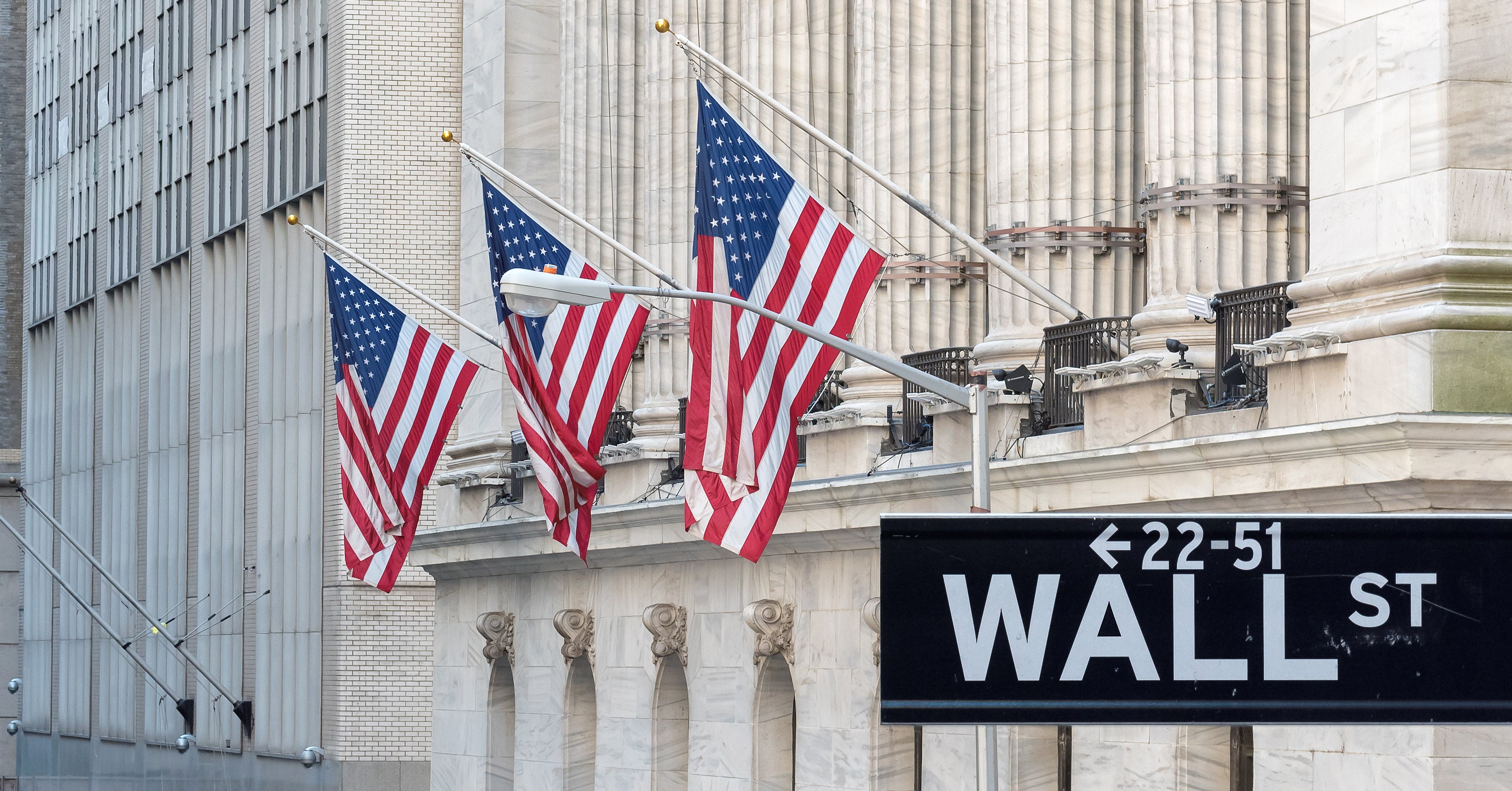
Wall Street is stable right now as the technology trade has come roaring back.

The S&P 500 climbed above 6,000 points for the first time since February, while all three indexes posted their fifth winning week in the last seven. The S&P is now just over 2% from its all-time high.

Meanwhile, recent IPOs are party rocking, especially the stablecoin issuer Circle that went public last Thursday.

IPO: https://medicalexecutivepost.com/2025/03/02/ipo-road-show-with-pros-and-cons/

COMMENTS APPRECIATED

Like and Refer

***

***

HEDGE FUNDS: Defined for Doctors

By Dr. David Edward Marcinko MBA MEd CMP

***

***

WHAT IS A HEDGE FUND?

SPONSOR: http://www.MarcinkoAssociates.com

Many doctors are surprised to learn of an alternative investment known as a hedge fund, pooled investment vehicle or private investment fund. Unlike mutual funds, they can be structured in many ways. However, these funds cannot be marketed or advertised, but they are far from illegal or illicit.

In fact, physicians were among the early investors in one the most successful hedge funds. Warren Buffett got his start in 1957 running the Buffett Partnership, a hedge fund not open to the public. His first appearance as a money manager was before a group of physicians in Omaha, Nebraska. Eleven decided to invest some money with him. A few then followed into Berkshire Hathaway Inc, now among the most highly valued companies in the world.

And, more recently, Scion Asset Management® LLC, is a private investment firm founded and led by my eloquent colleague Michael J. Burry, MD and featured in the movie, The Big Short. Other hedge fund mangers of note include: George Soros, Carl Icahn, Ken Griffin, David Tepper, John Paulson and Bill Ackman.

MASTER FEEDER FUND: https://medicalexecutivepost.com/2025/05/27/master-feeder-structure-hedge-funds/

Definition

A hedge fund is a limited partnership of private investors whose money is managed by professional fund managers who use a wide range of strategies; including leveraging [debt] or trading of non-traditional assets [real-estate, collectible, commodities, cyrpto-currency, etc] to earn above-average returns. Hedge funds are considered a risky alternative investment and usually require a high minimum investment or net worth. This person is known as an “accredited investor” or “Regulation D” investor by the US Securities Exchange Commission and must have the following attributes:

  • A net worth, combined with spouse, of over $1 million, not including primary residence
  • An income of over $200,000 individually, or $300,000 with a spouse, in each of the past two years

MANAGERS: https://medicalexecutivepost.com/2025/05/23/hedge-fund-hiring-separate-managers/

TERMS AND FEES

Hurdle Rate

The hurdle rate is part of the fund manager’s performance incentive compensation. Also known as a “benchmark,” it is the amount, expressed in percentage points an investor’s capital must appreciate before it becomes subject to a performance incentive fee. Podiatrists should view the hurdle rate as a form of protection or the fee arrangement.

The hurdle rate benchmarks a single year’s performance and may be considered mutually exclusive of any other year, or the hurdle rate may compound each year. The former case is more common. In the latter case, a portfolio manager failing to attain a hurdle rate in the first year will find the effective hurdle rate considerably higher during the second year.

Once a fund manager attains the hurdle rate, the investor’s capital account may be charged a performance incentive fee only on the performance above and beyond the hurdle rate. Alternatively, the account may be charged a performance fee for the entire level of performance, including the performance required to attain the hurdle rate. Other variations on the use of the hurdle rate exist, and are limited only by the contract signed between the fund manager and the investor. The hurdle rate is not generally a negotiating point, however.

Example: A fund charges a performance fee with a 6 percent hurdle rate, calculated in mutually exclusive manner. A podiatrist places $100,000 with the fund. The first year’s performance is 5 percent. The doctor therefore owes no performance fee during the first year because the portfolio manager did not attain the hurdle rate. During year two, the portfolio manager guides the fund to a 7 percent return. Because the hurdle rate is mutually exclusive of any other year, the portfolio manager has attained the 6 percent hurdle rate and is entitled to a performance fee.

High Water Mark

Some hedge funds feature a “high water mark” provision known as a ”loss-carry forward.” As with the hurdle rate, the high water mark is a form of protection. It is an amount equal to the greatest value of an investor’s capital account, adjusted for contributions and withdrawals. The high water mark ensures that the manager charges a performance incentive fee only on the amount of appreciation over and above the high water mark set at the time the performance fee was last charged. The current trend is for newer funds to feature this high water mark, while older, larger funds may not feature it.

Example: A fund charges a 20 percent performance fee with a high water mark but no hurdle rate. A podiatrist contributes $100,000 to the fund. During the first year, the hedge fund manager grows that capital account to $110,000 and charges a 20 percent performance fee, or $2,000. The ending capital account balance and high water mark is therefore $108,000. During year two, the account falls back to $100,000, but the high water mark remains $108,000. During year three, in order for the manager to charge a performance fee, the manager must grow the capital account to a level above $108,000.

Claw Back Provision

Rarely, a hedge fund may provide investors with a “claw back” provision. This term results in a refund to the investor of all or part of a previously charged performance fee if a certain level of performance is not attained in subsequent years. Such refunds in the face of poor or inadequate performance may not be legal in some states or under certain authorities.

ASSESSMENT

Managers of hedge funds, like colleague Dimitri Sogoloff MBA who is the CEO of Horton Point investment-technology firm, often aim to produce returns that are relatively uncorrelated with market indices and are consistent with investors’ desired level of risk.

While hedging may reduce some risks overall, they cannot all be eliminated. According to a report by the Hennessee Group, hedge funds were approximately one-third less volatile between 1993 and 2010.

HEDGE FUND PENSION PLANS: https://medicalexecutivepost.com/2025/05/18/medical-practice-pension-plan-hedge-fund-difficulties/

CONCLUSION

For a podiatrist who already holds mutual funds and/or individual stocks and bonds, a hedge fund may provide diversification and reduce overall portfolio risk. Consider investing in them with care.

References and Readings:

1. https://www.scionasset.com 

2. Burry, Michael, J: Hedge Funds [Wall Street Personified]. In, Marcinko, DE and Hetico, HR: Comprehensive Financial Planning Strategies for Doctors and Advisors [Best Practices from Leading Consultants and Certified Medical Planners™] Productivity Press, New York, 2017.

3. Marcinko, DE and Hetico, HR: Risk Management, Liability Insurance, and Asset Protection Strategies for Doctors and Advisors [Best Practices from Leading Consultants and Certified Medical Planners™]. Productivity Press, New York, 2015.

4. Marcinko, DE: Dictionary of Health Economics and Finance. Springer Publishing Company, NY 2006

5. https://www.hortonpoint.com/

6. http://hennesseegroup.com

EDUCATION: Books

SPEAKING: Dr. Marcinko will be speaking and lecturing, signing and opining, teaching and preaching, storming and performing at many locations throughout the USA this year! His tour of witty and serious pontifications may be scheduled on a planned or ad-hoc basis; for public or private meetings and gatherings; formally, informally, or over lunch or dinner. All medical societies, financial advisory firms or Broker-Dealers are encouraged to submit a RFP for speaking engagements: MarcinkoAdvisors@outlook.com 

COMMENTS APPRECIATED

Subscribe, Like and Refer

***

***

FINANCIAL ADVISORY FEES: What All Doctors Must Know

SPONSOR: http://www.MarcinkoAssociates.com

***

By Dr. David Edward Marcinko MBA MEd CMP

WHAT YOU “MUST KNOW“ ABOUT FINANCIAL ADVISORY FEES

Investment fees still matter despite dropping dramatically over the past several decades due to computer automation, algorithms and artificial intelligence, etc. And, they can make a big difference to your financial health. So, before buying any investment, it’s vital to uncover all real financial advisor and stock broker costs.

HEDGE FUND FEES: https://medicalexecutivepost.com/2025/04/18/stocks-basic-definitions/

SIX TYPES OF FEES AND EXPENSES

1. Up-front salesperson commissions. It is easy to ask; “If I buy this investment today and want to get out tomorrow, how much money do I get back?” If the answer is not “all your money,” the difference is probably upfront fees and commissions. These fees may run as high as 30% of the money invested. If you were to earn 5% a year on the investment, it would take 8 years just to break even.

2. Ongoing advisory fees. These are monthly, quarterly, or annual fees paid to advisors for their investment advice and oversight. This includes working with you to pick the asset classes, set diversification, select a portfolio manager, optimize taxes, re-balance holdings and other periodic tasks.

These fees have many names including wrap fee or investment advisory fees. The normal “rule of thumb” is 1% of assets managed, although fees can range from 0 to 7%. Today, it can even be as low as .5%. It can be charged even if the advisor receives an upfront commission. It can be easy to see, or hidden in the fine print.

3. Additional service fees. Find out specifically what services are included financial advisory fees. Additional fees for financial planning or other services are rarely disclosed. They can range from minimal hand-holding focused on your investments to comprehensive financial planning.

4. Ongoing managerial expense ratio fees. These are incredibly well hidden that you may not see them in your statements or invoices. The only way to know is to read the prospectus or other third party analysis, like Morningstar.com. And, they can vary greatly for the same investment, depending on the class of share you buy.

For example, American Fund’s New Perspective Fund’s expense ratio ranges from 0.45% to 1.54%.  The average expense ratio of a mutual fund that invests in stocks is 1.35%. Conversely, the average expense ratio of a Vanguard S&P 500 Fund is 0.10%. The difference of 1.25% is staggering over time.

5. Miscellaneous fees. Some advisors charge $50 – $100 a year per account to open or close an account, and even fees to dollar cost average your funds into the market.

6. Transaction fees. Every time you buy or sell a fund, a fee is typically paid to a custodian. These can range from $5 to hundreds of dollars per transaction.

7. Fee Only: Paid directly by clients for their services and can’t receive other sources of compensation, such as payments from fund providers. Act as a fiduciary, meaning they are obligated to put their clients’ interests first

8. Fee Based: Paid by clients but also via other sources, such as commissions from financial products that clients purchase. Brokers and dealers (or registered representatives) are simply required to sell products that are “suitable” for their clients.

A “suitable” investment is defined by FINRA as one that fits the level of risk that an investor is willing and able, as measured by personal financial circumstances, to take on. The Financial Industry Regulatory Authority is a private American corporation that acts as a Self Regulatory Organization (SRO) that regulates member stock brokerage firms and exchange markets. These criteria must be met. It is not enough to state that an investor has a risk-friendly investment profile. In addition, they must be in a financial position to take certain chances with their money. It is also necessary for them to

A hedge fund is a limited partnership of private investors whose money is managed by professional fund managers who use a wide range of strategies; including leveraging [debt] or trading of non-traditional assets [real-estate, collectible, commodities, cyrpto-currency, etc] to earn above-average returns. Hedge funds are considered a risky alternative investment and usually require a high minimum investment or net worth. This person is known as an “accredited investor” or “Regulation D” investor by the US Securities Exchange Commission and must have the following attributes:

  • A net worth, combined with spouse, of over $1 million, not including primary residence
  • An income of over $200,000 individually, or $300,000 with a spouse, in each of the past two years

Not a fiduciary.

Ways to minimize fees

Choose the fee structure. The fee structure should align with your needs. Consider the type of advice you seek, the number of times needed and the complexity of your financial situation. You can always negotiating tactics are free to ask for a better deal.

Compare fees. It is essential to research and compare different fees. Be sure to read the fine print for details or costs that are not a base fee.

Robo-advisors: For simple investment goals, with little specificity, robo-advisors may be a cost-effective option. They charge lower fees than conventional financial advisors and provide an automated, algorithmic approach to managing your investments. 

Assessment

The average cost of working with a human financial advisor in 2024 was 0.5% to 2.0% of assets managed, $200 to $400 per hourly consultation, a flat fee of $1,000 to $3,000 for a one-time service, and/or a 3% to 6% commission fee on the product types sold.

ADVISORY FEES: https://medicalexecutivepost.com/2025/02/26/be-aware-financial-advisory-fees-fee-based-versus-fee-only/

Conclusion

When ruminating over financial advisory fees; read and understand the contract with disclosures, do not sign a confidentiality or non-disclosure agreement, and do not waive your right to a lawsuit. According to colleague Dr. Charles F. Fenton IIII JD, forced legal settlements almost always favor the advisor over the client.

References and Readings:

1. https://www.capitalgroup.com [American Funds]

2. Marcinko, DE and Hetico, HR; Comprehensive Financial Planning Strategies for Doctors and Advisors [Best Practices from Leading Consultants and Certified Medical Planners™] Productivity Press, New York, 2017. 

3. Marcinko, DE: Dictionary of Health Economics and Finance. Springer Publishing Company, NY 2006

EDUCATION: Books

SPEAKING: Dr. Marcinko will be speaking and lecturing, signing and opining, teaching and preaching, storming and performing at many locations throughout the USA this year! His tour of witty and serious pontifications may be scheduled on a planned or ad-hoc basis; for public or private meetings and gatherings; formally, informally, or over lunch or dinner. All medical societies, financial advisory firms or Broker-Dealers are encouraged to submit a RFP for speaking engagements: MarcinkoAdvisors@outlook.com 

COMMENTS APPRECIATED

Refer, Like and Subscribe

***

***

DIVIDEND STOCK ARISTOCRATS: Pros and Cons

By AI

SPONSOR: http://www.CertifiedMedicalPlanner.org

***

***

SPONSOR: http://www.MarcinkoAssociates.com

According to wikipedia, the S&P 500 Dividend Aristocrats is a stock market index composed of the companies in the S&P 500 index that have increased their dividends in each of the past 25 consecutive years. It was launched in May 2005.

There are other indexes of dividend aristocrats that vary with respect to market cap and minimum duration of consecutive yearly dividend increases. Components are added when they reach the 25-year threshold and are removed when they fail to increase their dividend during a calendar year or are removed from the S&P 500. However, a study found that the stock performance of companies improves after they are removed from the index The index has been recommended as an alternative to bonds for investors looking to generate income.

To invest in the index, there are several exchange traded funds (ETFs), which seek to replicate the performance of the index.

STOCK DIVIDENDS: https://medicalexecutivepost.com/2025/03/02/stock-dividends-company-earnings-distribution/

***

And so, to clarify, the following are the advantages and disadvantages of US dividend aristocrats:

Advantages

  1. They certainly display consistent, blue-chirp corporations with an extended history of vital funds and dividend increments.
  2. Additionally, these stocks offer fixed revenue growth.
  3. In other words, they tend to possess lower price volatility.
  4. Please note that dividend investing supporters prefer a credible income source.
  5. They are sufficiently stable for continuous annual dividend increments across decades, certainly even through recessions.
  6. Above all, it helps quicker portfolio building through reinvestment in these stocks.
  7. They certainly ensure successful long-term investing.
  8. Regarded as among the most famous investment strategies, they relish extensive consumer confidence.

Disadvantages

  1. To clarify, they are considered taxable earnings.
  2. In other words, they offer a lack of control over their distribution timing.
  3. Above all, these shares have under performed S&P 500.
  4. Company development certainly consumes a lot of time.
  5. Additionally, they are subject to market fluctuations.
  6. Moreover, they are considered unimaginative.

STOCK: https://medicalexecutivepost.com/2024/08/20/preferred-versus-common-stock/

COMMENTS APPRECIATED

Like and Refer

***

***

DONOR ADVISED FUND: Defined

WHAT IS A DONOR ADVISED FUND?

Sponsor: http://www.CertifiedMedicalPlanner.org

***

***

A donor-advised fund is a private account created to manage and distribute charitable donations on behalf of an organization, family, or individual. Donor-advised funds can democratize philanthropy by aggregating the contributions of multiple donors, thus multiplying their impact on worthy causes. Donor-advised funds also have abundant tax advantages.

DONOR DEPENDENCY: https://medicalexecutivepost.com/2025/01/02/culture-donation-dependency/

Donor-advised funds have become increasingly popular, as they offer the donor greater ease of administration while still allowing them to maintain significant control over the placement and distribution of charitable gifts. But, unlike private foundations, donor-advised fund holders enjoy a federal income tax deduction of up to 60% of adjusted gross income (AGI) for cash contributions and up to 30% of AGI for the appreciated securities they donate. Donors to these funds can contribute cash, stock shares, and other assets. When they transfer assets such as limited-partnership interests, they can avoid capital gains taxes and receive immediate fair market value tax deductions.

MEDICAL ETHICS: https://medicalexecutivepost.com/2024/06/20/medical-ethics-physician-and-financial-organizations/

According to the National Philanthropic Trust’s 2023 Donor-Advised Fund Report, these funds have continued to grow in recent years, despite some headwinds including the Covid-19 pandemic and occasional stock market setbacks. Total grants awarded by donor-advised funds in 2022 increased by 9% to $52.16 billion, while total contributions rose by 9% to $85.5 billion.

Many donor-advised funds accept non-cash assets—such as checks, wire transfers, and cash positions from a brokerage account—in addition to cash and cash equivalents.

Donating non-cash assets may be more beneficial for individuals and businesses, leading to bigger tax bigger write-offs.

PHILANTHROPY: https://medicalexecutivepost.com/2021/11/15/national-philanthropy-day-2021/

COMMENTS APPRECIATED

Like and Refer

***

***

DAILY UPDATE: Stock Markets Down Slightly

MEDICAL EXECUTIVE-POST TODAY’S NEWSLETTER BRIEFING

***

Essays, Opinions and Curated News in Health Economics, Investing, Business, Management and Financial Planning for Physician Entrepreneurs and their Savvy Advisors and Consultants

Serving Almost One Million Doctors, Financial Advisors and Medical Management Consultants Daily

A Partner of the Institute of Medical Business Advisors , Inc.

http://www.MedicalBusinessAdvisors.com

SPONSORED BY: Marcinko & Associates, Inc.

***

http://www.MarcinkoAssociates.com

Daily Update Provided By Staff Reporters Since 2007.
How May We Serve You?
© Copyright Institute of Medical Business Advisors, Inc. All rights reserved. 2025

REFER A COLLEAGUE: MarcinkoAdvisors@outlook.com

SPONSORSHIPS AVAILABLE: https://medicalexecutivepost.com/sponsors/

ADVERTISE ON THE ME-P: https://tinyurl.com/ytb5955z

Your Referral Count -0-

CITE: https://www.r2library.com/Resource

  • The S&P 500 snapped a 6-day winning streak as the rally following the US & China tariff ceasefire faded and investors looked elsewhere for buying signals.
  • Federal Reserve speeches abound this week, with several central bankers warning of an economy under duress.
  • Both gold and bitcoin consolidated their recent gains, offering investors alternatives to suddenly not-so-safe bonds and a sagging US dollar.

CITE: https://tinyurl.com/2h47urt5

What’s up

  • Tesla climbed 0.51% after CEO Elon Musk committed to spending the next five years running the EV manufacturer.
  • Moderna popped 6.06% after the FDA announced new limits on Covid-19 vaccine approvals that were more lenient than expected.
  • Warby Parker soared 15.57% on news of a partnership with Google to create smart glasses.
  • Pony AI rose 5.74% after the Chinese auto maker posted impressive earnings and cited high demand for autonomous taxi rides.
  • Amer Sports surged 19.05% after the athletic equipment maker posted a strong beat-and-raise earnings announcement.
  • D-Wave Quantum soared 25.93% after the quantum computing company unveiled its newest computing system.
  • Levi Strauss & Co. rose 1.42% on the news that the jeans company is selling Dockers to Authentic Brands Group for $311 million.

What’s down

  • Home Depot fell just 0.61% after the home renovation retailer missed earnings estimates, beat revenue forecasts, kept its fiscal guidance intact, and said it won’t raise prices.
  • Airbnb tumbled 3.27% after Spain ordered the company to take down over 65,000 listings.
  • Uber sagged 0.66% despite an upgrade from JPMorgan analysts and the news that it’s partnering with Waymo to offer robotaxis in Atlanta.
  • Viking Holdings sank 4.99% despite earnings and sales beating estimates, but investors didn’t like hearing that the the cruise line operator transported fewer passengers last quarter than expected.
  • AES lost 4.05% after the solar stock was downgraded by Jefferies analysts, who are worried about lower demand for renewable energy.

CITE: https://tinyurl.com/tj8smmes

Visualize: How private equity tangled banks in a web of debt, from the Financial Times.

COMMENTS APPRECIATED

PLEASE SUBSCRIBE: MarcinkoAdvisors@outlook.com

Thank You

***

***

***

***

EDUCATIONAL TEXTBOOKS: https://tinyurl.com/4zdxuuwf

***

DAILY UPDATE: Gold, VIX and Stock Markets Up as 23andMe is Sold

MEDICAL EXECUTIVE-POST TODAY’S NEWSLETTER BRIEFING

***

Essays, Opinions and Curated News in Health Economics, Investing, Business, Management and Financial Planning for Physician Entrepreneurs and their Savvy Advisors and Consultants

Serving Almost One Million Doctors, Financial Advisors and Medical Management Consultants Daily

A Partner of the Institute of Medical Business Advisors , Inc.

http://www.MedicalBusinessAdvisors.com

SPONSORED BY: Marcinko & Associates, Inc.

***

http://www.MarcinkoAssociates.com

Daily Update Provided By Staff Reporters Since 2007.
How May We Serve You?
© Copyright Institute of Medical Business Advisors, Inc. All rights reserved. 2025

REFER A COLLEAGUE: MarcinkoAdvisors@outlook.com

SPONSORSHIPS AVAILABLE: https://medicalexecutivepost.com/sponsors/

ADVERTISE ON THE ME-P: https://tinyurl.com/ytb5955z

Your Referral Count -0-

CITE: https://www.r2library.com/Resource

  • When S&P downgraded the US’ credit rating in August 2011, it sparked the worst one-day decline in US stocks since the Great Financial Crisis. Today was the first day of trading after Moody’s downgraded the US’ credit rating, and while stocks sank at the open, they recovered a lot of lost ground after investors decided to buy the dip.
  • The downgrade pushed yields on 30-year Treasury bonds above 5% at the open, while 10-year yields rose to 4.55% at one point. But yields on both notes fell throughout the afternoon as buyers crept back into the bond market.
  • Gold was the big winner today as investors sought safety, while the CBOE Volatility Index, or VIX, popped higher.

CITE: https://tinyurl.com/2h47urt5

🟢 What’s up

  • Investors largely shrugged at Nvidia’s many announcements today, including the ability for customers to use non-Nvidia chips in Nvidia products. Shares rose just 0.13%.
  • UnitedHealth Group posted a 8.18% gain as investors turned their attention to the suddenly cheap health insurance giant.
  • Novavax exploded 15.01% higher thanks to the FDA’s approval of its new Covid-19 vaccine.
  • TXNM Energy popped 6.98% to an all-time high on the announcement that Blackstone will acquire the power provider for $11.5 billion.

What’s down

  • Tesla tumbled 2.25% after Chinese tech giant Xiaomi announced it will debut its Yu7 sports utility vehicle, a clear Tesla challenger in a key market, on Thursday.
  • Walmart lost 0.12% after Treasury Secretary Scott Bessent met with company leadership to discuss how the retailer could “eat the tariffs.”
  • Bath & Body Works sank 0.56% after the retailer named former Nike exec Daniel Heaf as its new CEO effective immediately.
  • Reddit fell 4.63% due to a downgrade from Wells Fargo analysts who think the social media platform will lose search traffic to Google AI.
  • Diageo is down 0.69% after the maker of Johnnie Walker whiskey said it will take an annual tariff hit of $150 million.
  • Alibaba dropped 0.40% on a New York Times report that the Trump Administration is concerned with Apple’s plan to use Alibaba AI on its iPhones.
  • JPMorgan fell 1% as shareholders at the bank’s investment division grapple with CEO Jamie Dimon’s departure.
  • Solar stocks sank after the Republican tax and spending bill moved forward with a commitment to end clean energy tax credits earlier than planned. First Solar fell 7.59%, SunRun lost 7.84%, and AES lost 4.10%.

CITE: https://tinyurl.com/tj8smmes

Regeneron Pharmaceuticals will buy 23andMe for $256 million.

Visualize: How private equity tangled banks in a web of debt, from the Financial Times.

COMMENTS APPRECIATED

PLEASE SUBSCRIBE: MarcinkoAdvisors@outlook.com

Thank You

***

***

***

***

EDUCATIONAL TEXTBOOKS: https://tinyurl.com/4zdxuuwf

***

STOCK FUTURES: Point Lower

BREAKING NEWS [12:09 am, EST]

***

***

Stock Futures are contracts to buy or sell a specific underlying asset at a future date. The underlying asset can be a commodity, a security, or other financial instrument. Futures trading requires the buyer to purchase or the seller to sell the underlying asset at the set price, whatever the market price, at the expiration date.

FUTURES: https://medicalexecutivepost.com/wp-content/uploads/2014/01/futures.pdf

***

Stock futures pointed lower on Monday morning as investors weighed fresh warnings on U.S. debt and the potential for President Donald Trump’s trade war to heat up again.

Dow Futures: 42,406.00

Fair Value: 42,752.14

Change: – 330.000.77%

Implied Open: – 346.14

Late Friday night, Moody’s downgraded the U.S. credit rating one notch. This came as Congress tries to extend Trump’s tax cuts and add new ones, which are expected to deepen federal deficits.

MORE: https://medicalexecutivepost.com/2022/01/18/on-financial-futures/

COMMENTS APPRECIATED

Like and Refer

***

***

LONG TERM CARE INSURANCE: A Hobson’s Choice Decision?

By Staff Reporters

SPONSOR: http://www.CertifiedMedicalPlanner.org

***

***

Long Term Care Insurance [LTCI]

Some retired people live on a fixed income and many of them live right on the edge of their financial capability.  At some time in their life, they may have to make a choice regarding many purchases.  

In this case, we will illustrate “choice” using a couple’s purchase of Long-Term-Care Insurance [LTCI]. Of course, economics is the study of choice; wants, needs and scarcity, etc. In our case, if they decide to make the purchase they commit to a lifetime of premium payments. The financial tradeoff is this; if they make the commitment to purchase LTCI, they must give up something else.

EXAMPLE: In order to maintain a monthly premium of $100 ($1,200per year), an elderly patient, retired layman or couple must essentially relegate about $30,000 of financial assets to generate the $100 necessary to make an average premium payment (assumes a 7% rate of return with 4% withdrawal rate) or [4% X $30,000 = $1,200 year]. Thus, if the monthly premium cost is $500 per month, the elder must give up the use of $150,000 of retirement asset just to generate enough cash flow to pay for the LTC insurance. 

***

***

The married elder couple has to make the Hobson’s Choice decision among lifestyle (dinners, vacations, gifts to children, prescription drugs, medical care or food and shelter) versus paying an insurance premium to provide for nursing home coverage for a need, which may be very real, but will not occur until sometime in the ambiguous future. 

And so, when faced with such a tough economics Hobson’s Medicine Choice, neither of which delivers peace of mind or a respectable solution; many will simply decide that, in either case, they may already end up impoverished. Thus, many will often opt for the better lifestyle now … while they can enjoy it … together. 

Cite: Anonymous Health Insurance Agent, Norcross, Georgia

COMMENTS APPRECIATED

The Medical Executive-Post is a  news and information aggregator and social media professional network for medical and financial service professionals.

Feel free to submit education content to the site as well as links, text posts, images, opinions and videos which are then voted up or down by other members. Comments and dialog are especially welcomed.

Daily posts are organized by subject. ME-P administrators moderate the activity. Moderation may also conducted by community-specific moderators who are unpaid volunteers.

Refer, Like and Subscribe

***

***

FOURTH MARKET: Private Security Transactions

DEFINITIONS

By Staff Reporters

SPONSOR: http://www.CertifiedMedicalPlanner.org

***

***

The Fourth Market?

The fourth market is defined as private transactions made directly between large medical investors, institutions such as banks, mutual funds, and insurance companies, without the use of a securities firm. In other words, fourth market trading is usually one institution swapping securities in its portfolio with another large institution.

From the stock broker’s viewpoint, there is one problem with the fourth market. Since no broker/dealer is involved, no registered representative is involved and there is no commission to be earned. These trades are reported on a system called Instinet.

This is advantageous to larger medical foundations or institutional investors.

What Is Instinet?

Instinet is a global financial securities service that operates an electronic securities order matching, trading, and information system which allows members, primarily institutional traders, and investors, to display bids and offer quotes for stocks, and conduct transactions with each other.

Instinet is an example of a dark pool of liquidity, a private exchange for trading securities that is not accessible by the investing public. The name implies a lack of transparency. and it facilitates block trading by institutional investors who do not wish to impact the markets with their large orders.

According to the SEC, there were 74 registered Alternative Trading Systems, or dark pools, as of February 2024.

COMMENTS APPRECIATED

Like and Refer

***

***

FEAR BASED GOLD FEVER: Protect Yourself

By Rick Kahler CFP

***

***

On January 21, 1980, in what I thought was a brilliant financial move, I bought gold. At what was then an all-time high of $873 an ounce.

Fast forward 45 years, and here we are again. Gold is on a tear, priced just over $3,000 an ounce at the time of this writing. It needs to rise another 16% to reach its inflation-adjusted record and many analysts think it might just get there.

What’s driving this gold rally? The same thing that drove it in 1980—fear.

Back then, the U.S. was grappling with rising inflation, double-digit price increases, and interest rates in the high teens. Investors feared that the dollar and stock market would collapse, that their hard-earned savings would erode into oblivion, and that gold was a safe haven. Sound familiar?

Today, inflation is less dramatic and the stock market would have to go a long way down to even register as a bear market, but it’s still a major concern. Central banks are buying gold at record levels. Gold-backed ETFs, which had been seeing years of outflows, are finally pulling investors back in.

For most, gold isn’t just an investment, it’s an emotional hedge against uncertainty. Back in 1980, I wasn’t thinking about long-term strategy. I was reacting to fear. Inflation had hit 14%, and like many others, I was convinced the dollar would soon be worthless. Gold, I thought, was my best shot at preserving wealth.

The problem? Inflation eventually cooled; it had dropped to an average of 3.5% by the mid-1980s. Gold prices tumbled along with it. Investors who, like me, bought at the peak, 45 years later still haven’t broken even on an inflation-adjusted basis. (My $873 purchase price, adjusted for inflation, equates to $3,580 today.) If I had stuck with a well-diversified portfolio, I likely would have fared much better over time.

Over the years, I’ve come to realize that our financial decisions aren’t just about numbers. They’re deeply influenced by our Internal Financial System™, a framework that helps explain why we handle money the way we do. I now see that my decision to buy gold was a battle between different financial “parts” of myself.

One part panicked, convinced that money was about to become worthless. Another saw gold prices soaring and didn’t want to miss out. Yet another part convinced me that buying at the peak was still a smart move. Had I paused and examined these internal voices, I might have made a different decision.

My gold purchase shows why emotionally driven investment decisions rarely lead to great financial outcomes. Instead of asking, “Is gold a smart long-term investment?” I was asking, “How do I make sure I don’t lose everything?” Those are two very different questions.

If you’re thinking about buying gold, I urge you to consider these questions:

“Am I investing from a place of fear or strategy?” If you’re rushing in because you’re scared of inflation, pause and reassess.

“How does gold fit into my broader financial plan?” Gold can be a great hedge—if held in appropriate amounts in a diversified portfolio. It is best viewed as catastrophic financial insurance, rather than an investment.

“Am I reacting to headlines or making a well-thought-out decision?” The financial media loves a good gold rally. But remember, markets move in cycles. Today’s rally may be history repeating itself.

Back in 1980, fear persuaded me that gold was a sure thing. I forgot an essential caveat—there are no sure things in investing. If bad market timing were an Olympic sport, I’d have taken home the gold (pun intended) for least profitable performance.

COMMENTS APPRECIATED

Refer and Like

***

***

ANNUITIES: Three Types of Insurance Products

By Staff Reporters

SPONSOR: http://www.MarcinkoAssociates.com

***

***

An annuity is a contract between you and an insurance company.  When you purchase an annuity, you make a lump-sum contribution or a series of contributions, generally each month.  In return, the insurance company makes periodic payments to you beginning immediately or at a pre-determined date in the future.  These periodic payments may last for a finite period, such as 20 years, or an indefinite period, such as until both you and your spouse are deceased.  Annuities may also include a death benefit that will pay your beneficiary a specified minimum amount, such as the total amount of your contributions.

The growth of earnings in your annuity is typically tax-deferred; this could be beneficial as you may be in a lower tax bracket when you begin taking distributions from the annuity. 

Warning: A word of caution: Annuities are intended as long-term investments. If you withdraw your money early from an annuity, you may pay substantial surrender charges to the insurance company as well as tax penalties to the IRS and state.

***

***

There are three basic types of annuities — fixed, indexed, and variable

1. With a fixed annuity, the insurance company agrees to pay you no less than a specified (fixed) rate of interest during the time that your account is growing. The insurance company also agrees that the periodic payments will be a specified (fixed) amount per dollar in your account.

2. With an indexed annuity, your return is based on changes in an index, such as the S&P. Indexed annuity contracts also state that the contract value will be no less than a specified minimum, regardless of index performance.

3. A variable annuity allows you to choose from among a range of different investment options, typically mutual funds. The rate of return and the amount of the periodic payments you eventually receive will vary depending on the performance of the investment options you select. 

READ: SEC’s publication, Variable Annuities: What You Should Know.

COMMENTS APPRECIATED

The Medical Executive-Post is a  news and information aggregator and social media professional network for medical and financial service professionals.

Feel free to submit education content to the site as well as links, text posts, images, opinions and videos which are then voted up or down by other members. Comments and dialog are especially welcomed.

Daily posts are organized by subject. ME-P administrators moderate the activity. Moderation may also conducted by community-specific moderators who are unpaid volunteers.

Like and Refer

***

***

DAILY UPDATE: Bitcoin and Stock Markets Soar

MEDICAL EXECUTIVE-POST TODAY’S NEWSLETTER BRIEFING

***

Essays, Opinions and Curated News in Health Economics, Investing, Business, Management and Financial Planning for Physician Entrepreneurs and their Savvy Advisors and Consultants

Serving Almost One Million Doctors, Financial Advisors and Medical Management Consultants Daily

A Partner of the Institute of Medical Business Advisors , Inc.

http://www.MedicalBusinessAdvisors.com

SPONSORED BY: Marcinko & Associates, Inc.

***

http://www.MarcinkoAssociates.com

Daily Update Provided By Staff Reporters Since 2007.
How May We Serve You?
© Copyright Institute of Medical Business Advisors, Inc. All rights reserved. 2025

REFER A COLLEAGUE: MarcinkoAdvisors@outlook.com

SPONSORSHIPS AVAILABLE: https://medicalexecutivepost.com/sponsors/

ADVERTISE ON THE ME-P: https://tinyurl.com/ytb5955z

Your Referral Count -0-

Bitcoin climbed above $90,000 for the first time since March as investors search for alternatives anywhere they can find them.

CITE: https://www.r2library.com/Resource

Stocks came off of their highs yesterday afternoon trading after US Treasury Secretary Scott Bessent reportedly said in a private speech for JPMorgan Chase that talks between the United States and China had yet to formally start and that negotiations will likely be a “slog.”

CITE: https://tinyurl.com/2h47urt5

Still, US stocks soared on Tuesday following a bruising day on Wall Street, as investors built hope for deescalation on several fronts of President Trump’s trade battles.

Still, markets delivered solid gains with Dow Jones Industrial Average (^DJI) adding over 1,000 points as the benchmark S&P 500 (^GSPC) and tech-heavy NASDAQ (^IXIC) each rose around 2.5% and 2.7%, respectively.

CITE: https://tinyurl.com/tj8smmes

Prior to Bessent’s reported comments, stocks hit earlier session highs as Bloomberg reported the treasury secretary told a closed-door investor summit Tuesday that “the tariff standoff with China is unsustainable and that he expects the situation to de-escalate.”

🟢 What’s up

  • Amazon rose 3.5% a day after Wells Fargo analysts revealed that the tech giant has paused some of its data center leases, the latest sign of an AI trade slowdown.
  • The DOJ has called for a breakup of Alphabet’s business. Investors don’t seem to mind: Shares of the search giant rose 2.57%.
  • Boeing gained 2% after announcing it will sell portions of its digital aviation solutions business to Thoma Bravo for $10.55 billion.
  • Ford is up 1.90% a day after reports emerged that it has stopped shipping cars to China.
  • 3M gained 8.12% after the industrial manufacturing giant beat Wall Street’s expectations in the first quarter.
  • Coreweave rose 8.74% after several Wall Street analysts initiated coverage of the newly public cloud computing company. While the pros lean toward bullish, the stock’s reception has been largely mixed.
  • Equifax soared 13.84% following strong results for the credit rating company, as well as its announcement of a $3 billion buyback program.
  • BP managed to gain 2.81% after regulatory filings revealed that Elliott Investment Management has accrued a 5% stake in the oil giant.
  • Verizon eked out a 0.61% gain after it beat Wall Street forecasts for the first quarter but lost more postpaid net phone subscribers than expected.

What’s down
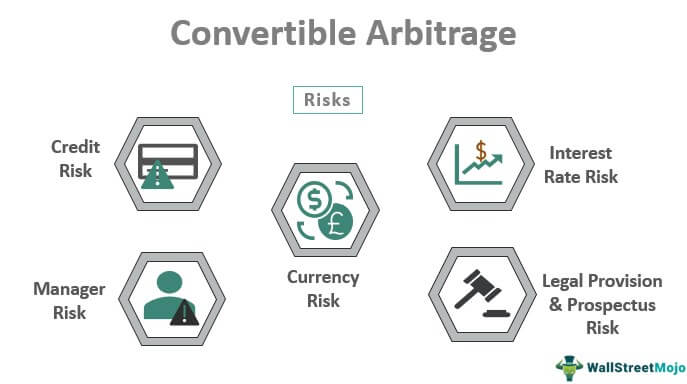
  • Halliburton disappointed shareholders with a decline in both revenue and profits last quarter, sending the oil service company’s shares 5.57% lower.
  • Defense contractors tumbled after reporting mixed earnings. RTX lost 9.81%, and Northrop Grumman sank 12.66%.
  • Medpace Holdings crumbled 2.32% after the clinical research company revealed a 19% decline in net new business awards last quarter.

COMMENTS APPRECIATED

PLEASE SUBSCRIBE: MarcinkoAdvisors@outlook.com

Thank You

***

***

***

***

EDUCATIONAL TEXTBOOKS: https://tinyurl.com/4zdxuuwf

***

CONVERTIBLE ARBITRAGE: Defined

By Staff Reporters

***

***

Convertible Arbitrage

Convertible arbitrage is the oldest market-neutral strategy. Designed to capitalize on the relative mispricing between a convertible security (e.g. convertible bond or preferred stock) and the underlying equity, convertible arbitrage was employed as early as the 1950s.

Since then, convertible arbitrage has evolved into a sophisticated, model-intensive strategy, designed to capture the difference between the income earned by a convertible security (which is held long) and the dividend of the underlying stock (which is sold short). The resulting net positive income of the hedged position is independent of any market fluctuations. The trick is to assemble a portfolio wherein the long and short positions, responding to equity fluctuations, interest rate shifts, credit spreads and other market events offset each other.

***

***

Hedge Fund Research (HFR) New York, offers the following description of the strategy

Convertible Arbitrage involves taking long positions in convertible securities and hedging those positions by selling short the underlying common stock. A manager will, in an effort to capitalize on relative pricing inefficiencies, purchase long positions in convertible securities, generally convertible bonds, convertible preferred stock or warrants, and hedge a portion of the equity risk by selling short the underlying common stock. Timing may be linked to a specific event relative to the underlying company, or a belief that a relative mispricing exists between the corresponding securities. Convertible securities and warrants are priced as a function of the price of the underlying stock, expected future volatility of returns, risk free interest rates, call provisions, supply and demand for specific issues and, in the case of convertible bonds, the issue-specific corporate/Treasury yield spread. Thus, there is ample room for relative mis-valuations.

Because a large part of this strategy’s gain is generated by cash flow, it is a relatively low-risk strategy. 

COMMENTS APPRECIATED

Read, Like, Refer and Subscribe

***

***

REPUTATIONAL BANKRUPTCY: Of the American Dollar

By Vitaliy Katsenelson CFA

***

***

The Reputational Bankruptcy of the American Dollar
I am in an unenviable position. The policy coming out of the White House has a significant impact on economics, more than ever before in my career. If I say anything positive about that policy, I’ll be put in the MAGA camp. If I criticize it, I’ll be accused of suffering from Trump derangement syndrome. I am hired by you to make the best investment decisions possible. Rather than see me as engaged in political commentary, I’d ask that you view my remarks as purely analytical.

Let me give you this analogy. I live in Denver. Let’s imagine I am a huge Broncos fan, and the Broncos are playing the Chicago Bears. If I am betting a significant amount of money on this game, I should put my affinity for the Broncos and hatred of the Chicago Bears aside and analyze data and facts. The Broncos are either going to win or lose; my wanting them to win has zero impact on the outcome. The same applies to my analysis here. My motto in life is Seneca’s saying, “Time discovers truth.” I just try to discover it before time does.

When it comes to politics, I also have a significant advantage. I was not born in this country. From a young age, I was brainwashed about communism, not about team Republican versus team Democrat. The failure of the Soviet Union de-brainwashed me fast concerning the virtues of communism and converted me into a believer in free markets.

As a result, I never bought into either party’s ideology, and thus in the last four presidential elections I voted for a Republican, an independent, a Democrat, and wrote in my youngest daughter, Mia Sarah (not in that order). In my articles I have criticized the policies of both Biden (student loan forgiveness, unions) and Trump (Bitcoin reserve).

I remind myself that in times like these you have to be a nuanced thinker. Some of Trump’s policies are terrific, others … not so much (I am being diplomatic here).

Scott Fitzgerald once said “The test of a first-rate intelligence is the ability to hold two opposed ideas in mind at the same time, and still retain the ability to function.” In 2025 we are taking this “first-rate intelligence” test daily.

What will happen to the US dollar? The US dollar will likely continue to get weaker, which is inflationary for the US. Let me start with some easily identifiable reasons:

We have too much debt. We ran 6-7% budget deficits while our economy was growing and unemployment was at record lows. Now we have $36 trillion in debt. Our interest expenses exceed our defense spending, and these costs will continue to climb. If/when we go into recession, we may see something we have not seen in a long time – higher interest rates. Our budget deficits will balloon to between 9–12%, and the debt market, realizing that inflation (i.e., money printing) is inevitable, will say, “Pay up!”

New competition from Bitcoin. President Trump’s approval of Bitcoin as a potential reserve currency is one of the most self-serving and anti-American things I’ve seen any president do. The US dollar is the world’s reserve currency. We still have little competition for that title. China could be a contender, but it is not a democracy and has capital controls. This policy has no upside for America, only downside.

A stronger Europe. Ironically, we may inadvertently create a stronger Europe by threatening to abandon NATO. I don’t want to insult European clients (or my European friends), but the following analogy describes the US-Europe relationship on some level: Europe gradually evolved into a trust fund kid (when it came to security) and the US turned into its sugar daddy. The trust fund kid was incredibly dependent on the sugar daddy. It criticized its parent for being a barbarian and money-driven, but it relied heavily on that parent to protect it from bullies.

President Trump cut off Europe’s allowance by threatening that the US might not protect Europe from Russia. This has forced Europe to spend more money on defense. Outside of Germany (which has little debt), few European economies can afford that. This may force Europe (or at least some European countries) to become more pragmatic – to cut social programs and bureaucracy. If this leads to a stronger Europe both economically and militarily, the euro will be competing with the US dollar. This is a big if.

Our new foreign policy.

When people describe President Trump’s foreign policy as “transactional,” they’re highlighting a fundamental shift in how America engages with the world – one with profound implications for our global standing, national interests, and the US dollar. The shift affects both types of capital – financial and reputational.

Reputational capital isn’t at risk in ‘one-shot’ transactions like house selling. Imagine you’re selling your primary residence and moving elsewhere. Do you disclose every flaw, or let the buyer figure things out? Your incentive is to maximize short-term profits. You’ll likely never meet this buyer again, and therefore there are incentives not to care what they’ll think of you afterward. You’ll be transactional, seeking the highest price possible for your biggest asset. This exemplifies a ‘one-shot’ system where future interactions aren’t expected.

Contrast this with a relationship- and trust-based system. Now imagine you are a homebuilder in a small town. Your suppliers only extend credit if you have a reputation for paying on time. Your employees do quality work only if you treat them fairly. Your buyers tell friends about their experience with you. The incentives naturally create a relational approach. In this trust-based system, incentives skew toward maximizing long-term profits, where reputational capital becomes the glue creating continuity.

Reputational capital radiates predictability – you know how someone will behave based on their history – but operating with low or negative reputational capital is difficult and expensive. People won’t enter long-term contracts with you or will demand external guarantees. Many potential partners will simply refuse to deal with you.

Building reputational capital works like adding pennies to a jar – each good deed incrementally adds to your standing. Yet reputational capital can collapse instantly by removing the jar’s bottom. A single breach of trust doesn’t just remove one penny; it can wipe out your entire balance and plunge you into reputational bankruptcy. The math is brutally asymmetric: good deeds might add a point or two, while bad deeds subtract by factors of 50 or 100.

This doesn’t mean transactions shouldn’t be profitable. If you’re accumulating reputational capital while consistently losing money, you’re probably in the wrong business. Each deal should be evaluated considering both long-term financial and reputational capital.

Individual transactions can sacrifice some profit but cannot afford to lose reputational capital. A “one-shot” transactional approach used in a trust-system environment may provide greater short-term profitability, but if this success comes at the expense of reputational capital, the long-term consequences for America’s global position could be devastating.

This brings us to our current foreign policy.

Relationships between nations are a trust-based system. I’d argue it’s a super-relational system because it’s multigenerational, lasting beyond the life of any one human. Reputational capital is paramount here.

Part of the US’s strength has been the soft power – the reputational capital – it exerted. We had a lot of friends, which helped us to be more effective in dealing with our foes. We keep telling ourselves that America is an “exceptional” nation. This exceptionalism didn’t just come from our financial and military might – it accumulated based on our reputational capital.

Though we don’t always succeed, we are a people who try to do the right thing. Our exceptionalism has been earned through our actions. We are the country that helped rebuild Europe and gave it six decades to repay lend-lease. We toppled communism.

I don’t know the nuances of the Ukraine mineral deal, but initially it had the optics of extortion. Though I think the renegotiated and signed version appears to be fair to both sides, forcing repayment while Ukraine is dodging Russian missiles made the US look transactional.

Actions by President Trump over the last month have undermined our reputation. We are quickly becoming a “one-shot” transactional player in a trust-based environment. Imposing tariffs on Canada on a whim to try to get it to become the 51st state erodes American reputational capital. So does not ruling out America invading Greenland. This puts us on the same moral plane as Russia invading Ukraine.

The conversation about tariffs has many nuances. For instance, I don’t know anyone who opposes reciprocal tariffs – they seem fair and don’t consume any reputational capital. But tariffs that are used as weapons in a trade war in order to annex another country erode reputational capital. Threatening to leave NATO and not protect countries that don’t spend enough on their defense diminishes reputational capital. Maybe the only way to get European countries to spend on defense was to threaten not to defend them – you can agree or disagree with the rationale behind each of Trump’s decisions, but what can’t be argued is that they undermined our reputational capital.

As we lose soft power, our influence will diminish, and thus so will perceptions of our power. The world will start looking at us not from the perspective of the continuity of generations but of presidential cycles. The word of the American president will have an expiration date of the next presidential or mid-term election.

There are two negotiation styles – Warren Buffett’s and Donald Trump’s. Both have their advantages and disadvantages. Buffett will give you one offer and one offer only. Once the deal is agreed to, even just verbally, that is the deal. Critics would say that there is downside to that predictability, as foes know how you are going to respond. Donald Trump’s style is to be unpredictable, which has its own advantages when you deal with foes – it keeps opponents guessing. But it destroys trust with your allies.

In a world of fiat currencies, all currency is a financial and reputational promise. President Trump, with the help of DOGE (and maybe even tariffs) may increase our financial strength. I hope he does, but it will likely come at a very high cost to our reputational capital, and therefore US global influence and the US dollar will continue its decline.

How are we positioned for this?

About half of our portfolio is foreign companies whose sales are not in dollars. They will benefit from a weaker dollar. We also have exposure to oil, which is priced in the US dollar and usually appreciates when the dollar weakens.

A weaker dollar means our imports will become more expensive, which is inflationary. We own many companies with pricing power and also companies that have claims on someone else’s revenues. Take Uber for example: they get about 20% of each ride. If the cost of the ride goes up, so does their dollar take.

Why does President Trump keep pushing crypto?

In July 2019, Trump said the following: “I am not a fan of Bitcoin and other cryptocurrencies, which are not money, and whose value is highly volatile and based on thin air.” Five years later he promised to establish the US Crypto Reserve, and in 2025 he did.

What changed? There is no logical reason for an American president to endorse crypto. None. Here is the honest answer: Crypto bros made mega-contributions to his campaign.

To top it off, three days before he took office he issued $TRUMP – a shitcoin. Believe it or not, “shitcoin” is a technical term in the crypto community (any coin other than Bitcoin is called a shitcoin by Bitcoin “maximalists”, folks who believe Bitcoin is the one and only digital currency). The future sitting president literally issued – I don’t want to call it a currency, so I guess shitcoin is the right name – that will at some point decline to zero in value. In other words, he’ll fleece his loyal followers who purchase $TRUMP of billions of dollars.

I previously referenced both reputational capital and soft power. These types of acts by a sitting president subtract from both.

***

***

COMMENTS APPRECIATED

Refer and Subscribe

***

***

***

Registered Investment Advisor VERSUS Hedge Fund Manager

SPONSOR: http://www.CertifiedMedicalPlanner.org

By Staff Reporters

***

***

A hedge fund is a limited partnership of private investors whose money is pooled and managed by professional fund managers. These managers use a wide range of strategies, including leverage (borrowed money) and the trading of nontraditional assets, to earn above-average investment returns. A hedge fund investment is often considered a risky, alternative investment choice and usually requires a high minimum investment or net worth. Hedge funds typically target wealthy investors.

***

The Hedge Fund manager I am considering is a Registered Investment Adviser [RIA]

QUESTION: What is a Registered Investment Advisor?

If the fund manager is an entity, then any individual you deal with will be a registered investment adviser representative. If the fund manager is an individual, then that individual is a registered investment adviser. In either case, the designation implies several steps have been taken.

In order to become a registered investment adviser, an individual must register for and pass the Series 65 Uniform Investment Adviser Law Exam, a three-hour, 130-question computer-based exam administered by the North American Securities Administrators Association. Topics covered include economics and analysis, investment vehicles, investment recommendations and strategies, and ethics and legal guidelines. A passing score is 70 percent or higher.

Once an individual has passed the Series 65, he or she must then apply via Form ADV to become a registered investment adviser. This application is made to either a state authority or to the SEC, depending on the adviser’s assets under management. If assets under management exceed $30 million, then the adviser must register with the SEC.

Form ADV consists of two parts. Part I provides general information to the regulatory authority. Part II is designed to be distributed to potential clients, and includes disclosure of a decent amount of information about the adviser. If the manager is a registered investment adviser, then you should expect to receive as part of the offering documentation either a current copy of Part II of the adviser’s Form ADV or a brochure that contains all the current information in Part II of Form ADV.

In addition to filing Form ADV and paying a small fee, the registered investment adviser becomes subject to extra administrative/regulatory burden as well as capital adequacy requirements that state the Adviser must maintain certain net worth levels.

By and large, because of the extra administrative burden as well as restrictions on certain activities, hedge fund managers attempt to avoid registering as investment advisers. Whether such managers can or cannot avoid such registration is largely dependent upon the state in which the manager operates. In California, for instance, hedge fund managers must register as investment advisers. In New York, such registration is not necessary. Not surprisingly, hedge fund managers located in California are rare, while they are quite plentiful in New York. 

COMMENTS APPRECIATED

Read, Like, Subscribe and Refer

***

***

FINANCIAL ADVISORS: Real Monetary Worth?

BY DR. DAVID EDWARD MARCINKO; MBA MEd CMP®

***

SPONSOR: http://www.MarcinkoAssociates.com

***

SO – HOW MUCH IS A “FINANCIAL ADVISOR” REALLY WORTH?

This blog holds a rather uncomplimentary opinion of financial advisors, and the financial services and brokerage industry as a whole; deserved, or not? The entire site hints at this attitude as well, in favor of a going it alone or ME, Inc investing when possible. Nevertheless, it is reasonable to wonder how much boost in net-returns might an educated and informed, fee transparent and honest, fiduciary focused “financial advisor” add to a clients’ investment portfolio; all things being equal [ceteris paribus].

And, can it be quantified?

Well, according to Vanguard Brokerage Services®, perhaps as much as 3%? In a decade long paper from the Valley Forge, PA based mutual fund and ETF giant, Vanguard said financial advisors can generate returns through a framework focused on five wealth management principles:

Being an effective behavioral coach: Helping clients maintain a long-term perspective and a disciplined approach is arguably one of the most important elements of financial advice. (Potential value added: up to 1.50%).

Applying an asset location strategy: The allocation of assets between taxable and tax-advantaged accounts is one tool an advisor can employ that can add value each year. (Potential value added: from 0% to 0.75%).

Employing cost-effective investments: This component of every advisor’s tool kit is based on simple math: Gross return less costs equals net return. (Potential value added: up to 0.45%).

Maintaining the proper allocation through rebalancing: Over time, as investments produce various returns, a portfolio will likely drift from its target allocation. An advisor can add value by ensuring the portfolio’s risk/return characteristics stay consistent with a client’s preferences. (Potential value added: up to 0.35%).

Implementing a spending strategy: As the retiree population grows, an advisor can help clients make important decisions about how to spend from their portfolios. (Potential value added: up to 0.70%).

Source: Financial Advisor Magazine, page 20, April 2014.

Assessment

However, Vanguard notes that while it’s possible all of these principles could add up to 3% in net returns for clients, it’s more likely to be an intermittent number than an annual one because some of the best opportunities to add value happen during extreme market lows and highs when angst or giddiness [fear and greed] can cause investors to bail on their well-thought-out investment plans.

And, is the study applicable to doctors and allied healthcare providers? Doe Vanguard have a vested interest in the topic. What about fee based versus fee-only financial advice?

Conclusion

Finally, recognize the plethora of other financial planning life-cycle topics addressed in this ME-P were not included in the Vanguard investment portfolio-only study a decade ago. 

And what about today with contemporaneous internet advising, chat-rooms, linkedin, robo-advisors, reddit and the like?

COMMENTS APPRECIATED

Read, Subscribe and Like

EDUCATION: Books

***

***

SEED FUNDING: Money and Capital

DEFINITIONS

By Staff Reporters

SPONSOR: http://www.MarcinkoAssociates.com

***

***

Seed money, also known as seed funding or seed capital, is a form of securities offering in which an investor puts capital in a startup company in exchange for an equity stake or convertible note stake in the company.

The term seed suggests that this is a very early investment, meant to support the business until it can generate cash of its own, or until it is ready for further investments. Seed money options include friends and family funding, seed venture capital funds, angel funding, and crowdfunding.

Types of Seed funding

  • Friends and family funding: This type of seed funding involves raising money from friends and family members.
  • Angel investing: As mentioned above, angel investors are wealthy individuals who provide seed funding in exchange for equity ownership.
  • Seed accelerators: These are programs that provide startups with seed funding, mentorship, and resources to help them grow their businesses.
  • Crowdfunding: This type of funding allows startups to raise money from a large number of people, typically through an online platform.
  • Incubators: These are organizations that provide startups with seed funding, office space, and resources to help them grow their businesses.
  • Government grants: Some government agencies provide seed funding for startups working on specific projects or in specific industries.
  • Corporate ventures: Some big companies set up venture arms to provide seed funding to startups in their industry or complementary field.
  • Micro-Venture Capital: A type of venture capital that provides seed funding to new startups and early-stage companies with a small amount of money.

COMMENTS APPRECIATED

Refer and Subscribe

***

***

CES: Las Vegas Consumer Electronics Show

FULL ARTICLE WITH TAKE AWAY POINTS

By Vitaliy Katsenelson CFA

***

***

Key Take Away Points

  • The Consumer Electronics Show revealed that robotaxis are expanding beyond just Waymo, with multiple players entering the market – this fragmentation could actually benefit Uber’s switchboard system and transform sectors like school transportation.
  • Chinese EV manufacturers have leapfrogged traditional auto manufacturing much like Africa skipped landlines for mobile phones – their fresh designs and cost advantages could seriously challenge Western incumbents if tariffs weren’t a factor.
  • Autonomous and remote-controlled equipment is set to revolutionize traditional industries like construction, mining, and farming – transforming physically demanding jobs into office work and potentially reshaping immigration policy needs.
  • The path to cracking the US market has fundamentally changed – companies no longer need traditional retail gatekeepers like Best Buy or Costco, just a product and Amazon advertising budget, as demonstrated by companies like Renpho.
  • Brand value remains crucial in an era of rapid technology commoditization – your observations of the 15 Oura ring competitors and the GoPro story demonstrate that without strong brand differentiation, even good products can’t command premium pricing in today’s market.

***

***

Full Article

I wrote this from Las Vegas, where my son Jonah and I were at CES (the Consumer Electronics Show). 

In investing and life, it’s very easy to get tunnel vision – doing what works and staying in your comfort zone. I wanted to attend CES to shake myself out of this pattern.

It’s hard to describe how massive this event is. It sprawls through five enormous pavilions at the Las Vegas Convention Center and takes up two floors of the Venetian Hotel. It is attended by over one hundred thousand people. 

Here are my initial, off-the-cuff, somewhat random thoughts from CES. 

Robotaxis There were several robotaxi companies here, in addition to Alphabet’s Waymo. Multiple robotaxis are going to hit the market over the next few years; it won’t be just Waymo. Most will start geofenced (they’ll work in specific areas), just like Waymo did. 

This is good news for Uber: The more fragmented the robotaxi market, the more players are in this market, the more valuable is Uber’s switchboard system (which will bring higher utilization to robotaxi operators). 

This will also hugely transform public transportation. Think about school buses – that market is primed for disruption since most buses follow the same route every day in a relatively small area.

Chinese EVs Chinese electric cars are awesome. This reminds me of what happened in Africa. Most of Africa skipped phone landlines completely and went straight to wireless phones. Similarly, Chinese automakers weren’t great at making regular gas-powered cars (everyone else had dominated that space), so they just leapfrogged straight to electric cars. And leapfrog they did – they’ll make even Tesla work hard. 

I can’t speak for their reliability, but their designs are fresh; and without labor unions mandating how many workers need to screw in a single lightbulb, they’re much cheaper than Western alternatives.

If they hit the US market without tariffs, they would decimate the incumbents – similar to what Japanese carmakers did in the early 80s to the Big Three.

Machines on Autopilot Autonomous and remote-controlled equipment is going to change construction, mining, and farming completely. Imagine excavators digging dirt on a project in the middle of nowhere, operated remotely from air-conditioned urban offices – maybe even by experienced operators brought out of retirement. 

Jobs that were physically demanding and that pulled workers away from their families are going to become regular nine-to-five office jobs. This means workers can have normal family lives and work longer – way past when they’d normally have to retire due to the physical demands of the job.

Or picture a colony of Caterpillar trucks working autonomously 24/7 at a mine site. The efficiency and safety gains would be huge. You’ll still need workers, but different workers, and fewer of them.

Think about agriculture. All those jobs that “Americans don’t want to do” will be done by tractors or other farm equipment going through strawberry fields, using AI to spray pesticides only where needed and collecting apples and oranges.

Here’s an economic observation with slight policy overtones: The nature of the job market will change. This is one of those turning points in history where our immigration policy should be forward-thinking, adjusted for the world where AI will be playing a larger role in it (that is inevitable), not just focused on the past and today’s needs.

***


***

Cracking the US Market China has a significant competitive advantage in manufacturing; it has a very robust ecosystem and well-oiled supply chain – nothing new here. Its labor is no longer the cheapest, but Chinese manufacturing is getting more automated. 

We talked to one of the chief designers of Renpho, a Hong Kong company that makes digital scales (among other gadgets) and is the number one seller of those scales on Amazon. They outsource all manufacturing to China, and the factory that manufactures their scales is completely automated. 

What’s also interesting is that in the past, to break into the US market, you had to have relationships with Best Buy and Costco. They were the gatekeepers and also the quality-control testers. Today, all you need is a product. You have direct access to the US consumer through Amazon – you just have to be willing to spend on Amazon advertising to promote your product.

Brand or Bust It’s incredible how fast technology gets commoditized. There are literally fifteen (!) companies selling Oura-like rings (sleep-tracking biometric devices worn as a ring; I’ve been wearing one for five years).

In technology, you need to keep moving all the time or you’ll be eaten by the competition (true in life in general), but you also need a strong brand. I couldn’t tell the difference between my Oura ring and the fifteen replicas, most of them sold at a fraction of Oura’s price. But I trust Oura, and that’s the power of the brand.

I remember researching GoPro stock after it got bombed out (down 80%). During our research, I found that GoPro was selling their cameras for $300-400, while Chinese-made, no-name replicas were sold on Amazon for $40. These replicas didn’t have GoPro’s brand, but they had tens of thousands of five-star (hard to fake) reviews on Amazon. GoPro may have been exceptional (loved by pros), and these no-name cameras were just okay, but they were 10 times cheaper.

I put GoPro stock into the “too hard” pile and moved on – thank God I did; after declining 80%, the stock fell another 80%.

This brings me back to the value of a brand. GoPro wasn’t worth 10x more to consumers than Chinese no-name alternatives. Can Oura command 10x pricing over its no-name competitors? I don’t know. That’s the beauty of investing – I don’t have to have an actionable opinion on everything. With time I have become very comfortable saying “I don’t know.” Investing is one of the few professions where you don’t have to have an answer for everything. “I don’t know” should be the default answer, unless you do know. Which isn’t that often.

Global Tech Showdown Korean companies are really dominating screen technology. LG and several other Korean companies showed off transparent, glass-like LCD screens at CES. Imagine sitting in your self-driving car, and your windows are both regular see-through glass and LCD screens at the same time. Our lives are slowly becoming what we used to see in sci-fi movies, and these screens are definitely a leap in that direction.

CES is a truly global show, with technology on display that spans every aspect of our future. There were a lot of companies from Asia (especially China). In certain pavilions focused on consumer or business hardware, China completely dominated the exhibits. There were quite a few large American companies and many American startups, mostly focused on software (though all their hardware was manufactured in Asia). America still dominates in software.

A few, mainly Chinese, companies were showcasing their humanoid robots. One robot was slowly but accurately moving and stacking boxes in a defined area. Others were roaming more freely and were good at avoiding objects. At this point, these robots have the IQ of a smart dog, an average cat (now cat lovers will love me), or Siri. I bet in a few years this will have changed.

I was only mildly surprised by how few European companies were at the show. It’s a very broad generalization, but Europe seems to be running on fumes of past glory. Western Europe has become a pro at regulation and mastered the redistribution of wealth (activities that don’t help innovation or economic growth), and not much else. Yes, there are exceptions, but that’s the point – they are exceptions. If Europe doesn’t change course, eventually it will run out of fumes.

The beauty of learning is that you don’t always know everything you’ve learned at the moment of learning. Often, you’re just depositing data points that will crystallize into insights at a much later date. I don’t know if CES will become an every-year tradition or something I do sporadically, but it’s definitely fertile ground for learning.

COMMENTS APPRECIATED

Like, Refer and Subscribe

***

***

EXTENDED Equity Strategies

By Staff Reporters

SPONSOR: http://www.MarcinkoAssociates.com

***

***

Extended equity strategies attempt to provide better returns than possible with long-only investments.

An example of an extended equity strategy is a 130/30 portfolio, which gets its designation from taking a 130% long position and a 30% short position. In practice, this would mean $100mm invested in stocks that are viewed as attractive. Next, the manager would borrow and sell short $30mm of unattractive stocks. Then the manager uses the proceeds from the short sale to buy an additional $30mm of attractive stocks. This results in a portfolio that has 130% long and 30% short exposure to stocks, or “extended” exposure to equities relative to a long-only, 100% stock portfolio.

Nevertheless, it’s important to point out that here is the risk of theoretical unlimited amount of loss with short selling, (i.e. the price of the short-sold stocks increases; the long position can only go down to $0).
COMMENTS APPRECIATED

Refer and Subscribe

***

***

SUSTAINABILITY Defined

By Staff Reporters

***

***

Sustainability focuses on meeting the needs of the present without compromising the ability of future generations to meet their needs. There are many different approaches to Sustainability, with motives varying from positive societal impact, to wanting to achieve competitive financial results, or both.

Methods of sustainable investing include active share ownership, integration of ESG factors, thematic investing, impact investing and exclusion among others.

COMMENTS APPRECIATED

Refer and Subscribe

***

***

PRIVATE Equity

DEFINITIONS

By Staff Reporters

SPONSOR: http://www.MarcinkoAssociates.com

***

***

Private equity consists of investments made directly into private companies that are not quoted on a public exchange. The majority of private equity consists of institutional investors and accredited investors who can commit large sums of money for long periods of time.

Accredited Investors: https://www.investopedia.com/terms/a/accreditedinvestor.asp

Private equity investments often demand long holding periods to allow for a turnaround of a distressed company or a liquidity event such as an initial public offering or sale to a public company.

COMMENTS APPRECIATED

Subscribe and Refer!

***

***

BLACK FRIDAY: Profiting From “Reverse Supply Chain Logistics”

By Staff Reporters

***

Black Friday, one of the biggest shopping days of the year, is a half day for the stock market. Both stock exchanges close at 1:00 p.m. ET, with eligible options trading until 1:15 p.m. Normal trading hours resume on the Monday after Thanksgiving, also known as Cyber Monday, when many online retailers host major sales.

***

SPONSOR: http://www.MarcinkoAssociates.com

***

DEFINITION: Reverse logistics—or the supply-chain processes of returns—is a little-known but rapidly growing sector of the economy that’s booming alongside the rise in online shopping that started during the pandemic.

Now, as retailers crack down on returns to avoid hearing another “it was broken when I got it” excuse, some companies are counting on you to send your holiday gifts back. A “reverse logistics” industry has sprung up in recent years to take advantage of the more than $300 billion in returns Americans make every holiday season.

  • Venture capital firms pumped nearly $200 million into reverse logistics startups last year—over 2.5x as much as in 2021, according to Bloomberg.
  • Loop Returns, which sells software to companies looking to streamline the return process on the customer side, raised $115 million at the end of 2022.

Established companies see potential in reverse logistics as well. Last year, Uber launched a feature enabling drivers to pick up your packages and bring them to a returns center. Meanwhile, UPS, whose returns business has grown 25% since 2020, recently acquired the startup Happy Returns.

COMMENTS APPRECIATED

Thank You

***

***

PODCAST: Farzad Mostashari MD and “Aledade”Primary Care

By Shahid N Shah

***

***

Our guest on this episode is Dr. Farzad Mostashari. Farzad is the co-founder and CEO of Aledade, a primary care enablement company that partners with independent PCPs to transition to value-based care and, as a result, maintain their independence.

Founded in 2014, Aledade works with 11,000 physicians across 40 states and DC, accounting for 1.7M patients under management in Medicare, Medicare Advantage, Commercial and Medicaid contracts. Farzad previously served as the National Coordinator for Health IT in the Department of Health and Human Services, he completed medical school at the Yale School of Medicine and a Master’s in Population Health from Harvard’s T.H. Chan School of Public Health. Earlier this year, Aledade raised a $123M Series E round of funding led by OMERS Growth Equity.

***

In this episode, colleague Shahid N. Shah will discuss with Farzad about (1) his journey to starting Aledade and the role policy expertise and evidence have played in the company’s success (2) why he and the company are betting on independent physicians as the drivers of change in value-based care and (3) how Aledade became the rare profitable health tech company.

-Dr. David Edward Marcinko MBA MEd

PODCAST: https://soundcloud.com/wharton-pulse-podcast/mostashari-aledade

***

ORDER: https://www.amazon.com/Dictionary-Health-Information-Technology-Security/dp/0826149952/ref=sr_1_5?ie=UTF8&s=books&qid=1254413315&sr=1-5

***

ORDER: https://www.amazon.com/Business-Medical-Practice-Transformational-Doctors/dp/0826105750/ref=sr_1_9?ie=UTF8&qid=1448163039&sr=8-9&keywords=david+marcinko

COMMENTS APPRECIATED

Thank You

***

FINANCIAL Derivatives

By Dr. David Edward Marcinko MBA MEd

SPONSOR: http://www.MarcinkoAssociates.com

***

***

Derivatives are securities whose performance and/or structure is derived from the performance and/or structure of other assets, interest rates, or indexes. If used moderately and in appropriate situations, derivatives can help stabilize portfolios and/or enhance returns. However, if used in excess and/or in inappropriate circumstances, they can be harmful, potentially causing portfolio instability and/or losses. Derivatives are similar to medicine in their behavior–usually safe when used as directed, potentially toxic when abused.

There are many different types of derivative securities and many different ways to use them. Some derivative securities, such as mortgage-related and other asset-backed securities, are in many respects like any other investment, although they may be more volatile or less liquid than more traditional debt securities.

Futures and options are commonly used for traditional hedging purposes to attempt to protect portfolios from exposure to changing interest rates, securities prices or currency exchange rates, and for cash management purposes as a low-cost method of gaining exposure to a particular securities market without investing directly in those securities.

Certain other derivative securities may be described as structured investments. A structured investment is a security whose value or performance is linked to an underlying index or other security or asset class. Structured investments include collateralized mortgage obligations (CMOs). Structured investments also include securities backed by other types of collateral.

CITE: https://www.r2library.com/Resource/Title/0826102549

COMMENTS APPRECIATED

Subscribe Today!

***

***

INVESTING NEWS: Stocks, Bonds, Oil, Gold, Bitcoin and Sectors Review Post Election

By Staff Reporters

SPONSOR: http://www.MarcinkoAssociates.com

BREAKING NEWS!

***

***

  • Stocks surged and stayed higher all yesterday day on news of Donald Trump’s presidential victory. The Dow rocketed over 1,350 points as soon as markets opened, and all three indexes ended the day at record highs.
  • Treasury yields have paralleled Trump’s chances of taking the White House for the last few weeks, and his election sent them soaring to over 4.46% at one point today.
  • Oil and gold both fell as the dollar rose after Trump’s win. The greenback popped on the promise of Trump’s protectionist tariff policies and the lower likelihood of the Fed cutting interest rates as fast as previously expected.
  • Bitcoin surged as traders celebrated the beginning of the new, friendlier regulatory environment that Trump promised during his campaign.

CITE: https://www.r2library.com/Resource/Title/0826102549

Sector check-up

  • Financials were the biggest sector mover Wednesday, up 6.16%, hitting a new high.
  • Industrials were up 3.93% Wednesday, hitting a new high.
  • Energy was up 3.54% in the session. It’s now 4.28% from the April high.
  • Real Estate fell 2.64% during trading. It’s now 5.6% from the high. 
  • Consumer Staples fell 1.5%. The sector is 5.76% from the September high.
  • Utilities fell 1%. It’s now 5.72% from the mid-October high.
  • Duke Energy was flat over the past three months, and it is 6.3% from the October high.

COMMENTS APPRECIATED

Please Subscribe!

***

***

COLUMBUS DAY 2024: Stocks, Bonds, Gold & Oil

By Staff Reporters

***

U.S. stock markets, including the New York Stock Exchange and the NASDAQ remain open and follow a regular schedule today.

The bond markets will be closed, however.

***

***

  • Stocks ended last week on a high note, closing out their fifth straight week of gains. The Dow was pushed to yet another new all-time high by strong earnings from JPMorgan, while the S&P 500 was in the green and rose to its own record close, and the NASDAQ clawed its way out of the red by early Friday afternoon.
  • Bond yields took a breather, falling below 4.1% thanks to a better-than-expected PPI report that helped offset inflation fears that had re-arisen after a worse-than-expected CPI report.
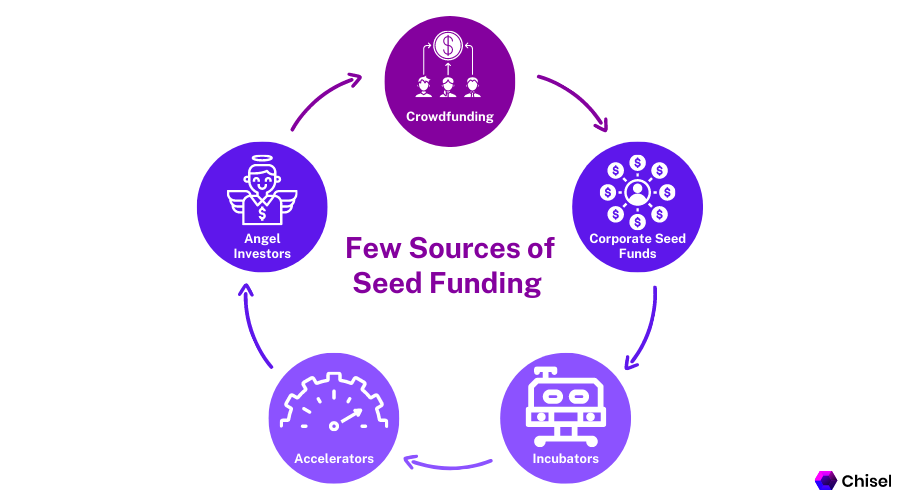
  • Gold rose as well on PPI news, since the data pointed to a better chance of more rate cuts ahead.
  • Oil fell a bit but gained over the last two weeks on geopolitical tensions and destruction in the Gulf of Mexico following the two major hurricanes.

COMMENTS APPRECIATED

Thank You

***

***

UNITEDHEALTHGROUP: Recent Pros and Cons of UNH

By Staff Reporters

***

SPONSOR: http://www.MarcinkoAssociates.com

A class action lawsuit has been filed in Minnesota against UnitedHealth Group (NYSE:UNH) over allegations that the health insurer and its subsidiary, NaviHealth, used a faulty algorithm to deny rehabilitation care for Medicare Advantage beneficiaries. California-based Clarkson Law Firm filed the lawsuit in the U.S. District Court of Minnesota on Tuesday following an investigative report published by the health-focused news site Stat.

It alleges that UnitedHealth and its subsidiary, NaviHealth, used the computer algorithm named nH Predict to “systematically deny claims” of patients recovering from debilitating illnesses in nursing homes. According to the lawsuit, despite its 90% error rate, the company used the algorithm to deny claims, knowing that only 0.2% would appeal its decision. According to Stat, Humana (HUM), the nation’s second-largest player in the Medicare Advantage market behind UnitedHealth (UNH), also uses nH Predict. UnitedHealth (UNH) denied it used the NaviHealth predict tool to arrive at coverage decisions.

***

***

Ironically, UnitedHealth’s (NYSE:UNH) Optum Rx unit announced plans to move eight insulin products to “preferred” status on formularies to further expand the number of patients benefiting from $35 or less monthly out-of-pocket costs for the lifesaving therapy.

Optum Rx, UNH’s pharmacy benefit manager (PBM), said that effective January 1, 2024, all short- and rapid-acting insulins will move to Tier 1 in commercial formularies, a list of drugs the company maintains to indicate coverage for insured patients.

CITE: https://www.r2library.com/Resource

COMMENTS APPRECIATED

Thank You

***

***