Safe Notes VERSUS Convertible Notes

By AI

***

***

What Is a SAFE Note?

A SAFE note is a type of convertible security that specifies a certain amount of money an investor will pay you as a business owner. In exchange, you agree to give the investor a certain amount of equity in your company at an agreed-upon future date. In other words, a SAFE note confers the right for an investor to purchase shares in your company in a future-priced round.

How SAFE Notes Work

According to ContractsCounsel, a SAFE note works in the following way:

  1. An investor provides funding in exchange for the right to future equity.
  2. You use the funding to grow your business.
  3. After your company grows sufficiently, you secure another investor, and your company receives a “post-money valuation.”
  4. You calculate your company’s price per share.
  5. You convert the SAFE note into the applicable number of shares and distribute them to the SAFE investor. Typically, a SAFE note converts after an equity financing round.

Example of a SAFE Note

An investor purchases a SAFE note with a valuation cap of $20 million. During the next funding round, the value of your company is set at $40 million at $20 a share. Because the SAFE note has a valuation cap of $20 million, its owner can purchase twice as many shares of your company as new investors can. This was the incentive for the SAFE investor to provide funding earlier.

What Is a CONVERTIBLE NOTE?

Within venture capital financing, a convertible note is a type of short-term debt financing that’s used in early-stage capital raises. In other words, convertible notes are loans to early-stage startups from investors who are expecting to be paid back when their note comes due. But, instead of being paid back in principal with interest—as would be the case with a typical loan—the investor can be repaid in equity in your company.

You might also think of a convertible note like an IOU. An investor provides you with capital now and the convertible note, acting as a short-term loan, ensures that you give the investor a stake in your startup later. From the investor’s point of view, the benefit in this exchange is that if they give you capital and a vote of confidence early on and you do well, you’ll repay them many times over.

How Do Convertible Notes Work?

Typically, an investor will provide an early-stage startup in need of capital with a loan (with repayment terms in the ballpark of a standard short-term loan, usually a year or two), along with repayment terms. This is the “note.” The note will include a due date at which time it’s mature and the balance will be due, along with interest. Generally, however, the note is not repaid like a normal short-term loan. Instead, you repay the investor for their loan with equity in your company, usually in conjunction with another funding round. 

If, however, the maturity date comes along and your startup has not yet converted the note to equity, the investor can either extend the convertible note’s maturity date or call for the actual repayment of the note.

Debt Paradox: https://medicalexecutivepost.com/2025/02/04/paradox-debt-may-be-necessary-to-build-wealth/

This being said, the whole idea behind convertible notes is that your company is on a strong growth trajectory and that is why the note is being issued—it amasses value for the investor and beelines to a priced round. Ultimately, the point of a convertible note is that the noteholder, or investor, doesn’t want to get their loan paid back— they want their debt to convert into a heavily discounted security in a successful, valuable company that’s growing extremely quickly.

Cons: The major downside of a convertible note is that you will eventually be giving up some control over your business. When the convertible note comes due, the investor will be granted equity in your business. If you’re not ready to split ownership of your business with outside parties, this is not the right financing option for you.

CASH ADVANCE LOANS: https://medicalexecutivepost.com/2024/12/14/merchant-cash-advance-loans/

COMMENTS APPRECIATED

Like and Refer

***

***

ASSET PROTECTION: Records Verification

By Rick Kahler MSFP CFP®

***

***

OVER HEARD IN THE FINANCIAl ADVISOR’S LOUNGE

A basic strategy for asset protection is to hold various assets in different entities. Putting real estate, small businesses, and other assets into trusts, corporations, or limited liability companies (LLCs) is effective protection that is relatively easy to put into practice. Not only do I recommend this strategy to clients, I use it myself. Recently, however, I discovered a potential downside.

About 25 years ago, I invested in some rare coins in a corporation I owned and put them into a safe deposit box owned by the corporation. When my business relocated 12 years ago, the safe deposit box billing was not forwarded to the new address and was never paid again. Last year I went to retrieve the coins from the safe deposit box, which I had not visited in 25 years. I discovered the box had been drilled open three years earlier and my collection turned over to the unclaimed property division of the State Treasurer’s office.

I was told getting the coins back would be simple enough. I just needed to verify that I owned the company which owned them by providing the corporation’s tax ID number. However, the corporation no longer existed. I didn’t have a record of its tax ID number. The IRS wouldn’t verify the number without my giving them the address the company had used. That address was a post office box number that I no longer used and couldn’t remember. The state’s position was “no tax ID, no coins.” The only verification of my identity as owner of the corporation was my signature on the bank’s safe deposit box application. Eventually, with the support of bank officers who were willing to swear that I was who I claimed to be, I got my coin collection back.  The hassle involved in this process was a reminder of an important component of asset protection. Maintain accurate records so you don’t end up hiding assets from yourself.

***

***

A good start is to create a master file of all the entities that hold your assets. This can be any system that’s easy for you to use: a computer spreadsheet, a set of file folders, or a single paper list. Share it as appropriate with your CPA, attorney, or financial planner. The master list should include the name of each company, its date of incorporation, tax ID number, address, and other relevant information like phone or bank account numbers. Also keep an inventory of the assets each company owns.

Once you’ve created a master list, it’s essential to keep it up to date as you buy or sell assets, close companies, or transfer ownership. Set up a system, as well, to remind yourself of tasks like filing tax returns, completing minutes of annual meetings, and paying the annual safe deposit box rent. Make your record-keeping easier by eliminating unnecessary complications.

For example, you probably don’t need a separate address for each trust, corporation, or LLC. Instead of creating a separate company for each asset, you might consider grouping smaller assets within one entity. I’d suggest first discussing the pros and cons with an attorney or financial planner. For larger assets like real estate, I do recommend holding each one separately.

When I talk to clients about asset protection, I mention that part of the price we pay for it is an increase in paperwork. It’s easy to accept that idea with casual good intentions. The case of my reclaimed coin investment is a good reminder of the importance of keeping up with that paperwork. If we don’t, we might protect ourselves right out of access to our own assets.

COMMENTS APPRECIATED

Subscribe, Refer and Like

***

***

PHYSICIANS: Personal Portfolio Management?

BY DR. DAVID EDWARD MARCINKO; MBA MEd CMP®

SPONSOR: http://www.CertifiedMedicalPlanner.org

***

***

SPONSOR: http://www.MarcinkoAssociates.com

Most individual physician portfolios are simply a list of stocks.  Doctors with such lists usually know the cost of each position and when they acquired it.  It is not unusual to find inherited low cost stocks in the account that have been held for many years.

When you inherit securities, a new cost basis is established (the price of the stock on the date of death or six months later—the executor of the estate makes this determination). Even though there would be no capital gain liability if the stock were sold immediately after date of death, most people simply don’t do anything, just hold the stock. Of course taxes should be considered when selling securities but the investment merit should be the overriding factor. 

***

***

Doctor and Accountant Opinions

In a personal communication, Mr. L. Eddie Dutton, CPA said, “First make an investment decision and if it fits into the tax plan, so much the better.  Doctors often wonder where they will get the money to pay the taxes.  I say to get it from the sale of the appreciated stock and cry all the way to the bank with your profit.”

Dr. Ernest Duty MD, a very successful private investor advises “Ask yourself this question: If you had the money instead of the stock, would you buy the stock?  If your answer is ‘Yes’ then, hold on to the stock but if you say ‘No, I wouldn’t buy that stock today’ then, sell it” [personal communication].

COMMENTS APPRECIATED

Read, refer, like and subscribe

EDUCATION: Books

SPEAKING: Dr. Marcinko will be speaking and lecturing, signing and opining, teaching and preaching, storming and performing at many locations throughout the USA this year! His tour of witty and serious pontifications may be scheduled on a planned or ad-hoc basis; for public or private meetings and gatherings; formally, informally, or over lunch or dinner. All medical societies, financial advisory firms or Broker-Dealers are encouraged to submit a RFP for speaking engagements: E-MAIL CONTACT: MarcinkoAdvisors@outlook.com 

***

***

HEDGE FUND: Hiring Separate Managers?

SPONSOR: http://www.CertifiedMedicalPlanner.org

By Staff Reporters

***

***

A hedge fund is a limited partnership of private investors whose money is pooled and managed by professional fund managers. These managers use a wide range of strategies, including leverage (borrowed money) and the trading of nontraditional assets, to earn above-average investment returns. A hedge fund investment is often considered a risky, alternative investment choice and usually requires a high minimum investment or net worth. Hedge funds typically target wealthy investors.

Growing Funds: https://medicalexecutivepost.com/2025/01/15/hedge-funds-a-growing-sector-of-investing/

***

I want to invest with a manager that has the skills to “hedge” a portfolio, but I do not wish to mix my money with other investors as in a hedge fund.

QUESTION: Can I hire hedge fund managers to manage my account separately?

Some hedge fund managers do take the time to recruit and manage separate accounts, with or without the help of referring brokers.

However, before long the administrative burden of managing so many separate accounts can become quite significant. Hence, the minimums for such separate accounts are generally much higher than if one were to invest in the manager’s hedge fund.

Hedge Fees: https://medicalexecutivepost.com/2024/07/09/hedge-funds-understanding-fees-and-costs/

The best feature of these separate accounts is that potentially every aspect of the investment account, including fees, is negotiable. Other features include greater transparency and increased liquidity, since separately managed accounts can often be shut down on short notice.

Hedge Monitors: https://medicalexecutivepost.com/2024/07/09/how-to-monitor-hedge-funds/

Investors must be aware, however, that for practical purposes the portfolio manager generally will buy and sell the same securities in the separately managed accounts that the portfolio manager buys and sells in the hedge fund, yet the expenses incurred by the investor will likely be higher.

Hedge IRA: https://medicalexecutivepost.com/2025/04/02/hedge-funds-in-individual-retirement-accounts/

COMMENTS APPRECIATED

Read, Like, Refer and Subscribe

***

***

PARADOX: Baumol’s Economic Cost Disease

SPONSOR: http://www.HealthDictionarySeries.org

Staff Reporters

***

***

According to Baumol’s Cost Disease, in theory, workers should get higher pay because they get more productive. But an economist named William J. Baumol PhD noticed this isn’t always true; as in a paradox.

For example, musicians take the same time to play a string quartet as they did in Mozart’s day, but are paid more nevertheless. The reason is competition for labor; musicians can take other jobs. So rising wages in productive parts of the economy (eg, manufacturing) lead to higher wages in less productive sectors.

MORE: For more on the paradoxical disease, read this article; and for more on Baumol, read this one.

COMMENTS APPRECIATED

Like and Refer

***

***

FINANCIAL ADVISORS: Usually Aren’t Millionaires

THE TRUTH MUST BE TOLD!

By Dr. David Edward Marcinko MBA MEd CMP

http://www.MarcinkoAssociates.com

***

***

Financial Advisors and Financial Planners Usually Aren’t Millionaires

According to the most recent data from the Bureau of Labor Statistics (BLS), financial advisors had a median annual salary of $99,580 in 2023, which is significantly higher than the national average of $65,470. Of course, salaries of financial advisors can differ significantly by their location and level of expertise. The client’s profile may also have an impact on their compensation. But, many are not rich.

REPLACE FINANCIAL PLANNERS: https://medicalexecutivepost.com/2023/03/15/why-your-financial-planner-may-be-replaced/

This is unfortunate. Financial advisors and Financial planners don’t rank among the millionaire professions in Thomas J. Stanley and William D. Danko’s book The Millionaire Next Door. Many work as salaried employees rather than entrepreneurs, lacking the scalable income potential of business owners who reinvest profits.

Certified Medical Planner: https://medicalexecutivepost.com/2024/12/17/certified-medical-planner-niche-advisors-thrive/

Stanley and Danko also stressed frugality, a challenge for advisors pressured to flaunt success—think luxury cars or upscale offices—making them “income-statement affluent” rather than “balance-sheet affluent.”

BEST DOG FINANCIAL ADVISOR: https://medicalexecutivepost.com/2025/03/23/dog-nearly-fetches-prestigious-financial-advisor-honor/

CONCLUSION

The truth is that a Financial Advisors’ success isn’t measured in client returns. Instead it is measured in their ability to gather assets and retain clients. In other words; Financial Advisors do not need to be good with money.

Financial Advisors need to be good with marketing, advertising, sales and people.

COMMENTS APPRECIATED

Like and Subscribe

***

***

EDUCATION: Books

SPEAKING: Dr. Marcinko will be speaking and lecturing, signing and opining, teaching and preaching, storming and performing at many locations throughout the USA this year! His tour of witty and serious pontifications may be scheduled on a planned or ad-hoc basis; for public or private meetings and gatherings; formally, informally, or over lunch or dinner. All medical societies, financial advisory firms or Broker-Dealers are encouraged to submit a RFP for speaking engagements: MarcinkoAdvisors@outlook.com 

***

UNITEDHEALTH GROUP CEO: Quits and Suspends Annual Forecast

By Staff Reporters

BREAKING NEWS

***

***

UnitedHealth Group just announced the exit of CEO Andrew Witty and suspended its 2025 forecast due to surging medical costs, sending its shares down more than 10%. Chairman Stephen Hemsley will become CEO, effective immediately.

Medicare Advantage: https://medicalexecutivepost.com/2024/10/11/medicare-advantage-part-c-plans-face-headwinds/

The fourth-largest U.S company big revenue in 2024, Minnetonka-based UnitedHealth has experienced a turbulent year that saw the shock killing of United Healthcare CEO Brian Thompson in New York City, and a cyberattack that affecting an estimated 190 million people and cost the company an estimated $3.1 billion dollars.

UnitedHealth: https://medicalexecutivepost.com/2025/04/17/unitedhealth-stock-dives/

COMMENTS APPRECIATED

Subscribe, Like and Refer

***

***

CONSUMERS: Worried about the Economy

By Staff Reporters

***

***

Consumer sentiment is a statistical measurement of the overall health of the economy as determined by consumer opinion. It takes into account how people feel about their current financial health, the health of the economy in the short-term, and the prospects for longer-term economic growth. It is widely considered to be a useful economic indicator.

Consumer sentiment emerged as an economic statistic during the mid-20th century and has since become a barometer that influences public and economic policy. It is considered a lagging indicator because it takes people several months to notice and feel the effects of changes in economic activity.

American consumers are Worried about the Economy

Consumer sentiment dropped 8% from March to April amid worries about inflation, according to the University of Michigan’s closely watched survey. Though sentiment edged up slightly from an even lower reading earlier in the month, inflation expectations climbed to their highest since 1991 as consumers fret about the potential impact of tariffs.

And even beyond possible rising prices, things could be about to get rougher for consumers: Major retailers have warned that unless President Trump’s tariff policy toward China changes, they’re likely to encounter empty store shelves in a few weeks.

Like and Refer

***

***

SOCIAL SECURITY: Is Not a Ponzi Scheme

By Rick Kahler CFP

***

***

Lately, I’ve been hearing the same question from clients and readers alike: “Is Social Security even going to be there in five years?” Fueling this concern is a recent viral comment from Elon Musk, who told Joe Rogan that Social Security is “the biggest Ponzi scheme of all time.” That quote has been repeated in every corner of the internet, stirring up uncertainty and fear.

Elon Musk is a genius, but his brilliance in technology and innovation doesn’t automatically translate into expertise in public policy. When it comes to Social Security, he’s outside his lane. Calling it a Ponzi scheme may make for a great soundbite, but it’s a fundamental mischaracterization.

Social Security is not a Ponzi scheme. Not even close.

A Ponzi scheme is a form of financial fraud that lures investors with the promise of high returns. Instead of earning those returns through legitimate investments, the scheme pays earlier investors using money from newer ones. Eventually, the model collapses when there aren’t enough new participants to keep it going, leaving most people with significant losses. This is what happened to those who trusted Bernie Madoff, operator of one of the worst Ponzi schemes in history. Ponzi schemes are illegal, deceptive, and doomed from the start.

Social Security, in contrast, is a government-run, pay-as-you-go tax program. It’s fully transparent; you know exactly where your money is going. The payroll taxes you and your employer pay are used to provide income to today’s retirees, people with disabilities, and surviving family members of deceased workers. This isn’t a con, it’s a social contract.

So why the confusion? Part of the issue is that Social Security does, on the surface, resemble the flow of a Ponzi scheme: money coming in from the young to support the old. But similarity in structure doesn’t make it fraudulent. The program does not promise high returns, it promises a modest, inflation-adjusted benefit to support people as they age.

Social Security does face challenges. The trust fund reserves, built up during years when payroll taxes exceeded payouts, are projected to run dry around 2033. If Congress does nothing, benefits will need to be cut by about 20%. That’s serious, but it’s a solvency issue, not a scam.

And the solvency issue is fixable. There are numerous bipartisan proposals to shore up the system for the long term, from raising the payroll tax cap to gradually adjusting benefits. These aren’t radical ideas, they’re common-sense repairs. A bipartisan mix of 100 CFPs in a room could work out a solution in two days.

When clients ask me if the system will be around in five years, what they’re really asking is: Can I trust it? Can I trust the government? Can I trust that my years of work and tax payments will mean something in retirement? These are not just policy questions. They are emotional questions based on fear of scarcity and a desire for security. When someone with Elon Musk’s influence wrongly calls Social Security a Ponzi scheme, his attention-grabbing soundbite shakes the emotional foundation of that trust.

If we’re serious about preserving Social Security, let’s start by calling it what it is: a commitment to our elders. A tax-supported promise to care for one another across generations.

Social Security is not a fraud, it’s a shared responsibility based on the kind of society we want and woven into the fabric of American life. Yes, it needs some adjustments, but it’s not broken. Rather than eroding public trust with misleading comparisons, we should be focused on debating public policy and how we can strengthen and sustain the program for future generations.

***

ME-P NOTE: An increase in Social Security benefits is on the horizon, providing a potential financial cushion against rising inflation. The Cost of Living Adjustment (COLA) for 2025 is set at 2.5% monthly, translating to an average annual increase of approximately $600 for beneficiaries. This adjustment is based on the Consumer Price Index for Urban Wage Earners and Clerical Workers. While not guaranteed annually, COLA has historically been implemented in most years due to persistent inflationary trends.

COMMENTS APPRECIATED

Like and Refer

***

***

EARNINGS REPORTS: Out This Week

BREAKING NEWS

By Staff Reporters

***

***

This Week is Full of Data

On the economic side, things kick off on Tuesday with the S&P Case-Shiller home price index, and the job openings and labor turnover survey.

Then Wednesday brings the banga-bing, banga-boom: GDP, the ADP employment report, and of course, PCE.

On Thursday we get initial jobless claims and the ISM manufacturing index, followed by Friday’s US jobs report.

Company Earnings Reports

Monday: Domino’s Pizza, Waste Management, Nucor, and NXP Semiconductors

Tuesday: Visa, Coca-Cola, Novartis, AstraZeneca, HSBC, Pfizer, Honeywell, Spotify, Snap, American Tower, Altria, Starbucks, Mondelez International, Sherwin-Williams, UPS, BP, PayPal, Royal Caribbean Cruises, Universal Music Group, Hilton, Porsche, Adidas, GM, Corning, Kraft Heinz, JetBlue Airways, and Paccar

Wednesday: Microsoft, Meta, Samsung, Qualcomm, Caterpillar, Airbus, UBS, GSK, Barclays, Volkswagen, Robinhood, Humana, eBay, Norwegian Cruise Line, Albemarle, Wingstop, and Etsy

Thursday: Apple, Amazon, Eli Lilly, Mastercard, McDonald’s, Amgen, MicroStrategy, CVS Health, Airbnb, Dominion Energy, Roblox, Block, Hershey, Live Nation Entertainment, Kellanova, Estee Lauder, Reddit, Duolingo, Twilio, Juniper Networks, Moderna, United States Steel, Roku, Wayfair, and Harley-Davidson

Friday: ExxonMobil, Chevron, Shell, Eaton, Cigna Group, T. Rowe Price, Apollo, ING, and Wendy’s

COMMENTS APPRECIATED

Like and Refer

***

***

NEWS IN BRIEF: Financial, Investing, Economics and IT

BREAKING NEWS

By Staff Reporters

***

***

  • Spot bitcoin ETFs saw their highest inflows since January over the last few days, sparking a crypto rally.
  • The Federal Reserve withdrew its guidance for banks about engaging in crypto-related business.
  • California is now the fourth-largest economy in the world.
  • OpenAI expects its revenue to reach $125 billion in 2029, up from $3.7 billion last year.
  • The median pay for CEOs rose to a record $16.8 million in 2024.
  • Meta Platforms is laying off staff working in its virtual reality division.
  • Apple announced it’s shifting its iPhone production from China to India.

COMMENTS APPRECIATED

Refer and Like

***

***

ANNUITIES: Three Types of Insurance Products

By Staff Reporters

SPONSOR: http://www.MarcinkoAssociates.com

***

***

An annuity is a contract between you and an insurance company.  When you purchase an annuity, you make a lump-sum contribution or a series of contributions, generally each month.  In return, the insurance company makes periodic payments to you beginning immediately or at a pre-determined date in the future.  These periodic payments may last for a finite period, such as 20 years, or an indefinite period, such as until both you and your spouse are deceased.  Annuities may also include a death benefit that will pay your beneficiary a specified minimum amount, such as the total amount of your contributions.

The growth of earnings in your annuity is typically tax-deferred; this could be beneficial as you may be in a lower tax bracket when you begin taking distributions from the annuity. 

Warning: A word of caution: Annuities are intended as long-term investments. If you withdraw your money early from an annuity, you may pay substantial surrender charges to the insurance company as well as tax penalties to the IRS and state.

***

***

There are three basic types of annuities — fixed, indexed, and variable

1. With a fixed annuity, the insurance company agrees to pay you no less than a specified (fixed) rate of interest during the time that your account is growing. The insurance company also agrees that the periodic payments will be a specified (fixed) amount per dollar in your account.

2. With an indexed annuity, your return is based on changes in an index, such as the S&P. Indexed annuity contracts also state that the contract value will be no less than a specified minimum, regardless of index performance.

3. A variable annuity allows you to choose from among a range of different investment options, typically mutual funds. The rate of return and the amount of the periodic payments you eventually receive will vary depending on the performance of the investment options you select. 

READ: SEC’s publication, Variable Annuities: What You Should Know.

COMMENTS APPRECIATED

The Medical Executive-Post is a  news and information aggregator and social media professional network for medical and financial service professionals.

Feel free to submit education content to the site as well as links, text posts, images, opinions and videos which are then voted up or down by other members. Comments and dialog are especially welcomed.

Daily posts are organized by subject. ME-P administrators moderate the activity. Moderation may also conducted by community-specific moderators who are unpaid volunteers.

Like and Refer

***

***

CPA, CMA, CFA and Enrolled Agents

DEFINITIONS

By Staff Reporters

SPONSOR: http://www.MarcinkoAssociates.com

***

***

Certified Public Accountant

A Certified Public Accountant (CPA) is a licensed professional who has passed an examination administered by a state’s Board of Accountancy. State CPA exams are created under guidelines issued by The American Institute of Certified Public Accountants (AICPA). The Uniform CPA Exam can only be taken by accountants who already have professional experience in the field and a bachelor’s degree.CPAs are not fiduciaries.

Not all accountants are CPAs. Accountants who are CPAs are licensed by their state’s Board of Accountancy after passing the Uniform CPA Exam. CPAs prepare reports that accurately reflect the business dealings of the companies and individuals that hire them. Many prepare tax returns for individuals or businesses and advise them on ways to minimize taxes. Obtaining the CPA designation requires a bachelor’s degree, typically with a major in business administration, finance, or accounting. Other majors are acceptable if the applicant meets the minimum requirements for accounting courses.  

Enrolled Agent

Although not a CPA, an Enrolled Agent [EA] is a person who has earned the privilege of representing taxpayers before the Internal Revenue Service [IRS]. This is done by either passing a three-part comprehensive IRS test covering individual and business tax returns, or through experience as a former IRS employee. Enrolled agent status is the highest credential the IRS awards. Individuals who obtain this elite status must adhere to ethical standards and complete 72 hours of continuing education courses every three years.

Certified Managerial Accountant

A Certified Management Accountant (CMA), which is issued by the Institute of Management Accountants (IMA), builds on financial accounting proficiency by adding management skills that aid in making strategic business decisions based on financial data.

Oftentimes, the reports and analyses prepared by certified management accountants (CMAs) will go above and beyond those required by generally accepted accounting principles (GAAP). 

For example, in addition to a company’s required GAAP financial statements, CMAs may prepare additional management reports that provide specific insights useful to corporate decision-makers, such as performance metrics on specific company departments, products, or even employees.

Certified Financial Analyst

A Certified Financial Analyst [CFA] is a globally-recognized professional designation offered by the CFA Institute, an organization that measures and certifies the competence and integrity of financial analysts. Candidates are required to pass three levels of exams covering areas such as accounting, economics, ethics, money management, and security analysis. From 1963 through November 2023, more than 3.7 million candidates had taken the CFA exam. The overall pass rate was 45%. From 2014 through 2023, the 10-year average pass rate was 43%.1

CFA Institute. The CFA Institute was formerly the Association for Investment Management and Research (AIMR).

The CFA charter is one of the most respected designations in finance and is widely considered to be the gold standard in the field of investment analysis. To become a charter holder, candidates must pass three difficult exams, have a bachelors degree, and have at least 4,000 hours of relevant professional experience over a minimum of three years. Passing the CFA Program exams requires strong discipline and an extensive amount of studying. 

There are more than 200,000 CFA charter holders worldwide in 164 countries.The designation is handed out by the CFA Institute, which has 11 offices worldwide and 160 local member societies.

COMMENTS APPRECIATED

Like and Refer

***

***

PRIVATE EQUITY COMPENSATION: Carried Interest [Pros and Cons]

DEFINITION

By Staff Reporters

SPONSORS: http://www.MarcinkoAssociates.com

***

***

Carried interest accounts for the bulk of private equity fund managers’ compensation. It is calculated as a share of fund profits, historically 20% above a threshold rate of return for limited partners.

In contrast with most other forms of employment compensation and business income, carried interest earned from fund investments held for at least three years is taxed as a long-term capital gain at a rate below the top marginal income tax rate.

Critics of the provision contend it taxes highly compensated private equity managers at a lower rate than comparably paid providers of labor or business services.

Defenders of carried interest argue taxing it as income would be unfair because it represents capital gains even if they’re not derived from recipients’ capital.

COMMENTS APPRECIATED

Refer and Subscribe

***

***

PHYSICIANS: On Real Estate Investing

OVER HEARD IN THE FINANCIAL ADVISOR’S LOUNGE

***

***

By Perry D’Alessio, CPA
[D’Alessio Tocci & Pell LLP]

What I see in my accounting practice is that significant accumulation in younger physician portfolio growth is not happening as it once did. This is partially because confidence in the equity markets is still not what it was; but that doctors are also looking for better solutions to support their reduced incomes.

For example, I see older doctors with about 25 percent of their wealth in the market, and even in retirement years, do not rely much on that accumulation to live on. Of this 25 percent, about 80 percent is in their retirement plan, as tax breaks for funding are just too good to ignore.

What I do see is that about 50 percent of senior physician wealth is in rental real estate, both in a private residence that has a rental component, and mixed-use properties. It is this that provides a good portion of income in retirement.

***

***

QUESTION: So, could I add dialog about real estate as a long term solution for retirement?

Yes, as I believe a real estate concentration in the amount of 5 percent is optimal for a diversified portfolio, but in a very passive way through mutual or index funds that are invested in real estate holdings and not directly owning properties.

Today, as an option, we have the ability to take pension plan assets and transfer marketable securities for rental property to be held inside the plan collecting rents instead of dividends.

Real estate holdings never vary very much, tend to go up modestly, and have preferential tax treatment due to depreciation of the property against income.

COMMENTS APPRECIATED

Read, Subscribe and Refer

EDUCATION: Books

***

***

BENEFICIARY DESIGNATIONS: Top 10 Tips for Medical Professionals

By Staff Reporters

***

***

Beneficiary designations can provide a relatively easy way to transfer an account or insurance policy upon your death. However, if you’re not careful, missing or outdated beneficiary designations can easily cause your estate plan to go awry.

Where you can find them

Here’s a sampling of where you’ll find beneficiary designations:

  • Employer-sponsored retirement plans [401(k), 403(b), etc.]
  • IRAs
  • Life insurance policies
  • Annuities
  • Transfer-on-death (TOD) investment accounts
  • Pay-on-death (POD) bank accounts
  • Stock options and restricted stock
  • Executive deferred compensation plans
  • In several states, so-called “lady bird” deeds for real estate

***

***

10 tips about beneficiary designations

Because beneficiary designations are so important, keep these things in mind in your estate planning:

  1. Remember to name beneficiaries. If you don’t name a beneficiary, one of the following could occur:
    • The account or policy may have to go through probate. This process often results in unnecessary delays, additional costs, and unfavorable income tax treatment.
    • The agreement that controls the account or policy may provide for “default” beneficiaries. This could be helpful, but it’s possible the default beneficiaries may not be whom you intended.
  2. Name both primary and contingent beneficiaries. It’s a good practice to name a “back up” or contingent beneficiary in case the primary beneficiary dies before you. Depending on your situation, you may have only a primary beneficiary. In that case, consider whether it may make sense to name a charity (or charities) as the contingent beneficiary.
  3. Update for life events. Review your beneficiary designations regularly and update them as needed based on major life events, such as births, deaths, marriages, and divorces.
  4. Read the instructions. Beneficiary designation forms are not all alike. Don’t just fill in names — be sure to read the form carefully. If necessary, you can draft your own customized beneficiary designation, but you should do this only with the guidance of an experienced attorney or tax advisor.
  5. Coordinate with your will and trust. Whenever you change your will or trust, be sure to talk with your attorney about your beneficiary designations. Because these designations operate independently of your other estate planning documents, it’s important to understand how the different parts of your plan work as a whole.
  6. Think twice before naming individual beneficiaries for particular assets. For example, you may establish three accounts of equal value initially and name a different child as beneficiary of each account. Over the years, the accounts may grow or be depleted unevenly, so the three children end up receiving different amounts — which is not what you originally intended.
  7. Avoid naming your estate as beneficiary. If you designate a beneficiary on your 401(k), for example, it won’t have to go through probate court to be distributed to the beneficiary. If you name your estate as beneficiary, the account will have to go through probate. For IRAs and qualified retirement plans, there may also be unfavorable income tax consequences.
  8. Use caution when naming a trust as beneficiary. Consult your attorney or CPA before naming a trust as beneficiary for IRAs, qualified retirement plans, or annuities. There are situations where it makes sense to name a trust — for example if:
    • Your beneficiaries are minor children
    • You’re in a second marriage
    • You want to control access to funds
  9. Be aware of tax consequences. Many assets that transfer by beneficiary designation come with special tax consequences. It’s helpful to work with an experienced tax advisor to help provide planning ideas for your particular situation.
  10. Use disclaimers when necessary — but be careful. Sometimes a beneficiary may actually want to decline (disclaim) assets on which they’re designated as beneficiary. Keep in mind that disclaimers involve complex legal and tax issues and require careful consultation with your attorney and CPA.

COMMENTS APPRECIATED

Refer and Subscribe

***

***

PHYSICIAN: Financial Education Lacking in Medical School

FRANKLY SPEAKING MY MIND!

By Dr. David Edward Marcinko MBA MEd CMP

SPONSOR: http://www.CertifiedMedicalPlanner.org

***

SPONSOR: http://www.MarcinkoAssociates.com

***

The vast majority of physicians and medical professionals major in one of the hard science while in college; biology, engineering, chemistry, mathematics, computer science or physics; etc. Few take undergraduate courses in finance, business management, securities analysis, accounting or economics; although this paradigm is changing with modernity. These course are not particularly difficult for the pre-medical baccalaureate major, they are just not on the radar screen for time compressed and highly competitive students; nor are they needed for medical or nursing school admission, or the many related allied health professional schools.

In fact, William C. Roberts MD, originally from Emory University in Atlanta, and former editor for the Baylor University Medical Center Proceedings and The American Journal of Cardiology, opined just a decade ago:

“Of the 125 medical schools in the USA, only one of them to my knowledge offers a class related to saving or investing money.”

And so, it is important to review some basic principles of economics, finance and accounting as they relate to financial planning in thees two textbooks; and this ME-P.

COMMENTS APPRECIATED

Refer and Subscribe

***

***

***

ROTH: Conversion Considerations for Physicians

Why would a doctor consider a Roth IRA conversion?

By Staff Reporters

***

***

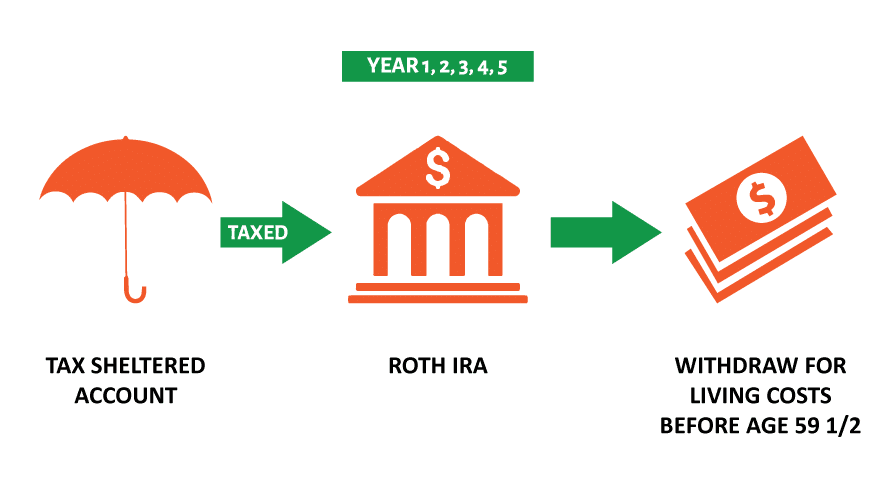
A Roth conversion involves transferring funds from a traditional retirement account—such as a 401(k), 403(b), or individual retirement account (IRA) funded with pre-tax dollars—into a Roth IRA.

The biggest benefit lies in the tax treatment of the converted funds. Once the funds are in the Roth IRA, future growth of those assets is tax-free. Withdrawals in retirement are also tax-free, assuming they meet certain criteria. As with any strategy, there are important considerations to keep in mind.

When you convert funds to a Roth IRA, the amount converted is taxable income in that tax year. For example, if you convert $100,000 from a traditional IRA to a Roth IRA, that $100,000 will be added to your taxable income in the conversion year.

Converting large amounts can result in a significant tax bill and may push you into a higher tax bracket. Even so, using retirement funds to pay taxes may make sense for those looking to convert large IRAs to reduce their future required minimum distributions (RMDs).

The timing of your Roth conversion matters too. Generally, it’s a good idea to convert when your income is lower—for example, after you’ve retired and before you begin drawing Social Security. You may also choose to convert over the course of several years to spread out the tax impacts. But if you can get comfortable with these considerations, a Roth conversion can provide you with benefits beyond tax-free growth and withdrawals.

Some of these benefits are:

  • Tax diversification. Having both traditional and Roth accounts allows you to manage your tax liability in retirement. For example, if your income in a given year is higher than expected, you can withdraw from the Roth IRA without increasing your taxable income.
  • No RMDs. Traditional IRAs and 401(k)s require you to begin taking RMDs at age 73. Roth IRAs have no RMD requirement during your lifetime. With a Roth account, you have more control over your retirement withdrawals and can leave the funds to grow for your heirs.
  • Benefits for heirs. Roth IRAs can be passed on to beneficiaries, who can inherit the account income tax-free. This means your heirs can enjoy the tax-free growth and withdrawals if the Roth IRA has been held for five years or more—a significant advantage, especially if your beneficiaries are in a higher tax bracket.

COMMENTS APPRECIATED

Read, Like and Refer

***

***

FINANCIAL MODELING TERMS: All Physicians Should Review and Know

By Staff Reporters

SPONSOR: http://www.CertifiedMedicalPlanner.org

***

***

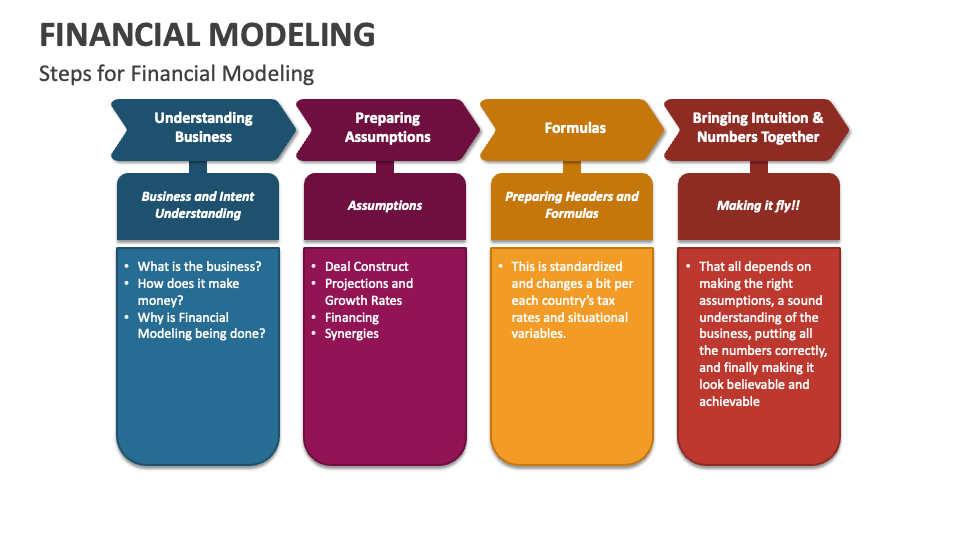
Financial Modeling is one of the most highly valued, but thinly understood, skills in financial analysis. The objective of financial modeling is to combine accounting, finance, and business metrics to create a forecast of a company’s future results.

According to Jeff Schmidt, a financial model is simply a spreadsheet, usually built in Microsoft Excel, that forecasts a business’s financial performance into the future. The forecast is typically based on the company’s historical performance and assumptions about the future and requires preparing an income statement, balance sheet, cash flow statement, and supporting schedules (known as a three-statement model, one of many types of approaches to financial statement modeling). From there, more advanced types of models can be built such as discounted cash flow analysis (DCF model), leveraged buyout (LBO), mergers and acquisitions (M&A), and sensitivity analysis

***

DEFINED TERMS

Discounted Cash Flow (DCF): A valuation method used to estimate the value of an investment based on its expected future cash flows, adjusted for the time value of money. It’s like deciding whether a treasure chest is worth diving for now, based on the gold coins you’ll be able to cash in later.

Sensitivity Analysis: This involves changing one variable at a time to see how it affects an outcome. Imagine tweaking your coffee-to-water ratio each morning to achieve the perfect brew strength.

Budget – A budget is the amount of money a department, function, or business can spend in a given period of time. Usually, but not always, finance does this annually for the upcoming year.

Rolling ForecastA rolling forecast maintains a consistent view over a period of time (often 12 months). When one period closes, finance adds one more period to the forecast.

Topside – A topside adjustment is an overlay to a forecast. This is typically completed by the corporate or headquarter team. As individual teams submit a forecast, the consolidated result might not make sense or align with expectations. When this occurs, the high-level teams use a topside adjustment to streamline or adjust the consolidated view.

Monte Carlo Simulation: Picture yourself at the casino, but instead of gambling your savings away, you’re using this technique to predict different outcomes of your business decisions based on random variables. It’s like playing financial roulette with the odds in your favor.

What-If Analysis: Ever daydream about what would happen if you took that leap of faith with your business? This tool allows you to explore various scenarios without risking a dime. It’s like trying on outfits in a virtual dressing room before making a purchase.

Leveraged Buyout (LBO) Model: This is a bit like orchestrating a heist, but legally. It’s about acquiring a company using borrowed money, with plans to pay off the debts with the company’s own cash flows. High stakes, high rewards.

Mergers and Acquisitions (M&A) Model: Picture two puzzle pieces coming together. This model evaluates how combining companies can create a new, more valuable entity. It’s the corporate version of a matchmaker.

Three Statement Model: The holy trinity of financial modeling, linking the income statement, balance sheet, and cash flow statement. It’s like weaving a tapestry where each thread is crucial to the overall picture.

Capital Asset Pricing Model (CAPM): A formula that calculates the expected return on an investment, considering its risk compared to the market. It’s like choosing the best roller coaster in the park, balancing thrill and safety.

Cash Flow Forecasting: This is your financial weather forecast, predicting the cash flow climate of your business. It helps you plan for sunny days and save for the rainy ones.

Cost of Capital: The price of financing your business, whether through debt or equity. It’s like the interest rate on your growth engine, pushing you to maximize every dollar invested.

Debt Schedule: A timeline of your business’s debts, showing when and how much you owe. It’s your roadmap to becoming debt-free, one milestone at a time.

Equity Valuation: Determining the value of a company’s shares. It’s like assessing the worth of a rare gemstone, ensuring investors pay a fair price for a piece of the treasure.

Financial Leverage: Using debt to amplify returns on investment. It’s like using a lever to lift a heavy object, increasing force but also risk.

Forecast Model: A crystal ball for your finances, projecting future performance based on past and present data. It’s your guide through the financial wilderness, helping you navigate with confidence.

Operating Model: A detailed blueprint of how a business generates value, mapping out operational activities and their financial impact. It’s like laying out the inner workings of a clock, ensuring every gear turns smoothly.

Revenue Growth Model: This tracks potential increases in sales over time, charting a course for expansion. It’s like plotting your ascent up a mountain, anticipating the effort required to reach the summit.

COMMENTS APPRECIATED

Subscribe, Like, Refer and Learn

***

***

ACO REACH: A New Model

ACCOUNTABLE CARE ORGANIZATIONS

Realizing Equity, Access, and Community Health

By Staff Reporters

***

***

Model Overview

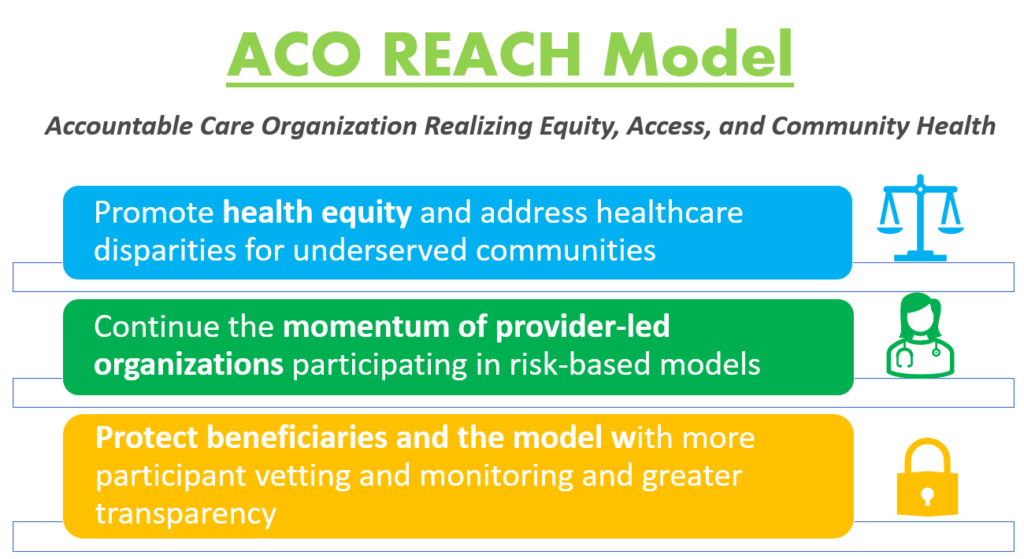
The ACO REACH Model provides novel tools and resources for health care providers to work together in an ACO to improve the quality of care for people with Traditional Medicare. REACH ACOs are comprised of different types of providers, including primary and specialty care physicians.

The ACO REACH Model makes important changes to the previous Global and Professional Direct Contracting (GPDC) Model which include:  

***

***

  1. Promote Provider Leadership and Governance. The ACO REACH Model includes policies to ensure doctors and other health care providers continue to play a primary role in accountable care. At least 75% control of each ACO’s governing body generally must be held by participating providers or their designated representatives, compared to 25% during the first two Performance Years of the GPDC Model. In addition, the ACO REACH Model goes beyond prior ACO initiatives by requiring at least two beneficiary advocates on the governing board (at least one Medicare beneficiary and at least one consumer advocate), both of whom must hold voting rights. 
     
  2. Protect Beneficiaries and the Model with More Participant Vetting, Monitoring and Greater Transparency. CMS will ask for additional information on applicants’ ownership, leadership, and governing board to gain better visibility into ownership interests and affiliations to ensure participants’ interests align with CMS’s vision. We will employ increased up-front screening of applicants, robust monitoring of participants, and greater transparency into the model’s progress during implementation, even before final evaluation results, and will share more information on the participants and their work to improve care. Last, CMS will also explore stronger protections against inappropriate coding and risk score growth. 

MORE: https://www.cms.gov/priorities/innovation/innovation-models/aco-reach

COMMENTS APPRECIATED

Refer and Subscribe

***

***

FINANCIAL RATIOS: Profitability for Doctors

By CFI Team and Staff Reporters

SPONSOR: http://www.MarcinkoAssociates.com

***

***

Profitability Ratios

Profitability ratios measure a company’s ability to generate income relative to revenue, balance sheet assets, operating costs, and equity. Common profitability financial ratios include the following:

The gross margin ratio compares the gross profit of a company to its net sales to show how much profit a company makes after paying its cost of goods sold:

Gross margin ratio = Gross profit / Net sales

The operating margin ratio, sometimes known as the return on sales ratio, compares the operating income of a company to its net sales to determine operating efficiency:

Operating margin ratio = Operating income / Net sales

The return on assets ratio measures how efficiently a company is using its assets to generate profit:

Return on assets ratio = Net income / Total assets

The return on equity ratio measures how efficiently a company is using its equity to generate profit:

Return on equity ratio = Net income / Shareholder’s equity

COMMENTS APPRECIATED

Refer and Subscribe

***

***

PHYSICIAN PAYMENT INCREASE: Excluded by Continuing Resolution

By Health Capital Consultants, LLC

***

Continuing Resolution Excludes Physician Payment Increase Again

On March 15th, 2025, President Donald Trump signed a continuing resolution (CR) that avoided a government shutdown and funds the federal government for the rest of the fiscal year, i.e., through September 30th, 2025.

Perhaps more notable than what was included in the spending bill was what was once again excluded. While the COVID-era tele-health waivers were temporarily extended, Medicare physician payment rates were not addressed, meaning physicians will continue experiencing a 2.93% pay cut for 2025.

This Health Capital Topics article discusses the healthcare provisions included in and excluded from the CR, and the impacts on healthcare providers. (Read more…)

COMMENTS APPRECIATED

Like, Refer, Subscribe and Refer

***

***

***

ACCOUNTABLE CARE ORGANIZATION: A Financially Toxic Contract Example for Physicians

SPONSOR: http://www.MarcinkoAssociates.com

By. Dr. David Edward Marcinko; MBA MEd CMP®

***

SPONSOR: http://www.CertifiedMedicalPlanner.org

***

WARNING – DISASTROUS ACO EXAMPLE – WARNING

GIVEN CASH FLOW MODEL

Suppose that in a new Accountable Care Organization [ACO] contract, a certain medical practice was awarded a new global payment or capitation styled contract that increased revenues by $100,000 for the next fiscal year. The practice had a gross margin of 35% that was not expected to change because of the new business. However, $10,000 was added to medical overhead expenses for another assistant and all Account’s Receivable (AR) are paid at the end of the year, upon completion of the contract.

Cost of Medical Services Provided (COMSP):

The Costs of Medical Services Provided (COMSP) for the ACO business contract represents the amount of money needed to service the patients provided by the contract.  Since gross margin is 35% of revenues, the COMSP is 65% or $65,000.  Adding the extra overhead results in $75,000 of new spending money (cash flow) needed to treat the patients. Therefore, divide the $75,000 total by the number of days the contract extends (one year) and realize the new contract requires about $ 205.50 per day of free cash flows.

Assumptions

Financial cash flow forecasting from operating activities allows a reasonable projection of future cash needs and enables the doctor to err on the side of fiscal prudence. It is an inexact science, by definition, and entails the following assumptions:

  • All income tax, salaries and Accounts Payable (AP) are paid at once.
  • Durable medical equipment inventory and pre-paid advertising remain constant.
  • Gains/losses on sale of equipment and depreciation expenses remain stable.
  • Gross margins remain constant.
  • The office is efficient so major new marginal costs will not be incurred.

***

***

Physician Reactions:

Since many physicians are still not entirely comfortable with global reimbursement, fixed payments, capitation or ACO reimbursement contracts; practices may be loath to turn away short-term business in the ACA era.  Physician-executives must then determine other methods to generate the additional cash, which include the following general suggestions:

1. Extend Account’s Payable

Discuss your cash flow difficulties with vendors and emphasize their short-term nature. A doctor and her practice still has considerable cache’ value, especially in local communities, and many vendors are willing to work them to retain their business

2. Reduce Accounts Receivable

According to most cost surveys, about 30% of multi-specialty group’s accounts receivable (ARs) are unpaid at 120 days. In addition, multi-specialty groups are able to collect on only about 69% of charges. The rest was written off as bad debt expenses or as a result of discounted payments from Medicare and other managed care companies. In a study by Wisconsin based Zimmerman and Associates, the percentages of ARs unpaid at more than 90 days is now at an all time high of more than 40%. Therefore, multi-specialty groups should aim to keep the percentage of ARs unpaid for more than 120 days, down to less than 20% of the total practice. The safest place to be for a single specialty physician is probably in the 30-35% range as anything over that is just not affordable.

The slowest paid specialties (ARs greater than 120 days) are: multi-specialty group practices; family practices; cardiology groups; anesthesiology groups; and gastroenterologists, respectively. So work hard to get your money, faster. Factoring, or selling the ARs to a third party for an immediate discounted amount is not usually recommended.

3. Borrow with Short-Term Bridge Loans

Obtain a line of credit from your local bank, credit union or other private sources, if possible in an economically constrained environment. Beware the time value of money, personal loan guarantees, and onerous usury rates. Also, beware that lenders can reduce or eliminate credit lines to a medical practice, often at the most inopportune time.

4. Cut Expenses

While this is often possible, it has to be done without demoralizing the practice’s staff.

5.  Reduce Supply Inventories

If prudently possible; remember things like minimal shipping fees, loss of revenue if you run short, etc.

6. Taxes

Do not stop paying withholding taxes in favor of cash flow because it is illegal.

Hyper-Growth Model:

Now, let us again suppose that the practice has attracted nine more similar medical contracts. If we multiple the above example tenfold, the serious nature of potential cash flow problem becomes apparent. In other words, the practice has increased revenues to one million dollars, with the same 35% margin, 65% COMSP and $100,000 increase in operating overhead expenses. 

Using identical mathematical calculations, we determine that $750,000 / 365days equals $2,055.00 per day of needed new free cash flows!  Hence, indiscriminate growth without careful contract evaluation and cash flow analysis is a prescription for potential financial disaster.

COMMENTS APPRECIATED

Subscribe, Read, Refer and Like

EDUCATION: Books

SPEAKING: Dr. Marcinko will be speaking and lecturing, signing and opining, teaching and preaching, storming and performing at many locations throughout the USA this year! His tour of witty and serious pontifications may be scheduled on a planned or ad-hoc basis; for public or private meetings and gatherings; formally, informally, or over lunch or dinner. All medical societies, financial advisory firms or Broker-Dealers are encouraged to submit a RFP for speaking engagements: CONTACT: MarcinkoAdvisors@outlook.com 

***

***

HOSPITAL: Finances Hold Steady in 2025

By Health Capital Consultants, LLC

***

Hospital Finances Held Steady in First Month of 2025

In the first month of 2025, hospital revenue and expenses both increased, balancing each other out and resulting in continued steady financial performance for hospitals, according to Kaufman Hall’s January 2025 National Hospital Flash Report.

Revenues grew more quickly in the inpatient setting, as more patients were treated in the hospital and emergency department than in outpatient settings. While expense increases were largely driven by drug costs, the rate of that growth has significantly slowed.

This Health Capital Topics article reviews the report and the current state of hospital operations. (Read more…) 

COMMENTS APPRECIATED

Subscribe, Read, Like and Refer

***

***

***

MEDICAL OFFICE: Practice Embezzlement Schemes

DR. DAVID EDWARD MARCINKO; MBA MEd CMP®

***

SPONSOR: http://www.MarcinkoAssociates.com

***

Without proper internal accounting controls, a medical practice [MD, DO, DPM, DDS, DMD] might never reach peak profitability. Internal controls designed and implemented by the physician-owner help prevent bad things from happening.

Embezzlement protection is the classic example. However, internal controls also help ensure good things happen most of the time; according to colleague Dr. Gary Bode; MSA, CPA.

Some Common Embezzlement “Old School” Schemes

Here are some ‘old-school” embezzlement schemes to avoid; however the list is imaginative and endless.

  • The physician-owner pocketing cash “off the books”. To the IRS, this is like embezzlement to intentionally defraud it out of tax money.
  • Employee’s pocketing cash from cash transactions.  This is why you see cashiers following protocol that seems to take forever when you’re in the grocery check out line. This is also why you see signs offering a reward if he/she is not offered a receipt. This is partly why security cameras are installed.
  • Bookkeepers writing checks to themselves.  This is easiest to do in flexible software programs like QuickBooks, Peachtree Accounting and related financial software. It is one of the hardest schemes to detect. The bookkeeper self-writes and cashes the check to their own name; and then the name on the check is changed in the software program to a vendor’s name.  So a real check exists which looks legitimate on checking statements unless a picture of it is available.
  • Employees ordering personal items on practice credit cards.
  • Bookkeepers receiving patient checks and illegally depositing them in an unauthorized, pseudo practice checking account, set up by themselves in a bank different from yours. They then withdraw funds at will. If this scheme uses only a few patients, who are billed outside of the practice’s accounting software it is hard to detect.  The doctor must have a good knowledge of existing patients to catch the ones “missing” from practice records. Monitoring the bookkeeper’s lifestyle might raise suspicion, but this scheme is generally low profile and protracted. Checking the accounting software “audit trail” shows the required original invoice deletions or credit memos in a less sophisticated version of this scheme.
  • Bookkeepers writing payroll checks to non-existent employees. This scheme works well in larger practices and medical clinics with high seasonal turnover of employees, and practices with multiple locations the podiatrist-owner doesn’t visit often.
  • Bookkeepers writing inflated checks to existing employees, vendors or subcontractors. Physician-owners should beware if romantic relationships between the bookkeeper and other practice related parties.
  • Bookkeepers writing checks to false vendors. This is another low profile, protracted scheme that exploits the podiatrists-owner’s indifference to accounts payable.

Assessment

Operating efficiency, safeguarding assets, compliance with existing laws and accuracy of financial transactions are common goals of internal managerial and cost accounting in medical practice.

CONCLUSION

Hopefully, the above is a good review to prevent common practice embezzlement schemes. Unfortunately, it is a never-ending endeavor.  

References: Marcinko, DE: Dictionary of Health Economics and Finance. Springer Publishing Company, NY 2007.

Related Textbooks: https://tinyurl.com/579rex23

COMMENTS APPRECIATED

Read, Subscribe and Refer

***

***

ESTATE PLANS: When Physicians Should Review

By J. Chris Miller JD

***

***

Your personal and financial life is constantly changing.  Significant changes always necessitate the need to review your life.  However, a few key events trigger the need to review your estate plan.  If any of the events below have occurred since you reviewed your estate plan, see a competent adviser to help you achieve your goals.

  1. Birth of a child or grandchild. 
  2. Death of a spouse, beneficiary, guardian, trustee or personal representative. 
  3. Marriage of you or your children.
  4. Divorce.  (Review beneficiary designations and asset titling)
  5. Move out of state.  An estate is settled under the laws of the state in which the decedent resided.  Certain provisions of a will that are valid in one state may not be in another.
  6. Change in estate value.  A large increase or decrease in the size of an estate may greatly affect some of the strategies that were implemented.
  7. Changes in business.  Starting, buying or selling a medical practice or other business has an impact on your estate. The addition or death of a business owner will cause a review.
  8. Tax law changes.  EGTRRA has dramatically changed the way we plan for estate taxes.  It is important to note that only planning for estate taxes has been effected.  Estate planning involves much more than just the motivation to reduce or eliminate taxes.  Assuring that your family is financially taken care of, that children have the opportunity to go to college, that your debts are paid, that charitable desires are achieved, provisions for a needy child, proper selection of a guardian, the list goes on.  Please do not use the new law as an excuse to not plan your estate.

***

OVERHEARD IN THE FINANCIAL ADVISOR’S LOUNGE

From my perspective, estate planning is a team sport, and lawyers rely on financial advisers all the time to spot issues for clients. We do not share the opinion that non-lawyers are incapable of giving good advice. 

-J. Chris Miller JD

COMMENTS APPRECIATED

Subscribe, Read and Refer

EDUCATION: Books

***

***

TAXATION: Avoidance V. Evasion V. Voluntary Compliance

DEFINITION

SPONSOR: http://www.MarcinkoAssociates.com

***

***

Tax avoidance—An action taken to lessen tax liability and maximize after-tax income.

Tax evasion—The failure to pay or a deliberate underpayment of taxes.

Underground economy—Money-making activities that people don’t report to the government, including both illegal and legal activities.

Voluntary compliance—A system of compliance that relies on individual citizens to report their income freely and voluntarily, calculate their tax liability correctly, and file a tax return on time.

MORE: https://apps.irs.gov/app/understandingTaxes/whys/thm01/les03/media/ws_ans_thm01_les03.pdf

COMMENTS APPRECIATED

Subscribe, Review and Like

***

***

DAILY UPDATE: Scripps Health & WHO as US Stock Markets Rise

MEDICAL EXECUTIVE-POST TODAY’S NEWSLETTER BRIEFING

***

Essays, Opinions and Curated News in Health Economics, Investing, Business, Management and Financial Planning for Physician Entrepreneurs and their Savvy Advisors and Consultants

Serving Almost One Million Doctors, Financial Advisors and Medical Management Consultants Daily

A Partner of the Institute of Medical Business Advisors , Inc.

http://www.MedicalBusinessAdvisors.com

SPONSORED BY: Marcinko & Associates, Inc.

***

http://www.MarcinkoAssociates.com

Daily Update Provided By Staff Reporters Since 2007.
How May We Serve You?
© Copyright Institute of Medical Business Advisors, Inc. All rights reserved. 2025

REFER A COLLEAGUE: MarcinkoAdvisors@outlook.com

SPONSORSHIPS AVAILABLE: https://medicalexecutivepost.com/sponsors/

ADVERTISE ON THE ME-P: https://tinyurl.com/ytb5955z

Your Referral Count -0-

FIRST DAY OF SPRING

CITE: https://www.r2library.com/Resource

Stat: $1.2 billion. That’s how much San Diego-based Scripps Health plans to spend building a new hospital in San Marcos, California. (Becker’s Hospital Review)

Read: What WHO Director-General Tedros Adhanom Ghebreyesus said about USAID cuts. (Stat)

Pharm fresh: Check out in-depth strategies designed to help increase engagement between pharma reps and primary care clinicians. It’s all right here in Pri-Med’s research. Read the report.

CITE: https://tinyurl.com/2h47urt5

Shares of Charles Schwab Corp. SCHW+1.51% rallied 1.51% to $78.73 Wednesday, on what proved to be an all-around favorable trading session for the stock market, with the S&P 500 Index SPX+1.08% rising 1.08% to 5,675.29 and the Dow Jones Industrial Average DJIA+0.92% rising 0.92% to 41,964.63.

CITE: https://tinyurl.com/tj8smmes

Visualize: How private equity tangled banks in a web of debt, from the Financial Times.

COMMENTS APPRECIATED

PLEASE SUBSCRIBE: MarcinkoAdvisors@outlook.com

Thank You

***

***

***

***

EDUCATIONAL TEXTBOOKS: https://tinyurl.com/4zdxuuwf

***

On Personal Financial Planning Ratios

Rocking Financial Planning … Old School Advice!

DEM tieBy Dr. David E. Marcinko MBBS MBA MEd CMP®

The economic platitude of the past, such as don’t spend more than 15-20 percent of your net salary on food, or 5-10 percent on medical care, among others, have given rise to the more individualized personal financial ratio concept. Personal ratios, like business ratios, represent benchmarks to compare such parameters as debt, income growth and net worth.

According to Edward McCarthy MIB CFP® – a personal financial expert from Warwick, Rhode Island whom I interviewed about a decade ago – the following represented useful ratios for the lay as well as medical professional [personal communication].

The Ratios: 

  • Basic Liquidity Ratio = liquid assets / average monthly expenses. Should be 4-6 months, or even longer, in the case of a medical professional employed by a financially insecure HMO. In a low interest rate environment, iMBA Inc offers 12-24 months for consideration.
  • Debt to Assets Ratio = total debt / total assets. A percentage which is high initially, and should decrease with age as the medical professional approaches a debt free existence
  • Debt to Gross Income Ratio = annual debt repayments / annual gross income. A percentage representing the adequacy of current income for existing debt repayments. Medial professionals should try to keep this below 25-30%.
  • Debt Service Ratio = annual debt re-payment / annual take-home pay. Medical professionals should try to keep this ratio below about 40%, or have difficulty paying down debt.
  • Investment Assets to Net Worth-Ratio = investment assets / net worth. This ratio should increase over time, as retirement for the medical professional approaches.
  • Savings to Income Ratio = savings / annual income. This ratio should also increase over time, especially as major obligations are retired.
  • Real Growth Ratio = (income this year – income last year) / (income last year – inflation rate). It is desirable for the medical professional to keep this ratio growing faster than the core rate f inflation.
  • Growth of Net-Worth Ratio = (net worth this year – net worth last year) / net worth last year – inflation rate. Again, this ratio should stay ahead of inflation.By calculating these ratios, perhaps on an annual basis, the medical professional can spot problems, correct them, and continue progressing toward stated financial goals.

Assessment

Now, after ten years, are these traditional ratios and advice still valid today: why or why not?

***

231_1

***

Conclusion

Your thoughts and comments on this ME-P are appreciated. Feel free to review our top-left column, and top-right sidebar materials, links, URLs and related websites, too. Then, subscribe to the ME-P. It is fast, free and secure.

Speaker: If you need a moderator or speaker for an upcoming event, Dr. David E. Marcinko; MBA – Publisher-in-Chief of the Medical Executive-Post – is available for seminar or speaking engagements. Contact: MarcinkoAdvisors@msn.com

OUR OTHER PRINT BOOKS AND RELATED INFORMATION SOURCES:

Risk Management, Liability Insurance, and Asset Protection Strategies for Doctors and Advisors: Best Practices from Leading Consultants and Certified Medical Planners™8Comprehensive Financial Planning Strategies for Doctors and Advisors: Best Practices from Leading Consultants and Certified Medical Planners™

***

FINANCIAL ADVISORS: Real Monetary Worth?

BY DR. DAVID EDWARD MARCINKO; MBA MEd CMP®

***

SPONSOR: http://www.MarcinkoAssociates.com

***

SO – HOW MUCH IS A “FINANCIAL ADVISOR” REALLY WORTH?

This blog holds a rather uncomplimentary opinion of financial advisors, and the financial services and brokerage industry as a whole; deserved, or not? The entire site hints at this attitude as well, in favor of a going it alone or ME, Inc investing when possible. Nevertheless, it is reasonable to wonder how much boost in net-returns might an educated and informed, fee transparent and honest, fiduciary focused “financial advisor” add to a clients’ investment portfolio; all things being equal [ceteris paribus].

And, can it be quantified?

Well, according to Vanguard Brokerage Services®, perhaps as much as 3%? In a decade long paper from the Valley Forge, PA based mutual fund and ETF giant, Vanguard said financial advisors can generate returns through a framework focused on five wealth management principles:

Being an effective behavioral coach: Helping clients maintain a long-term perspective and a disciplined approach is arguably one of the most important elements of financial advice. (Potential value added: up to 1.50%).

Applying an asset location strategy: The allocation of assets between taxable and tax-advantaged accounts is one tool an advisor can employ that can add value each year. (Potential value added: from 0% to 0.75%).

Employing cost-effective investments: This component of every advisor’s tool kit is based on simple math: Gross return less costs equals net return. (Potential value added: up to 0.45%).

Maintaining the proper allocation through rebalancing: Over time, as investments produce various returns, a portfolio will likely drift from its target allocation. An advisor can add value by ensuring the portfolio’s risk/return characteristics stay consistent with a client’s preferences. (Potential value added: up to 0.35%).

Implementing a spending strategy: As the retiree population grows, an advisor can help clients make important decisions about how to spend from their portfolios. (Potential value added: up to 0.70%).

Source: Financial Advisor Magazine, page 20, April 2014.

Assessment

However, Vanguard notes that while it’s possible all of these principles could add up to 3% in net returns for clients, it’s more likely to be an intermittent number than an annual one because some of the best opportunities to add value happen during extreme market lows and highs when angst or giddiness [fear and greed] can cause investors to bail on their well-thought-out investment plans.

And, is the study applicable to doctors and allied healthcare providers? Doe Vanguard have a vested interest in the topic. What about fee based versus fee-only financial advice?

Conclusion

Finally, recognize the plethora of other financial planning life-cycle topics addressed in this ME-P were not included in the Vanguard investment portfolio-only study a decade ago. 

And what about today with contemporaneous internet advising, chat-rooms, linkedin, robo-advisors, reddit and the like?

COMMENTS APPRECIATED

Read, Subscribe and Like

EDUCATION: Books

***

***

BIN Credit Card Attack?

BANK IDENTIFICATION NUMBER – DEFINED

By Staff Reporters

***

***

What Is a BIN Attack?

The BIN, or the Bank Identification Number, is the first six digits on a credit card. These are always tied to its issuing institution – usually a bank. In a BIN attack, fraudsters use these six numbers to algorithmically try to generate all the other legitimate numbers, in the hopes of generating a usable card number.  

How Does a BIN Attack Work?

Fraudsters conduct BIN attacks by generating hundreds of thousands of possible credit card numbers and testing them out.

  1. A fraudster looks up the BIN of the bank they will target. Ranging from four to six digits, this information is in the public domain and is thus easy to source.
  2. Using dedicated software such as an auto-dialer, they generate thousands, often tens of thousands, combinations of possible existing card numbers by this issuer.
  3. At this point, these credentials need to be tested. The fraudster identifies a suitable online shop or donation page.
  4. They start card testing by attempting a small payment with each generated card number.
  5. They keep track of the small percentage of card details that worked, which they are ready to use in earnest for their fraudulent pursuits. 

***

***

Remember that the fraudster will start off with only six digits, yet there are many more card details required for a successful transaction. If those are entered erroneously, the transaction will decline. This includes the CVV number, the expiration date, as well as likely address verification service (AVS) failures. Card testing transactions are executed remotely in a fast fashion, so distance checks should also be a hint as well as velocity alerts. 

Fraudsters may use bad merchant accounts directly for this purpose, or more frequently involve multiple online stores and services during a BIN attack, as their attempts keep getting blocked at most outlets.

MORE: https://seon.io/resources/dictionary/bin-attack/

COMMENTS APPRECIATED

Subscribe, Refer and Like

***

***

MEDICAL PRACTICE: Valuation Adjustments

NET INCOME STATEMENT AND BALANCE SHEET ADJUSTMENTS

By Dr. David Edward Marcinko; MBA MEd CMP®

***

***

SPONSOR: http://www.MarcinkoAssociates.com

Net Income Statement Adjustments

When analyzing a set of financial statements to determine practice value, adjustments (normalizations) generally are needed to produce a clearer picture of likely future income and distributable cash flow. It also allows more of an “apples to apples” line item comparison. This normalization process usually consists of making three main adjustments to a medical practice’s net income (profit and loss) statement.

1. Non-Recurring Items: Estimates of future distributable cash flow should exclude non-recurring items. Proceeds from the settlement of litigation, one-time gains/losses from the selling of assets or equipment, and large write-offs that are not expected to reoccur, each represent potential nonrecurring items. The impact of nonrecurring events should be removed from the practice’s financial statements to produce a clearer picture of likely future income and cash flow.

2. Perquisites: The buyer of a medical practice may plan to spend more or less than the current doctor-owner for physician executive compensation, travel and entertainment expenses, and other perquisites of current management. When determining future distributable cash flow, income adjustments to the current level of expenditures should be made for these items.

3. Non-cash Expenses: Depreciation expense, amortization expense, and bad debt expense are all non-cash items which impact reported profitability. When determining distributable cash flow, you must analyze the link between non-cash expenses and expected cash expenditures.

The annual depreciation expense is a proxy for likely capital expenditures over time. When capital expenditures and depreciation are not similar over time, an adjustment to expected cash flow is necessary. Some practices reduce income through the use of bad debt expense rather than direct write-offs. Bad debt expense is a non-cash expense that represents an estimate of the dollar volume of write-offs that are likely to occur during a year. If bad debt expense is understated, practice profitability will be overstated.

***

***

Balance Sheet Adjustments

Adjustments also can be made to a practice’s balance sheet to remove non-operating assets and liabilities, and to restate asset and liability value at market rates (rather than cost rates). Assets and liabilities that are unrelated to the core practice being valued should be added to or subtracted from the value, depending on whether they are acquired by the buyer.

Examples include the asset value less outstanding debt of a vacant parcel of land, and marketable securities that are not needed to operate the practice. Other non-operating assets, such as the cash surrender value of officer life insurance, generally are liquidated by the seller and are not part of the business transaction.

EDUCATION: Books

SPEAKING: Dr. Marcinko will be speaking and lecturing, signing and opining, teaching and preaching, storming and performing at many locations throughout the USA this year! His tour of witty and serious pontifications may be scheduled on a planned or ad-hoc basis; for public or private meetings and gatherings; formally, informally, or over lunch or dinner. All medical societies, financial advisory firms or Broker-Dealers are encouraged to submit a RFP for speaking engagements: CONTACT: MarcinkoAdvisors@outlook.com 

COMMENTS APPRECIATED

Subscribe, Refer and Like

***

***

HEALTH ACTUARY: Medical Professions

By Dr. David Edward Marcinko MBA MEd CMP®

***

***

SPONSOR: http://www.MarcinkoAssociates.com

THE MEDICAL AND HEALTHCARE ACTUARY

Health actuaries analyze potential risks, profits and trends that will affect their employers, which are often in the health insurance, government health services and medical provider industries. They advise companies on issuing policies to consumers based on risks, calculated premiums and upcoming changes in health-care costs.

It’s common for an actuary to have a bachelor’s degree or higher in actuary studies, mathematics or statistics. Coursework on medical terminology and hierarchy of the medical field is also beneficial. In addition to academic education, certification is also necessary to reach “professional status,” which is required by most employers.

***

***

The professional organization, Society of Actuaries, certifies actuaries in the health and medical field. Their statistical work is commonly done with predictive tables, probability tables and life tables that are created on customized statistical analysis software such as Stata or XLSTAT.

The actuary field as a whole is growing faster than other fields, according to the Bureau of Labor Statistics [BLS]. In 2020, it expanded by 27 percent. The average annual salary for an actuary in 2010 was $87,650. More specifically, in the health insurance field, the salary was slightly higher at $91,000.

EDUCATION: Books

SPEAKING: Dr. Marcinko will be speaking and lecturing, signing and opining, teaching and preaching, storming and performing at many locations throughout the USA this year! His tour of witty and serious pontifications may be scheduled on a planned or ad-hoc basis; for public or private meetings and gatherings; formally, informally, or over lunch or dinner. All medical societies, financial advisory firms or Broker-Dealers are encouraged to submit a RFP for speaking engagements: CONTACT: MarcinkoAdvisors@outlook.com 

COMMENTS APPRECIATED

Subscribe, Refer and Like

***

***

TONTINE Funds

By Staff Reporters

DEFINITION

***

***

According to Wikipedia, a tontine (/ˈtɒntaɪn, -iːn, ˌtɒnˈtiːn/) is an investment linked to a living person which provides an income for as long as that person is alive. Such schemes originated as plans for governments to raise capital in the 17th century and became relatively widespread in the 18th and 19th centuries.

Tontines enable subscribers to share the risk of living a long life by combining features of a group annuity with a kind of mortality lottery. Each subscriber pays a sum into a trust and thereafter receives a periodical payout. As members die, their payout entitlements devolve to the other participants, and so the value of each continuing payout increases. On the death of the final member, the trust scheme is usually wound up.

Tontines are still common in France. They can be issued by European insurers under the Directive 2002/83/EC of the European Parliament. The Pan-European Pension Regulation passed by the European Commission in 2019 also contains provisions that specifically permit next-generation pension products that abide by the “tontine principle” to be offered in the 27 EU member states.

Questionable practices by U.S. life insurers in 1906 led to the Armstrong Investigation in the United States restricting some forms of tontines. Nevertheless, in March 2017, The New York Times reported that tontines were getting fresh consideration as a way for people to get steady retirement income.

MORE: http://www.tontine.com

COMMENTS APPRECIATED

Subscribe, Review and Refer

***

***

CPI: February 2025

BREAKING NEWS

By Staff Reporters

***

***

The Consumer Price Index (CPI) for February found that the cost of goods and services rose 0.2% on the month. The annual rate of inflation was also up 2.8% — slightly less than expected.

Here’s a breakdown of several price changes for February:

  • Food: increase 0.2%
  • Energy: increase 0.2%
  • Electricity: increase 1.0%
  • New vehicles: decrease 0.1%
  • Used vehicles: increase 0.9%
  • Apparel: increase 0.6%
  • Shelter: increase 0.3%
  • Transportation: decrease 0.8%
  • Medical care services: increase 0.3%

The Bureau of Labor Statistics reported that according to its indexes, over the month the cost of medical care rose 0.3%, physicians’ services were 0.4% higher, hospital services added 0.1%, and prescription-drug costs were unchanged. 

COMMENTS APPRECIATED

Subscribe, Read and Refer

***

***

PHYSICIAN ESTATE PLANNING: Choosing a Personal Representative or Executor for Your Last Will and Testament

By Dr. David Edward Marcinko MBA MEd CMP®

***

***

Your Executor or personal representative is named in your Will and is responsible for management of assets subject to probate. A basic checklist of the duties of the personal representative looks like this:

  1. Gather all estate assets;
  2. Collect all amounts owed the decedent;
  3. Notify creditors and paying all valid debts;
  4. Selling assets as needed to pay expenses or as directed by the Will;
  5. Distribute assets to beneficiaries;
  6. File decedents final federal income tax return;
  7. File an estate tax return if the estate is large enough; and
  8. File inventories and annual returns with the probate court, if required.

The position requires a lot of responsibility and involves many duties and a considerable commitment of time. The personal representative must petition the probate court for formal appointment.

Selection of your personal representative should not be made lightly, or as a favor to a friend.  It requires a lot of work and very often for little or no pay.  Friends and family typically will not charge the estate for their time and work.  Outside advisers like attorneys and accountants will not hesitate to bill for their work effort.  A few items for your selection criteria should be:

  1. Longevity – the person should have a likelihood of being able to serve after your death;
  2. Skill in managing legal and financial affairs;
  3. Familiarity with your estate and wishes;
  4. Integrity and loyalty; and
  5. Impartiality and absence of conflicts of interest.

Alternatives to family or friends might be a corporate executor, such as a bank, an attorney, or other adviser.  Similar criteria should be used in the selection of a trustee.

EDUCATION: Books

SPEAKING: Dr. Marcinko will be speaking and lecturing, signing and opining, teaching and preaching, storming and performing at many locations throughout the USA this year! His tour of witty and serious pontifications may be scheduled on a planned or ad-hoc basis; for public or private meetings and gatherings; formally, informally, or over lunch or dinner. All medical societies, financial advisory firms or Broker-Dealers are encouraged to submit a RFP for speaking engagements: MarcinkoAdvisors@outlook.com 

COMMENTS APPRECIATED

Refer, Like and Subscribe

***

***

QUALIFIED EXCHANGE: 1035 Life Insurance Policy

DEFINITION

By Staff Reporters

***

***

1035 Exchange

DEFINITION: A method of exchanging insurance-related assets without triggering a taxable event. Cash-value life insurance policies and annuity contracts are two products that may qualify for a 1035 exchange.

***

A 1035 exchange is a feature in the tax code that permits individuals to transfer funds from an existing life insurance endowment, or annuity policy to a new one without tax consequences.

The IRS permits these like-kind trades under Internal Revenue Code section 1035, where this process takes its name from.

These transactions are not subject to tax deductions or tax credits but rather tax deferrals, meaning that individuals would only pay taxes on any earnings once they receive money from the policy later.

Without this provision, policyholders would have to close their previous accounts and be subjected to both taxes and surrender charges before they could open a new account.

Cite: https://www.annuity.org/annuities/1035-exchange/

COMMENTS APPRECIATED

Subscribe and Refer

***

***

IRS: Digital Income and Third Party Payment Platforms

The IRS 1099-k Tax Form

By Staff Reporters and IRS

***

***

Third party payment platforms are required to send you a 1099-K tax form if you made more than $5,000 on the platform in 2024. This reporting change will give the IRS a clearer picture of how much you earned in untaxed income this year to help ensure you pay your taxes properly. For the 2025 tax year, the threshold will drop to $2,500.

The IRS originally rolled out a plan to implement new reporting requirements for anyone earning over $600 via payment apps in 2023. After two years of delays, the tax agency has decided to implement a phased rollout, lifting the reporting threshold to $5,000 for the 2024 tax year.

If you earn freelance or self-employment income, you’re likely no stranger to 1099 tax forms. You’re required to report any net earnings over $400 to the IRS when you file your tax return, even if you don’t receive a 1099. The 1099-K tax change places a reporting requirement on payment apps so the IRS can keep better tabs on income earnings that might otherwise go unreported.

More: https://www.irs.gov/payments

COMMENTS APPRECIATED

Refer and Subscribe

***

***

MONETARISM: Financing and Policy

By Staff Reporters

SPONSOR: http://www.MarcinkoAssociates.com

***

***

Monetarism is the belief that changes in the money supply are the main determinant of changes in inflation, associated especially with Milton Friedman, an American economist. Cases of hyperinflation have indeed been associated with the rapid printing of money. But when governments adopted monetarist policies in the late 1970s and early 1980s, they found money supply hard to control and also struggled to decide which measure of money supply was best to target. Monetarist policies were abandoned in favor of inflation targeting.

Monetary financing is the direct financing of government spending by the central bank. This happened during the hyperinflation in Germany in 1923 and was thus regarded as anathema for a long period afterwards. As a result, some commentators viewed quantitative easing after the financial crisis of 2007-09 with great suspicion. Technically, however, QE is not monetary financing, because central banks only buy government bonds in the secondary market and because they pay interest on reserves (the money they create).

Monetary policy The use, normally by the central bank, of interest rates and other tools to try to influence the economy. Interest rates are raised when the bank is trying to control inflation and lowered when inflation is low and it is trying to revive the economy. The financial crisis of 2007-09 led central banks to face the zero lower bound. This prompted many of them to use a new tool, quantitative easing, which was designed to bring down long-term rates or bond yields.

Cite: Economist.com

COMMENTS APPRECIATED

Refer and Subscribe

***

***

BEAT: Base-Erosion Anti-Abuse Tax (BEAT)

By Staff Reporters

***

***

Base-Erosion Anti-Abuse Tax (BEAT): The 2017 tax reforms moved the U.S. from a worldwide taxation system to a quasi-territorial system, so foreign earnings are no longer included in a company’s domestic tax base.

To discourage companies operating in the U.S. from avoiding tax liability by shifting profits out of the country, Congress imposed a 10% minimum tax called Base-Erosion Anti-Abuse Tax (BEAT). The BEAT rate will increase from 10% to 12.5% in 2026. 

COMMENTS APPRECIATED

Refer and Subscribe

***

***

LEVERAGE FINANCIAL RATIOS for Doctors

By CFI Team and Staff Reporters

SPONSOR: http://www.MarcinkoAssociates.com

***

***

Leverage Financial Ratios

Leverage ratios measure the amount of capital that comes from debt. In other words, leverage financial ratios are used to evaluate a company’s debt levels. Common leverage ratios include the following:

The debt ratio measures the relative amount of a company’s assets that are provided from debt:

Debt ratio = Total liabilities / Total assets

The debt to equity ratio calculates the weight of total debt and financial liabilities against shareholders’ equity:

Debt to equity ratio = Total liabilities / Shareholder’s equity

The interest coverage ratio shows how easily a company can pay its interest expenses:

Interest coverage ratio = Operating income / Interest expenses

The debt service coverage ratio reveals how easily a company can pay its debt obligations:

Debt service coverage ratio = Operating income / Total debt service

EDUCATION: Books

COMMENTS APPRECIATED

Refer and Subscribe

***

***

MedPAC: Recommends Hospital & Physician Payment Updates

By Health Capital Consultants, LLC

***

***

MedPAC Recommends Hospital & Physician Payment Updates

During its January 2025 meeting, the Medicare Payment Advisory Commission (MedPAC) reviewed and endorsed recommendations for Medicare payment reform and updates. Among other decisions, the commission recommended revisions to the annual Medicare Physician Fee Schedule (MPFS) update methodology and increased pay rates to hospitals under the Inpatient Prospective Payment System (IPPS).

This Health Capital Topics article reviews MedPAC’s recommendations, responses from industry stakeholders, and the likelihood that the commission’s recommendations will be enacted by Congress. (Read more…)

COMMENTS APPRECIATED

Refer, Like and Subscribe

EDUCATION: Books

***

***

EDGAR: What it Is & How it Works?

Electronic Data Gathering, Analysis, and Retrieval

By Staff Reporters

***

***

EDGAR (Electronic Data Gathering, Analysis, and Retrieval) is an internal database system operated by the U.S. Securities and Exchange Commission (SEC) that performs automated collection, validation, indexing, and accepted forwarding of submissions by companies and others who are required by law to file forms with the SEC. The database contains a wealth of information about the commission and the securities industry which is freely available to the public via the Internet.

In September 2017, SEC Chairman Jay Clayton revealed the database had been hacked and that companies’ data may have been used by criminals for insider trading.

MORE: https://www.sec.gov/edgar/search/

COMMENTS APPRECIATED

Refer, Like and Subscribe

EDUCATION: Books

***

***

IRS: Three Year Rule

DEFINITION

By Staff Reporters

***

***

The IRS three-year rule, formally known as the statute of limitations, establishes a three-year window from the date you file your tax return or the due date of the return, whichever is later. During this period, both you and the IRS can make changes to your tax return. This means you have three years to claim a refund if you discover you overpaid, and the IRS has three years to audit your return or assess additional taxes if they find discrepancies.

This rule isn’t just about setting deadlines — it’s about creating a fair playing field. It gives taxpayers enough time to discover and correct mistakes while also allowing the IRS a reasonable time frame to verify the accuracy of returns. The clock typically starts ticking on April 15th of the year following the tax year, unless you filed early or received an extension.

However, there are important exceptions to this rule. If you underreport your income by more than 25%, the IRS gets six years to audit your return. And if you never file a return or file a fraudulent one, there is no statute of limitations. The IRS can come knocking at any time.

For most taxpayers, though, once three years have passed, the IRS can no longer come back and demand more money.

COMMENTS APPRECIATED

Refer, Read and Subscribe

***

***

IPO: Road Show with Pros and Cons

By Staff Reporters

SPONSOR: http://www.MarcinkoAssociates.com

***

***

What Is a Roadshow?

In general, a roadshow is a series of meetings or presentations in which key members of a private company, usually executives, pitch the initial public offering, or IPO, to prospective investors. Effectively, the company is taking its branding message on the road to meet with investors in different cities, hence the name.

The IPO roadshow presentation is an important part of the IPO process in which a company sells new shares to the public for the first time. Whether a company’s IPO succeeds or not can hinge on interest generated among investors before the stock makes its debut on an exchange.

There are also some cases where company executives will embark on a road show to meet with investors to talk about their company, even if they’re not planning an IPO.

Pros and Cons of a Roadshow

According to Rebecca Lake, if the company goes public and no one buys its shares, then the IPO ends up being a flop, which can affect the company’s success in the near and long term. If the company experiences an IPO pop, in which its price goes much higher than its initial offering price, it could be a sign that underwriters mispriced the stock.

A roadshow is also important for helping determine how to price the company’s stock when the IPO launches. If the roadshow ends up being a smashing success, for example, that can cause the underwriters to adjust their expectations for the stock’s IPO price.

On the other hand, if the roadshow doesn’t seem to be generating much buzz around the company at all, that could cause the price to be adjusted downward.

In a worst-case scenario, the company may decide to pull the plug on the IPO altogether or to go a different route, such as a private IPO placement.

COMMENTS APPRECIATED

Refer, Like and Subscribe

***

***

IRS: Tax Deductions

CLARINET LESSONS

By Staff Reporters

***

***

In 1962, a parent was able to deduct the cost of their child’s clarinet lessons and the instrument itself, after they were prescribed by an orthodontist to fix the child’s overbite, according to a report by Boston University School of Law.  

Unsurprisingly, it initially went to court, where it was ruled that it qualified as a legitimate medical expense (despite not being the most traditional treatment).

So, when it comes to the IRS, it’s not always about prescriptions or surgeries — sometimes, even clarinet lessons can count.

COMMENTS APPRECIATED

Refer and Subscribe

***

***

HOSPITAL: Price Transparency Improved by Executive Order

BREAKING NEWS

By Staff Reporters

***

***

WASHINGTON, Feb 25 (Reuters)U.S. President Donald Trump signed an executive order on Tuesday aiming to improve price transparency on healthcare costs by directing federal agencies to strictly enforce a 2019 order he signed during his first term.

The order directs the Departments of the Treasury, Labor, and Health and Human Services to within 90 days come up with a framework to enforce Trump’s 2019 executive order forcing health insurers and hospitals to disclose healthcare cost details.

***

***

This includes requiring the disclosure of actual prices not estimates, update existing guidance or proposing new regulations that ensure price information is standardized, and updating or issuing enforcement policies that guarantee compliance.

“You’re not allowed to even talk about it when you’re going to a hospital or see a doctor. And this allows you to go out and talk about it,” Trump told reporters as he signed the order. “It’s been unpopular in some circles because people make less money, but it’s great for the patient.”

Cite: https://pubmed.ncbi.nlm.nih.gov/22239329/

More: https://medicalexecutivepost.com/2023/01/19/podcast-sage-transparency-on-hospital-prices/

EDUCATION: Books

COMMENTS APPRECIATED

Read, Like and Subscribe

***

***

INHERITANCE: Disclaimers

DEFINITION

“Show Me the Money”

By Staff Reporters

***

***

In some situations, an inheritance might complicate an estate and add to the estate tax burden.  If there are sufficient assets and income to accomplish financial goals, more assets are not needed. A disclaimer may be useful.  This is an unqualified refusal to accept a gift or inheritance, that is, when you “just say no”.  You have decided not to accept a sizable gift made under a will, trust or other document. 

When you disclaim the property, certain requirements must be met:

  • The disclaimer must be irrevocable;
  • The refusal must be in writing;
  • The refusal must be received within nine months;
  • You must not have accepted any interest in the property; and
  • As a result of the refusal, the property will pass to someone else.

The property passes under the terms of the decedents will, as if you had predeceased the decedent. If the filer of the disclaimer has control, the property will be included in the disclaimant’s estate and can only be passed to another as a gift for as an inheritance. The intent of the disclaimer is to renounce and never take control of the property.

EDUCATION: Books

COMMENTS APPRECIATED

Refer, Like and Subscribe

***

***