PROPOSED: 2026 Physician Fee Schedule Payment Increases

***

On July 14, 2025, the Centers for Medicare & Medicaid Services (CMS) released its proposed Medicare Physician Fee Schedule (MPFS) for calendar year (CY) 2026.

In addition to the agency’s suggested increase to physician payments, the proposed rule also announces a new payment model and more tele-health flexibilities.

According to CMS, the “proposed rule is one of several proposed rules that reflect a broader Administration-wide strategy to create a health care system that results in better quality, efficiency, empowerment, and innovation for all Medicare beneficiaries.” (Read more…)

COMMENTS APPRECIATED

Like and Subscribe

***

***

INVESTMENT POLICY STATEMENT CONSTRUCTION: For Physicians and Medical Professionals

THE ESSENTIAL DOCUMENT

By Dr. David Edward Marcinko MBA MEd CMP™

SPONSOR: http://www.MarcinkoAssociates.com

***

***

In order to create and monitor an investment portfolio for personal or institutional use, the physician executive, financial advisor, wealth manager, or healthcare institutional endowment fund manager, should ask three questions:

  1. How much do we have invested?
  2. How much did we make on our investments?
  3. How much risk did we take to get that rate of return?

Introduction to the IPS

Most doctors, and hospital endowment fund executives, know how much money they have invested.  If they don’t, they can add a few statements together to obtain a total. But, few can answers the questions above or actually know the rate of return achieved last year; or so far this year. Everyone can get this number by simply subtracting the ending balance from the beginning balance and dividing the difference.  But, few take the time to do it. Why? A typical response to the question is, “We’re doing fine.”

POOR DOCTORS: https://medicalexecutivepost.com/2025/07/29/why-too-many-physician-colleagues-dont-get-rich/

Now, ask how much risk is in the portfolio and help is needed [risk adjusted rate of return]. In fact, Nobel laureate Harry Markowitz, Ph.D. said, “If you take more risk, you deserve more return.” Using standard deviation, he referred to the “variability of returns;” in other words, how much the portfolio goes up and down, its volatility [Markowitz, H: Portfolio Selection. Journal of Finance, March, 1952].

***

COMMENTS APPRECIATED

EDUCATION: Books

SPEAKING: Dr. Marcinko will be speaking and lecturing, signing and opining, teaching and preaching, storming and performing at many locations throughout the USA this year! His tour of witty and serious pontifications may be scheduled on a planned or ad-hoc basis; for public or private meetings and gatherings; formally, informally, or over lunch or dinner. All medical societies, financial advisory firms or Broker-Dealers are encouraged to submit an RFP for speaking engagements: CONTACT: Ann Miller RN MHA at MarcinkoAdvisors@outlook.com -OR- http://www.MarcinkoAssociates.com

Like and Subscribe

***

***

Why [Too Many] Physician Colleagues Don’t Get Rich?

Subscribe to continue reading

Subscribe to get access to the rest of this post and other subscriber-only content.

DAILY UPDATE: Stocks, Commodities and Trade as Stock Markets End Mixed

MEDICAL EXECUTIVE-POST TODAY’S NEWSLETTER BRIEFING

***

Essays, Opinions and Curated News in Health Economics, Investing, Business, Management and Financial Planning for Physician Entrepreneurs and their Savvy Advisors and Consultants

Serving Almost One Million Doctors, Financial Advisors and Medical Management Consultants Daily

A Partner of the Institute of Medical Business Advisors , Inc.

http://www.MedicalBusinessAdvisors.com

SPONSORED BY: Marcinko & Associates, Inc.

***

http://www.MarcinkoAssociates.com

Daily Update Provided By Staff Reporters Since 2007.
How May We Serve You?
© Copyright Institute of Medical Business Advisors, Inc. All rights reserved. 2025

REFER A COLLEAGUE: MarcinkoAdvisors@outlook.com

SPONSORSHIPS AVAILABLE: https://medicalexecutivepost.com/sponsors/

ADVERTISE ON THE ME-P: https://tinyurl.com/ytb5955z

Your Referral Count -0-

CITE: https://www.r2library.com/Resource

  • Stocks: Investors cheered the news of an EU & US trade deal over the weekend, pushing the S&P 500 above 6,400 for the first time ever. But the index gave up most of its gains late in the day as attention turned to a huge week of data ahead (more on that in a minute).
  • Trade: Today was the first day of discussions between US and Chinese negotiators in Stockholm to keep the trade war truce alive. Elsewhere, President Trump foresees a baseline 15% to 20% tariff rate for the rest of the world.
  • Commodities: Gold fell as trade deal hopes heightened investors’ risk appetite, while oil spiked higher after Trump gave Russia a 10- to 12-day deadline to sign a truce with Ukraine.

CITE: https://tinyurl.com/2h47urt5

According to Bloomberg, 83% of the S&P 500 companies that have reported earnings have outpaced Wall Street’s estimates, putting the index on pace for its best season of beats since the second quarter of 2021.

CITE: https://tinyurl.com/tj8smmes

Visualize: How private equity tangled banks in a web of debt, from the Financial Times.

COMMENTS APPRECIATED

PLEASE SUBSCRIBE: MarcinkoAdvisors@outlook.com

Thank You

***

***

***

***

EDUCATIONAL TEXTBOOKS: https://tinyurl.com/4zdxuuwf

***

EMOTIONAL INTELLIGENCE & ORGANIZATIONAL BEHAVIOR: Economic Risk Management Classification for Medical Professionals

BY DR. DAVID EDWARD MARCINKO, MBA MEd CMP®

***

SPONSOR: http://www.MarcinkoAssociates.com

ORGANIZATIONAL BEHAVIOR AND CLASSIFICATION OF RISKS

DEFINITION EMOTIONAL INTELLIGENCE: Emotional intelligence [EI] refers to the ability to identify and manage one’s own emotions, as well as the emotions of others. Emotional intelligence is generally said to include a few skills: namely emotional awareness, or the ability to identify and name one’s own emotions; the ability to harness those emotions and apply them to tasks like thinking and problem solving; and the ability to manage emotions, which includes both regulating one’s own emotions when necessary and helping others to do the same.

DEFINITIONAL ORGANIZATIONAL BEHAVIOR: Organizational behavior (OB) is the study of how individuals, groups, and organizations interact and influence one another. Though it is largely used within the field of business management as means to understand–and more effectively manage–groups of people. The reason businesses look to OB is because it can help organizations increase employee performance, while also creating a positive working environment.

CITE: Eugene Schmuckler; PhD MBA MEd CTS®

***

***

And so, as we review the concept of Emotional Intelligence and Organizational Behavior, it is possible to set up five EI/OB risk classes, based on the economic consequences of the occurrence of specific individual risks:

1. Prevented risks: Risks whose cost of occurrence is higher than their cost of management and whose occurrence may invoke additional legal sanctions. This class would include intentional torts and injuries caused by gross negligence.

2. Normally prevented risks: Risks whose cost of occurrence is greater than the cost of their management but whose occurrence will be considered only as negligent. This class includes most negligent injuries
and most types of product liability actions.

3. Managed risks: Risks whose cost of occurrence is only slightly greater than their cost of management. The plaintiff usually has the burden of showing that the defendant owed the plaintiff a special duty to recover for one of these risks.

4. Un-Prevented risks: Risks whose cost of occurrence is less than their cost of management. The classic example of this class is the cost of railroad crossing barriers compared to the cost of people being hit by
trains.

5. Un-Preventable risks: Risks whose occurrence is unmanageable. The assignment of a risk to one of these classes is a major problem in medical and healthcare quality control, because the class of a risk determines how much effort must be expended to prevent the risk. The misclassification of a prevented or normally prevented risk as a managed or un-prevented risk can result in large financial losses.

***

For example: A medical clinic that does not update obsolete equipment, such as inaccurate oxygen monitors, would be liable for any injuries attributable to the obsolete equipment. The classifications of risk must be reviewed periodically to determine if the cost of the risk-taking behavior has changed, thereby altering the classification.

***

***

For example: A small hospital in a rural area would not be expected to have the sophisticated equipment as a major hospital in a city. If an accident victim is brought into the rural facility, the hospital’s duty may be to transfer the patient to a better-equipped facility. The patient will face the risk of dying because of the delay in treatment, but the risk of insufficient treatments outweighs the risk of transfer. If the same victim were brought into a hospital in a major metropolitan center, the duty would be to treat the patient without a transfer. The risk of transfer has not changed, but the risk of insufficient treatment has disappeared.

COMMENTS APPRECIATED

EDUCATION: Books

SPEAKING: Dr. Marcinko will be speaking and lecturing, signing and opining, teaching and preaching, storming and performing at many locations throughout the USA this year! His tour of witty and serious pontifications may be scheduled on a planned or ad-hoc basis; for public or private meetings and gatherings; formally, informally, or over lunch or dinner. All medical societies, financial advisory firms or Broker-Dealers are encouraged to submit an RFP for speaking engagements: CONTACT: Ann Miller RN MHA at MarcinkoAdvisors@outlook.com -OR- http://www.MarcinkoAssociates.com

Like, Refer and Subscribe

***

***

PODIATRIST: Types, Specialization and Salary

THE FOOT & ANKLE DOCTORS

By A.I.

***

***

Podiatry offers a promising career with a balanced mix of specialization and income. By understanding the factors that influence salaries—such as location, experience, and practice type—a doctor can strategically enhance his/er earning potential. Staying informed about healthcare policies and market trends is crucial for maximizing income.

With an aging population and advancements in technology, the demand for podiatrists is expected to grow, making it a rewarding field both professionally and financially. Investing in specialized training and adapting to policy changes will help doctors remain competitive and successful in the evolving healthcare landscape.

MORE: https://medicalexecutivepost.com/2024/12/03/12-investing-mistakes-of-physicians/

Frequently Asked Questions

What is a podiatrist?

A podiatrist is a healthcare professional specialized in diagnosing and treating conditions related to the feet and ankles. Their responsibilities include performing surgeries, prescribing orthotics, and providing preventive care.

MORE: https://medicalexecutivepost.com/2024/03/20/is-a-podiatrist-a-physician/

What education is required to become a podiatrist?

To become a podiatrist, one must complete a Doctor of Podiatric Medicine (DPM) degree, which typically takes four years after earning a bachelor’s degree. Following this, a residency program lasting 2-3 years is required for practical training.

What factors influence the salary of a podiatrist?

Geographic location, level of experience, specialization, and type of practice significantly affect a podiatrist’s salary. Areas with a higher cost of living or demand for services usually offer higher salaries.

How does the salary of a podiatrist compare to other medical professions?

Podiatrists generally earn more than general practitioners but less than specialty surgeons. This disparity is due to differences in training length, specialization, and practice complexity among these professions.

Can the salary of a podiatrist increase over time?

Yes, a podiatrist’s salary can increase with additional experience, further specialization, and strategic practice location choices. Continuing education and staying updated on healthcare policies can also enhance earning potential.

What impact do healthcare policies have on podiatrist salaries?

Healthcare policies, including changes in insurance reimbursement rates and government health initiatives, can affect podiatrist salaries. Adapting to these policy shifts is crucial for maximizing earning potential in the field.

What are the future trends in podiatry salaries?

Future trends suggest potential salary growth due to increasing demand from an aging population, technological advancements, and geographic disparities in healthcare access. Keeping informed about these trends can help podiatrists plan their careers strategically.

MORE: https://medicalexecutivepost.com/2011/09/22/is-the-mutual-fund-company-invesco-dis-respecting-podiatrists/

COMMENTS APPRECIATED

http://www.MarcinkoAssociates.com

Like and Subscribe

EDUCATION: Books

SPEAKING: Dr. Marcinko will be speaking and lecturing, signing and opining, teaching and preaching, storming and performing at many locations throughout the USA this year! His tour of witty and serious pontifications may be scheduled on a planned or ad-hoc basis; for public or private meetings and gatherings; formally, informally, or over lunch or dinner. All medical societies, hospitals, financial advisory firms, RIAs, or Broker-Dealers are encouraged to submit an RFP for speaking engagements: CONTACT: Ann Miller RN MHA at MarcinkoAdvisors@outlook.com -OR- http://www.MarcinkoAssociates.com

***

***

PHYSICIANS: Do You Use A Financial Planner?

***

***

TO: All Physicians and Dentists

QUESTION?

Do you use a financial advisor?

What has been your experience with him or her?

THANK YOU

EDUCATION: Books

SPEAKING: Dr. Marcinko will be speaking and lecturing, signing and opining, teaching and preaching, storming and performing at many locations throughout the USA this year! His tour of witty and serious pontifications may be scheduled on a planned or ad-hoc basis; for public or private meetings and gatherings; formally, informally, or over lunch or dinner. All medical societies, financial advisory firms or Broker-Dealers are encouraged to submit an RFP for speaking engagements: CONTACT: Ann Miller RN MHA at MarcinkoAdvisors@outlook.com -OR- http://www.MarcinkoAssociates.com

PARADOX of Financial Health

By Dr. David Edward Marcinko MBA MEd

SPONSOR: http://www.CertifiedMedicalPlanner.org

***

***

FINANCIAL HEALTH

Classic Definition: Research from Ernst-Young [Nikhil Lele and Yang Shim] uncovered a chasm between how consumer patients think they’re doing financially, and the actual state of their finances. Even more striking, their study suggested that improving consumers’ financial health will become one of the top imperatives in reframing consumer financial services.

Modern Circumstance: For example, the study asked consumers to rate their own financial health, and 83 percent rated themselves “good,” “very good” or “excellent.”  Now, contrast this figure with what is known about their actual situation:

  • 60 percent of Americans say they are financially stressed.
  • 56 percent of Americans have less than $10,000 saved for retirement.
  • 40 million American families have no retirement savings at all.
  • 40 percent of Americans are not prepared to meet a $400 short-term emergency.

Paradox Example: Fortunately, even though the vast majority of consumers rate themselves as financially healthy, the study found that most still want to improve. Importantly for health economists, the attractive 25-34 and 35-49 year-old age groups were most likely to be extremely or very interested in improving their financial and economic health.

Paradox Example: Massively affluent consumer patients are even more interested in improving this paradox than their mass market counterparts.

COMMENTS APPRECIATED

Like and Subscribe

***

***

FORENSIC BODY FARMS: Defined

By A.I.

***

A decaying body at the University of Tennessee’s Anthropological Research Facility known as the The Body Farm in Knoxville, where up to 80 bodies at a time are studied as they decay in a variety of different scenarios. (Photo by David Howells/Corbis via Getty Images)

***

The term “body farm” refers to a type of outdoor research facility in which human remains are left to decompose in a variety of environmental conditions naturally. While some individuals may find the concept of a body farm unsettling, these facilities are very useful for forensic science research.

Body farms facilitate the hard (or sometimes outright impossible) research on the various stages of human decomposition, aiming to gain a deeper understanding of how the process can differ under various conditions. This new-found knowledge can then be utilized to assist forensic investigators in determining the time and cause of death and potentially even more information.

Body farms in the US include: California University of Pennsylvania, Sam Houston State University, Texas State University, University of Tennessee at Knoxville, and Western Carolina University.

Cite: Segen’s Medical Dictionary ©2012Farlex, Inc. All rights reserved.

COMMENTS APPRECIATED

Like and Subscribe

***

***

PHYSICIANS: Do You Use A Financial Advisor?

By Staff Reporters

***

***

TO: All Physicians and Dentists

QUESTION?

Do you use a financial advisor?

What has been your experience with him or her?

THANK YOU

CMS Proposes Updates to the OPPS

By Health Capital Consultants, LLC

***

***

On July 15, 2025, the Centers for Medicare & Medicaid Services (CMS) released the proposed rule for the Outpatient Prospective Payment System (OPPS) and Ambulatory Surgical Center (ASC) Payment System for calendar year (CY) 2026.

Among other items, the agency proposes increasing payments to all outpatient providers, eliminating the Inpatient Only (IPO) List, and changing quality reporting programs.

This Health Capital Topics article reviews the proposed updates and changes to outpatient reimbursement. (Read more…) 

COMMENTS APPRECIATED

Like and Subscribe

***

***

DAILY UPDATE: United Health Investigated as Stock Markets Climb

MEDICAL EXECUTIVE-POST TODAY’S NEWSLETTER BRIEFING

***

Essays, Opinions and Curated News in Health Economics, Investing, Business, Management and Financial Planning for Physician Entrepreneurs and their Savvy Advisors and Consultants

Serving Almost One Million Doctors, Financial Advisors and Medical Management Consultants Daily

A Partner of the Institute of Medical Business Advisors , Inc.

http://www.MedicalBusinessAdvisors.com

SPONSORED BY: Marcinko & Associates, Inc.

***

http://www.MarcinkoAssociates.com

Daily Update Provided By Staff Reporters Since 2007.
How May We Serve You?
© Copyright Institute of Medical Business Advisors, Inc. All rights reserved. 2025

REFER A COLLEAGUE: MarcinkoAdvisors@outlook.com

SPONSORSHIPS AVAILABLE: https://medicalexecutivepost.com/sponsors/

ADVERTISE ON THE ME-P: https://tinyurl.com/ytb5955z

Your Referral Count -0-

CITE: https://www.r2library.com/Resource

UnitedHealth confirmed it’s being investigated. The healthcare giant said in a securities filing that it’s cooperating with the Justice Department in civil and criminal investigations following recent reports from the Wall Street Journal that the DOJ was looking into the company’s Medicare billing practices. WSJ reported that UnitedHealth had added unnecessary diagnoses to Medicare patients’ records that increased payments. It’s the latest setback for a company that ousted its CEO in May after its stock price cratered.

CITE: https://tinyurl.com/2h47urt5

What’s up

  • Tesla arrested its latest decline and gained 3.52% on the news that it will roll out its new robotaxi program in San Francisco as soon as this weekend.
  • Palantir rose 2.54% to become the 20th most valuable company in the country by market value.
  • Deckers Outdoor, the maker of Hoka and Ugg shoes, soared 11.35% on the back of stronger-than-expected earnings thanks to impressive international sales.
  • Newmont climbed 6.89% after a quarter of surging gold prices helped propel the miner’s earnings to new heights.
  • Managed care provider Centene added 6.09% despite marked declines in its Medicaid and Medicare membership, as well as soaring costs.
  • Boston Beer rose 6.54% as shareholders raised a toast to management’s effort to keep tariff costs low.

What’s down

  • Intel fell 8.53% on the news that it’s cutting costs by laying off 15% of its workforce and scaling back its chip foundry plans.
  • Puma plummeted 15.67% after the European footwear company warned of the high cost of tariffs.
  • Charter Communications plunged 18.49% in its worst day of trading ever after reporting that it lost 117,000 broadband subscribers last quarter. It was so bad that other cable stocks like Comcast sank 4.78% and Altice lost 9.46%.
  • Lyft announced it’s rolling out new autonomous shuttles, but shares still fell 0.56% as shareholders realized it’s just trying to keep up with Uber.

CITE: https://tinyurl.com/tj8smmes

Visualize: How private equity tangled banks in a web of debt, from the Financial Times.

COMMENTS APPRECIATED

PLEASE SUBSCRIBE: MarcinkoAdvisors@outlook.com

Thank You

***

***

***

***

EDUCATIONAL TEXTBOOKS: https://tinyurl.com/4zdxuuwf

***

Stocks & Commodities

By A.I.

***

***

  • Stocks: President Trump said there’s a “50/50 chance” of a deal with the EU ahead of next week’s deadline. Investors decided they like those odds, and pushed the NASDAQ and S&P 500 to yet another new closing record high—in fact, the S&P 500 set a new record every day this week. Meanwhile, trade deal talks with Brazil have reportedly stalled.
  • Commodities: Oil fell to a three-week low today as Iran signaled a willingness to come to the negotiating table with European powers for nuclear talks.
  • Hopes of trade deals and less need for a safe haven investment pushed gold prices lower.

COMMENTS APPRECIATED

Like and Subscribe

***

***

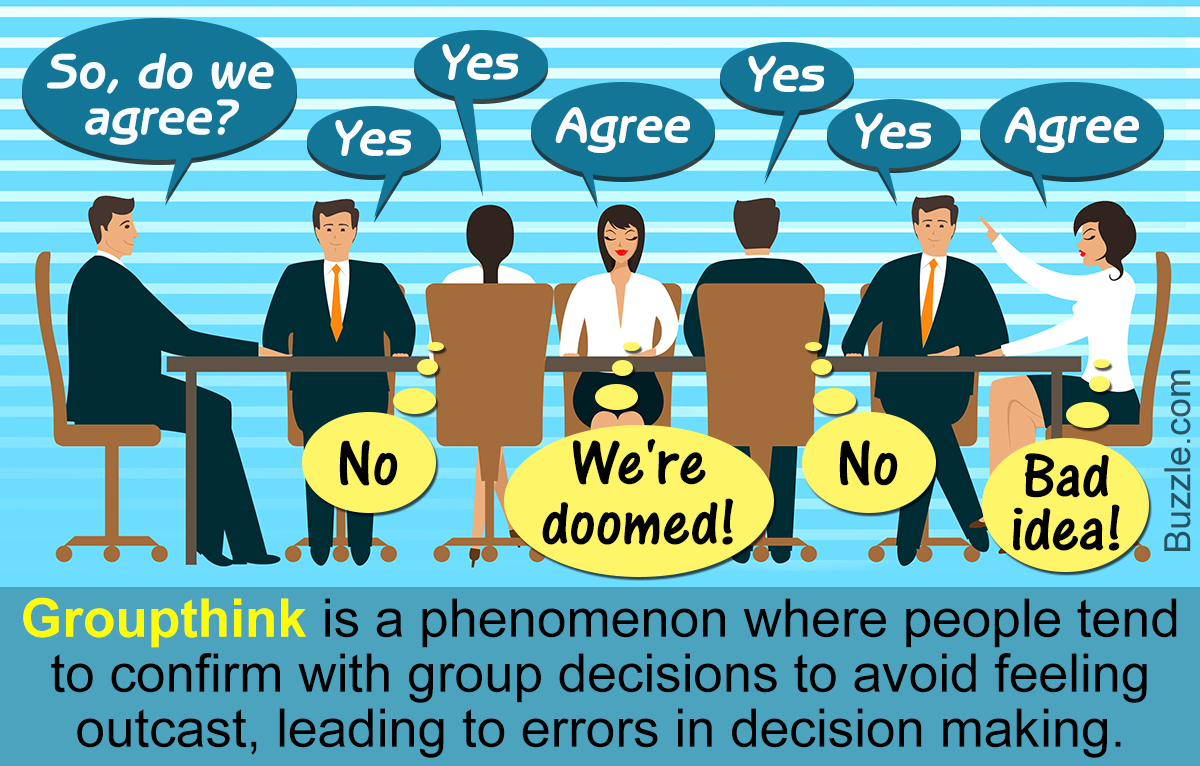
AGREE: Consistency and Group-Think Commitment Tendency

“lemming effect” or “group-think”

By Staff Reporters

***

***

According to psychologist and colleague Dan Ariely PhD, human beings have evolved – probably both genetically and socially – to be consistent.  It is easier and safer to deal with others if they honor their commitments and if they behave in a consistent and predictable manner over time. This allows people to work together and build trust that is needed for repeat dealings and to accomplish complex tasks. 

In the jungle, this trust was necessary to for humans to successfully work as a team to catch animals for dinner, or fight common threats.  In business and life it is preferable to work with others who exhibit these tendencies.  Unfortunately, the downside of these traits is that people make errors in judgment because of the strong desire not to change, or be different (“lemming effect” or “group-think”).  So the result is that most people will seek out data that supports a prior stated belief or decision and ignore negative data, by not “thinking outside the box”. 

Additionally, future decisions will be unduly influenced by the desire to appear consistent with prior decisions, thus decreasing the ability to be rational and objective.  The more people state their beliefs or decisions, the less likely they are to change even in the face of strong evidence that they should do so.  This bias results in a strong force in most people causing them to avoid or quickly resolve the cognitive dissonance that occurs when a person who thinks of themselves as being consistent and committed to prior statements and actions encounters evidence that indicates that prior actions may have been a mistake.  It is particularly important therefore for advisors to be aware that their communications with clients and the press clouds the advisor’s ability to seek out and process information that may prove current beliefs incorrect. 

Since this is obviously irrational, one must actively seek out negative information, and be very careful about what is said and written, being aware that the more you shout it out, the more you pound it in.

COMMENTS APPRECIATED

Subscribe Today!

***

***

DAILY UPDATE: Medicare Advantage Payment Delays as Stock Markets Split

MEDICAL EXECUTIVE-POST TODAY’S NEWSLETTER BRIEFING

***

Essays, Opinions and Curated News in Health Economics, Investing, Business, Management and Financial Planning for Physician Entrepreneurs and their Savvy Advisors and Consultants

Serving Almost One Million Doctors, Financial Advisors and Medical Management Consultants Daily

A Partner of the Institute of Medical Business Advisors , Inc.

http://www.MedicalBusinessAdvisors.com

SPONSORED BY: Marcinko & Associates, Inc.

***

http://www.MarcinkoAssociates.com

Daily Update Provided By Staff Reporters Since 2007.
How May We Serve You?
© Copyright Institute of Medical Business Advisors, Inc. All rights reserved. 2025

REFER A COLLEAGUE: MarcinkoAdvisors@outlook.com

SPONSORSHIPS AVAILABLE: https://medicalexecutivepost.com/sponsors/

ADVERTISE ON THE ME-P: https://tinyurl.com/ytb5955z

Your Referral Count -0-

CITE: https://www.r2library.com/Resource

Stat: $3+ million. That’s how much Medicare and Medicare Advantage drug plans have been ordered to pay for “inappropriately delaying or denying” services in the first four months of this year—more than the past four years combined, one analysis finds. (Healthcare Dive)

CITE: https://tinyurl.com/2h47urt5

What’s up

  • Las Vegas Sands added 4.31% after crushing analyst estimates last quarter.
  • Deutsche Bank rose 7.83% to a decade high after shareholders applauded the financial firm’s turnaround efforts.
  • T-Mobile US gained 5.8% thanks to a better-than-expected quarter for the telecom giant.
  • Bloom Energy popped 22.95% on the news that it made a deal with Oracle to provide the tech company’s AI data centers with power.
  • Enterprise software maker ServiceNow jumped 4.16% on management’s promise of more AI growth ahead.
  • West Pharmaceutical Services soared 22.78% on the news that demand for GLP-1 products remains strong.

What’s down

  • IBM dropped 7.62% despite beating analysts expectations on the top and bottom lines last quarter. Shareholders didn’t like to hear management warn of slowing software sales.
  • UnitedHealth Group fell 4.76% on reports that the health insurer is cooperating with the DOJ’s investigation into its Medicare billing practices.
  • Tough day for airlines: American Airlines sank 9.62% after lowering its forward guidance, and Southwest Airlines lost 11.16% after missing analyst earnings estimates.
  • Luxury goods maker LVMH sank 3.66% after sales fell 4% last quarter as the high-fashion industry gets hit with tariff turmoil.
  • Union Pacific fell 4.43% after it confirmed it’s in talks to acquire smaller rival Norfolk Southern, which also lost 0.81%.
  • Honeywell International beat-and-raised earnings last quarter, but the stock still stumbled 6.18% lower.

CITE: https://tinyurl.com/tj8smmes

Visualize: How private equity tangled banks in a web of debt, from the Financial Times.

COMMENTS APPRECIATED

PLEASE SUBSCRIBE: MarcinkoAdvisors@outlook.com

Thank You

***

***

***

***

EDUCATIONAL TEXTBOOKS: https://tinyurl.com/4zdxuuwf

***

Commodities, Stocks and Bonds

By A.I.

SPONSOR: http://www.CertifiedMedicalPlanner.org

***

***

  • Stocks: Investors were pleased to hear about the trade deal with Japan yesterday and reports of an agreement with the EU coming soon kept the stock rally alive through market close. The S&P 500 notched its 12th new closing record this year, and the NASDAQ ended the day above 21,000 for the first time.
  • Bonds: Treasury yields rose a bit after an auction of 20-year notes was met with strong demand, indicating investor appetite for longer-term US debt.
  • Commodities: Oil inched higher while gold edged lower as investors hedge their bets in anticipation of more trade deals before the August 1st deadline.

COMMENTS APPRECIATED

Like and Subscribe

***

***

DAILY UPDATE: Both ACA Premiums and Stock Markets Rise

MEDICAL EXECUTIVE-POST TODAY’S NEWSLETTER BRIEFING

***

Essays, Opinions and Curated News in Health Economics, Investing, Business, Management and Financial Planning for Physician Entrepreneurs and their Savvy Advisors and Consultants

Serving Almost One Million Doctors, Financial Advisors and Medical Management Consultants Daily

A Partner of the Institute of Medical Business Advisors , Inc.

http://www.MedicalBusinessAdvisors.com

SPONSORED BY: Marcinko & Associates, Inc.

***

http://www.MarcinkoAssociates.com

Daily Update Provided By Staff Reporters Since 2007.
How May We Serve You?
© Copyright Institute of Medical Business Advisors, Inc. All rights reserved. 2025

REFER A COLLEAGUE: MarcinkoAdvisors@outlook.com

SPONSORSHIPS AVAILABLE: https://medicalexecutivepost.com/sponsors/

ADVERTISE ON THE ME-P: https://tinyurl.com/ytb5955z

Your Referral Count -0-

CITE: https://www.r2library.com/Resource

What’s up

  • Krispy Kreme and GoPro got caught up in the new meme stock craze—the donut maker jumped 4.60%, while the wearable camera company leaped 12.41%.
  • Nintendo rose 2.36% after the company’s new Switch 2 console sold 1.6 million units in June, making it the fastest-selling console in US history.
  • GE Vernova gained 14.58% thanks to an impressive beat-and-raise earnings report for the power equipment manufacturer.
  • USANA Health Sciences soared 12.37% after the nutritional supplement maker crushed earnings estimates.
  • Cal-Maine Foods, the biggest egg producer in the country, added 13.80% after profiting from the high cost of eggs over the previous quarter.
  • Lamb Weston sizzled 16.31% higher as shareholders applauded the french fry giant’s strong earnings report and new cost-cutting program.

What’s down

  • Texas Instruments tumbled 13.34% after the semiconductor company revealed a disappointing third-quarter earnings forecast.
  • Enphase Energy plunged 14.16% thanks to weak earnings guidance, with the solar company’s management blaming tariffs for squeezing its margins.
  • SAP lost 5.03% after the enterprise software company missed Q2 revenue estimates.
  • Fiserv may have beaten analyst forecasts last quarter, but the fintech still sank 13.85% due to weaker-than-expected financial guidance.
  • Going down: Otis Worldwide dropped 12.38% after the elevator manufacturer lowered its fiscal guidance due to weak demand.

CITE: https://tinyurl.com/2h47urt5

Insurers selling plans on ACA exchanges are expected to hike premiums next year as subsidies on them are set to expire, with the average person expected to be paying 75% more, according to an analysis from the nonpartisan research group KFF.

CITE: https://tinyurl.com/tj8smmes

Visualize: How private equity tangled banks in a web of debt, from the Financial Times.

COMMENTS APPRECIATED

PLEASE SUBSCRIBE: MarcinkoAdvisors@outlook.com

Thank You

***

***

***

***

EDUCATIONAL TEXTBOOKS: https://tinyurl.com/4zdxuuwf

***

Individual Up and Down Stocks

By A.I.

SPONSOR: http://www.CertifiedMedicalPlanner.org

***

***

What’s up

  • Medpace isn’t a meme stock, but it still soared 54.67% yesterday. It was all thanks to a seriously impressive beat-and-raise earnings report for the clinical researcher.
  • It was also a great day for healthcare stocks: IQVIA climbed 17.92% after beating Wall Street forecasts last quarter.
  • DR Horton popped 17.02% after the homebuilder crushed Q3 earnings expectations.
  • It was also a great day for other homebuilders: Pultegroup rose 11.52% despite lower home closings last quarter, and management is optimistic that sales will bounce back next quarter.
  • Northrop Grumman gained 9.41% after a strong quarter, including an 18% increase in international sales for the defense contractor.

What’s down

  • Lockheed Martin dropped 10.81% after the legacy defense contractor revealed big losses in its classified aeronautics program.
  • It wasn’t that great a day for defense contractors in general: RTX fell 1.58% after the company cut its earnings guidance.
  • General Motors may have beaten earnings expectations last quarter and kept its fiscal forecast intact, but investors didn’t like to hear about the $1.1 billion in tariff costs. Shares of the automaker stumbled 8.12%
  • Coca-Cola lost 0.59% after strong European sales helped the soft drink titan beat earnings estimates, but shareholders weren’t happy about weakness everywhere else.
  • Equifax tumbled 8.18% thanks to disappointing guidance for the current quarter from the consumer credit company.

COMMENTS APPRECIATED

Like and Subscribe

***

***

Stocks, the FOMC and Trade Deals

SPONSOR: http://www.CertifiedMedicalPlanner.org

By A.I.

***

***

  • Stocks: The multi-day rally wavered this afternoon as investors turned their attention to big tech earnings tomorrow. The S&P 500 closed at a record high, while the NASDAQ finally broke its hot streak.
  • FOMC: Treasury Secretary Scott Bessent sees no reason for Jerome Powell to step down, while President Trump tempered his outrage against the Fed chair. Instead, well-known economist Mohamed El-Erian took up the gauntlet.
  • Trade: Bessent said China may get an extension to make a true trade deal, while promising a “rash of trade deals” in the coming days. Speaking of, Trump declared the US has made a deal with the Philippines capping import levies at 19%.

COMMENTS APPRECIATED

Like and Refer

***

***

When Economic Facts Become Political Opinions: A Financial Advisor’s Dilemma

By Rick Kahler MSFP CFP

***

***

QUESTION: “How will this administration’s trade policies affect my retirement savings?” “What does it mean for our plans to travel internationally if the value of the dollar declines?” “Is it wise to borrow right now to expand my business?”

Clients who ask questions like these expect and deserve honest answers from their financial advisors. Their financial and retirement planning depend on accurate information. Yet in the current polarized and chaotic climate, every economic explanation carries potential political interpretations.

Historically, political parties and administrations debated policies on taxes, spending, and regulation. Yet they shared a basic understanding of core mechanisms. Both parties recognized that central banks fight inflation, that tariffs raise prices, and that court rulings are binding. Disagreements focused on applications and political philosophies, not fundamental aspects of our governmental system and the rule of law.

That consensus has collapsed.

This distortion creates a professional bind for advisors. To fulfill their fiduciary duty to clients, advisors must explain economic realities like the link between tariffs and increased consumer costs. They owe it to clients to consider the impact on the U.S. dollar when a president threatens the independence of the Federal Reserve. They should be aware of information such as a CNBC survey that found 66% of small business owners reported being or expecting to be impacted by tariffs. They cannot ignore the difficulties of making business and investment decisions when policies change almost daily and legal rulings are delayed or ignored.

Considering the ramifications of political decisions on clients’ affairs is not an abstract concern. When international confidence in American institutions is wavering and U.S. business owners are uncertain, the consequences affect real money in the accounts of real people.

Yet talking about such issues may trigger accusations of partisanship. Many people get the bulk of their political and economic information from social media and from competitive news outlets that may be as much entertainment as journalism. The biases in some of these sources go so far beyond partisan leanings that they offer conflicting information purporting to be factual. What was once a neutral middle ground where essential facts were agreed upon has become harder to find, particularly when reporting covers politics and the economy.

That neutral territory is exactly where responsible financial advisors need to get the facts on which they base their advice. It’s challenging to stay there if clients are getting their news from outlets that are strongly biased toward either end of the political spectrum. Nuanced explanations can be interpreted as bias or context seen as spin. For the advisor whose information is questioned, remaining silent fails the client. Speaking truthfully risks the relationship with the client.

I have seen advisors lose clients, on both ends of the political spectrum, when advisors and clients held different views. The professional cost of maintaining standards has become substantial.

The financial planning profession faces an unprecedented challenge. Our traditional advisory principles assume a shared understanding of economic fundamentals. That foundation is no longer solid, and trust in advisors’ expertise is eroding.

These disruptions raise a core question. Should financial advisors prioritize economic truth over client comfort or client retention? Or should they accommodate clients’ political sensitivity and compromise the integrity of the advice they provide? Either path risks the loss of clients and revenue.

The choice is not theoretical. It defines the advisor’s professional identity and the quality of financial guidance itself. When economic mechanisms are politicized, the profession’s standards weaken and client service suffers.

The stakes are clear. This is a conflict over whether facts still function as the basis of financial advice.

The resolution will determine whether financial planning remains a profession or becomes another form of political posturing.

COMMENTS APPRECIATED

Like and Subscribe

***

***

Stocks, Trade and the FOMC

By A.I.

***

***

Stocks: Markets lost steam late in the trading session yesterday as investors awaited more earnings announcements, with the DJIA tumbling into the red. But the S&P 500 managed to end the day above 6,300 for the first time ever, while the NASDAQ enjoyed its sixth consecutive record close

FOMC: Over the weekend, President Trump disputed reports that Treasury Secretary Scott Bessent talked him out of firing Jerome Powell. Meanwhile, Bessent said that the entire Federal Reserve should be put under review.

Trade: Commerce Secretary Howard Lutnick reiterated that August 1st will be the “hard deadline” for countries to make a deal with the US. Both negotiations and tensions with the EU are ramping up as Trump threatens to slap the bloc with 30% levies.

COMMENTS APPRECIATED

Like and Subscribe

***

***

Beware of Borrowing That Helps Your Advisor – Not You

By Rick Kahler MSFP CFP

***

***

When Maria needed $400,000 for a down payment on a new home, her broker at a large Wall Street firm offered a solution: “Don’t sell investments and trigger capital gains. Just take out a margin loan.”

A margin loan is a line of credit from a brokerage firm, secured by the client’s investment portfolio. It offers quick access to cash with no immediate tax consequences and minimal paperwork. But the convenience comes at a cost. As of mid-2025, margin loan interest rates range from 6.25% to over 11%.

Margin loan recommendations are often presented by brokers as tax-savvy strategies that allow clients to access “tax-free” cash while keeping their portfolios intact. In many cases, however, the math benefits the advisor more than the investor. The cost of borrowing often exceeds what an investor is likely to earn by holding on.

For example, let’s assume an interest rate of 7.5% on Maria’s $400,000 margin loan. While borrowing delayed the payment of $20,000 in capital gains tax, she will eventually have to pay that tax anyway unless she holds the investments until her death. Two years later, with portfolio returns of 4% annually, she had earned around $32,000 from the $400,000 in investments she might have sold. Meanwhile, she had paid $60,000 in interest—leaving her some $28,000 worse off. That’s without factoring in ongoing interest payments, or the risks of a margin call if the investments securing the loan drop in value.

Why do advisors keep recommending margin loans? Because selling investments reduces the portfolio size and the advisor’s fee. Borrowing keeps the portfolio intact and the compensation unchanged—while the firm receives additional income from interest on the loan. In some cases, advisors suggest using margin loans to buy more investments, increasing both the portfolio and the fee they collect.

None of this is illegal. But when the borrowing cost is higher than expected returns and the advisor benefits financially, the ethics are questionable. The client takes the risk, while the advisor keeps the revenue.

This kind of conflict appears more often in portfolios where compensation is tied to asset volume and the company’s primary culture rewards gathering assets over delivering unbiased advice. By contrast, fee-only financial planning and investment advisors typically operate on simpler hourly, flat, or tiered fee structures. Their compensation doesn’t depend on whether a client borrows, sells, or holds. The culture of the firm focuses on conflict-free advice aligned with the client’s best interest.

Wall Street brokers are often held to a fiduciary standard, but structure still matters. In 2024 the SEC reported their examinations of brokers would continue to focus on advisor recommendations unduly influenced by the company’s compensation and incentives.

There are rare situations where a margin loan may be appropriate. A client with large unrealized gains might use a short-term margin loan to minimize taxes. An elderly investor might borrow tax-free rather than sell assets that will receive a step-up in basis at their death. Even in those cases, the math must be exact and the client must clearly understand the risks, including the possibility of a margin call.

If your advisor recommends a margin loan, especially to buy more investments, ask strong questions. What’s the interest rate? What return is realistic? What are the tax consequences of selling? How does this affect the advisor’s income?

If you don’t get direct answers, that’s a warning sign.

In a high-rate, low-return environment, margin loans rarely favor the client. The exceptions are narrow. The risks are significant. And the conflict of interest is measurable.

Sometimes the smartest move is the simplest: sell what you need, pay the tax, and leave leverage out of your plan.

COMMENTS APPRECIATED

Like and Subscribe

***

***

PARADOXES: Beware Financial and Investing Contradictions

By Staff Reporters

SPONSOR: http://www.MarcinkoAssociates.com

***

***

As we plan for our financial future, I think it’s helpful to be cognizant of these paradoxes. While there’s nothing we can do to control or change them, there is great value in being aware of them, so we can approach them with the right tools and the right mindset.

Here are just seven of the paradoxes that can bedevil financial planning and investment decision-making:

  • There’s the paradox that all of the greatest fortunes—Carnegie, Rockefeller, Buffett, Gates—have been made by owning just one stock. And yet the best advice for individual investors is to do the opposite: to own broadly diversified index funds.
  • There’s the paradox that the stock market may appear overvalued and yet it could become even more overvalued before it eventually declines. And when it does decline, it may be to a level that is even higher than where it is today.
  • There’s the paradox that we make plans based on our understanding of the rules—and yet Congress can change the rules on us at any time, as it did just a few weeks ago.
  • There’s the paradox that we base our plans on historical averages—average stock market returns, average interest rates, average inflation rates and so on—and yet we only lead one life, so none of us will experience the average.
  • There’s the paradox that we continue to be attracted to the prestige of high-cost colleges, even though a rational analysis that looks at return on investment tells us that lower-cost state schools are usually the better bet.
  • There’s the paradox that early retirement seems so appealing—and has even turned into a movement—and yet the reality of early retirement suggests that we might be better off staying at our desks.
  • There’s the paradox that retirees’ worst fear is outliving their money and yet few choose the financial product that is purpose-built to solve that problem: the single-premium immediate annuity.

Assessment

QUESTION: How should you respond to these paradoxes? As you plan for your financial future, embrace the concept of “loosely held views.” In other words, make financial plans, but continuously update your views, question your assumptions and rethink your priorities.

COMMENTS APPRECIATED

Refer and Subscribe

***

***

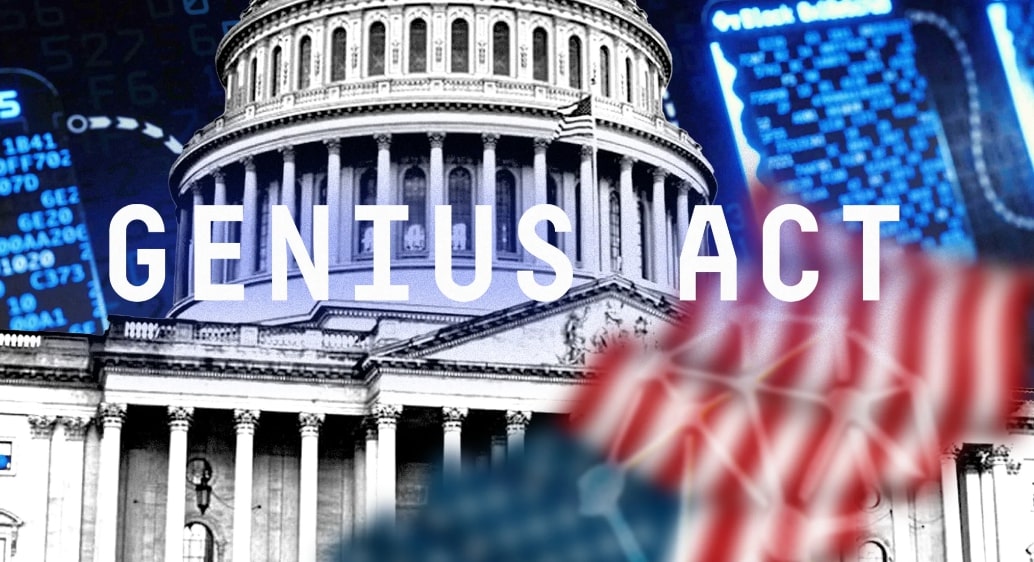
The GENIUS Act

By A.I.

***

***

The GENIUS Act is the law of the Land

President Trump signed the bill into law Friday, setting up a framework for regulating stablecoins—digital currency pegged to traditional assets—that are linked to the US dollar. It’s a big win for the crypto industry, and Trump said it was a “giant step to cement American dominance of global finance and crypto technology.”

The law could help push stablecoins into the mainstream, and major companies like Walmart and Amazon have been said to be considering launching their own, according to Morning Brew.

COMMENTS APPRECIATED

Like and Subscribe

***

***

Do Political Biases Shape Your Financial Planner’s Advice?

Subscribe to continue reading

Subscribe to get access to the rest of this post and other subscriber-only content.

DAILY UPDATE: “Crypto-Week” as Stock Markets End Mixed

MEDICAL EXECUTIVE-POST TODAY’S NEWSLETTER BRIEFING

***

Essays, Opinions and Curated News in Health Economics, Investing, Business, Management and Financial Planning for Physician Entrepreneurs and their Savvy Advisors and Consultants

Serving Almost One Million Doctors, Financial Advisors and Medical Management Consultants Daily

A Partner of the Institute of Medical Business Advisors , Inc.

http://www.MedicalBusinessAdvisors.com

SPONSORED BY: Marcinko & Associates, Inc.

***

http://www.MarcinkoAssociates.com

Daily Update Provided By Staff Reporters Since 2007.
How May We Serve You?
© Copyright Institute of Medical Business Advisors, Inc. All rights reserved. 2025

REFER A COLLEAGUE: MarcinkoAdvisors@outlook.com

SPONSORSHIPS AVAILABLE: https://medicalexecutivepost.com/sponsors/

ADVERTISE ON THE ME-P: https://tinyurl.com/ytb5955z

Your Referral Count -0-

***

CITE: https://www.r2library.com/Resource

“Crypto Week” got back on track after House GOP lawmakers convinced the holdouts in their party to help advance a series of crypto-friendly bills.

Crypto: Although bitcoin fell after the president signed the GENIUS Act into law, ether rose to its highest price in six months today, while enthusiasm for the new legislation pushed total crypto assets above $4 trillion.

CITE: https://tinyurl.com/2h47urt5

What’s up stocks

  • Talen Energy soared 24.48% on the news that the independent energy producer is acquiring two new power plants.
  • Interactive Brokers surged 7.77% after the broker increased the number of customer accounts by 32% last quarter as traders played market volatility.
  • Speaking of trading, Charles Schwab gained 2.87% after opening more than 1 million new brokerage accounts last quarter gave it a 23% boost in trading revenue.
  • Burberry popped 4.42% thanks to a turnaround in the luxury goods maker’s business, including a 4% increase in American sales last quarter.
  • Quantumscape continued to climb yet again, rising another 7.65% as investors pour money into the battery maker.
  • Invesco jumped 15.28% on reports that the asset manager is asking shareholders of its popular QQQ fund to let it revamp its fund structure to increase fee revenue.
  • Crypto companies continued to have a great week as key legislation passed its final barrier in Congress. Coinbase climbed 2.2%, Robinhood Markets rose 4.07%, and Galaxy Digital gained 4.19%.

What’s down stocks

  • Netflix fell 5.1% after the streaming giant reported a strong quarter but warned that its operating margin will take a hit in the second half of the year.
  • Sarepta Therapeutics plunged 35.94% after the biotech reported a third patient death during its Phase 1 study of its new gene therapy.
  • American Express sank 2.35% despite a strong quarter of spending among cardholders that helped the credit card company notch record quarterly revenue.
  • 3M also fell 3.65% in spite of beating Wall Street’s forecasts and raising its earnings guidance.

CITE: https://tinyurl.com/tj8smmes

Visualize: How private equity tangled banks in a web of debt, from the Financial Times.

COMMENTS APPRECIATED

PLEASE SUBSCRIBE: MarcinkoAdvisors@outlook.com

Thank You

***

***

***

***

EDUCATIONAL TEXTBOOKS: https://tinyurl.com/4zdxuuwf

***

Crypto-Currency and the Stock Markets

By A.I.

SPONSOR: http://www.CertifiedMedicalPlanner.org

***

***

  • Markets: Stocks slid lower today even as a preliminary survey revealed that consumer sentiment hit its highest point since February, while inflation expectations fell to pre-tariff levels. The selloff deepened on reports that President Trump wants 15% to 20% tariffs against the EU, though the NASDAQ managed to eke out a win.
  • Crypto: Although bitcoin fell after the president signed the GENIUS Act into law, ether rose to its highest price in six months today, while enthusiasm for the new legislation pushed total crypto assets above $4 trillion.

COMMENTS APPRECIATED

Like and Subscribe

***

***

Can You Contribute to Both a Roth IRA & 401(k)?

By Staff Reporters, AI and the Linqto Team

SPONSOR: http://www.CertifiedMedicalPlanner.org

***

***

Yes, you can contribute to both a Roth IRA and a 401(k), provided you don’t exceed annual contribution limits for each account.

Determining whether to contribute to a Roth IRA, 401(k), or both can be an important step in planning for your retirement. Here are the key differences, including tax advantages, employer contributions, and investment options. 

Eligibility requirements are the first consideration when contributing to a Roth IRA and a 401(k). For Roth IRA contributions, your eligibility is determined by your income. Specifically, if your modified adjusted gross income (MAGI) exceeds certain thresholds, your ability to contribute to a Roth IRA may be reduced or eliminated. However, there are no income limits for contributing to a 401(k), making it accessible to anyone with earned income.

IRS rules do allow for contributions to both a Roth IRA and a 401(k), provided you adhere to the annual contribution limits for each account.

This means you can take advantage of the higher contribution limits of a 401(k) while also benefiting from the tax-free growth of a Roth IRA. This dual approach can be a strategy for maximizing your retirement savings. The advantages to contributing to both accounts present some key benefits, such as: 

  • Tax diversification in retirement, allowing for better management of taxable income. 
  • Potential reduction of overall tax burden. 
  • Maximization of savings potential by taking full advantage of the benefits each account offers.3

Balancing contributions between a Roth IRA and a 401(k) requires careful planning. You might start by contributing enough to your 401(k) to receive the full employer match, which is essentially free money, if your employer offers this. Once you’ve secured the match, consider maxing out your Roth IRA contributions, if you’re eligible.

COMMENTS APPRECIATED

Like and Subscribe

***

***

DAILY UPDATE: Private Market Investment Retirement Plans Up Along with Stock Markets

MEDICAL EXECUTIVE-POST TODAY’S NEWSLETTER BRIEFING

***

Essays, Opinions and Curated News in Health Economics, Investing, Business, Management and Financial Planning for Physician Entrepreneurs and their Savvy Advisors and Consultants

Serving Almost One Million Doctors, Financial Advisors and Medical Management Consultants Daily

A Partner of the Institute of Medical Business Advisors , Inc.

http://www.MedicalBusinessAdvisors.com

SPONSORED BY: Marcinko & Associates, Inc.

***

http://www.MarcinkoAssociates.com

Daily Update Provided By Staff Reporters Since 2007.
How May We Serve You?
© Copyright Institute of Medical Business Advisors, Inc. All rights reserved. 2025

REFER A COLLEAGUE: MarcinkoAdvisors@outlook.com

SPONSORSHIPS AVAILABLE: https://medicalexecutivepost.com/sponsors/

ADVERTISE ON THE ME-P: https://tinyurl.com/ytb5955z

Your Referral Count -0-

CITE: https://www.r2library.com/Resource

Stocks up

  • Lucid exploded 36.24% higher on the news that the EV maker is partnering with Uber to roll out the ridesharing company’s new robotaxis.
  • PepsiCo popped 7.45% thanks to a strong quarter for the snack and soda giant, while shareholders cheered the details of its turnaround plan.
  • United Airlines may have missed Wall Street’s revenue forecast, but its profits were enough to impress investors. Shares rose 3.11%.
  • Reports that Union Pacific is thinking about acquiring a rival sent shares of fellow train operators CSX and Norfolk Southern up 3.73% and 3.65%, respectively.
  • Sarepta Therapeutics soared 19.53% after the biotech announced it will lay off 500 employees and restructure its entire business.
  • Quantumscape continued its hot streak, rising yet another 19.82% thanks to its recent battery breakthrough.
  • Speaking of hot streaks, OpenDoor Technologies rose another 10.74% as retail traders pour into what is quickly becoming the next big meme stock.

Stocks down

  • GE Aerospace crushed earnings expectations and raised its fiscal guidance, but it still wasn’t enough to impress investors, who pushed shares of the engine maker down 2.10%.
  • US Bancorp sank 1.03% after revenue and net interest income missed forecasts last quarter.
  • Abbott Laboratories beat on both top and bottom line guidance, but still fell 8.53% after the pharma company narrowed its fiscal forecasts.
  • Elevance Health tumbled 12.22% af

CITE: https://tinyurl.com/2h47urt5

President Trump is expected to sign an executive order in the coming days designed to help make private-market investments more available to U.S. retirement plans, according to people familiar with the matter. The order would instruct the Labor Department and the Securities and Exchange Commission to provide guidance to employers and plan administrators on including investments like private assets in 401(k) plans.

CITE: https://tinyurl.com/tj8smmes

Visualize: How private equity tangled banks in a web of debt, from the Financial Times.

COMMENTS APPRECIATED

PLEASE SUBSCRIBE: MarcinkoAdvisors@outlook.com

Thank You

***

***

***

***

EDUCATIONAL TEXTBOOKS: https://tinyurl.com/4zdxuuwf

***

COMMODITIES and STOCKS

By A.I.

SPONSOR: http://www.CertifiedMedicalPlanner.org

***

***

Stocks: Markets started the day on a high note thanks to a fifth straight decline in weekly initial jobless claims and surprisingly strong monthly retail sales. The NASDAQ hit its 10th record closing high of 2025 and the S&P 500 hit its ninth high.

Commodities: Lithium prices popped around the globe after the Chinese government ordered domestic producer Zangge Mining to halt operations. Plus, the US is reportedly set to impose 93.5% tariffs on Chinese imports of graphite, a key component.

COMMENTS APPRECIATED

Like and Subscribe

***

***

DOCTORS AND LAWYERS: Often Aren’t Millionaires

Subscribe to continue reading

Subscribe to get access to the rest of this post and other subscriber-only content.

DAILY UPDATE: Medicaid Cuts as Stock Markets Rise

MEDICAL EXECUTIVE-POST TODAY’S NEWSLETTER BRIEFING

***

Essays, Opinions and Curated News in Health Economics, Investing, Business, Management and Financial Planning for Physician Entrepreneurs and their Savvy Advisors and Consultants

Serving Almost One Million Doctors, Financial Advisors and Medical Management Consultants Daily

A Partner of the Institute of Medical Business Advisors , Inc.

http://www.MedicalBusinessAdvisors.com

SPONSORED BY: Marcinko & Associates, Inc.

***

http://www.MarcinkoAssociates.com

Daily Update Provided By Staff Reporters Since 2007.
How May We Serve You?
© Copyright Institute of Medical Business Advisors, Inc. All rights reserved. 2025

REFER A COLLEAGUE: MarcinkoAdvisors@outlook.com

SPONSORSHIPS AVAILABLE: https://medicalexecutivepost.com/sponsors/

ADVERTISE ON THE ME-P: https://tinyurl.com/ytb5955z

Your Referral Count -0-

***

CITE: https://www.r2library.com/Resource

US measles cases have reached a 33-year high. A little more than halfway into 2025, the US has reported 1,288 measles cases, marking the highest yearly total since 1992, according to data from the Centers for Disease Control and Prevention.

CITE: https://tinyurl.com/2h47urt5

What’s up

  • VC powerhouse and diehard Tolkien fan Peter Thiel revealed he’s taken a 9% stake in bitcoin miner BitMine Immersion Technologies. Shares popped 12.11%, while fellow miners that have also recently invested in ether soared in tandem: SharpLink Gaming added 29.03%, and Bit Digital gained 19.45%.
  • In fact, most crypto stocks had a good day thanks to renewed optimism that Crypto Week isn’t over in Congress. MicroStrategy climbed 3.07% and MARA Holdings jumped 3.62%.
  • Johnson & Johnson rose 6.19% after the consumer goods giant reported impressive earnings last quarter and raised its forward guidance.
  • BrightHouse Financial popped 6.23% on reports that the insurer may be bought by private equity firm Aquarian Holdings.
  • Tesla gained 3.50% after the EV maker revealed the new six-seat Model Y it will begin selling in China this fall.

What’s down

  • ASML dropped 8.33% after the chipmaker warned that growth might be completely flat next year.
  • Ford fell 2.85% on the news that the automaker is recalling nearly 700,000 crossover SUVs due to fuel leaks.
  • GrabAGun Digital Holdings, the online gun seller backed by Donald Trump, Jr., made its market debut today. Investor reception was scathing, and the stock slid 24.19%.

CITE: https://tinyurl.com/tj8smmes

Though Medicaid cuts in the Trump administration’s budget bill shocked hospitals, providers may start singing its praises after learning they’re due for a pay bump next year. On Monday, the Centers for Medicare and Medicaid Services (CMS) shared its proposed 2026 physician fee schedule, which determines Medicare payments based on the amount of resources in provider services like office visits, hospice, diagnostic testing, ambulance care, and more.

COMMENTS APPRECIATED

PLEASE SUBSCRIBE: MarcinkoAdvisors@outlook.com

Thank You

***

***

***

***

EDUCATIONAL TEXTBOOKS: https://tinyurl.com/4zdxuuwf

***

Stocks, Crypto & Stock Markets

SPONSOR: http://www.CertifiedMedicalPlanner.org

By A.I.

***

***

  • The Fed Drama: A White House official said President Trump will likely fire Jerome Powell soon. Stocks sank at the thought of the Fed head being shown the door, offsetting the pleasant surprise of a flat wholesale inflation reading.
  • Markets: Stocks managed to recoup their losses after Trump said it’s “highly unlikely” that he will fire Powell, but bonds remained shaken.
  • Crypto: Bitcoin bounced higher after the crypto bills currently under consideration in the House of Representatives cleared a key hurdle.

COMMENTS APPRECIATED

Like and Subscribe

***

***

OPTUM: UnitedHealth Group A.I. Chatbot

By Staff Reporters and AI

***

***

Better make sure it’s Secure?

UnitedHealth Group’s Optum healthcare company got caught with its digital pants down in December, when TechCrunch reported that its internal AI chatbot, which employees asked for advice in determining claims, was publicly accessible.

AI: https://medicalexecutivepost.com/2025/02/09/my-thoughts-on-artificial-intelligence-ai/

Optum quickly restricted the tool and said it was a demo that was “never scaled nor used in any real way.”

COMMENTS APPRECIATED

Like, Refer and Subscribe

EDUCATION: Books

***

***

DAILY UPDATE: CPI Up as Sock Markets End Mixed

MEDICAL EXECUTIVE-POST TODAY’S NEWSLETTER BRIEFING

***

Essays, Opinions and Curated News in Health Economics, Investing, Business, Management and Financial Planning for Physician Entrepreneurs and their Savvy Advisors and Consultants

Serving Almost One Million Doctors, Financial Advisors and Medical Management Consultants Daily

A Partner of the Institute of Medical Business Advisors , Inc.

http://www.MedicalBusinessAdvisors.com

SPONSORED BY: Marcinko & Associates, Inc.

***

http://www.MarcinkoAssociates.com

Daily Update Provided By Staff Reporters Since 2007.
How May We Serve You?
© Copyright Institute of Medical Business Advisors, Inc. All rights reserved. 2025

REFER A COLLEAGUE: MarcinkoAdvisors@outlook.com

SPONSORSHIPS AVAILABLE: https://medicalexecutivepost.com/sponsors/

ADVERTISE ON THE ME-P: https://tinyurl.com/ytb5955z

Your Referral Count -0-

CITE: https://www.r2library.com/Resource

The consumer price index, a broad-based measure of goods and services costs, increased 0.3% on the month, putting the 12-month inflation rate at 2.7%, the Bureau of Labor Statistics reported Tuesday. The numbers were right in line with the Dow Jones consensus. Excluding volatile food and energy prices, core inflation picked up 0.2% on the month, with the annual rate moving to 2.9%, also matching the respective estimates.

CITE: https://tinyurl.com/2h47urt5

Stocks up

  • Citigroup gained 3.68% after the big bank reported better-than-expected earnings.
  • CoreWeave climbed 6.21% on the news that it will build a $6 billion AI data center in Pennsylvania.
  • Trade Desk jumped 6.59% thanks to its inclusion in the S&P 500, replacing the outgoing Ansys.
  • The Trump administration has launched a probe into drone imports. Drones use polysilicon, a key ingredient for solar panels, and tariffs on the material could help boost profitability for domestic manufacturers like First Solar, which rose 6.90%.
  • National Fuel Gas rose 5.65% after the energy company caught a rare double upgrade from Bank of America analysts, who like the energy company’s improved productivity.

Stocks down

  • BlackRock fell 5.86% after the world’s largest asset manager reported that a single client pulled $52 billion last quarter.
  • It wasn’t a great day for other big banks: Wells Fargo sank 5.43% after cutting its 2025 net interest income guidance, while JPMorgan Chase lost 0.74% despite beating sales and profit estimates.
  • Albertsons tumbled 5.02% even though the grocer reported a solid quarter thanks to strong pharmacy sales and digital revenue.
  • Newmont dropped 5.71% on the news that CFO Karyn Ovelmen is leaving the gold miner.

CITE: https://tinyurl.com/tj8smmes

Visualize: How private equity tangled banks in a web of debt, from the Financial Times.

COMMENTS APPRECIATED

PLEASE SUBSCRIBE: MarcinkoAdvisors@outlook.com

Thank You

***

***

***

***

EDUCATIONAL TEXTBOOKS: https://tinyurl.com/4zdxuuwf

***

Stocks, Commodities and the FOMC

By A.I.

***

***

  • Stocks: The S&P 500 and Dow tumbled on a mixed bag of bank earnings, while the NASDAQ was buoyed by big news for Nvidia.
  • Federal Reserve Drama: Treasury Secretary Scott Bessent reassured investors that Jerome Powell isn’t getting the boot.
  • Commodities: Oil fell just a bit as Donald Trump is about to hit his 50-day deadline for Russia.

COMMENTS APPRECIATED

Like and Subscribe

***

***

INCENTIVE STOCK OPTIONS: Defined

SPONSOR: http://www.CertifiedMedicalPlanner.org

By Staff Reporters and AI

***

***

Incentive stock options (ISOs)

Also called “qualified” or “statutory” stock options, ISOs are considered tax-advantaged stock options based on U.S. tax law. With ISOs, the spread (the difference between the award price and the fair market value) will count as income for the alternative minimum tax (AMT) in the year you exercise your options.

CBOE: https://medicalexecutivepost.com/2024/11/19/cboe-chicago-board-of-trade-volatility-indexes/

Example: If you exercise and hold the shares for more than one year past the exercise date and more than two years past the original grant date, the sale of the stock becomes a qualifying disposition, and any realized profit is typically taxed at the long-term capital gains rate. If you sell earlier, the spread will be taxed at your ordinary income tax rate.

ISOs vs. NSOs: What’s the difference?

There are two types of employee stock options: statutory and nonstatutory. They can also be referred to as qualified and nonqualified, respectively. ISOs are statutory (qualified) and differ from nonstatutory (nonqualified) stock options (NSOs) in a few key ways:

***

***

  • Eligibility. ISOs are issued only to employees, whereas NSOs can be granted to outside service providers like advisors, board directors or other consultants. Typically, mainly senior executives or key employees are given ISOs, as a company is not required to offer ISOs to all employees.
  • Tax perks. ISOs have more compelling tax treatment compared with NSOs.

COMMENTS APPRECIATED

Like, Subscribe and Refer

EDUCATION: Books

***

***

DAILY UPDATE: Big Pharma Payouts as Stock Markets Eke Out Rise

MEDICAL EXECUTIVE-POST TODAY’S NEWSLETTER BRIEFING

***

Essays, Opinions and Curated News in Health Economics, Investing, Business, Management and Financial Planning for Physician Entrepreneurs and their Savvy Advisors and Consultants

Serving Almost One Million Doctors, Financial Advisors and Medical Management Consultants Daily

A Partner of the Institute of Medical Business Advisors , Inc.

http://www.MedicalBusinessAdvisors.com

SPONSORED BY: Marcinko & Associates, Inc.

***

http://www.MarcinkoAssociates.com

Daily Update Provided By Staff Reporters Since 2007.
How May We Serve You?
© Copyright Institute of Medical Business Advisors, Inc. All rights reserved. 2025

REFER A COLLEAGUE: MarcinkoAdvisors@outlook.com

SPONSORSHIPS AVAILABLE: https://medicalexecutivepost.com/sponsors/

ADVERTISE ON THE ME-P: https://tinyurl.com/ytb5955z

Your Referral Count -0-

***

CITE: https://www.r2library.com/Resource

Drug and medical device companies paid at least $13.2 billion to medical professionals in 2024, according to CMS data released June 30th. There’s been steady growth in these payments over the last few years, which include everything from research payments to free meals to promotional or conference fees. Drug and medical device companies paid out $13.1 billion in 2023, $13.1 in 2022, and $12.6 in 2021. If you’re a medical provider, you’ve probably gotten one of those perks from a drug or medical device company and thought it wouldn’t affect your decision-making.

But research suggests physicians are more likely to prescribe drugs from companies that pay them, with some studies specifically associating this with drugs that are costlier to patients. “Really well-trained people who affirm an oath to do no harm can be influenced, and are,” Neil Jay Sehgal, associate professor of health systems and population health at the University of Washington School of Public Health, told Healthcare Brew.

CITE: https://tinyurl.com/2h47urt5

Stocks Up

  • Bitcoin is booming, and crypto stocks climbed along with it. MicroStrategy rose 3.86%, Robinhood Markets added 1.67%. and Coinbase gained 1.80%.
  • Boeing rose 1.64% on preliminary reports that investigators have found no evidence of malfunction in the plane that crashed in India last month. Engine-maker GE Aerospace also gained 2.71%.
  • Warner Bros Discovery climbed 2.39% thanks to a strong opening weekend for the new Superman movie.
  • Autodesk popped 5.05% on the news that it is not pursuing an acquisition of rival software maker PTC. PTC fell 1.25%.
  • Kenvue, the company behind Band Aids and Listerine, gained 2.18% after kicking its CEO to the curb.
  • PayPal climbed 3.55% despite the news that JPMorgan will start charging the fintech fees for access to customer data.

Stocks Down

  • Starbucks sank 1.60% on news that employees will have to return to the office four days a week. Shareholders were also unimpressed with the coffee giant’s new secret menu.
  • Synopsys stumbled 1.74% after getting regulatory approval from Chinese authorities to acquire software designer Ansys for $35 billion. Ansys rose 3.03% on the news.
  • Waters plunged 13.81% on the news that it will merge with Becton Dickinson’s bioscience and diagnostic solutions business in a $17.5 billion deal.
  • Rivian Automotive lost 2.15% thanks to a downgrade from Guggenheim analysts, who forecast soft sales for the automaker’s latest models.

CITE: https://tinyurl.com/tj8smmes

Visualize: How private equity tangled banks in a web of debt, from the Financial Times.

COMMENTS APPRECIATED

PLEASE SUBSCRIBE: MarcinkoAdvisors@outlook.com

Thank You

***

***

***

***

EDUCATIONAL TEXTBOOKS: https://tinyurl.com/4zdxuuwf

***

Stocks and Commodities

By A.I.

***

***

  • Stocks: Markets shrugged off President Trump’s weekend threat of 30% levies against the EU and Mexico, as well as his proposed 100% secondary tariffs against Russia today. Stocks eked out a win across the board, with the NASDAQ climbing to a new record close.
  • Commodities: Oil prices fell while gold took a breather, but the big winner was orange juice futures, which hit a four-month high thanks to Trump’s promise of 50% tariffs on all imports from Brazil. Coffee prices also climbed.

COMMENTS APPRECIATED

Like and Subscribe

***

***

BETTORS & GAMBLERS: Taxation Update

SPONSOR: http://www.CertifiedMedicalPlanner.org

By Staff Reporters

***

***

What’s Different?

Bettors are currently able to deduct 100% of their gambling losses, so they only pay taxes on their winnings. But starting next year, only 90% of gambling losses will be deductible.

So, if a professional gambler wins $100,000, then loses $100,000 that same year, according to the New York Times:

  • In 2025, that gambler would owe taxes on $0.
  • In 2026, that gambler would owe taxes on $10,000.

Bettors could even end up paying taxes if they finished the year with a net loss.

COMMENTS APPRECIATED

Like and Subscribe

***

***

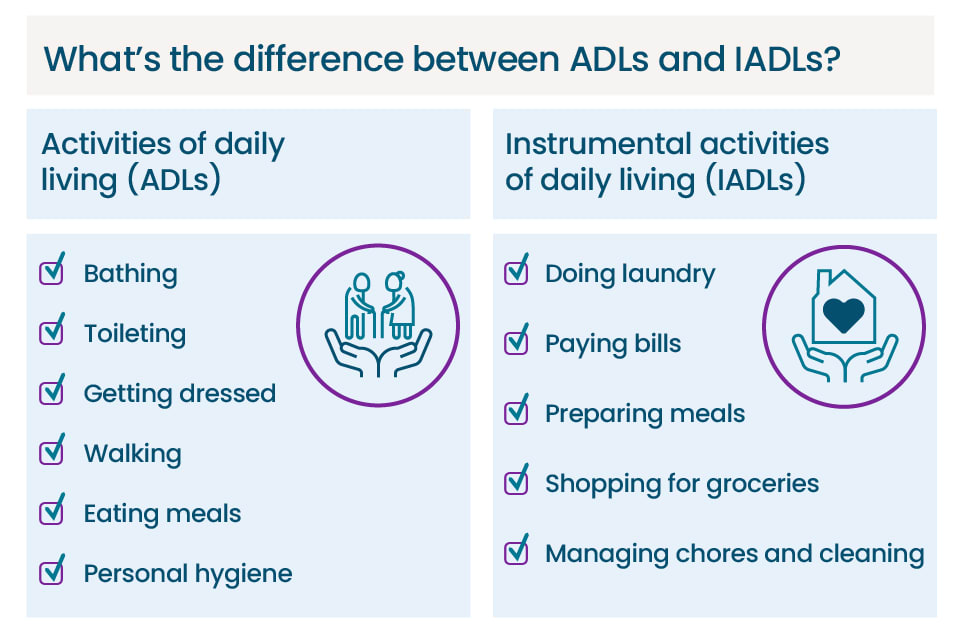
ADLs versus IADLs

DEFINITIONS

By Staff Reporters

SPONSOR: http://www.CertifiedMedicalPlanner.org

***

***

Activities of Daily Living (ADLs)

According to Leslie Kernisan MD MPH, these are the basic self-care tasks that we initially learn as very young children. They are sometimes referred to as “Basic Activities of Daily Living” (BADLs). They include:

  • Walking, or otherwise getting around the home or outside. The technical term for this is “ambulating.”
  • Feeding, as in being able to get food from a plate into one’s mouth.
  • Dressing and grooming, as in selecting clothes, putting them on, and adequately managing one’s personal appearance.
  • Toileting, which means getting to and from the toilet, using it appropriately, and cleaning oneself.
  • Bathing, which means washing one’s face and body in the bath or shower.
  • Transferring, which means being able to move from one body position to another. This includes being able to move from a bed to a chair, or into a wheelchair. This can also include the ability to stand up from a bed or chair in order to grasp a walker or other assistive device.

If a person is not fully independent with ADLs, then we usually include some information about the amount of assistance they require. ADLs were originally defined in the 1950s by a geriatrician named Sidney Katz, who was trying to define what it might look like for a person to recover to independence after a disabling event such as a stroke or hip fracture. So these measures are sometimes called the “Katz Index of Independence in Activities of Daily Living.”

***

***

Instrumental Activities of Daily Living (IADLs)

These are the self-care tasks we usually learn as teenagers. They require more complex thinking skills, including organizational skills. They include:

  • Managing finances, such as paying bills and managing financial assets.
  • Managing transportation, either via driving or by organizing other means of transport.
  • Shopping and meal preparation. This covers everything required to get a meal on the table. It also covers shopping for clothing and other items required for daily life.
  • Housecleaning and home maintenance. This means cleaning kitchens after eating, keeping one’s living space reasonably clean and tidy, and keeping up with home maintenance.
  • Managing communication, such as the telephone and mail.
  • Managing medications, which covers obtaining medications and taking them as directed.

Because managing IADLs requires a fair amount of cognitive skill, it’s common for IADLs to be affected when an older person is having difficulty with memory or thinking. For those older adults who develop Alzheimer’s disease or a related dementia, IADLs will usually be affected before ADLs are.

IADLs were defined about ten years after ADLs, by a psychologist named M.P. Lawton. Dr. Lawton felt there were more skills required to maintain independence than were listed on the original Katz ADL index, and hence created the “Lawton Instrumental Activities of Daily Living Scale.”

COMMENTS APPRECIATED

Like and Subscribe

***

***

BIAS: Beware Overconfident Investing

By Staff Reporters and A.I.

SPONSOR: http://www.CertifiedMedicalPlanner.org

***

***

OVERCONFIDENT INVESTING BIAS

Overconfident Investing Bias happens when we believe we can out-smart other investors via market timing or through quick, frequent trading. This causes the results of a study to be unreliable and hard to reproduce in other research settings.

Example: Data convincingly shows that people and financial planners/advisors and wealth managers who trade most often under-perform the market by a significant margin over time. Active traders lose money.

Example: Overconfidence Investing Bias moreover leads to: (1) excessive trading (which in turn results in lower returns due to costs incurred), (2) underestimation of risk (portfolios of decreasing risk were found for single men, married men, married women, and single women), (3) illusion of knowledge (you can get a lot more data nowadays on the internet) and (4) illusion of control (on-line trading).

***

***

MORE:

COMMENTS APPRECIATED

Like and Subscribe

***

***

Psychiatrist V. Psychologist V. Psychotherapist

DEFINITIONS
By A. I. and Staff Reporters

SPONSOR: http://www.CertifiedMedicalPlanner.org

***

***

The terms “psychologist” and “psychiatrist” are often used interchangeably to describe anyone who provides therapy services, but the two professions and the services they provide differ in terms of content and scope. A major difference between the two types of experts is that psychiatrists can prescribe medication [Rx].

  • As physicians [MD/DO] psychiatrists are trained to recognize the ways biological processes affect mental functioning.
  • Psychologists are oriented to how thoughts, feelings, and social factors influence mental functioning.

PSYCHIATRIST

Psychiatrists are medical or osteopathic doctors who are able to prescribe psychotropic medications, which they do in conjunction with providing psychotherapy though medical and pharmacological interventions are often their focus.

PSYCHOLOGIST

Though many psychologists hold doctorate degrees, they are not medical doctors, and most cannot prescribe medications. Rather, they solely provide psycho-therapy, which may involve cognitive and behavioral interventions, psycho-dynamic or psycho-analytic approaches.

NOTE PROTECTED TITLE: The title of “psychologist” can only be used by an individual who has completed the required education, training, and state license requirements. Informal titles, such as “counselor” or “therapist,” are often used as well. Other mental health care professionals, such as licensed social workers, can claim those titles, but not the title of “psychologist.”

COMMENTS APPRECIATED

Like and Subscribe

***

HEALTH CARE SPENDING: Projected to Exceed $8.5 Trillion by 2033

By Health Capital Consultants LLC

***

***

On June 25th, 2025, the Centers for Medicare & Medicaid Services (CMS) released its forecast on U.S. healthcare spending through 2033. The analysis, published in Health Affairs, estimated healthcare spending growth in 2024 and projected the growth into 2033. CMS found that overall healthcare spending growth has decreased slightly but is still elevated compared to pre-pandemic levels, and is expected to continue to moderately grow.

This Health Capital Topics article examines the factors underlying the forecasts. (Read more…) 

COMMENTS APPRECIATED

Like and Subscribe

***

***

Bitcoin, Stocks, Oil, Gold and Silver

By A.I.

SPONSOR: http://www.CertifiedMedicalPlanner.org

***

***

  • Stocks: The major Wall Street stock indexes languished. The S&P pulled back from its record high to close the week just a bit lower, but the NASDAQ managed to post a gain across the week.
  • Crypto: Bitcoin hit a new high-water mark above $118,000. Next week, July 14th, Congress hosts “Crypto Week” to discuss regulating the industry in a growth-oriented manner.
  • Commodities: Silver rose to its highest level since 2011, and it’s been even hotter than gold. The metal is up ~27% this year. Oil, meanwhile, ticked higher on speculation that President Trump will place more sanctions on Russia early next week.

COMMENTS APPRECIATED

Like and Subscribe

***

***

DAILY UPDATE: CVS & Merck as Stock Markets Struggle

MEDICAL EXECUTIVE-POST TODAY’S NEWSLETTER BRIEFING

***

Essays, Opinions and Curated News in Health Economics, Investing, Business, Management and Financial Planning for Physician Entrepreneurs and their Savvy Advisors and Consultants

Serving Almost One Million Doctors, Financial Advisors and Medical Management Consultants Daily

A Partner of the Institute of Medical Business Advisors , Inc.

http://www.MedicalBusinessAdvisors.com

SPONSORED BY: Marcinko & Associates, Inc.

***

http://www.MarcinkoAssociates.com

Daily Update Provided By Staff Reporters Since 2007.
How May We Serve You?
© Copyright Institute of Medical Business Advisors, Inc. All rights reserved. 2025

REFER A COLLEAGUE: MarcinkoAdvisors@outlook.com

SPONSORSHIPS AVAILABLE: https://medicalexecutivepost.com/sponsors/

ADVERTISE ON THE ME-P: https://tinyurl.com/ytb5955z

Your Referral Count -0-

***

CITE: https://www.r2library.com/Resource

CVS has threatened to close 23 pharmacies in Arkansas after the state passed a law banning companies that own pharmacy benefit managers (PBMs) from also operating pharmacies starting in 2026.

CITE: https://tinyurl.com/2h47urt5

What’s up stocks

  • Kraft Heinz jumped 2.53% following a WSJ report it was preparing to break itself up (but not back to Kraft and Heinz).
  • Companies in the drone sector rose after the Pentagon introduced measures to supercharge production and deployment. Red Cat rose 26.40%, AeroVironment 11.04%, and Kratos Defense & Security Solutions 11.76%.
  • Performance Food Group jumped 4.84% to a record after reportedly being eyed by US Foods Holding for a takeover. A combined company would become the top foodservice distributor in the US with combined sales of ~$100 billion.
  • AMC Entertainment popped 11% on an upgrade from Wedbush. It’s tired of IMAX hogging the Brew Markets spotlight…

What’s down stocks

  • Delta (-0.23%) and United (-4.34%) took a breather after their big celebration on Thursday post-Delta earnings.
  • Penn Entertainment got hit 7.62% when gaming revenue for Iowa and Indiana came in soft.
  • Sunrun’s up-and-down week ended…down, with the solar stock falling 7%.

CITE: https://tinyurl.com/tj8smmes

Stat: $10 billion. That’s how much Merck is paying to buy UK-based biopharmaceutical Verona Pharma. (CNBC)

Visualize: How private equity tangled banks in a web of debt, from the Financial Times.

COMMENTS APPRECIATED

PLEASE SUBSCRIBE: MarcinkoAdvisors@outlook.com

Thank You

***

***

***

***

EDUCATIONAL TEXTBOOKS: https://tinyurl.com/4zdxuuwf

***

Goldman Sachs and Bitcoin

SPONSOR: http://www.CertifiedMedicalPlanner.org

By A.I.

***

***

Bitcoin notched another all-time record yesterday, beating the previous record that was set two days ago.

Goldman Sachs plans to ask junior bankers to certify their loyalty every three months in order to prevent poaching by private equity firms, Bloomberg reported.

COMMENTS APPRECIATED

EDUCATIONAL TEXTBOOKS: https://tinyurl.com/4zdxuuwf

Like and Subscribe

***

***

DAILY UPDATE: Measles Cases Up as Stock Markets Rise

MEDICAL EXECUTIVE-POST TODAY’S NEWSLETTER BRIEFING

***

Essays, Opinions and Curated News in Health Economics, Investing, Business, Management and Financial Planning for Physician Entrepreneurs and their Savvy Advisors and Consultants

Serving Almost One Million Doctors, Financial Advisors and Medical Management Consultants Daily

A Partner of the Institute of Medical Business Advisors , Inc.

http://www.MedicalBusinessAdvisors.com

SPONSORED BY: Marcinko & Associates, Inc.

***

http://www.MarcinkoAssociates.com

Daily Update Provided By Staff Reporters Since 2007.
How May We Serve You?
© Copyright Institute of Medical Business Advisors, Inc. All rights reserved. 2025.

REFER A COLLEAGUE: MarcinkoAdvisors@outlook.com

SPONSORSHIPS AVAILABLE: https://medicalexecutivepost.com/sponsors/

ADVERTISE ON THE ME-P: https://tinyurl.com/ytb5955z

Your Referral Count -0-

***

CITE: https://www.r2library.com/Resource

US measles cases have reached a 33-year high. A little more than halfway into 2025, the US has reported 1,288 measles cases, marking the highest yearly total since 1992, according to data from the Centers for Disease Control and Prevention.

CITE: https://tinyurl.com/2h47urt5

Stocks up

  • Cereal legend WK Kellogg popped 30.57% after chocolate giant Ferrero agreed to acquire it for north of $3 billion.
  • Tesla (+4.73%) continued to rebound from its plunge on Monday. Elon Musk said that Tesla’s robotaxi service would expand into the Bay Area “probably in a month or two” and that his AI chatbot Grok is coming to Tesla vehicles by next week.
  • Estée Lauder gained 6.32% after Bank of America slapped a buy rating on the stock, implying a 27% upside from Wednesday’s closing price. 
  • ProKidney continued its remarkable rally, rising another 19.35%, after the biotech announced positive trial results for its diabetes treatment. It’s gone from a penny stock to a $1.55 billion market cap in the past four days.
  • Copper companies Freeport-McMoRan (+3.51%) and Southern Copper (+2.34%) gained thanks to Trump’s announcement that copper tariffs would begin on August 1.

Stocks down

  • Biotech partners Ultragenyx (-25.11%) and Mereo BioPharma Group (-42.52%) plunged after issuing a disappointing update on their trial of a treatment for a rare genetic bone condition.
  • Vertiv, the maker of liquid cooling equipment, declined 5.96% when Amazon said it was rolling out a new liquid cooling system for its AI servers.
  • Hydro Flask owner Helen of Troy tumbled 22.71% after reporting a $450 million loss in its fiscal first quarter. CEO Brian Grass said “tariff-related impacts” were its Achilles heel.
  • Autodesk fell 6.89% after Bloomberg reported on Wednesday it was weighing a takeover of rival engineering software company PTC.

CITE: https://tinyurl.com/tj8smmes

Visualize: How private equity tangled banks in a web of debt, from the Financial Times.

COMMENTS APPRECIATED

PLEASE SUBSCRIBE: MarcinkoAdvisors@outlook.com

Thank You

***

***

***

***

EDUCATIONAL TEXTBOOKS: https://tinyurl.com/4zdxuuwf

***

Stocks, Commodities and Crypto-Currency

By A.I.

SPONSOR: http://www.CertifiedMedicalPlanner.org

***

***

  • Stocks: Jobless claims came in lower than expected, the 30-year US bond auction met with strong demand, and Delta Airlines unofficially kicking off earnings season with a solid report. The S&P 500 and the NASDAQ hit record highs.
  • Crypto: Bitcoin reached a record high for the second day in a row, hitting $113,863.31 today. The crypto’s price has stayed above $100k for 60 consecutive days.
  • Commodities: Coffee futures in New York climbed as much as 3.5% in response to President Trump’s threat to slap 50% tariffs on Brazil, which is the top producer of higher-end arabica coffee.

COMMENTS APPRECIATED

Like and Subscribe

***

***

What is a “Market-Neutral” Fund?

Market Neutral Funds Demystified

[A Special Report]

By Dimitri Sogoloff MD MBA & Dr. David E. Marcinko MBA MEd CMP

***

Introduction

SPONSOR: https://marcinkoassociates.com/

It’s hard to believe that just 30 years ago, physician investors had only two primary asset classes from which to choose: U.S. equities and U.S. bonds.

Today, the marketplace offers a daunting array of investment choices. Rapid market globalization, technology advancements and investor sophistication have spawned a host of new asset classes, from the mundane to the mysterious.

Even neophyte medical investors can now buy and sell international equities, emerging market debt, mortgage securities, commodities, derivatives, indexes and currencies, offering infinitely more opportunities to make, or lose, money.

Amidst this ongoing proliferation, a unique asset class has emerged, one that is complex, non-traditional and not easily understood like stocks or bonds. It does, however, offer one invaluable advantage; its returns are virtually uncorrelated with any other asset class. When this asset class is introduced into a traditional investment portfolio, a wonderful thing occurs; the risk-return profile of the overall portfolio improves dramatically.

This asset class is known as a Market-Neutral strategy. The reason few medical professionals have heard of market neutral strategies is that most of them are offered by private investment partnerships otherwise known as hedge funds.

To the uninitiated, “hedge fund” means risky, volatile or speculative. With a market-neutral strategy however, just the opposite is true. Funds utilizing market-neutral strategies typically emphasize the disciplined use of investment and risk control processes. As a result, they have consistently generated returns that display both low volatility and a low correlation with traditional equity or fixed income markets. 

Definition of Market-Neutral

All market-neutral funds share a common objective: to achieve positive returns regardless of market direction. Of course, they are not without risk; these funds can and do lose money. But a key to their performance is that it is independent of the behavior of the markets at large, and this feature can add tremendous value to the rest of a portfolio.

A typical market-neutral strategy focuses on the spread relationship between related securities, which is what makes them virtually independent of underlying debt or equity markets. When two related securities are mispriced in relation to one another, the disparity will eventually disappear as the result of some external event. This event is called convergence and may take the form of a bond maturity, completion of a merger, option exercise, or simply a market recognizing the inefficiency and eliminating it through supply and demand.

Here’s how it might work

When two companies announce a merger, there is an intended future convergence, when the shares of both companies will converge and become one. At the time of the announcement, there is typically a trading spread between two shares. A shrewd trader, seeing the probability of the successful merger, will simultaneously buy the relatively cheaper share and sell short the relatively more expensive share, thus locking in the future gain.

Another example of convergence would be the relationship between a convertible bond and its underlying stock. At the time of convergence, such as bond maturity, the two securities will be at parity. However, the market forces of supply and demand make the bond underpriced relative to the underlying stock. This mispricing will disappear upon convergence, so simultaneously buying the convertible bond and selling short an equivalent amount of underlying stock, locks in the relative spread between the two.  

Yet another example would be two bonds of the same company – one junior and one senior. For various reasons, the senior bond may become cheaper relative to the junior bond and thus display a temporary inefficiency that would disappear once arbitrageurs bought the cheaper bond and sold the more expensive bond.

While these examples involve different types of securities, scenarios and market factors, they are all examples of a market-neutral strategy. Locking a spread between two related securities and waiting for the convergence to take place is a great way to make money without ever taking a view on the direction of the market.

How large are these spreads, you may ask? Typically, they are tiny. The markets are not quite fully efficient, but they are efficient enough to not allow large price discrepancies to occur.

In order to make a meaningful profit, a market-neutral fund manager needs sophisticated technology to help identify opportunities, the agility to rapidly seize those opportunities, and have adequate financing resources to conduct hundreds of transactions annually.  

Brief Description of Strategies

SPONSOR: http://www.CertifiedMedicalPlanner.org

The universe of market-neutral strategies is vast, spanning virtually every asset class, country and market sector. The spectrum varies in risk from highly volatile to ultra conservative. Some market-neutral strategies are more volatile than risky low-cap equity strategies, while others offer better stability than U.S Treasuries.

One unifying factor across this vast ocean of seemingly disparate strategies is that they all attempt to take advantage of a relative mispricing between various securities, and all offer a high degree of “market neutrality,” that is, a low correlation with underlying markets.

[A] Convertible Arbitrage

Convertible arbitrage is the oldest market-neutral strategy. Designed to capitalize on the relative mispricing between a convertible security (e.g. convertible bond or preferred stock) and the underlying equity, convertible arbitrage was employed as early as the 1950s.

Since then, convertible arbitrage has evolved into a sophisticated, model-intensive strategy, designed to capture the difference between the income earned by a convertible security (which is held long) and the dividend of the underlying stock (which is sold short). The resulting net positive income of the hedged position is independent of any market fluctuations. The trick is to assemble a portfolio wherein the long and short positions, responding to equity fluctuations, interest rate shifts, credit spreads and other market events offset each other.  

A convertible arbitrage strategy involves taking long positions in convertible securities and hedging those positions by selling short the underlying common stock. A manager will, in an effort to capitalize on relative pricing inefficiencies, purchase long positions in convertible securities, generally convertible bonds, convertible preferred stock or warrants, and hedge a portion of the equity risk by selling short the underlying common stock. Timing may be linked to a specific event relative to the underlying company, or a belief that a relative mispricing exists between the corresponding securities.

Convertible securities and warrants are priced as a function of the price of the underlying stock, expected future volatility of returns, risk free interest rates, call provisions, supply and demand for specific issues and, in the case of convertible bonds, the issue-specific corporate/Treasury yield spread.

Thus, there is ample room for relative misvaluations. Because a large part of this strategy’s gain is generated by cash flow, it is a relatively low-risk strategy. 

[B] Fixed-Income Arbitrage

Fixed-income arbitrage managers seek to exploit pricing inefficiencies across global markets.

Examples of these anomalies would be arbitrage between similar bonds of the same company, pricing inefficiencies of asset-backed securities and yield curve arbitrage (price differentials between government bonds of different maturities). Because the prices of fixed-income instruments are based on interest rates, expected cash flows, credit spreads, and related factors, fixed-income arbitrageurs use sophisticated quantitative models to identify pricing discrepancies.

Similarly to convertible arbitrageurs, fixed-income arbitrageurs rely on investors less sophisticated than themselves to misprice a complex security.

[C] Equity Market-Neutral Arbitrage

This strategy attempts to offset equity risk by holding long and short equity positions. Ideally, these positions are related to each other, as in holding a basket of S&P500 stocks and selling S&P500 futures against the basket. If the manager, presumably through stock-picking skill, is able to assemble a basket cheaper than the index, a market-neutral gain will be realized.

A related strategy is identifying a closed-end mutual fund trading at a significant discount to its net asset value. Purchasing shares of the fund gains access to a portfolio of securities valued significantly higher. In order to capture this mispricing, one needs only to sell short every holding in the fund’s portfolio and then force (by means of a proxy fight, perhaps) conversion of the fund from a closed-end to an open-end (creating convergence).

Sounds easy, right?

In considering equity market-neutral, you must be careful to differentiate between true market-neutral strategies (where long and short positions are related) and the recently popular long/short equity strategies.

In a long/short strategy, the manager is essentially a stock-picker, hopefully purchasing stocks expected to go up, and selling short stocks expected to depreciate. While the dollar value of long and short positions may be equivalent, there is often little relationship between the two, and the risk of both bets going the wrong way is always present.

[D] Merger Arbitrage (a.k.a. Risk Arbitrage)

Merger arbitrage, while a subset of a larger strategy called event-driven arbitrage, represents a sufficient portion of the market-neutral universe to warrant separate discussion.

Merger arbitrage earned a bad reputation in the 1980s when Ivan Boesky and others like him came to regard insider trading as a valid investment strategy. That notwithstanding, merger arbitrage is a respected stratagey, and when executed properly, can be highly profitable. It bets on the outcomes of mergers, takeovers and other corporate events involving two stocks which may become one.

A textbook example was the acquisition of SDL Inc (SDLI), by JDS Uniphase Corp (JDSU). On July 10, 2000 JDSU announced its intent to acquire SDLI by offering to exchange 3.8 shares of its own shares for one share of SDLI.

At that time, the JDSU shares traded at $101 and SDLI at $320.5. It was apparent that there was almost 20 percent profit to be realized if the deal went through (3.8 JDSU shares at $101 are worth $383 while SDLI was worth just $320.5). This apparent mispricing reflected the market’s expectation about the deal’s outcome. Since the deal was subject to the approval of the U.S. Justice Department and shareholders, there was some doubt about its successful completion. Risk arbitrageurs who did their homework and properly estimated the probability of success bought shares of SDLI and simultaneously sold short shares of JDSU on a 3.8 to 1 ratio, thus locking in the future profit.

Convergence took place about eight months later, in February 2001, when the deal was finally approved and the two stocks began trading at exact parity, eliminating the mispricing and allowing arbitrageurs to realize a profit. 

Merger Arbitrage, also known as risk arbitrage, involves investing in securities of companies that are the subject of some form of extraordinary corporate transaction, including acquisition or merger proposals, exchange offers, cash tender offers and leveraged buy-outs. These transactions will generally involve the exchange of securities for cash, other securities or a combination of cash and other securities.

Typically, a manager purchases the stock of a company being acquired or merging with another company, and sells short the stock of the acquiring company. A manager engaged in merger arbitrage transactions will derive profit (or loss) by realizing the price differential between the price of the securities purchased and the value ultimately realized when the deal is consummated. The success of this strategy usually is dependent upon the proposed merger, tender offer or exchange offer being consummated.  

When a tender or exchange offer or a proposal for a merger is publicly announced, the offer price or the value of the securities of the acquiring company to be received is typically greater than the current market price of the securities of the target company.

Normally, the stock of an acquisition target appreciates while the acquiring company’s stock decreases in value. If a manager determines that it is probable that the transaction will be consummated, it may purchase shares of the target company and in most instances, sell short the stock of the acquiring company. Managers may employ the use of equity options as a low-risk alternative to the outright purchase or sale of common stock. Many managers will hedge against market risk by purchasing S&P put options or put option spreads. 

[E] Event-Driven Arbitrage

Funds often use event-driven arbitrage to augment their primary market-neutral strategy. Generally, any convergence which is produced by a future corporate event would fall into this category.

Accordingly, Event-Driven investment strategies or “corporate life cycle investing” involves investments in opportunities created by significant transactional events, such as spin-offs, mergers and acquisitions, liquidations, reorganizations, bankruptcies, recapitalizations and share buybacks and other extraordinary corporate transactions.

Event-Driven strategies involve attempting to predict the outcome of a particular transaction as well as the optimal time at which to commit capital to it. The uncertainty about the outcome of these events creates investment opportunities for managers who can correctly anticipate their outcomes.

As such, Event-Driven trading embraces merger arbitrage, distressed securities and special situations investing. Event-Driven managers do not generally rely on market direction for results; however, major market declines, which would cause transactions to be repriced or break, may have a negative impact on the strategy. 

Event-driven strategies are research-intensive, requiring a manager to do extensive fundamental research to assess the probability of a certain corporate event, and in some cases, to take an active role in determining the event’s outcome. 

Risk and Reward Characteristics

To help understand market-neutral performance and risk, let’s take a look at the distribution of returns of individual strategies and compare it to that of traditional asset classes.

 Table 1:  Average Return / Volatility of Market Neutral Strategies And Selected Traditional Asset Classes 


Strategy Average Return Annualized Volatility
Convertible Arbitrage 11.95% 3.57%
Fixed Income Arbitrage 8.33% 4.90%
Equity Market-Neutral 11.62% 4.95%
Merger Arbitrage 13.29% 3.51%
Relative Value Arbitrage 15.69% 4.31%
   Traditional Asset Classes:    
S&P 500 12.62% 13.72%
MSCI World 8.57% 13.05%
High Grade U.S. Corp. Bonds 7.26% 3.73%
World Government Bonds 5.91% 5.96%

The most important observation about this chart is that the Market Neutral funds exhibits considerably lower risk than most traditional asset classes.

While market-neutral strategies vary greatly and involve all types of securities, the risk-adjusted returns are amazingly stable across all strategies. The annualized volatility – a standard measure of performance risk – varies between 3.5 and 5 percent, comparable to a conservative fixed-income strategy.     

Another interesting statistics is the correlation between Market Neutral strategies and traditional asset classes and traditional asset classes

Table 2: Correlation between Market Neutral Strategies and Traditional Asset Classes


Asset Class/Strategy S&P500 MSCI World GovBonds CorpBonds

The correlation of all market neutral strategies to traditional assets is quite low, or negative in some cases. This suggests that these strategies would indeed play a useful role in the ultimate goal of efficient portfolio diversification.

To test the “market neutrality” of these strategies, we asked, “How well, on average, did these strategies perform during bad, as well as good, market months?”

It turns out, in good times and bad, these strategies displayed consistent solid performance. From 12/31/91, in months when S&P 500 was down, the average down month was 3.03 percent. Market Neutral strategies performed as follows:


Strategy Average Monthly Return
Convertible Arbitrage + 0.65%
Fixed Income Arbitrage + 0.50%
Equity Market-Neutral + 1.19%
Merger Arbitrage + 0.88%
Relative Value Arbitrage + 0.81%

In months when S&P 500 was up, the average up month was +3.24 percent.  Market Neutral strategies performed as follows:


Strategy Average Monthly Return
Convertible Arbitrage +1.17%
Fixed Income Arbitrage +1.20%
Equity Market-Neutral +1.37%
Merger Arbitrage +0.60%
Relative Value Arbitrage +1.25%

Clearly, a compelling picture emerges. While these strategies, on average, underperform during good times, they show a positive average return during both good and bad markets.

Inclusion of Market-Neutral in a Long-term Investment Portfolio

A critical concern for any medical investor considering a foray into a new asset class is how it will alter the long-term risk/reward profile of the overall portfolio. To better understand this, we constructed several hypothetical portfolios consisting of traditional asset classes:

·  US Treasuries (Salomon Treasury Index 10yrs+)

·  High Grade Corporate Bonds  (Salomon Investment Grade Index)

·  Speculative Grade Corporate Bonds  (High Yield Index)

·  US Blue chip equities  (Dow Jones Industrial Average)

·  US mid-cap equities  (S&P 400 Midcap Index)

·  US small-cap equities (S&P 600 Smallcap Index)

Portfolios varied in the level of risk from 100 percent U.S Treasuries (least risky) to 100 percent small-cap equities (most risky), and are ranked from 1 to 10, 1 representing the least risky portfolio.Each portfolio was analyzed on a Risk/Return basis using monthly return data since December 1991. The results are shown in Chart 1.Predictably, the least risky portfolio produced the smallest return, while the riskiest produced the highest return. This is perfectly understandable – you would expect to be compensated for taking a higher level of risk.

Chart 1: Risk/Return characteristics of traditional portfolios vs. Market Neutral strategies 

Clearly, the risk-return picture offered by Market Neutral strategies is much more compelling (lower risk, higher return) than that offered by portfolios of traditional assets. What happens if we introduce these market-neutral strategies into traditional portfolios? Let’s take 20 percent of the traditional investments in our portfolio and reinvest them in market-neutral strategies.

The change is dramatic: the new portfolios (denoted 1a through 10a) offer significantly less risk for the same return. The riskiest portfolio, for instance (number 10) offered 20 percent less risk for a similar return of a new portfolio containing market-neutral strategies (number 10a).   
 
Chart 2:  Result of inclusion of 20% of Market Neutral strategies in traditional portfolios 

This is quite a difference.  Everything else being equal, anyone would choose the new, “improved” portfolios over the traditional ones.

How to invest

The mutual fund world does not offer a great choice of market neutral strategies. 

Currently, there are only a handful of good mutual funds that label themselves market-neutral (AXA Rosenberg Market Netural fund and Calamos Market Neutral fund are two examples).

Mutual fund offerings are slim due to excessive regulations imposed by the SEC with respect to short selling and leverage, and consequently these funds lack flexibility in constructing truly hedged portfolios. The dearth of market-neutral offerings among mutual funds is offset by a vast array of choices in the hedge fund universe. Approximately 400 market-neutral funds, managing $60 billion, represent roughly 25% of all hedge funds.

Therefore, further focus will relate to the hedge fund universe, rather than the limited number of market-neutral mutual funds.

Direct investing in a market-neutral hedge fund is restricted to qualifying individuals who must meet high net worth and/or income requirements, and institutional investors, such as corporations, qualifying pension plans, endowments, foundations, banks, insurance companies, etc.

This does not mean that retail investors cannot get access to hedge fund exposure. Various private banking institutions offer funds of funds with exposure to hedge funds. Maaket-neutral funds are nontraditional investments. They are part of a larger subset of strategies known as alternative investments, and there is nothing traditional in the way doctors invest in them.

Hedge funds are private partnerships, which gives them maximum flexibility in constructing and managing portfolios, but also requires medical investors to do a little extra work.

[A] Lockup Periods

One of the main differences between mutual funds and hedge funds is liquidity. Market-neutral strategies have less liquidity than traditional portfolios. Quarterly redemption policies with 45- or 60-days notice are common. Many funds allow redemptions only once a year and some also have lock-up periods. In addition, few of these funds pay dividends or make distributions. These investments should be regarded strictly as long-term strategies.

[B] Managerial Risks

Success of a market-neutral strategy depends much less on the market direction than on the manager’s skill in identifying arbitrage opportunities and capitalizing on them.

Thus, there is significantly more risk with the manager than with the market. It’s vital for investors to understand a manager’s style and to monitor any deviations from it due to growth, personnel changes, bad decisions, or other factors.

[C] Fees

If you are accustomed to mutual fund fees, brace yourself; market-neutral investing does not come cheap.

Typical management fees range from 1 to 2 percent per year, plus a performance fee averaging 20 percent of net profits. Most managers have a “high watermark” provision; they cannot collect the performance fees until investors recoup any previous losses. Look for this provision in the funds’ prospectus and avoid any fund that lacks it. Even with higher fees, market-neutral investing is superior to most traditional mutual fund investing on a risk-adjusted return basis.

[D] Transparency

Mutual funds report their positions to the public regularly. This is not the case with market-neutral hedge funds. Full transparency could jeopardize accumulation of a specific position. It also generates front running: buying or selling securities before the fund is able to do so. While you should not expect to see individual portfolio positions, many hedge fund managers do provide a certain level of transparency by indicating their geographical or sector exposures, level of leverage and extent of hedging.

It does take a bit of education to understand these numbers, but the effort is definitely worthwhile. 

[E] Taxation

The issue of hedge fund taxation is quite complex and is often dependent on the fund and the personal situation of the investor. Advice from a competent accountant, specialized financial advisor, tax attorney with relevant experience is worthwhile. The bottom line is that investing in market-neutral funds is not a tax-planning exercise and it will not minimize your taxes.

On the other hand, it should not generate any more or fewer taxes than if you invested in more traditional funds.

From the medical investor’s perspective, the principal advantages of market-neutral investing are attractive risk-adjusted returns and enhanced diversification.

Ten years of data indicate that market-neutral portfolios have produced risk-adjusted returns superior to traditional investments. In addition, the correlation between the returns of market-neutral funds and traditional asset classes has been historically negligible.

Adding exposure of market-neutral return strategies to the asset mix within a consistent, long-term investment program offers a medical investor the opportunity to improve overall returns, as well as achieving some protection against negative market movements.

Now, after all of the above, has your impression of hedge funds in general or MN funds in particular, changed?

APPENDIX:  

Asset class weighting in traditional portfolios:
Portfolio US Treasuries US High Grade Corp Bonds US Low Grade Corp Bonds Large Cap Stocks Mid Cap Stocks Small Cap Stocks
1 50% 50%        
2   50% 50%      
3 10% 30% 50% 40%    
4   50%   50%    
5   10% 10% 50% 30%  
6     10% 50% 20% 20%
7     10% 30% 20% 40%
8       20% 20% 60%
9         20% 80%
10           100%


Conclusion

Your thoughts and comments on this ME-P are appreciated. Feel free to review our top-left column, and top-right sidebar materials, links, URLs and related websites, too. Then, subscribe to the ME-P. It is fast, free and secure.

Speaker: If you need a moderator or speaker for an upcoming event, Dr. David E. Marcinko; MBA – Publisher-in-Chief of the Medical Executive-Post – is available for seminar or speaking engagements. Contact: MarcinkoAdvisors@msn.com

OUR OTHER PRINT BOOKS AND RELATED INFORMATION SOURCES:

HOSPITALS: http://www.crcpress.com/product/isbn/9781466558731
CLINICS: http://www.crcpress.com/product/isbn/9781439879900
BLOG: www.MedicalExecutivePost.com
FINANCE: Financial Planning for Physicians and Advisors
INSURANCE: Risk Management and Insurance Strategies for Physicians and Advisors

Product DetailsProduct DetailsProduct Details

Product Details  Product Details

Comprehensive Financial Planning Strategies for Doctors and Advisors: Best Practices from Leading Consultants and Certified Medical Planners(TM)