BOARD CERTIFICATION EXAM STUDY GUIDES Lower Extremity Trauma
[Click on Image to Enlarge]
ME-P Free Advertising Consultation
The “Medical Executive-Post” is about connecting doctors, health care executives and modern consulting advisors. It’s about free-enterprise, business, practice, policy, personal financial planning and wealth building capitalism. We have an attitude that’s independent, outspoken, intelligent and so Next-Gen; often edgy, usually controversial. And, our consultants “got fly”, just like U. Read it! Write it! Post it! “Medical Executive-Post”. Call or email us for your FREE advertising and sales consultation TODAY [678.779.8597] E-mail: MarcinkoAdvisors1738@outlook.com
Medical & Surgical e-Consent Forms
ePodiatryConsentForms.com
iMBA Inc., OFFICES
Suite #5901 Wilbanks Drive, Norcross, Georgia, 30092 USA [1.678.779.8597]. Our location is real and we are now virtually enabled to assist new long distance clients and out-of-town colleagues.
ME-P Publishing
SEEKING INDUSTRY INFO PARTNERS?
If you want the opportunity to work with leading health care industry insiders, innovators and watchers, the “ME-P” may be right for you? We are unbiased and operate at the nexus of theoretical and applied R&D. Collaborate with us and you’ll put your brand in front of a smart & tightly focused demographic; one at the forefront of our emerging healthcare free marketplace of informed and professional “movers and shakers.” Our Ad Rate Card is available upon request [678-779-8597].
HFRI Fund of Funds Composite Index invests with multiple managers through funds or managed accounts. The strategy designs a diversified portfolio of managers with the objective of significantly lowering the risk (volatility) of investing with an individual manager. The Fund of Funds manager may allocate funds to numerous managers within a single strategy, or with numerous managers in multiple strategies. The investor has the advantage of diversification among managers and styles with significantly less capital than investing with separate managers. The HFRI Fund of Funds Index is not included in the HFRI Fund Weighted Composite Index.
HFRI Fund Weighted Composite Index is a global, equal-weighted index of over 2,000 single-manager funds that report to HFR Database. Constituent funds report monthly net of all fees performance in U.S. Dollar and have a minimum of $50 Million under management or a twelve (12) month track record of active performance. The HFRI Fund Weighted Composite Index does not include Funds of Hedge Funds.
Posted on December 25, 2024 by Dr. David Edward Marcinko MBA MEd CMP™
DEFINED
By Staff Reporters
***
***
In brushing scams, according to Norton, criminals trick e-commerce platforms into believing you purchased a product, allowing them to post fake verified reviews under your name. These verified reviews increase the product’s visibility on sites like Amazon or eBay. They especially happen during the holiday season.
Here’s how it works:
Information gathering: An unethical business gathers information about you through online sources such as people-search sites, data leaked through reaches, or info bought from an illegal marketplace.
Bogus account creation: The business creates an online shopping account with your information.
Shipment: They send a package to your address with no return address on the label.
Fraudulent review: They write a glowing review in your name for the product they sent you.
Posted on December 24, 2024 by Dr. David Edward Marcinko MBA MEd CMP™
Feeling the Pressure to “Give”
By Rick Kahler MS CFP®
Are you feeling any pressure this Christmas season to give, give, give? Keeping up with the Joneses all year is hard enough. It gets even worse during the holidays, when we feel pressured to keep up, not just with the Joneses, but also with the expectations others, and ourselves, put on Santa Claus.
Some Christmas shoppers overspend on gifts and end up paying off credit card bills for months. Others drive themselves crazy trying to find exactly the right gifts for the right people. Others hate the whole idea of shopping so much that they find it hard to enjoy the season.
If you fit into any of these categories, the cause may be your money scripts. The unconscious beliefs about money that we all hold are especially likely to kick in this time of year. We are surrounded by expectations and pressures about “ideal” holiday celebrations with the perfect gifts, the perfect decorations, and the perfect foods. As a result, we are especially vulnerable to making money decisions blindly in response to beliefs we don’t even realize we hold.
You may be one of those who regularly end up spending significantly more on gifts than you intended to. You may impulsively buy additional, unbudgeted gifts for people you’ve already bought presents for. You may not even try to set holiday spending limits. You may overspend on things for yourself while you’re Christmas shopping.
If any of these are true for you, you may have some unconscious beliefs about money that drive you to overspend. See whether any of the following money scripts might fit for you:
“The more you spend, the more love you show.”
“It takes the joy out of giving if you pinch pennies.”
“It’s the season for giving lavishly, not for being a Scrooge.”
“If I don’t buy just the right gifts, people won’t like or respect me.”
“I need to give my kids more than I got when I was a child.”
“More gifts and more spending will make the holidays okay (and make my guilt go away).”
“It’s tradition. Everyone expects (whatever) from me.”
“I do so much for everyone else; I deserve something for myself, too.”
It’s also possible you may go to the opposite extreme and be a Grinch when it comes to the holidays. If you hate Christmas shopping, grumble about the holiday being so commercialized, and look forward to January, it’s possible you may hold some money scripts that drive you to underspend. Your beliefs may be similar to the following:
“It’s wrong to spend money except on necessities.”
“You aren’t a spiritual or religious person if you spend too much money.”
“Christmas shouldn’t be about money.”
“It’s wrong to spend money on luxuries when poor people are suffering.”
“It isn’t good for kids to get too much.”
“My kids shouldn’t have more than I had when I was a child.”
If you’d like to change some aspects of what you do and how you feel about holiday spending, you may find it useful to take a closer look at your own beliefs about the season. One way to begin this is to quickly write answers (short statements are best) to the following questions: What do I believe about money and each of the following? Christmas? Family celebrations? Presents? Giving? Spending? Receiving?
Assessment
You may uncover some money scripts similar to the ones listed above. Learning why you tend to overspend or under spend this time of year won’t instantly change what you do. Yet understanding what is behind your pattern of holiday spending is an important way to start becoming a more conscious Christmas shopper.
Conclusion
Your thoughts and comments on this ME-P are appreciated. Feel free to review our top-left column, and top-right sidebar materials, links, URLs and related websites, too. Then, subscribe to the ME-P. It is fast, free and secure.
Speaker: If you need a moderator or speaker for an upcoming event, Dr. David E. Marcinko; MBA – Publisher-in-Chief of the Medical Executive-Post – is available for seminar or speaking engagements.
Subscribe: MEDICAL EXECUTIVE POST for curated news, essays, opinions and analysis from the public health, economics, finance, marketing, IT, business and policy management ecosystem.
Posted on December 23, 2024 by Dr. David Edward Marcinko MBA MEd CMP™
***
***
By Steve Selengut
December values may not be what they seem
NOTE: Mr. Selengut is a private investor and a contributing editor to LIFE & Health Advisor. He is the author of the book ‘The Brainwashing of the American Investor: The book that Wall Street does not want you to read.’
***
As [physician] investors, and we all are investors these days, it is important that we understand the idiosyncrasies of year-end Stock Market activity. On Wall Street, investing can be a minefield for those who don’t appreciate the non-economic, non-business-model, factors contributing to the market value numbers in fourth quarter brokerage account summaries.
Year end market values may not be what they seem ….
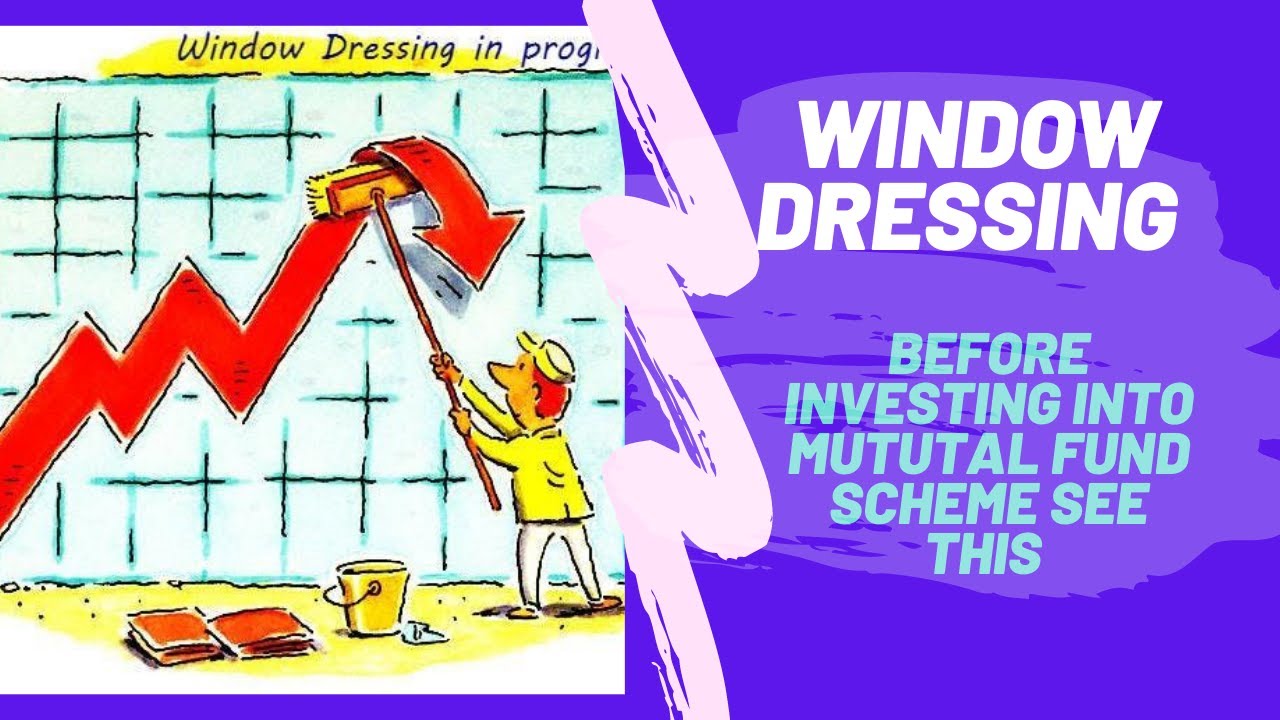
“Portfolio Window Dressing” (PWD) produces security pricing that is more a function of next year’s institutional marketing programs than a reflection of the economic forces that we would like to think are their primary determining factors. Not even close…
Toward the end of every calendar quarter, we hear the financial media report that “institutional PWD activities” are in full swing. But that is as deep as the stories ever go. What are they talking about, and just what does it mean to you as an investor?
Posted on December 23, 2024 by Dr. David Edward Marcinko MBA MEd CMP™
By Dr. David Edward Marcinko MBA
[CEO – iMBA Inc]
To Our ME-P Subscribers, iMBA Inc., Clients and Friends
As we look forward to sharing the holidays with family and friends, we also remember those less fortunate.
And, as has been our practice in recent years, rather than sending holiday greeting cards, the iMBA Inc will provide support to several charities dedicated to helping those in need.
We hope this gesture provides happier holidays for others and serves to express our gratitude to you, in the spirit of the season, for your continued support and loyalty to this ME-P.
Happy New Year 2024
We also extend our hope that the New Year 2022 brings you and your loved ones good health, happiness and a world that comes to know peace and understanding.
***
***
Channel Surfing the ME-P
Have you visited our other topic channels? Established to facilitate idea exchange and link our community together, the value of these topics is dependent upon your input. Please take a minute to visit. And, to prevent that annoying spam, we ask that you register. It is fast, free and secure.
Your thoughts and comments on this ME-P are appreciated. Feel free to review our top-left column, and top-right sidebar materials, links, URLs and related websites, too. Then, subscribe to the ME-P. It is fast, free and secure.
Speaker: If you need a moderator or speaker for an upcoming event, Dr. David E. Marcinko; MBA – Publisher-in-Chief of the Medical Executive-Post – is available for seminar or speaking engagements. Contact: MarcinkoAdvisors@msn.com
OUR OTHER PRINT BOOKS AND RELATED INFORMATION SOURCES:
Posted on December 21, 2024 by Dr. David Edward Marcinko MBA MEd CMP™
By Ann Miller RN MHACMP™
INTRODUCING OUR NEXT GENERATION e-BOOK LIBRARYFROM iMBA, Inc.
An e-book is an electronic or digital book that can be read on a computer or a handheld device.
Our new e-books consists of text, images, and are fixed to a specific spot on the page.
And, our e-books are a data files similar in content and structure to a word-processing document that comes in a PDF format. To use our e-books, you need to purchase and download it to a device that has a .pdf file reader app, such as ADOBE® or similar on a smartphone, tablet or computer. A PDF, also known as a portable document format, is the format most people are familiar with and used in our e-books. PDFs are known for their ease of use and ability to hold custom layouts. They are the most commonly used e-Book formats, especially by professionals and adult-learners.
You can then access the e-book and read it, or highlight pages and even take side notes.
e-Books Save Money
With no manufacturing, printing, binding or shipping costs, e-Books are cheaper than traditional hard or paper back books.The price of each specialized and highly niche focused e-Book [50-100 pages] is only $25, whereas similar paperback printed books of this type generally cost $145, or more!
Posted on December 20, 2024 by Dr. David Edward Marcinko MBA MEd CMP™
By Staff Reporters
***
***
Freddie Mac (FHLMC-Federal Home Loan Mortgage Corporation)
Freddie Mac is a GSE [government-sponsored enterprise] established by Congress. It’s similar to Fannie Mae with a publicly owned corporate structure. (Freddie Mac’s stock (FRE) trades on the New York Stock Exchange.) These two giant GSEs increase liquidity in the U.S. mortgage market by purchasing mortgages from lenders, then typically repackaging (securitizing) the debt and reselling it to investors, helping to create a “secondary” market for mortgages.
The GSEs’ main purpose is to assure that mortgage money is available for borrowers. But they don’t lend money directly. Instead, they purchase mortgages from “primary” lenders like mortgage companies, banks, and credit unions. That allows the primary lenders to replenish their funds and lend more money to home buyers. The GSEs finance their mortgage purchases by issuing mortgage-backed securities (MBS) and other debt instruments (often referred to as agency debt, even though, technically, the GSEs aren’t government agencies). GSE debt is considered to have relatively high credit quality based on its implicit government backing, reinforced by what happened during the Financial Crisis in 2008.
Since Fannie Mae and Freddie Mac were placed into government conservatorship in September 2008, the government has pledged to support any shortfall in the balance sheets of the two GSEs. The U.S. Treasury has said it will ensure that both GSEs can maintain a positive net worth and fulfill all of their financial obligations. This statement of support lends credence to the very high credit ratings of MBS and other debt issued by Fannie and Freddie.
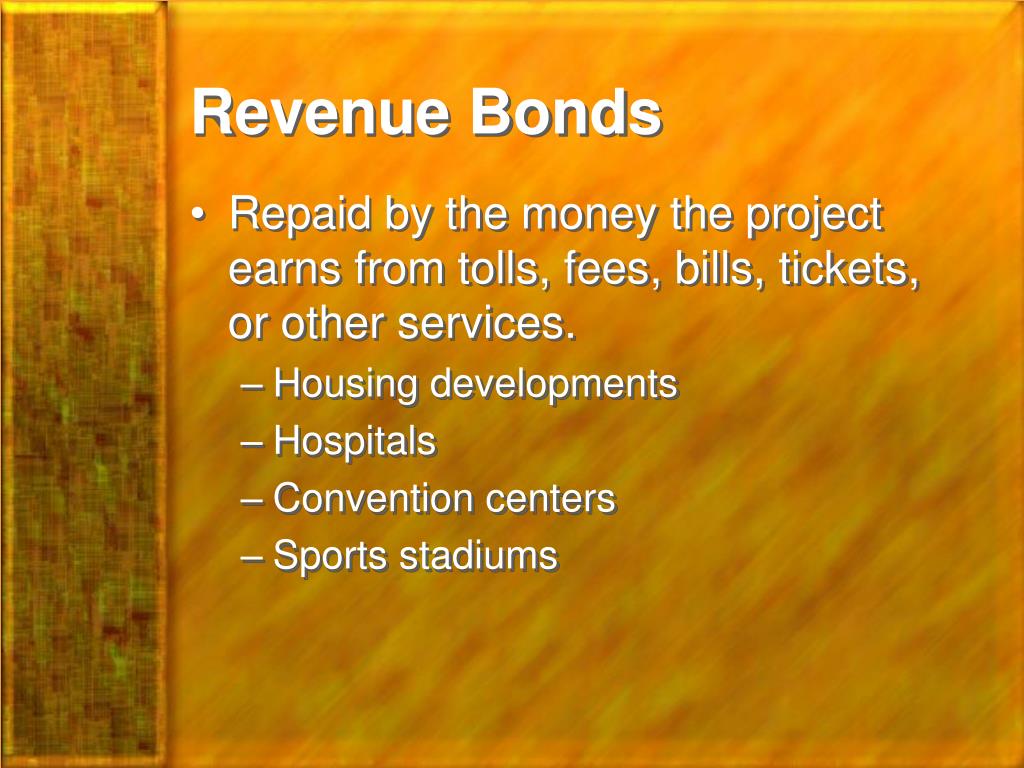
Revenue bonds are one of the biggest sectors in the municipal debt market.
Unlike a general obligation (GO) bond, revenue bonds are not backed by a municipal issuer’s taxing authority. Instead, interest and principal are secured by the net revenues (tolls, fees, or other charges tied to usage) from the project or facility being financed.
Revenue bonds are issued to finance a variety of capital projects, including construction or refurbishment of utility and waste disposal systems, highways, bridges, tunnels, air and seaport facilities, schools and hospitals.
Posted on December 20, 2024 by Dr. David Edward Marcinko MBA MEd CMP™
DEFINED
Staff Reporters
***
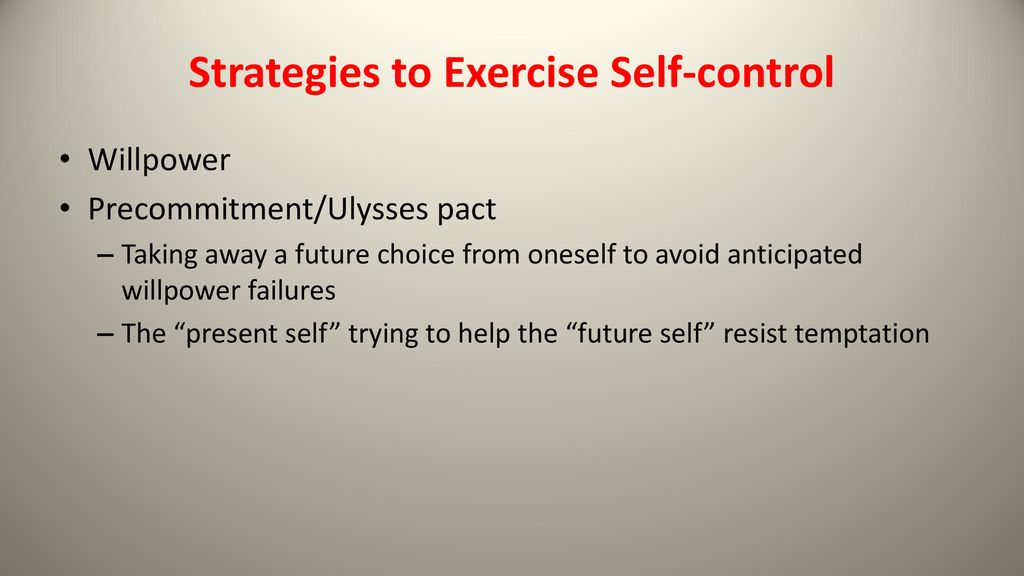
Taking away a future choice from oneself to avoid anticipated willpower failures. The present self trying to help the future self resist temptation.
***
Ulysses Pact is a commitment made with oneself to accomplish a tough goal by limiting the choice to back out, boosting the chances of success by removing tempting alternatives.
According to colleague Dan Ariely PhD, it’s a self-control strategy that’s especially useful for resisting short-term temptations.
Carry-Oriented Currencies are higher-yielding currencies of countries where interest rates are generally higher than those of countries with lower-yielding currencies.
These higher-yielding currencies are targeted for “carry trades,” where investors borrow money in a low-interest rate currency and invest in a higher yielding currency, potentially profiting from the difference in interest rates.
Posted on December 18, 2024 by Dr. David Edward Marcinko MBA MEd CMP™
By Staff Reporters
***
***
Theory of Linguistic Sciences
Avram Noam Chomsky is an American professor known for his work in linguistics and political activism. Sometimes called “the father of modern linguistics”, Chomsky is also one of the founders of the field of cognitive science. He is a laureate professor of linguistics at the University of Arizona and an professor emeritus at MIT.
And so, modern linguists today approach their work with scientific rigor and perspective [STEM], although they use methods that were once thought to be solely an academic discipline of the humanities.
Contrary to this belief, linguistics is multidisciplinary. It overlaps each of the human sciences including psychology, neurology, anthropology, and sociology. Linguists conduct formal studies of sound structure, grammar and meaning, but also investigates the history of language families, and research language acquisition.
And, as with other scientists according to linguistical engineer and Professor Mackenzie Hope Marcinko PhD from the University of Delaware [UD], they formulate hypotheses, catalog observations, and work to support explanatory theories, etc.
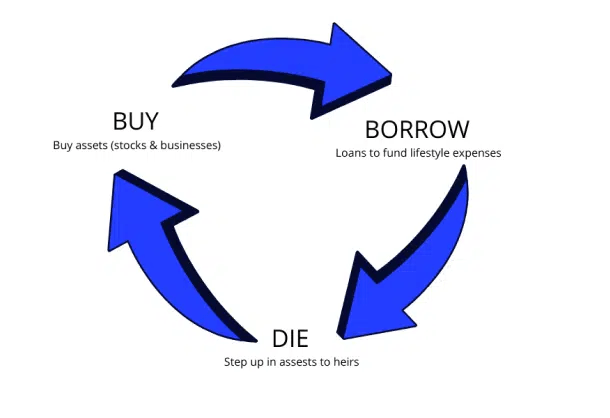
Here’s how the Buy, Borrow, Die strategy works step-by-step:
Step 1. Buy Assets
This step, broadly known as the accumulation phase, is about acquiring or creating valuable assets. It’s the most critical step taken by wealthy individuals to secure their wealth. Billionaires, for instance, often created startups that eventually turned into massive corporations. The asset here is the company they’ve established.
However, this isn’t the only way to accumulate assets. For professionals like doctors and lawyers, this phase involves securing a high-paying job and buying assets that have the potential to appreciate over time—like stocks, real estate, and private capital. Once an individual reaches a substantial level of wealth, they can leverage these assets in interesting ways using the next step of this strategy.
Step 2. Borrow Against Your Assets
This where the assets you’ve acquired are used as collateral to borrow money—all without triggering a taxable event.
Suppose you’ve got a robust stock portfolio. You can then take out a Securities Backed Line of Credit (SBLOC). This kind of loan lets you tap into the value of your portfolio without having to sell off any assets and subsequently paying capital gains taxes. What makes SBLOCs attractive to lenders is the relative ease with which the securities can be seized and sold, making them a low-risk lending option.
The ceiling for such a loan is usually around 50% of your portfolio’s value. However, we often caution against borrowing more than 25% of your account balance, especially for long-term loans. This will provide a cushion against stock market volatility, much like what we experienced in 2022 and 2023.
Borrowing against assets isn’t limited to stock portfolios either. Let’s say you own a home and have built up a certain amount of equity in it. You could opt for a Home Equity Line of Credit (HELOC), using your home as collateral. Banks tend to favor real estate-backed loans due to their stability compared to the fluctuating value of stocks.
Step 3. Die and Pass Your Wealth On
The final step in the strategy is where the proverbial tax baton is handed off to the next generation.
Under the existing tax code, when you pass away, your heirs receive a “stepped-up basis” on the assets they inherit from you. This means that their cost basis—the original amount paid for an asset—is stepped up to the market value of the asset at the time of your death. Meaning once you have passed away, your heirs would be able to sell the assets without having to pay taxes on the capital gain. Imagine you had purchased a building 20 years ago for $1 million and over the years, the value of that building increased to $2.5 million. If you were to pass away at this point, your heirs would inherit the building with the stepped-up cost basis of $2.5 million. This implies that if they decide to sell the property at this valuation, they wouldn’t owe any capital gains tax. This is because for tax purposes, their gain is calculated from the $2.5 million, not the original $1 million.
By utilizing this loophole, families can pass on their wealth without incurring a hefty tax bill. This is why many wealthy families set up trusts – it’s a way to manage and pass on their wealth at a stepped-up cost basis.
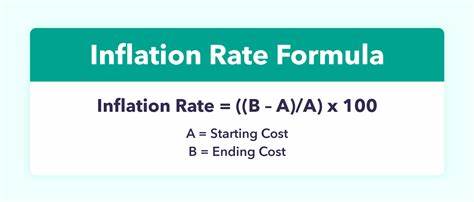
The breakeven inflation rate is the difference between the nominal yield (usually the market yield, which includes an inflation premium) on a fixed-income investment and the real yield (with no inflation premium) on an inflation-linked investment of similar maturity and credit quality.
So, if inflation averages more than the breakeven rate, the inflation-linked investment will outperform the investment with the nominal yield.
Conversely, if inflation averages below the breakeven rate, the investment with the nominal yield will outperform the inflation-linked investment.
Breakeven inflation rates are also considered useful measures of inflation expectations—higher breakeven rates represent higher inflation expectations (and higher relative prices for inflation-linked investments), while lower breakeven rates represent lower inflation expectations (and lower relative prices for inflation-linked investments).
Therefore, ideally, investors want to purchase inflation-linked investments when breakeven rates are relatively low because that’s typically when prices are also relatively low.
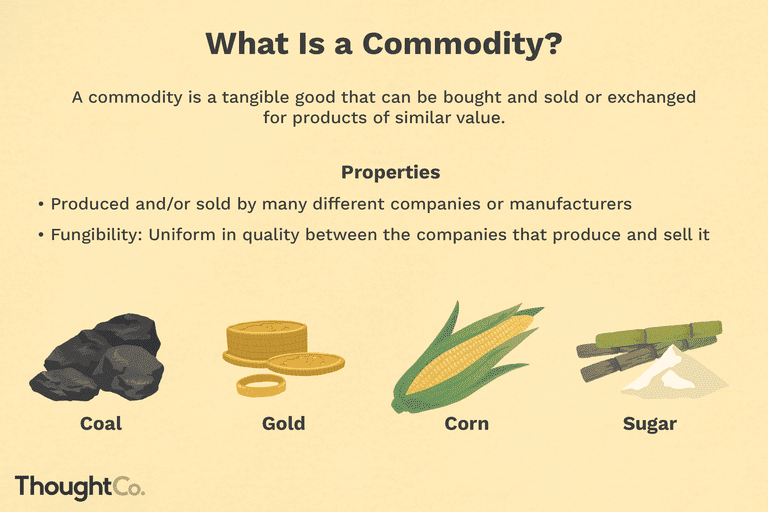
Commodities: Commodities are raw materials or primary agricultural products that can be bought or sold on an exchange or market. Examples include grains such as corn, foods such as coffee, and metals such as copper.
Commodity Futures: Agreements to buy or sell a specific amount of a commodity or financial instrument at a particular price on a stipulated future date related to basic raw materials such as precious metals and natural resources.
Commodity Intensity: Commodity intensity refers to commodity usage per unit of economic growth. An emerging, more manufacturing-based economy will usually be more commodity intensive in terms of its growth than will a more developed, service-oriented economy.
Posted on December 15, 2024 by Dr. David Edward Marcinko MBA MEd CMP™
By Staff Reporters
***
***
Humans use cognitive information to Direct Attention to relevant objects (targets) in a visual scene. Information such as the target’s color or location is represented as a ‘perceptual set’. Similarly, advance information about the required response to a target is represented as a ‘motor set’.
***
MisDirected Attention however is like polishing the brass on the Titanic while ignoring the iceberg. Our brains love details, sometimes too much. We focus on the minutiae and miss what’s really important. This is why you might spend more time choosing a font than writing the actual content.
For example, have you ever spent hours perfecting the details of a project only to miss the big picture? That’s misdirected attention, according to Dan Ariely PhD.
Always remember, it’s easy to get lost in the weeds. Keep an eyes on the horizon.
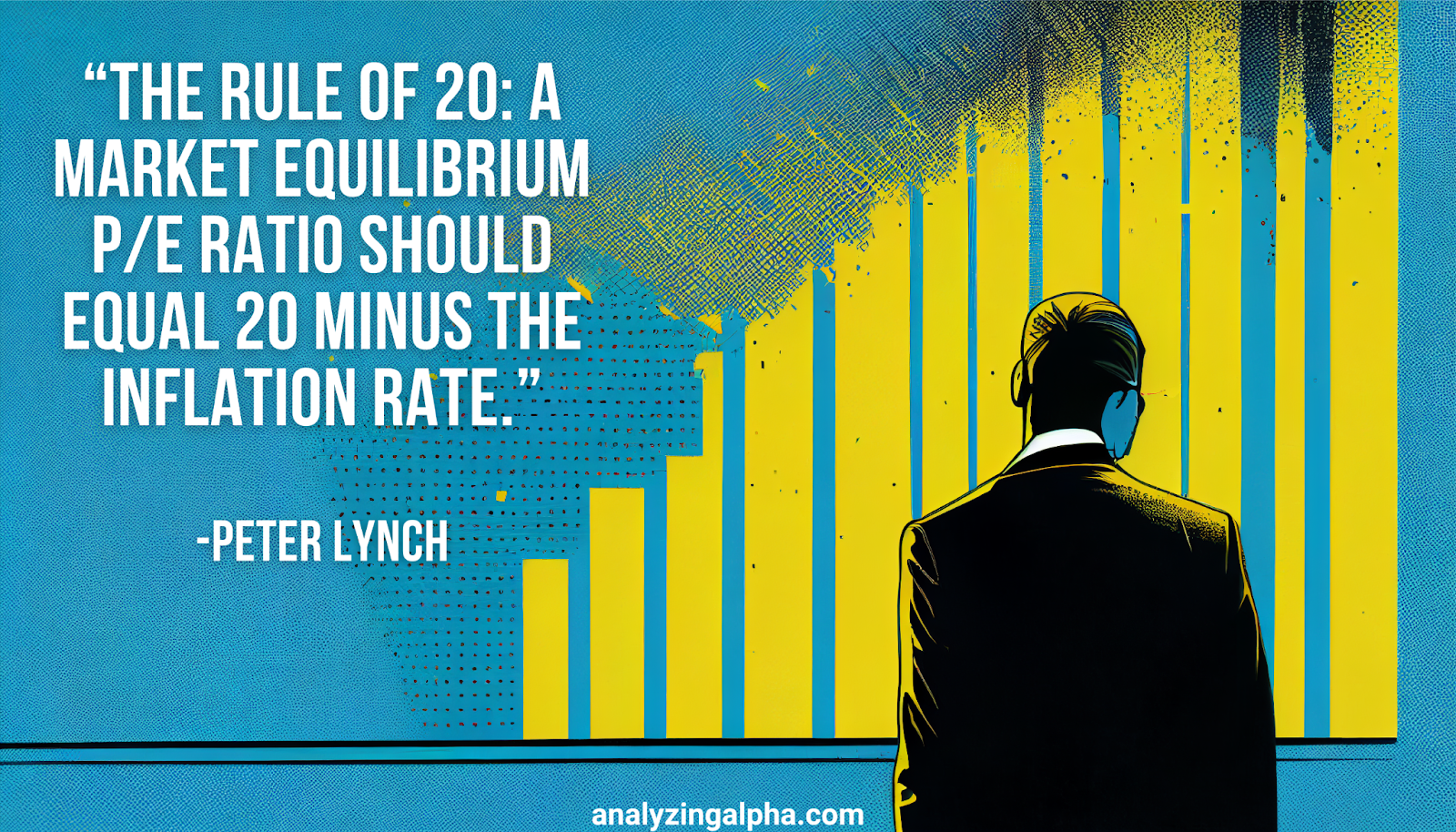
The Rule of 20 is a dimensionless number that adds the current 12-month trailing Price to Earnings Ratio to the annual change in an index of the annual consumer inflation rate. A reading below 20, while a market is trending lower, means that we could be near a bottom.
In the United States, the most common index used is the broad-based S&P 500, and CPI-U is used as a proxy for inflation.
The Rule of 20 is purportedly a rule from Peter Lynch. In chapter 39 of Graham and Dodd’s seminal Security Analysis, they mention: “We would suggest that about 20 times average earnings is as high a price as can be paid in an investment purchase of a common stock” … with no mention of inflation.
Lynch’s formulation attempts to factor the ‘gravity’ of interest rates into the fair value of a stock. And, as you can see, the measure has fluctuated quite a bit. However, it has returned to roughly the 20 level repeatedly.
Posted on December 15, 2024 by Dr. David Edward Marcinko MBA MEd CMP™
By Staff Reporters
***
***
Pro hac vice is Law Latin that means “for this time [only]” (literally, “for this turn”). When a lawyer is admitted to a case pro hac vice, a court has granted them a limited license to practice in a jurisdiction where they otherwise would not be licensed to do so.
For example, a lawyer licensed only to practice in California may nonetheless practice in a New York case once a court has granted them admission pro hac vice, so long as the lawyer practices only within the limited scope of their pro hac vice admission. In almost all U.S. jurisdictions, lawyers who practice pro hac vice must do so in conjunction with a local lawyer acting as local counsel. Local counsel typically acts as an anchor to the bar of a foreign jurisdiction, exposing local counsel to liability for the acts or omissions of the lawyer admitted pro hac vice. Local counsel therefore usually assumes, at a minimum, a role of monitoring the lawyer admitted pro hac vice.
Posted on December 13, 2024 by Dr. David Edward Marcinko MBA MEd CMP™
By Staff Reporters
***
***
What Is a Public Benefit Corporation?
A benefit corporation—also known as a B Corporation—has shareholders who own the company, unlike a non-profit. So making money is the point, just not the whole point.
While non-profits (or not-for-profits) serve a public benefit and don’t make any profits, benefit corporations want to make money while still serving a greater purpose than itself “and a desire for the corporation to help make the world a better place,” according to Rick Bell of Harvard Business Services.
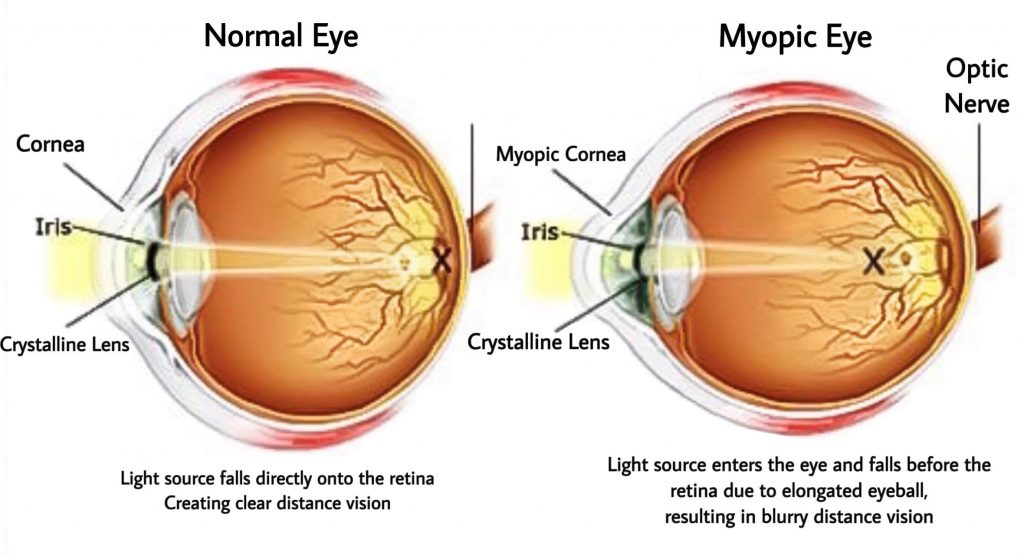
Myopia makes it hard for us to imagine what our lives might be like in the future.
For example, because we are young, healthy, and in our prime earning years now, it may be hard for us to picture what life will be like when our health depletes and we know longer have the earnings necessary to support our standard of living.
According to colleague Dan Ariely PhD, this short sighted cognitivebias makes it hard to save adequately when we are young, when saving does the most good.
Posted on December 11, 2024 by Dr. David Edward Marcinko MBA MEd CMP™
By Staff Reporters
***
***
Headline risk refers to the risk that a negative news media headline about one security issuer, incident or sector could affect the demand for and pricing of a much wider swath of securities, including those that have no direct relation to the securities headlined and whose fundamentals (defined above) remain intact.
Financial analyst Meredith Whitney’s appearance on “Sixty Minutes” in December 2010 was a classic example of the potential impact of headline risk, when her prediction of “a spate of municipal bond defaults” helped trigger a massive municipal bond market selloff, even though most municipal bonds actually faced no immediate default threat at that time, and the number of municipal defaults actually declined in the subsequent 12 months.
Posted on December 11, 2024 by Dr. David Edward Marcinko MBA MEd CMP™
MEDICAL EXECUTIVE-POST–TODAY’SNEWSLETTERBRIEFING
***
Essays, Opinions and Curated News in Health Economics, Investing, Business, Management and Financial Planning for Physician Entrepreneurs and their Savvy Advisors and Consultants
“Serving Almost One Million Doctors, Financial Advisors and Medical Management Consultants Daily“
A Partner of the Institute of Medical Business Advisors , Inc.
According to reporting from the Wall Street Journal, the pharmacy chain Walgreen’s is discussing selling to private equity (PE) firm Sycamore Partners, a deal that could close early next year. This comes following a tumultuous year for the company, which announced it would close 1,200 stores in October and laid off more than 250 employees in November. The PE firm is allegedly considering selling off pieces of the business or working with partners, sources told the Journal. Following the news, Walgreens’s stock jumped 28%, its biggest single-day increase since 1980, according to Yahoo Finance.
Inflation rose 2.7% on an annual basis in November, according to the latest government report on the Consumer Price Index, or CPI. Last month’s CPI was forecast to come in at 2.7%, according to economists surveyed by financial data firm FactSet. The Consumer Price Index, a basket of goods and services typically bought by consumers, tracks the change in those prices over time.
US stocks opened higher on Wednesday as investors digested another month of sticky inflation data that met economists’ expectations and likely pointed to a Federal Reserve interest rate cut next week. The Dow Jones Industrial Average (^DJI) increased about 0.2%, while the S&P 500 (^GSPC) jumped nearly 0.5%. The tech-heavy NASDAQ Composite (^IXIC) also added to across-the-board gains, rising roughly 0.8%.
Posted on December 11, 2024 by Dr. David Edward Marcinko MBA MEd CMP™
By Staff Reporters
***
***
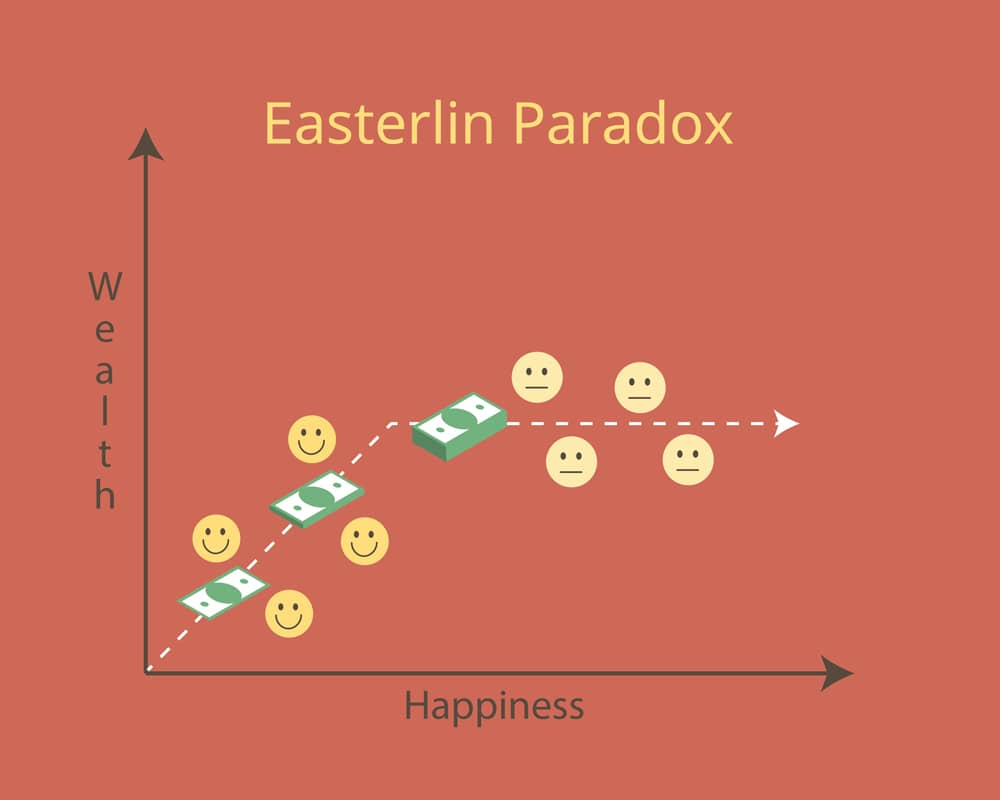
Richard Easterlin PhD, Paradox: For countries with income sufficient to meet basic needs, the reported level of happiness does not correlate with national income per person.
According to colleague Dan Ariely PhD, one explanation is that my happiness depends on a comparison between my income and my perceptions of the average standard of living. If everyone’s income increases, my increased income gives a short boost to my happiness, since I do not realize that the average standard of living has gone up. Some time later, I realize that the average standard of living has also gone up, so the happiness boost produced by my increased income disappears. It is the contradiction between the point-of-time and time series findings that is the root of the paradox: while there is a correlation at a fixed point, there is no trend over multiple points.
That is, in the short run, everyone perceives increases in income to be correlated with happiness and tries to increase their incomes. However, in the long run, this proves to be an illusion, since everyone’s efforts to raise standards of living lead to increasing averages, leaving everyone in the same place in terms of relative income.
Various theories have been advanced to explain the paradox, but the paradox itself is solely an empirical generalization. The existence of the paradox has been strongly disputed by other researchers.
Posted on December 10, 2024 by Dr. David Edward Marcinko MBA MEd CMP™
By Staff Reporters
***
***
Memory is Fallible/Memory is Impressionable: This concept refers to the inherent unreliability of human memory and its susceptibility to distortion and manipulation. Memory is not a perfect recording of events; instead, it is reconstructive, meaning that when we recall information, our brains can inadvertently alter or fill in gaps based on existing beliefs, emotions, or narratives. This can lead to the incorporation of false details that align with what we already know or expect to be true, resulting in vivid but inaccurate recollections.
Consequently, according to colleague Dan Ariely PhD, our memories can be influenced by suggestion, context, and social pressures, making them susceptible to biases and inaccuracies, much like a “con man” leading us to believe things that may not reflect reality.
Posted on December 9, 2024 by Dr. David Edward Marcinko MBA MEd CMP™
MEDICAL EXECUTIVE-POST–TODAY’SNEWSLETTERBRIEFING
***
Essays, Opinions and Curated News in Health Economics, Investing, Business, Management and Financial Planning for Physician Entrepreneurs and their Savvy Advisors and Consultants
“Serving Almost One Million Doctors, Financial Advisors and Medical Management Consultants Daily“
A Partner of the Institute of Medical Business Advisors , Inc.
U.S. stocks closed mostly higher Friday, with the S&P 500 and NASDAQ Composite each notching fresh record peaks after the latest employment report showed jobs growth bounced back in November. The S&P 500 rose 15.16 points, or 0.2%, to end at 6,090.27. The NASDAQ climbed 159.05 points, or 0.8%, to close at 19,859.77. The Dow Jones Industrial Average fell 123.19 points, or 0.3%, to end at 44,642.52.
Think of synthetic equity as a communal garden. You don’t own the plot, and you don’t necessarily have a say in what’s planted, but you’re guaranteed a share of the crops that are harvested.
Synthetic equity is a form of deferred compensation that mirrors some of the benefits of real stock ownership without granting actual shares. It’s a contractual agreement between you and your employer that entitles you to a payout upon certain events—such as an IPO, acquisition, or surpassing earnings milestones.
Companies use synthetic equity plans to motivate their personnel through growth-related incentives. In other words, it grants employees a sense of ownership without issuing shares or altering the business’s ownership structure. As the company succeeds and appreciates in value, so does your potential payout. Although you don’t own actual shares of company stock, you are compensated as if you did.
According to Carla McCabe, synthetic equity programs also have a significant tax advantage to both business owners and the key employees.
For example, when a key employee receives shares under the firm’s synthetic equity program, the IRS does not recognize that receipt as taxable income to the employee until he or she actually receives the money. This usually occurs when the firm is sold or when the employee retires and is cashed out (assuming the employee’s synthetic shares are vested). This is very attractive considering that regular shares are taxed as ordinary income and the employee basically has to pay the associated tax even though he or she didn’t receive any cash.
Of course, all this begs the question: Why would a company offer synthetic equity instead of actual equity?
Two years ago, prior to the 2022 election, mental health experts alerted the medical world to their version of an assessment scale for yet another new condition – “doomscrolling.”
As defined by the National Library of Medicine in the article, “Constant exposure to negative news on social media and news feeds could take the form of ‘doomscrolling’ which is commonly defined as a habit of scrolling through social media and news feeds where users obsessively seek for depressing and negative information.”
And so, formally Doomscrolling or doomsurfing is the act of spending an excessive amount of time reading large quantities of news, particularly negative news, on the web and social media. Doomscrolling can also be defined as the excessive consumption of short-form videos or social media content for an excessive period of time without stopping. The concept was coined around 2020, particularly in the context of the COVID pandemic.
Surveys and studies suggest doomscrolling is predominant among youth. It can be considered a form of internet addiction disorder. In 2019, a study by the National Academy of Sciences found that it can be linked to a decline in mental and physical health. Numerous reasons for doomscrolling have been cited, including negativity bias and FOMO [fear of missing out], and attempts at gaining control over uncertainty.
QUERY: What about the roaring stock market, post the 2024 presidential election. Fundamental analysis or FOMO?
Posted on December 8, 2024 by Dr. David Edward Marcinko MBA MEd CMP™
By Staff Reporters
***
***
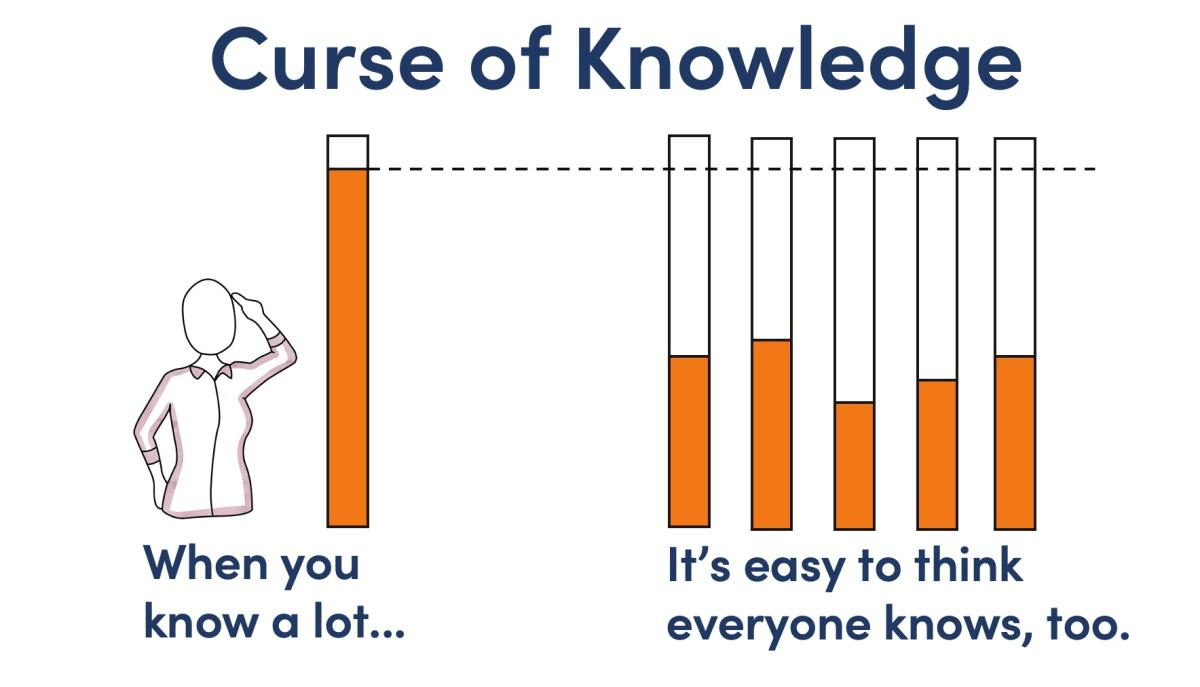
Similar to the availability heuristic (Tversky & Kahneman, 1974) and to some extent, the false consensus effect, once you really understand a new piece of information, that piece of information is now available to you and often becomes seemingly obvious. It might be easy to forget that there was ever a time you didn’t know this information and so, you assume that others, like yourself, also know this information: ie., the curse of knowledge.
However, it is often an unfair assumption that others share the same knowledge.
And so, the hindsight bias is similar to the curse of knowledge in that once we have information about an event, it then seems obvious that it was going to happen all along.
Posted on December 7, 2024 by Dr. David Edward Marcinko MBA MEd CMP™
By Health Capital Consultants, LLC
The U.S. government is the largest payor of medical costs, through Medicare and Medicaid, and has a strong influence on reimbursement to hospitals. In 2022, Medicare and Medicaid accounted for an estimated $944.3 billion and $805.7 billion in healthcare spending, respectively. The prevalence of these public payors in the healthcare marketplace often results in their acting as a price setter, and being used as a benchmark for private reimbursement rates.
This third installment of the series discusses the reimbursement environment in which hospitals operate. (Read more…)
Posted on December 7, 2024 by Dr. David Edward Marcinko MBA MEd CMP™
By Staff Reporters
***
***
The Shadow Self is like the dark twin you never knew you had. It’s the part of your personality that lurks in the background, hiding your less-than-perfect traits. Think of it as the villain in your personal movie, full of suppressed desires and impulses.
According to colleague Dan Ariely PhD, acknowledging your shadow self can be a bit like therapy – uncomfortable but ultimately enlightening.
So, embrace your inner Darth Vader, and you might just find a better balance between light and dark.
Posted on December 6, 2024 by Dr. David Edward Marcinko MBA MEd CMP™
MEDICAL EXECUTIVE-POST–TODAY’SNEWSLETTERBRIEFING
***
Essays, Opinions and Curated News in Health Economics, Investing, Business, Management and Financial Planning for Physician Entrepreneurs and their Savvy Advisors and Consultants
“Serving Almost One Million Doctors, Financial Advisors and Medical Management Consultants Daily“
A Partner of the Institute of Medical Business Advisors , Inc.
Health insurance companies are under scrutiny for proposed changes to anesthesia billing policies, raising concerns about patient safety and fair compensation for medical professionals. Anthem, a major health insurer, recently announced a controversial policy limiting payments for anesthesia services in Connecticut, Missouri, and New York. The policy would only cover part of the documented anesthesia time during a patient’s surgery, a decision strongly opposed by the American Society of Anesthesiologists (ASA).
Breaking News: Anthem health insurance company is backing off of a controversial plan to limit coverage of anesthesia in at least one state, according to Connecticut’s comptroller.
December 6: November nonfarm payrolls, University of Michigan preliminary December Consumer Sentiment.
December 9: October final wholesale inventories, November consumer inflation expectations, and expected earnings from Toll Brothers (TOL) and MongoDB (MDB).
December 10: Third quarter productivity and unit labor costs and expected earnings from AutoZone (AZO).
December 11: November Consumer Price Index and expected earnings from Adobe (ADBE).
December 12: November Producer Price Index and expected earnings from Broadcom (AVGO), Ciena (CIEN), and Costco (COST).
The SPX fell 11.38 points (–0.19%) to 6,075.11; the Dow Jones Industrial Average®($DJI) lost 248.33 points (–0.55%) to 44,765.71; and the NASDAQ Composite®($COMP) declined 34.85 points (–0.18%) to 19,700.26.
The 10-year Treasury note yield was unchanged at 4.18%.
The CBOE Volatility Index®(VIX)inched up to 13.46.
Posted on December 5, 2024 by Dr. David Edward Marcinko MBA MEd CMP™
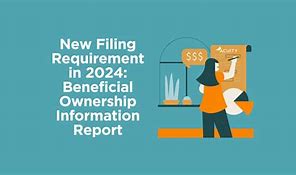
Beneficial Ownership Information
By Staff Reporters
***
***
Small business owners face severe penalties if they don’t report to the federal government by year’s end. And, thousands of businesses may not realize they are subject to a new reporting process mandated under the Corporate Transparency Act, which went into effect in January 2024. Even lawyers, doctors, financial advisors and accountants are affected; along with “mom and pop”business owners.
For most eligible businesses, the filing deadline is Jan. 1, 2025, according to the U.S. Chamber of Commerce. “Those who fail to file by this deadline — or fail to update this information if needed — could face up to two years imprisonment and fines up to $10,000, in addition to civil penalties of up to $591 per day,” the U.S. Chamber of Commerce website reads.
The law was created “to combat illicit activity including tax fraud, money laundering and financing for terrorism by capturing more ownership information for specific U.S. businesses operating in or accessing the country’s market,” the chamber website explained.
Posted on December 4, 2024 by Dr. David Edward Marcinko MBA MEd CMP™
By Health Capital Consultants, LLC
***
***
On November 1, 2024, the Centers for Medicare & Medicaid Services (CMS) released its finalized Medicare Physician Fee Schedule (MPFS) for calendar year (CY) 2025, aiming “to strengthen primary care, expand access to preventive services, and further access to whole-person care.” While the finalized fee schedule cuts payments to physicians, Congress is considering legislation to override the cut.
This Health Capital Topics article discusses the provisions contained in the MPFS final rule, as well as the proposed “doc fix” legislation. (Read more…)
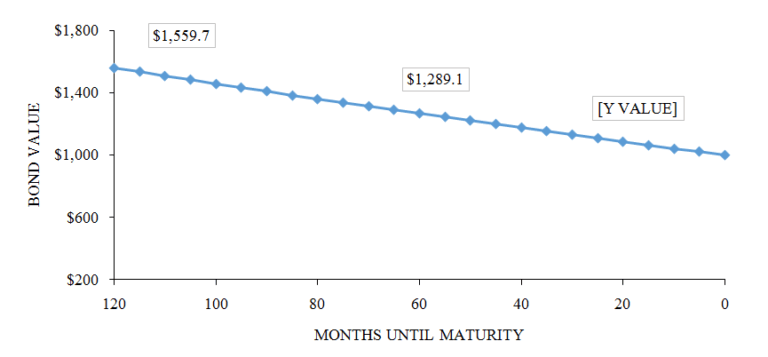
Real Bond Yield: For most bonds and other fixed-income securities, real yield is simply the yield you see listed online or in newspapers minus the premium added to help counteract the effects of inflation. Most “nominal” fixed-income yields include an “inflation premium” that is typically priced into the yields to help offset the effects of inflation.
Real yields, such as those for TIPS, don’t have the inflation premium. As a result, TIPS yields and other real yields are typically lower than most nominal yields
Negative Bond Yield: In a normal bond market environment, bond yields are positive, and bond issuers (including governments) make interest payments to investors who lend them money.
In an abnormal, or negative-yield environment, investors essentially pay the bond issuer to hold their money.
Posted on December 2, 2024 by Dr. David Edward Marcinko MBA MEd CMP™
BEWARE THE PSYCHOLOGY OF HOLIDAY SHOPPING!
[Online -OR- Onground]
By Staff Reporters
***
***
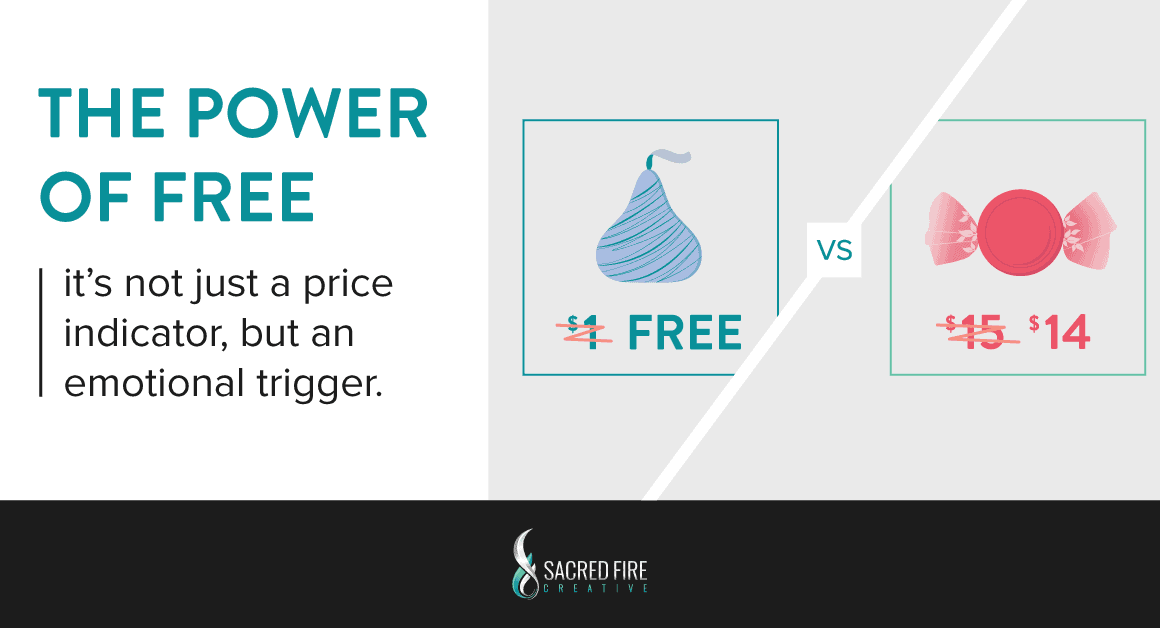
Power of Free
Who doesn’t love free stuff? The word “free” is like a magic spell that makes our rational minds go on vacation.
According to colleague Dan Ariely PhD, the power of free compels us to grab things we don’t need and make questionable choices. Why buy one and get one free when you can get two for the price of one? It’s the same deal, but free feels better.
IOW: Like other heuristics, the Power of Free is a mental shortcut that allows us to bypass rational thought and save effort to make quick decisions. Studies of the Power of Free have shown it to be closely linked to the Affect Heuristic. Specifically, it is linked to emotional and social thinking rather than transactional thinking. People become influenced by emotion and obligated to socially acceptable behaviors.
For example, say, a yoga studio charges extra to use their mats. This leads more people to pay the fee and use their mats for convenience. Then, say, the same yoga studio removed the extra fee more people would bring their mats from home instead of feeling guilty about borrowing one for class.
Removing a dollar value increases its inherent value and makes it more desirable. The type of product matters too. People are more likely to opt for a free product that is fun rather than functional. This is because emotion is more powerful than rational thinking under the influence of the Power of Free.
In another example, people are more likely to say “yes” to a free piece of cake or sample size of perfume than furniture polish or a bag of white flour.
So, next time you find yourself going to a free financial planning or retirement seminar with free dinner, or a free medical screening test, or free stock market portfolio review, just blame it on the irresistible and irrational power of free.
Posted on December 2, 2024 by Dr. David Edward Marcinko MBA MEd CMP™
BREAKING NEWS!
By Staff Reporters
***
President Joe Biden has just pardoned his son, Hunter Biden, who was convicted on federal gun charges and was due for sentencing in December, 2023.
Despite the White House’s assurances last month that the president had no intentions of pardoning his son, the announcement came through on Sunday evening that he had pardoned him.
Posted on December 1, 2024 by Dr. David Edward Marcinko MBA MEd CMP™
By Staff Reporters
***
***
The Goal Gradient effect is the phenomenon where people accelerate their efforts as they approach a goal. It’s like a runner sprinting to the finish line.
According to colleague Dan Ariely PhD, our motivation peaks when we see the goal within reach, driving us to work harder and faster. Marketers use this by showing progress bars and loyalty rewards. Knowing about the goal gradient can help us set milestones and maintain motivation throughout our tasks.
So, break your big goals into smaller ones and watch your productivity soar as you get closer to each milestone.
Posted on December 1, 2024 by Dr. David Edward Marcinko MBA MEd CMP™
ACCOUNTABLE CARE ORGANIZATIONS
By Health Capital Consultants, LLC
***
On October 29, 2024, CMS announced Performance Year (PY) 2023 results for accountable care organizations (ACOs) participating its Medicare Shared Savings Program (MSSP). Notably, MSSP ACOs garnered the largest net savings in MSSP’s history – more than $2.1 billion.
This Health Capital Topics article discusses MSSP performance in 2023 and how this may inform value-based care going forward. (Read more…)
Posted on November 30, 2024 by Dr. David Edward Marcinko MBA MEd CMP™
By Staff Reporters
***
***
Champion small businesses nationwide and #ShopSmall on Saturday, November 30th, 2024.
Now more than ever, small businesses need our support. Please join SBA and organizations across the country as they celebrate small business contributions to their communities by shopping at a small business on November 30th, Small Business Saturday.
Small Business Saturday was founded by American Express in 2010 and officially cosponsored by SBA since 2011. It is an important part of small businesses’ busiest shopping season.
In 2023, the reported projected spending in the U.S. from those who shopped at small businesses on Small Business Saturday was around $17 billion
Since 2010, the total reported U.S. spending at small businesses during the annual Small Business Saturday is an estimated $201 billion
Join the highly successful team of SBA, Women Impacting Public Policy (WIPP), and American Express in kicking off the 2024 holiday season. Support our nation’s more than 34 million independent businesses this Small Business Saturday and all holiday season long.
Posted on November 29, 2024 by Dr. David Edward Marcinko MBA MEd CMP™
By Viataliy Katsenelson CFA
***
***
I’m embarking on something I’ve never done before—I’ve enlisted AI to inform, educate, and maybe even entertain you. I took several essays I wrote and asked my bestie AI to transform them into a radio show-style conversation between two hosts. (The AI tool I used is Notebook LM, a product created by Google.) I didn’t write the scripts myself.
Here were my instructions to the AI: “Here’s my essay. I’m taking a break from writing. Educate, inform and entertain my readers.” That’s it. If what you hear doesn’t surprise you—or even shock you to your socks—I don’t know what will. The future is here.
These essays are just as relevant today as when I first wrote them this summer. You can read the original of the first essay here. Be sure to leave your comments about the conversation you’re about to hear, and feel free to share it with friends, enemies, or even random strangers.
In this episode, my AI friends will discuss stock market math, sideways markets, the role of P/E in market cycles, impact of interest rates on P/E, economic analysis, Magnificent Seven stocks, NVIDIA, and a lot more.
Posted on November 27, 2024 by Dr. David Edward Marcinko MBA MEd CMP™
By Staff Reporters
***
***
According to HVL from Morning Brew, a new survey from financial services company Empower ignited a conversation about what monetary success means. Turns out, it depends on who you ask. Boomers believe that success means having an annual salary of about $100,000. Gen Z thinks your mom can’t brag about you to her dentist until you earn $600k/year. On average, respondents said success is making $270,000 annually.
Additionally, less than 40% of respondents said they considered themselves financially successful. Almost 50% don’t believe they will achieve the level of success they desire.
But there was some good news: Forty-three percent said their idea of success didn’t depend on a specific sum of money. And almost 60% said happiness is most important, as long as happiness is defined as “being able to spend money on the things and experiences that bring the most joy.”
Posted on November 27, 2024 by Dr. David Edward Marcinko MBA MEd CMP™
DONATION: In “Name” Only?
Staff Reporters
***
Proponents of DAFs say that their structure encourages giving: The tax deduction encourages wealthy patrons to dedicate money for charity even before they’ve decided which cause to support. “Donors may have good reasons to postpone grants,” a Stanford Law School article says..
In one hypothetical, a tech founder who “sells a startup for millions of dollars” may want to donate her takings but is too busy to immediately decide how to direct the funds; a DAF is a good choice for this person, the law article notes.
However, while DAFs could in theory grow the charitable pie, in practice, they too often allow the donor the illusion of charity while letting them keep control of their funds, critics say.
While a gift to a DAF is treated the same as an outright gift to the Red Cross or United Way, in practice, it “effectively allows the donor to retain ongoing control over the charitable disposition and investment of the donated assets,” tax scholars Roger Colinvaux and Ray Madoff wrote in 2019. What’s more, “donors are under no obligation, and have no incentive, ever to release their advisory privileges to make the funds available for charitable use.”
And ultra wealthy donors get a substantially larger tax break than a middle-class worker. As much as 74 cents of every dollar given to charity comes back to the donor in the form of tax breaks, according to calculations by Colinvaux and Madoff, with the highest-earning donors getting the biggest benefits A person in the top tax bracket would save 37% of their federal income tax for every dollar they contribute with a charitable donation; a similar amount of state income tax; and, depending on what they donate and when, they can also avoid capital gains tax and estate tax. (By contrast, a typical worker who makes about $60,000 and doesn’t own stocks would save 22% from their cash contribution, in addition to any state tax savings.)
What’s more, because there’s no way to track donations from particular DAF accounts, they act as a form of “dark money,” allowing donors to give vast sums, essentially anonymously, to a range of potentially unsavory organizations, including nonprofits that advocate for specificpolitical causes or organizations classified as hate groups, IPS says.
“This allows DAFs to be used to hide transfers — similar to the way the ultra-wealthy use multiple shell companies to hide the movement of money among offshore accounts,” IPS writes.
All of these strategies are completely legal, the IPS notes, as are other potentially questionable tactics used by family foundations—such as paying family members to serve as foundation trustees or act as executives of foundations, sometimes at salaries in the hundreds of thousands of dollars a year. However, the IPS argues, they erode public trust in charities and the tax system overall.
“The fact that billionaires opt out of paying taxes, have these closely held family foundations and get to play God about where the money goes, that’s private power — unaccountable private power,” Collins said.
“At this point philanthropy is at risk of becoming taxpayer-subsidized private power.”
Spread duration is a risk measure, expressed in years, that estimates the price sensitivity of a fixed income investment to a 100 basis point change in credit spreads relative to similar-maturity Treasuries.
Spread sectors (aka “spread products,” “spread securities”) in fixed income parlance, are typically non-Treasury securities that usually trade in the fixed income markets at higher yields than same-maturity U.S. Treasury securities. The yield difference between Treasuries and non-Treasuries is called the “spread”), hence the name “spread sectors” for non-Treasuries.
These sectors–such as corporate-issued securities and mortgage-backed securities (MBS–typically trade at higher yields (spreads) than Treasuries because they usually have relatively lower credit quality and more credit / default risk and / or they have more prepayment risk.
Spread widening, tightening are changes in spreads that reflect changes in relative value, with “spread widening” usually indicating relative price depreciation and “spread tightening” indicating relative price appreciation.
In fixed income parlance, spreads are simply measured differences or gaps that exists between two interest rates or yields that are being compared with each other. Spreads typically exist and are measured between fixed income securities of the same credit quality, but different maturities, or of the same maturity, but different credit quality.
Changes in spreads typically reflect changes in relative value, with “spread widening” usually indicating relative price depreciation of the securities whose yields are increasing most, and “spread tightening” indicating relative price appreciation of the securities whose yields are declining most (or remaining relatively fixed while other yields are rising to meet them). Value-oriented investors typically seek to buy when spreads are relatively wide and sell after spreads tighten.
Posted on November 26, 2024 by Dr. David Edward Marcinko MBA MEd CMP™
MEDICAL EXECUTIVE-POST–TODAY’SNEWSLETTERBRIEFING
***
Essays, Opinions and Curated News in Health Economics, Investing, Business, Management and Financial Planning for Physician Entrepreneurs and their Savvy Advisors and Consultants
“Serving Almost One Million Doctors, Financial Advisors and Medical Management Consultants Daily“
A Partner of the Institute of Medical Business Advisors , Inc.
The Commonwealth Fund’s 2024 biennial health insurance survey, released November 21, found that though 79% of US adults had continuous health insurance for 12 months, 23% were under insured, meaning they have health insurance and still can’t afford care. About 56% of those surveyed had adequate insurance coverage all year.
Flying taxi company VerticalAerospace popped 45.51% after announcing an additional $50 million in funding from one of its biggest shareholders.
STOCKS DOWN
Defense contractor stocks got a double whammy today: Hopes of a ceasefire between Israel and Hezbollah, combined with Elon Musk’s declaration on X that buying manned military aircraft is wasteful. LockheedMartin fell 3.76%, NorthropGrumman dropped 2.39%, and Raytheon Technologies parent company RTX Corp. fell 1.74%.
Speaking of Musk, Tesla sank 3.96% after California announced it may exclude the automaker from incentives that encourage drivers to buy EVs in the state.
Pipeline operator Oneok lost 4.72% on the news that it will acquire the remaining portion of EnLink Midstream that it doesn’t already own.
After rallying last week thanks to its inclusion in the S&P 500, Texas Pacific Land sank 6.71% today as investors took profits.
The SPX rose 18.03 points (0.30%) to 5,987.37; the $DJI added 440.06 points (0.99%) to 44,736.57; and the NASDAQ Composite®($COMP) gained 51.18 points (0.27%) to 19,054.84.
The 10-year Treasury note yield fell 15 basis points to 4.27%.
The CBOE Volatility Index® (VIX)dropped to 14.74, the lowest since November 14.
Posted on November 25, 2024 by Dr. David Edward Marcinko MBA MEd CMP™
CORRELATION IS NOT CAUSATION
By Staff Reporters
***
***
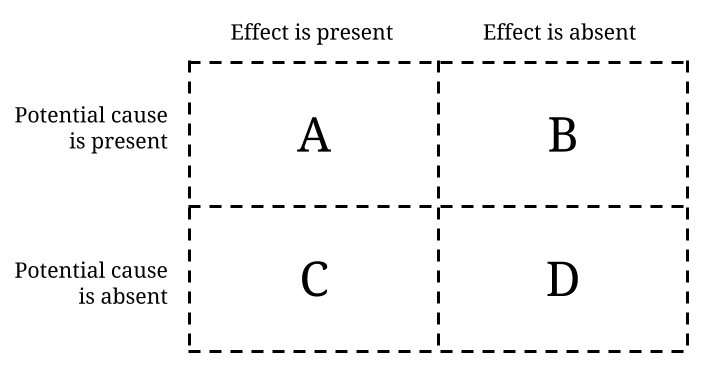
According to colleague Dan Ariely PhD,Illusory Correlation is the perception of a relationship between variables when none exists. It’s like thinking that carrying an umbrella causes it to rain. Our brains are pattern-seeking machines, often connecting dots that aren’t actually connected. This bias can lead to superstitions and incorrect beliefs.
The illusory correlation occurs when someone believes that there is a relationship between two people, events, or behaviors, even though there is no logical way to connect them. The illusory correlation fools us into believing stereotypes, superstitions, old wives’ tales, and other silly ideas. Sometimes, the perceived connection between two events is harmless. It’s silly to think that a certain number always brings you luck. But forming these connections is completely normal. To avoid illusory correlations, rely on data and evidence rather than anecdotal observations.
So always remember: correlation does not imply causation, no matter how convincing it seems.
Posted on November 25, 2024 by Dr. David Edward Marcinko MBA MEd CMP™
By Health Capital Consultants, LLC
***
***
Technological advancements have accelerated the shift of healthcare services from inpatient to outpatient settings, creating both opportunities and challenges for hospitals. For instance, minimally invasive procedures often serve as alternatives to traditional, more invasive surgeries. Additionally, the integration of telehealth and artificial intelligence (AI) has the potential to enhance access to and quality of care while reducing expenditures and administrative burdens.
This final installment of a five-part series on the valuation of hospitals examines the technological advancements transforming the industry. (Read more…)
Posted on November 24, 2024 by Dr. David Edward Marcinko MBA MEd CMP™
By Staff Reporters
***
***
According to some studies, as much as 10 percent of our thoughts involve comparisons of some kind. Social comparison theory is the idea that individuals determine their own social and personal worth based on how they stack up against others. The theory was developed in 1954 by psychologist Leon Festinger. Later research has shown that people who regularly compare themselves to others may find motivation to improve, but may also experience feelings of deep dissatisfaction, guilt or remorse, and engage in destructive behaviors like lying or disordered eating.
***
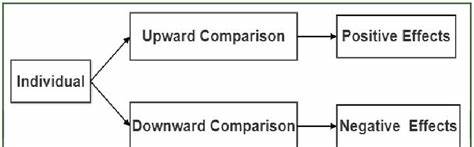
Downward Comparison is the act of comparing oneself to others who are worse off to feel better about one’s situation. It’s like looking at someone else’s messy desk to feel better about your clutter.
On the other hand, Upward Comparison is the act of comparing oneself to others who are better off to feel bad about one’s situation. It’s like looking at someone else’s neat desk and feel worse about your own clutter.
Finally, according to Dan Ariely PhD, these coping mechanisms boosts self-esteem or depress us with a sense of relief or dread. While helpful in moderation, relying too much on upward or downward comparisons can help hinder personal growth and/or depress growth or empathy; etc.
So, them sparingly and remember: upward comparisons can inspire you to improve and strive for better; while downward comparisons have the opposite effects.
Sensation, emotion and cognition work by Contrast Effect [cognitive bias].
Now, such perception is not only on an absolute scale, it also functions relative to prior stimuli. This is why room temperature water feels hot when experienced after being exposed to the cold. It is also why the cessation of negative emotions “feels” so good.
Cognitive bias functioning also works on this principle. So one’s ability to analyze information and draw conclusions is very much related to the context with in which the analysis takes place, and to what information was originally available. This is why it is so important to manage one’s own expectations as well as those of a financial advisor’s or stock broker’s clients.
For example, a client is much more likely to be satisfied with a 10% portfolio return if they were expecting 7% than if they were hoping for 15%.
If you’ve found yourself worrying about the stock market or money lately, you definitely have company. Money anxiety, also called financial anxiety, has become more common than ever after the presidential election of November 2024.
In fact, the American Psychological Association’s 2022 Stress in America Survey, 87 percent of people who responded listed inflation as a source of significant stress. The rise in prices for everything from fuel to food has people from all backgrounds worried, today. The researchers say, in fact, that no other issue has caused this much stress since the survey began in 2007.
When money and financial concerns cause ongoing stress in your life, you could eventually begin to experience some feelings of anxiety as a result. This anxiety can, in turn, have a negative impact on your quality of life.
***
Chrometophobia, commonly known as fear of money, is a psychological condition characterized by overwhelming anxiety and avoidance of currency; according to colleague Dan Ariely PhD.
Physician Financial Fear is probably the most common emotion among physicians. The fear of being wrong – as well as the fear of being correct! It can be debilitating, as in the corollary expression on fear: the paralysis of analysis.
According to Paul Karasik, there are four common investor and physician fears, which can be addressed by financial advisors and psychologists in the following manner:
Fear of making the wrong decision: ameliorated by being a teacher and educator.
Fear of change: ameliorated by providing an agenda, outline and/or plan.
Fear of giving up control: ameliorated by asking for permission and agreement.
Fear of losing self-esteem: ameliorated by serving the client first and communicating that sentiment in a positive manner.
Posted on November 23, 2024 by Dr. David Edward Marcinko MBA MEd CMP™
By Staff Reporters
***
***
Inflation has hit record levels this year as demand for goods and services far outpaced supply, and many companies are still trying to bounce back from the shutdowns of early 2020. Health systems, which have razor-thin operating margins even in the best of times, aren’t an exception.
“In the past, we’ve always said that healthcare was kind of recession-proof because demand for healthcare keeps going, regardless of what’s happening in the economy,” said Tina Wheeler, leader of consulting firm Deloitte’s US healthcare practice.
But in the last year, inflation hovered around 8% for much of the year, while medical-care prices increased by only 4.8%, according to Wheeler. Since medical costs are negotiated between hospitals and payers years in advance, hospitals can’t just raise their prices now to keep up with the pace of inflation, said Gerard Brogan Jr., senior vice president and chief revenue officer at Northwell Health.
Inflation could cause an additional $370 billion more in healthcare spending than the expected baseline increase by 2027, according to McKinsey.
The national health expenditure could grow at a rate of 7.1% over the next five years, compared to the expected economic growth rate of 4.7%, according to McKinsey.
By the end of 2021, total hospital expenses per adjusted discharge were up 20.1% compared to 2019, according to the trade group American Hospital Association.
Rising interest rates also hurt hospitals since their main access to capital is through issuing tax-exempt bonds, Wheeler said. The rising cost of capital limits hospitals’ ability to fund projects, like opening a new oncology center to treat patients, for example. Keep reading here







 Support our online development, and advance our onground research initiatives in free market economics, as we seek to showcase the brightest Next-Gen minds.
THE ME-P DISCLAIMER: Posts, comments and opinions do not necessarily represent iMBA, Inc., but become our property after submission. Copyright © 2006 to-date. iMBA, Inc allows colleges, universities, medical and financial professionals and related clinics, hospitals and non-profit healthcare organizations to distribute our proprietary essays, photos, videos, audios and other documents; etc. However, please review copyright and usage information for each individual asset before submission to us, and/or placement on your publication or web site. Attestation references, citations and/or back-links are required. All other assets are property of the individual copyright holder.
Support our online development, and advance our onground research initiatives in free market economics, as we seek to showcase the brightest Next-Gen minds.
THE ME-P DISCLAIMER: Posts, comments and opinions do not necessarily represent iMBA, Inc., but become our property after submission. Copyright © 2006 to-date. iMBA, Inc allows colleges, universities, medical and financial professionals and related clinics, hospitals and non-profit healthcare organizations to distribute our proprietary essays, photos, videos, audios and other documents; etc. However, please review copyright and usage information for each individual asset before submission to us, and/or placement on your publication or web site. Attestation references, citations and/or back-links are required. All other assets are property of the individual copyright holder.