Support our online development, and advance our onground research initiatives in free market economics, as we seek to showcase the brightest Next-Gen minds.
THE ME-P DISCLAIMER: Posts, comments and opinions do not necessarily represent iMBA, Inc., but become our property after submission. Copyright © 2006 to-date. iMBA, Inc allows colleges, universities, medical and financial professionals and related clinics, hospitals and non-profit healthcare organizations to distribute our proprietary essays, photos, videos, audios and other documents; etc. However, please review copyright and usage information for each individual asset before submission to us, and/or placement on your publication or web site. Attestation references, citations and/or back-links are required. All other assets are property of the individual copyright holder.
Support our online development, and advance our onground research initiatives in free market economics, as we seek to showcase the brightest Next-Gen minds.
THE ME-P DISCLAIMER: Posts, comments and opinions do not necessarily represent iMBA, Inc., but become our property after submission. Copyright © 2006 to-date. iMBA, Inc allows colleges, universities, medical and financial professionals and related clinics, hospitals and non-profit healthcare organizations to distribute our proprietary essays, photos, videos, audios and other documents; etc. However, please review copyright and usage information for each individual asset before submission to us, and/or placement on your publication or web site. Attestation references, citations and/or back-links are required. All other assets are property of the individual copyright holder.


Dr. David Edward Marcinko MBA MEd
SPONSOR: http://www.HealthDictionarySeries.org
***

***
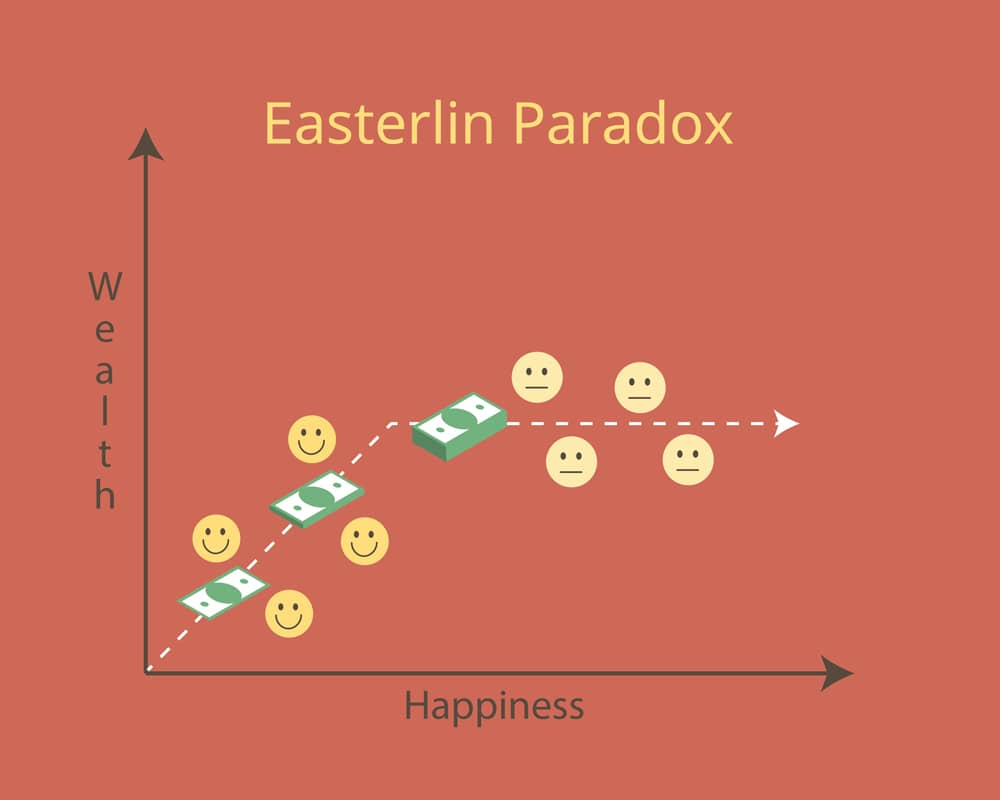
The relationship between money and happiness is one of the most persistent puzzles in modern life. On the surface, it seems intuitive that more money should lead to more happiness: wealth buys comfort, security, and freedom. Yet the lived reality of many people—especially those who achieve high incomes—reveals a more complicated picture. This tension is often described as the Wealth–Happiness Paradox: money increases happiness up to a point, but beyond that threshold, its power to improve well‑being diminishes sharply. Many individuals who earn far more than they need continue to work long hours, chase promotions, and accumulate wealth they will never spend. Understanding why this happens requires examining both the psychological limits of money’s benefits and the cultural forces that shape our relationship with work and success.
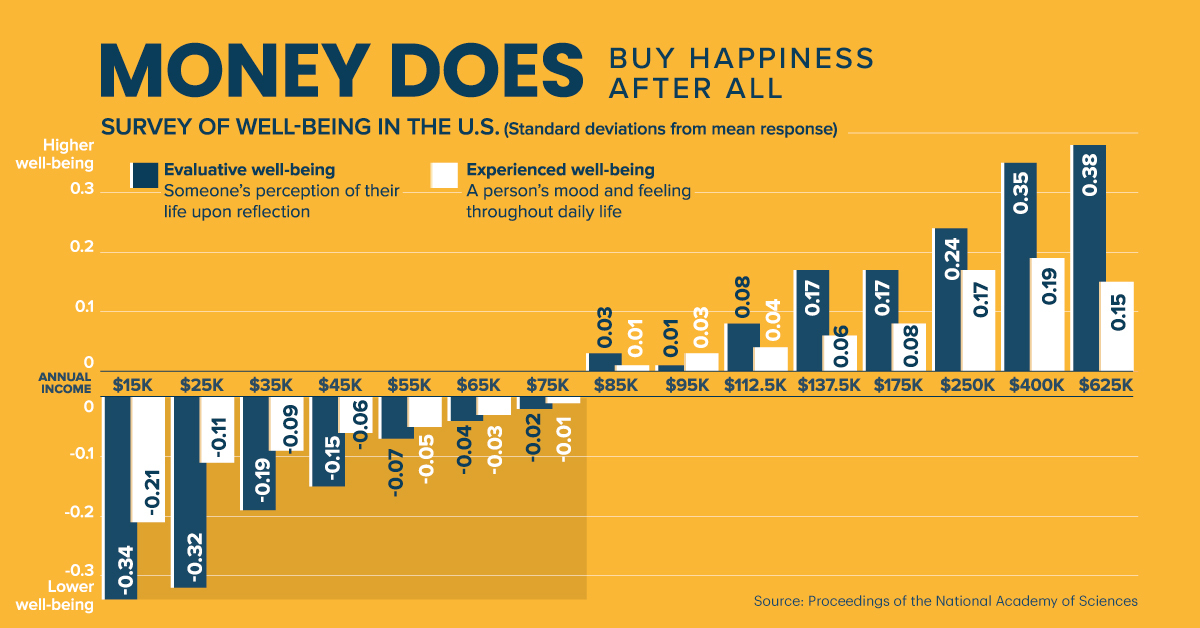
A widely discussed benchmark in this conversation is the idea that happiness plateaus at around $75,000 per year. Below that level, increases in income tend to produce meaningful improvements in daily life. Money reduces stress by covering essentials: housing, food, healthcare, transportation, and a buffer for emergencies. When people no longer have to worry about meeting basic needs, their emotional bandwidth expands. They can plan for the future, enjoy leisure, and invest in relationships. In this income range, money functions as a tool for stability and autonomy, and its impact on well‑being is direct and tangible.
However, once a person’s income rises beyond the point where basic needs and modest comforts are easily met, the emotional payoff begins to flatten. Earning $150,000 does not make someone twice as happy as earning $75,000. The extra income may allow for nicer vacations, a larger home, or more discretionary spending, but these upgrades rarely translate into sustained increases in life satisfaction. Humans adapt quickly to improved circumstances—a phenomenon known as hedonic adaptation. What once felt luxurious soon becomes normal, and the cycle of wanting more resumes. The treadmill keeps moving, but the destination never changes.
This diminishing return helps explain why many ultra‑wealthy individuals do not report significantly higher levels of happiness than those with comfortable but moderate incomes. Yet the paradox deepens when we consider behavior: despite having more money than they could reasonably spend, many high earners continue to work extremely long hours. They sacrifice leisure, sleep, and relationships in pursuit of additional wealth that provides little emotional benefit. Why does this happen?
One explanation lies in the psychology of achievement. For many people, work is not merely a means to earn money; it is a source of identity, purpose, and social status. High achievers often internalize the belief that their worth is tied to productivity. The pursuit of wealth becomes intertwined with the pursuit of accomplishment. Even when financial incentives lose their power, the drive to win, outperform peers, or reach the next milestone remains strong. In this sense, the ultra‑wealthy may not be chasing money itself but the validation and meaning they associate with success.
Another factor is social comparison. As income rises, people tend to compare themselves not to the general population but to others in their socioeconomic bracket. A person earning $500,000 a year may feel average if surrounded by peers who earn twice that amount. This shifting frame of reference fuels a perpetual sense of insufficiency. The goalposts move, and the desire to “keep up” encourages continued striving, even when the practical benefits of additional income are negligible.
Cultural norms also play a powerful role. In many societies, especially those that prize individualism and meritocracy, hard work is celebrated as a moral virtue. Busyness becomes a badge of honor, and leisure is sometimes viewed as laziness. High earners may feel pressure—internal or external—to maintain a demanding pace, even when they have the financial freedom to slow down. The result is a lifestyle where wealth increases but well‑being does not.
There is also the issue of lifestyle inflation. As people earn more, their spending often rises in tandem. They buy larger homes, take on more responsibilities, and adopt more expensive habits. These choices can create new financial obligations that require maintaining or increasing income. Even the wealthy can feel trapped by the cost of their own lifestyles, leading them to work harder to sustain a level of consumption that no longer brings joy.
The Wealth–Happiness Paradox ultimately reveals a deeper truth: happiness is influenced more by how we use our time than by how much money we accumulate. Once basic needs are met, factors such as relationships, autonomy, purpose, and leisure have a far greater impact on well‑being than additional income. People who prioritize experiences over possessions, who cultivate strong social connections, and who maintain a healthy work‑life balance tend to report higher levels of happiness regardless of their income bracket.
This does not mean that money is irrelevant. Financial security is a powerful foundation for well‑being, and poverty is undeniably harmful. But beyond the threshold where comfort and stability are assured, the pursuit of ever‑greater wealth can become counterproductive. It can crowd out the very activities—rest, connection, creativity—that make life meaningful.
The paradox challenges us to rethink our assumptions about success. Instead of asking how to earn more, we might ask how to live better. What would it look like to design a life where work supports happiness rather than competes with it? How might we redefine achievement in ways that prioritize well‑being over accumulation? These questions invite a shift in perspective: from maximizing income to maximizing fulfillment.
In the end, the Wealth–Happiness Paradox is not a warning against ambition but a reminder of balance. Money can buy comfort, but it cannot buy contentment. The richest life is not necessarily the one with the highest income, but the one aligned with values, relationships, and purpose. Understanding this paradox allows us to step off the treadmill and choose a path where wealth serves happiness, not the other way around.
COMMENTS APPRECIATED
SPEAKING: Dr. Marcinko will be speaking and lecturing, signing and opining, teaching and preaching, storming and performing at many locations throughout the USA this year! His tour of witty and serious pontifications may be scheduled on a planned or ad-hoc basis; for public or private meetings and gatherings; formally, informally, or over lunch or dinner. All medical societies, financial advisory firms or Broker-Dealers are encouraged to submit an RFP for speaking engagements: CONTACT: Ann Miller RN MHA at MarcinkoAdvisors@outlook.com -OR- http://www.MarcinkoAssociates.com
Like, Refer and Subscribe
***
***
Share this:

Filed under: "Ask-an-Advisor", economics, finance, Financial Planning, Marcinko Associates | Tagged: david marcinko, happiness, paradox, Wealth | Leave a comment »