







 Support our online development, and advance our onground research initiatives in free market economics, as we seek to showcase the brightest Next-Gen minds.
THE ME-P DISCLAIMER: Posts, comments and opinions do not necessarily represent iMBA, Inc., but become our property after submission. Copyright © 2006 to-date. iMBA, Inc allows colleges, universities, medical and financial professionals and related clinics, hospitals and non-profit healthcare organizations to distribute our proprietary essays, photos, videos, audios and other documents; etc. However, please review copyright and usage information for each individual asset before submission to us, and/or placement on your publication or web site. Attestation references, citations and/or back-links are required. All other assets are property of the individual copyright holder.
Support our online development, and advance our onground research initiatives in free market economics, as we seek to showcase the brightest Next-Gen minds.
THE ME-P DISCLAIMER: Posts, comments and opinions do not necessarily represent iMBA, Inc., but become our property after submission. Copyright © 2006 to-date. iMBA, Inc allows colleges, universities, medical and financial professionals and related clinics, hospitals and non-profit healthcare organizations to distribute our proprietary essays, photos, videos, audios and other documents; etc. However, please review copyright and usage information for each individual asset before submission to us, and/or placement on your publication or web site. Attestation references, citations and/or back-links are required. All other assets are property of the individual copyright holder.


By Dr. David Edward Marcinko; MBA MEd
By Gary L. Bode; CPA MSA
SPONSOR: http://www.CertifiedMedicalPlanner.org
***
***
Purpose, Mechanics and Planning Implications
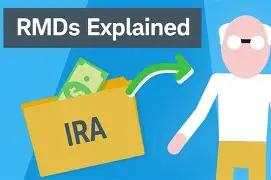
Required Minimum Distributions—commonly known as RMDs—represent one of the most important turning points in retirement planning. After decades of contributing to tax‑advantaged accounts such as traditional IRAs and employer‑sponsored plans like 401(k)s, individuals eventually reach a stage where the government requires them to begin withdrawing a portion of those savings each year. Understanding RMDs is essential because they influence tax liability, investment strategy, and the pace at which retirement assets are used.
At their core, RMDs exist because tax‑deferred accounts were never intended to shelter money from taxation indefinitely. Contributions to traditional retirement accounts are often made with pre‑tax dollars, and investment growth inside the account is not taxed annually. The government allows this deferral to encourage saving, but it also expects to collect taxes eventually. RMDs ensure that the IRS receives its share by forcing withdrawals once an individual reaches a certain age. This age has shifted over time due to legislative changes, but the underlying principle remains the same: tax‑deferred money cannot remain untouched forever.
The calculation of an RMD is straightforward in concept but requires attention to detail. Each year, the required amount is determined by dividing the account balance at the end of the previous year by a life‑expectancy factor published by the IRS. This factor reflects statistical estimates of how long a person at a given age is expected to live. As a result, RMDs generally increase over time. Early in retirement, the divisor is large, producing smaller withdrawals. As life expectancy shortens with age, the divisor shrinks, and the required withdrawal becomes a larger percentage of the account. This structure ensures that tax‑deferred savings are gradually drawn down over a retiree’s lifetime.
RMDs apply to a variety of accounts, including traditional IRAs, SEP IRAs, SIMPLE IRAs, and most employer‑sponsored plans. Roth IRAs, however, are exempt during the owner’s lifetime because contributions to those accounts are made with after‑tax dollars. This distinction creates strategic opportunities for retirees who want to manage their tax exposure. For example, some individuals choose to convert portions of their traditional IRA to a Roth IRA before reaching RMD age. While conversions trigger taxes in the year they occur, they can reduce future RMDs and create a pool of tax‑free assets that can grow without mandatory withdrawals.
One of the most significant implications of RMDs is their effect on taxable income. Because RMDs must be withdrawn and are treated as ordinary income, they can push retirees into higher tax brackets, increase Medicare premiums, or affect the taxation of Social Security benefits. This makes proactive planning essential. Retirees who wait until RMDs begin may find themselves forced to withdraw more than they need, resulting in avoidable tax consequences. By contrast, those who begin drawing down accounts earlier—either through voluntary withdrawals or Roth conversions—may smooth their taxable income over time and reduce the impact of large mandatory withdrawals later.
Another important aspect of RMDs is the penalty for failing to take them. Historically, the penalty was one of the steepest in the tax code: 50% of the amount that should have been withdrawn but wasn’t. While recent legislation has reduced this penalty, it remains substantial enough to warrant careful attention. Retirees must track deadlines, understand which accounts require withdrawals, and ensure that the correct amounts are taken each year. Some choose to consolidate accounts to simplify the process, while others rely on financial institutions to calculate and distribute the required amounts automatically.
RMDs also influence investment strategy. Because withdrawals are mandatory, retirees must ensure that their portfolios maintain sufficient liquidity. This does not mean abandoning long‑term investments, but it does require thoughtful allocation. Some retirees adopt a “bucket strategy,” keeping a portion of assets in cash or short‑term instruments to meet RMDs while allowing the remainder to stay invested for growth. Others adjust their withdrawal timing within the year to align with market conditions or personal cash‑flow needs.
Beyond the individual, RMDs have implications for heirs. Beneficiaries who inherit retirement accounts are subject to their own distribution rules, which have also evolved over time. In many cases, heirs must withdraw the entire balance within a set number of years, which can create significant tax burdens if not planned for. Understanding how RMDs interact with estate planning can help retirees structure their assets in ways that minimize tax consequences for the next generation.
In summary, RMDs are more than a bureaucratic requirement—they are a central feature of the retirement landscape, shaping tax outcomes, investment decisions, and long‑term financial strategy. By understanding how they work and planning ahead, retirees can manage their distributions in ways that support their goals, preserve their savings, and avoid unnecessary penalties. While the rules can be complex, the underlying purpose is simple: to ensure that tax‑deferred savings eventually enter the taxable economy. For anyone approaching retirement age, taking the time to understand RMDs is not just prudent—it is essential.
COMMENTS APPRECIATED
SPEAKING: Dr. Marcinko will be speaking and lecturing, signing and opining, teaching and preaching, storming and performing at many locations throughout the USA this year! His tour of witty and serious pontifications may be scheduled on a planned or ad-hoc basis; for public or private meetings and gatherings; formally, informally, or over lunch or dinner. All medical societies, financial advisory firms or Broker-Dealers are encouraged to submit an RFP for speaking engagements: CONTACT: Ann Miller RN MHA at MarcinkoAdvisors@outlook.com -OR- http://www.MarcinkoAssociates.com
Like, Refer and Subscribe
HOSPITALS: http://www.crcpress.com/product/isbn/9781466558731
CLINICS: http://www.crcpress.com/product/isbn/9781439879900
ADVISORS: www.CertifiedMedicalPlanner.org
FINANCE:Financial Planning for Physicians and Advisors
INSURANCE:Risk Management and Insurance Strategies for Physicians and Advisors
Dictionary of Health Economics and Finance
Dictionary of Health Information Technology and Security
Dictionary of Health Insurance and Managed Care
***
Share this:

Filed under: iMBA, Inc. | Tagged: bode, finance, Investing, Marcinko, personal-finance, retirement, retirement planning, RMDs |


Leave a comment