BOARD CERTIFICATION EXAM STUDY GUIDES Lower Extremity Trauma
[Click on Image to Enlarge]
ME-P Free Advertising Consultation
The “Medical Executive-Post” is about connecting doctors, health care executives and modern consulting advisors. It’s about free-enterprise, business, practice, policy, personal financial planning and wealth building capitalism. We have an attitude that’s independent, outspoken, intelligent and so Next-Gen; often edgy, usually controversial. And, our consultants “got fly”, just like U. Read it! Write it! Post it! “Medical Executive-Post”. Call or email us for your FREE advertising and sales consultation TODAY [678.779.8597] E-mail: MarcinkoAdvisors1738@outlook.com
Medical & Surgical e-Consent Forms
ePodiatryConsentForms.com
iMBA Inc., OFFICES
Suite #5901 Wilbanks Drive, Norcross, Georgia, 30092 USA [1.678.779.8597]. Our location is real and we are now virtually enabled to assist new long distance clients and out-of-town colleagues.
ME-P Publishing
SEEKING INDUSTRY INFO PARTNERS?
If you want the opportunity to work with leading health care industry insiders, innovators and watchers, the “ME-P” may be right for you? We are unbiased and operate at the nexus of theoretical and applied R&D. Collaborate with us and you’ll put your brand in front of a smart & tightly focused demographic; one at the forefront of our emerging healthcare free marketplace of informed and professional “movers and shakers.” Our Ad Rate Card is available upon request [678-779-8597].
When trying to decide whether to buy a used car or a new one, it’s typically financially wiser to buy used. But if you want to buy new, you should plan to drive the car for 10 years or more.
Better yet – do not buy a new vehicle.
***
The 20/4/10 rule for buying a vehicle
If you have to borrow when buying a car, to avoid spending more than you can afford you should put down at least 20%, keep the loan limited to no more than four years (to avoid interest), and spend no more than 10% of your gross income on transportation costs (which includes the car payment, parking, gas, and insurance).
Posted on March 3, 2022 by Dr. David Edward Marcinko MBA MEd CMP™
By Staff Reporters
***
Economy: Federal Reserve Chair Jerome Powell told Congress that “it’s too soon to say” how the war in Ukraine will affect the central bank’s plans, but for now it’s not enough to derail the FOMC from hiking interest rates later this month.
Markets: Stocks rose across the board with strong corporate fundamentals outshining geopolitical worries…at least for a day. Intel had a strong showing after its CEO got a shout-out in the State of the Union address (to be fair, we have no idea if those two things are related).
Posted on March 1, 2022 by Dr. David Edward Marcinko MBA MEd CMP™
By Staff Reporters
DARK : With Russia’s stock market closed, U.S. exchange-traded funds are signaling the scale of the rout facing the nation’s equity markets. The Bank of Russia halted trading in Moscow on Monday, one of several measures unleashed in a bid to shield the nation’s economy from sweeping SWIFT and other sanctions.
ETFs: According to Bloomberg, the VanEck Russia ETF (ticker RSX) and the iShares MSCI Russia Capped ETF (ERUS) plunged 30% and 27%, which was likely a create-to-lend activity where new shares are created for short sellers to borrow and bet against. That turned the two ETFs, which primarily track Russian energy stocks, into useful price-discovery tools for traders seeking to navigate the geopolitical turmoil caused by Russia’s invasion of Ukraine. “ETFs are suppose to be index trackers, but when that process breaks down, they take on the role of price-discovery vehicles — and it’s impressive how accurate they have been.”
Housing: Amounted to about 4% for the 12 months ending in January. Comparatively, Zillow reported that home values had risen by nearly 20% over that same period of time, while rents had increased by nearly 15%.
DomesticMarkets: Stocks were a mixed bag, but the S&P still suffered back-to-back losing months.
Posted on March 1, 2022 by Dr. David Edward Marcinko MBA MEd CMP™
***
Dr. Eric Bricker Explains How Medicare Can Take Money Back from Hospitals if itWants. If the Hospital Thinks Medicare is Being Unfair, the Appeals Process Takes 3 Years!
Book Dr. David E. Marcinko MBA MBBSfor your Next Medical, Pharma or Financial Services Seminar orPersonal and Corporate Coaching Sessions
Dr. Marcinko enjoys personal coaching and public speaking and gives as many talks each year as possible, at a variety of medical society and financial services conferences around the country and world.
These include lectures and visiting professorships at major academic centers, keynote lectures for hospitals, economic seminars and health systems, endnote lectures at city and statewide financial coalitions, and annual engagements for a variety of internal and external yearly meetings.
Posted on February 28, 2022 by Dr. David Edward Marcinko MBA MEd CMP™
By Staff Reporters
****
IRS: The IRS sent out a notice on February 23rd, warning taxpayers about a price hike coming in the next few months. The tax agency said that interest rates will increase for the calendar quarter starting April 1st, 2022. You can accrue interest on two types of payments: over-payment or underpayment. So starting in April, over-payments will have an interest rate of 4 percent, except for corporations which will earn a 3 percent rate and a 1.5 percent rate for the portion of a corporate over-payment that exceeds $10,000. In terms of underpayments, the interest rate will increase to 4 percent overall and 6 percent for large corporate underpayments.
“Under the Internal Revenue Code, the rate of interest is determined on a quarterly basis,” the IRS website explained. The tax agency did not change interest rates in this last quarter, which began Jan. 1, 2022. Before they get changed in April, the rates are currently 3 percent for general over-payments and 2 percent for corporation over-payments, with a 0.5 percent rate for the portion of a corporate over-payment exceeding $10,000. The underpayment interest is 3 percent right now, expect for large corporations which have a 5 percent rate.
***
***
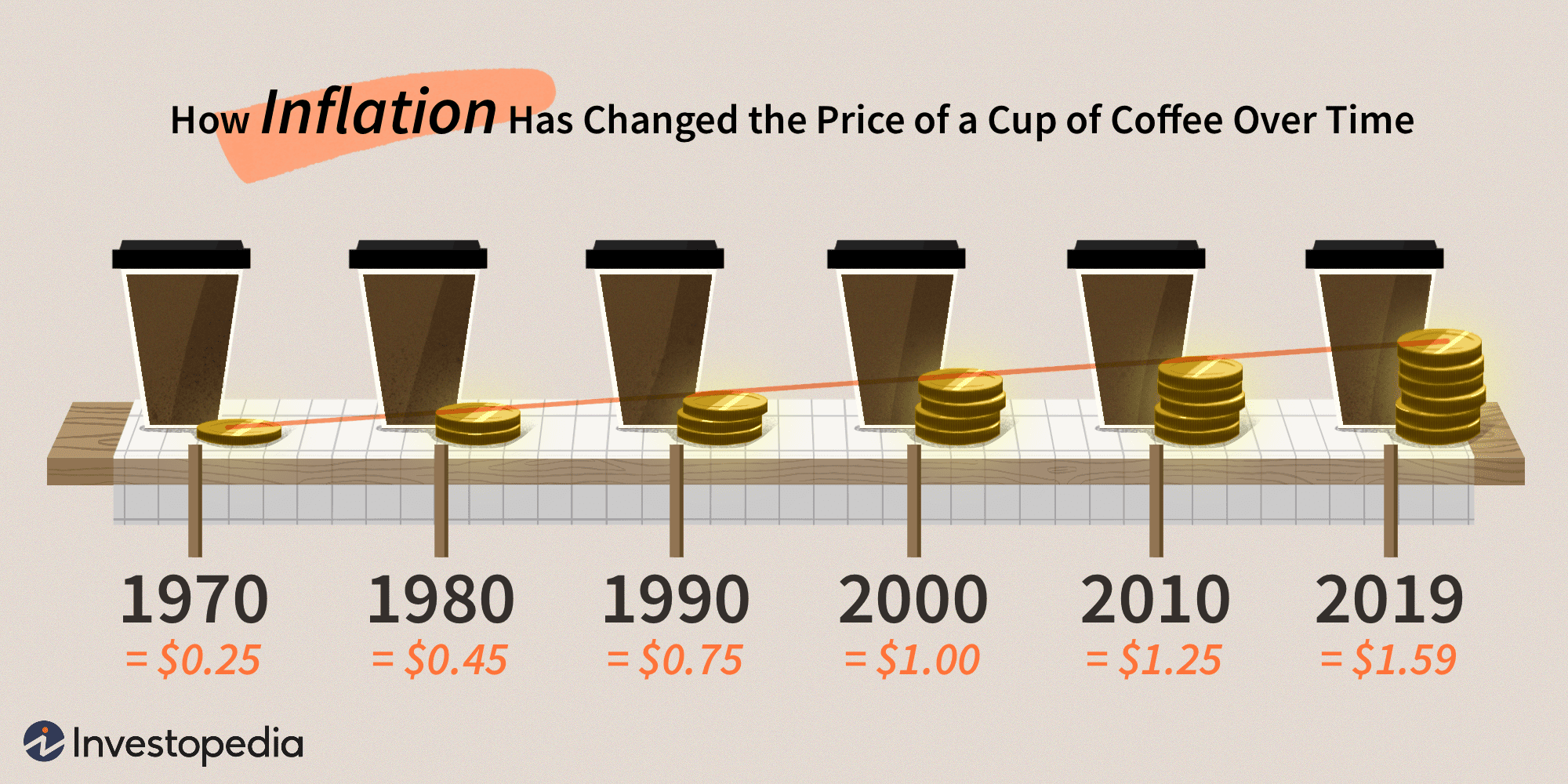
CURRENCY INFLATION: Inflation may occur when the Federal Reserve, or another central bank, adds fiat currency into circulation at a rate that exceeds that of the economy’s growth rate. That creates a situation in which there are more dollars bidding on fewer goods and services. The result is that goods and services cost more. One reason that inflation has been a constant in the US since 1933 is that the FOMC has continually increased the money supply. In response to the 2008 financial crisis, the Fed dropped its lending rate close to zero as a way to inject more liquidity into the economy, which led to increased inflation but not hyperinflation. While those increases have usually moved in step with growth, that hasn’t always been the case.
And so, in response to the COVID-19 pandemic and subsequent lock-downs, the Federal Reserve released the equivalent of $3.8 trillion in new liquidity in 2020. That amount was equal to roughly 20% of the dollars previously in circulation. And it is one reason why many investors were watching the CPI closely in 2021.
EARNING REPORTS:
Monday: India GDP data; Earnings from Lordstown Motors, Groupon, HP, SmileDirectClub and Zoom Video
Tuesday: US and China manufacturing data; Earnings from AutoZone, Baidu, Domino’s Pizza, Hostess Brands, J.M. Smucker, Kohl’s, Target, AMC Entertainment and Salesforce
Wednesday: European inflation data; Earnings from Abercrombie & Fitch, Dine Brands, Dollar Tree, Snowflake and Victoria’s Secret
Thursday: ISM Non-Manufacturing Index; Earnings from Best Buy, Weibo, Costco and Gap
Friday: US jobs report
10-Year: Treasuries rallied to 1.902%.
Oil: The rise in oil prices is spilling over at the gas pump: The average gas price in the US has jumped 10 cents, to $3.64/gallon, in the past two weeks.
Partial SWIFT ban: Western governments put aside their hesitations and proposed banning some Russian lenders from SWIFT, the global messaging service that facilitates cross-border transactions. It’s a move that could cause turmoil across global financial markets.
Devaluation is the deliberate downward adjustment of the value of a country’s money related to another currency, group of currencies or currency standard. It is often confused with depreciation and is the opposite of revaluation which refers to the readjustment of a currency exchange rate.
The government of a country may decide to devalue its currency and like depreciation it is not the result of non-governmental activities.
One reason a country made devalue its currency is to combat a trade imbalance. Devaluation reduces the cost of a country’s export rendering them more competitive in the Global market which is which in turn increases the cost of imports.
If imports are more expensive domestic consumers are less likely to purchase them further strengthening domestic businesses because exports increase and imports decrease there is typically a better balance of payments because the trade deficit shrinks. In short a country that devalue its currency can produce is difficult because there is a greater demand for cheaper exports.
***
***
In accountancy, depreciation refers to two aspects of the same concept: first, the actual decrease of fair value of an asset, such as the decrease in value of factory equipment each year as it is used and wear, and second, the allocation in accounting statements of the original cost of the assets to periods in which the assets are used (depreciation with the matching principle).
Depreciation is thus the decrease in the value of assets and the method used to reallocate, or “write down” the cost of a tangible asset (such as equipment) over its useful life span. Businesses depreciate long-term assets for both accounting and tax purposes. The decrease in value of the asset affects the balance sheet of a business or entity, and the method of depreciating the asset, accounting-wise, affects the net income, and thus the income statement that they report.
Posted on February 27, 2022 by Dr. David Edward Marcinko MBA MEd CMP™
By Staff Reporters
***
Microsoft: Microsoft Corp.’s stock dropped 2.6% on Wednesday to close at a seven-month low of $280.07. On Thursday, the software giant’s stock opened down 2.8% at $272.51, hit an intra-day low of $271.52, then bounced 8.5% off that low to close up 5.1% on the day at $294.59. The difference between Microsoft’s bullish engulfing and that of Twitter and Meta is that the downtrend has lasted only three months, since the stock closed at a record $343.11 on November. 19th. On Friday, the stock edged up 0.9% to $297.31.
Salesforce: Shares of Saleforce.com Inc. sank 2.4% on Wednesday to close at a 19-month low of $190.54, or 38.5% below its Nov. 8, 2021 record close of $309.96. Then on Thursday, it opened down 3.0% at $184.74, but bounced sharply to close up 7.2% at $204.29. The customer relationship management software company’s stock rose another 1.9% on Friday to $208.09, but remained the worst performer of the Dow Jones Industrial Average’s 30 components over the past three months with a loss of 26.8%.
AMAZON: The stock traded down roughly 9% across 2021and it’s down roughly 19% from the high that it hit last year. Lapping incredible, pandemic-driven performance, Amazon is facing some tough growth comparisons. Massive technology and infrastructure investments are also putting some pressure on earnings in the near term, but the business remains excellently positioned to win the future, and it will almost certainly be one of the most influential companies of the next decade [maybe]?
BE AWARE ALL ADVISORS … NEXT GEN FINANCIAL ADVICE IS HERE?
Are you a financial planner, insurance agent or investment advisor seeking to assist your physician clients with medical practice enhancement solutions, along with healthcare targeted financial planning services, but don’t know where to turn for help?
OR, maybe you’ve already had a bad experience with a young physician or astute healthcare professional client that was actually more informed than you in these areas?
OR, a doctor/nurse client who demanded a true fiduciary advisor [not fee-based advice, with no dual licenses and no arbitration clauses] documented in writing].
After an understandable slowdown in 2020, due to the onset of the COVID-19 pandemic, merger & acquisition (M&A) activity in the healthcare industry accelerated in 2021, and the industry is expected to continue the high number of deals and high deal volume in 2022.
***
***
This Health Capital Topics article will review the U.S. healthcare industry’s M&A activity in 2021, and discuss what these trends may mean for 2022. (Read more…)
Posted on February 26, 2022 by Dr. David Edward Marcinko MBA MEd CMP™
By Staff Reporters
***
***
MARKETS: The Dow Jones Industrial Average surged 834.92 points, or 2.5%, to close at 34,058.75, with the blue-chip gauge notching its best daily gain since early November 2020.
S&P 500 rose 95.95 points, or 2.2%, to end at 4,384.65.
NASDAQ Composite Index added 221.04 points, or 1.6%, to finish at 13,694.62.
For the week, the Dow dipped by less than 0.1% while the S&P 500 rose 0.8% and NASDAQ Composite climbed 1.1%. The S&P 500 and NASDAQ benchmarks wiped out losses from earlier in the week.
Posted on February 25, 2022 by Dr. David Edward Marcinko MBA MEd CMP™
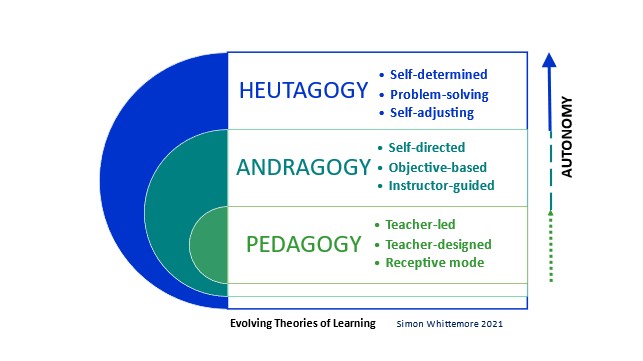
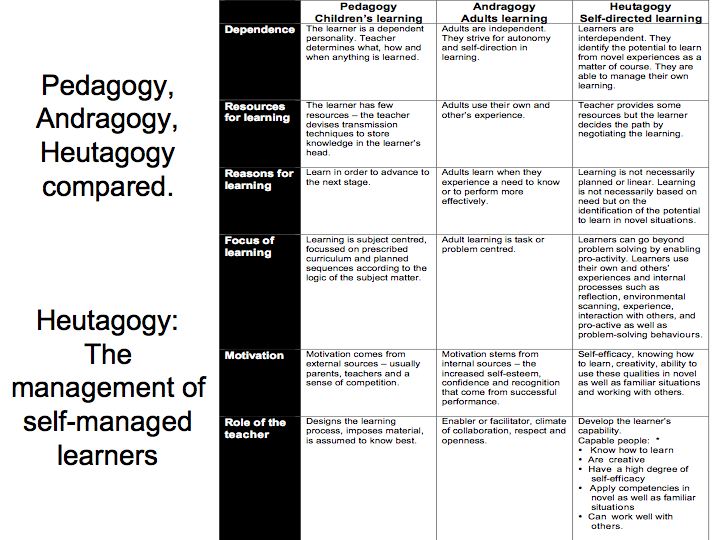
ON EDUCATION – The Difference Among Pedagogy, Andragogy, And Heutagogy
[By David E. Marcinko and Terry Heick]
***
Jackie Gerstein’s passionate thinking about learning is some of my favorite to read. She is rarely pulled down by trend or fad, but is unquestionably progressive and forward-thinking in her approaches to learning and thinking about learning.
She and I also share a passion: self-directed learning. (As does the original summarizer/author of the thinking embedded in table below, Lindy, McKeown Orwin).
I’m embarrassingly interested in any kind of learning at all–formal or informal, self-directed or teacher-centered, authentic or academic. Doesn’t mean I regard them all equally, but I do see a role for almost any system or approach that can cause, support, or glorify the processes of understanding.
Gerstein’s presentation, “Education 3.0 and the Pedagogy of Mobile Learning” uses the concept of mobile learning as a spearhead into a broader discussion of how people learn–different approaches, different domains, and different technologies.
With the progress of technology and the rise in mobile learning, now more than ever Self-Directed Learning–or Heutagogy–isn’t just possible, but natural, and almost awkward to not use, something Gerstein capture’s thoroughly and with her characteristic passion in the presentation below.
Your thoughts and comments on this ME-P are appreciated. Feel free to review our top-left column, and top-right sidebar materials, links, URLs and related websites, too. Then, subscribe to the ME-P. It is fast, free and secure.
Speaker: If you need a moderator or speaker for an upcoming event, Dr. David E. Marcinko; MBA – Publisher-in-Chief of the Medical Executive-Post – is available for seminar or speaking engagements.
Subscribe: MEDICAL EXECUTIVE POST for curated news, essays, opinions and analysis from the public health, economics, finance, marketing, IT, business and policy management ecosystem.
QUERY: But, did you ever wonder what to say when you’re standing next to a senior physician colleague who could help further your academic and educational work?
Now, for some granular specificity; let’s cue the elevator pitch with David Acosta MD and Daniel Hashimoto MD MS who demonstrate what to do (and what not to do) to successfully deliver your medical educator’s elevator pitch.
Posted on February 25, 2022 by Dr. David Edward Marcinko MBA MEd CMP™
***
WAR IS ON!
By Staff Reporters
***
***
US Exchange: US stocks climbed out of a deep hole to close higher as investors piled into Big Tech names. One sector that got a boost from the war’s outbreak was cybersecurity: Firms like CrowdStrike surged in anticipation of more cyberattacks from Russia.
10 Year T-Bond: 1.971 down
Russian Exchange: The stock exchange in Moscow suspended trading yesterday but when dealing resumed, stocks went into free-fall. The MOEX index plunged as much as 45%, while the RTS index — which is denominated in dollars — was down more than 40% at 4.15 a.m. ET. The crash wiped about $75 billion off the value of Russia’s biggest companies.
Russian Banks and Oil: These companies were among the hardest hit in volatile trading, with shares in Sberbank — Russia’s largest lender — at one stage losing 57% of their value. Rosneft, in which BP owns a 19.75% stake, plunged as much as 58%. BP shares dropped 5% in London.
Posted on February 24, 2022 by Dr. David Edward Marcinko MBA MEd CMP™
Start-Ups for the End of Life
By MIT Technology Review
One Main Street
Cambridge, MA 02142
Technology has changed the way we grieve, but it’s also starting to make a difference to the way we deal with death’s logistics, too.
The New York Times reports that startups—often run by millennials, it drily notes—are increasingly creating digital tools that help people plan for their demise.
***
***
***
Assessment
Though for those determined not to admit defeat, cryogenics is still an option:
KrioRus, the only company outside of the U.S. prepared to put your head on ice after you die, will do so for a modest $12,000. It still doesn’t know what to do further down the line, though.
Your thoughts and comments on this ME-P are appreciated. Feel free to review our top-left column, and top-right sidebar materials, links, URLs and related websites, too. Then, subscribe to the ME-P. It is fast, free and secure.
Speaker: If you need a moderator or speaker for an upcoming event, Dr. David E. Marcinko; MBA – Publisher-in-Chief of the Medical Executive-Post – is available for seminar or speaking engagements. Contact: MarcinkoAdvisors@msn.com
OUR OTHER PRINT BOOKS AND RELATED INFORMATION SOURCES:
Posted on February 24, 2022 by Dr. David Edward Marcinko MBA MEd CMP™
***
By Staff Reporters
***
OIL: Brent crude, the world benchmark, briefly climbed above $100 a barrel for the first time since 2014. US crude jumped 3.3% to $95.15 a barrel.
U.S. stock indexes: All closed sharply lower with the DJIA narrowly avoiding a slip into correction, as U.S. officials warned that Russian troops were poised to attack, and are attacking, the Ukraine raising anxieties among investors who are also wrangling with changing monetary policy and surging inflation.
How did stock indexes trade? The Dow Jones Industrial Average fell 464.85 points, or 1.4%, to end at 33,131.76. A finish below 33,119.69 would mark a 10% decline from the Dow’s Jan. 4 record close, meeting the commonly used definition of a correction. The S&P 500 index fell 79.26 points, or 1.8%, to around 4,225.50, deepening its stumble into correction territory. The NASDAQ Composite Index declined 344.03 points, or 2.6%, at 13,037.49, with 12,845.95 representing the level that would represent a bear market for the technology-laden index.
Asia: Hong Kong’s Hang Seng Index declined 3.2%. Korea’s Kospi dropped 2.7%. Japan’s Nikkei 225 lost 2.4% after coming back from a holiday. China’s Shanghai Composite moved 0.9% lower.
Posted on February 23, 2022 by Dr. David Edward Marcinko MBA MEd CMP™
***
By Staff Reporters
***
***
A recent American College of Healthcare Executives’ survey of 310 hospital CEOs shows:
• 94% have personnel shortages in registered nursing field • 85% have personnel shortages in technicians field • 67% have personnel shortages in therapists field • 45% have personnel shortages in primary care physicians field • 43% have personnel shortages in physician specialists field • 31% have personnel shortages in physician extenders and specially certified nurses field
Posted on February 23, 2022 by Dr. David Edward Marcinko MBA MEd CMP™
***
***
By Staff Reporters
***
An annual study of over 1,500 U.S. consumers, shows:
• 55% of consumers find it stressful paying a healthcare bill. • 53% of consumers find it stressful understanding their plan’s coverage and benefits. • 53% of consumers find it stressful comprehending what they owe. • 59% of consumers find it stressful reconciling a bill issue with their payer.
Posted on February 23, 2022 by Dr. David Edward Marcinko MBA MEd CMP™
***
By Staff Reporters
***
MARKETS: The S&P 500 fell into a correction for the first time in two years, joining the NASDAQ Composite, as Russia sent troops into pro-Russian regions in Ukraine. The S&P 500 index ended down 1% at 4,304.76, below the correction level at 4,316.91, which would represent a 10% drop from its January 3rd record close. A correction is commonly defined by market technicians as a fall of at least 10% (but not greater than 20%) from a recent peak. The last time the S&P 500 entered a correction was February 27th 2020, when the market was being whipsawed by fears about the outbreak of the COVID pandemic.
And, this bearish market isn’t sparing 2021 winners like Home Depot, which fell the most in nearly two years after supply-chain bottlenecks squeezed its margins. HD was the Dow’s biggest gainer last year.
IRS: According to a news release issued by the IRS, taxpayers now have the option to verify their identities during live, virtual interviews with agents. The agency stresses that no bio-metric data will be required for those interviews.
However, taxpayers once again have the option to verify their identity using ID.me’s facial recognition services. Addressing privacy concerns, the IRS says new requirements are in place to ensure that images provided will be deleted upon verification. That would apply to any new IRS accounts created and those where selfies have already been collected.
Posted on February 23, 2022 by Dr. David Edward Marcinko MBA MEd CMP™
By Staff Reporters
***
***
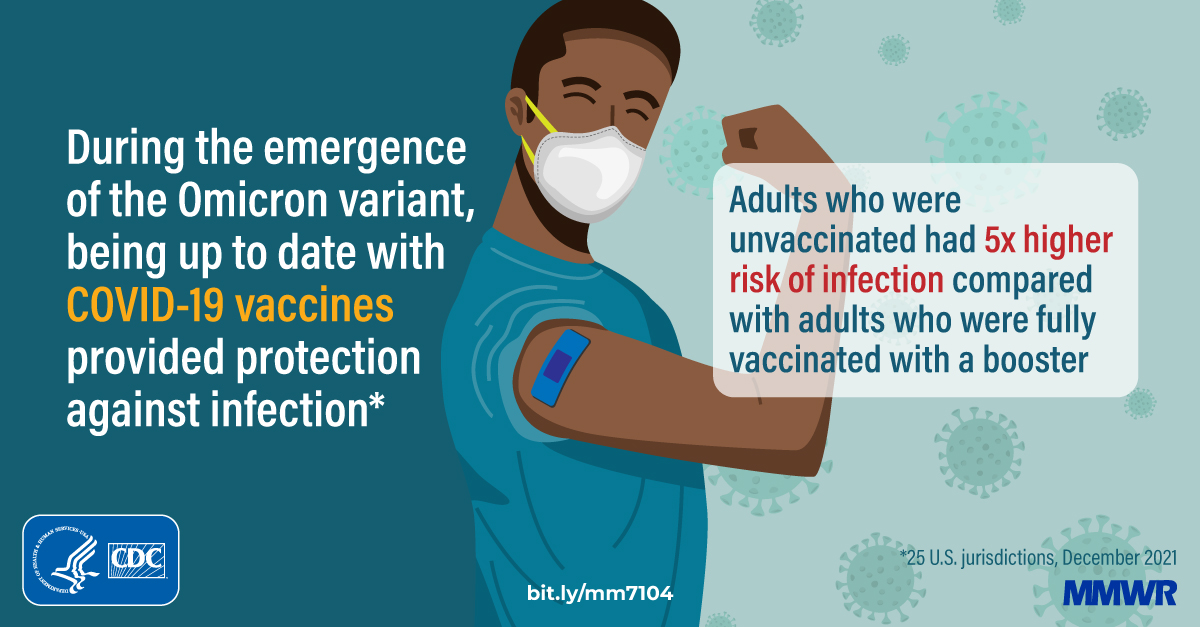
33.6% of COVID Infections Were in Unvaccinated Persons
According to a recent CDC study. Among 422,966 reported SARS-CoV-2 infections in LAC residents aged ≥18 years during November 7, 2021–January 8, 2022:
• 33.6% were in unvaccinated persons • 13.3% were in fully vaccinated persons with a booster • 53.2% were in fully vaccinated persons without a booster • Unvaccinated persons were most likely to be hospitalized, representing 2.8% of COVID infections • Unvaccinated persons were most likely to be admitted to an ICU, or 0.5% of COVID infections • Unvaccinated persons were most likely to be require intubation for mechanical ventilation, or 0.2% of COVID infections.
Posted on February 22, 2022 by Dr. David Edward Marcinko MBA MEd CMP™
***
By Staff Reporters
***
***
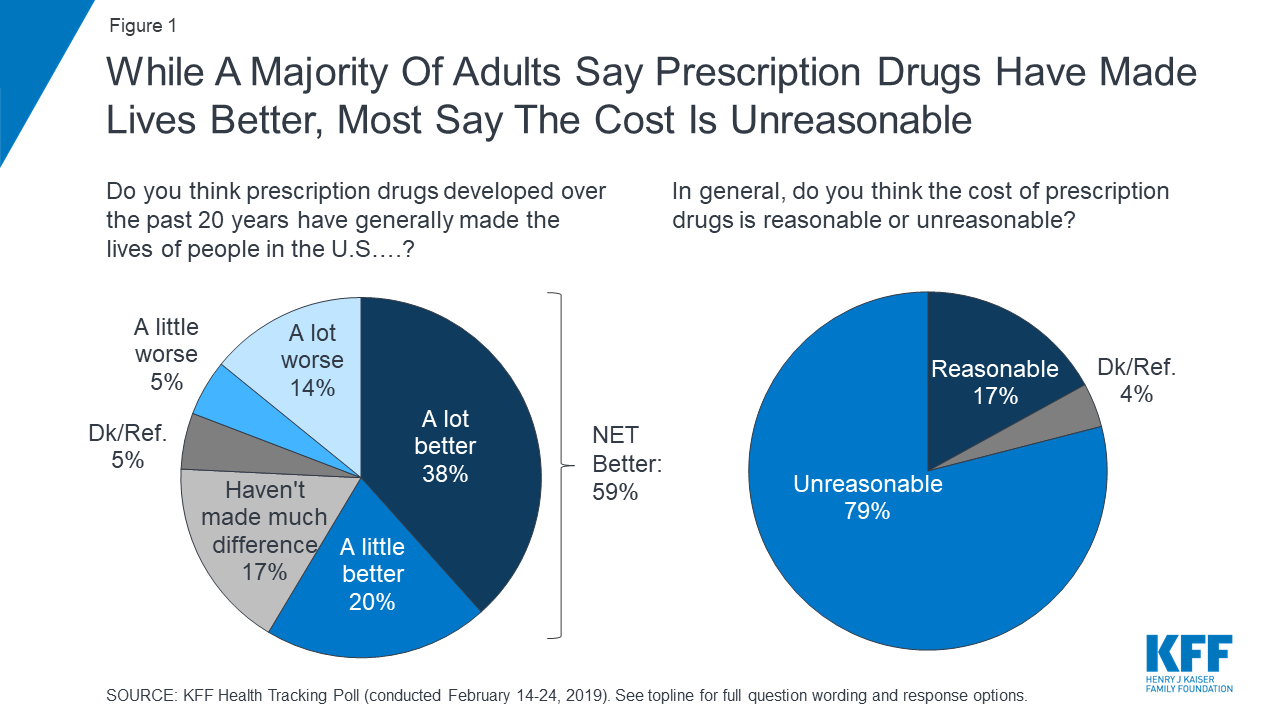
56% of Patients Attempted to Stretch Out a Prescription According tot a Recent CoverMyMeds Survey of 1,000 patients. It found:
• 79% of patients said they’ve gone to the pharmacy only to discover a prescription cost more than they expected. • When faced with an affordability challenge, 56% of patients attempted to stretch out a prescription. • When faced with an affordability challenge, 52% of patients skipped bills or other essential items to afford medications. • When faced with an affordability challenge, 51% of patients sacrificed medications to pay bills and other essentials.
Posted on February 22, 2022 by Dr. David Edward Marcinko MBA MEd CMP™
Virtual Currency – Real Taxation
By Staff Reporters
What you need to report to the IRS
The IRS treats virtual currencies as property, which means they’re taxed similarly to stocks. If all you did was purchase cryptocurrency with U.S. dollars, and those assets have been sitting untouched in an exchange or your cryptocurrency wallet, you shouldn’t need to worry about reporting to the IRS.
***
Reporting is required when certain events come into play, most commonly:
Trading one cryptocurrency for another.
Selling cryptocurrency for fiat dollars (government-issued currency).
Using cryptocurrency to buy goods or services (e.g., paying for a cup of coffee with cryptocurrency).
A critical distinction to make is that triggering a taxable event doesn’t necessarily mean you’ll owe taxes, said Andrew Gordon, an Illinois-based certified public accountant and tax attorney. Just because you have to report a transaction doesn’t mean you’ll end up owing the IRS for it.
Posted on February 22, 2022 by Dr. David Edward Marcinko MBA MEd CMP™
***
By Staff Reporters
***
***
Markets: The domestic markets were closed yesterday as stocks around the world tumbled.
Crypto: Bitcoin was trading at $36,649 at 2:30 a.m. ET, falling nearly 6.5% in the last 24 hours, according to data from CoinDesk. The world’s most valuable cryptocurrency fell below $40,000 over the weekend, and has continued to slide as the Ukraine crisis intensifies. The currency has lost almost half its value since its November high of $68,990 due to geopolitical tensions, the prospect of interest rate hikes by the US Federal Reserve and curbs by some major economies on digital assets. Bitcoin’s peers have also been faring poorly. Ethereum, the world’s second most valuable cryptocurrency, fell over 8% in the last 24 hours and was trading at $2,520.
Putin: Russian President Vladimir Putin dramatically escalated the Ukrainian conflict. He recognized two separatist regions in eastern Ukraine as independent and ordered Russian troops to enter those areas, which may provide the pretext for an invasion of other parts of the country. Western leaders condemned the move as a violation of international law and the US said it will impose sanctions on those regions.
Paul Edward Farmer (October 26, 1959 – February 21, 2022) was an American medical anthropologist and physician. Farmer held an MD and PhD from Harvard University, where he was the Kolokotrones University Professor and the chair of the Department of Global Health and Social Medicine at Harvard Medical School. He was the co-founder and chief strategist of Partners In Health (PIH), an international non-profit organization that since 1987 has provided direct health care services and undertaken research and advocacy activities on behalf of those who are sick and living in poverty. He was professor of medicine and chief of the Division of Global Health Equity at Brigham and Women’s Hospital.
Dr. Farmer had written extensively on health and human rights, the role of social inequalities in the distribution and outcome of infectious diseases, and global health.
Posted on February 21, 2022 by Dr. David Edward Marcinko MBA MEd CMP™
***
By Staff Reporters
***
Wall Street trading is closed for Presidents Day holiday. But stock futures were ceding earlier stronger ground, while havens such gold pared losses, after a Kremlin spokesman said no concrete plans for a summit between President Joe Biden and Russian President Vladimir Putin had been made.
MARKETS: IHS Markit’s flash euro area composite PMI (purchasing managers’ index) reading, seen as a reliable gauge of overall economic health, came in at a five-month high of 55.8 in February. The U.K.’s composite PMI came in at an eight-month high of 60.2 in February, up from 54.2 in January and well above forecasts.
European markets were choppy today today as investors monitored the Russia-Ukraine situation and unexpectedly strong economic data from the euro zone and U.K. The pan-European Stoxx 600 index was down 1% during afternoon trade, having gained as much as 0.6% at the start of the session. And, tech stocks dropped 2.4% as most sectors and major bourses slid into the red.
OIL: According to Sonali Paul of Reuters – Oil prices gained more than $1 in early trade on Monday from rising jitters over potential conflict between Russia and Ukraine, with the United States and European Union making clear Russia would face sanctions if it invaded its neighbor. European Commission President Ursula von der Leyen said Russia would be cut off from international financial markets and denied access to major exports needed to modernize its economy if it invaded Ukraine.
***
Brent crude futures were up $1.34, or 1.4%, at $94.88 a barrel at 2312 GMT after hitting a high of $95.00 in early trade.
NIKKEI: Shares in Asia-Pacific fell in Monday morning trade, as investors continue to watch the situation surrounding Ukraine.The Nikkei 225 in Japan slipped 2% in early trade while the TOPIX index shed 1.8%. South Korea’s KOSPI shed 1.64%. Australia’s S&P/ASX 200 slipped 0.82% in morning trade. And, MSCI’s broadest index of Asia-Pacific shares outside Japan traded 0.36% lower.
Capital markets require confidence that all market participants have fair access to the same relevant information about a company and its prospects. Laws governing the trading of securities have been in existence since stocks were first traded. It seems as if each piece of legislation, from the Securities and Exchange Act of the 1930’s through to the 2002 Sarbanes-Oxley Law fought the prior corruption as successfully as preparing an army to fight the last war.
Curiously, the issue of insider trading by members of Congress is not a partisan issue. If behavior is any indication, certain Republicans and Democrats are fond of having the ability to profit from access to material, nonpublic information. Others of both parties are introducing legislation to block illegal insider trading.
Congress has passed laws that prohibit people with insider knowledge from trading on non-public information, and from sharing that non-public information with others who may trade stocks based on that information. The former is known as “illegal insider trading” and the latter as “tipping.” There exists legal insider trading, which is bound by rules of disclosure and third-party decision makers, but we will leave that for another day. Illegal insider trading is enforced through Federal Agencies including the Securities and Exchange Commission (SEC), Internal Revenue Service (IRS) and the Department of Justice (DOJ), as well as by regulations on major stock exchanges such as the New York Stock Exchange (NYSE) and National Association of Securities Dealers Automated Quotation Systems (NASDAQ).
While there is universal agreement that executives, board members, employees and others with access to non-public information may not use that information to trade stocks, members of Congress and their staffs face few practical barriers. And in more recent months, members of the Federal Reserve and their staffs have made questionable, if not downright suspicious trades of stocks.
History is littered with cases of both average citizens and celebrities like Martha Stewart being prosecuted for insider trading. Stewart was ultimately prosecuted and jailed for obstruction after denying insider knowledge.
There are members of both the US Senate and US House of Representatives who want to stop illegal insider trading by their peers. For example, in 2012, President Barack Obama signed the Stop Trading on Congressional Knowledge (STOCK) Act to prevent insider trading by members of Congress and Congressional Staff. However, there have been no prosecutions under this statute to date. The reason is that the “Speech and Debate” clause prohibits questioning an elected Senator or Congressional Representative.
Moreover, much of the disclosure of material, non-public information that would establish a foundation for illegal insider trading occurs outside the public eye. Members of Congress cannot act on information obtained from companies themselves. The difficulty arises in proving that a member of Congress or Congressional staff knew of material, non-public information acquired in a confidential congressional meeting. Let me rephrase that. There is no way of knowing what transpired in the confidential committee meeting so there is no provable path to a stock trade benefiting the member of Congress or their staff.
Suppose two publicly traded defense contractors were bidding on a new weapons system. In a confidential committee, a Department of Defense (DOD) recommendation to accept the bid of company A versus Company B was made and endorsed by the committee. At that point, everyone with access to the non-public information about the weapons system bid would know that it would be good for the stock of Company A and bad for the stock of Company B.
Take this a step further. Company A and Company B are notified about the confidential decision and advised to keep this material, non-public information protected. At this point, if any executive, board member or employee with that knowledge traded in the stock of Company A or Company B they would be subject to prosecution, including fines and imprisonment. Also, if any person at the company provided that material, non-public information to another person, including a member of Congress, that action would be subject to investigation and potential prosecution.
Now suppose a Senator, Congressional Representative or staff member, after receiving the news of the weapons system award went to their broker, computer or telephone and bought stock in Company A while selling (or shorting in another way) Company B. Or perhaps communicated to a friend or family member on a trade “suggestion.” Relaying or exploiting information – material, non-public information — behavior that would land any other person in an investigation and make them subject to prosecution, cannot be practically pursued because there is no way to use the committee deliberations as evidence.
When Senators Richard Burr (R-NC), Kelly Loeffler (R-GA) and Diane Feinstein (D-CA) were accused of insider trading, instead of being subjected to investigation and potential prosecution through the SEC, IRS, or DOJ, their actions instead were reviewed by the Senate Ethics Committee. The Senate Ethics Committee, made up of other US Senators, found no wrongdoing. Let me rephrase that – other US Senators, who might benefit themselves from insider trading – decided to give suspicious behavior a pass. Even if the conduct of the Senators was on the up-and-up, the optics do not inspire confidence.
The US Senate does not have a monopoly on suspicious trading. For example, Congresswoman Lois Frankel (D-FL), was accused of trading stocks of companies in the fossil fuel industry while a sitting on a Congressional subcommittee that oversees funding for the Department of Energy.
Legislation to Block Insider Trading by Congress and the Federal Reserve
US Senators and Congressional Representatives have made proposals to improve public perception of their ranks with more practical solutions and stiffer penalties. Pre-eminent among the reformers is Senator Elizabeth Warren (D-MA), a person with a strong background in financial matters. Senator Warren appears to be the leading voice in calling for members of the Federal Reserve and their staffs to also be subject to laws prohibiting illegal insider trading and tipping. These restrictions are long overdue, as statements by the Fed has caused wild gyrations in the prices of securities. Senator Warren’s ideas are recommended reading on her web site at
. Enter “Insider Trading” on the search bar of the Senator’s web site for 61 references.
Senators Jeff Merkley (D-OR) and Sherrod Brown (D-OH) have offered the “Ban Conflicted Trading Act.” Under the legislation, elected persons and their staffs would be required to either sell or freeze their stock holdings, or put them in a blind trust. Introduced in 2018, the legislation has stalled. Last winter, Representative Alexandria Ocasio-Cortez (D-NY) and others have indicated they would introduce the same legislation in the House.
Earlier this month, Senators Jon Ossoff (D-GA) and Mark Kelly (D-AZ) introduced the Ban Congressional Stock Trading Act. If it becomes law, every member of Congress—as well as their spouses and dependent children—would be required to place their stock portfolios into a blind trust. One benefit of an outright ban or blind trusts would mean that clerical matters would no longer be a concern of those elected. Kelly himself, according to news reports, did not make a timely disclosure about a stock option exercise.
Senator Josh Hawley (R-MO) announced he will introduce the Banning Insider Trading in Congress Act. Wryly pointing out that politicians manage to outperform the stock market year after year, Hawley’s bill would prohibit members of Congress and their spouses from buying and trading individual stocks. Those who violate it would have to disgorge their profits.
Congress: Keep it simple and fix this
The singular, clear way to avoid abuses of insider information is to ban the trade of individual stocks and industry-specific Exchange Traded Funds (ETF) by members of Congress, Congressional staffs, members of the Federal Reserve and their staffs. Double blind trusts (where neither the owner or trustee knows identity of the other) would be an acceptable form of investing. Finally, add stronger criminal penalties for tipping insider information.
This is one of the few things that seem to enjoy bipartisan support, and would seemingly be welcomed by nonpartisans and those on the political poles as well.
Of course, like everything political, proposals of these types do not enjoy absolute, clear-cut support. As House Speaker Nancy Pelosi (D-CA) said about her opposition to such restrictions “We are a free market economy,” Pelosi, purported to be one of the 25 wealthiest members of Congress, continued, “They (Congress) should be able to participate in that.” Pelosi’s recent financial disclosure is said to have 48 transactions made by her family valued at a total of some $50 million so she is sympathetic to serving in Congress and participating in trading.
Posted on February 20, 2022 by Dr. David Edward Marcinko MBA MEd CMP™
***
By Staff Reporters
Federal Reserve Chair Jerome Powell and his colleagues can expect to see their upcoming key inflation metric accelerate this week to a fresh four-decade high last seen when Paul Volcker led the U.S. central bank.
The personal consumption expenditures price index, which the Federal Reserve uses for its inflation target, likely jumped 6% in January from a year earlier, according to the median of a Bloomberg survey of economists. The core measure, which excludes food and fuel, is forecast to climb 5.2%.
And, less than a month before the FOMC’s next policy meeting, a sharper-than-projected advance in the price gauge could turn up the heat for a half-point increase in the benchmark interest rate. January’s consumer-price index rose more than forecast, with broad advances in the costs of goods and services.
Posted on February 19, 2022 by Dr. David Edward Marcinko MBA MEd CMP™
By Staff Reporters
***
***
MARKETS: Stocks closed down for a second straight week in the US— and sunk deeper into the red for 2022 so far — as investors assess the risks from escalating tensions in Ukraine and a shift in monetary policy by the Federal Reserve.
And, after another day of turbulence, the Dow and the S&P 500 both fell 0.7% (with the Dow ending Friday at 34,079) and the tech-heavy NASDAQ composite declined 1.2%. The NASDAQ has fallen farthest of the three major U.S. stock indexes to date, down 13.4% for the year, while the S&P 500 is off 8.8% and the Dow is down 6.2%.
Specifically, Intel’s shares declined $2.47, or 5.2%, while those of Boeing were off $4.38 (2.1%), combining for a roughly 45-point drag on the Dow. Salesforce.com Inc. Caterpillar and Honeywell International Inc. also contributed significantly to the decline.
STOCKS:
Shopify, which represented the Covid e-commerce boom, is down 62% from its peak.
Roblox, which represented the Covid gaming boom, is down 63%.
Netflix, which represented the Covid streaming boom, is down 43%.
Noteworthy: A $1 move in any of the Dow’s 30 components equates to a 6.59-point swing.
UKRAINE: Investors watched the latest developments in Ukraine, where Russia has been amassing troops on the border. The tensions are yet another concern for investors as they also try to determine how the economy will react to rising inflation and looming interest rate hikes.
Posted on February 18, 2022 by Dr. David Edward Marcinko MBA MEd CMP™
IRS Tax Implications
By Staff Reporters
***
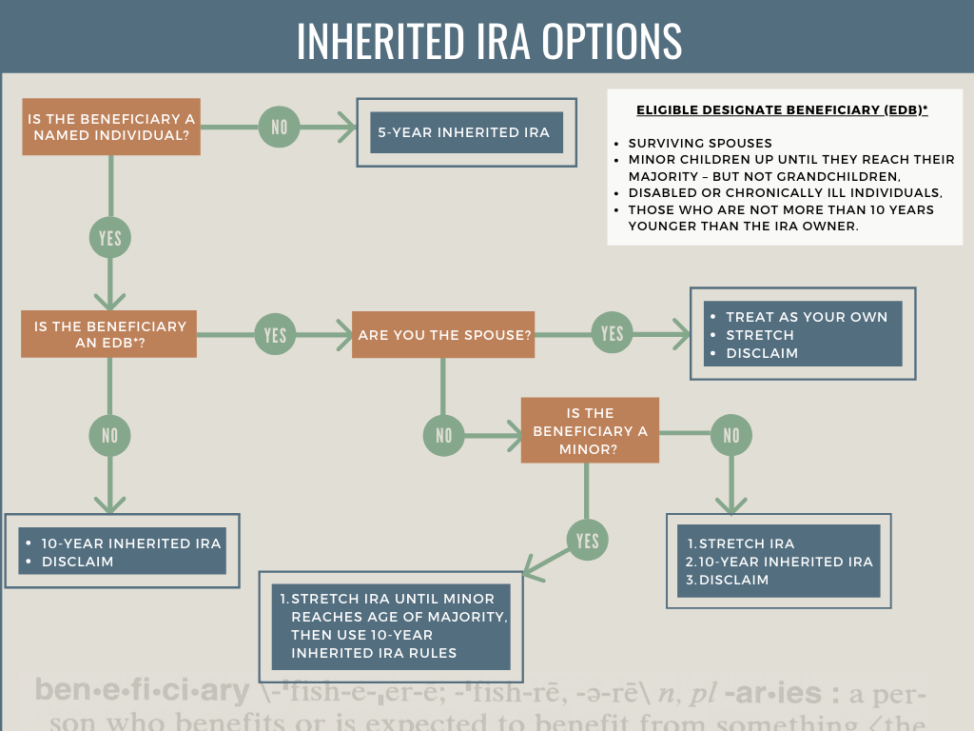
If you inherited a tax-deferred retirement plan, such as a traditional IRA, you’ll have to pay taxes on the money. But you can make the tax hit less onerous.
Spouses can roll the money into their own IRAs and postpone distributions—and taxes—until they’re 70½. All other beneficiaries who want to continue to benefit from tax-deferred growth must roll the money into a separate account known as an inherited IRA. Make sure the IRA is rolled directly into your inherited IRA. If you take a check, you won’t be allowed to deposit the money. Rather, the IRS will treat it as a distribution and you’ll owe taxes on the entire amount.
Once you’ve rolled the money into an inherited IRA, you must take required minimum distributions every year—and pay taxes on the money—based on your age and life expectancy. Deadlines are critical: You must take your first RMD by December 31st. of the year following the death of your parent (or whoever left you the account). Otherwise, you’ll be required to deplete the entire account within five years after the year following your parent’s death.
The December 31st. deadline is also important if you are one of several beneficiaries of an inherited IRA. If you fail to split the IRA among the beneficiaries by that date, your RMDs will be based on the life expectancy of the oldest beneficiary, which may force you to take larger distributions than if the RMDs were based on your age and life expectancy.
You can take out more than the RMD, but setting up an inherited IRA gives you more control over your tax liabilities. You can, for example, take the minimum amount required while you’re working, then increase withdrawals when you’re retired and in a lower tax bracket.
Did you inherit a Roth IRA? And so, as long as the original owner funded the Roth at least five years before he or she died, you don’t have to pay taxes on the money. You can’t, however, let it grow tax-free forever. If you don’t need the money, you can transfer it to an inherited Roth IRA and take RMDs under the same rules governing a traditional inherited IRA. But with a Roth, your RMDs won’t be taxed.
Posted on February 18, 2022 by Dr. David Edward Marcinko MBA MEd CMP™
By Staff Reporters
GLOBALMARKETS: Stabilized on Friday after the threat of a potential Russian invasion of Ukraine propelled the Dow to its worst day of 2022. Australia’s S&P/ASX 200 and Japan’s benchmark Nikkei closed down 1% and 0.4%, respectively, while South Korea’s Kospi was little changed. Chinese markets were mixed. As the benchmark Shanghai Composite Index gained 0.7%, Hong Kong’s Hang Seng Index dropped 1.9%. In Europe, stocks were little changed at the open. London’s FTSE 100 and France’s CAC 40 each rose 0.2%, while Germany’s DAX ticked up 0.1%.
DOMESTIC MARKETS: The Dow plummeted 622 points, or 1.8% — hitting its lowest level so far this year in the process. The S&P 500 fell 2.1% and the NASDAQ was down 2.9%. All three indices are now in the red for the week. Finally, US futures pointed up slightly with Dow futures, S&P 500 futures and NASDAQ futures rising 0.6%, 0.7% and 0.8%, respectively.
FOMC: Jim Bullard, the president of the St. Louis Federal Reserve and member of the Federal Open Market Committee, said that the Federal Reserve wants to pursue the best policy as members debate how quickly they should raise interest rates. He called for a full percentage point interest rate hike by July, 2022. And, billionaire investor Carl Icahn predicts the Fed’s money-printing party will end badly because the government can’t control inflation
Posted on February 17, 2022 by Dr. David Edward Marcinko MBA MEd CMP™
MCOL Cyber Attacks
By Staff Reporters
***
Critical Insight: 2021 with 5 Findings
• In 2021, 45 million individuals were affected by healthcare cyber-attacks, up from 34 million in 2020. • The total number of affected increased 32% over 2020, meaning that more records are exposed per breach each year. • Breaches only rose 2.4% from 663 in 2020 to 679 in 2021 but still hit historic highs. • Hacking/IT incidents continue as the most common cause of breaches with an increase of 10% in 2021. • Hacking incidents at outpatient/specialty clinics saw a 41% increase in these types of breaches in 2021.
Posted on February 17, 2022 by Dr. David Edward Marcinko MBA MEd CMP™
By Staff Reporters
****
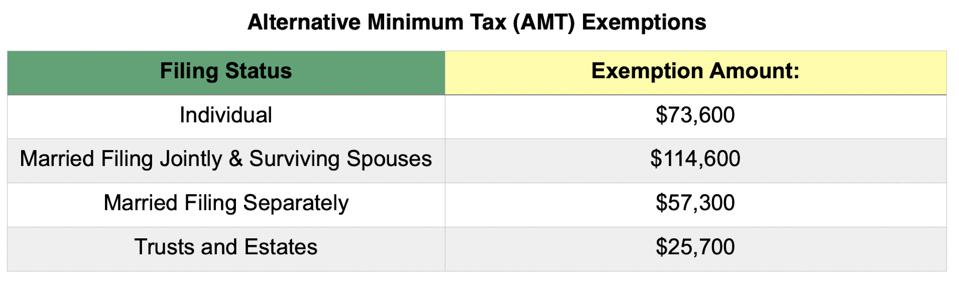
Alternative Minimum Tax
DEFINITION: The alternative minimum tax (AMT) is a tax imposed by the United States federal government in addition to the regular income tax for certain individuals, estates, and trusts. As of tax year 2018, the AMT raises about $5.2 billion, or 0.4% of all federal income tax revenue, affecting 0.1% of taxpayers, mostly in the upper income ranges.
Posted on February 17, 2022 by Dr. David Edward Marcinko MBA MEd CMP™
By Staff Reporters
***
***
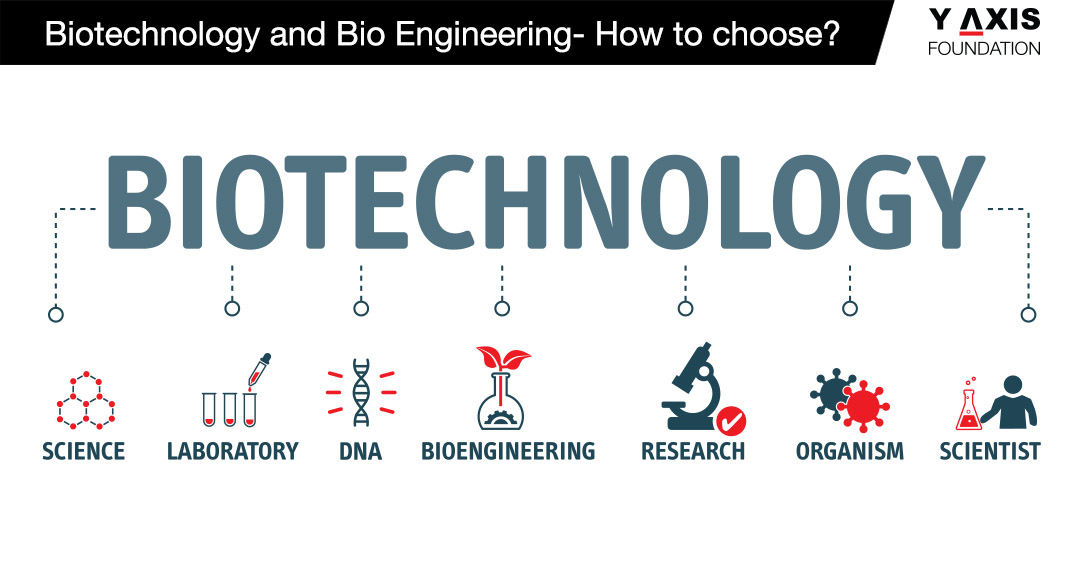
BIOTECHNOLOGY: According to Bloomberg, former high flying biotechnology favorites Mirati Therapeutics Inc. and Sage Therapeutics Inc. have lost more than half their value from record highs, hurt by growing pessimism on new medicines as well as the higher rate environment damaging most stocks.
MARKETS: Stocks went down, then back up, and closed pretty much where they started. The e-commerce platform Shopify is another pandemic winner that’s been absolutely crushed during the “reopening”: Its stock has fallen to its lowest level since June 2020.
PPI: The producer price index rose 1% over the prior month.
Covid: Dr. Zayid Al-Aly reported that even a mild COVID-19 infection increasedthe risk of having cardiovascular problems — including heart rhythm irregularities, potentially deadly clots in the legs and lungs, heart failure, heart attack and stroke, within a year after being infected.
MICROSOFT: Microsoft CEO Satya Nadella is on a major shopping spree. The company’s planned purchase of video game maker Activision Blizzard, with a price tag of nearly $70 billion, is Microsoft’s biggest and boldest acquisition. But it’s hardly the only notable deal in the Nadella era. Microsoft scooped up advertising tech business Xandr from CNN owner AT&T late last year for a reported $1 billion. The company also shelled out nearly $20 billion for cloud software firm Nuance earlier in 2021. That’s on top of numerous other billion dollar deals Microsoft has made since Nadella took the helm in 2014, including the acquisitions of Minecraft developer Mojang, Bethesda games studio owner ZeniMax Media, open source coding site GitHub and business social media network LinkedIn. The LinkedIn deal was previously Microsoft’s largest, with a value of $26.2 billion. Now there are reports Microsoft is looking to buy Mandiant, the cybersecurity software firm formerly known as FireEye that is currently valued at about $4.5 billion.
Posted on February 16, 2022 by Dr. David Edward Marcinko MBA MEd CMP™
By Staff Reporters
***
Entry-level Revenue Cycle Recruitment Takes 84 Days on Average
A recent AKASA survey of 514 chief financial officers and revenue cycle leaders at hospitals and health systems in the U.S. found:
• Entry-level revenue cycle talent (0-5 years): On average, costs $2,167 for recruitment and takes 84 days to fill vacant roles. • Mid-level revenue cycle talent (6-10 years): On average, costs $3,581 for recruitment and takes 153 days to fill vacant roles. • Senior-level revenue cycle talent (10+ years): On average, costs $5,699 for recruitment and takes 207 days to fill vacant roles.
The Physician Executive Summary is always included at the beginning of a formal business plan and represents a brief synopsis of the medical prarctice entire plan. Its appearance, grammar and style should be sharp and crisp as it represents an enticement for the reader to maintain interest and contribute intelligent or economic input into the new venture.
It should contain information about the practice, advertising and marketing opportunities, physician management, proposed financing with four Pro Forma financial statements, business operations and exit strategy. This last point, while unpleasant is often overlooked by naive practitioners. Business experts however, look favorably upon an escape plan and view it as the mark of mature professional that realizes the possibility of success as well as failure.
****
***
Ultimately, the plan must explain to potential investors how you will make the practice profitable and produce the required Return on Investment (ROI) for them. It must describe medical services, patient acceptance and benefits, provider qualifications and accomplishments, the amount of capital required, market size, potential practice growth rate, and market niche.
Additional information may include office location, proximity to labor, transportation, license requirements, business entity status, proprietary technology and potential working agreements with various insurance, managed care, ACA and HMO plans. If all of the above seems bewildering to the uninitiated, you are correct.
Remember however, that if you do not have, or can’t borrow the funds to begin a private practice, you will just have to become an employed practitioner until you can. It is therefore imperative to start off on the right foot, with a sound business plan, as you begin your medical career.
Posted on February 16, 2022 by Dr. David Edward Marcinko MBA MEd CMP™
By Staff Reporters
***
***
MARKETS: The Dow jumped 422 points, or 1.2%. The S&P 500 surged 1.5% and the NASDAQ was 2.5% higher.
OIL: US oil futures tumbled 3.7% to just under $92 a barrel. That’s despite the fact that Russia stressed that major military exercises would continue.
CPI: The Producer Price Index rose 1% last month, marking a significant acceleration from December’s 0.2% jump.
Meta: As Varietyreports, the company has agreed to pay $90 million to settle a 2012 class action lawsuit accusing it of violating users’ privacy. Facebook allegedly overstepped its bounds in 2010 and 2011 by using tracking cookies that monitored browsing after users signed out despite promises to the contrary.
MODERNA: Moderna Inc (NASDAQ: MRNA) shares were down more than 40% since the start of the year and continues to trend lower. Vaccine stocks are facing selling pressure as the COVID-19 omicron variant fades, but Moderna investors have been expressing concerns about recent stock sales from CEO Stéphane Bancel, as well as the presumed deletion of his Twitter account.
Posted on February 16, 2022 by Dr. David Edward Marcinko MBA MEd CMP™
Berkeley’s Lester Center for Entrepreneurship
Entrepreneurship is a Calling
***
By Steve Blank
During the Cold War with the Soviet Union, science and engineering at both Stanford and U.C. Berkeley were heavily funded to develop Cold War weapon systems. Stanford’s focus was Electronic Intelligence and those advanced microwave components and systems were useful in a variety of weapons systems. Starting in the 1950’s, Stanford’s engineering department became “outward facing” and developed a culture of spinouts and active faculty support and participation in the first wave of Silicon Valley startups.
At the same time Berkeley was also developing Cold War weapons systems. However its focus was nuclear weapons – not something you wanted to be spinning out. So Berkeley started a half century history of “inward facing innovation” focused on the Lawrence Livermore nuclear weapons lab. (See the presentation here.)
Given its inward focus, Berkeley has always been the neglected sibling in Silicon Valley entrepreneurship. That has changed in the last few years.
Today the U.C. Berkeley Haas Business School is a leader in entrepreneurship education. It has replaced how to write a business plan with hands-on Lean Startup methods. It’s teaching the LaunchPad® and the I-Corps for the National Science Foundation and National Institutes of Health, as well as corporate entrepreneurship courses.
We are in the middle of a shift in entrepreneurship education from teaching the waterfall model of startup development (enshrined in business plans) to teaching the lean startup model
The Lean LaunchPad process works across a wide range of domains – from science and engineering to healthcare, energy, government, the social sector and for corporate innovation
Customer Development works outside Silicon Valley. In fact, it works globally
The Lean LaunchPad is a business process that teaches entrepreneurs and innovators to make business-focused, evidence-based decisions under conditions of chaos and uncertainty. It’s a big idea.
Your thoughts and comments on this ME-P are appreciated. Feel free to review our top-left column, and top-right sidebar materials, links, URLs and related websites, too. Then, subscribe to the ME-P. It is fast, free and secure.
Speaker: If you need a moderator or speaker for an upcoming event, Dr. David E. Marcinko; MBA – Publisher-in-Chief of the Medical Executive-Post – is available for seminar or speaking engagements. Contact: MarcinkoAdvisors@msn.com
OUR OTHER PRINT BOOKS AND RELATED INFORMATION SOURCES:
“When a practicing physician thinks about their risk exposure resulting from providing patient care, medical malpractice risk immediately comes to mind. But; malpractice and liability risk is barely the tip of the iceberg, and likely not even the biggest risk in the daily practice of medicine. There are risks from having medical records to keep private, risks related to proper billing and collections, risks from patients tripping on your office steps, risks from medical board actions, risk arising from divorce, and the list goes on and on. These liabilities put a doctor’s hard earned assets and career in a very vulnerable position.
These new books from Dr. David Marcinko and Prof. Hope Hetico show doctors the multiple types of risk they face and provides examples of steps to take to minimize them. They are written clearly and to the point, and are a valuable reference for any well-managed practice. Every doctor who wants to take preventive action against the risks coming at them from all sides needs to read these books.”
Richard Berning MD FACC [New Haven, Connecticut, USA]
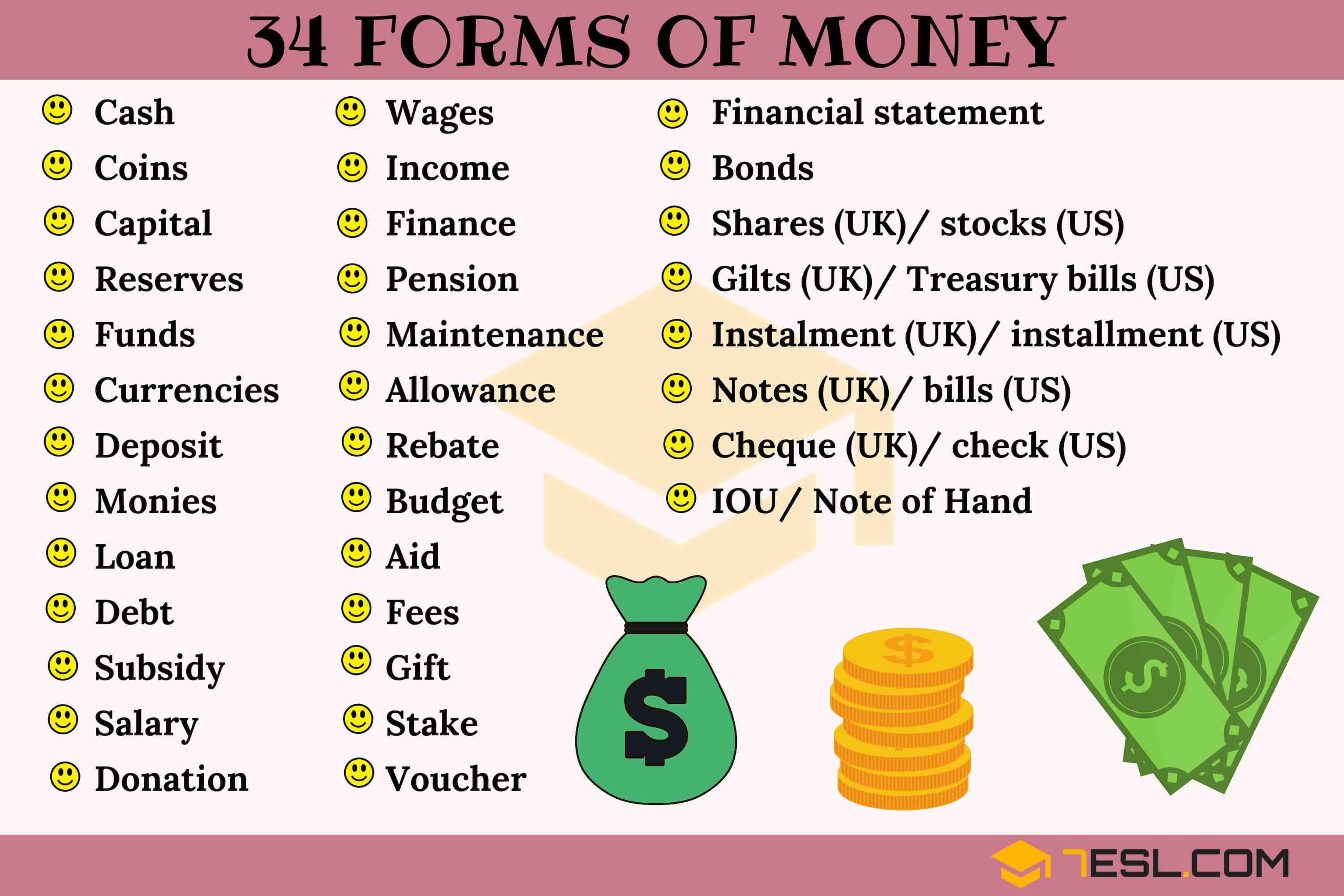
People really love money since it is needed to buy just about everything. In fact, we actually published a formal print dictionary on health economics and finance terms that is very popular with physician investors and medical colleagues; it is a favorite of economic students as well!
And, money is by far one of those words that has more slang or terms for it than any others. This proves that cash or money, does not have be boring when speaking about it. Just keep in mind that these slang synonyms are in plural form. They are also words mostly used for US currency.
Perhaps the fact that money is so important may help to explain why there are so many different ways to say it. These 95 slang words for money and their meanings are really worth taking a look at. This list not only contains the countless ways to speak, write or say the word money, but also what are the meanings behind each phrase or term.
Posted on February 15, 2022 by Dr. David Edward Marcinko MBA MEd CMP™
***
By Staff Reporters
***
MARKETS: Stocks ticked lower as investors fretted over an upcoming interest rate hike from the Federal Reserve and a potential Russian invasion of Ukraine. With all the chatter of conflict in Europe, everyone’s watching whether oil prices will hit $100 a barrel—they didn’t budge yesterday.
CRYPTO: SEC Chair Gary Gensler said thr crypto firm BlockFi would pay $100 million to the SEC and 32 states over charges that it had violated securities law. The penalty is the agency’s largest ever against a cryptocurrency company. BlockFi, a banklike crypto company backed by Peter Thiel, didn’t admit or deny the SEC’s findings but did agree to stop opening new lending accounts to customers in the US.
METAVERSE: For doctors, nurses and healthcare professionals who’ve spent the last few years hunched over laptops smiling pleasantly into a Zoom meetings, burnout has been pervasive. Zoom fatigue is now a widely recognized work-induced malady studied by university researchers, and many remote workers say they have trouble balancing work and their personal lives. With images on screens surrounding remote healthcare workers like a labyrinthine maze of fun-house mirrors, it might seem like the last thing a burned out medical provider needs is to strap on a VR headset to detach from the rigors of the digital medical workplace.
Nevertheless, some health care organizations are transporting their workers to the metaverse—a network of connected, 3D, virtual environments where people can interact through avatars and spatial audio—as a means of combating stress. But, for any organization curious about the metaverse, Jeremy Bailenson, a professor of communication and the founding director of the Virtual Human Interaction Lab at Stanford University, advises having a specific task in mind, such as addressing burnout or building camaraderie. “VR wins when it solves a hard problem,” he said.
The broader question of how organizations will further incorporate virtual reality into their mental health programs and rapport-building exercises is largely unanswered at this point, he added. Bailenson believes VR is a “home run for clinical use cases.” But “for this general burnout, it’s probably going to be a good tool for some people, but not a magic pill.”
Posted on February 14, 2022 by Dr. David Edward Marcinko MBA MEd CMP™
By Staff Reporters
***
According to Tejvan Pettinger, a public good has two characteristics:
Non-rivalry: This means that when a good is consumed, it doesn’t reduce the amount available for others. – E.g. benefiting from a street light doesn’t reduce the light available for others but eating an apple would.
Non-excludability: This occurs when it is not possible to provide a good without it being possible for others to enjoy. For example, if you erect a dam to stop flooding – you protect everyone in the area (whether they contributed to flooding defenses or not.
A public good is often (though not always) under-provided in a free market because its characteristics of non-rivalry and non-excludability mean there is an incentive not to pay. In a free market, firms may not provide the good as they have difficulty charging people for their use.
Posted on February 14, 2022 by Dr. David Edward Marcinko MBA MEd CMP™
By Staff Reporters
***
OIL: The threat of a Russian invasion of Ukraine is shaking up a fragile global oil market, pushing prices to $94 barrel as supplies will struggle to cushion the effect from any significant disruption in Russian fossil fuel exports. The headlines that moved markets last week—the Fed’s response to inflation, corporate earnings, tensions in Ukraine—will remain top of mind for investors this coming week. Analysts predict that if Russia were to invade Ukraine, oil could top $100 a barrel for the first time since 2014. And, the average national gasoline price is about $3.50/gallon.
DOMESTICMARKETS: Walmart, Airbnb, Nvidia, Roblox, and DraftKings will close out one of the most volatile earnings seasons in recent memory.
ASIAN MARKETS: Major Asian stock markets opened lower as investors sought safer bets ahead of a possible Russian military attack on the Ukraine. In Tokyo, the Nikkei 225 index dropped roughly 2 percent in the first hours of trading. South Korea’s KOSPI fell by a similar amount. And, while China’s big tech firms are under much regulatory pressure, they are also facing strong competition.
INVESTMENT BANKING: Roger Ng, the former head of investment banking in Malaysia for Goldman Sachs, will stand trial in New York beginning today. He’s accused of playing a prominent role in a massive laundering scheme that plundered billions from Malaysia’s sovereign wealth fund, 1MDB. Embezzled funds were used to buy a Beverly Hills hotel, a $200 million super-yacht, and even to help finance the film, Wolf of Wall Street.
Posted on February 14, 2022 by Dr. David Edward Marcinko MBA MEd CMP™
Insights For Doctors and All Investors
***
By Vitaliy Katsenelson CFA
***
NOTE: This piece is a little more technical, and contains a bit more stock-market jargon, than most essays you get from me. While how we build portfolios is important to us and our clients, we realize that the puts and takes might bore many readers.







 Support our online development, and advance our onground research initiatives in free market economics, as we seek to showcase the brightest Next-Gen minds.
THE ME-P DISCLAIMER: Posts, comments and opinions do not necessarily represent iMBA, Inc., but become our property after submission. Copyright © 2006 to-date. iMBA, Inc allows colleges, universities, medical and financial professionals and related clinics, hospitals and non-profit healthcare organizations to distribute our proprietary essays, photos, videos, audios and other documents; etc. However, please review copyright and usage information for each individual asset before submission to us, and/or placement on your publication or web site. Attestation references, citations and/or back-links are required. All other assets are property of the individual copyright holder.
Support our online development, and advance our onground research initiatives in free market economics, as we seek to showcase the brightest Next-Gen minds.
THE ME-P DISCLAIMER: Posts, comments and opinions do not necessarily represent iMBA, Inc., but become our property after submission. Copyright © 2006 to-date. iMBA, Inc allows colleges, universities, medical and financial professionals and related clinics, hospitals and non-profit healthcare organizations to distribute our proprietary essays, photos, videos, audios and other documents; etc. However, please review copyright and usage information for each individual asset before submission to us, and/or placement on your publication or web site. Attestation references, citations and/or back-links are required. All other assets are property of the individual copyright holder.




 NASDAQ 13,752.02+1.62%