Dental Managed Care is Substandard Care

 Dental Managed Care [DMC] is Substandard Care – count on it!

1-darrellpruittBy D. Kellus Pruitt DDS

Have you noticed most employer-sponsored dental plans boast savings of 30% and more on dental care, without mentioning how unsustainable discounts harms their employees?

Dental Managed Care [DMC] is substandard care: Discount dentistry, like virtually all underfunded handwork, has always been substandard … Or perhaps someone would like to argue that intricate surgery in sensitive mouths of nervous patients is improved when rushed.

Discounts are popular

Those who market obscure, hard to understand managed care plans to clueless, perhaps non-caring employers, do not control the quality of the discounted dentistry they sell.

Think about it: Discount dentistry without quality control. Can you think of a worse idea in healthcare?

What’s more, not one Delta Dental, Humana or Cigna executive can be held accountable for causing harm to equally clueless dental patients through under financed dentistry they sell. Employees who must choose their dentists from preferred provider lists have forfeited freedom of choice, whether they realize it or not. Their underfunded, substandard dentistry is subsidized by tax payers as a special tax-free benefit, benefiting unaccountable third parties most of all.

For example:

  • Want to know what you get with managed care dentistry? Quick prophys. 
  • How many of you get your teeth cleaned in 30 minutes or less? Do they feel clean?

One Hour

l always allowed my hygienists 1 hour to clean patients’ teeth simply because it often takes that long to do the job right – regardless what insurers say hygienists’ time is worth. The economic climate is tough on fee-for-service.

As I am considering signing on as a preferred provider – not because I want to – I notice that the fees allowed by insurers do not cover the hourly rate of most hygienists… unless they can “clean” teeth, take x-rays, take blood pressure, go over patients’ medical history, allow time for the doctor to do a quick exam and turn around the room in less than 30 minutes.

***

retro dental exam room

***

Assessment 

The motto of my practice is “Dentistry Unhurried.” I don’t want to compete in a race to the bottom which uninformed dental patients always lose.

Conclusion

Your thoughts and comments on this ME-P are appreciated. Feel free to review our top-left column, and top-right sidebar materials, links, URLs and related websites, too. Then, subscribe to the ME-P. It is fast, free and secure.

Speaker: If you need a moderator or speaker for an upcoming event, Dr. David E. Marcinko; MBA – Publisher-in-Chief of the Medical Executive-Post – is available for seminar or speaking engagements. Contact: MarcinkoAdvisors@msn.com

OUR OTHER PRINT BOOKS AND RELATED INFORMATION SOURCES:

Product DetailsProduct Details

 ***

Stocks, Oil, Gold and Bitcoin

By Staff Reporters

***

  • October continues to be a tough month for stocks, with all three major indexes spending yesterday afternoon in the red. The Dow in particular had a horrible day and dropped over 500 points, while major tech stocks were pushed lower by a series of analyst downgrades.
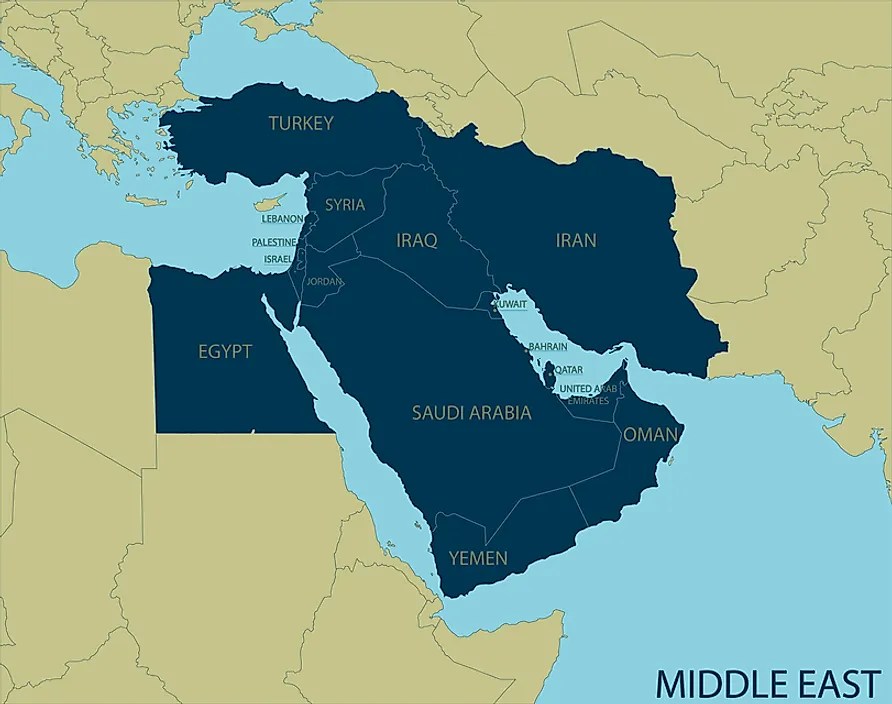
  • Oil continued its hot streak yesterday, rising above $77 on the back of geopolitical conflict in the Middle East. That helped ensure that, while everything else fell, energy was the only positive sector in the S&P 500.
  • Gold has often found itself rising in tandem with crude, though it broke that habit, with the shiny safe haven dropping a hair as investors digest the idea that the Fed’s next interest rate cut may be smaller than they thought.
  • Bitcoin broke above $64,000 for a moment yesterday only to be yanked back down, as crypto traders ride out the recent volatility.

COMMENTS APPRECIATED

Thank You

***

***

DAILY UPDATE: Obesity, Three Mile Island and Medical Records as Stocks Crash

MEDICAL EXECUTIVE-POST TODAY’S NEWSLETTER BRIEFING

***

Essays, Opinions and Curated News in Health Economics, Investing, Business, Management and Financial Planning for Physician Entrepreneurs and their Savvy Advisors and Consultants

Serving Almost One Million Doctors, Financial Advisors and Medical Management Consultants Daily

A Partner of the Institute of Medical Business Advisors , Inc.

http://www.MedicalBusinessAdvisors.com

SPONSORED BY: Marcinko & Associates, Inc.

***

http://www.MarcinkoAssociates.com

Daily Update Provided By Staff Reporters Since 2007.
How May We Serve You?
© Copyright Institute of Medical Business Advisors, Inc. All rights reserved. 2024

REFER A COLLEAGUE: MarcinkoAdvisors@msn.com

SPONSORSHIPS AVAILABLE: https://medicalexecutivepost.com/sponsors/

ADVERTISE ON THE ME-P: https://tinyurl.com/ytb5955z

Your Referral Count -0-

In a public health milestone, the US adult obesity rate stopped its long climb and dropped by roughly two percentage points between 2020 and 2023, according to new data from the National Health and Nutrition Examination Survey.

In 2024, about 62% of clinicians reported that “excessive documentation requirements” is a leading cause of burnout, according to Athenahealth, a health tech and electronic health record (EHR) company. The American Medical Association reported in January that primary care physicians, for example, can spend up to 45.7 minutes on medical record documentation for every 30-minute appointment.

CITE: https://www.r2library.com/Resource

What’s up

  • Scholar Rock shares quadrupled (yes, you read that right) 361.99% after its spinal muscular atrophy drug apitegromab provided a dramatic improvement for patients in a late-stage clinical trial.
  • Super Micro Computer surged 15.79% after the semiconductor company announced it shipped over 100,000 GPUs last quarter, highlighting strong data center demand.
  • Generac Holdings makes generators, so it’s no wonder that the stock popped 8.54% thanks to huge demand for back-up power from areas hit by Hurricane Helene and places preparing to deal with Hurricane Milton.
  • Arcadium Lithium skyrocketed 35.39% after it announced that Rio Tinto has approached the lithium miner about an acquisition.
  • Air Products and Chemicals rose 9.53% after CNBC reported that activist investor Mantle Ridge has taken a $1 billion stake in the industrial gas supplier. Activist investors are clearly getting more active these days.

What’s down

  • Netflix sank 2.47% thanks to a downgrade from Barclays analysts worried that the streaming service’s revenues will slow in the coming months. That outweighed an upgrade from Piper Sandler analysts, who think the streamer’s high valuation is warranted.
  • In another big tech downgrade, Wells Fargo analysts downgraded Amazon due to multiple headwinds like competition from Walmart and lower advertising revenue. Shares sank 3.06%.
  • Back-to-back hurricanes hitting the South are pummeling insurance stocks like Universal Insurance (down 19.60%), Allstate (down 4.90%) Travelers Companies (down 4.34%) and Chubb (down 4.61%).
  • Garmin tumbled 4.06% on a downgrade from Morgan Stanley analysts, who think the device-maker’s revenue will decline and margins will shrink in the coming quarters.

CITE: https://tinyurl.com/2h47urt5

Here’s where the major benchmarks ended:

  • The S&P 500® index (SPX) fell 55.13 points (–0.96%) to 5,695.94;the Dow Jones Industrial Average® ($DJI) dropped 398.51 points (–0.94%) to 41,954.24; and the NASDAQ Composite® ($COMP) lost 213.94 points (–1.18%) to 17,923.90.
  • The 10-year Treasury note yield (TNX) rose five basis points to 4.03%, near two-month highs.
  • The CBOE Volatility Index® (VIX) climbed to 22.77, the highest in a month.

CITE: https://tinyurl.com/tj8smmes

Stat: $1.6 billion. That’s the size of the federal loan guarantee that the operators of Three Mile Island are seeking from the Energy Department. Constellation Energy plans to restart the infamous plant to sell electricity to Microsoft data centers (Washington Post)

COMMENTS APPRECIATED

PLEASE SUBSCRIBE: MarcinkoAdvisors@msn.com

Thank You

***

***

***

***

EDUCATIONAL TEXTBOOKS: https://tinyurl.com/4zdxuuwf

***

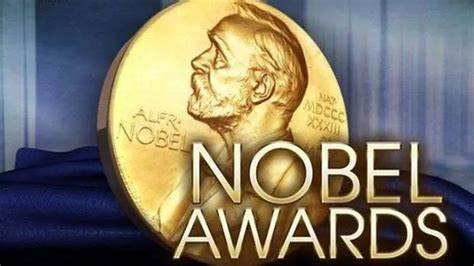
NOBEL PRIZE MEDICINE: Victor Ambros and Gary Ruvkun in 2024

BREAKING NEWS!

By Staff Reporters

***

***

STOCKHOLM (AP) — Two scientists won the Nobel Prize in physiology or medicine on Monday for their discovery of microRNA, tiny bits of genetic material that offer a way for scientists to control what’s happening in our cells and that could lead to new ways of detecting and treating diseases including cancer. The work by Americans Victor Ambros and Gary Ruvkun is “proving to be fundamentally important for how organisms develop and function,” according to a panel that awarded the prize in Stockholm.

NOBEL PRIZE: https://www.nobelprize.org/

Ambros and Ruvkun were initially interested in genes that control the timing of different genetic developments, ensuring that cell types develop at the right time. Their discovery ultimately “revealed a new dimension to gene regulation, essential for all complex life forms,” the panel said.

COMMENTS APPRECIATED

Thank You

***

***

USA HIRING: Up Full Force

By Staff Reporters
***

***

Markets: Stocks soared last week despite concerns about geopolitics after new government data showed companies were hiring in full force last month.

Some other highlights:

  • The unemployment rate fell 0.1 percentage point to 4.1%.
  • The underemployment rate (for people working part-time but who want to be working more and so-called “discouraged workers”) also dropped for the first time in about a year.
  • The biggest employment gains last month came from sectors like hospitality and construction, and hourly pay inched up about 0.4%, which if you zoom out, means wages are up 4% compared to a year ago.

Plus, August’s revised jobs report showed the US actually created 159,000 jobs, up from 142,000 initially reported last month.

CITE: https://www.r2library.com/Resource/Title/0826102549

But, one stock that didn’t take flight was Spirit Airlines, which sank to a record low.

COMMENTS APPRECIATED

Thank You

***

***

DAILY UPDATE: FluMist, Neural Data and the Jobs Report

MEDICAL EXECUTIVE-POST TODAY’S NEWSLETTER BRIEFING

***

Essays, Opinions and Curated News in Health Economics, Investing, Business, Management and Financial Planning for Physician Entrepreneurs and their Savvy Advisors and Consultants

Serving Almost One Million Doctors, Financial Advisors and Medical Management Consultants Daily

A Partner of the Institute of Medical Business Advisors , Inc.

http://www.MedicalBusinessAdvisors.com

SPONSORED BY: Marcinko & Associates, Inc.

***

http://www.MarcinkoAssociates.com

Daily Update Provided By Staff Reporters Since 2007.
How May We Serve You?
© Copyright Institute of Medical Business Advisors, Inc. All rights reserved. 2024

REFER A COLLEAGUE: MarcinkoAdvisors@msn.com

SPONSORSHIPS AVAILABLE: https://medicalexecutivepost.com/sponsors/

ADVERTISE ON THE ME-P: https://tinyurl.com/ytb5955z

Your Referral Count -0-


The FDA just approved FluMist from AstraZeneca for self- or caregiver administration for the prevention of influenza virus subtypes A and B.

Plus, August’s revised jobs report showed the US actually created 159,000 jobs, up from 142,000 initially reported last month.

People in CA will have explicit rights to their own “neural data”—covering anything a person thinks or physically/emotionally feels—which is designed to prevent companies from gathering and selling that type of personal info

COMMENTS APPRECIATED

PLEASE SUBSCRIBE: MarcinkoAdvisors@msn.com

Thank You

https://www.amazon.com/Comprehensive-Financial-Planning-Strategies-Advisors/dp/1482240289/ref=sr_1_1?ie=UTF8u0026amp;qid=1418580820u0026amp;sr=8-1u0026amp;keywords=david+marcinko

***

***

***

EDUCATIONAL TEXTBOOKS: https://tinyurl.com/4zdxuuwf

***

TOP 25: Financial Accounting Concepts for Medical Practice Management

Your Top 25 Most Urgent Questions Answered by iMBA, Inc.

http://www.MarcinkoAssociates.com

By Dr. David Edward Marcinko; MBA, MEd, CMP™

www.CertifiedMedicalPlanner.com

cmp-logoThe modern medical practice is both similar, and unlike, other businesses today. This disparity often adds to confusion for the private practitioner. And so, the experts at iMBA Inc, list the top 25 most urgent questions in practice financial management, asked by clients to date.

Assessment

Since inception in 2000, the Institute of Medical Business Advisors Inc., has become one of North America’s leading professional health consulting and valuation firms; and focused provider of textbooks, CDs, tools, templates, onsite and distance education for the health economics, administration and financial management policy space. As competition and litigation support activities increase and the cognitive demands of the global marketplace change, iMBA Inc is well positioned with offices in five states and Europe, to meet the needs of medical colleagues, related advisory clients and corporate customers today; and into the future.

Link: iMBA Inc Q and As

Website: www.MedicalBusinessAdvisors.com

biz-book1

Conclusion

And so, your thoughts and comments on this Medical Executive-Post are appreciated. Tell us what you think. Send in your own questions. Feel free to review our top-left column, and top-right sidebar materials, links, URLs and related websites, too. Then, be sure to subscribe to the ME-P. It is fast, free and secure.

Speaker: If you need a moderator or speaker for an upcoming event, Dr. David E. Marcinko; MBA – Publisher-in-Chief of the Executive-Post – is available for seminar or speaking engagements. Contact: MarcinkoAdvisors@msn.com

Subscribe Now: Did you like this Medical Executive-Post, or find it helpful, interesting and informative? Want to get the latest ME-Ps delivered to your email box each morning? Just subscribe using the link below. You can unsubscribe at any time. Security is assured.

Sponsors Welcomed

And, credible sponsors and like-minded advertisers are always welcomed.

***

***

***

TELECOMMUNICATIONS: The Infinite Game

By Vitaliy Katsenelson, CFA

***

CABLE COMPANIES
CHTR, just like Comcast, showed only a very slight decline in broadband customers in the last quarter. Most of the decline came from the US government removing subsidies for rural customers. Overall, the business is doing very well.

I want to remind you that broadband is not a secularly challenged business, but an advantaged business that we believe will resume growth soon. 

Cable companies continue to offer a great product on the market, which is actually improving in quality as I type this because they are upgrading their networks to be as fast as fiber. They should be done with their full network upgrade in a year or so.

Also, cable companies have shown that they are very good at attracting wireless customers from wireless carriers. (They have grown their wireless business by 25% in 2024). The more we analyzed this industry. the more bearish we became on AT&T and Verizon.

Though owning cable stocks has not been rewarding (I’m being very gentle to myself), the more research we’ve done into the industry, the more convinced we’ve become that once the dust settles, their market share will not decrease but likely increase. Fixed wireless has taken all the share it will take and will start donating share to cable companies as customers get frustrated with intermittency of the service and usage caps. 

The industry is moving towards the bundle – one bill for broadband and wireless (and maybe TV service, though that has been marginalized by streamers). It’s a lot easier for cable companies to add wireless customers than for wireless companies to add wired broadband customers. 

This point is paramount! 

It costs very little for a cable company to add a wireless subscriber, as 80-90% of a subscriber’s data is traveling on Wi-Fi (i.e., the cable network is already there). 

Meanwhile, the cost of building out broadband is pushing into uneconomical territory, for several reasons. First of all, all the low-hanging fruit has already been picked. It costs, let’s say, $50-100 thousand dollars to lay a mile of fiber, whether that covers one or a thousand homes. High-density areas already have cable or fiber service. With the latest upgrades the cable industry is doing, both their upload and download speeds are on par with fiber. Second, labor costs have gone up significantly over the last few years.

Verizon just announced buying Frontier Communications for $20 billion. Frontier has 2.2 million fiber subscribers. With this purchase, Verizon is paying $9,000 per fiber subscriber.

Let’s examine the economics of this transaction:

Frontier gets about $800 a year of revenues from these broadband customers (on a par with Charter and Comcast). Let’s say they achieve a 23% margin (Frontier is barely a profitable business, so I’m using Charter’s margins). Thus, each customer will generate $184 of profit for them. So Verizon is paying $9,000 for $184 of profit, and it will take Verizon 49 years to break even on this transaction. 

As you can see, these economics make no sense. Verizon and AT&T are horrible at capital allocation, and this deal is a sign of supreme desperation. The market has been slow to see what we see in Charter and Comcast, and this is always our goal – we want the market to agree with us, later. 

Our very conservative estimate of Charter’s 2028 free cash flow per share is $48-60. In this estimate we are assuming no customer growth in broadband and 2% price increases a year. At 13-15 times free cash flows, we get a price of around $630-900 in 2028. Charter is trading at about $320 as I write this. 

We really like Charter’s management. We heard an anecdote about Charter CEO Chris Winfrey that warmed our soul. A week after he became CEO, Charter announced a huge, multibillion-dollar upgrade for its broadband network. This news sent the stock down 15%. (I wrote about it; we thought it was a great idea.) Anyway, someone met Chris at a party and told him, “That’s the right move, but very gutsy.” Chris said, “We build the company for our grandchildren.” This is what we want to see from our CEOs. They’re willing to sacrifice short-term profitability to improve the business’s moat.

Often, the idea of “creating shareholder value” is misunderstood. Paying employees poorly, abusing suppliers, and trying to rip off your customers is not going to create long-term (key term) shareholder value. It may bring short-term profits and boost the stock price, but it shortens the company’s growth runway and erodes its moat.

I don’t want to get off topic, but I’ve been thinking a lot about this. We’ve spent a lot of time studying the aircraft industry; our focus was Airbus, and thus we spent a lot of time looking at Boeing.

Boeing, under previous management, focused on “shareholder value creation.” It cut costs, laid off a lot of workers, including many quality control folks. Its “shareholder value creation” didn’t stop there; it willingly lied to regulators and took shortcuts in safety. Specifically, Boeing made critical design changes to its 737 MAX aircraft without fully informing regulators or pilots, and pushed for reduced pilot training requirements to save costs. These decisions directly contributed to two fatal crashes in 2018 and 2019, resulting in 346 deaths and the worldwide grounding of the 737 MAX for nearly two years.

Did its management actions maximize shareholder value? Well, it depends on the time frame. It boosted short-term earnings and drove the stock price higher. It may have made its CEO rich beyond belief.

But.

Over a longer time frame, these decisions have destroyed shareholder value. People used to say, “If it’s not Boeing, I’m not going.” Today, I become slightly more religious when I board a Boeing plane. The company has incurred over $20 billion in direct costs related to the 737 MAX crisis, including compensation to airlines and families of crash victims, and increased production costs. 

This doesn’t account for the incalculable damage to Boeing’s reputation and loss of market share. It gave Airbus an opening to produce more planes and take market share, with Airbus surpassing Boeing in deliveries and orders in recent years, particularly in the crucial narrow-body market.

We want to own companies that aim to maximize long-term shareholder value by treating all their stakeholders fairly. We want our companies to play the infinite game. What does “fairly” mean in this context? I’ll borrow from US Supreme Court Justice Potter Stewart, who famously dodged defining pornography by saying, “I know it when I see it.”

Update: After I wrote the above, Charter proposed to buy Liberty through a merger. We don’t own Charter directly, but rather through Liberty Broadband, which holds a 25% stake in Charter. Liberty was trading at a significant discount (around 30%) to the value of its Charter shares. Liberty agreed, but at a higher price. Our estimate of Liberty’s net asset value is about $88. The shares are trading at $75 as of this writing (up from $60). If the deal goes through we’ll end up owning shares of Charter at a significant discount.

COMMENTS APPRECIATED

Thank You

***

***

The “WOOZLE EFFECT” is Not a GOOZLE!

Evidence by Citation

By Dr. David E. Marcinko MBA

Courtesy: www.CertifiedMedicalPlanner.org

“A reliable way to make people believe in falsehoods is frequent repetition, because familiarity is not easily distinguished from truth.”Daniel Kahneman

As I was watching with interest more [fake] news such as stories surrounding evidence by citations of Russian involvement in US elections and fake prices leading to some violent market gyrations as in Bitcoin and the Corona Virus Pandemic, and societal musings around the thematic of hoaxes … we decided to offer this theme.

Enter the WOOZLE

And so, the Woozle effect, also known as evidence by citation, or a woozle, occurs when frequent citation of previous publications that lack evidence misleads individuals, groups and the public into thinking or believing there is evidence, and non-facts become urban myths and factoids.

Not a GOOZLE: https://www.daredictionary.com/view/dare/ID_00024696

H INDEX: https://medicalexecutivepost.com/2014/11/07/understanding-the-scientific-publication-h-index/

GOOGLE SCHOLAR INDEX: Google Scholar Search

LINK: https://en.wikipedia.org/wiki/Woozle_effect

Assessment: Your thoughts are appreciated.

***

BUSINESS, FINANCE AND INSURANCE TEXTS FOR DOCTORS:

***

Product DetailsProduct DetailsProduct Details

THANK YOU

***

SMART PHONES: Not for All Financial Advisors or Doctors

DUMB PHONES ANYONE?

By Anonymous Reporter[s]

***

***

Allow us [me] to suggest the use of Android and iOS shortcuts that disable bio-metric unlocking on your cell phone.  

“If you use a bio-metric phone sensor [eye scan or fingerprint], you can be compelled to decrypt your device for law enforcement because a bio-metric is something you are,” lawyer Riana Pfefferkorn said in a 2019 talk at the Defcon security conference.

But, “If you use a pass-code to decrypt, typically, you can’t be compelled to unlock, because a pass-code is something that you know.” Her talk did not cover how claiming to have forgotten a pass-code would affect those issues. 

In either case, if your cell phone becomes in possession of federal investigators, you may faces the risk of them determining the unlock code through other means, like using such third-party tools as Cellebrite’s unlocking kits to defeat the phone’s security.

Stay Legal! Or simply invoked your Fifth Amendment right against self-incrimination; if needed. 

In conclusion: I [we] advise the awareness of cell phone privacy risks involved in having so much of your life stored on personal smart cell phone devices that you take almost everywhere. Stay Safe!

COMMENTS APPRECIATED

Thank You

***

***

DAILY UPDATE: PayPal, IRS, Flood Insurance and the US Hiring Pace as Stocks Roar Ahead

MEDICAL EXECUTIVE-POST TODAY’S NEWSLETTER BRIEFING

***

Essays, Opinions and Curated News in Health Economics, Investing, Business, Management and Financial Planning for Physician Entrepreneurs and their Savvy Advisors and Consultants

Serving Almost One Million Doctors, Financial Advisors and Medical Management Consultants Daily

A Partner of the Institute of Medical Business Advisors , Inc.

http://www.MedicalBusinessAdvisors.com

SPONSORED BY: Marcinko & Associates, Inc.

***

http://www.MarcinkoAssociates.com

Daily Update Provided By Staff Reporters Since 2007.
How May We Serve You?
© Copyright Institute of Medical Business Advisors, Inc. All rights reserved. 2024

REFER A COLLEAGUE: MarcinkoAdvisors@msn.com

SPONSORSHIPS AVAILABLE: https://medicalexecutivepost.com/sponsors/

ADVERTISE ON THE ME-P: https://tinyurl.com/ytb5955z

Your Referral Count -0-

PayPal completed its first transaction using its proprietary stablecoin to pay an invoice to Ernst & Young. It’s a milestone for the payments company’s advance into cryptocurrency.

The free IRS tax filing software, which was piloted in 12 states for the 2024 tax season, will be available in 24 states for 2025.

CITE: https://www.r2library.com/Resource

Stocks Up

  • Your loss is our gain: Shares of airline stocks popped on the news of Spirit’s problems. Delta Air Lines ascended 3.84%, United Airlines climbed 6.47%, and Frontier Group Holdings soared 16.43%.
  • Albemarle popped 8.25% on the rumor that mining behemoth Rio Tinto may try to make an acquisition of the lithium miner. Other potential takeover targets rose as well, including Arcadium (up 10%) and SQM (up 3%).
  • Abercrombie & Fitch rose 9.10% thanks to an upgrade from JP Morgan analysts, who are bullish about the fashion retailer’s recent momentum.
  • Ubisoft Entertainment skyrocketed 29.87% on the news that the video game maker’s parent company and founders are considering a buyout.

Stocks down

  • Rivian Automotive tumbled 3.15% after the EV startup cut its 2024 production forecast and missed on Q3 deliveries.
  • Homebuilder stocks sank on today’s strong jobs report, which propelled treasury yields higher, which means that mortgage rates aren’t getting any lower. D.R. Horton dropped 2.91%, Lennar fell 2.52%, and Toll Brothers lost 2.57%.
  • Transportation stocks fell thanks to an agreement between port owners and longshoremen to put the recent strike on pause. Moller-Maersk lost 5.37%, while Zim Integrated Shipping Services stumbled 12.55%.

CITE: https://tinyurl.com/2h47urt5

Here’s where the major stock benchmarks ended:

  • The S&P 500® index (SPX) climbed 51.13 points (0.9%) to 5,751.07 up 0.22% for the week;the Dow Jones Industrial Average® ($DJI) added 341.16 points (0.81%) to 42,352.75, up 0.09% for the week; and the NASDAQ Composite® ($COMP) rose 219.37 points (1.22%) to 18,137.85, up 0.1% for the week. 
  • The 10-year Treasury note yield (TNX) soared 13 basis points to 3.98%, finishing the week up 23 basis points. The 2-year yield rose 37 basis points this week.
  • The CBOE Volatility Index® (VIX)fell to 18.58 but remains elevated from last month’s lows, likely on geopolitical concerns.

CITE: https://tinyurl.com/tj8smmes

Only 2% of the homes hit by Hurricane Helene in Georgia, North Carolina, and South Carolina had a policy protecting them against catastrophic flooding, according to an analysis by Politico and E&E News.

The US Hiring Pace picked up strongly in September and the unemployment rate ticked down to 4.1%, signs the U.S. economy had continued momentum in a month the Federal Reserve delivered its first interest-rate cut in four years. U.S. employers added 254,000 jobs last month, the Labor Department said Friday.

COMMENTS APPRECIATED

PLEASE SUBSCRIBE: MarcinkoAdvisors@msn.com

Thank You

***

***

***

***

EDUCATIONAL TEXTBOOKS: https://tinyurl.com/4zdxuuwf

***

About the Phillips Curve

[By staff reporters]

An important concept in macroeconomics

When Federal Reserve officials meet to decide whether to raise interest rates again, one question will be front and center according to Neil Irwin?

***

[Rate of Change of Wages against Unemployment

United Kingdom 1913–1948 from Phillips (1958)]

***

Question: How much faith should be placed in a line on a graph first drawn by a New Zealand economist nearly six decades ago, based on data on wages and employment in Britain dating to the 1860s?

The 57-Year-Old Chart That Is Dividing the Fed

More:

Assessment

So, if you believe in the traditional Phillips curve, as some at the Fed do, inflation should be taking off any day now?

Conclusion

Your thoughts and comments on this ME-P are appreciated. Feel free to review our top-left column, and top-right sidebar materials, links, URLs and related websites, too. Then, subscribe to the ME-P. It is fast, free and secure.

Speaker: If you need a moderator or speaker for an upcoming event, Dr. David E. Marcinko; MBA – Publisher-in-Chief of the Medical Executive-Post – is available for seminar or speaking engagements. Contact: MarcinkoAdvisors@msn.com

OUR OTHER PRINT BOOKS AND RELATED INFORMATION SOURCES:

***

Comprehensive Financial Planning Strategies for Doctors and Advisors: Best Practices from Leading Consultants and Certified Medical Planners(TM)

***

J CURVE: The Economics Paradox

IN PRIVATE EQUITY AND MEDICINE

By Staff Reporters

***

***

PRIVATE EQUITY

In private equity, the J curve is used to illustrate the historical tendency of private equity funds to deliver negative returns in early years and investment gains in the outlying years as the portfolios of companies mature.

And, according to Wikipedia, in the early years of the fund, a number of factors contribute to negative returns including management fees, investment costs and under-performing investments that are identified early and written down. Over time the fund will begin to experience unrealized gains followed eventually by events in which gains are realized (e.g., IPOs, mergers and acquisitions, leveraged recapitalizations).

Historically, the J curve effect has been more pronounced in the US, where private equity firms tend to carry their investments at the lower of market value or investment cost and have been more aggressive in writing down investments than in writing up investments. As a result, the carrying value of any investment that is under performing will be written down but the carrying value of investments that are performing well tend to be recognized only when there is some kind of event that forces the PE to mark up the investment.

The steeper the positive part of the J curve, the quicker cash is returned to investors. A private equity firm that can make quick returns to investors provides investors with the opportunity to reinvest that cash elsewhere. Of course, with a tightening of credit markets, private equity firms have found it harder to sell businesses they previously invested in. Proceeds to investors have reduced. J curves have flattened dramatically. This leaves investors with less cash flow to invest elsewhere, such as in other private equity firms. The implications for private equity could well be severe. Being unable to sell businesses to generate proceeds and fees means some in the industry have predicted consolidation among private equity firms.

MEDICINE

In medicine, the “J curve” refers to a graph in which the x-axis measures either of two treatable symptoms (blood pressure or blood cholesterol level) while the y-axis measures the chance that a patient will develop cardiovascular disease (CVD). It is well known that high blood pressure or high cholesterol levels increase a patient’s risk.

Paradoxically, what is less well known is that plots of large populations against CVD mortality often take the shape of a J curve which indicates that patients with very low blood pressure and/or low cholesterol levels are also at increased risk.

CITE: https://www.r2library.com/Resource

COMMENTS APPRECIATED

Subscribe Today

***

***

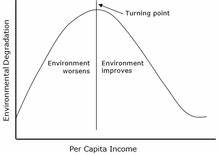
PODCAST: The Economic “KUZNETS” Curve

The “KUZNETS” Curve

Courtesy: www.CertifiedMedicalPlanner.org

In economics, a Kuznets curve (/ˈkʌznɛts/) graphs the hypothesis that as an economy develops, market forces first increase and then decrease economic inequality.

CITE: https://www.r2library.com/Resource

The hypothesis was first advanced by economist Simon Kuznets in the 1950s and 1960s.

PODCAST: https://www.bing.com/videos/search?q=Kuznets+Curve&view=detail&mid=A5D7EFB417EC37F3CDFEA5D7EFB417EC37F3CDFE&FORM=VIRE

Assessment: Your thoughts are appreciated.

BUSINESS, FINANCE AND INSURANCE TEXTS FOR DOCTORS:1

THANK YOU

Product DetailsProduct DetailsProduct Details

***

DAILY UPDATE: Costco Gold, US Dock Workers & OpenAI Funding as Stocks Close Lower

MEDICAL EXECUTIVE-POST TODAY’S NEWSLETTER BRIEFING

***

Essays, Opinions and Curated News in Health Economics, Investing, Business, Management and Financial Planning for Physician Entrepreneurs and their Savvy Advisors and Consultants

Serving Almost One Million Doctors, Financial Advisors and Medical Management Consultants Daily

A Partner of the Institute of Medical Business Advisors , Inc.

http://www.MedicalBusinessAdvisors.com

SPONSORED BY: Marcinko & Associates, Inc.

***

http://www.MarcinkoAssociates.com

Daily Update Provided By Staff Reporters Since 2007.
How May We Serve You?
© Copyright Institute of Medical Business Advisors, Inc. All rights reserved. 2024

REFER A COLLEAGUE: MarcinkoAdvisors@msn.com

SPONSORSHIPS AVAILABLE: https://medicalexecutivepost.com/sponsors/

ADVERTISE ON THE ME-P: https://tinyurl.com/ytb5955z

Your Referral Count -0-

Costco, which found success selling gold bars, will now sell platinum ones, too.

US dock workers agreed to return to work after port operators sweetened their contract offer, ending a three-day strike that threatened to disrupt the American economy. The breakthrough Thursday came after port employers offered a 62% increase in wages over six years, according to people familiar with the matter.

CITE: https://www.r2library.com/Resource

Stocks up

  • Nvidia gained 3.32% after CEO Jensen Huang said in an interview that demand for the company’s new Blackwell chips is “insane.”
  • EVgo soared 60.81% after the EV charging company received both a $1.05 billion loan from the Department of Energy and an upgrade from JP Morgan analysts.
  • Utility stocks soared in the third quarter thanks to higher electricity demand for AI, and it isn’t stopping anytime soon. Both Vistra Corp. and Constellation Energy surged 5.62% and 4.52%, respectively, on comments from Google CEO Sundar Pichai that the tech titan may utilize nuclear energy in the coming years.

Stocks down

  • Levi Strauss sank 7.69% after releasing subpar earnings, cutting its full-year sales forecast , and announcing it may sell its Dockers brand.
  • Tesla fell 3.35% after announcing a recall of over 27,000 Cybertrucks due to issues with their rearview camera.
  • Hims & Hers Health dropped 9.60% on the announcement that Eli Lilly’s weight-loss drugs are no longer on the FDA’s shortage list.
  • Joby Aviation tumbled 8.63%, giving up a portion of yesterday’s gains after the aviation startup received $500 million in additional funding from Toyota.
  • Stellantis, makers of Jeep, Dodge, and Chrysler vehicles, sank 4.11% to a new 52-week low today as a combination of terrible sales forecasts and a downgrade from Barclays analysts kicked the automaker while it’s already down.
  • Constellation Brands had strong beer sales but terrible wine and spirits sales last quarter, leading to a mixed earnings report that has shareholders worried about what the future holds. Shares sank 4.70%.

CITE: https://tinyurl.com/2h47urt5

Here’s where the major stock benchmarks ended:

  • The S&P 500® index (SPX)fell 10 points (–0.17%) to 5,699.96; the Dow Jones Industrial Average ($DJI) dropped 185 points (–0.44%) to 42,011.59; the  NASDAQ Composite® ($COMP) shed 7 points (–0.04%) to 17,918.48.
  • The 10-year Treasury note yield (TNX) added 7 basis points to 3.85%. 
  • The CBOE Volatility Index® (VIX) rose 1.7 points to 20.59.

CITE: https://tinyurl.com/tj8smmes

Microsoft, NVIDIA, and Apple were rumored to be among the investors to participate in OpenAI’s latest funding round, pushing its market cap well beyond $150 billion. However, Apple dropped out of the exercise at the eleventh hour for unclear reasons as OpenAI was about to close the funding round.

COMMENTS APPRECIATED

PLEASE SUBSCRIBE: MarcinkoAdvisors@msn.com

Thank You

***

***

***

***

EDUCATIONAL TEXTBOOKS: https://tinyurl.com/4zdxuuwf

***

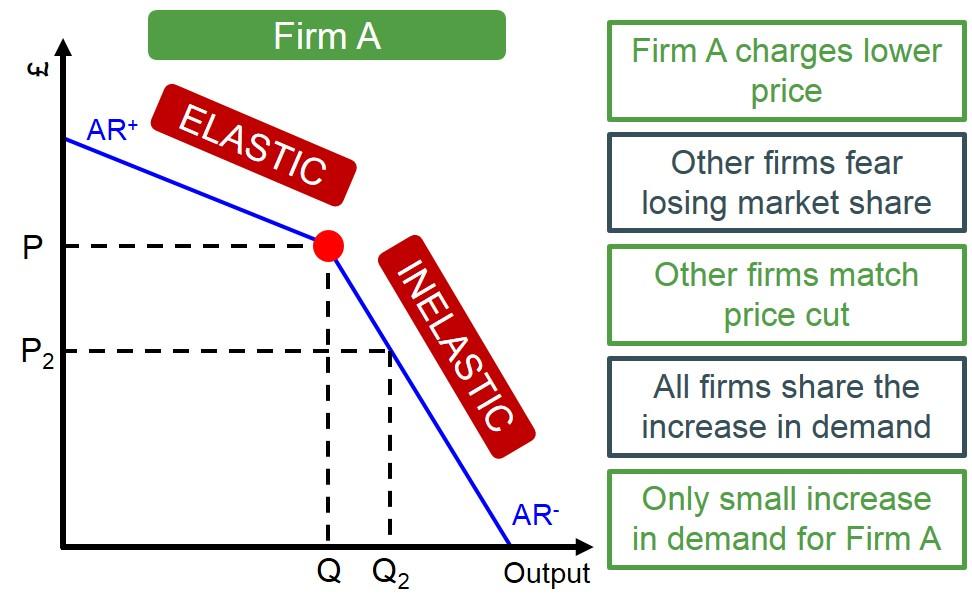
What is a “Kinked” Demand Curve?

Modified Supply-Demand

[By staff reporters]

The Kinked-Demand curve theory is an economic theory regarding oligopoly and monopolistic competition.

When it was created, the idea fundamentally challenged classical economic tenets such as efficient markets and rapidly changing prices, ideas that underlie basic supply and demand models.

Kinked demand was an initial attempt to explain sticky prices.

***
***
***
Assessment: Your thoughts are appreciated.
***
Risk Management, Liability Insurance, and Asset Protection Strategies for Doctors and Advisors: Best Practices from Leading Consultants and Certified Medical Planners™8Comprehensive Financial Planning Strategies for Doctors and Advisors: Best Practices from Leading Consultants and Certified Medical Planners™
***

Invite Dr. Marcinko

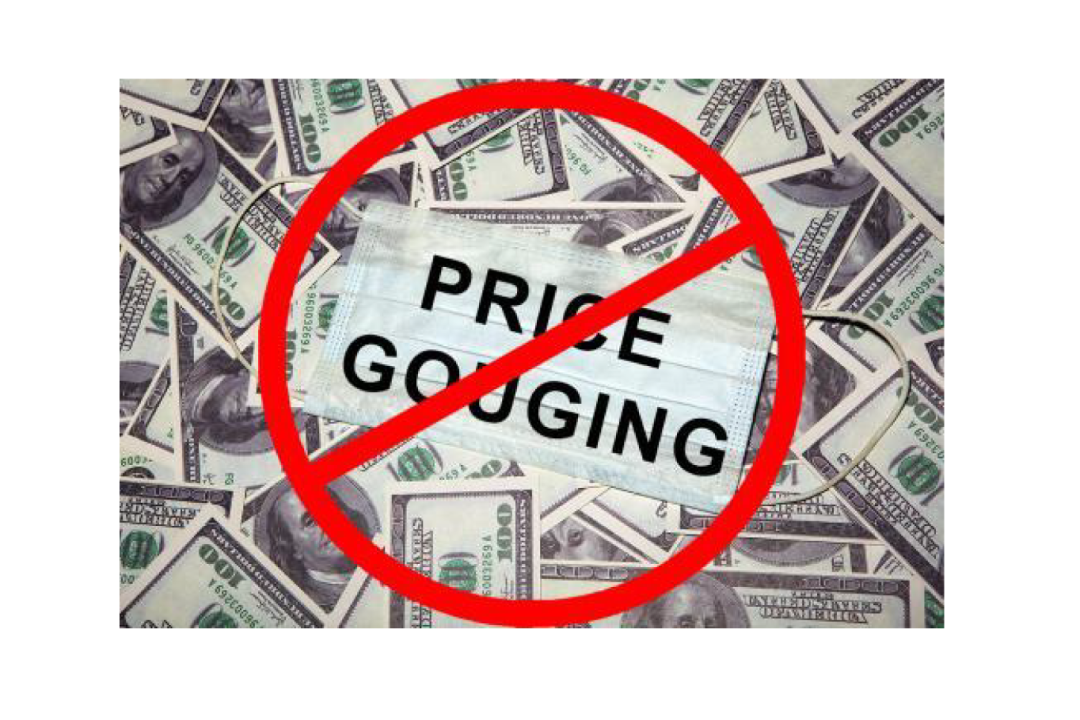
ECONOMICS: Price Gouging VS. Supply & Demand

NEBULOUS DEFINITIONS

By Staff Reporters

***

***

The simplest model of a market involves two things, supply and demand, and the price and quantity of the goods sold in the market are a function of both. When a natural disaster hits like Hurricane Helene, the immediate effect can be two-fold. In such situations, it is not unusual that the demand for certain products may increase. For example, if everyone is trying to leave the area, demand for gas may rise. The other effect is that supply for certain products may decrease. And, it may be more costly to transport gas in areas affected by a natural disaster, thus decreasing the supply of gas and in turn, increasing the price.

CITE: https://www.r2library.com/Resource

When supply decreases, the price of the good increases. And when demand increases, again the price of the good increases. So we would predict that the market price of gas, for example, would increase in areas recently affected by a hurricane. And in fact we do see this.

Price-gouging occurs when companies raise prices to unfair levels. There is no rule for what qualifies as price-gouging, but it is not an uncommon occurrence. For example in medicine, EpiPen costs is a current example of price increases that have been labeled unfair. 

Note: An epinephrine auto-injector (or adrenaline auto-injector, also known by the trade mark EpiPen) is a medical device for injecting a measured dose or doses of epinephrine (adrenaline) by means of auto-injector technology. It is most often used for the treatment of anaphylaxis. The first epinephrine auto-injector was brought to market in 1983.

Cite: https://tinyurl.com/55kmum86


COMMENTS APPRECIATED

Subscribe Today

***

***

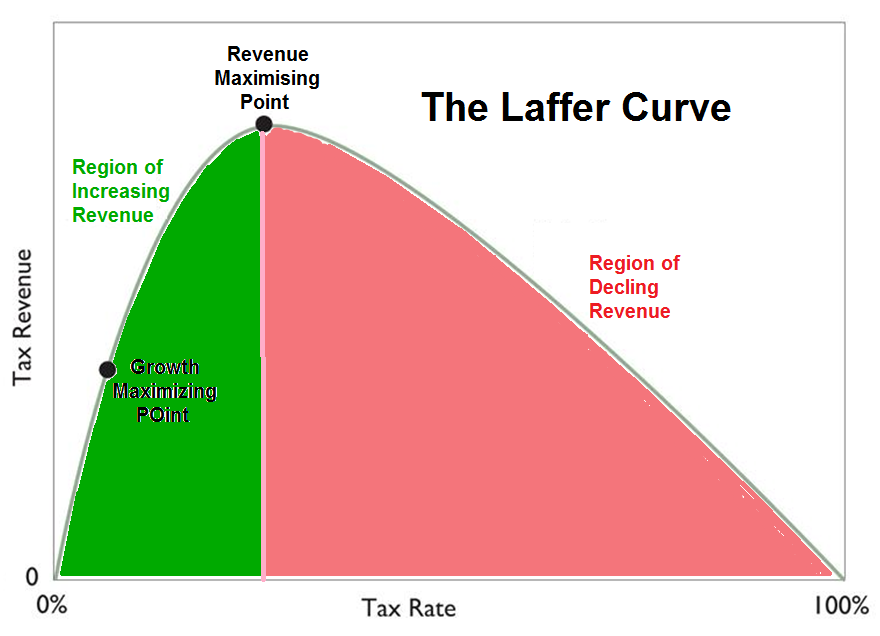
About the Laffer Curve

What it is – How it works
By staff reporters

DEFINITION:

In economics, the Laffer curve is a representation of the relationship between rates of taxation and the resulting levels of government revenue.

The Laffer curve claims to illustrate the concept of taxable income elasticity—i.e., taxable income will change in response to changes in the rate of taxation.

CITE: https://www.r2library.com/Resource/Title/082610254

***

***

HISTORY:

The Laffer Curve is a theory developed by supply-side economist Arthur Laffer to show the relationship between tax rates and the amount of tax revenue collected by governments.

The curve is used to illustrate Laffer’s main premise that the more an activity such as production is taxed, the less of it is generated. Likewise, the less an activity is taxed, the more of it is generated.

MORE: https://www.investopedia.com/terms/l/laffercurve.asp

Conclusion

Your thoughts and comments on this ME-P are appreciated. Feel free to review our top-left column, and top-right sidebar materials, links, URLs and related websites, too. Then, subscribe to the ME-P. It is fast, free and secure.

Speaker: If you need a moderator or speaker for an upcoming event, Dr. David E. Marcinko; MBA – Publisher-in-Chief of the Medical Executive-Post – is available for seminar or speaking engagements. https://medicalexecutivepost.com/dr-david-marcinkos-bookings/

Contact: MarcinkoAdvisors@msn.com

***

ORDER: https://www.crcpress.com/Comprehensive-Financial-Planning-Strategies-for-Doctors-and-Advisors-Best/Marcinko-Hetico/p/book/9781482240283

***

DAILY UPDATE: MSFT, J&J and CVS as Stock Markets Lag

MEDICAL EXECUTIVE-POST TODAY’S NEWSLETTER BRIEFING

***

Essays, Opinions and Curated News in Health Economics, Investing, Business, Management and Financial Planning for Physician Entrepreneurs and their Savvy Advisors and Consultants

Serving Almost One Million Doctors, Financial Advisors and Medical Management Consultants Daily

A Partner of the Institute of Medical Business Advisors , Inc.

http://www.MedicalBusinessAdvisors.com

SPONSORED BY: Marcinko & Associates, Inc.

***

http://www.MarcinkoAssociates.com

Daily Update Provided By Staff Reporters Since 2007.
How May We Serve You?
© Copyright Institute of Medical Business Advisors, Inc. All rights reserved. 2024

REFER A COLLEAGUE: MarcinkoAdvisors@msn.com

SPONSORSHIPS AVAILABLE: https://medicalexecutivepost.com/sponsors/

ADVERTISE ON THE ME-P: https://tinyurl.com/ytb5955z

Your Referral Count -0-

Rosh Hashanah, the Jewish New Year, begins tonight and ends on Friday. Shana Tova to those celebrating.

Microsoft overhauled its Copilot AI assistant, adding voice and vision capabilities to make it more personalized.


A new report from Deloitte reveals improving health equity could increase the country’s GDP by $2.8 trillion by 2040 and increase U.S.-based corporate profits by $763 billion.


And … Johnson & Johnson’s is not moving forward with implementation of its proposed rebate model after HRSA push-back.  

CITE: https://www.r2library.com/Resource

What’s up stocks

  • Caesars Entertainment popped 5.27% after it announced it will buy back $500 million in common shares while also offering $1 billion in senior notes to raise money.
  • Joby Aviation surged 27.92% on the news that Toyota will invest another $500 million in the aviation startup as it attempts to build a flying electric taxi.
  • Lamb Weston Holdings rose 2.62% thanks to a strong earnings report and a comprehensive restructuring plan for the french fry titan.
  • Novavax soared 19.16% following a glowing report from Jefferies analysts citing the pharma company’s strong vaccine sales.

What’s down stocks

  • Tesla sank 3.49% after revealing that auto deliveries for the third quarter came in lower than analysts expected.
  • Ford fell 2.51% for pretty much the same reason, reporting disappointing sales growth in the third quarter.
  • It’s never a good thing when a company pulls its guidance, and that was certainly true for Nike today. Shares dropped 6.77% after the company postponed its investor day and reported a 10% year over year decline in sales.
  • Nike’s report was so bad that shares of Foot Locker and Dick’s Sporting Goods fell 2.97% and 0.23%, respectively.
  • Humana plummeted 11.79% on the news that membership in its 4 star-rated Medicare Advantage plans plunged 94%.
  • Conagra Brands dropped 8.07% after the packaged food giant missed on both sales and earnings estimates last quarter.

CITE: https://tinyurl.com/2h47urt5

Here’s where the major benchmarks ended:

  • The S&P 500® index (SPX)was little changed at 5,709.54; the Dow Jones Industrial Average ($DJI) rose 39.55 points (0.09%) to 42,196.52; the NASDAQ Composite® ($COMP) gained 14.76 points (0.08%) to 17,925.12.
  • The 10-year Treasury note yield (TNX) added 5 basis points to 3.78%. 
  • The CBOE Volatility Index® (VIX) edged 0.4 points lower to 18.86.

CITE: https://tinyurl.com/tj8smmes

CVS is laying off nearly 3,000. The healthcare giant is conducting a strategic review as its stock has fallen more than 20% this year, the Wall Street Journal reported

COMMENTS APPRECIATED

PLEASE SUBSCRIBE: MarcinkoAdvisors@msn.com

Thank You

***

***

***

***

EDUCATIONAL TEXTBOOKS: https://tinyurl.com/4zdxuuwf

***

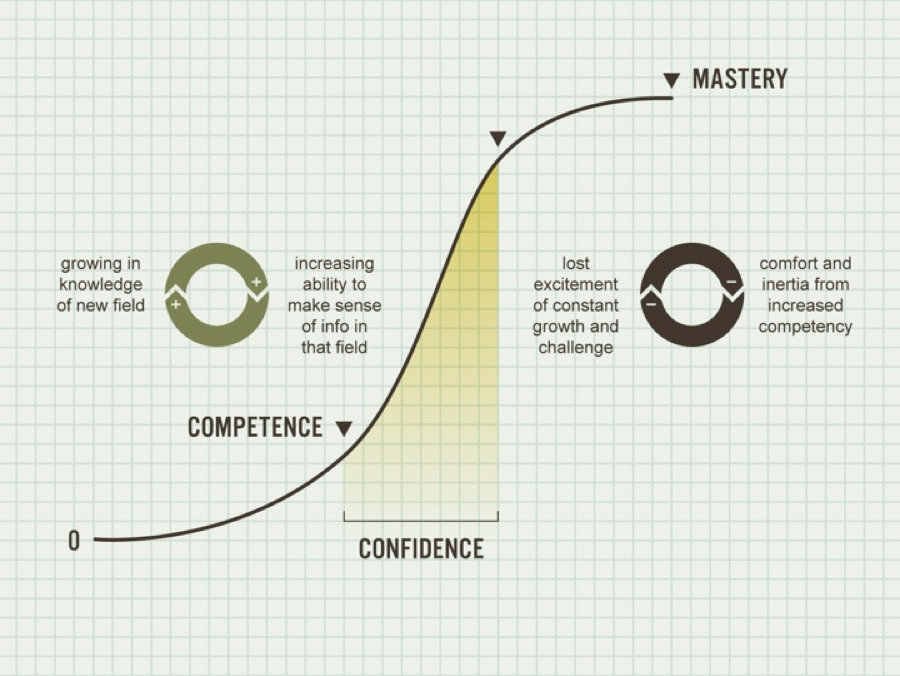
What is the “S” Logistics Chart Curve?

SIGMOID CURVE

By Staff Reporters

***

DEFINITION

The S curve refers to a chart that is used to describe, visualize, and predict the performance of a project or business overtime. More specifically, it is a logistic curve that plots the progress of a variable by relating it to another variable over time. 

CITE: https://www.r2library.com/Resource/Title/0826102549

The term S curve was developed as a result of the shape that the data takes. Projects on the S curve often experience a slow growth at the beginning, rapid growth in the middle, and slow growth and at the end. The maximum point of acceleration is called the point of inflexion. It is at this point that the project or business returns to the initial slow growth it started from. 

MATH PROOF: https://mathworld.wolfram.com/SigmoidFunction.html

***

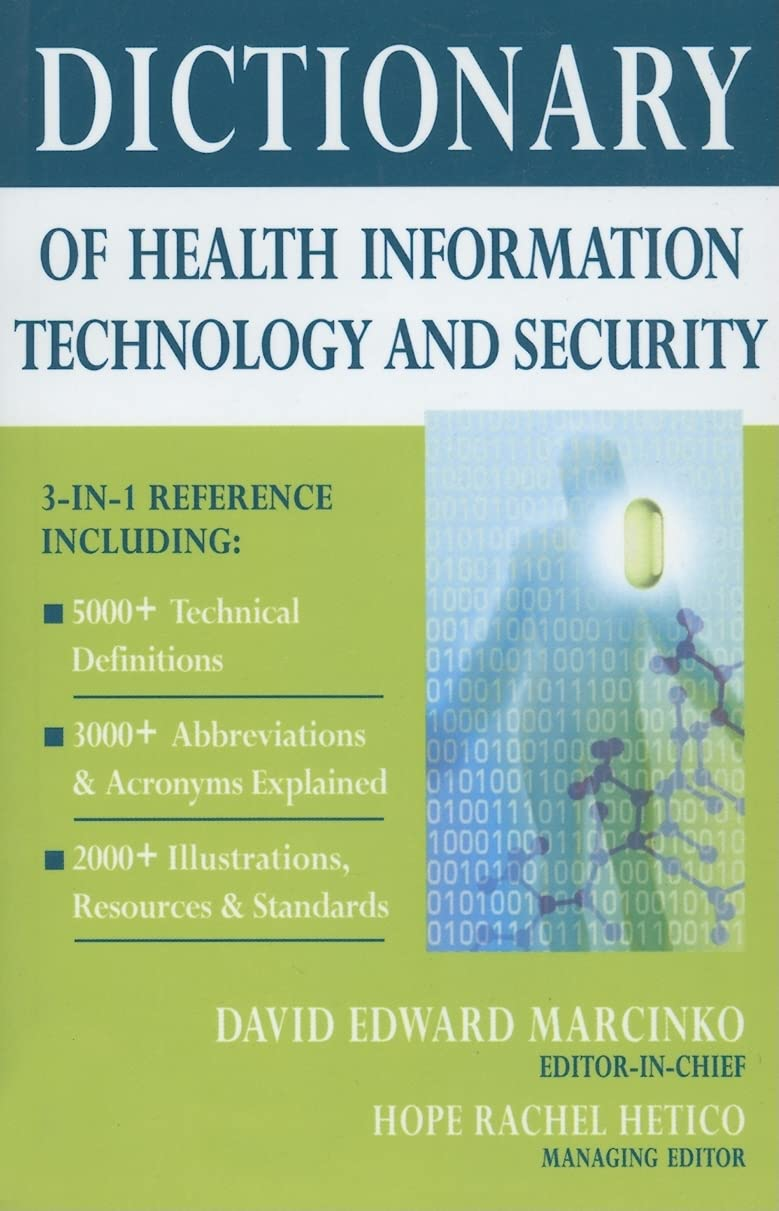
ORDER: https://www.amazon.com/Dictionary-Health-Information-Technology-Security/dp/0826149952/ref=sr_1_5?ie=UTF8&s=books&qid=1254413315&sr=1-5

***

COMMENTS APPRECIATED

Thank You

***

PODCAST: Health Insurance Company Subsidies

By Eric Bricker MD

COMMENTS APPRECIATED

***

https://www.amazon.com/Dictionary-Health-Insurance-Managed-Care/dp/0826149944/ref=sr_1_4?ie=UTF8&s=books&qid=1275315485&sr=1-4
***

California Passes Bill Regulating Private Equity Deals

By Health Capital Consultants, LLC

***

On August 31, 2024, the California legislature passed a bill that may curb private equity (PE) healthcare transactions in the state. The legislation is now on Governor Gavin Newsom’s desk for signature, who must sign or veto the bill by September 30, 2024. If signed into law, California will have the strictest regulation of PE deals of any state in the country.

CITE: https://www.r2library.com/Resource

This Health Capital Topics article discusses the new law and reviews the status of both state and federal regulation of PE. (Read more...)

COMMENTS APPRECIATED

Thank You

***

***

PODCAST: The Opioid Crisis Exposed By Mises Senior Fellow Dr. Mark Thornton

By Free Man Beyond the Wall

***

***

We welcomes Senior Mises Institute Fellow Dr. Mark Thornton to the show. Dr. Thornton recently gave a talk at the Mises Institute Supporters Summit on the opioid crisis that is plaguing the United States. Dr. Thornton lays out a short history of this tragic epidemic that is taking lives every day.

CITE: https://www.r2library.com/Resource/Title/0826102549

He addresses how doctors prescribe these drugs, how government regulates them and explains what happens when people are forced into the “black market” to sustain their addiction.

CITE: https://www.amazon.com/Dictionary-Health-Insurance-Managed-Care/dp/0826149944/ref=sr_1_4?ie=UTF8&s=books&qid=1275315485&sr=1-4

PODCAST HERE: https://freemanbeyondthewall.libsyn.com/episode-169-the-opioid-crisis

***

COMMENTS APPRECIATED

Thank You

***

DAILY UPDATE: Health Plan Costs Up and Stock Markets Upbeat

MEDICAL EXECUTIVE-POST TODAY’S NEWSLETTER BRIEFING

***

Essays, Opinions and Curated News in Health Economics, Investing, Business, Management and Financial Planning for Physician Entrepreneurs and their Savvy Advisors and Consultants

Serving Almost One Million Doctors, Financial Advisors and Medical Management Consultants Daily

A Partner of the Institute of Medical Business Advisors , Inc.

http://www.MedicalBusinessAdvisors.com

SPONSORED BY: Marcinko & Associates, Inc.

***

http://www.MarcinkoAssociates.com

Daily Update Provided By Staff Reporters Since 2007.
How May We Serve You?
© Copyright Institute of Medical Business Advisors, Inc. All rights reserved. 2024

REFER A COLLEAGUE: MarcinkoAdvisors@msn.com

SPONSORSHIPS AVAILABLE: https://medicalexecutivepost.com/sponsors/

ADVERTISE ON THE ME-P: https://tinyurl.com/ytb5955z

Your Referral Count -0-

Despite inflation cooling down, employer health plan costs are heating up, according to a September analysis from consulting firm consulting firm Mercer.

CITE: https://www.r2library.com/Resource

STOCKS UP

STOCKS DOWN

Stellantis, the European company behind Chrysler, Dodge, and Jeep sank 12.49% after it warned that sales in the second half of its fiscal year will come in lower than expected. The bad news pulled down shares of competitors Aston Martin (which fell 24.51%), Ford (a 2% drop), and GM (3.53% lower today).

  • Carnival beat top and bottom line estimates last quarter, and posted record revenue for the third quarter. But shares stumbled 0.32% on management’s forecast that earnings in the fourth quarter will disappoint. Rival cruise companies all dropped in sympathy: Royal Caribbean fell 0.10%, while Norwegian Cruise Line Holdings tumbled 2.10%.
  • Crypto stocks took a beating today after bitcoin’s latest rally fizzled out. Coinbase fell 6.83%, while MicroStrategy lost 4.32%.

CITE: https://tinyurl.com/2h47urt5

Here’s where the major stock market benchmarks ended:

  • The SPX gained 24.26 points (0.42%) to 5,762.48; the Dow Jones Industrial Average® ($DJI) rose 17.15 points (0.04%) to 42,330.15; the NASDAQ Composite® ($COMP) added 69.58 points (0.38%) to 18,189.17.
  • The 10-year Treasury note yield (TNX) climbed five basis points to 3.8%, near the high of its recent range.
  • The CBOE Volatility Index® (VIX) eased to 16.66 after climbing above 17 earlier today but remains up from a week ago.

CITE: https://tinyurl.com/tj8smmes

COMMENTS APPRECIATED

PLEASE SUBSCRIBE: MarcinkoAdvisors@msn.com

Thank You

***

***

***

***

EDUCATIONAL TEXTBOOKS: https://tinyurl.com/4zdxuuwf

***

Big Data and Health Economics: S.W.O.Ts.

By Brendan Collins

***

***

Read Here: https://medicalexecutivepost.com/wp-content/uploads/2019/01/big-data.pdf

CITE: https://www.r2library.com/Resource/Title/082610254

HIT: https://www.amazon.com/Dictionary-Health-Information-Technology-Security/dp/0826149952/ref=sr_1_5?ie=UTF8&s=books&qid=1254413315&sr=1-5

***

COMMENTS APPRECIATED

Thank You

***

MOOCs & MOODLES – Are You a Teaching and Educational Futurist?

On Massive Open Online Courses

By Dr. David Edward Marcinko MBA M.Ed

Courtesy: www.CertifiedMedicalPlanner.org

Today, colleges and universities are beginning to identify students who are adept at learning online and reward top achievers and professors. Employers, graduate and business schools are beginning to troll MOOCs [massive open online courses] seeking viable job, and academic, candidates.

Definition

A massive open online course ( MOOC / m uː k / ) is an online course aimed at unlimited participation and open access via the web.  In addition to traditional course materials such as filmed lectures, readings, and problem sets , many MOOCs provide interactive courses with user forums to support community interactions among students, professors, and teaching assistants (TAs) as well as immediate feedback to quick quizzes and assignments.

Dictionary: https://www.amazon.com/Dictionary-Health-Information-Technology-Security/dp/0826149952/ref=sr_1_5?ie=UTF8&s=books&qid=1254413315&sr=1-5

Update

In fact, when I last checked, the nation’s graduate, B-school and MBA students were enrolled in more than 118 online MBA/MPH/MSH healthcare administration programs. MOOCs offer greater access for a larger number of students, at significantly lower costs than on-site programs.

By the same token, technology like Blackboard®, Cengage, eXplorance, BANNER and Kalture must be used to full potential. Smart phones, PCs and tablets, videos, interactive games, A.I. simulators and apps with Skype®-like virtual classrooms and cloud storage are obvious embellishments to online initiatives.

***

***

Definition

A Moodle is a free and open-source learning management system written in PHP and distributed under the GNU General Public License. Developed on pedagogical principles, Moodle is used for blended learning, distance education, flipped classroom and other e-learning projects in schools, universities, workplaces and other sectors.

Note: PHP is a popular general-purpose scripting language that is especially suited to web development. Fast, flexible and pragmatic, PHP powers everything from your blog to the most popular websites in the world.

Dictionary: https://www.amazon.com/Dictionary-Health-Information-Technology-Security/dp/0826149952/ref=sr_1_5?ie=UTF8&s=books&qid=1254413315&sr=1-5

ASSESSMENT: Your thoughts are appreciated. Are you a didactic educational futurist? MOOCs or MOODLES anyone?

MORE BUSINESS, EDUCATION AND FINANCE FOR DOCTORS:

“Insurance & Risk Management Strategies for Doctors” https://tinyurl.com/ydx9kd93

“Fiduciary Financial Planning for Physicians” https://tinyurl.com/y7f5pnox

“Business of Medical Practice 2.0” https://tinyurl.com/yb3x6wr8

THANK YOU

Product DetailsProduct Details

Invite Dr. Marcinko

***

DAILY UPDATE: The Stock Markets and Meta

MEDICAL EXECUTIVE-POST TODAY’S NEWSLETTER BRIEFING

***

Essays, Opinions and Curated News in Health Economics, Investing, Business, Management and Financial Planning for Physician Entrepreneurs and their Savvy Advisors and Consultants

Serving Almost One Million Doctors, Financial Advisors and Medical Management Consultants Daily

A Partner of the Institute of Medical Business Advisors , Inc.

http://www.MedicalBusinessAdvisors.com

SPONSORED BY: Marcinko & Associates, Inc.

***

http://www.MarcinkoAssociates.com

Daily Update Provided By Staff Reporters Since 2007.
How May We Serve You?
© Copyright Institute of Medical Business Advisors, Inc. All rights reserved. 2024

REFER A COLLEAGUE: MarcinkoAdvisors@msn.com

SPONSORSHIPS AVAILABLE: https://medicalexecutivepost.com/sponsors/

ADVERTISE ON THE ME-P: https://tinyurl.com/ytb5955z

Your Referral Count -0-

CITE: https://www.r2library.com/Resource

  • Markets: It’s been a September to remember for the stock market after the S&P 500 and Dow Jones hit fresh highs last week. Thursday was the 42nd record-high close for the S&P 500 this year, and on Friday, the Dow notched its 32nd record-high close, per CNN Business. Recent data indicates that all the ingredients are coming together for a “soft landing”: The economy is staying strong while inflation has continued to fall. And more rate cuts are on their way.

CITE: https://tinyurl.com/2h47urt5

Stock spotlight: Meta’s rally this year has been fruitful for its CEO’s bank account. The net worth of Mark Zuckerberg, who owns a 13% stake in his company, climbed above $200 billion for the first time, per Bloomberg. He’s now the fourth-richest person in the world.

CITE: https://tinyurl.com/tj8smmes

COMMENTS APPRECIATED

PLEASE SUBSCRIBE: MarcinkoAdvisors@msn.com

Thank You

***

***

***

***

EDUCATIONAL TEXTBOOKS: https://tinyurl.com/4zdxuuwf

***

Hospital Operations Finally Rebound Post-COVID

By Health Capital Consultants, LLC

***

***

For the first time since the COVID-19 pandemic, hospitals are finally reporting sustained, improved financial and operational performance. To date in 2024, hospitals have seen better margins, increased patient utilization, and a more stabilized workforce. Another result of this improved performance has been an increase in hospital transactional activity.

CITE: https://www.r2library.com/Resource

This Health Capital Topics article reviews the hospital sector performance to date, factors driving this improvement, and the impact on hospital transactional activity. (Read more...) 

COMMENTS APPRECIATED

Thank You

***

***

BENEFICIARIES: Assigned to MSSP Accountable Care Organizations [ACOs]

Number of Beneficiaries Assigned to MSSP ACOs, 2012-2013 to 2022

By Charlene Ice

***

***

  1. 2012/2013: 3.2 million
  2. 2014: 4.9 million
  3. 2015: 7.3 million
  4. 2016: 7.7 million
  5. 2017: 9 million
  6. 2018: 10.5 million
  7. 2019: 10.4 million
  8. 2020: 11.2 million
  9. 2021: 10.7 million
  10. 2022: 11 million

Notes: “MSSP” denotes the Medicare Shared Savings Program
Source: Statista, June 20, 2022
Source URL: https://www.statista.com/statistics/1278948/number-of-benefi…

***

COMMENTS APPRECIATED

Thank You
***

DICTIONARY: https://www.amazon.com/Dictionary-Health-Insurance-Managed-Care/dp/0826149944/ref=sr_1_4?ie=UTF8&s=books&qid=1275315485&sr=1-4
***

DAILY UPDATE: Markets & Economy USA

By Staff Reporters

***

***

  • Markets: Wall Street life was looking good last week as all the major indexes clinched their third consecutive winning week. Stocks were a mixed bag for Friday, but the Dow Jones scored another record close. Bristol Myers Squibb rose after the FDA approved its schizophrenia drug as the first new treatment for the condition in decades.
  • Economy: The FOMC’s favorite inflation gauge came in lower than expected for last month, likely clearing the way for Jerome Powell and the Federal Reserve to keep cutting interest rates.

CITE: https://www.r2library.com/Resource

COMMENTS APPRECIATED

Thank You

***

***

When Medical Doctors are Entrepreneurs

***

By Michael Accad MD

***

In this article, I wish to introduce the reader to the theory of entrepreneurship advanced by Frank Knight (1885–1972), and show that the common, everyday work of the physician could be considered a form of entrepreneurial activity in the Knightian sense.

FRANK KNIGHT PhD: https://medicalexecutivepost.com/2019/06/12/what-is-knightian-uncertainty-in-economics/

***

READ: https://mises.org/library/when-medical-doctors-are-entrepreneurs

***

COMMENTS APPRECIATED

Thank You

Subscribe to the Medical Executive-Post

***

***

ADVICE: Financial, Investment or Medical Practice Management Second Fiduciary Opinions

***

MARCINKO & ASSOCIATES, Inc.

SPONSOR: http://www.MARCINKOASSOCIATES.com

Dr. David Edward Marcinko MBA MEd CMP®

Certified Medical Planner®

SPONSOR: http://www.CertifiedMedicalPlanner.org

CMP logo

***

FINANCIAL PLANNING

CAREER DEVELOPMENT

MEDICAL PRACTICE BUY IN / OUT

INVESTMENT ANALYSIS

PORTFOLIO MANAGEMENT

MERGERS AND ACQUISITIONS

PRACTICE APPRAISALS AND VALUATIONS

RETIREMENT PLANNING

FEE-ONLY

***

CONTACT: Ann Miller RN MHA

EMAIL: MarcinkoAdvisors@msn.com

***

On DISPOSABLE and Other “Next-Gen” Credit Cards

Touring with Marcinko | The Leading Business Education ...

BY DR. DAVID EDWARD MARCINKO MBA CMP®

CMP logo

SPONSOR: http://www.CertifiedMedicalPlanner.org

‘Chip & Pin’ Technology

Disposable credit cards are the newest innovation to help reduce fraud and assumed identity scams on e-commerce based websites. As with traditional credit cards, these cards are numbered, but used only once. Then, electronically they are erased so that there is nothing left in the merchant’s database for hackers to steal.

But, in 2014, Congress began looking at new ways to keep personal credit card information safe after several high-profile security breaches at some of America’s top retailers.

WHY? Current credit cards use easy to hack magnetic strip technology from the 1960s. Many consumers want more secure “pin & chip” cards which have been in use in Europe for years. Even though micro-chip technology costs billions to implement, merchants are moving in that direction as they issue new cards to consumers. Most modern polls show nearly half of all people surveyed are extremely concerned about the safety of their personal credit card information.

Burner Cards: Similar to a burner phone or “throwaway” social media account, burner credit cards are temporary, virtual credit cards that are not your “main” credit card. The bank or burner card app will give you a temporary number that links back to your main credit card which you can use for online purchases.

An ANonymous Credit Card provides an extreme degree of privacy and prevents the tracking of your expenses by a spouse, people with bad intentions or government monitoring agencies. It is important to realize that there are plenty of legitimate reasons for wanting to buy something discreetly through an Anonymous Credit Card.

Credit Card Mistakes to Avoid

No number has as far-reaching an impact on your money as your credit scores.

Here are some obstacles, physicians and all of us, should dodge on the road to financial security:

  • Don’t pay for a credit card repair service.
  • Don’t miss a payment.
  • Don’t max out your card.
  • Don’t take a cash-advance.
  • Don’t skip using your cards.
  • Don’t chase interest rates.
  • Don’t apply for several credit cards all at once.
  • Don’t co-sign a loan.
  • Don’t spread our car or mortgage payments.

Citation: https://www.r2library.com/Resource/Title/0826102549

Denied Credit

If you are denied a credit card, you have the right to obtain a credit report free from the agency which denied you. Your request must be made in writing and within thirty-sixty days. Consumer credit is governed by the Fair Credit Reporting Act (FCRA).  The regulations are issued by and enforced by the Federal Trade Commission. Certain states offer consumers additional rights.  Credit reporting agencies are referred to as a “consumer reporting agency”.

ASSESSMENT: Your thoughts are appreciated.

Comprehensive Financial Planning Strategies for Doctors and Advisors: Best Practices from Leading Consultants and Certified Medical Planners™

ORDER TEXTBOOK: https://www.routledge.com/Comprehensive-Financial-Planning-Strategies-for-Doctors-and-Advisors-Best/Marcinko-Hetico/p/book/9781482240283

INVITE DR. MARCINKO: https://medicalexecutivepost.com/dr-david-marcinkos-

THANK YOU

***

DAILY UPDATE: MyChart, Meta, Zelle and Acadia as the DJIA Rises

MEDICAL EXECUTIVE-POST TODAY’S NEWSLETTER BRIEFING

***

Essays, Opinions and Curated News in Health Economics, Investing, Business, Management and Financial Planning for Physician Entrepreneurs and their Savvy Advisors and Consultants

Serving Almost One Million Doctors, Financial Advisors and Medical Management Consultants Daily

A Partner of the Institute of Medical Business Advisors , Inc.

http://www.MedicalBusinessAdvisors.com

SPONSORED BY: Marcinko & Associates, Inc.

***

http://www.MarcinkoAssociates.com

Daily Update Provided By Staff Reporters Since 2007.
How May We Serve You?
© Copyright Institute of Medical Business Advisors, Inc. All rights reserved. 2024

REFER A COLLEAGUE: MarcinkoAdvisors@msn.com

SPONSORSHIPS AVAILABLE: https://medicalexecutivepost.com/sponsors/

ADVERTISE ON THE ME-P: https://tinyurl.com/ytb5955z

Your Referral Count -0-

Stat: 150. That’s how many health systems use AI to help draft replies on MyChart, sometimes without disclosing this to patients. (the New York Times)

Contained in a roughly 200-page quarterly filing from JPMorgan Chase last month were eight words that underscore how contentious the bank’s relationship with the government has become. The lender disclosed that the Consumer Financial Protection Bureau could punish JPMorgan for its role in Zelle, the giant peer-to-peer digital payments network. The bank is accused of failing to kick criminal accounts off its platform and failing to compensate some scam victims.

CITE: https://www.r2library.com/Resource

Stocks Up

Bristol-Myers Squibb rose 1.56% after the FDA approved its new drug for schizophrenia, the first new treatment of its kind in decades. Some analysts expect the drug, Cobenfy, to bring in $6 billion in peak annual revenue.

  • Trump Media gained 5.58% despite a co-founder of its Truth Social platform cashing out nearly all of his shares—worth about $100 million at current prices.
  • Chinese EV maker Nio added another 12.80% to bring its weekly gains to nearly 25%. It’s benefiting from the overall euphoria around Chinese stocks and anticipation over its quarterly delivery numbers due next week.
  • Speaking of the Chinese government’s stimulus measures, investors are wagering that the Macau locations of Las Vegas Sands Corp. (up 5.59%) and Wynn Resorts (up 7.24%) will see more visitors.
  • IonQ, a quantum computing company based in College Park, MD (go Terps), shot up 20.47% after inking a contract with the US Air Force Research Lab.

Stocks down

  • Nvidia dropped 2.17%. Bloomberg reported that the Chinese government is ramping up the pressure on local tech companies to move away from using Nvidia AI chips and lean more on domestic suppliers.
  • WeightWatchers, whose shares are down more than 90% this year, booted its CEO Sima Sistani, who pivoted the company to weight-loss drugs. Investors aren’t betting a change at the top will lead to a turnaround, sending shares 2.11% lower on the day.
  • Globe Life sank 4.74% after the US Equal Employment Opportunity Commission found that the life insurance company tolerated a “pervasive pattern of harassing conduct” at one of its top sales agencies, per Business Insider.

CITE: https://tinyurl.com/2h47urt5

Here’s where the major benchmarks ended:

  • The S&P 500® index (SPX) lost 7.20 points (–0.13%) to 5,738.17 to end the week up 0.62%; the Dow Jones Industrial Average® ($DJI) added 137.89 points (0.33%) to 42,313.00 to end the week up 0.59%; the NASDAQ Composite® ($COMP) fell 70.70 points (–0.39%) to 18,119.59 to end the week up 0.95%.
  • The 10-year Treasury note yield (TNX) fell four basis points to 3.75%, up two basis points for the week.
  • The CBOE Volatility Index® (VIX) jumped to 16.64.

CITE: https://tinyurl.com/tj8smmes

Meta is facing a fine of $102 million for storing some users’ passwords in “plaintext”. The social media giant has admitted to poor password management.

Acadia and the Department of Justice just reached a ~$20M agreement to settle accusations that the company billed Medicare, Medicaid, and TRICARE for medically unnecessary inpatient mental health services. Acadia found itself under pressure after a New York Times investigation published earlier in September allegedly found that the company kept patients in facilities against their will to maximize insurance payments.

COMMENTS APPRECIATED

PLEASE SUBSCRIBE: MarcinkoAdvisors@msn.com

Thank You

***

***

***

***

EDUCATIONAL TEXTBOOKS: https://tinyurl.com/4zdxuuwf

***

CMS: A New Primary Care Medicine Model

“MAKING CARE PRIMARY”

By Health Capital Consultants, LLC

***

***

CMS Announces New Primary Care Model

On June 8, 2023, the Centers for Medicare and Medicaid Services (CMS) announced the establishment of Making Care Primary (MCP) Model, a voluntary primary care model that will be tested in Colorado, Massachusetts, Minnesota, New Mexico, North Carolina, New York, New Jersey, and Washington.

Launched on July 1, 2024, the 10 ½ year model will seek to improve the coordination and management of care, enable primary care clinicians to form relationships with healthcare specialists, and form community-based connections to address the health needs of patients, as well as health-related social needs such as nutrition and housing.
CITE: https://www.r2library.com/Resource

This Health Capital Topics article will discuss the new MCP Model and its implications for the healthcare industry. (Read more...)

***

***

COMMENTS APPRECIATED

Thank You

***

TROPICAL STORM HELENE: And “Stonk” Stocks

BREAKING NEWS

By Staff Reporters

Tropical Storm Helene made landfall in Florida last night as a Category 4 hurricane, the strongest to ever hit the state’s Big Bend. It is a huge and powerful storm—with a wind field that could span the distance between tjhe State of Maryland/Washington, DC, and Indianapolis/Chicago—that has already caused historic flooding to some of Florida’s coastal communities.

How bad is it? The Waffle House Index, which has been used by FEMA as an indicator of a storm’s severity, closed all of its locations in Tallahassee, Florida. The Waffle House Index [WHI] is an informal metric named after the Waffle House restaurant chain, headquartered in Georgia, and used by the Federal Emergency Management Agency (FEMA) to determine the effect of a storm and the likely scale of assistance required for disaster recovery.

And, as of 8am EST, Helene has weakened to a Category 1 as it’s moved into Atlanta, Georgia. Nearly 2 million customers are without power across Florida, Georgia, and North/South Carolina. You can get real-time updates here, as we hope everyone in the region is staying safe.

***

Stock market yesterday: The S&P 500 clinched a fresh new record amid GDP data and micro chip stock gains.and Stonk Stocks. Stonk, a deliberate misspelling of stock (meaning “a share of the value of a company which can be bought, sold, or traded as an investment”), was coined in a 2017 meme. The word is often used humorously on the internet to imply a vague understanding of financial transactions or poor financial decisions.

Upbeat GDP data and new stimulus measures in China were largely to thank. One of the day’s big winners was Southwest Airlines, which soared after executives announced plans to revitalize the business.

COMMENTS APPRECIATED

Thank You

***

***
Designated a Doody’s Core Title!

To keep up with the ever-changing field of health care, we must learn new and re-learn old terminology in order to correctly apply it to practice. By bringing together the most up-to-date abbreviations, acronyms, definitions, and terms in the health care industry, the Dictionary offers a wealth of essential information that will help you understand the ever-changing policies and practices in health insurance and managed care today.

***

PODCAST: Patient Trust In Healthcare

By Eric Bricker MD

COMMENTS APPRECIATED

***

***

What is the “Butterfly” Effect?

What is it – How it works

[By Dr. David E. Marcinko MBA MEd and staff reporters]

The butterfly effect refers to a concept that small causes can have large effects. Initially, it was used with weather prediction but later the term became a metaphor used in and out of science.

***

[Copyright 2019 iMBA, Inc. All rights reserved. USA.]

***

The term, closely associated with the work of Edward Lorenz, is derived from the metaphorical example of the details of a tornado (the exact time of formation, the exact path taken) being influenced by minor perturbations such as the flapping of the wings of a distant butterfly several weeks earlier. Lorenz discovered the effect when he observed that runs of his weather model with initial condition data that was rounded in a seemingly inconsequential manner would fail to reproduce the results of runs with the unrounded initial condition data. A very small change in initial conditions had created a significantly different outcome.

NOTE: Edward Lorenz is not to be confused with the scientist Max Lorenz: https://medicalexecutivepost.com/2018/01/26/about-the-lorenz-curve/

In Chaos Theory

In chaos theory, the butterfly effect is the sensitive dependence on initial conditions in which a small change in one state of a deterministic nonlinear system can result in large differences in a later state.

In Psychology / Psychiatry

Although I first learned about the Butterfly Effect is high school physics class, I also later learned that it relates to psychological/psychiatry in medical school. It seems the effect serves as a metaphor for life in a chaotic world. Specifically, it suggests that small events can have very large psychological / psychiatric effects.

In Insurance and Risk Management

As a health economist, and  former financial advisor, I also know that the Butterfly Effect is related to the insurance and financial service industries; as weill as risk management theory in general.

***

Risk Management, Liability Insurance, and Asset Protection Strategies for Doctors and Advisors: Best Practices from Leading Consultants and Certified Medical Planners™

***

Assessment: Your thoughts are appreciated.

***

Invite Dr. Marcinko

***

DAILY UPDATE: State Farm & Berkshire Hathaway as ESG Retreats and Markets Rise

MEDICAL EXECUTIVE-POST TODAY’S NEWSLETTER BRIEFING

***

Essays, Opinions and Curated News in Health Economics, Investing, Business, Management and Financial Planning for Physician Entrepreneurs and their Savvy Advisors and Consultants

Serving Almost One Million Doctors, Financial Advisors and Medical Management Consultants Daily

A Partner of the Institute of Medical Business Advisors , Inc.

http://www.MedicalBusinessAdvisors.com

SPONSORED BY: Marcinko & Associates, Inc.

***

http://www.MarcinkoAssociates.com

Daily Update Provided By Staff Reporters Since 2007.
How May We Serve You?
© Copyright Institute of Medical Business Advisors, Inc. All rights reserved. 2024

REFER A COLLEAGUE: MarcinkoAdvisors@msn.com

SPONSORSHIPS AVAILABLE: https://medicalexecutivepost.com/sponsors/

ADVERTISE ON THE ME-P: https://tinyurl.com/ytb5955z

Your Referral Count -0-

Stat: Over 90%. That’s the percentage of the insurance industry’s uptick in fossil fuel securities investment coming from just two firms, State Farm and Berkshire Hathaway. (The Wall Street Journal)

CITE: https://www.r2library.com/Resource

Stocks up

  • Southwest Airlines ascended 5.42% after the company laid out its growth plans in an attempt to fend off an activist investor attack.
  • Starbucks climbed 1.93% thanks to an upgrade from Bernstein analysts who foresee a “grande comeback” for the coffee chain.
  • CarMax revved 5% higher after posting strong second-quarter earnings, beating both top and bottom line forecasts.
  • Jabil jumped 11.65% after the electronics parts manufacturer announced impressive earnings and revealed plans to cut costs.
  • Bilibili, which sounds like you’re trying to get your friend William’s attention, popped 15.44% after Goldman Sachs analysts upgraded the Chinese internet company.

Stocks down

  • Super Micro Computer plunged 12.17% on the news that the Department of Justice is launching a probe into the tech company, a few weeks after note short seller Hindenburg Research published a report alleging “accounting manipulation.”
  • Sonos, makers of your favorite subwoofer, sank 4.45% after a rare “double downgrade” by Morgan Stanley analysts, who demoted the stock from a positive “overweight” all the way to a negative “underweight.”
  • Oil stocks took a big hit today after Saudi Arabia announced it will increase its oil production next month. Diamondback Energy fell 6.46%, Shell dropped 3.91%, and ConocoPhillips lost 3.23%.

CITE: https://tinyurl.com/2h47urt5

Here’s where the major benchmarks ended:

  • The S&P 500® index (SPX) rose 23.11 points (0.40%) to 5,745.37; the Dow Jones Industrial Average® ($DJI) added 260.36 points (0.62%) to 42,175.11; the NASDAQ Composite® ($COMP) increased 108.08 points (0.60%) to 18,190.29.
  • The 10-year Treasury note yield (TNX) climbed one basis point to 3.79%.
  • The CBOE Volatility Index® (VIX) was steady at 15.57.

CITE: https://tinyurl.com/tj8smmes

A retreat from ESG is due to backlash from conservatives who are critical of the idea that fund managers should be considering any other factor but a company’s shareholders in their investment decisions. Accusations of “greenwashing” have also plagued many ESG funds, which is when an asset management firm charges higher fees for a specific thematic fund without actually delivering a unique investment strategy.

Visualize: How private equity tangled banks in a web of debt, from the Financial Times.

COMMENTS APPRECIATED

PLEASE SUBSCRIBE: MarcinkoAdvisors@msn.com

Thank You

***

***

***

***

EDUCATIONAL TEXTBOOKS: https://tinyurl.com/4zdxuuwf

***

Dr. Richard H. Thaler and Behavioral Economics

A behavioral scientist

By Rick Kahler MS CFP®

Human beings make most of our decisions—including financial ones—emotionally, not logically. Unfortunately, too much of the time, our emotions lead us into financial choices that aren’t good for our financial well-being. This is hardly news to financial planners or financial therapists. Nor is it a surprise to any parent who has ever struggled to teach kids how to manage money wisely.

Economic Model Assumptions

Yet many of the economic models and theories related to investing are based on assumptions that, when it comes to money, people act rationally and in their own best interests. There’s a wide gulf between the way economists assume people behave around money and the way people actually make money choices. This doesn’t encourage financial advisors to rely on what economists say about financial patterns, trends, and what to expect from markets or consumers.

2017 Nobel Prize in Economics

It’s significant, then, that the 2017 Nobel Prize in Economics went to Dr. Richard H. Thaler, professor of behavioral science and economics at the University of Chicago Booth School of Business. Dr. Thaler’s work has focused on the differences between logical economic assumptions and real-world human behavior. His research not only demonstrates that people behave emotionally when it comes to money; it also shows that in many ways our irrational economic behavior is predictable.

This predictability can help advisors and organizations find ways to encourage people to make financial decisions in their own better interest. The book Nudge, by Dr. Thaler and Cass R. Sunstein, describes some of those methods.

Example:

One example is making participation the default option for company retirement programs like 401(k)’s. Employees are free to opt out, of course, but they need to actively choose to do so.

A second example is the “Save More Tomorrow” plan, which offers employees the option of automatically increasing their savings whenever they receive raises in the future.

Both of these examples rely on a predictable behavior—human inertia. Most of us tend to postpone, ignore, or forget to take action even when that action would be good for us. So if a system is set up so not taking action leaves us with the choice that serves us better, we are “nudged” toward helping ourselves toward a healthier financial future.

Integration

As one of the pioneers in integrating the emotional aspect of money behavior into the practice of financial planning, I’ve long since come to understand that managing money is about much more than numbers. The world of investing may seem to be cold and calculating, but it’s actually driven by emotions. I’m familiar with the work of researchers who have demonstrated that some 90% of all financial decisions are made emotionally rather than logically.

I was pleased in 2002 when one of those researchers, psychologist Daniel Kahneman, won the Nobel prize in economics for his studies of human behavioral biases and systematic irrational behaviors. (That research was done jointly with psychologist Amos Tversky, who died in 1996.)

I’m even more pleased to see the economics Nobel prize go to a behavioral researcher for the second time. Maybe the realm of economics is beginning to integrate the untidy realities of human emotions into its theories. Eventually, this might lead to new economic models that take into account the emotions that shape people’s money decisions and the fact that money is one of the most emotionally charged aspects of our lives.

Assessment

Perhaps economists are beginning to appreciate the truth of the statement Dr. Thaler made at a news conference after his prize was announced. “In order to do good economics, you have to keep in mind that people are human.”

Conclusion

Your thoughts and comments on this ME-P are appreciated. Feel free to review our top-left column, and top-right sidebar materials, links, urls and related websites, too. Then, subscribe to the ME-P. It is fast, free and secure.

Speaker: If you need a moderator or speaker for an upcoming event, Dr. David E. Marcinko; MBA – Publisher-in-Chief of the Medical Executive-Post – is available for seminar or speaking engagements.

EDITOR

Contact: MarcinkoAdvisors@msn.com

Subscribe: MEDICAL EXECUTIVE POST for curated news, essays, opinions and analysis from the public health, economics, finance, marketing, I.T, business and policy management ecosystem.

***

MICRO-CERTIFICATIONS: Financial Advisors Seeking Physician-Client Niche Success?

Micro-Credentials on the Rise

KNOWLEDGE RICHES IN NICHES

DR. DAVID EDWARD MARCINKO MBA MEd CMP

SPONSOR: http://www.CertifiedMedicalPlanner.org

***

***

Do you ever wish you could acquire specific information for your career activities without having to complete a university Master’s Degree or finish our entire Certified Medical Planner™ professional designation program? Well, Micro-Certifications from the Institute of Medical Business Advisors, Inc., might be the answer. Read on to learn how our three Micro-Certifications offer new opportunities for professional growth in the medical practice, business management, health economics and financial planning, investing and advisory space for physicians, nurses and healthcare professionals.

Micro-Certification Basics

Stock-Brokers, Financial Advisors, Investment Advisors, Accountants, Consultants, Financial Analyists and Financial Planners need to enhance their knowledge skills to better serve the changing and challenging healthcare professional ecosystem. But, it can be difficult to learn and demonstrate mastery of these new skills to employers, clients, physicians or medical prospects. This makes professional advancement difficult. That’s where Micro-Certification and Micro-Credentialing enters the online educational space. It is the process of earning a Micro-Certification, which is like a mini-degree or mini-credential, in a very specific topical area.

Micro-Certification Requirements

Once you’ve completed all of the requirements for our Micro-Certification, you will be awarded proof that you’ve earned it. This might take the form of a paper or digital certificate, which may be a hard document or electronic image, transcript, file, or other official evidence that you’ve completed the necessary work.

Uses of Micro-Certifications

Micro-Certifications may be used to demonstrate to physicians prospective medical clients that you’ve mastered a certain knowledge set. Because of this, Micro-Certifications are useful for those financial service professionals seeking medical clients, employment or career advancement opportunities.

Examples of iMBA, Inc., Micro-Certifications

Here are the three most popular Micro-Certification course from the Institute of Medical Business Advisors, Inc:

  • 1. Health Insurance and Managed Care: To keep up with the ever-changing field of health care physician advice, you must learn new medical practice business models in order to attract and assist physicians and nurse clients. By bringing together the most up-to-date business and medical prctice models [Medicare, Medicaid, PP-ACA, POSs, EPOs, HMOs, PPOs, IPA’s, PPMCs, Accountable Care Organizations, Concierge Medicine, Value Based Care, Physician Pay-for-Performance Initiatives, Hospitalists, Retail and Whole-Sale Medicine, Health Savings Accounts and Medical Unions, etc], this iMBA Inc., Mini-Certification offers a wealth of essential information that will help you understand the ever-changing practices in the next generation of health insurance and managed medical care.
  • 2. Health Economics and Finance: Medical economics, finance, managerial and cost accounting is an integral component of the health care industrial complex. It is broad-based and covers many other industries: insurance, mathematics and statistics, public and population health, provider recruitment and retention, health policy, forecasting, aging and long-term care, and Venture Capital are all commingled arenas. It is essential knowledge that all financial services professionals seeking to serve in the healthcare advisory niche space should possess.
  • 3. Health Information Technology and Security: There is a myth that all physician focused financial advisors understand Health Information Technology [HIT]. In truth, it is often economically misused or financially misunderstood. Moreover, an emerging national HIT architecture often puts the financial advisor or financial planner in a position of maximum uncertainty and minimum productivity regarding issues like: Electronic Medical Records [EMRs] or Electronic Health Records [EHRs], mobile health, tele-health or tele-medicine, Artificial Intelligence [AI], benefits managers and human resource professionals.

Other Topics include: economics, finance, investing, marketing, advertising, sales, start-ups, business plan creation, financial planning and entrepreneurship, etc.

How to Start Learning and Earning Recognition for Your Knowledge

Now that you’re familiar with Micro-Credentialing, you might consider earning a Micro-Certification with us. We offer 3 official Micro-Certificates by completing a one month online course, with a live instructor consisting of twelve asynchronous lessons/online classes [3/wk X 4/weeks = 12 classes]. The earned official completion certificate can be used to demonstrate mastery of a specific skill set and shared with current or future employers, current clients or medical niche financial advisory prospects.

Mini-Certification Tuition, Books and Related Fees

The tuition for each Mini-Certification live online course is $1,250 with the purchase of one required dictionary handbook. Other additional guides, white-papers, videos, files and e-content are all supplied without charge. Alternative courses may be developed in the future subject to demand and may change without notice.

***

Contact: For more information, or to speak with an academic representative, please contact Ann Miller RN MHA CMP™ at: MarcinkoAdvisors@msn.com [24/7].

***

Selecting Financial Advisors the Risky Way

Physician Due Diligence is Important

[By Daniel B. Moisand; CFP®, and the ME-P Staff]Tall Shadows

While the merits of hiring the right financial advisor [FA] may be clear, hiring the wrong one can be devastating. Medical professionals still tend to have higher incomes and are an attractive target for most financial institutions and scam artists. This fear is a poor excuse for not getting the assistance necessary. Advice about who to engage for financial assistance comes from a hodge-podge of disjointed sources. This leads to good intentions and bad results. Take caution when using the following as sources of advice.

Relying on Family and Friends

By far more people seek financial advice from trusted family members and friends than any other source.  This is only natural. It is essential to trust that you are getting advice from a source that means well. It is also important that you get along well with your advisors. Hesitating to communicate with your advisor, even a great advisor, can cause problems even more problematic that getting bad advice from someone you like. While these sources have a good handle on the essential elements of trust and rapport, it is the competence of the advice that is most often the issue. The life and money experiences of those who are close to you certainly have value, but they are not necessarily relevant to your unique goals and circumstances. THINK: Bernie Madoff.

Media

A few years ago, the dominant media force in consumer oriented financial matters was the print media.  Magazines and newsletters proliferated with the bull market. More recently however, television has supplanted print even in the bear market. For example, a study now estimates that 80 percent of what the average American knows about current events comes from TV. Why wait three weeks for the next issue when you can get a commentary instantly on the television? There is nothing wrong with watching shows that cover the markets or subscribing to a consumer finance magazine. It is certainly a good idea to be informed. However, be wary of the quality and applicability of information put out by the media.

The Internet

It is easy to run across an ad for prescriptions drugs on television. Images prance across the screen followed by a litany of potential side effects and the obligatory, “Ask your doctor about”. With the expansion of the information superhighway, more and more companies are going direct to the consumer in some manner or another.

Financially speaking this information can be of great benefit but should also generate more concern. It is very easy to project a particular image via the web. The webmaster controls the interaction from what you see to what you hear. One of the results of this is that the Internet has already garnered a reputation as a breeding ground for new scams. More prevalent, however, is the presentation of information meant to be useful that is simply wrong, misinterpreted, or misapplied. The most terrifying source of misinformation on the net is the chat rooms. Here the entire interaction is clouded by anonymity. Some people enter chat rooms because there is a comfort in anonymity when asking a question. There is also a danger in an anonymous answer. When it comes to something as important as your finances or your health, the prudent course should be to take all the advice with a grain of salt. A great deal of consideration to the quality of the source is in order. It is also essential that one understand the level of accountability a source may possess.   fp-book2

Assessment

Much has been written on financial advisor selection, here on the ME-P and elsewhere; but little on how not to select an advisor. We trust this information will be of assistance to the medical professional in some small increment. Send in your FA stories; both good and bad.

Channel Surfing the ME-P

Have you visited our other topic channels? Established to facilitate idea exchange and link our community together, the value of these topics is dependent upon your input. Please take a minute to visit. And, to prevent that annoying spam, we ask that you register. It is fast, free and secure.

Conclusion

Your thoughts and comments on this ME-P are appreciated. Feel free to review our top-left column, and top-right sidebar materials, links, URLs and related websites, too. Then, subscribe to the ME-P. It is fast, free and secure.

Speaker: If you need a moderator or speaker for an upcoming event, Dr. David E. Marcinko; MBA – Publisher-in-Chief of the Medical Executive-Post – is available for seminar or speaking engagements. Contact: MarcinkoAdvisors@msn.com

OUR OTHER PRINT BOOKS AND RELATED INFORMATION SOURCES:

Product Details  Product Details

Comprehensive Financial Planning Strategies for Doctors and Advisors: Best Practices from Leading Consultants and Certified Medical Planners™

***

PODCAST: Suicide Financial Crisis Risk?

By Rick Kahler MS CFP

***

***

I lost over $450,000, I cannot pay the bank, I’ll become homeless. Suicide is the only way out.”

This desperate plea summarizes one of the top posts a few months ago on a Reddit forum for the cryptocurrency Terra Luna. Like other cryptocurrencies, it has recently lost more than 99% of its value.

Over the past five years I have written several columns and given a number of media interviews on the risks of speculating in cryptocurrencies. My most recent one generated a conversation with several of my financial planning peers about the recent crypto meltdown. One of them called my attention to the discussions about suicide on cryptocurrency forums, where some members were posting suicide prevention phone numbers.

READ HERE: https://kahlerfinancial.com/financial-awakenings/money-psychology/financial-crisis-and-the-risk-of-suicide

***

COMMENTS APPRECIATED

Thank You

***

ORDER: https://www.routledge.com/Comprehensive-Financial-Planning-Strategies-for-Doctors-and-Advisors-Best/Marcinko-Hetico/p/book/9781482240283

****

DAILY UPDATE: Visa, Coca-Cola, Cardinal & Advocate Health and Obesity as Markets Fall

MEDICAL EXECUTIVE-POST TODAY’S NEWSLETTER BRIEFING

***

Essays, Opinions and Curated News in Health Economics, Investing, Business, Management and Financial Planning for Physician Entrepreneurs and their Savvy Advisors and Consultants

Serving Almost One Million Doctors, Financial Advisors and Medical Management Consultants Daily

A Partner of the Institute of Medical Business Advisors , Inc.

http://www.MedicalBusinessAdvisors.com

SPONSORED BY: Marcinko & Associates, Inc.

***

http://www.MarcinkoAssociates.com

Daily Update Provided By Staff Reporters Since 2007.
How May We Serve You?
© Copyright Institute of Medical Business Advisors, Inc. All rights reserved. 2024

REFER A COLLEAGUE: MarcinkoAdvisors@msn.com

SPONSORSHIPS AVAILABLE: https://medicalexecutivepost.com/sponsors/

ADVERTISE ON THE ME-P: https://tinyurl.com/ytb5955z

Your Referral Count -0-

***

Cardinal Health has agreed in principle to acquire Integrated Oncology Network for more than $1.1 billion.


And … Advocate Health announced it will wipe clean more than 11,500 judgment liens on patients’ homes and real estate.

CITE: https://www.r2library.com/Resource

What’s up

  • Flutter Entertainment, parent company of betting app FanDuel, popped 5.06% after it revealed its impressive growth plans.
  • Hewlett Packard Enterprise rose 5.05% thanks to an upgrade from Barclays analysts who think that rising AI demand will increase the company’s server revenue.
  • Trump Media & Technology Group gained 10.48% after shareholders panicked that the end of its lockup period would mean big selling by insiders, fears that haven’t materialized.
  • Progress Software climbed 11.85% after a strong beat-and-raise earnings report.

What’s down

  • Southwest Airlines stumbled 4.57% after announcing it will cut service to and from Atlanta, a major hub for air travel, as it looks to save money ahead of a showdown with activist investor Elliott Investment Management.
  • Bank of America fell just 0.51% on the revelation that Warren Buffett can’t stop selling the stock.
  • KB Home sank 5.35% after the homebuilder beat revenue estimates but missed on earnings. It also issued a downbeat forecast for the rest of its fiscal year.
  • Global Payments dropped 6.37% thanks to a downgrade from BTIG analysts who were unimpressed by the payment provider’s near-term growth plans.

CITE: https://tinyurl.com/2h47urt5

  • The S&P 500® index (SPX) fell 10.68 points (–0.19%) to 5,722.25; the Dow Jones Industrial Average® ($DJI) dropped 293.47 points (–0.70%) to 41,914.75; the NASDAQ Composite® ($COMP) added 7.68 points (0.04%) to 18,082.21.
  • The 10-year Treasury note yield (TNX) climbed five basis points to 3.78% and seems stuck in a range between 3.7% and 3.8%.
  • The CBOE Volatility Index® (VIX) rose slightly to 15.51, still near its September lows.

CITE: https://tinyurl.com/tj8smmes

Coca-Cola pulled its new flavor, Spiced, from shelves after just six months because of dis-interest in it.

Visa was sued by the Justice Department for antitrust violations. The DOJ alleged in a complaint filed in Manhattan federal court that the payments giant is illegally monopolizing the debit card market by penalizing merchants who try to use alternatives, Bloomberg reported.

For the first time in more than a decade, the nationwide number of people with obesity hasn’t gone up, according to new CDC data showing that the condition appears in about 40% of US adults.

Visualize: How private equity tangled banks in a web of debt, from the Financial Times.

COMMENTS APPRECIATED

PLEASE SUBSCRIBE: MarcinkoAdvisors@msn.com

Thank You

***

***

***

***

EDUCATIONAL TEXTBOOKS: https://tinyurl.com/4zdxuuwf

***

What is Corporate “ENTERPRISE” Financial Value?

THE E.V. MATH FORMULA

CMP logo

By Dr. David E. Marcinko MBA MEd CMP®

SPONSOR: http://www.CertifiedMedicalPlanner.org

The enterprise value [EV] tends to be thought of as a theoretical takeover price if a company were to be bought. It is calculated as market capitalization plus debt, minority interest and preferred shares, minus total cash and cash equivalents.

CITE: https://www.r2library.com/Resource/Title/0826102549

Enterprise value = common equity at market value (this line item is also known as “market cap”) + debt at market value (here debt refers to interest-bearing liabilities, both long-term and short-term) + minority interest at market value, if any + preferred equity at market value + unfunded pension liabilities and other debt-deemed provisions – value of associate companies – cash and cash equivalents.

MORE: https://en.wikipedia.org/wiki/Enterprise_value

YOUR COMMENTS ARE APPRECIATED

FINANCE: https://www.amazon.com/Comprehensive-Financial-Planning-Strategies-Advisors/dp/1482240289/ref=sr_1_1?ie=UTF8&qid=1418580820&sr=8-1&keywords=david+marcinko

THANK YOU

***

HOSPITALS: https://www.amazon.com/Financial-Management-Strategies-Healthcare-Organizations/dp/1466558733/ref=sr_1_3?ie=UTF8&qid=1380743521&sr=8-3&keywords=david+marcinko

***

What is ABSOLUTE [Intrinsic] VALUE?

A MATH AND FINANCIAL-INVESTING TERM

***

By Dr. David E. Marcinko MBA MEd CMP®

CMP logo

SPONSOR: http://www.CertifiedMedicalPlanner.org

In mathematics, the absolute value or modulus of a real number x, denoted |x|, is the non-negative value of x without regard to its sign. Namely, |x| = x if x is positive, and |x| = −x if x is negative (in which case −x is positive), and |0| = 0. For example, the absolute value of 3 is 3, and the absolute value of −3 is also 3. The absolute value of a number may be thought of as its distance from zero.

***

In finance, absolute value, also known as an intrinsic value, refers to a business valuation method that uses discounted cash flow (DCF) analysis to determine a company’s financial worth. The absolute value method differs from the relative value models that examine what a company is worth compared to its competitors. Absolute value models try to determine a company’s intrinsic worth based on its projected cash flows.

CITE: https://www.r2library.com/Resource/Title/0826102549

In investing, the key issues are as follows:

  • Absolute value refers to a business valuation method that uses discounted cash flow analysis to determine a company’s financial worth.
  • Investors can determine if a stock is currently under or overvalued by comparing what a company’s share price should be given its absolute value to the stock’s current price.
  • There are some challenges with using the absolute value analysis including forecasting cash flows, predicting accurate growth rates, and evaluating appropriate discount rates.
  • Absolute value, unlike relative value, does not call for the comparison of companies in the same industry or sector.

YOUR COMMENTS ARE APPRECIATED

***

***

FINANCE: https://www.routledge.com/Comprehensive-Financial-Planning-Strategies-for-Doctors-and-Advisors-Best/Marcinko-Hetico/p/book/9781482240283

Thank You

******

HIDDEN RISKS: In “Religion” Stocks

By Vitaliy Katsenelson CFA

***

INTRODUCTION
STOCK MARKET FAITH

A basic property of religion is that the believer takes a leap of faith: to believe without expecting proof. Often you find this property of religion in other, unexpected places – for example, in the stock market. It takes a while for a company to develop a “religious” following: only a few high-quality, well-respected companies with long track records ever become worshiped by millions of investors.

My partner, Michael Conn, calls these “religion stocks.” The stock has to make a lot of shareholders happy for a long period of time to form this psychological link.

READ HERE: The Hidden Risk in “Religion” Stocks

COMMENTS APPRECIATED

Thank You

***

***

DAILY UPDATE: Exxon Mobil, Medicare Part C, Boeing and UniCredit as Stocks Rise

MEDICAL EXECUTIVE-POST TODAY’S NEWSLETTER BRIEFING

***

Essays, Opinions and Curated News in Health Economics, Investing, Business, Management and Financial Planning for Physician Entrepreneurs and their Savvy Advisors and Consultants

Serving Almost One Million Doctors, Financial Advisors and Medical Management Consultants Daily

A Partner of the Institute of Medical Business Advisors , Inc.

http://www.MedicalBusinessAdvisors.com

SPONSORED BY: Marcinko & Associates, Inc.

***

http://www.MarcinkoAssociates.com

Daily Update Provided By Staff Reporters Since 2007.
How May We Serve You?
© Copyright Institute of Medical Business Advisors, Inc. All rights reserved. 2024

REFER A COLLEAGUE: MarcinkoAdvisors@msn.com

SPONSORSHIPS AVAILABLE: https://medicalexecutivepost.com/sponsors/

ADVERTISE ON THE ME-P: https://tinyurl.com/ytb5955z

Your Referral Count -0-

California state officials filed a lawsuit against one of the world’s top oil giants accusing Exxon Mobil of driving global pollution by running a “decades-long campaign of deception” that dramatically overstated the effectiveness of plastic recycling. The suit seeks “multiple billions of dollars” in civil damages from Exxon Mobil—a main producer of the petrochemicals used to make single-use plastics—California Attorney General Rob Bonta said.

CITE: https://www.r2library.com/Resource

What’s up

  • Smartsheet popped 6.47% on the news that Blackstone and Vista Equity Partners will pay $8.4 billion in cash to take the software maker private.
  • Freeport-McMoRan gained 7.95% after the Chinese government announced stimulus plans. Shareholders are hopeful that more economic activity means more business for the copper miner.
  • Liberty Broadband soared 25.92% thanks to its counterproposal to Charter Communications, asking for a higher payout before an acquisition takes place. Charter shares fell 2.49%.
  • Thor Industries rose 6.18% after the RV company announced stronger-than-expected earnings.

What’s down

  • Visa fell 5.36% as the US government sued it over an alleged debit card monopoly.
  • Regeneron Pharmaceuticals dropped 4.21% due to a federal judge’s ruling that it cannot block a new product from rival pharma company Amgen that mimics its eye-care drug Eylea.

CITE: https://tinyurl.com/2h47urt5

Here’s where the major benchmarks ended:

  • The S&P 500® index (SPX) added 14.36 points (0.25%) to 5,732.93; the Dow Jones Industrial Average® ($DJI) rose 83.57 points (0.20%) to 42,208.22; the NASDAQ Composite® ($COMP) gained 100.25 points (0.56%) to 18,074.52.
  • The 10-year Treasury note yield (TNX) finished unchanged at 3.74%.
  • The CBOE Volatility Index® (VIX) keeps setting new lows for September, dropping to 15.49.

CITE: https://tinyurl.com/tj8smmes

Boeing offers 30% raise in attempt to end strike. With 30,000 factory workers on strike and 737 production halted for a second week, the embattled aviation company offered to hike wages for union members higher than the original 25% increase over four years they voted to reject.

Seniors could see large increases to their Medicare Advantage costs in 2025 as major changes are underway for prescription plans.

German Chancellor Olaf Scholz warned Italian bank UniCredit against “unfriendly” acts after the bank upped its stake in Germany’s Commerzbank, eclipsing the country as its largest shareholder.

COMMENTS APPRECIATED

PLEASE SUBSCRIBE: MarcinkoAdvisors@msn.com

Thank You

***

***

***

EDUCATIONAL TEXTBOOKS: https://tinyurl.com/4zdxuuwf

***