BOARD CERTIFICATION EXAM STUDY GUIDES Lower Extremity Trauma
[Click on Image to Enlarge]
ME-P Free Advertising Consultation
The “Medical Executive-Post” is about connecting doctors, health care executives and modern consulting advisors. It’s about free-enterprise, business, practice, policy, personal financial planning and wealth building capitalism. We have an attitude that’s independent, outspoken, intelligent and so Next-Gen; often edgy, usually controversial. And, our consultants “got fly”, just like U. Read it! Write it! Post it! “Medical Executive-Post”. Call or email us for your FREE advertising and sales consultation TODAY [678.779.8597] Email: MarcinkoAdvisors@outlook.com
Medical & Surgical e-Consent Forms
ePodiatryConsentForms.com
iMBA Inc., OFFICES
Suite #5901 Wilbanks Drive, Norcross, Georgia, 30092 USA [1.678.779.8597]. Our location is real and we are now virtually enabled to assist new long distance clients and out-of-town colleagues.
ME-P Publishing
SEEKING INDUSTRY INFO PARTNERS?
If you want the opportunity to work with leading health care industry insiders, innovators and watchers, the “ME-P” may be right for you? We are unbiased and operate at the nexus of theoretical and applied R&D. Collaborate with us and you’ll put your brand in front of a smart & tightly focused demographic; one at the forefront of our emerging healthcare free marketplace of informed and professional “movers and shakers.” Our Ad Rate Card is available upon request [678-779-8597].
Closed‑end mutual funds occupy a curious corner of the investment world. Once a more prominent vehicle for accessing professional management and diversified portfolios, they now sit in the shadow of open‑end mutual funds and exchange‑traded funds (ETFs). The question of whether closed‑end funds are past their prime is not just about performance; it’s about relevance in a market that has evolved dramatically. While they still offer unique advantages, the broader trends in investor behavior and financial innovation suggest that their golden era may indeed be behind them.
Closed‑end funds were originally designed to give investors access to a professionally managed pool of assets without the liquidity constraints that come from daily redemptions. Unlike open‑end mutual funds, which issue and redeem shares based on investor demand, closed‑end funds issue a fixed number of shares at launch. Those shares then trade on an exchange like a stock. This structure frees managers from having to hold large cash reserves to meet redemptions, allowing them to invest more fully in their chosen strategies. In theory, this should give closed‑end funds an edge, especially in less liquid markets such as municipal bonds or emerging‑market debt.
However, the very feature that once made closed‑end funds appealing—their fixed capital structure—has become a double‑edged sword. Because shares trade on the open market, their price often diverges from the value of the underlying assets. This leads to persistent discounts or premiums relative to net asset value. For some investors, discounts represent an opportunity; for others, they are a source of frustration. The discount phenomenon can make closed‑end funds feel unpredictable, especially compared to ETFs, which are designed to keep market prices closely aligned with underlying asset values.
The rise of ETFs is perhaps the strongest argument that closed‑end funds have lost their prime position. ETFs offer intraday liquidity, tax efficiency, low fees, and tight tracking of net asset value. They have become the default choice for many investors seeking diversified exposure. In contrast, closed‑end funds often carry higher expense ratios, and many use leverage to enhance returns—an approach that can magnify both gains and losses. In a market increasingly focused on transparency and cost efficiency, these characteristics can make closed‑end funds seem outdated.
Investor behavior has also shifted. Modern investors value simplicity, liquidity, and low fees. Robo‑advisors, model portfolios, and passive strategies have reinforced these preferences. Closed‑end funds, with their idiosyncratic pricing and sometimes opaque strategies, do not fit neatly into this landscape. Their complexity can be a barrier for newer investors who are accustomed to the straightforward nature of ETFs and index funds.
***
***
Yet it would be a mistake to dismiss closed‑end funds entirely. They continue to offer advantages that other vehicles cannot easily replicate. Their ability to use leverage, for example, can be attractive in certain market environments. Skilled managers can exploit inefficiencies in niche markets without worrying about redemptions forcing them to sell assets at inopportune times. Income‑focused investors, particularly those seeking municipal bond exposure, often find closed‑end funds appealing because they can deliver higher yields than comparable open‑end funds or ETFs.
Moreover, the discounts that plague closed‑end funds can also be a source of opportunity. Contrarian investors who are willing to tolerate volatility may find value in purchasing shares at a discount and waiting for market sentiment to shift. In some cases, activist investors have stepped in to push for changes that unlock value, such as tender offers or fund reorganizations. These dynamics create a unique ecosystem that continues to attract a dedicated, if smaller, group of investors.
Still, the broader trend is hard to ignore. The investment industry has moved toward vehicles that emphasize liquidity, transparency, and low cost. Closed‑end funds, by design, struggle to compete on these dimensions. Their niche strengths are not enough to offset the structural advantages of ETFs for most investors. As a result, while closed‑end funds remain relevant in certain corners of the market, they no longer occupy the central role they once did.
So, are closed‑end mutual funds past their prime? In many ways, yes. Their peak influence has faded as the industry has embraced more modern, flexible, and cost‑effective investment vehicles. But “past their prime” does not mean obsolete. Closed‑end funds continue to serve a purpose for investors who understand their quirks and are willing to navigate their complexities. They may no longer be the star of the show, but they still play a meaningful supporting role in the broader investment landscape.
SPEAKING: Dr. Marcinko will be speaking and lecturing, signing and opining, teaching and preaching, storming and performing at many locations throughout the USA this year! His tour of witty and serious pontifications may be scheduled on a planned or ad-hoc basis; for public or private meetings and gatherings; formally, informally, or over lunch or dinner. All medical societies, financial advisory firms or Broker-Dealers are encouraged to submit an RFP for speaking engagements: CONTACT: Ann Miller RN MHA at MarcinkoAdvisors@outlook.com -OR-http://www.MarcinkoAssociates.com
“THE INVESTOR’S CHIEF problem—even his worst enemy—is likely to be himself.” So wrote Benjamin Graham, the father of modern investment analysis.
With these words, written in 1949, Graham acknowledged the reality that investors are human. Though he had written an 800 page book on techniques to analyze stocks and bonds, Graham understood that investing is as much about human psychology as it is about numerical analysis.
In the decades since Graham’s passing, an entire field has emerged at the intersection of psychology and finance. Known as behavioral finance, its pioneers include Daniel Kahneman, Amos Tversky and Richard Thaler. Together, they and their peers have identified countless human foibles that interfere with our ability to make good financial decisions. These include hindsight bias, recency bias and overconfidence, among others. On my bookshelf, I have at least as many volumes on behavioral finance as I do on pure financial analysis, so I certainly put stock in these ideas.
At the same time, I think we’re being too hard on ourselves when we lay all of these biases at our feet. We shouldn’t conclude that we’re deficient because we’re so susceptible to biases. Rather, the problem is that finance isn’t a scientific field like math or physics. At best, it’s like chaos theory. Yes, there is some underlying logic, but it’s usually so hard to observe and understand that it might as well be random. The world of personal finance is bedeviled by paradoxes, so no individual—no matter how rational—can always make optimal decisions.
As we plan for our financial future, I think it’s helpful to be cognizant of these paradoxes. While there’s nothing we can do to control or change them, there is great value in being aware of them, so we can approach them with the right tools and the right mindset.
Here are just seven of the paradoxes that can bedevil financial decision-making:
There’s the paradox that all of the greatest fortunes—Carnegie, Rockefeller, Buffett, Gates—have been made by owning just one stock. And yet the best advice for individual investors is to do the opposite: to own broadly diversified index funds.
There’s the paradox that the stock market may appear overvalued and yet it could become even more overvalued before it eventually declines. And when it does decline, it may be to a level that is even higher than where it is today.
There’s the paradox that we make plans based on our understanding of the rules—and yet Congress can change the rules on us at any time, as it did just last year.
There’s the paradox that we base our plans on historical averages—average stock market returns, average interest rates, average inflation rates and so on—and yet we only lead one life, so none of us will experience the average.
There’s the paradox that we continue to be attracted to the prestige of high-cost colleges, even though a rational analysis that looks at return on investment tells us that lower-cost state schools are usually the better bet.
There’s the paradox that early retirement seems so appealing—and has even turned into a movement—and yet the reality of early retirement suggests that we might be better off staying at our desks.
There’s the paradox that retirees’ worst fear is outliving their money and yet few choose the financial product that is purpose-built to solve that problem: the single-premium immediate annuity.
How should you respond to these paradoxes? As you plan for your financial future, embrace the concept of “loosely held views.”
In other words, make financial plans, but continuously update your views, question your assumptions and rethink your priorities.
After a lifetime of hard work practicing medicine and saving, you’re at the retirement finish line. Instead of a paycheck, you’re relying on your nest egg and investment income to cover the bills. Picking the right investments is even more important, as you won’t have much chance to recover as a retired MD, DO, DPM or DDS.
“You made it to the top of the mountain through a systematic approach and are trying to make your way down safely,” says retirement planner John Gillet John Gillet in Hollywood, Fla. “Why throw all caution to the wind and try something different now?”
***
***
Definitions
An annuity is an insurance contract designed to grow your money and then repay it as income. There are different versions. An immediate annuity turns your lump sum into future guaranteed income payments, like your own personal pension. They are simple to understand with no or small fees.
Fixed annuities pay a guaranteed interest rate over a set period to grow your money, like 5% a year for five years. These options could make sense as part of a retirement plan.
A variable annuity, on the other hand, invests your savings in mutual funds. While you can buy riders that guarantee a minimum income, you’ll be paying very much for it. “All in, the annual fees can be 3% or more of your balance,” says Jeff Bailey, an advisor from Nashville. “That’s a huge withdrawal rate from your portfolio versus investing on your own.”
The variable annuity will lock up your money for years. If you cancel early, you owe a surrender charge that could start at 7% or more of your annuity balance before gradually going down as time goes by. “Clients believe they can walk away with their contract value, but that’s often not true,” says Bailey.
SPEAKING: Dr. Marcinko will be speaking and lecturing, signing and opining, teaching and preaching, storming and performing at many locations throughout the USA this year! His tour of witty and serious pontifications may be scheduled on a planned or ad-hoc basis; for public or private meetings and gatherings; formally, informally, or over lunch or dinner. All medical societies, financial advisory firms or Broker-Dealers are encouraged to submit an RFP for speaking engagements: CONTACT: Ann Miller RN MHA at MarcinkoAdvisors@outlook.com -OR-http://www.MarcinkoAssociates.com
Posted on August 26, 2025 by Dr. David Edward Marcinko MBA MEd CMP™
By Dr. David Edward Marcinko MBA MEd
***
***
Types of investments
Once a physician [MD, DO, DPM or DDS] has a brokerage account, the young doctior will need to decide what to invest in. There are lots of options, and each comes with different benefits and drawbacks. Here are some of the most common options for new physician investors.
Stocks are the first thing most people think about when they are considering investing, but they are not the only option. The prices of stocks change daily, sometimes by large amounts, as the market adjusts to news and various cycles. For that reason, it’s important to do your research. If you’re just beginning with a retirement account, you could also consider the longer-term products listed below.
Index funds and mutual funds.
Index funds attempt to replicate the performance of an un-managed market index. The performance of mutual funds [open and closed] varies. You can often get involved for a lower initial investment, and they can provide good diversification,which makes your portfolio better equipped to handle market fluctuations [active and passive].
For that reason, many financial experts say they should form the core of your retirement portfolio. While they have many similar characteristics, there are important differences. Read more about some of the differences in index funds and mutual funds.
These technically aren’t investment products; they are a contract between you and an insurance company. However, they work to accomplish a similar goal. There are immediate annuities that convert some of your existing savings into lifetime payments, but if we’re talking about saving for retirement, a deferred income annuity is the closest comparison. You make premium payments into the deferred annuity on a regular or irregular basis depending on the contract terms, and when you reach retirement age, you annuitize those savings and receive payments for the rest of your life. They can make a valuable addition to a retirement savings strategy.
Other investments.
There are many other types of investments and financial vehicles: bonds [local, state or US], money market funds, certificates of deposit through a brokerage account or investment apps. Even the cash value of life insurance can play a part. They are all designed to address different needs and have benefits and drawbacks and may be important to your overall strategy.
Crypto.com is a cryptocurrency company based in Singapore that offers various financial services, including an app, exchange, and noncustodial DeFi wallet, NFT marketplace, and direct payment service in cryptocurrency. As of 2024, the company reportedly had more than 100 million customers and more than 4,000 employees.
SPEAKING: Dr. Marcinko will be speaking and lecturing, signing and opining, teaching and preaching, storming and performing at many locations throughout the USA this year! His tour of witty and serious pontifications may be scheduled on a planned or ad-hoc basis; for public or private meetings and gatherings; formally, informally, or over lunch or dinner. All medical societies, financial advisory firms or Broker-Dealers are encouraged to submit an RFP for speaking engagements: CONTACT: Ann Miller RN MHA at MarcinkoAdvisors@outlook.com -OR-http://www.MarcinkoAssociates.com
Although many academics argue that value stocks outperform growth stocks, the returns for individuals investing through mutual funds demonstrate a near match.
Introduction
A 2005 study Do Investors Capture the Value Premium? written by Todd Houge at The University of Iowa and Tim Loughran at The University of Notre Dame found that large company mutual funds in both the value and growth styles returned just over 11 percent for the period of 1975 to 2002. This paper contradicted many studies that demonstrated owning value stocks offers better long-term performance than growth stocks.
The studies, led by Eugene Fama PhD and Kenneth French PhD, established the current consensus that the value style of investing does indeed offer a return premium. There are several theories as to why this has been the case, among the most persuasive being a series of behavioral arguments put forth by leading researchers. The studies suggest that the out performance of value stocks may result from investors’ tendency toward common behavioral traits, including the belief that the future will be similar to the past, overreaction to unexpected events, “herding” behavior which leads at times to overemphasis of a particular style or sector, overconfidence, and aversion to regret. All of these behaviors can cause price anomalies which create buying opportunities for value investors.
Another key ingredient argued for value out performance is lower business appraisals. Value stocks are plainly confined to a P/E range, whereas growth stocks have an upper limit that is infinite. When growth stocks reach a high plateau in regard to P/E ratios, the ensuing returns are generally much lower than the category average over time.
Moreover, growth stocks tend to lose more in bear markets. In the last two major bear markets, growth stocks fared far worse than value. From January 1973 until late 1974, large growth stocks lost 45 percent of their value, while large value stocks lost 26 percent. Similarly, from April 2000 to September 2002, large growth stocks lost 46 percent versus only 27 percent for large value stocks. These losses, academics insist, dramatically reduce the long-term investment returns of growth stocks.
***
***
However, the study by Houge and Loughran reasoned that although a premium may exist, investors have not been able to capture the excess return through mutual funds. The study also maintained that any potential value premium is generated outside the securities held by most mutual funds. Simply put, being growth or value had no material impact on a mutual fund’s performance.
Listed below in the table are the annualized returns and standard deviations for return data from January 1975 through December 2002.
Index Return SD
S&P 500 11.53% 14.88%
Large Growth Funds 11.30% 16.65%
Large Value Funds 11.41% 15.39%
Source: Hough/Loughran Study
The Hough/Loughran study also found that the returns by style also varied over time. From 1965-1983, a period widely known to favor the value style, large value funds averaged a 9.92 percent annual return, compared to 8.73 percent for large growth funds. This performance differential reverses over 1984-2001, as large growth funds generated a 14.1 percent average return compared to 12.9 percent for large value funds. Thus, one style can outperform in any time period.
However, although the long-term returns are nearly identical, large differences between value and growth returns happen over time. This is especially the case over the last ten years as growth and value have had extraordinary return differences – sometimes over 30 percentage points of under performance.
This table indicates the return differential between the value and growth styles since 1992.
YEARLY RETURNS OF GROWTH/VALUE STOCKS
Year
Growth
Value
1992
5.1%
10.5%
1993
1.7%
18.6%
1994
3.1%
-0.6%
1995
38.1%
37.1%
1996
24.0%
22.0%
1997
36.5%
30.6%
1998
42.2%
14.7%
1999
28.2%
3.2%
2000
-22.1%
6.1%
2001
-26.7%
7.1%
2002
-25.2%
-20.5%
2003
28.2%
27.7%
2004
6.3%
16.5%
2005
3.6%
6.1%
2006
10.8%
20.6%
2007
8.8%
1.5%
2008
-38.43%
-36.84%
2009
37.2%
19.69%
2010
16.71%
15.5%
2011
2.64%
0.39%
2012
15.25%
17.50%
Source: Ibbottson.
Between the third quarter of 1994 and the second quarter of 2000, the S&P Growth Index produced annualized total returns of 30 percent, versus only about 18 percent for the S&P Value Index. Since 2000, value has turned the tables and dramatically outperformed growth. Growth has only outperformed value in two of the past eight years. Since the two styles are successful at different times, combining them in one portfolio can create a buffer against dramatic swings, reducing volatility and the subsequent drag on returns.
Assessment
In our analysis, the surest way to maximize the benefits of style investing is to combine growth and value in a single portfolio, and maintain the proportions evenly in a 50/50 split through regular rebalancing. Research from Standard & Poor’s showed that since 1980, a 50/50 portfolio of value and growth stocks beats the market 75 percent of the time.
Conclusion
Due to the fact that both styles have near equal performance and either style can outperform for a significant time period, a medical professional might consider a blending of styles. Rather than attempt to second-guess the market by switching in and out of styles as they roll with the cycle, it might be prudent to maintain an equal balance your investment between the two.
SPEAKING: Dr. Marcinko will be speaking and lecturing, signing and opining, teaching and preaching, storming and performing at many locations throughout the USA this year! His tour of witty and serious pontifications may be scheduled on a planned or ad-hoc basis; for public or private meetings and gatherings; formally, informally, or over lunch or dinner. All medical societies, financial advisory firms or Broker-Dealers are encouraged to submit a RFP for speaking engagements: MarcinkoAdvisors@outlook.com
here are many ways for a doctor, osteopath, podiatrist or dentist to financially invest. Traditionally, this meant picking individual stocks and bonds. Today, there are many other ways to purchase securities en mass. For example:
MUTUAL FUND: A regulated investment company that manages a portfolio of securities for its shareholders.
Open End Mutual Funds: An investment company that invests money in accordance with specific objectives on behalf of investors. Fund assets expand or contract based on investment performance, new investments and redemptions. Trade at Net Asset Value or the price the fund shares scheduled with the US Securities and Exchange Commission (SEC) trade. NAV can change on a daily basis. Therefore, per-share NAV can, as well.
Closed End Mutual Funds: Older than open end mutual funds and more complex. A CEMF is an investment company that registers shares SEC regulations and is traded in securities markets at prices determined by investments. Shares of closed-end funds can be purchased and sold anytime during stock market hours. CEMF managers don’t need to maintain a cash reserve to redeem or / repurchase shares from investors. This can reduce performance drag that may otherwise be attributable to holding cash. CEMFs may be able to offer higher returns due to the heavier use of leverage [debt]. They are subject to volatility, less liquid than open-end funds, available only through brokers and may sells at a heavily discount or premium to [NAV] determined by subtracting its liabilities from its assets. The fund’s per-share NAV is then obtained by dividing NAV by the number of shares outstanding. .
Sector Mutual Funds: Sector funds are a type of mutual fund or Exchange-Traded Fund (ETF) that invests in a specific sector or industry such as technology, healthcare, energy, finance, consumer goods, or real estate. Sector funds focus on a particular industry, allowing investors to gain targeted exposure to specific market areas. The goal is to outperform the overall market by investing in companies within a specific sector that is expected to perform well. However, they are also more susceptible to market fluctuations and specific sector risks, making them a more specialized and potentially higher-risk investment option.
EXCHANGE TRADED FUNDS: ETFs are a type of fund that owns various kinds of securities, often of one type. For example, a stock ETF holds stocks, while a bond ETF holds bonds. One share of the ETF gives buyers ownership of all the stocks or bonds in the fund. If an ETF held 100 stocks, then those who owned the fund would own a stake – albeit a very tiny one – in each of those 100 stocks.
ETFs are typically passively managed, meaning that the fund usually holds a fixed number of securities based on a specific preset index of investments. These are tax efficient. In contrast, many mutual funds are actively managed, with professional investors trying to select the investments that will rise and fall.
The Standard & Poor’s 500 Index is perhaps the world’s best-known index, and it forms the basis of many ETFs. Other popular indexes include the Dow Jones Industrial Average and the National Association of Securities Dealers Automated Quotations [NASDAQ] Composite Index.
ETFs based on these funds are called Index Funds and just buy and hold whatever is in the index and make no active trading decisions. ETFs trade on a stock exchange during the day, unlike mutual funds that trade only after the market closes. With an ETF you can place a trade whenever the market is open and know exactly the price you’re paying for the fund.
INDEX FUNDS: Index funds mirror the performance of benchmarks like the DJIA. These passive investments are an unimaginative way to invest. Passive index funds tracking market benchmarks accounted for just 21% of the U.S. equity fund market in 2012. By 2024, passive index funds had grown to about half of all U.S. fund assets. This rise of passive funds has come as they often outperform their actively managed peers. According to the widely followed S&P Indices Versus Active (SPIVA) scorecards, about 9 out of 10 actively managed funds didn’t match the returns of the S&P 500 benchmark in the past 15 years.
ASSESSMENT
Investing in individual stocks is psychologically and academically different than investing in the above funds, according to psychiatrist and colleague Ken Shubin-Stein MD, MPH, MS, CFA who is a professor of finance at the Columbia University Graduate School of Business When you buy shares of a company, you are putting all your eggs in one basket. If the company does well, your investment will go up in value. If the company does poorly, your investment will go down. Fund diversification helps reduce this risk.
CONCLUSION
Investing in the above fund types will help mitigate single company security risk.
References:
1. Fenton, Charles, F: Non-Disclosure Agreements and Physician Restrictive Covenants. In, Marcinko, DE and Hetico, HR: Risk Management, Liability Insurance, and Asset Protection Strategies for Doctors and Advisors [Best Practices from Leading Consultants and Certified Medical Planners™]. Productivity Press, New York, 2015.
Readings:
1. Marcinko, DE and Hetico, HR; Comprehensive Financial Planning Strategies for Doctors and Advisors [Best Practices from Leading Consultants and Certified Medical Planners™] Productivity Press, New York, 2017
2. Marcinko, DE: Dictionary of Health Economics and Finance. Springer Publishing Company, NY 2006
4. Shubin-Stein, Kenneth: Unifying the Psychological and Financial Planning Divide [Holistic Life Planning, Behavioral Economics, Trading Addiction and the Art of Money]. Marcinko, DE and Hetico, HR; Comprehensive Financial Planning Strategies for Doctors and Advisors [Best Practices from Leading Consultants and Certified Medical Planners™] Productivity Press, New York, 2017
SPEAKING: Dr. Marcinko will be speaking and lecturing, signing and opining, teaching and preaching, storming and performing at many locations throughout the USA this year! His tour of witty and serious pontifications may be scheduled on a planned or ad-hoc basis; for public or private meetings and gatherings; formally, informally, or over lunch or dinner. All medical societies, financial advisory firms or Broker-Dealers are encouraged to submit a RFP for speaking engagements: MarcinkoAdvisors@outlook.com
Posted on June 12, 2025 by Dr. David Edward Marcinko MBA MEd CMP™
A Basic Overview for Emerging Physician and Medical Professional Investors
By Somnath Basu; PhD, MBA
There are three basic considerations in any investment decision.
1] The first is the understanding of the investment objective or why the investment is being made. While this may seem somewhat irrelevant at first – why would you be investing if you do not know what you are doing – combining investment objectives can pose problems down-stream.
For example, if you are saving for your retirement so that you can afford the retirement lifestyle you desire (the investment objective), your saving plan should not include any savings you are making for your children’s education (a separate investment objective). Compounding the two savings streams in one plan can very easily lead to one or both of the plans failing.
2] The second consideration is the time horizon of the investment. As a rough guide, investments that need to mature in the next 5-7 years can be considered as short term, 8-15 years as medium term and the rest as long term.
3] Finally, and probably the most important consideration of all is the importance you attach (priority) to achieving your investment objective; in other words, how safe and secure should your investments be. For example, if you are 70 years old and considering how you should invest your retirement funds so that your expenses are covered say for the next 25 years, you do not want a large margin of error in how your investments turn out; you can ill afford to be broke when you are older and hence you want your investments to be as secure as possible.
On the other hand, if the investment is for a second home or a boat, for example, you may wish to engage in some risk taking which may help in lowering your upfront investment needs. It is very important for any investor to clearly understand how much loss they can bear from any investment decision.
Decision Matrix
It is useful to express the investment framework described above as a simple decision matrix. Using the matrix (shown below) as a decision support system should clarify and simplify most investment decisions.
Understanding where in the matrix your decision falls is a very good first step of your decision. Both these elements (safety and time) will ultimately decide the kinds of financial instruments that will reside in your portfolio. We will examine the structure of each of the 9 possible combinations shown in the matrix. Before doing so, let us start by examining the various investment alternatives (e.g. stocks, bonds, etc.) since they have an implicit connection with the two dimensions portrayed in our matrix.
Stocks
Stocks are the most well known and popular form of financial investments. Stocks may be further segregated between large cap and small cap stocks, where the term “cap” is surrogate for the size of the underlying corporation or firm.
Stocks may represent investments in both domestic and international companies. Within the international category, stocks may represent corporations registered in developed (safer) or emerging (riskier) markets. In terms of our matrix dimensions, stocks are best suited when the decision is of medium or long term. In terms of safety, large cap (both domestic and international) stocks are the safest, while small cap and emerging market stocks are the most risky. The riskier the stock, the greater are the profit possibilities as are the chances of large losses.
Bonds
The second common type of investment are bonds Generally, bonds are much safer than stocks with the exception of a class of bonds known as high yield (or junk) bonds. Bonds are issued by companies, governments (domestic and international) and other agencies such as local governments (municipal bonds or “munis” which are especially desirable for those in high income tax rate categories) and quasi-government agencies such as Federal Home Loan Bank, Student Loan Administration, Agricultural Cooperative Banks, etc (collectively known as “Agency” bonds such as Ginnie/Fannie/Sallie Mae, Freddie Mac, etc.).
Government bonds are the safest, followed by agency and municipal bonds and then by bonds issues by corporations.
Corporate bonds may be safe (which are assigned credit safety ratings such as AAA, AA, BBB, etc.) or risky (junk bonds with ratings such as BB, CCC, CC etc.).
Bonds can be used for all time horizons, their maturities ranging from 3 months to 30 years. Very short term bond and bond like instruments (with maturities of one year or less) are known as money market securities which are generally safer than most other investments.
Alternate Investments
Other types of investments include real estate (long term, risky), commodities (such as energy, basic building materials, precious metals, etc.) which are also risky and which may be used for both short term and long term purposes and provide a good hedge (counter balance) in an inflationary environment, derivatives (options and futures) which are very risky and typically short term in nature. Derivatives are generally suggested for very sophisticated investors and are best left alone otherwise.
Risk Reduction
A very important feature about investments is that when various types of investments are bundled together in a portfolio, they help to reduce the risk of the investment decision without affecting the profits in a comparable way. This basic aspect of mixing various kinds of investments (stocks, bonds, etc) to reduce risk is known as diversification and it is a “must” for any investment portfolio. It is a “must” because this technique of risk reduction is generally costless (unless you are paying a financial advisor to do this for you) and it is very worthwhile. All other methods of risk reduction have cost implications.
Scenario Matrix
Armed with this nomenclature regarding various investment types we can now go about examining what the 9 combination (Scenario) portfolios may look like for investment purposes.
Starting with Scenario 1, if you wish to make a short term decision that is very important to you and needs to be very safe, investments should be made in very short term bonds (government or treasury bills)and other similar money market (short term, safe) securities. International short term bonds of developed countries may also be included. Such investment products are generally available through mutual funds or Exchange Traded Funds (or ETFs). ETFs are just like mutual funds except that they are usually cheaper, much easier to buy and sell and may provide tax deferral benefits.
If your investment falls in the Scenario 2 category, include agency/municipal bonds as well as some domestic and international (developed country) large cap stocks while for Scenario 3, smaller portions of small cap and emerging market stocks may be added proportionately while reducing some of the safer investments.
If your investment was a Scenario 4 type of investment, corporate large cap stocks (both domestic and international) could be added to agency or corporate (domestic and international) bonds. Before investing in stocks (in any Scenario) for this Scenario 4, a good question to ask is the following: how profitable were stock investments in the last 3-5 years? If the answer is “very profitable” then reduce the proportion of stocks as compared to bonds in the portfolio. If the last few years were not good, then it would be good to increase their comparable shares. The main reason for this “fine tuning” is that the fortunes of stocks (and many other types of investments) follow a cyclical pattern and the cycle is related to the general cycle of economic (GDP) growth and contraction.
It can be seen now how Scenarios 5 and 6 (as also 8 and 9) will follow a similar pattern as before, increasing proportionally in stocks (of all sizes, domestic/international), real estate, commodities, etc. Portfolios falling in these groups may also include some small cap and emerging market stocks as well as high yield or junk bonds. The proportion of these riskier investments would of course be higher for Scenario 6 over Scenario 5 (and Scenario 9 over 8).
For Scenario 7, the investment portfolio would typically resemble one that would be like an opposite of the portfolio in Scenario 1 and would include a greater proportion of large cap (domestic/international) stocks and a much smaller proportion of bonds. As we move towards Scenarios 8 and 9, the portfolios would be dominated by small cap and emerging market stocks as well as junk bonds.
Assessment
In the discussion above, I have tried to generalize the investment decision in a simplifying way. While the discussion may have centered more on stocks and bonds, it is important to note that all portfolios must “diversify” the investment risks by expanding upon the various types of investment products contained in the portfolios. The very fact that a portfolio contains various types of investments will ensure that the portfolio will perform better than those which are not as well diversified. This will be so in spite of any one of the investment types underperforming at any point in time and the diversification benefit will be received consistently over long periods of time. A popular analogy to this diversification benefit is the common phrase of not putting all eggs in one basket.
Editor’s Note: Somnath Basu PhD is program director of the California Institute of Finance in the School of Business at California Lutheran University where he’s also a professor of finance. He can be reached at (805) 493 3980 or basu@callutheran.edu
Conclusion
The above approach to investment decision-making can be considered as a basic template that can be used universally. For those seeking greater sophistication and who have a foundation built on the above model, expert advice is strongly recommended.
And so, your thoughts and comments on this ME-P are appreciated. Financial advisors please chime in on the debate? Is Basu correct; why or why not? Review our top-left column, and top-right sidebar materials, links, URLs and related websites, too. Then, be sure to subscribe to the ME-P. It is fast, free and secure.
Speaker: If you need a moderator or speaker for an upcoming event, Dr. David E. Marcinko; MBA – Publisher-in-Chief of the Medical Executive-Post – is available for seminar or speaking engagements. Contact: MarcinkoAdvisors@outlook.com
Subscribe Now: Did you like this Medical Executive-Post, or find it helpful, interesting and informative? Want to get the latest ME-Ps delivered to your email box each morning? Just subscribe using the link below. You can unsubscribe at any time. Security is assured.
Sponsors Welcomed
And, credible sponsors and like-minded advertisers are always welcomed.
FIVE INVESTING MISTAKES OF DOCTORS; PLUS 1 VITAL TIP
As a former US Securities and Exchange Commission [SEC] Registered Investment Advisor [RIA] and business school professor of economics and finance, I’ve seen many mistakes that doctors must be aware of, and most importantly, avoid. So, here are the top 5 investing mistakes along with suggested guideline solutions.
Mistake 1: Failing to Diversify Investment but Beware Di-Worsification
A single investment may become a large portion of your portfolio as a result of solid returns lulling you into a false sense of security. The Magnificent Seven stocks are a current example:
Apple, up +5,064%% since 1/18/2008
Amazon, up +30,328% since 9/6/2002
Alphabet, up +1,200% since 7/20/2012
Tesla, up +21,713% since 11/16/2012
Meta, up +684% since 2/20/2015
Microsoft, up +22% since 12/21/2023
Nvidia, up +80,797% since 4/15/2005
Guideline: The Magnificent Seven [7] has grown from 9% of the S&P 500 at the end of 2013 to 31% at the end of 2024! That means even if you don’t own them, you’re still very exposed if you have an Index Fund [IF] or Exchange Traded Fund [ETF] that tracks the market. Accordingly, diversification is the only free lunch in investing which can reduce portfolio risk. But, remember the Wall Street insider aphorism that states: “Di-Versification Means Always Having to Say Your Sorry.”
The term “Di-Worsification” was coined by legendary investor Peter Lynch in his book, One Up On Wall Street to refer to over-diversifying an investment portfolio in such a way that it reduces your overall risk-return characteristics. In other words, the potential return rises with an increase in risk and invested money can render higher profits only if willing to accept a higher possibility of losses [1].
A podiatrist can easily fall into the trap of chasing securities or mutual funds showing the highest return. It is almost an article of faith that they should only purchase mutual funds sporting the best recent performance. But in fact, it may actually pay to shun mutual funds with strong recent performance. Unfortunately, many struggle to appreciate the benefits of their investment strategy because in jaunty markets, people tend to run after strong performance and purchase last year’s winners.
Similarly, in a market downturn, investors tend to move to lower-risk investment options, which can lead to missed opportunities during subsequent market recoveries. The extent of underperformance by individual investors has often been the most awful during bear markets. Academic studies have consistently shown that the returns achieved by the typical stock or bond fund investors have lagged substantially.
Guideline: Understand chasing performance does not work.Continually monitor your investments and don’t feel the need to invest in the hottest fund or asset category. In fact, it is much better to increase investments in poor performing categories (i.e. buy low). Also keep in remind rebalancing of assets each year is key. If stocks perform poorly and bonds do exceptionally well, then rebalance at the end of the year. In following this strategy, this will force a doctor into buying low and selling high each year.
Often doctors make their investment decisions under the belief that stocks will consistently give them solid double-digit returns. But the stock markets go through extended long-term cycles.
In examining stock market history, there have been 6 secular bull markets (market goes up for an extended period) and 5 secular bear markets (market goes down) since 1900. There have been five distinct secular bull markets in the past 100+ years. Each bull market lasted for an extended period and rewarded investors.
For example, if an investor had started investing in stocks either at the top of the markets in 1966 or 2000, future stock market returns would have been exceptionally below average for the proceeding decade. On the other hand, those investors fortunate enough to start building wealth in 1982 would have enjoyed a near two-decade period of well above average stock market returns. They key element to remember is that future historical returns in stocks are not guaranteed. If stock market returns are poor, one must consider that he or she will have to accept lower projected returns and ultimately save more money to make up for the shortfall. For example,
The May 6th, 2010, flash crash, also known as the crash of 2:45, was a United States trillion-dollar stock market plunge which started at 2:32 pm EST and lasted for approximately 36 minutes.
And, investors who have embraced the “buy the dip” strategy in 2025 have been handsomely rewarded, with the S&P 500 delivering its strongest post-pull back returns in over three decades.
According to research from Bespoke Investment Group, the S&P 500 has gained an average of 0.36% in the trading session following a down day so far in 2025. The only year with a comparable performance was 2020, which saw a 0.32% average post-dip gain [2].
The most recent example came on May 27, 2025 when the S&P 500 surged more than 2% after falling 0.7% in the final session before the holiday weekend. The rally was sparked by President Trump’s decision to scale back huge previously threatened tariffs on EU —a recurring catalyst behind many of 2025’s rebound.
Guideline: Beware of projecting forward historical returns. Doctors should realize that the stock markets are inherently volatile and that, while it is easy to rely on past historical averages, there are long periods of time where returns and risk deviate meaningfully from historical averages.
Some doctors believe they are “smarter than the market” and can time when to jump in and buy stocks or sell everything and go to cash. Wouldn’t it be nice to have the clairvoyance to be out of stocks on the market’s worst days and in on the best days?
Using the S&P 500 Index, our agile imaginary doctor-investor managed to steer clear of the worst market day each year from January 1st, 1992 to March 31st, 2012. The outcome: s/he compiled a 12.42% annualized return (including reinvestment of dividends and capital gains) during the 20+ years, sufficient to compound a $10,000 investment into $107,100.
But what about another unfortunate doctor-investor that had the mistiming to be out of the market on the best day of each year. This ill-fated investor’s portfolio returned only 4.31% annualized from January 1992 – March 2012, increasing the $10,000 portfolio value to just $23,500 during the 20 years. The design of timing markets may sound easy, but for most all investors it is a losing strategy.
More contemporaneously on December 18th 2024, the DJIA plummeted 2.5%, while the S&P 500 declined 3% and the NASDAQ tumbled 3.5%
Guideline: If it looks too good to be true, it probably is. While jumping into the market at its low and selling right at the high is appealing in theory, we should recognize the difficulties and potential opportunity and trading costs associated with trying to time the stock market in practice. In general, colleagues are be best served by matching their investment with their time horizon and looking past the peaks / valleys along the way.
Mistake 5: Failing to Recognize the Impact of Fees and Expenses
A free dinner seminar or a polished stock-broker sales pitch may hide the total underlying costs of an investment. So, fees absolutely matter.
The first costing step is determining what the fees actually are. In a mutual fund, these costs are found in the company’s obligatory “Fund Facts”. This manuscript clearly outlines all the fees paid–including up front fees (commissions and loads), deferred sales charges and any switching fees. Fund management expense ratios are also part of the overall cost. Trading costs within the fund can also impact performance.
Here is a list of the traditional mutual fund fees:
Front End Load: The commission charged to purchase a fund through a stock broker or financial advisor. The commission reduces the amount you have available to invest. Thus, if you start with $100,000 to invest, and the advisor charges up to an 8 percent front end load, you end up actually investing $92,000.
Deferred Sales Charge (DSC) or Back End Load: Imposed if you sell your position in the mutual fund within a pre-specified period of time (normally one – five years). It is initiated at a higher start percentage (i.e. as high as 10 percent) and declines over a specific period of time.
Operating Fees: Costs of the mutual fund including the management fee rewarded to the manager for investment services. It also includes legal, custodial, auditing and marketing fees.
Annual Administration Fee: Many mutual fund companies also charge a fee just for administering the account – usually under $100-150 per year.
Guideline: Know and understand all fees.
For example: A 1 percent disparity in fees may not seem like much but it makes a considerable impact over a long time period.
Consider a $100,000 portfolio that earns 8 percent before fees, grows to $320,714 after 20 years if the investor pays a 2 percent operating fee. In comparison, if s/he opted for a fund that charged a more reasonable 1 percent fee, after 20 years, the portfolio grows to be $386,968 – a divergence of over $66,000!
This is the value of passive or index investing. In the case of an index fund, fees are generally under 0.5 percent, thus offering even more savings over a long period of time.
One Vital Tip: Investing Time is on Your Side
Despite thousands of TV shows, podcasts, textbooks, opinions and university studies on investing, it really only has three simple components. Amount invested, rate of return and time. By far, the most important item is time! For example:
Nvidia: if you invested $1,000 in 2009, you’d have $338,103 today.
Apple: if you invested $1,000 in 2008, you’d have $48,005 today.
Netflix: if you invested $1,000 in 2004, you’d have $495,679 today.
Unfortunately, this list of investing mistakes is still being made by many doctors. Fortunately, by recognizing and acting to mitigate them, your results may be more financially fruitful and mentally quieting.
REFERENCES:
1. Lynch, Peter: One Up on Wall Street [How to Use What You Already Know to Make Money in the Market]: Simon and Shuster (2nd edition) New York, 2000.
1. Marcinko, DE; Comprehensive Financial Planning Strategies for Doctors and Advisors [Best Practices from Leading Consultants and Certified Medical Planners™] Productivity Press, New York, 2017.
2. Marcinko, DE: Dictionary of Health Economics and Finance. Springer Publishing Company, New York, 2006.
3. Marcinko, DE; Risk Management, Liability Insurance, and Asset Protection Strategies for Doctors and Advisors [Best Practices from Leading Consultants and Certified Medical Planners™] CRC Press, New York, 2015.
BIO: As a former university Professor and Endowed Department Chair in Austrian Economics, Finance and Entrepreneurship, the author was a NYSE Registered Investment Advisor and Certified Financial Planner for a decade. Later, he was a private equity and wealth manager
SPEAKING: Dr. Marcinko will be speaking and lecturing, signing and opining, teaching and preaching, storming and performing at many locations throughout the USA this year! His tour of witty and serious pontifications may be scheduled on a planned or ad-hoc basis; for public or private meetings and gatherings; formally, informally, or over lunch or dinner. All medical societies, financial advisory firms or Broker-Dealers are encouraged to submit an RFP for speaking engagements: CONTACT: Ann Miller RN MHA at MarcinkoAdvisors@outlook.com -OR-http://www.MarcinkoAssociates.com
Posted on April 30, 2025 by Dr. David Edward Marcinko MBA MEd CMP™
FUNDAMENTAL INDUSTRY CHANGES
By Staff Reporters
***
***
Index Funds
An index mutual fund or ETF (exchange-traded fund) tracks the performance of a specific market benchmark—or “index,” like the popular S&P 500 Index—as closely as possible. That’s why you may hear people refer to indexing as a “passive” investment strategy.
Instead of hand-selecting which stocks or bonds the fund will hold, the fund’s manager buys all (or a representative sample) of the stocks or bonds in the index it tracks.
***
Quantum Computing
Unlike traditional computers that use bits, quantum computers utilize qubits. These qubits are capable of being in a state of superposition, where they can represent both 0 and 1 simultaneously, enabling the processing of multiple calculations at once. This could allow quantum computers to outperform classical computers in solving certain complex problems. However, the field is still overcoming challenges such as qubit stability and decoherence; especially in these three areas:
Quantum computing could fundamentally alter healthcare by accelerating drug discovery and improving individualized medicine. Rapid analysis of enormous volumes of biological data allows quantum computers to find trends that might guide the creation of more potent treatments. In addition to accelerating drug development, this will enable customized treatments tailored to unique genetic profiles.
Faster and more accurate financial models produced by quantum computing will transform the banking sector. Through real-time analysis of intricate financial systems, it can help investors to control risk and make better decisions. More precise market forecasts will help maximize portfolio management and trading strategies.
Through greatly enhanced medical diagnosis and patient care, quantum computing can transform the healthcare industry. Quantum computers can remarkably accurately find trends and possible health hazards by analyzing enormous volumes of medical data in a fraction of the time. Early diagnosis and more customized treatment alternatives follow from this.
B–QTUM Index Fund
Index Description: The BlueStar® Machine Learning and Quantum Computing Index (BQTUM) tracks liquid companies in the global quantum computing and machine learning industries, including products and services related to quantum computing or machine learning, such as the development or use of quantum computers or computing chips, superconducting materials, applications built on quantum computers, embedded artificial intelligence chips, or software specializing in the perception, collection, visualization, or management of big data.
A hedge fund is a limited partnership of private investors whose money is pooled and managed by professional fund managers. These managers use a wide range of strategies, including leverage (borrowed money) and the trading of nontraditional assets, to earn above-average investment returns. A hedge fund investment is often considered a risky, alternative investment choice and usually requires a high minimum investment or net worth. Hedge funds typically target wealthy investors.
***
The Hedge Fund manager I am considering is a Registered Investment Adviser [RIA]
QUESTION: What is a Registered Investment Advisor?
If the fund manager is an entity, then any individual you deal with will be a registered investment adviser representative. If the fund manager is an individual, then that individual is a registered investment adviser. In either case, the designation implies several steps have been taken.
In order to become a registered investment adviser, an individual must register for and pass the Series 65 Uniform Investment Adviser Law Exam, a three-hour, 130-question computer-based exam administered by the North American Securities Administrators Association. Topics covered include economics and analysis, investment vehicles, investment recommendations and strategies, and ethics and legal guidelines. A passing score is 70 percent or higher.
Once an individual has passed the Series 65, he or she must then apply via Form ADV to become a registered investment adviser. This application is made to either a state authority or to the SEC, depending on the adviser’s assets under management. If assets under management exceed $30 million, then the adviser must register with the SEC.
Form ADV consists of two parts. Part I provides general information to the regulatory authority. Part II is designed to be distributed to potential clients, and includes disclosure of a decent amount of information about the adviser. If the manager is a registered investment adviser, then you should expect to receive as part of the offering documentation either a current copy of Part II of the adviser’s Form ADV or a brochure that contains all the current information in Part II of Form ADV.
In addition to filing Form ADV and paying a small fee, the registered investment adviser becomes subject to extra administrative/regulatory burden as well as capital adequacy requirements that state the Adviser must maintain certain net worth levels.
By and large, because of the extra administrative burden as well as restrictions on certain activities, hedge fund managers attempt to avoid registering as investment advisers. Whether such managers can or cannot avoid such registration is largely dependent upon the state in which the manager operates. In California, for instance, hedge fund managers must register as investment advisers. In New York, such registration is not necessary. Not surprisingly, hedge fund managers located in California are rare, while they are quite plentiful in New York.
Merger risk arbitrage, while a subset of a larger strategy called event-driven arbitrage, represents a sufficient portion of the market-neutral universe to warrant separate discussion.
Merger arbitrage earned a bad reputation in the 1980s when Ivan Boesky and others like him came to regard insider trading as a valid investment strategy. That notwithstanding, merger arbitrage is a respected strategy and when executed properly, can be highly profitable. It bets on the outcomes of mergers, takeovers and other corporate events involving two stocks which may become one.
Example:
A classic example is acquisition of SDL Inc. (SDLI) by JDS Uniphase Corp (JDSU). On July 10, 2010 JDSU announced its intent to acquire SDLI by offering to exchange 3.8 shares of its own shares for one share of SDLI. At that time, the JDSU shares traded at $101 and SDLI at $320.5. It was apparent that there was almost 20 percent profit to be realized if the deal went through (3.8 JDSU shares at $101 are worth $383 while SDLI was worth just $320.5).
This apparent mispricing reflected the market’s expectation about the deal’s outcome. Since the deal was subject to the approval of the U.S. Justice Department and shareholders, there was some doubt about its successful completion.
Risk arbitrageurs who did their homework and properly estimated the probability of success bought shares of SDLI and simultaneously sold short shares of JDSU on a 3.8 to 1 ratio, thus locking in the future profit. Convergence took place about eight months later, in February 2011, when the deal was finally approved and the two stocks began trading at exact parity, eliminating the mis-pricing and allowing arbitrageurs to realize a profit.
***
***
Hedge Fund Research defines the strategy as follows:
Merger Arbitrage,also known as risk arbitrage, involves investing in securities of companies that are the subject of some form of extraordinary corporate transaction, including acquisition or merger proposals, exchange offers, cash tender offers and leveraged buy-outs. These transactions will generally involve the exchange of securities for cash, other securities or a combination of cash and other securities. Typically, a manager purchases the stock of a company being acquired or merging with another company, and sells short the stock of the acquiring company. A manager engaged in merger arbitrage transactions will derive profit (or loss) by realizing the price differential between the price of the securities purchased and the value ultimately realized when the deal is consummated. The success of this strategy usually is dependent upon the proposed merger, tender offer or exchange offer being consummated.
When a tender or exchange offer or a proposal for a merger is publicly announced, the offer price or the value of the securities of the acquiring company to be received is typically greater than the current market price of the securities of the target company. Normally, the stock of an acquisition target appreciates while the acquiring company’s stock decreases in value. If a manager determines that it is probable that the transaction will be consummated, it may purchase shares of the target company and in most instances, sell short the stock of the acquiring company. Managers may employ the use of equity options as a low-risk alternative to the outright purchase or sale of common stock. Many managers will hedge against market risk by purchasing S&P put options or put option spreads.
SO – HOW MUCH IS A “FINANCIAL ADVISOR” REALLY WORTH?
This blog holds a rather uncomplimentary opinion of financial advisors, and the financial services and brokerage industry as a whole; deserved, or not? The entire site hints at this attitude as well, in favor of a going it alone or ME, Inc investing when possible. Nevertheless, it is reasonable to wonder how much boost in net-returns might an educated and informed, fee transparent and honest, fiduciary focused “financial advisor” add to a clients’ investment portfolio; all things being equal [ceteris paribus].
And, can it be quantified?
Well, according to Vanguard Brokerage Services®, perhaps as much as 3%? In a decade long paper from the Valley Forge, PA based mutual fund and ETF giant, Vanguard said financial advisors can generate returns through a framework focused on five wealth management principles:
• Being an effective behavioral coach: Helping clients maintain a long-term perspective and a disciplined approach is arguably one of the most important elements of financial advice. (Potential value added: up to 1.50%).
• Applying an asset location strategy: The allocation of assets between taxable and tax-advantaged accounts is one tool an advisor can employ that can add value each year. (Potential value added: from 0% to 0.75%).
• Employing cost-effective investments: This component of every advisor’s tool kit is based on simple math: Gross return less costs equals net return. (Potential value added: up to 0.45%).
• Maintaining the proper allocation through rebalancing: Over time, as investments produce various returns, a portfolio will likely drift from its target allocation. An advisor can add value by ensuring the portfolio’s risk/return characteristics stay consistent with a client’s preferences. (Potential value added: up to 0.35%).
• Implementing a spending strategy: As the retiree population grows, an advisor can help clients make important decisions about how to spend from their portfolios. (Potential value added: up to 0.70%).
Source: Financial Advisor Magazine, page 20, April 2014.
Assessment
However, Vanguard notes that while it’s possible all of these principles could add up to 3% in net returns for clients, it’s more likely to be an intermittent number than an annual one because some of the best opportunities to add value happen during extreme market lows and highs when angst or giddiness [fear and greed] can cause investors to bail on their well-thought-out investment plans.
And, is the study applicable to doctors and allied healthcare providers? Doe Vanguard have a vested interest in the topic. What about fee based versus fee-only financial advice?
Conclusion
Finally, recognize the plethora of other financial planning life-cycle topics addressed in this ME-P were not included in the Vanguard investment portfolio-only study a decade ago.
And what about today with contemporaneous internet advising, chat-rooms, linkedin, robo-advisors, reddit and the like?
I was having lunch with a close friend of mine. He mentioned that he had accumulated a significant sum of money and did not know what to do with it. It was sitting in bonds, and inflation was eating its purchasing power at a very rapid rate.
He is a dentist and had originally thought about expanding his business, but a shortage of labor and surging wages turned expanding into a risky and low-return investment. He complained that the stock market was extremely expensive. I agreed.*
He said that the only thing left was residential real estate. I pushed back. “What do you think will happen to the affordability of houses if – and most likely when – interest rates go up? Inflation is now 6%. I don’t know where it will be in a year or two, but what if it becomes a staple of the economy? Interest rates will not be where they are today. Even at 5% interest rates [I know, a number unimaginable today] houses become unaffordable to a significant portion of the population. Yes, borrowers’ incomes will be higher in nominal terms, but the impact of the doubling of interest rates on the cost of mortgages will be devastating to affordability.”
He rejoined, “But look at what happened to housing over the last twenty years. Housing prices have consistently increased, even despite the financial crisis.”
I agreed, but I qualified his statement: “Over the past twenty, actually thirty, years interest rates declined. I honestly don’t know where interest rates will be in the future. But probabilistically, knowing what we know now, the chances that they are going to be higher, much higher, are more likely than their staying low. Especially if you think that inflation will persist.”
We quickly shifted our conversation toward more meaningful topics, like kids.
It seems that every year I think we have finally reached the peak of crazy, only to be proven wrong the next year. The stock market and thus index funds, just like real estate, have only gone one way – up. Index funds became the blunt instrument of choice in an always-rising market. So far, this choice has paid off nicely.
The market is the most expensive it has ever been, and thus future returns of the market and index funds will be unexciting. (I am being gentle here.)
You don’t have to be a stock market junkie to notice the pervasive feeling of euphoria. But euphoria is a temporary, not a permanent emotion; and at least when it comes to the stock market, it is usually supplanted by despair. Market appreciation that was driven by expanding valuations was not a gift but a loan – the type of loan that must always be paid back with a high rate of interest.
I don’t know what straw will break the feeble back of this market or what will cause the music to stop (there, you got two analogies for the price of none). We are in an environment where there are very few good options. If you do nothing, your savings will be eaten away by inflation. If you do something, you find that most assets, including the stock market as a whole, are incredibly overvalued.
We are doing the only sensible thing that you can do today. We spend very little time thinking about straws or what will cause the music to stop or how overvalued the market is. We are focusing all our energy on patiently building a portfolio of high-quality, cash-generative, significantly undervalued businesses that have pricing power.
This has admittedly been less rewarding than taking risky bets on unimaginably expensive assets. It may lack the excitement of sinking money into the darlings you see in the news every day, but we hope that our stocks will look like rare gems when the euphoria condenses into despair. As we keep repeating in every letter, the market is insanely overvalued. Our portfolio is anything but – we don’t own “the market”.
*A question may arise:Why did I not tell my dentist friend to pick individual stocks? He runs a busy dental practice and wouldn’t have the time or the training to pick stocks.
Why didn’t I offer him our services? IMA manages all my and my family’s liquid assets, but I have a rule that I never (ever!) break – I don’t manage my friends’ money. I’ll help them as much as possible with free advice but will never have a professional relationship with them. I intentionally create a separation between my personal and professional lives. After a difficult day in the market, I want to be able to go for beers with friends and leave the market at the office.
Also, this simplifies my relationships with my friends. There is no ambiguity in our friendship.
Separate Account Management offers medical professionals customized personal money management services. In the typical separate account structure, a money manager invests the individual’s assets in stocks and bonds (as opposed to mutual funds providing exposure to specific asset classes) on a discretionary basis.
For physicians and healthcare providers with significant investment assets (e.g., $100,000), a separately managed portfolio can be customized to reflect their tax situation, social investment guidelines, and cash flow needs.
An additional benefit of the separate account management structure is that a client’s portfolio may be positioned over time as opportunities arise, rather than forcing stocks into the portfolio without regard to current conditions.
Although separate account management generally offers a higher degree of customization than mutual funds, fees for separate account management are generally consistent with mutual funds fees, especially given that separate account managers may discount their fees for larger portfolios.
SPEAKING: Dr. Marcinko will be speaking and lecturing, signing and opining, teaching and preaching, storming and performing at many locations throughout the USA this year! His tour of witty and serious pontifications may be scheduled on a planned or ad-hoc basis; for public or private meetings and gatherings; formally, informally, or over lunch or dinner. All medical societies, financial advisory firms or Broker-Dealers are encouraged to submit a RFP for speaking engagements: MarcinkoAdvisors@outlook.com
Posted on February 19, 2025 by Dr. David Edward Marcinko MBA MEd CMP™
By Staff Reporters
SPONSOR: MarcinkoAssociates.com
***
***
Capital Market: This is a market where buyers and sellers engage in the trade of financial assets, including stocks and bonds. Capital markets feature several participants, including:
Companies: Firms that sell stocks and bonds to investors
Institutional investors: Investors who purchase stocks and bonds on behalf of a large capital base
Mutual funds: A mutual fund is an institutional investor that manages the investments of thousands of individuals
Hedge funds: A hedge fund is another type of institutional investor, which controls risk through hedging—a process of buying one stock and then shorting a similar stock to make money from the difference in their relative performance
With international stock markets comprising about 40 percent of the world’s capitalization as of 2023, a broad range of investment opportunities exist outside the borders of the U.S.
For investors who are looking to diversify their mutual fund portfolio with exposure to companies located outside the U.S., there exist two basic choices: A global mutual fund or an international mutual fund.
By definition, international funds invest in non-U.S. markets, while global funds may invest in U.S. stocks alongside non-U.S. stocks.
Make a Choice: The definition may seem clear, but what may seem less clear is why an investor might select one over the other. The reason that an investor may select a global fund is to provide the portfolio manager with the latitude to move the fund’s investments among non-U.S. markets and the U.S. market in order to take advantage of the shifts in relative opportunities these markets may present at any given moment.
By investing in a global fund, the challenge for the investor is that he or she may not know at any point in time their total exposure to the U.S. market within the context of their overall portfolio.
An Inside Look: As a consequence, some investors want to manage their allocation risk by setting the broad asset allocation for their portfolio and then identifying funds that are within those asset classes. For these investors, an international fund may make more sense since it allows them to maintain a greater adherence to their desired domestic/international stock allocation.
Keep in mind that asset allocation is an approach to help manage investment risk. Asset allocation does not guarantee against investment loss. As you consider a global or an international fund, you should also be aware of the fund’s approach to the inherent currency risks. Some funds choose to engage in strategies that may mitigate the effects of currency fluctuations, while others consider currency movements – up and down – to be an element of portfolio performance.
HFRI Fund of Funds Composite Index invests with multiple managers through funds or managed accounts. The strategy designs a diversified portfolio of managers with the objective of significantly lowering the risk (volatility) of investing with an individual manager. The Fund of Funds manager may allocate funds to numerous managers within a single strategy, or with numerous managers in multiple strategies. The investor has the advantage of diversification among managers and styles with significantly less capital than investing with separate managers. The HFRI Fund of Funds Index is not included in the HFRI Fund Weighted Composite Index.
HFRI Fund Weighted Composite Index is a global, equal-weighted index of over 2,000 single-manager funds that report to HFR Database. Constituent funds report monthly net of all fees performance in U.S. Dollar and have a minimum of $50 Million under management or a twelve (12) month track record of active performance. The HFRI Fund Weighted Composite Index does not include Funds of Hedge Funds.
Sector allocation in an equity or fixed-income context refers to a portfolio managers’ decision to invest in a particular broad market sector or industry.
A sector allocation or breakdown can help an investor observe the investment allocations of a mutual or other fund. Fund companies regularly provide sector reporting in their marketing materials. Sector investing can influence investments in the fund. A fund may target a specific sector such as technology, or seek to diversify among many sectors.
Some funds may have restraints on sector investments. This may occur with environmental, social, and governance (ESG) focused funds. These funds seek to exclude industries or companies that their investors consider undesirable for various reasons such as tobacco producers or oil exploration companies.
The ultimate sector allocation decision is likely to combine macroeconomic views with judgments about inter-sector and intra-sector relative values, among other reasons.
To most people the holiday season means decorations at home and at work, but it also can mean “window dressing” in your mutual fund.
This somewhat disparaging term is used to describe the practice of a mutual fund making cosmetic changes to its portfolio just before the end of each calendar quarter. It’s done because funds publish their exact holdings of securities four times a year based on what they own at the end of each quarter.
“The basic concept is that managers are either hiding their mistakes or adding winners to make themselves look a little smarter,” says Russ Kinnel, director of manager research at fund researcher Morningstar Inc. in Chicago. “Of course, it doesn’t necessarily help performance,” he adds.
HFRI: Fund of Funds invests with multiple managers through funds or managed accounts. The strategy designs a diversified portfolio of managers with the objective of significantly lowering the risk (volatility) of investing with an individual manager.
The Fund of Funds manager may allocate funds to numerous managers within a single strategy, or with numerous managers in multiple strategies. The investor has the advantage of diversification among managers and styles with significantly less capital than investing with separate managers.
Posted on October 28, 2024 by Dr. David Edward Marcinko MBA MEd CMP™
By Staff Reporters
***
***
Peak earnings season: Five of the Magnificent SevenStocks will be among the 181 companies reporting their earnings this week. Alphabet is in the Mag Seven lead-off spot on Tuesday, Microsoft and Meta step to the plate on Wednesday, and Apple and Amazon rounding out the lineup and this baseball metaphor on Thursday. These companies account for almost 25% of the S&P 500, which is up 40% over the past year and not far off its record closing number from earlier this month. But, the approaching election, it could be a volatile week in the stock markets.
***
Markets: Stocks are currently driving the narrative on Wall Street. Last week, bonds sold off in a big way (driving yields to their highest level since July) in a sign investors are dialing back expectations of more aggressive rate cuts from the Federal Reserve.
Stocks nevertheless handled the bond volatility with aplomb, and with help from Tesla’s 22% one-day rise, the NASDAQ is sitting within 2% of its record high.
Thirty one years ago yesterday, the first exchange-traded fund (ETF) in the US launched. In the decades since, these once-niche investment products have become ubiquitous on Wall Street, disrupting the mutual fund industry and transforming people’s relationship with the stock market.
On January 29th, 1993, a spider decoration hanging in the American Stock Exchange heralded the arrival of the first US ETF—what’s now called the SPDR S&P 500 ETF Trust. It had a measly $6.5 million in assets and no one really paid much attention to it. The first US ETF is now the world’s biggest, with $375 billion in assets, and the ETF sector in total had amassed $6.5 trillion in assets by the end of 2022. While mutual funds still have 3x the amount of assets that ETFs have, the tide is turning: Investors poured $600 billion into US ETFs on a net basis last year, but pulled out almost $1 trillion from mutual funds.
Definition: An ETF is simply a security that tracks the performance of a particular basket of investments, like stocks. The SPDR S&P 500 ETF, for example, tracks the performance of companies in the S&P 500. Many other ETFs also track indexes, allowing people to park their money in funds that follow the ebbs and flows of the broader market.
If that sounds like a mutual fund…it’s similar. But ETFs have a few advantages over its stuffy, older cousin.
ETFs generally have lower fees than mutual funds.
They have built-in tax benefits.
They’re accessible to anyone with a brokerage account—you can buy or sell them like you would a stock.
Finally,all these advantages aside, the rise of ETFs has been also fueled by the growing recognition that trying to invest in individual stocks is foolish. Passive index funds, which aren’t designed for frequent trading, have surged to represent almost half of US fund assets, compared to less than 2% in the early ’90s.
Although less than 5-10% of the total number of mutual funds are considered true sector funds, year after year, 40-50% or more of the top-performing funds have been sector funds. However, for some physician investors sold on a buy-and-hold strategy, sector funds may not be their cup of tea. But, sector funds do offer an opportunity to outperform the market indices, possibly even substantially, according to Marshall Schield in “Developing a Sector Funds Strategy” (Personal Financial Planning, November/December 1996, pp. 39–42, Warren, Gorham & Lamont, [800] 950-1205).
A Volatile Strategy
Typically sector funds are more volatile than the majority of growth funds. This volatility springs from: (1) the fact that the majority of stocks in a particular sector fund move together, thereby magnifying the fund’s movement; (2) the focus of the sector fund manager only on stocks in that sector, enabling him or her to target high potential stocks; and (3) the rotation of “in” and “out” sectors at particular times.
So – What’s a Doctor Investor to Do?
An investor in sector funds needs a strategy that will target sectors on the upswing and signal when to move out of declining funds. When selecting sector funds, Schield recommends building a list of funds that are manageable, full of choices in all types of markets, diversified (three to four funds for an aggressive portfolio or 10–12 for a less aggressive approach) and liquid.
The Balancing Act
Also, develop a healthy balance—not a “hit-or-miss” approach. Schield suggested using the “relative strength” approach for sector selection by computing the percent change in the price of funds over a certain number of days and then ranking them for short-term, intermediate, and long-term periods. With respect to determining the proper timing for buying or selling, the author suggests the use of an individual fund timing system, such as comparing the current NAV of the sector against a moving average for 50 or 75 days or combining both short- and long-term moving averages.
Simplicity Rules
In creating buy-and-sell signals:
Keep it simple and manageable.
Do not look for perfection.
Practice patience.
Cut losses and let profits run.
Stick with your relative strength.
Buy/sell signals consistently.
Assessment
Most of all; be prepared to spend and invest the time necessary to be successful. But, have you or your sector funds been successful in the last decade, or so? If so, which sectors? Please opine?’
Conclusion
Your thoughts and comments on this ME-P are appreciated. Feel free to review our top-left column, and top-right sidebar materials, links, URLs and related websites, too. Then, subscribe to the ME-P. It is fast, free and secure.
Speaker: If you need a moderator or speaker for an upcoming event, Dr. David E. Marcinko; MBA – Publisher-in-Chief of the Medical Executive-Post – is available for seminar or speaking engagements. Contact: MarcinkoAdvisors@msn.com
OUR OTHER PRINT BOOKS AND RELATED INFORMATION SOURCES:
DEFINITION: A Hedge fund is an investment partnership with freer rein to invest aggressively in a wider variety of financial products than most mutual funds. A hedge fund’s purpose is to pool funds, maximize investor returns, and eliminate risk with hedging strategies. Hedge funds are generally considered more aggressive, risky, and exclusive than mutual funds. The hedge fund industry has grown tremendously since its inception. There are trillions of dollars of assets under management, more than 8,800 hedge fund managers, and over 27,000 funds globally
Many physicians and other investors — even those that meet net worth guidelines — are surprised to learn that there exists a $500 – 999 billion, or more, alternative investment industry that is not generally marketed to the public. Such alternative investments have also been known as hedge funds or private investment funds.
Unlike mutual funds, these alternative investments can be structured in a wide variety of ways. Because of the very same regulations discussed above, these funds cannot be advertised, but they are far from illegal or illicit.
Posted on June 28, 2024 by Dr. David Edward Marcinko MBA MEd CMP™
Understanding Vehicular Pros and Cons
By Dr. David Edward Marcinko MBA MEd CMP™
[Publisher-in-Chief]
It is possible to buy or sell during a trading day with SPDRs, just as one would with a common stock, and, accordingly, the trading price may be set anytime during the day. This could prove valuable in a sudden market downturn. Also, they may be traded using the same types of orders used for stocks (market, limit, at the close, and at the opening) and sold short, even on a downtick.
However, dividend reinvestment is provided by only a few brokers. Since SPDRs represent passive equity portfolios, they tend to be fully invested in the stock market, which removes a significant drag on performance; their expense ratios are significantly below that of stock mutual funds in general, and below many index mutual funds; and they have virtually no turnover and accordingly, minimal capital gains.
Index Mutual Funds
Index funds, on the other hand, may only be purchased or redeemed at the net asset value (NAV) at the end of the trading day. Short sales are not possible; however, dividend reinvestment is available.
The Disadvantages
On the down side, SPDRs are sold like common stocks and, therefore, incur brokerage commissions, but this can be minimized by using discount brokers. SPDRs have been so successful that both the American and New York Stock Exchanges launched internationally indexed products modeled after SPDRs in the spring of 1996. They are termed World Equity Benchmark Shares (WEBS) and Country Baskets.
Note: “Index Stocks: An Introduction to SPDRs—S&P 500 Depository Receipts,” Robert T. Kleiman, in his article, AAII Journal, January 1997, pp. 23–26, American Association of Individual Investors [312] 280-0170).
Conclusion
Your thoughts and comments on this ME-P are appreciated. Feel free to review our top-left column, and top-right sidebar materials, links, URLs and related websites, too. Then, subscribe to the ME-P. It is fast, free and secure.
Speaker: If you need a moderator or speaker for an upcoming event, Dr. David E. Marcinko; MBA – Publisher-in-Chief of the Medical Executive-Post – is available for seminar or speaking engagements. Contact: MarcinkoAdvisors@msn.com
OUR OTHER PRINT BOOKS AND RELATED INFORMATION SOURCES:
Posted on June 28, 2024 by Dr. David Edward Marcinko MBA MEd CMP™
A Better Financial Product than Mutual Funds?
[By JD Steinhilber]
Exchange-traded funds are inherently more tax efficient than actively managed mutual funds, which have been rightly criticized for their tax-inefficiency. Tax-efficiency is a critical issue for financial advisors and physician-investors because delaying the taxation of appreciating assets normally enhances after-tax returns over time.
For example, it is estimated that between 1994 and 1999, investors in diversified U.S. stock mutual funds lost, on average, 15% of their annual gains to taxes. The tax inefficiency of mutual funds is the result of portfolio turnover at the fund level caused by two factors: the trading activity of the portfolio manager and the activity of other shareholders in the fund.
The Mutual Fund Performance / Redemption Problem
Due to fund manager efforts to outperform benchmarks, actively managed mutual funds almost invariably experience more “manager-driven” portfolio turnover than ETFs, where trading is generally driven by change in the composition of the underlying indexes being replicated. Mutual fund portfolio turnover can also be caused by the actions of shareholders in the fund.
In a mutual fund structure, redemption requests by shareholders can force the fund to sell securities to raise cash. These sales may give rise to gains that, by law, must be distributed and will be taxed to all shareholders in the fund.
Unique Architectural Structure
ETFs, in contrast, are structured in such a way that the actions of one shareholder do not result in tax consequences to another shareholder. ETFs accomplish this through the innovative architecture in which ETF “units” (which are subdivided into individual ETF shares) are created and redeemed to accommodate the fluctuating demand for the shares of a particular ETF.
ETF units are created and redeemed by institutional investors though non-taxable, “in-kind” transactions, which means that only securities – not cash – change hands in the creation and redemption process.
An example of this process would be an institution exchanging a portfolio of stocks constituting the S&P 500 index for an S&P 500 ETF “creation unit”. And, once created, the S&P 500 ETF can be subdivided into individual shares that are tradable by investors on the exchange.
Assessment
As a result of the above – physicians may be insulated from a tax standpoint by the actions of other investors – because taxable transactions don’t take place at the fund level. Instead, ETF shares are traded between retail investors in transactions on the exchanges, so the tax accounting becomes very similar to that associated with individual stocks.
Have you used ETFs in your own portfolio, and what is your tax efficiency experience with them; truth or hype?
Conclusion
Your thoughts and comments on this ME-P are appreciated. Feel free to review our top-left column, and top-right sidebar materials, links, URLs and related websites, too. Then, subscribe to the ME-P. It is fast, free and secure.
Speaker: If you need a moderator or speaker for an upcoming event, Dr. David E. Marcinko; MBA – Publisher-in-Chief of the Medical Executive-Post – is available for seminar or speaking engagements. Contact: MarcinkoAdvisors@msn.com
OUR OTHER PRINT BOOKS AND RELATED INFORMATION SOURCES:
Posted on June 28, 2024 by Dr. David Edward Marcinko MBA MEd CMP™
An Easy Answer to Retirement Planning -or- MisStep?
By David Wallace [Search and social media marketer from Anthem, Arizona]
Investing in a target date mutual fund seems like the easy answer to retirement planning.
But, how can a single fund be appropriate for thousands of investors, doctors and medical professionals?
Assessment
Check out the above infographic to see the limitations of target date funds.
Conclusion
Your thoughts and comments on this ME-P are appreciated. Feel free to review our top-left column, and top-right sidebar materials, links, URLs and related websites, too. Then, subscribe to the ME-P. It is fast, free and secure.
Speaker: If you need a moderator or speaker for an upcoming event, Dr. David E. Marcinko; MBA – Publisher-in-Chief of the Medical Executive-Post – is available for seminar or speaking engagements. Contact: MarcinkoAdvisors@msn.com
A closed-end fund (CEF) or closed-ended fund is a collective investment model based on issuing a fixed number of shares which are not redeemable from the fund.
Unlike open-end funds, new shares in a closed-end fund are not created by managers to meet demand from investors. Instead, the shares can be purchased and sold only in the market, which is the original design of the mutual fund, which predates open-end mutual funds but offers the same actively-managed pooled investments.
The stock markets crashed yesterday after the new CPI report and update.
Nevertheless, with displays of Valentine candy in every store, February is the perfect time to talk about chocolate. A creative financial planner might even steal Forrest Gump’s analogy and say, “Diversification is like a box of chocolates.”
Except that it isn’t.
True, a box of chocolates might have a lot of variety. Cream centers. Caramels. Nougats. Nuts. Dark chocolate. Milk chocolate. Truffles. Yet it’s all still chocolate.
Retirement Savings
Buying that box would be like investing your retirement savings in a variety of US stocks. Even if you had a dozen different companies, they would all be the same basic category of investment, or asset class.
For example, suppose you gave your true love a slightly more diversified Valentine gift made up of chocolates, Girl Scout cookies, baklava, and apple pie. That would compare to investing in different types of stocks like US, international, or emerging markets. But, everything would still be dessert.
Wiser Physician-Investors
You would be a wiser doctor-investor if you took your true love out for dinner and had a meat course, a salad, vegetables, bread, dessert, and wine. Now you’d start to see real diversification.
In addition to US, international, and emerging market stocks (all dessert), you might have some other asset classes like US and international bonds (meat), real estate (bread), cash (salad), commodities (veggies), and absolute return strategies (wine).
***
***
Long Term Growth Generator
This kind of asset class diversification is the best investment strategy for long-term growth. My preference is eight or nine different classes. For many clients, I recommend a mix of US and international stocks and bonds, real estate investment trusts, a commodities index fund, market neutral funds like merger arbitrage and managed futures, junk bonds, and Treasury Inflation Protected Securities (TIPS).
Market Fluctuations
Fluctuations in the market will tend to affect the various securities within a given asset class in the same way. Most US stocks, for example, would generally move up or down at the same times. So, owning shares of several different stocks wouldn’t protect you against changes in the market. When a portfolio is well-diversified, the volatility is reduced even during times when the markets are moving strongly up or down.
When I talk about investing in a variety of asset classes, I don’t mean owning stocks, real estate, gold, or other assets directly. For individual investors, mutual funds are a much better choice. Occasionally, someone will ask me, “But why should I have everything in mutual funds? That isn’t diversified, is it?”
Mutual Funds
Mutual funds are not an asset class. A mutual fund isn’t like a type of food; it’s like the plate you put the food on. A single plate might hold one food item or servings from several different food groups. More specifically, mutual funds are pools of money invested by managers. One fund might invest in real estate investment trusts (REITS). Another might have international stocks chosen for their high returns. Still others invest in a diversified mix of asset classes. The mutual fund is just the container that holds the investments.
[Courtesy GE Healthcare]
Annuities
Annuities and IRAs aren’t asset classes, either, but are also examples of different types of containers that hold investments. If you use your IRA to purchase an annuity, all you’re doing is stacking one plate on top of another. It doesn’t give you another asset class, it just costs you more for the second plate.
Assessment
Having a box of chocolates for dinner might seem more appealing in the short term than eating a balanced meal. Investing in the “get-rich-now” flavor of the month might seem tempting, too. Yet in the long run, asset class diversification is the best way to make sure you have a healthy investment diet.
***
February 14th, 2024
***
Conclusion
Your thoughts and comments on this ME-P are appreciated. Feel free to review our top-left column, and top-right sidebar materials, links, URLs and related websites, too. Then, subscribe to the ME-P. It is fast, free and secure.
Speaker: If you need a moderator or speaker for an upcoming event, Dr. David E. Marcinko; MBA – Publisher-in-Chief of the Medical Executive-Post – is available for seminar or speaking engagements. Contact: MarcinkoAdvisors@msn.com
OUR OTHER PRINT BOOKS AND RELATED INFORMATION SOURCES:
Posted on December 22, 2023 by Dr. David Edward Marcinko MBA MEd CMP™
END-OF-YEAR FINANCE
By Staff Reporters
***
***
We’ve discussed end of year mutual fund “window-dressing” before on this ME-P. Essentially, with mutual funds, window dressing refers to the superficial changes a fund might make to its portfolio of holdings to appear more attractive to current and prospective investors. At a glance, a potential investor might be drawn in with what appears to be good performance.
For example, a mutual fund management team might choose to sell losing stocks and buy winning ones at or around the end of a quarter. This strategy hides weak performance and gives investors a perception of impressive returns.
Window dressing in stocks is an example from another part of the world of finance, as public companies sometimes use window dressing when reporting earnings. Depending on the specifics, this practice can range from “creative accounting” to something bordering on or actually qualifying as fraud.
For example, some economics researchers cite rounding as a manipulative form of window dressing. A firm might round $5.99 million in quarterly earnings up to $6 million because the round number can be more psychologically attractive.
The GM-owned self-driving car company Cruise will lay off 24% of its staff (~900 employees) as well as nine executives following a serious autonomous taxi crash in San Francisco in October 2023 and the vehicles’ subsequent banning in the state of California.
Cruise’s staff reduction appears mostly due to the safety concerns around the company’s robo-taxis, but it comes after a deluge of other high-profile companies made major cuts just before the holidays:
Etsy. The online marketplace said it was laying off 11% of its staff. CEO Josh Silverman blamed the macroeconomic environment and previous over-hiring despite gross merchandise sales remaining flat since 2021.
Hasbro. The toymaker laid off 1,100 workers (roughly 20% of its staff) after a period of less-than-stellar toy sales following a pandemic surge. This most recent layoff is in addition to the 800 jobs it cut earlier this year.
Spotify. The streaming giant announced its third round of 2023 layoffs earlier this month. The company cut 1,500 jobs, which equates to about 17% of staff.
Why do companies do this?
Pre-holiday layoffs might seem especially cruel, but sadly, they aren’t uncommon. December job cuts are the quickest way for companies to pad the balance sheet and EOY reports before they show them to shareholders. Plus, it means they’ll have to give out fewer end-of-year bonuses.
There’s almost $6 trillion of cash sitting on the sidelines in money-market funds, with the potential for some portion of it to be reallocated into “carefully selected risk assets.”
This is according to Ali Dibadj, chief executive of London-based Janus Henderson Investors, which had $308.3 billion in assets under management as of September. About $187.9 billion, or 61%, of that was in equity strategies.
***
Here’s where the major benchmarks ended:
The S&P 500 index was up 26.83 points (0.6%) at 4,594.63, up 0.8% for the week; the Dow Jones Industrial Average® (DJI) was up 294.61 points (0.8%) at 36,245.50, up 2.4% for the week; the NASDAQ Composite was up 78.81 points (0.6%) at 14,305.03, up 0.4% for the week.
The 10-year Treasury note yield was down about 14 basis points at 4.213%.
The CBOE® Volatility Index (VIX) was down 0.27 at 12.65.
Friday’s gains followed the market’s strongest month of the year, as the S&P 500 and NASDAQ surged 8.9% and 10.7% in November, respectively, their best monthly performances since July 2022. Among sectors, the KBW Regional Bank Index (KRX) jumped 5.3% Friday, and retail shares were also among the top gainers.
Shares of smaller companies extended a recent rally as the small-cap-focused Russell 2000® Index (RUT) gained 3.1% for the week and ended at a 2-1/2-month high.
Posted on August 25, 2023 by Dr. David Edward Marcinko MBA MEd CMP™
By Staff Reporters
***
***
There are certain types of stocks, bonds and mutual funds that perform better when the market is in decline. Seasoned investors tend to survive bear markets by focusing on the stocks of companies that make products necessary for daily life. Companies that often thrive in a recessionary environment are defensive stocks that provide products and services people simply cannot live without. Stocks included in this list are considered to be defensive by Wall Street analysts.
These type of stocks have performed -5.35% over the past year. By comparison, the S&P 500 is 7.13% over the same period. These types of stocks include: 30.00% of Consumer Cyclical stocks, 30.00% of Consumer Non-Cyclical stocks, 20.00% of Healthcare stocks, 10.00% of Technology stocks and 10.00% of Energy stocks.
Bear markets and recessions also tend to present themselves when market prices have been rising for a time; and investors are feeling irrationally exuberant. But, some markets have seen downturns in 2022 and 2023.
Here is where the major benchmarks ended yesterday:
The S&P 500® Index fell 60 points (1.35%) to 4,376.31; the Dow Jones Industrial Average (DJIA) fell 374 points (1.08%) to 34,099.42; the NASDAQ Composite fell 257 points (1.87%) to 13,463.97.
The 10-year Treasury note yield (TNX) rose 4 basis points to 4.236%.
CBOE’s Volatility Index (VIX) rose roughly 1 point to 17.08.
Consumer discretionary was the weakest sector Thursday, as heavyweight constituents Amazon (AMZN) and Tesla (TSLA) both slid around 2.5%, with communication services and tech right behind. No sector was higher for the day.
It is not unusual for endowment fund managers to compare their endowment allocations to those of peer institutions and that as a result, endowment allocations are often similar to the “average” as reported by one or more survey/consulting firms.
One endowment fund manager expanded this thought by presciently noting that expecting materially different performance with substantially the same allocation is unreasonable [personal communication]. It is anecdotally interesting to wonder whether the seminal study “proving” the importance of asset allocation could have even had a substantially different conclusion. It seems likely that the pensions surveyed in the study had very similar allocations given the human tendency to measure one’s self against peers and to use peers for guidance.
Peer Comparison
Although peer comparisons can be useful in evaluating your institution’s own processes, groupthink can be highly contagious and dangerous.
For example, in the first quarter of 2000, net flows into equity mutual funds were $140.4 billion as compared to net inflows of $187.7 billion for all of 1999. February’s equity fund inflows were a staggering $55.6 billion, the record for single month investments. For all of 1999, total net mutual fund investments were $169.8 billion[1] meaning that investors “rebalanced” out of asset classes such as bonds just in time for the market’s March 24, 2000 peak (as measured by the S&P 500).
Of course, investors are not immune to poor decision making in upward trending markets. In 2001, investors withdrew a then-record amount of $30 billion[2] in September, presumably in response to the September 11th terrorist attacks. These investors managed to skillfully “rebalance” their ways out of markets that declined approximately 11.5% during the first several trading sessions after the market reopened, only to reach September 10th levels again after only 19 trading days. In 2002, investors revealed their relentless pursuit of self-destruction when they withdrew a net $27.7 billion from equity funds[3] just before the S&P 500’s 29.9% 2003 growth.
The Travails
Although it is easy to dismiss the travails of mutual fund investors as representing only the performance of amateurs, it is important to remember that institutions are not automatically immune by virtue of being managed by investment professionals.
For example, in the 1960s and early 1970s, common wisdom stipulated that portfolios include the Nifty Fifty stocks that were viewed to be complete companies. These stocks were considered “one-decision” stocks for which the only decision was how much to buy. Even institutions got caught up in purchasing such current corporate stalwarts as Joe Schlitz Brewing, Simplicity Patterns, and Louisiana Home & Exploration.
Collective market groupthink pushed these stocks to such prices that Price Earnings ratios routinely exceeded 50. Subsequent disappointing performance of this strategy only revealed that common wisdom is often neither common nor wisdom.
[Wall Street Reform?]
More Current Examples
More recently, the New York Times reported on June 21, 2007, that Bear Stearns had managed to forestall the demise of the Bear Stearns High Grade Structured Credit Strategies and the related Enhanced Leveraged Fund.
The two funds held mortgage-backed debt securities of almost $2 billion many of which were in the sub-prime market. To compound the problem, the funds borrowed much of the money used to purchase these securities.
The firms who had provided the loans to make these purchases represent some of the smartest names on Wall Street, including JP Morgan, Goldman Sachs, Bank of America, Merrill Lynch, and Deutsche Bank.[4]
Assessment
Despite its efforts Bear Stearns had to inform investors less than a week later on June 27th that these two funds had collapsed.
Conclusion
Is this same Groupthink mentality happening on Wall Street, today? Your thoughts and comments on this ME-P are appreciated. Feel free to review our top-left column, and top-right sidebar materials, links, URLs and related websites, too. Then, subscribe to the ME-P. It is fast, free and secure.
Speaker: If you need a moderator or speaker for an upcoming event, Dr. David E. Marcinko; MBA – Publisher-in-Chief of the Medical Executive-Post – is available for seminar or speaking engagements. Contact: MarcinkoAdvisors@msn.com
OUR OTHER PRINT BOOKS AND RELATED INFORMATION SOURCES:
Posted on February 5, 2022 by Dr. David Edward Marcinko MBA MEd CMP™
By Staff Reporters
***
An interval fund is a type of closed-end fund with shares that do not trade on the secondary market. Instead, the fund periodically offers to buy back a percentage of outstanding shares at net asset value (NAV). The rules for interval funds, along with the types of assets held, make this investment largely illiquid compared with other funds.
Posted on December 12, 2021 by Dr. David Edward Marcinko MBA MEd CMP™
Doctors Must Understand the Tax Man
By Staff Reporters
***
Mutual-fund physician and other investors with holdings in taxable accounts need to prepare for a tax hit on distributed gains — even if they reinvest the distributions. They can offset some or all of the gains (and taxes) if they’ve sold positions at a loss.
Physicians and people who own mutual funds in tax-sheltered accounts such as 401(k)s or individual retirement accounts and are reinvesting the distributions, on the other hand, don’t have to worry. In those accounts, taxes only count when investors sell holdings in retirement, and those who have funds in qualified Roth IRAs won’t have to pay even then.
Posted on May 14, 2015 by Dr. David Edward Marcinko MBA MEd CMP™
Asset-Weighted Expense Ratios and Market Share
By Morningstar
***
[Click to Enlarge]
Conclusion
Your thoughts and comments on this ME-P are appreciated. Feel free to review our top-left column, and top-right sidebar materials, links, URLs and related websites, too. Then, subscribe to the ME-P. It is fast, free and secure.
Speaker: If you need a moderator or speaker for an upcoming event, Dr. David E. Marcinko; MBA – Publisher-in-Chief of the Medical Executive-Post – is available for seminar or speaking engagements. Contact: MarcinkoAdvisors@msn.com
OUR OTHER PRINT BOOKS AND RELATED INFORMATION SOURCES:
“Buy low and sell high.” That was my simple approach when I was a smart young investment advisor. I poured over a company’s balance sheet, earnings statements, and forecasted returns. Then I bought those companies that were bargains and waited for my gains to roll in. More times than not, they did—eventually.
The problem came with the “not” and “eventually.” A majority of my picks did go up in value, but the minority that were “nots” still lost enough to have a negative impact on my bottom line. Even more frustrating, some of my “nots” turned into gains “eventually” after I sold them.
My investment returns were similar to findings from Dalbar, Inc., a financial services research firm. Dalbar’s studies have shown that average active investors barely beat inflation over the long term. They significantly underperform investors who put their money in an index fund of stocks and leave it alone.
So much for my early investment brilliance! Over the past 40 years, I’ve learned that with every passing year I know less than I thought I did the year before. I’ve proven to myself I have no idea where any market is going tomorrow, next month, next year, or in the next 10 years.
This awareness has led me to become increasingly passive in my investments. In passive investing, rather than trying to time the buying and selling of winners and losers, you instead buy a representative sample of the entire market. This is possible in any market: bonds, stocks, real estate investment trusts, or commodities. You simply buy mutual funds and exchange-traded funds (ETF’s) called index funds.
Benefits
The two biggest benefits of passive investing are cost and diversification.
Costs
Index funds have incredibly low costs, with annual fees as low as 0.1%. Contrast that with the average equity fund that costs 1.5%, fifteen times more. According to research, 97% of active mutual fund managers don’t beat the index over 20 years. Even the 3% who do must beat the index by more than the 1.5% fee they charge, in order for their investors to come out ahead.
Diversification
The smaller number of stocks owned – the more my fortunes are tied to those few companies. It’s the old adage, “don’t put all your eggs in one basket.” By owning index funds, I own hundreds or thousands of securities. While I will never hit a home run, I also will never strike out. My returns will be “average.” Investing may be one of the few professions where being average puts you in the 97th percentile of all investment managers.
The NaySayers
Not all of my peers agree with this philosophy. Many very smart investment advisors jumped off the passive investing bandwagon after 2008 and returned to tactical asset allocation, which is another name for timing the markets.
###
###
Harold’ Strategy
A noted investment advisor, Harold Evensky MBA CFP® of Evensky & Katz, addressed this issue at a conference last year. After the 2008 crisis, his firm hired researchers to evaluate whether they could find any tactical strategies that would have avoided the crisis. They found some that, in hindsight, would have worked. Yet he didn’t feel those strategies could be comfortably applied looking forward. Instead, the firm decided to add a 20% allocation to non-correlated alternative investments, something I’ve done since the late 90’s. In other words, they increased their clients’ diversification.
Assessment
The bottom line is that passive investing actually gives you more control. It allows you to focus on reducing costs and taxes, the aspects of investing you can control. It frees you from trying to beat the market and worrying over what you can’t control.
Conclusion
Your thoughts and comments on this ME-P are appreciated. Feel free to review our top-left column, and top-right sidebar materials, links, URLs and related websites, too. Then, subscribe to the ME-P. It is fast, free and secure.
Speaker: If you need a moderator or speaker for an upcoming event, Dr. David E. Marcinko; MBA – Publisher-in-Chief of the Medical Executive-Post – is available for seminar or speaking engagements. Contact: MarcinkoAdvisors@msn.com
OUR OTHER PRINT BOOKS AND RELATED INFORMATION SOURCES:
Many ME-P readers may remember the song by the same name released in 1982 by English punk band, The Clash.
If you do and you were in your late 20’s or early 30’s then, you are probably asking the same question about your hospital, medical clinic or employer-sponsored retirement plans, 401k, 403b, 457b and the like, right now.
History
Since the 401k was introduced back in 1978, it has been promoted as the “holy grail” of retirement savings vehicles, mostly by the mutual fund companies that it favors. Since the introduction of the 401k, there has been a gradual, yet steady, decline in employer-sponsored pension plans by private sector employers to the point that they are almost nonexistent.
Unless you work for a very large company or work in the public sector, your pension plan was phased out a long time ago. This has thrust a myriad of decisions regarding retirement planning on a workforce that is ill prepared to make the proper choices as to appropriate investment options. They therefore have relied on their employer to choose for them. In doing so, we now have a retirement system that is fraught with poor performing, high-cost, limited-choice, loss-incurring investment options.
Another Option?
But, wait, what if there was another, better option for some of you? What would you do if you were suddenly handed a “Get Outta Jail Free Card” from your employer-sponsored retirement plan? Well, guess what, you just have! It’s called an “In-Service Distribution” or “In-Service Transfer” to an Individual Retirement Account (IRA).
So what exactly is an In-Service Distribution or In-Service Transfer?
An In-Service Distribution allows workers to empty their 401(k) accounts once they hit 59½. This means that they can take cash out, pay any ordinary income taxes due and spend what’s left. The same goes for participants in government and not-for-profit savings plans like 403b, 457b, and TSP accounts. Or, they can roll all the money into an IRA without paying tax now which is an In-Service Transfer.
Need to Know:
You first have to determine if your employer-sponsored plan even permits in-service distributions or transfers. It is determined by what was written in your company summary plan description.
Many plans permit workers to take out or rollover to an IRA when you reach 59½, but some plans also permit in-service distributions for those under the age of 59½. This permits them to get in-service distributions of money rolled over from previous plans, employer (but not employee) pretax contributions, employee after-tax contributions, and account earnings. If they spend the cash, instead of rolling it over, they will owe an extra 10% penalty on the taxable amount.
In doing an In-Service Transfer, you must make sure the rollover is to an IRA. In doing so, you avoid IRS taxation (and possibly penalties) on this money.
Some plans have already pre-approved this option and in many cases can process the in-service distribution or transfer to an IRA right over the phone. Other plans require the completion of some paperwork which then has to be signed by your employer.
[The Retired Doctor’s Lounge]
What Funds are eligible for In-Service Distributions or In-Service Transfers?
When you decide to rollover money from your current employer-sponsored plan to your own IRA while still employed, here are the funds that will be available, subject to the summary plan description:
Your employer contributions including match and profit sharing
Your personal after-tax contributions
Your pre-tax contributions when you reach age 59½.
Reasons to Do an In-Service Distribution or In-Service Transfer
Unlimited Control — With an IRA, you are the account owner and have more control over your assets, more control over the investment choices, and are free from the restrictions of your employer-sponsored plan.
Diversification — Most employer-sponsored plans offer limited investment options. Conversely, IRAs enable you to choose virtually any investment option including individual stocks, bonds, ETFs, mutual funds, real estate and precious metals. This flexibility can help you better diversify your retirement assets to meet your individual investment goals.
Beneficiary Options — IRAs allow non-spouse beneficiaries to stretch distributions from an IRA over their lifetimes. This type of beneficiary distribution option not only results in greater distributions over their lifetime, but also enables the beneficiary to minimize the taxes owed on the distributions. This is not available in most employer-sponsored plans, which may limit distribution choices for your beneficiaries.
Income Tax Withholding — Employer-sponsored plans have a mandatory 20% withholding tax on any cash distributions from the plan whereas IRAs allow you to choose whether you want tax withheld or not.
ROTH IRA Conversion Option — Since 2010, any one regardless of their income can convert a Traditional pre-tax IRA to a ROTH IRA where future earnings are tax-free. In addition, you are now permitted to roll 401(k) money directly into a Roth IRA. Income taxes would be due, but not the 10% IRS penalty for pre-59½ withdrawals. If you want to do a gradual conversion of your traditional IRA to a ROTH IRA to minimize taxes, this would be another benefit to getting it out of the employer plan into an IRA now.
Required Minimum Distributions — By getting your money out of the employer plan, you can do a conversion to a ROTH IRA to eliminate having to take RMDs starting at age 70½. RMDs affect the taxability of your Social Security benefits and by eliminating them, the taxation on your social security would be reduced.
Protect IRAs from Investment Losses — Generally, what is offered in employer qualified plans are mutual funds which can and will lose money in the event of a market decline. By doing an in-service transfer to an IRA, you can choose options that will protect these funds from investment losses, lock in gains, and create an income stream that you can never outlive.
###
[Physician Retirement Funds]
Drawbacks to doing an In-Service Distribution or In-Service Transfer
Age limitations — with employer plans, they allow participants who stop working at age 55 or older to take distributions without the 10% IRS penalty. In an IRA, you can’t take distributions until age 59½ without incurring the 10% penalty. If you plan to retire before age 59½, you may want to preserve penalty-free access to your retirement funds by not moving all of your 401(k) assets to an IRA before retirement
Net Unrealized Appreciation (NUA) — tax treatment is not an option for distributions from IRAs. Therefore, if you hold highly appreciated company stock in your employer-sponsored plan, the transfer of that stock to an IRA eliminates any ability you may have to take advantage of NUA tax treatment.
Creditor protection — while IRAs now have federal bankruptcy protection, other IRA creditor protection is still determined by state laws. Texas affords unlimited bankruptcy protection of IRA assets from creditors. Qualified plan assets continue to have broad federal creditor protection.
New contributions to your existing plan — taking an in-service distribution may affect your ability to contribute to your employer-sponsored plan. Be sure to consult with your plan provider or employer HR department before implementing this.
Cost — fees related to having your own IRA could be more costly than the investment options inside the 401k, although this can be controlled by careful selection of IRA options.
After-tax dollars — after tax dollars are generally segregated in a qualified plan, and can often be distributed separately. If you move after-tax money into an IRA, that money becomes part of the non-deductible “basis” of the IRA and will not be separately accessible. To avoid paying tax again on your IRA “basis” when you take an IRA distribution, you must maintain careful records of the “basis” in your IRAs. This can become more of an issue in regards to doing a Roth IRA Conversion.
Loans — loans are permissible through your employer plan, generally up to 50% of the account balance not to exceed $50,000. These loans can be paid back over a 5 year period or 10 years if used to purchase a home. Loans are not permitted in IRAs or ROTH IRAs.
Assessment
So, if this is so great then why doesn’t everyone take advantage of doing an in-service distribution or in-service transfer? The biggest reason is that employers don’t want plan participants to know about it or exercise this option. The second reason is that people don’t understand it or think that by transferring money out of their plan, they will incur tax and/or penalties. Make sure you go through the facts with a professional or your 401(k) company to understand the rules.
Nobody can be certain when the next market meltdown will be. With many Boomers now approaching retirement, you have to keep your eye on what will be the bulk of your retirement assets.
For my part as a financial professional, if your plan allows in-service distributions or transfers and you were debating whether to get out of your employer plan, I would give you the same advice that Jennie gave Forrest Gump when he was being chased by the bullies: RUN FORREST, RUN!!
The Author
Guy P. Jones & Associates
21 Stone Creek Place
The Woodlands, TX 77382
832-677-1692
281-605-5370 fax
Conclusion
Your thoughts and comments on this ME-P are appreciated. Feel free to review our top-left column, and top-right sidebar materials, links, URLs and related websites, too. Then, subscribe to the ME-P. It is fast, free and secure.
Speaker: If you need a moderator or speaker for an upcoming event, Dr. David E. Marcinko; MBA – Publisher-in-Chief of the Medical Executive-Post – is available for seminar or speaking engagements. Contact: MarcinkoAdvisors@msn.com
OUR OTHER PRINT BOOKS AND RELATED INFORMATION SOURCES:
US investors and fans of the St. Louis Rams have something in common. Both have seen their home teams fall from prominence to mediocrity in the past ten years. In 2000 the Rams won the Super Bowl, but in 2011 they ended the season tied for the worst record in the league. The US ranked as the world’s third freest economy in 2000, but by 2010 had fallen to number 18.
So, how do physicians and other investors allocate their funds in a country that’s in economic decline? Much like an ardent fan of the Rams who is also an astute gambler! You cheer for your team to win, but you place your bets on the stronger opponents.
Global Investing
It’s critical today to take a global approach to investing. Since the US now makes up less than half of the world’s wealth, it makes sense to invest the majority of your portfolio in the stocks and bonds of other countries. This is simply another form of diversification. Not only does it make sense to have US government bonds and the bonds from a wide range of companies in your portfolio, it also makes sense to diversify and hold a wide range of bonds of international companies and foreign governments.
While it isn’t uncommon for physician investors to have some exposure to international stocks, I find it is unusual for them to have investments in international bonds.
Investing in Bonds
When you invest in bonds, you are lending to a borrower who promises to pay interest and to repay the loan on a certain date. Bonds represent an IOU from a US or foreign corporation or government.
As with any bond, an important factor to consider is the credit quality of the issuer. This can become more complex with foreign bonds, as many countries don’t have the same standards of accounting required in the US.
A unique feature of foreign bonds is the effect that currency exchange rates have on your investment. Fluctuations in the local currency can enhance or depress your returns.
For example, if you want to purchase bonds denominated in the Australian dollar (AUD) you will first need to exchange your US dollars (USD) for AUD and then purchase the bonds. If the USD drops in value against the AUD, then the value of your Australian bonds goes up because your AUD now buy more USD. The reverse happens if the USD appreciates against the AUD.
Direct Purchase of Mutual Funds
There are two ways to purchase international bonds. You can buy bonds directly from a securities broker or purchase shares of a mutual fund that invests in foreign bonds. Any fund with “international” in its name invests only in bonds of countries outside the US. If the fund has “global” in its name, it includes both foreign and US bonds in its mix.
The two categories of international bonds include those issued by developed nations like the United Kingdom, Japan, or Germany, and those issued by emerging market nations like India, Brazil, or Morocco. Emerging market bond funds invest in bonds from developing nations, risking greater losses for the chance of higher returns.
In my portfolios, I generally split my bond allocations 50/50 between the US and foreign bonds. Currently, our fund manager favors the bonds of Australia, New Zealand, and Canada.
Assessment
The Rams did better in 2012 than in 2011, so fans can hope they regain their top status in 2013. We can also hope the US can stop its economic slide and regain its global prominence in the next decade. But, until there is evidence of a turnaround, international bonds are one way physicians can avoid betting too heavily on the home team.
Conclusion
Your thoughts and comments on this ME-P are appreciated. Feel free to review our top-left column, and top-right sidebar materials, links, URLs and related websites, too. Then, subscribe to the ME-P. It is fast, free and secure.
Speaker: If you need a moderator or speaker for an upcoming event, Dr. David E. Marcinko; MBA – Publisher-in-Chief of the Medical Executive-Post – is available for seminar or speaking engagements. Contact: MarcinkoAdvisors@msn.com
Our Other Print Books and Related Information Sources:
Doctors – Do you want to add $500,000 or more to your retirement nest egg? Pay attention to the fees that mutual funds charge you for investing your money. Few physicians or small investors understand that the same mutual fund can charge a wide range of fees, depending on the share class you select.
For many medical professionals and most Americans, the best way to build wealth is to live on less than you make and invest 15% to 35% of your paycheck into mutual funds. It’s essential to find funds that are diversified among five or more asset classes.
The Choice After Mutual Fund Selection
Once you’ve found a mutual fund with a mix of appropriate asset classes, there’s one more choice to make. What class of shares should you buy? The most popular classes are A, B, and I shares; however, many funds offer even more classes like C, F, and R shares.
The difference between the classes has nothing to do with the underlying management or structure of the mutual fund. All share classes own the same stocks or bonds. The difference lies in the fees you pay the mutual fund for their services and for commissions to brokers who sell the funds.
Types of Share Classes
Many A shares and almost all B, C, F, and R shares impose sales commissions, often called “loads,” which are based on the amount you invest. For example, A shares usually charge you a one-time commission ranging from 4.0% to 5.75% of your initial investment. With B shares there is no up-front commission, but they will charge you a stiff penalty to sell the funds in the early years and will impose an additional annual commission often ranging from .25% to 1.00% a year. Some discount brokers will waive the upfront commission on A shares for their customers.
Typically the best shares to purchase are the I class, which don’t have any commissions associated with them and offer the lowest management fees of any other share class. The downside is that I shares often require a minimum investment ranging from $10,000 to $1,000,000. Financial advisors often have relationships with discount brokers that allow them to purchase the shares for clients in smaller amounts.
Fee Comparisons
It pays to compare fees.
For example, a comparison of fees available at the website of the Financial Industry Regulatory Authority (finra.org/fundanalyzer) shows that a $10,000 investment in the Invesco S&P 500 Index fund’s A shares will cost you $129 a year, while the same investment in the C shares will run $163. If instead you invest in the Fidelity Spartan 500 Index fund you will pay just $11.50 annually, which is over 1% less than the Invesco A shares.
The Savings
It’s surprising what a 1% savings means to your retirement nest egg. According to a study by the Vanguard Group reported by Jack Hough in SmartMoney.com, if a 25-year old saves 9% of his pay in a mutual fund, paying .25% a year in expenses versus 1.25% amounts to having an additional $500,000 by age 65.
Assessment
With all that said, most investors don’t have either the knowledge or the time to construct a diversified portfolio of mutual funds that will carry them through to retirement. Paying a fee or commission for advice can ultimately save you a lot of money. There are advisors who will help smaller investors select investments for an hourly or flat fee. Others charge fees based on the size of your portfolio, which normally range from .3% to 1.5%.
Conclusion
Your thoughts and comments on this ME-P are appreciated. Feel free to review our top-left column, and top-right sidebar materials, links, URLs and related websites, too. Then, subscribe to the ME-P. It is fast, free and secure.
Speaker: If you need a moderator or speaker for an upcoming event, Dr. David E. Marcinko; MBA – Publisher-in-Chief of the Medical Executive-Post – is available for seminar or speaking engagements. Contact: MarcinkoAdvisors@msn.com
OUR OTHER PRINT BOOKS AND RELATED INFORMATION SOURCES:
Posted on February 23, 2012 by Dr. David Edward Marcinko MBA MEd CMP™
Much Like a Mutal Fund – But Less Transparent
By Staff Reporters
Recently, we received this query from a physician-investor. So, we went right to the innovator of this financial product for the answer.
A collective trust is similar to a mutual fund that only sells to institutional investors like 401-k and 403-b plans. Because a collective trust doesn’t take on retail investors, it’s exempt from some regulatory requirements, so beware!
But, not having to deal with retail investors also makes the costs lower.
The BlackRock EAFE Equity Index Collective Trust invests in stocks in developed countries, tracking the MSCI EAFE index.
Conclusion
And so, your thoughts and comments on this ME-P are appreciated. Please review our top-left column, and top-right sidebar materials, links, URLs and related websites, too. Then, subscribe to the ME-P. It is fast, free and secure.
Speaker: If you need a moderator or speaker for an upcoming event, Dr. David E. Marcinko; MBA – Publisher-in-Chief of the Medical Executive-Post – is available for seminar or speaking engagements. Contact: MarcinkoAdvisors@msn.com
Our Other Print Books and Related Information Sources:
Subscribe Now: Did you like this Medical Executive-Post, or find it helpful, interesting and informative? Want to get the latest ME-Ps delivered to your email box each morning? Just subscribe using the link below. You can unsubscribe at any time. Security is assured.
Posted on December 6, 2011 by Dr. David Edward Marcinko MBA MEd CMP™
Are Physicians Guilty, Too?
By Rick Kahler, CFP®, MS, ChFC, CCIM
If you had half a million dollars for your retirement fund, and invested it in mutual funds, chances are you would leave $25,000 a year of potential income on the table. Over 20 years, that underperformance could cost you over $1,000,000 when you include reinvestment.
The Dalbar Study
This conclusion is based on a recent study by Dalbar, Inc. It found that mutual fund investors (individuals and investment advisors) consistently earn below-average rates of return. This group’s average annual rate of return for 20 years underperformed the average by over 5%.
The Results
The study concluded most of this underperformance has little to do with sound investment strategy and everything to do with psychological factors. It outlined several behaviors that contribute to poor investment decisions such as badly-timed buying and selling.
Lack of Diversification – Many investors try to reduce risk through diversification, but very few do it properly. They try to diversify by having several advisors, many brokerage companies, or different mutual funds. Using these strategies creates a false sense of security that one’s portfolio is diversified. Real diversification is having investments in many different asset classes, i.e., stocks, bonds, real estate, cash, commodities, absolute return, and international equivalents.
Anchoring – This is relating something to a familiar experience that isn’t necessarily true. For example, a financial salesperson may compare investing in an equity mutual fund to growing a tomato plant. You put in a little seed and watch your plant grow and grow, until one day you have a bushel basket of luscious tomatoes. It’s an appealing image, but it sets an unrealistic expectation of an equity mutual fund. Neither stocks nor tomato plants grow that steadily. Some don’t grow at all. Others grow overnight and then die just as suddenly. Some get wiped out by hail. And some thrive.
Media Reporting – Reacting to the financial news without a more in-depth examination can ruin the most sound investment strategy. Very few financial reporters have degrees in economics or finance. Most financial reporting is faddish, trendy, sensational, and shallow. Research suggests investors who shun or limit their intake of financial news do better than those who don’t.
Herding – This is the concept that the herd knows best. Few people want to be going east when the whole herd is heading west. This is especially true when the herd is panicking: selling out of fear that their investments are going to nothing or buying out of fear of being left behind. The most successful investors avoid stampedes.
Loss Aversion – This is placing more emphasis on avoiding loss than on the possibility of gain. It results in investors wanting their cake and eating it too by searching for an investment with a high return and low or no risk. Such investments don’t exist. When they discover this, many investors don’t invest at all. Others go into an investment expecting it won’t go down, then sell out at precisely the wrong time when it does.
Delusion – This is an attitude that “bad things only happen to others, but not me.” A deluded investor is one who holds onto an investment even when it’s apparent that it’s never coming back.
Narrow Framing – This is making a quick decision without gathering or being aware of all the facts and considering the implications. Usually, the investor doesn’t uncover “the rest of the story” until it’s too late and the financial damage is done.
Assessment
And so, are you guilty of any of the above investing behaviors? No one – not even doctors and medical professionals – wants to leave a sizeable amount of potential retirement income on the table.
The best tool for getting more of that income into your pocket isn’t necessarily studying investment philosophy. It may be more important to learn more about your own behavior.
The Author
Rick Kahler, Certified Financial Planner®, MS, ChFC, CCIM, is the founder and president of Kahler Financial Group in Rapid City, South Dakota. In 2009 his firm was named by Wealth Manager as the largest financial planning firm in a seven-state area. A pioneer in the evolution of integrating financial psychology with traditional financial planning profession, Rick is a co-founder of the five-day intensive Healing Money Issues Workshop offered by Onsite Workshops of Nashville, Tennessee. He is one of only a handful of planners nationwide who partner with professional coaches and financial therapists to deliver financial coaching and therapy to his clients. Learn more atKahlerFinancial.com
Conclusion
And so, your thoughts and comments on this ME-P are appreciated. Feel free to review our top-left column, and top-right sidebar materials, links, URLs and related websites, too. Then, subscribe to the ME-P. It is fast, free and secure.
Speaker: If you need a moderator or speaker for an upcoming event, Dr. David E. Marcinko; MBA – Publisher-in-Chief of the Medical Executive-Post – is available for seminar or speaking engagements. Contact: MarcinkoAdvisors@msn.com
Our Other Print Books and Related Information Sources:
Subscribe Now: Did you like this Medical Executive-Post, or find it helpful, interesting and informative? Want to get the latest ME-Ps delivered to your email box each morning? Just subscribe using the link below. You can unsubscribe at any time. Security is assured.
While participation in savings programs such as 401(k), 403(b), IRAs, and SEPs were at record numbers before the “flash-crash” of 2008-09, each of these plans is subject to a contribution cap.
Consequently, investors are always looking for tax-efficient methods to save more for retirement; especially medical professionals as the economy improves as it has been doing of late. Many have turned, or continue to use, mutual funds. In fact approximately 47% of mutual fund assets are composed of nonqualified funds. And, investors tend to buy mutual funds on the basis of before-tax performance rankings.
Enter the VAs
But these folks might far better off with variable annuities [VAs] according to C. Michael Carty and Robert E. Skinner in the article “Variable Annuities vs. Mutual Funds” (Financial Planning, November 1996, pp. 75–84, Securities Data Publishing, Inc). In fact, they present a strong case for investing in variable annuities (said to operate under an umbrella that protects them from current taxation and inflation) as compared to mutual funds, which may continue today.
The Dickson-Shoven Study
Carty and Skinner refer to a 1993 study by Dickson and Shoven conducted at Stanford University in which mutual funds were ranked on an after-tax basis. The change in relative rankings was dramatic. Dickson and Shoven concluded that:
Investors should always use after-tax rankings to evaluate and select mutual funds.
Given two investments with similar pretax returns, an investor should select the one involving fewer taxes.
A variety of approaches to sheltering or deferring taxes should be considered.
And, in one of the first comparison of returns between variable annuities and mutual funds, Rodney Rhoda of Fidelity Investments demonstrated that the difference in expense charges between variable annuities and mutual funds are less than one would expect because of lower variable annuity trading costs and a more stable asset base, which is usually more fully invested.
Assessment
I am not a fan of VAs as several essays in this ME-P suggest. Fees, expenses, loads and commissions are just too darned high. And, most are sold, not bought.
However, the authors demonstrated that under either lump-sum or gradual withdrawal assumptions, variable annuities consistently beat mutual funds, particularly for medium to high tax-bracket investors who achieve only median investment performance. Low tax-bracket investors who achieve average or lower investment performance benefit least from variable annuities. Also, variable annuities have been shown to be more likely to withstand the ravages of inflation.
And so, the conundrum continues.
Conclusion
Your thoughts and comments on this ME-P are appreciated. Feel free to review our top-left column, and top-right sidebar materials, links, URLs and related websites, too. Then, subscribe to the ME-P. It is fast, free and secure.
Speaker: If you need a moderator or speaker for an upcoming event, Dr. David E. Marcinko; MBA – Publisher-in-Chief of the Medical Executive-Post – is available for seminar or speaking engagements. Contact: MarcinkoAdvisors@msn.com
OUR OTHER PRINT BOOKS AND RELATED INFORMATION SOURCES:
Posted on September 29, 2009 by Dr. David Edward Marcinko MBA MEd CMP™
Do it Yourself Considerations
By Clifton N. McIntire, Jr.; CIMA, CFP®
By Lisa Ellen McIntire; CIMA, CFP®
In order to self create and monitor an investment portfolio for personal, office, or medical foundation use, the physician investor should ask him/herself three questions:
1. How much do I have invested?
2. How much did I make on my investments?
3. How much risk did I take to get that rate of return?
How Am I Doing?
Most doctors and health care professionals know how much money they have invested. If they don’t, they can add a few statements together to obtain a total. Few actually know the rate of return achieved during last year’s debacle, or so far this year in 2009. Everyone can get this number by simply subtracting the ending balance from the beginning balance and dividing the difference. But, few take the time to do it. Why? A typical response to the question is, “We were doing fine” -or- “We did terrible last year.”
But, ask how much risk is in the portfolio and help is needed. Nobel laureate Harry Markowitz, PhD said, “If you take more risk, you deserve more return.” Using standard deviation, he referred to the “variability of returns” – in other words, how much the portfolio goes up and down, its volatility.
Your Own Portfolio
How, and even whether or not to create and manage your own portfolio, is what this brief post is about.
First, you must determine what to do with your investments. How much risk can be taken and what is the time frame? You must understand the concept of risk vs. reward and write an investment policy statement.
Next, the assets that will be used for investment must be selected. This involves asset allocation and mixing different styles of investment management to achieve the desired results, and is the point where you go it alone, or professional investment managers are selected.
Be sure to review expenses, like wrap accounts, service fees, AUMs, commissions and compare mutual funds with private money management.
Monitor
Once the initial portfolio is in place, the performance must be monitored to assure compliance with the investment policy. Here’s where you consider 401k or 403(b) plans, pension plans, retirement accounts, as well as how to change doctor trustees or managers when necessary.
Assessment
Finally, consider the role of professional consultants. Now after all of this, if you still want to do it yourself rather than be a doctor, the entire process will be professionally illustrated. An actual physicians’ financial plan with investing portfolio was reviewed previously, along with the steps taken to improve returns and reduce risk.
And so, your thoughts and comments on this Medical Executive-Post are appreciated. Feel free to review our top-left column, and top-right sidebar materials, links, URLs and related websites, too. Then, be sure to subscribe to the ME-P. It is fast, free and secure.
Speaker: If you need a moderator or speaker for an upcoming event, Dr. David E. Marcinko; MBA – Publisher-in-Chief of the Executive-Post – is available for seminar or speaking engagements. Contact: MarcinkoAdvisors@msn.com
Posted on June 15, 2009 by Dr. David Edward Marcinko MBA MEd CMP™
Physicians Must Appreciate the Differences
By Daniel B. Moisand; CFP® and the ME-P Staff
Here are a few questions for all physician-investors to consider in 2009:
1. True or False?
The key to investment success is to pay as little for a trade as possible.
2. True or False?
The higher the number of trades in an investment account, the better the investment results.
3. True or False?
The majority of revenue of a discount or on-line brokerage comes from trades.
A: The answers should be crystal clear! False, False and True. It is almost entirely that simple.
Cost Control
Much like a medical practice, keeping costs down is an important objective of personal finance but, it is certainly not the key to success. There are many studies that show that active trading garners inferior results compared to a longer term buy and hold type of strategy. One of the most publicized recently was conducted by a UC-Davis team led by Dr. Terrance Odean. The study examined the actual tracing activity of thousands of self-directed accounts at a major discount brokerage over a six-year period. The results were clear. Regardless of trading level, most of the accounts underperformed the market and showed that the higher the number of trades, the worse the result.
Of Bulls and Bears
While the U.S. markets were on a dramatic upswing a decade ago, the general interest level in them increased as well. More households owned financial assets than ever before. Demographics drive much of this surge. The older edge of the baby boom generation is finding that as the children leave home, they have more income than ever before and saving for retirement becomes a higher priority. The proliferation of defined contribution [401-k, 403-b] retirement plans has also forced more people to take responsibility for their long-term security. When, the US stock market was on a tear; one would have be wise to remember an old Wall Street saying – “Don’t confuse brains with a bull market.” Unfortunately today, far too many self-directed investors did not heed the warnings. The media is full of stories about investors whose portfolios were decimated by the recent bear market. While this loss of wealth is somewhat tragic, in almost all cases the losses were made possible by poor planning and/or poor execution that a mediocre advisor would have avoided.
The Business of Advice
One also cannot conclude that everyone is acting as his or her own investment advisor. The advice business continues to thrive. Sales of load mutual funds have continued to grow, as has commission revenue at full-service firms. No-load funds have continued to grow as well and gain market share from the load funds. However, it would be inaccurate to tie that growth to do-it-yourselfers. Much of the growth of no-load funds can be attributed to the advice of various types of advisors who are recommending the funds. In addition, several traditionally no-load fund families have begun to offer funds through brokers for a load.
The Discounters
For physicians and all clients, the primary attraction to a discounter is cost. Everyone loves a bargain. Once it is determined that it is a good idea to buy say 100 shares of IBM, the trade needs to get executed. When the trade settles one owns 100 shares of IBM, regardless of what was paid for the trade. There is no harm in saving a few bucks. However, the decision to buy the IBM shares and when to sell those shares will have a far greater impact on the investment results than the cost of the trade as long as the level of trading is kept at a prudent level. The fact is that most good advisors use discount firms for custodial and transaction services. The leading providers to advisors are Schwab, Fidelity, and Waterhouse.
Ego Driven
In addition to cost savings, discounters appeal to one’s ego for business. Everyone wants to feel like a smart investor; especially doctors. Often, marketing materials will cite the IBM example and portray the cost difference as an example of how the investor is either stupid or being ripped off. There is also a strong appeal to one’s sense of control. An investor is made to feel like they are the masters of their own destiny. All of this is a worthy goal. One should feel confident, in control, and smart about financial issues. Hiring a professional should not result in losing any of these feelings, rather solidify them. Getting one’s affairs in order is smart. The advisor works for the client so a client should maintain control by only delegating tasks to the extent one is comfortable. Knowing that the particular circumstances are being addressed effectively should yield enhanced confidence.
Sales Pressure Release
The final reason people turn to discount and on-line brokerages is to avoid sales pressure. Unlike the stereotypical stockbroker, no one calls to push a particular stock. Instead, sales pressure is created within the mind of the investor. By maintaining a steady flow of information about stocks and the markets to the account holders, brokerages keep these issues in the forefront of the investor’s minds. This increases the probability that the investor will act on the information and execute a trade. Add some impressive graphics and interfaces and the brokerage can keep an investor glued to the screen. The Internet has made this flow easier and cheaper for the brokerages, lowering costs and increasing the focus on trade volume to achieve profitability.
Assessment
The pressurized information flow however, does little to protect investors during a bear market. Ironically, this focus on trading is one of the very conflicts investors are trying to avoid by fleeing a traditional full service broker.
Conclusion
And so, your thoughts and comments on this Medical Executive-Post are appreciated. What are your feelings on discount and internet brokers? Tell us what you think. Feel free to review our top-left column, and top-right sidebar materials, links, URLs and related websites, too. Then, be sure to subscribe to the ME-P. It is fast, free and secure.
Speaker: If you need a moderator or speaker for an upcoming event, Dr. David E. Marcinko; MBA – Publisher-in-Chief of the Executive-Post – is available for seminar or speaking engagements. Contact: MarcinkoAdvisors@msn.com
Subscribe Now: Did you like this Medical Executive-Post, or find it helpful, interesting and informative? Want to get the latest ME-Ps delivered to your email box each morning? Just subscribe using the link below. You can unsubscribe at any time. Security is assured.
Posted on March 29, 2009 by Dr. David Edward Marcinko MBA MEd CMP™
Considerations for the Physician-Investor
By Staff Reporters
Proper diversification among types of bonds is an important investment objective. The maturity schedule and the number of issuers are often very important, along with the issuers’ creditworthiness.
Individual Constraints
The constraints on purchases of individual bond issues often put the physician-investor at a disadvantage. Minimum amounts of investments are imposed by the marketplace or the issuer. Many doctor-investors find it impractical to meet these requirements and also obtain proper diversification (the amount of portfolio funds committed to debt-based securities simply is not large enough to obtain diversification and at the same time meet the other limitations). Accordingly, many investors find mutual funds devoted to debt-based securities most effective in achieving diversification.
A Large Marketplace
The mutual fund marketplace has many types of bond funds, and diversification can be obtained quite easily. The investor with a relatively reduced amount to invest in debt-based securities should consider using mutual funds.
Assessment
For more terminology information, please refer to the Dictionary of Health Economics and Finance.
Speaker:If you need a moderator or speaker for an upcoming event, Dr. David E. Marcinko; MBA – Publisher-in-Chief of the Executive-Post – is available for seminar or speaking engagements. Contact: MarcinkoAdvisors@msn.comor Bio: www.stpub.com/pubs/authors/MARCINKO.htm
Subscribe Now:Did you like this Medical Executive-Post, or find it helpful, interesting and informative? Want to get the latest E-Ps delivered to your email box each morning? Just subscribe using the link below. You can unsubscribe at any time. Security is assured.
Posted on January 26, 2009 by Dr. David Edward Marcinko MBA MEd CMP™
Want, Need or Risk Reduction Mechanism? Staff Reporters
As readers and subscribers to the Medical Executive Post, and our related print periodicals, dictionaries and books are aware, choosing the right financial consulting firm, or consultant, is always a challenging task www.HealthCareFinancials.com Today, this is true more than ever, given the financial meltdown and the all too obvious shenanigans of Wall Street www.HealthDictionarySeries.com Lay and physician investors alike are affected; along with related financial advisors of all stripes, degrees and designations [spurious or more credible] www.MedicalBusinessAdvisors.com
National Compliance Services
According to the National Compliance Services, Inc. [NCS] website, an experienced team of customer-oriented professionals is in place that strives to meet personal and corporate compliance needs so that clients can focus on areas of expertise www.NCSonline.com
A Protean Focus
NCS operates in the financial compliance and regulatory services industry. Its strength may be in providing efficient, and reasonably priced products and services for many different sub-arenas, such as: investment and financial advisors, hedge and mutual funds, stock-brokers and broker-dealers. Their customized services are designed to structure a compliance program that is appropriate for any individual, or firm’s unique regulatory needs. NCS works to ensure compliance with applicable federal and/or state rules and regulations.
Range of Products and Services
NCS has offered its personalized services to more than 6,000 clients, both domestically and internationally. Their consultants include former regulatory examiners, accountants, attorneys, and other individuals with extensive hands-on industry experience.
Verification Services
NCS also offers a standard or customized line of verification services to Mutual Funds, Hedge Funds, Custodians, Broker-Dealers, Investment Advisers, and Third-Party Vendors. Verification services can be customized to include any or all of the following:
Firm Registration/Notice Filing with the Proper Jurisdiction(s)
Adviser Representative Registration(s)
Adviser Representative Degree(s) or Professional Designation(s)
Firm Reported Disciplinary History
Adviser Representative Reported Disciplinary History
Proper Registration of Solicitors
Proper Registration of Wholesalers and Third-Party Vendors
Bank Background and Activity Reports, and
OFAC Checks, etc.
Assessment
Moreover, claims of verification for over 15,000 Registered Investment Advisers, and Investment Adviser Representatives, seem plausible. For example, NCS recently contacted www.CertifiMedicalPlanner.com to verify the good-standing of a member and charter-holder.
Contact Info:
For further information, please contact:
Alex Aghyarian National Compliance Services, Inc Verification Technician Phone: 561.330.7645 ext 302 and Fax: 561.330.7044 aaghyarian@ncsonline.com
Conclusion
And so, your thoughts and comments on this Medical Executive-Post are appreciated. Verification in most any space is worthwhile of course; but is membership in a vague or nebulous organization helpful or harmful to the uninitiated?
Speaker:If you need a moderator or speaker for an upcoming event, Dr. David E. Marcinko; MBA – Publisher-in-Chief of the Executive-Post – is available for seminar or speaking engagements. Contact: MarcinkoAdvisors@msn.comor Bio: www.stpub.com/pubs/authors/MARCINKO.htm
Our Other Print Books and Related Information Sources:
Subscribe Now:Did you like this Medical Executive-Post, or find it helpful, interesting and informative? Want to get the latest E-Ps delivered to your email box each morning? Just subscribe using the link below. You can unsubscribe at any time. Security is assured.
Posted on September 30, 2008 by Dr. David Edward Marcinko MBA MEd CMP™
The Cautious Physician
Staff Reporters
After today’s 777 point drop on the DJIA; 200 points on the NASDAQ; and 106 points on the S&P; a new bailout reconfiguration is being planned in Washington to avert another calamity going forward. Some say, the current strife was brought about – in large measure – by the financial system operating the way financial operators told us it was supposed to function. The money is needed, we are told, to bail out the financiers who assured us – up until just a couple of weeks ago – that the system they operated was sound and would need no rescue. So, what really gives? Since no one knows for sure, MDs should do the following regularly:
Check your taxation issues. Review your tax returns every year. Review line 53 of the federal tax Form 1040. Total and divide by 12 to show your total tax paid, on average, each month. The result will show excessive taxes paid because of taxable interest, dividends, and capital gain. You will often do yourself a favor by discovering assets that have not been discussed.
Check with the mutual fund companies that you do business with to see if they have tax-managed portfolios.
Double-check your arithmetic, and don’t worry so much about taxes that you forfeit by mixing too many income-producing bonds in a portfolio looking for long-term growth.
Check the fund prospectus and statement to see how much buying and selling are going on inside the fund so you can at least be aware of this and be able to educate your clients.
Look at companies who “manage” money managers such as SEI and Lockwood Financial, etc.
Assessment
How true, false or parsed are the above perspectives?
Speaker:If you need a moderator or speaker for an upcoming event, Dr. David E. Marcinko; MBA – Publisher-in-Chief of the Executive-Post – is available for seminar or speaking engagements. Contact: MarcinkoAdvisors@msn.comor Bio: www.stpub.com/pubs/authors/MARCINKO.htm
Subscribe Now:Did you like this Executive-Post, or find it helpful, interesting and informative? Want to get the latest E-Ps delivered to your email box each morning? Just subscribe using the link below. You can unsubscribe at any time. Security is assured.
Speaker:If you need a moderator or speaker for an upcoming event, Dr. David E. Marcinko; MBA – Publisher-in-Chief of the Executive-Post – is available for seminar or speaking engagements. Contact: MarcinkoAdvisors@msn.comor Bio: www.stpub.com/pubs/authors/MARCINKO.htm
Subscribe Now:Did you like this Executive-Post, or find it helpful, interesting and informative? Want to get the latest E-Ps delivered to your email box each morning? Just subscribe using the link below. You can unsubscribe at any time. Security is assured.
Copyright 2008 iMBA Inc:All rights reserved, USA, unless otherwise noted. Use is restricted to Executive-Post subscribers only. No redistribution is allowed. To avoid violation of iMBA Inc copyright restrictions and redistribution policy, please register for your own free Executive-Post membership. Detailed information and registration links are available at:







 Support our online development, and advance our onground research initiatives in free market economics, as we seek to showcase the brightest Next-Gen minds.
THE ME-P DISCLAIMER: Posts, comments and opinions do not necessarily represent iMBA, Inc., but become our property after submission. Copyright © 2006 to-date. iMBA, Inc allows colleges, universities, medical and financial professionals and related clinics, hospitals and non-profit healthcare organizations to distribute our proprietary essays, photos, videos, audios and other documents; etc. However, please review copyright and usage information for each individual asset before submission to us, and/or placement on your publication or web site. Attestation references, citations and/or back-links are required. All other assets are property of the individual copyright holder.
Support our online development, and advance our onground research initiatives in free market economics, as we seek to showcase the brightest Next-Gen minds.
THE ME-P DISCLAIMER: Posts, comments and opinions do not necessarily represent iMBA, Inc., but become our property after submission. Copyright © 2006 to-date. iMBA, Inc allows colleges, universities, medical and financial professionals and related clinics, hospitals and non-profit healthcare organizations to distribute our proprietary essays, photos, videos, audios and other documents; etc. However, please review copyright and usage information for each individual asset before submission to us, and/or placement on your publication or web site. Attestation references, citations and/or back-links are required. All other assets are property of the individual copyright holder.








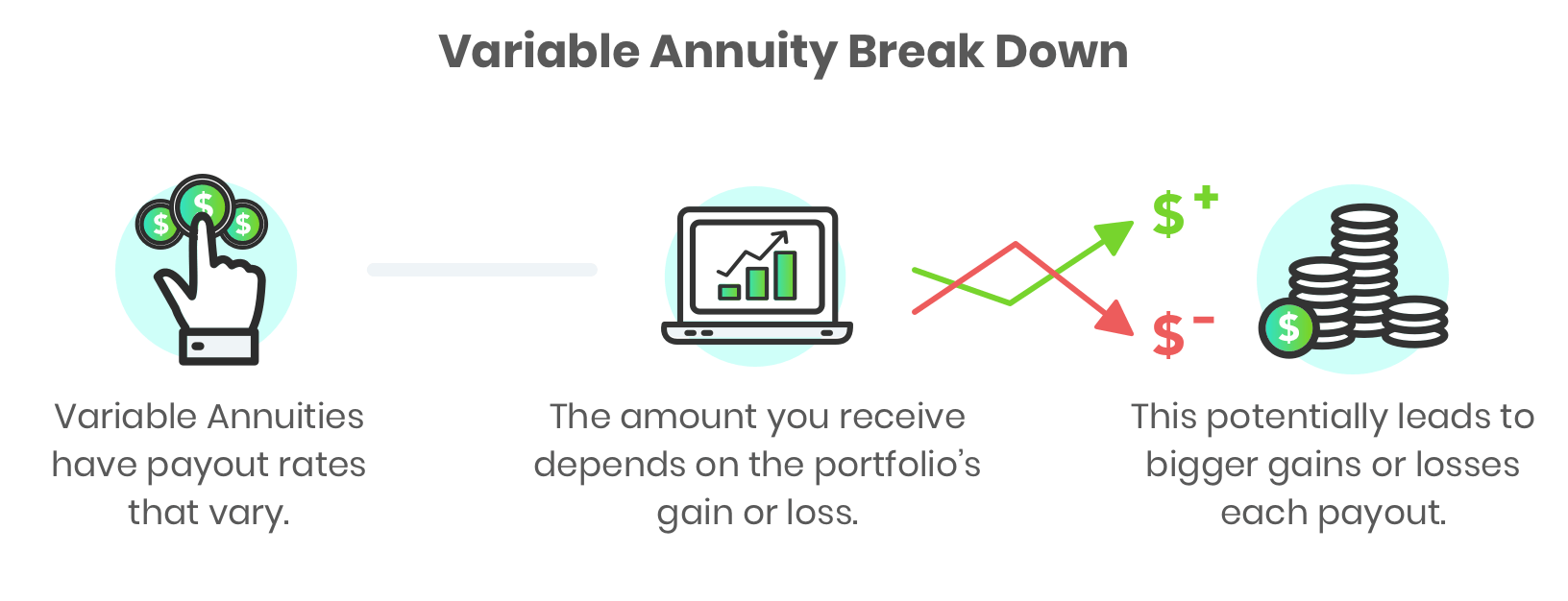





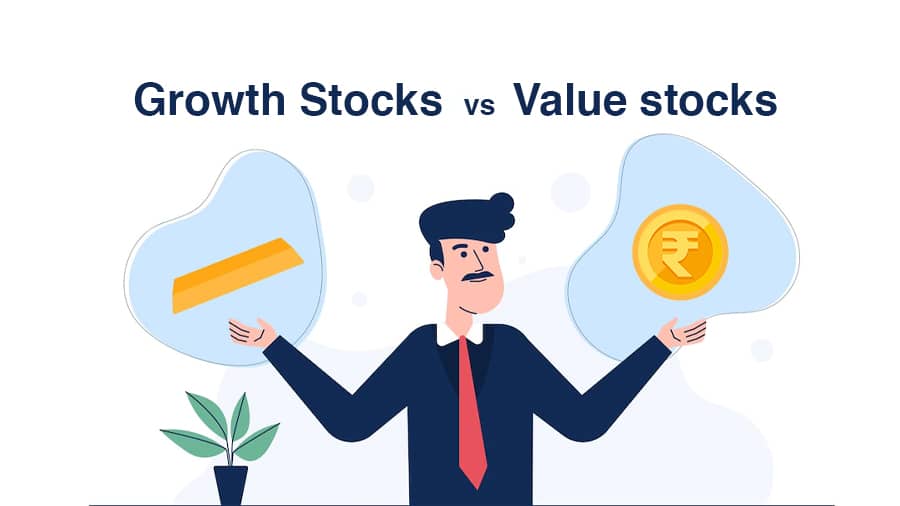





















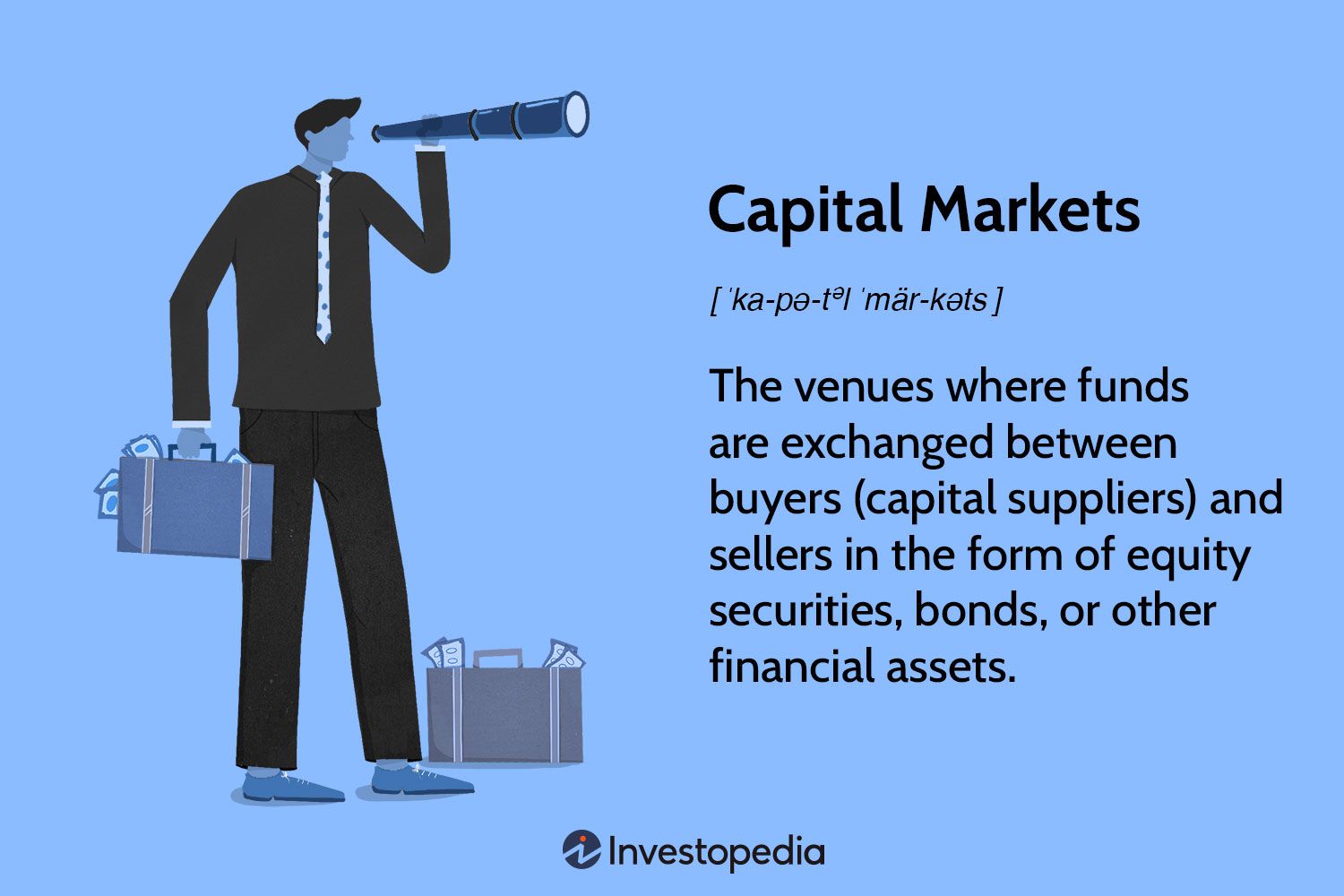

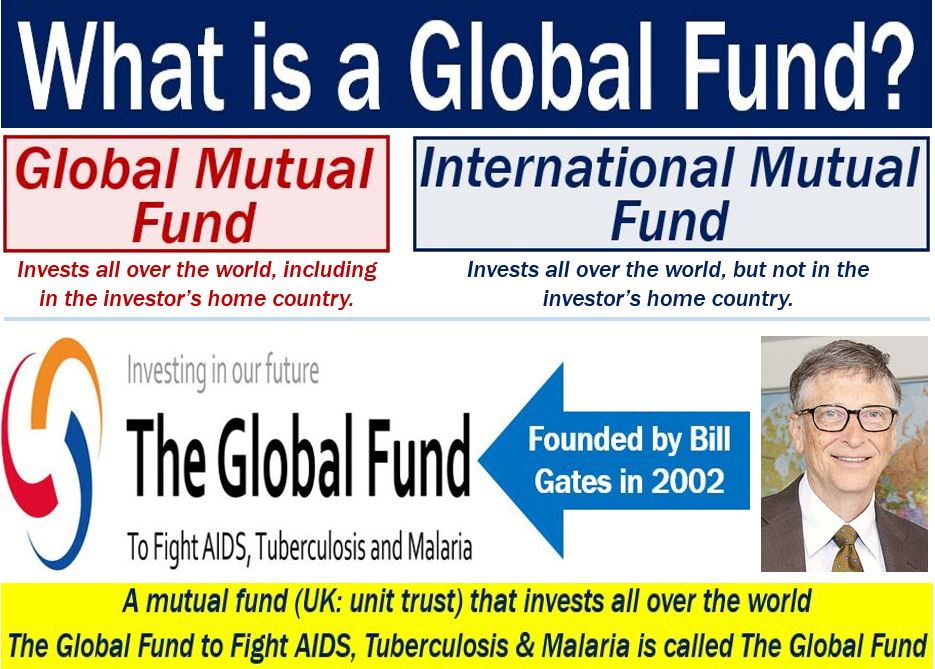



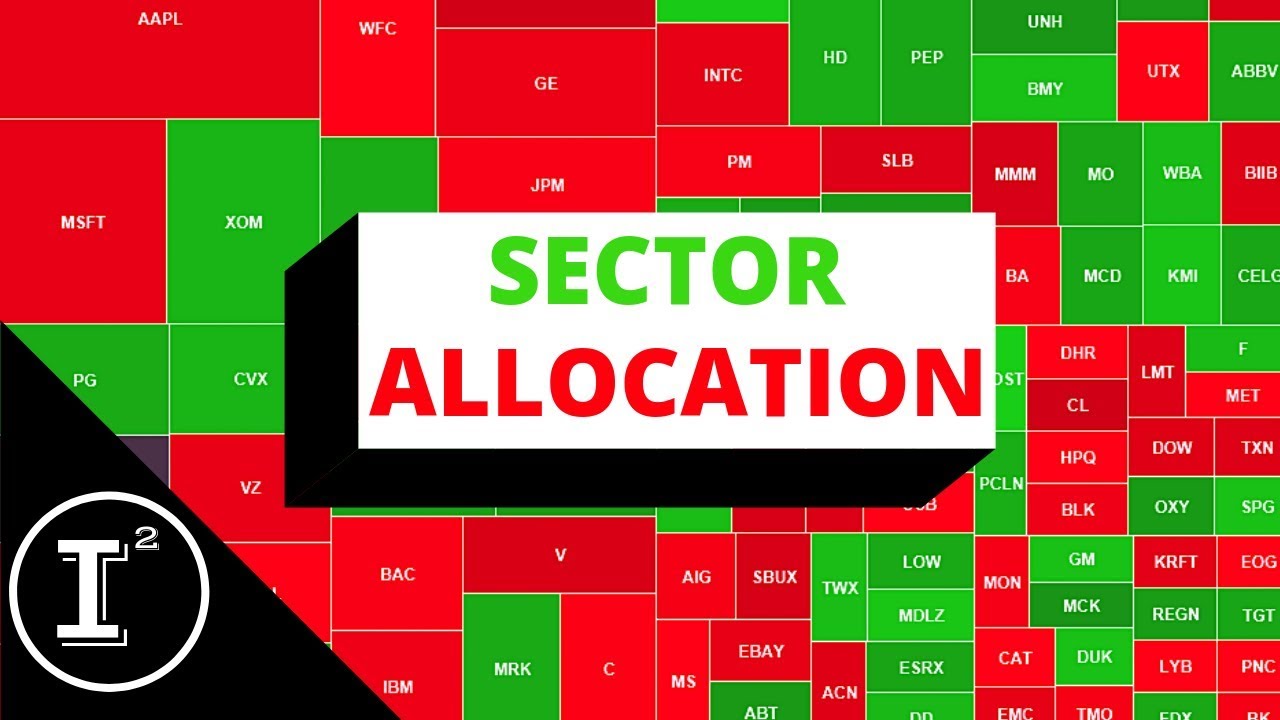








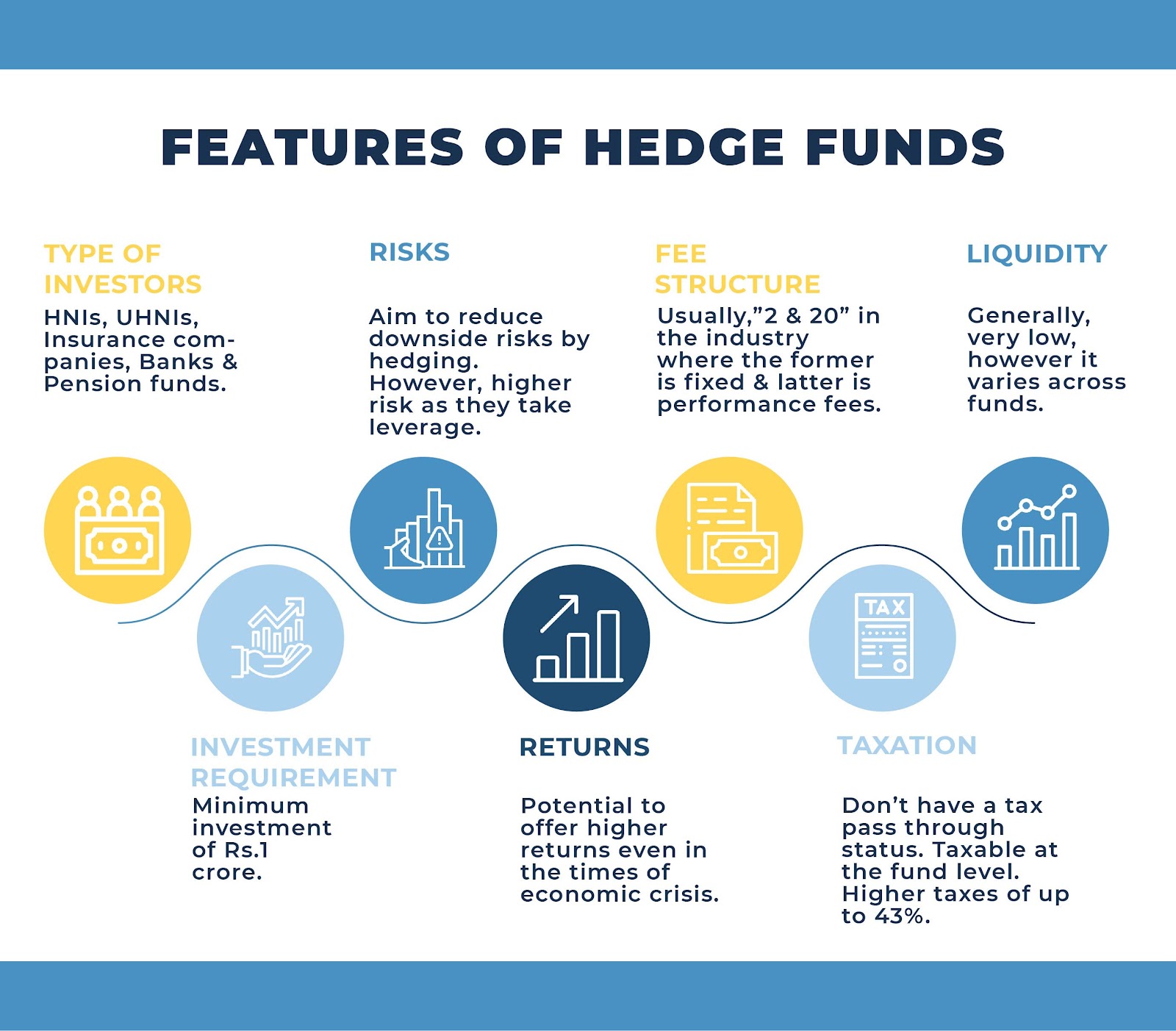



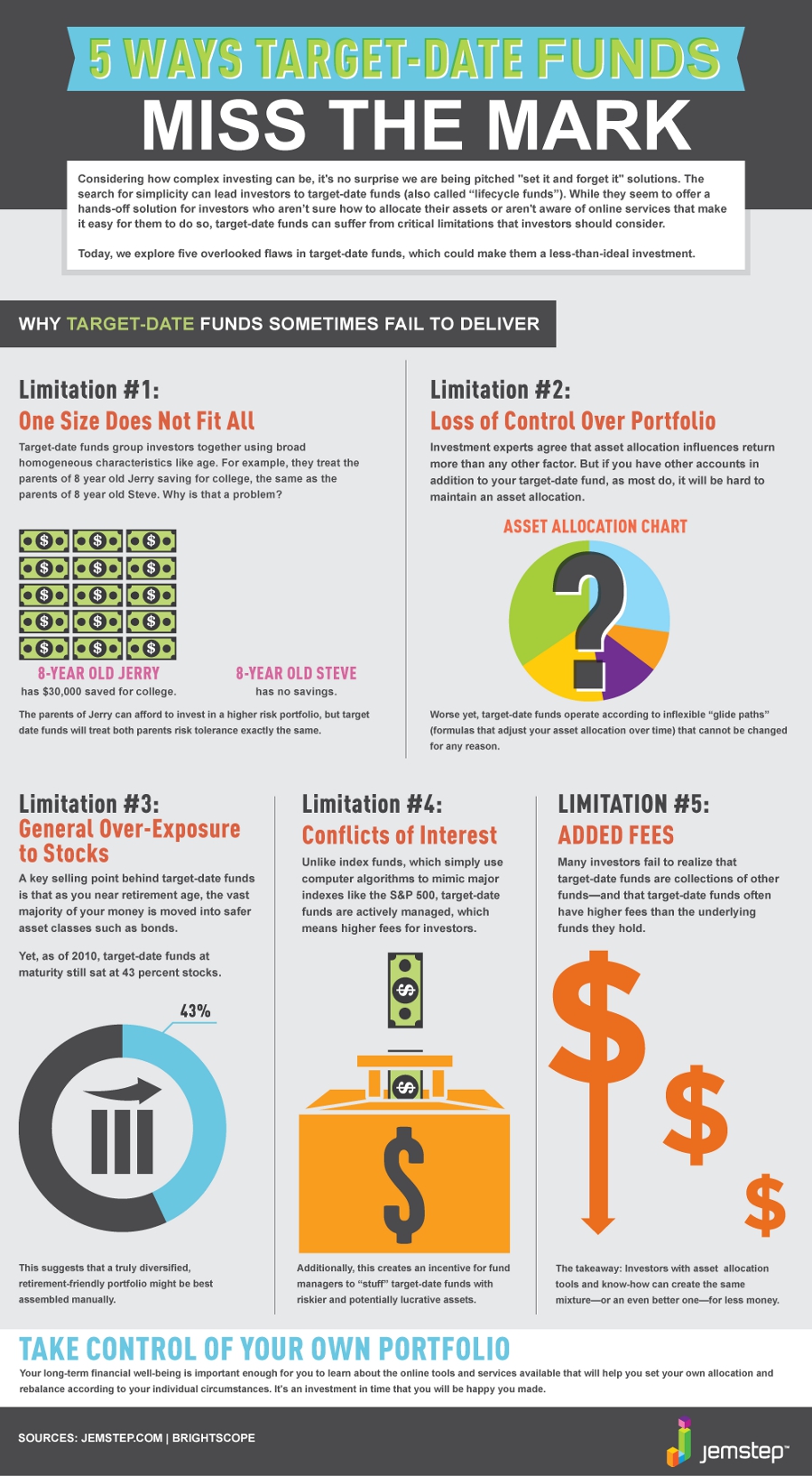












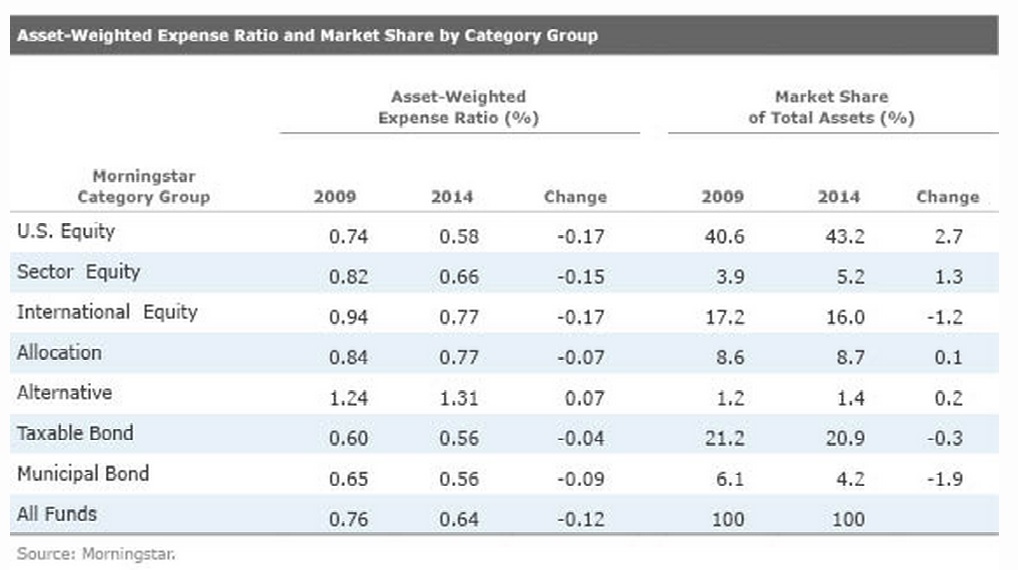









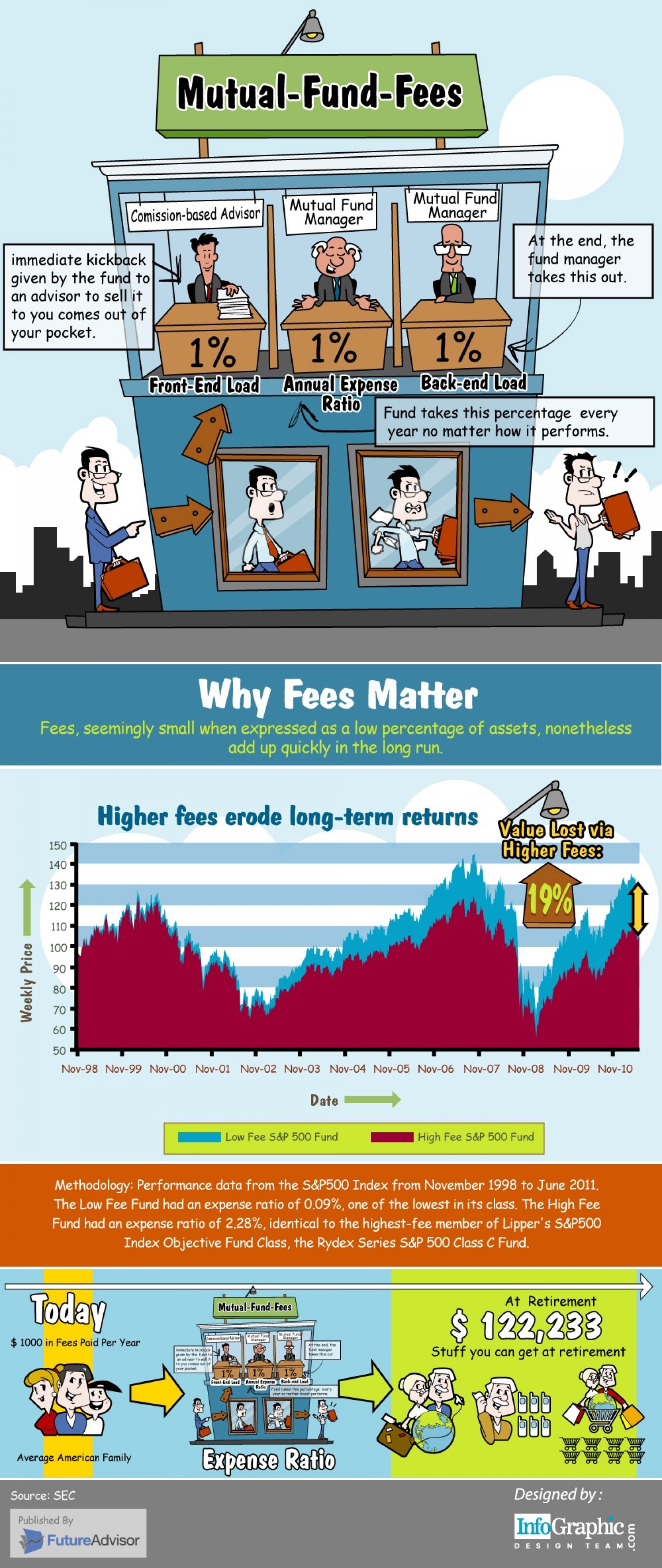














 The Leading Business Education Network for Doctors, Financial Advisors and Health Industry Consultants