Effective Marketing: Using Loss Leaders in Financial Services

By Dr. David Edward Marcinko MBA MEd CMP

***

***

SPONSOR: http://www.CertifiedMedicalPlanner.org

***

In the competitive world of financial services, attracting and retaining clients is a constant challenge. To stand out, many financial advisors employ strategic marketing tactics known as “loss leaders”—free or discounted services designed to showcase value and build trust. These offerings serve as entry points for potential clients, allowing advisors to demonstrate expertise and initiate long-term relationships.

One of the most common loss leaders is the free initial consultation. This no-obligation meeting gives prospective clients a chance to discuss their financial goals, ask questions, and get a feel for the advisor’s approach. For the advisor, it’s an opportunity to assess the client’s needs and present tailored solutions. While no revenue is generated from this meeting, it often leads to paid engagements once the client feels confident in the advisor’s capabilities.

Another popular tactic is offering a complimentary financial plan or portfolio review. These services provide tangible insights into a client’s current financial situation and suggest improvements. By delivering real value upfront, advisors build credibility and demonstrate their analytical skills. Clients who receive actionable advice are more likely to continue working with the advisor on a paid basis.

Educational content also plays a key role in loss leader strategy. Advisors frequently host free webinars, workshops, or seminars on topics like retirement planning, tax strategies, or investment basics. These events not only educate attendees but also position the advisor as a thought leader. Attendees often leave with a better understanding of their financial needs and a desire to seek personalized guidance.

In the digital realm, advisors may offer free tools and assessments on their websites. These include retirement readiness calculators, risk tolerance quizzes, and budgeting templates. Such tools engage users and provide personalized feedback, creating a natural segue into one-on-one consultations. Additionally, offering free newsletters or eBooks helps advisors stay top-of-mind while delivering ongoing value.

Some advisors go further by waiving fees for introductory services, such as account setup or the first few months of investment management. This lowers the barrier to entry and encourages hesitant clients to try the service. Once clients experience the benefits, they’re more likely to commit long-term.

Loss leaders are not limited to high-net-worth individuals. Advisors targeting younger or less affluent clients may offer free debt management plans or budgeting assistance. These services address immediate concerns and build loyalty among clients who may become more profitable as their financial situations improve.

Ultimately, loss leaders are about building relationships. By offering something of value without immediate compensation, financial advisors demonstrate their commitment to helping clients succeed. This fosters trust, encourages engagement, and often leads to lasting partnerships. In a field where reputation and reliability are paramount, loss leaders serve as powerful tools for growth and differentiation.

COMMENTS APPRECIATED

EDUCATION: Books

SPEAKING: Dr. Marcinko will be speaking and lecturing, signing and opining, teaching and preaching, storming and performing at many locations throughout the USA this year! His tour of witty and serious pontifications may be scheduled on a planned or ad-hoc basis; for public or private meetings and gatherings; formally, informally, or over lunch or dinner. All medical societies, financial advisory firms or Broker-Dealers are encouraged to submit an RFP for speaking engagements: CONTACT: Ann Miller RN MHA at MarcinkoAdvisors@outlook.com -OR- http://www.MarcinkoAssociates.com

Like, Refer and Subscribe

***

***

LIFE CYCLE HYPOTHESIS: A Framework for Financial Behavior

By Dr. David Edward Marcinko MBA MEd

SPONSOR: http://www.MarcinkoAssociates.com

***

***

The Life Cycle Hypothesis (LCH) is a foundational theory in economics and personal finance that explains how individuals plan their consumption and savings behavior over the course of their lives. Developed in the 1950s by economists Franco Modigliani and Richard Brumberg, the LCH posits that people aim to smooth their consumption throughout their lifetime, regardless of fluctuations in income. This theory has had a profound impact on how economists, financial planners, and policymakers understand saving patterns, retirement planning, and fiscal policy.

At its core, the LCH assumes that individuals are forward-looking and rational. They anticipate changes in income—such as those caused by retirement, unemployment, or career progression—and adjust their saving and spending accordingly. During high-income periods, typically in mid-career, individuals save more to prepare for low-income phases, such as retirement. Conversely, in early adulthood and old age, when income is lower, individuals are expected to dissave, or spend from their accumulated savings.

One of the key insights of the LCH is that consumption is not directly tied to current income but rather to expected lifetime income. This means that temporary changes in income should not significantly affect consumption patterns, as individuals base their spending decisions on long-term expectations. For example, a young professional may take out a loan to buy a car, anticipating higher future earnings that will allow them to repay the debt without drastically altering their lifestyle.

The LCH also provides a framework for understanding the role of pensions, social security, and other retirement savings mechanisms. By recognizing that individuals need to save during their working years to maintain consumption levels in retirement, the theory supports the development of policies that encourage long-term savings and financial literacy. It also helps explain why some people may under-save or over-consume if they misjudge their future income or lack access to financial planning resources.

Despite its elegance, the Life Cycle Hypothesis has faced criticism and refinement. Behavioral economists argue that individuals are not always rational and may struggle with self-control, procrastination, or lack of financial knowledge. These limitations have led to the development of the Behavioral Life Cycle Hypothesis, which incorporates psychological factors such as mental accounting and framing effects. Moreover, empirical studies have shown that many people do not smooth consumption as predicted, often due to liquidity constraints, uncertainty, or cultural influences.

Nevertheless, the LCH remains a powerful tool for analyzing financial behavior across different stages of life. It has influenced retirement planning strategies, tax policy, and the design of financial products. By emphasizing the importance of long-term planning and the intertemporal nature of financial decisions, the Life Cycle Hypothesis continues to shape how individuals and institutions approach economic well-being.

In conclusion, the Life Cycle Hypothesis offers a compelling lens through which to view personal finance. While it may not capture every nuance of human behavior, its emphasis on lifetime income and consumption smoothing provides a valuable foundation for understanding and improving financial decision-making.

COMMENTS APPRECIATED

EDUCATION: Books

SPEAKING: Dr. Marcinko will be speaking and lecturing, signing and opining, teaching and preaching, storming and performing at many locations throughout the USA this year! His tour of witty and serious pontifications may be scheduled on a planned or ad-hoc basis; for public or private meetings and gatherings; formally, informally, or over lunch or dinner. All medical societies, financial advisory firms or Broker-Dealers are encouraged to submit an RFP for speaking engagements: CONTACT: Ann Miller RN MHA at MarcinkoAdvisors@outlook.com -OR- http://www.MarcinkoAssociates.com

Like, Refer and Subscribe

***

***

Dynamic Strategies in Broker-Dealer Recruitment

By Staff Reporter and A.I.

SPONSOR: http://www.MarcinkoAssociates.com

***

***

The Evolving Landscape of Broker-Dealer Recruitment

Broker-dealer recruitment has become a dynamic and competitive arena within the financial services industry. As firms vie for top talent, the strategies and incentives used to attract and retain financial advisors have evolved significantly. In an environment shaped by regulatory changes, technological innovation, and shifting advisor expectations, broker-dealers must continuously refine their recruitment approaches to remain competitive and relevant.

At the heart of broker-dealer recruitment is the pursuit of experienced financial advisors who bring with them established client relationships and significant assets under management. These advisors are highly sought after because they can generate immediate revenue and enhance a firm’s market presence. According to recent industry reports, firms like LPL Financial, Commonwealth, and Cetera have ramped up their recruitment efforts by investing in platform enhancements, rebranding initiatives, and technology upgrades to appeal to both seasoned professionals and the next generation of advisors.

One of the most significant trends in broker-dealer recruitment is the emphasis on value-added services. Advisors today are not merely looking for the highest payout or signing bonus; they are increasingly drawn to firms that offer robust support systems, including compliance assistance, marketing resources, and advanced technology platforms. Broker-dealers that can demonstrate a commitment to advisor growth and client service excellence are more likely to attract top-tier talent.

Another key factor influencing recruitment is the cultural fit between the advisor and the firm. Advisors often seek environments that align with their personal values and business philosophies. As such, firms are placing greater emphasis on showcasing their culture, leadership, and long-term vision during the recruitment prhttps://medicalexecutivepost.com/2024/09/05/beware-the-brokerage-accounts/ocess. This cultural alignment can be a decisive factor in an advisor’s decision to join or remain with a firm.https://medicalexecutivepost.com/2024/09/05/beware-the-brokerage-accounts/

The competitive nature of the industry has also led to the rise of aggressive recruitment tactics, including lucrative transition packages and equity offers. While these financial incentives can be effective, they are increasingly being supplemented by strategic differentiators such as flexible affiliation models, access to alternative investment platforms, and opportunities for practice acquisition or succession planning.

Moreover, the recruitment landscape is being reshaped by broader economic and regulatory forces. The implementation of Regulation Best Interest (Reg BI) and the ongoing impact of high interest rates have prompted advisors to reassess their affiliations and seek firms that provide clarity, stability, and strategic guidance. Broker-dealers that proactively address these concerns and offer transparent, advisor-centric solutions are better positioned to succeed in the recruitment race.

In conclusion, broker-dealer recruitment is no longer just about offering the biggest check. It is about creating a compelling value proposition that resonates with advisors’ professional goals and personal values. Firms that invest in technology, culture, and advisor support—while remaining agile in response to industry trends—will be best equipped to attract and retain the talent necessary for long-term success.

COMMENTS APPRECIATED

EDUCATION: Books

SPEAKING: Dr. Marcinko will be speaking and lecturing, signing and opining, teaching and preaching, storming and performing at many locations throughout the USA this year! His tour of witty and serious pontifications may be scheduled on a planned or ad-hoc basis; for public or private meetings and gatherings; formally, informally, or over lunch or dinner. All medical societies, financial advisory firms or Broker-Dealers are encouraged to submit an RFP for speaking engagements: CONTACT: Ann Miller RN MHA at MarcinkoAdvisors@outlook.com -OR- http://www.MarcinkoAssociates.com

Like, Refer and Subscribe

***

***

Unlock Your Career with Micro-Certifications

Micro-Credentials on the Rise

KNOWLEDGE RICHES IN SPECIALTY NICHES

DR. DAVID EDWARD MARCINKO MBA MEd CMP

SPONSOR: http://www.CertifiedMedicalPlanner.org

***

***

Do you ever wish you could acquire specific information for your career activities without having to complete a university Master’s Degree or finish our entire Certified Medical Planner™ professional designation program? Well, Micro-Certifications from the Institute of Medical Business Advisors, Inc., might be the answer. Read on to learn how our three Micro-Certifications offer new opportunities for professional growth in the medical practice, business management, health economics and financial planning, investing and advisory space for physicians, nurses and healthcare professionals.

Micro-Certification Basics

Stock-Brokers, Financial Advisors, Investment Advisors, Accountants, Consultants, Financial Analyists and Financial Planners need to enhance their knowledge skills to better serve the changing and challenging healthcare professional ecosystem. But, it can be difficult to learn and demonstrate mastery of these new skills to employers, clients, physicians or medical prospects. This makes professional advancement difficult. That’s where Micro-Certification and Micro-Credentialing enters the online educational space. It is the process of earning a Micro-Certification, which is like a mini-degree or mini-credential, in a very specific topical area.

Micro-Certification Requirements

Once you’ve completed all of the requirements for our Micro-Certification, you will be awarded proof that you’ve earned it. This might take the form of a paper or digital certificate, which may be a hard document or electronic image, transcript, file, or other official evidence that you’ve completed the necessary work.

Uses of Micro-Certifications

Micro-Certifications may be used to demonstrate to physicians prospective medical clients that you’ve mastered a certain knowledge set. Because of this, Micro-Certifications are useful for those financial service professionals seeking medical clients, employment or career advancement opportunities.

Examples of iMBA, Inc., Micro-Certifications

Here are the three most popular Micro-Certification course from the Institute of Medical Business Advisors, Inc:

  • 1. Health Insurance and Managed Care: To keep up with the ever-changing field of health care physician advice, you must learn new medical practice business models in order to attract and assist physicians and nurse clients. By bringing together the most up-to-date business and medical prctice models [Medicare, Medicaid, PP-ACA, POSs, EPOs, HMOs, PPOs, IPA’s, PPMCs, Accountable Care Organizations, Concierge Medicine, Value Based Care, Physician Pay-for-Performance Initiatives, Hospitalists, Retail and Whole-Sale Medicine, Health Savings Accounts and Medical Unions, etc], this iMBA Inc., Mini-Certification offers a wealth of essential information that will help you understand the ever-changing practices in the next generation of health insurance and managed medical care.
  • 2. Health Economics and Finance: Medical economics, finance, managerial and cost accounting is an integral component of the health care industrial complex. It is broad-based and covers many other industries: insurance, mathematics and statistics, public and population health, provider recruitment and retention, health policy, forecasting, aging and long-term care, and Venture Capital are all commingled arenas. It is essential knowledge that all financial services professionals seeking to serve in the healthcare advisory niche space should possess.
  • 3. Health Information Technology and Security: There is a myth that all physician focused financial advisors understand Health Information Technology [HIT]. In truth, it is often economically misused or financially misunderstood. Moreover, an emerging national HIT architecture often puts the financial advisor or financial planner in a position of maximum uncertainty and minimum productivity regarding issues like: Electronic Medical Records [EMRs] or Electronic Health Records [EHRs], mobile health, tele-health or tele-medicine, Artificial Intelligence [AI], benefits managers and human resource professionals.

Other Topics include: economics, finance, investing, marketing, advertising, sales, start-ups, business plan creation, financial planning and entrepreneurship, etc.

How to Start Learning and Earning Recognition for Your Knowledge

Now that you’re familiar with Micro-Credentialing, you might consider earning a Micro-Certification with us. We offer 3 official Micro-Certificates by completing a one month online course, with a live instructor consisting of twelve asynchronous lessons/online classes [3/wk X 4/weeks = 12 classes]. The earned official completion certificate can be used to demonstrate mastery of a specific skill set and shared with current or future employers, current clients or medical niche financial advisory prospects.

Mini-Certification Tuition, Books and Related Fees

The tuition for each Mini-Certification live online course is $1,250 with the purchase of one required dictionary handbook. Other additional guides, white-papers, videos, files and e-content are all supplied without charge. Alternative courses may be developed in the future subject to demand and may change without notice.

***

Contact: For more information, or to speak with an academic representative, please contact Ann Miller RN MHA CMP™ at Email: MarcinkoAdvisors@msn.com [24/7].

***

Essential Critical Thinking Skills for Financial Advisors

FOR ETHICAL PHYSICIAN CLIENT ACQUISITION SUCCESS

By Dr. David Edward Marcinko; MBA MEd CMP

***

***

SPONSOR: http://www.CertifiedMedicalPlanner.org

Critical thinking allows a Financial Advisor [FA] to analyze information and make an objective judgment. By impartially evaluating the facts related to a matter, Financial Planners [FPs] can draw realistic conclusions that will help make a sound decision. The ability of being able to properly analyze a situation and come up with a logical and reasonable conclusion is highly valued by employers, as well as current and potential clients.

Now, according to Indeed, we present the six main critical thinking and examples that will help you evaluate your own thought process as a FA, FP or Wealth Manager, etc.

What is critical thinking? 

Critical thinking is the ability to objectively analyze information and draw a rational conclusion. It involves gathering information on a subject and determining which pieces of information apply to the subject and which don’t, based on deductive reasoning. The ability to think critically helps people in both their personal and professional lives and is valued by most clients and employers. 

Why do employers value critical thinking?

Critical thinking skills are a valuable asset for an employee, as employers, brokerages and Registered Investment Advisors [RIAs] typically appreciate candidates who can correctly assess a situation and come up with a logical resolution. Time is a valuable resource for most managers, and an employee able to make correct decisions without supervision will save both that manager and the whole company much valuable time.

***

***

Six main types of critical thinking skills

There are six main critical thinking skills you can develop to successfully analyze facts and situations and come up with logical conclusions:

1. Analytical thinking

Being able to properly analyze information is the most important aspect of critical thinking. This implies gathering information and interpreting it, but also skeptically evaluating data. When researching a work topic, analytical thinking helps you separate the information that applies to your situation from that which doesn’t.

2. Good communication

Whether you are gathering information or convincing others that your conclusions are correct, good communication is crucial in the process. Asking people to share their ideas and information with you and showing your critical thinking can help step further towards success. If you’re making a work-related decision, proper communication with your coworkers can help you gather the information you need to make the right choice.

3. Creative thinking

Being able to discover certain patterns of information and make abstract connections between seemingly unrelated data helps improve your critical thinking. When analyzing a work procedure or process, you can creatively come up with ways to make it faster and more efficient. Creativity is a skill that can be strengthened over time and is valuable in every position, experience level and industry.

4. Open-mindedness

Previous education and life experiences leave their mark on a person’s ability to objectively evaluate certain situations. By acknowledging these biases, you can improve your critical thinking and overall decision process. For example, if you plan to conduct a meeting in a certain way and your firm suggests using a different strategy, you should let them speak and adjust your approach based on their input.

5. Ability to solve problems

The ability to correctly analyze a problem and work on implementing a solution is another valuable skill.

6. Asking thoughtful questions:

In both private and professional situations, asking the right questions is a crucial step in formulating correct conclusions. Questions can be categorized in various forms as mentioned below:

***

***

* Open-ended questions

Asking open-ended questions can help the person you’re communicating with provide you with relevant and necessary information. These are questions that don’t allow a simple “yes” or “no” as an answer, requiring the respondent to elaborate on the answer.

* Outcome-based questions

When you feel like another person’s experience and skills could help you work more effectively, consider asking outcome-based questions. Asking someone how they would act in a certain hypothetical situation, such as a stock market correction, can give you an insight into their perspective, helping you see things you hadn’t thought about before.

Reflective questions

You can gain insight by asking a client to reflect and evaluate an experience and explain their thought processes during that time. This can help you develop your critical thinking by providing you real-world examples.

* Structural questions

An easy way to understand something is to ask how something works. Any working system results from a long process of trial and error, and properly understanding the steps that needed to be taken for a positive result could help you be more efficient in your own endeavors.

CONCLUSION

Critical thinking is like a muscle that can be exercised and built over time. It is a skill that can help propel your career to new heights. You’ll be able to solve workplace issues, use trial and error to troubleshoot ideas, and more.

EDUCATION: Books

SPEAKING: Dr. Marcinko will be speaking and lecturing, signing and opining, teaching and preaching, storming and performing at many locations throughout the USA this year! His tour of witty and serious pontifications may be scheduled on a planned or ad-hoc basis; for public or private meetings and gatherings; formally, informally, or over lunch or dinner. All medical societies, financial advisory firms or Broker-Dealers are encouraged to submit a RFP for speaking engagements: MarcinkoAdvisors@outlook.com 

COMMENTS APPRECIATED

Read, Subscribe, Like and Refer

***

***

PHYSICIANS: Do You Use A Financial Planner?

***

***

TO: All Physicians and Dentists

QUESTION?

Do you use a financial advisor?

What has been your experience with him or her?

THANK YOU

EDUCATION: Books

SPEAKING: Dr. Marcinko will be speaking and lecturing, signing and opining, teaching and preaching, storming and performing at many locations throughout the USA this year! His tour of witty and serious pontifications may be scheduled on a planned or ad-hoc basis; for public or private meetings and gatherings; formally, informally, or over lunch or dinner. All medical societies, financial advisory firms or Broker-Dealers are encouraged to submit an RFP for speaking engagements: CONTACT: Ann Miller RN MHA at MarcinkoAdvisors@outlook.com -OR- http://www.MarcinkoAssociates.com

PARADOX of Financial Health

By Dr. David Edward Marcinko MBA MEd

SPONSOR: http://www.CertifiedMedicalPlanner.org

***

***

FINANCIAL HEALTH

Classic Definition: Research from Ernst-Young [Nikhil Lele and Yang Shim] uncovered a chasm between how consumer patients think they’re doing financially, and the actual state of their finances. Even more striking, their study suggested that improving consumers’ financial health will become one of the top imperatives in reframing consumer financial services.

Modern Circumstance: For example, the study asked consumers to rate their own financial health, and 83 percent rated themselves “good,” “very good” or “excellent.”  Now, contrast this figure with what is known about their actual situation:

  • 60 percent of Americans say they are financially stressed.
  • 56 percent of Americans have less than $10,000 saved for retirement.
  • 40 million American families have no retirement savings at all.
  • 40 percent of Americans are not prepared to meet a $400 short-term emergency.

Paradox Example: Fortunately, even though the vast majority of consumers rate themselves as financially healthy, the study found that most still want to improve. Importantly for health economists, the attractive 25-34 and 35-49 year-old age groups were most likely to be extremely or very interested in improving their financial and economic health.

Paradox Example: Massively affluent consumer patients are even more interested in improving this paradox than their mass market counterparts.

COMMENTS APPRECIATED

Like and Subscribe

***

***

Beware of Borrowing That Helps Your Advisor – Not You

By Rick Kahler MSFP CFP

***

***

When Maria needed $400,000 for a down payment on a new home, her broker at a large Wall Street firm offered a solution: “Don’t sell investments and trigger capital gains. Just take out a margin loan.”

A margin loan is a line of credit from a brokerage firm, secured by the client’s investment portfolio. It offers quick access to cash with no immediate tax consequences and minimal paperwork. But the convenience comes at a cost. As of mid-2025, margin loan interest rates range from 6.25% to over 11%.

Margin loan recommendations are often presented by brokers as tax-savvy strategies that allow clients to access “tax-free” cash while keeping their portfolios intact. In many cases, however, the math benefits the advisor more than the investor. The cost of borrowing often exceeds what an investor is likely to earn by holding on.

For example, let’s assume an interest rate of 7.5% on Maria’s $400,000 margin loan. While borrowing delayed the payment of $20,000 in capital gains tax, she will eventually have to pay that tax anyway unless she holds the investments until her death. Two years later, with portfolio returns of 4% annually, she had earned around $32,000 from the $400,000 in investments she might have sold. Meanwhile, she had paid $60,000 in interest—leaving her some $28,000 worse off. That’s without factoring in ongoing interest payments, or the risks of a margin call if the investments securing the loan drop in value.

Why do advisors keep recommending margin loans? Because selling investments reduces the portfolio size and the advisor’s fee. Borrowing keeps the portfolio intact and the compensation unchanged—while the firm receives additional income from interest on the loan. In some cases, advisors suggest using margin loans to buy more investments, increasing both the portfolio and the fee they collect.

None of this is illegal. But when the borrowing cost is higher than expected returns and the advisor benefits financially, the ethics are questionable. The client takes the risk, while the advisor keeps the revenue.

This kind of conflict appears more often in portfolios where compensation is tied to asset volume and the company’s primary culture rewards gathering assets over delivering unbiased advice. By contrast, fee-only financial planning and investment advisors typically operate on simpler hourly, flat, or tiered fee structures. Their compensation doesn’t depend on whether a client borrows, sells, or holds. The culture of the firm focuses on conflict-free advice aligned with the client’s best interest.

Wall Street brokers are often held to a fiduciary standard, but structure still matters. In 2024 the SEC reported their examinations of brokers would continue to focus on advisor recommendations unduly influenced by the company’s compensation and incentives.

There are rare situations where a margin loan may be appropriate. A client with large unrealized gains might use a short-term margin loan to minimize taxes. An elderly investor might borrow tax-free rather than sell assets that will receive a step-up in basis at their death. Even in those cases, the math must be exact and the client must clearly understand the risks, including the possibility of a margin call.

If your advisor recommends a margin loan, especially to buy more investments, ask strong questions. What’s the interest rate? What return is realistic? What are the tax consequences of selling? How does this affect the advisor’s income?

If you don’t get direct answers, that’s a warning sign.

In a high-rate, low-return environment, margin loans rarely favor the client. The exceptions are narrow. The risks are significant. And the conflict of interest is measurable.

Sometimes the smartest move is the simplest: sell what you need, pay the tax, and leave leverage out of your plan.

COMMENTS APPRECIATED

Like and Subscribe

***

***

BIAS: Beware Overconfident Investing

By Staff Reporters and A.I.

SPONSOR: http://www.CertifiedMedicalPlanner.org

***

***

OVERCONFIDENT INVESTING BIAS

Overconfident Investing Bias happens when we believe we can out-smart other investors via market timing or through quick, frequent trading. This causes the results of a study to be unreliable and hard to reproduce in other research settings.

Example: Data convincingly shows that people and financial planners/advisors and wealth managers who trade most often under-perform the market by a significant margin over time. Active traders lose money.

Example: Overconfidence Investing Bias moreover leads to: (1) excessive trading (which in turn results in lower returns due to costs incurred), (2) underestimation of risk (portfolios of decreasing risk were found for single men, married men, married women, and single women), (3) illusion of knowledge (you can get a lot more data nowadays on the internet) and (4) illusion of control (on-line trading).

***

***

MORE:

COMMENTS APPRECIATED

Like and Subscribe

***

***

FINANCIAL ADVISORS: Usually Aren’t Millionaires

THE TRUTH MUST BE TOLD!

By Dr. David Edward Marcinko MBA MEd CMP

http://www.MarcinkoAssociates.com

***

***

Financial Advisors and Financial Planners Usually Aren’t Millionaires

According to the most recent data from the Bureau of Labor Statistics (BLS), financial advisors had a median annual salary of $99,580 in 2023, which is significantly higher than the national average of $65,470. Of course, salaries of financial advisors can differ significantly by their location and level of expertise. The client’s profile may also have an impact on their compensation. But, many are not rich.

REPLACE FINANCIAL PLANNERS: https://medicalexecutivepost.com/2023/03/15/why-your-financial-planner-may-be-replaced/

This is unfortunate. Financial advisors and Financial planners don’t rank among the millionaire professions in Thomas J. Stanley and William D. Danko’s book The Millionaire Next Door. Many work as salaried employees rather than entrepreneurs, lacking the scalable income potential of business owners who reinvest profits.

Certified Medical Planner: https://medicalexecutivepost.com/2024/12/17/certified-medical-planner-niche-advisors-thrive/

Stanley and Danko also stressed frugality, a challenge for advisors pressured to flaunt success—think luxury cars or upscale offices—making them “income-statement affluent” rather than “balance-sheet affluent.”

BEST DOG FINANCIAL ADVISOR: https://medicalexecutivepost.com/2025/03/23/dog-nearly-fetches-prestigious-financial-advisor-honor/

CONCLUSION

The truth is that a Financial Advisors’ success isn’t measured in client returns. Instead it is measured in their ability to gather assets and retain clients. In other words; Financial Advisors do not need to be good with money.

Financial Advisors need to be good with marketing, advertising, sales and people.

COMMENTS APPRECIATED

Like and Subscribe

***

***

EDUCATION: Books

SPEAKING: Dr. Marcinko will be speaking and lecturing, signing and opining, teaching and preaching, storming and performing at many locations throughout the USA this year! His tour of witty and serious pontifications may be scheduled on a planned or ad-hoc basis; for public or private meetings and gatherings; formally, informally, or over lunch or dinner. All medical societies, financial advisory firms or Broker-Dealers are encouraged to submit a RFP for speaking engagements: MarcinkoAdvisors@outlook.com 

***

The DOCTOR EFFECT

Dr. David Edward Marcinko; MBA MEd CMP™

Medical Colleagues Beware the Advisors

***

***

SPONSOR: http://www.MarcinkoAssociates.com

Several years ago a group of highly trusted and deeply  experienced financial advisors, insurance service professionals and estate planners noted that far too many of their mature retiring physician clients, using traditional stock brokers, management consultants and financial advisors, seemed to be less successful than those who went it alone. These Do-it-Yourselfers [DIYs] had setbacks and made mistakes, for sure. But, the ME Inc doctors seemed to learn from their mistakes and did not incur the high management and service fees demanded from general or retail one-size-fits-all “advisors.”

In fact, an informal inverse related relationship was noted, and dubbed the Doctor Effect.” In others words, the more consultants an individual doctor retained; the less well they did in all disciplines of the financial planning and medical practice management, continuum.

Of course, the reason for this discrepancy eluded many of them as Wall Street brokerages and wire-houses flooded the media with messages, infomercials, print, radio, TV, texts, tweets, dinners and internet ads to the contrary. Rather than self-learn the basics, the prevailing sentiment seemed to purse the holy grail of finding the “perfect financial advisor.”  This realization confirmed the industry culture which seemed to be:

Bread for the advisor – Crumbs for the client!

And so, Marcinko Associates formed a cadre’ of technology focused and highly educated multi-degreed doctors, nurses, financial advisors, attorneys, accountants, psychologists and educational visionaries who decided there must be a better way for their healthcare colleagues to receive financial planning advice, products and related advisory services within a culture of fiduciary responsibility.

We trust you agree with this specific niche knowledge, and collegial consulting philosophy, as illustrated thru our firm and these two books.

EDUCATION: Books

SPEAKING: Dr. Marcinko will be speaking and lecturing, signing and opining, teaching and preaching, storming and performing at many locations throughout the USA this year! His tour of witty and serious pontifications may be scheduled on a planned or ad-hoc basis; for public or private meetings and gatherings; formally, informally, or over lunch or dinner. All medical societies, financial advisory firms or Broker-Dealers are encouraged to submit a RFP for speaking engagements: MarcinkoAdvisors@outlook.com 

COMMENTS APPRECIATED

Like, Refer and Subscribe

***

***

***

MONEY SCRIPTS: Fundamental Subconscious Beliefs and Economic Behavioral Patterns Defined

SALES PSYCHOLOGY FOR INVESTMENT ADVISORS, FINANCIAL ADVISORS, INSURANCE AGENTS, WEALTH MANAGERS AND FINANCIAL PLANNERS

By Dr. David Edward Marcinko; MBA MEd CMP®

http://www.MarcinkoAssociates.com

***

***

SPONSOR: http://www.CertifiedMedicalPlanner.org

***

***

Stocks were decimated yesterday in the first full trading day following President Trump’s tariff announcement. It was the biggest single-day decline since the start of the Covid-19 pandemic in March 2020. Every Magnificent Seven stock was battered—Apple worst of all. And so perhaps it is a good time to discuss the concept of “Money Scripts”.

***

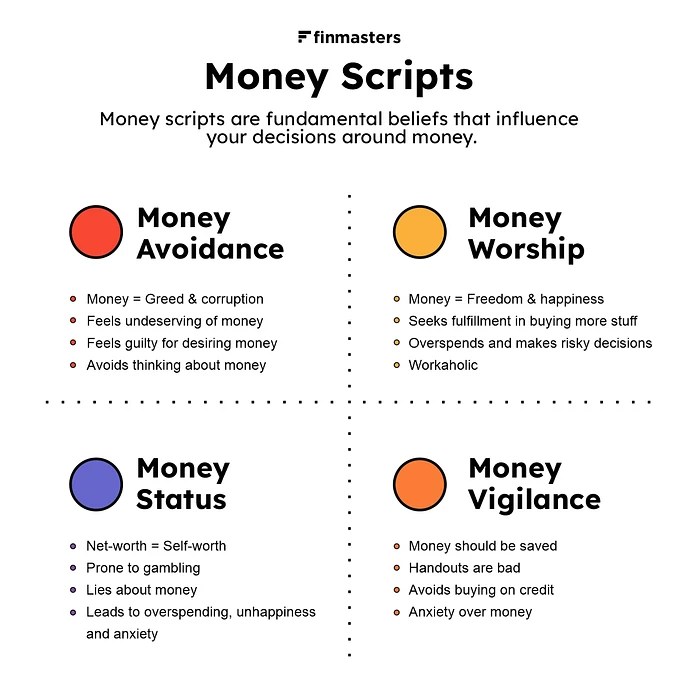
Money Scripts are unconscious beliefs about money that are typically only partially true, are developed in childhood, and drive adult financial behaviors. Money scripts may be the result of “financial flashpoints,” which are salient early experiences around money that have a lasting impact in adulthood. Money scripts are often passed down through the generations and social groups often share similar money scripts. And so, we argue that Money scripts are at the root of all illogical, ill-advised, self-destructive, or self-limiting financial behaviors.

In research at Kansas State University [KSU], researchers identified four distinct Money script patterns, which are associated with financial health and predict financial behaviors. These include: (a) money avoidance, (b) money worship, (c) money status, and (d) money vigilance [personal communication Brad Klontz, PsyD, CFP®, Kenneth Shubin-Stein, MD, MPH, MS, CFA and Sonya Britt, PhD, CFP®].

And so, we all like to think our financial decisions are fully rational, but the truth is that our subconscious beliefs have a dramatic impact on our money and financial decisions. These money scripts are important to know and understand. A summary is below:

            Money Avoidance

Money avoidance scripts are illustrated by beliefs such as “Rich people are greedy,” “It is not okay to have more than you need,” and “I do not deserve a lot of money when others have less than me.” Money avoiders believe that money is bad or that they do not deserve money. They believe that wealthy people are corrupt and there is virtue in living with less money. They may sabotage their financial success or give money away even though they cannot afford to do so. Money avoidance scripts may be associated with lower income and lower net worth and predict financial behaviors including ignoring bank statements, overspending, financial dependence on others, financial enabling of others, and having trouble sticking to a budget.

            Money Worship 

Money worship is typified by beliefs such as “More money will make you happier,” “You can never have enough money,” and “Money would solve all my problems.” Money worshipers are convinced that money is the key to happiness. At the same time, they believe that one can never have enough. Money worships have lower income, lower net worth, and higher credit card debt. They are more likely to be hoarders, spend compulsively, and put work ahead of family.

            Money Status

Money status scripts include “I will not buy something unless it is new,” “Your self-worth equals you net worth,” and “If something isn’t considered the ‘best’ it is not worth buying.” Money status seekers see net worth and self-worth as being synonymous. They pretend to have more money than they do and tend to overspend as a result. They often grew up in poorer families and believe that the universe should take care of their financial needs if they live a virtuous life. Money status scripts are associated with compulsive gambling, overspending, being financially dependent on others, and lying to one’s spouse about spending.

            Money Vigilance

Money vigilant beliefs include “It is important to save for a rainy day,” “You should always look for the best deal, even if it takes more time,” and “I would be a nervous wreck if I did not have an emergency fund.” The money vigilants are alert, watchful and concerned about their financial welfare. They are more likely to save and less likely to buy on credit. As a result, they tend to have higher income and higher net worth. They also have a tendency to be anxious about money and are secretive about their financial status outside of their household. While money vigilance is associated with frugality and saving, excessive anxiety can keep someone from enjoying the benefits that money can provide.

Identification

When money scripts are identified, it is helpful to examine where they came from. A simple behavioral finance technique involves reflecting on the following questions:

  • What three lessons did you learn about money from your mother?
  • What three lessons did you learn about money from your father?
  • What is your first memory around money?
  • What is your most painful money memory?
  • What is your most joyful money memory?
  • What money scripts emerged for you from this experience?
  • How have they helped you?
  • How have they hurt you?
  • What money scripts do you need to change?

Conclusion

Ideally, from a balanced middle ground, we can see past the limitations of money scripts, our self and others who are polarized. Those who believe “Money is meant to be spent” or “Money is meant to be saved” have a world view that results in extreme positions. Labeling them as “correct” or “wrong” is not a useful way to try to shift anyone’s polarized money script beliefs.

EDUCATION: Books

SPEAKING: Dr. Marcinko will be speaking and lecturing, signing and opining, teaching and preaching, storming and performing at many locations throughout the USA this year! His tour of witty and serious pontifications may be scheduled on a planned or ad-hoc basis; for public or private meetings and gatherings; formally, informally, or over lunch or dinner. All medical societies, financial advisory firms or Broker-Dealers are encouraged to submit a RFP for speaking engagements: CONTACT: MarcinkoAdvisors@outlook.com 

COMMENTS APPRECIATED

Read, Refer, Like and Subscribe

***

***

Providing Physician Centric [Not Advisor Centric] Holistic Financial Planning Advice

BY DR. DAVID EDWARD MARCINKO MBA MEd CMP

***

SPONSOR: http://www.MarcinkoAssociates.com

***

Selecting a Healthcare Focused Financial Advisory Team

Most retail financial services products are designed to enhance the well-being of the Financial Advisor and vendor at the expense of clients.

The clients get only the leftovers.

Of course, no one tells them that secret.

They have to figure it out for themselves.

As the old line goes, “Where are the customers’ boats?”

Rowland, M: Planning Periscope [Where Advisors are the Clients]. Financial Advisors Magazine; page 36, April 2014.

EDUCATION: Books

SPEAKING: Dr. Marcinko will be speaking and lecturing, signing and opining, teaching and preaching, storming and performing at many locations throughout the USA this year! His tour of witty and serious pontifications may be scheduled on a planned or ad-hoc basis; for public or private meetings and gatherings; formally, informally, or over lunch or dinner. All medical societies, financial advisory firms or Broker-Dealers are encouraged to submit a RFP for speaking engagements: MarcinkoAdvisors@outlook.com 

COMMENTS APPRECIATED

Refer, Like and Subscribe

***

***

FINANCIAL ADVISORS & MEDICAL MANAGEMENT CONSULTANTS: Marcinko & Associates, Inc

SPONSOR: http://www.MarcinkoAssociates.com

D. E. Marcinko & Associates Core Operating Values

9.   We act with honesty, integrity and are always straightforward.
8.   We strive to be innovative, creative, iconoclastic, and flexible.
7.   We admit and learn from mistakes and don’t repeat them.
6.   We work hard always as competitors are trying to catch up.
5.   We treat others with dignity and respect.
4.   We are the onus of consulting advice for the well being of others.
3.   We fight complacency as former success is in the past.
2.   The best management styles are timeless, not timely.
1.   Our clients are colleagues and always come first.

EDUCATION: Books

SPEAKING: Dr. David Edward Marcinko MBA MEd will be speaking and lecturing, signing and opining, teaching and preaching, storming and performing at many locations throughout the USA this year! His tour of witty and serious pontifications may be scheduled on a planned or ad-hoc basis; for public or private meetings and gatherings; formally, informally, or over lunch or dinner. All medical societies, financial advisory firms or Broker-Dealers are encouraged to submit a RFP for speaking engagements.

***

***

CONTACT: Ann Miller RN MHA at: MarcinkoAdvisors@outlook.com 

***

FINANCIAL ADVISORS: Real Monetary Worth?

BY DR. DAVID EDWARD MARCINKO; MBA MEd CMP®

***

SPONSOR: http://www.MarcinkoAssociates.com

***

SO – HOW MUCH IS A “FINANCIAL ADVISOR” REALLY WORTH?

This blog holds a rather uncomplimentary opinion of financial advisors, and the financial services and brokerage industry as a whole; deserved, or not? The entire site hints at this attitude as well, in favor of a going it alone or ME, Inc investing when possible. Nevertheless, it is reasonable to wonder how much boost in net-returns might an educated and informed, fee transparent and honest, fiduciary focused “financial advisor” add to a clients’ investment portfolio; all things being equal [ceteris paribus].

And, can it be quantified?

Well, according to Vanguard Brokerage Services®, perhaps as much as 3%? In a decade long paper from the Valley Forge, PA based mutual fund and ETF giant, Vanguard said financial advisors can generate returns through a framework focused on five wealth management principles:

Being an effective behavioral coach: Helping clients maintain a long-term perspective and a disciplined approach is arguably one of the most important elements of financial advice. (Potential value added: up to 1.50%).

Applying an asset location strategy: The allocation of assets between taxable and tax-advantaged accounts is one tool an advisor can employ that can add value each year. (Potential value added: from 0% to 0.75%).

Employing cost-effective investments: This component of every advisor’s tool kit is based on simple math: Gross return less costs equals net return. (Potential value added: up to 0.45%).

Maintaining the proper allocation through rebalancing: Over time, as investments produce various returns, a portfolio will likely drift from its target allocation. An advisor can add value by ensuring the portfolio’s risk/return characteristics stay consistent with a client’s preferences. (Potential value added: up to 0.35%).

Implementing a spending strategy: As the retiree population grows, an advisor can help clients make important decisions about how to spend from their portfolios. (Potential value added: up to 0.70%).

Source: Financial Advisor Magazine, page 20, April 2014.

Assessment

However, Vanguard notes that while it’s possible all of these principles could add up to 3% in net returns for clients, it’s more likely to be an intermittent number than an annual one because some of the best opportunities to add value happen during extreme market lows and highs when angst or giddiness [fear and greed] can cause investors to bail on their well-thought-out investment plans.

And, is the study applicable to doctors and allied healthcare providers? Doe Vanguard have a vested interest in the topic. What about fee based versus fee-only financial advice?

Conclusion

Finally, recognize the plethora of other financial planning life-cycle topics addressed in this ME-P were not included in the Vanguard investment portfolio-only study a decade ago. 

And what about today with contemporaneous internet advising, chat-rooms, linkedin, robo-advisors, reddit and the like?

COMMENTS APPRECIATED

Read, Subscribe and Like

EDUCATION: Books

***

***

STUPID COMMENTS: Financial Advisors Say to Physician Clients

BY DR. DAVID EDWARD MARCINKO; MBA MEd CMP®

***

***

SPONSOR: http://www.MarcinkoAssociates.com

***

Some Stupid Things Financial Advisors Say to Physician Clients

A few years ago and just for giggles, colleague Lon Jefferies MBA CFP® and I collected a list of dumb-stupid things said by some Financial Advisors to their doctor, dentist, nurse and and other medical professional clients, along with some recommended under-breath rejoinders:

  • “They don’t have any debt except for a mortgage and student loans.” OK. And I’m vegan except for bacon-wrapped steak.
  • “Earnings were positive before one-time charges.” This is Wall Street’s equivalent of, “Other than that Mrs. Lincoln; how was the play?”
  • “Earnings missed estimates.” No. Earnings don’t miss estimates; estimates miss earnings. No one ever says “the weather missed estimates.” They blame the weatherman for getting it wrong. Finance is the only industry where people blame their poor forecasting skills on reality. 
  • “Earnings met expectations, but analysts were looking for a beat.” If you’re expecting earnings to beat expectations, you don’t know what the word “expectations” means.
  • “It’s a Ponzi scheme.” The number of things called Ponzi schemes that are actually Ponzi schemes rounds to zero. It’s become a synonym for “thing I disagree with.” 
  • “The [thing not going perfectly] crisis.” Boy who cried wolf, meet analyst who called crisis. 
  • “He predicted the market crash in 2008.” He also predicted a crash in 2006, 2004, 2003, 2001, 1998, 1997, 1995, 1992, 1989, 1984, 1971…
  • “More buyers than sellers.” This is the equivalent of saying someone has more mothers than fathers. There’s one buyer and one seller for every trade. Every single one.
  • “Stocks suffer their biggest drop since September.” You know September was only six weeks ago, right? 
  • “We’re cautiously optimistic.” You’re also an oxymoron. 
  • [Guy on TV]: “It’s time to [buy/sell] stocks.” Who is this advice for? A 20-year-old with 60 years of investing in front of him, or a 82-year-old widow who needs money for a nursing home? Doesn’t that make a difference?
  • “We’re neutral on this stock.” Stop it. You don’t deserve a paycheck for that.
  • “There’s minimal downside on this stock.” Some lessons have to be learned the hard way.
  • “We’re trying to maximize returns and minimize risks.” Unlike everyone else, who are just dying to set their money ablaze!
  • “Shares fell after the company lowered guidance.” Guys, they just proved their guidance can be wrong. Why are you taking this new one seriously? 
  • “Our bullish case is conservative.” Then it’s not a bullish case. It’s a conservative case. Those words mean opposite things.
  • “We look where others don’t.” This is said by so many investors that it has to be untrue most of the time. 
  • “Is [X] the next black swan?” Nassim Taleb’s blood pressure rises every time someone says this. You can’t predict black swans. That’s what makes them dangerous.
  • “We’re waiting for more certainty.” Good call. Like in 1929, 1999 and 2007, when everyone knew exactly what the future looked like. Can’t wait!
  • “The Dow is down 50 points as investors react to news of [X].” Stop it – you’re just making stuff up. “Stocks are down and no one knows why” is the only honest headline in this category. 
  • “Investment guru [insert name] says stocks are [insert forecast].” Go to Morningstar.com. Look up that guru’s track record against their benchmark. More often than not, their career performance lags an index fund. Stop calling them gurus.
  • “We’re constructive on the market.” I have no idea what that means. I don’t think you do, either.
  • “[Noun] [verb] bubble.” (That’s a sarcastic observation from investor Eddy Elfenbein.) 
  • “Investors are fleeing the market.” Every stock is owned by someone all the time. 
  • “We expect more volatility.” There has never been a time when this was not the case. Let me guess, you also expect more winters? 
  • “This is a strong buy.” What do I do with this? Click the mouse harder when placing the order in my brokerage account?
  • “He was tired of throwing his money away renting, so he bought a house.” He knows a mortgage is renting money from a bank, right?
  • “This is a cyclical bull market in a secular bear.” Vapid nonsense.  
  • “Will Obamacare ruin the economy?” No. And get a grip. 

So, don’t let these aphorisms blind you to the critical thinking skills you learned in college, honed in medical school and apply every day in life.

COMMENTS APPRECIATED

Refer, Like and Subscribe

***

EDUCATION: Books

SPEAKING: Dr. Marcinko will be speaking and lecturing, signing and opining, teaching and preaching, storming and performing at many locations throughout the USA this year! His tour of witty and serious pontifications may be scheduled on a planned or ad-hoc basis; for public or private meetings and gatherings; formally, informally, or over lunch or dinner. All medical societies, financial advisory firms or Broker-Dealers are encouraged to submit a RFP for speaking engagements: CONTACT: MarcinkoAdvisors@outlook.com 

***

***

BUSINESS TERMS: All Financial Advisors Should Know

DEFINITIONS

By SBA and Staff Reporters

***

***

Acquisition

The acquiring of supplies or services by the federal government with appropriated funds through purchase or lease.

Affiliates

Business concerns, organizations, or individuals that control each other or that are controlled by a third party. Control may include shared management or ownership; common use of facilities, equipment, and employees; or family interest.

Best and Final Offer

For negotiated procurements, a contractor’s final offer following the conclusion of discussions.

Certificate of Competency

A certificate issued by the Small Business Administration (SBA) stating that the holder is “responsible” (in terms of capability, competency, capacity, credit, integrity, perseverance, and tenacity) for the purpose of receiving and performing a specific government contract.

Certified 8(a) Firm

A firm owned and operated by socially and economically disadvantaged individuals and eligible to receive federal contracts under the Small Business Administration’s 8(a) Business Development Program.

Contract

A mutually binding legal relationship obligating the seller to furnish supplies or services (including construction) and the buyer to pay for them.

Contracting

Purchasing, renting, leasing, or otherwise obtaining supplies or services from nonfederal sources. Contracting includes the description of supplies and services required, the selection and solicitation of sources, the preparation and award of contracts, and all phases of contract administration. It does not include grants or cooperative agreements.

Contracting Officer

A person with the authority to enter into, administer, and/or terminate contracts and make related determinations and findings.

Contractor Team Arrangement

An arrangement in which (a) two or more companies form a partnership or joint venture to act as potential prime contractor; or (b) an agreement by a potential prime contractor with one or more other companies to have them act as its subcontractors under a specified government contract or acquisition program.

Defense Acquisition Regulatory Council (DARC)

A group composed of representatives from each Military department, the Defense Logistics Agency, and the National Aeronautics and Space Administration and that is in charge of the Federal Acquisition Regulation (FAR) on a joint basis with the Civilian Agency Acquisition Council (CAAC).

Defense Contractor

Any person who enters into a contract with the United States for the production of material or for the performance of services for the national defense.

Electronic Data Interchange

Transmission of information between computers using highly standardized electronic versions of common business documents.

Emerging Small Business

A small business concern whose size is no greater than 50 percent of the numerical size standard applicable to the Standard Industrial Classification code assigned to a contracting opportunity.

Equity

An accounting term used to describe the net investment of owners or stockholders in a business. Under the accounting equation, equity also represents the result of assets less liabilities.

Fair and Reasonable Price

A price that is fair to both parties, considering the agreed-upon conditions, promised quality, and timeliness of contract performance. “Fair and reasonable” price is subject to statutory and regulatory limitations.

Federal Acquisition Regulation (FAR)

The body of regulations which is the primary source of authority governing the government procurement process. The FAR, which is published as Chapter 1 of Title 48 of the Code of Federal Regulations, is prepared, issued, and maintained under the joint auspices of the Secretary of Defense, the Administrator of General Services Administration, and the Administrator of the National Aeronautics and Space Administration. Actual responsibility for maintenance and revision of the FAR is vested jointly in the Defense Acquisition Regulatory Council (DARC) and the Civilian Agency Acquisition Council (CAAC).

Full and Open Competition

With respect to a contract action, “full and open” competition means that all responsible sources are permitted to compete.

Intermediary Organization

Organizations that play a fundamental role in encouraging, promoting, and facilitating business-to-business linkages and mentor-protégé partnerships. These can include both nonprofit and for-profit organizations: chambers of commerce; trade associations; local, civic, and community groups; state and local governments; academic institutions; and private corporations.

Joint Venture

In the SBA Mentor-Protégé Program, an agreement between a certified 8(a) firm and a mentor firm to perform a specific federal contract.

Mentor

A business, usually large, or other organization that has created a specialized program to advance strategic relationships with small businesses.

Negotiation

Contracting through the use of either competitive or other-than-competitive proposals and discussions. Any contract awarded without using sealed bidding procedures is a negotiated contract.

Partnering

A mutually beneficial business-to-business relationship based on trust and commitment and that enhances the capabilities of both parties.

Prime Contract

A contract awarded directly by the Federal government.

Protégé

A firm in a developmental stage that aspires to increasing its capabilities through a mutually beneficial business-to-business relationship.

Request for Proposal (RFP)

A document outlining a government agency’s requirements and the criteria for the evaluation of offers.

SCORE

Counselors to America’s Small Business is a 12,400-member volunteer association sponsored by the SBA. SCORE matches volunteer business-management counselors with present prospective small business owners in need of expert advice.

Small Business

A business smaller than a given size as measured by its employment, business receipts, or business assets.

Small Business Development Centers (SBDC)

SBDCs offer a broad spectrum of business information and guidance as well as assistance in preparing loan applications.

Small Business Innovative Research (SBIR) Contract

A type of contract designed to foster technological innovation by small businesses with 500 or fewer employees. The SBIR contract program provides for a three-phased approach to research and development projects: technological feasibility and concept development; the primary research effort; and the conversion of the technology to a commercial application.

Small Disadvantaged Business Concern

A small business concern that is at least 51 percent owned by one or more individuals who are both socially and economically disadvantaged. This can include a publicly owned business that has at least 51 percent of its stock unconditionally owned by one or more socially and economically disadvantaged individuals and whose management and daily business is controlled by one or more such individuals.

Standard Industrial Classification (SIC) Code

A code representing a category within the Standard Industrial Classification System administered by the Statistical Policy Division of the U.S. Office of Management and Budget. The system was established to classify all industries in the US economy. A two-digit code designates each major industry group, which is coupled with a second two-digit code representing subcategories.

Subcontract

A contract between a prime contractor and a subcontractor to furnish supplies or services for the performance of a prime contract or subcontract.

COMMENTS APPRECIATED

Refer and Subscribe

***

***

EDUCATION: Niche Specific, Timely, Online, Asynchronous and Affordable

For Financial Advisors & Financial Planners, CPAs, CFPs, CFAs, Stock-Brokers, Insurance Agents, Attorneys, Wealth Managers and Related Advisors!

By Staff Reporters

***

***

FINANCIAL EDUCATION PODCAST: CMPs™ are In … Are CPAs Out?

CERTIFIED MEDICAL PLANNER™: Education for Financial Planners to Thrive with Doctor Clients!

MICRO-CERTIFICATIONS: Education for Financial Advisors Seeking Physician-Client Prospecting Success?

***

CONTACT: Ann Miller RN MHA CMP

Email: MarcinkoAdvisors@outlook.com

***

CERTIFIED MEDICAL PLANNER™: Education for Financial Planners to Thrive with Doctor Clients!

Think Different – Be Different  – Thrive

[By Ann Miller RN MHA]

Letterhead CMP

http://www.CertifiedMedicalPlanner.org

Dear Physician Focused Financial Advisors

Did you know that desperate doctors of all ages are turning to knowledgeable financial advisors and medical management consultants for help? Symbiotically too, generalist advisors are finding that the mutual need for knowledge and extreme niche synergy is obvious.

***

planning

***

But, there was no established curriculum or educational program; no corpus of knowledge or codifying terms-of-art; no academic gravitas or fiduciary accountability; and certainly no identifying professional designation that demonstrated integrated subject matter expertise for the increasingly unique healthcare focused financial advisory niche … Until Now! 

***

CMP logo

http://www.CertifiedMedicalPlanner.org

Enter the CMPs

“The informed voice of a new generation of fiduciary advisors for healthcare”

Think Different

 [Think Different – Be Different – Thrive]

InfoGraphic

http://e.infogr.am/enter_the_certified_medical_planner?src=embed

CMP logo

http://www.CertifiedMedicalPlanner.org

***

So, if you are looking to supplement your knowledge, income and designations; and find other qualified professionals you may want to consider the CMP® program.

Enter the Certified Medical Planner™ charter professional designation. And, CMPs™ are FIDUCIARIES, 24/7.

Channel Surfing the ME-P

Have you visited our other topic channels? Established to facilitate idea exchange and link our community together, the value of these topics is dependent upon your input. Please take a minute to visit. And, to prevent that annoying spam, we ask that you register. It is fast, free and secure.

Conclusion

Your thoughts and comments on this ME-P are appreciated. Feel free to review our top-left column, and top-right sidebar materials, links, URLs and related websites, too. Then, subscribe to the ME-P. It is fast, free and secure.

***

Become a CMP

***

Speaker: If you need a moderator or speaker for an upcoming event, Dr. David E. Marcinko; MBA – Publisher-in-Chief of the Medical Executive-Post – is available for seminar or speaking engagements. Contact: MarcinkoAdvisors@msn.com

OUR OTHER PRINT BOOKS AND RELATED INFORMATION SOURCES:

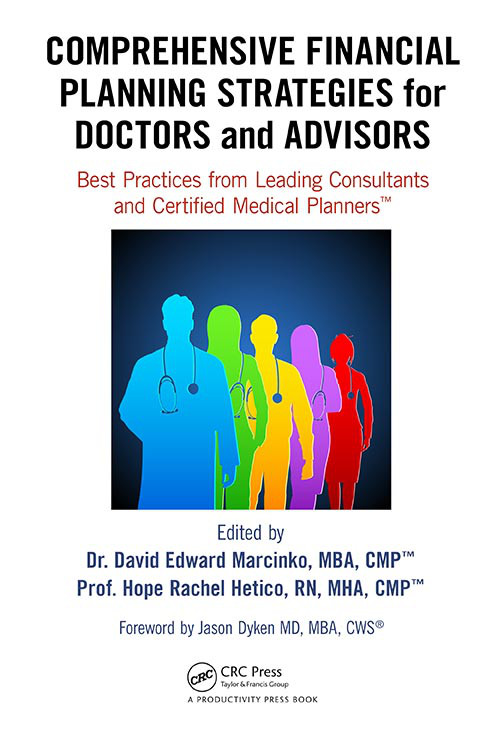
 Comprehensive Financial Planning Strategies for Doctors and Advisors: Best Practices from Leading Consultants and Certified Medical Planners(TM)* 8

ECONOMIC: Paradoxes all Financial Advisors Should Know

BY DR. DAVID EDWARD MARCINKO MBA MEd CMP™

SPONSOR: http://www.MarcinkoAssociates.com

SPONSOR: http://www.CertifiedMedicalPlanner.org

***

***

A paradox is a logic and self-contradictory statement or a statement that runs contrary to one’s expectation. It is a statement that, despite apparently valid reasoning from true or apparently true premises, leads to a seemingly self-contradictory or a logically unacceptable conclusion. A paradox usually involves contradictory-yet-interrelated elements that exist simultaneously and persist over time. They result in “persistent contradiction between interdependent elements” leading to a lasting “unity of opposites”.

***

And so, as we plan for our financial future thru a New Year Resolution for 2025, it’s helpful to be cognizant of these paradoxes. While there’s nothing we can do to control or change them, there is great value in being aware of them, so we can approach them with the right tools and the right mindset.

According to Adam Grossman, here are seven [7] of the paradoxes that can bedevil financial decision-making, clients and financial advisors, alike:

  1. There’s the paradox that all of the greatest fortunes—Carnegie, Rockefeller, Buffett, Gates—have been made by owning just one stock. And yet the best advice for individual investors is to do the opposite: to own broadly diversified index funds. More: https://tinyurl.com/285vftx4
  2. There’s the paradox that the stock market may appear over valued and yet it could become even more overvalued before it eventually declines. And when it does decline, it may be to a level that is even higher than where it is today.
  3. There’s the paradox that we make plans based on our understanding of the rules—and yet Congress can change the rules on us at any time, as the recent 2024 election results attest.
  4. There’s the paradox that we base our plans on historical averages—average stock market returns, average interest rates, average inflation rates and so on—and yet we only lead one life, so none of us will experience the average.
  5. There’s the paradox that we continue to be attracted to the prestige of high-cost colleges, even though rational analysis that looks at return on investment tells us that lower-cost state schools are usually the better bet.
  6. There’s the paradox that early retirement seems so appealing—and has even turned into a movement—and yet the reality of early retirement suggests that we might be better off staying at our desks.
  7. There’s the paradox that retirees’ worst fear is outliving their money and yet few choose the financial product that is purpose-built to solve that problem: the single-premium immediate annuity.

CITE: https://www.r2library.com/Resource/Title/0826102549

How should you respond to these paradoxes? As you plan for your financial future, embrace the concept of “loosely held views.”

In other words, make financial plans, but continuously update your views, question your assumptions and rethink your priorities.

COMMENTS APPRECIATED

Subscribe Today!

***

***

MICRO-CERTIFICATIONS: Financial Advisors Seeking Physician-Client Niche Success?

Micro-Credentials on the Rise

KNOWLEDGE RICHES IN NICHES

DR. DAVID EDWARD MARCINKO MBA MEd CMP

SPONSOR: http://www.CertifiedMedicalPlanner.org

***

***

Do you ever wish you could acquire specific information for your career activities without having to complete a university Master’s Degree or finish our entire Certified Medical Planner™ professional designation program? Well, Micro-Certifications from the Institute of Medical Business Advisors, Inc., might be the answer. Read on to learn how our three Micro-Certifications offer new opportunities for professional growth in the medical practice, business management, health economics and financial planning, investing and advisory space for physicians, nurses and healthcare professionals.

Micro-Certification Basics

Stock-Brokers, Financial Advisors, Investment Advisors, Accountants, Consultants, Financial Analyists and Financial Planners need to enhance their knowledge skills to better serve the changing and challenging healthcare professional ecosystem. But, it can be difficult to learn and demonstrate mastery of these new skills to employers, clients, physicians or medical prospects. This makes professional advancement difficult. That’s where Micro-Certification and Micro-Credentialing enters the online educational space. It is the process of earning a Micro-Certification, which is like a mini-degree or mini-credential, in a very specific topical area.

Micro-Certification Requirements

Once you’ve completed all of the requirements for our Micro-Certification, you will be awarded proof that you’ve earned it. This might take the form of a paper or digital certificate, which may be a hard document or electronic image, transcript, file, or other official evidence that you’ve completed the necessary work.

Uses of Micro-Certifications

Micro-Certifications may be used to demonstrate to physicians prospective medical clients that you’ve mastered a certain knowledge set. Because of this, Micro-Certifications are useful for those financial service professionals seeking medical clients, employment or career advancement opportunities.

Examples of iMBA, Inc., Micro-Certifications

Here are the three most popular Micro-Certification course from the Institute of Medical Business Advisors, Inc:

  • 1. Health Insurance and Managed Care: To keep up with the ever-changing field of health care physician advice, you must learn new medical practice business models in order to attract and assist physicians and nurse clients. By bringing together the most up-to-date business and medical prctice models [Medicare, Medicaid, PP-ACA, POSs, EPOs, HMOs, PPOs, IPA’s, PPMCs, Accountable Care Organizations, Concierge Medicine, Value Based Care, Physician Pay-for-Performance Initiatives, Hospitalists, Retail and Whole-Sale Medicine, Health Savings Accounts and Medical Unions, etc], this iMBA Inc., Mini-Certification offers a wealth of essential information that will help you understand the ever-changing practices in the next generation of health insurance and managed medical care.
  • 2. Health Economics and Finance: Medical economics, finance, managerial and cost accounting is an integral component of the health care industrial complex. It is broad-based and covers many other industries: insurance, mathematics and statistics, public and population health, provider recruitment and retention, health policy, forecasting, aging and long-term care, and Venture Capital are all commingled arenas. It is essential knowledge that all financial services professionals seeking to serve in the healthcare advisory niche space should possess.
  • 3. Health Information Technology and Security: There is a myth that all physician focused financial advisors understand Health Information Technology [HIT]. In truth, it is often economically misused or financially misunderstood. Moreover, an emerging national HIT architecture often puts the financial advisor or financial planner in a position of maximum uncertainty and minimum productivity regarding issues like: Electronic Medical Records [EMRs] or Electronic Health Records [EHRs], mobile health, tele-health or tele-medicine, Artificial Intelligence [AI], benefits managers and human resource professionals.

Other Topics include: economics, finance, investing, marketing, advertising, sales, start-ups, business plan creation, financial planning and entrepreneurship, etc.

How to Start Learning and Earning Recognition for Your Knowledge

Now that you’re familiar with Micro-Credentialing, you might consider earning a Micro-Certification with us. We offer 3 official Micro-Certificates by completing a one month online course, with a live instructor consisting of twelve asynchronous lessons/online classes [3/wk X 4/weeks = 12 classes]. The earned official completion certificate can be used to demonstrate mastery of a specific skill set and shared with current or future employers, current clients or medical niche financial advisory prospects.

Mini-Certification Tuition, Books and Related Fees

The tuition for each Mini-Certification live online course is $1,250 with the purchase of one required dictionary handbook. Other additional guides, white-papers, videos, files and e-content are all supplied without charge. Alternative courses may be developed in the future subject to demand and may change without notice.

***

Contact: For more information, or to speak with an academic representative, please contact Ann Miller RN MHA CMP™ at: MarcinkoAdvisors@msn.com [24/7].

***

PHYSICIANS BEWARE: Financial “Advice”

BEWARE THE “DOCTOR EFFECT”

Bread for the advisor – Crumbs for the client

By Dr. David Edward Marcinko MBA CMP

SPONSOR: http://www.MarcinkoAssociates.com

Several years ago a group of highly trusted and deeply experienced financial services professionals and estate planners noted that far too many of their physician clients, using traditional stock brokers, management consultants and financial advisors, seemed to be less successful than those who went it alone. These Do-it-Yourselfers [DIYs] had setbacks and made mistakes, for sure. But, the ME Inc. doctors seemed to learn from their mistakes and did not incur the high management and service fees demanded from general or retail one-size-fits-all “advisors.

”In fact, an informal inverse relationship was noted, and dubbed the “Doctor Effect.” In others words, the more consultants an individual doctor retained; the less well they did in all disciplines of the financial planning and medical practice management, continuum.

Of course, the reason for this discrepancy eluded many of them as Wall Street brokerages and wire-houses flooded the media with messages, infomercials, print, radio, TV, texts, tweets, and internet ads to the contrary. Rather than self-learn the basics, the prevailing sentiment seemed to purse the holy grail of finding the “perfect financial advisor.” This realization was a confirmation of the industry culture which seemed to be: Bread for the advisor – Crumbs for the client!

And so, at D.E. Marcinko & Associates, our informed cadre’ of technology focused and highly educated doctors, nurses, financial advisors, attorneys, accountants, psychologists and educational visionaries decided there must be a better way for their healthcare colleagues to receive financial planning advice and related management services within a culture of fiduciary responsibility.

CMP: http://www.CertifiedMedicalPlanner.org

COMMENTS APPRECIATED

Thank You

***

***

RISK MANAGEMENT: https://www.routledge.com/Comprehensive-Financial-Planning-Strategies-for-Doctors-and-Advisors-Best/Marcinko-Hetico/p/book/9781482240283

***

CERTIFIED MEDICAL PLANNER™ Niche Financial Advisor Professional Designation

Think Different – Be Different  – Thrive

[By Ann Miller RN MHA]

Letterhead CMP

http://www.CertifiedMedicalPlanner.org

Dear Physician Focused Financial Advisors

Did you know that desperate doctors of all ages are turning to knowledgeable financial advisors and medical management consultants for help? Symbiotically too, generalist advisors are finding that the mutual need for knowledge and extreme niche synergy is obvious.

***

planning

***

But, there was no established curriculum or educational program; no corpus of knowledge or codifying terms-of-art; no academic gravitas or fiduciary accountability; and certainly no identifying professional designation that demonstrated integrated subject matter expertise for the increasingly unique healthcare focused financial advisory niche … Until Now! 

***

CMP logo

http://www.CertifiedMedicalPlanner.org

Enter the CMPs

“The informed voice of a new generation of fiduciary advisors for healthcare”

Think Different

 [Think Different – Be Different – Thrive]

InfoGraphic

http://e.infogr.am/enter_the_certified_medical_planner?src=embed

CMP logo

http://www.CertifiedMedicalPlanner.org

***

So, if you are looking to supplement your knowledge, income and designations; and find other qualified professionals you may want to consider the CMP® program.

Enter the Certified Medical Planner™ charter professional designation. And, CMPs™ are FIDUCIARIES, 24/7.

Channel Surfing the ME-P

Have you visited our other topic channels? Established to facilitate idea exchange and link our community together, the value of these topics is dependent upon your input. Please take a minute to visit. And, to prevent that annoying spam, we ask that you register. It is fast, free and secure.

Conclusion

Your thoughts and comments on this ME-P are appreciated. Feel free to review our top-left column, and top-right sidebar materials, links, URLs and related websites, too. Then, subscribe to the ME-P. It is fast, free and secure.

***

Become a CMP

***

Speaker: If you need a moderator or speaker for an upcoming event, Dr. David E. Marcinko; MBA – Publisher-in-Chief of the Medical Executive-Post – is available for seminar or speaking engagements. Contact: MarcinkoAdvisors@msn.com

OUR OTHER PRINT BOOKS AND RELATED INFORMATION SOURCES:

 Comprehensive Financial Planning Strategies for Doctors and Advisors: Best Practices from Leading Consultants and Certified Medical Planners(TM)* 8

MICRO-CERTIFICATIONS: Physician Insider Knowledge for Financial Advisor Success?

Micro-Credentials on the Rise

KNOWLEDGE RICHES IN NICHES

DR. DAVID EDWARD MARCINKO MBA CMP

SPONSOR: http://www.CertifiedMedicalPlanner.org

***

***

Do you ever wish you could acquire specific information for your career activities without having to complete a university Master’s Degree or finish our entire Certified Medical Planner™ professional designation program? Well, Micro-Certifications from the Institute of Medical Business Advisors, Inc., might be the answer. Read on to learn how our three Micro-Certifications offer new opportunities for professional growth in the medical practice, business management, health economics and financial planning, investing and advisory space for physicians, nurses and healthcare professionals.

Micro-Certification Basics

Stock-Brokers, Financial Advisors, Investment Advisors, Accountants, Consultants, Financial Analyists and Financial Planners need to enhance their knowledge skills to better serve the changing and challenging healthcare professional ecosystem. But, it can be difficult to learn and demonstrate mastery of these new skills to employers, clients, physicians or medical prospects. This makes professional advancement difficult. That’s where Micro-Certification and Micro-Credentialing enters the online educational space. It is the process of earning a Micro-Certification, which is like a mini-degree or mini-credential, in a very specific topical area.

Micro-Certification Requirements

Once you’ve completed all of the requirements for our Micro-Certification, you will be awarded proof that you’ve earned it. This might take the form of a paper or digital certificate, which may be a hard document or electronic image, transcript, file, or other official evidence that you’ve completed the necessary work.

Uses of Micro-Certifications

Micro-Certifications may be used to demonstrate to physicians prospective medical clients that you’ve mastered a certain knowledge set. Because of this, Micro-Certifications are useful for those financial service professionals seeking medical clients, employment or career advancement opportunities.

Examples of iMBA, Inc., Micro-Certifications

Here are the three most popular Micro-Certification course from the Institute of Medical Business Advisors, Inc:

  • 1. Health Insurance and Managed Care: To keep up with the ever-changing field of health care physician advice, you must learn new medical practice business models in order to attract and assist physicians and nurse clients. By bringing together the most up-to-date business and medical prctice models [Medicare, Medicaid, PP-ACA, POSs, EPOs, HMOs, PPOs, IPA’s, PPMCs, Accountable Care Organizations, Concierge Medicine, Value Based Care, Physician Pay-for-Performance Initiatives, Hospitalists, Retail and Whole-Sale Medicine, Health Savings Accounts and Medical Unions, etc], this iMBA Inc., Mini-Certification offers a wealth of essential information that will help you understand the ever-changing practices in the next generation of health insurance and managed medical care.
  • 2. Health Economics and Finance: Medical economics, finance, managerial and cost accounting is an integral component of the health care industrial complex. It is broad-based and covers many other industries: insurance, mathematics and statistics, public and population health, provider recruitment and retention, health policy, forecasting, aging and long-term care, and Venture Capital are all commingled arenas. It is essential knowledge that all financial services professionals seeking to serve in the healthcare advisory niche space should possess.
  • 3. Health Information Technology and Security: There is a myth that all physician focused financial advisors understand Health Information Technology [HIT]. In truth, it is often economically misused or financially misunderstood. Moreover, an emerging national HIT architecture often puts the financial advisor or financial planner in a position of maximum uncertainty and minimum productivity regarding issues like: Electronic Medical Records [EMRs] or Electronic Health Records [EHRs], mobile health, tele-health or tele-medicine, Artificial Intelligence [AI], benefits managers and human resource professionals.

Other Topics include: economics, finance, investing, marketing, advertising, sales, start-ups, business plan creation, financial planning and entrepreneurship, etc.

How to Start Learning and Earning Recognition for Your Knowledge

Now that you’re familiar with Micro-Credentialing, you might consider earning a Micro-Certification with us. We offer 3 official Micro-Certificates by completing a one month online course, with a live instructor consisting of twelve asynchronous lessons/online classes [3/wk X 4/weeks = 12 classes]. The earned official completion certificate can be used to demonstrate mastery of a specific skill set and shared with current or future employers, current clients or medical niche financial advisory prospects.

Mini-Certification Tuition, Books and Related Fees

The tuition for each Mini-Certification live online course is $1,250 with the purchase of one required dictionary handbook. Other additional guides, white-papers, videos, files and e-content are all supplied without charge. Alternative courses may be developed in the future subject to demand and may change without notice.

***

Contact: For more information, or to speak with an academic representative, please contact Ann Miller RN MHA CMP™ at: MarcinkoAdvisors@msn.com [24/7] -OR- 770-448-0769[9:00 – 5:00 EST].

***

MICRO-CERTIFICATIONS: Financial Advisors Seeking Physician-Client Niche Success?

Micro-Credentials on the Rise

KNOWLEDGE RICHES IN NICHES

DR. DAVID EDWARD MARCINKO MBA CMP

SPONSOR: http://www.CertifiedMedicalPlanner.org

***

***

Do you ever wish you could acquire specific information for your career activities without having to complete a university Master’s Degree or finish our entire Certified Medical Planner™ professional designation program? Well, Micro-Certifications from the Institute of Medical Business Advisors, Inc., might be the answer. Read on to learn how our three Micro-Certifications offer new opportunities for professional growth in the medical practice, business management, health economics and financial planning, investing and advisory space for physicians, nurses and healthcare professionals.

Micro-Certification Basics

Stock-Brokers, Financial Advisors, Investment Advisors, Accountants, Consultants, Financial Analyists and Financial Planners need to enhance their knowledge skills to better serve the changing and challenging healthcare professional ecosystem. But, it can be difficult to learn and demonstrate mastery of these new skills to employers, clients, physicians or medical prospects. This makes professional advancement difficult. That’s where Micro-Certification and Micro-Credentialing enters the online educational space. It is the process of earning a Micro-Certification, which is like a mini-degree or mini-credential, in a very specific topical area.

Micro-Certification Requirements

Once you’ve completed all of the requirements for our Micro-Certification, you will be awarded proof that you’ve earned it. This might take the form of a paper or digital certificate, which may be a hard document or electronic image, transcript, file, or other official evidence that you’ve completed the necessary work.

Uses of Micro-Certifications

Micro-Certifications may be used to demonstrate to physicians prospective medical clients that you’ve mastered a certain knowledge set. Because of this, Micro-Certifications are useful for those financial service professionals seeking medical clients, employment or career advancement opportunities.

Examples of iMBA, Inc., Micro-Certifications

Here are the three most popular Micro-Certification course from the Institute of Medical Business Advisors, Inc:

  • 1. Health Insurance and Managed Care: To keep up with the ever-changing field of health care physician advice, you must learn new medical practice business models in order to attract and assist physicians and nurse clients. By bringing together the most up-to-date business and medical prctice models [Medicare, Medicaid, PP-ACA, POSs, EPOs, HMOs, PPOs, IPA’s, PPMCs, Accountable Care Organizations, Concierge Medicine, Value Based Care, Physician Pay-for-Performance Initiatives, Hospitalists, Retail and Whole-Sale Medicine, Health Savings Accounts and Medical Unions, etc], this iMBA Inc., Mini-Certification offers a wealth of essential information that will help you understand the ever-changing practices in the next generation of health insurance and managed medical care.
  • 2. Health Economics and Finance: Medical economics, finance, managerial and cost accounting is an integral component of the health care industrial complex. It is broad-based and covers many other industries: insurance, mathematics and statistics, public and population health, provider recruitment and retention, health policy, forecasting, aging and long-term care, and Venture Capital are all commingled arenas. It is essential knowledge that all financial services professionals seeking to serve in the healthcare advisory niche space should possess.
  • 3. Health Information Technology and Security: There is a myth that all physician focused financial advisors understand Health Information Technology [HIT]. In truth, it is often economically misused or financially misunderstood. Moreover, an emerging national HIT architecture often puts the financial advisor or financial planner in a position of maximum uncertainty and minimum productivity regarding issues like: Electronic Medical Records [EMRs] or Electronic Health Records [EHRs], mobile health, tele-health or tele-medicine, Artificial Intelligence [AI], benefits managers and human resource professionals.

Other Topics include: economics, finance, investing, marketing, advertising, sales, start-ups, business plan creation, financial planning and entrepreneurship, etc.

How to Start Learning and Earning Recognition for Your Knowledge

Now that you’re familiar with Micro-Credentialing, you might consider earning a Micro-Certification with us. We offer 3 official Micro-Certificates by completing a one month online course, with a live instructor consisting of twelve asynchronous lessons/online classes [3/wk X 4/weeks = 12 classes]. The earned official completion certificate can be used to demonstrate mastery of a specific skill set and shared with current or future employers, current clients or medical niche financial advisory prospects.

Mini-Certification Tuition, Books and Related Fees

The tuition for each Mini-Certification live online course is $1,250 with the purchase of one required dictionary handbook. Other additional guides, white-papers, videos, files and e-content are all supplied without charge. Alternative courses may be developed in the future subject to demand and may change without notice.

***

Contact: For more information, or to speak with an academic representative, please contact Ann Miller RN MHA CMP™ at: MarcinkoAdvisors@msn.com [24/7] -OR- 770-448-0769[9:00 – 5:00 EST].

***

MICRO-CREDENTIALS: For Financial Advisors Seeking Physician-Client Niche Success?

Micro-Credentials on the Rise

KNOWLEDGE RICHES IN NICHES

DR. DAVID EDWARD MARCINKO MBA CMP

SPONSOR: http://www.CertifiedMedicalPlanner.org

***

***

Do you ever wish you could acquire specific information for your career activities without having to complete a university Master’s Degree or finish our entire Certified Medical Planner™ professional designation program? Well, Micro-Certifications from the Institute of Medical Business Advisors, Inc., might be the answer. Read on to learn how our three Micro-Certifications offer new opportunities for professional growth in the medical practice, business management, health economics and financial planning, investing and advisory space for physicians, nurses and healthcare professionals.

Micro-Certification Basics

Stock-Brokers, Financial Advisors, Investment Advisors, Accountants, Consultants, Financial Analyists and Financial Planners need to enhance their knowledge skills to better serve the changing and challenging healthcare professional ecosystem. But, it can be difficult to learn and demonstrate mastery of these new skills to employers, clients, physicians or medical prospects. This makes professional advancement difficult. That’s where Micro-Certification and Micro-Credentialing enters the online educational space. It is the process of earning a Micro-Certification, which is like a mini-degree or mini-credential, in a very specific topical area.

Micro-Certification Requirements

Once you’ve completed all of the requirements for our Micro-Certification, you will be awarded proof that you’ve earned it. This might take the form of a paper or digital certificate, which may be a hard document or electronic image, transcript, file, or other official evidence that you’ve completed the necessary work.

Uses of Micro-Certifications

Micro-Certifications may be used to demonstrate to physicians prospective medical clients that you’ve mastered a certain knowledge set. Because of this, Micro-Certifications are useful for those financial service professionals seeking medical clients, employment or career advancement opportunities.

Examples of iMBA, Inc., Micro-Certifications

Here are the three most popular Micro-Certification course from the Institute of Medical Business Advisors, Inc:

  • 1. Health Insurance and Managed Care: To keep up with the ever-changing field of health care physician advice, you must learn new medical practice business models in order to attract and assist physicians and nurse clients. By bringing together the most up-to-date business and medical prctice models [Medicare, Medicaid, PP-ACA, POSs, EPOs, HMOs, PPOs, IPA’s, PPMCs, Accountable Care Organizations, Concierge Medicine, Value Based Care, Physician Pay-for-Performance Initiatives, Hospitalists, Retail and Whole-Sale Medicine, Health Savings Accounts and Medical Unions, etc], this iMBA Inc., Mini-Certification offers a wealth of essential information that will help you understand the ever-changing practices in the next generation of health insurance and managed medical care.
  • 2. Health Economics and Finance: Medical economics, finance, managerial and cost accounting is an integral component of the health care industrial complex. It is broad-based and covers many other industries: insurance, mathematics and statistics, public and population health, provider recruitment and retention, health policy, forecasting, aging and long-term care, and Venture Capital are all commingled arenas. It is essential knowledge that all financial services professionals seeking to serve in the healthcare advisory niche space should possess.
  • 3. Health Information Technology and Security: There is a myth that all physician focused financial advisors understand Health Information Technology [HIT]. In truth, it is often economically misused or financially misunderstood. Moreover, an emerging national HIT architecture often puts the financial advisor or financial planner in a position of maximum uncertainty and minimum productivity regarding issues like: Electronic Medical Records [EMRs] or Electronic Health Records [EHRs], mobile health, tele-health or tele-medicine, Artificial Intelligence [AI], benefits managers and human resource professionals.

Other Topics include: economics, finance, investing, marketing, advertising, sales, start-ups, business plan creation, financial planning and entrepreneurship, etc.

How to Start Learning and Earning Recognition for Your Knowledge

Now that you’re familiar with Micro-Credentialing, you might consider earning a Micro-Certification with us. We offer 3 official Micro-Certificates by completing a one month online course, with a live instructor consisting of twelve asynchronous lessons/online classes [3/wk X 4/weeks = 12 classes]. The earned official completion certificate can be used to demonstrate mastery of a specific skill set and shared with current or future employers, current clients or medical niche financial advisory prospects.

Mini-Certification Tuition, Books and Related Fees

The tuition for each Mini-Certification live online course is $1,250 with the purchase of one required dictionary handbook. Other additional guides, white-papers, videos, files and e-content are all supplied without charge. Alternative courses may be developed in the future subject to demand and may change without notice.

***

Contact: For more information, or to speak with an academic representative, please contact Ann Miller RN MHA CMP™ at Email: MarcinkoAdvisors@msn.com [24/7] -OR- 770-448-0769[9:00 – 5:00 EST].

***

****

MICRO-CREDENTIALS: For Financial Advisors Seeking Physician-Client Niche Success?

Micro-Credentials on the Rise

KNOWLEDGE RICHES IN NICHES

DR. DAVID EDWARD MARCINKO MBA CMP

SPONSOR: http://www.CertifiedMedicalPlanner.org

***

***

Do you ever wish you could acquire specific information for your career activities without having to complete a university Master’s Degree or finish our entire Certified Medical Planner™ professional designation program? Well, Micro-Certifications from the Institute of Medical Business Advisors, Inc., might be the answer. Read on to learn how our three Micro-Certifications offer new opportunities for professional growth in the medical practice, business management, health economics and financial planning, investing and advisory space for physicians, nurses and healthcare professionals.

Micro-Certification Basics

Stock-Brokers, Financial Advisors, Investment Advisors, Accountants, Consultants, Financial Analyists and Financial Planners need to enhance their knowledge skills to better serve the changing and challenging healthcare professional ecosystem. But, it can be difficult to learn and demonstrate mastery of these new skills to employers, clients, physicians or medical prospects. This makes professional advancement difficult. That’s where Micro-Certification and Micro-Credentialing enters the online educational space. It is the process of earning a Micro-Certification, which is like a mini-degree or mini-credential, in a very specific topical area.

Micro-Certification Requirements

Once you’ve completed all of the requirements for our Micro-Certification, you will be awarded proof that you’ve earned it. This might take the form of a paper or digital certificate, which may be a hard document or electronic image, transcript, file, or other official evidence that you’ve completed the necessary work.

Uses of Micro-Certifications

Micro-Certifications may be used to demonstrate to physicians prospective medical clients that you’ve mastered a certain knowledge set. Because of this, Micro-Certifications are useful for those financial service professionals seeking medical clients, employment or career advancement opportunities.

Examples of iMBA, Inc., Micro-Certifications

Here are the three most popular Micro-Certification course from the Institute of Medical Business Advisors, Inc:

  • 1. Health Insurance and Managed Care: To keep up with the ever-changing field of health care physician advice, you must learn new medical practice business models in order to attract and assist physicians and nurse clients. By bringing together the most up-to-date business and medical prctice models [Medicare, Medicaid, PP-ACA, POSs, EPOs, HMOs, PPOs, IPA’s, PPMCs, Accountable Care Organizations, Concierge Medicine, Value Based Care, Physician Pay-for-Performance Initiatives, Hospitalists, Retail and Whole-Sale Medicine, Health Savings Accounts and Medical Unions, etc], this iMBA Inc., Mini-Certification offers a wealth of essential information that will help you understand the ever-changing practices in the next generation of health insurance and managed medical care.
  • 2. Health Economics and Finance: Medical economics, finance, managerial and cost accounting is an integral component of the health care industrial complex. It is broad-based and covers many other industries: insurance, mathematics and statistics, public and population health, provider recruitment and retention, health policy, forecasting, aging and long-term care, and Venture Capital are all commingled arenas. It is essential knowledge that all financial services professionals seeking to serve in the healthcare advisory niche space should possess.
  • 3. Health Information Technology and Security: There is a myth that all physician focused financial advisors understand Health Information Technology [HIT]. In truth, it is often economically misused or financially misunderstood. Moreover, an emerging national HIT architecture often puts the financial advisor or financial planner in a position of maximum uncertainty and minimum productivity regarding issues like: Electronic Medical Records [EMRs] or Electronic Health Records [EHRs], mobile health, tele-health or tele-medicine, Artificial Intelligence [AI], benefits managers and human resource professionals.

Other Topics include: economics, finance, investing, marketing, advertising, sales, start-ups, business plan creation, financial planning and entrepreneurship, etc.

How to Start Learning and Earning Recognition for Your Knowledge

Now that you’re familiar with Micro-Credentialing, you might consider earning a Micro-Certification with us. We offer 3 official Micro-Certificates by completing a one month online course, with a live instructor consisting of twelve asynchronous lessons/online classes [3/wk X 4/weeks = 12 classes]. The earned official completion certificate can be used to demonstrate mastery of a specific skill set and shared with current or future employers, current clients or medical niche financial advisory prospects.

Mini-Certification Tuition, Books and Related Fees

The tuition for each Mini-Certification live online course is $1,250 with the purchase of one required dictionary handbook. Other additional guides, white-papers, videos, files and e-content are all supplied without charge. Alternative courses may be developed in the future subject to demand and may change without notice.

***

Contact: For more information, or to speak with an academic representative, please contact Ann Miller RN MHA CMP™ at Email: MarcinkoAdvisors@msn.com [24/7] -OR- 770-448-0769[9:00 – 5:00 EST].

***

****

MICRO-CERTIFICATIONS: For Financial Advisors Seeking Physician-Client Niche Success?

Micro-Credentials on the Rise

KNOWLEDGE RICHES IN NICHES

DR. DAVID EDWARD MARCINKO MBA CMP

SPONSOR: http://www.CertifiedMedicalPlanner.org

***

***

Do you ever wish you could acquire specific information for your career activities without having to complete a university Master’s Degree or finish our entire Certified Medical Planner™ professional designation program? Well, Micro-Certifications from the Institute of Medical Business Advisors, Inc., might be the answer. Read on to learn how our three Micro-Certifications offer new opportunities for professional growth in the medical practice, business management, health economics and financial planning, investing and advisory space for physicians, nurses and healthcare professionals.

Micro-Certification Basics

Stock-Brokers, Financial Advisors, Investment Advisors, Accountants, Consultants, Financial Analyists and Financial Planners need to enhance their knowledge skills to better serve the changing and challenging healthcare professional ecosystem. But, it can be difficult to learn and demonstrate mastery of these new skills to employers, clients, physicians or medical prospects. This makes professional advancement difficult. That’s where Micro-Certification and Micro-Credentialing enters the online educational space. It is the process of earning a Micro-Certification, which is like a mini-degree or mini-credential, in a very specific topical area.

Micro-Certification Requirements

Once you’ve completed all of the requirements for our Micro-Certification, you will be awarded proof that you’ve earned it. This might take the form of a paper or digital certificate, which may be a hard document or electronic image, transcript, file, or other official evidence that you’ve completed the necessary work.

Uses of Micro-Certifications

Micro-Certifications may be used to demonstrate to physicians prospective medical clients that you’ve mastered a certain knowledge set. Because of this, Micro-Certifications are useful for those financial service professionals seeking medical clients, employment or career advancement opportunities.

Examples of iMBA, Inc., Micro-Certifications

Here are the three most popular Micro-Certification course from the Institute of Medical Business Advisors, Inc:

  • 1. Health Insurance and Managed Care: To keep up with the ever-changing field of health care physician advice, you must learn new medical practice business models in order to attract and assist physicians and nurse clients. By bringing together the most up-to-date business and medical prctice models [Medicare, Medicaid, PP-ACA, POSs, EPOs, HMOs, PPOs, IPA’s, PPMCs, Accountable Care Organizations, Concierge Medicine, Value Based Care, Physician Pay-for-Performance Initiatives, Hospitalists, Retail and Whole-Sale Medicine, Health Savings Accounts and Medical Unions, etc], this iMBA Inc., Mini-Certification offers a wealth of essential information that will help you understand the ever-changing practices in the next generation of health insurance and managed medical care.
  • 2. Health Economics and Finance: Medical economics, finance, managerial and cost accounting is an integral component of the health care industrial complex. It is broad-based and covers many other industries: insurance, mathematics and statistics, public and population health, provider recruitment and retention, health policy, forecasting, aging and long-term care, and Venture Capital are all commingled arenas. It is essential knowledge that all financial services professionals seeking to serve in the healthcare advisory niche space should possess.
  • 3. Health Information Technology and Security: There is a myth that all physician focused financial advisors understand Health Information Technology [HIT]. In truth, it is often economically misused or financially misunderstood. Moreover, an emerging national HIT architecture often puts the financial advisor or financial planner in a position of maximum uncertainty and minimum productivity regarding issues like: Electronic Medical Records [EMRs] or Electronic Health Records [EHRs], mobile health, tele-health or tele-medicine, Artificial Intelligence [AI], benefits managers and human resource professionals.

Other Topics include: economics, finance, investing, marketing, advertising, sales, start-ups, business plan creation, financial planning and entrepreneurship, etc.

How to Start Learning and Earning Recognition for Your Knowledge

Now that you’re familiar with Micro-Credentialing, you might consider earning a Micro-Certification with us. We offer 3 official Micro-Certificates by completing a one month online course, with a live instructor consisting of twelve asynchronous lessons/online classes [3/wk X 4/weeks = 12 classes]. The earned official completion certificate can be used to demonstrate mastery of a specific skill set and shared with current or future employers, current clients or medical niche financial advisory prospects.

Mini-Certification Tuition, Books and Related Fees

The tuition for each Mini-Certification live online course is $1,250 with the purchase of one required dictionary handbook. Other additional guides, white-papers, videos, files and e-content are all supplied without charge. Alternative courses may be developed in the future subject to demand and may change without notice.

***

Contact: For more information, or to speak with an academic representative, please contact Ann Miller RN MHA CMP™ at Email: MarcinkoAdvisors@msn.com [24/7] -OR- 770-448-0769[9:00 – 5:00 EST].

***

MICRO-CERTIFICATIONS: For Financial Advisors Seeking Physician-Client Niche Success?

Micro-Credentials on the Rise

KNOWLEDGE RICHES IN NICHES

DR. DAVID EDWARD MARCINKO MBA CMP

SPONSOR: http://www.CertifiedMedicalPlanner.org

***

***

Do you ever wish you could acquire specific information for your career activities without having to complete a university Master’s Degree or finish our entire Certified Medical Planner™ professional designation program? Well, Micro-Certifications from the Institute of Medical Business Advisors, Inc., might be the answer. Read on to learn how our three Micro-Certifications offer new opportunities for professional growth in the medical practice, business management, health economics and financial planning, investing and advisory space for physicians, nurses and healthcare professionals.

Micro-Certification Basics

Stock-Brokers, Financial Advisors, Investment Advisors, Accountants, Consultants, Financial Analyists and Financial Planners need to enhance their knowledge skills to better serve the changing and challenging healthcare professional ecosystem. But, it can be difficult to learn and demonstrate mastery of these new skills to employers, clients, physicians or medical prospects. This makes professional advancement difficult. That’s where Micro-Certification and Micro-Credentialing enters the online educational space. It is the process of earning a Micro-Certification, which is like a mini-degree or mini-credential, in a very specific topical area.

Micro-Certification Requirements

Once you’ve completed all of the requirements for our Micro-Certification, you will be awarded proof that you’ve earned it. This might take the form of a paper or digital certificate, which may be a hard document or electronic image, transcript, file, or other official evidence that you’ve completed the necessary work.

Uses of Micro-Certifications

Micro-Certifications may be used to demonstrate to physicians prospective medical clients that you’ve mastered a certain knowledge set. Because of this, Micro-Certifications are useful for those financial service professionals seeking medical clients, employment or career advancement opportunities.

Examples of iMBA, Inc., Micro-Certifications

Here are the three most popular Micro-Certification course from the Institute of Medical Business Advisors, Inc:

  • 1. Health Insurance and Managed Care: To keep up with the ever-changing field of health care physician advice, you must learn new medical practice business models in order to attract and assist physicians and nurse clients. By bringing together the most up-to-date business and medical prctice models [Medicare, Medicaid, PP-ACA, POSs, EPOs, HMOs, PPOs, IPA’s, PPMCs, Accountable Care Organizations, Concierge Medicine, Value Based Care, Physician Pay-for-Performance Initiatives, Hospitalists, Retail and Whole-Sale Medicine, Health Savings Accounts and Medical Unions, etc], this iMBA Inc., Mini-Certification offers a wealth of essential information that will help you understand the ever-changing practices in the next generation of health insurance and managed medical care.
  • 2. Health Economics and Finance: Medical economics, finance, managerial and cost accounting is an integral component of the health care industrial complex. It is broad-based and covers many other industries: insurance, mathematics and statistics, public and population health, provider recruitment and retention, health policy, forecasting, aging and long-term care, and Venture Capital are all commingled arenas. It is essential knowledge that all financial services professionals seeking to serve in the healthcare advisory niche space should possess.
  • 3. Health Information Technology and Security: There is a myth that all physician focused financial advisors understand Health Information Technology [HIT]. In truth, it is often economically misused or financially misunderstood. Moreover, an emerging national HIT architecture often puts the financial advisor or financial planner in a position of maximum uncertainty and minimum productivity regarding issues like: Electronic Medical Records [EMRs] or Electronic Health Records [EHRs], mobile health, tele-health or tele-medicine, Artificial Intelligence [AI], benefits managers and human resource professionals.

Other Topics include: economics, finance, investing, marketing, advertising, sales, start-ups, business plan creation, financial planning and entrepreneurship, etc.

How to Start Learning and Earning Recognition for Your Knowledge

Now that you’re familiar with Micro-Credentialing, you might consider earning a Micro-Certification with us. We offer 3 official Micro-Certificates by completing a one month online course, with a live instructor consisting of twelve asynchronous lessons/online classes [3/wk X 4/weeks = 12 classes]. The earned official completion certificate can be used to demonstrate mastery of a specific skill set and shared with current or future employers, current clients or medical niche financial advisory prospects.

Mini-Certification Tuition, Books and Related Fees

The tuition for each Mini-Certification live online course is $1,250 with the purchase of one required dictionary handbook. Other additional guides, white-papers, videos, files and e-content are all supplied without charge. Alternative courses may be developed in the future subject to demand and may change without notice.

***

Contact: For more information, or to speak with an academic representative, please contact Ann Miller RN MHA CMP™ at: MarcinkoAdvisors@msn.com [24/7] -OR- 770-448-0769 [9:00 – 5:00 EST].

***

OnLine MICRO-CERTIFICATIONS: For Financial Advisors Seeking Physician-Client Niche Success?

Micro-Credentials on the Rise

KNOWLEDGE RICHES IN NICHES

DR. DAVID EDWARD MARCINKO MBA CMP

SPONSOR: http://www.CertifiedMedicalPlanner.org

***

***

Do you ever wish you could acquire specific information for your career activities without having to complete a university Master’s Degree or finish our entire Certified Medical Planner™ professional designation program? Well, Micro-Certifications from the Institute of Medical Business Advisors, Inc., might be the answer. Read on to learn how our three Micro-Certifications offer new opportunities for professional growth in the medical practice, business management, health economics and financial planning, investing and advisory space for physicians, nurses and healthcare professionals.

Micro-Certification Basics

Stock-Brokers, Financial Advisors, Investment Advisors, Accountants, Consultants, Financial Analyists and Financial Planners need to enhance their knowledge skills to better serve the changing and challenging healthcare professional ecosystem. But, it can be difficult to learn and demonstrate mastery of these new skills to employers, clients, physicians or medical prospects. This makes professional advancement difficult. That’s where Micro-Certification and Micro-Credentialing enters the online educational space. It is the process of earning a Micro-Certification, which is like a mini-degree or mini-credential, in a very specific topical area.

Micro-Certification Requirements

Once you’ve completed all of the requirements for our Micro-Certification, you will be awarded proof that you’ve earned it. This might take the form of a paper or digital certificate, which may be a hard document or electronic image, transcript, file, or other official evidence that you’ve completed the necessary work.

Uses of Micro-Certifications

Micro-Certifications may be used to demonstrate to physicians prospective medical clients that you’ve mastered a certain knowledge set. Because of this, Micro-Certifications are useful for those financial service professionals seeking medical clients, employment or career advancement opportunities.

Examples of iMBA, Inc., Micro-Certifications

Here are the three most popular Micro-Certification course from the Institute of Medical Business Advisors, Inc:

  • 1. Health Insurance and Managed Care: To keep up with the ever-changing field of health care physician advice, you must learn new medical practice business models in order to attract and assist physicians and nurse clients. By bringing together the most up-to-date business and medical prctice models [Medicare, Medicaid, PP-ACA, POSs, EPOs, HMOs, PPOs, IPA’s, PPMCs, Accountable Care Organizations, Concierge Medicine, Value Based Care, Physician Pay-for-Performance Initiatives, Hospitalists, Retail and Whole-Sale Medicine, Health Savings Accounts and Medical Unions, etc], this iMBA Inc., Mini-Certification offers a wealth of essential information that will help you understand the ever-changing practices in the next generation of health insurance and managed medical care.
  • 2. Health Economics and Finance: Medical economics, finance, managerial and cost accounting is an integral component of the health care industrial complex. It is broad-based and covers many other industries: insurance, mathematics and statistics, public and population health, provider recruitment and retention, health policy, forecasting, aging and long-term care, and Venture Capital are all commingled arenas. It is essential knowledge that all financial services professionals seeking to serve in the healthcare advisory niche space should possess.
  • 3. Health Information Technology and Security: There is a myth that all physician focused financial advisors understand Health Information Technology [HIT]. In truth, it is often economically misused or financially misunderstood. Moreover, an emerging national HIT architecture often puts the financial advisor or financial planner in a position of maximum uncertainty and minimum productivity regarding issues like: Electronic Medical Records [EMRs] or Electronic Health Records [EHRs], mobile health, tele-health or tele-medicine, Artificial Intelligence [AI], benefits managers and human resource professionals.

Other Topics include: economics, finance, investing, marketing, advertising, sales, start-ups, business plan creation, financial planning and entrepreneurship, etc.

How to Start Learning and Earning Recognition for Your Knowledge

Now that you’re familiar with Micro-Credentialing, you might consider earning a Micro-Certification with us. We offer 3 official Micro-Certificates by completing a one month online course, with a live instructor consisting of twelve asynchronous lessons/online classes [3/wk X 4/weeks = 12 classes]. The earned official completion certificate can be used to demonstrate mastery of a specific skill set and shared with current or future employers, current clients or medical niche financial advisory prospects.

Mini-Certification Tuition, Books and Related Fees

The tuition for each Mini-Certification live online course is $1,250 with the purchase of one required dictionary handbook. Other additional guides, white-papers, videos, files and e-content are all supplied without charge. Alternative courses may be developed in the future subject to demand and may change without notice.

***

Contact: For more information, or to speak with an academic representative, please contact Ann Miller RN MHA CMP™ at: MarcinkoAdvisors@msn.com [24/7] -OR- 770-448-0769[9:00 – 5:00 EST].

***

MICRO-CERTIFICATIONS: For Financial Advisors Seeking Physician-Client Niche Success?

Micro-Credentials on the Rise

KNOWLEDGE RICHES IN NICHES

DR. DAVID EDWARD MARCINKO MBA CMP

SPONSOR: http://www.CertifiedMedicalPlanner.org

***

***

Do you ever wish you could acquire specific information for your career activities without having to complete a university Master’s Degree or finish our entire Certified Medical Planner™ professional designation program? Well, Micro-Certifications from the Institute of Medical Business Advisors, Inc., might be the answer. Read on to learn how our three Micro-Certifications offer new opportunities for professional growth in the medical practice, business management, health economics and financial planning, investing and advisory space for physicians, nurses and healthcare professionals.

Micro-Certification Basics

Stock-Brokers, Financial Advisors, Investment Advisors, Accountants, Consultants, Financial Analyists and Financial Planners need to enhance their knowledge skills to better serve the changing and challenging healthcare professional ecosystem. But, it can be difficult to learn and demonstrate mastery of these new skills to employers, clients, physicians or medical prospects. This makes professional advancement difficult. That’s where Micro-Certification and Micro-Credentialing enters the online educational space. It is the process of earning a Micro-Certification, which is like a mini-degree or mini-credential, in a very specific topical area.

Micro-Certification Requirements

Once you’ve completed all of the requirements for our Micro-Certification, you will be awarded proof that you’ve earned it. This might take the form of a paper or digital certificate, which may be a hard document or electronic image, transcript, file, or other official evidence that you’ve completed the necessary work.

Uses of Micro-Certifications

Micro-Certifications may be used to demonstrate to physicians prospective medical clients that you’ve mastered a certain knowledge set. Because of this, Micro-Certifications are useful for those financial service professionals seeking medical clients, employment or career advancement opportunities.

Examples of iMBA, Inc., Micro-Certifications

Here are the three most popular Micro-Certification course from the Institute of Medical Business Advisors, Inc:

  • 1. Health Insurance and Managed Care: To keep up with the ever-changing field of health care physician advice, you must learn new medical practice business models in order to attract and assist physicians and nurse clients. By bringing together the most up-to-date business and medical prctice models [Medicare, Medicaid, PP-ACA, POSs, EPOs, HMOs, PPOs, IPA’s, PPMCs, Accountable Care Organizations, Concierge Medicine, Value Based Care, Physician Pay-for-Performance Initiatives, Hospitalists, Retail and Whole-Sale Medicine, Health Savings Accounts and Medical Unions, etc], this iMBA Inc., Mini-Certification offers a wealth of essential information that will help you understand the ever-changing practices in the next generation of health insurance and managed medical care.
  • 2. Health Economics and Finance: Medical economics, finance, managerial and cost accounting is an integral component of the health care industrial complex. It is broad-based and covers many other industries: insurance, mathematics and statistics, public and population health, provider recruitment and retention, health policy, forecasting, aging and long-term care, and Venture Capital are all commingled arenas. It is essential knowledge that all financial services professionals seeking to serve in the healthcare advisory niche space should possess.
  • 3. Health Information Technology and Security: There is a myth that all physician focused financial advisors understand Health Information Technology [HIT]. In truth, it is often economically misused or financially misunderstood. Moreover, an emerging national HIT architecture often puts the financial advisor or financial planner in a position of maximum uncertainty and minimum productivity regarding issues like: Electronic Medical Records [EMRs] or Electronic Health Records [EHRs], mobile health, tele-health or tele-medicine, Artificial Intelligence [AI], benefits managers and human resource professionals.

Other Topics include: economics, finance, investing, marketing, advertising, sales, start-ups, business plan creation, financial planning and entrepreneurship, etc.

How to Start Learning and Earning Recognition for Your Knowledge

Now that you’re familiar with Micro-Credentialing, you might consider earning a Micro-Certification with us. We offer 3 official Micro-Certificates by completing a one month online course, with a live instructor consisting of twelve asynchronous lessons/online classes [3/wk X 4/weeks = 12 classes]. The earned official completion certificate can be used to demonstrate mastery of a specific skill set and shared with current or future employers, current clients or medical niche financial advisory prospects.

Mini-Certification Tuition, Books and Related Fees

The tuition for each Mini-Certification live online course is $1,250 with the purchase of one required dictionary handbook. Other additional guides, white-papers, videos, files and e-content are all supplied without charge. Alternative courses may be developed in the future subject to demand and may change without notice.

***

Contact: For more information, or to speak with an academic representative, please contact Ann Miller RN MHA CMP™ at: MarcinkoAdvisors@msn.com [24/7] -OR- 770-448-0769[9:00 – 5:00 EST].

***

MICRO-CERTIFICATIONS: For Financial Advisors Seeking Physician-Client Niche Success?

Micro-Credentials on the Rise

KNOWLEDGE RICHES IN NICHES

DR. DAVID EDWARD MARCINKO MBA CMP

SPONSOR: http://www.CertifiedMedicalPlanner.org

***

***

Do you ever wish you could acquire specific information for your career activities without having to complete a university Master’s Degree or finish our entire Certified Medical Planner™ professional designation program? Well, Micro-Certifications from the Institute of Medical Business Advisors, Inc., might be the answer. Read on to learn how our three Micro-Certifications offer new opportunities for professional growth in the medical practice, business management, health economics and financial planning, investing and advisory space for physicians, nurses and healthcare professionals.

Micro-Certification Basics

Stock-Brokers, Financial Advisors, Investment Advisors, Accountants, Consultants, Financial Analyists and Financial Planners need to enhance their knowledge skills to better serve the changing and challenging healthcare professional ecosystem. But, it can be difficult to learn and demonstrate mastery of these new skills to employers, clients, physicians or medical prospects. This makes professional advancement difficult. That’s where Micro-Certification and Micro-Credentialing enters the online educational space. It is the process of earning a Micro-Certification, which is like a mini-degree or mini-credential, in a very specific topical area.

Micro-Certification Requirements

Once you’ve completed all of the requirements for our Micro-Certification, you will be awarded proof that you’ve earned it. This might take the form of a paper or digital certificate, which may be a hard document or electronic image, transcript, file, or other official evidence that you’ve completed the necessary work.

Uses of Micro-Certifications

Micro-Certifications may be used to demonstrate to physicians prospective medical clients that you’ve mastered a certain knowledge set. Because of this, Micro-Certifications are useful for those financial service professionals seeking medical clients, employment or career advancement opportunities.

Examples of iMBA, Inc., Micro-Certifications

Here are the three most popular Micro-Certification course from the Institute of Medical Business Advisors, Inc:

  • 1. Health Insurance and Managed Care: To keep up with the ever-changing field of health care physician advice, you must learn new medical practice business models in order to attract and assist physicians and nurse clients. By bringing together the most up-to-date business and medical prctice models [Medicare, Medicaid, PP-ACA, POSs, EPOs, HMOs, PPOs, IPA’s, PPMCs, Accountable Care Organizations, Concierge Medicine, Value Based Care, Physician Pay-for-Performance Initiatives, Hospitalists, Retail and Whole-Sale Medicine, Health Savings Accounts and Medical Unions, etc], this iMBA Inc., Mini-Certification offers a wealth of essential information that will help you understand the ever-changing practices in the next generation of health insurance and managed medical care.
  • 2. Health Economics and Finance: Medical economics, finance, managerial and cost accounting is an integral component of the health care industrial complex. It is broad-based and covers many other industries: insurance, mathematics and statistics, public and population health, provider recruitment and retention, health policy, forecasting, aging and long-term care, and Venture Capital are all commingled arenas. It is essential knowledge that all financial services professionals seeking to serve in the healthcare advisory niche space should possess.
  • 3. Health Information Technology and Security: There is a myth that all physician focused financial advisors understand Health Information Technology [HIT]. In truth, it is often economically misused or financially misunderstood. Moreover, an emerging national HIT architecture often puts the financial advisor or financial planner in a position of maximum uncertainty and minimum productivity regarding issues like: Electronic Medical Records [EMRs] or Electronic Health Records [EHRs], mobile health, tele-health or tele-medicine, Artificial Intelligence [AI], benefits managers and human resource professionals.

Other Topics include: economics, finance, investing, marketing, advertising, sales, start-ups, business plan creation, financial planning and entrepreneurship, etc.

How to Start Learning and Earning Recognition for Your Knowledge

Now that you’re familiar with Micro-Credentialing, you might consider earning a Micro-Certification with us. We offer 3 official Micro-Certificates by completing a one month online course, with a live instructor consisting of twelve asynchronous lessons/online classes [3/wk X 4/weeks = 12 classes]. The earned official completion certificate can be used to demonstrate mastery of a specific skill set and shared with current or future employers, current clients or medical niche financial advisory prospects.

Mini-Certification Tuition, Books and Related Fees

The tuition for each Mini-Certification live online course is $1,250 with the purchase of one required dictionary handbook. Other additional guides, white-papers, videos, files and e-content are all supplied without charge. Alternative courses may be developed in the future subject to demand and may change without notice.

***

Contact: For more information, or to speak with an academic representative, please contact Ann Miller RN MHA CMP™ at: MarcinkoAdvisors@msn.com [24/7] -OR- 770-448-0769[9:00 – 5:00 EST].

***

The FIDUCIARY OATH for “Financial Advisors”

“Will you sign a fiduciary oath?”

PHYSICIAN COLLEAGUES AND MEDICAL PROFESSIONALS ASK

By Dr. David Edward Marcinko MBA CMP®

CMP

SPONSOR: http://www.CertifiedMedicalPlanner.org

https://certifiedmedicalplannerdotorg1.files.wordpress.com/2012/03/cmp-logo17.jpg

“SIGN IT -OR- FORGET IT”

Asking a “Financial Advisor” if they’re a fiduciary isn’t always enough to hire them. People can “ice skate” around that terminology and give fuzzy or unclear answers to that question. Instead, you may consider asking them to sign a fiduciary oath.

“If someone is fee-only, not “fee-based”, they shouldn’t have a problem signing a document stating how they get compensated.” “If someone is, for example, a broker dealer, insurance agent or investment advisor who works on commissions, they probably wouldn’t be allowed to sign it.” Just say NO to contract arbitration clauses, too! As well as “Dual Registration.” Remember Bernie Lawrence Madoff.

THE FIDUCIARY OATH

This one-page document outlines five fiduciary principles a financial adviser must follow to put the client’s interests ahead of their own. They include acting with prudence, not misleading the client, avoiding conflicts of interest, and disclosing and managing unavoidable conflicts.

The oath, meant to be printed out and signed by an adviser, has been around for several years. But recent events, such as the 5th Circuit Court of Appeals striking down the DOL rule, have increased the urgency to get it into circulation.

“With the 5th Circuit ruling, it is just so important to have this oath out there because it states fiduciary principles,” said Ms. P. Houlihan, president of Houlihan Financial Resource Group. “The oath is the answer, given that the DOL rule is gone.”

***

;,nbv

 fiduciaryoath_individual

Conclusion

Your thoughts and comments on this ME-P are appreciated. Feel free to review our top-left column, and top-right sidebar materials, links, URLs and related websites, too. Then, subscribe to the ME-P. It is fast, free and secure.

Speaker: If you need a moderator or speaker for an upcoming event, Dr. David E. Marcinko; MBA – Publisher-in-Chief of the Medical Executive-Post – is available for seminar or speaking engagements.

Book Marcinko: https://medicalexecutivepost.com/dr-david-marcinkos-bookings/

Subscribe: MEDICAL EXECUTIVE POST for curated news, essays, opinions and analysis from the public health, economics, finance, marketing, IT, business and policy management ecosystem.

DOCTORS:

“Insurance & Risk Management Strategies for Doctors” https://tinyurl.com/ydx9kd93

“Fiduciary Financial Planning for Physicians” https://tinyurl.com/y7f5pnox

“Business of Medical Practice 2.0” https://tinyurl.com/yb3x6wr8

HOSPITALS:

“Financial Management Strategies for Hospitals” https://tinyurl.com/yagu567d

“Operational Strategies for Clinics and Hospitals” https://tinyurl.com/y9avbrq5

Risk Management, Liability Insurance, and Asset Protection Strategies for Doctors and Advisors: Best Practices from Leading Consultants and Certified Medical Planners™8Comprehensive Financial Planning Strategies for Doctors and Advisors: Best Practices from Leading Consultants and Certified Medical Planners™

 ***

COMMENTS ARE APPRECIATED.

Thank You

***

New Wave FIN-TECH Business Models?

FINANCIAL SERVICES:

New business models and big opportunities

By MIT Technology Review

CMP logo

Courtesy: http://www.CertifiedMedicalPlanner.org

The financial services industry is turning to bold initiatives to propel from pandemic response to business growth. And, among financial services institutions, 62% are looking to ramp up tech investments, and another 62% expect to move IT and business functions to the cloud, compared with 46% across industries.

For example, in a recent report, Nucleus Research found that cloud deployments deliver four times the return on investment as on-premises deployments do.

Link: https://www.technologyreview.com/2021/04/29/1023266/new-business-models-big-opportunity-financial-services/?mc_cid=3ae91e4c2b&mc_eid=72aee829ad

INDUSTRY RELATED: https://medicalexecutivepost.com/2014/09/24/is-the-financial-services-industry-all-fed-up/

TRANSFORMATION: https://medicalexecutivepost.com/2016/12/28/the-most-transformational-era-in-financial-services-since-the-1980s/

Your thoughts are appreciated.

THANK YOU

***

The CERTIFIED MEDICAL PLANNER® Program Curriculum

BY DR. DAVID E. MARCINKO MBA CMP®

CMP

THE NEXT GENERATION OF FIDUCIARY FOCUSED FINANCIAL PLANNING AND MEDICAL MANAGEMENT ADVICE FOR DOCTORS

****

VISIT: http://www.CERTIFIEDMEDICALPLANNER.org

CURRICULUM: Enter the CMPs

BE AWARE ALL ADVISORS … NEXT GEN FINANCIAL ADVICE IS HERE?

CMP logo

Are you a financial planner, insurance agent or investment advisor seeking to assist your physician clients with medical practice enhancement solutions, along with healthcare targeted financial planning services, but don’t know where to turn for help?

OR, maybe you’ve already had a bad experience with a young physician or astute healthcare professional client that was actually more informed than you in these areas?

CITE: https://www.r2library.com/Resource/Title/0826102549

OR, a doctor/nurse client who demanded a true fiduciary advisor [not fee-based advice, with no dual licenses and no arbitration clauses] documented in writing].

Read this decade old Federal Government report to learn what can happen when your advisor is not an informed Certified Medical Planner© designated medical management practitioner.

Then, become a Certified Medical Planner© and thrive by helping others …. first!

GOV: https://oig.hhs.gov/fraud/docs/alertsandbulletins/consultants.pdf

True yesterday … more true today.

****

Risk Management, Liability Insurance, and Asset Protection Strategies for Doctors and Advisors: Best Practices from Leading Consultants and Certified Medical Planners™
Comprehensive Financial Planning Strategies for Doctors and Advisors: Best Practices from Leading Consultants and Certified Medical Planners™
Product Details

***

CONTACT: Ann Miller RN MHA CMP®

Phone: 770-448-0769

EMAIL: MarcinkoAdvisors@msn.com

***

The Financial Planner’s Responsibility?

Join Our Mailing List 

Are Consumers Losing Ethical Ground?

By Rick Kahler MS CFP http://www.KahlerFinancial.com

Rick Kahler MS CFPSuppose one of my clients has his heart set on using half of his retirement account to buy each of his grandchildren a new car.

Or, a physician-client in a panic over falling markets wants to sell all her stocks and buy gold. What is my responsibility as their financial planner? How far should planners go to try to keep clients from making serious financial mistakes?

Just as with the patient engagement, it’s important for planners to respect clients’ competence and ability to make their own life decisions. Client-centered planners also need to remember that the goal is to help clients get what they want, not what the planner might want or think the client should want.

On the other hand, should a planner stand idly by and watch someone walk off what the planner perceives as the edge of a financial cliff?

Potential Answers?

Part of the answer to this dilemma stems from a planner’s legal obligation. Most advisors who sell financial products have no fiduciary duty and are not legally required to put their customers’ interests first. Fiduciary advisors, which include those who are fee-only, do have a legal obligation to act in their clients’ best interests.

Fiduciary Responsibility

Doctors, clergymen and attorneys are fiduciaries. But, what is the legal responsibility of a fiduciary financial planner who believes clients are about to do themselves financial harm?

Example:

Let’s say I have a client who is about to do something that may be viewed by a court of law as “extreme” or “imprudent.” (An example would be putting all his money into one asset class like gold, cash, penny stocks, etc.) At the minimum, I would need to protect myself by carefully fulfilling my legal responsibilities. This would include making certain I emphasized to the client that, given the research and data available, his actions could hurt him financially. I also would want to be sure the client fully understood and took responsibility for his actions.

***

comedy

***

In terms of the broader aspect of what financial planners owe to their clients, meeting this legal obligation is not enough. In my view, fiduciary planners’ obligation to put clients’ interests first includes an ethical responsibility to do no harm. Sometimes this ethical and legal responsibility requires planners to give clients information they may not want to hear.

As we focus on the clients’ goals and help them carry out their wishes, part of our role is to make sure they have all the information they need. This gives us a responsibility to educate ourselves so the advice we offer is as sound as we can make it. We also need to do whatever we can to help clients hear and understand that advice.

Clients who are hovering on the edge of a financial cliff are typically about to act out of strong emotions such as fear. They often can’t take in financial advice until they are able to move through that fear. It only makes things worse if financial advisors shame clients, bully them, or abandon them to their fears. The challenge for planners is to help clients reach a more rational place so they can gather additional information and make decisions that will serve them well.

Industry Update is Not Good – Give Up the ‘Fiduciary’ Fight

According to industry pundit Bob Veres, so-called Financial Advisors need to face a hard truth – Independent Registered Investment Advisors [RIAs] have lost this round.

But, we already told you so on this ME-P.

Fortunately, there are other better ways to set yourself in the medical ecosystem.

The Certified Medical Planner™ Designation

A Certified Medical Planner is a fiduciary at all times.

More:

Assessment

With the right kind of support, clients are almost always able to get past the fear that is pushing them to make imprudent decisions. Providing such support by working with clients’ emotions and beliefs about money, perhaps with the help of a financial therapist or financial coach, is well within a financial planner’s ethical responsibility. Our role is not merely to do no harm. It is also to use all the tools we have to help clients act in their own best interests.

Product Details  Product Details

Conclusion

Your thoughts and comments on this ME-P are appreciated. Feel free to review our top-left column, and top-right sidebar materials, links, URLs and related websites, too. Then, subscribe to the ME-P. It is fast, free and secure.

Speaker: If you need a moderator or speaker for an upcoming event, Dr. David E. Marcinko; MBA – Publisher-in-Chief of the Medical Executive-Post – is available for seminar or speaking engagements. Contact: MarcinkoAdvisors@msn.com

OUR OTHER PRINT BOOKS AND RELATED INFORMATION SOURCES:

Financial Planning MDs 2015

Comprehensive Financial Planning Strategies for Doctors and Advisors: Best Practices from Leading Consultants and Certified Medical Planners™

Enter the Financial Advisory Gurus?

Join Our Mailing List 

Understanding the Nexus Between Fame and Quality

[By Rick Kahler CFP®]  http://www.KahlerFinancial.com

  • “I see that firm’s ads everywhere.”
  • “His books are best-sellers.”
  • “That advisor does all kinds of free seminars for retirees.”
  • “She’s on TV all the time.”

The Case … For?

When a financial advisor, someone with a radio or television show, or an author of financial books becomes well-known, it’s easy to assume you can trust that person’s advice. This isn’t necessarily the case.

Recently I was selected by an Internet community site called moneytips.com as one of their top 50 “social influencers.” This is a list of professionals in the areas of wealth and personal finance who use social media and other Internet tools effectively.

Among the top three on this list are Dave Ramsey and Suze Orman, whose books and advice include a great deal of solid information to help people get out of debt, manage money well, and provide for the future. Many others in the top 50 are respected financial journalists and advisors.

The Case … Against?

However, the list also includes a few advocates for high-risk investment methods, proponents of dubious get-rich-quick schemes, and purveyors of poorly researched advice. Those who put together the list focused on how well people established a presence on the Internet and used technology to communicate. That’s an assessment completely unrelated to the question of whether the advice or information being communicated was worthwhile.

Financial Planning

Financial planning, just like any other field, has a solid core of practitioners who quietly and ethically serve their clients. It also has its gurus, its outstanding marketers, and its fringe practitioners with extreme ideas. The challenge for consumers is not to assume fame and quality always go together.

Linking Fame and Quality?

Here are a few suggestions for keeping a balanced perspective about famous or familiar financial faces:

1. Knowing about a professional isn’t the same as knowing a professional. Everyone you know may have heard of Noted Local Advisor. That’s not the same as being able to recommend him or her. Get recommendations first-hand, from people who actually are clients of a firm or have used someone’s plan or advice. Ask specific questions about what they’ve done and how it worked for them.

2. Yes, there are shortcuts to building wealth, but they come with very high risks. For most of us, the best ways to build wealth are gradual and even boring: saving part of every paycheck, living on less than we earn, and investing for the long term in a well-diversified portfolio of different asset classes. It’s natural to wish for an easier, faster way, but that desire can make you more vulnerable to high-risk schemes and even scams.

3. Even if a method of building wealth is perfectly legitimate and works for others, it still may not be a good fit for you. If you’re a reclusive introvert, for example, sales is probably not your best path to success.

4. Apply the same common sense and skepticism to financial products or wealth-building methods that you would use anywhere else. For example, you probably don’t assume that a car’s advertised gas mileage is what you’ll actually get under real-world conditions. In the same way, it’s a good idea to assume that your real-world results from a proposed investment or business will be lower than the advertised numbers.

5. Don’t assume every financial guru is a crook. Many reputable professionals can teach you a great deal about money. Your job is to learn the financial basics so you can evaluate them with some educated skepticism.

networking advisors

More:

Assessment

And always keep in mind that a product or idea is not the same thing as the selling of that product or idea. The true genius of some financial “experts,” after all, is marketing.

Conclusion

Your thoughts and comments on this ME-P are appreciated. Feel free to review our top-left column, and top-right sidebar materials, links, URLs and related websites, too. Then, subscribe to the ME-P. It is fast, free and secure.

Speaker: If you need a moderator or speaker for an upcoming event, Dr. David E. Marcinko; MBA – Publisher-in-Chief of the Medical Executive-Post – is available for seminar or speaking engagements. Contact: MarcinkoAdvisors@msn.com

OUR OTHER PRINT BOOKS AND RELATED INFORMATION SOURCES:

Product Details  Product Details

Are Financial Services “Professional” Certifications Important? [A Poll]

Join Our Mailing List

Often of Murky Respect – Usually Confusing to Clients

By Dr. David Edward Marcinko MBA, CMP™

http://www.CertifiedMedicalPlanner.org

[Editor-in-Chief]

There are more than 100 “certifications” which represent the often nebulous field of “financial advisory, or planning credentials” that presently exist in the market place today.

Some of these “professional” designations are awarded to individuals in the financial planning or financial “advisory” space after [some] diligent study, and [often not so] arduous testing; others not so.

And so, are such “credentials” more important to you, or your clients; pleas opine.

More:

Disclaimer: I am a reformed Certified Financial Planner®, Series 7 [stock-broker], 63 and 65 license holder, and RIA representative who also held all applicable insurance and security licenses.

Product DetailsProduct DetailsProduct Details

Product Details  Product Details

Comprehensive Financial Planning Strategies for Doctors and Advisors: Best Practices from Leading Consultants and Certified Medical Planners(TM)

A Brief History of the ME-P

Enhancing Health 2.0 Connectivity for Physicians and their Financial Advisors

By Staff Reporters

Join Our Mailing List 

The Medical Executive-Post [ME-P] was launched in 2006, and was a resounding success. We first went online in October 2006 with an overwhelmingly positive response. Readers and subscribers alike reported finding it a credible source of information with more than half saying the information was far new to them. Our parent company remains: www.MedicalBusinessAdvisors.com

Our Research

In additional, our internal research revealed:

  • 85% of those surveyed considered practice-related, non-clinical information very important to them.
  • 82% heavily favored solutions and essays to specific needs versus general editorial content.
  • 77% found practice management information integrated with financial planning content very unique.
  • 68% felt a journal or newspaper presentation as increasingly irrelevant.

Physician and Financial Advisory Books Launched Since Inception

Product DetailsProduct DetailsProduct Details       

Product Details  Product Details

   Product Details 

Healthcare Organizations Financial Journal: www.HealthcareFinancials.com

Medical Practice Management CD-ROMs

Personal Financial and Medical Management Consulting Services

Link: https://medicalexecutivepost.com/schedule-a-consultation/

Certification Education for Financial Advisors and Management Consultants

Link: www.CertifiedMedicalPlanner.com

More about Us

Link: https://medicalexecutivepost.com/2007/10/08/hello-world/

Advertise with Us

Link: https://medicalexecutivepost.com/2007/11/11/advertise/

Sponsor Us                                             

Link: https://healthcarefinancials.wordpress.com/2007/11/11/advertise

Speaker: If you need a moderator or speaker for an upcoming event, Dr. David E. Marcinko; MBA – Publisher-in-Chief of the Medical Executive-Post – is available for seminar or speaking engagements. Contact: MarcinkoAdvisors@msn.com and http://www.springerpub.com/Search/marcinko

Get our Widget: Get this widget!

Our Other Print Books and Related Information Sources:

Health Dictionary Series: http://www.springerpub.com/Search/marcinko

Practice Management: http://www.springerpub.com/product/9780826105752

Physician Financial Planning: http://www.jbpub.com/catalog/0763745790

Medical Risk Management: http://www.jbpub.com/catalog/9780763733421

Healthcare Organizations: www.HealthcareFinancials.com

Physician Advisors: www.CertifiedMedicalPlanner.com

Subscribe Now: Did you like this Medical Executive-Post, or find it helpful, interesting and informative? Want to get the latest ME-Ps delivered to your email box each morning? Just subscribe using the link below. You can unsubscribe at any time. Security is assured.

Link: http://feeds.feedburner.com/HealthcareFinancialsthePostForcxos

Physicians and FAs Dealing with Debt Collaboratively

A Holistic Approach to Financial Health Planning

[By Somnath Basu; PhD, MBA]

Financial Advisers [FAs] often feel helpless in the face of fierce resistance from clients, especially doctors, to rein in their spending, stop living beyond their means and salt away more of their paychecks. Even worse, the financial services industry’s less discerning practitioners are enabling reckless behavior for fear of losing business.

Psychological MoJo

A huge part of the problem is psychological. Look no further than the emerging field of behavioral finance to explain why average Americans of all ages and walks of life feel pressure to keep up with their neighbor. The unfortunate result, of course, is that consumers max out their credit cards, tap equity lines of credit or consolidate loans in pursuit of the American Dream. But, in the process, they often fall victim to over-consumption and under-saving.

Bad Faith Lenders

Unscrupulous lenders are exploiting doctors and consumers with interest-only loans and variable-rate home buying without a down payment – the latter labeled in one recent headline as a car-dealer tactic on the new-home lot. Another gimmick ties a home equity loan to life insurance with the promise of zero premiums, albeit no escape from a lien on equity no matter how it’s sold to an unsuspecting public.

Debt Consolidation Issues

There’s also the issue of determining whether it’s prudent for physicians to consolidate their debt. Many online calculators use the current monthly payment figure as the basis for comparison against monthly payments after debt consolidation, which is erroneous since payments in subsequent periods aren’t compared. This flawed approach is enough to convince unwary people they should consolidate their loans, and in many cases, it justifies a resumption of conspicuous consumption – leading to a vicious cycle.

Need for Discipline

Before a Financial Advisor even gets through a doctor-client’s front door, chances are that the person they’re meeting with might require the services of a psychotherapist and/or credit counselor (or require such a recommendation) to examine the root causes of their propensity for reckless spending and suggest a need for financial discipline.

Wants versus Needs

There must be a clear understanding of the difference between needs (i.e., retiring with peace of mind) and desires (i.e., living the high life), and a willingness to change. It means not eating out five times a week or financing a $75,000 kitchen remodeling makeover, cutting back on entertainment, or making more than the minimum payment on credit card balances. It means not rushing out to buy a house or perhaps finding a local college for children to attend and spare the added expense of housing them in a dormitory. Only then can physician’s and all of us, earmark increasing amounts from each paycheck to build a comfortable savings cushion.

A New Collaborative Approach

What’s needed is a collaborative approach [much like emerging Health 2.0 participatory medicine], since Financial Advisers cannot be the sole catalyst for change. The media too, needs to do much more reporting on the dangers of debt. Politicians need to make difficult choices [a balanced budget, for example] and business leaders need to be more vigilant about adopting ethical practices when it comes to lending, advertising or marketing products and services that feed the vicious cycle of indebtedness.

Join Our Mailing List 

The Courage to Deliver Tough Love

Astute Financial Advisers can take on a real collaborative leadership role with regard to helping doctors and other clients avoid or dig out of debt; but the FAs who have the intestinal fortitude tend to have the most affluent clients. So the question becomes, do they have the courage to deliver tough love to their working or upper-middle class, or affluent middle-class clients and prospects?

The Faithful

For doctors to have faith in their FAs, they need to trust their expertise as a financial health practitioner and believe in the power of a diversified investment portfolio. But, they also need to be repeatedly told to stick with their long-term financial plan whenever there’s a downturn in financial markets and not be swayed by fear or the lure of short-term gain.

Financial Advisers who are willing to recognize and treat the symptoms of irrational decision-making, and educate their physician-clients on the follies of making emotion-based decisions, will be able to distinguish themselves in a competitive market. They need to understand investor psychology, as well as identify behavioral biases and offer counsel about the perils and consequences of irrational decisions. They need to know their target physician market-audience, too. This will enhance the results of their long-term planning.

Rethinking Mission

At the end of the day, it’s not just a matter of offering financial planning. It’s as much about life planning as helping get a client’s financial house in order. Just ask Richard Wagner or George Kinder, who describe the movement they created as “the human side of financial planning” and holds workshops that teach advisers client-relationship skills.

But, an even better objective would be to offer financial health planning as part of a more holistic, and arguably, effective approach.

Avoiding Unscrupulous Lending Practices

The best Financial Advisers know how to steer their clients away from unscrupulous lending practices, resist the urge to over-consume and learn financial discipline; but unfortunately they’re a rare breed. Unless the status quo changes, financial planning runs the risk of irrelevance.

How can people possibly expect to amass adequate savings for a home, child’s education and/or retirement if they can’t first dig out of debt? The only possible result will be legions of unhappy clients.

NPOs?

One way to help combat the nation’s difficulty in dealing with debt would be through the creation of a quasi-governmental, nonprofit organization whose educational mission is to better understand the basic issues surrounding the need to borrow money.

But, perhaps the time has come for the some 200 educational institutions that teach financial planning to pool their resources in hopes of becoming a credible watchdog of the nation’s financial health.

Lawmakers increasingly have come to the realization that financial literacy needs to become a higher priority. Advisers should never forget that sound financial health is a necessary condition for good physical and mental health, especially since most married couples argue about money more than anything else and financial distress is a leading cause of depression.

Link: http://www.fa-mag.com/issues.php?id_content=2&idArticle=1640#

Assessment

In the future, Financial Advisers could serve as financial health practitioners in partnership with counselors, behavioralists and psychologists. The very health of financial planning just might depend upon it.

Somnath Basu, Ph.D., is program director of the California Institute of Finance in the School of Business at California Lutheran University where he’s also a professor of finance. He can be reached at (805) 493 3980 or basu@callutheran.edu.

Conclusion

Your thoughts and comments on this ME-P are appreciated. Feel free to review our top-left column, and top-right sidebar materials, links, URLs and related websites, too. Then, subscribe to the ME-P. It is fast, free and secure.

Link: http://feeds.feedburner.com/HealthcareFinancialsthePostForcxos

Speaker: If you need a moderator or speaker for an upcoming event, Dr. David E. Marcinko; MBA – Publisher-in-Chief of the Medical Executive-Post – is available for seminar or speaking engagements. Contact: MarcinkoAdvisors@msn.com

OUR OTHER PRINT BOOKS AND RELATED INFORMATION SOURCES:

Product Details  Product Details

Take the Hospital Endowment Fund Management Challenge!

Calling all Financial Advisors – Are You CMP™ Worthy?

By Staff ReportersBecome a CMP

After conducting a comprehensive fundraising program, the Hoowa Medical Center received initial gifts of $50 million to establish an endowment. Its status as the community’s only trauma center and neonatal intensive care unit causes it to provide substantial amounts of unreimbursed care every year. This phenomenon, together with the declining reimbursements and an estimated 6% increase in operating costs, leaves the Center with a budgeted cash shortfall of $4 million next fiscal year. Although the new endowment’s funds are available to cover such operating shortfalls, the donors also expect their gifts to provide perpetual support for a leading-edge medical institution.

The Treasurer

Bill, the Center’s treasurer, has been appointed to supervise the day-to-day operations of the endowment. One of his initial successes was convincing his investment committee to retain a consultant who specializes in managing endowment investments. The consultant has recommended a portfolio that is expected to generate long-term investment returns of approximately 10%. The allocation reflects the consultant’s belief that endowments should generally have long-term investment horizons. This belief results in an allocation that has a significant equity bias. Achieving the anticipated long-term rate of returns would allow the endowment to transfer sufficient funds to the operating accounts to cover the next year’s anticipated deficit. However, this portfolio allocation carries risk of principal loss as well as risk that the returns will be positive but somewhat less than anticipated. In fact, Bill’s analysis suggests that the allocation could easily generate a return ranging from a 5% loss to a 25% gain over the following year.

The Committee

Although the committee authorized Bill to hire the consultant, he knows that he will have some difficulty selling the allocation recommendation to his committee members. In particular, he has two polarizing committee members around whom other committee members tend to organize into factions. John, a wealthy benefactor whose substantial inheritances allow him to support pet causes such as the Center, believes that a more conservative allocation that allows the endowment to preserve principal is the wisest course. Although such a portfolio would likely generate a lower long-term return, John believes that this approach more closely represents the donors’ goal that the endowment provide a reliable and lasting source of support to the Center. For this committee faction, Bill hopes to use MVO to illustrate the ability of diversification to minimize overall portfolio risk while simultaneously increasing returns. He also plans to share the results of the MCS stress testing he performed suggesting that the alternative allocation desired by these “conservative” members of his committee would likely cause the endowment to run out of money within 20 to 25 years.

The Polarizer

Another polarizing figure on Bill’s committee is Marcie, an entrepreneur who took enormous risks but succeeded in taking her software company public in a transaction that netted her millions. She and other like-minded committee members enthusiastically subscribe to the “long-term” mantra and believe that the endowment can afford the 8% payout ratio necessary to fund next year’s projected deficit. Marcie believes that the excess of the anticipated long-term rate of return over the next year’s operating deficit still provides some cushion against temporary market declines. Bill is certain that Marcie will focus on the upside performance potential. Marcie will also argue that, in any event, additional alternative investments could be used as necessary to increase the portfolio’s long-term rate of return. Bill has prepared a comparative analysis of payout policies illustrating the potential impact of portfolio fluctuations on the sustainability of future payout levels. Bill is also concerned that Marcie and her supporters may not fully understand some of the trade-offs inherent in certain of the alternative investment vehicles to which they desire to increase the allocated funds.

Key Issues:

1. Given the factors described in the case study (anticipated long-term investment return, anticipated inflation rate, and operating deficit) how should Bill recommend compromise with respect to maximum sustainable payout rates?

2. How should Bill incorporate the following items into his risk management strategy?

a. educating the committee regarding types of risk affecting individual investments, classes, and the entire portfolio;

b. measuring risk and volatility;

c. provisions for periodic portfolio rebalancing;

d. using tactical asset allocation; and,

e. developing and implementing a contingency plan.

3) What additional steps should Bill take to form a group consensus regarding the appropriate level of endowment investment risk?

4) What additional elements should Bill add to his presentation to target the concerns of the “conservative” and “aggressive” committee members, respectively?

Assessment

And so, financial advisors, planners and wealth managers; are you up to answering this challenge? We dare you to respond! Visit: www.CertifiedMedicalPlanner.com

Conclusion

And so, your thoughts and comments on this Medical Executive-Post are appreciated. Feel free to review our top-left column, and top-right sidebar materials, links, URLs and related websites, too. Then, be sure to subscribe to the ME-P. It is fast, free and secure.

Link: http://feeds.feedburner.com/HealthcareFinancialsthePostForcxos

Speaker: If you need a moderator or speaker for an upcoming event, Dr. David E. Marcinko; MBA – Publisher-in-Chief of the Executive-Post – is available for seminar or speaking engagements. Contact: MarcinkoAdvisors@msn.com 

Get our Widget: Get this widget!

Our Other Print Books and Related Information Sources:

Practice Management: http://www.springerpub.com/prod.aspx?prod_id=23759

Physician Financial Planning: http://www.jbpub.com/catalog/0763745790

Medical Risk Management: http://www.jbpub.com/catalog/9780763733421

Healthcare Organizations: www.HealthcareFinancials.com

Health Administration Terms: www.HealthDictionarySeries.com

Physician Advisors: www.CertifiedMedicalPlanner.com

Ask an Advisor about Financial Seminars

Questions of Secrecy

By a Registered NurseLight Bulb

I attended a retirement planning seminar about a year ago; after the big stock market drop. It focused on annuities along with the “free” dinner. The strange thing was that the host asked that no recording devices be used during the presentation for copyright purposes. I know a bit about annuities and don’t think he said anything wrong, other than using a few common scare tactics. He had virtually no academic credentials and so I enjoyed the dinner and went on with my life.

Personal Invitation

A few days ago I was “personally” invited by mail to a financial planning seminar hosted by a group of attorneys, accountants and estate planners to an extremely prestigious, and no doubt expensive, restaurant. This time, the following warning appeared in writing on the invitation.

“Due to the copyright nature of this material, attorneys, accountants, insurance agents or financial planning practitioners are not admitted without express permission. And, no audio or video recording devices will be allowed.”

Assessment

As a nurse I am not in the dis-invited group, and realize that the “personal” nature of the invitation was bogus. But, I was wondering if this copyright warning was “kosher”, or am I just being paranoid?

Conclusion

And so, your thoughts and comments on this Medical Executive-Post are appreciated. Is this secrecy standard industry practice? Feel free to review our top-left column, and top-right sidebar materials, links, URLs and related websites, too. Then, be sure to subscribe to the ME-P. It is fast, free and secure.

Link: http://feeds.feedburner.com/HealthcareFinancialsthePostForcxos

Speaker: If you need a moderator or speaker for an upcoming event, Dr. David E. Marcinko; MBA – Publisher-in-Chief of the Executive-Post – is available for seminar or speaking engagements. Contact: MarcinkoAdvisors@msn.com 

Get our Widget: Get this widget!

Our Other Print Books and Related Information Sources:

Practice Management: http://www.springerpub.com/prod.aspx?prod_id=23759

Physician Financial Planning: http://www.jbpub.com/catalog/0763745790

Medical Risk Management: http://www.jbpub.com/catalog/9780763733421

Healthcare Organizations: www.HealthcareFinancials.com

Health Administration Terms: www.HealthDictionarySeries.com

Physician Advisors: www.CertifiedMedicalPlanner.com

VOTE: Poll on Rule 206(4) of the IAA of 1940?

 Please Vote


Get our Widget: Get this widget!

Our Other Print Books and Related Information Sources:

Practice Management: http://www.springerpub.com/prod.aspx?prod_id=23759

Physician Financial Planning: http://www.jbpub.com/catalog/0763745790

Medical Risk Management: http://www.jbpub.com/catalog/9780763733421

Healthcare Organizations: www.HealthcareFinancials.com

Health Administration Terms: www.HealthDictionarySeries.com

Physician Advisors: www.CertifiedMedicalPlanner.com

Subscribe Now: Did you like this Medical Executive-Post, or find it helpful, interesting and informative? Want to get the latest ME-Ps delivered to your email box each morning? Just subscribe using the link below. You can unsubscribe at any time. Security is assured.

Link: http://feeds.feedburner.com/HealthcareFinancialsthePostForcxos

Sponsors Welcomed

And, credible sponsors and like-minded advertisers are always welcomed.

Link: https://healthcarefinancials.wordpress.com/2007/11/11/advertise

About Fiduciary Benchmarks, Inc

Independent Custom Benchmark Groups

By Staff Reportersfp-book1

Department of Labor [DOL] regulations under ERISA, and specifically pending section 408(b)(2), requires that retirement plan sponsors obtain fee disclosures for their plans and that all fees be “reasonable” for services provided.

Fiduciary Benchmarks, Inc. [FBi] was launched to support plan sponsors, advisors, consultants, record-keepers and other plan service providers in addressing this obligation. Fiduciary Benchmarks helps document a thorough and objective process and well-informed decisions. This is an increasingly important topic for hospitals, healthcare systems, CXOs, CFOs, sponsoring medical entities and many modern physician-executives.

Background

Fiduciary Benchmarks, Inc was founded in October 2007 with the express purpose of providing pension and retirement plan benchmarking services. The genesis of the firm was recognition by FBi principals that the marketplace did not have an efficient and affordable way to help plan sponsors meet their fiduciary obligation to determine if plan fees are reasonable.

Progressing Past Current Approaches

Existing marketplace approaches to assessing fee reasonableness (including the use of simple averages books, issuing RFIs, participating in a mock RFPs or actually taking a plan to market) were falling short in terms of validity and/or the time, effort and disruption involved. These gaps continue today.

FBi Modern Approaches

FBi spent more than a year sharing their methodology and reports with the marketplace. They solicited and considered feedback from record-keepers and TPAs, advisors, consultants, independent auditors and ERISA attorneys. As a result, products are claimed to be well vetted and improved.

Link: http://www.fiduciarybenchmarks.com

Fiduciary Report [The Duty to Use Outside Sources]

“Fiduciaries are not expected to be experts. They may reasonably rely on the assistance of others in performing required investigation of and data gathering process. One of the key issues in determining whether reliance on the expert is reasonable is whether the expert is independent and unbiased.”

-Fred Reish

Assessment

In order to remain independent and conflict free, FBi does not perform any traditional investment consulting, plan monitoring and/or record-keeper search work. FBi offers benchmarking services, where desired, by plan sponsors, directly. Fiduciary Benchmarks, Inc. is a completely independent company.

Conclusion

And so, your thoughts and comments on this Medical Executive-Post are appreciated; especially from FAs, wealth managers, CPAs, CFAs and CMPs™? Experienced customer opinions are appreciated. Feel free to review our top-left column, and top-right sidebar materials, links, URLs and related websites, too. Then, be sure to subscribe to the ME-P. It is fast, free and secure.

Link: http://feeds.feedburner.com/HealthcareFinancialsthePostForcxos

Speaker: If you need a moderator or speaker for an upcoming event, Dr. David E. Marcinko; MBA – Publisher-in-Chief of the Medical Executive-Post – is available for seminar or speaking engagements. Contact: MarcinkoAdvisors@msn.com

OUR OTHER PRINT BOOKS AND RELATED INFORMATION SOURCES:

DICTIONARIES: http://www.springerpub.com/Search/marcinko
PHYSICIANS: www.MedicalBusinessAdvisors.com
PRACTICES: www.BusinessofMedicalPractice.com
HOSPITALS: http://www.crcpress.com/product/isbn/9781466558731
CLINICS: http://www.crcpress.com/product/isbn/9781439879900
ADVISORS: www.CertifiedMedicalPlanner.org
PODIATRISTS: www.PodiatryPrep.com
BLOG: www.MedicalExecutivePost.com
FINANCE: Financial Planning for Physicians and Advisors
INSURANCE: Risk Management and Insurance Strategies for Physicians and Advisors


Product Details  Product Details

College for Financial Planning Credibility

Join Our Mailing List

Confusing Nomenclature? 

By Dr. David Edward Marcinko; MBA, CMP™

[Publisher-in-Chief]

dem2Recently, John H. Robinson – a Honolulu based independent and dual-registered financial advisor who holds a degree in economics from Williams College and who has written and published numerous professional papers – essentially challenged the credibility of the College for Financial Planning.

“Dr. [Somnath] Basu [PhD] is quite correct in pointing out that the College for Financial Planning is not academically accredited and there are no admissions standards other than a nominal three year industry experience standard (three years as a clerk in a brokerage firm will qualify). Mr. [Kevin] Keller [CEO-CFP BoS] defends the curriculum by stating that, “Topics include economic concepts such as supply and demand, fiscal and monetary policy, time-value of money concepts…” The mere fact that that no prior college level academic experience in finance is required is testament to the fact that the coursework is largely 101 level materials.

To illustrate this point by example, economics represents one small chapter of the Investments section of the CFP curriculum. In contrast, econometrics and statistics alone was a semester long 300 level course in my undergraduate economics studies. This is not to suggest that the CFP program does not provide adequate training and preparation for a career in financial planning, but to assert that the CFP designation trumps a graduate or even undergraduate degree in finance or economics is difficult to defend. This was my counterpoint to Mr. [Dan] Moisand’s bellicose labeling of non-CFP certificants as “faux planners”.

Source: http://www.fa-mag.com/online-extras/4037-revisiting-cfp-credentialing.html

Moreover, he stated that:

In fairness, some of Dr. Basu’s ideals on the educational standards for financial planning certification seem a bit extreme as well. For instance, I can’t imagine subjecting doctors, attorneys, or even business school professors to periodic recertification exams.”

Source: http://www.fa-mag.com/online-extras/4037-revisiting-cfp-credentialing.html

The Big Question

And so, the big question for financial advisors and Certified Financial Planners®: Is the College for Financial Planning, a college at all? Is it accredited and more importantly, who accredits it? If not; why not? And, was the name “college” purposely selected to obfuscate?

Moreover, and of more importance to our physician readers, FAs and ME-P subscribers: Do doctors, attorneys or business school professors need to periodically recertify themselves by examinations?

IOW: Is Mr. Robinson correct or not – in fact or meaning – on one or both accounts? How about Dan Moisand? Am I, or Mr. Robinson, a “faux” planner?

Assessment

A paper co-authored by Mr. Robinson, entitled, “Reality Check: The implications of sustainable withdrawal analysis on real world portfolios” was awarded the CFP Board of Standards’ 2008 Outstanding Paper Award. He does not hold the CFP® designation.

Disclosure

Among many other “hats”, I am a former licensed insurance agent, certified financial planner, board certified surgeon, visiting B-school professor, and current academic provost for the CMP™ online program in health economics and medical practice management for fiduciary consultants. Our goal is to “raise the bar” for all colleagues in this space.

Update 2013:

Recent:

Conclusion

Your thoughts and comments on this ME-P are appreciated. Feel free to review our top-left column, and top-right sidebar materials, links, URLs and related websites, too. Then, subscribe to the ME-P. It is fast, free and secure.

Link: http://feeds.feedburner.com/HealthcareFinancialsthePostForcxos

Speaker: If you need a moderator or speaker for an upcoming event, Dr. David E. Marcinko; MBA – Publisher-in-Chief of the Medical Executive-Post – is available for seminar or speaking engagements. Contact: MarcinkoAdvisors@msn.com

OUR OTHER PRINT BOOKS AND RELATED INFORMATION SOURCES:

Health Dictionary Series: http://www.springerpub.com/Search/marcinko

Practice Management: http://www.springerpub.com/product/9780826105752

Physician Financial Planning: http://www.jbpub.com/catalog/0763745790

Medical Risk Management: http://www.jbpub.com/catalog/9780763733421

Hospitals: http://www.crcpress.com/product/isbn/9781439879900

Physician Advisors: www.CertifiedMedicalPlanner.org

Product DetailsProduct DetailsProduct Details

Product Details  Product Details

Product DetailsProduct Details

Selecting an Assisted-Living Facility

Join Our Mailing List

Checklist for Financial Planners

[By Staff Reporters]

Thousands of boarding homes cater to the elderly. Their operators promise to provide at least a place to sleep and food to eat. Beyond that, the services and assistance offered will vary from facility to facility. This checklist will help the financial planner or his or her client find a facility that is appropriate in all respects to the client’s resources and needs. Unlike nursing homes, assisted-living facilities often operate without any scrutiny from public agencies. Furthermore, Medicaid often will not be a source of funds.

The Checklist

The items the financial planner and client should consider when selecting a facility are listed below.

      1.   Determine the client’s willingness to live in a group environment.

      2.   Avoid unlicensed facilities, particularly if Medicaid-provided services may be needed in the future.

      3.   Review the facility’s inspection report.

      4.   Review the facility’s service contract and house rules. Look for answers to the following questions:

            a.         Where will the resident live?

                        Are there any types of ownership rights?

                        What flexibility is there with respect to furnishings?

                        Will the same unit be available after a hospital stay?

            b.         What meals are included?

                        Will the facility provide appropriate meals and a special diet?

            c.         What form of transportation does the resident currently use?

                        What transportation is provided by the facility?

                        Can residents shop, dine, attend services or visit doctors?

            d.         What help does the facility provide during a medical emergency?

                        What type of staff training is provided or required? Is there 24-                        hour-a-day staffing?

            e.         What provisions are there for privacy? When are rooms cleaned and when can staff access the rooms?

            f.          What is the basic cost and what are the costs for extras?

                        What is included in each?

                        What provisions for fee increases are there?

            g.         Can a resident see his or her own doctor?

                        Does the facility offer transportation for appointments?

            h.         Who’s in charge of administering and scheduling medication?

                        Can medication and other supplies be purchased at the facility?

            i.          What happens if the resident’s health begins to fail?

                        Does the facility provide additional services to help with ADLs?

            j.          What is the procedure for transfers from one unit to another?

                        Does the resident have any opportunity to express an opinion?

            k.         What’s required if a contract is terminated by facility or resident?

                        What is the provision with respect to refunded fees?

                        Is there a required minimum stay?

Assessment

What have we missed?

Conclusion

Your thoughts and comments on this ME-P are appreciated. Feel free to review our top-left column, and top-right sidebar materials, links, URLs and related websites, too. Then, subscribe to the ME-P. It is fast, free and secure.

Link: http://feeds.feedburner.com/HealthcareFinancialsthePostForcxos

Speaker: If you need a moderator or speaker for an upcoming event, Dr. David E. Marcinko; MBA – Publisher-in-Chief of the Medical Executive-Post – is available for seminar or speaking engagements. Contact: MarcinkoAdvisors@msn.com

OUR OTHER PRINT BOOKS AND RELATED INFORMATION SOURCES:

DICTIONARIES: http://www.springerpub.com/Search/marcinko
PHYSICIANS: www.MedicalBusinessAdvisors.com
PRACTICES: www.BusinessofMedicalPractice.com
HOSPITALS: http://www.crcpress.com/product/isbn/9781466558731
CLINICS: http://www.crcpress.com/product/isbn/9781439879900
BLOG: www.MedicalExecutivePost.com
FINANCE: Financial Planning for Physicians and Advisors
INSURANCE: Risk Management and Insurance Strategies for Physicians and Advisors

Product DetailsProduct DetailsProduct Details

Product Details  Product Details

I Jealously “Shake my Fist” at Somnath Basu PhD

On CFP® Mis [Trust] – One Doctor’s Painful Personal Experience

[“So Sorry to Say it … but I Told You So”]

By: Dr David Edward Marcinko; FACFAS, MBA, CMP™

[Publisher-in-Chief]dem21

According to Somnath Basu, writing on April 6, 2009 in Financial Advisor a trade magazine, the painful truth is that many financial practitioners are merely sales people masquerading, as financial planners [FPs] and/or financial advisors [FAs] in an industry whose ethical practices have a shameful track record. Well, I agree, and completely. This includes some who hold the Certified Financial Planner® designation, as well as the more than 98 other lesser related organizations, logo marks and credentialing agencies [none of which demand ERISA-like fiduciary responsibility]. For more on this topic, the ME-P went right to the source last month, in an exclusive interview with Ben Aiken; AIF® of Fi360.com  

fp-book4

The CFP® Credential – What Credential?

Basu further writes that stockbrokers and insurance agents who earn commissions from buying and selling stocks, insurance and other financial products realize that a Certified Financial Planner® credential will help grow the volume of their business or branch them into other related and lucrative products and services. After all, there are more than 55,000 of these “credentialed” folks. And, this marketing designation seems to have won the cultural wars in the hearts and minds of an unsuspecting – i.e., duped public; probably because of sheer numbers. Didn’t a CFP Board CEO state that its’ primary goal was growth, a few years ago? Can you say “masses of asses”, as the oft quoted Bill Gates of Microsoft used to say when only 2,000 micro-softies defeated 400,000 IBMers during the PC operating system wars of the early 1980’s. Quantity, and marketing money, can trump quality in the public-relations business; ya’ know … if you repeat the lie often enough … yada … yada … yada! Yet, as the so-called leading industry designation, the CFP® entry-barrier standard is woefully low. Moreover, the SEC’s [FINRA] Series #7 general securities licensure sales examination is not worth much more than a weekend’s study attention, even to the uninitiated.

insurance-book2

Easy In – Worth Less Out

In our experience, we agree with Basu and others who suggest that scores of lightly educated, and sometimes wholly in-articulate and impatient individuals are zipping through the CFP® Board of Standards approved curriculum in three to six months of online, on-ground, or “self-study”. But, that some can do so without a bachelor’s degree when they join wire-houses and financial institutions, which cannot be trusted to adequately train them, is an abomination. And, even more sadly, some of these CFP™ mark-holders, and other folks, believe they have actually received an “education” from same. Of course, their writing skills are often non-existent and I have cringed when told that, in their opinion, advertiser-driven trade magazines constitute “peer-reviewed” and academic publications. Incidentally, have you noticed how thin these trade-rags are getting lately? Much like the print newspaper industry, are they becoming dinosaurs? One agent even told me, point-blank, that his CLU designation was the equivalent of an “academic PhD in insurance.” This was at an industry seminar, where he thought I was a lay insurance prospect.

THINK: No critical thinking skills.

biz-book4

Education

There is another sentiment that may be applied in many of these cases; “hubris.” I mean, these CFP® people … just don’t know – how much they don’t know.”  The very real difference between training versus education is unknown to many wire-houses and FAs, isn’t it? And, please don’t get me started on the differences in pedagogy, heutagogy and androgogy. Moreover, it’s sad when we see truly educated youngsters become goaded by wire-houses into thinking that these practices are de-rigor for the industry. One such applicant to our Certified Medical Planner™ program, for example, had both an undergraduate degree in finance and a graduate degree in economics from the prestigious Johns Hopkins University – in my home town of Baltimore, MD [name available upon request]. He was told, in his Smith Barney wire-house training program, to eschew CMP™ accountability and RIA fiduciary responsibility, when working with potential physician and lay clients; but to get his CFP® designation to gather more clients. To mimic my now 12 year-old daughter; it seems that: SEC Suitability Rules – and – Fiduciary Accountability Drools. And, to quote Hollywood’s “Mr. T”; I pity the fools, er-a, I mean clients. But, T was an actor, and this is serious business.
cmp-logo1

Of CEU Credits and Ethics

Beside trade-marks and logos, we are all aware that continuing education, and a code of ethics, is another important marketing and advertising component of state insurance agents and CFP licensees. It’s that old “be” – or “pretend to be” – a trusted advisor clap-trap. Well, I say horse-feathers for two reasons. First, both my insurance and CFP® Continuing Educational Unit [CEU] requirements were completed by my daughter [while age 7-10], by filling in the sequentially identical and bubble-coded, multiple-choice, answer-blanks each year. Second, this included the mandatory “ethics” portions of each test. When I complained to my CEU vendor, and state insurance department, I was told to “enjoy-the-break.”  My daughter even got fatigued after the third of fourth time she took the “home-based tests” for me.  After I opened my big mouth, the exact order of questions was changed to increase acuity, but remained essentially the same, nevertheless. My daughter got bored, and quit taking the tests for me, shortly thereafter. She always “passed.”dhimc-book3

Thus, like Basu, I also find that far too many financial advisors are unwilling to devote the time necessary to achieve a sound education that will help attain their goals, and would rather sell variable or whole life products than simple term life, even when the suitability argument overwhelmingly suggests so, for a higher payday. We not only have met sale folks without undergraduate degrees, but also too many of those with only a HS diploma, or GED. Perhaps this is why a popular business truism suggests that the quickest way for the uneducated/under educated class to make big bucks, is in sales. Just note the many classified ads for financial advisors placed in the newspaper job-section, under the heading “sales.” Or, in more youthful cultural terms, “fake it – until you make it.”

Of the iMBA, Inc Experience

According to Executive Director Ann Miller RN MHA, and my experience at the Institute of Medical Business Advisors, Inc:

“Far too many financial advisors who contact us about matriculation in our online Certified Medical Planner™ program – in health economics and management for medical professionals – don’t even know what a Curriculum Vitae [CV] is? Instead, they send in Million Dollar Roundtable awards, Million Dollar Producer awards, or similar sales accomplishments as resume’ boosters. It is also not unusual for them to list some sort of college participation on their resumes, and websites, but no school affiliation or dates of graduation, etc. And, they become furious to learn that we require a college degree for our fiduciary focused CMP™ program, and not from an online institution, either. The onslaught of follow-up nasty phone-calls; faxes and emails are laughable [frightening] too.”  

www.MedicalBusinessAdvisors.com

Assessment

More often than not, it is the financial institutions that FAs and CFP™ certificants’ work for that reward sales behavior with higher commissions, rather than salaries; which encourage such behavior and create the vicious cycles that are now the norm.

THINK: ML, AIG, Citi, WAMU, Wachovia, Hartford, Prudential, etc.

Note: Original author of Restoring Trust in the CFP Mark, Somnath Basu PhD, is program director of the California Institute of Finance in the School of Business at California Lutheran University where he’s also a professor of finance. He can be reached at (805) 493 3980 or basu@callutheran.edu. We have asked him to respond further.

My Story: I am a retired surgeon and former Certified Financial Planner® who resigned my “marketing trademark” over the long-standing fiduciary flap. I watched this chicanery for more than a decade after protesting to magazines like Investment Advisor, Financial Advisor, Registered Rep, Financial Planner, the FPA, etc; up to, and even including the CFP® Board of Standards; to no avail. Feel free to contact me for a copy of a 43 page fax, and other supportive documentation from the CFP® Board of Standards – and their outsourced intellectual property attorneys – over a Federal trademark infringement lawsuit they tried to institute against me for innocent website errors placed by a visually impaired intern. Obviously, they disliked the launch of our CMP™ program. As a health economist and devotee of Ken Arrow PhD, I polity resigned my license, as holding no utility for me, to the shocked CFP Board. They later offered to consider re-instatement for a mere $600 fee with letter of explanation, to which I politely declined. Of course, my first thought after living in the streets of South Philadelphia while in medical school, during the pre-Rocky era, was to say f*** off – but I didn’t. Nevertheless, I still seem to be on their mailing list, years later. No doubt, the list is sold, and re-sold, to various advertisers for much geld. And, why shouldn’t they; an extra bachelor, master and medical degree holder on their PR roster looks pretty good. I distrust the CFP® Board almost as much as I distrust the AMA, and its parsed and disastrous big-pharma funding policies. Right is right – wrong is wrong – and you can’t fool all of the people, all of the time, especially in this age of internet transparency.

Shaking my Fist at Somnath … in Envy

And so, why do I shake my fist at Somnath Basu? It’s admittedly with congratulations, and a bit of schadenfreude, because he wrote an article more eloquently than I ever could, and will likely receive much more publicity [good or slings-arrows] for doing so. You know, it’s very true that one is never a prophet in his own tribe. Oh well, Mazel Tov anyway for stating the obvious, Somnath. The financial services industry – and more specifically – the CFP® emperor have no clothes! Duh!

ho-journal5

Good Guys and White Hats

Now that Basu’s article has appeared in Financial Advisor News e-magazine, the other industry trade magazines are sure to follow the CFP® certification denigration reportage, in copy-cat fashion. And, the fiduciary flap is just getting started. This is indeed unfortunate, because I do know many fine CFP® certificants, and non-CFP® certified financial advisors, who are well-educated, honest and work very diligently on behalf of their clients. It’s just a shame the public has no way of knowing about them – there is no white hat imprimatur or designation for same – most of whom are Registered Investment Advisors [RIAs] or RIA reps. For example, we know great folks like Douglas B. Sherlock MBA, CFA; Robert James Cimasi MHA, AVA, CMP™; J. Wayne Firebaugh, Jr CPA, CFP®, CMP™; Lawrence E. Howes MBA, CFP®; Pati Trites PhD; Gary A. Cook MSFS, CFP®, CLU; Tom Muldowney MSFS, CLU, CFP®, CMP™;  Jeffrey S. Coons PhD, CFP®; Alex Kimura MBA, CFP®; Ken Shubin-Stein MD, CFA; and Hope Hetico RN, MHA, CMP™; etc. And, to use a medical term, there are TNTC [too many, to count] more … thankfully!

Conclusion

Your thoughts and comments on this ME-P are appreciated. Feel free to review our top-left column, and top-right sidebar materials, links, URLs and related websites, too. Then, subscribe to the ME-P. It is fast, free and secure.

Speaker: If you need a moderator or speaker for an upcoming event, Dr. David E. Marcinko; MBA – Publisher-in-Chief of the Medical Executive-Post – is available for seminar or speaking engagements. Contact: MarcinkoAdvisors@msn.com

OUR OTHER PRINT BOOKS AND RELATED INFORMATION SOURCES:

Product DetailsProduct DetailsProduct Details

  Product DetailsProduct Details

Product Details