BOARD CERTIFICATION EXAM STUDY GUIDES Lower Extremity Trauma
[Click on Image to Enlarge]
ME-P Free Advertising Consultation
The “Medical Executive-Post” is about connecting doctors, health care executives and modern consulting advisors. It’s about free-enterprise, business, practice, policy, personal financial planning and wealth building capitalism. We have an attitude that’s independent, outspoken, intelligent and so Next-Gen; often edgy, usually controversial. And, our consultants “got fly”, just like U. Read it! Write it! Post it! “Medical Executive-Post”. Call or email us for your FREE advertising and sales consultation TODAY [678.779.8597] Email: MarcinkoAdvisors@outlook.com
Medical & Surgical e-Consent Forms
ePodiatryConsentForms.com
iMBA Inc., OFFICES
Suite #5901 Wilbanks Drive, Norcross, Georgia, 30092 USA [1.678.779.8597]. Our location is real and we are now virtually enabled to assist new long distance clients and out-of-town colleagues.
ME-P Publishing
SEEKING INDUSTRY INFO PARTNERS?
If you want the opportunity to work with leading health care industry insiders, innovators and watchers, the “ME-P” may be right for you? We are unbiased and operate at the nexus of theoretical and applied R&D. Collaborate with us and you’ll put your brand in front of a smart & tightly focused demographic; one at the forefront of our emerging healthcare free marketplace of informed and professional “movers and shakers.” Our Ad Rate Card is available upon request [678-779-8597].
In the modern professional landscape, specialization is often celebrated, but it is the rare individual who bridges two highly technical, demanding fields that seem worlds apart. Podiatrists who are also Certified Public Accountants (CPAs) embody this uncommon duality. They combine the clinical precision of medical practice with the analytical rigor of financial expertise. While the pairing may appear unconventional at first glance, the intersection of podiatric medicine and accounting creates a powerful skill set that benefits not only the practitioners themselves but also the patients, healthcare organizations, and broader medical community they serve.
Podiatrists focus on diagnosing and treating conditions of the foot and ankle—areas of the body that are deceptively complex and essential to mobility. Their work requires deep anatomical knowledge, surgical skill, and the ability to manage chronic conditions such as diabetes‑related neuropathy. At the same time, podiatrists operate in a healthcare environment that is increasingly shaped by financial pressures, regulatory requirements, and business realities. Running a podiatry practice demands far more than clinical competence; it requires strategic financial management, compliance with tax and healthcare regulations, and the ability to navigate insurance reimbursement systems. This is where the CPA credential becomes a transformative asset.
A podiatrist who is also a CPA brings a level of financial literacy that most medical professionals simply do not possess. They understand the intricacies of tax law, financial reporting, and business planning. This dual expertise allows them to manage their practices with exceptional efficiency. They can evaluate overhead costs, optimize billing processes, and make informed decisions about equipment purchases or expansion plans. In an era where many private practices struggle to remain financially viable, this combination of skills can be the difference between sustainability and closure.
Beyond practice management, podiatrists with CPA credentials are uniquely positioned to contribute to healthcare policy and administration. They can analyze the financial impact of regulatory changes, assess the cost‑effectiveness of treatment protocols, and participate in leadership roles within hospitals or medical groups. Their ability to interpret financial data gives them a voice in discussions that shape the future of healthcare delivery. They can advocate for reimbursement models that reflect the true value of podiatric care, or design budgeting strategies that improve patient access without compromising quality.
This dual background also enhances patient care in subtle but meaningful ways. A podiatrist who understands the financial side of healthcare can help patients navigate insurance coverage, anticipate out‑of‑pocket costs, and make informed decisions about treatment options. They can design care plans that balance medical necessity with financial feasibility, especially for patients managing chronic conditions that require ongoing attention. In this sense, financial knowledge becomes an extension of patient advocacy.
***
***
The path to becoming both a podiatrist and a CPA is not an easy one. Each field requires years of education, rigorous examinations, and ongoing professional development. The commitment to mastering both disciplines speaks to a mindset of intellectual curiosity and resilience. These individuals are not content with a single lens through which to view their work; they seek a multidimensional understanding of the systems they operate within. This mindset is increasingly valuable in a healthcare environment that demands adaptability and interdisciplinary thinking.
Moreover, the combination of podiatry and accounting reflects a broader trend toward hybrid professional identities. As industries become more interconnected, the most impactful professionals are often those who can bridge gaps between disciplines. A podiatrist‑CPA exemplifies this evolution. They are clinicians who understand balance sheets, business owners who understand anatomy, and problem‑solvers who can approach challenges from both scientific and financial perspectives.
In the future, the healthcare system may see more professionals pursuing dual competencies like this. The pressures of modern medical practice—ranging from reimbursement challenges to the complexities of electronic health records—require a blend of clinical and administrative expertise. While not every podiatrist will become a CPA, the example set by those who do highlights the value of interdisciplinary knowledge. It encourages medical professionals to broaden their skill sets and engage more deeply with the financial and operational aspects of their work.
SPEAKING: Dr. Marcinko will be speaking and lecturing, signing and opining, teaching and preaching, storming and performing at many locations throughout the USA this year! His tour of witty and serious pontifications may be scheduled on a planned or ad-hoc basis; for public or private meetings and gatherings; formally, informally, or over lunch or dinner. All medical societies, financial advisory firms or Broker-Dealers are encouraged to submit an RFP for speaking engagements: CONTACT: Ann Miller RN MHA at MarcinkoAdvisors@outlook.com -OR-http://www.MarcinkoAssociates.com
A forensic accountant is a financial professional who blends traditional accounting expertise with investigative skills to uncover, analyze, and explain financial irregularities. While many people associate accounting with routine bookkeeping or tax preparation, forensic accounting operates in a very different arena—one where money trails intersect with legal disputes, fraud schemes, and complex financial conflicts. The role requires not only technical knowledge of accounting principles but also the curiosity of an investigator and the clarity of a communicator who can translate intricate financial data into understandable conclusions.
At its core, forensic accounting involves the examination of financial information for use in legal settings. The word “forensic” itself means “suitable for use in court,” which captures the essence of the profession. Forensic accountants are often called upon when financial information must be scrutinized with a level of detail and rigor that can withstand legal scrutiny. Their work may support civil litigation, criminal investigations, insurance claims, business valuations, or internal corporate inquiries. Because of this, they frequently collaborate with attorneys, law enforcement agencies, regulatory bodies, and corporate leadership.
One of the most recognized responsibilities of a forensic accountant is the detection and investigation of fraud. Fraud can take many forms—embezzlement, financial statement manipulation, asset misappropriation, or complex schemes involving shell companies and hidden transactions. Forensic accountants use a combination of analytical procedures, data mining techniques, and professional skepticism to identify patterns that suggest wrongdoing. They may trace the flow of funds through multiple accounts, reconstruct destroyed or incomplete records, or analyze inconsistencies in financial statements. Their goal is not only to uncover what happened but also to determine how it happened and who was responsible.
Beyond fraud detection, forensic accountants play a crucial role in litigation support. In legal disputes involving financial matters, attorneys rely on forensic accountants to provide objective, evidence‑based analysis. This may include calculating economic damages, evaluating the value of a business, assessing lost profits, or determining the financial impact of a breach of contract. In divorce proceedings, forensic accountants may help identify hidden assets or evaluate the true income of a spouse. Their findings often become part of expert reports submitted to the court, and they may be called to testify as expert witnesses. In this capacity, they must present complex financial information in a clear, concise manner that judges and juries can understand.
Another important aspect of forensic accounting is prevention. Organizations increasingly recognize the value of proactive measures to reduce the risk of fraud and financial misconduct. Forensic accountants may design internal controls, conduct risk assessments, or evaluate corporate governance practices to help organizations strengthen their defenses. By identifying vulnerabilities before they are exploited, they contribute to a healthier financial environment and help protect stakeholders from potential losses.
The skill set required for forensic accounting is broad and demanding. Technical proficiency in accounting and auditing is essential, but equally important are analytical thinking, attention to detail, and strong communication skills. Forensic accountants must be able to interpret large volumes of financial data, identify anomalies, and draw logical conclusions. They must also be comfortable working with digital tools, as modern investigations often involve electronic records, data analytics, and specialized software. Integrity and objectivity are critical, given the legal implications of their work and the trust placed in their findings.
The profession also requires adaptability. Every case is different, and forensic accountants must be prepared to navigate unfamiliar industries, evolving fraud techniques, and changing regulatory environments. They may work in public accounting firms, government agencies, law enforcement units, insurance companies, or as independent consultants. Regardless of the setting, the common thread is their role as financial detectives who bring clarity to situations where the truth is obscured by complexity or deception.
In summary, a forensic accountant is far more than a traditional number‑cruncher. They are investigators, analysts, communicators, and trusted advisors who operate at the intersection of finance and law. Their work uncovers hidden truths, supports the pursuit of justice, and helps organizations safeguard their financial integrity. As financial systems grow more complex and fraud schemes become more sophisticated, the role of the forensic accountant continues to expand in importance. Their unique blend of skills makes them indispensable in a world where transparency and accountability are more critical than ever.
SPEAKING: Dr. Marcinko will be speaking and lecturing, signing and opining, teaching and preaching, storming and performing at many locations throughout the USA this year! His tour of witty and serious pontifications may be scheduled on a planned or ad-hoc basis; for public or private meetings and gatherings; formally, informally, or over lunch or dinner. All medical societies, financial advisory firms or Broker-Dealers are encouraged to submit an RFP for speaking engagements: CONTACT: Ann Miller RN MHA at MarcinkoAdvisors@outlook.com -OR-http://www.MarcinkoAssociates.com
The Net Investment Income Tax (NIIT) occupies a distinctive place in the modern U.S. tax landscape. Introduced as part of the Affordable Care Act, it was designed to generate revenue from higher‑income households by taxing certain forms of unearned income. Although it affects a relatively small portion of taxpayers, its implications reach into investment strategy, tax planning, and broader debates about fairness and economic policy. Understanding how the NIIT works—and why it exists—offers insight into the evolving relationship between tax policy and wealth in the United States.
At its core, the NIIT is a 3.8 percent surtax applied to specific types of investment income for individuals whose modified adjusted gross income exceeds statutory thresholds. These thresholds—$200,000 for single filers and $250,000 for married couples filing jointly—are not indexed for inflation. As a result, over time, more taxpayers may find themselves subject to the tax even if their real purchasing power has not increased. This “bracket creep” is one of the subtle but important features of the NIIT, shaping its long‑term reach.
The tax applies only to “net investment income,” a term that includes interest, dividends, capital gains, rental income, royalties, and passive business income. It does not apply to wages, self‑employment earnings, or distributions from qualified retirement plans. The logic behind this distinction is straightforward: the NIIT targets income derived from wealth rather than labor. In practice, this means that two taxpayers with identical total income may face different NIIT liabilities depending on how much of their income comes from investments versus work.
The mechanics of the NIIT involve a comparison between two amounts: net investment income and the excess of modified adjusted gross income over the applicable threshold. The tax is applied to whichever of these two figures is smaller. This structure ensures that the NIIT functions as a surtax on high‑income households without taxing investment income for those below the threshold. It also means that taxpayers with large investment portfolios but modest overall income may avoid the tax entirely, while those with high wages and relatively small investment income may still owe it.
One of the most significant effects of the NIIT is its influence on investment behavior. Because the tax applies to capital gains, it can affect decisions about when to sell appreciated assets. Taxpayers may choose to time sales to avoid pushing their income above the threshold in a given year. Others may shift toward tax‑exempt investments, such as municipal bonds, or toward assets that generate unrealized rather than realized gains. The NIIT therefore becomes not just a revenue tool but a factor shaping the broader investment landscape.
The tax also interacts with other parts of the tax code in ways that can be complex. For example, rental real estate income is generally subject to the NIIT unless the taxpayer qualifies as a real estate professional and materially participates in the activity. Trusts and estates face their own NIIT rules, often reaching the surtax threshold at much lower income levels than individuals. These layers of complexity mean that the NIIT is often a central topic in tax planning for high‑income households, especially those with diverse investment portfolios.
Beyond its technical features, the NIIT reflects broader policy debates about equity and the distribution of tax burdens. Supporters argue that it helps ensure that high‑income individuals contribute a fair share to the cost of public programs, particularly those related to health care. Because investment income is disproportionately concentrated among wealthier households, the NIIT is seen as a way to align tax policy with ability to pay. Critics, however, contend that the tax discourages investment, adds unnecessary complexity, and imposes an additional layer of taxation on income that may already be subject to corporate taxes or other levies.
Despite these debates, the NIIT has become a stable part of the federal tax system. It raises billions of dollars annually and plays a role in funding health‑related initiatives. As discussions about tax reform continue, the NIIT often resurfaces as policymakers consider how best to balance revenue needs with economic incentives. Whether it remains unchanged, is expanded, or is modified in future legislation, the NIIT will continue to shape the financial decisions of high‑income taxpayers and contribute to the ongoing conversation about how the United States taxes wealth.
SPEAKING: Dr. Marcinko will be speaking and lecturing, signing and opining, teaching and preaching, storming and performing at many locations throughout the USA this year! His tour of witty and serious pontifications may be scheduled on a planned or ad-hoc basis; for public or private meetings and gatherings; formally, informally, or over lunch or dinner. All medical societies, financial advisory firms or Broker-Dealers are encouraged to submit an RFP for speaking engagements: CONTACT: Ann Miller RN MHA at MarcinkoAdvisors@outlook.com -OR-http://www.MarcinkoAssociates.com
A concept of tax fairness that states that people with different amounts of wealth or different amounts of income should pay tax at different rates. Wealth includes assets such as houses, cars, stocks, bonds, and savings accounts. Income includes wages, interest and dividends, and other payments.
A business authorized by the IRS to participate in the IRS e-file Program. The business may be a sole proprietorship, a partnership, a corporation, or an organization. Authorized IRS e-file Providers include Electronic Return Originators (EROs), Transmitters, Intermediate Service Providers, and Software Developers. These categories are not mutually exclusive. For example, an ERO can at the same time, be a Transmitter, a Software Developer, or an Intermediate Service Provider, depending on the function being performed.
Assuming all other dependency tests are met, the citizen or resident test allows taxpayers to claim a dependency exemption for persons who are U.S. citizens for some part of the year or who live in the United States, Canada, or Mexico for some part of the year.
Amount that taxpayers can claim for a “qualifying child” or “qualifying relative”. Each exemption reduces the income subject to tax. The exemption amount is a set amount that changes from year to year. One exemption is allowed for each qualifying child or qualifying relative claimed as a dependent.
This allows tax refunds to be deposited directly to the taxpayer’s bank account. Direct Deposit is a fast, simple, safe, secure way to get a tax refund. The taxpayer must have an established checking or savings account to qualify for Direct Deposit. A bank or financial institution will supply the required account and routing transit numbers to the taxpayer for Direct Deposit.
The transmission of tax information directly to the IRS using telephones or computers. Electronic filing options include (1) Online self-prepared using a personal computer and tax preparation software, or (2) using a tax professional. Electronic filing may take place at the taxpayer’s home, a volunteer site, the library, a financial institution, the workplace, malls and stores, or a tax professional’s place of business.
Electronic preparation means that tax preparation software and computers are used to complete tax returns. Electronic tax preparation helps to reduce errors.
The Authorized IRS e-file Provider that originates the electronic submission of an income tax return to the IRS. EROs may originate the electronic submission of income tax returns they either prepared or collected from taxpayers. Some EROs charge a fee for submitting returns electronically.
Free from withholding of federal income tax. A person must meet certain income, tax liability, and dependency criteria. This does not exempt a person from other kinds of tax withholding, such as the Social Security tax.
Amount that taxpayers can claim for themselves, their spouses, and eligible dependents. There are two types of exemptions-personal and dependency. Each exemption reduces the income subject to tax. While each is worth the same amount, different rules apply to each.
A program sponsored by the IRS in partnership with participating states that allows taxpayers to file federal and state income tax returns electronically at the same time.
The federal government levies a tax on personal income. The federal income tax provides for national programs such as defense, foreign affairs, law enforcement, and interest on the national debt.
Provides benefits for retired workers and their dependents as well as for disabled workers and their dependents. Also known as the Social Security tax.
To mail or otherwise transmit to an IRS service center the taxpayer’s information, in specified format, about income and tax liability. This information-the return-can be filed on paper, electronically (e-file).
Determines the rate at which income is taxed. The five filing statuses are: single, married filing a joint return, married filing a separate return, head of household, and qualifying widow(er) with dependent child.
Spending and income records and items to keep for tax purposes, including paycheck stubs, statements of interest or dividends earned, and records of gifts, tips, and bonuses. Spending records include canceled checks, cash register receipts, credit card statements, and rent receipts.
A foster child is any child placed with a taxpayer by an authorized placement agency or by court order. Eligible foster children may be claimed by taxpayers for tax benefits.
Money, goods, services, and property a person receives that must be reported on a tax return. Includes unemployment compensation and certain scholarships. It does not include welfare benefits and nontaxable Social Security benefits.
You must meet the following requirements: 1. You are unmarried or considered unmarried on the last day of the year. 2. You paid more than half the cost of keeping up a home for the year. 3. A qualifying person lived with you in the home for more than half the year (except temporary absences, such as school). However, a dependent parent does not have to live with the taxpayer.
Taxes on income, both earned (salaries, wages, tips, commissions) and unearned (interest, dividends). Income taxes can be levied on both individuals (personal income taxes) and businesses (business and corporate income taxes).
Performs services for others. The recipients of the services do not control the means or methods the independent contractor uses to accomplish the work. The recipients do control the results of the work; they decide whether the work is acceptable. Independent contractors are self-employed.
A person who represents the concerns or special interests of a particular group or organization in meetings with lawmakers. Lobbyists work to persuade lawmakers to change laws in the group’s favor.
An economic system based on private enterprise that rests upon three basic freedoms: freedom of the consumer to choose among competing products and services, freedom of the producer to start or expand a business, and freedom of the worker to choose a job and employer.
You are married and both you and your spouse agree to file a joint return. (On a joint return, you report your combined income and deduct your combined allowable expenses.)
You must be married. This method may benefit you if you want to be responsible only for your own tax or if this method results in less tax than a joint return. If you and your spouse do not agree to file a joint return, you may have to use this filing status.
Used to provide medical benefits for certain individuals when they reach age 65. Workers, retired workers, and the spouses of workers and retired workers are eligible to receive Medicare benefits upon reaching age 65.
When the amount of a credit is greater than the tax owed, taxpayers can only reduce their tax to zero; they cannot receive a “refund” for any excess nonrefundable credit.
Allow taxpayers to “sign” their tax returns electronically. The PIN, a five-digit self-selected number, ensures that electronically submitted tax returns are authentic. Most taxpayers can qualify to use a PIN.
Taxes on property, especially real estate, but also can be on boats, automobiles (often paid along with license fees), recreational vehicles, and business inventories.
Benefits that cannot be withheld from those who don’t pay for them, and benefits that may be “consumed” by one person without reducing the amount of the product available for others. Examples include national defense, streetlights, and roads and highways. Public services include welfare programs, law enforcement, and monitoring and regulating trade and the economy.
To be a qualifying child, the dependent must meet eight tests: (1) relationship, (2) age, (3) residence, (4) support, (5) citizenship or residency, (6) joint return, (7) qualifying child of more than one person, and (8) dependent taxpayer.
There are tests that must be met to be a qualifying relative, they are: (1) not a qualifying child, (2) member of household or relationship, (3) citizenship or residency, (4) gross income, (5) support, (6) joint return, and (7) dependent taxpayer.
If your spouse died in 2010, you can use married filing jointly as your filing status for 2010 if you otherwise qualify to use that status. The year of death is the last year for which you can file jointly with your deceased spouse. You may be eligible to use qualifying widow(er) with dependent child as your filing status for two years following the year of death of your spouse. For example, if your spouse died in 2010, and you have not remarried, you may be able to use this filing status for 2011 and 2012. This filing status entitles you to use joint return tax rates and the highest standard deduction amount (if you do not itemize deductions). This status does not entitle you to file a joint return.
Compensation received by an employee for services performed. A salary is a fixed sum paid for a specific period of time worked, such as weekly or monthly.
Similar to Social Security and Medicare taxes. The self-employment tax rate is 15.3 percent of self-employment profit. The self-employment tax is calculated on Schedule SE—Self-Employment Tax. The self-employment tax is reported on Form 1040, U.S. Individual Income Tax Return.
If on the last day of the year, you are unmarried or legally separated from your spouse under a divorce or separate maintenance decree and you do not qualify for another filing status.
Provides benefits for retired workers and their dependents as well as for the disabled and their dependents. Also known as the Federal Insurance Contributions Act (FICA) tax.
Develops software for the purposes of (1) formatting electronic tax return information according to IRS specifications, and/or (2) transmitting electronic tax return information directly to the IRS.
For dependency test purposes, support includes food, clothing, shelter, education, medical and dental care, recreation, and transportation. It also includes welfare, food stamps, and housing provided by the state. Support includes all income, taxable and nontaxable.
Interest income that is not subject to income tax. Tax-exempt interest income is earned from bonds issued by states, cities, or counties and the District of Columbia.
The amount of tax that must be paid. Taxpayers meet (or pay) their federal income tax liability through withholding, estimated tax payments, and payments made with the tax forms they file with the government.
Money and goods received for services performed by food servers, baggage handlers, hairdressers, and others. Tips go beyond the stated amount of the bill and are given voluntarily.
Taxes on economic transactions, such as the sale of goods and services. These can be based on a set of percentages of the sales value (ad valorem-sales taxes), or they can be a set amount on physical quantities (“per unit”-gasoline taxes).
The concept that people in different income groups should pay different rates of taxes or different percentages of their incomes as taxes. “Unequals should be taxed unequally.”
A system of compliance that relies on individual citizens to report their income freely and voluntarily, calculate their tax liability correctly, and file a tax return on time.
This provides free income tax return preparation for certain taxpayers. The VITA program assists taxpayers who have limited or moderate incomes, have limited English skills, or are elderly or disabled. Many VITA sites offer electronic preparation and transmission of income tax returns.
Compensation received by employees for services performed. Usually, wages are computed by multiplying an hourly pay rate by the number of hours worked.
Money, for example, that employers withhold from employees paychecks. This money is deposited for the government. (It will be credited against the employees’ tax liability when they file their returns.) Employers withhold money for federal income taxes, Social Security taxes and state and local income taxes in some states and localities.
In the world of financial advising, few principles are as foundational—and as misunderstood—as diversification. Clients often come to advisors hoping for bold moves and big wins. Yet the most prudent strategy we offer is not a thrilling stock pick or a market-timing miracle, but a quiet, calculated spread of risk. Diversification, in essence, is the art of saying “sorry” in advance—for not chasing every hot trend, for not going all-in, and for not promising perfection. But it’s also the strategy that earns trust, builds resilience, and delivers long-term value.
Diversification means allocating assets across different sectors, geographies, and investment vehicles to reduce exposure to any single point of failure. For financial advisors, it’s not just a portfolio tactic—it’s a philosophy of humility. It acknowledges that markets are unpredictable, that no one can consistently forecast winners, and that protecting capital is just as important as growing it.
Clients may initially resist this approach. They might question why their portfolio includes lagging sectors or why we’re not doubling down on tech or crypto. This is where our role as educators becomes critical. We explain that diversification isn’t about avoiding risk—it’s about managing it. It’s the reason why, when tech stumbles, healthcare or consumer staples might hold steady. It’s why international exposure can buffer domestic volatility. And it’s why fixed income still matters, even in a rising-rate environment.
The challenge for advisors is that diversification rarely feels heroic. It doesn’t make headlines. It doesn’t deliver overnight gains. Instead, it delivers consistency. It smooths out the ride. It allows clients to sleep at night. And over time, it compounds into something powerful: confidence.
***
***
One of the most effective ways to communicate this is through behavioral coaching. We remind clients that diversification is designed to protect them from their own impulses—from chasing trends, reacting to headlines, or panicking during downturns. It’s a guardrail against emotional investing. And when markets inevitably wobble, diversified portfolios give us the credibility to say, “This is why we planned ahead.”
Moreover, diversification is a relationship tool. It shows clients that we’re not betting their future on a single idea. We’re building something durable. We’re thinking about their retirement, their children’s education, their legacy. And we’re doing it with a strategy that’s built to last.
In short, diversification may feel like an apology to the thrill-seeker in every investor. But it’s also a promise: that we’re here to protect, to guide, and to deliver results that matter—not just today, but for decades to come.
SPEAKING: Dr. Marcinko will be speaking and lecturing, signing and opining, teaching and preaching, storming and performing at many locations throughout the USA this year! His tour of witty and serious pontifications may be scheduled on a planned or ad-hoc basis; for public or private meetings and gatherings; formally, informally, or over lunch or dinner. All medical societies, financial advisory firms or Broker-Dealers are encouraged to submit an RFP for speaking engagements: CONTACT: Ann Miller RN MHA at MarcinkoAdvisors@outlook.com
The Sudden Money Paradox: When Wealth Disrupts Instead of Liberates
The “Sudden Money Paradox” refers to the counterintuitive reality that receiving a large financial windfall—whether through inheritance, lottery winnings, business sales, or legal settlements—can lead to emotional turmoil, poor decision-making, and even financial ruin. While most people assume that sudden wealth guarantees security and happiness, the paradox reveals that it often destabilizes lives instead.
At the heart of this paradox is the psychological shock that accompanies a dramatic change in financial status. Sudden wealth can trigger a cascade of emotions: excitement, guilt, anxiety, and confusion. Recipients may feel overwhelmed by the responsibility of managing their newfound resources, especially if they lack financial literacy or a support system. The windfall can also disrupt one’s sense of identity. Someone who previously lived modestly may struggle to reconcile their new status with their values, relationships, and lifestyle. This identity dissonance can lead to impulsive decisions, such as extravagant spending, quitting a job prematurely, or giving away money without boundaries.
Financial mismanagement is a common consequence of sudden wealth. Without a plan, recipients may fall prey to scams, make poor investments, or underestimate tax obligations. The phenomenon known as “Sudden Wealth Syndrome” describes the psychological stress and behavioral pitfalls that often follow a windfall. Studies show that lottery winners and professional athletes frequently go bankrupt within a few years of receiving large sums. The paradox lies in the fact that the very thing meant to provide freedom—money—can instead create chaos.
***
***
Relationships also suffer under the weight of sudden wealth. Friends and family may treat the recipient differently, leading to feelings of isolation or mistrust. Requests for financial help can strain bonds, and recipients may struggle to set boundaries. The paradox deepens when generosity becomes a source of conflict rather than connection.
Experts like Susan Bradley, founder of the Sudden Money® Institute, emphasize that financial transitions require more than technical advice—they demand emotional intelligence and structured support. Her work highlights the importance of pausing before making major decisions, assembling a transition team of advisors, and creating a personal vision for the money. These steps help recipients align their financial choices with their values and long-term goals.
Ultimately, the Sudden Money Paradox teaches that wealth is not just a numerical asset—it’s a psychological and relational force. Navigating it successfully requires self-awareness, education, and guidance. When approached thoughtfully, sudden money can be a catalyst for growth and purpose. But without preparation, it risks becoming a burden disguised as a blessing.
This paradox challenges society’s assumptions about wealth and reminds us that financial well-being is as much about mindset and meaning as it is about money itself.
SPEAKING: Dr. Marcinko will be speaking and lecturing, signing and opining, teaching and preaching, storming and performing at many locations throughout the USA this year! His tour of witty and serious pontifications may be scheduled on a planned or ad-hoc basis; for public or private meetings and gatherings; formally, informally, or over lunch or dinner. All medical societies, financial advisory firms or Broker-Dealers are encouraged to submit an RFP for speaking engagements: CONTACT: Ann Miller RN MHA at MarcinkoAdvisors@outlook.com -OR-http://www.MarcinkoAssociates.com
Product costing deals with determining the total costs involved in the production of a good or service. Costs may be broken down into subcategories, such as variable, fixed, direct, or indirect costs. Cost accounting is used to measure and identify those costs, in addition to assigning overhead to each type of product created by the company.
Managerial accountants calculate and allocate overhead charges to assess the full expense related to the production of a good. The overhead expenses may be allocated based on the number of goods produced or other activity drivers related to production, such as the square footage of the facility. In conjunction with overhead costs, managerial accountants use direct costs to properly value the cost of goods sold and inventory that may be in different stages of production.
Marginal costing (sometimes called cost-volume-profit analysis) is the impact on the cost of a product by adding one additional unit into production. It is useful for short-term economic decisions. The contribution margin of a specific product is its impact on the overall profit of the company. Margin analysis flows into break-even analysis, which involves calculating the contribution margin on the sales mix to determine the unit volume at which the business’s gross sales equals total expenses. Break-even point analysis is useful for determining price points for products and services.
Cash Flow Analysis
Managerial accountants perform cash flow analysis in order to determine the cash impact of business decisions. Most companies record their financial information on the accrual basis of accounting. Although accrual accounting provides a more accurate picture of a company’s true financial position, it also makes it harder to see the true cash impact of a single financial transaction. A managerial accountant may implement working capital management strategies in order to optimize cash flow and ensure the company has enough liquid assets to cover short-term obligations.
When a managerial accountant performs cash flow analysis, he will consider the cash inflow or outflow generated as a result of a specific business decision. For example, if a department manager is considering purchasing a company vehicle, he may have the option to either buy the vehicle outright or get a loan. A managerial accountant may run different scenarios by the department manager depicting the cash outlay required to purchase outright upfront versus the cash outlay over time with a loan at various interest rates.
Inventory Turnover Analysis
Inventory turnover is a calculation of how many times a company has sold and replaced inventory in a given time period. Calculating inventory turnover can help businesses make better decisions on pricing, manufacturing, marketing, and purchasing new inventory. A managerial accountant may identify the carrying cost of inventory, which is the amount of expense a company incurs to store unsold items.
If the company is carrying an excessive amount of inventory, there could be efficiency improvements made to reduce storage costs and free up cash flow for other business purposes.
Constraint Analysis
Managerial accounting also involves reviewing the constraints within a production line or sales process. Managerial accountants help determine where bottlenecks occur and calculate the impact of these constraints on revenue, profit, and cash flow. Managers then can use this information to implement changes and improve efficiencies in the production or sales process.
Financial Leverage Metrics
Financial leverage refers to a company’s use of borrowed capital in order to acquire assets and increase its return on investments. Through balance sheet analysis, managerial accountants can provide management with the tools they need to study the company’s debt and equity mix in order to put leverage to its most optimal use.
Performance measures such as return on equity, debt to equity, and return on invested capital help management identify key information about borrowed capital, prior to relaying these statistics to outside sources. It is important for management to review ratios and statistics regularly to be able to appropriately answer questions from its board of directors, investors, and creditors.
Accounts Receivable (AR) Management
Appropriately managing accounts receivable (AR) can have positive effects on a company’s bottom line. An accounts receivable aging report categorizes AR invoices by the length of time they have been outstanding. For example, an AR aging report may list all outstanding receivables less than 30 days, 30 to 60 days, 60 to 90 days, and 90+ days.
Through a review of outstanding receivables, managerial accountants can indicate to appropriate department managers if certain customers are becoming credit risks. If a customer routinely pays late, management may reconsider doing any future business on credit with that customer.
Budgeting, Trend Analysis, and Forecasting
Budgets are extensively used as a quantitative expression of the company’s plan of operation. Managerial accountants utilize performance reports to note deviations of actual results from budgets. The positive or negative deviations from a budget also referred to as budget-to-actual variances, are analyzed in order to make appropriate changes going forward.
Managerial accountants analyze and relay information related to capital expenditure decisions. This includes the use of standard capital budgeting metrics, such as net present value and internal rate of return, to assist decision-makers on whether to embark on capital-intensive projects or purchases. Managerial accounting involves examining proposals, deciding if the products or services are needed, and finding the appropriate way to finance the purchase. It also outlines payback periods so management is able to anticipate future economic benefits.
Managerial accounting also involves reviewing the trendline for certain expenses and investigating unusual variances or deviations. It is important to review this information regularly because expenses that vary considerably from what is typically expected are commonly questioned during external financial audits. This field of accounting also utilizes previous period information to calculate and project future financial information. This may include the use of historical pricing, sales volumes, geographical locations, customer tendencies, or financial information.
Why It Is Difficult to Be a Part-Time Financial Planner Today
In theory, part-time financial planning offers flexibility and work-life balance, making it an attractive option for professionals seeking reduced hours. However, in practice, the role of a financial planner has evolved into a demanding, full-time commitment. The complexity of financial markets, client expectations, regulatory requirements, and technological advancements make part-time financial planning increasingly difficult to sustain.
One of the primary challenges is client relationship management. Financial planning is deeply personal and trust-based. Clients expect consistent communication, timely updates, and proactive advice. A part-time planner may struggle to maintain the same level of responsiveness as full-time counterparts, especially during volatile market conditions or life-changing events like retirement, divorce, or inheritance. Delayed responses or limited availability can erode client confidence and damage long-term relationships.
***
***
Another obstacle is the rapid pace of financial change. Tax laws, investment products, insurance regulations, and retirement planning strategies are constantly evolving. Staying current requires ongoing education, certifications, and industry engagement. For part-time planners, keeping up with these changes while managing clients and administrative tasks can be overwhelming. Falling behind risks offering outdated or suboptimal advice, which could lead to compliance issues or client dissatisfaction.
Regulatory compliance adds another layer of complexity. Financial planners must adhere to strict standards set by organizations like FINRA, the SEC, and state regulators. These include documentation, disclosures, fiduciary responsibilities, and continuing education. Compliance is non-negotiable and time-consuming, regardless of hours worked. Part-time planners face the same scrutiny and liability as full-time professionals, but with fewer hours to manage the workload.
Technology, while a powerful tool, also presents challenges. Clients increasingly expect digital access to their portfolios, real-time updates, and virtual meetings. Managing these platforms requires technical proficiency and regular maintenance. Part-time planners may find it difficult to keep systems updated, troubleshoot issues, or provide tech support, especially if they lack dedicated staff.
Business development is another hurdle. Building and maintaining a client base requires networking, marketing, and referrals. Part-time planners often have limited time to attend events, follow up with leads, or cultivate relationships. This can hinder growth and make it difficult to compete with full-time advisors who are more visible and accessible.
Finally, there’s the issue of income and scalability. Many financial planners earn through commissions, assets under management (AUM), or fee-based models. Part-time work often means fewer clients and lower revenue, which can make it hard to justify the costs of licensing, insurance, software, and office space. Without scale, profitability becomes a challenge.
In conclusion, while the idea of part-time financial planning may seem appealing, the realities of the profession make it difficult to execute effectively. The demands of client care, compliance, education, and business development require consistent attention and availability. Unless the industry adapts to support flexible models, part-time financial planners will continue to face significant barriers to success.
SPEAKING: ME-P Editor Dr. David Edward Marcinko MBA MEd will be speaking and lecturing, signing and opining, teaching and preaching, storming and performing at many locations throughout the USA this year! His tour of witty and serious pontifications may be scheduled on a planned or ad-hoc basis; for public or private meetings and gatherings; formally, informally, or over lunch or dinner. All medical societies, financial advisory firms or Broker-Dealers are encouraged to submit an RFP for speaking engagements: CONTACT: Ann Miller RN MHA at MarcinkoAdvisors@outlook.com -OR-http://www.MarcinkoAssociates.com
Bettors are currently able to deduct 100% of their gambling losses, so they only pay taxes on their winnings. But starting next year, only 90% of gambling losses will be deductible.
So, if a professional gambler wins $100,000, then loses $100,000 that same year, according to the New York Times:
In 2025, that gambler would owe taxes on $0.
In 2026, that gambler would owe taxes on $10,000.
Bettors could even end up paying taxes if they finished the year with a net loss.
A brand is a name, term, design, symbol or any other feature that distinguishes one seller’s goods or service from those of other sellers. Brands are used in business, marketing and advertising for recognition and, importantly, to create and store value as brand equity for the object identified, to the benefit of the brand’s clients, patients, customers, its owners and shareholders. Brand names are sometimes distinguished from generic or store brands.
Brand management, also known as Marketing, is responsible for the overall management of a brand. This includes everything from product or service development and marketing to advertising and public relations. All of these aspects work together to create a particular image or reputation for a brand. The goal of brand management is to create a robust and positive reputation for a brand that will result in increased sales and market share.This process helps companies create a unique identity for their products or services in the marketplace. A successful brand management strategy can build client, patient and customer loyalty .
Branding is essential for financial advisors, doctors and businesses because it involves creating a unique identity for a company’s products, offerings and services. It can also help build customer, client and patient loyalty and emotionally connect with the practitioner. Branding can be complex, but it is essential to understand the basics before starting a brand strategy.
Thus, doctors, podiatrists, dentists, CPAs, insurance agents, financial advisors and their practices need to understand the different aspects of branding and brand management to create a strong brand identity.
Posted on May 28, 2025 by Dr. David Edward Marcinko MBA MEd CMP™
By Rick Kahler MSFP CFP®
***
***
OVER HEARD IN THE FINANCIAl ADVISOR’S LOUNGE
A basic strategy for asset protection is to hold various assets in different entities. Putting real estate, small businesses, and other assets into trusts, corporations, or limited liability companies (LLCs) is effective protection that is relatively easy to put into practice. Not only do I recommend this strategy to clients, I use it myself. Recently, however, I discovered a potential downside.
About 25 years ago, I invested in some rare coins in a corporation I owned and put them into a safe deposit box owned by the corporation. When my business relocated 12 years ago, the safe deposit box billing was not forwarded to the new address and was never paid again. Last year I went to retrieve the coins from the safe deposit box, which I had not visited in 25 years. I discovered the box had been drilled open three years earlier and my collection turned over to the unclaimed property division of the State Treasurer’s office.
I was told getting the coins back would be simple enough. I just needed to verify that I owned the company which owned them by providing the corporation’s tax ID number. However, the corporation no longer existed. I didn’t have a record of its tax ID number. The IRS wouldn’t verify the number without my giving them the address the company had used. That address was a post office box number that I no longer used and couldn’t remember. The state’s position was “no tax ID, no coins.” The only verification of my identity as owner of the corporation was my signature on the bank’s safe deposit box application. Eventually, with the support of bank officers who were willing to swear that I was who I claimed to be, I got my coin collection back. The hassle involved in this process was a reminder of an important component of asset protection. Maintain accurate records so you don’t end up hiding assets from yourself.
***
***
A good start is to create a master file of all the entities that hold your assets. This can be any system that’s easy for you to use: a computer spreadsheet, a set of file folders, or a single paper list. Share it as appropriate with your CPA, attorney, or financial planner. The master list should include the name of each company, its date of incorporation, tax ID number, address, and other relevant information like phone or bank account numbers. Also keep an inventory of the assets each company owns.
Once you’ve created a master list, it’s essential to keep it up to date as you buy or sell assets, close companies, or transfer ownership. Set up a system, as well, to remind yourself of tasks like filing tax returns, completing minutes of annual meetings, and paying the annual safe deposit box rent. Make your record-keeping easier by eliminating unnecessary complications.
For example, you probably don’t need a separate address for each trust, corporation, or LLC. Instead of creating a separate company for each asset, you might consider grouping smaller assets within one entity. I’d suggest first discussing the pros and cons with an attorney or financial planner. For larger assets like real estate, I do recommend holding each one separately.
When I talk to clients about asset protection, I mention that part of the price we pay for it is an increase in paperwork. It’s easy to accept that idea with casual good intentions. The case of my reclaimed coin investment is a good reminder of the importance of keeping up with that paperwork. If we don’t, we might protect ourselves right out of access to our own assets.
A Certified Public Accountant (CPA) is a licensed professional who has passed an examination administered by a state’s Board of Accountancy. State CPA exams are created under guidelines issued by The American Institute of Certified Public Accountants (AICPA). The Uniform CPA Exam can only be taken by accountants who already have professional experience in the field and a bachelor’s degree.CPAs are not fiduciaries.
Not all accountants are CPAs. Accountants who are CPAs are licensed by their state’s Board of Accountancy after passing the Uniform CPA Exam. CPAs prepare reports that accurately reflect the business dealings of the companies and individuals that hire them. Many prepare tax returns for individuals or businesses and advise them on ways to minimize taxes. Obtaining the CPA designation requires a bachelor’s degree, typically with a major in business administration, finance, or accounting. Other majors are acceptable if the applicant meets the minimum requirements for accounting courses.
Enrolled Agent
Although not a CPA, an Enrolled Agent [EA] is a person who has earned the privilege of representing taxpayers before the Internal Revenue Service [IRS]. This is done by either passing a three-part comprehensive IRS test covering individual and business tax returns, or through experience as a former IRS employee. Enrolled agent status is the highest credential the IRS awards. Individuals who obtain this elite status must adhere to ethical standards and complete 72 hours of continuing education courses every three years.
Certified Managerial Accountant
A Certified Management Accountant (CMA), which is issued by the Institute of Management Accountants (IMA), builds on financial accounting proficiency by adding management skills that aid in making strategic business decisions based on financial data.
Oftentimes, the reports and analyses prepared by certified management accountants (CMAs) will go above and beyond those required by generally accepted accounting principles (GAAP).
For example, in addition to a company’s required GAAP financial statements, CMAs may prepare additional management reports that provide specific insights useful to corporate decision-makers, such as performance metrics on specific company departments, products, or even employees.
Certified Financial Analyst
A Certified Financial Analyst [CFA] is a globally-recognized professional designation offered by the CFA Institute, an organization that measures and certifies the competence and integrity of financial analysts. Candidates are required to pass three levels of exams covering areas such as accounting, economics, ethics, money management, and security analysis. From 1963 through November 2023, more than 3.7 million candidates had taken the CFA exam. The overall pass rate was 45%. From 2014 through 2023, the 10-year average pass rate was 43%.1
CFA Institute. The CFA Institute was formerly the Association for Investment Management and Research (AIMR).
The CFA charter is one of the most respected designations in finance and is widely considered to be the gold standard in the field of investment analysis. To become a charter holder, candidates must pass three difficult exams, have a bachelors degree, and have at least 4,000 hours of relevant professional experience over a minimum of three years. Passing the CFA Program exams requires strong discipline and an extensive amount of studying.
There are more than 200,000 CFA charter holders worldwide in 164 countries.The designation is handed out by the CFA Institute, which has 11 offices worldwide and 160 local member societies.
Posted on April 14, 2025 by Dr. David Edward Marcinko MBA MEd CMP™
OVER HEARD IN THE FINANCIAL ADVISOR’S LOUNGE
***
***
By Perry D’Alessio, CPA [D’Alessio Tocci & Pell LLP]
What I see in my accounting practice is that significant accumulation in younger physician portfolio growth is not happening as it once did. This is partially because confidence in the equity markets is still not what it was; but that doctors are also looking for better solutions to support their reduced incomes.
For example, I see older doctors with about 25 percent of their wealth in the market, and even in retirement years, do not rely much on that accumulation to live on. Of this 25 percent, about 80 percent is in their retirement plan, as tax breaks for funding are just too good to ignore.
What I do see is that about 50 percent of senior physician wealth is in rental real estate, both in a private residence that has a rental component, and mixed-use properties. It is this that provides a good portion of income in retirement.
***
***
QUESTION: So, could I add dialog about real estate as a long term solution for retirement?
Yes, as I believe a real estate concentration in the amount of 5 percent is optimal for a diversified portfolio, but in a very passive way through mutual or index funds that are invested in real estate holdings and not directly owning properties.
Today, as an option, we have the ability to take pension plan assets and transfer marketable securities for rental property to be held inside the plan collecting rents instead of dividends.
Real estate holdings never vary very much, tend to go up modestly, and have preferential tax treatment due to depreciation of the property against income.
Posted on April 14, 2025 by Dr. David Edward Marcinko MBA MEd CMP™
By Staff Reporters
***
***
Beneficiary designations can provide a relatively easy way to transfer an account or insurance policy upon your death. However, if you’re not careful, missing or outdated beneficiary designations can easily cause your estate plan to go awry.
Where you can find them
Here’s a sampling of where you’ll find beneficiary designations:
In several states, so-called “lady bird” deeds for real estate
***
***
10 tips about beneficiary designations
Because beneficiary designations are so important, keep these things in mind in your estate planning:
Remember to name beneficiaries. If you don’t name a beneficiary, one of the following could occur:
The account or policy may have to go through probate. This process often results in unnecessary delays, additional costs, and unfavorable income tax treatment.
The agreement that controls the account or policy may provide for “default” beneficiaries. This could be helpful, but it’s possible the default beneficiaries may not be whom you intended.
Name both primary and contingent beneficiaries. It’s a good practice to name a “back up” or contingent beneficiary in case the primary beneficiary dies before you. Depending on your situation, you may have only a primary beneficiary. In that case, consider whether it may make sense to name a charity (or charities) as the contingent beneficiary.
Update for life events. Review your beneficiary designations regularly and update them as needed based on major life events, such as births, deaths, marriages, and divorces.
Read the instructions. Beneficiary designation forms are not all alike. Don’t just fill in names — be sure to read the form carefully. If necessary, you can draft your own customized beneficiary designation, but you should do this only with the guidance of an experienced attorney or tax advisor.
Coordinate with your will and trust. Whenever you change your will or trust, be sure to talk with your attorney about your beneficiary designations. Because these designations operate independently of your other estate planning documents, it’s important to understand how the different parts of your plan work as a whole.
Think twice before naming individual beneficiaries for particular assets. For example, you may establish three accounts of equal value initially and name a different child as beneficiary of each account. Over the years, the accounts may grow or be depleted unevenly, so the three children end up receiving different amounts — which is not what you originally intended.
Avoid naming your estate as beneficiary. If you designate a beneficiary on your 401(k), for example, it won’t have to go through probate court to be distributed to the beneficiary. If you name your estate as beneficiary, the account will have to go through probate. For IRAs and qualified retirement plans, there may also be unfavorable income tax consequences.
Use caution when naming a trust as beneficiary. Consult your attorney or CPA before naming a trust as beneficiary for IRAs, qualified retirement plans, or annuities. There are situations where it makes sense to name a trust — for example if:
Your beneficiaries are minor children
You’re in a second marriage
You want to control access to funds
Be aware of tax consequences. Many assets that transfer by beneficiary designation come with special tax consequences. It’s helpful to work with an experienced tax advisor to help provide planning ideas for your particular situation.
Use disclaimers when necessary — but be careful. Sometimes a beneficiary may actually want to decline (disclaim) assets on which they’re designated as beneficiary. Keep in mind that disclaimers involve complex legal and tax issues and require careful consultation with your attorney and CPA.
Suppose that in a new Accountable Care Organization [ACO] contract, a certain medical practice was awarded a new global payment or capitation styled contract that increased revenues by $100,000 for the next fiscal year. The practice had a gross margin of 35% that was not expected to change because of the new business. However, $10,000 was added to medical overhead expenses for another assistant and all Account’s Receivable (AR) are paid at the end of the year, upon completion of the contract.
Cost of Medical Services Provided (COMSP):
The Costs of Medical Services Provided (COMSP) for the ACO business contract represents the amount of money needed to service the patients provided by the contract. Since gross margin is 35% of revenues, the COMSP is 65% or $65,000. Adding the extra overhead results in $75,000 of new spending money (cash flow) needed to treat the patients. Therefore, divide the $75,000 total by the number of days the contract extends (one year) and realize the new contract requires about $ 205.50 per day of free cash flows.
Assumptions
Financial cash flow forecasting from operating activities allows a reasonable projection of future cash needs and enables the doctor to err on the side of fiscal prudence. It is an inexact science, by definition, and entails the following assumptions:
All income tax, salaries and Accounts Payable (AP) are paid at once.
Durable medical equipment inventory and pre-paid advertising remain constant.
Gains/losses on sale of equipment and depreciation expenses remain stable.
Gross margins remain constant.
The office is efficient so major new marginal costs will not be incurred.
***
***
Physician Reactions:
Since many physicians are still not entirely comfortable with global reimbursement, fixed payments, capitation or ACO reimbursement contracts; practices may be loath to turn away short-term business in the ACA era. Physician-executives must then determine other methods to generate the additional cash, which include the following general suggestions:
1. Extend Account’s Payable
Discuss your cash flow difficulties with vendors and emphasize their short-term nature. A doctor and her practice still has considerable cache’ value, especially in local communities, and many vendors are willing to work them to retain their business
2. Reduce Accounts Receivable
According to most cost surveys, about 30% of multi-specialty group’s accounts receivable (ARs) are unpaid at 120 days. In addition, multi-specialty groups are able to collect on only about 69% of charges. The rest was written off as bad debt expenses or as a result of discounted payments from Medicare and other managed care companies. In a study by Wisconsin based Zimmerman and Associates, the percentages of ARs unpaid at more than 90 days is now at an all time high of more than 40%. Therefore, multi-specialty groups should aim to keep the percentage of ARs unpaid for more than 120 days, down to less than 20% of the total practice. The safest place to be for a single specialty physician is probably in the 30-35% range as anything over that is just not affordable.
The slowest paid specialties (ARs greater than 120 days) are: multi-specialty group practices; family practices; cardiology groups; anesthesiology groups; and gastroenterologists, respectively. So work hard to get your money, faster. Factoring, or selling the ARs to a third party for an immediate discounted amount is not usually recommended.
3. Borrow with Short-Term Bridge Loans
Obtain a line of credit from your local bank, credit union or other private sources, if possible in an economically constrained environment. Beware the time value of money, personal loan guarantees, and onerous usury rates. Also, beware that lenders can reduce or eliminate credit lines to a medical practice, often at the most inopportune time.
4. Cut Expenses
While this is often possible, it has to be done without demoralizing the practice’s staff.
5. Reduce Supply Inventories
If prudently possible; remember things like minimal shipping fees, loss of revenue if you run short, etc.
6. Taxes
Do not stop paying withholding taxes in favor of cash flow because it is illegal.
Hyper-Growth Model:
Now, let us again suppose that the practice has attracted nine more similar medical contracts. If we multiple the above example tenfold, the serious nature of potential cash flow problem becomes apparent. In other words, the practice has increased revenues to one million dollars, with the same 35% margin, 65% COMSP and $100,000 increase in operating overhead expenses.
Using identical mathematical calculations, we determine that $750,000 / 365days equals $2,055.00 per day of needed new free cash flows! Hence, indiscriminate growth without careful contract evaluation and cash flow analysis is a prescription for potential financial disaster.
SPEAKING: Dr. Marcinko will be speaking and lecturing, signing and opining, teaching and preaching, storming and performing at many locations throughout the USA this year! His tour of witty and serious pontifications may be scheduled on a planned or ad-hoc basis; for public or private meetings and gatherings; formally, informally, or over lunch or dinner. All medical societies, financial advisory firms or Broker-Dealers are encouraged to submit a RFP for speaking engagements: CONTACT: MarcinkoAdvisors@outlook.com
Without proper internal accounting controls, a medical practice [MD, DO, DPM, DDS, DMD] might never reach peak profitability. Internal controls designed and implemented by the physician-owner help prevent bad things from happening.
Embezzlement protection is the classic example. However, internal controls also help ensure good things happen most of the time; according to colleague Dr. Gary Bode; MSA, CPA.
Some Common Embezzlement “Old School” Schemes
Here are some ‘old-school” embezzlement schemes to avoid; however the list is imaginative and endless.
The physician-owner pocketing cash “off the books”. To the IRS, this is like embezzlement to intentionally defraud it out of tax money.
Employee’s pocketing cash from cash transactions. This is why you see cashiers following protocol that seems to take forever when you’re in the grocery check out line. This is also why you see signs offering a reward if he/she is not offered a receipt. This is partly why security cameras are installed.
Bookkeepers writing checks to themselves. This is easiest to do in flexible software programs like QuickBooks, Peachtree Accounting and related financial software. It is one of the hardest schemes to detect. The bookkeeper self-writes and cashes the check to their own name; and then the name on the check is changed in the software program to a vendor’s name. So a real check exists which looks legitimate on checking statements unless a picture of it is available.
Employees ordering personal items on practice credit cards.
Bookkeepers receiving patient checks and illegally depositing them in an unauthorized, pseudo practice checking account, set up by themselves in a bank different from yours. They then withdraw funds at will. If this scheme uses only a few patients, who are billed outside of the practice’s accounting software it is hard to detect. The doctor must have a good knowledge of existing patients to catch the ones “missing” from practice records. Monitoring the bookkeeper’s lifestyle might raise suspicion, but this scheme is generally low profile and protracted. Checking the accounting software “audit trail” shows the required original invoice deletions or credit memos in a less sophisticated version of this scheme.
Bookkeepers writing payroll checks to non-existent employees. This scheme works well in larger practices and medical clinics with high seasonal turnover of employees, and practices with multiple locations the podiatrist-owner doesn’t visit often.
Bookkeepers writing inflated checks to existing employees, vendors or subcontractors. Physician-owners should beware if romantic relationships between the bookkeeper and other practice related parties.
Bookkeepers writing checks to false vendors. This is another low profile, protracted scheme that exploits the podiatrists-owner’s indifference to accounts payable.
Assessment
Operating efficiency, safeguarding assets, compliance with existing laws and accuracy of financial transactions are common goals of internal managerial and cost accounting in medical practice.
CONCLUSION
Hopefully, the above is a good review to prevent common practice embezzlement schemes. Unfortunately, it is a never-ending endeavor.
References: Marcinko, DE: Dictionary of Health Economics and Finance. Springer Publishing Company, NY 2007.
Tax avoidance—An action taken to lessen tax liability and maximize after-tax income.
Tax evasion—The failure to pay or a deliberate underpayment of taxes.
Underground economy—Money-making activities that people don’t report to the government, including both illegal and legal activities.
Voluntary compliance—A system of compliance that relies on individual citizens to report their income freely and voluntarily, calculate their tax liability correctly, and file a tax return on time.
Posted on March 3, 2025 by Dr. David Edward Marcinko MBA MEd CMP™
DEFINITION
By Staff Reporters
***
***
The IRS three-year rule, formally known as the statute of limitations, establishes a three-year window from the date you file your tax return or the due date of the return, whichever is later. During this period, both you and the IRS can make changes to your tax return. This means you have three years to claim a refund if you discover you overpaid, and the IRS has three years to audit your return or assess additional taxes if they find discrepancies.
This rule isn’t just about setting deadlines — it’s about creating a fair playing field. It gives taxpayers enough time to discover and correct mistakes while also allowing the IRS a reasonable time frame to verify the accuracy of returns. The clock typically starts ticking on April 15th of the year following the tax year, unless you filed early or received an extension.
However, there are important exceptions to this rule. If you underreport your income by more than 25%, the IRS gets six years to audit your return. And if you never file a return or file a fraudulent one, there is no statute of limitations. The IRS can come knocking at any time.
For most taxpayers, though, once three years have passed, the IRS can no longer come back and demand more money.
Posted on February 25, 2025 by Dr. David Edward Marcinko MBA MEd CMP™
DEFINITION
“Show Me the Money”
By Staff Reporters
***
***
In some situations, an inheritance might complicate an estate and add to the estate tax burden. If there are sufficient assets and income to accomplish financial goals, more assets are not needed. A disclaimer may be useful. This is an unqualified refusal to accept a gift or inheritance, that is, when you “just say no”. You have decided not to accept a sizable gift made under a will, trust or other document.
When you disclaim the property, certain requirements must be met:
The disclaimer must be irrevocable;
The refusal must be in writing;
The refusal must be received within nine months;
You must not have accepted any interest in the property; and
As a result of the refusal, the property will pass to someone else.
The property passes under the terms of the decedents will, as if you had predeceased the decedent. If the filer of the disclaimer has control, the property will be included in the disclaimant’s estate and can only be passed to another as a gift for as an inheritance. The intent of the disclaimer is to renounce and never take control of the property.
Financial accounting and managerial accounting are two distinct branches of the accounting field, each serving different purposes and stakeholders. Financial accounting focuses on creating external reports that provide a snapshot of a company’s financial health for investors, regulators, and other outside parties. Managerial accounting, meanwhile, is an internal process aimed at aiding managers in making informed business decisions.
Objectives of Financial Accounting
Financial accounting is primarily concerned with the preparation and presentation of financial statements, which include the balance sheet, income statement, and cash flow statement. These documents are meticulously crafted to reflect the company’s financial performance over a specific period, providing insights into its profitability, liquidity, and solvency. The objective is to offer a clear, standardized view of the financial state of the company, ensuring that external entities have a reliable basis for evaluating the company’s economic activities.
The process of financial accounting also involves the meticulous recording of all financial transactions. This is achieved through the double-entry bookkeeping system, where each transaction is recorded in at least two accounts, ensuring that the accounting equation remains balanced. This systematic approach provides accuracy and accountability, which are paramount in financial reporting. CPA = Certified Public Accountant.
Objectives of Managerial Accounting
Managerial accounting is designed to meet the information needs of the individuals who manage organizations. Unlike financial accounting, which provides a historical record of an organization’s financial performance, managerial accounting focuses on future-oriented reports. These reports assist in planning, controlling, and decision-making processes that guide the day-to-day, short-term, and long-term operations.
At the heart of managerial accounting is budgeting. Budgets are detailed plans that quantify the economic resources required for various functions, such as production, sales, and financing. They serve as benchmarks against which actual performance can be measured and evaluated. This enables managers to identify variances, investigate their causes, and implement corrective actions. Another objective of managerial accounting is cost analysis. Managers use cost accounting methods to understand the expenses associated with each aspect of production and operation. By analyzing costs, they can determine the profitability of individual products or services, control expenditures, and optimize resource allocation.
Performance measurement is another key objective. Managerial accountants develop metrics and key performance indicators (KPIs) to assess the efficiency and effectiveness of various business processes. These performance metrics are crucial for setting goals, evaluating outcomes, and aligning individual and departmental objectives with the overall strategy of the organization. CMA = Certified Managerial Accountant
Reporting Standards in Financial Accounting
The bedrock of financial accounting is the adherence to established reporting standards, which ensure consistency, comparability, and transparency in financial statements. Globally, the International Financial Reporting Standards (IFRS) are widely adopted, setting the guidelines for how particular types of transactions and other events should be reported in financial statements. In the United States, the Financial Accounting Standards Board (FASB) issues the Generally Accepted Accounting Principles (GAAP), which serve a similar purpose. These standards are not static; they evolve in response to changing economic realities, stakeholder needs, and advances in business practices.
For instance, the shift towards more service-oriented economies and the rise of intangible assets have led to updates in revenue recognition and asset valuation guidelines. The convergence of IFRS and GAAP is an ongoing process aimed at creating a unified set of global standards that would benefit multinational corporations and investors by reducing the complexity and cost of complying with multiple accounting frameworks.
Accounts payable are short-term obligations to be paid by an organization. It arises from trading activities and other business-related expenses during the business, including parties from whom we have purchased goods or services and costs incurred for which money is yet to be paid, generally in the same financial year.
#2 – Accounts Receivable
Accounts Receivable form part of current assets and refer to amounts due from parties to whom we have sold goods or services or incurred expenses on their behalf for which money is yet to be realized. It may include debtors, bills receivable, etc., which can be converted into cash in the short term to ensure the organization’s liquidity.
#3 – Balance Sheet
A Balance Sheet is a reconciliation of assets (current and fixed) and liabilities (current and noncurrent), and capital invested in an organization. Stakeholders such as creditors, shareholders, and banks, which have granted loans to the organization and government, use the Balance Sheet to analyze the financial position, growth, and stability.
#4 – Current Assets
Current assets refer to an organization’s realizable resources in the short term, generally during the same financial year. They include cash/bank balance and assets that can convert into cash, ranging from short-term loans and advances, sundry debtors, short-term investments, etc.
#5 – Equity
Equity is the amount invested in the business by its owners, in the form of capital in the case of sole proprietorship and partnerships, or shares (equity and preference) of varying denominations in companies (public or private).
#6 – Expenses
All the money outflow (present or future) incurred for procuring goods and services to affect sales in a business (direct expenses) and incidental to the business (indirect expenses) as well as ancillary to the running of an organization are referred to as expenses
#7 – Fixed Assets
Fixed assets are tangible resources that an organization uses for carrying out daily operations of a business, such as land, plant and equipment, furniture and fixtures, buildings, machinery, etc., which are not purchased to be sold in the short term.
#8 – Ledger
Ledger is the book of entry for recording transactions in such a way that we come to know the outstanding debit or credit balance of an account in our business for which we record the opening balance, transactions made in that account, and the closing balance to find out the exact position of that particular account.
#9 – Income Statement
The Income statement forms part of the financial statements and tells us the exact position of our gross and net profit at a particular cut-off date. It is done by recording all the direct incomes and closing stock on the credit side and all direct expenses and opening stock on the debit side to find the gross profit and all the indirect incomes and indirect expenses similarly to find out the net profit.
#10 – Liabilities
Liabilities are the present (short term) and future(long term) obligations of an organization which represents the debts due to be paid for goods and services procured for the business in the past and include sundry creditors, short term loans and advances, bills payable, etc. which come under short term liabilities and debentures, term loans from a bank, long term loans and advances, etc. which come under long term liabilities.
#11 – Net Income
The profit or loss arrived at after deducting all direct and indirect expenses from all the direct and indirect incomes equals to net income made by a business which is the earning done by the business at a cut-off date and is very useful in comparing the growth and financial position of an organization from previous years as well as for adopting measures for the betterment of the profitability levels of the business.
#12 – Revenue
The gross income earned by the organization from carrying out core business activities without deduction of any expenses is termed as revenue earned by the organization, which also indicates the sale and other incomes in total.
#13 – Credit
Wherever an account is credited, it reduces the balance of an account in the case of real accounts, creates an obligation to pay an individual in the case of personal accounts, and increases the income side if a nominal account is credited.
#14 – Debit
Wherever an account is debited, it increases the balance of an account in the case of real accounts, creating an obligation to receive money from an individual in the case of personal accounts and increasing the expenses side if a nominal account is debited.
#15 – Audit
An audit is an examination of books of accounts prepared by an organization to validate the entries recorded and ensure the accuracy and correctness of the financial statements along with finding out any discrepancies in the books, including frauds, if any, hidden by the employees of the organization.
The CPA and CMA designations cater to distinct professional focuses within the accounting and finance fields. A CPA is often seen as the gold standard for public accounting, emphasizing auditing, tax, and regulatory compliance. This certification is highly regarded for roles that require a deep understanding of financial reporting and external auditing. CPAs are frequently employed by public accounting firms, government agencies, and corporations that need to ensure their financial statements adhere to strict regulatory standards.
On the other hand, the CMA designation is tailored for professionals who aim to excel in management accounting and strategic financial management. CMAs are trained to analyze financial data to inform business decisions, focusing on internal processes and performance management. This makes the CMA particularly valuable for roles in corporate finance, strategic planning, and management consulting. Companies looking to optimize their internal financial operations and drive business strategy often seek out CMAs for their expertise in cost management, budgeting, and financial analysis.
The educational and experiential requirements for these certifications also differ. To become a CPA, candidates typically need to complete 150 semester hours of college education, which often includes a bachelor’s degree in accounting or a related field. Additionally, CPAs must pass the Uniform CPA Examination and meet specific state licensing requirements, which usually include a certain amount of professional experience.
In contrast, the CMA certification requires a bachelor’s degree in any discipline, two years of relevant work experience, and passing the two-part CMA exam. This flexibility in educational background can make the CMA more accessible to a broader range of professionals.
Posted on January 3, 2025 by Dr. David Edward Marcinko MBA MEd CMP™
By Staff Reporters
***
***
What is a Revenue Agent?
IRS revenue agents are unarmed, civil agency employees that are skilled auditors who typically conduct in-person field audits. These are normally scheduled at the taxpayer’s home, place of business or accountant’s office where the organization’s financial books and records are located.
What is a Revenue Officer?
IRS revenue officers are unarmed civil agency employees whose duties include visiting households and businesses to help taxpayers resolve their account balances. Their job is to collect taxes that are delinquent and have not been paid to the IRS and to secure tax returns that are overdue from taxpayers.
The IRS currently has about 2,300 revenue officers working cases across the country. Revenue officers educate taxpayers on their tax filing and paying obligations and provide guidance and service on a wide range of financial issues to help the taxpayer resolve their tax issues. They also ensure taxpayers are aware of their rights under the law and provide them with quality customer service.
Confirming if it’s the IRS
Revenue officers and revenue agents are unarmed and carry two forms of official credentials with a serial number and their photo. Taxpayers have the right to see each of these credentials and can also request an additional method to verify their identification.
Remember, taxpayers should know they have a tax issue before these visits occur since multiple mailings occur. And, IRS-CI special agents are the only armed IRS personnel and always present their law enforcement credentials when conducting investigations.
Here’s how the Buy, Borrow, Die strategy works step-by-step:
Step 1. Buy Assets
This step, broadly known as the accumulation phase, is about acquiring or creating valuable assets. It’s the most critical step taken by wealthy individuals to secure their wealth. Billionaires, for instance, often created startups that eventually turned into massive corporations. The asset here is the company they’ve established.
However, this isn’t the only way to accumulate assets. For professionals like doctors and lawyers, this phase involves securing a high-paying job and buying assets that have the potential to appreciate over time—like stocks, real estate, and private capital. Once an individual reaches a substantial level of wealth, they can leverage these assets in interesting ways using the next step of this strategy.
Step 2. Borrow Against Your Assets
This where the assets you’ve acquired are used as collateral to borrow money—all without triggering a taxable event.
Suppose you’ve got a robust stock portfolio. You can then take out a Securities Backed Line of Credit (SBLOC). This kind of loan lets you tap into the value of your portfolio without having to sell off any assets and subsequently paying capital gains taxes. What makes SBLOCs attractive to lenders is the relative ease with which the securities can be seized and sold, making them a low-risk lending option.
The ceiling for such a loan is usually around 50% of your portfolio’s value. However, we often caution against borrowing more than 25% of your account balance, especially for long-term loans. This will provide a cushion against stock market volatility, much like what we experienced in 2022 and 2023.
Borrowing against assets isn’t limited to stock portfolios either. Let’s say you own a home and have built up a certain amount of equity in it. You could opt for a Home Equity Line of Credit (HELOC), using your home as collateral. Banks tend to favor real estate-backed loans due to their stability compared to the fluctuating value of stocks.
Step 3. Die and Pass Your Wealth On
The final step in the strategy is where the proverbial tax baton is handed off to the next generation.
Under the existing tax code, when you pass away, your heirs receive a “stepped-up basis” on the assets they inherit from you. This means that their cost basis—the original amount paid for an asset—is stepped up to the market value of the asset at the time of your death. Meaning once you have passed away, your heirs would be able to sell the assets without having to pay taxes on the capital gain. Imagine you had purchased a building 20 years ago for $1 million and over the years, the value of that building increased to $2.5 million. If you were to pass away at this point, your heirs would inherit the building with the stepped-up cost basis of $2.5 million. This implies that if they decide to sell the property at this valuation, they wouldn’t owe any capital gains tax. This is because for tax purposes, their gain is calculated from the $2.5 million, not the original $1 million.
By utilizing this loophole, families can pass on their wealth without incurring a hefty tax bill. This is why many wealthy families set up trusts – it’s a way to manage and pass on their wealth at a stepped-up cost basis.
Achieving your financial, wealth and medical practice management goals is important, but handling everything on your own can be overwhelming. That’s where we come in. At D. E. Marcinko & Associates, our team of dual degree experienced physician advisors and medical consultants is here to guide you every step of the way. We believe in providing unbiased, high-quality financial and business advice.
For example, we offer a one-time written financial plan with oral evaluation for a flat fee with no ongoing sales or assets under management fees or commissions. Together, we can create a personalized financial plan tailored to your unique goals, empowering you to make confident, informed decisions as you navigate your financial future.
Other Services Include:
Estate Planning We have a network of qualified legal professionals that we can refer you to for state specific estate planning needs.
Tax Strategy We can work alongside your CPA for tax planning purposes. If needed, we can refer you to a qualified tax professional.
Investment Analysis If you have investments, we review your accounts to make sure they are aligned with your long-term goals.
401-k Allocations We evaluate your 401(k) allocations and provide recommendations that align with your goals.
Education Savings We help you explore the various ways to plan and save for education expenses.
Insurance & Risk Management We assess your insurance coverage to ensure it adequately protects you against potential risks; as well as evaluate and provide expert litigation witnesses, as needed.
Medical Practice Management We evaluate your current or potential medical practice to determine value and/or private equity offers or physician practice management formats [PPMC] for new, mid-career or retiring physicians, nurses and dentists.
D. E. Marcinko & Associates is unique and fully committed to all phases of a medical professionals personal and business life cycle. We are at your service 24/7: Email MarcinkoAdvisors@outlook.com
Think of synthetic equity as a communal garden. You don’t own the plot, and you don’t necessarily have a say in what’s planted, but you’re guaranteed a share of the crops that are harvested.
Synthetic equity is a form of deferred compensation that mirrors some of the benefits of real stock ownership without granting actual shares. It’s a contractual agreement between you and your employer that entitles you to a payout upon certain events—such as an IPO, acquisition, or surpassing earnings milestones.
Companies use synthetic equity plans to motivate their personnel through growth-related incentives. In other words, it grants employees a sense of ownership without issuing shares or altering the business’s ownership structure. As the company succeeds and appreciates in value, so does your potential payout. Although you don’t own actual shares of company stock, you are compensated as if you did.
According to Carla McCabe, synthetic equity programs also have a significant tax advantage to both business owners and the key employees.
For example, when a key employee receives shares under the firm’s synthetic equity program, the IRS does not recognize that receipt as taxable income to the employee until he or she actually receives the money. This usually occurs when the firm is sold or when the employee retires and is cashed out (assuming the employee’s synthetic shares are vested). This is very attractive considering that regular shares are taxed as ordinary income and the employee basically has to pay the associated tax even though he or she didn’t receive any cash.
Of course, all this begs the question: Why would a company offer synthetic equity instead of actual equity?
Posted on October 9, 2024 by Dr. David Edward Marcinko MBA MEd CMP™
ByNeal Baum MD
***
There’s a saying by John Wanamaker who pontificated, “Half the money I spend on advertising is wasted; the trouble is, I don’t know which half”.
Today you have opportunities to determine which parts of your marketing efforts are effective and what is wasted. However, you have to measure your marketing results.
This article will discuss marketing metrics and how to use them to get the best bang for your marketing buck.
***
***
The cost per acquisition (CPA)
Not all initial phone callers to a medical practice will convert to paying patients. The 50 patients who made appointments can be plugged into the equation, i.e., campaign costs divided by patients who became paying patients or $2,000 divided by 50 equals $40, representing the patient acquisition cost (PAC).
Now, if each patient who entered the practice spends $800 over the patient’s lifetime, that’s an increase in income of $40,000, not shabby for $2,000 in marketing expenses.
Source: Neil Baum, MD, Physicians Practice [8/26/22]
The modern medical practice is both similar, and unlike, other businesses today. This disparity often adds to confusion for the private practitioner. And so, the experts at iMBA Inc, list the top 25 most urgent questions in practice financial management, asked by clients to date.
Assessment
Since inception in 2000, the Institute of Medical Business Advisors Inc., has become one of North America’s leading professional health consulting and valuation firms; and focused provider of textbooks, CDs, tools, templates, onsite and distance education for the health economics, administration and financial management policy space. As competition and litigation support activities increase and the cognitive demands of the global marketplace change, iMBA Inc is well positioned with offices in five states and Europe, to meet the needs of medical colleagues, related advisory clients and corporate customers today; and into the future.
And so, your thoughts and comments on this Medical Executive-Post are appreciated. Tell us what you think. Send in your own questions. Feel free to review our top-left column, and top-right sidebar materials, links, URLs and related websites, too. Then, be sure to subscribe to the ME-P. It is fast, free and secure.
Speaker: If you need a moderator or speaker for an upcoming event, Dr. David E. Marcinko; MBA – Publisher-in-Chief of the Executive-Post – is available for seminar or speaking engagements. Contact: MarcinkoAdvisors@msn.com
Subscribe Now: Did you like this Medical Executive-Post, or find it helpful, interesting and informative? Want to get the latest ME-Ps delivered to your email box each morning? Just subscribe using the link below. You can unsubscribe at any time. Security is assured.
Sponsors Welcomed
And, credible sponsors and like-minded advertisers are always welcomed.
Posted on October 2, 2024 by Dr. David Edward Marcinko MBA MEd CMP™
MEDICAL EXECUTIVE-POST–TODAY’SNEWSLETTERBRIEFING
***
Essays, Opinions and Curated News in Health Economics, Investing, Business, Management and Financial Planning for Physician Entrepreneurs and their Savvy Advisors and Consultants
“Serving Almost One Million Doctors, Financial Advisors and Medical Management Consultants Daily“
A Partner of the Institute of Medical Business Advisors , Inc.
The FTC said it would allow Chevron’s $53 billion purchase of Hess, but it barred Hess CEO John B. Hess from sitting on Chevron’s board over his communications with OPEC.
Soon, students may not need an extra year of college to attain CPA licensure. The AICPA and NASBA have proposed a “competency-based experience pathway” to licensure—with no post-bachelor’s coursework required.
Energy was the top-performing sector in the S&P 500 today thanks to rising fears of fighting between Iran and Israel. APA Corp. rose 4.91%, Halliburton climbed 3.10%, and Occidental Petroleum gained 3.33%.
Defensestocks rose for much the same reason, with Lockheed Martin up 3.66%, NorthropGrumman trading 3.04% higher, and L3Harris Technologies up 3.03%
Hess Corp. and Chevron rose after the FTC declared that, as long as John Hess isn’t allowed to sit on the board, the two companies might be allowed to merge. Shares of Hess gained 2.34%, while Chevron climbed 1.68%.
New Fortress Energy popped 6.49% on the news that it has priced a public offering of 46 million shares at $8.46 per share. That will go a long way to helping the struggling energy stock rake in some much-needed cash.
ArcosDorados, the world’s biggest McDonald’s franchisee, jumped 14.56% after it renewed its agreement with McDonald’s, locking down a flat royalty rate for the next decade.
What’s down
Signet Jewelers fell 7.91% on the news that CEO Virginia Drosos, who has led the company to strong success over the past seven years, will retire.
HP sank 3.09% after Citi analysts downgraded the company based on lower PC and printer demand in the years ahead.
Disney received a rare analyst downgrade today from Raymond James analysts, who think that theme park attendance will continue to slow in the next 12 to 18 months. Shares dropped 2.14%.
Amentum Holdings plummeted 20.16% only a day after the engineering services company debuted on the S&P 500.
Here’s where the major stock market benchmarks ended:
The S&P 500® index (SPX)fell 53.73 points (–0.93%) to 5,708.75; the Dow Jones Industrial Average® ($DJI) declined 173.18 points (–0.41%) to 42,156.97; the NASDAQ Composite® ($COMP) lost 278.81 points (–1.53%) to 17,910.36.
The 10-year Treasury note yield (TNX) fell six basis points to 3.74%.
The CBOE Volatility Index® (VIX) jumped to 19.28, the highest in nearly a month.
The American economy is seemingly fairing so well that UBS has signaled a potential return to the glory days. The European finance giant believes Uncle Sam is inching closer to a ‘Roaring 20s’ scenario, placing the likelihood of an incoming booming economic cycle at 50%. The phrase goes back to the same decade a century ago, when massive economic growth prompted a construction boom and rising prosperity for families.
Posted on September 11, 2024 by Dr. David Edward Marcinko MBA MEd CMP™
Dubious Financial Specialists?
By Rick Kahler MS CFP®
Even if you work with a financial planner, there are times you may also need the services of a financial specialist such as an attorney, accountant, or insurance agent.
Conflicted
In a situation where the specialist’s advice may seem to conflict with the suggestions of your financial planner, as a rule the specialist always has the last word. After all, they are the experts. Their particular knowledge is the reason your generalist financial planner recommended consulting them in the first place.
Occasionally, however, a specialist’s recommendations may not be in your best interest. Most are skilled professionals who are very good at their jobs and provide a great service to their clients in moving the financial planning process forward.
However, as in any profession, there are exceptions.
One example of this is when a specialist’s knowledge doesn’t adequately cover the particular needs of a client’s situation.
Another example is a specialist who has a conflict of interest because of receiving commissions for the sale of financial products.
Both of these may be more likely to occur when specialists are chosen less because of their skills and more because of a prior relationship with the client.
While most specialists are open to listening to another point of view, acknowledging errors, or learning new information, some are not. It’s those specialists who lack needed knowledge and are unwilling to admit errors that cause financial planners to lose sleep.
A Choice
If a planner disagrees with the client’s specialist and says so, this can put the client in a difficult and unenviable position of having to choose between two trusted professionals, one of whom may have some incorrect information.
Unfortunately, the client usually doesn’t have the training or knowledge to know which. If the client is forced to side with one professional against the other, at best this damages the ongoing ability of the professionals to work together and at worst it finds the client firing one or both.
Planners who choose to keep silent about the disagreement and defer to the specialist can save face as well as retain working relationships with both the client and the specialist. They can only hope that the apparent poor advice the specialist has given the client works out in the long run.
Most planners I know will weigh the severity of the issue, as well as the strength of the client’s relationships with them and the specialist, when deciding how forcefully to oppose poor advice. If the consequences are significant, many financial planners will risk losing their relationship with the client to point out a specialist’s error.
***
***
To Do List
What can you do to encourage your planner to level with you if one of your specialists is giving you advice that doesn’t serve you well?
I don’t have a definitive answer to this difficult question.
One thing I can suggest is that communication is essential. It’s important that you fully and openly explore any disagreement a planner expresses, no matter how insignificant it sounds.
My second suggestion is to minimize the chances of getting poor advice in the first place. Avoid anyone who might have a conflict of interest, especially if they receive commissions for selling you something. Don’t assume a professional you’ve worked with in other areas is qualified for this particular concern.
Assessment
Make sure your planner has thoroughly researched the specialist’s expertise, and don’t be afraid to ask questions about anything you don’t fully understand. Partner with your financial planner to choose a specialist carefully in the beginning, and you increase the likelihood that all of you will be able to work effectively as a team.
Conclusion
Your thoughts and comments on this ME-P are appreciated. Feel free to review our top-left column, and top-right sidebar materials, links, URLs and related websites, too. Then, subscribe to the ME-P. It is fast, free and secure.
Speaker: If you need a moderator or speaker for an upcoming event, Dr. David E. Marcinko; MBA – Publisher-in-Chief of the Medical Executive-Post – is available for seminar or speaking engagements. Contact: MarcinkoAdvisors@msn.com
OUR OTHER PRINT BOOKS AND RELATED INFORMATION SOURCES:
Crowdfunding is a popular way to raise money online. People often use crowdfunding to fund raise for a business, for charity, or for gifts. It’s important to know that money raised through crowdfunding may be taxable.
Do you have to pay taxes on the money you receive from GoFundMe, etc?
Generally, you will not owe taxes on donated funds you receive from a crowdfunding platform. The IRS considers the money received from GoFundMe to be a gift instead of income, so it is typically not taxable. A gift is any transfer of cash or property you make to an individual without receiving full consideration in return, according to the IRS. People who donate money to GoFundMe to help pay for medical expenses are typically doing it out of generosity and do not expect anything in return.
Some money raised through crowdfunding may NOT be considered a gift.
Under federal tax law, gross income includes all income from any source, unless it’s excluded from gross income by law. In most cases, gifts aren’t included in the gross income of the person receiving the gift. Here’s what people involved in crowdfunding should know:
If a crowdfunding organizer is raising money on behalf of others, the money may not be included in the organizer’s gross income, as long as the organizer gives the money to the person for whom they organized the crowdfunding campaign.
If people donate to a crowdfunding campaign out of generosity and without expecting anything in return, the donations are gifts. Therefore, they will not be included in the gross income of the person for whom the campaign was organized.
However, not all contributions to crowdfunding campaigns are gifts and may be taxable.
When employers give to crowdfunding campaigns for an employee, those contributions are generally included in the employee’s gross income.
Taxpayers may want to consult a trusted tax pro for information and advice regarding how to treat amounts received from crowdfunding campaigns.
Posted on July 16, 2024 by Dr. David Edward Marcinko MBA MEd CMP™
MEDICAL EXECUTIVE-POST–TODAY’SNEWSLETTERBRIEFING
***
Essays, Opinions and Curated News in Health Economics, Investing, Business, Management and Financial Planning for Physician Entrepreneurs and their Savvy Advisors and Consultants
“Serving Almost One Million Doctors, Financial Advisors and Medical Management Consultants Daily“
A Partner of the Institute of Medical Business Advisors , Inc.
Though the accountant shortage is still a concern, a shortage of AI and tech skills might be a more pressing issue right now. That’s according to a pulse survey by consulting firm RGP and YouGov, which polled 213 US financial professionals at the director level and above this June.
Read: What do you do when you hit your insurance deductible? Some people throw parties. (the New York Times)
The S&P 500® index (SPX) rose 15.87 points (0.28%) to 5,631.22; the Dow Jones Industrial Average® ($DJI) climbed 210.82 points (0.53%) to 40,211.72, a new record-high close; the NASDAQ Composite® ($COMP) added 74.12 points (0.4%) to 18,472.57.
The 10-year Treasury note yield (TNX) gained four basis points to just below 4.23%.
The CBOE Volatility Index® (VIX) increased to 13.14, its highest close since June 24.
What’s up
Bitcoin-related stocks rose alongside the crypto rally today, with Coinbase up 11.39% and Microstrategy climbing 15.36%.
Gun manufacturersalways rise after a major shooting incident, and the assassination attempt on Donald Trump certainly meets that criteria. Sturm, Ruger & Company jumped 5.44%, and Smith & Wesson rose 11.38%.
AutoNation popped 2.01% on the news that it’s cutting $1.50 off of its EPS for the latest quarter due to the CDK cyberattack. Apparently getting ahead of the bad news is actually good news?
What’s down
Macy’s sank 11.76% after the department store’s board voted to end acquisition negotiations with activist investors Arkhouse and Brigade.
Burberry fell 16.08% after a poor quarterly report, a profit warning, and the ousting of its CEO.
AES plummeted 10.01% thanks to a storm cutting power to thousands of the utility company’s customers throughout Ohio.
SolarEdge Technologies dropped 15.36% after the company announced it will lay off 400 employees to improve profitability. Shares of solar competitors slumped in sympathy: First Solar fell 8.50%, Sunrun sank 8.95%, and Sunnova Energy fell 9.96%.
The Federal Trade Commission (FTC) frequently sets its sights on healthcare, which has previously included efforts to crack down on data privacy and ban noncompetes in contracts. Lately, the agency has turned its attention to pharmacy benefit managers (PBMs)—the groups that negotiate drug prices between insurers and pharmaceutical manufacturers—to shed light on how they impact the healthcare industry.
Posted on May 25, 2024 by Dr. David Edward Marcinko MBA MEd CMP™
A Non-Traditional Accounting System
[By Dr. David Marcinko MBA MEd CMP]
Sooner or later you will want to ascertain and then demonstrate the cost effectiveness of your medical care. By using the process of Activity Based Cost (ABC) management, you will be able to do so. But, if you’re using a traditional accounting system, you won’t know a thing about your activity costs. Here’s how.
Traditional Cost Accounting Methods
In a traditional medical practice cost accounting system, costs are assigned to different procedures and services based on volume. In others words, office costs are spread over the entire office’s product line and you may not know the true profitability of any single medical activity. So, if the office is doing more “procedures” than general medicine, for example, more indirect office overhead costs will be allocated to the procedural portion of the practice.
ABC management, on the other hand, determines the actual costs of the resources that each service consumes. Because general medicine requires more human resources than “technical procedures,” ABC management will assign more costs to the general medical portion of the practice.
Accordingly, most physicians, office managers, and their accountants are surprised that a prior notion of office profitability is different than previously thought. ABC management is just more accurate in measuring medical service profitability than traditional accounting methods.
Medical Activity Cost Drivers
Examples of medical activities that are office cost drivers include such items as monitoring vital signs, taking radiographic images, removing dressings or casts, performing laboratory tests or veni-punctures, surgical set-ups or operative procedures; etc.
However, in the office setting, the most economically important activities are listed as specific CPT codes for each medical specialty. The most important end result of ABC management is the shift of general overhead costs to low volume services from high volume services. These effects are not symmetrical as there is a bigger dollar effect on the per-unit costs of the low volume service.
ABC Managerial Accounting Improvements
ABC management improves office managerial cost accounting systems in three ways:
It increases the number of cost pools used to accumulate general overhead office costs. Rather than accumulate overhead costs in a single office-wide pool, costs are accumulated by activity, service or procedure.
It changes the base used to assign general overhead costs to services or patients. Rather than assigning costs on the basis of a measure of volume (employee or doctor hours), costs are assigned on the basis of medical services or activities that generated those costs.
It changes the nature of many overhead costs in that those formerly considered indirect, are now traced to specific activities or services. The office service mix may then be adjusted accordingly, for additional profit.
Methodology
In order to perform an ABC analysis for your medical office, calculate the cost of delivering a single unit of medical or surgical activity using only the work component of the resource based relative value scale (RBRVS).
Do this by adding up your office’s average variable expenses for the prior 1-3 years. Now, count the number of work resource based relative value units (RBRVUs) delivered for each CPT code for the same time period, using the latest edition of the Federal Register to obtain the latest list of RVUs by CPT code. Then divide total variable expenses by the total number of work RVUs in order to arrive at the marginal cost of a single unit of service for the time period being evaluated.
For example, if your office had variable expenses of $480,000, and produced 80,000 work RVUs last year, it cost $6, on top of the office’s fixed expenses, to deliver one unit of work product. So, if an HMO plan offers to reimburse you at a rate of $11 per member, per month, and you can expect to reasonably deliver on average of one RVU pm/pm, you’ll earn enough on the contract to cover your marginal costs and some of your fixed and direct expenses.
Remember, this method assumes that you have the excess operating capacity and time slots, available and unused, to see the additional patients of the new plan without adding extra overhead expenses to service the contract.
If not, or if you plan for capitation to become a major portion of your practice, you might want the capitated contract(s) to cover all your office expenses, so be sure to include both the fixed and other direct costs to your variable cost calculations. ABC determines the actual costs of resources rendered for each activity and represents a real measure of practice profitability. Office service mix can then be changed to either maximize revenues or better suit your practice personality.
A Caveat
Suppose however, that a medical service is competitively priced but still shows that the CPT code is unprofitable. For example, the costs of special requests can adversely affect office profits. Yet, special patient requests are one of the biggest reasons that a CPT code or procedure isn’t profitable.
In this case, look closely at activity costs and determine which ones are being performed inefficiently. Improving the efficiency of those kinds of medical services, or referring them out or abandoning them all together, will increase office profitability.
Your thoughts and comments on this ME-P are appreciated. Feel free to review our top-left column, and top-right sidebar materials, links, URLs and related websites, too. Then, subscribe to the ME-P. It is fast, free and secure.
Speaker: If you need a moderator or speaker for an upcoming event, Dr. David E. Marcinko; MBA – Publisher-in-Chief of the Medical Executive-Post – is available for seminar or speaking engagements. Contact: MarcinkoAdvisors@msn.com
OUR OTHER PRINT BOOKS AND RELATED INFORMATION SOURCES:
Posted on May 22, 2024 by Dr. David Edward Marcinko MBA MEd CMP™
VARIANCE AND BOTTLE-NECK ACCOUNTING
DR. DAVID E. MARCINKO MBA MEd CMP
Any healthcare organization usually has several processes involved in the utilization of its patient services. Unfortunately, bottlenecks may arise which constrain the amount of services any given healthcare entity can deliver.
Accounting Definition
An accounting “bottleneck” is a process that has a low output and limits total healthcare entity revenues. If a medical business entity wants to increase sales or revenues, it has to solve its bottleneck [ie., access management] problems.
Traditional Variance Analysis Dilemma
With traditional variance analysis [VA], managers and administrators analyze the difference between budgeted patient revenues and actual revenues. Typically, differences between budgeted revenues and actual revenues are analyzed as seen in the example below.
Initially postulated by Horngren and Foster for manufacturing processes, VA can now be modified for medical business entity use.
Example:
Patient Service Units
Contract/UCR Fee
Budgeted sales revenues
10,000,000
*
1,23
=
$ 12,300,000
Actual sales revenues
9,000,000
*
1,21
=
$ 10,890,000
-/- —————-
Total variance
$ 1,410,000
Traditional Assessment
Actual patient revenues were lower than budgeted; and the unfavorable patient sales volume variance was (9,000,000 – 10,000,000) * $ 1,23 = – $ 1,230,000.
The actual patient revenue price was lower than budgeted as the unfavorable price variance was: ($ 1,21 – $ 1,23) * 9,000,000 = – 180,000.
Traditional variance analysis however does not point out which of the processes were bottlenecks, which caused the negative volume variance.Thus, a normal variance analysis can’t be used to solve bottlenecks in a clinic, hospital or medical practice.
Enter B-N Accounting
In bottleneck accounting however, managers and healthcare administrators determine the bottlenecks in a medical organization.And, a bottleneck accounting report shows which process were bottlenecks occur and how much money is lost in each bottleneck.
Example:
Bottleneck Patient Sales Revenues
$ 800,000
Bottleneck Dep. II
$ 350,000
Other Bottlenecks
$ 80,000
+ —————-
Total Volume Variance
$ 1,230,000
Conclusion:
The managerial accounting modification for “bottlenecks” not only points out the bottlenecks to solve, it also shows which bottleneck is to be handled first.
And so, what are your thoughts on this accounting machination? Please comment.
References:Horngren, C. T. and G. Foster, ‘Cost Accounting, A Managerial Emphasis’, Prentice-Hall, Inc. 1987.
Speaker: If you need a moderator or speaker for an upcoming event, Dr. David E. Marcinko; MBA – Publisher-in-Chief of the MedicalExecutive-Post – is available for seminar or speaking engagements. Contact: MarcinkoAdvisors@msn.com
Posted on May 18, 2024 by Dr. David Edward Marcinko MBA MEd CMP™
On Financial Fiduciary Accountability
[By Dr. David E. Marcinko MBA MEd CMP™]
[By Ann Miller; RN, MHA]
Currently, there is a growing dilemma in the financial sales and services industry. It goes something like this:
What is a financial fiduciary?
Who is a financial fiduciary?
How can I tell if my financial advisor is a fiduciary?
Now, in as much as this controversy affects laymen and physician-investors alike, we went right to the source for up-to-date information regarding this often contentious topic, for an email interview and Q-A session, with Ben Aikin.
About Bennett Aikin AIF® and fi360.com
Bennett [Ben] Aikin is the Communications Coordinator for fi360.com. He oversees all communications for fi360. His responsibilities include messaging, brand management, copyrights and trademarks, and publications. Mr. Aikin received his BA in English from Virginia Tech in 2003 and is currently an MS candidate in Journalism from Ohio University.
Q. Medical Executive Post
You have been very helpful and gracious to us. So, let’s get right to it, Ben. In the view of many; attorneys, doctors, CPAs and the clergy are fiduciaries; most all others who retain this title seem poseurs; sans documentation otherwise.
A. Mr. Aikin
You are correct. Attorneys, doctors and clergy are the prototype fiduciaries. They have a clear duty to put the best interests of their clients, patients, congregation, etc., above their own. [The duty of a CPA isn’t as clear to me, although I believe you are correct]. Furthermore, this is one of the first topics we address in our AIF training programs, and what we call the difference between a profession and an industry. The three professions you name have three common characteristics that elevate them from an industry to a profession:
Recognized body of knowledge
Society depends upon practitioners to provide trustworthy advice
Code of conduct that places the clients’ best interests first
Q. Medical Executive Post
It seems that Certified Financial Planner®, Chartered Financial Analysts, Registered Investment Advisors and their representatives, Registered Representative [stock-brokers] and AIF® holders, etc, are not really financial fiduciaries, either by legal statute or organizational charter. Are we correct, or not? Of course, we are not talking ethics or morality here. That’s for the theologians to discuss.
A. Mr. Aikin
One of the reasons for the “alphabet soup”, as you put it in one of your white papers [books, dictionaries and posts] on financial designations, is that while there is a large body of knowledge, there is no one recognized body of knowledge that one must acquire to enter the financial services industry. The different designations serve to provide a distinguisher for how much and what parts of that body of knowledge you do possess. However, being a fiduciary is exclusively a matter of function.
In other words, regardless of what designations are held, there are five things that will make one a fiduciary in a given relationship:
You are “named” in plan or trust documents; the appointment can be by “name” or by “title,” such as CFO or Head of Human Resources
You are serving as a trustee; often times this applies to directed trustees as well
Your function or role equates to a professional providing comprehensive and continuous investment advice
You have discretion to buy or sell investable assets
You are a corporate officer or director who has authority to appoint other fiduciaries
So, if you are a fiduciary according to one of these definitions, you can be held accountable for a breach in fiduciary duty, regardless of any expertise you do, or do not have. This underscores the critical nature of understanding the fiduciary standard and delegating certain duties to qualified “professionals” who can fulfill the parts of the process that a non-qualified fiduciary cannot.
Q. Medical Executive Post
How about some of the specific designations mentioned on our site, and elsewhere. I believe that you may be familiar with the well-known financial planner, Ed Morrow, who often opines that there are more than 98 of these “designations”? In fact, he is the founder of the Registered Financial Consultants [RFC] designation. And, he wrote a Foreword for one of our e-books; back-in-the-day. His son, an attorney, also wrote as a tax expert for us, as well. So, what gives?
A. Mr. Aikin
As for the specific designations you list above, and elsewhere, they each signify something different that may, or may not, lend itself to being a fiduciary: For example:
• CFP®: The act of financial planning does very much imply fiduciary responsibility. And, the recently updated CFP® rules of conduct does now include a fiduciary mandate:
• 1.4 A certificant shall at all times place the interest of the client ahead of his or her own. When the certificant provides financial planning or material elements of the financial planning process, the certificant owes to the client the duty of care of a fiduciary as defined by CFP Board. [from http://www.cfp.net/Downloads/2008Standards.pdf]
• CFA: Very dependent on what work the individual is doing. Their code of ethics does have a provision to place the interests of clients above their own and their Standards of Practice handbook makes clear that when they are working in a fiduciary capacity that they understand and abide by the legally mandated fiduciary standard.
• FA [Financial Advisor]: This is a generic term that you may find being used by a non-fiduciary, such as a broker, or a fiduciary, such as an RIA.
• RIA: Are fiduciaries. Registered Investment Advisors are registered with the SEC and have obligations under the Investment Advisers Act of 1940 to provide services that meet a fiduciary standard of care.
• RR: Registered Reps, or stock-brokers, are not fiduciaries if they are doing what they are supposed to be doing. If they give investment advice that crosses the line into “comprehensive and continuous investment advice” (see above), their function would make them a fiduciary and they would be subject to meeting a fiduciary standard in that advice (even though they may not be properly registered to give advice as an RIA).
• AIF designees: Have received training on a process that meets, and in some places exceeds, the fiduciary standard of care. We do not require an AIF® to always function as a fiduciary. For example, we allow registered reps to gain and use the AIF® designation. In many cases, AIF designees are acting as fiduciaries, and the designation is an indicator that they have the full understanding of what that really means in terms of the level of service they provide. We do expect our designees to clearly disclose whether they accept fiduciary responsibility for their services or not and advocate such disclosure for all financial service representatives.
Q. Medical Executive Post
Your website, http://www.fi360.com, seems to suggest, for example, that banks/bankers are fiduciaries. We have found this not to be the case, of course, as they work for the best interests of the bank and stockholders. What definitional understanding are we missing?
A. Mr. Aikin
Banks cannot generally be considered fiduciaries. Again, it is a matter of function. A bank may be a named trustee, in which case a fiduciary standard would generally apply. Banks that sell products are doing so according to their governing regulations and are “prudent experts” under ERISA, but not necessarily held to a fiduciary standard in any broader sense.
Q. Medical Executive Post
And so, how do we rectify the [seemingly intentional] industry obfuscation on this topic. We mean, our readers, subscribers, book and dictionary purchasers, clients and colleagues are all confused on this topic. The recent financial meltdown only stresses the importance of understanding same.
For example, everyone in the industry seems to say they are the “f” word. But, our outreach efforts to contact traditional “financial services” industry pundits, CFP® practitioners and other certification organizations are continually met with resounding silence; or worse yet; they offer an abundance of parsed words and obfuscation but no confirming paperwork, or deep subject-matter knowledge as you have kindly done. We get the impression that some FAs honesty do-not have a clue; while others are intentionally vague.
A. Mr. Aikin
All of the evidence you cite is correct. But that does not mean it is impossible to find an investment advisor who will manage to a fiduciary standard of care and acknowledge the same. The best way to rectify confusion as it pertains to choosing appropriate investment professionals is to get fiduciary status acknowledged in writing and go over with them all of the necessary steps in a fiduciary process to ensure they are being fulfilled. There also are great resources out there for understanding the fiduciary process and for choosing professionals, such as the Department of Labor, the SEC, FINRA, the AICPA’s Personal Financial Planning division, the Financial Planning Association, and, of course, Fiduciary360.
We realize the confusion this must cause to those coming from the health care arena, where MD/DO clearly defines the individual in question; as do other degrees [optometrist, clinical psychologist, podiatrist, etc] and medical designations [fellow, board certification, etc.]. But, unfortunately, it is the state of the financial services industry as it stands now.
Q. Medical Executive Post
It is as confusing for the medical community, as it is for the lay community. And, after some research, we believe retail financial services industry participants are also confused. So, what is the bottom line?
A. Mr. Aikin
The bottom line is that lay, physician and all clients have a right to expect and demand a fiduciary standard of care in the managing of investments. And, there are qualified professionals out there who are providing those services. Again, the best way to ensure you are getting it is to have fiduciary status acknowledged in writing, and go over the necessary steps in a fiduciary process with them to ensure it is being fulfilled.
Q. Medical Executive Post
The “parole-evidence” rule, of contract law, applies, right? In dealing with medical liability situations, the medics and malpractice attorneys have a rule: “if it wasn’t written down, it didn’t happen.”
A. Mr. Aikin
An engagement contract accepting fiduciary status should trump a subsequent attempt to claim the fiduciary standard didn’t apply. But, to reiterate an earlier point, if someone acts in one of the five functional fiduciary roles, they are a fiduciary whether they choose to acknowledge it or not. I have attached a sample acknowledgement of fiduciary status letter with copies of our handbook, which details the fiduciary process we instruct in our programs, and our SAFE, which is basically a checklist that a fiduciary should be able to answer “Yes” to every question to ensure the entire fiduciary process is being covered.
Q. Medical Executive Post
It is curious that you mention checklists. We have a post arguing that very theme for doctors and hospitals as they pursue their medial error reduction, and quality improvement, endeavors. And, we applaud your integrity, and wish only for clarification on this simple fiduciary query?
A. Mr. Aikin
Simple definition: A fiduciary is someone who is managing the assets of another person and stands in a special relationship of trust, confidence, and/or legal responsibility.
Q. Medical Executive Post
Who is a financial fiduciary and what, if any, financial designation indicates same?
A. Mr. Aikin
Functional definition: See above for the five items that make you a fiduciary.
Financial designations that unequivocally indicate fiduciary duty: Short answer is none, only function can determine who is a fiduciary.
Q. Medical Executive Post
Please repeat that?
A. Mr. Aikin
Financial designations that indicate fiduciary duty: none. It is the function that determines who is a fiduciary. Now, having said that, the CFP® certification comes close by demanding their certificants who are engaged in financial planning do so to a fiduciary standard. Similarly, other designations may certify the holder’s ability to perform a role that would be held to a fiduciary standard of care. The point is that you are owed a fiduciary standard of care when you engage a professional to fill that role or they functionally become one. And, if you engage a professional to fill a non-fiduciary role, they will not be held to a fiduciary standard simply because they have a particular designation. One of the purposes the designations serve is to inform you what roles the designation holder is capable of fulfilling.
It is also worth keeping in mind that just being a fiduciary doesn’t equate to a full knowledge of the fiduciary standard. The AIF® designation indicates having been fully trained on the standard.
Q. Medical Executive Post
Yes, your website mentions something about fiduciaries that are not aware of same! How can this be? Since our business model mimics a medical model, isn’t that like saying “the doctor doesn’t know he is doctor?” Very specious, with all due respect!
A. Mr. Aikin
I think it is first important to note that this statement is referring not just to investment professionals. Part of the audience fi360 serves is investment stewards, the non-professionals who, due to facts and circumstances, still owe a fiduciary duty to another. Examples of this include investment committee members, trustees to a foundation, small business owners who start 401k plans, etc. This is a group of non-sophisticated investors who may not be aware of the full array of responsibilities they have.
However, even on the professional side I believe the statement isn’t as absurd as it sounds. This is basically a protection from both ignorant and unscrupulous professionals. Imagine a registered representative who, either through ignorance or design, begins offering comprehensive and continuous investment advice. Though they may deny or be unaware of the fact, they have opened themselves up to fiduciary liability.
Q. Medical Executive Post
Please clarify the use of arbitration clauses in brokerage account contracts for us. Do these disclaim fiduciary responsibility? If so, does the client even know same?
A. Mr. Aikin
By definition, an engagement with a broker is a non-fiduciary relationship. So, unless other services beyond the scope of a typical brokerage account contract are specified, fiduciary responsibility is inherently not applicable. Unfortunately, I do imagine there are clients who don’t understand this. Furthermore, AIF® designees are not prohibited from signing such an agreement and there are some important points to understand the reasoning.
First, by definition, if you are entering into such an agreement, you are entering into a non-fiduciary relationship. So, any fiduciary requirement wouldn’t apply in this scenario.
Second, if this same question were applied into a scenario of a fiduciary relationship, such as with an RIA, this would be a method of dispute resolution, not a practice method. So, in the event of dispute, the advisor and investor would be free to agree to the method of resolution of their choosing. In this scenario, however, typically the method would not be discussed until the dispute itself arose.
Finally, it is important to know that AIF/AIFA designees are not required to be a fiduciary. It is symbolic of the individuals training, knowledge and ongoing development in fiduciary processes, but does not mean they will always be acting as a fiduciary.
Q. Medical Executive Post
Don’t the vast majority of arbitration hearings find in favor of the FA; as the arbitrators are insiders, often paid by the very same industry itself?
A. Mr. Aikin
Actual percentages are reported here: http://www.finra.org/ArbitrationMediation/AboutFINRADR/Statistics/index.htm However, brokerage arbitration agreements are a dispute resolution method for disputes that arise within the context of the securities brokerage industry and are not the only means of resolving differences for all types of financial advisors. Investment advisers, for example, are subject to respond to disputes in a variety of forums including state and federal courts. Clients should look at their brokerage or advisory agreement to see what they have agreed to. If you wanted to go into further depth on this question, we would recommend contacting Brian Hamburger, who is a lawyer with experience in this area and an AIFA designee. Bio page: http://www.hamburgerlaw.com/attorneys/BSH.htm.
Q. Medical Executive Post
What about our related Certified Medical Planner® designation, and online educational program for financial advisors and medical management consultants? Is it a good idea – reasonable – for the sponsor to demand fiduciary accountability of these charter-holders? Cleary, this would not only be a strategic competitive advantage, but advance the CMP™ mission to put medical colleagues first and champion their cause www.CertifiedMedicalPlanner.org above all else.
A. Mr. Aikin
I think it is a good idea for any plan sponsor to demand fiduciary status be acknowledged from anyone engaged to provide comprehensive and continuous investment advice. I also think it is a good idea to be proactive in verifying that the fiduciary process is being followed.
Q. Medical Executive Post
Is there anything else that we should know about this topic?
A. Mr. Aikin
Yes, a further note about fi360’s standards. I wrote generically about the fiduciary standard, because there is one that is defined by multiple sources of regulation, legislation and case law. The process defined in our handbooks, we call a Fiduciary Standard of Excellence, because it covers that minimum standard and also best practice standards that go above and beyond. All of our Practices, which comprise that standard, are legally substantiated in our Legal Memoranda handbook, which was written by Fred Reish’s law firm, who is considered a leading ERISA attorney.
Thank you so much for your knowledge and willingness to frankly share it with the Medical-Executive-Post.
Assessment
All are invited to continue the conversation with Mr. Aikin, asynchronously online, or thru this contact information:
fi360.com 438 Division Street Sewickley, PA 15143 412-741-8140 Phone 866-390-5080 Toll-free phone 412-741-8142 Fax
Conclusion
Your thoughts and comments on this ME-P are appreciated. Feel free to review our top-left column, and top-right sidebar materials, links, URLs and related websites, too. Then, subscribe to the ME-P. It is fast, free and secure.
Speaker: If you need a moderator or speaker for an upcoming event, Dr. David E. Marcinko; MBA – Publisher-in-Chief of the Medical Executive-Post – is available for seminar or speaking engagements. Contact: MarcinkoAdvisors@msn.com
OUR OTHER PRINT BOOKS AND RELATED INFORMATION SOURCES:
It is critical to understand and to measure the total cost of capital. Lack of understanding and appreciation of the total cost of capital is widespread, particularly among not-for-profit hospital executives. The capital structure includes long-term debt and equity; total capital is the sum of these two. Each of these components has cost associated with it. For the long-term debt portion, this cost is explicit: it is the interest rate plus associated costs of placement and servicing.
Equity portion
For the equity portion, the cost is not explicit and is widely misunderstood. In many cases, hospital capital structures include significant amounts of equity that has accumulated over many years of favorable operations. Too many executives wrongly attribute zero cost to the equity portion of their capital structure. Although it is correct that generally accepted accounting principles continue to assign a zero cost to equity, there is opportunity cost associated with equity that needs to be considered. This cost is the opportunity available to utilize that capital in alternative ways.
***
***
In general, the cost attributed to equity is the return expected by the equity markets on hospital equity. This can be observed by evaluating the equity prices of hospital companies whose equity is traded on public stock exchanges. Usually the equity prices will imply cost of equity in the range of 10% to 14%.
Almost always, the cost of equity implied by hospital equity prices traded on public stock exchanges will substantially exceed the cost of long-term debt. Thus, while many hospital executives will view the cost of equity to be substantially less than the cost of debt (i.e., to be zero), in nearly all cases, the appropriate cost of equity will be substantially greater than the cost of debt.
Hospitals need to measure their weighted average cost of capital (WACC).
WACC is the cost of long-term debt multiplied by the ratio of long-term debt to total capital plus the cost of equity multiplied by the ratio of equity to total capital (where total capital is the sum of long-term debt and equity).
WACC is then used as the basis for capital charges associated with all capital investments. Capital investments should be expected to generate positive returns after applying this capital charge based on the WACC. Capital investments that don’t generate returns exceeding the WACC consume enterprise value; those that generate returns exceeding WACC increase enterprise value.
Assessment
Hospital executives need to be rewarded for increasing enterprise value.
Conclusion
Your thoughts and comments on this ME-P are appreciated. Feel free to review our top-left column, and top-right sidebar materials, links, URLs and related websites, too. Then, subscribe to the ME-P. It is fast, free and secure.
Speaker: If you need a moderator or speaker for an upcoming event, Dr. David E. Marcinko; MBA – Publisher-in-Chief of the Medical Executive-Post – is available for seminar or speaking engagements. Contact: MarcinkoAdvisors@msn.com
OUR OTHER PRINT BOOKS AND RELATED INFORMATION SOURCES:
Posted on April 15, 2024 by Dr. David Edward Marcinko MBA MEd CMP™
By Staff Reporters
***
DEFINITION: Tax season is the period of time, generally between January 1st and April 15th of each year, when individual taxpayers prepare to report their taxable income to the federal government and, in most cases, to the government of the state in which they live.
Some Year-End Preparation for the Upcoming Tax Filing Season
The filing season for 2023 tax returns us now upon us. A little advance preparation can prevent stressful tax time surprises for doctors and all medical professionals. Here are some important steps you can take now to set yourself up for worry-free tax filing:
Do one last withholding checkup. Time is running out to adjust your paycheck withholding to make sure you have paid enough tax throughout 2023. You can use the online IRS Withholding Estimator tool to make sure your numbers are on track.
If your name changed in 2023, report the change to the Social Security Administration as soon as possible, preferably before the end of the year.
Locate your bank account information, including both your account number and the bank routing number, so you can receive your tax refund by direct deposit.
Watch for year-end income statements, especially in late January and early February. These statements may include W-2 forms, along with 1099-NEC, 1099-MISC, 1099-INT, 1099-G and other 1099 forms. Note that some of these forms may come by mail, while others may be sent to you electronically. Keep all of the forms together and organized.
Organize records for tax deductions and credits. These records may include Form 1095-A (Health Insurance Marketplace Statement), tuition statements (Form 1098-T), medical bills, mortgage interest statements, and home energy improvement or clean vehicle receipts or invoices.
Waiting until the last minute to try to assemble these documents can lead to missing the filing deadline, so start early.
Posted on April 11, 2024 by Dr. David Edward Marcinko MBA MEd CMP™
MEDICAL EXECUTIVE-POST– Today’sNewsletter
***
Essays, Opinions and Curated News in Health Economics, Investing, Business, Management and Financial Planning for Physician Entrepreneurs and their Savvy Advisors and Consultants
“Serving Almost One Million Doctors, Financial Advisors and Medical Management Consultants Daily“
A Partner of the Institute of Medical Business Advisors , Inc.
NEW YORK (Reuters) -The U.S. accounting watchdog on Wednesday said it has hit KPMG Netherlands with a $25 million civil penalty, a record for the regulator, in response to “egregious” and widespread exam cheating at the foreign affiliate of the major audit firm.
As millions of Americans approach age 66, they face the inevitable question, is it time to retire? The physician population is aging alongside the general population—more than 40% of physicians in the U.S. will be 65 years or older within the next decade. In the case of surgeons, there is little guidance on how to best ensure their competency throughout their career and at the same time maintain patient safety while preserving mature physician dignity.
It is a scenario playing out nationwide. From Oregon to Pennsylvania, hundreds of communities have in recent years either stopped adding fluoride to their water supplies or voted to prevent its addition. Supporters of such bans argue that people should be given the freedom of choice. The broad availability of over-the-counter dental products containing the mineral makes it no longer necessary to add to public water supplies, they say. The Centers for Disease Control and Prevention says that while store-bought products reduce tooth decay, the greatest protection comes when they are used in combination with water fluoridation.
More health systems are going to be opting out of Medicare Advantage (MA) plans, George Hill, a managing director at Deutsche Bank in Boston, predicted Monday at a “Wall Street Comes to Washington” webinar hosted by the Brookings Institution. “I think you’re going to see more large provider organizations threaten to opt out of networks, particularly as it relates to MA,” Hill said, adding that there are a number of reasons for this. “Prior authorizations are the problem, claims denials are a huge problem, delayed payments and rates are the problem — barriers in access to care in all varieties are the problem.”
The latest budget update from the nonpartisan Congressional Budget Office (CBO) found that the federal government has spent more on paying interest on the national debt than on the military in fiscal year 2024. The CBO’s budget report for March showed that the U.S. has spent $412 billion on military programs at the Department of Defense through the first half of FY-2024, according to preliminary figures from CBO and the Treasury Department.
Consumer price increases remained high last month, boosted by gas, rents, and car insurance, the government said Wednesday in a report that will likely give pause to the Federal Reserve as it weighs when and by how much to cut interest rates this year. Prices outside the volatile food and energy categories rose 0.4% from February to March, the same accelerated pace as in the previous month. Measured from a year earlier, these core prices were up 3.8%, unchanged from the year-over-year rise in February. The Fed closely tracks core prices because they tend to provide a good read of where inflation is headed.
Here’s where the major benchmarks ended:
The S&P 500® index (SPX) dropped 49.27 points (1.0%) to 5,160.64; the Dow Jones Industrial Average lost 422.16 points (1.1%) to 38,461.51; the NASDAQ Composite® ($COMP) fell 136.28 points (0.8%) to 16,170.36.
The 10-year Treasury note yield (TNX) soared more than 18 basis points to 4.548%.
The CBOE Volatility Index® (VIX) jumped 0.82 to 15.80.
Interest-rate-sensitive sectors like banks, real estate, and utilities led Wednesday’s decliners. The KBW Regional Bank Index (KRX) tumbled 5% to its lowest point since late November. The small-cap Russell 2000® Index (RUT) lost 2.5%. Energy shares were among the few gainers as WTI Crude Oil (/CL) futures rebounded after three-straight losing sessions.
In other markets, the U.S. dollar index (DXY) jumped 1% to a five-month high amid expectations interest rates will remain elevated.
Managerial and medical cost accounting is not governed by generally accepted accounting principles (GAAP) as promoted by the Financial Accounting Standards Board (FASB) for CPAs. Rather, a healthcare organization costing expert may be a Certified Cost Accountant (CCA) or Certified Managerial Accountant (CMA) designated by the Cost Accounting Standards Board (CASB), an independent board within the Office of Management and Budget’s (OMB) Office of Federal Procurement Policy (OFPP).
The Cost Accounting Standards Board
CASB consists of five members, including the OFPP Administrator who serves as chairman and four members with experience in government contract cost accounting (two from the federal government, one from industry, and one from the accounting profession). The Board has the exclusive authority to make, promulgate, and amend cost accounting standards and interpretations designed to achieve uniformity and consistency in the cost accounting practices governing the measurement, assignment, and allocation of costs to contracts with the United States.
Codified at 48 CFR
CASB’s regulations are codified at 48 CFR, Chapter 99. The standards are mandatory for use by all executive agencies and by contractors and subcontractors in estimating, accumulating, and reporting costs in connection with pricing and administration of, and settlement of disputes concerning, all negotiated prime contract and subcontract procurement with the United States in excess of $500,000. The rules and regulations of the CASB appear in the federal acquisition regulations.
North American Industry Classification System (NAICS) codes are used to categorize data for the federal government. In acquisition they are particularly critical for size standards. The NAICS codes are revised every five years by the Census Bureau. As of October 1, 2007, the federal acquisition community began using the 2007 version of the NAICS codes at www.census.gov/epcd/www/naics.html
Cost Accounting Standards
Healthcare organizations and consultants are obligated to comply with the following cost accounting standards (CAS) promulgated by federal agencies:
CAS 501 requires consistency in estimating, accumulating, and reporting costs.
CAS 502 requires consistency in allocating costs incurred for the same purpose.
CAS 505 requires proper treatment of unallowable costs.
CAS 506 requires consistency in the periods used for cost accounting.
The requirements of these standards are different from those of traditional financial accounting, which are concerned with providing static historical information to creditors, shareholders, and those outside the public or private healthcare organization.
Assessment
Functionally, most healthcare organizations also contain cost centers, which have no revenue budgets or mission to earn revenues for the organization. Examples include human resources, administration, housekeeping, nursing, and the like. These are known as responsibility centers with budgeting constraints but no earnings. Furthermore, shadow cost centers include certain non-cash or cash expenses, such as amortization, depreciation and utilities, and rent. These non-centralized shadow centers are cost allocated for budgeting purposes and must be treated as costs http://www.CertifiedMedicalPlanner.org
Your thoughts and comments on this ME-P are appreciated. Feel free to review our top-left column, and top-right sidebar materials, links, URLs and related websites, too. Then, subscribe to the ME-P. It is fast, free and secure.
Speaker: If you need a moderator or speaker for an upcoming event, Dr. David E. Marcinko; MBA – Publisher-in-Chief of the Medical Executive-Post – is available for seminar or speaking engagements. Contact: MarcinkoAdvisors@msn.com
OUR OTHER PRINT BOOKS AND RELATED INFORMATION SOURCES:
The giant accounting firm Grant Thornton LLP is laying off 200 people, its second round of layoffs in the past six months and an indication that the major players in the professional consulting, accounting and advisory business are preparing for an economic slowdown that could squeeze profits across corporate America.
***
Statistics: 7.4%. That’s the percentage drop in students who graduated with a degree in accounting in the 2021–2022 school year than the year before. Low starting salaries, heavy workloads, and uncertainty around AI are driving the exodus of students from choosing accounting degrees. (the Wall Street Journal).
Posted on December 5, 2023 by Dr. David Edward Marcinko MBA MEd CMP™
By Staff Reporters
***
***
DEFINITION: Income is the money you receive in exchange for your labor or products. Income may have different definitions depending on the context—for example, taxation, financial accounting, or economic analysis. For most people, income is their total earnings in the form of wages and salaries, the return on their investments, pension distributions, and other receipts. For businesses, income is the revenue from selling services, products, and any interest and dividends received with respect to their cash accounts and reserves related to the business. Economists have different definitions of income and different ways of measuring it, from focusing on earnings, savings, consumption, production, public finance, capital investment or other topics … Maybe?
WASHINGTON (Reuters) – The U.S. Supreme Court is set on Tuesday to consider a challenge to the legality of a tax targeting owners of foreign corporations that could undermine efforts at imposing a wealth tax on the very rich in a case that has already sparked controversy over a call for Justice Samuel Alito to recuse.
The justices are due to hear arguments in an appeal by Charles and Kathleen Moore – a retired couple from Redmond, Washington couple – of a lower court’s decision rejecting their challenge to the tax on foreign company earnings, even though those profits had not been distributed.
The one-time “mandatory repatriation tax” (MRT), which applied to taxpayers owning at least 10% of certain foreign corporations, was part of a 2017 Republican-backed tax bill signed into law by former President Donald Trump.
At issue in the case is whether this levy on unrealized gains is allowed under the U.S. Constitution’s 16th Amendment, which enabled Congress to “collect taxes on incomes.” The Moores, backed by the Competitive Enterprise Institute and other conservative and business groups, contend that “income” means only those gains that are realized through payment to the taxpayer, not a mere increase in the value of property.
Wall Street is gearing up for rate cuts. Yep! Twenty months after the Federal Reserve began a historic campaign against inflation, investors now believe there is a much greater chance that the central bank will cut rates in just four months than raise them again in the foreseeable future.
Interest-rate futures indicated last week a roughly 60% chance the Fed will lower rates by a quarter-of-a-percentage point by its May 2024 policy meeting, up from 29% at the end of October, according to CME Group data. The same data has pointed to four cuts by the end of the year. And, investors, battered by the Fed’s efforts to slow the economy, have reacted by driving the S&P 500 up nearly 9% this month. That is despite the wagers reflecting different possible paths for the economy, not all of them favorable for stocks.
Of course, investors look ahead to the release this week of key US inflation data that could provide a guide for the Federal Reserve’s plans for interest rates going into the new year.
The S&P 500 Index was down 8.91 points (0.2%) at 4,550.43; theDow Jones Industrial Average® (DJI) was down 56.68 points (0.2%) at 35,333.47; the NASDAQ Composite® was down 9.83 points (0.1%) at 14,241.02.
The 10-year Treasury note yield (TNX) was down about 10 basis points at 4.387%.
CBOE Volatility Index® (VIX) was up 0.23 at 12.69.
Transportation shares were among the weakest performers Monday, and energy was also soft behind a drop in crude oil futures. Weakness in many retail stocks suggested some concern over consumer spending given high interest rates and slower job growth. The S&P Retail Select Index (SPSIRE) fell 0.6% but is still up 8.2% for the month. Consumer discretionary and real estate shares were among the few gainers.
As a new physician investor, it’s important to know the distinctions between like measurements because the market allows firms to advertise their numbers in ways not otherwise regulated. Often companies will publicize their numbers using either GAAP or non-GAAP measures. GAAP, or generally accepted accounting principles, outlines rules and conventions for reporting financial information. It is a means to standardize financial statements and ensure consistency in reporting.
When a company publicizes its earnings and includes non-GAAP figures, it means it wants to provide investors with an arguably more accurate depiction of the company’s health (for instance, by removing one-time items to smooth out earnings). However, the further a company deviates from GAAP standards, the more room is allocated for some creative accounting and manipulation.
When looking at a company that is publishing non-GAAP numbers, new physician investors should be wary of these pro forma statements, because they may differ greatly from what GAAP deems acceptable.
GAAP is set forth in 10 primary principles, as follows:
Principle of consistency: This principle ensures that consistent standards are followed in financial reporting from period to period.
Principle of permanent methods: Closely related to the previous principle is that of consistent procedures and practices being applied in accounting and financial reporting to allow comparison.
Principle of non-compensation: This principle states that all aspects of an organization’s performance, whether positive or negative, are to be reported. In other words, it should not compensate (offset) a debt with an asset.
Principle of prudence: All reporting of financial data is to be factual, reasonable, and not speculative.
Principle of regularity: This principle means that all accountants are to consistently abide by the GAAP.
Principle of sincerity: Accountants should perform and report with basic honesty and accuracy.
Principle of good faith: Similar to the previous principle, this principle asserts that anyone involved in financial reporting is expected to be acting honestly and in good faith.
Principle of materiality: All financial reporting should clearly disclose the organization’s genuine financial position.
Principle of continuity: This principle states that all asset valuations in financial reporting are based on the assumption that the business or other entity will continue to operate going forward.
Principle of periodicity: This principle refers to entities abiding by commonly accepted financial reporting periods, such as quarterly or annually.
Posted on September 23, 2023 by Dr. David Edward Marcinko MBA MEd CMP™
By Staff Reporters
***
***
There were about 1.65 million accountants and auditors in the U.S. in 2022, up 1.3% from the previous year but down 2.6% from 2020 and down 15.9% from 2019, according to the Bureau of Labor Statistics’ current population survey. More than 300,000 accountants quit their jobs between 2019 and 2021, data show. And fewer people are pursuing degrees in accounting and entering the field, leading to more open positions and for longer periods. The shortage is expected to worsen as more accountants retire without a robust pipeline of replacements.
***
Here is where the major benchmarks ended:
The S&P 500 Index was down 9.94 points (0.2%) at 4,320.06, down 2.9% for the week and the lowest since mid-June; the Dow Jones Industrial Average (DJIA) was down 106.58 points (0.3%) at 33,963.84, down 1.9% for the week; the NASDAQ Composite (COMP) was down 12.18 points (0.1%) at 13,211.81, down 3.6% for the week.
The 10-year Treasury note yield (TNX) was down about 4 basis points at 4.436%.
CBOE’s Volatility Index (VIX) was down 0.34 at 17.20.
The past week was particularly rough for smaller companies and other parts of the market considered to have exposure to recession risks. The small-cap Russell 2000 Index (RUT) sank 3.4% this week and ended Friday at its lowest point since June 1. The Dow Jones Transportation Index (DJT) also reflected recession concerns, dropping over 2% for the week. The energy sector was down for the week despite crude oil futures holding near 10-month highs of more than $90 a barrel.
The U.S. Dollar Index (DXY) strengthened for the 10th consecutive week and on Friday touched its highest level since early March, reflecting expectations interest rates will remain at historical highs.
Posted on August 16, 2023 by Dr. David Edward Marcinko MBA MEd CMP™
By Aleksandar Stojanović, MSc
Here’s a brief insight before the explanations:
𝗖𝗙𝗢𝘀 are heavily invested in strategic planning, leadership, and risk management, often overlooking the entire financial spectrum.
𝗖𝗼𝗻𝘁𝗿𝗼𝗹𝗹𝗲𝗿𝘀 play a key role in accounting, financial reporting, and regulatory compliance, ensuring financial integrity.
𝗙𝗣&𝗔 𝗠𝗮𝗻𝗮𝗴𝗲𝗿𝘀 focus on financial modeling, analytical skills, and business acumen to drive business growth.
𝗜𝗻𝘁𝗲𝗿𝗻𝗮𝗹 𝗔𝘂𝗱𝗶𝘁𝗼𝗿𝘀 specialize in risk management, regulatory compliance, and analytical tasks to ensure internal control.
𝗙𝗶𝗻𝗮𝗻𝗰𝗲 𝗔𝗻𝗮𝗹𝘆𝘀𝘁𝘀 are adept at financial modeling, analytics, and reporting to support data-driven decisions.
𝗔𝗰𝗰𝗼𝘂𝗻𝘁𝗮𝗻𝘁𝘀 emphasize accounting skills, financial reporting, and regulatory compliance for precise record-keeping.
***
***
Now, generally, CFOs and FP&A Managers might spend more time connecting to business stakeholders for strategic decisions, while Controllers and Internal Auditors focus more on regulatory and compliance tasks.
Finance Analysts and Accountants are more involved in financial modeling and reporting.
These titles and responsibilities can be interchanged in some job descriptions, and the weight of these skills also depends on the industry and project.
But this breakdown is still quite helpful when planning career paths or understanding the roles within a finance department.
Posted on May 21, 2022 by Dr. David Edward Marcinko MBA MEd CMP™
On Financial Fiduciary Accountability
[By Dr. David E. Marcinko MBA CMP™]
[By Ann Miller; RN, MHA]
Currently, there is a growing dilemma in the financial sales and services industry. It goes something like this:
What is a financial fiduciary?
Who is a financial fiduciary?
How can I tell if my financial advisor is a fiduciary?
Now, in as much as this controversy affects laymen and physician-investors alike, we went right to the source for up-to-date information regarding this often contentious topic, for an email interview and Q-A session, with Ben Aikin.
About Bennett Aikin AIF® and fi360.com
Bennett [Ben] Aikin is the Communications Coordinator for fi360.com. He oversees all communications for fi360. His responsibilities include messaging, brand management, copyrights and trademarks, and publications. Mr. Aikin received his BA in English from Virginia Tech in 2003 and is currently an MS candidate in Journalism from Ohio University.
Q. Medical Executive Post
You have been very helpful and gracious to us. So, let’s get right to it, Ben. In the view of many; attorneys, doctors, CPAs and the clergy are fiduciaries; most all others who retain this title seem poseurs; sans documentation otherwise.
A. Mr. Aikin
You are correct. Attorneys, doctors and clergy are the prototype fiduciaries. They have a clear duty to put the best interests of their clients, patients, congregation, etc., above their own. [The duty of a CPA isn’t as clear to me, although I believe you are correct]. Furthermore, this is one of the first topics we address in our AIF training programs, and what we call the difference between a profession and an industry. The three professions you name have three common characteristics that elevate them from an industry to a profession:
Recognized body of knowledge
Society depends upon practitioners to provide trustworthy advice
Code of conduct that places the clients’ best interests first
Q. Medical Executive Post
It seems that Certified Financial Planner®, Chartered Financial Analysts, Registered Investment Advisors and their representatives, Registered Representative [stock-brokers] and AIF® holders, etc, are not really financial fiduciaries, either by legal statute or organizational charter. Are we correct, or not? Of course, we are not talking ethics or morality here. That’s for the theologians to discuss.
A. Mr. Aikin
One of the reasons for the “alphabet soup”, as you put it in one of your white papers [books, dictionaries and posts] on financial designations, is that while there is a large body of knowledge, there is no one recognized body of knowledge that one must acquire to enter the financial services industry. The different designations serve to provide a distinguisher for how much and what parts of that body of knowledge you do possess. However, being a fiduciary is exclusively a matter of function.
In other words, regardless of what designations are held, there are five things that will make one a fiduciary in a given relationship:
You are “named” in plan or trust documents; the appointment can be by “name” or by “title,” such as CFO or Head of Human Resources
You are serving as a trustee; often times this applies to directed trustees as well
Your function or role equates to a professional providing comprehensive and continuous investment advice
You have discretion to buy or sell investable assets
You are a corporate officer or director who has authority to appoint other fiduciaries
So, if you are a fiduciary according to one of these definitions, you can be held accountable for a breach in fiduciary duty, regardless of any expertise you do, or do not have. This underscores the critical nature of understanding the fiduciary standard and delegating certain duties to qualified “professionals” who can fulfill the parts of the process that a non-qualified fiduciary cannot.
Q. Medical Executive Post
How about some of the specific designations mentioned on our site, and elsewhere. I believe that you may be familiar with the well-known financial planner, Ed Morrow, who often opines that there are more than 98 of these “designations”? In fact, he is the founder of the Registered Financial Consultants [RFC] designation. And, he wrote a Foreword for one of our e-books; back-in-the-day. His son, an attorney, also wrote as a tax expert for us, as well. So, what gives?
A. Mr. Aikin
As for the specific designations you list above, and elsewhere, they each signify something different that may, or may not, lend itself to being a fiduciary: For example:
• CFP®: The act of financial planning does very much imply fiduciary responsibility. And, the recently updated CFP® rules of conduct does now include a fiduciary mandate:
• 1.4 A certificant shall at all times place the interest of the client ahead of his or her own. When the certificant provides financial planning or material elements of the financial planning process, the certificant owes to the client the duty of care of a fiduciary as defined by CFP Board. [from http://www.cfp.net/Downloads/2008Standards.pdf]
• CFA: Very dependent on what work the individual is doing. Their code of ethics does have a provision to place the interests of clients above their own and their Standards of Practice handbook makes clear that when they are working in a fiduciary capacity that they understand and abide by the legally mandated fiduciary standard.
• FA [Financial Advisor]: This is a generic term that you may find being used by a non-fiduciary, such as a broker, or a fiduciary, such as an RIA.
• RIA: Are fiduciaries. Registered Investment Advisors are registered with the SEC and have obligations under the Investment Advisers Act of 1940 to provide services that meet a fiduciary standard of care.
• RR: Registered Reps, or stock-brokers, are not fiduciaries if they are doing what they are supposed to be doing. If they give investment advice that crosses the line into “comprehensive and continuous investment advice” (see above), their function would make them a fiduciary and they would be subject to meeting a fiduciary standard in that advice (even though they may not be properly registered to give advice as an RIA).
• AIF designees: Have received training on a process that meets, and in some places exceeds, the fiduciary standard of care. We do not require an AIF® to always function as a fiduciary. For example, we allow registered reps to gain and use the AIF® designation. In many cases, AIF designees are acting as fiduciaries, and the designation is an indicator that they have the full understanding of what that really means in terms of the level of service they provide. We do expect our designees to clearly disclose whether they accept fiduciary responsibility for their services or not and advocate such disclosure for all financial service representatives.
Q. Medical Executive Post
Your website, http://www.fi360.com, seems to suggest, for example, that banks/bankers are fiduciaries. We have found this not to be the case, of course, as they work for the best interests of the bank and stockholders. What definitional understanding are we missing?
A. Mr. Aikin
Banks cannot generally be considered fiduciaries. Again, it is a matter of function. A bank may be a named trustee, in which case a fiduciary standard would generally apply. Banks that sell products are doing so according to their governing regulations and are “prudent experts” under ERISA, but not necessarily held to a fiduciary standard in any broader sense.
Q. Medical Executive Post
And so, how do we rectify the [seemingly intentional] industry obfuscation on this topic. We mean, our readers, subscribers, book and dictionary purchasers, clients and colleagues are all confused on this topic. The recent financial meltdown only stresses the importance of understanding same.
For example, everyone in the industry seems to say they are the “f” word. But, our outreach efforts to contact traditional “financial services” industry pundits, CFP® practitioners and other certification organizations are continually met with resounding silence; or worse yet; they offer an abundance of parsed words and obfuscation but no confirming paperwork, or deep subject-matter knowledge as you have kindly done. We get the impression that some FAs honesty do-not have a clue; while others are intentionally vague.
A. Mr. Aikin
All of the evidence you cite is correct. But that does not mean it is impossible to find an investment advisor who will manage to a fiduciary standard of care and acknowledge the same. The best way to rectify confusion as it pertains to choosing appropriate investment professionals is to get fiduciary status acknowledged in writing and go over with them all of the necessary steps in a fiduciary process to ensure they are being fulfilled. There also are great resources out there for understanding the fiduciary process and for choosing professionals, such as the Department of Labor, the SEC, FINRA, the AICPA’s Personal Financial Planning division, the Financial Planning Association, and, of course, Fiduciary360.
We realize the confusion this must cause to those coming from the health care arena, where MD/DO clearly defines the individual in question; as do other degrees [optometrist, clinical psychologist, podiatrist, etc] and medical designations [fellow, board certification, etc.]. But, unfortunately, it is the state of the financial services industry as it stands now.
Q. Medical Executive Post
It is as confusing for the medical community, as it is for the lay community. And, after some research, we believe retail financial services industry participants are also confused. So, what is the bottom line?
A. Mr. Aikin
The bottom line is that lay, physician and all clients have a right to expect and demand a fiduciary standard of care in the managing of investments. And, there are qualified professionals out there who are providing those services. Again, the best way to ensure you are getting it is to have fiduciary status acknowledged in writing, and go over the necessary steps in a fiduciary process with them to ensure it is being fulfilled.
Q. Medical Executive Post
The “parole-evidence” rule, of contract law, applies, right? In dealing with medical liability situations, the medics and malpractice attorneys have a rule: “if it wasn’t written down, it didn’t happen.”
A. Mr. Aikin
An engagement contract accepting fiduciary status should trump a subsequent attempt to claim the fiduciary standard didn’t apply. But, to reiterate an earlier point, if someone acts in one of the five functional fiduciary roles, they are a fiduciary whether they choose to acknowledge it or not. I have attached a sample acknowledgement of fiduciary status letter with copies of our handbook, which details the fiduciary process we instruct in our programs, and our SAFE, which is basically a checklist that a fiduciary should be able to answer “Yes” to every question to ensure the entire fiduciary process is being covered.
Q. Medical Executive Post
It is curious that you mention checklists. We have a post arguing that very theme for doctors and hospitals as they pursue their medial error reduction, and quality improvement, endeavors. And, we applaud your integrity, and wish only for clarification on this simple fiduciary query?
A. Mr. Aikin
Simple definition: A fiduciary is someone who is managing the assets of another person and stands in a special relationship of trust, confidence, and/or legal responsibility.
Q. Medical Executive Post
Who is a financial fiduciary and what, if any, financial designation indicates same?
A. Mr. Aikin
Functional definition: See above for the five items that make you a fiduciary.
Financial designations that unequivocally indicate fiduciary duty: Short answer is none, only function can determine who is a fiduciary.
Q. Medical Executive Post
Please repeat that?
A. Mr. Aikin
Financial designations that indicate fiduciary duty: none. It is the function that determines who is a fiduciary. Now, having said that, the CFP® certification comes close by demanding their certificants who are engaged in financial planning do so to a fiduciary standard. Similarly, other designations may certify the holder’s ability to perform a role that would be held to a fiduciary standard of care. The point is that you are owed a fiduciary standard of care when you engage a professional to fill that role or they functionally become one. And, if you engage a professional to fill a non-fiduciary role, they will not be held to a fiduciary standard simply because they have a particular designation. One of the purposes the designations serve is to inform you what roles the designation holder is capable of fulfilling.
It is also worth keeping in mind that just being a fiduciary doesn’t equate to a full knowledge of the fiduciary standard. The AIF® designation indicates having been fully trained on the standard.
Q. Medical Executive Post
Yes, your website mentions something about fiduciaries that are not aware of same! How can this be? Since our business model mimics a medical model, isn’t that like saying “the doctor doesn’t know he is doctor?” Very specious, with all due respect!
A. Mr. Aikin
I think it is first important to note that this statement is referring not just to investment professionals. Part of the audience fi360 serves is investment stewards, the non-professionals who, due to facts and circumstances, still owe a fiduciary duty to another. Examples of this include investment committee members, trustees to a foundation, small business owners who start 401k plans, etc. This is a group of non-sophisticated investors who may not be aware of the full array of responsibilities they have.
However, even on the professional side I believe the statement isn’t as absurd as it sounds. This is basically a protection from both ignorant and unscrupulous professionals. Imagine a registered representative who, either through ignorance or design, begins offering comprehensive and continuous investment advice. Though they may deny or be unaware of the fact, they have opened themselves up to fiduciary liability.
Q. Medical Executive Post
Please clarify the use of arbitration clauses in brokerage account contracts for us. Do these disclaim fiduciary responsibility? If so, does the client even know same?
A. Mr. Aikin
By definition, an engagement with a broker is a non-fiduciary relationship. So, unless other services beyond the scope of a typical brokerage account contract are specified, fiduciary responsibility is inherently not applicable. Unfortunately, I do imagine there are clients who don’t understand this. Furthermore, AIF® designees are not prohibited from signing such an agreement and there are some important points to understand the reasoning.
First, by definition, if you are entering into such an agreement, you are entering into a non-fiduciary relationship. So, any fiduciary requirement wouldn’t apply in this scenario.
Second, if this same question were applied into a scenario of a fiduciary relationship, such as with an RIA, this would be a method of dispute resolution, not a practice method. So, in the event of dispute, the advisor and investor would be free to agree to the method of resolution of their choosing. In this scenario, however, typically the method would not be discussed until the dispute itself arose.
Finally, it is important to know that AIF/AIFA designees are not required to be a fiduciary. It is symbolic of the individuals training, knowledge and ongoing development in fiduciary processes, but does not mean they will always be acting as a fiduciary.
Q. Medical Executive Post
Don’t the vast majority of arbitration hearings find in favor of the FA; as the arbitrators are insiders, often paid by the very same industry itself?
A. Mr. Aikin
Actual percentages are reported here: http://www.finra.org/ArbitrationMediation/AboutFINRADR/Statistics/index.htm However, brokerage arbitration agreements are a dispute resolution method for disputes that arise within the context of the securities brokerage industry and are not the only means of resolving differences for all types of financial advisors. Investment advisers, for example, are subject to respond to disputes in a variety of forums including state and federal courts. Clients should look at their brokerage or advisory agreement to see what they have agreed to. If you wanted to go into further depth on this question, we would recommend contacting Brian Hamburger, who is a lawyer with experience in this area and an AIFA designee. Bio page: http://www.hamburgerlaw.com/attorneys/BSH.htm.
Q. Medical Executive Post
What about our related Certified Medical Planner® designation, and online educational program for financial advisors and medical management consultants? Is it a good idea – reasonable – for the sponsor to demand fiduciary accountability of these charter-holders? Cleary, this would not only be a strategic competitive advantage, but advance the CMP™ mission to put medical colleagues first and champion their cause www.CertifiedMedicalPlanner.org above all else.
A. Mr. Aikin
I think it is a good idea for any plan sponsor to demand fiduciary status be acknowledged from anyone engaged to provide comprehensive and continuous investment advice. I also think it is a good idea to be proactive in verifying that the fiduciary process is being followed.
Q. Medical Executive Post
Is there anything else that we should know about this topic?
A. Mr. Aikin
Yes, a further note about fi360’s standards. I wrote generically about the fiduciary standard, because there is one that is defined by multiple sources of regulation, legislation and case law. The process defined in our handbooks, we call a Fiduciary Standard of Excellence, because it covers that minimum standard and also best practice standards that go above and beyond. All of our Practices, which comprise that standard, are legally substantiated in our Legal Memoranda handbook, which was written by Fred Reish’s law firm, who is considered a leading ERISA attorney.
Thank you so much for your knowledge and willingness to frankly share it with the Medical-Executive-Post.
Assessment
All are invited to continue the conversation with Mr. Aikin, asynchronously online, or thru this contact information:
fi360.com
438 Division Street
Sewickley, PA 15143
412-741-8140 Phone
866-390-5080 Toll-free phone
412-741-8142 Fax
Conclusion
Your thoughts and comments on this ME-P are appreciated. Feel free to review our top-left column, and top-right sidebar materials, links, URLs and related websites, too. Then, subscribe to the ME-P. It is fast, free and secure.
Speaker: If you need a moderator or speaker for an upcoming event, Dr. David E. Marcinko; MBA – Publisher-in-Chief of the Medical Executive-Post – is available for seminar or speaking engagements. Contact: MarcinkoAdvisors@msn.com
OUR OTHER PRINT BOOKS AND RELATED INFORMATION SOURCES:
Year-end tax planning is especially challenging this year, for EVERYONE, because Congress has yet to act on a host of tax breaks that expired at the end of 2013. Some of these tax breaks may be retroactively reinstated and extended, but Congress may not decide the fate of these tax breaks until the very end of this year (and, possibly, not until next year).
For Individuals
These breaks include, for individuals: the option to deduct state and local sales and use taxes instead of state and local income taxes; the above-the-line-deduction for qualified higher education expenses; tax-free IRA distributions for charitable purposes by those age 70- 1/2 or older; and the exclusion for up-to-$2 million of mortgage debt forgiveness on a principal residence.
For Businesses
For businesses, tax breaks that expired at the end of last year and may be retroactively reinstated and extended include: 50% bonus first year depreciation for most new machinery, equipment and software; the $500,000 annual expensing limitation; the research tax credit; and the 15-year write-off for qualified leasehold improvement property, qualified restaurant property, and qualified retail improvement property.
Bigger Earners
Higher-income-earners, like some doctors, have unique concerns to address when mapping out year-end plans. They must be wary of the 3.8% surtax on certain unearned income and the additional 0.9% Medicare (hospital insurance, or HI) tax that applies to individuals receiving wages with respect to employment in excess of $200,000 ($250,000 for married couples filing jointly and $125,000 for married couples filing separately).
The surtax is 3.8% of the lesser of: (1) net investment income (NII), or (2) the excess of modified adjusted gross income (MAGI) over an un-indexed threshold amount ($250,000 for joint filers or surviving spouses, $125,000 for a married individual filing a separate return, and $200,000 in any other case). As year-end nears; a taxpayer’s approach to minimizing or eliminating the 3.8% surtax will depend on his estimated MAGI and net investment income (NII) for the year. Some taxpayers should consider ways to minimize (e.g., through deferral) additional NII for the balance of the year, others should try to see if they can reduce MAGI other than NII, and other individuals will need to consider ways to minimize both NII and other types of MAGI.
The additional Medicare tax may require year-end actions. Employers must withhold the additional Medicare tax from wages in excess of $200,000 regardless of filing status or other income. Self-employed persons must take it into account in figuring estimated tax. There could be situations where an employee may need to have more withheld toward year end to cover the tax.
For example, an individual earns $200,000 from one employer during the first half of the year and a like amount from another employer during the balance of the year. He would owe the additional Medicare tax, but there would be no withholding by either employer for the additional Medicare tax since wages from each employer don’t exceed $200,000.
Also, in determining whether they may need to make adjustments to avoid a penalty for underpayment of estimated tax, individuals also should be mindful that the additional Medicare tax may be over-withheld. This could occur, for example, where only one of two married spouses works and reaches the threshold for the employer to withhold, but the couple’s income won’t be high enough to actually cause the tax to be owed.
The Checklist[s]
I’ve have compiled a checklist of additional actions, for ME-P readers, based on current tax rules that may help you save tax dollars if you act before year-end. Not all actions will apply in your particular situation, but you (or a family member) will likely benefit from many of them.
***
[Future High Income-Earners?]
***
Year-End Tax Planning Moves for Individual Medical Providers
Realize losses on stock while substantially preserving your investment position. There are several ways this can be done.
For example, you can sell the original holding, then buy back the same securities at least 31 days later. It may be advisable for us to meet to discuss year-end trades you should consider making.
Let’s consider the following:
Postpone income until 2015 and accelerate deductions into 2014 to lower your 2014 tax bill. This strategy may enable you to claim larger deductions, credits, and other tax breaks for 2014 that are phased out over varying levels of adjusted gross income (AGI). These include child tax credits, higher education tax credits, and deductions for student loan interest. Postponing income also is desirable for those taxpayers who anticipate being in a lower tax bracket next year due to changed financial circumstances. Note, however, that in some cases, it may pay to actually accelerate income into 2014. For example, this may be the case where a person’s marginal tax rate is much lower this year than it will be next year or where lower income in 2015 will result in a higher tax credit for an individual who plans to purchase health insurance on a health exchange and is eligible for a premium assistance credit.
If you believe a Roth IRA is better than a traditional IRA, and want to remain in the market for the long term, consider converting traditional-IRA money invested in beaten-down stocks (or mutual funds) into a Roth IRA if eligible to do so. Keep in mind, however, that such a conversion will increase your adjusted gross income for 2014. If you converted assets in a traditional IRA to a Roth IRA earlier in the year, the assets in the Roth IRA account may have declined in value, and if you leave things as is, you will wind up paying a higher tax than is necessary. You can back out of the transaction by re-characterizing the conversion, that is, by transferring the converted amount (plus earnings, or minus losses) from the Roth IRA back to a traditional IRA via a trustee-to-trustee transfer. You can later reconvert to a Roth IRA, if doing so proves advantageous.
It may be advantageous to try to arrange with your PHO, medical group, clinic, hospital or employer to defer a bonus that may be coming your way until 2015.
Consider using a credit card to pay deductible expenses before the end of the year. Doing so will increase your 2014 deductions even if you don’t pay your credit card bill until after the end of the year.
If you expect to owe state and local income taxes when you file your return next year, consider asking your employer to increase withholding of state and local taxes (or pay estimated tax payments of state and local taxes) before year-end to pull the deduction of those taxes into 2014 if doing so won’t create an alternative minimum tax (AMT) problem.
Take an eligible rollover distribution from a qualified retirement plan before the end of 2014 if you are facing a penalty for underpayment of estimated tax and having your employer increase your withholding isn’t viable or won’t sufficiently address the problem. Income tax will be withheld from the distribution and will be applied toward the taxes owed for 2014. You can then timely roll over the gross amount of the distribution, i.e., the net amount you received plus the amount of withheld tax, to a traditional IRA. No part of the distribution will be includible in income for 2014, but the withheld tax will be applied pro rata over the full 2014 tax year to reduce previous underpayments of estimated tax.
Estimate the effect of any year-end planning moves on the alternative minimum tax (AMT) for 2014, keeping in mind that many tax breaks allowed for purposes of calculating regular taxes are disallowed for AMT purposes. These include the deduction for state property taxes on your residence, state income taxes, miscellaneous itemized deductions, and personal exemption deductions. Other deductions, such as for medical expenses, are calculated in a more restrictive way for AMT purposes than for regular tax purposes in the case of a taxpayer who is over age 65 or whose spouse is over age 65 as of the close of the tax year. As a result, in some cases, deductions should not be accelerated.
You may be able to save taxes this year and next by applying a bunching strategy to “miscellaneous” itemized deductions (i.e., certain deductions that are allowed only to the extent they exceed 2% of adjusted gross income), medical expenses and other itemized deductions.
You may want to pay contested taxes to be able to deduct them this year while continuing to contest them next year.
You may want to settle an insurance or damage claim in order to maximize your casualty loss deduction this year.
Take required minimum distributions (RMDs) from your IRA or 401(k) plan (or other employer-sponsored retired plan) if you have reached age 70- 1/2. Failure to take a required withdrawal can result in a penalty of 50% of the amount of the RMD not withdrawn. If you turned age 70- 1/2 in 2014, you can delay the first required distribution to 2015, but if you do, you will have to take a double distribution in 2015-the amount required for 2014 plus the amount required for 2015. Think twice before delaying 2014 distributions to 2015-bunching income into 2015 might push you into a higher tax bracket or have a detrimental impact on various income tax deductions that are reduced at higher income levels. However, it could be beneficial to take both distributions in 2015 if you will be in a substantially lower bracket that year.
Increase the amount you set aside for next year in your employer’s health flexible spending account (FSA) if you set aside too little for this year.
If you are eligible to make health savings account (HSA) contributions in December of this year, you can make a full year’s worth of deductible HSA contributions for 2014. This is so even if you first became eligible on Dec. 1st, 2014.
Make gifts sheltered by the annual gift tax exclusion before the end of the year and thereby save gift and estate taxes. You can give $14,000 in 2014 to each of an unlimited number of individuals but you can’t carry over unused exclusions from one year to the next. The transfers also may save family income taxes where income-earning property is given to family members in lower income tax brackets who are not subject to the kiddie tax.
***
[Future IRS Targets?]
***
Year-End Tax-Planning Moves for Medical Practices & Physician Executives
Medical practices, clinics and businesses should buy machinery and equipment before year end and, under the generally applicable “half-year convention,” thereby secure a half-year’s worth of depreciation deductions for the first ownership year.
Although the business property expensing option is greatly reduced in 2014 (unless legislation changes this option for 2014), don’t neglect to make expenditures that qualify for this option. For tax years beginning in 2014, the expensing limit is $25,000, and the investment-based reduction in the dollar limitation starts to take effect when property placed in service in the tax year exceeds $200,000.
Businesses may be able to take advantage of the “de minimis safe harbor election” (also known as the book-tax conformity election) to expense the costs of inexpensive assets and materials and supplies, assuming the costs don’t have to be capitalized under the Code Sec. 263A uniform capitalization (UNICAP) rules. To qualify for the election, the cost of a unit-of-property can’t exceed $5,000 if the taxpayer has an applicable financial statement (AFS; e.g., a certified audited financial statement along with an independent CPA’s report). If there’s no AFS, the cost of a unit of property can’t exceed $500. Where the UNICAP rules aren’t an issue, purchase such qualifying items before the end of 2014.
A corporation should consider accelerating income from 2015 to 2014 where doing so will prevent the corporation from moving into a higher bracket next year. Conversely, it should consider deferring income until 2015 where doing so will prevent the corporation from moving into a higher bracket this year.
A corporation should consider deferring income until next year if doing so will preserve the corporation’s qualification for the small corporation alternative minimum tax (AMT) exemption for 2014. Note that there is never a reason to accelerate income for purposes of the small corporation AMT exemption because if a corporation doesn’t qualify for the exemption for any given tax year, it will not qualify for the exemption for any later tax year.
A corporation (other than a “large” corporation) that anticipates a small net operating loss (NOL) for 2014 (and substantial net income in 2015) may find it worthwhile to accelerate just enough of its 2015 income (or to defer just enough of its 2014 deductions) to create a small amount of net income for 2014. This will permit the corporation to base its 2015 estimated tax installments on the relatively small amount of income shown on its 2014 return, rather than having to pay estimated taxes based on 100% of its much larger 2015 taxable income.
If your business qualifies for the domestic production activities deduction for its 2014 tax year, consider whether the 50%-of-W-2 wages limitation on that deduction applies. If it does, consider ways to increase 2014 W-2 income, e.g., by bonuses to owner-shareholders whose compensation is allocable to domestic production gross receipts. Note that the limitation applies to amounts paid with respect to employment in calendar year 2014, even if the business has a fiscal year.
To reduce 2014 taxable income, consider disposing of a passive activity in 2014 if doing so will allow you to deduct suspended passive activity losses. If you own an interest in a partnership or S corporation consider whether you need to increase your basis in the entity so you can deduct a loss from it for this year.
Assessment
These are just some of the year-end steps that you can take to save taxes. So, contact your CPA to tailor a particular plan that will work best for you. We also will need to stay in close touch in the event Congress revives expired tax breaks, to assure that you don’t miss out on any resuscitated tax saving opportunities.
Conclusion
Your thoughts and comments on this ME-P are appreciated. Feel free to review our top-left column, and top-right sidebar materials, links, URLs and related websites, too. Then, subscribe to the ME-P. It is fast, free and secure.
Speaker: If you need a moderator or speaker for an upcoming event, Dr. David E. Marcinko; MBA – Publisher-in-Chief of the Medical Executive-Post – is available for seminar or speaking engagements. Contact: MarcinkoAdvisors@msn.com
OUR OTHER PRINT BOOKS AND RELATED INFORMATION SOURCES:







 Support our online development, and advance our onground research initiatives in free market economics, as we seek to showcase the brightest Next-Gen minds.
THE ME-P DISCLAIMER: Posts, comments and opinions do not necessarily represent iMBA, Inc., but become our property after submission. Copyright © 2006 to-date. iMBA, Inc allows colleges, universities, medical and financial professionals and related clinics, hospitals and non-profit healthcare organizations to distribute our proprietary essays, photos, videos, audios and other documents; etc. However, please review copyright and usage information for each individual asset before submission to us, and/or placement on your publication or web site. Attestation references, citations and/or back-links are required. All other assets are property of the individual copyright holder.
Support our online development, and advance our onground research initiatives in free market economics, as we seek to showcase the brightest Next-Gen minds.
THE ME-P DISCLAIMER: Posts, comments and opinions do not necessarily represent iMBA, Inc., but become our property after submission. Copyright © 2006 to-date. iMBA, Inc allows colleges, universities, medical and financial professionals and related clinics, hospitals and non-profit healthcare organizations to distribute our proprietary essays, photos, videos, audios and other documents; etc. However, please review copyright and usage information for each individual asset before submission to us, and/or placement on your publication or web site. Attestation references, citations and/or back-links are required. All other assets are property of the individual copyright holder.






































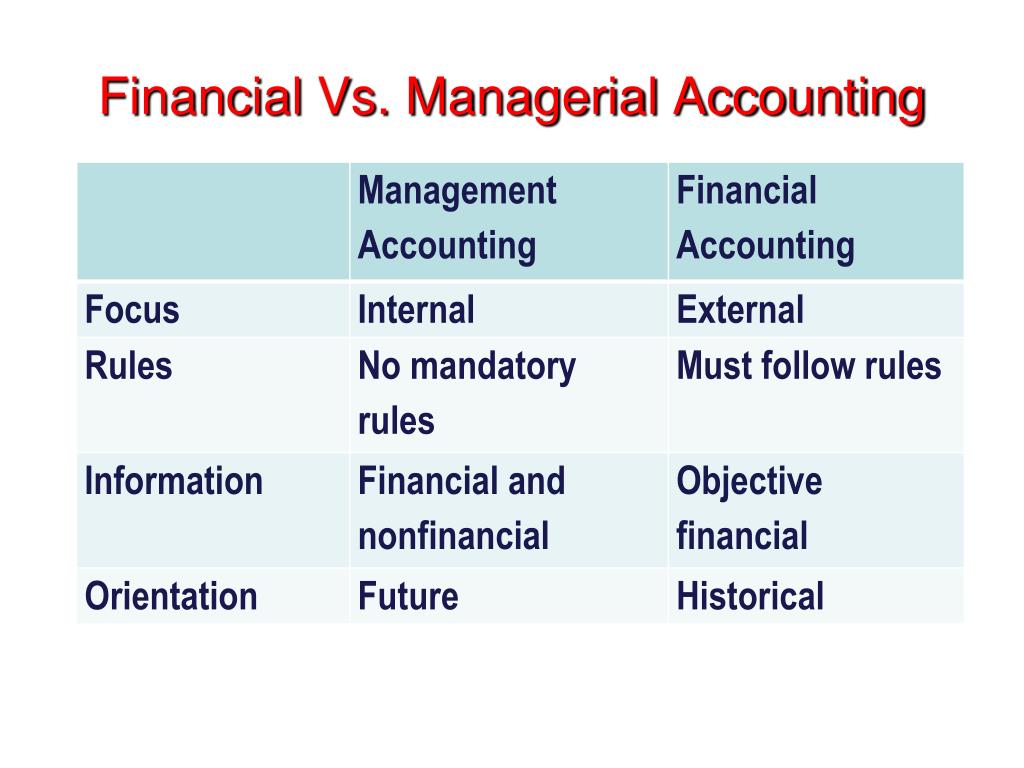








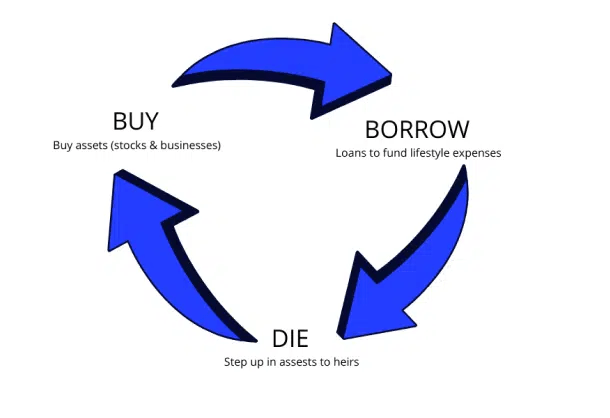















































 The Leading Business Education Network for Doctors, Financial Advisors and Health Industry Consultants