BOARD CERTIFICATION EXAM STUDY GUIDES Lower Extremity Trauma
[Click on Image to Enlarge]
ME-P Free Advertising Consultation
The “Medical Executive-Post” is about connecting doctors, health care executives and modern consulting advisors. It’s about free-enterprise, business, practice, policy, personal financial planning and wealth building capitalism. We have an attitude that’s independent, outspoken, intelligent and so Next-Gen; often edgy, usually controversial. And, our consultants “got fly”, just like U. Read it! Write it! Post it! “Medical Executive-Post”. Call or email us for your FREE advertising and sales consultation TODAY [678.779.8597] Email: MarcinkoAdvisors@outlook.com
Medical & Surgical e-Consent Forms
ePodiatryConsentForms.com
iMBA Inc., OFFICES
Suite #5901 Wilbanks Drive, Norcross, Georgia, 30092 USA [1.678.779.8597]. Our location is real and we are now virtually enabled to assist new long distance clients and out-of-town colleagues.
ME-P Publishing
SEEKING INDUSTRY INFO PARTNERS?
If you want the opportunity to work with leading health care industry insiders, innovators and watchers, the “ME-P” may be right for you? We are unbiased and operate at the nexus of theoretical and applied R&D. Collaborate with us and you’ll put your brand in front of a smart & tightly focused demographic; one at the forefront of our emerging healthcare free marketplace of informed and professional “movers and shakers.” Our Ad Rate Card is available upon request [678-779-8597].
Telephonic or electronic advice for medical professionals that is:
Objective, affordable, medically focused and personalized
Rendered by a pre-screened financial consultant or medical management advisor
Offered on a pay-as-you-go basis, by phone or secure e-mail transmission
The iMBA Discussion Forum™ is a physician-to-advisor telephone or e-mail portal that connects independent financial professionals and medical management consultants, with doctors or healthcare executives desiring affordable and unbiased financial or business advice on an as-needed, pay-per-use basis.
Medical professionals and healthcare executives can now receive direct access to pre-screened iMBA professionals in the areas of Practice Enhancement, Investing, Financial Planning, Asset Allocation, Portfolio Management Taxes, Insurance, Mortgage and Lending, Practice Management, Information Technology, Human Resources and Employee Benefits. To assist our doctor / healthcare executive members, we can be contracted with per-minute or per-project fees, and contacted by client phone, email or secure instant messaging.
The iMBA Discussion Forum™ is designed to fill a growing need for medically focused financial or managerial advice that traditional consultants have not been able to serve. Most financial “consultants” either charge high sales commissions, or levy a percentage of fees for managing client assets. And, management consultants tend to extend their scope of engagement to tangential areas not originally needed, or wanted.
Typically, financial advisors also require clients to meet minimum asset level thresholds ($500,000 to $750,000, or more), or pay thousands of dollars in consulting fees to receive their services. These fee structures have created inherent conflicts of interest and significant barriers for an increasing number of time-compressed and economically constrained physicians or healthcare executives.
Now, with the iMBA Discussion Forum™, all physicians and executive clients can receive unbiased financial advice, and objective business opinions, on their own terms, anytime-anywhere.
The iMBA Discussion Forum™ eliminates conflicts of interest by providing advice on a per-use basis, so you pay only for what you want and need. iMBA does not sell financial or business products. The result is a unique “no pressure”, and “no conflicts-of-interest experience.”
Get started with your consultation, now! Receive only the advice you need and pay for, from a medically focused and qualified doctor-advisor looking after your best interests.
Contact Us Now! How the iMBA Discussion Forum Works:
Contact Us
Request an iMBA Discussion Forum™ Conference Schedule
Pre-Pay a Small Retainer of $1,500
Receive Scheduled Advice via Conference Call or email transmission
SPEAKING: Dr. Marcinko will be speaking and lecturing, signing and opining, teaching and preaching, storming and performing at many locations throughout the USA this year! His tour of witty and serious pontifications may be scheduled on a planned or ad-hoc basis; for public or private meetings and gatherings; formally, informally, or over lunch or dinner. All medical societies, financial advisory firms or Broker-Dealers are encouraged to submit a RFP for speaking engagements: MarcinkoAdvisors@outlook.com
A growing number of surveys measure physician compensation, encompassing a varying depth of analysis. Physician compensation data, divided by specialty and subspecialty, is central to a range of consulting activities including practice assessments and valuations of healthcare enterprises. The AMA maintains the most comprehensive database of information on physicians in the U.S., with information on over 940,000 physicians and residents, and 77,000 medical students. Started in 1906, the AMA “Physician Masterfile,” which contains information on physician education, training, and professional certification information, is updated annually through the Physicians’ Professional Activities questionnaire and the collection and validation efforts of AMA’s Division of Survey and Data Resources (SDR).A selection of other sources of healthcare related compensation and cost data is set forth below.
“Physician Characteristics and Distribution in the U.S.” is an annual survey based on a variety of demographic information from the Physician Masterfile dating back to 1963. It includes detailed information regarding trends, distribution, and professional and individual characteristics of the physician workforce.
“Physician Socioeconomic Statistics”, published from 2000 to 2003, was a result of the merger between two prior AMA annuals: (1) “Socioeconomic Characteristics of Medical Practice”; and, (2) “Physician Marketplace Statistics.” Data has compiled from a random sampling of physicians from the Physician Masterfile into what is known as the Socioeconomic Monitoring System, which includes physician age profiles, practice statistics, utilization, physician fees, professional expenses, physician compensation, revenue distribution by payor, and managed care contracts, among other categories.
The Medical Group Management Association’s (MGMA) “Physician Compensation and Production Survey” is one of the largest in the U.S. with approximately 3,000 group practices responding as of the 2023 edition publication. Data is provided on compensation and production for 125 specialties. The survey data are also published on CD by John Wiley & Sons ValueSource; the additional details available in this media provide better bench marking capabilities.
The MGMA’s “Cost Survey” is one of the best known surveys of group practice income and expense data, having been published in some form since 1955, and obtaining over 1,600 respondents, combined, for the 2008 surveys: “Cost Survey for Single Specialty Practices” and “Cost Survey for Multispecialty Practices.” Data is provided for a detailed listing of expense categories and is also calculated as a percentage of revenue and per FTE physician, FTE provider, patient, square foot, and Relative Value Unit (RVU). The survey provides information on multispecialty practices by performance ranking, geographic region, legal organization, size of practice, and percent of capitated revenue. Detailed income and expense data is provided for single specialty practice in over 50 different specialties and subspecialties.
The “Medical Group Financial Operations Survey” was created through a partnership between RSM McGladrey and the American Medical Group Association (AMGA), and provides benchmark data on support staff and physician salaries, physician salaries, staffing profiles and benefits, and other financial indicators. Data is reported as a percent of managed care revenues, per full-time physician, and per square foot, and is subdivided by specialty mix, capitation level, and geographic region with detailed summaries of single specialty practices in several specialties.
“Statistics: Medical and Dental Income and Expense Averages” is an annual survey produced by the National Society of Certified Healthcare Business Consultants (NSCHBC), formerly known as the National Association of Healthcare Consultants (NAHC), and the Academy of Dental CPAs. It has been published annually for a number of years and the “2023 Report Based on 2022 Data” included detailed income and expense data from over 2,700 practices and 4,900 physicians in 62 specialties.
***
***
Medical Specialty Trends
The characteristics of both the practice and the profitability of different physician specialties vary greatly. Information on trends affecting specific specialties should further refine the types of industry information gathered including changes in treatment, technology, competition, reimbursement, and the regulatory environment. For many of the subspecialties, oversupply and under supply issues and the corresponding demand and compensation trends are central to the analysis of potential future earnings and the value of established medical entities. Information that is available and that may be gathered can range from broad practice overviews to, for example, specific procedural utilization demand and forecasts for a precise local geographic area.
A large number of national and state medical associations and organizations gather and produce information on these various aspects of the practice of different individual physician specialties and subspecialties. Information may be found in trade press articles, medical specialty associations and their publications, national surveys, specialty accreditation bodies, governmental reports and studies, and elsewhere. The American Medical Association’s (AMA) as well as the MGMA both publish comprehensive physician practice survey information.
SPEAKING: Dr. Marcinko will be speaking and lecturing, signing and opining, teaching and preaching, storming and performing at many locations throughout the USA this year! His tour of witty and serious pontifications may be scheduled on a planned or ad-hoc basis; for public or private meetings and gatherings; formally, informally, or over lunch or dinner. All medical societies, financial advisory firms or Broker-Dealers are encouraged to submit an RFP for speaking engagements: CONTACT: Ann Miller RN MHA at MarcinkoAdvisors@outlook.com -OR-http://www.MarcinkoAssociates.com
Here are some widely used heuristics in economics:
Growth & Investment
Rule of 70: To estimate how long it takes for an economy to double in size, divide 70 by the annual growth rate. For example, at 2% growth, GDP doubles in 35 years.
Okun’s Law: For every 1% drop in unemployment, GDP increases by roughly 2% — a rough link between labor and output.
Taylor Rule: A guideline for setting interest rates based on inflation and economic output gaps. Central banks use it to balance inflation and growth.
Inflation & Employment
Phillips Curve: Suggests an inverse relationship between inflation and unemployment — lower unemployment can lead to higher inflation, and vice versa.
NAIRU (Non-Accelerating Inflation Rate of Unemployment): The unemployment rate at which inflation remains stable. Going below it may trigger rising prices.
Fiscal & Monetary Policy
Balanced Budget Multiplier: Increasing government spending and taxes by the same amount can still boost GDP — because spending has a stronger immediate effect.
Debt-to-GDP Ratio Threshold: Economists often flag a ratio above 90% as a potential risk to economic stability, though this is debated.
Trade & Exchange
Purchasing Power Parity (PPP): Over time, exchange rates should adjust so that identical goods cost the same across countries — a rule used to compare living standards.
J-Curve Effect: After a currency devaluation, trade deficits may worsen before improving due to delayed volume adjustments.
Trade
Leading Indicators: Metrics like stock prices, manufacturing orders, and consumer confidence often signal future economic shifts.
Recession Rule of Thumb: Two consecutive quarters of negative GDP growth typically indicate a recession — though not officially definitive.
These rules simplify complex relationships, but they’re not foolproof. They’re best used as starting points for analysis, not as rigid laws.
SPEAKING: Dr. Marcinko will be speaking and lecturing, signing and opining, teaching and preaching, storming and performing at many locations throughout the USA this year! His tour of witty and serious pontifications may be scheduled on a planned or ad-hoc basis; for public or private meetings and gatherings; formally, informally, or over lunch or dinner. All medical societies, financial advisory firms or Broker-Dealers are encouraged to submit an RFP for speaking engagements: CONTACT: Ann Miller RN MHA at MarcinkoAdvisors@outlook.com -OR-http://www.MarcinkoAssociates.com
Posted on January 5, 2026 by Dr. David Edward Marcinko MBA MEd CMP™
By Dr. David Edward Marcinko MBA MEd
***
***
In today’s healthcare landscape, small medical practices face a dual threat: the emotional toll of provider burnout and the growing risk of cyberattacks. While these challenges may seem unrelated, both can have devastating financial and operational consequences. Fortunately, the right insurance coverage can serve as a critical safety net, helping practices stay resilient in the face of adversity.
1. Prioritize Cyber Liability Insurance
Cyberattacks on healthcare providers are on the rise, with small practices often being prime targets due to limited IT resources. A single ransomware attack or data breach can lead to HIPAA violations, patient trust erosion, and costly legal battles. Cyber liability insurance is no longer optional—it’s essential. This coverage typically includes data breach response, legal fees, notification costs, and even ransom payments. When selecting a policy, ensure it covers both first-party (your practice’s losses) and third-party (claims from affected patients or partners) liabilities.
Burnout can lead to high staff turnover, workplace tension, and even wrongful termination claims. EPLI protects your practice from lawsuits related to employment issues such as discrimination, harassment, and retaliation. As burnout increases the likelihood of HR-related disputes, having EPLI in place can prevent a bad situation from becoming financially catastrophic.
3. Review Malpractice and Professional Liability Policies
While malpractice insurance is a given, it’s crucial to review your policy regularly. Burnout can increase the risk of medical errors, and some policies may have exclusions or limitations that leave your practice vulnerable. Ensure your coverage limits are adequate and that your policy includes tail coverage if you’re planning to retire or close your practice.
4. Invest in Business Interruption Insurance
Cyberattacks and burnout-related staffing shortages can disrupt operations. Business interruption insurance helps cover lost income and operating expenses during downtime. This can be a lifeline if your electronic health records system is compromised or if you need to temporarily close due to staff burnout or illness.
***
***
5. Bundle Policies for Better Rates and Coverage
Many insurers offer bundled packages tailored to healthcare providers. These may include general liability, property, malpractice, and cyber coverage under one umbrella. Bundling not only simplifies management but can also lead to cost savings and fewer coverage gaps.
6. Work with a Healthcare-Savvy Insurance Broker
Navigating the insurance landscape can be complex. Partnering with a broker who specializes in healthcare ensures your policy is tailored to your unique risks. They can help you identify coverage gaps, negotiate better terms, and stay compliant with evolving regulations.
Conclusion
Small practices are the backbone of community healthcare, but they face mounting pressures from both internal and external threats. By proactively investing in comprehensive insurance coverage—especially cyber liability and employment practices liability—practices can protect their financial health and focus on what matters most: delivering quality patient care. In an era where burnout and cybercrime are increasingly common, insurance isn’t just a safety net—it’s a strategic asset.
SPEAKING: Dr. Marcinko will be speaking and lecturing, signing and opining, teaching and preaching, storming and performing at many locations throughout the USA this year! His tour of witty and serious pontifications may be scheduled on a planned or ad-hoc basis; for public or private meetings and gatherings; formally, informally, or over lunch or dinner. All medical societies, financial advisory firms or Broker-Dealers are encouraged to submit an RFP for speaking engagements: CONTACT: Ann Miller RN MHA at MarcinkoAdvisors@outlook.com
Posted on December 1, 2025 by Dr. David Edward Marcinko MBA MEd CMP™
CYBER MONDAY
By Ann Miller; RN MHA CPHQ
***
***
David Edward Marcinko’s Comprehensive Financial Planning Strategies for Doctors is a specialized text that addresses one of the most pressing challenges faced by medical professionals: managing the complexities of personal and professional finance in a demanding career. Physicians often devote years to mastering medicine, yet receive little formal training in financial literacy. Marcinko’s book seeks to bridge this gap by offering a structured, practical, and holistic approach to financial planning tailored specifically to the unique circumstances of doctors.
At its core, the book emphasizes the importance of integrating financial planning into the broader context of a physician’s life and career. Marcinko recognizes that doctors face distinctive financial pressures, including high student debt, delayed earnings due to lengthy training, and the need to balance practice management with personal financial goals. The book is not merely a manual on budgeting or investing; rather, it presents a comprehensive framework that encompasses wealth accumulation, risk management, tax strategies, retirement planning, and estate considerations. By situating financial planning within the realities of medical practice, Marcinko ensures that his advice resonates with the lived experiences of physicians.
One of the book’s strengths lies in its accessibility. Financial planning texts can often be dense, filled with jargon that alienates readers outside the financial sector. Marcinko avoids this pitfall by writing in a clear, structured manner that makes complex concepts digestible. He uses examples drawn from medical practice to illustrate financial principles, ensuring that readers can see the direct relevance of his strategies. For instance, discussions of liability insurance or practice valuation are framed in terms of the risks and opportunities doctors encounter daily. This contextualization makes the book not only informative but also practical.
Another notable aspect of Marcinko’s work is its emphasis on proactive planning. Rather than reacting to financial challenges as they arise, the book encourages physicians to adopt a forward‑looking mindset. Marcinko underscores the importance of setting long‑term goals early in one’s career, whether related to retirement, practice succession, or family wealth transfer. He argues that physicians, accustomed to evidence‑based decision making in medicine, should apply the same rigor to financial planning. This alignment between professional habits and personal finance is one of the book’s most persuasive insights.
The book also addresses the psychological dimensions of financial decision making. Marcinko acknowledges that physicians, despite their intelligence and training, are not immune to the emotional biases that affect all investors. Overconfidence, risk aversion, and the tendency to delay planning are explored as obstacles that can undermine financial success. By highlighting these behavioral pitfalls, Marcinko adds depth to his analysis and reminds readers that financial planning is not purely technical but also deeply human.
Critically, the book does not present financial planning as a one‑size‑fits‑all endeavor. Marcinko recognizes the diversity of medical careers and personal circumstances. A surgeon in private practice will face different challenges than a pediatrician employed by a hospital system, and the book provides strategies adaptable to these varied contexts. This flexibility enhances the book’s relevance and ensures that it can serve as a resource for physicians across specialties and career stages.
While the book is comprehensive, some readers may find its breadth overwhelming. Covering everything from investment vehicles to estate law, Marcinko’s text demands sustained engagement. Yet this density is also its strength: it reflects the complexity of financial planning for doctors and underscores the need for a holistic approach. For readers willing to invest the time, the book offers a roadmap that can significantly improve financial outcomes.
In conclusion, Comprehensive Financial Planning Strategies for Doctors is a valuable resource that combines clarity, practicality, and depth. Marcinko succeeds in translating financial principles into strategies that resonate with the realities of medical practice. By encouraging proactive planning, addressing psychological biases, and offering adaptable strategies, the book empowers physicians to take control of their financial futures. For doctors seeking to navigate the intersection of medicine and money, Marcinko’s work stands as a thoughtful and indispensable guide.
Physicians are increasingly facing car repossessions in 2025 due to rising debt, high vehicle prices, and economic pressures that are reshaping the financial landscape for medical professionals.
Traditionally viewed as financially secure, doctors are now among the growing number of Americans struggling to keep up with auto loan payments. The surge in car repossessions—expected to reach a record 10.5 million assignments by the end of 2025—has not spared the medical community. While physicians often earn higher-than-average incomes, they also carry significant financial burdens, including student loan debt, practice overhead, and personal expenses. These pressures are being amplified by macroeconomic forces such as inflation, high interest rates, and stagnant reimbursement rates.
One of the key contributors to this trend is the soaring cost of vehicles. In 2025, the average price of a new car in the U.S. surpassed $50,000, a dramatic increase from just a decade ago. For physicians who rely on vehicles for commuting between hospitals, clinics, and private practices, owning a reliable car is not a luxury—it’s a necessity. However, the combination of high sticker prices and elevated interest rates—averaging 7.3% for used cars and 11.5% for new cars—has made financing increasingly difficult.
***
***
Even high-income professionals are not immune to the broader auto loan crisis. Subprime auto loan delinquencies reached 6.6% in early 2025, the highest rate in over 30 years.While physicians typically fall into the prime or super-prime credit categories, many are still affected by cash flow disruptions, especially those in private practice or rural areas where patient volumes and insurance reimbursements have declined. Additionally, younger doctors with substantial student debt may find themselves overleveraged, making it harder to keep up with car payments.
The emotional and professional toll of a car repossession can be significant. Beyond the embarrassment and logistical challenges, losing a vehicle can disrupt a physician’s ability to provide care, attend emergencies, or maintain a consistent work schedule. This can lead to further income loss, creating a vicious cycle of financial instability.
To combat this trend, some physicians are turning to financial advisors to restructure their debt, refinance auto loans, or downsize to more affordable vehicles. Others are advocating for systemic reforms, such as student loan forgiveness, higher Medicare reimbursements, and better financial literacy training during medical education.
In conclusion, the rise in car repossessions among doctors is a stark reminder that no profession is immune to economic volatility. As the cost of living continues to climb and financial pressures mount, even those in traditionally stable careers must adapt to protect their assets and livelihoods.
Addressing this issue requires both individual financial planning and broader policy changes to ensure that physicians can continue to serve their communities without the looming threat of personal financial collapse.
SPEAKING: Dr. Marcinko will be speaking and lecturing, signing and opining, teaching and preaching, storming and performing at many locations throughout the USA this year! His tour of witty and serious pontifications may be scheduled on a planned or ad-hoc basis; for public or private meetings and gatherings; formally, informally, or over lunch or dinner. All medical societies, financial advisory firms or Broker-Dealers are encouraged to submit an RFP for speaking engagements: CONTACT: Ann Miller RN MHA at MarcinkoAdvisors@outlook.com -OR-http://www.MarcinkoAssociates.com
Although 97% of people aren’t yet millionaires, many could eventually meet that target if they start investing sooner rather than later; especially doctors [MD, DO, DPM, DDS or DMD].
A 20-year-old, for instance, needs to invest just $330 a month into an asset class that delivers a 7% to 8% annual return to reach $1.26 million by the time s/he turns 65 years old. The luxury of time significantly boosts your chances of becoming a millionaire.
This doesn’t mean it’s too late for middle-aged savers to reach that millionaire milestone, but it will take a significantly greater investment. If a 50-year-old doctor hasn’t started saving for retirement, s/he would need to invest $3,958 a month at a steady 7% return to reach $1.26 million by retirement.
However, according to one Goldman Sachs report, investors could expect the S&P 500 to deliver just 3% annualized nominal returns over the next 10 years.
After an average 13% yearly return for the past decade, a new strategy outside of the stock market may be needed for that level of outsized gain, especially if you’re late to investing.
SPEAKING: Dr. Marcinko will be speaking and lecturing, signing and opining, teaching and preaching, storming and performing at many locations throughout the USA this year! His tour of witty and serious pontifications may be scheduled on a planned or ad-hoc basis; for public or private meetings and gatherings; formally, informally, or over lunch or dinner. All medical societies, financial advisory firms or Broker-Dealers are encouraged to submit an RFP for speaking engagements: CONTACT: Ann Miller RN MHA at MarcinkoAdvisors@outlook.com -OR-http://www.MarcinkoAssociates.com
An important component of hospital credit analysis is essentiality. Hospitals are unusual businesses that many times possess some form of essentiality to their communities. Health care is important to the economic vitality of every community. Many hospitals have served their communities for many years; it is not uncommon to find hospitals that have been continuously operating for more than 100 years in the same community.
Most hospitals are not-for-profit. In not-for-profit hospitals, no private party actually “owns” the hospital; control is vested in various boards, but no one explicitly owns a not-for-profit hospital. In a broad sense, communities own not-for-profit hospitals. They are considered “charities” with a “charitable purpose.” Though a not-for-profit hospital may not have owners, it has many “stakehold-ers,” parties that have vested interests in the continuing success of the hospital.
Many hospitals have broad and vast webs of stakeholders. Stakeholders are why hospitals rarely close or are shut down. Too many stakeholders have interests in the continuing successful operation of hospitals.
Another dimension of the essentiality analysis is service analysis. How significant are the hospital’s services? If the hospital shuts down, what population segments would suffer? How significant is the population that would suffer? How much would they suffer?
And so, hospital stakeholder relationships need to be considered in the analysis of essentiality. How strong are these relations? How many are there? How important is the continuing success of this hospital to these stakeholders?
Analysis of hospital’s stakeholders and services should provide a credible view of the degree of essentiality associated with a hospital. Higher degrees of essentiality suggest higher likelihoods that hospitals, one way or another, will meet their commitments, particularly their payment commitments.
SPEAKING: Dr. Marcinko will be speaking and lecturing, signing and opining, teaching and preaching, storming and performing at many locations throughout the USA this year! His tour of witty and serious pontifications may be scheduled on a planned or ad-hoc basis; for public or private meetings and gatherings; formally, informally, or over lunch or dinner. All medical societies, financial advisory firms or Broker-Dealers are encouraged to submit an RFP for speaking engagements: CONTACT: Ann Miller RN MHA at MarcinkoAdvisors@outlook.com -OR-http://www.MarcinkoAssociates.com
Posted on July 29, 2025 by Dr. David Edward Marcinko MBA MEd CMP™
MEDICAL EXECUTIVE-POST–TODAY’SNEWSLETTERBRIEFING
***
Essays, Opinions and Curated News in Health Economics, Investing, Business, Management and Financial Planning for Physician Entrepreneurs and their Savvy Advisors and Consultants
“Serving Almost One Million Doctors, Financial Advisors and Medical Management Consultants Daily“
A Partner of the Institute of Medical Business Advisors , Inc.
Stocks: Investors cheered the news of an EU & US trade deal over the weekend, pushing the S&P 500 above 6,400 for the first time ever. But the index gave up most of its gains late in the day as attention turned to a huge week of data ahead (more on that in a minute).
Trade: Today was the first day of discussions between US and Chinese negotiators in Stockholm to keep the trade war truce alive. Elsewhere, President Trump foresees a baseline 15% to 20% tariff rate for the rest of the world.
Commodities: Gold fell as trade deal hopes heightened investors’ risk appetite, while oil spiked higher after Trump gave Russia a 10- to 12-day deadline to sign a truce with Ukraine.
According to Bloomberg, 83% of the S&P 500 companies that have reported earnings have outpaced Wall Street’s estimates, putting the index on pace for its best season of beats since the second quarter of 2021.
ORGANIZATIONAL BEHAVIOR ANDCLASSIFICATION OF RISKS
DEFINITION EMOTIONAL INTELLIGENCE: Emotional intelligence [EI] refers to the ability to identify and manage one’s own emotions, as well as the emotions of others. Emotional intelligence is generally said to include a few skills: namely emotional awareness, or the ability to identify and name one’s own emotions; the ability to harness those emotions and apply them to tasks like thinking and problem solving; and the ability to manage emotions, which includes both regulating one’s own emotions when necessary and helping others to do the same.
DEFINITIONAL ORGANIZATIONAL BEHAVIOR: Organizational behavior (OB) is the study of how individuals, groups, and organizations interact and influence one another. Though it is largely used within the field of business management as means to understand–and more effectively manage–groups of people. The reason businesses look to OB is because it can help organizations increase employee performance, while also creating a positive working environment.
CITE: Eugene Schmuckler; PhD MBA MEd CTS®
***
***
And so, as we review the concept of Emotional Intelligence and Organizational Behavior, it is possible to set up five EI/OB risk classes, based on the economic consequences of the occurrence of specific individual risks:
1. Prevented risks: Risks whose cost of occurrence is higher than their cost of management and whose occurrence may invoke additional legal sanctions. This class would include intentional torts and injuries caused by gross negligence.
2. Normally prevented risks: Risks whose cost of occurrence is greater than the cost of their management but whose occurrence will be considered only as negligent. This class includes most negligent injuries and most types of product liability actions.
3. Managed risks: Risks whose cost of occurrence is only slightly greater than their cost of management. The plaintiff usually has the burden of showing that the defendant owed the plaintiff a special duty to recover for one of these risks.
4. Un-Prevented risks: Risks whose cost of occurrence is less than their cost of management. The classic example of this class is the cost of railroad crossing barriers compared to the cost of people being hit by trains.
5. Un-Preventable risks: Risks whose occurrence is unmanageable. The assignment of a risk to one of these classes is a major problem in medical and healthcare quality control, because the class of a risk determines how much effort must be expended to prevent the risk. The misclassification of a prevented or normally prevented risk as a managed or un-prevented risk can result in large financial losses.
***
For example: A medical clinic that does not update obsolete equipment, such as inaccurate oxygen monitors, would be liable for any injuries attributable to the obsolete equipment. The classifications of risk must be reviewed periodically to determine if the cost of the risk-taking behavior has changed, thereby altering the classification.
***
***
For example: A small hospital in a rural area would not be expected to have the sophisticated equipment as a major hospital in a city. If an accident victim is brought into the rural facility, the hospital’s duty may be to transfer the patient to a better-equipped facility. The patient will face the risk of dying because of the delay in treatment, but the risk of insufficient treatments outweighs the risk of transfer. If the same victim were brought into a hospital in a major metropolitan center, the duty would be to treat the patient without a transfer. The risk of transfer has not changed, but the risk of insufficient treatment has disappeared.
SPEAKING: Dr. Marcinko will be speaking and lecturing, signing and opining, teaching and preaching, storming and performing at many locations throughout the USA this year! His tour of witty and serious pontifications may be scheduled on a planned or ad-hoc basis; for public or private meetings and gatherings; formally, informally, or over lunch or dinner. All medical societies, financial advisory firms or Broker-Dealers are encouraged to submit an RFP for speaking engagements: CONTACT: Ann Miller RN MHA at MarcinkoAdvisors@outlook.com -OR-http://www.MarcinkoAssociates.com
Posted on July 11, 2025 by Dr. David Edward Marcinko MBA MEd CMP™
MEDICAL EXECUTIVE-POST–TODAY’SNEWSLETTERBRIEFING
***
Essays, Opinions and Curated News in Health Economics, Investing, Business, Management and Financial Planning for Physician Entrepreneurs and their Savvy Advisors and Consultants
“Serving Almost One Million Doctors, Financial Advisors and Medical Management Consultants Daily“
A Partner of the Institute of Medical Business Advisors , Inc.
US measles cases have reached a 33-year high. A little more than halfway into 2025, the US has reported 1,288 measles cases, marking the highest yearly total since 1992, according to data from the Centers for Disease Control and Prevention.
Cereal legend WK Kellogg popped 30.57% after chocolate giant Ferrero agreed to acquire it for north of $3 billion.
Tesla (+4.73%) continued to rebound from its plunge on Monday. Elon Musk said that Tesla’s robotaxi service would expand into the Bay Area “probably in a month or two” and that his AI chatbot Grok is coming to Tesla vehicles by next week.
Estée Lauder gained 6.32% after Bank of America slapped a buy rating on the stock, implying a 27% upside from Wednesday’s closing price.
ProKidney continued its remarkable rally, rising another 19.35%, after the biotech announced positive trial results for its diabetes treatment. It’s gone from a penny stock to a $1.55 billion market cap in the past four days.
Copper companies Freeport-McMoRan (+3.51%) and Southern Copper (+2.34%) gained thanks to Trump’s announcement that copper tariffs would begin on August 1.
Stocks down
Biotech partners Ultragenyx (-25.11%) and Mereo BioPharma Group (-42.52%) plunged after issuing a disappointing update on their trial of a treatment for a rare genetic bone condition.
Vertiv, the maker of liquid cooling equipment,declined 5.96% when Amazon said it was rolling out a new liquid cooling system for its AI servers.
Hydro Flask owner Helen of Troy tumbled 22.71% after reporting a $450 million loss in its fiscal first quarter. CEO Brian Grass said “tariff-related impacts” were its Achilles heel.
Autodesk fell 6.89% after Bloomberg reported on Wednesday it was weighing a takeover of rival engineering software company PTC.
A brand is a name, term, design, symbol or any other feature that distinguishes one seller’s goods or service from those of other sellers. Brands are used in business, marketing and advertising for recognition and, importantly, to create and store value as brand equity for the object identified, to the benefit of the brand’s clients, patients, customers, its owners and shareholders. Brand names are sometimes distinguished from generic or store brands.
Brand management, also known as Marketing, is responsible for the overall management of a brand. This includes everything from product or service development and marketing to advertising and public relations. All of these aspects work together to create a particular image or reputation for a brand. The goal of brand management is to create a robust and positive reputation for a brand that will result in increased sales and market share.This process helps companies create a unique identity for their products or services in the marketplace. A successful brand management strategy can build client, patient and customer loyalty .
Branding is essential for financial advisors, doctors and businesses because it involves creating a unique identity for a company’s products, offerings and services. It can also help build customer, client and patient loyalty and emotionally connect with the practitioner. Branding can be complex, but it is essential to understand the basics before starting a brand strategy.
Thus, doctors, podiatrists, dentists, CPAs, insurance agents, financial advisors and their practices need to understand the different aspects of branding and brand management to create a strong brand identity.
Posted on June 18, 2025 by Dr. David Edward Marcinko MBA MEd CMP™
MEDICAL EXECUTIVE-POST–TODAY’SNEWSLETTERBRIEFING
***
Essays, Opinions and Curated News in Health Economics, Investing, Business, Management and Financial Planning for Physician Entrepreneurs and their Savvy Advisors and Consultants
“Serving Almost One Million Doctors, Financial Advisors and Medical Management Consultants Daily“
A Partner of the Institute of Medical Business Advisors , Inc.
Stocks: Markets sagged as fighting between Israel and Iran continued, with investors worried about escalation after President Trump called for the “unconditional surrender” of Iran’s Supreme Leader Ali Khamenei. The Wall Street Journal reported that he is considering a potential US strike against Iran.
Commodities: Oil prices popped this morning after Trump warned that Tehran should be evacuated.
Bonds: Yields sank after US retail sales came in much lower than anticipated, raising fears of an economic slowdown.
Posted on June 14, 2025 by Dr. David Edward Marcinko MBA MEd CMP™
MEDICAL EXECUTIVE-POST–TODAY’SNEWSLETTERBRIEFING
***
Essays, Opinions and Curated News in Health Economics, Investing, Business, Management and Financial Planning for Physician Entrepreneurs and their Savvy Advisors and Consultants
“Serving Almost One Million Doctors, Financial Advisors and Medical Management Consultants Daily“
A Partner of the Institute of Medical Business Advisors , Inc.
Gold stocks gained as investors pushed the price of the safe-haven commodity higher. Newmont climbed 3.54%, BarrickMining added 2.81%, and SSRMining rose 2.25%.
Tesla gained 1.94% on reports that the Trump Administration will lower the bar for regulations on self-driving cars.
Circle surged 25.54% a day after Shopify announced it will accept USDC stablecoin payments on its e-commerce platform.
RH popped 6.90% after the home furnishings retailer reported far better earnings than Wall Street predicted, even though revenue fell last quarter.
JBS rose 4.69% the day the world’s largest meatpacker made its NYSE debut.
What’s down
DraftKings fell 3.90% thanks to the gambling app’s decision to add a $0.50 surcharge to every bet made on its platform in Illinois to offset a new state tax.
Adobe tumbled 5.32% despite the software company’s solid earnings report and higher fiscal forecast.
ArcherAviation plunged 14.89% after announcing it will sell $850 million worth of new shares to raise money.
Boeing lost another 1.62% as the fallout from a 787 Dreamliner crash in India continues.
USSteel sank 3.03% on reports that Nippon Steel is balking at taking over the company if it can’t retain operational control of the domestic steelmaker.
Posted on June 5, 2025 by Dr. David Edward Marcinko MBA MEd CMP™
MEDICAL EXECUTIVE-POST–TODAY’SNEWSLETTERBRIEFING
***
Essays, Opinions and Curated News in Health Economics, Investing, Business, Management and Financial Planning for Physician Entrepreneurs and their Savvy Advisors and Consultants
“Serving Almost One Million Doctors, Financial Advisors and Medical Management Consultants Daily“
A Partner of the Institute of Medical Business Advisors , Inc.
HealthEquity jumped 8.96% after the health savings account custodian boosted its fiscal guidance for the year ahead.
What’s down
Tesla tumbled 3.55% on weak sales data from China and Germany.
Apple fell 0.22% thanks to a downgrade from Needham analysts, who think the company’s valuation is way too high.
Wells Fargo lost 0.36% after the Federal Reserve lifted its 2018 cap on the bank’s assets.
What goes up must come down: ConstellationEnergy sank 4.31% after Citigroup downgraded the nuclear power provider, warning it’s not getting its money’s worth with Meta Platforms.
Asana plunged 20.47% after the work management software maker announced fiscal forecasts that came in below Wall Street’s expectations.
Flowserve lost 6.27% and ChartIndustries dropped 9.46% after the two industrial manufacturers agreed to an all-stock merger of equals.
Posted on May 20, 2025 by Dr. David Edward Marcinko MBA MEd CMP™
MEDICAL EXECUTIVE-POST–TODAY’SNEWSLETTERBRIEFING
***
Essays, Opinions and Curated News in Health Economics, Investing, Business, Management and Financial Planning for Physician Entrepreneurs and their Savvy Advisors and Consultants
“Serving Almost One Million Doctors, Financial Advisors and Medical Management Consultants Daily“
A Partner of the Institute of Medical Business Advisors , Inc.
When S&P downgraded the US’ credit rating in August 2011, it sparked the worst one-day decline in US stocks since the Great Financial Crisis. Today was the first day of trading after Moody’s downgraded the US’ credit rating, and while stocks sank at the open, they recovered a lot of lost ground after investors decided to buy the dip.
The downgrade pushed yields on 30-year Treasury bonds above 5% at the open, while 10-year yields rose to 4.55% at one point. But yields on both notes fell throughout the afternoon as buyers crept back into the bond market.
Gold was the big winner today as investors sought safety, while the CBOE Volatility Index, or VIX, popped higher.
Investors largely shrugged at Nvidia’smany announcements today, including the ability for customers to use non-Nvidia chips in Nvidia products. Shares rose just 0.13%.
UnitedHealth Group posted a 8.18% gain as investors turned their attention to the suddenly cheap health insurance giant.
Novavax exploded 15.01% higher thanks to the FDA’s approval of its new Covid-19 vaccine.
TXNM Energy popped 6.98% to an all-time high on the announcement that Blackstone will acquire the power provider for $11.5 billion.
What’s down
Tesla tumbled 2.25% after Chinese tech giant Xiaomi announced it will debut its Yu7 sports utility vehicle, a clear Tesla challenger in a key market, on Thursday.
Walmart lost 0.12% after Treasury Secretary Scott Bessent met with company leadership to discuss how the retailer could “eat the tariffs.”
Bath & Body Works sank 0.56% after the retailer named former Nike exec Daniel Heaf as its new CEO effective immediately.
Reddit fell 4.63% due to a downgrade from Wells Fargo analysts who think the social media platform will lose search traffic to Google AI.
Diageo is down 0.69% after the maker of Johnnie Walker whiskey said it will take an annual tariff hit of $150 million.
Alibaba dropped 0.40% on a New York Times report that the Trump Administration is concerned with Apple’s plan to use Alibaba AI on its iPhones.
JPMorgan fell 1% as shareholders at the bank’s investment division grapple with CEO Jamie Dimon’s departure.
Solar stocks sank after the Republican tax and spending bill moved forward with a commitment to end clean energy tax credits earlier than planned. First Solar fell 7.59%, SunRun lost 7.84%, and AES lost 4.10%.
Posted on May 17, 2025 by Dr. David Edward Marcinko MBA MEd CMP™
MEDICAL EXECUTIVE-POST–TODAY’SNEWSLETTERBRIEFING
***
Essays, Opinions and Curated News in Health Economics, Investing, Business, Management and Financial Planning for Physician Entrepreneurs and their Savvy Advisors and Consultants
“Serving Almost One Million Doctors, Financial Advisors and Medical Management Consultants Daily“
A Partner of the Institute of Medical Business Advisors , Inc.
Arkansas just passed a first-if-its-kind law banning vertical integration between pharmacy benefit managers (PBMs) and pharmacies. Arkansas Governor Sarah Huckabee Sanders on April 16th signed a law prohibiting any company that owns a PBM from also owning or operating pharmacies in the state. The goal of the law is to eliminate “conflicts of interest” that lead to higher drug prices and care delays, according to a press release.
Nvidia climbed 0.42% on reports that the US and United Arab Emirates are nearing a deal that would allow the UAE to import 500,000 chips per year. But shares lost some ground after the company denied reports that it will build a new R&D center in Shanghai.
Galaxy Digital made its long-awaited debut on the Nasdaq today, with the crypto/data center company climbing 4.06%. The company is reportedly in conversation with the SEC to tokenize its stock.
Virgin Galactic rocketed 43.28% higher on the space tourism company’s announcement that it will restart commercial spaceflights.
Coinbase climbed 9.01% after Oppenheimer analysts said the market’s reaction to recent news of a hack and an SEC probe were “overblown.”
CoreWeave soared 22.09% after Nvidia disclosed a larger stake in the data center provider than expected.
Quantum computing stocks popped on news that the company Quantum Computing has finished laying the groundwork for a quantum chip foundry. Shares of Quantum Computing rose 39.29%, while D-Wave Quantum gained 11.06%.
Archer Aviation soared 9.11% after being named the Official Air Taxi Provider of the 2028 Los Angeles Olympic and Paralympic Games, which sounds made up but is apparently very impressive.
Vistra Corp popped 3.06% on the news that it has acquired seven natural gas facilities from Lotus Infrastructure Partners for $1.9 billion.
What’s down
Novo Nordisk slipped 2.69% on the news that its CEO is stepping down after eight years at the helm, due to the pharma giant’s recent challenges.
Applied Materials sank 5.25% after the semiconductor maker’s revenue last quarter came in under analyst estimates.
Cava crumbled 2.27% thanks to financial forecasts of slower growth for the salad bowl chain in the coming year.
Take-Two Interactive Software lost 2.41% due to weaker-than-expected projections for net bookings this quarter and this year.
Doximity plunged 10.08% after the healthcare platform issued fiscal guidance for the current quarter and full year that came in below analyst expectations.
Two of the biggest cable companies in the United States have agreed to merge, marking a major milestone in consolidation as cord-cutters continue to ditch their pricey TV packages, thus forcing companies to adjust to their dwindling futures. Charter Communications, which operates under the Spectrum branding, is combining with its privately held rival Cox Communications, which it values at $34.5 billion including debt, the two companies announced Friday.
Visualize: How private equity tangled banks in a web of debt, from the Financial Times.
Posted on May 15, 2025 by Dr. David Edward Marcinko MBA MEd CMP™
MEDICAL EXECUTIVE-POST–TODAY’SNEWSLETTERBRIEFING
***
Essays, Opinions and Curated News in Health Economics, Investing, Business, Management and Financial Planning for Physician Entrepreneurs and their Savvy Advisors and Consultants
“Serving Almost One Million Doctors, Financial Advisors and Medical Management Consultants Daily“
A Partner of the Institute of Medical Business Advisors , Inc.
Nvidia climbed 3.97% on CEO Jensen Huang’s announcement of a partnership with Saudi Arabia-backed Humain to build a 500 megawatt data center.
Advanced Micro Devices popped 4.18% after it, too, revealed it’s helping Humain out. The chipmaker’s board also authorized a $6 billion stock buyback program.
Super Micro Computer continued to rally, soaring another 15.69% on the back of Raymond James analysts’ initiating their coverage with an “outperform” rating.
Boeing climbed 0.59% thanks to a $96 billion deal with Qatar Airlines to buy up to 210 aircraft.
Exelixis soared 19.70% after the oncology company reported a shockingly strong beat-and-raise quarter.
Septerna exploded 28.97% on the news that Novo Nordisk will license its oral obesity pill candidate for $2.2 billion.
What’s down
Airline stockswere down across the board after the FAA met with executives to discuss cutting flights in and out of Newark Airport. Delta Air Lines lost 4.32%, and United Airlines sank 3.51%.
American Eagle Outfitters tumbled 5.93% after the retailer cut its fiscal guidance, announced it’s writing down $75 million in merchandise, and forecast a decline in next quarter’s sales.
Grail plummeted 23.48% after the biotech’s revenue last quarter failed to meet Wall Street’s expectations.
Aurora Innovation fell 7.58% thanks to an announcement from Uber that it’s offering $1 billion in convertible notes that can be exchanged for Aurora shares.
JD.com lost 4.24% after the Chinese online retailer beat earnings expectations yesterday but still saw its price target cut by Morgan Stanley analysts.
Posted on May 14, 2025 by Dr. David Edward Marcinko MBA MEd CMP™
MEDICAL EXECUTIVE-POST–TODAY’SNEWSLETTERBRIEFING
***
Essays, Opinions and Curated News in Health Economics, Investing, Business, Management and Financial Planning for Physician Entrepreneurs and their Savvy Advisors and Consultants
“Serving Almost One Million Doctors, Financial Advisors and Medical Management Consultants Daily“
A Partner of the Institute of Medical Business Advisors , Inc.
Inflation fell by one tenth of a percentage point to 2.3% for the year ending in April, the Bureau of Labor Statistics reported Tuesday in an update to the consumer price index. Forecasters had expected inflation to hold at 2.4%.
Coinbase exploded 23.97% on the news that the crypto trading platform will be added to the S&P 500 next week.
Nvidia climbed back into the elite $3 trillion market cap club today, rising 5.63% on the announcement that it will send 18,000 AI chips to Saudi Arabia.
Solar stocks soared after early drafts of a Republican tax and spending bill revealed renewable energy cuts weren’t as bad as feared. First Solar climbed 22.66%, while SunRun popped 8.58%.
Super Micro Computer climbed 16.02% thanks to Raymond James analysts initiating their coverage of the server maker with an “outperform” rating.
Boeing rose 2.46% now that the Chinese government has removed its ban on domestic airlines accepting orders from the plane manufacturer.
Rising sentiment powered popular momentum stocks higher today: Palantir rose 8.14%, AppLovin climbed 6.38%, Robinhood Markets jumped 8.95%, and Hims & Hers Health gained 15.92%.
What’s down
Honda Motor fell 4.20% after the company warned that tariffs will ding its bottom line and postponed its plans to build an EV plant in Canada.
Hertz Global plunged 16.93% after it missed analyst estimates across the board and announced it will offer fewer cars for rentals this year.
Enphase Energy lost 4.82% on a downgrade from Barclays analysts, who foresee slower demand for residential solar power products.
Rigetti Computing dropped 14.59% after the quantum computing company failed to live up to the high expectations that strong results from its competitors had given shareholders.
Posted on May 8, 2025 by Dr. David Edward Marcinko MBA MEd CMP™
MEDICAL EXECUTIVE-POST–TODAY’SNEWSLETTERBRIEFING
***
Essays, Opinions and Curated News in Health Economics, Investing, Business, Management and Financial Planning for Physician Entrepreneurs and their Savvy Advisors and Consultants
“Serving Almost One Million Doctors, Financial Advisors and Medical Management Consultants Daily“
A Partner of the Institute of Medical Business Advisors , Inc.
The Fed left its key interest rate unchanged again Wednesday and gave no hint it plans to lower it soon as President Donald Trump’s sweeping tariffs raise the risks of both another inflation spike and recession. But officials signaled they’re growing increasingly concerned about both hazards.
Netflix rose 1.56% after the streamerrevamped its homepage and rolled out new AI search tools.
Nvidia popped 3.10% on news that President Trump will rescind Biden-era global chip curbs.
Advanced Micro Devices rose just 1.76% despite the chipmaker beating earnings and forecasting solid growth ahead.
Lions Gate Entertainment soared 20.77% after it finalized the separation of its studio and STARZ business segments into two distinct companies.
Logitech rose 1.46% thanks to an upgrade from UBS analysts who say the device maker is well-positioned to capitalize on Gen Alpha, 94% of whom play video games.
Charles River Laboratories popped 18.81% after the pharmaceutical company raised its full-year guidance above Wall Street’s expectations.
Rockwell Automation gained 11.90% on a beat-and-raise quarter thanks to higher demand for domestic manufacturing.
What’s down
Super Micro Computer fell 1.40% after the AI server maker missed on revenue last quarter and forecast slower revenue growth this quarter.
WW International, better known as Weight Watchers, plummeted 43.04% on the news that the company is going bankrupt.
Marvell Technology plunged 8.02% after the data storage manufacturer postponed its investor day—never a good sign.
Rivian Automotive tumbled 5.78% on management’s forecast that vehicle deliveries will be lower than expected this year.
Arista Networks beat Wall Street’s estimates but fell 4.76% after it warned that its margins will be squeezed in the coming quarters.
Sarepta Therapeutics plummeted 21.45% after posting a bigger-than-expected loss last quarter and projecting slower revenue growth this quarter.
Posted on May 1, 2025 by Dr. David Edward Marcinko MBA MEd CMP™
MEDICAL EXECUTIVE-POST–TODAY’SNEWSLETTERBRIEFING
***
Essays, Opinions and Curated News in Health Economics, Investing, Business, Management and Financial Planning for Physician Entrepreneurs and their Savvy Advisors and Consultants
“Serving Almost One Million Doctors, Financial Advisors and Medical Management Consultants Daily“
A Partner of the Institute of Medical Business Advisors , Inc.
Caterpillar eked out a 0.54% gain after raising its fiscal 2025 revenue forecast, but the construction giant warned that it will eat about $350 million in extra tariff-related costs.
What’s down
Super Micro Computer plunged 11.50% after reporting terrible preliminary earnings and warned of weaker results still to come.
Etsy beat revenue expectations last quarter, but fell 5.74% after missing profit forecasts as the number of buyers and sellers using its platform continued to fall.
Snap tumbled 12.43% after the social media stock warned that economic uncertainty could hurt its advertising business and refused to issue a fiscal forecast.
Chili’s parent company BrinkerInternational fell 1.89% despite posting solid earnings as investors worry about slowing consumer spending.
Norwegian Cruise Line sank 7.77% after missing earnings and warning of a slowdown in demand.
Stat: $228 million. That’s how much Sacramento-based Sutter Health—one of the largest health systems in the US—agreed to pay to settle allegations of inflating insurance premiums. (Reuters)
Read: Here’s what some say the new Medicare director, a former tech CEO, is likely to focus on. (Stat)
Posted on April 30, 2025 by Dr. David Edward Marcinko MBA MEd CMP™
MEDICAL EXECUTIVE-POST–TODAY’SNEWSLETTERBRIEFING
***
Essays, Opinions and Curated News in Health Economics, Investing, Business, Management and Financial Planning for Physician Entrepreneurs and their Savvy Advisors and Consultants
“Serving Almost One Million Doctors, Financial Advisors and Medical Management Consultants Daily“
A Partner of the Institute of Medical Business Advisors , Inc.
Coca-Cola rose 0.84% after the beverage behemoth beat earnings expectations. Not only that, it also doubled down on its forward-looking guidance, saying that revenue will grow 5% to 6% while comparable earnings per share will jump 2% to 3% in 2025. Tariff mania may raise some costs, but the company said it would be “manageable,” putting it a step ahead of arch-rival PepsiCo.
Pfizer jumped 3.28% today after the pharma giant announced that it expects to cut costs by about $7.7 billion by the end of 2027 thanks to advances in AI and automation. Despite lower sales in Q1, the company managed to keep its 2025 revenue guidance of $61 billion to $64 billion intact. While that forecast takes into account the $150 million blow from tariffs, it does not include any future tariffs (which President Trump has threatened to slap on the pharma industry).—LB
Meta Platforms gained 0.85% after the social media giant announced it will launch a standalone AI app to compete with ChatGPT. Expect more details in its earnings call tomorrow.
JetBlue Airways may have pulled guidance, but investors like the airline’s lower-than-expected loss last quarter so pushed shares 2.70% higher.
Speaking of fintech, PayPal climbed 2.14% thanks in no small part to a 20% pop in Venmo revenue.
Honeywell International gained 5.40% thanks to strong earnings and sales for the manufacturing conglomerate.
Deutsche Bank climbed 4.08% after Germany’s largest lender reported a 39% increase in profit last quarter.
Sherwin-Williams may have missed on revenue last quarter, but the paint company beat earnings estimates and kept its forward guidance intact, so shareholders pushed it up 4.80%.
Royal Caribbean eked out a 0.02% despite reporting record bookings and boosting its profit outlook, a rare move these days amid tariff uncertainty.
Leggett & Platt may not be a household name, but it sells household goods—and the bedding company’s solid earnings and strong fiscal guidance sent shares 31.73% higher.
What’s down
General Motors fell 0.64% after the automaker beat on top and bottom line estimates but warned that it will have to pull its forward guidance and suspend stock buybacks.
Spotify dropped 3.04% despite active monthly users rising 10% last quarter. The problem, believe it or not, was lower guidance.
Regeneron lost 6.87% thanks to disappointing sales for its hit eye drug Eylea.
NXP Semiconductors may have beaten analyst estimates last quarter, but management’s lower-than-expected earnings guidance disappointed investors, and pushed shares 6.94% lower.
In a discussion of competitive healthcare economic models, assumptions must include normal demand quantities, many fully informed patients and the fact that physicians cannot directly influence demand for medical care. These assumptions, although fluid, also preclude that patient buyers are large enough to have any influence over price and result in the following”:
In a “pure monopoly”, there is only one provider with a unique service. The doctor is a “price maker” and charges whatever s/he wishes.
In an “oligopoly”, there are a few physicians who provide similar services. For example, when it becomes clear to Dr. Smith and Dr. Jones that neither can win their price war, oli-gopolists return prices to prior, but still inflated levels!
In “monopolistic competition”, there are many providers with differentiated services. For example, should Dr. Jones decide to have evening hours, she may charge a premium for her fees if Dr. Jones doe not follow suit.
Finally, when “pure competition” occurs, there are many physicians, providing providing similar and substitutable services. Marketing and advertising does not affect fees, and prices are determined by supply and demand. The doctors become “price takers” by accepting fees arrived at by practicing competitively.
COMMENTS APPRECIATED
The Medical Executive-Post is a news and information aggregator and social media professional network for medical and financial service professionals.
Feel free to submit education content to the site as well as links, text posts, images, opinions and videos which are then voted up or down by other members. Comments and dialog are especially welcomed.
Daily posts are organized by subject. ME-P administrators moderate the activity. Moderation may also conducted by community-specific moderators who are unpaid volunteers.
Posted on April 20, 2025 by Dr. David Edward Marcinko MBA MEd CMP™
By Staff Reporters
***
***
According to colleague Dan Ariely PhD, Bereavement Sex is one of those coping mechanisms that sounds strange but makes sense when you think about it. In the face of loss, our brains crave connection and comfort.
Engaging in sex after a significant loss can be a way to feel alive and regain a sense of control. It’s a testament to our complex emotional wiring, where grief and intimacy intertwine.
Posted on April 8, 2025 by Dr. David Edward Marcinko MBA MEd CMP™
MEDICAL EXECUTIVE-POST–TODAY’SNEWSLETTERBRIEFING
***
Essays, Opinions and Curated News in Health Economics, Investing, Business, Management and Financial Planning for Physician Entrepreneurs and their Savvy Advisors and Consultants
“Serving Almost One Million Doctors, Financial Advisors and Medical Management Consultants Daily“
A Partner of the Institute of Medical Business Advisors , Inc.
e Department of Veterans Affairs announced plans last week to accelerate the rollout of its embattled electronic health records system. Lawmakers, meanwhile, continue to call for oversight despite concerns over the future of the modernization program. The VA added nine new medical facilities in Ohio, Kentucky, Indiana, and Alaska to the deployment schedule, along with four sites in Michigan that will launch in 2026 after the program expansion has largely been on hold since April 2023, when the agency acknowledged glitches in the system had contributed to at least four veterans’ deaths and “catastrophic harm” to others.
After a roller coaster day, the Dow closed lower by 349 points, or 0.91%. The broader S&P 500 fell 0.23%. The NASDAQ Composite was 0.1% higher after fluctuating between gains and losses. Wall Street’s fear gauge, the CBOE Volatility Index, or VIX, on Monday closed at the highest level since the Covid pandemic as investors fretted over the market’s next move. The VIX surpassed an intraday level of 50 points midday Monday, a rare level associated with extreme volatility.
Your knee hurts, so you pay a visit to your favorite orthopedist. He smiles, maybe even gives you a hug, and then tells you: “I feel your pain. Really, I do. But I don’t treat left knees, only right ones. I find I am so much better with the right ones. Last time I worked on a left knee, I didn’t do so well.”
Though many professionals — doctors as well as lawyers, architects and engineers — get to choose their specializations, they rarely get to choose the problems they solve. Problems choose them. Investors enjoy the unique luxury of choosing problems that let them maximize the use of not just their IQ but also their EQ — emotional intelligence.
Let’s start with IQ. Our intellectual capacity to analyze problems will vary with the problem in front of us. Just as we breezed through some subjects in college and struggled with others, our ability to understand the current and future dynamics of various companies and industries will fluctuate as well. This is why we buy stocks that fall within our sphere of competence. We tend to stick with ones where our IQ is the highest.
Though we usually think about our capacity to analyze problems as being dependable and stable over time, it isn’t. It might be if we were characters from Star Trek, with complete control over our emotions, like Mr. Spock, or who lacked emotions, like Lieutenant Commander Data. This is where our EQ comes in.
I am not a licensed psychologist, but I have huge experience treating a very difficult patient: me. And what I have found is that emotions have two troublesome effects on me. First, they distort probabilities; so even if my intellectual capacity to analyze a problem is not impacted, my brain may be solving a distorted problem. Second, my IQ is not constant, and my ability to process information effectively declines under stress. I either lose the big picture or overlook important details. This dilemma is not unique to me; I’m sure it affects all of us to various degrees.
The higher my EQ with regard to a particular company, the more likely that my IQ will not degrade when things go wrong (or even when they go right). There is a good reason why doctors don’t treat their own children: Their ability to be rational (properly weighing probabilities) may be severely compromised by their emotions.
A friend of mine who is a terrific investor, and who will remain nameless though his name is George, once told me that he never invests in grocery store stocks because he can’t be rational when he holds them. If we spent some Freudian time with him, we’d probably discover that he had a traumatic childhood event at the grocery store (he may have been caught shoplifting a candy bar when he was eight), or he may have had a bad experience with a grocery stock early in his career. The reason for his problem is irrelevant; what is important is that he has realized that his high IQ will be impaired by his low EQ if he owns grocery stocks.
There is no cure for emotions, but we can dramatically minimize the impact they have on us as investors by adjusting our investment process. First and foremost, investors have the incredible advantage of picking domains where they can remain rational.
To be a successful investor, you don’t need Albert Einstein’s IQ (though sometimes I wish I had Spock’s EQ). Warren Buffett undoubtedly has a very high IQ, but even the Oracle of Omaha chooses carefully his battles; for instance, he doesn’t invest in technology stocks.
Investors have the luxury of investing only in stocks for which both their IQ and EQ are maximized, because there are tens of thousands of stocks out there to choose from, and they need just a few dozen.
Meanwhile, I hope when I go see the doctor, he will tell me, “I don’t do left knees,” because the best result will come from a doctor who while treating me will utilize both IQ and EQ.
Posted on April 5, 2025 by Dr. David Edward Marcinko MBA MEd CMP™
MEDICAL EXECUTIVE-POST–TODAY’SNEWSLETTERBRIEFING
***
Essays, Opinions and Curated News in Health Economics, Investing, Business, Management and Financial Planning for Physician Entrepreneurs and their Savvy Advisors and Consultants
“Serving Almost One Million Doctors, Financial Advisors and Medical Management Consultants Daily“
A Partner of the Institute of Medical Business Advisors , Inc.
Microsoft is reportedly pulling back on data center projects around the world as it reexamines its AI plans. Hershey reportedly bought the popcorn brand LesserEvil for $750 million.
US stocks cratered on Friday with the Dow Jones Industrial Average (^DJI) plunging more than 2,200 points after China stoked trade-war fears and Fed Chair Jerome Powell warned of higher inflation and slower growth stemming from tariffs.
The Dow pulled back 5.5% to enter into correction territory. Meanwhile, the S&P 500 (^GSPC) sank nearly 6%, as the broad-based benchmark capped its worst week since 2020. The tech-heavy NASDAQ Composite (^IXIC) dropped 5.8% to close in bear market territory.
Posted on April 4, 2025 by Dr. David Edward Marcinko MBA MEd CMP™
MEDICAL EXECUTIVE-POST–TODAY’SNEWSLETTERBRIEFING
***
Essays, Opinions and Curated News in Health Economics, Investing, Business, Management and Financial Planning for Physician Entrepreneurs and their Savvy Advisors and Consultants
“Serving Almost One Million Doctors, Financial Advisors and Medical Management Consultants Daily“
A Partner of the Institute of Medical Business Advisors , Inc.
Roughly $2.5 trillion was erased from the S&P 500 Index on Thursday amid worries that President Donald Trump’s sweeping new round of tariffs could plunge the economy into a recession. The damage was heaviest in companies whose supply chains are most dependent on overseas manufacturing. Apple Inc., which makes the majority of its US-sold devices in China, fell 9.3%. Lululemon Athletica Inc. and Nike Inc., among companies with manufacturing ties to Vietnam, were both down more than 9%. Target Corp. and Dollar Tree Inc., retailers whose stores are filled with products sourced outside of the US, dropped more than 10%.
The tech-heavy NASDAQ Composite (^IXIC) led the sell-off, plummeting 6%. The S&P 500 (^GSPC) sank nearly 5%, while the Dow Jones Industrial Average (^DJI) tumbled 4%. The Dow’s 1,700-point drop was the fifth-worst in its history.
Posted on April 2, 2025 by Dr. David Edward Marcinko MBA MEd CMP™
MEDICAL EXECUTIVE-POST–TODAY’SNEWSLETTERBRIEFING
***
Essays, Opinions and Curated News in Health Economics, Investing, Business, Management and Financial Planning for Physician Entrepreneurs and their Savvy Advisors and Consultants
“Serving Almost One Million Doctors, Financial Advisors and Medical Management Consultants Daily“
A Partner of the Institute of Medical Business Advisors , Inc.
The CEO of a Texashealth insurance company was fired after admitting before a DOGE panel of state lawmakers that he hired private investigators to spy on customers and obtain sensitive details about their lives. Mark Sanders was dismissed from his duties as chief executive of Austin-based Superior HealthPlan after he testified before the Texas House Delivery of Government Efficiency Committee in a hearing on Medicaid procurement last week.
US stocks closed mixed on Tuesday as investors cautiously counted down to President Trump’s highly anticipated “Liberation Day” rollout of sweeping new reciprocal tariffs. The S&P 500 (^GSPC) rose about 0.4%, extending the gains the benchmark index secured on Monday, while the Dow Jones Industrial Average (^DJI) fell just below the flatline. The tech-heavy NASDAQ Composite (^IXIC) rebounded to close up around 0.9%.
Posted on March 31, 2025 by Dr. David Edward Marcinko MBA MEd CMP™
[Reviewing Terms, Conditions and Selling Agreements]
By Dr. Charles F. Fenton III JD
***
***
Dealing with many issues concerning the actual contract that affect the purchase or sale of a medical practice can be daunting. For example, this chapter will not deal with issue of determining whether or not a physician should retire. Nor will it determine the proper Fair Market Value [FMV] of the practice. However, physicians may be assisted in both instances by a medically focused financial advisor, or valuation specialist. [AVA, CPA-CVA, Certified Medical Planner™; etc] working in conjunction with an experience health care contract attorney to act as an advocate and determine certain contingencies that might occur, and protect him/her from them.
THE PARTIES
The first determination is whether the party at interest is an individual, group of individuals, or an entity (such as a partnership, limited liability partnership, limited partnership, limited liability company, or corporation – whether an S corporation, C corporation or a professional corporation). In many instances, even if the party at interest is an individual is an entity, the individual or individuals behind the entity should be made parties to the agreement.
From the buyer’s perspective, the purchase of a medical practice is a highly person-oriented business. The practice value depends much upon the personality of the current treating physicians. If the current treating physicians are also the owners of the entity, then binding those individuals (especially as applies to the restrictive covenant) is of primary importance.
If the current treating physicians are not owners of the entity, but rather employees, then a determination of whether they will continue in their same positions or whether the buyer will be taking over the treatment of patients becomes the prime focus. If the current treating physicians will be continuing in their same positions, then their current employment contract must be reviewed to determine whether the rights of the seller will accrue to the buyer.
If the rights of the seller will not accrue to the buyer, then the Purchase and Sale Agreement must have a provision that makes the continued employment of those current-treating physicians a condition to consummation of the sale. In such instances, the new employment agreement might be an exhibit to the main agreement and executed contemporaneously with the main agreement.
If the current treating physicians will not be continuing in their same position and if the purchaser will be assuming treatment of the patients, then the main agreement must provide for the dissolution of the employment agreement and provision must be made for restricting the ability of those physicians from competing with the buyer. If the employment contract with the seller contains a restrictive covenant, then the buyer must ensure that such covenants will accrue to the buyers benefit. Otherwise, the buyer should insist that those physicians sign restrictive covenants. In such an instance, a portion of the purchase price may need to be allocated towards the consideration for those restrictive covenants and paid directly to those physicians.
DATE OF AGREEMENT AND CLOSING DATE
In general, it usually does not matter when the agreement is dated. It should usually be dated once all the terms are agreed to and the parties desire to bind each other and to be bound. In certain instance, the parties may have reached an agreement, but certain issues (such as the obtaining of a state license to practice medicine) may be outstanding. In such a case, then an option can be given by either the seller or the buyer to bind the other to sell or buy the practice upon exercise of the option. Giving an option can also push the agreement date into the future. The option will usually be given with token consideration (e.g., one hundred dollars) and will have a fixed expiration date (e.g., thirty to ninety days).
The determination of the closing date is more important than the date that the agreement is dated. Just like in the purchase of a house where certain issues (such as obtaining a mortgage and home inspection) must occur before closing, in the purchase of a practice, there may be certain issues which require time to undertake before the actual transfer can be consummated. For example, the buyer may still need to obtain financing or the landlord may need to approve the assignment of the lease.
RECITALS
The recitals – or “whereas” clauses – traditionally enunciate the reasons the parties are entering into the agreement. In the sale of the practice the recitals may simply state that the buyer wishes to buy the practice and the seller wishes to sell the practice. Yet, there is a modern growing tendency among contract attorneys to eliminate the “whereas” clauses as some attorneys feel that such language is antiquated. In such instances, the agreement will simply have a paragraph or two delineation of the “Purpose” of the agreement.
ARTICLES, SECTIONS, AND PARAGRAPHS
The agreement will often be divided and numbered in some logical fashion, either into articles, sections, paragraphs, or a combination of these. The reason for doing so is twofold. First, it allows ready reference to the numbered paragraph, and secondly it allows the agreement to be divided and grouped in logical associations.
BINDING THE PARTIES
The first paragraph of the first article will often bind the seller to sell and the buyer to buy the practice under the terms of the agreement. The rest of the agreement simply spells out those terms.
WHAT IS PURCHASED?
The agreement must disclose the items which are being transferred and the items which are not considered part of the agreement. This section should be crystal clear, so that anybody reading the contract (and hence a court which may be called upon to enforce the contract) and not privy to the preliminary negotiations will know what is part of the agreement and what is not part of the agreement.
[1] Sale of Stock vs. Sale of Assets
In most cases, well-informed financial advisors [FAs] will recommend that the buyer solely purchase the assets of the practice and not the stock of the practice. By purchasing selected assets, the buyer is ensured that he will not become responsible for the known or unknown liabilities of the corporation. In prior days, avoiding purchasing the stock of the corporation was a wise recommendation.
However, with the advent of managed care, the purchase of the stock of the corporation can provide the new practitioner with certain competitive advantages. It may take a new practitioner three to nine months to get onto enough managed care panels to make the practice profitable. Purchase of the stock of the corporation ensures the new practitioner of acquiring the Federal Tax Identification Number [TIN], Personal Identification Number [PIN], Drug Enforcement Agency [DEA], Centers for Medicare and Medicaid [CMS], Global Location Number [GLN] , National Provider Identifier [NPI], HIE-Form 834 transmission number, Durable Medical Equipment Number [DME] etc, of the corporate entity. Since most managed care corporations identify providers by the Federal TIN, purchase of the stock of the corporation should allow the new practitioner to be enrolled on managed care panels in a shorter period of time.
[2] Items Purchased
Items purchased often lists the tangible and intangible property of the seller which will be transferred to the buyer. Such items often include:
A detailed inventory of the tangible assets to be purchased;
A detailed listing of the inventory of the practice;
The names and addresses of all of the patients of record treated by the seller;
The patient medical records maintained by seller;
The computer records maintained by seller;
All licenses, permits, accreditation and franchises issued by any federal, state, municipal, or quasi-government authority relating to the use, maintenance or operation of the practice, running to or in favor of seller, but only to the extent that they are accepted by buyer;
All of sellers’ right, title, and interest in and to all real estate and equipment leases, if any, services agreements, employment and professional service contracts relating to the practice but only to the extent that the foregoing are accepted by buyer;
Assignment of lease should be attached and be incorporated to the agreement;
All existing telephone numbers used in connection with the operation of the practice and all yellow page advertising of the practice; and
The goodwill of the practice, which includes seller’s assistance and cooperation in transfer of all sellers’ rights and interests in the practice to buyer and any other intangible assets of the practice not listed in any other category.
Certain items purchased, such as [paper or electronic] medical records, governmental licenses, fax, email, website and telephone numbers have special considerations as discussed below.
[3] Medical Records
The seller should protect its future need to use the transferred patient medical records. In the current managed care environment, providers are subject to strict scrutiny. Even after leaving practice the provider may find himself subject to a government or third party audit or subject to a medical malpractice lawsuit. Therefore, the provider should ensure that the contract allows for him to take future possession of the specific medical record(s) of the practice in order to mount an appropriate defense.
[4] Governmental Licenses
Certain government licenses and permits may be nontransferable. These would include items such as the federal and state employer identification numbers, as these are unique to seller as a corporate entity. Likewise, other items unique to seller include Medicare identification numbers, Medicaid identification numbers, NPIs and UPINs. The buyer would have to purchase the stock of the corporation order to acquire such items, which is another advantage of a stock transaction versus an asset transaction. Likewise, some local business licenses may or may not be transferable.
[5] Telephone and Fax Numbers, Website URLs and Twitter [X] Accounts, etc
Transference of the telephone numbers often requires that a special local telephone company form authorizing transfer of the telephone numbers to the buyer. Often the new owner of the telephone number will also become liable for any current yellow page advertisement monthly fees. It is the same with an URL or website or e-mail address or office Twitter X account, etc.
[6] Items Not Purchased
Items not purchased or “excluded items” often list the personal items of the parties or of the employees of the parties. Such items would often include:
All cash on hand or on deposit;
All accounts receivable generated prior to the closing date;
All prepaid expenses, utility deposits, tax rebates, insurance claims, credits due from suppliers and other allowances after Closing Date;
The personal effects, including but not limited to photographs, diplomas, uniforms, books, mementos, memorabilia, personally owned art and any personal property owned by them;
Life insurance, disability insurance, and disability buy-out insurance on seller;
Motor vehicles used in connection with the practice;
Any or all tangible-intangible assets used in conjunction with another practice of seller; and
All other assets owned by seller other than those specifically described as items purchased.
The exact items transferred will often depend upon the prior negotiations of the parties. For example, the parties may have agreed that the accounts receivable will be transferred with the practice. In such an instance, the accounts receivable will be listed as an item to be purchased.
PURCHASE PRICE AND TERMS
The price of the transaction (or the value of the practice) is often the one item that is aggressively negotiated between the parties. That is because both the buyer and the seller are overly concerned with “how much?” As this chapter demonstrates, there are a lot more details that go into the negotiation and final contract than just the price. The buyer or seller would be doing themselves a disservice to consider the other factors simply “lawyer details.” Many additional terms of the agreement should be considered by one side or the other as “walk-way” conditions. The party that fully adheres to their additional terms is likely to find the other party capitulating to them. This is because the other party will most likely be fixated on the price.
The purchase price should be delineated in the agreement. Furthermore, the method of payment of the purchase price should be delineated. Although the usual method of payment would be cash, there are other methods available as well.
Cash payment can be made by an official bank cashier’s check, by a certified check, by deposit of funds into an escrow account, or by other method agreed upon by the parties.
Non-cash type transactions include loan agreements and exchanges. Exchanges can provide certain tax benefits if the exchange is a “like kind” exchange. A like kind exchange would occur when parties swap practices. For example, a group practice might have several offices. As part of the breakup of the group, the parties might exchange their stock of one office for all of the stock of another office. Like kind exchanges have strict guidelines that must be adhered to or the tax advantages will disappear. The reader is cautioned to get current legal and financial advice prior to the time of exchange.
It is in the seller’s best interest to get all cash at the time of closing. Then the seller can walk away and not worry about the success or failure of his predecessor. The seller will not have to worry about collecting periodic payments. The seller will not have to worry about placing the buyer in default or about eventually having to repossess the practice and begin to practice medicine at that office again. If a seller repossesses a practice, the buyer may have driven the patients away or lost the managed care contracts (why else would the buyer not be able to honor the loan agreement?). So the repossessed practice will have a significantly lower market value – if it is even marketable at that time.
On the opposite end of the spectrum, it is in the buyer’s best interest to get long and lean loan terms. First, by getting loan terms, the buyer will often have to come up with much less initial capital. Second, because of the discussion in the preceding paragraph, the seller has a vested interest in ensuring that the buyer succeeds once the practice changes hands.
If the transaction involves a seller-financed loan, then the agreement should specify the terms. Additionally, a separate loan agreement and security agreement should be attached as exhibits to the agreement. Finally, in order to perfect the security agreement, the lien should be recorded at the local courthouse in accordance to local rules and customs.
***
***
ALLOCATION OF PURCHASE PRICE
The final purchase price will actually be the amalgamation of various assets of the practice. Those assets include the tangible and intangible assets. The tangible assets include the hard assets (such as computers, treatment tables, chairs and furniture, DME and x-ray machines, etc) and the soft assets (such as Q-tips, paper and cotton balls). The intangible assets will include going concern value, goodwill, and the value of any restrictive covenant.
The parties should delineate the allocation of the purchase price amongst those various categories to reach a mutual best fit with the potential tax obligations. The buyer is the one who should strive to make the allocation fit his needs as best as possible.
Generally, the sale of the assets will be ordinary income to the seller and taxed at the seller’s usual rate. The buyer will be able to depreciate the purchased items. However, the characterization of those assets and the allocated portion of the purchase price will determine how much can be depreciated and over what time period the items can be depreciated.
As a general rule, soft assets can be depreciated fully in the year of purchase. Generally, hard assets can be depreciated over a three to seven year time period, depending upon the class of the asset. Also, under Section §179, a certain dollar amount can be “expensed” or deducted in the year of purchase. The sooner and the faster that the assets can be deducted the less current taxes that the buyer will be required to pay. However, intangible assets generally must be deducted over a 15-year period. This prolongs the tax benefits of any payments characterized as such.
Nonetheless, purchase of the assets results in better tax consequences that purchase of the stock of the practice. When stock is purchased, there is no depreciation allowance allocated in the current or subsequent years. Instead, the cost of the stock becomes the “basis” of the buyer in the practice. Any gain or loss from that basis will only have tax benefits or tax consequences in the year that the stock is sold or becomes worthless.
Because of the tax consequences of the characterization of the allocations of the purchase price, it is important that the agreement delineate the portion of the practice price which is allocated to each category. Each party should further agree never to claim a different allocation in any future tax filings. Generally, the soft and hard assets will be valued at their current actual cash value. In no event should the purchase price allocated to the soft and hard assets exceed the actual initial cost that the seller paid for the item. The only exception to the foregoing would be if the sale involved the transfer of an appreciable asset.
LEASE ASSIGNMENT
The agreement should provide that upon closing that the seller will assign the lease to the buyer. The buyer then acquires possession of the premises and assumes responsibility for the lease payments.
Sellers often do not understand that even though they do not practice at the leased premises and even though the buyer is making the lease payments, that the seller still remains liable to the landlord under the original lease. Usually this does not present a problem for the seller. But if the buyer abandons the premises or stops making the lease payments, then the landlord will look to the seller for the lease payments through the expiration of the lease.
If the seller has signed a restrictive covenant, then the seller may find himself in the unenviable position of making lease payments for the premises and prohibited from practicing at the premises. The seller should protect himself from this possibility. Therefore, the seller should ensure that the original agreement contains a provision that if the seller becomes liable under the lease that the seller can enter onto the premises, take possession of the practice and the practice assets and can practice medicine at the location until the seller’s liabilities are extinguished.
INDEMNIFICATION AND EXCLUSION/INCLUSION OF LIABILITIES
During the sale of a medical practice, each party will have certain liabilities that the other party should not assume and should not be required to assume. A mutual indemnification clause will act to ensure that each party remains liable for its own liabilities.
In a medical practice, the most common liability is a claim of medical malpractice against the provider. The seller has an interest in insuring that he is not liable for any claim brought by a patient that resulted after he leaves the practice and the buyer has an interest in insuring that she is not liable for any claim brought by a patient that resulted before she acquired the practice.
There are other areas of liability in the sale of a medical practice that may not be readily apparent. These include premise liability (e.g., slip and fall claims), employment claims (e.g., unemployment liability, sexual harassment, discrimination, and wrongful termination claims), tax claims (e.g., unpaid employment taxes and income or sales tax liabilities), and third party payer claims (e.g., Medicare recoupment claims). Consult your insurance agent to determine whether you can obtain insurance coverage to limit your liability under these clauses.
Medical practitioners should understand the full risk of signing an indemnification or hold harmless clause. If a claim is brought against the other party, then the party giving indemnification can be forced to pay any judgment or settlement incurred by that other party. The party giving indemnification can even be required to pay the other party’s attorney bills. This is an important point that the reader should consider carefully: Even if the other party successfully defends a claim, the indemnifying party can be held liable for the other party’s attorney’s fees. Since attorney fees can mount up rapidly, the indemnifying party can find itself responsible for thousands or even tens or thousands of dollars of attorneys’ fees.
If at all possible, one should never sign an indemnification agreement, whether in the sale of a medical practice, a managed care contract, or even a home security monitoring contract. Sometimes, one has no choice but to assume the risk and sign the contract. If at all possible, one should strive to sign such clauses in a corporate capacity and not in an individual capacity. If that is not possible, then seek insurance to minimize the risk. Indemnification clauses and the potential unlimited risk that they pose is one reason why the professional should undertake a carefully planned asset protection program.
***
***
OTHER FACTORS AND CLAUSES
[A] Integration
As a general rule, once parties have seen fit to put their agreement in writing, then no prior oral agreement regarding the same subject is binding. A paragraph stating that the written agreement contains the entire understanding of the parties simply reflects this rule of contract construction. Such a paragraph also places the parties on notice that any oral representation of the other party that has not been placed in the contract will be worthless.
[B] Construction
At times a court may hold any ambiguities in a contract against the party that prepared the agreement or that had the agreement prepared for them. If the party on the other side of the contract is an individual that was not represented by counsel and especially if that party has had very little business experience (such as a physician or medical provider recently in practice), courts are much more likely to hold ambiguities against the drafter of the agreement.
A paragraph regarding the construction of the agreement and stating that the agreement was formed from negotiation (as opposed to a “take-it-or-leave-it” proposition) can identify for any court constructing the contract that the court should not hold any ambiguities against the drafter. After all, even with negotiated contracts, one party or the other draws up the agreement.
[C] Choice of Law
In the United States today, it is common for parties in different states to have business dealings with each other. Likewise, in the sale of a medical practice, the buyer may begin negotiations in one state and then move to the practice state after consummation of the sale. In a similar vein, following the sale the buyer may move to another state.
In most cases, the various state laws should be similar on the contractual issues involved in the sale of a medical practice. However, a statement in the contract identifying the state whose laws will govern the contract will eliminate one possible source of dispute involving a side issue to the contract. In the vast majority of contracts, the laws of the state where the practice is physically located should be chosen by the parties to govern the contract
[D] Choice of Venue
Just like providing for choice of law, a side issue to the contract can be eliminated by choosing ahead of time the venue to resolve any conflicts that may arise. The venue is simply the place where the conflict will be decided. In most cases, the parties should choose the trial court of the county in which the practice is located.
[E] Survival of Obligations
An agreement to purchase a medical practice contains two aspects. First is the transference of the practice assets in exchange for the purchase price. Second are the various other terms, such as preservation of the medical records. By providing that these obligations survive the closing, each party is assured that the other party will not claim that the actual closing of the agreement extinguished the rights of the parties under the agreement.
[F] No Waiver Clause
A provision providing that a party does not waive its rights unless such a waiver is committed to writing allows a party to be a “nice guy” without risking its future rights. In some instances, if a party does not insist upon full compliance by the other party, then the first party may be considered to have waived its rights and may have no recourse against the other party.
There may be instances when the forbearance to exercise a right under the contract will benefit both parties. For example, if the buyer cannot pay the seller an installment on time, the seller may agree to extend the time for payment of that installment. The no waiver clause allows the seller to refuse to extend the time for payment of a future installment. Without the clause the buyer might be able to argue that the seller had waived its future rights to timely payments.
[G] Notices
There may be various reasons under the contract why one party may need to give a notice to the other party. Most often such notice will be that a party is claiming that the other is in breach of some provision of the agreement.
By specifying the address and method of delivery of any notice, the sending party can be assured that a court will rule that the receiver had actual or constructive notice.
Such a provision should also provide that one type of notice would be a change of address. Such a change of address notification would then supersede the address delineated in the agreement.
In most cases, the agreement should provide that the counsel to the party would receive a copy of any notice. This accomplishes two goals. First, there is a greater likelihood that the receiving party would receive actual notice. If the receiving party had moved and had failed to provide notice of the change of address, then the party’s counsel would have received the notice. Secondly, the party’s counsel would have received the notice in a timely manner and could take any immediate action that may be necessary.
[H] Severability Clause
A severability clause helps to ensure that if one provision is held by a court to be illegal or unenforceable, then the offending clause will be stricken from the agreement and the parties will be held to the agreement without the clause.
Without a severability clause, if a court finds that one provision of the agreement illegal or unenforceable, then the court has the power to strike down the entire agreement. Although even with a severability clause a court could strike down the entire agreement, the severability clause tells the court that the intent of the parties was that only the offending clause be stricken and essentially asks the court to honor the parties’ intent.
[I] Further Assurances Clause
After execution of the agreement, the parties may discover that certain other documents are necessary to complete the transaction. Unless such documents materially change the meaning and purpose of the agreement, a further assurance clause requires the party of parties to execute and deliver the document.
***
***
CLOSING – SETTLEMENT
The closing or settlement date should be chosen for a mutually time and place. Generally the date will be between 30 and 90 days from the execution of the agreement. This will allow the buyer and the seller adequate time to complete any conditions precedent to closing. At closing, the buyer will tender to the seller the agreed upon funds and will execute any loan and security agreements required under the purchase and sale agreement. If the restrictive covenant also contains a buyer’s covenant, then the buyer will execute that document. The seller will deliver to the buyer a bill of sale for the assets of the practice, will execute the restrictive covenant, will deliver the keys to the practice, and will surrender the assets and the premises to the buyer. Both the buyer and the seller will execute the lease assignment.
Many of the provisions of the agreement will survive the closing. This includes any agreement to prorate expenses not allocated in at the closing, the restrictive covenant agreement, the indemnifications, and any seller’s right maintained in the medical records.
TRANSITION
Both the seller and the buyer have certain interests to protect after the closing which would require the seller to stay with the practice for a period of time following the closing. The seller may have ongoing treatment plans with certain patients (such as post-operative follow-up treatment). The agreement should specify that the seller be allowed to continue at the practice location for the purpose of finishing such treatment plans. Although the buyer may be fully capable of completing such treatment plans, both the buyer and seller should be cognizant that the patient may claim abandonment. Allowing the seller to complete treatment plans in progress will mitigate against any perceived or actual claims of abandonment.
The buyer will want to require the seller to stay with the practice for a certain period of time, usually between three to six months. During that time, the seller will act to introduce the buyer to the current patients and the buyer will begin treatment of any new patients to the practice. In this way, the transition will appear smooth and natural to the current patients.
Of course, during the transition period, the seller will have the right to be paid by the buyer. To avoid misunderstanding, the method of payment should be reduced to writing. Usually the rate of compensation will be the profit margin percentage of the practice allocated to all income collected from the seller’s efforts during the time period in question. An astute negotiator might be able to require the seller to function during the transition period as an implicit condition for the payment of the practice price.
RESTRICTIVE COVENANTS
As part of the purchase price the buyer is paying for intangible assets of the practice. A medical practice is a highly individual based business. The practice depends in large part upon the reputation of the selling physician. For that reason, the buyer must ensure that the seller cannot use that highly individualized asset to compete against the practice for which she has just paid a high sum. The restrictive covenant protects this interest of the buyer.
A restrictive covenant actually contains several covenants to protect the buyer’s interests. These include not only the obvious covenant not to compete, but also a covenant regarding financial interests, a covenant regarding solicitations, and a covenant regarding proprietary information.
The first covenant is the covenant not to compete. In this covenant, the seller agrees not to compete with the practice in the geographic area during the time term of the agreement. This covenant prohibits the seller from actually practicing or from practicing indirectly. For example, the seller could not set up a clinic within the geographic area during the time period and employ a nurse practitioner to treat patients under his medical license.
The next covenant would be the covenant regarding financial interests. In this covenant, the seller is prohibited from investing in a competing business (i.e., medical practice), within the geographic area during the time period. This provision prevents the seller from investing in such a medical practice, even if he does not directly treat patients at that location.
The third covenant would be the covenant regarding solicitation. In this covenant the seller agrees not only to refrain from contacting patients of the practice during the time period, but also to refrain from contacting employees of the practice. If the seller maintains another office location which will not be sold, then the seller should ensure that the agreement provides that the seller is allowed to treat patients which find themselves to that practice location. Otherwise, the seller may be liable for patient abandonment and may also violate managed care contracts.
A final covenant would be a covenant regarding proprietary information. Simply by the fact of operating the practice, the seller has obtained certain proprietary information about the practice. This includes patient lists, accounting information, managed care contracts, and forms and handbooks. The seller should be prohibited from using such knowledge to the detriment of the practice.
[A] Time and Distance
The time and distance covered by the restrictive covenants must be reasonable. If either the time or distance is unreasonable, then a court might strike down the entire restrictive covenant.
A reasonable time is usually between two to five years. A two-year time period should be the minimum that the buyer should insist upon. The purpose of the time period is to allow sufficient time for the practice patients to consider the buyer as their “doctor” and to lose confidence in the selling doctor. For that reason, any time period over five years is likely to be considered an unreasonable restraint.
On the other hand, a reasonable distance depends upon many individual factors. A reasonable distance in an urban area like New York City would most likely be completely unreasonable in rural areas, such as rural Iowa. In most metropolitan areas, a five to ten mile radius from the practice location is likely to be considered reasonable. In rural areas, an entire county or even several contiguous counties may be considered reasonable. The main determination of the reasonableness of the distance factor is the total area from which the practice draws its patients.
Most practice management software programs allow for delineation of the practice patient base determined by zip code. That will provide the parties a starting point from which to negotiate the distance factor of the restrictive covenant.
[B] Buyer’s Covenants
The restrictive covenant should also contain buyer’s covenants, although it may seem counterintuitive that the buyer, having paid the seller tens of thousands of dollars for the practice, should be required to sign buyer’s covenants. However, a buyer’s covenant is an important part of the restrictive covenant. Under the purchase agreement, the seller might retain the right to repossess the practice, the practice assets, and the premises. This is most likely to happen when the seller finances the purchase price and the buyer defaults on the payments. It can also happen when the seller assigns the lease to the buyer and the buyer either abandons the premises or otherwise causes a default under the lease. The seller then remains liable as principle under the lease.
For those reasons, the restrictive covenant should provide that if the seller is required to enter onto the premises and take possession of the practice, then the Seller is relieved of his obligations under the restrictive covenants and the buyer now becomes bound by those same obligations. Such buyer’s covenants will prevent the buyer from abandoning the practice and then setting up a nearby competing practice.
CORPORATE RESOLUTION
Most medical practices being sold are corporate entities. If the transaction is a sale for stock, then the transaction is between private parties – the buyer paying cash and the seller transferring the stock.
However, in those cases where the buyer is purchasing the assets of the corporate practice, then the corporation must take certain prerequisite steps. Generally, a corporation, through its officers and directors, is prohibited from selling significant assets without permission of the shareholders.
For that reason, a shareholder meeting must be held and the shareholders at that meeting must approve a resolution allowing the officers and directors to sell significant assets of the corporation.
ASSESSMENT
The contract regarding the sale of a medical practice is the final agreement of the parties. Such a contract should only be executed after sufficient investigation into the practice and upon consultation with proficient professionals, including attorneys, accountants, FAs and practice management consultants. Understanding the basic terms and conditions of a contract regarding the sale of a medical practice is the first step in successfully negotiating the best agreement possible. Before one can negotiate for a certain provision, one must first be aware of the possibility of such a provision and its possible ramifications.
So, what else can FAs and consultants do to help plan properly for the sale of a medical practice, physician succession planning, and this major life liquidity event? Some experience FAs suggest constructing a “dry run template analysis” so the doctor can envision what life will be like after the sale, and what their corresponding financial needs might be. When the practice is sold, life is very different because many expenses that the practice paid become expenses the doctor now must pay. And so, the use of an astute financial advisor, practice valuation specialist, and healthcare contract attorney is highly advised.
CONCLUSION
As we have seen, the purchase price of a medical practice, although am important part of any sale, should only be considered one element of the negotiations. There are many clauses and provisions of a contract regarding the sale of the medical practice, which if not negotiated favorably should be considered factors to initiate the party to walk away from the sale.
Boundy, Charles: Business Contracts Handbook Gower Pub, NY 2010
Fenton, CF: Contracts Regarding the Sales of a Medical Practice. Financial Planning for Physicians and Healthcare Professionals; Aspen Publishers, New York, NY, 2003.
Hekman, K: Buying, Selling & Merging a Medical Practice. Keneth Hekman, New York 2008.
Walker, Lewis: The Ultimate Transition. Financial Advisor, page 33, 2014.
Schatzki, M: Negotiation Speak: Winning Words and Phrases for Sales, Purchasing, Contract and Other Business Negotiations – All the Dialogue and Skills You Need to Come Out Ahead, Dynamic Negotiations, Chicago, IL 2009.
UCC, Commercial Contracts and Business Law Blog: LexisNexis 2010.
Posted on March 24, 2025 by Dr. David Edward Marcinko MBA MEd CMP™
MEDICAL EXECUTIVE-POST–TODAY’SNEWSLETTERBRIEFING
***
Essays, Opinions and Curated News in Health Economics, Investing, Business, Management and Financial Planning for Physician Entrepreneurs and their Savvy Advisors and Consultants
“Serving Almost One Million Doctors, Financial Advisors and Medical Management Consultants Daily“
A Partner of the Institute of Medical Business Advisors , Inc.
Futures attached to the benchmark S&P 500 (ES=F) rose 0.6%, with NASDAQ 100 (NQ=F) futures up 0.7%. Futures tied to the Dow Jones Industrial Average (YM=F) advanced around 0.4%.
The recent horrifying murder of UnitedHealthcare Group CEO Brian Thompson has called attention to the anger many Americans feel about our health care system. This tragedy has thrust the very real issue of health care costs back into the headlines.
One article on the topic, from Ken Alltucker for USA Today, offered seven reasons why Americans pay so much for health care with such poor results. When I saw the headline, I thought, “Finally, someone’s going to bring up the elephant in the room: taxes.”
The seven reasons included bloated administrative costs, lack of price transparency, overpaid specialists, higher prescription drug prices, and more. But I didn’t see a word about how, compared to other developed nations with “cheaper” health care, Americans pay far lower taxes. That omission feels like leaving a critical piece of the puzzle off the table.
***
***
In reality, countries with universal health care are not pulling off some magic trick of efficiency. They are simply collecting the money differently—through significantly higher taxes. Americans, on the other hand, pay for health care more directly, through out-of-pocket costs and insurance premiums.
In a column last year, I did the math. Americans spend about 17.8% of GDP on health care, plus 27.7% of GDP in taxes. That’s a total of 45.5%. Now compare that to twelve European countries with universal health care. They spend a median of 11.5% of GDP on health care and collect 41.9% of GDP in taxes. Total? 53.4%. In other words, Americans are spending 7.9% less overall on healthcare and taxes combined.
The saving isn’t what it appears, though. A fair comparison of healthcare costs and taxes needs to account for the fact that universal healthcare systems cover 100% of their populations, while the U.S. system currently leaves about 8% uninsured. If you factor in the cost of covering our uninsured residents, the U.S. likely spends a comparable percentage of income on healthcare as European countries with universal systems.
***
***
Our system is far from perfect. As the USA Todayarticle points out, administrative costs are bloated. Harvard’s David Cutler estimates up to 25% of our health spending goes toward paperwork, phone calls, and processing. Price transparency is practically nonexistent. The cost of a diagnostic test might vary from $300 to $3,000 depending on where you go. We pay much more for prescription drugs and many procedures than those same treatments cost in other developed nations. Another issue is the fee-for-service model that rewards doctors for ordering more tests and procedures, whether or not patients get better.
We can do better. Innovations like value-based care, where providers are paid for outcomes rather than procedures, could help shift the system toward real results. Greater price transparency would empower patients to make informed choices and force providers to compete. And addressing administrative inefficiencies could save billions.
Yet fixing the system requires being honest about trade-offs. If we want universal health care at European price rates, we need to accept European tax rates. That’s the part of the conversation that often gets left out. It’s easy to be angry at hospitals, insurance companies, and drug manufacturers—and yes, they all have plenty to answer for. But we also need to face the reality that we’ve chosen a system that prioritizes lower taxes over centralized health care.
Anger may have put the flaws in our health care system in the spotlight. Finding genuine solutions will require moving beyond expressions of anger and frustration. It will demand thoughtful discussions about what kind of health care system, as individuals and as a nation, that we want and how we are willing to fund it.
Posted on March 21, 2025 by Dr. David Edward Marcinko MBA MEd CMP™
MEDICAL EXECUTIVE-POST–TODAY’SNEWSLETTERBRIEFING
***
Essays, Opinions and Curated News in Health Economics, Investing, Business, Management and Financial Planning for Physician Entrepreneurs and their Savvy Advisors and Consultants
“Serving Almost One Million Doctors, Financial Advisors and Medical Management Consultants Daily“
A Partner of the Institute of Medical Business Advisors , Inc.
U.S. stock indexes edged lower Thursday following another reminder that big, unsettling policy changes are underway because of President Donald Trump, along with more signals suggesting the U.S. economy remains solid for now.
The S&P 500 slipped 0.2% after flipping between modest gains and losses through the day. The Dow Jones Industrial Average dipped by 11 points, or less than 0.1 %, and the NASDAQ composite fell 0.3%.
Posted on March 20, 2025 by Dr. David Edward Marcinko MBA MEd CMP™
MEDICAL EXECUTIVE-POST–TODAY’SNEWSLETTERBRIEFING
***
Essays, Opinions and Curated News in Health Economics, Investing, Business, Management and Financial Planning for Physician Entrepreneurs and their Savvy Advisors and Consultants
“Serving Almost One Million Doctors, Financial Advisors and Medical Management Consultants Daily“
A Partner of the Institute of Medical Business Advisors , Inc.
Stat: $1.2 billion. That’s how much San Diego-based Scripps Health plans to spend building a new hospital in San Marcos, California. (Becker’s Hospital Review)
Read: What WHO Director-General Tedros Adhanom Ghebreyesus said about USAID cuts. (Stat)
Pharm fresh: Check out in-depth strategies designed to help increase engagement between pharma reps and primary care clinicians. It’s all right here in Pri-Med’s research. Read the report.
Shares of Charles Schwab Corp. SCHW+1.51% rallied 1.51% to $78.73 Wednesday, on what proved to be an all-around favorable trading session for the stock market, with the S&P 500 IndexSPX+1.08% rising 1.08% to 5,675.29 and the Dow Jones Industrial AverageDJIA+0.92% rising 0.92% to 41,964.63.
Posted on March 19, 2025 by Dr. David Edward Marcinko MBA MEd CMP™
MEDICAL EXECUTIVE-POST–TODAY’SNEWSLETTERBRIEFING
***
Essays, Opinions and Curated News in Health Economics, Investing, Business, Management and Financial Planning for Physician Entrepreneurs and their Savvy Advisors and Consultants
“Serving Almost One Million Doctors, Financial Advisors and Medical Management Consultants Daily“
A Partner of the Institute of Medical Business Advisors , Inc.
US stocks pulled back on Tuesday, led by a nearly 2% decline in the NASDAQ, following two days of gains as investors concerned about an economic slowdown looked to the Federal Reserve’s policy meeting for insights.
The tech-heavy NASDAQ Composite (^IXIC) plummeted about 1.7% as Nvidia (NVDA) shares fell roughly 3% as its annual GTC event failed to impress investors. Other “Magnificent Seven” names also dragged down the tech-heavy index. Notably, those stocks are having their worst quarter in more than two years.
The Dow Jones Industrial Average (^DJI) and S&P 500 (^GSPC) also moved to the downside on Tuesday, dropping about 0.6% and 1.1%, respectively.
“Malta has quietly leveraged the rising tide of the financial transparency imperative to attract hedge funds.“
There was a time when the quaint island sought to play on the traditional terrain, offering anonymity and a “laissez-faire regulatory regime,” not to mention very low taxes, as in no capital gains taxes and no taxes on dividends; all while English speaking and USD currency denominated.
***
***
While many leading domiciles for offshore hedge funds remain in the Caribbean – notably the Cayman Islands, the British Virgin Islands, Bermuda, and the Bahamas – the island of Malta is drawing attention, especially from European funds.
Posted on March 18, 2025 by Dr. David Edward Marcinko MBA MEd CMP™
MEDICAL EXECUTIVE-POST–TODAY’SNEWSLETTERBRIEFING
***
Essays, Opinions and Curated News in Health Economics, Investing, Business, Management and Financial Planning for Physician Entrepreneurs and their Savvy Advisors and Consultants
“Serving Almost One Million Doctors, Financial Advisors and Medical Management Consultants Daily“
A Partner of the Institute of Medical Business Advisors , Inc.
A group of current and former employees of JPMorgan Chase (NYSE:JPM) has filed a lawsuit alleging that the company, through its prescription drug plan run by CVS Health (NYSE:CVS), overpaid for medicines, resulting in higher expenses for its workers, according to Bloomberg News.
The S&P 500 (^GSPC) gained about 0.6% to rebound for a second day in row, while the Dow Jones Industrial Average (^DJI) gained more than 350 points, or more than 0.8%. The tech-heavy NASDAQ Composite (^IXIC) rose 0.3% as “Magnificent 7” stocks, including Nvidia (NVDA) and Tesla (TSLA), faltered.
Posted on March 15, 2025 by Dr. David Edward Marcinko MBA MEd CMP™
MEDICAL EXECUTIVE-POST–TODAY’SNEWSLETTERBRIEFING
***
Essays, Opinions and Curated News in Health Economics, Investing, Business, Management and Financial Planning for Physician Entrepreneurs and their Savvy Advisors and Consultants
“Serving Almost One Million Doctors, Financial Advisors and Medical Management Consultants Daily“
A Partner of the Institute of Medical Business Advisors , Inc.
At least eight agencies are investigating a recent fire at a Bayer executive’s New Jersey home as a possible arson, authorities said. The fire happened around 7:30 a.m. March 4th “at an occupied residence on East Lane in Madison,” the Morris County Prosecutor’s Office told CNN yesterday.
US stocks bounced back sharply on Friday to cap a volatile week on Wall Street as the risk of a government shutdown eased while investors stayed on watch for the next move in an escalating trade war. The S&P 500 (^GSPC) climbed more than 2.1% after the benchmark index sank on Thursday to close in correction territory. The NASDAQ Composite (^IXIC) jumped over 2.6% as tech stocks soared. The Dow Jones Industrial Average (^DJI) moved up more than 600 points, or 1.6%.
Yesterday March 14th was Pi Day! (Yes, the mathematical constant, although we fully support celebrating with actual pie.) Put simply, Pi—aka π—is the ratio of a circle’s circumference to its diameter. It also sneaks its way into medicine. For one, it’s part of Poiseuille’s Law, an equation that helps explain how fluid flows through tubes, including arteries and IV lines. So, whether you’re crunching numbers or crunching on a slice, Pi is definitely worth celebrating
And, today is the Ides of March!
Visualize: How private equity tangled banks in a web of debt, from the Financial Times.
Posted on March 13, 2025 by Dr. David Edward Marcinko MBA MEd CMP™
MEDICAL EXECUTIVE-POST–TODAY’SNEWSLETTERBRIEFING
***
Essays, Opinions and Curated News in Health Economics, Investing, Business, Management and Financial Planning for Physician Entrepreneurs and their Savvy Advisors and Consultants
“Serving Almost One Million Doctors, Financial Advisors and Medical Management Consultants Daily“
A Partner of the Institute of Medical Business Advisors , Inc.
Stock markets mostly rose Wednesday on both sides of the Atlantic as investors shrugged off Washington’s latest tariffs to focus on cooling US inflation and a Ukraine ceasefire plan.
Markets have worried that the tariffs could spark a surge in US inflation and drive a stake into the chances that the Federal Reserve cuts interest rates further. But government data released Wednesday showed US consumer inflation had slowed slightly to 2.8 percent in February — the first full month of Trump’s White House return.
That was slightly better than analysts expected. Core inflation, which excludes volatile food and energy prices, dipped to an annual rate of 3.1 percent. “The inflation data are a bright spot in the Federal Reserve’s battle against rising prices. They reinforce the expectation of three rate cuts later in 2025,” said Jochen Stanzl, chief market analyst at CMC Markets.
“Sentiment on Wall Street is so negative that these positive inflation figures could spark a broader recovery in stock prices,” he added.
Wall Street’s main stock indices mostly closed higher with the tech-heavy NASDAQ Composite rising 1.2 percent. But the Dow dipped into the red, losing 0.2 percent.
Posted on March 11, 2025 by Dr. David Edward Marcinko MBA MEd CMP™
MEDICAL EXECUTIVE-POST–TODAY’SNEWSLETTERBRIEFING
***
Essays, Opinions and Curated News in Health Economics, Investing, Business, Management and Financial Planning for Physician Entrepreneurs and their Savvy Advisors and Consultants
“Serving Almost One Million Doctors, Financial Advisors and Medical Management Consultants Daily“
A Partner of the Institute of Medical Business Advisors , Inc.
US stocks plunged on Monday as investors processed growing concerns about the health of the US economy after President Trump and his top economic officials acknowledged the possibility of a potential rough patch.
The Dow Jones Industrial Average (^DJI) fell nearly 900 points, or over 2%, while the benchmark S&P 500 (^GSPC) dropped around 2.7% after the index posted its worst week since September. The tech-heavy NASDAQ Composite (^IXIC) fell 4% in its worst day since 2022, as the “Magnificent Seven” stocks led the sell-off. Tesla’s (TSLA) rout continued, plunging 15% and officially wiping out the gains it had made in the wake of Trump’s election win. Nvidia (NVDA), Apple (AAPL), Google parent Alphabet (GOOG), and Meta (META) all each lost more than 4%.
Key inflation data includes the Consumer Price Index (CPI) and Producer Price Index (PPI) on Wednesday and Thursday could help set the tone, though economic growth concerns seem to have replaced inflation as the prime concern. The S&P 500 index (SPX) dropped more than 3% last week, the worst performance since September.
However, the U.S. economy “is in a good place” despite recent policy uncertainty, Federal Reserve Chairman Jerome Powell said Friday. He sees no need to hurry rate cuts until there’s more policy clarity, Bloomberg reported. Stocks rallied on Powell’s words late Friday, but Monday’s early action indicates that rallies continue being sold, and the Cboe Volatility Index (VIX) rose above 26 as investors piled into risk-off assets like bonds. The 200-day moving average of 5,734 for the SPX remains a key technical support area, and the SPX was on pace to open below that Monday, now more than 6% off of all-time highs but not yet in –10% correction territory.
RISK MANAGEMENT, LIABILITY INSURANCE AND ASSET PROTECTION ABBREVIATIONS
[Glossary of Important Acronyms]
Much has been written and much has been opined on the topic of medical risk management, insurance, asset protection and professional liability for physicians and healthcare providers in this textbook; and elsewhere.
But occasionally, we all still get lost in a wide array of abbreviations, acronyms, and initialisms that are constantly changing in this ecosystem.
And so, this glossary serves as a ready reference for those who want to know about these medical risk management definitions in a quick and ready fashion.
Acronyms and Abbreviations
AAASC American Association of Ambulatory Surgery Centers
AAHP American Association of Health Plans
ABN advance beneficiary notice
ABQAUR American Board of Quality Assurance and Utilization Review
ACE acute care episode
ACHCE American College of Health Care Executives
ACS American College of Surgeons
ADA Americans with Disabilities Act
ADC average daily census
ADL activities of daily living
ADT Admission/Discharge/Transfer
AHA American Hospital Association
AHIMA American Health Information Management Association
AHRQ Agency for Healthcare Research and Quality
AI average inventory
AIMR Association for Investment Management and Research
AIR assumed interest rate
ALE annualized loss expectancy
ALF assisted living facility
ALOS average length of stay
AMA American Medical Association
AMBAC AMBAC Indemnity Corporation
AMGA American Medical Group Association
ANSI American National Standards Institute
AP accounts payable
APA American Psychiatric Association
APC ambulatory payment classification
APG ambulatory payment group
APR annual percentage rate
AR accounts receivable
ASA American Society of Appraisers
ASC ambulatory surgery centers; also Accredited Standards Committee
ASHA American Surgical Hospital Association
ASO administrative services only
ASTC ancillary service technical component
ATM asynchronous transfer mode
AVG ambulatory visit group
BANTA best alternative to negotiated agreement
BBA Balanced Budget Act of 1997
BBRA Balanced Budget Refinement Act [1999]
BCP business continuity planning
BEA break-even analysis
BEP break-even point
BIPA Benefits Improvement and Protection Act [2000]
BLS Bureau of Labor Statistics
BPD border protection device
BS balance sheet
BSA Bank Secrecy Act
BVS business valuation standard
CA certificate authority
CAC Carrier Advisory Committee
CAS cost accounting standards
CASB Cost Accounting Standards Board
CC common criteria [for IT Security Evaluation —ISO/IEC 15408]; complication or comorbidity [for MS-DRGs]
CCA certified cost accountant
CCC cash conversion cycle
CCEVS common criteria evaluation and validation scheme
CCHIT Certification Commission for Healthcare Information Technology
CCU critical care unit
CDC Centers for Disease Control and Prevention
CDH consumer-directed healthcare
CDHP consumer-directed healthcare plan
CDPM Clinical Data Project Manager
CDSS clinical decision support system
CEO Chief Executive Officer
CF conversion factor
CFA Chartered Financial Analyst
CFO Chief Financial Officer
CFR Code of Federal Regulations
CHAMP Children’s Health and Medicare Protection Act of 2007
CHAMPUS Civilian Health and Medical Program of the Uniformed Services
CHE Certified Healthcare Executive
CHIPS Center for Healthcare Industry Performance Studies
CIA Corporate Integrity Agreement
CIO Chief Information Officer
CIP Customer Identification Program
CIS computer information systems
CLIA Clinical Laboratory Improvement Act
CLT capitation liability theory
CME continuing medical education
CMI case mix index
CMIO Chief Medical Information Officer
CMIS contribution margin income statement
CMN Certificate of Medical Necessity
CMP Certified Medical Planner ™
CMS Centers for Medicare and Medicaid Services [formerly HCFA]
COD cash on delivery
COGME Council of Graduate Medical Education
COH cash on hand
COLA cost of living allowance
CON Certificate of Need
COO Chief Operating Officer
COSO Committee of Sponsoring Organizations
COTS commercial off-the-shelf
CPHQ Certified Physician in Healthcare Quality
CPIM Certificate in Production and Inventory Management
CPI-U Consumer Price Index—urban
CPM critical (clinical) path method
CPOE computerized physician order entry [system]
CPR computer-based patient record
CPT current procedural terminology
CQI continuous quality improvement
CRL Certification Revocation List
CRM customer relationship management
CRVS California Relative Value Studies
CSO Chief Security Officer
CT scan computed tomography scan [also called CAT scan]
CUSIP Committee on Uniform Security Identification Procedures
Candid CIO: Will Weider, CIO of Ministry Health Care and Affinity Health System, offers his perspectives on administration issues in this blog.
Christina’s Considerations: Christina Thielst is a hospital and healthcare administrator and entrepreneur with a deep desire for continually improving the health of the community being served. This is her blog.
Healing Hospitals — Formerly Ask a Hospital President: F. Nicholas “Nick” Jacobs has more than 20 years experience in hospital management, with an acknowledged reputation for innovation and consumer-centered leadership.
Hospital Impact: Part of the Fierce network of health sites, this site is becoming popular among healthcare administrators for its news updates, tips and opinions on health care matters.
Leading the Way to Medical Excellence: the president of McLeod Health non-profit institutions provides weekly insights into his facilities and health care in general.
Let’s Talk Health Care: Bruce Bullen, Interim Chief Executive Officer at Harvard Pilgrim in Massachusetts, provides and open and ongoing conversation about health care administration.
Life as a Healthcare CIO: Dr. John Halamka records his experiences with infrastructure, applications, policies, management, and governance as he supports 3,000 doctors, 18,000 faculty and about three million patients.
Managed Care Matters: Joe Paduda shares his knowledge on managed care for group health, health policy, health research, and medical news for insurers, employers, and healthcare providers.
More than Medicine: Tom Quinn, president and CEO of Community General Hospital in Syracuse, New York, began his career as a hospital kitchen worker. His perspective on administration reflects his knowledge on how hospitals work from every angle.
Running a Hospital: A CEO of a large Boston hospital shares thoughts on hospitals, medicine and health care issues.
St. Joseph Medical Center: Chief Executive Officer at St. Joseph Medical Center in Missouri, Mr. Kashman, provides personal insight into administrative matters and general topics.
Todd’s Perspective: Todd Linden, president and CEO of Grinnell Regional Medical Center, offers insights into medical administration and guest bloggers provide insight into various departments.
Wachter’s World: This blog focuses on hospitals, hospitalists, quality, safety, policy and much more from Robert M. Wachter, MD, Professor and Associate Chairman of the Department of Medicine at the University of California, San Francisco.
Legal Matters
Drug and Device Law: This blog contains an attorney’s personal views (and those of several other Dechert attorneys) on topics that arise in the defense of pharmaceutical and medical device product liability litigation.
Drug Injury Watch: Learn more about drug injury lawsuits from an attorney who represents patients and their families.
FDA Law Blog: Hyman, Phelps & McNamara, P.C. is the largest dedicated food and drug law firm in the country. Their knowledge about laws and regulations governing drugs, medical devices, foods, dietary supplements, and cosmetics is helpful to anyone interested in these topics.
Health Care Law Blog: Bob Coffield’s expertise lies in helping businesses and health care providers weave through a variety of state and federal health care regulations and assisting them in business transactions.
Health Plan Law: This site contains information about group health plans, claims administration and related ERISA fiduciary issues. This site also contains tutorials.
HealthBlawg: this is David Harlow’s popular health care law blog, offering expert insights and easy-to-understand analysis.
Healthcare Law Blog: Holland & Hart’s healthcare practice provides insight into this arena, including HIPAA, Stark law, the Anti-kickback Statute and more.
HIPAA Blog: Join in on this discussion of medical privacy issues often buried in “political arcana.”
HIPAA, HiTech & HIT: This updated blog brings insight into legal issues, developments and other pertinent information that relates to the creation, use and exchange of electronic health records.
HIT Blawg: This blog is focused on national health information technology legal trends and current news on this topic.
Home Care Law Blog: Learn more about legal and policy issues in the home health care, private duty and hospice industries from Gilliland & Markette LLP.
Med Law Blog: This law blog focuses on topics that range from compliance to contracts and from employee benefits to HIPAA and HIT.
Physician Law: This blog provides and easy way to stay on top of current news, updates and useful tips relating to legal issues that affect physicians and non-institutional providers.
eHealth and Health IT
Chilmark Research: This blog provides perspectives on key IT trends in the healthcare sector.
davidrothman.net: David is the Information Services Specialist at the Community General Hospital Medical Library, but he also provides great ideas for 2.0 tools and tips for healthcare industry professionals on this blog.
e-CareManagement blog: Vince Kuraitis, owner of Better Health Technologies, LLC, has a passion for disease management and care coordination that dates back to 1995.
e-HealthExpert: A non-profit organization provides a free and open forum to support the development of expertise in the field of eHealth, Healthcare Information Systems, and Health IT (Clinical IT).
eHealth: John Sharp is an IT Manager for a major medical center in Northeast Ohio, with a focus on ehealth, personal health records, Web 2.0 technologies, Windows Sharepoint Services and project management.
Found In Cache: If you would prefer a professional’s take on social media matters, Web sites and all things technological, then follow Ed Bennett, a technology expert for a Maryland medical care system.
Future Health IT: A health IT and EPR advocate from the UK provides a format to discuss the future of health care and IT.
Informaticopia: This UK blogger provides eclectic news and views on health informatics and elearning.
MedGadget: Stay ahead of the gadget curve with this site, which offers information about the newest health care gadgets on the market as well as emerging medical technologies.
Neil Versel’s Healthcare IT Blog: A healthcare journalist’s provides his views on the major segment of the industry he covers — and, he provides a ton of links to other sites as well.
Schwartz Healthcare IT Blog: A variety of authors from Schwartz Communications provide insights into ways to use IT effectively within healthcare facilities.
The Health IT Channel: For a different perspective on IT and EHR as well as other health care issues, watch a few videos at this site.
The Healthcare IT Guy: The CEO of Netspective, a Java/.NET consultancy that specializes in healthcare IT with an emphasis on e-health, EMRs, data integration, and legacy modernization, supplies tips and information for physicians and healthcare administration.
ACKNOWLEDGEMENTS: To Mackenzie H. Marcinko PhD of iMBA Inc., Perry D’Alessio CPA CMP™ [Hon] New York, NY; and Daniel B. Moisand CFP®, Principal for Moisand Fitzgerald Tamayo, Melbourne, FL.
Posted on March 6, 2025 by Dr. David Edward Marcinko MBA MEd CMP™
MEDICAL EXECUTIVE-POST–TODAY’SNEWSLETTERBRIEFING
***
Essays, Opinions and Curated News in Health Economics, Investing, Business, Management and Financial Planning for Physician Entrepreneurs and their Savvy Advisors and Consultants
“Serving Almost One Million Doctors, Financial Advisors and Medical Management Consultants Daily“
A Partner of the Institute of Medical Business Advisors , Inc.
Endometriosis Awareness Week, which brings attention to the chronic disease that affects about 10% of reproductive-age patients with uteruses worldwide. There’s still no known cure, due in part to research being underfunded—in 2022, the NIH allocated just $16 million, or $2 per patient, to endometriosis research, according to a 2024 study.
After sliding earlier in the session, the tech-heavy NASDAQ Composite (^IXIC) led the gains, rising more than 1.4%. Meanwhile, the Dow Jones Industrial Average (^DJI) and the S&P 500 (^GSPC) rose roughly 1.1%.
Stocks lifted higher after the White House delayed by one month auto tariffs that could significantly impact US automakers Ford (F), GM (GM), and Stellantis (STLA). Shares of all three automakers were at least 5% higher.
Posted on March 5, 2025 by Dr. David Edward Marcinko MBA MEd CMP™
MEDICAL EXECUTIVE-POST–TODAY’SNEWSLETTERBRIEFING
***
Essays, Opinions and Curated News in Health Economics, Investing, Business, Management and Financial Planning for Physician Entrepreneurs and their Savvy Advisors and Consultants
“Serving Almost One Million Doctors, Financial Advisors and Medical Management Consultants Daily“
A Partner of the Institute of Medical Business Advisors , Inc.
Despite high flu cases, vaccine this season looks overall like a good match. Early season laboratory testing by the CDC suggested this year’s flu vaccine was 100% match for the strain influenza A (H1N1), which accounts for 48% of cases this year, and a 100% match for influenza B, which accounts for just under 3% of cases so far. For targeting influenza A (H3N1), which makes up 49% of cases so far, the CDC said the vaccine is a 51% match.
The Dow Jones Industrial Average (^DJI) fell about 1.5%, or over 650 points, as losses escalated into the close, while the benchmark S&P 500 dropped around 1.2%, hitting its lowest level in four months. The tech-heavy NASDAQ Composite (^IXIC), which traded in the green at one point of the trading day, closed down about 0.4% but was able to avoid entering correction territory.
Posted on March 3, 2025 by Dr. David Edward Marcinko MBA MEd CMP™
By Staff Reporters
***
***
Read Across America Day and Week for the year 2025 is celebrated / observed on Monday, March 3rd-7th.
Read Across America Day is held annually on a school day closest to March 2nd each year. The day promotes reading for children. The popular children’s author Dr. Seuss had his birthday on March 2nd thus original planners of the holiday wanted it to be near his birthday.
The National Education Association (NEA) was one of the main backers of this idea to have a special day to promote reading among the population and especially children.
Posted on February 28, 2025 by Dr. David Edward Marcinko MBA MEd CMP™
MEDICAL EXECUTIVE-POST–TODAY’SNEWSLETTERBRIEFING
***
Essays, Opinions and Curated News in Health Economics, Investing, Business, Management and Financial Planning for Physician Entrepreneurs and their Savvy Advisors and Consultants
“Serving Almost One Million Doctors, Financial Advisors and Medical Management Consultants Daily“
A Partner of the Institute of Medical Business Advisors , Inc.
A new bill could change Medicare coverage requirements for Americans across the country. With Medicare was set to run out of funding for telehealth coverage by the end of March, Democratic Representative Ro Khanna of California has introduced the Telehealth Coverage Act to continue the services.
Stocks plummeted on Thursday as tech sold off following Nvidia’s (NVDA) latest earnings report while investors took stock of the economy amid President Trump’s latest tariff pledges.
The S&P 500 (^GSPC) fell more than 1.6%, while the tech-heavy NASDAQ Composite (^IXIC) dropped 2.8%. The Dow Jones Industrial Average (^DJI) dropped 0.4%.
Investors dug into Nvidia’s quarterly earnings beat, which signaled plenty of scope for growth as it eased worries about DeepSeek and faltering AI demand. The results initially met a muted response as its profit outlook raised doubts on Wall Street. Nvidia’s stock erased early morning gains to dropped more than 8%.
Posted on February 27, 2025 by Dr. David Edward Marcinko MBA MEd CMP™
MEDICAL EXECUTIVE-POST–TODAY’SNEWSLETTERBRIEFING
***
Essays, Opinions and Curated News in Health Economics, Investing, Business, Management and Financial Planning for Physician Entrepreneurs and their Savvy Advisors and Consultants
“Serving Almost One Million Doctors, Financial Advisors and Medical Management Consultants Daily“
A Partner of the Institute of Medical Business Advisors , Inc.
Health experts have expressed conflict of interest concerns after the FDA‘s drug chief quit for a top job in Big Pharma. Pfizer announced this week that Dr. Patrizia Cavazzoni, former director of the FDA’s Center for Drug Evaluation and Research (CDER), will join the company as its chief medical officer.
The tech-heavy NASDAQ Composite (^IXIC) finished the volatile trading day down around 1.3%, dragged down by shares of Magnificent Seven players like Nvidia (NVDA) and Tesla (TSLA). The benchmark S&P 500 (^GSPC) dropped roughly 0.4%, while the Dow Jones Industrial Average (^DJI) reversed earlier session declines to end the day in the green, up about 0.4%.
Some of the biggest market moves also came from the cryptocurrency space, where the price of bitcoin (BTC-USD) tumbled below $90,000 for the first time since November. Bitcoin touched a low closer to $86,000 in the early morning hours, its lowest level since early November. Prices stabilized to just around $88,000 at the market close.
While health care is not “do-it-yourself,” an informed patient can be an asset. A poorly informed patient, on the other hand, clearly complicates treatment. Assume the responsibility of being the primary information source and educator for your patient. To help deal with a self-diagnosing patient, consider the following as suggested by: David B. Troxel, MD, Medical Consultant to The Doctors Company:
Encourage patients to always check with you about the accuracy of information obtained from external sources. Use the intake time to find out what Internet information the patient has found.
Directly discuss what the patient has read, even if the patient’s external source is a good one in your professional opinion. The exchange enhances your relationship with the patient and can increase treatment compliance. Welcome questions, and help put the patient’s information in the appropriate context.
Provide your patient with a list of Web sites that provide accurate information, such as the Centers for Disease Control and Prevention (www.cdc.gov). Make sure the patient understands the limitations of the Internet.
Document in the patient’s chart your diagnosis, your treatment management plan, and medication prescribed, as well as the reasons behind your decisions.
SPEAKING: Dr. Marcinko will be speaking and lecturing, signing and opining, teaching and preaching, storming and performing at many locations throughout the USA this year! His tour of witty and serious pontifications may be scheduled on a planned or ad-hoc basis; for public or private meetings and gatherings; formally, informally, or over lunch or dinner. All medical societies, financial advisory firms or Broker-Dealers are encouraged to submit a RFP for speaking engagements: MarcinkoAdvisors@outlook.com
Posted on February 26, 2025 by Dr. David Edward Marcinko MBA MEd CMP™
AMERICAN DENTAL ASSOCIATION
By ADA and Staff Reporters
***
Every day should be about children’s dental health
This is the message behind the ADA’s National Children’s Dental Health Month resources for 2025. Observed nationally each February, the recognition brings together thousands of dedicated professionals, health care providers and educators to promote the benefits of good oral health to children, their caregivers, teachers and many others.
The ADA is offering new materials to celebrate and promote the importance of children’s dental health, not only during the month of February, but all year.
Posters and flyers emphasizing the importance of brushing are available for free download in two kid-friendly, topical designs and two sizes, 8.5″x11″ and 11″x17″. Matching coloring sheets are offered in 8.5″x11″. All materials have instructions for proper brushing and are available in English and Spanish from ADA.org/NCDHM.
***
***
In addition, the ADA’s 2025 Brushing Calendar is available for free download. This 12-month calendar is valuable year-round for promoting healthy behaviors like brushing twice a day with a fluoride toothpaste to help prevent dental disease. Kids can track their daily brushing and flossing routines and exercise their creativity by coloring the calendar image for each month.
Another tool, the NCDHM Program Planning Guide, provides resources for program coordinators, dental societies, teachers and parents to promote the benefits of good oral health to children. The guide includes easy-to-do activities, program planning tips, a sample NCDHM proclamation and more.
“The sooner children understand the value of good oral health habits, the more likely they are to continue these habits well into adulthood,” said ADA President Brett Kessler, D.D.S. “The ADA is proud that NCDHM will once again equip some of the most influential figures in kids’ lives — like parents, educators and health care providers — to help set our nation’s kids on the path to a lifetime of healthy smiles and healthier lives.”
National Children’s Dental Health Month observances began with a one-day event in Cleveland and a one-week celebration in Akron, Ohio, in February 1941. Since then, the concept has evolved into a nationwide program.
The ADA held the first national observance of Children’s Dental Health Day on February 8th, 1949. The one-day event became a week long event in 1955, and in 1981 the program was extended to a month long celebration known today as National Children’s Dental Health Month.
Posted on February 25, 2025 by Dr. David Edward Marcinko MBA MEd CMP™
DEFINITION
“Show Me the Money”
By Staff Reporters
***
***
In some situations, an inheritance might complicate an estate and add to the estate tax burden. If there are sufficient assets and income to accomplish financial goals, more assets are not needed. A disclaimer may be useful. This is an unqualified refusal to accept a gift or inheritance, that is, when you “just say no”. You have decided not to accept a sizable gift made under a will, trust or other document.
When you disclaim the property, certain requirements must be met:
The disclaimer must be irrevocable;
The refusal must be in writing;
The refusal must be received within nine months;
You must not have accepted any interest in the property; and
As a result of the refusal, the property will pass to someone else.
The property passes under the terms of the decedents will, as if you had predeceased the decedent. If the filer of the disclaimer has control, the property will be included in the disclaimant’s estate and can only be passed to another as a gift for as an inheritance. The intent of the disclaimer is to renounce and never take control of the property.







 Support our online development, and advance our onground research initiatives in free market economics, as we seek to showcase the brightest Next-Gen minds.
THE ME-P DISCLAIMER: Posts, comments and opinions do not necessarily represent iMBA, Inc., but become our property after submission. Copyright © 2006 to-date. iMBA, Inc allows colleges, universities, medical and financial professionals and related clinics, hospitals and non-profit healthcare organizations to distribute our proprietary essays, photos, videos, audios and other documents; etc. However, please review copyright and usage information for each individual asset before submission to us, and/or placement on your publication or web site. Attestation references, citations and/or back-links are required. All other assets are property of the individual copyright holder.
Support our online development, and advance our onground research initiatives in free market economics, as we seek to showcase the brightest Next-Gen minds.
THE ME-P DISCLAIMER: Posts, comments and opinions do not necessarily represent iMBA, Inc., but become our property after submission. Copyright © 2006 to-date. iMBA, Inc allows colleges, universities, medical and financial professionals and related clinics, hospitals and non-profit healthcare organizations to distribute our proprietary essays, photos, videos, audios and other documents; etc. However, please review copyright and usage information for each individual asset before submission to us, and/or placement on your publication or web site. Attestation references, citations and/or back-links are required. All other assets are property of the individual copyright holder.






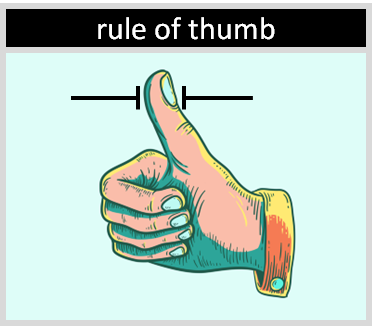



















 What’s down




























 The Leading Business Education Network for Doctors, Financial Advisors and Health Industry Consultants