BOARD CERTIFICATION EXAM STUDY GUIDES Lower Extremity Trauma
[Click on Image to Enlarge]
ME-P Free Advertising Consultation
The “Medical Executive-Post” is about connecting doctors, health care executives and modern consulting advisors. It’s about free-enterprise, business, practice, policy, personal financial planning and wealth building capitalism. We have an attitude that’s independent, outspoken, intelligent and so Next-Gen; often edgy, usually controversial. And, our consultants “got fly”, just like U. Read it! Write it! Post it! “Medical Executive-Post”. Call or email us for your FREE advertising and sales consultation TODAY [678.779.8597] Email: MarcinkoAdvisors@outlook.com
Medical & Surgical e-Consent Forms
ePodiatryConsentForms.com
iMBA Inc., OFFICES
Suite #5901 Wilbanks Drive, Norcross, Georgia, 30092 USA [1.678.779.8597]. Our location is real and we are now virtually enabled to assist new long distance clients and out-of-town colleagues.
ME-P Publishing
SEEKING INDUSTRY INFO PARTNERS?
If you want the opportunity to work with leading health care industry insiders, innovators and watchers, the “ME-P” may be right for you? We are unbiased and operate at the nexus of theoretical and applied R&D. Collaborate with us and you’ll put your brand in front of a smart & tightly focused demographic; one at the forefront of our emerging healthcare free marketplace of informed and professional “movers and shakers.” Our Ad Rate Card is available upon request [678-779-8597].
Classic Definition: Although the human body can develop a low-grade fever, muscular aches and pains in response to any vaccine, rumors that a flu shot can cause the flu are not true.
Modern Circumstance: Flu shots do contain dead flu viruses, but they are indeed dead. As for vaccines causing autism, this myth was started in 1998 with an article in the journal The Lancet.
Paradox Examples: In the study, the parents of eight children with autism said they believed their children acquired the condition after they received a vaccination against measles, mumps and rubella (the MMR vaccine). Since then, rumors have run rampant despite the results of many studies.
And, a 2002 study in The New England Journal of Medicine of 530,000 children found no link between vaccinations and the risk of a child developing autism.
Unfortunately, the endurance of this paradoxical myth continues to eat up time and funding dollars that could be used to make advances in autism, rather than proving, over and over again, that vaccinations do not cause the condition.
Cite: Dr. Rachel Vreeman, St. Martin’s Griffin 2009.
COMMENTS APPRECIATED
The Medical Executive-Post is a news and information aggregator and social media professional network for medical and financial service professionals. Feel free to submit education content to the site as well as links, text posts, images, opinions and videos which are then voted up or down by other members. Comments and dialog are especially welcomed. Daily posts are organized by subject. ME-P administrators moderate the activity. Moderation may also conducted by community-specific moderators who are unpaid volunteers.
Posted on May 21, 2025 by Dr. David Edward Marcinko MBA MEd CMP™
DEFINED
By Staff Reporters
***
***
Stocks ticked down yesterday, ending a six-day rally after some influential CEOs—including JPMorgan Chase’s Jamie Dimon—warned that markets have grown too complacent about tariffs and potential stagflation. But it was a spectacular day for Warby Parker, which climbed more than 15% after Google announced it’s partnering with the eyewear company on Google Glass (RIP) a new smart glasses device.
***
Stagflation is the simultaneous appearance in an economy of slow growth, high unemployment, and rising prices.
Once thought by economists to be impossible, stagflation has occurred repeatedly in the developed world since the 1970s.
Policy solutions for slow growth tend to worsen inflation, and vice versa. That makes stagflation hard to fight.
Stagflation is the combination of high inflation, stagnant economic growth, and elevated unemployment.
The term stagflation, a blend of “stagnation” and “inflation,” was popularized by British politician Lain MacLeod in the 1960s, during a period of economic distress in the United Kingdom. It gained broader recognition in the 1970s after a series of global economic shocks, particularly the 1973 oil crisis, which disrupted supply chains and led to rising prices and slowing growth. Stagflation challenges traditional economic theories, which suggest that inflation and unemployment are inversely related, as depicted by the Phillips Curve.
***
***
According to Wikipedia, stagflation presents a policy dilemma, as measures to curb inflation—such as tightening monetary policy—can exacerbate unemployment, while policies aimed at reducing unemployment may fuel inflation.
In economic theory, there are two main explanations for stagflation: supply shocks, such as a sharp increase in oil prices, and misguided government policies that hinder industrial output while expanding the money supply too rapidly.
NOTE: A portmanteau word or part of a word made by combining the spellings and meanings of two or more other words or word parts (such as smog from smoke and fog).
The stagflation of the 1970s led to a re-evaluation of Keynesian economic policies and contributed to the rise of alternative economic theories, including monetarism and supply-side economics.
Cognitive science is the interdisciplinary study of the mind and cognition. According to linguistics Professor Mackenzie H. Marcinko PhD, it combines various aspects from neuroscience, computer science, psychology, philosophy, linguistics, anthropology, and other fields, into a comprehensive study on the nature of intelligence.
Linguistics is the scientific study of language and its structure, including the study of morphology, syntax, phonetics, and semantics. Specific branches of linguistics include sociolinguistics, dialectology, psycholinguistics, computational linguistics, historical-comparative linguistics and applied linguistics.
Now, language and linguistics are closely related fields of study but they have distinct focuses.
Language refers to the system of communication used by humans, encompassing spoken, written, and signed forms. It is a means of expressing thoughts, ideas, and emotions.
On the other hand, linguistics is the scientific study of language itself. It examines the structure, sounds, meaning, and evolution of languages, as well as how they are acquired and used by individuals and communities.
While language is a broader concept that encompasses various forms of communication, linguistics delves into the intricate details and mechanics of language, aiming to understand its underlying principles and patterns.
Posted on May 14, 2025 by Dr. David Edward Marcinko MBA MEd CMP™
By Staff Reporters
***
***
History of Spinal Cord Injury Awareness Day
The first mention of spinal cord injuries was in the ancient Egyptian Edwin Smith’s papyrus from 2,500 B.C. The ancient Egyptian physicians described the injury as “untreatable.”
The first treatment for spinal cord injuries occurred in ancient India, where Hindu doctors used traction techniques to straighten the spine. The Greeks also employed the same technique as the Hindus. For example, Hippocrates — born in the 5th century B.C. — developed traction devices that helped straighten patients’ spines. It wasn’t until the second century A.D. that Galen, a Greek physician, discovered the relation between spinal cord injuries and loss of autonomic function and sensation.
Paul of Aegina, born in 625 A.D., became the first physician to pioneer surgical techniques for spinal cord injuries. He employed laminectomy to relieve pressure on the spine and recommended using a windlass to reduce the dislocation. The notion and treatment remained the same until the latter half of the 20th century; physicians continued to believe that spinal cord injuries were incurable. Although during the Renaissance, Leonardo da Vinci and Andreas Vesalius, made contributions to S.C.I. through their accurate depiction of the human spine and nerves.
In 1981, the Canadians Albert Aguayo and Sam David ended the millennia-long belief that S.C.I. is incurable. Through experiments on rats, they showed that axons could regenerate in the central nervous system in the right environment. The introduction of imaging, surgery, medical care, and rehabilitation medicine in the mid-20th century helped improve the care for spinal cord injuries and increased the life expectancy of those living with the condition.
Posted on May 13, 2025 by Dr. David Edward Marcinko MBA MEd CMP™
By Staff Reporters
***
***
Classic Definition: In our hemisphere, there is the mystery of the Cuban health care paradox.
Modern Circumstance: This small island country whose economy produces about $6,000 in goods and services per person annually, a mere fraction of U.S. economic activity, lacks access to many commonly used drugs. Specialty medical care is scarce, and obesity rates are high and growing.
Paradox Example: Yet Cuba paradoxically boasts a life expectancy that surpasses the U.S. by six months. So, could this finding be explained by their diet, too, one that is rich in fresh produce, but low in saturated fats?
Question: Or, might it be related to their accessibility to primary care services and high compliance rates of childhood vaccination?
COMMENTS APPRECIATED
The Medical Executive-Post is a news and information aggregator and social media professional network for medical and financial service professionals. Feel free to submit education content to the site as well as links, text posts, images, opinions and videos which are then voted up or down by other members. Comments and dialog are especially welcomed. Daily posts are organized by subject. ME-P administrators moderate the activity. Moderation may also conducted by community-specific moderators who are unpaid volunteers.
Posted on May 12, 2025 by Dr. David Edward Marcinko MBA MEd CMP™
By Staff Reporters and ChatGPT
***
***
President Trump to bring down prescription costs
In a Sunday post to Truth Social, President Trump signed an executive order at 9 am today to institute a most-favored-nation policy with pharmaceutical companies that he predicted could lower drug prices by 30% to 80%.
“The United States will pay the same price as the Nation that pays the lowest price anywhere in the World,”
While Americans pay more for pharmaceuticals than any other country, Bloomberg reported that the American market fuels innovation and drives growth in the industry. Drug makers have pushed back on previous efforts to revamp the system in the US, saying it would make revenue evaporate and hinder the development of potentially lifesaving drugs.
Posted on May 7, 2025 by Dr. David Edward Marcinko MBA MEd CMP™
***
By Staff Reporters
As of 1998, May 8th was designated as National Student Nurses Day, to be celebrated annually. And as of 2003, National School Nurse Day is celebrated on the Wednesday within National Nurses Week (May 6-12) each year.
***
***
The nursing profession has been supported and promoted by the American Nurses Association (ANA) since 1896. Each of ANA’s state and territorial nurses associations promotes the nursing profession at the state and regional levels. Each conducts celebrations on these dates to recognize the contributions that nurses and nursing make to the community.
The ANA supports and encourages National Nurses Week recognition programs through the state and district nurses associations, other specialty nursing organizations, educational facilities, and independent health care companies and institutions.
Posted on May 7, 2025 by Dr. David Edward Marcinko MBA MEd CMP™
By Rick Kahler CFP™ MSFP
***
***
DECLINE OF THE DOLLAR
On-again, off-again tariffs. Rising prices. Dramatic market swings. The anxiety-producing headlines come so fast it’s hard to know what to worry about first. Meanwhile, one serious consequence of all this chaos is going almost unnoticed. That is the decline of the dollar.
Since the start of this year, the value of the U.S. dollar has slipped more than 10% against other major currencies. That drop is not just an economic statistic. It affects all Americans’ daily lives.
People are feeling the pinch of rising prices at checkout lines, gas stations, and shipping counters. But there isn’t a full understanding of why. Tariffs are only half the story. The weakening dollar amplifies those price increases even further.
For years, the dollar remained strong even as the national debt ballooned. It benefited from its reputation as a safe haven, from global demand, and from U.S. interest rates. But much of that strength, as we now see, was fragile—propped up more by perception than fundamentals. In April, sweeping tariffs triggered a sharp market correction, and the dollar suddenly fell to its lowest point in over three years. Market confidence vanished overnight.
This was more than a market reaction. It signaled a collapse in trust—not just in policy, but in principle. It is no longer a given that the U.S. will act with consistency, reason, and long-term responsibility. What’s unraveling is both our country’s financial credibility and the moral foundation that underpinned it.
When a currency represents a nation, its value reflects more than economics. It reflects governance, accountability, stability, and integrity. When the dollar stumbles, it speaks to who we are, and whether we can still be counted on.
Yet, most people aren’t talking about the decline of the dollar. This may come from being overwhelmed, choosing to ignore even more bad news, or actually believing that this is a necessary step in making things better. It is not.
We all respond differently to financial uncertainty. Some lean into hyper-vigilance—tightening budgets, tracking every headline. Others shut down, turning toward distraction. Still others press on as if nothing has changed. These are all natural human reactions.
They are not the same as leadership. And leadership—internal and external—is what’s needed now. Not panic. Not blame. Just the courage to face where we are and the willingness to start again from there.
But leadership is in short supply in Washington, where many in both parties remain silent. Some fear political retribution from the administration, others fear backlash from increasingly extreme and vocal constituencies. That silence costs us all.
A respected government official recently told me that, while some of the domestic damage to our economy could be repaired within a few years, rebuilding global confidence in the United States may take a generation. That is a reflection of the rapid erosion of trust that has already happened in the last three months. Trust that took decades to build has been unwound in a matter of weeks. Even if we reversed every policy decision tomorrow, the damage is done.
We cannot change what’s already happened. We can still choose to show up. To pay attention. To have the hard conversations. To lead our own financial lives with more clarity, integrity, and intention than before. That kind of personal leadership may not fix the dollar. But it can help rebuild what underlies its value: trust, steadiness, and the moral grounding we’ve begun to lose.
Because the dollar’s decline is more than an economic headline.
It’s a story about who we are—and whether we’re ready to live with open eyes in a world where the old assumptions no longer hold.
Posted on May 6, 2025 by Dr. David Edward Marcinko MBA MEd CMP™
By Doctor David Edward Marcinko; MBA MEd
***
***
National Teachers’ Day is observed on the first Tuesday of the first full week of May (May 6th) and we’re more than ready to show our appreciation to those who have taught us. Everyone has had that favorite teacher that has helped inspire them. This day meant to honor them was actually made by a teacher.
None other than First Lady Eleanor Roosevelt herself. Eleanor Roosevelt was more than Franklin D. Roosevelt’s wife, she has a history of civic duty and was an advocate for fellow teachers. Her love for education began at a young age when she was privately tutored and encouraged by her aunt Anna “Barnie” Roosevelt. No matter how high she rose on the social ladder, she never forgot where she came from.
Posted on May 4, 2025 by Dr. David Edward Marcinko MBA MEd CMP™
By Staff Reporters
***
***
If getting answers from ChatGPT makes you feel dystopian, you may not want to hear about OpenAI CEO Sam Altman’s other co-founded venture, now rolling out stateside. It scans your eyeballs in exchange for cryptocurrency.
What in the Demolition Man? The device, which creates a unique user ID for your scan, is meant to address a problem that Altman had a hand in creating: how to verify identities and confirm humanity in a world full of artificial intelligence.
The project, called World (formerly Worldcoin), went live in other countries in 2023. Its US expansion, announced this week, featured retail outlets in five cities where you can get your eyes scanned:
Tools for Humanity, the company behind the orbs, says 12+ million people around the world have participated so far.
It claims to keep your data private, but authorities in more than a dozen places have suspended World’s operations or investigated its data practices, per the WSJ.
An emergency medicine physician is a medical doctor who specializes in the diagnosis, treatment, and management of acute and life-threatening medical conditions that require immediate intervention. These physicians work in hospital emergency departments, urgent care centers, and other acute care settings, where they provide rapid assessment, stabilization, and treatment to patients of all ages with a wide range of medical emergencies.
Emergency medicine physicians are trained to handle diverse medical emergencies, including trauma, cardiac emergencies, respiratory distress, severe infections, neurological emergencies, and obstetric emergencies, among others. They play a vital role in the front line management of medical emergencies, ensuring that patients receive prompt and appropriate care to improve outcomes and save lives.
***
Classic: Emergent Room or Emergency Department care is the provision of immediate medical service offering outpatient care for the treatment of acute and chronic illness and injury. It requires a broad and comprehensive fund of knowledge to provide such care. Excellence in care for patients with complex and or unusual conditions is founded on the close communication and collaboration between the urgent care medicine physician, the specialists and the primary physicians.
Modern: Urgent care does not replace your primary care physician. An urgent care center is a convenient option when someone’s regular physician is on vacation or unable to offer a timely appointment. Or, when illness strikes outside of regular office hours, urgent care offers an alternative to waiting for hours in a hospital Emergency Room.
Examples: Chest pain, bleeding that cannot be stopped and loss of consciousness; etc.
***
***
SOME ER DOCTORS WORK FOR FREE
The new president of emergency medicine for the Alberta Medical Association says Emergency Room physicians already coping with long hours, staff shortages and jammed waiting rooms are also being obligated, in some cases, to work for free. Dr. Warren Thirsk says the government has yet to follow through on a promise to reimburse emergency room doctors for so-called “good faith” payments.
“There’s been lots of excuses, but the bottom line is no one has actually received a penny for those suspended good-faith payments,” Thirsk said in an interview. “On average, every emergency physician in this province is out thousands of dollars for free work.” Good-faith payments reimburse ER doctors when they see patients who don’t have identification and can’t prove an Alberta Health Care Insurance Plan billing number.
Thirsk said the United Conservative government stopped those payments when it ripped up the master agreement with the AMA in early 2020. He said it promised to bring back those payments when the two sides agreed to a new deal in September 2022. But to date that hasn’t happened, he said.
“I’m legally and morally bound to look after you [if] you’re unidentified [as a patient],” said Thirsk, an emergency room doctor at Edmonton’s Royal Alexandra Hospital.
“I’m going to look after you because it’s the right thing to do no matter what the problem is.”
COMMENTS APPRECIATED
The Medical Executive-Post is a news and information aggregator and social media professional network for medical and financial service professionals. Feel free to submit education content to the site as well as links, text posts, images, opinions and videos which are then voted up or down by other members. Comments and dialog are especially welcomed. Daily posts are organized by subject. ME-P administrators moderate the activity. Moderation may also conducted by community-specific moderators who are unpaid volunteers.
Posted on April 30, 2025 by Dr. David Edward Marcinko MBA MEd CMP™
By Staff Reporters
***
***
Consumer sentiment is a statistical measurement of the overall health of the economy as determined by consumer opinion. It takes into account how people feel about their current financial health, the health of the economy in the short-term, and the prospects for longer-term economic growth. It is widely considered to be a useful economic indicator.
Consumer sentiment emerged as an economic statistic during the mid-20th century and has since become a barometer that influences public and economic policy. It is considered a lagging indicator because it takes people several months to notice and feel the effects of changes in economic activity.
American consumers are Worried about the Economy
Consumer sentiment dropped 8% from March to April amid worries about inflation, according to the University of Michigan’s closely watched survey. Though sentiment edged up slightly from an even lower reading earlier in the month, inflation expectations climbed to their highest since 1991 as consumers fret about the potential impact of tariffs.
And even beyond possible rising prices, things could be about to get rougher for consumers: Major retailers have warned that unless President Trump’s tariff policy toward China changes, they’re likely to encounter empty store shelves in a few weeks.
Posted on April 22, 2025 by Dr. David Edward Marcinko MBA MEd CMP™
OFTEN CONFUSING TO ALL
By Staff Reporters
***
***
A vehicle typically has two prices: the manufacturer’s suggested retail price (MSRP) and the invoice price. The MSRP is the sticker price, while the invoice price is what the dealer paid the manufacturer for the vehicle. The MSRP includes a hefty profit, so that’s what dealers want you to focus on. However, your goal should be to get the invoice price and focus on that for your negotiations.
However, finding invoice pricing on new cars can be difficult when going through the dealer. Dealers don’t want their invoice price on a vehicle to be public knowledge because that gives customers more leverage when it comes to negotiations. Just like any company, car dealers are in the business to make money. They can’t make money if they give you a huge discount on a car.
What is a Vehicle Invoice Price?
When it comes to the car buying process, there are several other terms and types of pricing you should understand. One of them is the vehicle invoice price. This is also known as the dealer cost, or what a car manufacturer charges the dealer for that specific vehicle. Freight charges are typically included in this total.
However, the numbers on the invoice may not be the true price the dealer paid for the vehicle, because it has hidden profits already built-in. Dealers are often given manufacturer rebates, allowances, discounts, and other incentives for selling a car. The invoice price on a vehicle may range from several hundred to several thousand dollars below its sticker price, which is why service will help you determine what the real numbers look like.
So, once you determine the car invoice price, you have added leverage when it comes to negotiating the best price possible with the auto dealer.
Several years ago a group of highly trusted and deeply experienced financial advisors, insurance service professionals and estate planners noted that far too many of their mature retiring physician clients, using traditional stock brokers, management consultants and financial advisors, seemed to be less successful than those who went it alone. These Do-it-Yourselfers [DIYs] had setbacks and made mistakes, for sure. But, the ME Inc doctors seemed to learn from their mistakes and did not incur the high management and service fees demanded from general or retail one-size-fits-all “advisors.”
In fact, an informal inverse related relationship was noted, and dubbed the “Doctor Effect.” In others words, the more consultants an individual doctor retained; the less well they did in all disciplines of the financial planning and medical practice management, continuum.
Of course, the reason for this discrepancy eluded many of them as Wall Street brokerages and wire-houses flooded the media with messages, infomercials, print, radio, TV, texts, tweets, dinners and internet ads to the contrary. Rather than self-learn the basics, the prevailing sentiment seemed to purse the holy grail of finding the “perfect financial advisor.” This realization confirmed the industry culture which seemed to be:
Bread for the advisor – Crumbs for the client!
And so, Marcinko Associates formed a cadre’ of technology focused and highly educated multi-degreed doctors, nurses, financial advisors, attorneys, accountants, psychologists and educational visionaries who decided there must be a better way for their healthcare colleagues to receive financial planning advice, products and related advisory services within a culture of fiduciary responsibility.
We trust you agree with this specific niche knowledge, and collegial consulting philosophy, as illustrated thru our firm and these two books.
SPEAKING: Dr. Marcinko will be speaking and lecturing, signing and opining, teaching and preaching, storming and performing at many locations throughout the USA this year! His tour of witty and serious pontifications may be scheduled on a planned or ad-hoc basis; for public or private meetings and gatherings; formally, informally, or over lunch or dinner. All medical societies, financial advisory firms or Broker-Dealers are encouraged to submit a RFP for speaking engagements: MarcinkoAdvisors@outlook.com
Posted on April 20, 2025 by Dr. David Edward Marcinko MBA MEd CMP™
By Staff Reporters
***
***
According to colleague Dan Ariely PhD, Bereavement Sex is one of those coping mechanisms that sounds strange but makes sense when you think about it. In the face of loss, our brains crave connection and comfort.
Engaging in sex after a significant loss can be a way to feel alive and regain a sense of control. It’s a testament to our complex emotional wiring, where grief and intimacy intertwine.
There’s often a disconnect between physicians, insurance agents and financial advisors and the patients and clients they’d like to serve. Both might ostensibly share the same goal but there’s often a big difference in perspective. Advisors / Physicians and would-be clients / patients likely have different communication styles, especially in an age where technology has greatly changed the way we talk with one another. Their expectations and priorities can also often dramatically diverge. Those structural gaps can hinder collaboration and trust.
To bridge this divide, you must understand how prospective clients and patients think nowadays and be able to adjust your M.A.S. approach accordingly.
THE BASICS
Marketing is the business process of identifying, anticipating and satisfying patient’s, client’s or customers’ needs and wants. It is your unique value proposition or strategic competitive advantage. Marketers can direct product to other businesses or directly to consumers. But, we believe it is actually your strategic competitive advantage [SCA] which differentiates yourself from competitors. It is the “moat” around your business.
Advertising is a marketing communication that employs an openly sponsored, non-personal message to promote or sell a product, service or idea. Sponsors of advertising are typically businesses wishing to promote their products or services. Advertising is communicated through various mass media outlet, including traditional media such as newspapers, magazines, television, radio, outdoor advertising or direct mail; and new media such as search results, blogs, social media, websites or text messages. The actual presentation of the message in a medium is referred to as an advertisement, or “ad” or advert for short. But, we believe that is simply how you disseminate your strategic competitive advantage [SCM] to potential clients.
Sales close the deal and collects money. Sales are activities related to selling or the number of goods or services sold in a given targeted time period. The seller, or the provider of the goods or services, completes a sale in response to an acquisition, appropriation, requisition, or a direct interaction with the buyer at the point of sale. There is a passing of title (property or ownership) of the item, and the settlement of a price, in which agreement is reached on a price for which transfer of ownership of the item will occur. The seller, not the purchaser, typically executes the sale and it may be completed prior to the obligation of payment. In the case of indirect interaction, a person who sells goods or service on behalf of the owner is known as a salesman or saleswoman or salesperson, but this often refers to someone selling goods in a store/shop, in which case other terms are also common, including salesclerk, shop assistant, and retail clerk.
***
***
DERIVATIVE THOUGHTS
Public Relations [PR] is differentiated than advertising from in that an advertiser pays for and has control over the message. It differs from personal selling in that the message is non-personal, i.e., not directed to a particular individual. We pay for advertising but pray for public relations. But public relations are not controllable but it is free, while advertising is not. PR suggests that “good news or bad news”; just spell the name correctly
Change Management is the discipline that guides how we prepare, equip and support individuals to successfully adopt to change in order to drive organizational success and outcomes.
Crisis Management is the precautions and identification of threats to an organization and its stakeholders, and the methods used by the organization to deal with these threats.
MODERNITY NOW
CRM stands for Customer Relationship Management, which is a system for managing all interactions with current and potential customers, clients or patients. The goal is simple: improve relationships to grow your business or medical practice. CRM technology helps companies stay connected to customers, streamline processes, and improve profitability.
When people talk about CRM, they’re usually referring to a CRM system: software that helps track each interaction you have with a prospect, patient or customer. That can include sales calls, treatment plans or service interactions, marketing e-mails, and more. CRM tools can unify customer and company data from many sources and even use Artificial Intelligene [AI] to help better manage relationships across the entire customer – patient lifecycle – spanning departments described in the M.A.S. basics, above.
Classic: It’s no surprise that people are more honest when they know that they’re being watched. But what about just reminding them of the idea of being watched, without them actually being watched?
Modern: Researchers at the University of Newcastle’s Division of Psychology have an honor (or trust) system where they are requested to deposit payment for coffee in an “honesty box.” There was a note saying how much they should pay.
In 2006, Dr. Melissa Bateson and colleagues decided to do a little experiment: they placed an image above the note. They alternate between two pictures: one week they would use a picture of alleged human eyes and the other week, flowers. After 10 weeks, they plotted the amount of money received versus drinks consumed and found that people paid nearly three times as much for their drinks when eyes were displayed.
“There’s an argument that if nobody is watching us it is in our interests to behave selfishly. But when we think we’re being watched we should behave better, so people see us as co-operative and behave the same way towards us,” — Dr Bateson said
EXAMPLE:
Tax: This has great exemplar potential in things like federal, state and local income tax preparation, etc.
Insight: “It’s a definite that you’re all going to screw up, but it’s not a definite that any of you will learn from that,” declared one of our medical school instructors, years ago. “Cultivate the attitude that allows you to own your mistakes, and then, not repeat them” — reported Monique Tello MD MPH.
An alternative investment is a financial asset that does not fall into one of the conventional investment categories. Conventional categories include stocks, bonds, and cash. Alternative investments can include private equity or venture capital, hedge funds, managed futures, art and antiques, commodities, and derivatives contracts. Real estate is also often classified as an alternative investment.
QUESTION: But what about a medical, podiatric or dental practice?
***
***
AnAlternate Asset Class Surrogate?
A medical practice is much like an alternative investment [AI], or alternate asset class in, two respects.
First, it provides the work environment that generates personal income which has been considered generous, to date.
Second, it has inherent appreciation and sales value that can be part of an exit (retirement) or succession planning transfer strategy.
Conclusion
So, unlike the emerging thought that offers Social Security payments as a surrogate for an asset classes; or a federally insured AAA bond – a medical practice might also be considered by some folks as an asset class within a well diversified modern investment portfolio.
SPEAKING: Dr. Marcinko will be speaking and lecturing, signing and opining, teaching and preaching, storming and performing at many locations throughout the USA this year! His tour of witty and serious pontifications may be scheduled on a planned or ad-hoc basis; for public or private meetings and gatherings; formally, informally, or over lunch or dinner. All medical societies, financial advisory firms or Broker-Dealers are encouraged to submit a RFP for speaking engagements: MarcinkoAdvisors@outlook.com
Posted on April 12, 2025 by Dr. David Edward Marcinko MBA MEd CMP™
THE “FIVE-FIVE” FINANCIAL RULE
By Staff Reporters
***
***
Many of the pros of home ownership will appeal to medical retirees for whom their home is their castle and who appreciate being settled both financially and geographically:
1. Building equity in your home: Each mortgage payment you make brings you closer to owning your house free and clear with no payments. If you can buy a new home or condo outright by selling your current home, you can still build equity in your new home over time.
2. Predictability: If you have a fixed-rate mortgage, your mortgage payments will remain consistent for years and you don’t have to worry about a landlord ever making you move.
3. Tax benefits: You can deduct mortgage interest and property taxes up to certain limits.
4. Customization: You don’t need a landlord’s permission to alter and improve your home.
5. Home appreciation: Homes generally increase in value, so you can increase your net worth by owning a property.
***
***
Renting also has five significant upsides, particularly for physician retirees who want greater freedom to travel and to make bigger moves — potentially across the country or even abroad:
1. Extreme flexibility: You can leave your property after giving notice and go wherever you want much more easily than with an illiquid home you’d have to sell first.
2. Lower upfront costs: You only have to pay first and last month’s rent and a security deposit to move into a rental, not make a large home down payment.
3. No maintenance concerns: If something breaks, your landlord is responsible for the cost of fixing it and the actual repairs. You don’t have to build up an emergency fund for maintenance.
4. Predictable expenses: For the duration of your lease, your monthly housing costs including utilities will remain consistent, even if the cost of energy goes up, for example.
5. Lack of worry: If you’re in a rental apartment, you won’t have to concern yourself with shoveling snow, mowing grass or other matters of upkeep.
I am in an unenviable position. The policy coming out of the White House has a significant impact on economics, more than ever before in my career. If I say anything positive about that policy, I’ll be put in the MAGA camp. If I criticize it, I’ll be accused of suffering from Trump derangement syndrome. I am hired by you to make the best investment decisions possible. Rather than see me as engaged in political commentary, I’d ask that you view my remarks as purely analytical.
Let me give you this analogy. I live in Denver. Let’s imagine I am a huge Broncos fan, and the Broncos are playing the Chicago Bears. If I am betting a significant amount of money on this game, I should put my affinity for the Broncos and hatred of the Chicago Bears aside and analyze data and facts. The Broncos are either going to win or lose; my wanting them to win has zero impact on the outcome. The same applies to my analysis here. My motto in life is Seneca’s saying, “Time discovers truth.” I just try to discover it before time does.
When it comes to politics, I also have a significant advantage. I was not born in this country. From a young age, I was brainwashed about communism, not about team Republican versus team Democrat. The failure of the Soviet Union de-brainwashed me fast concerning the virtues of communism and converted me into a believer in free markets.
As a result, I never bought into either party’s ideology, and thus in the last four presidential elections I voted for a Republican, an independent, a Democrat, and wrote in my youngest daughter, Mia Sarah (not in that order). In my articles I have criticized the policies of both Biden (student loan forgiveness, unions) and Trump (Bitcoin reserve).
I remind myself that in times like these you have to be a nuanced thinker. Some of Trump’s policies are terrific, others … not so much (I am being diplomatic here).
Scott Fitzgerald once said “The test of a first-rate intelligence is the ability to hold two opposed ideas in mind at the same time, and still retain the ability to function.” In 2025 we are taking this “first-rate intelligence” test daily.
What will happen to the US dollar? The US dollar will likely continue to get weaker, which is inflationary for the US. Let me start with some easily identifiable reasons:
We have too much debt. We ran 6-7% budget deficits while our economy was growing and unemployment was at record lows. Now we have $36 trillion in debt. Our interest expenses exceed our defense spending, and these costs will continue to climb. If/when we go into recession, we may see something we have not seen in a long time – higher interest rates. Our budget deficits will balloon to between 9–12%, and the debt market, realizing that inflation (i.e., money printing) is inevitable, will say, “Pay up!”
New competition from Bitcoin. President Trump’s approval of Bitcoin as a potential reserve currency is one of the most self-serving and anti-American things I’ve seen any president do. The US dollar is the world’s reserve currency. We still have little competition for that title. China could be a contender, but it is not a democracy and has capital controls. This policy has no upside for America, only downside.
A stronger Europe. Ironically, we may inadvertently create a stronger Europe by threatening to abandon NATO. I don’t want to insult European clients (or my European friends), but the following analogy describes the US-Europe relationship on some level: Europe gradually evolved into a trust fund kid (when it came to security) and the US turned into its sugar daddy. The trust fund kid was incredibly dependent on the sugar daddy. It criticized its parent for being a barbarian and money-driven, but it relied heavily on that parent to protect it from bullies.
President Trump cut off Europe’s allowance by threatening that the US might not protect Europe from Russia. This has forced Europe to spend more money on defense. Outside of Germany (which has little debt), few European economies can afford that. This may force Europe (or at least some European countries) to become more pragmatic – to cut social programs and bureaucracy. If this leads to a stronger Europe both economically and militarily, the euro will be competing with the US dollar. This is a big if.
Our new foreign policy.
When people describe President Trump’s foreign policy as “transactional,” they’re highlighting a fundamental shift in how America engages with the world – one with profound implications for our global standing, national interests, and the US dollar. The shift affects both types of capital – financial and reputational.
Reputational capital isn’t at risk in ‘one-shot’ transactions like house selling. Imagine you’re selling your primary residence and moving elsewhere. Do you disclose every flaw, or let the buyer figure things out? Your incentive is to maximize short-term profits. You’ll likely never meet this buyer again, and therefore there are incentives not to care what they’ll think of you afterward. You’ll be transactional, seeking the highest price possible for your biggest asset. This exemplifies a ‘one-shot’ system where future interactions aren’t expected.
Contrast this with a relationship- and trust-based system. Now imagine you are a homebuilder in a small town. Your suppliers only extend credit if you have a reputation for paying on time. Your employees do quality work only if you treat them fairly. Your buyers tell friends about their experience with you. The incentives naturally create a relational approach. In this trust-based system, incentives skew toward maximizing long-term profits, where reputational capital becomes the glue creating continuity.
Reputational capital radiates predictability – you know how someone will behave based on their history – but operating with low or negative reputational capital is difficult and expensive. People won’t enter long-term contracts with you or will demand external guarantees. Many potential partners will simply refuse to deal with you.
Building reputational capital works like adding pennies to a jar – each good deed incrementally adds to your standing. Yet reputational capital can collapse instantly by removing the jar’s bottom. A single breach of trust doesn’t just remove one penny; it can wipe out your entire balance and plunge you into reputational bankruptcy. The math is brutally asymmetric: good deeds might add a point or two, while bad deeds subtract by factors of 50 or 100.
This doesn’t mean transactions shouldn’t be profitable. If you’re accumulating reputational capital while consistently losing money, you’re probably in the wrong business. Each deal should be evaluated considering both long-term financial and reputational capital.
Individual transactions can sacrifice some profit but cannot afford to lose reputational capital. A “one-shot” transactional approach used in a trust-system environment may provide greater short-term profitability, but if this success comes at the expense of reputational capital, the long-term consequences for America’s global position could be devastating.
This brings us to our current foreign policy.
Relationships between nations are a trust-based system. I’d argue it’s a super-relational system because it’s multigenerational, lasting beyond the life of any one human. Reputational capital is paramount here.
Part of the US’s strength has been the soft power – the reputational capital – it exerted. We had a lot of friends, which helped us to be more effective in dealing with our foes. We keep telling ourselves that America is an “exceptional” nation. This exceptionalism didn’t just come from our financial and military might – it accumulated based on our reputational capital.
Though we don’t always succeed, we are a people who try to do the right thing. Our exceptionalism has been earned through our actions. We are the country that helped rebuild Europe and gave it six decades to repay lend-lease. We toppled communism.
I don’t know the nuances of the Ukraine mineral deal, but initially it had the optics of extortion. Though I think the renegotiated and signed version appears to be fair to both sides, forcing repayment while Ukraine is dodging Russian missiles made the US look transactional.
Actions by President Trump over the last month have undermined our reputation. We are quickly becoming a “one-shot” transactional player in a trust-based environment. Imposing tariffs on Canada on a whim to try to get it to become the 51st state erodes American reputational capital. So does not ruling out America invading Greenland. This puts us on the same moral plane as Russia invading Ukraine.
The conversation about tariffs has many nuances. For instance, I don’t know anyone who opposes reciprocal tariffs – they seem fair and don’t consume any reputational capital. But tariffs that are used as weapons in a trade war in order to annex another country erode reputational capital. Threatening to leave NATO and not protect countries that don’t spend enough on their defense diminishes reputational capital. Maybe the only way to get European countries to spend on defense was to threaten not to defend them – you can agree or disagree with the rationale behind each of Trump’s decisions, but what can’t be argued is that they undermined our reputational capital.
As we lose soft power, our influence will diminish, and thus so will perceptions of our power. The world will start looking at us not from the perspective of the continuity of generations but of presidential cycles. The word of the American president will have an expiration date of the next presidential or mid-term election.
There are two negotiation styles – Warren Buffett’s and Donald Trump’s. Both have their advantages and disadvantages. Buffett will give you one offer and one offer only. Once the deal is agreed to, even just verbally, that is the deal. Critics would say that there is downside to that predictability, as foes know how you are going to respond. Donald Trump’s style is to be unpredictable, which has its own advantages when you deal with foes – it keeps opponents guessing. But it destroys trust with your allies.
In a world of fiat currencies, all currency is a financial and reputational promise. President Trump, with the help of DOGE (and maybe even tariffs) may increase our financial strength. I hope he does, but it will likely come at a very high cost to our reputational capital, and therefore US global influence and the US dollar will continue its decline.
How are we positioned for this?
About half of our portfolio is foreign companies whose sales are not in dollars. They will benefit from a weaker dollar. We also have exposure to oil, which is priced in the US dollar and usually appreciates when the dollar weakens.
A weaker dollar means our imports will become more expensive, which is inflationary. We own many companies with pricing power and also companies that have claims on someone else’s revenues. Take Uber for example: they get about 20% of each ride. If the cost of the ride goes up, so does their dollar take.
Why does President Trump keep pushing crypto?
In July 2019, Trump said the following: “I am not a fan of Bitcoin and other cryptocurrencies, which are not money, and whose value is highly volatile and based on thin air.” Five years later he promised to establish the US Crypto Reserve, and in 2025 he did.
What changed? There is no logical reason for an American president to endorse crypto. None. Here is the honest answer: Crypto bros made mega-contributions to his campaign.
To top it off, three days before he took office he issued $TRUMP – a shitcoin. Believe it or not, “shitcoin” is a technical term in the crypto community (any coin other than Bitcoin is called a shitcoin by Bitcoin “maximalists”, folks who believe Bitcoin is the one and only digital currency). The future sitting president literally issued – I don’t want to call it a currency, so I guess shitcoin is the right name – that will at some point decline to zero in value. In other words, he’ll fleece his loyal followers who purchase $TRUMP of billions of dollars.
I previously referenced both reputational capital and soft power. These types of acts by a sitting president subtract from both.
Posted on April 9, 2025 by Dr. David Edward Marcinko MBA MEd CMP™
By Staff Reporters
***
***
Just after midnight, President Trump’s “reciprocal” tariffs went into effect against 86 countries. Analysts have estimated that the new US average effective tariff rate is north of 20%, the highest in more than 100 years. Ahead of the tariff deadline, markets swung violently, mostly way down: According to Bloomberg’s Cameron Crise, yesterday was the fourth straight trading day when the S&P 500’s trading range was 5% or more. That’s only happened in 1987, 2008, and 2020.
***
***
The Apple A18 and Apple A18 Pro are a pair of 64-bit ARM-based system on a chip (SoC) designed by Apple Inc., part of the Apple silicon series. They are used in the iPhone 16 and iPhone 16 Pro lineups and the iPhone 16e, and built on a second generation 3 nm process by TSMC.
***
Yesterday, for several hours on Tuesday, it looked like stocks were going to regain some of the ground lost during the market’s very bad week. But after the Trump administration made it clear that its increased tariffs on China would go into effect, all three indexes plunged. Apple, which makes most of its iPhones in China, was hit harder than many of its Big Tech peers.
So shoppers are thinking it’s better to have an Apple A18 processor and not need it, than to need it and not have it. Apple customers are scrambling to buy new iPhones out of fear that the company could raise prices to offset President Trump’s tariffs.
Employees at locations throughout the US said they’re being bombarded with questions about potential price hikes and have witnessed customers panic-buying phones. Though Apple declined to comment to Bloomberg, its retail stores reportedly saw higher sales over the last weekend than in previous years.
Posted on April 3, 2025 by Dr. David Edward Marcinko MBA MEd CMP™
By Staff Reporters
***
***
Eidetic memory refers to the ability to vividly recall images from memory after only a few instances of exposure, with high accuracy for a short time after exposure, without using a memory aid.
Photographic memory, though often used interchangeably with eidetic memory, implies the ability to recall extensive details, like entire pages of text, with high precision. Genuine photographic memory’s existence is debated and hasn’t been conclusively proven.
Posted on March 30, 2025 by Dr. David Edward Marcinko MBA MEd CMP™
By Staff Reporters
***
***
Negativity bias is not totally separate from pessimism bias, but it is subtly and importantly distinct. In fact, it works according to similar mechanics as the sunk cost fallacy in that it reflects our profound aversion to losing. We like to win, but we hate to lose even more.
And so, according to cognitive scientist Mackenzie Marcinko PhD, when we make a decision, we generally think in terms of outcomes—either positive or negative. The bias comes into play when we irrationally weigh the potential for a negative outcome as more important than that of a positive outcome.
***
***
Pessimism bias on the other hand, is a cognitive bias that causes people to overestimate the likelihood of negative things and underestimate the likelihood of positive things, especially when it comes to assuming that future events will have a bad outcome.
For example, the pessimism bias could cause someone to believe that they’re going to fail an exam, even though they’re well-prepared and are likely to get a good grade.
According to colleague Dan Ariely PhD, The pessimism bias can distort people’s thinking, including your own, in a way that leads to irrational decision-making, as well as to various issues with your mental health and emotional well being.
Posted on March 29, 2025 by Dr. David Edward Marcinko MBA MEd CMP™
EDITOR-IN-CHIEF
By Dr. David Edward Marcinko; FACFAS MBA MEd
***
***
NATIONAL PHYSICIANS WEEK
National Physicians Week sets out March 25-31 to honor the healers dedicated to the art of medicine. In 2017, National Physicians Week highlighted the shortage of physicians in the United States against a growing landscape of minorities joining the ranks.
#NationalPhysiciansWeek
“In hindsight, I am proud of what we have accomplished in a short period of time, including raising the recognition of our group and spotlighting the years of sacrifice by those in our profession to serve our patients. We are poised to initiate actionable efforts to engage and educate our physician community.”
Cite: Dr. Kimberly Funches Jackson, President
Today in 2025, let’s explore the invaluable contributions of physicians, celebrate their hard work during National Physicians Week, and highlight the essential role that locum doctors play in enhancing healthcare delivery.
A Week to Honor All Physicians
National Physicians Week is a celebration of the remarkable work that doctors do every single day. From diagnosing complex conditions to providing life-saving treatments, physicians dedicate themselves to improving the health and well-being of their patients. It’s a week for healthcare professionals, patients, and communities to come together and show appreciation for the doctors who make a difference in our lives.
Physicians work long hours, face immense pressure, and make critical decisions daily. Their contributions go beyond the walls of the hospital, as many are also involved in research, teaching, and community outreach.
So, this week, it’s important to acknowledge not only their professional expertise but also the compassion and resilience they exhibit in their work.
SPEAKING: Dr. Marcinko will be speaking and lecturing, signing and opining, teaching and preaching, storming and performing at many locations throughout the USA this year! His tour of witty and serious pontifications may be scheduled on a planned or ad-hoc basis; for public or private meetings and gatherings; formally, informally, or over lunch or dinner. All medical societies, financial advisory firms or Broker-Dealers are encouraged to submit a RFP for speaking engagements: CONTACT: MarcinkoAdvisors@outlook.com
Avram Noam Chomsky is an American professor known for his traditional work in linguistics and political activism. Sometimes called “the father of modern linguistics”, Chomsky is also one of the founders of the field of cognitive science. He is a laureate professor of linguistics at the University of Arizona and an professor emeritus at MIT.
And so, modern linguists today approach their work with scientific rigor and perspective [STEM], although they use methods that were once thought to be solely an academic discipline of the humanities.
Contrary to this humanitarian belief, according to Professor Mackenzie Hope Marcinko PhD of the University of Delaware, linguistics is now multidisciplinary. It overlaps each of the human sciences including psychology, neurology, anthropology, and sociology. Linguists conduct formal studies of sound structure, grammar and meaning, but also investigate the history of language families, and research language acquisition.
Posted on March 28, 2025 by Dr. David Edward Marcinko MBA MEd CMP™
By Staff Reporters
***
***
Dental care in America divides people into two camps: those who can afford regular preventive care and cleanings, and those who can’t.
These so-called dental deserts contribute to a deep disparity in overall health. People who live in these places are more likely to get tooth decay and develop severe health problems. They also spend more money on care, and more time seeking health assistance in an emergency.
***
***
Stat: 25 million. That’s how many US residents live in areas without enough dentists, according to a recent Harvard University study.
A growing movement against fluoride is adding to the risk of tooth decay in these “dental deserts.” (NPR)
Posted on March 25, 2025 by Dr. David Edward Marcinko MBA MEd CMP™
By Wikipedia and Staff Reporters
***
***
Congestion pricing or congestion charges is a system of surcharging users of public goods that are subject to congestion through excess demand, such as through higher peak charges for use of bus services, electricity, railways, telephones, and road pricing to reduce traffic congestion; airlines and shipping companies may be charged higher fees for slots at airports and through canals at busy times. This pricing strategy regulates demand, making it possible to manage congestion without increasing supply.
According to the economic theory behind congestion pricing, the objective of this policy is to use the price mechanism to cover the social cost of an activity where users otherwise do not pay for the negative externalities they create (such as driving in a congested area during peak demand).
By setting a price on an over-consumed product, congestion pricing encourages the redistribution of the demand in space or in time, leading to more efficient outcomes.
The recent horrifying murder of UnitedHealthcare Group CEO Brian Thompson has called attention to the anger many Americans feel about our health care system. This tragedy has thrust the very real issue of health care costs back into the headlines.
One article on the topic, from Ken Alltucker for USA Today, offered seven reasons why Americans pay so much for health care with such poor results. When I saw the headline, I thought, “Finally, someone’s going to bring up the elephant in the room: taxes.”
The seven reasons included bloated administrative costs, lack of price transparency, overpaid specialists, higher prescription drug prices, and more. But I didn’t see a word about how, compared to other developed nations with “cheaper” health care, Americans pay far lower taxes. That omission feels like leaving a critical piece of the puzzle off the table.
***
***
In reality, countries with universal health care are not pulling off some magic trick of efficiency. They are simply collecting the money differently—through significantly higher taxes. Americans, on the other hand, pay for health care more directly, through out-of-pocket costs and insurance premiums.
In a column last year, I did the math. Americans spend about 17.8% of GDP on health care, plus 27.7% of GDP in taxes. That’s a total of 45.5%. Now compare that to twelve European countries with universal health care. They spend a median of 11.5% of GDP on health care and collect 41.9% of GDP in taxes. Total? 53.4%. In other words, Americans are spending 7.9% less overall on healthcare and taxes combined.
The saving isn’t what it appears, though. A fair comparison of healthcare costs and taxes needs to account for the fact that universal healthcare systems cover 100% of their populations, while the U.S. system currently leaves about 8% uninsured. If you factor in the cost of covering our uninsured residents, the U.S. likely spends a comparable percentage of income on healthcare as European countries with universal systems.
***
***
Our system is far from perfect. As the USA Todayarticle points out, administrative costs are bloated. Harvard’s David Cutler estimates up to 25% of our health spending goes toward paperwork, phone calls, and processing. Price transparency is practically nonexistent. The cost of a diagnostic test might vary from $300 to $3,000 depending on where you go. We pay much more for prescription drugs and many procedures than those same treatments cost in other developed nations. Another issue is the fee-for-service model that rewards doctors for ordering more tests and procedures, whether or not patients get better.
We can do better. Innovations like value-based care, where providers are paid for outcomes rather than procedures, could help shift the system toward real results. Greater price transparency would empower patients to make informed choices and force providers to compete. And addressing administrative inefficiencies could save billions.
Yet fixing the system requires being honest about trade-offs. If we want universal health care at European price rates, we need to accept European tax rates. That’s the part of the conversation that often gets left out. It’s easy to be angry at hospitals, insurance companies, and drug manufacturers—and yes, they all have plenty to answer for. But we also need to face the reality that we’ve chosen a system that prioritizes lower taxes over centralized health care.
Anger may have put the flaws in our health care system in the spotlight. Finding genuine solutions will require moving beyond expressions of anger and frustration. It will demand thoughtful discussions about what kind of health care system, as individuals and as a nation, that we want and how we are willing to fund it.
Posted on March 21, 2025 by Dr. David Edward Marcinko MBA MEd CMP™
Beware – Public Improvement Fees
Beware – Public Improvement Districts
By Staff Reporters
***
***
A Public Improvement Fee (PIF) is a fee that developers may require their tenants to collect on sales transactions to pay for on-site improvements. The PIF is a fee and NOT a tax; therefore, it becomes a part of the overall cost of the sale/service and is subject to sales tax
Examples of these improvements include curbs and sidewalks, parking facilities, storm management system, sanitary sewer systems, road development (within the site) and outdoor public plazas.
Public Improvement Districts (PIDs) are a financing mechanism used to fund new developments and infrastructure improvements. PIDs are relatively easy to create and can be done by the local municipality. A majority of property owners within the district may petition a local government to create the district. Bonds can then be issued to fund a development or infrastructure improvements. Through an industry analysis and view of the current political environment, PIDs are certainly a beneficial mechanism to fund projects otherwise not feasible due to constraints on city budgets. Local elected officials will want PIDs monitored and only used in proper circumstances.
Posted on March 20, 2025 by Dr. David Edward Marcinko MBA MEd CMP™
By Staff Reporters
***
***
A medical zebra is rare a disease, one that is so rare that most doctors have not encountered a patient with that disease. Having only read about the disease in a textbook or in the case of many recently defined diseases, not at all. It is therefore difficult for medical doctors to diagnose these individuals.
The term originates from a popular saying among clinicians, “when you hear hoof-beats, think horses, not zebras”, meaning that when diagnosing a patient, one should first exclude the most common causes for a patients symptoms, before looking for rare causes. While this is a good idea in everyday practice, one must not forget to make the effort to go “zebra hunting” when the common causes don’t explain the full clinical picture. This is especially important with the current growth of genetics and personalized medicine.
Examples:
Sutton’s law – perform first the diagnostic test expected to be most useful
Occam’s razor – select from among competing hypotheses the one that makes the fewest new assumptions
Leonard’s law of physical findings – it is obvious or it is not there
Hickam’s dictum – “Patients can have as many diseases as they damn well please”
Samuel Gee – author of Medical lectures and aphorisms (1902)
James Alexander Lindsay – author of Medical axioms, aphorisms, and clinical memoranda (1924)
Maimonides – Commentary on the aphorisms of Hippocrates and Medical aphorisms of Moses (12th century)
Sagan standard – Extraordinary claims require extraordinary evidence
Twyman’s law – Any figure that looks interesting, or different, is usually wrong.
Now, a medical aphorisms is a pithy statement denoting a general truth. They have a special niche in medical discourse and writing. The use of aphorisms in medicine dates to ancient times and continues today.
Posted on March 19, 2025 by Dr. David Edward Marcinko MBA MEd CMP™
BREAKING NEWS!
***
***
The Federal Reserve just opted to hold interest rates steady as officials reckon with fearful markets and concerns of an economic slowdown sparked by the trade wars launched by President Donald Trump and his efforts to overhaul and dismantle government agencies.
After a two-day meeting of its monetary policy committee in Washington, D.C., the Fed announced it would hold its rate target at a range of 4.25% to 4.50%. Investors anticipated the move. The Fed’s target rate remains a full percentage point lower than it was when the Fed pivoted to cutting rates last September.
Posted on March 16, 2025 by Dr. David Edward Marcinko MBA MEd CMP™
DOCTOR PODIATRIC MEDICINE
By Staff Reporters
***
***
Background: Survey research is common practice in podiatry literature and many other health-related fields. An important component of the reporting of survey results is the provision of sufficient information to permit readers to understand the validity and representativeness of the results presented. However, the quality of survey reporting measures in the body of podiatry literature has not been systematically reviewed.
Objective: To examine the reporting of response rates and nonresponse bias within survey research articles published in the podiatric literature in order to provide a foundation with regard to the development of appropriate research reporting standards within the profession.
Methods: This study reports on a secondary analysis of survey research published in the Journal of the American Podiatric Medical Association, the Foot, and the Journal of Foot and Ankle Research. 98 surveys published from 2000 to 2018 were reviewed and data abstracted regarding the report of response rates and non-response bias.
Results: 67 surveys (68.4%) report a response rate while only 36 articles (36.7%) mention non-response bias in any capacity.
Conclusions: The findings suggest that there is room for improvement in the quality of reporting response rates and nonresponse in the body of podiatric literature involving survey research. Both nonresponse and response rate should be reported to assess survey quality. This is particularly problematic for studies that contribute to best practices.
Health actuaries analyze potential risks, profits and trends that will affect their employers, which are often in the health insurance, government health services and medical provider industries. They advise companies on issuing policies to consumers based on risks, calculated premiums and upcoming changes in health-care costs.
It’s common for an actuary to have a bachelor’s degree or higher in actuary studies, mathematics or statistics. Coursework on medical terminology and hierarchy of the medical field is also beneficial. In addition to academic education, certification is also necessary to reach “professional status,” which is required by most employers.
***
***
The professional organization, Society of Actuaries, certifies actuaries in the health and medical field. Their statistical work is commonly done with predictive tables, probability tables and life tables that are created on customized statistical analysis software such as Stata or XLSTAT.
The actuary field as a whole is growing faster than other fields, according to the Bureau of Labor Statistics [BLS]. In 2020, it expanded by 27 percent. The average annual salary for an actuary in 2010 was $87,650. More specifically, in the health insurance field, the salary was slightly higher at $91,000.
SPEAKING: Dr. Marcinko will be speaking and lecturing, signing and opining, teaching and preaching, storming and performing at many locations throughout the USA this year! His tour of witty and serious pontifications may be scheduled on a planned or ad-hoc basis; for public or private meetings and gatherings; formally, informally, or over lunch or dinner. All medical societies, financial advisory firms or Broker-Dealers are encouraged to submit a RFP for speaking engagements: CONTACT: MarcinkoAdvisors@outlook.com
Posted on March 15, 2025 by Dr. David Edward Marcinko MBA MEd CMP™
DEFINITION
By Staff Reporters and FTC
***
***
Surveillance pricing is a broad term to describe the practice of linking pricing to individualized consumer data.
Companies employing it might use algorithms, personal information, and AI to set a price for their goods based on everything from where you live to your age to your browsing or credit history. The practice, sometimes called dynamic pricing or personalized pricing, is growing increasingly common, but isn’t completely new.
In 2012, the travel website Orbitz began directing people on Macs to higher hotels after realizing they often had more purchasing power. It stopped the practice after the Wall Street Journalreported on it.
Is surveillance pricing the same thing as surge pricing?Yes and no.
You might know about surge pricing from the last time you tried to call an Uber during a rainstorm. As demand skyrockets for a ride share, so does the price. This is one kind of surveillance pricing, but what the FTC is targeting appears more specific. The FTC said its probe concerns “when the pricing is based on surveillance of an individual’s personal characteristics and behavior.”
Is surveillance pricing bad?
The FTC opened its probe into companies using surveillance pricing because it’s worried about the risks it might pose to consumers
“Firms that harvest Americans’ personal data can put people’s privacy at risk. Now firms could be exploiting this vast trove of personal information to charge people higher prices,” FTC Chair Lina M. Khan said in a statement. “Americans deserve to know whether businesses are using detailed consumer data to deploy surveillance pricing, and the FTC’s inquiry will shed light on this shadowy ecosystem of pricing middlemen.”
The FTC is looking into four major areas of the practice: types of products being offered, data collection, customer and sales information, and impacts on consumers and prices.
Many Americans, it fears, don’t know when their data is being harvested and how it is affecting what they pay. “Consumers may now be subjected to surveillance pricing when they shop for anything, big or small, online or in person: a house, a car, even their weekly groceries,” the FTC said.
The FTC sent the orders for more information to Accenture, Bloomreach, Chase, Mastercard, McKinsey & Co., Pros, Revionics, and Task.
“Advancements in machine learning make it cheaper for these systems to collect and process large volumes of personal data, which can open the door for price changes based on information like your precise location, your shopping habits, or your web browsing history,” the FTC wrote.
Posted on March 13, 2025 by Dr. David Edward Marcinko MBA MEd CMP™
By Staff Reporters
***
***
Wikipedia suggests that Rhetoric is the art of persuasion . It is one of the three ancient arts of discourse (trivium) along with grammar and logic/dialectic.
As an academic discipline within the humanities, rhetoric aims to study the techniques that speakers or writers use to inform, persuade, and motivate their audiences.
And, according to Professor Mackenzie Hope Marcinko PhD, rhetoric also provides heuristics for understanding, discovering, and developing arguments for particular situations.
Posted on March 13, 2025 by Dr. David Edward Marcinko MBA MEd CMP™
BEHAVIORAL ECONOMICS
By Staff Reporters
***
***
Prospect theory is a psychological and behavioral economics theory developed by Daniel Kahneman and Amos Tversky in 1979. It explains how people make decisions when faced with alternatives involving risk, probability, and uncertainty. According to this theory, decisions are influenced by perceived losses or gains.
Example:
Amanda, a DO client, was just informed by her financial advisor that she needed to re-launch her 403-b retirement plan. Since she was leery about investing, she quietly wondered why she couldn’t DIY. Little does her FA know that she doesn’t intend to follow his advice, anyway! So, what went wrong?
The answer may be that her advisor didn’t deploy a behavioral economics framework to support her decision-making. One such framework is the “prospect theory” model that boils client decision-making into a “three step heuristic.”
Prospect theory makes the unspoken biases that we all have more explicit. By identifying all the background assumptions and preferences that clients [patients] bring to the office, decision-making can be crafted so that everyone [family, doctor and patient] or [FA, client and spouse] is on the same page. Briefly, the three steps are:
1. Simplify choices by focusing on the key differences between investment [treatment] options such as stock, bonds, cash, and index funds.
2. Understanding that clients [patients] prefer greater certainty when it comes to pursuing financial [health] gains and are willing to accept uncertainty when trying to avoid a loss [illness].
3. Cognitive processes lead clients and patients to overestimate the value of their choices thanks to survivor bias, cognitive dissonance, appeals to authority and hindsight biases.
Assessment
Much like healthcare today, the current mass-customized approaches to the financial services industry falls short of recognizing more personalized advisory approaches like prospect theory and assisted client-centered investment decision-making.
Some Stupid Things Financial Advisors Say to Physician Clients
A few years ago and just for giggles, colleague Lon Jefferies MBA CFP® and I collected a list of dumb-stupid things said by some Financial Advisors to their doctor, dentist, nurse and and other medical professional clients, along with some recommended under-breath rejoinders:
“They don’t have any debt except for a mortgage and student loans.” OK. And I’m vegan except for bacon-wrapped steak.
“Earnings were positive before one-time charges.” This is Wall Street’s equivalent of, “Other than that Mrs. Lincoln; how was the play?”
“Earnings missed estimates.” No. Earnings don’t miss estimates; estimates miss earnings. No one ever says “the weather missed estimates.” They blame the weatherman for getting it wrong. Finance is the only industry where people blame their poor forecasting skills on reality.
“Earnings met expectations, but analysts were looking for a beat.” If you’re expecting earnings to beat expectations, you don’t know what the word “expectations” means.
“It’s a Ponzi scheme.” The number of things called Ponzi schemes that are actually Ponzi schemes rounds to zero. It’s become a synonym for “thing I disagree with.”
“The [thing not going perfectly] crisis.” Boy who cried wolf, meet analyst who called crisis.
“He predicted the market crash in 2008.” He also predicted a crash in 2006, 2004, 2003, 2001, 1998, 1997, 1995, 1992, 1989, 1984, 1971…
“More buyers than sellers.” This is the equivalent of saying someone has more mothers than fathers. There’s one buyer and one seller for every trade. Every single one.
“Stocks suffer their biggest drop since September.” You know September was only six weeks ago, right?
“We’re cautiously optimistic.” You’re also an oxymoron.
[Guy on TV]: “It’s time to [buy/sell] stocks.” Who is this advice for? A 20-year-old with 60 years of investing in front of him, or a 82-year-old widow who needs money for a nursing home? Doesn’t that make a difference?
“We’re neutral on this stock.” Stop it. You don’t deserve a paycheck for that.
“There’s minimal downside on this stock.” Some lessons have to be learned the hard way.
“We’re trying to maximize returns and minimize risks.” Unlike everyone else, who are just dying to set their money ablaze!
“Shares fell after the company lowered guidance.” Guys, they just proved their guidance can be wrong. Why are you taking this new one seriously?
“Our bullish case is conservative.” Then it’s not a bullish case. It’s a conservative case. Those words mean opposite things.
“We look where others don’t.” This is said by so many investors that it has to be untrue most of the time.
“Is [X] the next black swan?” Nassim Taleb’s blood pressure rises every time someone says this. You can’t predict black swans. That’s what makes them dangerous.
“We’re waiting for more certainty.” Good call. Like in 1929, 1999 and 2007, when everyone knew exactly what the future looked like. Can’t wait!
“The Dow is down 50 points as investors react to news of [X].” Stop it – you’re just making stuff up. “Stocks are down and no one knows why” is the only honest headline in this category.
“Investment guru [insert name] says stocks are [insert forecast].” Go to Morningstar.com. Look up that guru’s track record against their benchmark. More often than not, their career performance lags an index fund. Stop calling them gurus.
“We’re constructive on the market.” I have no idea what that means. I don’t think you do, either.
“[Noun] [verb] bubble.” (That’s a sarcastic observation from investor Eddy Elfenbein.)
“Investors are fleeing the market.” Every stock is owned by someone all the time.
“We expect more volatility.” There has never been a time when this was not the case. Let me guess, you also expect more winters?
“This is a strong buy.” What do I do with this? Click the mouse harder when placing the order in my brokerage account?
“He was tired of throwing his money away renting, so he bought a house.” He knows a mortgage is renting money from a bank, right?
“This is a cyclical bull market in a secular bear.” Vapid nonsense.
“Will Obamacare ruin the economy?” No. And get a grip.
So, don’t let these aphorisms blind you to the critical thinking skills you learned in college, honed in medical school and apply every day in life.
SPEAKING: Dr. Marcinko will be speaking and lecturing, signing and opining, teaching and preaching, storming and performing at many locations throughout the USA this year! His tour of witty and serious pontifications may be scheduled on a planned or ad-hoc basis; for public or private meetings and gatherings; formally, informally, or over lunch or dinner. All medical societies, financial advisory firms or Broker-Dealers are encouraged to submit a RFP for speaking engagements: CONTACT: MarcinkoAdvisors@outlook.com
Posted on March 11, 2025 by Dr. David Edward Marcinko MBA MEd CMP™
By Staff Reporters
***
***
Inattentional Blindness: Is a psychological phenomenon where individuals fail to notice unexpected stimuli in their visual field when their attention is focused on a specific task or object.
This occurs because the brain prioritizes processing information relevant to the task at hand, leading to a temporary inability to perceive other, potentially significant details in the environment. Experiments, such as the famous “invisible gorilla” study, illustrate how people can completely miss prominent objects or events when their attention is directed elsewhere.
And, according to colleague Dan Ariely PhD, inattentional blindness highlights the limitations of human perception and attention, emphasizing that what we see is often influenced by where we focus our cognitive resources.
Posted on March 9, 2025 by Dr. David Edward Marcinko MBA MEd CMP™
By Staff Reporters
***
***
A Morton’s fork is a type of false dilemma in which contradictory observations lead to the same conclusion.
Morton’s Fork:Claims its origin from John Morton, the Archbishop of Canterbury, a public policymaker who used convoluted and contradictory logic to establish tax laws in the mid-15th century.
He contended that whoever lived humbly must be saving much money and hence would be able to pay higher taxes; and those that lived lavish lives were obviously rich, so they could also pay higher taxes.
In other words: a Hobsons Choice between two equally unpleasant alternatives.
Posted on March 6, 2025 by Dr. David Edward Marcinko MBA MEd CMP™
By Staff Reporters
***
***
March 6th is National Dentist Day, a day to celebrate the men and women who keep our chompers chomping, our gnashers gnashing, and our whites pearly.
Dentists (DDS/DMD) are doctors who specialize in oral health. It’s their job to prevent, diagnose, and treat oral diseases, monitor the growth of our teeth and jaws, and perform surgical procedures on our teeth and mouths!
Dental health is integral to our overall health, so today we salute them not just for keeping our teeth looking good, but keeping our bodies in tip-top shape.
As in the case of Declinism, to better understand the Forer effect (commonly known as the Barnum Effect), it’s helpful to acknowledge that people like their world to make sense. If it didn’t, we would have no pre-existing routine to fall back on and we’d have to think harder to contextualise new information.
Note: Phineas Taylor Barnum (July 5, 1810 – April 7, 1891) was an American showman, businessman, and politician remembered for promoting celebrated hoaxes and founding with Jim Bailey the Ringling Bros. and Barnum & Bailey Circus. He was also an author, publisher, and philanthropist although he said of himself: “I am a showman by profession … and all the gilding shall make nothing else of me.” According to Barnum’s critics, his personal aim was “to put money in his own coffers”. According to Wikipedia, the adage “there’s a sucker born every minute” has frequently been attributed to him, although no evidence exists that he had coined the phrase
With that, if there are gaps in our thinking of how we understand things, we will try to fill those gaps in with what we intuitively think makes sense, subsequently reinforcing our existing schema(s). As our minds make such connections to consolidate our own personal understanding of the world, it is easy to see how people can tend to process vague information and interpret it in a manner that makes it seem personal and specific to them. Given our egocentric nature (along with our desire for nice, neat little packages and patterns), when we process vague information, we hold on to what we deem meaningful to us and discard what is not. Simply, we better process information we think is specifically tailored to us, regardless of ambiguity.
More specifically, according to colleague Dan Ariely PhD, the Forer effect refers to the tendency for people to accept vague and general personality descriptions as uniquely applicable to themselves without realizing that the same description could be applied to just about everyone else (Forer, 1949). For example, when people read their horoscope, even vague, general information can seem like it’s advising something relevant and specific to them.
Remember, we make thousands of decisions every day, some more important than others. Make sure that the ones that do matter are not made based on bias, but rather on reflective judgment and critical thinking.
SPEAKING: Dr. Marcinko will be speaking and lecturing, signing and opining, teaching and preaching, storming and performing at many locations throughout the USA this year! His tour of witty and serious pontifications may be scheduled on a planned or ad-hoc basis; for public or private meetings and gatherings; formally, informally, or over lunch or dinner. All medical societies, financial advisory firms or Broker-Dealers are encouraged to submit a RFP for speaking engagements: MarcinkoAdvisors@outlook.com
Posted on March 3, 2025 by Dr. David Edward Marcinko MBA MEd CMP™
How to check for signs of aging?
By Staff Reporters
***
***
Standing on one leg
Dr. Claudio Gil Araujo’s 12-year study in Brazil of 1,702 people enlisted participants to try the above exercise (it was then repeated on the other leg.) One hundred and twenty-three people died in the 10 years that followed – equivalent to an 84 per cent heightened risk of death, when adjustments for underlying conditions, age and sex were made.
Causation has yet to be established. However: “this rapid and objective feedback… adds useful information regarding mortality risk in middle-aged and older men and women,” the paper reports.
And, the findings of the study has led to Araujo pushing for balance tests to be part of health screenings for the elderly due to correlation between poor balance and various medical conditions – from hearing loss to severe diseases such as Parkinson’s and Alzheimer’s.
Even if you are considered to be a healthy adult, the inability to balance on one leg for over 20 seconds could be linked to an increased risk of small blood vessel damage in the brain, reduced cognitive function and strokes.
Posted on March 3, 2025 by Dr. David Edward Marcinko MBA MEd CMP™
By Staff Reporters
***
***
Read Across America Day and Week for the year 2025 is celebrated / observed on Monday, March 3rd-7th.
Read Across America Day is held annually on a school day closest to March 2nd each year. The day promotes reading for children. The popular children’s author Dr. Seuss had his birthday on March 2nd thus original planners of the holiday wanted it to be near his birthday.
The National Education Association (NEA) was one of the main backers of this idea to have a special day to promote reading among the population and especially children.
Posted on March 2, 2025 by Dr. David Edward Marcinko MBA MEd CMP™
By Staff Reporters
***
***
Classic Definition: Social status snowballs in either direction because people like associating with successful people, so doors are opened for them, and avoid associating with unsuccessful people, for whom doors are closed.
Modern Circumstance: Education’s positive effect on health gets larger as people age. The large socioeconomic differences in health among older Americans mostly accrue earlier in adulthood on gradients set by educational attainment. Education develops abilities that help individuals gain control of their own lives, encouraging and enabling a healthy life.
Paradox Example: The health-related consequences of education accumulate on many levels, from the socioeconomic (including work and income) and behavioral (including health behaviors like exercising) to the physiological and intra-cellular. Some accumulations influence each other.
In particular, a low sense of control over one’s own life accelerates physical impairment, which in turn decreases the sense of control. That feedback progressively concentrates good physical functioning and a firm sense of personal control together in the better educated while concentrating physical impairment and a sense of powerlessness together in the less well educated, creating large differences in health in old age.
Posted on March 2, 2025 by Dr. David Edward Marcinko MBA MEd CMP™
By Staff Reporters
***
***
What is Honeypot?
A Honeypot is a network-attached system used as a trap for cyber-attackers to detect and study the tricks and types of attacks used by hackers. It acts as a potential target on the internet and informs the defenders about any unauthorized attempt at the information system.
Honeypots are mostly used by large companies and organizations involved in cybersecurity. It helps cybersecurity researchers to learn about the different types of attacks used by attackers. It is suspected that even cyber criminals use these honeypots to decoy researchers and spread wrong information. The cost of a honeypot is generally high because it requires specialized skills and resources to implement a system such that it appears to provide an organization’s resources while still preventing attacks at the back end and access to any production system.
Advantages of Honeypot
Acts as a rich source of information and helps collect real-time data.
Identifies malicious activity even if encryption is used.
Wastes hackers’ time and resources.
Improves security.
Disadvantages of Honeypot
Being distinguishable from production systems, it can be easily identified by experienced attackers.
Having a narrow field of view, it can only identify direct attacks.
A honeypot once attacked can be used to attack other systems.
Fingerprinting(an attacker can identify the true identity of a honeypot ).
What is Honeynet?
A honeynet is made up of two or more honeypots connected via a network. Having a linked network of honeypots can be beneficial. It allows organizations to trace how an attacker interacts with a single resource or network point while also monitoring how a hacker moves between network points and interacts with numerous points at the same time.
The goal is to induce hackers to believe that they have successfully breached the network. Having more false network destinations makes the arrangement appear more realistic.
Posted on March 1, 2025 by Dr. David Edward Marcinko MBA MEd CMP™
Rx – What Dentists Can’t Do
By Staff Reporters
***
***
Dentists are limited to prescribing medications that address oral and dental health only.
For example, they cannot provide prescriptions for conditions unrelated to dentistry, such as chronic illnesses like diabetes or respiratory infections. Additionally, dentists do not prescribe medications for mental health or hormonal issues.
These limitations ensure that dental professionals focus strictly on oral health and leave more complex medical issues to general physicians or specialists. This distinction helps protect patients from receiving inappropriate or harmful treatments outside the dentist’s expertise.
In 1972, Nobel Laureate Kenneth J. Arrow, PhD shocked academe’ by identifying health economics as a separate and distinct field. Yet, the seemingly disparate insurance, tax, risk management and financial planning principles that he also studied are just now becoming transparent to some medical professionals and their financial advisors. Despite the fact that a basic, but hardly promoted premise of this new wave financial planning era, is imprecision.
Nevertheless, to informed cognoscenti like Certified Medical Planners™, the principles served as predecessors to the modern physician-focused financial advisory niche sector. In 2004, Arrow was selected as one of eight recipients of the National Medal of Science for his innovative views.
And now, as a long bull market may be over, and if the current “new-normal” prevails – meaning a 4.5% real annualized rate of return on equities and a 1.5% real rate on bonds – wealth accumulation for all may be reduced.
An Imprecise Science
There is a major variable, dominant in any marketplace that pushes an economy in a forward direction. It is called consumerism. This became apparent while waiting in a doctor’s office one recent afternoon.
Scenario:
The front office receptionist, who appeared to be about 21 years old, was breaking for lunch and her replacement, who appeared not much older, came over to assist. Realizing the propensity for a long wait, one was taken by the size of waiting room and the number of patients coming in and out of the office. [Americans consume healthcare and a lot of it]. There was another notable peculiarity. The sample prescription bags being carried out the door were no match for the bags under everyone’s eyes, including the doctor’s. The office staff was probably working overtime, if not two jobs, and the doctor was working harder and faster in a managed care system.
Assessment
Why? So they all could afford to buy and voraciously consume for their children and themselves. Americans indeed work longer hours than any other industrialized nation.
Conclusion
Finally, as women medical professionals entered the workforce in unprecedented numbers, the stock markets reached an all time high in 2025, even as money was spent at a feverish pace as the Federal Reserve pumped out money in inflammatory fashion.
SPEAKING: Dr. Marcinko will be speaking and lecturing, signing and opining, teaching and preaching, storming and performing at many locations throughout the USA this year! His tour of witty and serious pontifications may be scheduled on a planned or ad-hoc basis; for public or private meetings and gatherings; formally, informally, or over lunch or dinner. All medical societies, financial advisory firms or Broker-Dealers are encouraged to submit a RFP for speaking engagements: CONTACT: MarcinkoAdvisors@outlook.com
Posted on February 28, 2025 by Dr. David Edward Marcinko MBA MEd CMP™
DEFINITION
By Staff Reporters
***
***
Mishing, a term coined by Zimperium, covers all sorts of mobile-first phishing techniques: Smishing (SMS/text-based phishing), Quishing (QR code phishing), voice phishing, Wi-Fi-based phishing (the so-called “Evil Twin” attack), and many others.
Zimperium says organizations are increasingly relying on mobile devices for business operations, including multi-factor authentication, mobile-first applications, and more, and cyber criminals are taking notice, tailoring their phishing attacks for mobile devices, successfully evading traditional anti-phishing measures designed for desktops. As a result, businesses urgently need to adopt mobile-specific security, Zimperium stresses.
Smishing, for example, is now the most common mobile phishing vector, accounting for 37% of attacks in India, 16% in the US, and 9% in Brazil. Quishing, on the other hand, is described as an emerging threat, with notable activity in Japan (17%), the US (15%), and India (11%).
Furthermore, 3% of phishing sites use device-specific redirection, showing benign content on desktops while targeting mobile devices with phishing payloads.
Note: Zimperium, Inc. is a global leader in mobile device and app security, offering real-time, on-device protection against both known and unknown threats on Android, iOS and Chromebook endpoints. The company was founded under the premise that the then current state of mobile security was insufficient to solve the growing mobile security problem. At the time, most mobile security was a port from traditional endpoint security technologies.
Posted on February 27, 2025 by Dr. David Edward Marcinko MBA MEd CMP™
By Staff Reporters
***
***
February is National Cancer Prevention Month. While life can become unpredictable with challenges and setbacks like a cancer diagnosis, there are many things you can do today to reduce your risk of developing this illness. So, the experts at Mary Bird Perkins Cancer Center recommend the following
LIFESTYLE HABITS
Eat healthy: Eating well-balanced meals that include fruits and vegetables, whole grain foods, low or non-fat dairy products, and limited red or processed meats can all help reduce cancer risks.
Exercise: Aim for at least 150 minutes of moderate-intensity or 75 minutes of vigorous-intensity activity each week. Physical activity lowers stress hormones, improves the immune system, and is associated with living a long, healthy life. Regular participation in physical activity has been linked to a decreased risk of colon, breast, lung, and endometrial cancer.
Maintain a healthy weight: Try to achieve and maintain a healthy weight throughout your life.
Avoid tobacco: Don’t smoke or use smokeless tobacco.
Limit alcohol: Drink alcohol in moderation, if at all.
Posted on February 27, 2025 by Dr. David Edward Marcinko MBA MEd CMP™
VIRAL AUDIO DEBATES
By Staff Reporters
***
***
Auditory Illusions are like magic tricks for your ears. They make you hear things that aren’t there or misinterpret sounds. Think of the famous “Yanny or Laurel” debate – two people hear completely different words from the same audio clip.
NOTE: Yanny or Laurel is an auditory illusion that became popular in May 2018, in which a short audio recording of speech can be heard as one of two words. 53 percent of over 500,000 respondents to a Twitter poll reported hearing a man saying the word “Laurel”, while 47 percent of people reported hearing a voice saying the name “Yanny”. Analysis of the sound frequencies has confirmed that both sets of sounds are present in the mixed recording, but some users focus on the higher-frequency sounds in “Yanny” and cannot seem to hear the lower sounds of the word “Laurel”. When the audio clip is slowed to lower frequencies, the word “Yanny” is heard by more listeners, while faster playback loudens “Laurel.”
According to colleague Dan Ariely PhD, our brains love patterns, sometimes too much, leading us to hear phantom sounds or misinterpret music lyrics. It’s a reminder that our senses are easily fooled, so don’t believe everything you hear.







 Support our online development, and advance our onground research initiatives in free market economics, as we seek to showcase the brightest Next-Gen minds.
THE ME-P DISCLAIMER: Posts, comments and opinions do not necessarily represent iMBA, Inc., but become our property after submission. Copyright © 2006 to-date. iMBA, Inc allows colleges, universities, medical and financial professionals and related clinics, hospitals and non-profit healthcare organizations to distribute our proprietary essays, photos, videos, audios and other documents; etc. However, please review copyright and usage information for each individual asset before submission to us, and/or placement on your publication or web site. Attestation references, citations and/or back-links are required. All other assets are property of the individual copyright holder.
Support our online development, and advance our onground research initiatives in free market economics, as we seek to showcase the brightest Next-Gen minds.
THE ME-P DISCLAIMER: Posts, comments and opinions do not necessarily represent iMBA, Inc., but become our property after submission. Copyright © 2006 to-date. iMBA, Inc allows colleges, universities, medical and financial professionals and related clinics, hospitals and non-profit healthcare organizations to distribute our proprietary essays, photos, videos, audios and other documents; etc. However, please review copyright and usage information for each individual asset before submission to us, and/or placement on your publication or web site. Attestation references, citations and/or back-links are required. All other assets are property of the individual copyright holder.




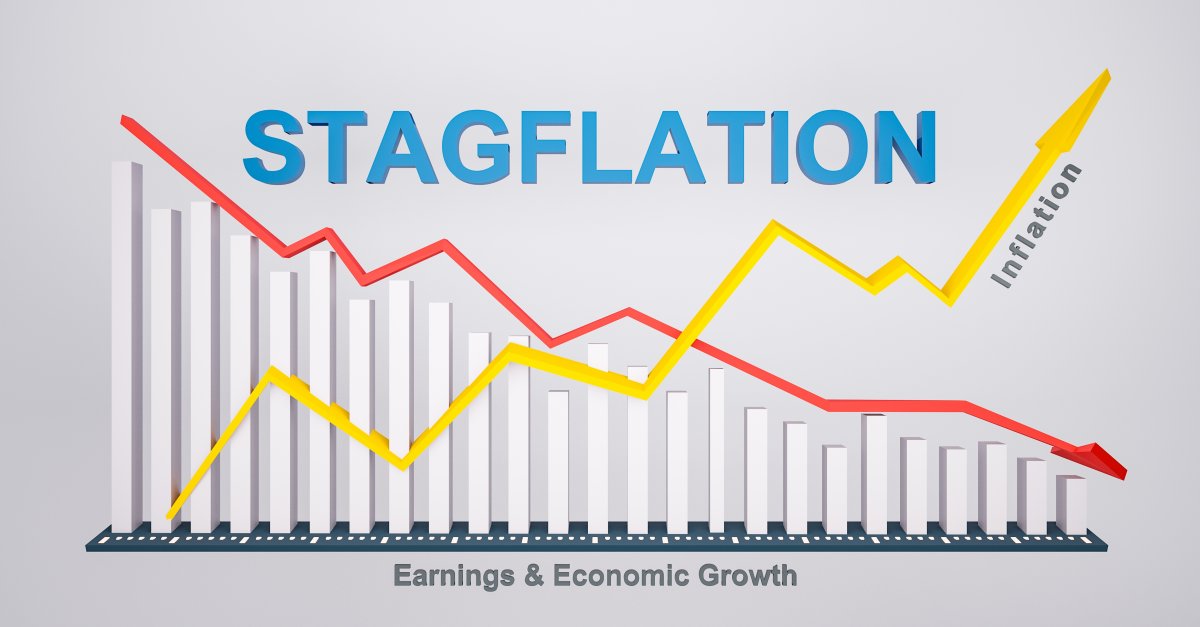


















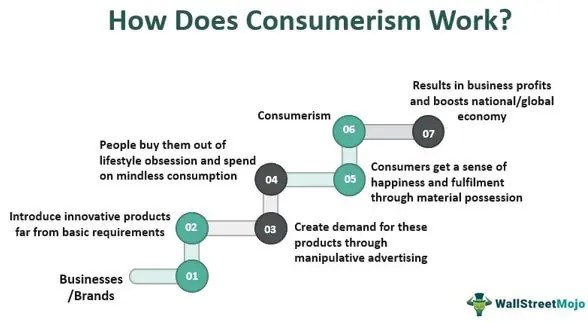










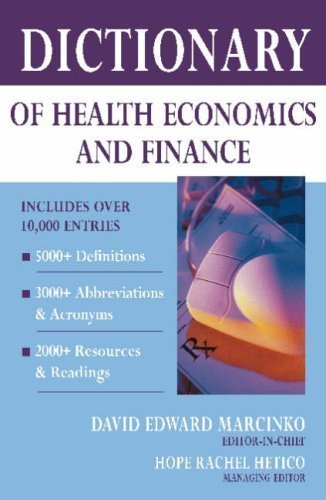








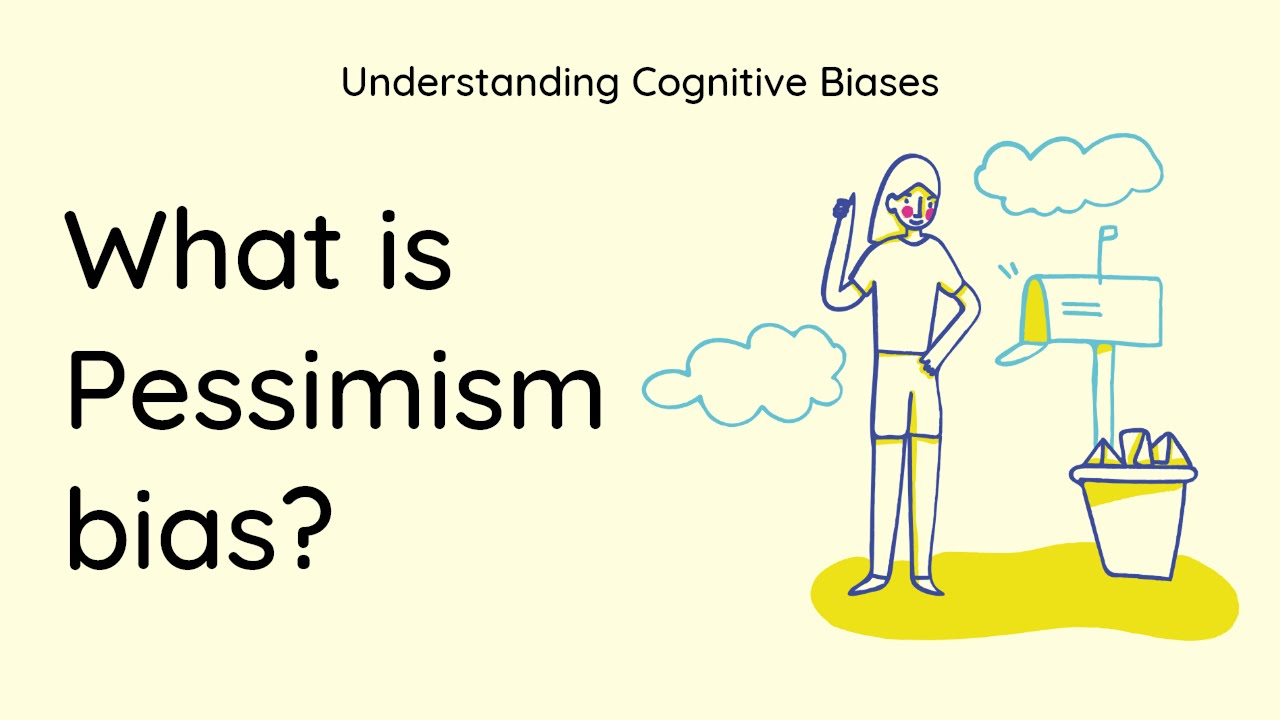





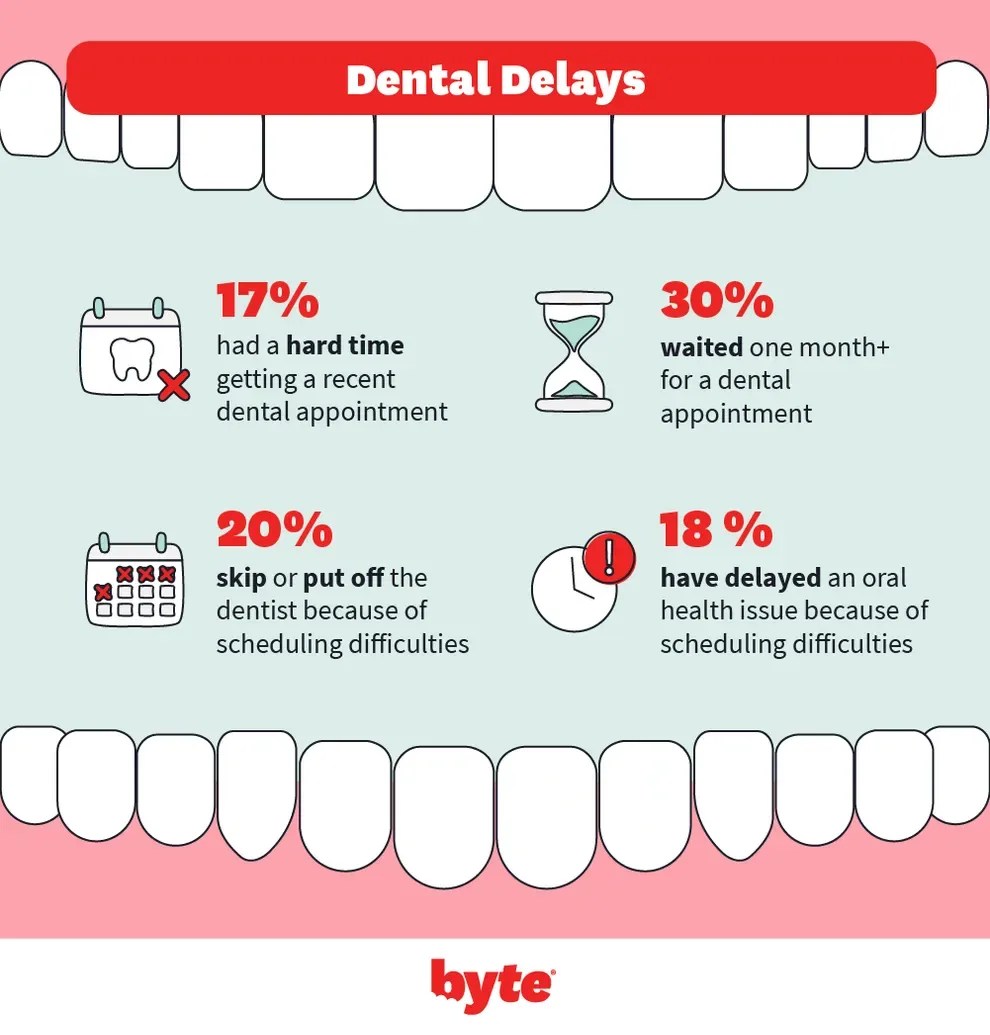








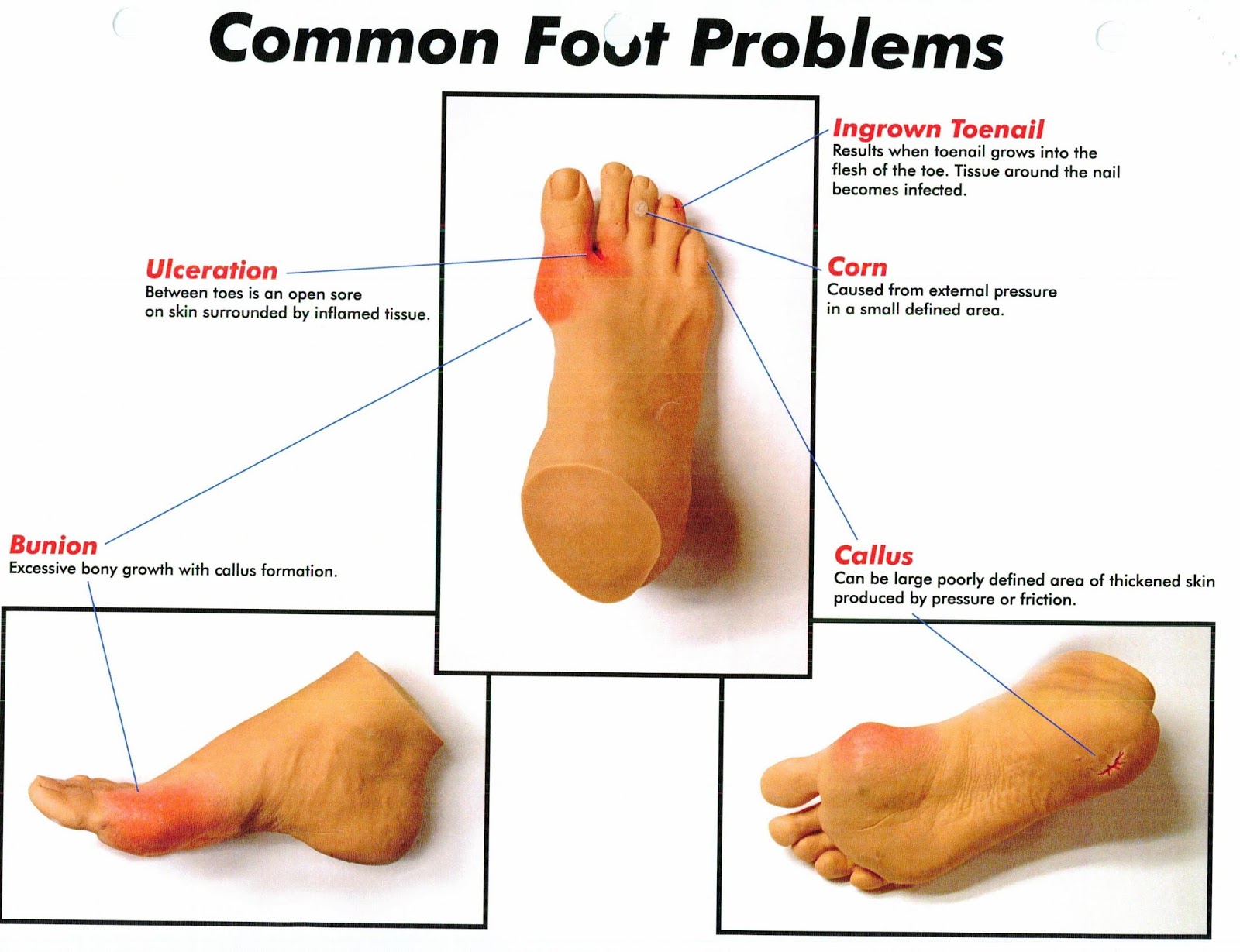


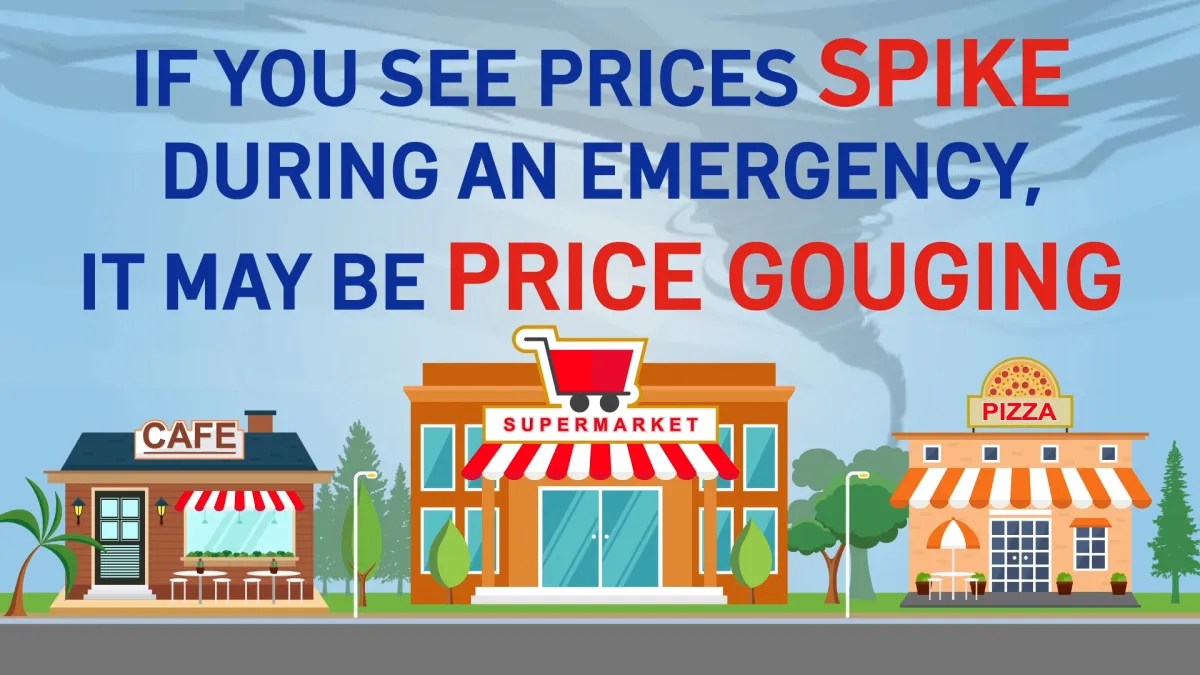

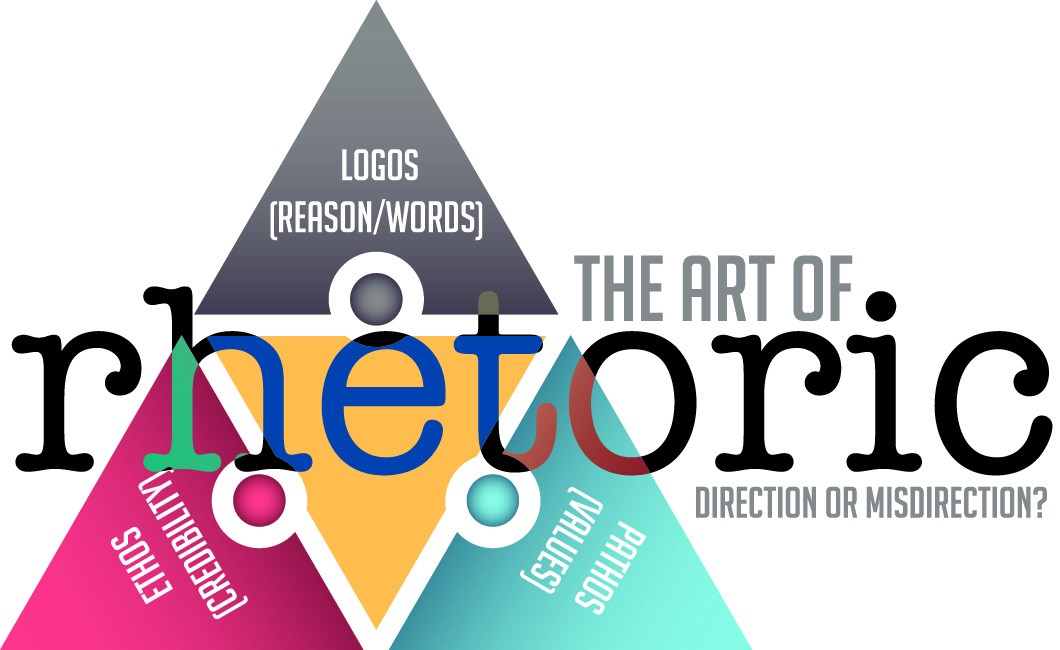

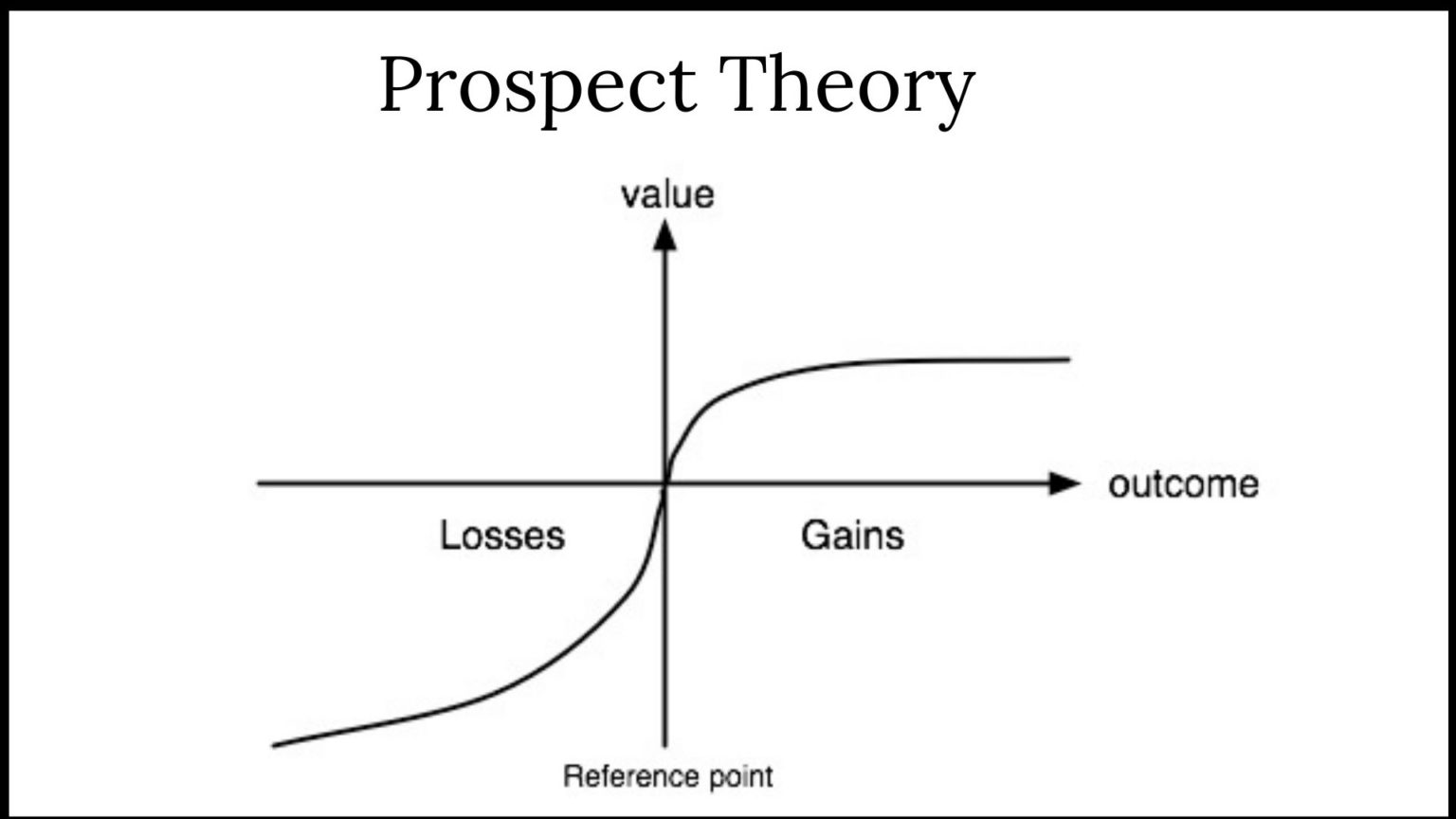





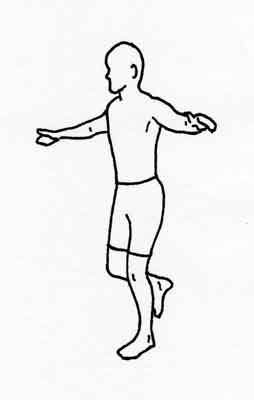












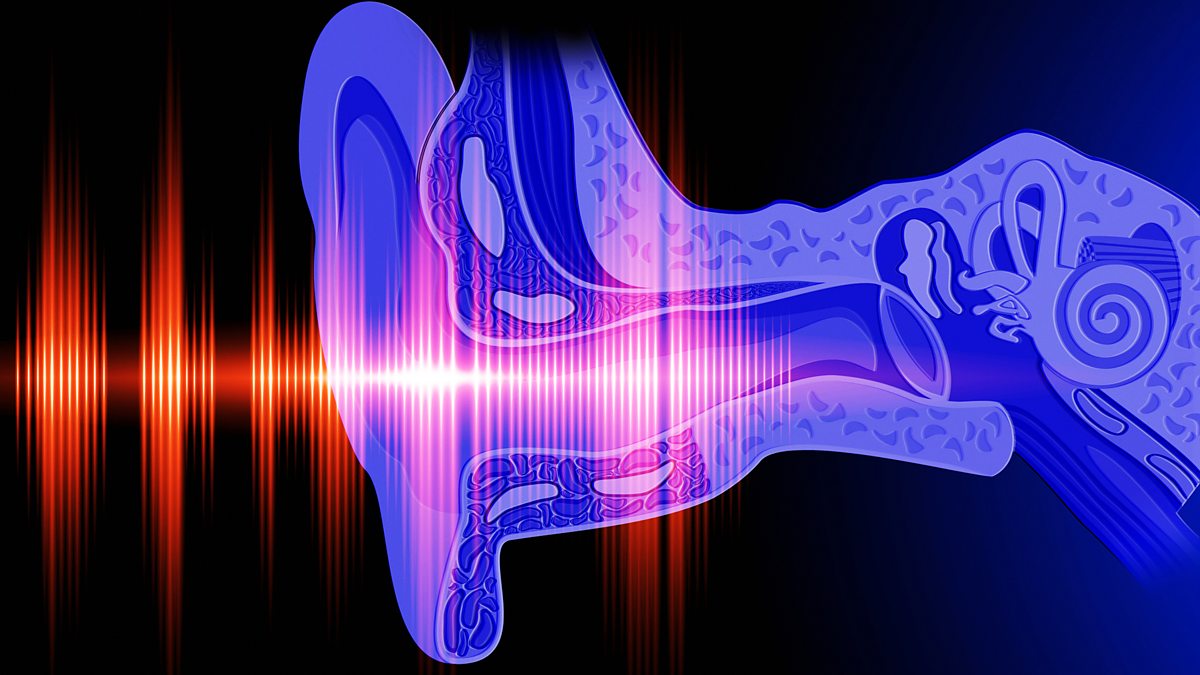

 The Leading Business Education Network for Doctors, Financial Advisors and Health Industry Consultants
STUPID COMMENTS: Financial Advisors Say to Physician Clients
BY DR. DAVID EDWARD MARCINKO; MBA MEd CMP®
***
***
SPONSOR: http://www.MarcinkoAssociates.com
***
Some Stupid Things Financial Advisors Say to Physician Clients
A few years ago and just for giggles, colleague Lon Jefferies MBA CFP® and I collected a list of dumb-stupid things said by some Financial Advisors to their doctor, dentist, nurse and and other medical professional clients, along with some recommended under-breath rejoinders:
So, don’t let these aphorisms blind you to the critical thinking skills you learned in college, honed in medical school and apply every day in life.
COMMENTS APPRECIATED
Refer, Like and Subscribe
***
EDUCATION: Books
SPEAKING: Dr. Marcinko will be speaking and lecturing, signing and opining, teaching and preaching, storming and performing at many locations throughout the USA this year! His tour of witty and serious pontifications may be scheduled on a planned or ad-hoc basis; for public or private meetings and gatherings; formally, informally, or over lunch or dinner. All medical societies, financial advisory firms or Broker-Dealers are encouraged to submit a RFP for speaking engagements: CONTACT: MarcinkoAdvisors@outlook.com
***
***
Share this:
Filed under: "Advisors Only", "Doctors Only", Ethics, Jokes and Puns, LifeStyle | Tagged: bears, bulls, crypto, DO, doctor clients, DPM, dumb comments, finance, financial advisors, financial planners, Investing, Lon Jefferies, Marcinko, MD, personal-finance, Physician Clients, physicians, Ponzi, stocks, stupid comments, Wall Street | Leave a comment »