BOARD CERTIFICATION EXAM STUDY GUIDES Lower Extremity Trauma
[Click on Image to Enlarge]
ME-P Free Advertising Consultation
The “Medical Executive-Post” is about connecting doctors, health care executives and modern consulting advisors. It’s about free-enterprise, business, practice, policy, personal financial planning and wealth building capitalism. We have an attitude that’s independent, outspoken, intelligent and so Next-Gen; often edgy, usually controversial. And, our consultants “got fly”, just like U. Read it! Write it! Post it! “Medical Executive-Post”. Call or email us for your FREE advertising and sales consultation TODAY [678.779.8597] Email: MarcinkoAdvisors@outlook.com
Medical & Surgical e-Consent Forms
ePodiatryConsentForms.com
iMBA Inc., OFFICES
Suite #5901 Wilbanks Drive, Norcross, Georgia, 30092 USA [1.678.779.8597]. Our location is real and we are now virtually enabled to assist new long distance clients and out-of-town colleagues.
ME-P Publishing
SEEKING INDUSTRY INFO PARTNERS?
If you want the opportunity to work with leading health care industry insiders, innovators and watchers, the “ME-P” may be right for you? We are unbiased and operate at the nexus of theoretical and applied R&D. Collaborate with us and you’ll put your brand in front of a smart & tightly focused demographic; one at the forefront of our emerging healthcare free marketplace of informed and professional “movers and shakers.” Our Ad Rate Card is available upon request [678-779-8597].
Posted on May 14, 2025 by Dr. David Edward Marcinko MBA MEd CMP™
MEDICAL EXECUTIVE-POST–TODAY’SNEWSLETTERBRIEFING
***
Essays, Opinions and Curated News in Health Economics, Investing, Business, Management and Financial Planning for Physician Entrepreneurs and their Savvy Advisors and Consultants
“Serving Almost One Million Doctors, Financial Advisors and Medical Management Consultants Daily“
A Partner of the Institute of Medical Business Advisors , Inc.
Inflation fell by one tenth of a percentage point to 2.3% for the year ending in April, the Bureau of Labor Statistics reported Tuesday in an update to the consumer price index. Forecasters had expected inflation to hold at 2.4%.
Coinbase exploded 23.97% on the news that the crypto trading platform will be added to the S&P 500 next week.
Nvidia climbed back into the elite $3 trillion market cap club today, rising 5.63% on the announcement that it will send 18,000 AI chips to Saudi Arabia.
Solar stocks soared after early drafts of a Republican tax and spending bill revealed renewable energy cuts weren’t as bad as feared. First Solar climbed 22.66%, while SunRun popped 8.58%.
Super Micro Computer climbed 16.02% thanks to Raymond James analysts initiating their coverage of the server maker with an “outperform” rating.
Boeing rose 2.46% now that the Chinese government has removed its ban on domestic airlines accepting orders from the plane manufacturer.
Rising sentiment powered popular momentum stocks higher today: Palantir rose 8.14%, AppLovin climbed 6.38%, Robinhood Markets jumped 8.95%, and Hims & Hers Health gained 15.92%.
What’s down
Honda Motor fell 4.20% after the company warned that tariffs will ding its bottom line and postponed its plans to build an EV plant in Canada.
Hertz Global plunged 16.93% after it missed analyst estimates across the board and announced it will offer fewer cars for rentals this year.
Enphase Energy lost 4.82% on a downgrade from Barclays analysts, who foresee slower demand for residential solar power products.
Rigetti Computing dropped 14.59% after the quantum computing company failed to live up to the high expectations that strong results from its competitors had given shareholders.
Posted on May 13, 2025 by Dr. David Edward Marcinko MBA MEd CMP™
By Staff Reporters
BREAKING NEWS
***
***
UnitedHealth Group just announced the exit of CEO Andrew Witty and suspended its 2025 forecast due to surging medical costs, sending its shares down more than 10%. Chairman Stephen Hemsley will become CEO, effective immediately.
The fourth-largest U.S company big revenue in 2024, Minnetonka-based UnitedHealth has experienced a turbulent year that saw the shock killing of United Healthcare CEO Brian Thompson in New York City, and a cyberattack that affecting an estimated 190 million people and cost the company an estimated $3.1 billion dollars.
Posted on May 13, 2025 by Dr. David Edward Marcinko MBA MEd CMP™
MEDICAL EXECUTIVE-POST–TODAY’SNEWSLETTERBRIEFING
***
Essays, Opinions and Curated News in Health Economics, Investing, Business, Management and Financial Planning for Physician Entrepreneurs and their Savvy Advisors and Consultants
“Serving Almost One Million Doctors, Financial Advisors and Medical Management Consultants Daily“
A Partner of the Institute of Medical Business Advisors , Inc.
During the 2024–25 Annual Enrollment Period, Medicare Advantage drew in only 1.3 million new members, compared to 2+ million in each of the five years prior, according to a March 25 report by consulting firm HealthScape Advisors. Traditional fee-for-service Medicare grew by about 200,000 after years of losing hundreds of thousands of members, according to HealthScape. During the 2023–24 AEP, it lost about 800,000.
Semiconductor stocks that looked like some of the biggest losers of the trade war just last week soared on today’s China/US deal. Nvidia popped 5.44%, TSMC rose 5.93%, AMD climbed 5.13%, Broadcom rose 6.43%, and Qualcomm gained 4.78%.
Magnificent Seven stocks also shot higher, particularly Apple (6.31%) and Amazon (8.07%), two companies that were bearing the brunt of higher tariffs.
Tesla jumped 6.75% on the tariff deal news, given a massive production plant that was responsible for 22% of Tesla’s total revenue last year is located in China.
US-listed Chinese stocks popped, for obvious reasons: JD.com gained 6.47%, Alibaba rose 5.82%, and Baidu climbed 5.08%.
Healthcare company Kindly MD soared 251.03% today after merging with Nakamoto, a bitcoin investment company founded by Trump’s crypto advisor David Bailey.
NRG Energy popped 26.21% after it agreed to acquire a slew of natural gas facilities from LS Power Equity Advisors.
Next Technology Holding soared 38.56% after the software company added 5,000 bitcoin to its portfolio and said it wants to add even more.
What’s down
EchoStar tumbled 16.58% today after the Wall Street Journal reported that the Federal Communications Commission was opening an investigation into the firm’s 5G network.
A slew of metal mining stocks fell today as gold declined on the tariff deal: AngloGold Ashanti fell 10.31%, Wheaton Precious Metals dropped 7.92%, NewmontCorporation lost 5.93%, and Gold Fields Limited sank 10.47%.
Posted on May 10, 2025 by Dr. David Edward Marcinko MBA MEd CMP™
MEDICAL EXECUTIVE-POST–TODAY’SNEWSLETTERBRIEFING
***
Essays, Opinions and Curated News in Health Economics, Investing, Business, Management and Financial Planning for Physician Entrepreneurs and their Savvy Advisors and Consultants
“Serving Almost One Million Doctors, Financial Advisors and Medical Management Consultants Daily“
A Partner of the Institute of Medical Business Advisors , Inc.
Meta is reportedly developing a “super-sensing” mode for its AI glasses that could identify people by name.
De Beers, the South African-British diamond giant, is closing its lab-grown diamond business, the company announced, as the value of human-made gems declines.
Coinbase acquired Deribit, a popular trading platform for bitcoin and ether options, for $2.9 billion.
FEMA acting head Cameron Hamilton was fired yesterday, Politico reported, amid reports that President Trump could look to shrink the department or eliminate it entirely.
Match Group, which owns Hinge and Tinder, cut 13% of its workforce as it seeks a turnaround following several executive departures and pressure from activist investors.
Microchip Technology climbed 12.60% on a solid beat-and-raise quarter for the semiconductor stock.
Pinterest gained 4.84% thanks to higher-than-expected revenue last quarter and projected strong revenue growth in the current quarter.
Insulet popped 20.88% after the insulin device manufacturer crushed Wall Street’s estimates on the top and bottom lines and raised its fiscal forecast.
Trade Desk soared 18.60% thanks to an impressive first quarter for the digital marketing company, including EPS of $0.33 compared to forecasts of $0.25.
DraftKings rose 2.49% thanks to a smaller-than-expected loss last quarter due in part to fewer March Madness upsets than usual.
Cloudflare popped 6.32% on strong earnings after the cloud services provider inked its biggest contract ever last quarter.
Monster Beverage missed first-quarter revenue estimates, but the energy drink giant still managed to climb 1.43%.
What’s down
United Airlines lost 2.69% on the news that Newark Airport experienced its second major outage in two weeks.
Coinbase stumbled 3.48% lower on a surprise revenue miss last quarter, thanks to a 17% decline in consumer trading volume.
Expedia beat profit estimates, but lower revenue thanks to a travel spending slowdown still sank the stock 7.30%.
Sweetgreen was crushed by 16.25% due to full-year fiscal guidance that came in way worse than Wall Street anticipated.
Affirm may have done well in the third quarter, but the Buy Now, Pay Later company fell 14.47% thanks to lower revenue forecasts this quarter.
UnitedHealthcare Group was sued by shareholders claiming the company didn’t properly adjust its earnings outlook following the death of CEO Brian Thompson.
Posted on May 9, 2025 by Dr. David Edward Marcinko MBA MEd CMP™
By Staff Reporters
***
***
The DOJ wants Google to break up its advertising empire
Following a federal court’s ruling that Google operates an illegal ad-tech monopoly, the Justice Department requested that the company be forced to sell two major products—its Ad Exchange and a management platform—as an appropriate remedy.
Google, unsurprisingly, asked the judge for a less drastic remedy that would see the company make certain changes to its practices without having to break up its ad business. The judge won’t rule until the remedies trial starts in September.
Until then, Google has another thing to dread:
The government also wants the tech giant to sell Chrome to remedy its other monopoly (in search).
Posted on May 9, 2025 by Dr. David Edward Marcinko MBA MEd CMP™
MEDICAL EXECUTIVE-POST–TODAY’SNEWSLETTERBRIEFING
***
Essays, Opinions and Curated News in Health Economics, Investing, Business, Management and Financial Planning for Physician Entrepreneurs and their Savvy Advisors and Consultants
“Serving Almost One Million Doctors, Financial Advisors and Medical Management Consultants Daily“
A Partner of the Institute of Medical Business Advisors , Inc.
Former Theranos CEO Elizabeth Holmes on Thursday lost her bid to have an appeal of her 2022 fraud conviction reheard. The 9th Circuit U.S. Court of Appeals denied Holmes’ request for a rehearing before the original three-judge panel that upheld her conviction. At the same time, the court said no judge on the circuit court had asked for a vote on whether to have the full court rehear the appeal.
IonQ is one of the rare cases of a company in the quantum computing industry that reported solid financials. Shareholders rewarded it with a 9.27% gain today.
Axon Enterprise got a 14.13% jolt after the Taser maker reported strong earnings growth and upped its revenue guidance for the current quarter.
Crypto stocks had a great day thanks to bitcoin’s breakout (more on that later). MicroStrategy rose 5.58%, Coinbase climbed 5.06%, and Riot Platforms gained 7.65%.
What’s down
Arm Holdings fell 6.18% after the semiconductor manufacturer warned that both earnings and revenue will come in lower than Wall Street expected this year.
Peloton Interactive lost 6.73% thanks to a bigger-than-expected loss last quarter and a 13% decline in revenue.
Cleveland-Cliffs tumbled off a cliff on the news that the steelmaker is fully or partially pausing production at six of its facilities. Shares tumbled 15.78%.
Krispy Kreme crashed 24.71% after the donut chain paused its deal with McDonald’s, scrapped its dividend to save money, and pulled its fiscal guidance.
Fortinet dropped 8.41% after the cybersecurity company beat analyst forecasts but projected lower revenue in the current quarter than initially expected.
Pharma stocks fell across the board on reports that President Trump will slash drug costs with revisions to Medicare pricing. Eli Lilly lost 3.25%, Bristol Myers sank 1.55%, and AbbVie fell 1.33%.
Financial Advisor, Planner and Insurance Agent Information
By Staff Reporters
***
***
Ostrich Bias is a behavioral phenomenon describing the tendency of individuals to avoid or ignore information that they perceive as negative or threatening. This term is derived from the popular but inaccurate belief that ostriches bury their heads in the sand when faced with danger, even though they do not exhibit such behavior.
Evidence: There is neuro-scientific evidence of the ostrich effect. Sharot et al. (2012) investigated the differences in positive and negative information when updating existing beliefs. Consistent with the ostrich effect, participants presented with negative information were more likely to avoid updating their beliefs; wills, estate plans, investment portfolios, and insurance policies, etc..
Moreover, they found that the part of the brain responsible for this cognitive bias was the left IFG – inferior frontal gyrus – by disrupting this part of the brain with TMS – transcranial magnetic stimulation – participants were more likely to accept the negative information provided.
EXAMPLE: The Ostrich Bias can cause someone to avoid looking at their bills, because they’re worried about seeing how far behind they are on home mortgage payments, credit cards, education or auto loans, etc.
COMMENTS APPRECIATED
The Medical Executive-Post is a news and information aggregator and social media professional network for medical and financial service professionals.
Feel free to submit education content to the site as well as links, text posts, images, opinions and videos which are then voted up or down by other members. Comments and dialog are especially welcomed.
Daily posts are organized by subject. ME-P administrators moderate the activity. Moderation may also conducted by community-specific moderators who are unpaid volunteers.
Posted on May 8, 2025 by Dr. David Edward Marcinko MBA MEd CMP™
MEDICAL EXECUTIVE-POST–TODAY’SNEWSLETTERBRIEFING
***
Essays, Opinions and Curated News in Health Economics, Investing, Business, Management and Financial Planning for Physician Entrepreneurs and their Savvy Advisors and Consultants
“Serving Almost One Million Doctors, Financial Advisors and Medical Management Consultants Daily“
A Partner of the Institute of Medical Business Advisors , Inc.
The Fed left its key interest rate unchanged again Wednesday and gave no hint it plans to lower it soon as President Donald Trump’s sweeping tariffs raise the risks of both another inflation spike and recession. But officials signaled they’re growing increasingly concerned about both hazards.
Netflix rose 1.56% after the streamerrevamped its homepage and rolled out new AI search tools.
Nvidia popped 3.10% on news that President Trump will rescind Biden-era global chip curbs.
Advanced Micro Devices rose just 1.76% despite the chipmaker beating earnings and forecasting solid growth ahead.
Lions Gate Entertainment soared 20.77% after it finalized the separation of its studio and STARZ business segments into two distinct companies.
Logitech rose 1.46% thanks to an upgrade from UBS analysts who say the device maker is well-positioned to capitalize on Gen Alpha, 94% of whom play video games.
Charles River Laboratories popped 18.81% after the pharmaceutical company raised its full-year guidance above Wall Street’s expectations.
Rockwell Automation gained 11.90% on a beat-and-raise quarter thanks to higher demand for domestic manufacturing.
What’s down
Super Micro Computer fell 1.40% after the AI server maker missed on revenue last quarter and forecast slower revenue growth this quarter.
WW International, better known as Weight Watchers, plummeted 43.04% on the news that the company is going bankrupt.
Marvell Technology plunged 8.02% after the data storage manufacturer postponed its investor day—never a good sign.
Rivian Automotive tumbled 5.78% on management’s forecast that vehicle deliveries will be lower than expected this year.
Arista Networks beat Wall Street’s estimates but fell 4.76% after it warned that its margins will be squeezed in the coming quarters.
Sarepta Therapeutics plummeted 21.45% after posting a bigger-than-expected loss last quarter and projecting slower revenue growth this quarter.
Posted on May 6, 2025 by Dr. David Edward Marcinko MBA MEd CMP™
MEDICAL EXECUTIVE-POST–TODAY’SNEWSLETTERBRIEFING
***
Essays, Opinions and Curated News in Health Economics, Investing, Business, Management and Financial Planning for Physician Entrepreneurs and their Savvy Advisors and Consultants
“Serving Almost One Million Doctors, Financial Advisors and Medical Management Consultants Daily“
A Partner of the Institute of Medical Business Advisors , Inc.
Aetna is waving goodbye to the ACA marketplace. Executives announced during CVS Health’s Q1 2025 earnings call on May 1 that the insurance giant is withdrawing from the individual marketplace created under the Affordable Care Act, as the company expects to lose as much as $400 million from that part of the business in 2025.
Stocks sank a bit today while investors remain in wait-and-see mode. All eyes are on Jerome Powell & Co. this Wednesday: The market thinks the Fed will stay put until June, while some pros think the next rate cut will be in July.
Among the major indexes, the Dow Jones industrials fared best, though it was only up 0.1%. McDonald’s and UnitedHealth led blue chips with gains of more than 1%. Apple lagged most, dropping 2.6%. Chevron skidded more than 2%. The NASDAQ composite fell 0.4%. Trade Desk outperformed here, rallying more than 3%, while Charter Communications and Fortinet each rose nearly 3%. Meanwhile, On Semiconductor and Grail lagged, diving more than 8% and 4%, respectively. The S&P 500 dropped 0.4%. The benchmark index’s sectors were mixed, but with a slight downside bias. Energy and consumer discretionary were getting hit the hardest. Industrials and consumer staples made the best gains.
Skechers exploded 24.35% after the footwear retailer inked a deal with 3G Capital to go private.
Electronic Arts climbed 2.41% on the news that it has teamed up with Major League Soccer to offer four matches via its mobile gaming platform this year.
United Airlines rose 1.07% despite its announcement that it’s cutting some flights out of Newark, New Jersey, where apparently flying is terrible.
Howard Hughes Holdings gained 2.81% thanks to a $900 million investment in the real estate company from Bill Ackman’s Pershing Square.
What’s down
Sunoco sank 5.64% on the oil & gas company’s plans to acquire Canadian gas station chain Parkland Corporation for $9.1 billion.
Shell fell 2.28% on reports that the company is considering ways to acquire rival BP.
ON Semiconductor lost 8.35% despite outpacing analysts’ estimates on both the top and bottom lines, as shareholders focused on warnings of weaker demand.
Tyson Foods fell 7.75% after the meat giant missed sales estimates and warned revenue will remain flat in the coming year.
Loews may have beaten analysts’ estimates on revenue, but the luxury hospitality stock still fell 1.77% after missing on profits.
Wolfspeed, which is a company name we will never get tired of writing, gave up another 8.52% following a wild short squeeze last week.
Posted on May 5, 2025 by Dr. David Edward Marcinko MBA MEd CMP™
MEDICAL EXECUTIVE-POST–TODAY’SNEWSLETTERBRIEFING
***
Essays, Opinions and Curated News in Health Economics, Investing, Business, Management and Financial Planning for Physician Entrepreneurs and their Savvy Advisors and Consultants
“Serving Almost One Million Doctors, Financial Advisors and Medical Management Consultants Daily“
A Partner of the Institute of Medical Business Advisors , Inc.
U.S. stock futures declined after the S&P 500 notched its longest winning streak in more than 20 years last week. Dow Jones Industrial Average futures were down around 280 points, or 0.7%, as of 11 p.m. Eastern. S&P 500 futures and NASDAQ-100 futures were off about 0.8%.
The labor market stayed strong. The US added 177,000 jobs in April, while unemployment stayed steady at 4.2%, new Labor Department data shows. That was slightly less job growth than the month before, but still more than expected, and it shows a resilient labor environment even as the president’s introduction of tariffs roiled the stock and bond markets and raised concerns about a recession. President Trump celebrated the news in a Truth Social post that once again urged the Fed to cut interest rates.
Markets: Stocks soared like a balloon whose string a toddler couldn’t keep hold of yesterday. Unexpectedly strong jobs data for last month and reports that China is open to trade talks helped push the S&P 500 to its longest winning streak in more than 20 years (more on that later), erasing the losses from recent tariff turmoil. On its own impressive streak is Netflix, which hit an all-time high and finished its 11th day in the green for its longest positive run ever.
Crude oil futures dropped more than 3% Sunday after OPEC+ agreed to accelerate production increases for a second straight month in June by 411K bbl/day.
U.S. WTI crude (CL1:COM) for June delivery recently traded -3.4% at $56.28/bbl and July Brent crude (CO1:COM) -3.2% at $59.34/bbl, with both front-month contracts touching their lowest levels since April 9th.
Visualize: How private equity tangled banks in a web of debt, from the Financial Times.
Posted on May 4, 2025 by Dr. David Edward Marcinko MBA MEd CMP™
By Staff Reporters
***
***
If getting answers from ChatGPT makes you feel dystopian, you may not want to hear about OpenAI CEO Sam Altman’s other co-founded venture, now rolling out stateside. It scans your eyeballs in exchange for cryptocurrency.
What in the Demolition Man? The device, which creates a unique user ID for your scan, is meant to address a problem that Altman had a hand in creating: how to verify identities and confirm humanity in a world full of artificial intelligence.
The project, called World (formerly Worldcoin), went live in other countries in 2023. Its US expansion, announced this week, featured retail outlets in five cities where you can get your eyes scanned:
Tools for Humanity, the company behind the orbs, says 12+ million people around the world have participated so far.
It claims to keep your data private, but authorities in more than a dozen places have suspended World’s operations or investigated its data practices, per the WSJ.
Posted on May 4, 2025 by Dr. David Edward Marcinko MBA MEd CMP™
By Health Capital Consultants LLC
***
***
During the first 90 days of the Republican Party’s government trifecta (controlling the White House, Senate, and House of Representatives), both the Trump Administration and Congress have laid the groundwork for seismic change to the U.S. healthcare industry.
In an attempt to track the latest actions of the federal government’s legislative and executive branches affecting the healthcare industry since the first installment in our February issue, this Health Capital Topics article summarizes recent events in Washington and the impact of these changes on providers and patients. (Read more…)
An emergency medicine physician is a medical doctor who specializes in the diagnosis, treatment, and management of acute and life-threatening medical conditions that require immediate intervention. These physicians work in hospital emergency departments, urgent care centers, and other acute care settings, where they provide rapid assessment, stabilization, and treatment to patients of all ages with a wide range of medical emergencies.
Emergency medicine physicians are trained to handle diverse medical emergencies, including trauma, cardiac emergencies, respiratory distress, severe infections, neurological emergencies, and obstetric emergencies, among others. They play a vital role in the front line management of medical emergencies, ensuring that patients receive prompt and appropriate care to improve outcomes and save lives.
***
Classic: Emergent Room or Emergency Department care is the provision of immediate medical service offering outpatient care for the treatment of acute and chronic illness and injury. It requires a broad and comprehensive fund of knowledge to provide such care. Excellence in care for patients with complex and or unusual conditions is founded on the close communication and collaboration between the urgent care medicine physician, the specialists and the primary physicians.
Modern: Urgent care does not replace your primary care physician. An urgent care center is a convenient option when someone’s regular physician is on vacation or unable to offer a timely appointment. Or, when illness strikes outside of regular office hours, urgent care offers an alternative to waiting for hours in a hospital Emergency Room.
Examples: Chest pain, bleeding that cannot be stopped and loss of consciousness; etc.
***
***
SOME ER DOCTORS WORK FOR FREE
The new president of emergency medicine for the Alberta Medical Association says Emergency Room physicians already coping with long hours, staff shortages and jammed waiting rooms are also being obligated, in some cases, to work for free. Dr. Warren Thirsk says the government has yet to follow through on a promise to reimburse emergency room doctors for so-called “good faith” payments.
“There’s been lots of excuses, but the bottom line is no one has actually received a penny for those suspended good-faith payments,” Thirsk said in an interview. “On average, every emergency physician in this province is out thousands of dollars for free work.” Good-faith payments reimburse ER doctors when they see patients who don’t have identification and can’t prove an Alberta Health Care Insurance Plan billing number.
Thirsk said the United Conservative government stopped those payments when it ripped up the master agreement with the AMA in early 2020. He said it promised to bring back those payments when the two sides agreed to a new deal in September 2022. But to date that hasn’t happened, he said.
“I’m legally and morally bound to look after you [if] you’re unidentified [as a patient],” said Thirsk, an emergency room doctor at Edmonton’s Royal Alexandra Hospital.
“I’m going to look after you because it’s the right thing to do no matter what the problem is.”
COMMENTS APPRECIATED
The Medical Executive-Post is a news and information aggregator and social media professional network for medical and financial service professionals. Feel free to submit education content to the site as well as links, text posts, images, opinions and videos which are then voted up or down by other members. Comments and dialog are especially welcomed. Daily posts are organized by subject. ME-P administrators moderate the activity. Moderation may also conducted by community-specific moderators who are unpaid volunteers.
Some retired people live on a fixed income and many of them live right on the edge of their financial capability. At some time in their life, they may have to make a choice regarding many purchases.
In this case, we will illustrate “choice” using a couple’s purchase of Long-Term-Care Insurance [LTCI]. Of course, economics is the study of choice; wants, needs and scarcity, etc. In our case, if they decide to make the purchase they commit to a lifetime of premium payments. The financial tradeoff is this; if they make the commitment to purchase LTCI, they must give up something else.
EXAMPLE: In order to maintain a monthly premium of $100 ($1,200per year), an elderly patient, retired layman or couple must essentially relegate about $30,000 of financial assets to generate the $100 necessary to make an average premium payment (assumes a 7% rate of return with 4% withdrawal rate) or [4% X $30,000 = $1,200 year]. Thus, if the monthly premium cost is $500 per month, the elder must give up the use of $150,000 of retirement asset just to generate enough cash flow to pay for the LTC insurance.
***
***
The married elder couple has to make the Hobson’s Choice decision among lifestyle (dinners, vacations, gifts to children, prescription drugs, medical care or food and shelter) versus paying an insurance premium to provide for nursing home coverage for a need, which may be very real, but will not occur until sometime in the ambiguous future.
And so, when faced with such a tough economics Hobson’s Medicine Choice, neither of which delivers peace of mind or a respectable solution; many will simply decide that, in either case, they may already end up impoverished. Thus, many will often opt for the better lifestyle now … while they can enjoy it … together.
Cite: Anonymous Health Insurance Agent, Norcross, Georgia
COMMENTS APPRECIATED
The Medical Executive-Post is a news and information aggregator and social media professional network for medical and financial service professionals.
Feel free to submit education content to the site as well as links, text posts, images, opinions and videos which are then voted up or down by other members. Comments and dialog are especially welcomed.
Daily posts are organized by subject. ME-P administrators moderate the activity. Moderation may also conducted by community-specific moderators who are unpaid volunteers.
Posted on May 3, 2025 by Dr. David Edward Marcinko MBA MEd CMP™
MEDICAL EXECUTIVE-POST–TODAY’SNEWSLETTERBRIEFING
***
Essays, Opinions and Curated News in Health Economics, Investing, Business, Management and Financial Planning for Physician Entrepreneurs and their Savvy Advisors and Consultants
“Serving Almost One Million Doctors, Financial Advisors and Medical Management Consultants Daily“
A Partner of the Institute of Medical Business Advisors , Inc.
Stat: $1.5 billion. That’s how much a lawsuit alleged hospitals lost because of under funding for facilities serving low-income patients. The Supreme Court ruled against the push for more reimbursement. (Healthcare Dive)
Read: An exclusive interview with Marty Makary, the newly appointed FDA commissioner, on cuts, vaccines, and his future goals. (MedPage Today)
MicroStrategy climbed 3.35% despite reporting a bigger EPS loss than expected. Shareholders must have liked hearing CEO Michael Saylor call the company the Domino’s Pizza of crypto.
Maplebear, which does business as Instacart, rose 13.62% after missing analyst estimates but issuing strong fiscal guidance for the coming quarter.
Dexcom popped 16.17% on strong earnings for the glucose monitor manufacturer.
Wolfspeed exploded 23.89% higher as shareholders cheered the departure of the semiconductor stock’s CFO and a short squeeze took traders by surprise.
What’s down
Take Two Interactive Software tumbled 6.66% after the video game maker announced the release of its highly anticipated Grand Theft Auto 6 will be delayed until next May.
Posted on May 2, 2025 by Dr. David Edward Marcinko MBA MEd CMP™
By Staff Reporters
***
***
The National Nurses in Business Association (NNBA) is the premier nursing organization for nurse entrepreneurs, and a springboard for nurses transitioning from employees to entrepreneurs and business owners. The NNBA is an invaluable resource for existing nurse business owners seeking to expand, and maximize their business success.
Members’ resumes include thousands of nurse owned businesses, local, national and international awards, and millions of dollars in revenue. The experience, knowledge and impact of the NNBA community is amazing, as well as the support provided to fellow nurse entrepreneurs and aspiring entrepreneurs.
As the forerunner of the nurse entrepreneur movement, the NNBA provides valuable business information customized for nurses on how to start, plan, expand and grow your nurse owned business. They provide expert guidance, marketing and promotional opportunities, and continuing education in professional growth and career development.
Posted on May 2, 2025 by Dr. David Edward Marcinko MBA MEd CMP™
MEDICAL EXECUTIVE-POST–TODAY’SNEWSLETTERBRIEFING
***
Essays, Opinions and Curated News in Health Economics, Investing, Business, Management and Financial Planning for Physician Entrepreneurs and their Savvy Advisors and Consultants
“Serving Almost One Million Doctors, Financial Advisors and Medical Management Consultants Daily“
A Partner of the Institute of Medical Business Advisors , Inc.
Meta Platforms jumped 4.23% after the big tech giant reported that its advertising revenue came in at $41.39 billion, beating analyst projections of $40.44 billion, thanks to higher ad price growth than expected. Daily active users rose to 3.43 billion, up from 3.35 billion last quarter, while nearly 1 billion people use its digital AI assistant every month. Management expects Q2 sales to come in between $42.5 billion and $45.5 billion, in-line with analyst forecasts of $44.03 billion.
EPS: $6.43 per share, crushing estimates of $5.28
Revenue: $42.31 billion, above the $41.10 expected
Microsoft leaped 7.63% after reporting its profit jumped a staggering 18% from a year earlier. That wasn’t the only good news: Revenue from Microsoft’s Azure cloud software grew 33% year over year, higher than the 31% expected by analysts. But perhaps the best news of all was management’s upbeat guidance—Microsoft projected revenue between $73.15 billion and $74.25 billion for the current quarter, well above expectations of $72.26 billion.
EPS: $3.46 per share, beating forecasts of $3.22
Revenue: $70.07 billion, above the $68.42 billion projected
Eli Lilly dropped 11.66% today, despite the fact that the pharmaceutical giant reported that sales skyrocketed 45% year over year thanks to its lucrative GLP-1 drugs, Zepbound and Mounjaro. Two things spooked investors today: The company lowered its profit outlook well below its preview estimate due its acquisition of a cancer drug from Scorpion Therapeutics, and CVS Health dropped Zepbound from its preferred drug list in lieu of arch-rival Novo Nordisk’s Wegovy this morning.—LB
EPS: $3.34 adjusted, beating the $3.02 expected
Revenue: $12.73 billion, compared to the $12.67 projected
Carrier Global climbed 11.61% after the air conditioning company boosted its fiscal forecast. Turns out everyone needs AC regardless of economic uncertainty.
People also need straight teeth: Dental products manufacturer Align Technology rose 1.98% on solid earnings.
Quanta Services gained 9.99% after the construction engineering company beat Wall Street estimates on both the top and bottom line.
What’s down
Qualcomm may have beaten earnings expectations, but shares fell 8.92% after investors were disappointed by the chipmaker’s lower guidance.
GM was in the same boat: Earnings beat forecasts, but poor guidance and warnings that tariffs could cost the company up to $5 billion this year pushed shares 0.42% lower.
Robinhood Markets enjoyed a 50% increase in revenue last quarter as traders played the volatile market, but the stock still sank 5.07%.
Moderna fell 5.29% after the vaccine maker missed revenue expectations and said it’s planning another $1.5 billion in cost cuts.
Church & Dwight, maker of household goods like Arm & Hammer Baking Soda, missed revenue forecasts last quarter and sank 6.87%.
Becton Dickinson & Co. lost 18.13% after the medical device maker warned of the adverse effects of, what else, tariffs.
Posted on May 1, 2025 by Dr. David Edward Marcinko MBA MEd CMP™
By Health Capital Consultants LLC
***
***
While the healthcare industry has been dealing with high employee turnover since the start of the COVID-19 pandemic, that turnover was largely among clinical staff.
However, a recent survey found that significant healthcare leadership turnover may also be on the horizon. AMN Healthcare subsidiary B.E. Smith found that nearly half of healthcare executives plan to leave their organization in the next year.
This Health Capital Topics article reviews the survey and the reasons behind the intended exits. (Read more…)
Posted on May 1, 2025 by Dr. David Edward Marcinko MBA MEd CMP™
MEDICAL EXECUTIVE-POST–TODAY’SNEWSLETTERBRIEFING
***
Essays, Opinions and Curated News in Health Economics, Investing, Business, Management and Financial Planning for Physician Entrepreneurs and their Savvy Advisors and Consultants
“Serving Almost One Million Doctors, Financial Advisors and Medical Management Consultants Daily“
A Partner of the Institute of Medical Business Advisors , Inc.
Caterpillar eked out a 0.54% gain after raising its fiscal 2025 revenue forecast, but the construction giant warned that it will eat about $350 million in extra tariff-related costs.
What’s down
Super Micro Computer plunged 11.50% after reporting terrible preliminary earnings and warned of weaker results still to come.
Etsy beat revenue expectations last quarter, but fell 5.74% after missing profit forecasts as the number of buyers and sellers using its platform continued to fall.
Snap tumbled 12.43% after the social media stock warned that economic uncertainty could hurt its advertising business and refused to issue a fiscal forecast.
Chili’s parent company BrinkerInternational fell 1.89% despite posting solid earnings as investors worry about slowing consumer spending.
Norwegian Cruise Line sank 7.77% after missing earnings and warning of a slowdown in demand.
Stat: $228 million. That’s how much Sacramento-based Sutter Health—one of the largest health systems in the US—agreed to pay to settle allegations of inflating insurance premiums. (Reuters)
Read: Here’s what some say the new Medicare director, a former tech CEO, is likely to focus on. (Stat)
Posted on April 29, 2025 by Dr. David Edward Marcinko MBA MEd CMP™
By Rick Kahler CFP™
***
***
Lately, I’ve been hearing the same question from clients and readers alike: “Is Social Security even going to be there in five years?” Fueling this concern is a recent viral comment from Elon Musk, who told Joe Rogan that Social Security is “the biggest Ponzi scheme of all time.” That quote has been repeated in every corner of the internet, stirring up uncertainty and fear.
Elon Musk is a genius, but his brilliance in technology and innovation doesn’t automatically translate into expertise in public policy. When it comes to Social Security, he’s outside his lane. Calling it a Ponzi scheme may make for a great soundbite, but it’s a fundamental mischaracterization.
Social Security is not a Ponzi scheme. Not even close.
A Ponzi scheme is a form of financial fraud that lures investors with the promise of high returns. Instead of earning those returns through legitimate investments, the scheme pays earlier investors using money from newer ones. Eventually, the model collapses when there aren’t enough new participants to keep it going, leaving most people with significant losses. This is what happened to those who trusted Bernie Madoff, operator of one of the worst Ponzi schemes in history. Ponzi schemes are illegal, deceptive, and doomed from the start.
Social Security, in contrast, is a government-run, pay-as-you-go tax program. It’s fully transparent; you know exactly where your money is going. The payroll taxes you and your employer pay are used to provide income to today’s retirees, people with disabilities, and surviving family members of deceased workers. This isn’t a con, it’s a social contract.
So why the confusion? Part of the issue is that Social Security does, on the surface, resemble the flow of a Ponzi scheme: money coming in from the young to support the old. But similarity in structure doesn’t make it fraudulent. The program does not promise high returns, it promises a modest, inflation-adjusted benefit to support people as they age.
Social Security does face challenges. The trust fund reserves, built up during years when payroll taxes exceeded payouts, are projected to run dry around 2033. If Congress does nothing, benefits will need to be cut by about 20%. That’s serious, but it’s a solvency issue, not a scam.
And the solvency issue is fixable. There are numerous bipartisan proposals to shore up the system for the long term, from raising the payroll tax cap to gradually adjusting benefits. These aren’t radical ideas, they’re common-sense repairs. A bipartisan mix of 100 CFPs in a room could work out a solution in two days.
When clients ask me if the system will be around in five years, what they’re really asking is: Can I trust it? Can I trust the government? Can I trust that my years of work and tax payments will mean something in retirement? These are not just policy questions. They are emotional questions based on fear of scarcity and a desire for security. When someone with Elon Musk’s influence wrongly calls Social Security a Ponzi scheme, his attention-grabbing soundbite shakes the emotional foundation of that trust.
If we’re serious about preserving Social Security, let’s start by calling it what it is: a commitment to our elders. A tax-supported promise to care for one another across generations.
Social Security is not a fraud, it’s a shared responsibility based on the kind of society we want and woven into the fabric of American life. Yes, it needs some adjustments, but it’s not broken. Rather than eroding public trust with misleading comparisons, we should be focused on debating public policy and how we can strengthen and sustain the program for future generations.
***
ME-P NOTE: An increase in Social Security benefits is on the horizon, providing a potential financial cushion against rising inflation. The Cost of Living Adjustment (COLA) for 2025 is set at 2.5% monthly, translating to an average annual increase of approximately $600 for beneficiaries. This adjustment is based on the Consumer Price Index for Urban Wage Earners and Clerical Workers. While not guaranteed annually, COLA has historically been implemented in most years due to persistent inflationary trends.
Posted on April 29, 2025 by Dr. David Edward Marcinko MBA MEd CMP™
MEDICAL EXECUTIVE-POST–TODAY’SNEWSLETTERBRIEFING
***
Essays, Opinions and Curated News in Health Economics, Investing, Business, Management and Financial Planning for Physician Entrepreneurs and their Savvy Advisors and Consultants
“Serving Almost One Million Doctors, Financial Advisors and Medical Management Consultants Daily“
A Partner of the Institute of Medical Business Advisors , Inc.
Plug Power soared 25.68% on the news that the hydrogen fuel cell manufacturer has signed a deal that allows it to issue $525 million in secured debentures.
Tesla eked out a 0.33% gain as investors took profits following the EV company’s strong week in spite of terrible earnings.
IBM rose 1.61% after the tech company pledged to invest $150 billion in US manufacturing over the next five years.
Peloton climbed 4.93% thanks to an upgrade from Truist analysts, who said the home workout company has cleaned up the “BS.”
MGM Resorts International gained 1.71% after reporting an impressive 34% increase in revenue last quarter thanks to its BetMGM platform.
ADMA Biologics popped 12.12% on FDA approval of its new production process that draws 20% more usable material from donated plasma than current methods.
What’s down
Nvidia sank 2.05% on the news that China’s Huawei Technologies is preparing to test a new semiconductor that could rival Nvidia’s most powerful tech.
Coinbase fell 2.08% on a double downgrade from Compass Point analysts, who cited a decline in retail trading activity.
DraftKings dropped 1.51% after Mizuho analysts lowered their price target on the company, cutting their expectations for the gambling stock’s EBITDA.
Posted on April 28, 2025 by Dr. David Edward Marcinko MBA MEd CMP™
By Health Capital Consultants LLC
***
***
On April 7, 2025, the Centers for Medicare & Medicaid Services (CMS) published their 2026 Rate Announcement for Medicare Advantage (MA) and Medicare Part D Prescription Drug Plans.
For 2026, the payment rate to MA plans will increase 5.06%, the largest increase in the past ten years, and up significantly from the 2.2% rate increase proposed by the Biden Administration.
This Health Capital Topics article will review the Rate Announcement.(Read more…)
Posted on April 26, 2025 by Dr. David Edward Marcinko MBA MEd CMP™
MEDICAL EXECUTIVE-POST–TODAY’SNEWSLETTERBRIEFING
***
Essays, Opinions and Curated News in Health Economics, Investing, Business, Management and Financial Planning for Physician Entrepreneurs and their Savvy Advisors and Consultants
“Serving Almost One Million Doctors, Financial Advisors and Medical Management Consultants Daily“
A Partner of the Institute of Medical Business Advisors , Inc.
Despite rising Medicare Advantage (MA) utilization, Elevance Health has come out of Q1 2025 unscathed. The company reported adjusted diluted earnings per share of $11.97 and stuck to its prediction of $34.15 to $34.85 adjusted earnings per share for 2025. This contrasts with peer UnitedHealth Group, which lowered its earnings predictions for the year in its call last week following a disappointing quarter. (Elevance released a preview of its earnings in a Form 8-K on April 17, hours after UnitedHealth detailed its surprisingly bad quarter, to reassure investors.)
Tesla gained 9.80% following a White House announcement yesterday that it will loosen US regulations around self-driving cars.
Boston Beer popped 2.26% thanks to strong light beer sales offsetting lower craft beer revenue.
Charter Communications climbed 11.43% after it lost fewer internet customers than last year and beat estimates on both the top and bottom line.
VeriSign rose 8% following strong results for the internet infrastructure company, as well as the announcement of a new dividend.
SoFi Technologies got a 4.63% boost from Citizens JMP analysts, who initiated coverage of the fintech stock with an “outperform” rating and called the company “a compelling long-term investment opportunity.”
What’s down
T-Mobile tumbled 11.22% after the cell carrier added 495,000 new wireless phone subscribers last quarter, below Wall Street’s forecasts.
Gilead Sciences sank 2.81% due to a revenue miss in the first quarter thanks to lower sales of its cancer and Covid treatments.
Avantor plummeted 16.58% after the lab chemicals manufacturer missed estimates, cut its forecast, and announced its CEO is departing.
Saia plunged 30.66% thanks to an enormous first-quarter miss from the shipping company due to customer pullback amid tariff uncertainty.
Investments are soaring: A new SVB report found that women’s health startups saw a whopping 55% increase in VC investments in 2024. Learn about the factors driving this record-breaking funding and the sector’s long-term potential.*
Visualize: How private equity tangled banks in a web of debt, from the Financial Times.
Posted on April 25, 2025 by Dr. David Edward Marcinko MBA MEd CMP™
By Staff Reporters
***
***
A thought experiment is an imaginary scenario that is meant to elucidate or test an argument or theory. It is often an experiment that would be hard, impossible, or unethical to actually perform. It can also be an abstract hypothetical that is meant to test our intuitions about morality or other fundamental philosophical questions. The German term Gedankenexperiment was utilized by physicist Ernst Mach
***
Mary is a brilliant scientist who is, for whatever reason, forced to investigate the world from a black and white room via a black and white television monitor. She specializes in the neuro-physiology of vision and acquires, let us suppose, all the physical information there is to obtain about what goes on when we see ripe tomatoes, or the sky, and use terms like ‘red’, ‘blue’, and so on.
Question: What will happen when Mary is released from her black and white room or is given a color television monitor? Will she learn anything or not?
***
The Medical Executive-Post is a news and information aggregator and social media professional network for medical and financial service professionals. Feel free to submit education content to the site as well as links, text posts, images, opinions and videos which are then voted up or down by other members. Comments and dialog are especially welcomed. Daily posts are organized by subject. ME-P administrators moderate the activity. Moderation may also conducted by community-specific moderators who are unpaid volunteers.
Posted on April 25, 2025 by Dr. David Edward Marcinko MBA MEd CMP™
MEDICAL EXECUTIVE-POST–TODAY’SNEWSLETTERBRIEFING
***
Essays, Opinions and Curated News in Health Economics, Investing, Business, Management and Financial Planning for Physician Entrepreneurs and their Savvy Advisors and Consultants
“Serving Almost One Million Doctors, Financial Advisors and Medical Management Consultants Daily“
A Partner of the Institute of Medical Business Advisors , Inc.
Merck rose 1.40% today after beating earnings expectations. The problem is that the pharma giant expects a $200 million hit to its bottom line due to tariffs. And that doesn’t count the potential additional pharmaceutical levies Trump has indicated he’s planning.
Alphabet warned some remote employees that they must return to the office three days a week or lose their jobs. Shareholders clearly approve: The stock gained 2.53%.
Amazon and Nvidia executives made it clear that contrary to popular belief, demand for AI data centers isn’t slowing down. Amazon rose 3.29%, while Nvidia climbed 3.62%.
Newmont gained 4.80% after the gold miner reported strong earnings thanks to gold’s incredible run.
ServiceNow soared 15.49% after the enterprise tech company posted a beat-and-raise earnings report.
Texas Instruments popped 6.56% thanks to a strong first quarter and healthy fiscal guidance from the domestic semiconductor company.
Chipotle eked out a 1.60% gain despite a mixed quarter that saw same-store sales fall for the first time since 2020.
What’s down
IBM topped analyst expectations on sales and profits, but the tech stock fell 6.58% thanks to a poor performance from its consulting and its mainframe businesses.
Nokia tumbled 8.65% following a big earnings miss last quarter, and warned that tariffs will take a serious toll on its business this quarter.
Fiserv plunged 18.52% after the software provider beat expectations for profits but missed on revenue.
Procter & Gamble outpaced Wall Street’s forecast for earnings but fell short on revenue and cut its fiscal guidance, pushing shares of the consumer goods giant down 3.74%.
Comcast also beat analyst estimates on both the top and bottom lines, but sank 3.71% after reporting it lost 199,000 broadband customers last quarter.
Posted on April 24, 2025 by Dr. David Edward Marcinko MBA MEd CMP™
By Staff Reporters and Lawrence Rosenberg
***
***
Cold calling is a term that is typically applied to telesales, but most new business relationships actually begin with a “cold” contact of some kind. Whether through social media, email over the phone or door-to-door, “cold calling” lives up to its name; you are contacting prospects (hopefully decision makers) sans introduction and without warning. In some, if not many cases, you will be presenting to customers who have never heard of you, your firm, or your product/service prior to you getting a hold of them. You will also find yourself coming up against the palace guards (secretaries and personal assistants) whose most important job is to run interference for the boss and thwart any and all attempts that an unfamiliar caller might make to reach them. But, as the sales game will readily teach anyone with the fortitude to last long enough to learn the lesson, the more resistance one faces in the pursuit of a successful outcome, the bigger the payoff will be if one can muster the grit necessary to tough it out.
However difficult the road to riches, cold calling allows for a complete leveling of the playing field. Those that sweep the streets could tomorrow talk with billionaires; a man of little status or worth could enter into a contract with the founder of a blue chip, multinational firm — all with a single, unexpected phone call. The sheer daring of such an approach, its impromptu nature, works for so many reasons, not least of which is that it opens doors. From the intrigue and urgency the suddenness of the call implies, to the instant access a bold overture provides, cold calling is the great equalizer among executives, and a path to achievement open to all, no matter one’s experience, education or connections. Not that there ever were any truly insurmountable barriers to climbing the corporate ladder or accessing its highest rungs that a motivated self-starter could not overcome, but with the advent of the telephone and the brashness of the cold sell perfected, the most entrenched and frustrating of impediments, bureaucracy and fraternalism, ceased to be an obstacle. Yesteryear’s power elite traditionally only did business with friends, acquaintances and family (or perhaps a member of their local country club or lodge), but at the very least, those that connected in business were routinely introduced through a referral. However, the audacity of the unscheduled contact, the inspired notion of a “cold call,” and the realization that it worked, that a person of great esteem or importance was willing to do business with an unusually forward individual, made the glad-handing salesman who relied on his father’s rolodex obsolete.
With ivory towers toppled, etiquette overturned and tradition tossed out, ambitious men ignored propriety and custom and cold canvassed the board of directors and senior executive staff of companies both large and small. The old boy’s network, favoritism, and the “it’s not what you know, but who you know” principle of doing business crumbled in one fell swoop. The ramparts guarded by all manner of gatekeepers and middle men were trampled the moment the CEO became connected by wires to the outside world. Using nothing more than a telephone, a Horatio Alger-type work ethic and a well-rehearsed voice, the business world was invaded by those without patronage, underdogs and unknowns swarmed the gates. The cold call allowed the unfiltered, unapproved spirit of the upstart, unfettered by lackeys and administrators, to enter the inner sanctum of a chieftain and with the power of speech alone, win hearts and minds.
But, can one’s voice really move mountains? Must one not support the message with documentation and material, nurture relationships with lunches and meetings and personally shake hands to set the wheels of industry in motion? Is one unannounced, unsolicited, unscreened call enough?
The human voice is the master manipulator of sound and when paired with the right words it has a potent and intoxicating effect on behavior. Although some people react more favorably to stimulation of the other five senses, sound on its own can evoke them all. Those that study the science of suggestion will note the immense influence of other stimuli, such as that which affects sight and sensation, on how we make sense of our experiences, on how we make decisions, but it is the way in which such sensory bias is communicated (via the written word, and more powerfully, through speech) that truly tells the tale. The combination to unlocking the interests of many a man’s mind are often verbalized in the common yet telling replies to intriguing, thought provoking questions or action demanding requests.
***
***
It is all a matter of deciphering the code, the clue-laden language:
“What you said really touched me.”
“I see the light!”
“You can smell his fear.”
“Let’s give that guy a taste of his own medicine.”
“You are coming across loud and clear.”
The way in which we describe our observations provides the key to how we interpret data, how that data impacts us, and through what primary pathway we process such information. It is our use of language that exposes how we perceive the world around us, how the gears of our minds are moved, and which of the five senses most effectively winds the springs that turn them.
Many times a prospect will request to have a look at your proposition in writing before moving forward, others will react positively based solely on their impression. Some say seeing is believing, but if it soundsexciting and beneficial, they will take action regardless because it just feels right.
All our senses come alive when the brain is stimulated, some more than others depending on the man and the moment, but the terms, phrases and idioms that we use when speaking (their quality, nuance and character) and the way in which they are expressed, have the power to move us in life-changing ways — the spoken word, when used properly, can play us like a piano.
Whether impacted more by sight, olfaction or incitement of the somatosensory system (the way things feel physically), one can induce the imagery and kinesthesia necessary to motivate and influence a prospect from afar with voice alone. Provocative descriptions, the proper use of tone and inflection, and the strategic interweaving of silence (of which sometimes nothing can be more deafening or exert more pressure) can activate or set in motion all manner of action. Practiced speech can lighten the heaviest heart or wrest tears from the coldest stare, it can conjure up a dream state or snap you back to reality. Never underestimate what a skillful performer can do with the right vocabulary and properly trained vocals. Charlton Heston could inspire awe, Orson Welles conjure intrigue, and Luciano Pavarotti demand devotion with nothing more than the weight and timbre of their words.
You too can affect people, positions and outcomes with sonant spirit and verbal substance. Invest in the greatest tool for success a deal maker has, your lexicon, your locution and your delivery.
Posted on April 24, 2025 by Dr. David Edward Marcinko MBA MEd CMP™
MEDICAL EXECUTIVE-POST–TODAY’SNEWSLETTERBRIEFING
***
Essays, Opinions and Curated News in Health Economics, Investing, Business, Management and Financial Planning for Physician Entrepreneurs and their Savvy Advisors and Consultants
“Serving Almost One Million Doctors, Financial Advisors and Medical Management Consultants Daily“
A Partner of the Institute of Medical Business Advisors , Inc.
OpenAI would be open to buying Chrome if Google is forced by a federal court to sell the web browser, the company’s ChatGPT head said yesterday.
The FDA suspended milk quality tests in some dairy products due to reduced capacity stemming from federal workforce cuts, Reuters reported.
Roche, the Swiss pharmaceutical giant, is investing $50 billion in US manufacturing to circumvent President Trump’s tariffs, the company said yesterday.
Rite Aid is preparing to sell itself in pieces ahead of a possible second bankruptcy, Bloomberg reported.
Oklo gained 8.60% after OpenAI CEO Sam Altman announced he’s stepping down as chairman of the board of the nuclear power startup.
Duolingo popped 10.01% after Morgan Stanley initiated coverage of the language learning company, calling it a “best-in-class consumer internet asset.”
Cava climbed 6.29% due to an upgrade from analysts at Bernstein, who think the bowl slop stock will not only survive but thrive in an economic downturn.
Amphenol rose 8.21% thanks to impressive earnings for the high-speed cable company, coupled with a solid fiscal outlook.
Vertiv Holdings jumped 8.60% after the data center company posted an impressive quarterly profit and raised its fiscal forecast.
Stocks surged first thing this morning after President Trump said the media blew things out of proportion and that he has “no intention” of firing Jerome Powell. He also said he would be “very nice” to China in tariff negotiations.
Treasury Secretary Scott Bessent also did some damage control, touting the opportunity for a “big deal” between the US and China.
The combination sent a relief rally sweeping through markets, and while the euphoria faded by mid-afternoon, all three indexes ended the day in the green.
Gold fell and bitcoin rose as investors took on more risk (see below), while oil dropped on reports that OPEC+ may hike its crude output after its meeting next month.
Posted on April 23, 2025 by Dr. David Edward Marcinko MBA MEd CMP™
By Staff Reporters
***
***
Classic Definition: Suppose someone tells you “I am lying.” If what he/she tells you is true, then he/she is lying, in which case what he/she tells you are false. On the other hand, if what he/she tells you is false, then he/she is not lying, in which case what he/she tells you is true.
Modern Circumstance: In short: if “I am lying” is true then it is false, and if it is false then it is true.
Paradox Example: The paradox arises for any sentence that says or implies of itself that it is false (the simplest example being “This sentence is false”). It is attributed to the ancient Greek seer Epimenides (fl. c. 6th century BCE), an inhabitant of Crete, who famously declared that “All Cretans are liars” (consider what follows if the declaration is true). The paradox is important in part because it creates severe difficulties for logically rigorous theories of truth; it was not adequately addressed (which is not to say solved) until the 20th century.
Paradox Example: Doctors lie because, as caretakers, our role isto improve the lives of their patients. Re-assuring patients during some of the most difficult times of their lives counts as improving their well being! This is an acceptable practice because it does not cause harm.
Paradox Example: Cultural differences may make a lie of omission or the practice of withholding information from the patient, prudent. For instance, some cultures and religions dictate that the husband or head male family members make all medical decisions for women.
Paradox Example: Many physicians don’t report “near misses” to their patients. But, concealing serious medical errors is something we recommend against.
COMMENTS APPRECIATED
The Medical Executive-Post is a news and information aggregator and social media professional network for medical and financial service professionals.
Feel free to submit education content to the site as well as links, text posts, images, opinions and videos which are then voted up or down by other members. Comments and dialog are especially welcomed.
Daily posts are organized by subject. ME-P administrators moderate the activity. Moderation may also conducted by community-specific moderators who are unpaid volunteers.
Posted on April 23, 2025 by Dr. David Edward Marcinko MBA MEd CMP™
MEDICAL EXECUTIVE-POST–TODAY’SNEWSLETTERBRIEFING
***
Essays, Opinions and Curated News in Health Economics, Investing, Business, Management and Financial Planning for Physician Entrepreneurs and their Savvy Advisors and Consultants
“Serving Almost One Million Doctors, Financial Advisors and Medical Management Consultants Daily“
A Partner of the Institute of Medical Business Advisors , Inc.
Stocks came off of their highs yesterday afternoon trading after US Treasury Secretary Scott Bessentreportedly said in a private speech for JPMorgan Chase that talks between the United States and China had yet to formally start and that negotiations will likely be a “slog.”
Still, US stocks soared on Tuesday following a bruising day on Wall Street, as investors built hope for deescalation on several fronts of President Trump’s trade battles.
Still, markets delivered solid gains with Dow Jones Industrial Average (^DJI) adding over 1,000 points as the benchmark S&P 500 (^GSPC) and tech-heavy NASDAQ (^IXIC) each rose around 2.5% and 2.7%, respectively.
Prior to Bessent’s reported comments, stocks hit earlier session highs as Bloomberg reported the treasury secretary told a closed-door investor summit Tuesday that “the tariff standoff with China is unsustainable and that he expects the situation to de-escalate.”
🟢 What’s up
Amazon rose 3.5% a day after Wells Fargo analysts revealed that the tech giant has paused some of its data center leases, the latest sign of an AI trade slowdown.
The DOJ has called for a breakup of Alphabet’s business. Investors don’t seem to mind: Shares of the search giant rose 2.57%.
Boeing gained 2% after announcing it will sell portions of its digital aviation solutions business to Thoma Bravo for $10.55 billion.
Ford is up 1.90% a day after reports emerged that it has stopped shipping cars to China.
Coreweave rose 8.74% after several Wall Street analysts initiated coverage of the newly public cloud computing company. While the pros lean toward bullish, the stock’s reception has been largely mixed.
Equifax soared 13.84% following strong results for the credit rating company, as well as its announcement of a $3 billion buyback program.
BP managed to gain 2.81% after regulatory filings revealed that Elliott Investment Management has accrued a 5% stake in the oil giant.
Verizon eked out a 0.61% gain after it beat Wall Street forecasts for the first quarter but lost more postpaid net phone subscribers than expected.
What’s down
Halliburtondisappointed shareholders with a decline in both revenue and profits last quarter, sending the oil service company’s shares 5.57% lower.
Defense contractors tumbled after reporting mixed earnings. RTX lost 9.81%, and Northrop Grumman sank 12.66%.
Medpace Holdings crumbled 2.32% after the clinical research company revealed a 19% decline in net new business awards last quarter.
Posted on April 22, 2025 by Dr. David Edward Marcinko MBA MEd CMP™
MEDICAL EXECUTIVE-POST–TODAY’SNEWSLETTERBRIEFING
***
Essays, Opinions and Curated News in Health Economics, Investing, Business, Management and Financial Planning for Physician Entrepreneurs and their Savvy Advisors and Consultants
“Serving Almost One Million Doctors, Financial Advisors and Medical Management Consultants Daily“
A Partner of the Institute of Medical Business Advisors , Inc.
Meta’s antitrust trial resumes: The FTC is accusing CEO Mark Zuckerberg of purchasing Instagram and WhatsApp to gain an unfair monopoly in the social media space, while the defense is expected to argue that the success of those apps is a product of Meta’s acquisition. Testimony will continue this week, with one Vanderbilt law professor telling Quartz that she expects to hear more expert testimony: “Judges tend to put a lot of stock in expert opinion in antitrust cases, especially when it comes to market definition and monopoly power.”
Netflix rose 1.57% on a strong vote of confidence from Wall Street pros: After last week’s earnings blowout, the streaming service received price target upgrades from JPMorgan, Wells Fargo, Goldman Sachs, Evercore ISI, Morgan Stanley and Piper Sandler today.
Discover Financial Services climbed 3.53% after its merger with Capital One got the greenlight from regulators. Capital One rose 1.54%.
MicroAlgo exploded 74.93% after the tech holding company became the latest hot penny stock du jour.
Gold miners continue to mint big gains as the hot commodity broke yet another record. Barrick Gold gained 1.39%, while AnglogoldAshanti climbed 2.13%.
Hertz Global gave up some of last week’s big gains today, dropping 4.98% as investors took profits following Bill Ackman’s hint that the rental car company may team up with Uber.
Speaking of, Uber fell 3.08% after the FTC sued the ride-hailing company for “deceptive billing and cancellation practices.”
Amazon lost 3.11% thanks to a downgrade from Raymond James analysts. They believe the e-commerce titan’s retail and advertising businesses are too exposed to tariffs.
Salesforce stumbled 4.45% on a downgrade from DA Davidson analysts, who say the SAAS company is too focused on AI and not on its core business.
Deutsche Post AG, better known as DHL, announced it is suspending shipments worth over $800 as the international shipping company struggles with tariffs. Shares fell 1%.
Now that the US government is negotiating drug prices directly with manufacturers, states want to get in on the action, too. These efforts vary by state, but generally involve creating a board to review drugs’ affordability and sometimes setting upper price limits (UPLs). While none have implemented UPLs as of April, as the idea gains momentum, there are questions about UPLs and boards’ legality, practicality, and whether they will actually lower costs for patients.
Visualize: How private equity tangled banks in a web of debt, from the Financial Times.
Several years ago a group of highly trusted and deeply experienced financial advisors, insurance service professionals and estate planners noted that far too many of their mature retiring physician clients, using traditional stock brokers, management consultants and financial advisors, seemed to be less successful than those who went it alone. These Do-it-Yourselfers [DIYs] had setbacks and made mistakes, for sure. But, the ME Inc doctors seemed to learn from their mistakes and did not incur the high management and service fees demanded from general or retail one-size-fits-all “advisors.”
In fact, an informal inverse related relationship was noted, and dubbed the “Doctor Effect.” In others words, the more consultants an individual doctor retained; the less well they did in all disciplines of the financial planning and medical practice management, continuum.
Of course, the reason for this discrepancy eluded many of them as Wall Street brokerages and wire-houses flooded the media with messages, infomercials, print, radio, TV, texts, tweets, dinners and internet ads to the contrary. Rather than self-learn the basics, the prevailing sentiment seemed to purse the holy grail of finding the “perfect financial advisor.” This realization confirmed the industry culture which seemed to be:
Bread for the advisor – Crumbs for the client!
And so, Marcinko Associates formed a cadre’ of technology focused and highly educated multi-degreed doctors, nurses, financial advisors, attorneys, accountants, psychologists and educational visionaries who decided there must be a better way for their healthcare colleagues to receive financial planning advice, products and related advisory services within a culture of fiduciary responsibility.
We trust you agree with this specific niche knowledge, and collegial consulting philosophy, as illustrated thru our firm and these two books.
SPEAKING: Dr. Marcinko will be speaking and lecturing, signing and opining, teaching and preaching, storming and performing at many locations throughout the USA this year! His tour of witty and serious pontifications may be scheduled on a planned or ad-hoc basis; for public or private meetings and gatherings; formally, informally, or over lunch or dinner. All medical societies, financial advisory firms or Broker-Dealers are encouraged to submit a RFP for speaking engagements: MarcinkoAdvisors@outlook.com
Posted on April 20, 2025 by Dr. David Edward Marcinko MBA MEd CMP™
By Staff Reporters
***
***
According to colleague Dan Ariely PhD, Bereavement Sex is one of those coping mechanisms that sounds strange but makes sense when you think about it. In the face of loss, our brains crave connection and comfort.
Engaging in sex after a significant loss can be a way to feel alive and regain a sense of control. It’s a testament to our complex emotional wiring, where grief and intimacy intertwine.
Posted on April 20, 2025 by Dr. David Edward Marcinko MBA MEd CMP™
MEDICAL EXECUTIVE-POST–TODAY’SNEWSLETTERBRIEFING
***
Essays, Opinions and Curated News in Health Economics, Investing, Business, Management and Financial Planning for Physician Entrepreneurs and their Savvy Advisors and Consultants
“Serving Almost One Million Doctors, Financial Advisors and Medical Management Consultants Daily“
A Partner of the Institute of Medical Business Advisors , Inc.
Markets: The markets were closed for Good Friday giving investors time to take a breather amid tariff-induced volatility after all three major indexes finished the short trading week in the red.
Stock spotlight: As a sign of just how confusing it is out there, United Airlines stock rose this week after the company released two different forecasts—one for a stable economy and one for a possible US recession.
A $35 billion merger between Capital One and Discover that would make Capital One the nation’s largest credit card issuer cleared a major regulatory hurdle this week, according to multipleoutlets, as the Justice Department told antitrust officials it did not find reasons to block the deal, paving the way for a potentially historic shakeup of the American credit card space.
Posted on April 19, 2025 by Dr. David Edward Marcinko MBA MEd CMP™
MEDICAL EXECUTIVE-POST–TODAY’SNEWSLETTERBRIEFING
***
Essays, Opinions and Curated News in Health Economics, Investing, Business, Management and Financial Planning for Physician Entrepreneurs and their Savvy Advisors and Consultants
“Serving Almost One Million Doctors, Financial Advisors and Medical Management Consultants Daily“
A Partner of the Institute of Medical Business Advisors , Inc.
Stat: $30,000–$50,000. That’s the estimated cost to address one case of measles, making the growing outbreak quite pricey for the US public health system, a CDC official said Tuesday. (NBC)
Quote: “These are still children with illnesses, and they want to be in their home city, where their family can visit them.”—Cynthia Rogers, a pediatric psychiatrist at St. Louis Children’s Hospital, on resistance against pediatric mental health hospitals being built in some communities (KFF)
Posted on April 18, 2025 by Dr. David Edward Marcinko MBA MEd CMP™
MEDICAL EXECUTIVE-POST–TODAY’SNEWSLETTERBRIEFING
***
Essays, Opinions and Curated News in Health Economics, Investing, Business, Management and Financial Planning for Physician Entrepreneurs and their Savvy Advisors and Consultants
“Serving Almost One Million Doctors, Financial Advisors and Medical Management Consultants Daily“
A Partner of the Institute of Medical Business Advisors , Inc.
Stocks ended the shortened trading week on a mixed note.
The Dow sank all day long, while the NASDAQ and S&P 500 struggled to stay out of negative territory. The S&P 500 squeaked by with a win, but the NASDAQ fell into the red just before the closing bell.
The WSJ reported that President Trump has explored firing Jerome Powell for months now. “If I want him out he’ll be out of there real fast, believe me,” Trump told reporters at the White House today.
Classic: It’s no surprise that people are more honest when they know that they’re being watched. But what about just reminding them of the idea of being watched, without them actually being watched?
Modern: Researchers at the University of Newcastle’s Division of Psychology have an honor (or trust) system where they are requested to deposit payment for coffee in an “honesty box.” There was a note saying how much they should pay.
In 2006, Dr. Melissa Bateson and colleagues decided to do a little experiment: they placed an image above the note. They alternate between two pictures: one week they would use a picture of alleged human eyes and the other week, flowers. After 10 weeks, they plotted the amount of money received versus drinks consumed and found that people paid nearly three times as much for their drinks when eyes were displayed.
“There’s an argument that if nobody is watching us it is in our interests to behave selfishly. But when we think we’re being watched we should behave better, so people see us as co-operative and behave the same way towards us,” — Dr Bateson said
EXAMPLE:
Tax: This has great exemplar potential in things like federal, state and local income tax preparation, etc.
Insight: “It’s a definite that you’re all going to screw up, but it’s not a definite that any of you will learn from that,” declared one of our medical school instructors, years ago. “Cultivate the attitude that allows you to own your mistakes, and then, not repeat them” — reported Monique Tello MD MPH.
Posted on April 16, 2025 by Dr. David Edward Marcinko MBA MEd CMP™
MEDICAL EXECUTIVE-POST–TODAY’SNEWSLETTERBRIEFING
***
Essays, Opinions and Curated News in Health Economics, Investing, Business, Management and Financial Planning for Physician Entrepreneurs and their Savvy Advisors and Consultants
“Serving Almost One Million Doctors, Financial Advisors and Medical Management Consultants Daily“
A Partner of the Institute of Medical Business Advisors , Inc.
Stocks started the day strong but the rally eventually fizzled out as reports of trade talks between the US and EU making “little progress” left all three major indexes in the red.
The dreaded death cross has arrived: The S&P 500’s 50-day moving average is now below the 200-day moving average for the first time since 2022, a bearish technical indicator that has investors worried.
10-year Treasury yields fell to a one-week low, letting traders breathe a small sigh of relief after tariffs upended the status quo last week.
Posted on April 15, 2025 by Dr. David Edward Marcinko MBA MEd CMP™
WARNING – WARNING
By Staff Reporters
***
***
A “retirement account scam” is a type of online fraud that occurs when a third party administrator (TPA) for retirement investment accounts is tricked into authorizing a money distribution to an imposter posing as the true account holder.
The imposter often starts the scam by calling the TPA, identifying himself or herself as an actual account holder, and requesting a withdrawal distribution form. Once the imposter receives the withdrawal distribution form, the imposter returns the completed form to the TPA. The form is completed with the account holder’s real personal identifying information (PII)—often stolen via schemes, data breaches, and other hacking offenses—and bank account information for an account controlled by the imposter or the imposter’s conspirators.
***
***
After the TPA processes the fraudulent request, the request is forwarded to the investment firm responsible for managing the account holder’s investments, and the funds—often the account holder’s life savings—are then directed to the imposter’s designated bank account.
Posted on April 15, 2025 by Dr. David Edward Marcinko MBA MEd CMP™
MEDICAL EXECUTIVE-POST–TODAY’SNEWSLETTERBRIEFING
***
Essays, Opinions and Curated News in Health Economics, Investing, Business, Management and Financial Planning for Physician Entrepreneurs and their Savvy Advisors and Consultants
“Serving Almost One Million Doctors, Financial Advisors and Medical Management Consultants Daily“
A Partner of the Institute of Medical Business Advisors , Inc.
A recent study published in the Annals of Internal Medicine found that in 2021, UnitedHealth Group received just under $14 billion in extra Medicare Advantage payments after using a code that made its members appear sicker. It’s another tough break for the plan and provider that has faced allegations of illegally taking additional money from patients and taxpayers, especially after its CEO was fatally shot in early December.
US stocks edged higher on Monday as investors focused on tech’s temporary reprieve from President Trump’s tariffs.
The S&P 500 (^GSPC) trimmed bigger gains to rise a healthy 0.8%. The tech-heavy NASDAQ (^IXIC) also closed off its session high, up 0.6%. The Dow Jones Industrial Average (^DJI) was up around 0.7%, or more than 300 points.
Posted on April 10, 2025 by Dr. David Edward Marcinko MBA MEd CMP™
MEDICAL EXECUTIVE-POST–TODAY’SNEWSLETTERBRIEFING
***
Essays, Opinions and Curated News in Health Economics, Investing, Business, Management and Financial Planning for Physician Entrepreneurs and their Savvy Advisors and Consultants
“Serving Almost One Million Doctors, Financial Advisors and Medical Management Consultants Daily“
A Partner of the Institute of Medical Business Advisors , Inc.
Stat: 5.06%. That’s how much Medicare payment rates will increase for 2026, doubling what was previously proposed. (the Wall Street Journal)
Quote: “The move displays the utmost disrespect for public service. It is clearly designed to force talented scientists and health experts to leave government. It is also an insult to those healthcare professionals in the Indian Health Service who dedicate their lives to providing healthcare services on tribal lands.”—Richard Besser, CEO of the nonprofit Robert Wood Johnson Foundation, on offers to reassign HHS workers on administrative leave to the Indian Health Service (NPR)
Read: Some psychologists are offering free or low-cost therapy for federal healthcare workers. (Stat)
US stocks rocketed higher on Wednesday as President Trump announced a 90-day pause on tariffs for most countries, yet at the same time upped increasingly ballooning levies on China.
The benchmark S&P 500 (^GSPC) roared up over 9.5%, posting its best day since 2008. The tech-heavy NASDAQ Composite (^IXIC) rallied a whopping 12% for its second-best day on record and its biggest gain since 2001. The Dow Jones Industrial Average (^DJI) was up over 7.8%, or roughly 3,000 points.
Posted on April 9, 2025 by Dr. David Edward Marcinko MBA MEd CMP™
By Staff Reporters
***
***
Just after midnight, President Trump’s “reciprocal” tariffs went into effect against 86 countries. Analysts have estimated that the new US average effective tariff rate is north of 20%, the highest in more than 100 years. Ahead of the tariff deadline, markets swung violently, mostly way down: According to Bloomberg’s Cameron Crise, yesterday was the fourth straight trading day when the S&P 500’s trading range was 5% or more. That’s only happened in 1987, 2008, and 2020.
***
***
The Apple A18 and Apple A18 Pro are a pair of 64-bit ARM-based system on a chip (SoC) designed by Apple Inc., part of the Apple silicon series. They are used in the iPhone 16 and iPhone 16 Pro lineups and the iPhone 16e, and built on a second generation 3 nm process by TSMC.
***
Yesterday, for several hours on Tuesday, it looked like stocks were going to regain some of the ground lost during the market’s very bad week. But after the Trump administration made it clear that its increased tariffs on China would go into effect, all three indexes plunged. Apple, which makes most of its iPhones in China, was hit harder than many of its Big Tech peers.
So shoppers are thinking it’s better to have an Apple A18 processor and not need it, than to need it and not have it. Apple customers are scrambling to buy new iPhones out of fear that the company could raise prices to offset President Trump’s tariffs.
Employees at locations throughout the US said they’re being bombarded with questions about potential price hikes and have witnessed customers panic-buying phones. Though Apple declined to comment to Bloomberg, its retail stores reportedly saw higher sales over the last weekend than in previous years.
Posted on April 9, 2025 by Dr. David Edward Marcinko MBA MEd CMP™
MEDICAL EXECUTIVE-POST–TODAY’SNEWSLETTERBRIEFING
***
Essays, Opinions and Curated News in Health Economics, Investing, Business, Management and Financial Planning for Physician Entrepreneurs and their Savvy Advisors and Consultants
“Serving Almost One Million Doctors, Financial Advisors and Medical Management Consultants Daily“
A Partner of the Institute of Medical Business Advisors , Inc.
Stat: 11%. That’s the share of US residents who said they couldn’t afford medical care or medication over a three-month period, according to a new Gallup survey. (the New York Times)
An epic stock-market bounce turned into a historic fizzle, extending the bruising selloff sparked by President Donald Trump’s sweeping tariff measures to a fourth straight session.
SPX-1.57% saw an intra-day gain of 4.05% evaporate to end with a loss of 1.6%, marking its biggest blown percentage gain since Oct. 14th, 2008, during the darkest days of the 2007-09 financial crisis. And it’s the first time the S&P 500 was up more than 4% at its intra-day high but finished with a loss of more than 1%, based on data going back to 1978, according to Dow Jones Market Data.
DJIA-0.84% rallied 1,461 points, or 3.85%, at its intra-day peak, but ended the day down more than 400 points, its biggest erased percentage gain since April 2020.The tech-heavy NASDAQ Composite.
Posted on April 8, 2025 by Dr. David Edward Marcinko MBA MEd CMP™
ACCOUNTABLE CARE ORGANIZATIONS
Realizing Equity, Access, and Community Health
By Staff Reporters
***
***
Model Overview
The ACO REACH Model provides novel tools and resources for health care providers to work together in an ACO to improve the quality of care for people with Traditional Medicare. REACH ACOs are comprised of different types of providers, including primary and specialty care physicians.
The ACO REACH Model makes important changes to the previous Global and Professional Direct Contracting (GPDC) Model which include:
***
***
Promote Provider Leadership and Governance. The ACO REACH Model includes policies to ensure doctors and other health care providers continue to play a primary role in accountable care. At least 75% control of each ACO’s governing body generally must be held by participating providers or their designated representatives, compared to 25% during the first two Performance Years of the GPDC Model. In addition, the ACO REACH Model goes beyond prior ACO initiatives by requiring at least two beneficiary advocates on the governing board (at least one Medicare beneficiary and at least one consumer advocate), both of whom must hold voting rights.
Protect Beneficiaries and the Model with More Participant Vetting, Monitoring and Greater Transparency. CMS will ask for additional information on applicants’ ownership, leadership, and governing board to gain better visibility into ownership interests and affiliations to ensure participants’ interests align with CMS’s vision. We will employ increased up-front screening of applicants, robust monitoring of participants, and greater transparency into the model’s progress during implementation, even before final evaluation results, and will share more information on the participants and their work to improve care. Last, CMS will also explore stronger protections against inappropriate coding and risk score growth.
Posted on April 8, 2025 by Dr. David Edward Marcinko MBA MEd CMP™
MEDICAL EXECUTIVE-POST–TODAY’SNEWSLETTERBRIEFING
***
Essays, Opinions and Curated News in Health Economics, Investing, Business, Management and Financial Planning for Physician Entrepreneurs and their Savvy Advisors and Consultants
“Serving Almost One Million Doctors, Financial Advisors and Medical Management Consultants Daily“
A Partner of the Institute of Medical Business Advisors , Inc.
e Department of Veterans Affairs announced plans last week to accelerate the rollout of its embattled electronic health records system. Lawmakers, meanwhile, continue to call for oversight despite concerns over the future of the modernization program. The VA added nine new medical facilities in Ohio, Kentucky, Indiana, and Alaska to the deployment schedule, along with four sites in Michigan that will launch in 2026 after the program expansion has largely been on hold since April 2023, when the agency acknowledged glitches in the system had contributed to at least four veterans’ deaths and “catastrophic harm” to others.
After a roller coaster day, the Dow closed lower by 349 points, or 0.91%. The broader S&P 500 fell 0.23%. The NASDAQ Composite was 0.1% higher after fluctuating between gains and losses. Wall Street’s fear gauge, the CBOE Volatility Index, or VIX, on Monday closed at the highest level since the Covid pandemic as investors fretted over the market’s next move. The VIX surpassed an intraday level of 50 points midday Monday, a rare level associated with extreme volatility.
A hedge fund is a limited partnership of private investors whose money is pooled and managed by professional fund managers. These managers use a wide range of strategies, including leverage (borrowed money) and the trading of nontraditional assets, to earn above-average investment returns. A hedge fund investment is often considered a risky, alternative investment choice and usually requires a high minimum investment or net worth. Hedge funds typically target wealthy investors.
***
The Hedge Fund manager I am considering is a Registered Investment Adviser [RIA]
QUESTION: What is a Registered Investment Advisor?
If the fund manager is an entity, then any individual you deal with will be a registered investment adviser representative. If the fund manager is an individual, then that individual is a registered investment adviser. In either case, the designation implies several steps have been taken.
In order to become a registered investment adviser, an individual must register for and pass the Series 65 Uniform Investment Adviser Law Exam, a three-hour, 130-question computer-based exam administered by the North American Securities Administrators Association. Topics covered include economics and analysis, investment vehicles, investment recommendations and strategies, and ethics and legal guidelines. A passing score is 70 percent or higher.
Once an individual has passed the Series 65, he or she must then apply via Form ADV to become a registered investment adviser. This application is made to either a state authority or to the SEC, depending on the adviser’s assets under management. If assets under management exceed $30 million, then the adviser must register with the SEC.
Form ADV consists of two parts. Part I provides general information to the regulatory authority. Part II is designed to be distributed to potential clients, and includes disclosure of a decent amount of information about the adviser. If the manager is a registered investment adviser, then you should expect to receive as part of the offering documentation either a current copy of Part II of the adviser’s Form ADV or a brochure that contains all the current information in Part II of Form ADV.
In addition to filing Form ADV and paying a small fee, the registered investment adviser becomes subject to extra administrative/regulatory burden as well as capital adequacy requirements that state the Adviser must maintain certain net worth levels.
By and large, because of the extra administrative burden as well as restrictions on certain activities, hedge fund managers attempt to avoid registering as investment advisers. Whether such managers can or cannot avoid such registration is largely dependent upon the state in which the manager operates. In California, for instance, hedge fund managers must register as investment advisers. In New York, such registration is not necessary. Not surprisingly, hedge fund managers located in California are rare, while they are quite plentiful in New York.
Your knee hurts, so you pay a visit to your favorite orthopedist. He smiles, maybe even gives you a hug, and then tells you: “I feel your pain. Really, I do. But I don’t treat left knees, only right ones. I find I am so much better with the right ones. Last time I worked on a left knee, I didn’t do so well.”
Though many professionals — doctors as well as lawyers, architects and engineers — get to choose their specializations, they rarely get to choose the problems they solve. Problems choose them. Investors enjoy the unique luxury of choosing problems that let them maximize the use of not just their IQ but also their EQ — emotional intelligence.
Let’s start with IQ. Our intellectual capacity to analyze problems will vary with the problem in front of us. Just as we breezed through some subjects in college and struggled with others, our ability to understand the current and future dynamics of various companies and industries will fluctuate as well. This is why we buy stocks that fall within our sphere of competence. We tend to stick with ones where our IQ is the highest.
Though we usually think about our capacity to analyze problems as being dependable and stable over time, it isn’t. It might be if we were characters from Star Trek, with complete control over our emotions, like Mr. Spock, or who lacked emotions, like Lieutenant Commander Data. This is where our EQ comes in.
I am not a licensed psychologist, but I have huge experience treating a very difficult patient: me. And what I have found is that emotions have two troublesome effects on me. First, they distort probabilities; so even if my intellectual capacity to analyze a problem is not impacted, my brain may be solving a distorted problem. Second, my IQ is not constant, and my ability to process information effectively declines under stress. I either lose the big picture or overlook important details. This dilemma is not unique to me; I’m sure it affects all of us to various degrees.
The higher my EQ with regard to a particular company, the more likely that my IQ will not degrade when things go wrong (or even when they go right). There is a good reason why doctors don’t treat their own children: Their ability to be rational (properly weighing probabilities) may be severely compromised by their emotions.
A friend of mine who is a terrific investor, and who will remain nameless though his name is George, once told me that he never invests in grocery store stocks because he can’t be rational when he holds them. If we spent some Freudian time with him, we’d probably discover that he had a traumatic childhood event at the grocery store (he may have been caught shoplifting a candy bar when he was eight), or he may have had a bad experience with a grocery stock early in his career. The reason for his problem is irrelevant; what is important is that he has realized that his high IQ will be impaired by his low EQ if he owns grocery stocks.
There is no cure for emotions, but we can dramatically minimize the impact they have on us as investors by adjusting our investment process. First and foremost, investors have the incredible advantage of picking domains where they can remain rational.
To be a successful investor, you don’t need Albert Einstein’s IQ (though sometimes I wish I had Spock’s EQ). Warren Buffett undoubtedly has a very high IQ, but even the Oracle of Omaha chooses carefully his battles; for instance, he doesn’t invest in technology stocks.
Investors have the luxury of investing only in stocks for which both their IQ and EQ are maximized, because there are tens of thousands of stocks out there to choose from, and they need just a few dozen.
Meanwhile, I hope when I go see the doctor, he will tell me, “I don’t do left knees,” because the best result will come from a doctor who while treating me will utilize both IQ and EQ.
A hedge fund is a limited partnership of private investors whose money is pooled and managed by professional fund managers. These managers use a wide range of strategies, including leverage (borrowed money) and the trading of nontraditional assets, to earn above-average investment returns. A hedge fund investment is often considered a risky, alternative investment choice and usually requires a high minimum investment or net worth. Hedge funds typically target wealthy investors.
***
My stock broker is telling me about a “wrap-fee” program involving a hedge fund manager.
QUESTION: What is a Wrap Fee?
A wrap fee program is a service that provides investment advice and portfolio management to clients for one all-inclusive fee. The fee pays for the services provided to the client, including but not limited to securities transactions, portfolio management, research, brokerage, and administrative services. Wrap fee programs also provide an understanding of a client’s financial goals and objectives; research and selection of assets; implementation of investment decisions; account statements, and access to real-time financial data.
The Investment Advisers Act of 1940 regulates investment advisors when they offer these wrap fee programs and requires them to provide comprehensive disclosure documents before investing. This act helps ensure clients have access to all important information that affects their investment decisions.
QUESTION: Why do I need my stock broker? Can I just go directly to the hedge fund manager?
Yes, you can, but you may find a different fee arrangement when you reach the hedge fund manager, and you may be participating in an unethical transaction. When hedge fund managers set up separate accounts for wrap-fee clients, they agree to take a set fee in exchange for managing this money. They also enter into agreements with one or more brokers to help market this aspect of their money management business. A portion of the wrap fee you pay goes to the broker, and a portion goes to the manager. Incentive compensation is not generally used.
When approached directly, hedge fund managers will typically offer only the hedge fund, complete with incentive compensation and pooled investment features. However, if the hedge fund manager is willing to set up a separate account, it is possible that the investor will find the set fee much less than what he or she would have paid in a wrap fee account through a broker.
Finally, the very large caveat to all this is that the ethics of a hedge fund manager who steals clients from brokers with whom he has a marketing relationship ought to be called into question. And when it comes to hedge funds, the ethics of the manager are of paramount importance.
Posted on April 5, 2025 by Dr. David Edward Marcinko MBA MEd CMP™
MEDICAL EXECUTIVE-POST–TODAY’SNEWSLETTERBRIEFING
***
Essays, Opinions and Curated News in Health Economics, Investing, Business, Management and Financial Planning for Physician Entrepreneurs and their Savvy Advisors and Consultants
“Serving Almost One Million Doctors, Financial Advisors and Medical Management Consultants Daily“
A Partner of the Institute of Medical Business Advisors , Inc.
Microsoft is reportedly pulling back on data center projects around the world as it reexamines its AI plans. Hershey reportedly bought the popcorn brand LesserEvil for $750 million.
US stocks cratered on Friday with the Dow Jones Industrial Average (^DJI) plunging more than 2,200 points after China stoked trade-war fears and Fed Chair Jerome Powell warned of higher inflation and slower growth stemming from tariffs.
The Dow pulled back 5.5% to enter into correction territory. Meanwhile, the S&P 500 (^GSPC) sank nearly 6%, as the broad-based benchmark capped its worst week since 2020. The tech-heavy NASDAQ Composite (^IXIC) dropped 5.8% to close in bear market territory.
Stocks were decimated yesterday in the first full trading day following President Trump’s tariff announcement. It was the biggest single-day decline since the start of the Covid-19 pandemic in March 2020. Every Magnificent Seven stock was battered—Apple worst of all. And so perhaps it is a good time to discuss the concept of “Money Scripts”.
***
Money Scripts are unconscious beliefs about money that are typically only partially true, are developed in childhood, and drive adult financial behaviors. Money scripts may be the result of “financial flashpoints,” which are salient early experiences around money that have a lasting impact in adulthood. Money scripts are often passed down through the generations and social groups often share similar money scripts. And so, we argue that Money scripts are at the root of all illogical, ill-advised, self-destructive, or self-limiting financial behaviors.
In research at Kansas State University [KSU], researchers identified four distinct Money script patterns, which are associated with financial health and predict financial behaviors. These include: (a) money avoidance, (b) money worship, (c) money status, and (d) money vigilance [personal communication Brad Klontz, PsyD, CFP®, Kenneth Shubin-Stein, MD, MPH, MS, CFA and Sonya Britt, PhD, CFP®].
And so, we all like to think our financial decisions are fully rational, but the truth is that our subconscious beliefs have a dramatic impact on our money and financial decisions. These money scripts are important to know and understand. A summary is below:
Money Avoidance
Money avoidance scripts are illustrated by beliefs such as “Rich people are greedy,”“It is not okay to have more than you need,” and “I do not deserve a lot of money when others have less than me.” Money avoiders believe that money is bad or that they do not deserve money. They believe that wealthy people are corrupt and there is virtue in living with less money. They may sabotage their financial success or give money away even though they cannot afford to do so. Money avoidance scripts may be associated with lower income and lower net worth and predict financial behaviors including ignoring bank statements, overspending, financial dependence on others, financial enabling of others, and having trouble sticking to a budget.
Money Worship
Money worship is typified by beliefs such as “More money will make you happier,” “You can never have enough money,” and “Money would solve all my problems.” Money worshipers are convinced that money is the key to happiness. At the same time, they believe that one can never have enough. Money worships have lower income, lower net worth, and higher credit card debt. They are more likely to be hoarders, spend compulsively, and put work ahead of family.
Money Status
Money status scripts include “I will not buy something unless it is new,” “Your self-worth equals you net worth,” and “If something isn’t considered the ‘best’ it is not worth buying.” Money status seekers see net worth and self-worth as being synonymous. They pretend to have more money than they do and tend to overspend as a result. They often grew up in poorer families and believe that the universe should take care of their financial needs if they live a virtuous life. Money status scripts are associated with compulsive gambling, overspending, being financially dependent on others, and lying to one’s spouse about spending.
Money Vigilance
Money vigilant beliefs include “It is important to save for a rainy day,” “You should always look for the best deal, even if it takes more time,” and “I would be a nervous wreck if I did not have an emergency fund.” The money vigilants are alert, watchful and concerned about their financial welfare. They are more likely to save and less likely to buy on credit. As a result, they tend to have higher income and higher net worth. They also have a tendency to be anxious about money and are secretive about their financial status outside of their household. While money vigilance is associated with frugality and saving, excessive anxiety can keep someone from enjoying the benefits that money can provide.
Identification
When money scripts are identified, it is helpful to examine where they came from. A simple behavioral finance technique involves reflecting on the following questions:
What three lessons did you learn about money from your mother?
What three lessons did you learn about money from your father?
What is your first memory around money?
What is your most painful money memory?
What is your most joyful money memory?
What money scripts emerged for you from this experience?
How have they helped you?
How have they hurt you?
What money scripts do you need to change?
Conclusion
Ideally, from a balanced middle ground, we can see past the limitations of money scripts, our self and others who are polarized. Those who believe “Money is meant to be spent” or “Money is meant to be saved” have a world view that results in extreme positions. Labeling them as “correct” or “wrong” is not a useful way to try to shift anyone’s polarized money script beliefs.
SPEAKING: Dr. Marcinko will be speaking and lecturing, signing and opining, teaching and preaching, storming and performing at many locations throughout the USA this year! His tour of witty and serious pontifications may be scheduled on a planned or ad-hoc basis; for public or private meetings and gatherings; formally, informally, or over lunch or dinner. All medical societies, financial advisory firms or Broker-Dealers are encouraged to submit a RFP for speaking engagements: CONTACT: MarcinkoAdvisors@outlook.com
Posted on April 3, 2025 by Dr. David Edward Marcinko MBA MEd CMP™
By Staff Reporters
***
***
Eidetic memory refers to the ability to vividly recall images from memory after only a few instances of exposure, with high accuracy for a short time after exposure, without using a memory aid.
Photographic memory, though often used interchangeably with eidetic memory, implies the ability to recall extensive details, like entire pages of text, with high precision. Genuine photographic memory’s existence is debated and hasn’t been conclusively proven.







 Support our online development, and advance our onground research initiatives in free market economics, as we seek to showcase the brightest Next-Gen minds.
THE ME-P DISCLAIMER: Posts, comments and opinions do not necessarily represent iMBA, Inc., but become our property after submission. Copyright © 2006 to-date. iMBA, Inc allows colleges, universities, medical and financial professionals and related clinics, hospitals and non-profit healthcare organizations to distribute our proprietary essays, photos, videos, audios and other documents; etc. However, please review copyright and usage information for each individual asset before submission to us, and/or placement on your publication or web site. Attestation references, citations and/or back-links are required. All other assets are property of the individual copyright holder.
Support our online development, and advance our onground research initiatives in free market economics, as we seek to showcase the brightest Next-Gen minds.
THE ME-P DISCLAIMER: Posts, comments and opinions do not necessarily represent iMBA, Inc., but become our property after submission. Copyright © 2006 to-date. iMBA, Inc allows colleges, universities, medical and financial professionals and related clinics, hospitals and non-profit healthcare organizations to distribute our proprietary essays, photos, videos, audios and other documents; etc. However, please review copyright and usage information for each individual asset before submission to us, and/or placement on your publication or web site. Attestation references, citations and/or back-links are required. All other assets are property of the individual copyright holder.






 What’s down



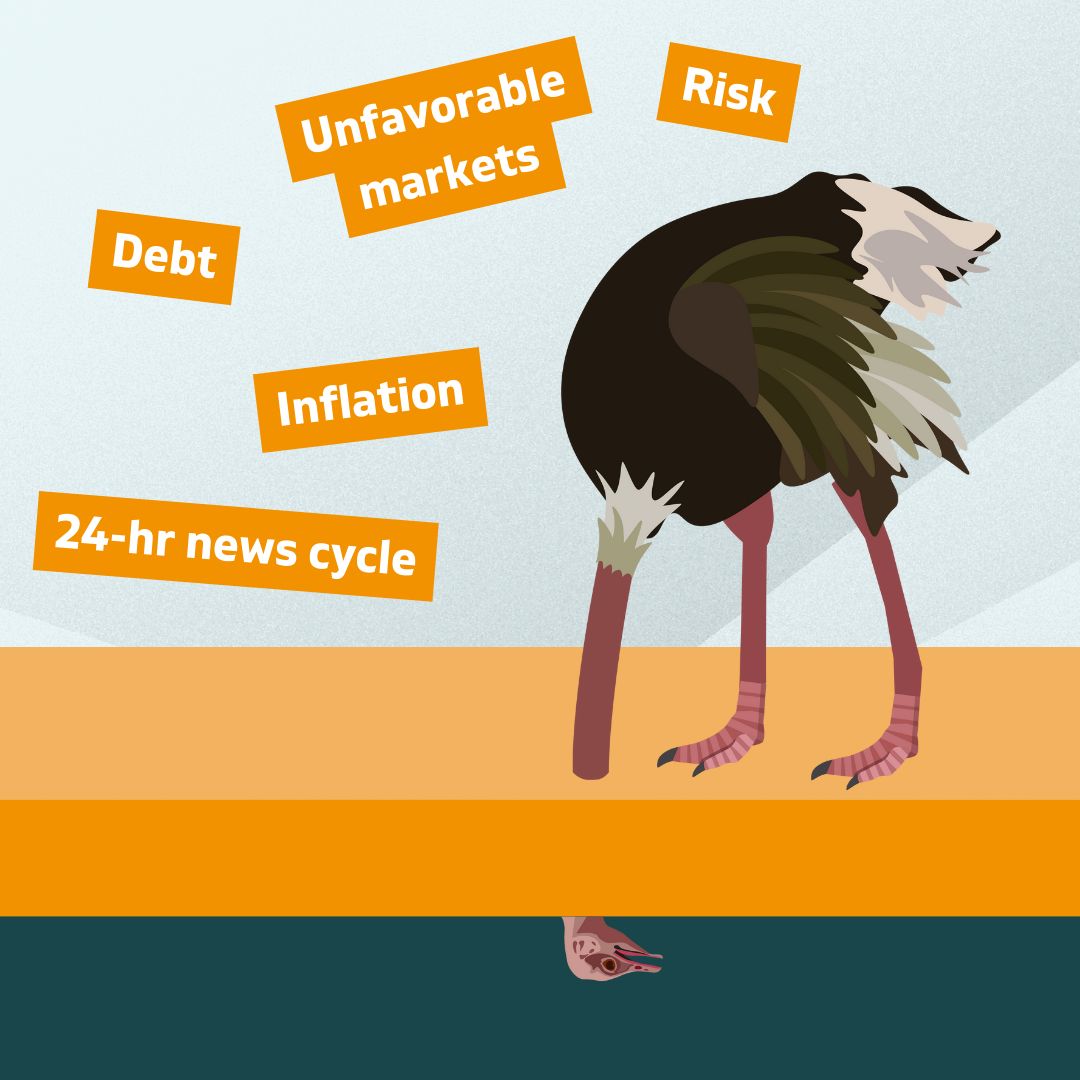













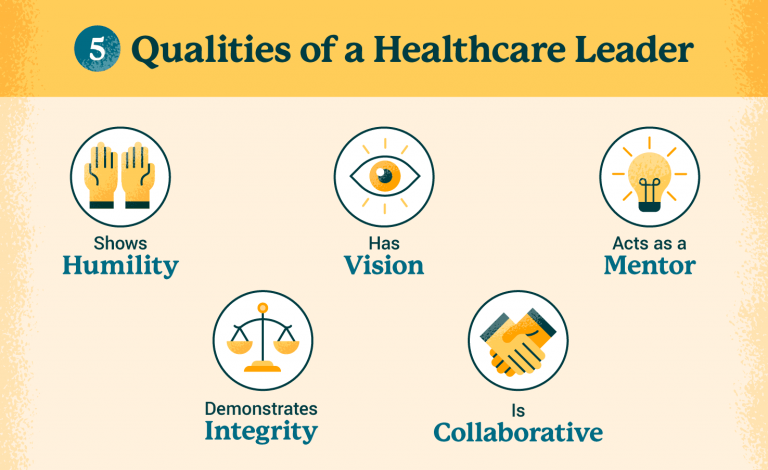
















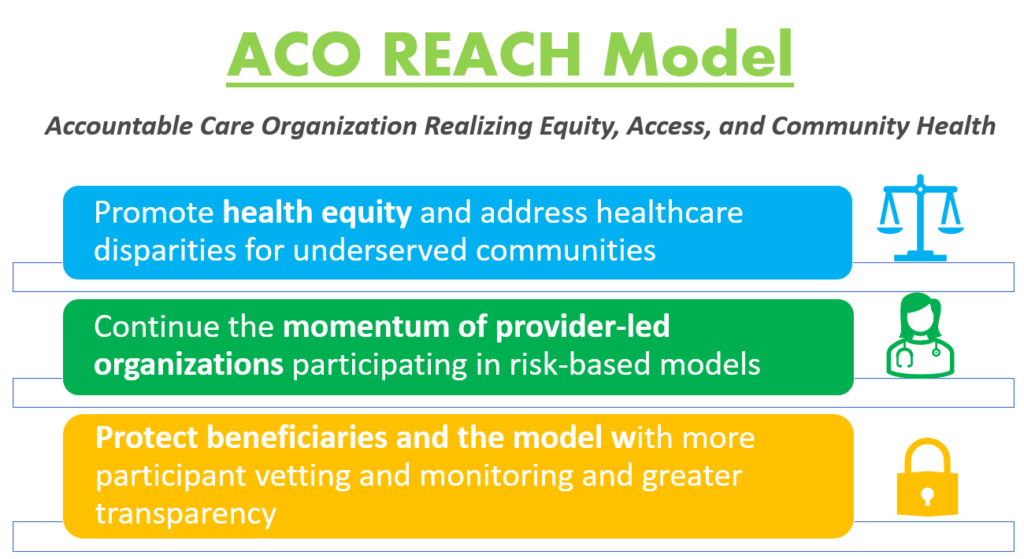





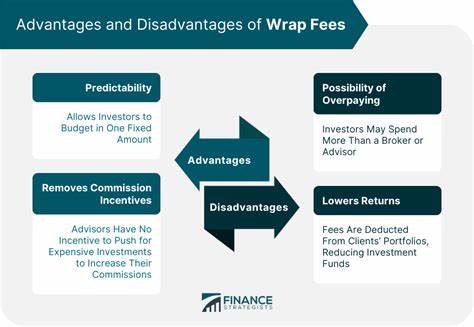



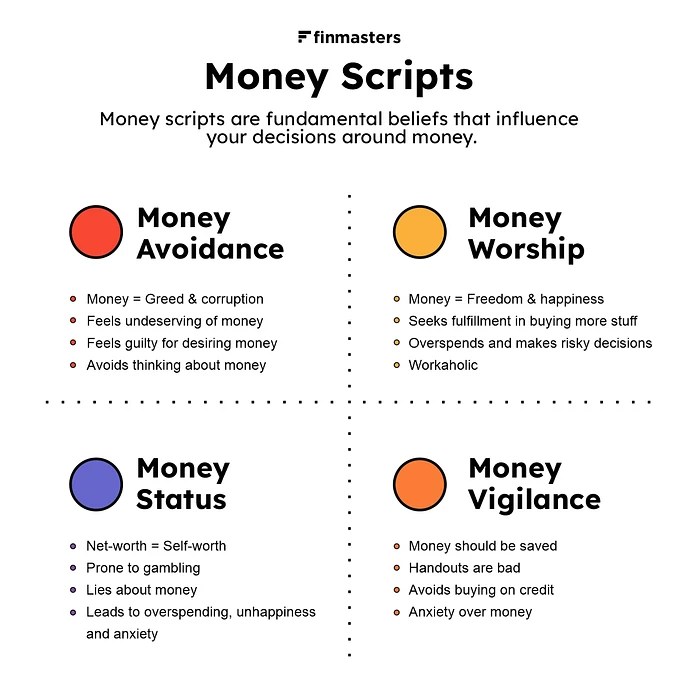



 The Leading Business Education Network for Doctors, Financial Advisors and Health Industry Consultants