What is Corporate “ENTERPRISE” Financial Value?

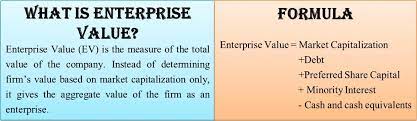
THE E.V. MATH FORMULA

CMP logo

By Dr. David E. Marcinko MBA MEd CMP®

SPONSOR: http://www.CertifiedMedicalPlanner.org

The enterprise value [EV] tends to be thought of as a theoretical takeover price if a company were to be bought. It is calculated as market capitalization plus debt, minority interest and preferred shares, minus total cash and cash equivalents.

CITE: https://www.r2library.com/Resource/Title/0826102549

Enterprise value = common equity at market value (this line item is also known as “market cap”) + debt at market value (here debt refers to interest-bearing liabilities, both long-term and short-term) + minority interest at market value, if any + preferred equity at market value + unfunded pension liabilities and other debt-deemed provisions – value of associate companies – cash and cash equivalents.

MORE: https://en.wikipedia.org/wiki/Enterprise_value

YOUR COMMENTS ARE APPRECIATED

FINANCE: https://www.amazon.com/Comprehensive-Financial-Planning-Strategies-Advisors/dp/1482240289/ref=sr_1_1?ie=UTF8&qid=1418580820&sr=8-1&keywords=david+marcinko

THANK YOU

***

HOSPITALS: https://www.amazon.com/Financial-Management-Strategies-Healthcare-Organizations/dp/1466558733/ref=sr_1_3?ie=UTF8&qid=1380743521&sr=8-3&keywords=david+marcinko

***

What is ABSOLUTE [Intrinsic] VALUE?

A MATH AND FINANCIAL-INVESTING TERM

***

By Dr. David E. Marcinko MBA MEd CMP®

CMP logo

SPONSOR: http://www.CertifiedMedicalPlanner.org

In mathematics, the absolute value or modulus of a real number x, denoted |x|, is the non-negative value of x without regard to its sign. Namely, |x| = x if x is positive, and |x| = −x if x is negative (in which case −x is positive), and |0| = 0. For example, the absolute value of 3 is 3, and the absolute value of −3 is also 3. The absolute value of a number may be thought of as its distance from zero.

***

In finance, absolute value, also known as an intrinsic value, refers to a business valuation method that uses discounted cash flow (DCF) analysis to determine a company’s financial worth. The absolute value method differs from the relative value models that examine what a company is worth compared to its competitors. Absolute value models try to determine a company’s intrinsic worth based on its projected cash flows.

CITE: https://www.r2library.com/Resource/Title/0826102549

In investing, the key issues are as follows:

  • Absolute value refers to a business valuation method that uses discounted cash flow analysis to determine a company’s financial worth.
  • Investors can determine if a stock is currently under or overvalued by comparing what a company’s share price should be given its absolute value to the stock’s current price.
  • There are some challenges with using the absolute value analysis including forecasting cash flows, predicting accurate growth rates, and evaluating appropriate discount rates.
  • Absolute value, unlike relative value, does not call for the comparison of companies in the same industry or sector.

YOUR COMMENTS ARE APPRECIATED

***

***

FINANCE: https://www.routledge.com/Comprehensive-Financial-Planning-Strategies-for-Doctors-and-Advisors-Best/Marcinko-Hetico/p/book/9781482240283

Thank You

******

HIDDEN RISKS: In “Religion” Stocks

By Vitaliy Katsenelson CFA

***

INTRODUCTION
STOCK MARKET FAITH

A basic property of religion is that the believer takes a leap of faith: to believe without expecting proof. Often you find this property of religion in other, unexpected places – for example, in the stock market. It takes a while for a company to develop a “religious” following: only a few high-quality, well-respected companies with long track records ever become worshiped by millions of investors.

My partner, Michael Conn, calls these “religion stocks.” The stock has to make a lot of shareholders happy for a long period of time to form this psychological link.

READ HERE: The Hidden Risk in “Religion” Stocks

COMMENTS APPRECIATED

Thank You

***

***

PODCAST: How Does Medical Debt Impact Your Credit Report?

By Eric Bricker MD

***

***

COMMENTS APPRECIATED

Thank You

***

***

BITCOIN: “Halving”

BITCOIN MINER HALVING

By Staff Reporters

***

***

DEFINITION: After the network mines 210,000 blocks—roughly every four years—the block chain reward given to Bitcoin miners for processing transactions is cut in half. This event is called halving because it cuts the rate at which new bitcoins are released into circulation in half. This rewards system will continue until about 2140, when the proposed limit of 21 million coins is reached. At that point, miners will be rewarded with fees for processing transactions, which network users will pay. These fees ensure miners are still incentivized to participate and keep the network going.

CITE: https://www.r2library.com/Resource

***

And, so, the total value of the world’s most popular cryptocurrency surpassed $1 trillion yesterday for the first time since 2021. The overall crypto market, meanwhile, broke $2 trillion in market cap, fueled by investor confidence. If crypto were a publicly traded company, it would be the fourth-largest in the world behind Microsoft, Apple, and Saudi Aramco.

***

***

HALVING – The quadrennial event, expected to take place today or tomorrow, was built into bitcoin’s original code to cut the amount of new coins going into circulation in half every four years. The purpose is to thwart inflation and increase the currency’s value. Bitcoin’s mysterious creator, Satoshi Nakamoto, designed the crypto so that only 21 million bitcoins would ever exist. It will take about a century to hit that number, but as it approaches the cutoff, the crypto hose slowly constricts. No one’s sure what happens next

Historically, halvings have coincided with big jumps in price—the coin’s first halving in 2012 saw the price jump from $12.35 to $127 within five months, according to Time. But critics argue that the narrative around halving is much stronger than the actual event. Even bitcoin experts aren’t sure what will happen with the volatile asset. It already hit a record high of over $73,750 in March, thanks to the spot bitcoin ETF approval. And, lest we forget, the whole FTX thing happened since the last halving.

COMMENTS APPRECIATED

Thank You

***

***

KITCHEN SINK: Stock Market Disclosures

By Staff Reporters

***

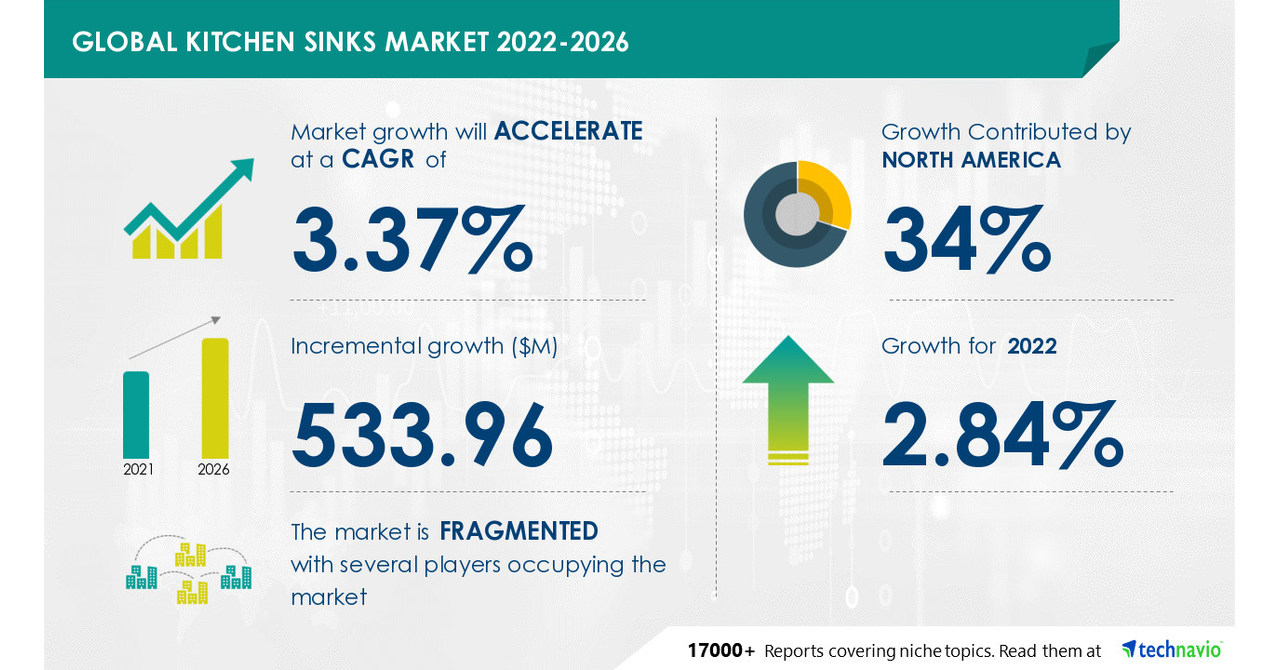
Technavio has announced its latest market research report titled Kitchen Sinks Market by End-user and Geography – Forecast and Analysis 2022-2026

***

Kitchen Sink stock market disclosures are a communication technique commonly used by political parties, public companies and businesses, although it’s not so well known by the public. The idea is to release all of your bad news at the same time rather than creating a drip-drip effect over an extended period of time.

CITE: https://www.r2library.com/Resource

Steven Barnett, professor of communications at the University of Westminster, says it’s used by organizations when they have some really shocking news they know they are not going to get away with burying. “You’re saying: ‘Let’s just sweep up every piece of bad news we’ve got, put it all in one place, take all of the flak and deal with it at the same time'”. “When you’re announcing the worst figures in your corporate history, you know it’s never going to be a page two story.”

It’s the opposite of the “dead cat” strategy where you distract people from something that is garnering a lot of attention. The idea being that, by placing a dead cat on the table, you make people look in a different direction.

CITE: https://medicalexecutivepost.com/2022/09/29/what-is-a-dead-cat-bounce/

“If you know that you have pretty appalling news, it makes absolute sense to get it all out at the same time because the speed and intensity of the news cycle demands that the agenda moves on so you know you’ll be out of the spotlight within 48 hours.”

COMMENTS APPRECIATED

Please Subscribe

***

***

PHYSICIAN NET WORTH: Personalized Projections

HOW DO YOU RANK – DOCTOR?

By Dr. David Edward Marcinko MBA MEd CMP

***

SPONSOR: http://www.MarcinkoAssociates.com

***

Once the value of all personal assets and liabilities is known, net worth can be determined with the following formula: Net worth = assets minus liabilities. Obviously, higher is better.

CITE: https://www.r2library.com/Resource

In The Millionaire Next Door, Thomas H. Stanley, PhD, and William H. Danko give the following benchmark for net worth accumulation. Although conservative for physicians of a past generation, it may be more applicable in the future because of current managed care environment. Here is the guide: Multiple your age by your annual pre-tax income from all sources; except inheritances, and then divide by ten.

Example:

As an HMO pediatrician, Dr. Curtis earned $ 90,000 last year. So, if she is 35, her net worth should be at least $ 315,000.

How do you get to that point? In a word, consume less and save more. Stanley and Danko found that the typical millionaire set aside 15 percent of earned income annually and has enough invested to survive 10 years, at current income levels if he stopped working.

Question: If Dr. Curtis lost her job tomorrow, how long could she pay herself the same salary? Could you?

COMMENTS APPRECIATED

Thank You

***

***

Fractional Reserve VERSUS Gerbil Banking

Cons from the Austrian School of Economics

By Staff Reporters

***

***

According to Coinmena, fractional reserve banking is a system in which banks are only required to have a fraction of bank deposits from their customers backed by actual cash on hand or available for withdrawal. This is done to expand the economy by enabling banks to free idle capital for commercial lending while keeping a sufficient amount for customer withdrawals.

The creation of the fractional reserve?

The fractional reserve system was first established by the Swedish Riksbank in 1668 after establishing the first central bank in the world. The idea came about after banks realized that there is a minimal chance that all the customers would come to claim their money from the bank at once; therefore, instead of hoarding the money in a vault, it could be used to grow and expand the economy through commercial loans. Fractional reserve banking became more popular around the world after the U.S. enacted The Federal Reserve Act of 1913, which created the Federal Reserve Bank, now known as the U.S. Central bank.

CITE: https://www.r2library.com/Resource/Title/0826102549

How does it work?

When a customer deposits money into their bank account, the money is no longer directly theirs. The bank holds custody of the customer deposits, and they provide the customer with a deposit account that they can withdraw their money from upon demand.

The bank now has full control of the money as the custodian. The bank can opt to reserve a small percentage of the deposited amount (fractional reserve) and loan the rest or use it for another commercial purpose. The reserve amount usually ranges between 3% to 10%. Although, during harsh economic times, the central banks can lower this reserve requirement to 0%. The Covid-19 pandemic forced central banks around the world to lower the reserve requirement to help stimulate the economy.

 Example

  • Customer A deposits 100,000 AED in Bank 1. Bank 1 loans Customer B 90,000 AED
  • Customer B deposits 90,000 AED in Bank 2. Bank 2 loans Customer C 81,000 AED
  • Customer C deposits 81,000 AED in Bank 3. Bank 3 loans Customer D 72,900 AED
  • Customer D deposits 72,900 AED in Bank 4. Bank 4 loans Customer E 65,610 AED
  • Customer E deposits 65,610 AED in Bank 5. Bank 5 loans Customer F 59,049 AED

 As you can see, the original amount of 100,000 AED has been expanded to represent deposited money for five accounts, and the total existing money supply is 468,559 AED, including the final loan. This is a basic representation of the money multiplier effect.

The system works on the basic principles of debt. The money deposited into the bank by a customer is considered a debt (liability) on the bank to the customer and an asset for the customer. The banks then loan out this money with an interest rate to make a profit for themselves and have the principal amount to pay back their original debt to the depositor (customer).

Pros & Cons of fractional reserve

Banks have the most benefit from a fractional reserve system as this is the way they make their profits. Additionally, customers can also earn interest through their savings or deposit account paid from the interest profits made by the bank. Governments also support this system because it encourages spending and provides economic stability and growth.

Economists from the Austrian School of Economics argue that this system is unsustainable and risky given that most countries rely on a credit-based system and not hard money. Additionally, a fractional reserve system runs the risk of a bank run. Essentially, if people lose faith in a bank to be able to pay back all the depositor’s money, it would trigger a  “run on the banks” or “bank run.” It is not typical behavior for customers to go claim their money from the bank all at once, but it has happened in the past, with the most notorious example being the 1929 Great Depression in the U.S. In this case, the banks would only be able to pay out only 3% of depositors, equal to the fractional reserve requirement.

More: https://www.sofi.com/learn/content/what-is-fractional-reserve-banking/

Related: https://www.washingtonpost.com/washington-post-live/2023/03/21/former-fdic-chair-sheila-bair-global-banking-system/?utm_campaign=mb&utm_medium=newsletter&utm_source=morning_brew

***

GERBIL BANKING

Link: https://fortune.com/2023/03/23/gerbil-banking-preceded-the-great-depression-were-seeing-it-again-today/

COMMENTS APPRECIATED

Thank You

***

ORDER: https://www.routledge.com/Comprehensive-Financial-Planning-Strategies-for-Doctors-and-Advisors-Best/Marcinko-Hetico/p/book/9781482240283

***

DAILY UPDATE: Microsoft and Intuitive Machines as the Stock Markets Rocket Upward!

MEDICAL EXECUTIVE-POST TODAY’S NEWSLETTER BRIEFING

***

Essays, Opinions and Curated News in Health Economics, Investing, Business, Management and Financial Planning for Physician Entrepreneurs and their Savvy Advisors and Consultants

Serving Almost One Million Doctors, Financial Advisors and Medical Management Consultants Daily

A Partner of the Institute of Medical Business Advisors , Inc.

http://www.MedicalBusinessAdvisors.com

SPONSORED BY: Marcinko & Associates, Inc.

***

http://www.MarcinkoAssociates.com

Daily Update Provided By Staff Reporters Since 2007.
How May We Serve You?
© Copyright Institute of Medical Business Advisors, Inc. All rights reserved. 2024

REFER A COLLEAGUE: MarcinkoAdvisors@msn.com

SPONSORSHIPS AVAILABLE: https://medicalexecutivepost.com/sponsors/

ADVERTISE ON THE ME-P: https://tinyurl.com/ytb5955z

Your Referral Count -0-

Microsoft will buy back up to $60 billion in shares and is boosting its dividend by about 10% (from 75 cents per share to 83 cents).

Stat: 60%. That’s how much Intuitive Machines’ stock jumped in early trading yesterday after NASA awarded the company a contract to “build moon data satellites.” (CNBC)

CITE: https://www.r2library.com/Resource

What’s up

  • Lower interest rates mean it’s cheaper to afford a car, a realization that helped propel Tesla up 7.36% today.
  • Darden Restaurants rose 8.25% as shareholders cheered a new deal between the Olive Garden parent company and Uber, whose shares rose 2.42% as well.
  • Airbnb gained 5.17% after CEO Brian Chesky noted that the company is working to expand long-term rental offerings of over 28 days.
  • MobilEye Global popped 14.99% after Intel announced it has no plans to sell any of its 88% stake in the autonomous driving company. Intel shares rose 1.78% as well.

What’s down

  • Trump Media & Technology Group fell 5.89% as the lockup period, during which early investors like the former president can’t sell their stake in the company, is about to end.
  • Progyny plummeted 32.65% after the health insurance benefits company announced it is losing a key customer that accounts for 12% of Progyny’s revenue.
  • Five Below sank 2.22% after JP Morgan analysts downgraded the stock, though they also boosted their price target.

CITE: https://tinyurl.com/2h47urt5

Here’s where the major benchmarks ended:

  • The SPX rose 95.38 points (1.70%) to 5,713.64; the $DJI added 522.09 points (1.26%) to 42,025.19; the NASDAQ Composite® ($COMP) added 440.68 points (2.51%) to 18,013.98.
  • The 10-year Treasury note yield (TNX) climbed five basis points to 3.74%, while the 2-year note yield was unchanged.
  • The CBOE Volatility Index® (VIX) slid to 16.33, registering its lowest close so far this month.

CITE: https://tinyurl.com/tj8smmes

Visualize: How private equity tangled banks in a web of debt, from the Financial Times.

COMMENTS APPRECIATED

PLEASE SUBSCRIBE: MarcinkoAdvisors@msn.com

Thank You

***

***

***

***

EDUCATIONAL TEXTBOOKS: https://tinyurl.com/4zdxuuwf

***

DAILY UPDATE: Walgreens, Mental Health, M&As, Pfizer and Eli Lilly as the Markets Tank

MEDICAL EXECUTIVE-POST TODAY’S NEWSLETTER BRIEFING

***

Essays, Opinions and Curated News in Health Economics, Investing, Business, Management and Financial Planning for Physician Entrepreneurs and their Savvy Advisors and Consultants

Serving Almost One Million Doctors, Financial Advisors and Medical Management Consultants Daily

A Partner of the Institute of Medical Business Advisors , Inc.

http://www.MedicalBusinessAdvisors.com

SPONSORED BY: Marcinko & Associates, Inc.

***

http://www.MarcinkoAssociates.com

Daily Update Provided By Staff Reporters Since 2007.
How May We Serve You?
© Copyright Institute of Medical Business Advisors, Inc. All rights reserved. 2024

REFER A COLLEAGUE: MarcinkoAdvisors@msn.com

SPONSORSHIPS AVAILABLE: https://medicalexecutivepost.com/sponsors/

ADVERTISE ON THE ME-P: https://tinyurl.com/ytb5955z

Your Referral Count -0-

Stat: $106.8 million. That’s how much Walgreens agreed to pay the federal government to settle claims that the company fraudulently billed government programs for prescriptions that were never dispensed. (the Wall Street Journal)

Quote: “We put a Band-Aid on a chronic situation and that Band-Aid isn’t going to last.”—Roland Behm, co-founder of the Georgia Mental Health Policy Partnership advocacy group, on the shortage of mental health care services following the Apalachee High School shooting (KFF Health News)

EY’s latest monthly M&A report found that in August, the total value of large deals (worth $100+ million) reached $1.1 trillion, a 26% YoY jump. This was thanks in part to a 44% YoY increase in deal value last month, to $137 billion, according to the report.

CITE: https://www.r2library.com/Resource

What’s up

  • US Steel gained 1.57% as the battle over the future of the legacy steelmaker continues.
  • Intuitive Machines skyrocketed 38.33% thanks to a deal between the space communications company and NASA worth over $4.8 billion.
  • Victoria’s Secret popped 3.63% after Barclays analysts upgraded shares from “Underweight” to “Equal Weight.”
  • Barclays analysts were active today, boosting VF Corp. 3.89% by upgrading the shoewear company from “Equal Weight” to “Overweight.”
  • Duolingo rose 3.20% to a new all-time high, and though there was no news propelling the multilingual app higher, shares have continued to rise ever since its strong earnings announcement in early August.

What’s down

  • ResMed tumbled 5.12% thanks to a downgrade from Wolfe Research due to concerns that a new drug from Eli Lilly may eat into the med tech company’s share of the CPAP machine market.
  • eBay sank 2.64% after its CFO sold over $1.9 million in company stock.
  • Cencora fell 2.58% on the news that the drug distributor paid hackers $75 million in ransom over the course of three bitcoin installments, the largest cyberattack extortion payment ever.

CITE: https://tinyurl.com/2h47urt5

Here’s where the major benchmarks ended:

  • The S&P 500® index (SPX) fell 16.32 points (–0.29%) to 5,618.26; the Dow Jones Industrial Average® ($DJI) lost 103.08 points (–0.25%) to 41,503.10; the NASDAQ Composite® ($COMP) decreased 54.76 points (–0.31%) to 17,573.30.
  • The 10-year Treasury note yield rose four basis points to 3.69%.
  • The CBOE Volatility Index® (VIX) climbed to 18.23, the highest since September 10.

CITE: https://tinyurl.com/tj8smmes.

At the end of August, pharmaceutical giant Pfizer announced a new website called PfizerForAll, which provides information on common health issues like migraines or the flu and connects patients to tele-health services and prescription delivery services so they can get treatments and diagnostic tests delivered to their homes. Pfizer promotes some of its own therapies, including Paxlovid for Covid-19 and Nurtec for migraines, on the site.

And, that move came after rival pharmaceutical company Eli Lilly started LillyDirect in January, through which the company delivers prescriptions straight to patients. Eli Lilly also partnered with Amazon Pharmacy in March to deliver some of its medications to consumers’ doorsteps, including Ozempic competitor Zepbound, a GLP-1 weight loss drug.

COMMENTS APPRECIATED

PLEASE SUBSCRIBE: MarcinkoAdvisors@msn.com

Thank You

***

***

***

***

EDUCATIONAL TEXTBOOKS: https://tinyurl.com/4zdxuuwf

***

FEDERAL RESERVE: Lowers Interest Rates as Expected

By Staff Reporters

BREAKING NEWS

***

***

Jerome Powell and the Federal Reserve Bank just said that it is cutting its benchmark interest rate by 0.50 percentage points, marking the first reduction in four years and moving to ease borrowing costs as inflation-weary consumers are grappling with high rates on everything from mortgages to credit cards.

It is the first drop in the federal funds rate — or what banks charge each other for short-term loans — since the U.S. central bank lowered rates to nearly zero in March 2020 amid an economic standstill caused by the pandemic.

But as prices surged during the health crisis, the FOMC repeatedly hiked rates into a target range of 5.25% to 5.5%, the highest in 23 years, in an effort to curb inflation.

CITE: https://www.r2library.com/Resource

COMMENTS APPRECIATED

Thank You

***

***

FOMC: Interest Rate Cut Today?

At 2 pm EST Today

By Staff Reporters

***

***

ABOUT THE FEDERAL OPEN MARKET COMMITTEE

The term “monetary policy” refers to the actions undertaken by a central bank, such as the Federal Reserve, to influence the availability and cost of money and credit to help promote national economic goals. The Federal Reserve Act of 1913 gave the Federal Reserve responsibility for setting monetary policy.

The Federal Reserve controls the three tools of monetary policy–open market operations, the discount rate, and reserve requirements. The Board of Governors of the Federal Reserve System is responsible for the discount rate and reserve requirements, and the Federal Open Market Committee is responsible for open market operations. Using the three tools, the Federal Reserve influences the demand for, and supply of, balances that depository institutions hold at Federal Reserve Banks and in this way alters the federal funds rate. The federal funds rate is the interest rate at which depository institutions lend balances at the Federal Reserve to other depository institutions overnight.

Changes in the federal funds rate trigger a chain of events that affect other short-term interest rates, foreign exchange rates, long-term interest rates, the amount of money and credit, and, ultimately, a range of economic variables, including employment, output, and prices of goods and services.

Cite: https://www.federalreserve.gov/monetarypolicy/fomc.htm

***

And so, the macroeconomic FOMC is kicking off at 2pm ET today, when the Fed will announce the first interest rate cut in over four years. But, financial watchers are split between two predictions: a standard 0.25% cut or a more aggressive one of 0.5% (investors are betting on the latter, while many analysts think the former).

Regardless of its size, today’s rate cut and subsequent ones are expected to make borrowing cheaper for consumers and businesses, with ripple effects throughout the economy.

CITE: https://www.r2library.com/Resource

COMMENTS APPRECIATED

Thank You

***

***

DAILY UPDATE: PwC, Birth Rate, Social Media, NHS and the Mixed Markets

MEDICAL EXECUTIVE-POST TODAY’S NEWSLETTER BRIEFING

***

Essays, Opinions and Curated News in Health Economics, Investing, Business, Management and Financial Planning for Physician Entrepreneurs and their Savvy Advisors and Consultants

Serving Almost One Million Doctors, Financial Advisors and Medical Management Consultants Daily

A Partner of the Institute of Medical Business Advisors , Inc.

http://www.MedicalBusinessAdvisors.com

SPONSORED BY: Marcinko & Associates, Inc.

***

http://www.MarcinkoAssociates.com

Daily Update Provided By Staff Reporters Since 2007.
How May We Serve You?
© Copyright Institute of Medical Business Advisors, Inc. All rights reserved. 2024

REFER A COLLEAGUE: MarcinkoAdvisors@msn.com

SPONSORSHIPS AVAILABLE: https://medicalexecutivepost.com/sponsors/

ADVERTISE ON THE ME-P: https://tinyurl.com/ytb5955z

Your Referral Count -0-

It’s going to be a gloomy October for some 1,800 PwC employees. The Big Four firm has announced it’ll be laying off around 2.5% of its US unit’s workforce next month, the Wall Street Journal reported. About half of the job cuts will take place offshore. The cuts will occur mainly in PwC’s US advisory, products, and technology operations functions.

CITE: https://www.r2library.com/Resource

What’s up

  • Intel gained 6.36% on the news that it has secured $3.5 billion in grants from the Pentagon.
  • Oracle rose yet another 5.12%, making co-founder Larry Ellison the second-richest person in the world thanks to its recent surge.
  • Alcoa climbed 6.09% on the news that it will sell its stake in a joint venture with Saudi Arabia Mining Co. to the tune of $1.1 billion in stock and cash.
  • Bausch + Lomb Corp popped 14.66% on a report from the Financial Times that the eyewear company is considering selling itself to get out from under a massive debt load.
  • Nuvalent soared 28.27% on impressive results from Phase 1 trials of its new cancer treatments.

What’s down

  • Apple fell 2.78% just a few days before its big iPhone 16 launch on Friday thanks to reports that demand for the new phone may be lower than anticipated.
  • Walgreens Boots Alliance sank 2.06% after it agreed to pay $106.8 million for charging the US government for prescriptions it never filled.
  • Yelp tumbled 3.03% thanks to Bank of America analysts initiating their coverage of the reviews website with a bearish “underperform” rating.
  • Trump Media & Technology Group gave up some of its recent gains, falling 3.84% only a few days after soaring on the news that former President Donald Trump won’t sell his shares of the company.

CITE: https://tinyurl.com/2h47urt5

Here’s where the major benchmarks ended:

  • The S&P 500® index (SPX) added 7.07 points (0.13%) to 5,633.09; the Dow Jones Industrial Average® ($DJI) rose 228.30 points (0.55%) to 41,622.08; the NASDAQ Composite® ($COMP) dropped 91.84 points (–0.52%) to 17,592.13.
  • The 10-year Treasury note yield (TNX) fell about three basis points to 3.62%, a new 15-month closing low.
  • The BOE Volatility Index® (VIX) inched up to 16.99.

CITE: https://tinyurl.com/tj8smmes

Stat: 2%. That’s how much the birth rate declined from 2022 to 2023. (CDC)

Quote: “Every year they choose not to act, they will be complicit.”—Christine McComas, a mother from Maryland whose daughter died after she was cyberbullied, on members of the House attempting to pass a bill to regulate social media for children (Politico)

Read: UK Prime Minister Keir Starmer said the National Health Service must “reform or die,” and laid out a 10-year plan to fix it. (Reuters)

COMMENTS APPRECIATED

PLEASE SUBSCRIBE: MarcinkoAdvisors@msn.com

Thank You

***

***

***

***

EDUCATIONAL TEXTBOOKS: https://tinyurl.com/4zdxuuwf

***

The Artificial Intelligence [AI] Revolution

By Vitaliy Katsenelson CFA

***

***

READ MORE HERE: The AI Revolution

COMMENTS APPRECIATED

Thank You

***

***

Financially Egalitarian Dating, Marriage and Divorce Mediation for Doctors

By Staff Reporters and Anju D. Jessani MBA

***

***

In 1972, husbands were the primary or sole breadwinners in 85% of U.S. married households, while 5% of wives made all or most of the money, and 11% of married couples had equal salaries. According to the Pew Research Center, things have changed quite a bit in 50 years.

Today, 55% of husbands are now the primary or sole financial supporters (a 35% drop). Financially egalitarian marriages have risen to 29% (more than a 160% increase), and 16% of married women provide the lioness’ share of family finances (a 220% increase).

MORE: https://medicalexecutivepost.com/2023/04/14/physician-salary-pay-gap/

RELATED: https://medicalexecutivepost.com/2021/12/14/new-study-compares-medicare-commercial-payment-gaps-by-specialty/

DIVORCE: https://medicalexecutivepost.com/2016/02/11/a-step-wise-approach-to-the-divorce-mediation-process-for-mds/

***

COMMENTS APPRECIATED

Thank You

***

ORDER: https://www.routledge.com/Risk-Management-Liability-Insurance-and-Asset-Protection-Strategies-for/Marcinko-Hetico/p/book/9781498725989

***

MARKETS: Best Week in 2024

By Staff Reporters

***

***

What a difference a week makes: The S&P 500 and the NASDAQ just had their best weeks of the year—only one week after suffering their worst weeks of 2024. Investors are gaining confidence as they wait for the Federal Reserve and Jerome Powell to cut interest rates next week.

Warner Bros. Discovery jumped following the news that it clinched a renewal deal with Charter Communications that’ll give the cable company’s subscribers access to its streamer Max.

COMMENTS APPRECIATED

Thank You

***

***

WAFFLE HOUSE CEO DIES: Waffle House Index

mm! mm! GOOD!

Courtesy: www.CertifiedMedicalPlanner.org

Walt Ehmer, the president and CEO of Waffle House and a member of the board of trustees for the Atlanta Police Foundation, has died at age 58, the foundation announced last Sunday; 2024. Ehmer joined Waffle House in 1992 and quickly rose to senior leadership, becoming president of the company in 2002, and later adding the titles of CEO and chairman, according to information from Georgia Tech University, his alma mater.

“His leadership, dedication and warmth touched the lives of many, both within the Waffle House family and beyond. He leaves behind a remarkable legacy,” Mayor Andre Dickens said in a news release.

415 Restaurants Closed in Georgia and Elsewhere in 2022

The Waffle House Index [WHI] is an informal metric named after the Waffle House restaurant chain, headquartered in Georgia, and used by the Federal Emergency Management Agency (FEMA) to determine the effect of a storm and the likely scale of assistance required for disaster recovery.

LINK: https://www.amazon.com/Dictionary-Health-Insurance-Managed-Care/dp/0826149944/ref=sr_1_4?ie=UTF8&s=books&qid=1275315485&sr=1-4

IOW: “If you get there and the Waffle House is closed? Well, that’s really bad”, according to Craig Fugate – Former Head of the Federal Emergency Management Agency [FEMA].

MORE: https://en.wikipedia.org/wiki/Waffle_House_Index

QUERY: Have we hit the WHI wall regarding post Covid-19?

***

***

Assessment: And so, your thoughts and comments are appreciated.

***

THANK YOU

***

DAILY UPDATE: Cerberus Capital Management, AT&T, Microsoft, Bank America and the Rising Markets

MEDICAL EXECUTIVE-POST TODAY’S NEWSLETTER BRIEFING

***

Essays, Opinions and Curated News in Health Economics, Investing, Business, Management and Financial Planning for Physician Entrepreneurs and their Savvy Advisors and Consultants

Serving Almost One Million Doctors, Financial Advisors and Medical Management Consultants Daily

A Partner of the Institute of Medical Business Advisors , Inc.

http://www.MedicalBusinessAdvisors.com

SPONSORED BY: Marcinko & Associates, Inc.

***

http://www.MarcinkoAssociates.com

Daily Update Provided By Staff Reporters Since 2007.
How May We Serve You?
© Copyright Institute of Medical Business Advisors, Inc. All rights reserved. 2024

REFER A COLLEAGUE: MarcinkoAdvisors@msn.com

SPONSORSHIPS AVAILABLE: https://medicalexecutivepost.com/sponsors/

ADVERTISE ON THE ME-P: https://tinyurl.com/ytb5955z

Your Referral Count -0-

The country’s largest private, for-profit hospital chain paid out a $790 million dividend — with a big chunk of that money going to its Manhattan-based private equity owner — before it filed for bankruptcy several years later, according to a report. Steward Health Care System, the Boston-based network of 30 hospitals that operated in rural and low-income areas, made the payout to Cerberus Capital Management in 2016, the same year the chain recorded a net loss of $300 million, The Wall Street Journal reported.

CITE: https://www.r2library.com/Resource

What’s up

  • Roku rose 5.67% thanks to an analyst upgrade by Wolfe Research, pushing the streaming platform from hold to buy based on its focus on profitability.
  • Signet Jewelers gained 11.26% in spite of missing on revenue forecasts. But shareholders were encouraged to see stronger same store sales, solid earnings, and signs that the engagement ring industry is improving.
  • Kroger popped 7.14% after the supermarket stock missed top and bottom line estimates this quarter, but then adjusted its earnings per share to make them look better.
  • Petco Health & Wellness added another 11.27% on top of yesterday’s post-earnings surge after getting a shout-out from meme stock royalty Roaring Kitty.
  • Warner Bros. Discovery jumped 10.37% thanks to a new deal with Charter Communications, whose stock also rose 3.55% on the news.

What’s down

  • Micron Technology dropped 3.79% after a double-whammy of analyst downgrades from Raymond James and BNP Paribas citing its slowing growth.
  • Sirius XM Holdings sank another 9.86% after yesterday’s news that the company will merge with Liberty Sirius XM Group, offer a 10-for-1 stock split, and buy back about $1.2 billion in shares (phew, that’s a busy day).
  • US Bancorp slid 1.95% after announcing a share buyback program of up to $5 billion, which is usually a good thing.

CITE: https://tinyurl.com/2h47urt5

Here’s where the major benchmarks ended:

  • The SPX gained 42 points (0.75%) to 5,595.76; the Dow Jones Industrial Average® ($DJI) rose 235 points (0.58%) to 41,096.77; the NASDAQ Composite® ($COMP) gained174 points (1.0%) to 17,569.68.
  • The 10-year Treasury note yield (TNX) gained 3 basis points to 3.69%.
  • The CBOE Volatility Index® (VIX) fell 3.34% to 17.10.

CITE: https://tinyurl.com/tj8smmes

he networks for Microsoft Teams and Outlook, as well as AT&T, suffered widespread outages on Thursday morning, according to the tracking site Downdetector. About 4,000 outages on Microsoft Teams were reported at 9 a.m. ET, increasing from less than 300 an hour earlier. A lesser outage for Microsoft Outlook was also noted by Downdetector, with reports of more than 1,000 outages at 9 a.m. ET. Reports of an outage with landline internet and mobile internet for AT&T also jumped to more than 4,000 at 9 a.m. ET on Sept. 12th, according to Downdetector.

Stat: $24. That’s Bank of America’s new hourly minimum wage in the US, a dollar increase on the way to its long-promised $25 by 2025. (CBS News)

COMMENTS APPRECIATED

PLEASE SUBSCRIBE: MarcinkoAdvisors@msn.com

Thank You

***

***

***

***

EDUCATIONAL TEXTBOOKS: https://tinyurl.com/4zdxuuwf

***

Investing “Tips” on Initial Public Offerings [IPOs]

Some Investing Tips and Pearls

By Dr. David Marcinko MBA MEd CMP

http://www.MarcinkoAssociates.com

Initial public offerings, known as IPOs, tend to attract a lot of investor interest – especially when the company is well-known. However, that excitement isn’t always matched by investment returns.

“Tips and Pearls”

So, here are some tips to consider before you decide to invest in an IPO:

• Don’t let the excitement surrounding an IPO cloud your judgment. Too often, there is little financial information about the companies themselves, and many are not profitable. This can translate into extremely volatile stock prices.

• While an IPO’s stock price tends to rise on the day it begins trading, investors who bought shares at the end of the first day haven’t always fared well. The stocks have often fallen below the closing first-day price after six months.

High volatility and a falling stock price are not generally a recipe for attractive investor returns.

So what steps should you take if you’re still interested in an IPO?

1. Understand that the opening price will likely be different from the official IPO price. New issues can experience extreme volatility in the first few hours and days of trading in the secondary market. When the company’s stock opens for secondary trading and becomes more widely available, the price can be significantly different from the IPO price set by the security underwriters. In addition, new issues often do not begin trading the moment the market opens.

2. Use a limit order. This can help you avoid paying more for the stock than you intended. Once you understand the risks of purchasing a stock during its first public trading days, work with your financial advisor to determine the highest price you’re willing to pay for the stock, and then set that amount as your limit.

3. Remember that an IPO must be priced before an order can be accepted. For example, Edward Jones typically does not accept orders until after an IPO has been priced, which is usually the morning the new issue begins trading. In addition, your financial advisor is not permitted to accept market orders for any IPO prior to its trading in the secondary market.

***

https://www.amazon.com/Comprehensive-Financial-Planning-Strategies-Advisors/dp/1482240289/ref=sr_1_1?ie=UTF8&qid=1418580820&sr=8-1&keywords=david+marcinko

***

Assessment

Remember to always do your homework before deciding on any investment, including an IPO. This includes working with your financial advisor or accountant to determine whether the investment is suitable for your portfolio.

Conclusion

Your thoughts and comments on this ME-P are appreciated. Feel free to review our top-left column, and top-right sidebar materials, links, URLs and related websites, too. Then, subscribe to the ME-P. It is fast, free and secure.

Speaker: If you need a moderator or speaker for an upcoming event, Dr. David E. Marcinko; MBA – Publisher-in-Chief of the Medical Executive-Post – is available for seminar or speaking engagements.

Book Marcinko: https://medicalexecutivepost.com/dr-david-marcinkos-bookings/

Subscribe: MEDICAL EXECUTIVE POST for curated news, essays, opinions and analysis from the public health, economics, finance, marketing, IT, business and policy management ecosystem.

***

Risk Management, Liability Insurance, and Asset Protection Strategies for Doctors and Advisors: Best Practices from Leading Consultants and Certified Medical Planners™8Comprehensive Financial Planning Strategies for Doctors and Advisors: Best Practices from Leading Consultants and Certified Medical Planners™

***

On Standard & Poor’s Depository Receipts

Don’t be Afraid of ‘SPIDERS’

By Dr. David Edward Marcinko MBA MEd CMP™

http://www.CertifiedMedicalPlanner.org

[Publisher-in-Chief]

What they are – How they work?

No, I’m not talking about creepy, crawly insects. I’m referring to Standard & Poor’s Depository Receipts (SPDRs, or spiders), a derivative product, which combines many of the advantages of index funds with the superior trading flexibility of common stocks.

Creation

SPDRs were created in January 1993 by the American Stock Exchange. SPDRs are units in a trust holding the S&P 500 securities in proportion to their index weighting and which are adjusted as necessary to track changes made to the index by S&P. They pay quarterly cash dividend distributions based on the accumulated dividends paid by the stocks held in the SPDR trust minus an annual fee of about .19% of principal to cover trust expenses. They trade at approximately one-tenth the value of the index.

Conclusion

And so, your thoughts and comments on this ME-P are appreciated. Do you use SPDRs; why or why not? Feel free to review our top-left column, and top-right sidebar materials, links, URLs and related websites, too. Then, subscribe to the ME-P. It is fast, free and secure.

Speaker: If you need a moderator or speaker for an upcoming event, Dr. David E. Marcinko; MBA – Publisher-in-Chief of the Medical Executive-Post – is available for seminar or speaking engagements. Contact: MarcinkoAdvisors@msn.com

Subscribe Now: Did you like this Medical Executive-Post, or find it helpful, interesting and informative? Want to get the latest ME-Ps delivered to your email box each morning? Just subscribe using the link below. You can unsubscribe at any time. Security is assured.

Sponsors Welcomed: And, credible sponsors and like-minded advertisers are always welcomed.

Link: https://healthcarefinancials.wordpress.com/2007/11/11/advertise

Product DetailsProduct DetailsProduct Details

***

FEELING WEALTHY: How Much is [Really] Enough?

By Staff Reporters

***

***

At the most general level, economists may define wealth as “the total of anything of value” that captures both the subjective nature of the idea and the idea that it is not a fixed or static concept. Various definitions and concepts of wealth have been asserted by various people in different contexts. Defining wealth can be a normative process with various ethical implications, since often wealth maximization is seen as a goal or is thought to be a normative principle of its own. A community, region or country that possesses an abundance of such possessions or resources to the benefit of the common good is known as wealthy.

What does wealth mean to you?

In a recent survey by Edelman Financial Engines, 57% of respondents said they’d feel wealthy if they had $1 million in the bank. But for many people, that’s not enough.

Among those with $500,000 and $3 million in assets, 53% said it would take over $3 million in the bank for them to feel wealthy, and 33% said it would take over $5 million. Given that these are amounts some people will never even come close to amassing in their lifetimes, it may be hard to wrap your head around these answers.

***

ORDER: https://www.routledge.com/Comprehensive-Financial-Planning-Strategies-for-Doctors-and-Advisors-Best/Marcinko-Hetico/p/book/9781482240283

***

COMMENTS APPRECIATED

Thank You

***

DAILY UPDATE: Unemployment Rate, Banking Rules and Mental Health as the Markets Continue to Rise

MEDICAL EXECUTIVE-POST TODAY’S NEWSLETTER BRIEFING

***

Essays, Opinions and Curated News in Health Economics, Investing, Business, Management and Financial Planning for Physician Entrepreneurs and their Savvy Advisors and Consultants

Serving Almost One Million Doctors, Financial Advisors and Medical Management Consultants Daily

A Partner of the Institute of Medical Business Advisors , Inc.

http://www.MedicalBusinessAdvisors.com

SPONSORED BY: Marcinko & Associates, Inc.

***

http://www.MarcinkoAssociates.com

Daily Update Provided By Staff Reporters Since 2007.
How May We Serve You?
© Copyright Institute of Medical Business Advisors, Inc. All rights reserved. 2024

REFER A COLLEAGUE: MarcinkoAdvisors@msn.com

SPONSORSHIPS AVAILABLE: https://medicalexecutivepost.com/sponsors/

ADVERTISE ON THE ME-P: https://tinyurl.com/ytb5955z

Your Referral Count -0-

After rising for more than a year, the unemployment rate fell to 4.2% in August from 4.3% in July, the Bureau of Labor Statistics reported. That dip matched Wall Street’s consensus forecast, but the 142,000 new jobs added fell short of the 160,000 that analysts had expected, according to FactSet data cited by CNN.

The Biden administration released a final rule this week that would require payers to cover behavioral health services, including addiction care, to the same extent that they’d cover all other forms of healthcare. The move comes amid a rising mental health crisis in the US and in light of the fact that the vast majority of people with substance use disorders don’t receive treatment.

CITE: https://www.r2library.com/Resource

What’s up

  • Dave & Busters Entertainment popped 4.66% after announcing strong sales and earnings growth last quarter, along with opening 13 new locations (more tokens for everyone!).
  • Petco Health and Wellness roared 32.90% despite mixed earnings last quarter, though shareholders wagged their tails at new CEO Joel Anderson’s plans to improve profitability.
  • Viking Therapeutics rose 11.31% thanks to JP Morgan initiating coverage of the company with a bullish overweight rating.

What’s down

  • Bank of America slipped 0.71% after a new filing revealed that Warren Buffett sold more shares of the company last quarter.
  • Rentokil Initial plummeted 21.07% once the pest control company made it clear that slow sales and currency exchange rates will take a $105 million toll on full-year profits.

CITE: https://tinyurl.com/2h47urt5

Here’s where the major benchmarks ended:

  • The SPX rose 59 points (1.0%) to 5,554.13; the Dow Jones Industrial Average® ($DJI) gained 125 points (0.3%) to 40,861.71; the NASDAQ Composite® ($COMP)rose 370 points (2.17%) to 17,395.53.
  • The 10-year Treasury note yield (TNX) climbed just under two basis points to 3.66%.
  • The CBOE Volatility Index® (VIX) fell to 17.7, the lowest close so far this month.

CITE: https://tinyurl.com/tj8smmes

Planned Fed rules are a win for big banks. The likes of JPMorgan and Bank of America celebrated the Fed walking back some of its proposals for tighter banking rules yesterday

Visualize: How private equity tangled banks in a web of debt, from the Financial Times.

COMMENTS APPRECIATED

PLEASE SUBSCRIBE: MarcinkoAdvisors@msn.com

Thank You

***

***

***

***

EDUCATIONAL TEXTBOOKS: https://tinyurl.com/4zdxuuwf

***

On Poor Financial “Specialist” Advice

Dubious Financial Specialists?


By Rick Kahler MS CFP®

Even if you work with a financial planner, there are times you may also need the services of a financial specialist such as an attorney, accountant, or insurance agent.

Conflicted

In a situation where the specialist’s advice may seem to conflict with the suggestions of your financial planner, as a rule the specialist always has the last word. After all, they are the experts. Their particular knowledge is the reason your generalist financial planner recommended consulting them in the first place.

Occasionally, however, a specialist’s recommendations may not be in your best interest. Most are skilled professionals who are very good at their jobs and provide a great service to their clients in moving the financial planning process forward.

However, as in any profession, there are exceptions.

  • One example of this is when a specialist’s knowledge doesn’t adequately cover the particular needs of a client’s situation.
  • Another example is a specialist who has a conflict of interest because of receiving commissions for the sale of financial products.

Both of these may be more likely to occur when specialists are chosen less because of their skills and more because of a prior relationship with the client.

While most specialists are open to listening to another point of view, acknowledging errors, or learning new information, some are not. It’s those specialists who lack needed knowledge and are unwilling to admit errors that cause financial planners to lose sleep.

A Choice

If a planner disagrees with the client’s specialist and says so, this can put the client in a difficult and unenviable position of having to choose between two trusted professionals, one of whom may have some incorrect information.

Unfortunately, the client usually doesn’t have the training or knowledge to know which. If the client is forced to side with one professional against the other, at best this damages the ongoing ability of the professionals to work together and at worst it finds the client firing one or both.

Planners who choose to keep silent about the disagreement and defer to the specialist can save face as well as retain working relationships with both the client and the specialist. They can only hope that the apparent poor advice the specialist has given the client works out in the long run.

Most planners I know will weigh the severity of the issue, as well as the strength of the client’s relationships with them and the specialist, when deciding how forcefully to oppose poor advice. If the consequences are significant, many financial planners will risk losing their relationship with the client to point out a specialist’s error.

***

***

To Do List

What can you do to encourage your planner to level with you if one of your specialists is giving you advice that doesn’t serve you well?

I don’t have a definitive answer to this difficult question.

  • One thing I can suggest is that communication is essential. It’s important that you fully and openly explore any disagreement a planner expresses, no matter how insignificant it sounds.
  • My second suggestion is to minimize the chances of getting poor advice in the first place. Avoid anyone who might have a conflict of interest, especially if they receive commissions for selling you something. Don’t assume a professional you’ve worked with in other areas is qualified for this particular concern.

Assessment

Make sure your planner has thoroughly researched the specialist’s expertise, and don’t be afraid to ask questions about anything you don’t fully understand. Partner with your financial planner to choose a specialist carefully in the beginning, and you increase the likelihood that all of you will be able to work effectively as a team. 

Conclusion

Your thoughts and comments on this ME-P are appreciated. Feel free to review our top-left column, and top-right sidebar materials, links, URLs and related websites, too. Then, subscribe to the ME-P. It is fast, free and secure.

Speaker: If you need a moderator or speaker for an upcoming event, Dr. David E. Marcinko; MBA – Publisher-in-Chief of the Medical Executive-Post – is available for seminar or speaking engagements. Contact: MarcinkoAdvisors@msn.com

OUR OTHER PRINT BOOKS AND RELATED INFORMATION SOURCES:

Risk Management, Liability Insurance, and Asset Protection Strategies for Doctors and Advisors: Best Practices from Leading Consultants and Certified Medical Planners™        8Comprehensive Financial Planning Strategies for Doctors and Advisors: Best Practices from Leading Consultants and Certified Medical Planners™

***

DAILY UPDATE: Google DOJ, Big Lots Bankrupt, Starbucks CEO, Rite Aid Private as Markets Rise

MEDICAL EXECUTIVE-POST TODAY’S NEWSLETTER BRIEFING

REMEMBER SEPTEMBER 11th – PATRIOT DAY

***

Essays, Opinions and Curated News in Health Economics, Investing, Business, Management and Financial Planning for Physician Entrepreneurs and their Savvy Advisors and Consultants

Serving Almost One Million Doctors, Financial Advisors and Medical Management Consultants Daily

A Partner of the Institute of Medical Business Advisors , Inc.

http://www.MedicalBusinessAdvisors.com

SPONSORED BY: Marcinko & Associates, Inc.

***

http://www.MarcinkoAssociates.com

Daily Update Provided By Staff Reporters Since 2007.
How May We Serve You?
© Copyright Institute of Medical Business Advisors, Inc. All rights reserved. 2024

REFER A COLLEAGUE: MarcinkoAdvisors@msn.com

SPONSORSHIPS AVAILABLE: https://medicalexecutivepost.com/sponsors/

ADVERTISE ON THE ME-P: https://tinyurl.com/ytb5955z

Your Referral Count -0-

Rite Aid completed its financial restructuring by eliminating $2 billion in debt and adding $2.5 billion in exit financing, as the slimmed-down chain is now led by a new CEO

Google reported to court yesterday to defend itself against monopoly allegations for the second time in less than a year in a new case that has the potential to strip the world’s largest online advertiser of a chunk of its ad business.

And, Apple and Google lost on appeal to the European Union’s highest court Tuesday in two separate cases requiring the tech giants to face billions of dollars in fines. The decisions by the Court of Justice of the European Union mark a significant win for the bloc’s antitrust chief Margrethe Vestager.

CITE: https://www.r2library.com/Resource

What’s up

  • Mission Produce soared 21.05% after the farming company announced impressive revenue growth last quarter thanks to rising avocado, blueberry, and mango prices. Rival produce producer Calavo Growers announced similarly strong results for much the same reasons, pushing shares 10.75% higher.

  • Alibaba rose 2.90% after its Hong Kong shares were added to a new program linking Hong Kong stocks with Chinese stock exchanges, which should help attract more investors.
  • Boot Barn, which is the name of a real company that sells Western apparel, popped 9.94% and hit an all-time high today after a JPMorgan analyst raised his price target 10%.

What’s down

  • Southwest Airlines descended 1.61% after Executive Chairman Gary Kelly announced he’ll retire next year in the face of activist investing pressure.
  • Ally Financial plummeted 17.65% after the consumer lending company’s CEO highlighted ongoing credit challenges in today’s economy.
  • JPMorgan sank 5.21% thanks to comments from its COO that investor expectations for net interest income, a key part of the bank’s business, are too high.
  • Hewlett Packard Enterprise dropped 8.41% on the news that the tech company will sell $1.35 billion in preferred stock to fund its acquisition of Juniper Networks.

CITE: https://tinyurl.com/2h47urt5

Here’s where the major benchmarks ended:

  • The SPX rose 24.47 points (0.45%) to 5,495.52; Dow Jones Industrial Average® ($DJI) fell 92.63 points (–0.23%) to 40,736.96; NASDAQ Composite® ($COMP)added 141.27 points (0.84%) 17,025.88.
  • The 10-year Treasury note yield (TNX) dropped five basis points to 3.64%, the lowest close since mid-2023.
  • The CBOE Volatility Index® (VIX) continued to pull back from last week’s elevations, closing at 19.08.

CITE: https://tinyurl.com/tj8smmes

Big Lots, the 1,300+ store discount chain, has filed for bankruptcy with a plan to sell itself to private equity firm Nexus Capital Management for ~$760 million and a commitment to keep offering “extreme bargains.”

The new CEO of Starbucks, Brian Niccol, formerly of Chipotle, is now officially in charge of the coffee chain.

Visualize: How private equity tangled banks in a web of debt, from the Financial Times.

COMMENTS APPRECIATED

PLEASE SUBSCRIBE: MarcinkoAdvisors@msn.com

Thank You

***

***

***

***

EDUCATIONAL TEXTBOOKS: https://tinyurl.com/4zdxuuwf

***

THE DIFFERENT SCHOOLS OF PSYCHOLOGY

Five [5] Schools

By staff reporters

***

***

***

On Internet and Investing Psychology

And … Wi-Fi Doctor Investors

[By ME-P Staff Reporters]

***

wifi

Sourcehttp://www.xkcd.com

***

OVER HEARD IN THE DOCTOR’S LOUNGE

***

Of course you don’t need a human financial advisor … until you do.

Today, we’ve had unfettered internet access to a wide range of investments, opinions and models for at least two decades. So, why the bravado to go it alone; five straight positive years for equities, since 2009!

The financial advisor’s role is to remove the human element and emotion from investing decisions for something as personal as your wealth. Emotion drives the retail investor to sell low (fear) and buy high (greed). This is the reason why the average equity returns for retail investors is less than half of the S&Ps returns.

No, of course you don’t need a human financial advisor … until you do. And when you do, it may be too late.

***

Dan Ariely PhD

[The Irrational Economist]

WiFi

OUR TEXT BOOK

[BY DOCTORS – FOR DOCTORS – PEER REVIEWED]

[Chapter One]

UNIFYING THE PHYSIOLOGIC AND PSYCHOLOGIC FINANCIAL PLANNING DIVIDE  [Holistic Life Planning, Behavioral Economics, Trading Addiction and the Art of Money]

  • Dr. Brad Klontz PhD CFP
  • Dr. Ted Klontz PsyD
  • Dr. Eugene Schmuckler PhD MBA MEd
  • Dr. Kenneth Shubin-Stein MD CFA
  • Dr. David Edward Marcinko MBA CMP MBBS [Hon]

More:

COACH

Channel Surfing the ME-P

Have you visited our other topic channels? Established to facilitate idea exchange and link our community together, the value of these topics is dependent upon your input. Please take a minute to visit. And, to prevent that annoying spam, we ask that you register. It is fast, free and secure.

Conclusion

Your thoughts and comments on this ME-P are appreciated. Feel free to review our top-left column, and top-right sidebar materials, links, URLs and related websites, too. Then, subscribe to the ME-P. It is fast, free and secure.

Speaker: If you need a moderator or speaker for an upcoming event, Dr. David E. Marcinko; MBA – Publisher-in-Chief of the Medical Executive-Post – is available for seminar or speaking engagements. Contact: MarcinkoAdvisors@msn.com

OUR OTHER PRINT BOOKS AND RELATED INFORMATION SOURCES:

Financial Planning MDs 2015

Comprehensive Financial Planning Strategies for Doctors and Advisors: Best Practices from Leading Consultants

***

Annuities and their Associated Costs

Another Look at Expenses

By Rick Kahler MS CFP™

Rick Kahler MS CFPAnnuities are popular investments; almost every new physician or other client I see has one. Part of any investment adviser’s due diligence is to understand the history and intentions of the investments in a portfolio.

When I ask why someone purchased an annuity, the most common responses are: “We didn’t have to pay any fees or commissions.” “There are no ongoing expenses.” “All my money is working for me.” “The principal is guaranteed.”

Warning … Warning!

Any time you read or hear “no fees,” “no commissions,” “no expenses,” “free,” or “guaranteed” used in conjunction with an investment, it’s a red flag. All investments, including annuities, have costs associated with them. You need to ask some probing questions about those costs before proceeding.

Fixed Annuity Example

Let’s look at the costs for one popular type of annuity, the fixed annuity. This simply gives you a stated rate of return that often can change annually, similar to a bank certificate of deposit.

Suppose Investor A is sold a fixed annuity with a guaranteed return of 3.5%. Investor B invests her money in a plain vanilla portfolio of mutual funds holding 60% stocks and 40% bonds, which has a long-term projected return of 6%.

The insurance company selling the annuity must earn enough of a return on Investor A’s money to cover their expenses, pay commissions, and return something to Investor A. There is no magic formula on how that’s done. The insurance company invests the money in the same asset classes available to anyone. For the sake of this example, it’s reasonable to assume the insurance company would hold the same 60/40 portfolio as Investor B.

The annuity incurs internal costs for administration, managing the money, insuring the return of principal, and commissions paid to salespeople. While these vary somewhat from company to company, a cost of 2.5% isn’t unreasonable.

***

business-insurance

***

If the company earns 6% and deducts 1% to recoup the upfront commission paid to the salesperson, 1.0% for management costs, and 0.5% for administrative fees, they pay out the remainder as a “fixed” return of 3.5%. Investor A only sees that 3.5% fixed return. If Investor A wants out of the policy before the cost of the up-front commission is fully recovered (usually 4 to 15 years), he will also incur a “surrender penalty” that is approximately equal to the remaining amount of commission paid to the broker selling the policy.

Investor B’s 60/40 portfolio will have the same 6% gross return as the insurance company’s portfolio. If Investor B purchases index funds from a company like Vanguard, her costs could be as low as 0.10%, leaving her a return of 5.9%.

Suppose Investors A and B each accumulates $1 million in retirement funds. The difference between Investor A’s guaranteed 3.5% return and Investor B’s average and unguaranteed 5.9% return is potentially an extra $2,000 a month in retirement income. Guarantees come with a cost.

Why Bother?

Given these numbers, you may wonder why anyone would purchase a fixed annuity? Why bother?

One reason is that many buyers don’t have the confidence that they can invest the money wisely or the stomach to watch the portfolio’s inevitable peaks and valleys.

Another reason is that most buyers don’t fully understand the costs.

Assessment

Unlike stocks, bonds, and mutual funds, most annuities are sold, not bought. I have never had a new client who independently purchased a no-load annuity. The annuities I typically see were sold by someone who received a commission. Commissions are not inherently bad, but in most cases they do inherently create a conflict of interest.

There are always fees associated with any investment. In my experience, the less transparent those fees are, the higher they are.

More:

Even More:

Conclusion

Your thoughts and comments on this ME-P are appreciated. Feel free to review our top-left column, and top-right sidebar materials, links, URLs and related websites, too. Then, subscribe to the ME-P. It is fast, free and secure.

Speaker: If you need a moderator or speaker for an upcoming event, Dr. David E. Marcinko; MBA – Publisher-in-Chief of the Medical Executive-Post – is available for seminar or speaking engagements. Contact: MarcinkoAdvisors@msn.com

OUR OTHER PRINT BOOKS AND RELATED INFORMATION SOURCES:

Comprehensive Financial Planning Strategies for Doctors and Advisors: Best Practices from Leading Consultants and Certified Medical Planners(TM)

What is the “GINI” Statistical Diversion Index?

What it is – How it works?

[By Staff reporters]

The Gini Coefficient (also known as the Gini index or Gini ratio) is a measure of statistical dispersion intended to represent the income distribution of a nation’s residents, and is the most commonly used measure of inequality.

It is related to the Lorenz Curve and was developed by the Italian statistician and sociologist Corrado Gini and published in his 1912 paper Variability and Mutability.

***


***

MORE: About the Lorenz Curve

MORE: https://www.investopedia.com/terms/g/gini-index.asp

Assessment

Recently, the Gini Index has been in the Atlanta, Georgia news; and not in a good way. Learn why here?

ATLANTA: https://www.bloomberg.com/news/articles/2018-10-10/atlanta-takes-top-income-inequality-spot-among-american-cities

Conclusion

Your thoughts and comments on this ME-P are appreciated. Feel free to review our top-left column, and top-right sidebar materials, links, URLs and related websites, too. Then, subscribe to the ME-P. It is fast, free and secure.

Speaker: If you need a moderator or speaker for an upcoming event, Dr. David E. Marcinko; MBA – Publisher-in-Chief of the Medical Executive-Post – is available for seminar or speaking engagements.

Book Marcinko: https://medicalexecutivepost.com/dr-david-marcinkos-bookings/

Subscribe: MEDICAL EXECUTIVE POST for curated news, essays, opinions and analysis from the public health, economics, finance, marketing, IT, business and policy management ecosystem.

DOCTORS:

“Insurance & Risk Management Strategies for Doctors” https://tinyurl.com/ydx9kd93

“Fiduciary Financial Planning for Physicians” https://tinyurl.com/y7f5pnox

“Business of Medical Practice 2.0” https://tinyurl.com/yb3x6wr8

HOSPITALS:

“Financial Management Strategies for Hospitals” https://tinyurl.com/yagu567d

“Operational Strategies for Clinics and Hospitals” https://tinyurl.com/y9avbrq5

***

Risk Management, Liability Insurance, and Asset Protection Strategies for Doctors and Advisors: Best Practices from Leading Consultants and Certified Medical Planners™8Comprehensive Financial Planning Strategies for Doctors and Advisors: Best Practices from Leading Consultants and Certified Medical Planners™

About EngagewithGrace.org

Contemplating End-of-Life Dignity

[By Staff Reporters] 

SPONSOR: http://www.MarcinkoAssociates.com

According to the website, Engage with Grace, we make choices throughout our lives — where we want to live, what types of activities will fill our days, and with whom we spend our time, etc. These choices are often a balance between our desires and our means, but at the end of the day, they are decisions made with intent.

Somehow when we get close to death, however, we stop making decisions. We get frozen in our tracks and can’t talk about our preferences for end of life care. 


Death Studies

Studies loom out there — 73% of Americans would prefer to die at home, but anywhere between 20-50% of Americans die in hospital settings. More than 80% of Californians say their loved ones “know exactly” or have a “good idea” of what their wishes would be if they were in a persistent coma, but only 50% say they’ve talked to them about their preferences.

But, end of life experience is about a lot more than statistics. It’s about all of us.

Genesis and Epiphany

In the summer of 2008, Matt Holt (Founder of Health2.0) and Alexandra Drane (President of Eliza) met with some friends for dinner. Over their second cocktail, they got deep into conversation about these very topics. Many of us live with such intent — why do we put the end of our lives in someone else’s control?  Why isn’t this topic a conversation that people are having? How could we help start it? And it hit them — What if we could work together to start a viral movement — a movement focused on improving the end of life experience?  What if we took responsibility for starting a national (even global) discussion that, until now, most of us haven’t had?

Engage With Grace

The One Slide Project was designed with one simple goal: to help get the conversation about end of life experience started. The idea is simple: Create a tool to help get people talking. One Slide, with just five questions on it.  Five questions designed to help get us talking with each other, with our loved ones, about our preferences. And we’re asking people to share this One Slide — wherever and whenever they can… at a presentation, at dinner, at their book club. Just One Slide with five questions to help get all of us talking about death. Just One Slide that we as a community could collectively rally around sharing — in meetings, at a conference, or over a drink.

This is the link to the slide, and this is what we are asking you to do …

Download the One Slidehttp://engagewithgrace.org/about/

Share it any time you can — at the end of presentations, at dinner, or at your book club. Think of the slide as currency and donate just two minutes whenever you can. Commit to being able to answer these five questions about end of life experience for yourself and for your loved ones. Then commit to helping others do the same. Get this conversation started.

Assessment

Let’s start a viral movement driven by the change we as individuals can affect …and the incredibly positive impact we could have collectively. Donate just two minutes to adding just this One Slide to the end of your presentations. Get others involved. Help ensure that all of us — and the people we care for — can end our lives in the same purposeful way we live them.

Just One Slide, just one goal. Think of the enormous difference we can make together.

Conclusion

Your thoughts and comments on this ME-P are appreciated. Feel free to review our top

-left column, and top-right sidebar materials, links, URLs and related websites, too. Then, subscribe to the ME-P. It is fast, free and secure.

Speaker: If you need a moderator or speaker for an upcoming event, Dr. David E. Marcinko; MBA – Publisher-in-Chief of the Medical Executive-Post – is available for seminar or speaking engagements. Contact: MarcinkoAdvisors@msn.com

OUR OTHER PRINT BOOKS AND RELATED INFORMATION SOURCES:

Product DetailsProduct DetailsProduct Details    

Product DetailsProduct Details

A Brief Look at Level Life Insurance Sales Commissions

Of Interest to All Insurance Agents

https://medicalexecutivepost.com/wp-content/uploads/2018/06/david-edward-marcinko.png

By Dr. David Edward Marcinko MBA MEd CMP™

Sponsored: http://www.CertifiedMedicalPlanner.org

CMP logo

According to colleague David K. Luke MIM, MS-PFP, CMP™ the current structure of the life insurance industry regarding cash-value life insurance policies with most major insurance companies is to reward the selling agent with the entire commission upfront on a newly issued policy. The criticism to this practice is that this of course reduces the needed client-agent reviews and interaction and generates more “churning” and “flipping”. Unscrupulous agents are tempted to sell physician-clients another policy for another commission rather than encourage them to maintain and keep their existing policy, which most likely would have lower costs than any new policy considering the client was younger and most likely in better health with the existing contract. A model in which the insurance agent would have a financial incentive for their client’s continued patronage could create a win-win for both parties. We see this “pay as you” model currently operating successfully with wealth advisors and property/casualty agents, why not life insurance agents [personal communication]?

There are some flaws to this argument. The reality is that the captive life insurance industry and their agents prefer this form of lump compensation. The claim is that selling an individual a life insurance policy (the ultimate intangible product) is hard work, and likewise the 70% – 110% of the first year premium is fair compensation for the efforts. For existing agents to reduce their current income to a fraction of this commission upfront, but convert it into a trail over a multiyear period is actually quite distasteful. Therefore, this change will likewise not be initiated from the Insurance agent or insurance industry side unless other forces prevail.

The drive by the consumer to change this up front lump form of compensation has not yet presented itself in full force. After all, why does the consumer care about how the agent is paid if the consumer is satisfied with the end result? One must acknowledge that the drive to reduce commissions and up front loads in the investment advisory business was driven by the consumer that insisted on lower fees and costs.

However, the relevant costs of a life insurance policy are not quite as obvious. Only by comparing a quote from different companies can a consumer compare costs, and even then it is unknown and not understood how the pricing mechanisms used by the insurance company work. The advent of non-agent sold policies however is decreasing the cost of life insurance (there is no big commission check written to the selling agent) and is hitting the radar of consumers. The consumer can notice this difference if the consumer compares the proposed agent sold policy premium with one sold directly by a financial institution such as USAA or AARP. These companies have a work force of sales people that are compensated primarily on salary. Likewise the company can structure more competitive pricing, and in effect offers a levelized cost (in place of commission) insurance product.

https://images.routledge.com/common/jackets/crclarge/978149872/9781498725989.jpg

Textbook Order: https://www.routledge.com/Risk-Management-Liability-Insurance-and-Asset-Protection-Strategies-for/Marcinko-Hetico/p/book/9781498725989

For example, Mark Maurer CFP® of Low Load Insurance Services believes that a levelized compensation basis will not occur unless all the insurance companies were to go to such a plan all at once. If an agent can “pick and choose” he/she may use a “levelized compensation” policy when in a competitive situation, as such a policy should in theory make a policy more inexpensive. An agent would then use the higher “front-end” policy when there is a large up-front premium or in a scenario with limited competition. Mark believes the answer to the whole argument is full disclosure. Both agents and home offices would not want the purchaser to know that 100% or more of their premium is going to sales costs and then products would then get better [personal communication].

The insurance industry has a powerful lobby in Washington. Only market pressure will cause a change in this decades old insurance industry practice that has made many life insurance policies expensive and inefficient. Pricing from non-agent sold life insurance companies will be the impetus that drives the old-line Insurance companies to restructure their commissions to agents.

Insurance agents also remember the days of 8% load mutual fund commissions and minimum $60 dollar commissions on stock trades in the late 1980’s! That is an inflation equivalent of more than $130 per trade, minimum commission, today. The current investing world would laugh at these costs [charges] today. When the physician-consumer realizes, through full disclosure and outside competitive market pressures, that life insurance protection can be more affordable from other non-traditional channels, then s/he will insist on a better, more affordable product.

https://images.routledge.com/common/jackets/crclarge/978148224/9781482240283.jpg

Textbook Order: https://www.amazon.com/Comprehensive-Financial-Planning-Strategies-Advisors/dp/1482240289/ref=sr_1_1?ie=UTF8&qid=1418580820&sr=8-1&keywords=david+marcinko

Ultimately, the big agent driven life insurance companies will have to change their commission structure. The transition is currently in process. Only time will tell now [personal communication].

Your thoughts are appreciated.

Please subscribe.

THANK YOU

***

HEALTH CARE: Cyber Attack Costs

By Staff Reporters

***

***

Cyberattacks are causing issues across all sorts of industries, from Microsoft to AT&T to Ascension. But it looks like the healthcare industry is getting hit the hardest—financially, at least.

The 2024 Cost of a Data Breach Report from IBM and think tank Ponemon Institute found that the global average cost of a data breach rose 10% between March 2023 and February 2024, reaching a total average cost of $4.88 million in that period. Costs for disruptions to business processes and post-breach customer support and remediation were the largest drivers behind the increase.

However, of the 17 industries studied, healthcare had the most expensive data breaches, with an average cost of $9.77 million during that same period. In fact, healthcare has held the No. 1 spot for costliest breaches since 2011, according to the study.

For comparison, the next highest average cost was in finance, at $6.08 million.

CITE: https://www.r2library.com/Resource

COMMENTS APPRECIATED

Thank You

***

***

DAILY UPDATE: Nvidia DOJ and Nippon Steel as Stocks Sill Slide

MEDICAL EXECUTIVE-POST TODAY’S NEWSLETTER BRIEFING

***

Essays, Opinions and Curated News in Health Economics, Investing, Business, Management and Financial Planning for Physician Entrepreneurs and their Savvy Advisors and Consultants

Serving Almost One Million Doctors, Financial Advisors and Medical Management Consultants Daily

A Partner of the Institute of Medical Business Advisors , Inc.

http://www.MedicalBusinessAdvisors.com

SPONSORED BY: Marcinko & Associates, Inc.

***

http://www.MarcinkoAssociates.com

Daily Update Provided By Staff Reporters Since 2007.
How May We Serve You?
© Copyright Institute of Medical Business Advisors, Inc. All rights reserved. 2024

REFER A COLLEAGUE: MarcinkoAdvisors@msn.com

SPONSORSHIPS AVAILABLE: https://medicalexecutivepost.com/sponsors/

ADVERTISE ON THE ME-P: https://tinyurl.com/ytb5955z

Your Referral Count -0-

A bad day for Nvidia got even worse on Tuesday when Bloomberg reported that the Department of Justice subpoenaed the chipmaker as part of its investigation into whether the world’s hottest company unfairly wields its industry dominance. Yesterday, Nvidia denied it was technically subpoenaed. Bloomberg followed up to say that Nvidia was merely splitting hairs about the type of request it received from the DOJ but that it was in fact asked to answer questions about its empire.

CITE: https://www.r2library.com/Resource

What’s up

What’s down
  • C3.ai, which sounds like the name of a new Star Wars droid, sank 8.21% after the enterprise software company announced that subscription revenue fell short of expectations last quarter.
  • Hewlett Packard Enterprise staggered 6.02% after posting record AI revenue but paying the price for it.
  • Copart dropped 6.67% once the online car auctioneer reported solid revenue growth but missed earnings expectations last quarter.
  • ChargePoint plummeted 17.75% thanks to an absolutely terrible quarter for the EV charging network company.
  • Toro Company, makers of your dad’s favorite lawnmower, fell 10.09%. Sales to residential customers rose last quarter, but sales to professionals, who buy more expensive equipment, fell.

CITE: https://tinyurl.com/2h47urt5

Here’s where the major benchmarks ended:

  • The SPX fell 16.66 points (–0.30%) to 5,503.41; the Dow Jones Industrial Average® ($DJI) dropped 219.22 points (–0.54%) to 40,755.75; the NASDAQ Composite® ($COMP) added 43.36 points (0.25%) to 17,127.66.
  • The 10-year Treasury note yield (TNX)slid to 3.73%, its lowest close since August 5 following today’s jobs-related data. 
  • The CBOE Volatility Index® (VIX)fell to just above 20, near its historic average.

CITE: https://tinyurl.com/tj8smmes

The president is gearing up to block Japan’s Nippon Steel from acquiring US Steel, according to the Washington Post—a move that could end the highly politicized deal.

Visualize: How private equity tangled banks in a web of debt, from the Financial Times.

COMMENTS APPRECIATED

PLEASE SUBSCRIBE: MarcinkoAdvisors@msn.com

Thank You

***

***

***

***

EDUCATIONAL TEXTBOOKS: https://tinyurl.com/4zdxuuwf

***

What are FRACTIONAL STOCK SHARES?

Information that Physician Investors Should Know?

By Staff Reporters

DEFINITION: Fractional shares are partial shares of a company’s stock. Instead of owning one or more full shares of the stock, you own a portion, or fraction, of one. In the past, investors generally would end up with fractional shares only after a stock split, since brokers allowed the purchase of full shares only.

CITE: https://www.r2library.com/Resource/Title/082610254

  • A fractional share is a portion of an equity stock that is less than one full share.
  • Fractional shares often result from stock splits, which don’t always result in an even number of shares.
  • Mergers or acquisitions create fractional shares, as companies combine new common stock using a predetermined ratio.
  • Fractional shares can make it easy to buy very small stakes in many different companies. But, if your brokerage charges commissions, you might wind up paying a lot of fees due to the temptation to invest in many different companies.

***

Stock too Pricey? Try Partial Shares. - WSJ

***

READ: https://www.mybanktracker.com/blog/investing/fractional-shares-310822

COMMENTS APPRECIATED

Thank You

Subscribe to the Medical Executive-Post

***

***

LEASING: The “Money Factor Lie”

By Staff Reporters

***

***

An increasingly common leasing scam is the money factor lie

The “money factor” in leasing is the financing cost of a monthly lease payment and is similar to an interest rate – and it’s important to know the difference. The money factor is a small decimal and should be shown as such, whereas the interest rate is a percentage. A deceitful sales person will count on you not knowing the difference.

For example, a interest rate of 2.5% is not the same as a factor of .0025 and when the latter is used to calculate your lease payment, he or she ends up overcharging you. As a result, you have to pay much more over the lease term without realizing it.

Cite: https://www.r2library.com

To calculate the money factor, use this formula: Money Factor = Lease Charge / (Capitalized Cost * Residual Value) * Lease Term. It’s important to note that the customer’s credit score determines the money factor. The higher your credit score is, the lower the money factor on the lease will be.

One way to calculate the money factor is by converting it to an APR. To do this, you multiply the money factor by 2,400. If a car dealer provides you with an interest rate, divide it by 2,400 to find the money factor.

In another example, if you are quoted a money factor of .003 on a loan, that would be (2,400x.003) 7.2%. If the car dealer quotes you an interest rate of 4.2%, you can divide it by 2,400 to find the money factor of .00175.

The money factor may be shown in an easier-to-read format, like 1.75 instead of .00175. This can often confuse customers because it appears to be a low interest rate. But don’t be fooled by a money factor presented as a factor of 1,000. Always be sure to ask if the number you are given is the APR or the money factor. If it’s the money factor, convert it to APR so that you can clearly see the interest rate.

COMMENTS APPRECIATED

Thank You

***

***

Who Does a Stock Broker Work for – Really?

And … What’s Up at the Bank of America?

http://www.CertifiedMedicalPlanner.org

A Vintage ME-P

According to E. Dilts, BoA is making it harder for brokers to take some of their clients with them when they leave Merrill Lynch-specifically, clients that were referred to the broker by a Bank of America branch.

Brokers in recent months have been asked to sign contracts saying that if they leave Merrill Lynch, they can’t take the names or phone numbers of those customers with them, because those clients belong to the bank.

Lawyers said this policy chips away at the decade-old truce among brokerages known as the Protocol for Broker Recruiting.

The agreement was meant to end the continual and costly legal battles between brokerages and their brokers over who had the right to keep clients, and allows departing brokers to take client information including names and phone numbers with them.

***

Stocker

Stock Broker versus Brokerage House

***

Assessment

So, who does the broker [er-ah! financial advisor] really work for – the [physician] client or the brokerage house? And doesn’t this make your account just a portion of their “book of business?”

Talk about advice versus product sales?

Link: http://wealthmanagement.com/wirehouse/bank-america-chips-away-brokerage-industry-truce?NL=WM-27&Issue=WM-27_20150224_WM-27_400&sfvc4enews=42&cl=article_2&YM_RID=CPG09000002702210&YM_MID=2033

More:

Channel Surfing the ME-P

Have you visited our other topic channels? Established to facilitate idea exchange and link our community together, the value of these topics is dependent upon your input. Please take a minute to visit. And, to prevent that annoying spam, we ask that you register. It is fast, free and secure.

Even More:

Conclusion

Your thoughts and comments on this ME-P are appreciated. Feel free to review our top-left column, and top-right sidebar materials, links, URLs and related websites, too. Then, subscribe to the ME-P. It is fast, free and secure.

Speaker: If you need a moderator or speaker for an upcoming event, Dr. David E. Marcinko; MBA – Publisher-in-Chief of the Medical Executive-Post – is available for seminar or speaking engagements. Contact: MarcinkoAdvisors@msn.com

OUR OTHER PRINT BOOKS AND RELATED INFORMATION SOURCES:

Comprehensive Financial Planning Strategies for Doctors and Advisors: Best Practices from Leading Consultants and Certified Medical Planners(TM)* 8

SEPTEMBER: Stock Market Effect?

***

***

Yesterday was only the first trading day of what’s traditionally Wall Street’s weakest month of the year, and September’s already living up to its reputation.

U.S. stocks tumbled Tuesday to their worst day since an early August sell-off, as a week full of updates on the economy got off to a discouragingly weak start. The S&P 500 sank 2.1% to give back a chunk of the gains from a three-week winning streak that had carried it to the cusp of its all-time high. The Dow Jones Industrial Average dropped 626 points, or 1.5%, from its own record set on Friday before Monday’s Labor Day holiday. The NASDAQ composite fell 3.3% as Nvidia and other Big Tech stocks led the way lower.

Understanding the September Effect

From 1928 through 2023, the S&P 500 index has averaged a decline during the month of September.

Stock Trader’s Almanac. “September Almanac: Worst Month of the Year since 1950.” This is, however, an average observed over many nearly a century, and September is certainly not the worst month of stock-market trading every year. In fact, for some years September has been among the best-performing months. Moreover, while the average return for September is negative, the median return for that month has turned positive.

CITE: https://www.r2library.com/Resource

While the September Effect might present a market anomaly in the sense that it violates the assumption of market efficiency, the effect is not overwhelming and, more importantly, is not predictive in any useful sense. This is because the time period under consideration will matter a great deal.

For instance, if an individual had bet against September over the last 100 years, that individual would have made an overall profit. If the investor had made that bet only since 2014, though, that investor would have lost money.  

COMMENTS APPRECIATED

Thank You

***

***

CURRENCY PAIRS: Investing Ratio Definition

By Staff Reporters

***

***

A currency pair is the quotation of the relative value of a currency unit against the unit of another currency in the foreign exchange market. The currency that is used as the reference is called the counter currency, quote currency, or currency and the currency that is quoted in relation is called the base currency or transaction currency.

CITE: https://www.r2library.com/Resource

Currency pairs are generally written by concatenating the ISO currency codes (ISO 4217) of the base currency and the counter currency, and then separating the two codes with a slash. Alternatively the slash may be omitted, or replaced by either a dot or a dash. A widely traded currency pair is the relation of the euro against the US dollar, designated as EUR/USD. The quotation EUR/USD 1.2500 means that one euro is exchanged for 1.2500 US dollars. Here, EUR is the base currency and USD is the quote currency (counter currency). This means that 1 Euro can be exchangeable to 1.25 US Dollars.

COMMENTS APPRECIATED

Thank You

***

***

LABOR DAY: Year 2024

By Staff Reporters

***

***

The first Labor Day holiday was celebrated on Sept. 5th, 1882, in New York City, in accordance with the plans of the Central Labor Union. President Grover Cleveland signed a law on June 28th, 1894, that made the first Monday in September of each year a national holiday, according to the Department of Labor.

***

The financial markets will be closed today Monday, September 2nd, for Labor Day, 2024. Most brokerages will process transaction requests received after 4 p.m., Eastern time, on Friday as if received before 4 p.m., Eastern time, on Tuesday, September 3rd, 2024.

***

The stock market has had a strong 2024 so far, but that doesn’t mean investors won’t enjoy the long weekend. The Dow Jones Industrial Average has gained 11% this year, while the S&P 500 has climbed 15% and the NASDAQ Composite has moved 21% higher. A handful of tech stocks, such as Nvidia (ticker: NVDA) and Meta Platforms (META), have led the charge as traders bet on the future of artificial intelligence.

***

ORDER: https://www.routledge.com/Comprehensive-Financial-Planning-Strategies-for-Doctors-and-Advisors-Best/Marcinko-Hetico/p/book/9781482240283

***

COMMENTS APPRECIATED

Thank You

***

RETIREMENT: America’s Millionaires

By Staff Reporters

***

***

It seems many of America’s millionaires are saving for retirement. Thanks largely to a stock market, the number of 401(k) millionaires hit a new record last quarter—rising 2.5% to 497,000, as per Fidelity. It was the third quarter in a row of growth for retirement savings, Quartz reports, and the average amount in retirement accounts hit $127,100.

CITE: https://www.r2library.com/Resource

But even those who have made it to the $1 million mark haven’t quite hit the figure most Americans think they need to retire comfortably. That’d be $1.46 million, according to the latest survey by Northwestern Mutual.

COMMENTS APPRECIATED

Thank You

***

***

ChatGPT: Considers Changing Corporate Structure

By Staff Reporters

SPONSOR: http://www.MarcinkoAssociates.com

***

***

The Financial Times reports that the ChatGPT-maker is discussing changing its corporate structure, which currently has it governed by a nonprofit entity, to make it more attractive to investors as the company works to complete a funding round that values it at $100 billion.

CITE: https://www.r2library.com/Resource

Apple, Nvidia, and Microsoft (which is already a big OpenAI backer) are said to be considering participating in the investment round.

COMMENTS APPRECIATED

Thank You

***

***

STOCK MARKETS: Summer Ends at Record High

By Staff Reporters

Sponsored By: http://www.MarcinkoAssociates.com

***

***

Stock Markets celebrated Labor Day 2024 and the end of summer with the Dow Jones Industrial Average closing at another record high and the S&P 500 clinching its fourth straight winning month. The Fed’s favorite inflation gauge came in as expected, providing yet another sign pointing to a September interest rate cut.

CITE: https://www.r2library.com/Resource

And Intel rose on reports that the beleaguered micro chip maker is considering various options, including breaking up the business, to overcome its slump.

COMMENTS APPRECIATED

Thank You

***

***

DOCTOR: What’s Your Net Worth?

How Would You Respond … if Asked?

By Rick Kahler MS CFP® http://www.KahlerFinancial.com

Rick Kahler CFPFinancial professionals like me think nothing of asking clients this question.

But, if the tables were turned, though, and clients or prospective clients asked the same question of us, how would we respond?

The “Talk”

Every now and then this issue comes up in conversations among financial planners. Some advisors think their net worth is none of their clients’ business, any more than doctors’ cholesterol levels are any business of their patients.

Others are concerned that a single number like net worth is incomplete information and can even be misleading. Knowing a financial professional has a net worth of, say, five million dollars doesn’t necessarily mean the person is trustworthy or a capable financial planner. Net worth tells prospective clients nothing about where the money came from. The planner may have inherited it, won the lottery, earned it through a business other than financial planning, earned it from commissions on poor investments, or even obtained it illegally.

Wither the “Number”

Nor does net worth reveal anything useful about the understanding of money or knowledge of financial planning. I’ve worked with plenty of multi-millionaires who were skilled at making money but were horrible money managers and inept at investing. Even more, there are many brilliant young planners who haven’t had the time to accumulate a large net worth.

I suspect that most clients who want to know about their planners’ net worth actually have several deeper questions in mind. Some may be asking if the professional actually follows his or her own advice. Imagine how troubling it might be to find out your financial planner doesn’t have a retirement plan, is a habitual over-spender, or hasn’t gotten around to making a will.

Other Reasons Why

Another reason for the question may be a concern whether the planner is financially stable and will be around in the future. During the Great Recession, many financial professionals saw their revenues fall by 30% to 40%. Some who did not have a business emergency reserve had to resort to laying off staff, cutting services, or in some cases closing their doors.

Still another concern may be whether the planner is familiar with a potential client’s particular financial issues. This is especially true of high net worth clients. They need to know a planner can relate to the complexities, responsibilities, and emotional challenges of managing wealth.

***

Net Worth MDs

***

The Questions

All of these are legitimate concerns. Knowing a financial planner’s net worth, however, doesn’t address those concerns. To discover whether a planner is a good fit for you, it would be more useful to ask questions like the following:

  • Do you follow the same advice you give clients? Give me some examples.
  • Do you have six months’ living expenses in an emergency account?
  • Do you invest your money in the same manner you will invest mine?
  • If I were to run a credit report on you, what would it tell me?
  • What are some of the things you have learned from your financial mistakes?
  • Tell me what your company has in place for emergency planning and succession planning.
  • Tell me why you can relate to someone with my net worth and the issues I am facing.

Assessment

If a planner is offended by these questions or dances around answering them, that may be a red flag. If a planner offers answers freely and transparently, you may have found someone who provides exceptional service. Planners who share some of their own financial information are clearly committed to building the trust that is so essential between planner and client.

As a prospective client, you may hesitate to ask these questions even though you want to know the answers. Don’t be shy; ask.

More:

Conclusion

Your thoughts and comments on this ME-P are appreciated. Feel free to review our top-left column, and top-right sidebar materials, links, URLs and related websites, too. Then, subscribe to the ME-P. It is fast, free and secure.

Speaker: If you need a moderator or speaker for an upcoming event, Dr. David E. Marcinko; MBA – Publisher-in-Chief of the Medical Executive-Post – is available for seminar or speaking engagements. Contact: MarcinkoAdvisors@msn.com

OUR OTHER PRINT BOOKS AND RELATED INFORMATION SOURCES:

Financial Planning MDs 2015TEXT BOOK

Comprehensive Financial Planning Strategies for Doctors and Advisors: Best Practices from Leading Consultants

CROWD-FUNDING: Income Tax Implications

By Staff Reporters

SPONSOR: http://www.CertifiedMedicalPlanner.org

***

***

Crowdfunding is a popular way to raise money online. People often use crowdfunding to fund raise for a business, for charity, or for gifts. It’s important to know that money raised through crowdfunding may be taxable.

Do you have to pay taxes on the money you receive from GoFundMe, etc?

Generally, you will not owe taxes on donated funds you receive from a crowdfunding platform. The IRS considers the money received from GoFundMe to be a gift instead of income, so it is typically not taxable. A gift is any transfer of cash or property you make to an individual without receiving full consideration in return, according to the IRS. People who donate money to GoFundMe to help pay for medical expenses are typically doing it out of generosity and do not expect anything in return. 

Some money raised through crowdfunding may NOT be considered a gift.

Under federal tax law, gross income includes all income from any source, unless it’s excluded from gross income by law. In most cases, gifts aren’t included in the gross income of the person receiving the gift. Here’s what people involved in crowdfunding should know:

  • If a crowdfunding organizer is raising money on behalf of others, the money may not be included in the organizer’s gross income, as long as the organizer gives the money to the person for whom they organized the crowdfunding campaign.
  • If people donate to a crowdfunding campaign out of generosity and without expecting anything in return, the donations are gifts. Therefore, they will not be included in the gross income of the person for whom the campaign was organized.
  • However, not all contributions to crowdfunding campaigns are gifts and may be taxable.
  • When employers give to crowdfunding campaigns for an employee, those contributions are generally included in the employee’s gross income.

Taxpayers may want to consult a trusted tax pro for information and advice regarding how to treat amounts received from crowdfunding campaigns.

COMMENTS APPRECIATED

Thank You

***

***

DAILY UPDATE: Medicare Part D Drugs, Kidney Donor Tax Credits, UnitedHealth and the Robust Stock Markets with DJIA at Record High

MEDICAL EXECUTIVE-POST TODAY’S NEWSLETTER BRIEFING

***

Essays, Opinions and Curated News in Health Economics, Investing, Business, Management and Financial Planning for Physician Entrepreneurs and their Savvy Advisors and Consultants

Serving Almost One Million Doctors, Financial Advisors and Medical Management Consultants Daily

A Partner of the Institute of Medical Business Advisors , Inc.

http://www.MedicalBusinessAdvisors.com

SPONSORED BY: Marcinko & Associates, Inc.

***

http://www.MarcinkoAssociates.com

Daily Update Provided By Staff Reporters Since 2007.
How May We Serve You?
© Copyright Institute of Medical Business Advisors, Inc. All rights reserved. 2024

REFER A COLLEAGUE: MarcinkoAdvisors@msn.com

SPONSORSHIPS AVAILABLE: https://medicalexecutivepost.com/sponsors/

ADVERTISE ON THE ME-P: https://tinyurl.com/ytb5955z

Your Referral Count -0-

CITE: https://www.r2library.com/Resource

What’s up

  • Dell Technologies rose 4.33% after beating analyst estimates on both the top and bottom lines thanks to strong AI demand.
  • Marvell Technology popped 9.16% after beating analyst estimates on both the top and bottom lines thanks to, believe it or not, strong AI demand.
  • MongoDB gained 18.34% after beating analyst estimates on both the top and bottom lines thanks to, you’re never going to guess, strong AI demand.

What’s down

  • After accidentally announcing earnings earlier than it intended, Gap fell 1.67%, despite earnings actually looking pretty good.
  • Super Micro Computer sank another 2.48% as the fallout from short seller Hindenburg Research’s latest report continues.
  • Elastic NV plummeted 26.49% after the software maker announced a weak quarterly report and forecast worse quarters ahead.
  • Alnylam Pharmaceuticals stumbled 8.47% in spite of announcing positive Phase 3 trial results for its new heart disease drug. Shareholders don’t think the new drug is as groundbreaking as it could’ve been compared to offerings from competitors like BridgeBio, which popped 13.12% on the news.

CITE: https://tinyurl.com/2h47urt5

Here’s where the major benchmarks ended:

  • The SPX climbed 56.44 points (1.01%) to 5,648.40, roughly flat for the week; the $DJI rose 228.03 points (0.55%) to 41,563.08, up almost 1% for the week; the NASDAQ Composite®($COMP) added 197.19 points (1.13%) to 17,713.62, down nearly 1% from a week ago.
  • The 10-year Treasury note yield (TNX) climbed three basis points to 3.91% but fell about 20 basis points in August.
  • The CBOE Volatility Index® (VIX) fell moderately to 14.96, well below levels above 30 recorded earlier this month.

CITE: https://tinyurl.com/tj8smmes

The Centers for Medicare and Medicaid Services (CMS) has been doing victory laps since announcing discounts on August 15 for 10 of the most expensive Medicare Part D drugs, a change that is set to go into effect in 2026. These discounts, called maximum fair prices (MFPs), kick off annual negotiations between the CMS and drug manufacturers. The negotiations were made possible by the Inflation Reduction Act (IRA), which also brings other changes such as Medicare Part D benefit redesign.

Visualize: How private equity tangled banks in a web of debt, from the Financial Times.

And, Remember NFTs? This is an excellent history of OpenSea, the largest NFT marketplace, and all the chaos within its walls.

COMMENTS APPRECIATED

PLEASE SUBSCRIBE: MarcinkoAdvisors@msn.com

Thank You

***

***

***

***

EDUCATIONAL TEXTBOOKS: https://tinyurl.com/4zdxuuwf

***

CONSUMER CONFIDENCE INDEX: Six Month High!

By Staff Reporters

***

***

DEFINITION: Consumer confidence index (CCI) is a standardized confidence indicator providing an indication of future developments of households’ consumption and saving.

The index is based upon answers regarding household’s expected financial situation, their sentiment about the general economic situation, unemployment and capability of savings. An indicator above 100 signals a boost in the consumers’ confidence towards the future economic situation, as a consequence of which they are less prone to save, and more inclined to spend money on major purchases in the next 12 months. Values below 100 indicate a pessimistic attitude towards future developments in the economy, possibly resulting in a tendency to save more and consume less.

CITE: https://www.r2library.com/Resource

This indicator is measured as an amplitude adjusted index, long-term average = 100.

MORE: https://medicalexecutivepost.com/2024/08/28/

US consumer confidence hits a six-month high

The decline in inflation and the expectation of an imminent interest rate cut have Americans feeling better about the economy than they have in a while, according to the latest update of the Conference Board’s consumer confidence index [CCI].

On the other hand, consumers are worried about the softening labor market. While the unemployment rate remains below historical standards at 4.3%, it has increased for four straight months—likely enough to convince J. Powell and the Federal Reserve to cut rates in September.

***

COMMENTS APPRECIATED

Thank You

***

***

On Blockchain in Healthcare

Five [5] Benefits and Five [5] Barriers

By http://www.MCOL.com

*** 

***

Conclusion

Your thoughts and comments on this ME-P are appreciated. Feel free to review our top-left column, and top-right sidebar materials, links, URLs and related websites, too. Then, subscribe to the ME-P. It is fast, free and secure.

Speaker: If you need a moderator or speaker for an upcoming event, Dr. David E. Marcinko; MBA – Publisher-in-Chief of the Medical Executive-Post – is available for seminar or speaking engagements.

Book Marcinko: https://medicalexecutivepost.com/dr-david-marcinkos-bookings/

Subscribe: MEDICAL EXECUTIVE POST for curated news, essays, opinions and analysis from the public health, economics, finance, marketing, IT, business and policy management ecosystem.

DOCTORS:

“Insurance & Risk Management Strategies for Doctors” https://tinyurl.com/ydx9kd93

“Fiduciary Financial Planning for Physicians” https://tinyurl.com/y7f5pnox

“Business of Medical Practice 2.0” https://tinyurl.com/yb3x6wr8

HOSPITALS:

“Financial Management Strategies for Hospitals” https://tinyurl.com/yagu567d

“Operational Strategies for Clinics and Hospitals” https://tinyurl.com/y9avbrq5

Product DetailsProduct Details

***

DAILY UPDATE: McKesson, CMS and Epic as Stocks Lost Ground

MEDICAL EXECUTIVE-POST TODAY’S NEWSLETTER BRIEFING

***

Essays, Opinions and Curated News in Health Economics, Investing, Business, Management and Financial Planning for Physician Entrepreneurs and their Savvy Advisors and Consultants

Serving Almost One Million Doctors, Financial Advisors and Medical Management Consultants Daily

A Partner of the Institute of Medical Business Advisors , Inc.

http://www.MedicalBusinessAdvisors.com

SPONSORED BY: Marcinko & Associates, Inc.

***

http://www.MarcinkoAssociates.com

Daily Update Provided By Staff Reporters Since 2007.
How May We Serve You?
© Copyright Institute of Medical Business Advisors, Inc. All rights reserved. 2024

REFER A COLLEAGUE: MarcinkoAdvisors@msn.com

SPONSORSHIPS AVAILABLE: https://medicalexecutivepost.com/sponsors/

ADVERTISE ON THE ME-P: https://tinyurl.com/ytb5955z

Your Referral Count -0-

McKesson plans to grow its oncology platform by investing nearly $2.5 billion for a 70% stake in Community Oncology Revitalization Enterprise Ventures (Core Ventures), which was launched earlier this year by Florida Cancer Specialists & Research Institute (FCS). The institute is a group practice of more than 250 physicians, 280 advanced practice providers and almost 100 Florida locations that will remain independent following the deal’s close. The deal will bring advanced treatments and improved care to patients while reducing the overall cost of care, McKesson’s chief executive said.


The Centers for Medicare & Medicaid Services (CMS) issued a new report detailing total complaints related to the No Surprises Act and Affordable Care Act compliance. Providers and consumers earned $4.18 million in relief. More than 12,000 complaints were tied to the No Surprises Act compliance, 10,300 of which were against providers, facilities and air ambulance services. Most of such complaints were about surprise billing for non-emergency services at an in-network facility, followed by surprise billing for emergency services and good faith estimates.


And…Electronic health records giant Epic recently announced plans to transition its customers to TEFCA, the Trusted Exchange Framework and Common Agreement, a nationwide network to exchange patient data that was mandated by the 21st Century Cures Act back in 2016. On the same day, Carequality, an interoperability network that Epic belongs to, also announced that it plans to align with TEFCA. As one of the largest health IT vendors in the industry, Epic’s commitment to moving customers over to TECFA is noteworthy and will likely help to drive adoption, health IT experts say.  

CITE: https://www.r2library.com/Resource

What’s up

  • Chewy gained 11.06% today as profits at the online pet supplies retailer surged last quarter, easily beating projections.
  • Ambarella, a semiconductor company, jumped 10.63% after topping Q2 revenue estimates.
  • Box rose 10.83% with the cloud company upping its sales outlook for the year.
  • AeroVironment was up 9.06% after the defense firm secured a $990 million five-year contract with the US Army.

What’s down

  • Super Micro Computer plunged 19.02% after announcing it would delay filing its annual financial disclosures with the SEC. Yesterday, short-seller Hindenburg Research accused the high-flying server maker of “glaring accounting red flags” and other sketchy business practices.
  • Abercrombie & Fitch’s 21% revenue growth last quarter wasn’t enough to impress investors, who sent the retailer’s stock down 16.99%. They got spooked when CFO Fran Horowitz mentioned the “increasingly uncertain environment” in the second half of the year.
  • Trump Media stock dipped below $20/share for the first time since the Truth Social owner went public in March. It’s down more than 75% from its intraday peak set that month.
  • Foot Locker beat top and bottom line estimates for the second quarter. But its stock dropped 10.24% when it kept its full-year outlook steady and announced store closures in Asia and Europe.

CITE: https://tinyurl.com/2h47urt5

Here’s where the major benchmarks ended:

  • The S&P 500® index (SPX) fell 33.62 points (–0.60%) to 5,592.18; the Dow Jones Industrial Average® ($DJI) declined 159.08 (–0.39%) to 41,091.42; the NASDAQ Composite®($COMP) dropped 198.79 points (–1.12%) to 17,556.03.
  • The 10-year Treasury note yield (TNX) rose about one basis point to 3.84%.
  • The CBOE Volatility Index® (VIX) climbed to 16.95, back toward levels seen nearly a week ago.

CITE: https://tinyurl.com/tj8smmes

Visualize: How private equity tangled banks in a web of debt, from the Financial Times.

COMMENTS APPRECIATED

PLEASE SUBSCRIBE: MarcinkoAdvisors@msn.com

Thank You

***

***

***

***

EDUCATIONAL TEXTBOOKS: https://tinyurl.com/4zdxuuwf

***