BBD: The Buy-Borrow-Die Tax Strategy for Physicians

DR. DAVID EDWARD MARCINKO MBA MEd

By Staff Reporters

SPONSOR: http://www.MarcinkoAssociates.com

***
***

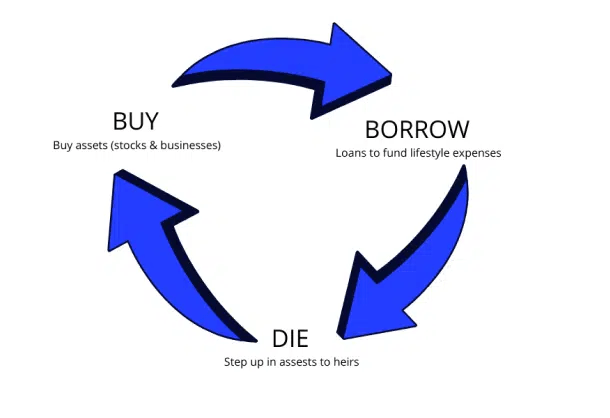
Here’s how the Buy, Borrow, Die strategy works step-by-step:

Step 1. Buy Assets

This step, broadly known as the accumulation phase, is about acquiring or creating valuable assets. It’s the most critical step taken by wealthy individuals to secure their wealth. Billionaires, for instance, often created startups that eventually turned into massive corporations. The asset here is the company they’ve established.

However, this isn’t the only way to accumulate assets. For professionals like doctors and lawyers, this phase involves securing a high-paying job and buying assets that have the potential to appreciate over time—like stocks, real estate, and private capital. Once an individual reaches a substantial level of wealth, they can leverage these assets in interesting ways using the next step of this strategy. 

Step 2. Borrow Against Your Assets

This where the assets you’ve acquired are used as collateral to borrow money—all without triggering a taxable event.

Suppose you’ve got a robust stock portfolio. You can then take out a Securities Backed Line of Credit (SBLOC). This kind of loan lets you tap into the value of your portfolio without having to sell off any assets and subsequently paying capital gains taxes. What makes SBLOCs attractive to lenders is the relative ease with which the securities can be seized and sold, making them a low-risk lending option.

The ceiling for such a loan is usually around 50% of your portfolio’s value. However, we often caution against borrowing more than 25% of your account balance, especially for long-term loans. This will provide a cushion against stock market volatility, much like what we experienced in 2022 and 2023.

Borrowing against assets isn’t limited to stock portfolios either. Let’s say you own a home and have built up a certain amount of equity in it. You could opt for a Home Equity Line of Credit (HELOC), using your home as collateral. Banks tend to favor real estate-backed loans due to their stability compared to the fluctuating value of stocks.

Step 3. Die and Pass Your Wealth On

The final step in the strategy is where the proverbial tax baton is handed off to the next generation.

Under the existing tax code, when you pass away, your heirs receive a “stepped-up basis” on the assets they inherit from you. This means that their cost basis—the original amount paid for an asset—is stepped up to the market value of the asset at the time of your death. Meaning once you have passed away, your heirs would be able to sell the assets without having to pay taxes on the capital gain. Imagine you had purchased a building 20 years ago for $1 million and over the years, the value of that building increased to $2.5 million. If you were to pass away at this point, your heirs would inherit the building with the stepped-up cost basis of $2.5 million. This implies that if they decide to sell the property at this valuation, they wouldn’t owe any capital gains tax. This is because for tax purposes, their gain is calculated from the $2.5 million, not the original $1 million.

By utilizing this loophole, families can pass on their wealth without incurring a hefty tax bill. This is why many wealthy families set up trusts – it’s a way to manage and pass on their wealth at a stepped-up cost basis.

COMMENTS APPRECIATED

Subscribe and Refer

***

***

EXPECTED: Breakeven Inflation Rate

Measure of Expected Inflation

By Staff Reporters

SPONSOR: http://www.MarcinkoAssociates.com

***

***

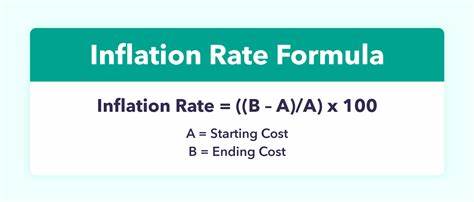
The breakeven inflation rate is the difference between the nominal yield (usually the market yield, which includes an inflation premium) on a fixed-income investment and the real yield (with no inflation premium) on an inflation-linked investment of similar maturity and credit quality.

So, if inflation averages more than the breakeven rate, the inflation-linked investment will outperform the investment with the nominal yield.

Conversely, if inflation averages below the breakeven rate, the investment with the nominal yield will outperform the inflation-linked investment.

Breakeven inflation rates are also considered useful measures of inflation expectations—higher breakeven rates represent higher inflation expectations (and higher relative prices for inflation-linked investments), while lower breakeven rates represent lower inflation expectations (and lower relative prices for inflation-linked investments).

Therefore, ideally, investors want to purchase inflation-linked investments when breakeven rates are relatively low because that’s typically when prices are also relatively low.

COMMENTS APPRECIATED

Thank You

***

***

FINANCIAL: Rule of 20 Defined

A Dimensionless Number

By Staff Reporters

SPONSOR: http://www.MarcinkoAssociates.com

***

***

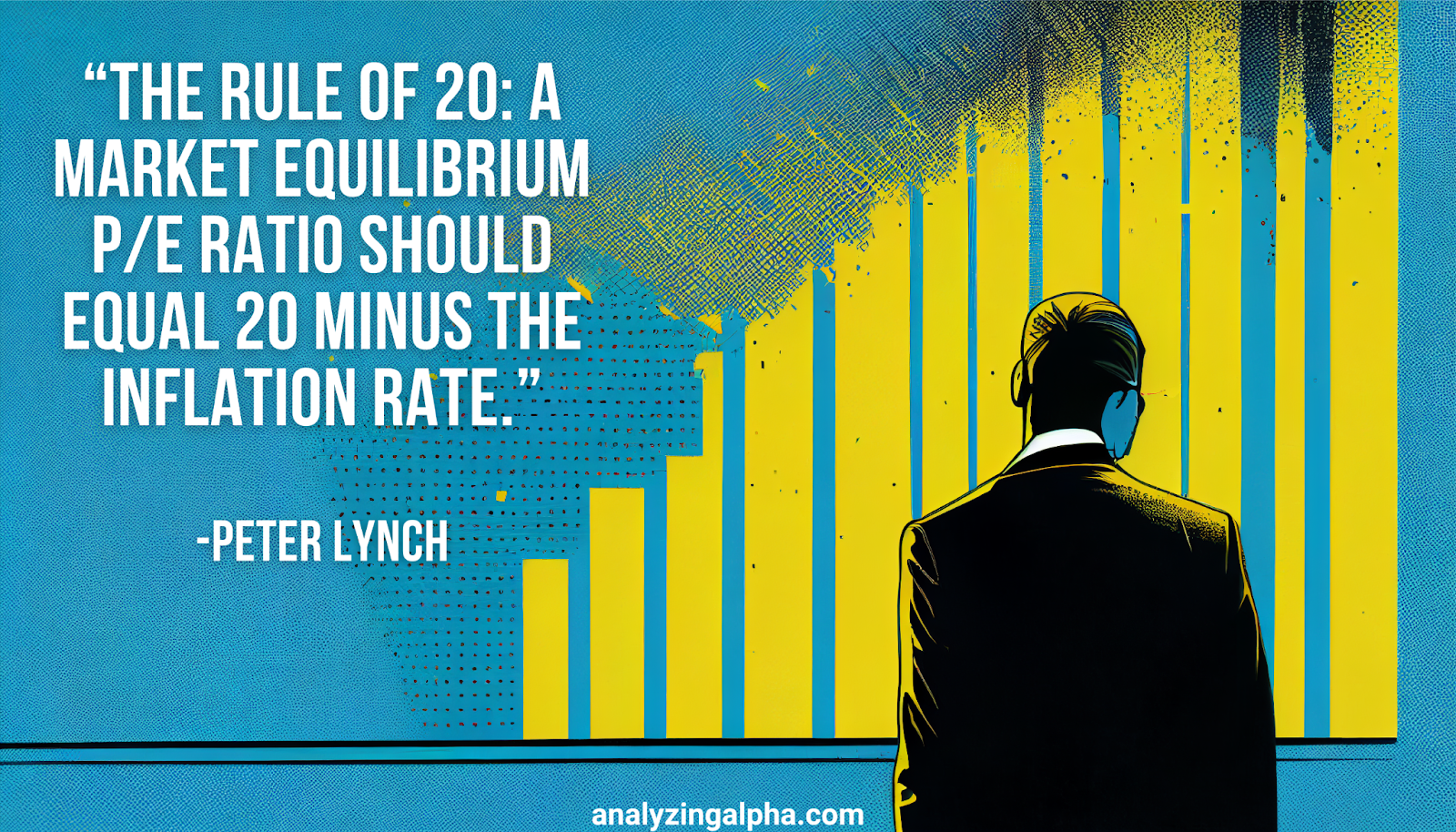
What is the Rule of 20?

The Rule of 20 is a dimensionless number that adds the current 12-month trailing Price to Earnings Ratio to the annual change in an index of the annual consumer inflation rate. A reading below 20, while a market is trending lower, means that we could be near a bottom.

In the United States, the most common index used is the broad-based S&P 500, and CPI-U is used as a proxy for inflation.

The Rule of 20 is purportedly a rule from Peter Lynch. In chapter 39 of Graham and Dodd’s seminal Security Analysis, they mention: “We would suggest that about 20 times average earnings is as high a price as can be paid in an investment purchase of a common stock” … with no mention of inflation.

Lynch’s formulation attempts to factor the ‘gravity’ of interest rates into the fair value of a stock. And, as you can see, the measure has fluctuated quite a bit. However, it has returned to roughly the 20 level repeatedly.

MORE: https://dqydj.com/sp-500-rule-of-20-calculator/

COMMENTS APPRECIATED

Subscribe and Like!

***

***

MERCHANT: Cash Advance Loans

DEFINITION

By Staff Reporters

***

***

A Merchant Cash Advance is a specific type of convoluted financial agreement that lets the issuer bypass laws that limit interest rates on business loans. They are almost always targeted toward companies in dire financial straits that have nowhere else to turn to in order to get loans.

These loans have most often been compared to the business equivalent of a payday lender. 

COMMENTS APPRECIATED

Subscribe and Refer

***

***

CMO: Collateralized Mortgage Obligations

By Staff Reporters

SPONSOR: http://www.MarcinkoAssociates.com

***

***

Collateralized Mortgage Obligations (CMOs) are a form of securitized debt derived from mortgage-backed securities. It’s a form of derivative security. Like most MBS pass-through securities, CMOs are typically backed by pools of residential mortgages and their payments. But not all investors want to receive the monthly payments of principal and interest that “plain vanilla” MBS pass-throughs offer–some prefer just the principal, some prefer just the interest, or some want payments with other particular/special characteristics.

For them, the cash flows from MBS can be pooled and structured into many classes of CMOs with different maturities and payment schedules, creating securities with very specific characteristics and behaviors. These characteristics and behaviors can vary widely. Some CMOs can offer less risk than “plain-vanilla” MBS, or can help offset other forms of risk in a diversified portfolio, but others can be much more volatile.

CMOs typically have two or more bond classes, called tranches. Each tranche has its own expected maturity and cash flow pattern. The unique cash flow patterns of each CMO tranche allow investors to tailor their mortgage exposure to meet a range of investment objectives, since different classes can have different risk/return characteristics.

COMMENTS APPRECIATED

Thank You

***

***

DAILY UPDATE: Stock Markets Slide

MEDICAL EXECUTIVE-POST TODAY’S NEWSLETTER BRIEFING

FRIDAY 13th = Triskaidekaphobia

***

Essays, Opinions and Curated News in Health Economics, Investing, Business, Management and Financial Planning for Physician Entrepreneurs and their Savvy Advisors and Consultants

Serving Almost One Million Doctors, Financial Advisors and Medical Management Consultants Daily

A Partner of the Institute of Medical Business Advisors , Inc.

http://www.MedicalBusinessAdvisors.com

SPONSORED BY: Marcinko & Associates, Inc.

***

http://www.MarcinkoAssociates.com

Daily Update Provided By Staff Reporters Since 2007.
How May We Serve You?
© Copyright Institute of Medical Business Advisors, Inc. All rights reserved. 2024

REFER A COLLEAGUE: MarcinkoAdvisors@Outlook.com

SPONSORSHIPS AVAILABLE: https://medicalexecutivepost.com/sponsors/

ADVERTISE ON THE ME-P: https://tinyurl.com/ytb5955z

Your Referral Count -0-

CITE: https://www.r2library.com/Resource

The Dow Jones Industrial Average (^DJI) was down and the S&P 500 (^GSPC) were both about 0.5%. The tech-heavy NASDAQ Composite (^IXIC) fell roughly 0.6% while shares of Apple (AAPL) rallied less than 1% to close at a record high.

In bonds, the 10-year Treasury yield (^TNX) added 5 basis points to hit 4.32%, its highest closing level since November 22nd.

CITE: https://tinyurl.com/2h47urt5

On a day where President-elect Donald Trump rang the opening bell at the New York Stock Exchange, Wall Street failed to build on a furious rally that has picked up steam after his election win. In focus was fresh inflation data, which helped cast doubt on investor confidence for the path of interest rates ahead.

CITE: https://tinyurl.com/tj8smmes

Visualize: How private equity tangled banks in a web of debt, from the Financial Times.

COMMENTS APPRECIATED

PLEASE SUBSCRIBE: MarcinkoAdvisors@outlook.com

Thank You

***

***

***

EDUCATIONAL TEXTBOOKS: https://tinyurl.com/4zdxuuwf

PHYSICIAN CREDIT: Ratings, Scoring, Errors and Repair Services

ALMOST ALL ABOUT CREDIT

By Staff Reporters

***

***

Credit Rating and Scoring

The category in which a credit agency classifies you is based upon payment history.  Recently, credit reporting agencies have shifted away from ratings to a system known as credit scoring. Your score is determined by proprietary formulas that are based on your credit history, the higher the better. The practical benefits of this scoring system are numerous.

First, medical professionals do not need to be experts at deciphering credit reports since the same scoring system is used by many different companies.

Correcting Credit Report Errors

A credit bureau is not the place to get an item to be fixed on your credit report. Rather, you must take it up directly with the credit issuer. In any case, a late payment noted on a credit report by a durable medical equipment vendor, for example, has to be addressed directly with that merchant. The DME merchant then has 30 days to acknowledge your complaint and respond to you. In the meantime, you do not have to pay for the disputed items.  Most credit errors cannot be reported or kept on your credit report for more than seven years.

For legitimate late payments you should contact the credit grantor and negotiate to take one of the following steps. Be tenacious, and either remove the late payment or write a letter explaining that the problem has been resolved and you now are a good credit risk again. This letter is a powerful tool and should be saved with other permanent financial records. The industry term for it is a letter of correction.

Credit Repair Services

Credit repair services are oversold and their claims tend to be exaggerated. They do not have an inside track to the consumer reporting agencies.  Good credit repair services are experienced in communicating with creditors and can help with legitimate repairs.  They cannot restore your credit rating or your good name. 

However, realize that with some time and effort you can accomplish the same results yourself.

CITE: https://www.r2library.com/Resource/Title/0826102549

COMMENTS APPRECIATED

Please Like, Refer and Subscribe!

***

***

DAILY UPDATE: Bitcoin and Big Technology Stocks Soar as DJIA Slips

MEDICAL EXECUTIVE-POST TODAY’S NEWSLETTER BRIEFING

***

Essays, Opinions and Curated News in Health Economics, Investing, Business, Management and Financial Planning for Physician Entrepreneurs and their Savvy Advisors and Consultants

Serving Almost One Million Doctors, Financial Advisors and Medical Management Consultants Daily

A Partner of the Institute of Medical Business Advisors , Inc.

http://www.MedicalBusinessAdvisors.com

SPONSORED BY: Marcinko & Associates, Inc.

***

http://www.MarcinkoAssociates.com

Daily Update Provided By Staff Reporters Since 2007.
How May We Serve You?
© Copyright Institute of Medical Business Advisors, Inc. All rights reserved. 2024

REFER A COLLEAGUE: MarcinkoAdvisors@msn.com

SPONSORSHIPS AVAILABLE: https://medicalexecutivepost.com/sponsors/

ADVERTISE ON THE ME-P: https://tinyurl.com/ytb5955z

Your Referral Count -0-

CITE: https://www.r2library.com/Resource

In crypto, bitcoin (BTC-USD) prices soared to trade above $101,300 a token in afternoon trade.

CITE: https://tinyurl.com/2h47urt5

Big Tech stocks led the market higher on Wednesday, as investors digested another month of sticky inflation data that met economists’ expectations and likely pointed to a Federal Reserve interest rate cut next week. The tech-heavy NASDAQ Composite (^IXIC) jumped about 1.7% amid a feverish rally in the “Magnificent Seven” tech stocks. Google parent Alphabet’s (GOOG, GOOGL) shares extended gains to hit a record high, rising more than 5%.

Meanwhile Tesla (TSLA), Meta (META) and Amazon (AMZN) all also surged to record highs, with Tesla notching its first record close in more than three years. The S&P 500 (^GSPC) rose around 0.8%, while the Dow Jones Industrial Average (^DJI) slipped about 0.2%.

CITE: https://tinyurl.com/tj8smmes

Visualize: How private equity tangled banks in a web of debt, from the Financial Times.

COMMENTS APPRECIATED

PLEASE SUBSCRIBE: MarcinkoAdvisors@msn.com

Thank You

***

***

***

***

EDUCATIONAL TEXTBOOKS: https://tinyurl.com/4zdxuuwf

***

MARCINKO ASSOCIATES: Physician Wealth Advisors and Practice Management Consultants

FIDUCIARY MEDICAL COLLEAGUES – FEE ONLY – NO PRODUCT OR SALES COMMISSIONS

SPONSOR: http://www.MarcinkoAssociates.com

***

***

DEAR MEDICAL COLLEAGUES

Achieving your financial, wealth and medical practice management goals is important, but handling everything on your own can be overwhelming. That’s where we come in. At D. E. Marcinko & Associates, our team of dual degree experienced physician advisors and medical consultants is here to guide you every step of the way. We believe in providing unbiased, high-quality financial and business advice.

For example, we offer a one-time written financial plan with oral evaluation for a flat fee with no ongoing sales or assets under management fees or commissions. Together, we can create a personalized financial plan tailored to your unique goals, empowering you to make confident, informed decisions as you navigate your financial future.

Other Services Include:

  • Estate Planning We have a network of qualified legal professionals that we can refer you to for state specific estate planning needs.
  • Tax Strategy We can work alongside your CPA for tax planning purposes. If needed, we can refer you to a qualified tax professional.
  • Investment Analysis If you have investments, we review your accounts to make sure they are aligned with your long-term goals.
  • 401-k Allocations We evaluate your 401(k) allocations and provide recommendations that align with your goals.
  • Education Savings We help you explore the various ways to plan and save for education expenses.
  • Insurance & Risk Management We assess your insurance coverage to ensure it adequately protects you against potential risks; as well as evaluate and provide expert litigation witnesses, as needed.
  • Medical Practice Management We evaluate your current or potential medical practice to determine value and/or private equity offers or physician practice management formats [PPMC] for new, mid-career or retiring physicians, nurses and dentists.   

D. E. Marcinko & Associates is unique and fully committed to all phases of a medical professionals personal and business life cycle. We are at your service 24/7: Email MarcinkoAdvisors@outlook.com

ANN MILLER RN MHA CMP

***

Thank You

***

***

DAILY UPDATE: Walgreens to PE as CPI Upticks and Markets Blast Off this Morning

MEDICAL EXECUTIVE-POST TODAY’S NEWSLETTER BRIEFING

***

Essays, Opinions and Curated News in Health Economics, Investing, Business, Management and Financial Planning for Physician Entrepreneurs and their Savvy Advisors and Consultants

Serving Almost One Million Doctors, Financial Advisors and Medical Management Consultants Daily

A Partner of the Institute of Medical Business Advisors , Inc.

http://www.MedicalBusinessAdvisors.com

SPONSORED BY: Marcinko & Associates, Inc.

***

http://www.MarcinkoAssociates.com

Daily Update Provided By Staff Reporters Since 2007.
How May We Serve You?
© Copyright Institute of Medical Business Advisors, Inc. All rights reserved. 2024

REFER A COLLEAGUE: MarcinkoAdvisors@msn.com

SPONSORSHIPS AVAILABLE: https://medicalexecutivepost.com/sponsors/

ADVERTISE ON THE ME-P: https://tinyurl.com/ytb5955z

Your Referral Count -0-

According to reporting from the Wall Street Journal, the pharmacy chain Walgreen’s is discussing selling to private equity (PE) firm Sycamore Partners, a deal that could close early next year. This comes following a tumultuous year for the company, which announced it would close 1,200 stores in October and laid off more than 250 employees in November. The PE firm is allegedly considering selling off pieces of the business or working with partners, sources told the Journal. Following the news, Walgreens’s stock jumped 28%, its biggest single-day increase since 1980, according to Yahoo Finance.

CITE: https://www.r2library.com/Resource

Inflation rose 2.7% on an annual basis in November, according to the latest government report on the Consumer Price Index, or CPI. Last month’s CPI was forecast to come in at 2.7%, according to economists surveyed by financial data firm FactSet. The Consumer Price Index, a basket of goods and services typically bought by consumers, tracks the change in those prices over time. 

CITE: https://tinyurl.com/2h47urt5

US stocks opened higher on Wednesday as investors digested another month of sticky inflation data that met economists’ expectations and likely pointed to a Federal Reserve interest rate cut next week. The Dow Jones Industrial Average (^DJI) increased about 0.2%, while the S&P 500 (^GSPC) jumped nearly 0.5%. The tech-heavy NASDAQ Composite (^IXIC) also added to across-the-board gains, rising roughly 0.8%.

CITE: https://tinyurl.com/tj8smmes

Visualize: How private equity tangled banks in a web of debt, from the Financial Times.

COMMENTS APPRECIATED

PLEASE SUBSCRIBE: MarcinkoAdvisors@msn.com

Thank You

***

***

***

***

EDUCATIONAL TEXTBOOKS: https://tinyurl.com/4zdxuuwf

***

SWAP AGREEMENTS: Transactions, Credit Default and Rates

By Staff Reporters

SPONSOR: http://www.MarcinkoAssociates.com

DEFINITION

***

***

Swaps (a.k.a. swap agreements) are two-party contracts entered into primarily by institutional investors for periods ranging from a few weeks to more than one year.

In a standard “swap” transaction, two parties agree to exchange the returns (or differentials in rates of return) earned or realized on particular predetermined investments or instruments. The gross returns to be exchanged or “swapped” between the parties are generally calculated with respect to a “notional amount,” i.e., the return on or increase in value of a particular dollar amount invested at a particular interest rate, in a particular foreign currency, or in a “basket” of securities representing a particular index.

Forms of swap agreements include interest rate swaps (under which fixed- or floating-rate interest payments on a specific principal amount are exchanged) and total return swaps (under which one party agrees to pay the other the total return of a defined underlying asset in exchange for fee payments).

In addition, credit default swaps enable an investor to buy/sell protection against a credit event of a specific issuer. The seller of credit protection against a security or basket of securities receives an up-front or periodic payment to compensate against potential default(s).

COMMENTS APPRECIATED

Thank You

***

***

SYNTHETIC EQUITY: Deferred Compensation for Financial Advisors

DEFINED FOR FINANCIAL ADVISORS

By Dr. David Edward Marcinko MBA MEd

SPONSOR: http://www.MarcinkoAssociates.com

***

***

Think of synthetic equity as a communal garden. You don’t own the plot, and you don’t necessarily have a say in what’s planted, but you’re guaranteed a share of the crops that are harvested. 

CITE: https://www.r2library.com/Resource/Title/0826102549

Synthetic equity is a form of deferred compensation that mirrors some of the benefits of real stock ownership without granting actual shares. It’s a contractual agreement between you and your employer that entitles you to a payout upon certain events—such as an IPO, acquisition, or surpassing earnings milestones.  

Companies use synthetic equity plans to motivate their personnel through growth-related incentives. In other words, it grants employees a sense of ownership without issuing shares or altering the business’s ownership structure. As the company succeeds and appreciates in value, so does your potential payout. Although you don’t own actual shares of company stock, you are compensated as if you did. 

READ: https://tinyurl.com/mr3upbn6

According to Carla McCabe, synthetic equity programs also have a significant tax advantage to both business owners and the key employees.

For example, when a key employee receives shares under the firm’s synthetic equity program, the IRS does not recognize that receipt as taxable income to the employee until he or she actually receives the money. This usually occurs when the firm is sold or when the employee retires and is cashed out (assuming the employee’s synthetic shares are vested). This is very attractive considering that regular shares are taxed as ordinary income and the employee basically has to pay the associated tax even though he or she didn’t receive any cash.

Of course, all this begs the question: Why would a company offer synthetic equity instead of actual equity?  

COMMENTS APPRECIATED

Subscribe Today!

***

***

STOCK MARKET: Capitalization, Depth, Maker, Neutral and Order

By Staff Reporters

SPONSOR: http://www.MarcinkoAssociates.com

***

***

Market Capitalization: Market capitalization is the market value of all the equity of a company’s common and preferred shares. It is usually estimated by multiplying the stock price by the number of shares for each share class and summing the results.

Market Depth: The degree to which a market can execute large market orders without impacting the price of a security. For example, a “deep” market for a stock will have a sufficient number of both bid and ask orders to keep a big order from significantly moving the security’s price.

Market Maker: A market maker exists to “create a market” for specific company securities by being willing to buy and sell those securities at a specified displayed price and quantity to broker-dealer firms that are members of the exchange. These firms help keep financial markets liquid by making it easier for investors to buy and sell securities–they ensure that there is always someone to buy and sell to at the time of trade.

Market Neutral: Equity market neutral strategies seek to eliminate the risks of the equity market by holding up to 100% of net assets in long equity positions and up to 100% of net assets in short equity positions. These strategies attempt to exploit differences in stock prices by being long and short in stocks within the same sector, industry, market capitalization, etc. If successful, these strategies should generate returns independent of the equity market. Equity market neutral portfolios have two key sources of return:

  • the Treasury Bill return (the interest on proceeds from short sales held in cash as collateral)
  • the difference (the “spread”) between the return on the long positions and the return on the short positions. Stock picking, rather than broad market moves, should drive most of a market-neutral strategy’s total return (save for any return from the 100% cash position).

It’s important to point out that here is the risk of theoretical unlimited amount of loss with short selling, (i.e. the price of the short-sold stocks increases; the long position can only go down to $0).

Market Order: An order placed with a bank or brokerage firm to immediately buy or sell a security at the best available current price. May also be referred to as an “unrestricted order.”

CITE: https://www.r2library.com/Resource/Title/0826102549

COMMENTS APPRECIATED

Thank You

FINANCIAL PLANNING: https://tinyurl.com/yc7bcy4u

***

MUNICIPALS: Securities, Yield Curve and Yield Ratio

By Dr. David Edward Marcinko MBA MEd

SPONSOR: http://www.MarcinkoAssociates.com

***

***

Municipal Securities (munis): Debt securities typically issued by or on behalf of U.S. state and local governments, their agencies or authorities to raise money for a variety of public purposes, including financing for state and local governments as well as financing for specific projects and public facilities. In addition to their specific set of issuers, the defining characteristic of munis is their tax status. The interest income earned on most munis is exempt from federal income taxes. Interest payments are also generally exempt from state taxes if the bond owner resides within the state that issued the security. The same rule applies to local taxes.

Another interesting characteristic of munis: Individuals, rather than institutions, make up the largest investor base. In part because of these characteristics, munis tend to have certain performance attributes, including higher after-tax returns than other fixed income securities of comparable maturity and credit quality and low volatility relative to other fixed-income sectors.

The two main types of munis are general obligation bonds (GOs) and revenue bonds. GOs are munis secured by the full faith and credit of the issuer and usually supported by the issuer’s taxing power. Revenue bonds are secured by the charges tied to the use of the facilities financed by the bonds.

Municipal Yield Curve: The yield curve that illustrates the yields of a certain type of municipal security at its various maturities.

Municipal Yield Ratio: A yield ratio most often used to determine the relative value of municipal securities compared with U.S. Treasury securities. The ratio consists of the yield of a municipal security of a certain maturity divided by the yield of a U.S. Treasury security of the same maturity.

CITE: https://www.r2library.com/Resource/Title/0826102549

COMMENTS APPRECIATED

Subscribe Today!

***

***

INSURANCE: Long Term Care Economics

LTC

By Anonymous Insurance Agent

***

***

Some retired people live on a fixed income and many of them live right on the edge of their financial capability.  At some time in their life, they may have to make a choice regarding many purchases.  In this case, we will illustrate “choice” using a couple’s purchase of Long-Term-Care Insurance [LTCI].

Of course, economics is the study of choice; wants, needs and scarcity, etc. In our case, if they decide to make the purchase they commit to a lifetime of premium payments. The financial tradeoff is this; if they make the commitment to purchase LTCI, they must give up something else.

CITE: https://www.r2library.com/Resource/Title/0826102549

Example: In order to maintain a monthly premium of $100 ($1,200per year), an elderly patient, retired layman or couple must essentially relegate about $30,000 of financial assets to generate the $100 necessary to make an average premium payment (assumes a 7% rate of return with 4% withdrawal rate) or [4% X $30,000 = $1,200 year]. Thus, if the monthly premium cost is $500 per month, the elder must give up the use of $150,000 of retirement asset just to generate enough cash flow to pay for the LTC insurance. 

The married elder couple has to make the decision among lifestyle (dinners, vacations, gifts to children, prescription drugs, medical care or food and shelter) versus paying an insurance premium to provide for nursing home coverage for a need, which may be very real, but will not occur until sometime in the ambiguous future. 

And so, when faced with such a tough economics, neither of which delivers peace of mind or a respectable solution; many will simply decide that, in either case, they may already end up impoverished. 

Thus, many will often opt for the better lifestyle now … while they can enjoy it … together. 

COMMENTS APPRECIATED

Subscribe Today!

***

HEALTH INSURANCE: https://tinyurl.com/4cf6rat9

***

COUNTDOWN: To End of Year BOI Reporting?

Beneficial Ownership Information

By Staff Reporters

***

***

Small business owners face severe penalties if they don’t report to the federal government by year’s end. And, thousands of businesses may not realize they are subject to a new reporting process mandated under the Corporate Transparency Act, which went into effect in January 2024. Even lawyers, doctors, financial advisors and accountants are affected; along with “mom and pop”business owners.

For most eligible businesses, the filing deadline is Jan. 1, 2025, according to the U.S. Chamber of Commerce. “Those who fail to file by this deadline — or fail to update this information if needed — could face up to two years imprisonment and fines up to $10,000, in addition to civil penalties of up to $591 per day,” the U.S. Chamber of Commerce website reads.

Businesses that meet the reporting criteria must submit a Beneficial Ownership Information Report to the U.S. Department of Treasury’s Financial Crimes Enforcement Network (FinCEN), according to the U.S. Chamber of Commerce.

The law was created “to combat illicit activity including tax fraud, money laundering and financing for terrorism by capturing more ownership information for specific U.S. businesses operating in or accessing the country’s market,” the chamber website explained.

COMMENTS APPRECIATED

BREAKING NEWS

A federal court has ruled that the beneficial ownership information (BOI) reporting requirements established by the Corporate Transparency Act (CTA) are unconstitutional123. The decision is currently under appeal1.

Subscribe and Refer Today

***

***

IRS FORM 1099-K: Changes and Implementation?

By Staff Reporters

***

***

2024 LATE YEAR UPDATE

Who sends Form 1099-K?

Payment card companies, payment apps and online marketplaces are required to fill out Form 1099-K and send it to the IRS each year. They must also send a copy to you by January 31st. 2025

CITE: https://www.r2library.com/Resource/Title/0826102549

Who gets Form 1099-K:

You should get Form 1099-K for these situations:

1. If you take direct payment by credit or bank card for selling goods or providing services

If your customers or clients pay you directly by credit, debit or gift card, you’ll get a Form 1099-K from your payment processor or payment settlement entity, no matter how many payments you got or how much they were for.

Find what to do with Form 1099-K.

2. If you used a payment app or online marketplace and received a Form 1099-K

A payment app or online marketplace is required to send you a Form 1099-K if the payments you received for goods or services total over $5,000. However, they can send you a Form 1099-K with lower amounts. Whether or not you receive a Form 1099-K, you must still report any income on your tax return.

This includes payments for any:

  • Goods you sell, including personal items such as clothing or furniture
  • Services you provide
  • Property you rent

The payments can be made through any:

  • Payment app
  • Online community marketplace
  • Craft or maker marketplace
  • Auction site
  • Car sharing or ride-hailing platform
  • Ticket exchange or resale site
  • Crowdfunding platform
  • Freelance marketplace 

If you accept payments on different platforms, you could get more than one Form 1099-K.

Personal payments from family and friends should not be reported on Form 1099-K because they are not payments for goods or services.

Find what to do with Form 1099-K.

COMMENTS APPRECIATED

Subscribe Today

***

***

DAILY UPDATE: Retail Pharmacies Down as the Stock Market Rally Stall Out

MEDICAL EXECUTIVE-POST TODAY’S NEWSLETTER BRIEFING

***

Essays, Opinions and Curated News in Health Economics, Investing, Business, Management and Financial Planning for Physician Entrepreneurs and their Savvy Advisors and Consultants

Serving Almost One Million Doctors, Financial Advisors and Medical Management Consultants Daily

A Partner of the Institute of Medical Business Advisors , Inc.

http://www.MedicalBusinessAdvisors.com

SPONSORED BY: Marcinko & Associates, Inc.

***

http://www.MarcinkoAssociates.com

Daily Update Provided By Staff Reporters Since 2007.
How May We Serve You?
© Copyright Institute of Medical Business Advisors, Inc. All rights reserved. 2024

REFER A COLLEAGUE: MarcinkoAdvisors@msn.com

SPONSORSHIPS AVAILABLE: https://medicalexecutivepost.com/sponsors/

ADVERTISE ON THE ME-P: https://tinyurl.com/ytb5955z

Your Referral Count -0-

Rite Aid filed for bankruptcy last October, and CVS and Walgreens reported steep losses over 2024.

CITE: https://www.r2library.com/Resource

STOCKS UP

  • AT&T climbed 4.58% thanks to a few big announcements during its investor day, including returning over $40 billion to shareholders via dividends and stock buybacks over the next three years.
  • Palantir popped 6.88% after the US government gave the cybersecurity darling the green light to let its cloud offerings handle classified data. It also helped that Barrons expects the company will be added to the Nasdaq 100 in 2025.
  • Speaking of Palantir, BigBear.ai soared 28.64% after the server company was touted as the next Palantir by the Economic Times.
  • Data center company Credo Technology Group skyrocketed 47.89% thanks to an impressive earnings report and a glowing fiscal forecast.

STOCKS DOWN

  • US Steel dropped 8.01% on President-elect Trump’s declaration that he will block the company’s acquisition by Nippon Steel.
  • Tesla sank 1.59% after a Delaware judge once again blocked Elon Musk’s $56 billion pay package. The case will go back to court yet again, and may eventually reach the Supreme Court.
  • Intel tumbled another 6.10% two days after CEO Pat Gelsinger was fired happily decided to retire.
  • The children aren’t alright: Children’s Place crashed 24.15% after the children’s clothing retailer announced its turnaround isn’t going so well.
  • South Korean stocks took a beating after the country’s president declared martial law. The country’s largest online retailer, Coupang, sank 3.74%, steel manufacturer Posco Holdings dropped 4.32%, and Samsung tumbled 3.71%.

CITE: https://tinyurl.com/2h47urt5

Here’s where the major benchmarks ended:

  •  The S&P 500® index (SPX) rose 2.73 points (0.05%) to 6,049.88; the Dow Jones Industrial Average® ($DJI) fell 76.47 points (–0.17%) to 44,705.53; and the NASDAQ Composite® ($COMP) added 76.96 points (0.40%) to 19,480.91.
  • The 10-year Treasury note yield added three basis points to 4.22% after falling below 4.17% at one point.
  • The CBOE Volatility Index® (VIX)held steady at 13.39.

CITE: https://tinyurl.com/tj8smmes

Visualize: How private equity tangled banks in a web of debt, from the Financial Times.

COMMENTS APPRECIATED

PLEASE SUBSCRIBE: MarcinkoAdvisors@msn.com

Thank You

***

***

***

***

EDUCATIONAL TEXTBOOKS: https://tinyurl.com/4zdxuuwf

***

BOND YIELDS: Real and Negative Returns

DEFINITIONS

By Dr. David Edward Marcinko MBA MEd

SPONSOR: http://www.MarcinkoAssociates.com

***

***

Real Bond Yield: For most bonds and other fixed-income securities, real yield is simply the yield you see listed online or in newspapers minus the premium added to help counteract the effects of inflation. Most “nominal” fixed-income yields include an “inflation premium” that is typically priced into the yields to help offset the effects of inflation.

Real yields, such as those for TIPS, don’t have the inflation premium. As a result, TIPS yields and other real yields are typically lower than most nominal yields

Negative Bond Yield: In a normal bond market environment, bond yields are positive, and bond issuers (including governments) make interest payments to investors who lend them money.

In an abnormal, or negative-yield environment, investors essentially pay the bond issuer to hold their money.

CITE: https://www.r2library.com/Resource/Title/0826102549

COMMENTS APPRECIATED

Subscribe Today!

***

***

NAVIGATING STOCK MARKET CYCLES: From Bulls to Nvidia [AI Edition]

By Viataliy Katsenelson CFA

***

***

I’m embarking on something I’ve never done before—I’ve enlisted AI to inform, educate, and maybe even entertain you. I took several essays I wrote and asked my bestie AI to transform them into a radio show-style conversation between two hosts. (The AI tool I used is Notebook LM, a product created by Google.) I didn’t write the scripts myself.

Here were my instructions to the AI: “Here’s my essay. I’m taking a break from writing. Educate, inform and entertain my readers.” That’s it. If what you hear doesn’t surprise you—or even shock you to your socks—I don’t know what will. The future is here.

These essays are just as relevant today as when I first wrote them this summer. You can read the original of the first essay here. Be sure to leave your comments about the conversation you’re about to hear, and feel free to share it with friends, enemies, or even random strangers.
Navigating Market Cycles: From Bulls to Nvidia – AI Edition
In this episode, my AI friends will discuss stock market math, sideways markets, the role of P/E in market cycles, impact of interest rates on P/E, economic analysis, Magnificent Seven stocks, NVIDIA, and a lot more.

COMMENTS APPRECIATED

Subscribe Today!

***

***

SALARY PRIME NUMBERS: Financial Success by Generation

By Staff Reporters

***

***

According to HVL from Morning Brew, a new survey from financial services company Empower ignited a conversation about what monetary success means. Turns out, it depends on who you ask. Boomers believe that success means having an annual salary of about $100,000. Gen Z thinks your mom can’t brag about you to her dentist until you earn $600k/year. On average, respondents said success is making $270,000 annually.

Additionally, less than 40% of respondents said they considered themselves financially successful. Almost 50% don’t believe they will achieve the level of success they desire.

But there was some good news: Forty-three percent said their idea of success didn’t depend on a specific sum of money. And almost 60% said happiness is most important, as long as happiness is defined as “being able to spend money on the things and experiences that bring the most joy.”

COMMENTS APPRECIATED

Subscribe Today!

***

***

FIXED FINANCIAL SPREADS FOR PHYSICIANS: Duration, Sectors, Widening, Tightening and Other Fixed Income Strategies

DEFINITIONS FOR PHYSICIANS

By Dr. David Edward Marcinko MBA MEd

SPONSOR: http://www.MarcinkoAssociates.com

***

***

Spread duration is a risk measure, expressed in years, that estimates the price sensitivity of a fixed income investment to a 100 basis point change in credit spreads relative to similar-maturity Treasuries.

Spread sectors (aka “spread products,” “spread securities”) in fixed income parlance, are typically non-Treasury securities that usually trade in the fixed income markets at higher yields than same-maturity U.S. Treasury securities. The yield difference between Treasuries and non-Treasuries is called the “spread”), hence the name “spread sectors” for non-Treasuries.

These sectors–such as corporate-issued securities and mortgage-backed securities (MBS–typically trade at higher yields (spreads) than Treasuries because they usually have relatively lower credit quality and more credit / default risk and / or they have more prepayment risk.

CITE: https://www.r2library.com/Resource/Title/0826102549

Spread widening, tightening are changes in spreads that reflect changes in relative value, with “spread widening” usually indicating relative price depreciation and “spread tightening” indicating relative price appreciation.

Spreads (aka “interest-rate spreads”, “maturity spreads,” “yield spreads” or “credit spreads”)

In fixed income parlance, spreads are simply measured differences or gaps that exists between two interest rates or yields that are being compared with each other. Spreads typically exist and are measured between fixed income securities of the same credit quality, but different maturities, or of the same maturity, but different credit quality.

Changes in spreads typically reflect changes in relative value, with “spread widening” usually indicating relative price depreciation of the securities whose yields are increasing most, and “spread tightening” indicating relative price appreciation of the securities whose yields are declining most (or remaining relatively fixed while other yields are rising to meet them). Value-oriented investors typically seek to buy when spreads are relatively wide and sell after spreads tighten.

CITE: https://www.r2library.com/Resource/Title/0826102549


COMMENTS APPRECIATED

Subscribe Today!

***

***

BID/ASK SPREAD: Basis Points with Formulas

By Staff Reporters

SPONSOR: http://www.MarcinkoAssociates.com

DEFINITIONS

***

***

Basis Points are used in financial literature to express values that are carried out to two decimal places (hundredths of a percentage point), particularly ratios, such as yields, fees, and returns. Basis points describe values that are typically on the right side of the decimal point–one basis point equals one one-hundredth of a percentage point (0.01%). So 25 basis points equals 0.25%, and 50 basis points equals 0.50%.

Only when basis points equal or exceed 100 does the value move to the left of the decimal point–100 basis points equals 1.00%, 500 basis points equals 5.00%, etc.

CITE: https://www.r2library.com/Resource/Title/0826102549

Bid/Ask Spread (also known as bid/offer spread) is the difference between the National Best Bid and the National Best Offer, which represents the implied cost to trade a security.

As compensation for the risk taken, the market maker (or dealer) earns the bid/offer spread in exchange for facilitating the trade. Wider spreads generally indicate higher costs associated with trading the underlying assets in the ETF, hedging costs, inventory management costs, and general market risk.

CITE: https://www.r2library.com/Resource/Title/0826102549

COMMENTS APPRECIATED

Thank You

Please Subscribe

***

***

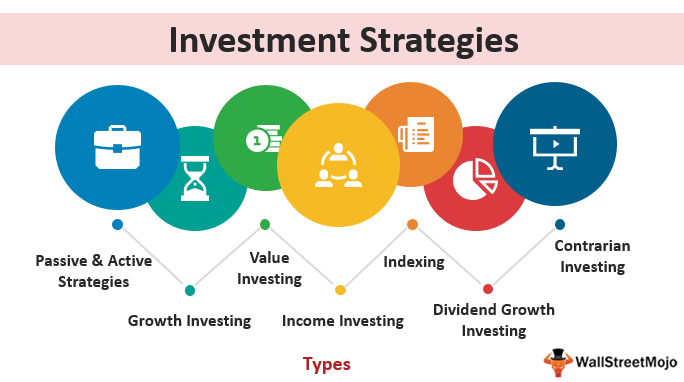
INVESTMENT: Management Strategies

By Staff Reporters

***

***

Active investment management strategies are the opposite of passive investment strategies. Active portfolio managers regularly take investment positions that clearly differ from those of the portfolio’s performance benchmark, with the objective of outperforming the benchmark over time.

Passive: https://medicalexecutivepost.com/2024/06/09/active-or-passive-investing-pursuits/

In addition to the upside potential of outperforming the benchmark, there’s also the downside possibility of under performing the benchmark. In an efficient market, there should be roughly the same magnitude of out performers and under performers for any given benchmark. But, markets are not always efficient.

Active non-transparent investment management strategies are Exchange Traded Funds that are actively managed by a portfolio manager or team of managers without daily disclosure of portfolio holdings. Active transparent strategies are daily disclosures of portfolio holdings as an attribute of traditional index-based Exchange Traded Funds (ETFs). Active transparent exchange traded funds are actively managed by a portfolio manager or team of managers. As with index-based ETFs, their portfolio holdings are disclosed daily.

Di-Worsification: https://medicalexecutivepost.com/2024/04/09/what-is-financial-portfolio-di-worsification-2/

NOTE: Absolute return as an investment vehicle seeks to make positive returns by employing investment management techniques that differ from traditional mutual funds. Absolute return investment techniques include using short selling, futures, options, derivatives, arbitrage, leverage and unconventional assets.

CITE: https://www.r2library.com/Resource/Title/0826102549

COMMENTS APPRECIATED

Subscribe Today!

***

***

DAILY UPDATE: GoodRx as Stocks End Flat

MEDICAL EXECUTIVE-POST TODAY’S NEWSLETTER BRIEFING

***

Essays, Opinions and Curated News in Health Economics, Investing, Business, Management and Financial Planning for Physician Entrepreneurs and their Savvy Advisors and Consultants

Serving Almost One Million Doctors, Financial Advisors and Medical Management Consultants Daily

A Partner of the Institute of Medical Business Advisors , Inc.

http://www.MedicalBusinessAdvisors.com

SPONSORED BY: Marcinko & Associates, Inc.

***

http://www.MarcinkoAssociates.com

EDUCATIONAL TEXTBOOKS: https://tinyurl.com/4zdxuuwf

***

Daily Update Provided By Staff Reporters Since 2007.
How May We Serve You?
© Copyright Institute of Medical Business Advisors, Inc. All rights reserved. 2024

REFER A COLLEAGUE: MarcinkoAdvisors@msn.com

SPONSORSHIPS AVAILABLE: https://medicalexecutivepost.com/sponsors/

ADVERTISE ON THE ME-P: https://tinyurl.com/ytb5955z

Your Referral Count -0-

It’s not all good news for GoodRx.

CITE: https://www.r2library.com/Resource

STOCKS UP

Williams-Sonoma soared 27.50% to a record high after the home goods store beat top and bottom line earnings expectations. Its operating profit margin jumped to 17.8% from 17% last year, and the company said its board greenlit a $1 billion stock buyback plan.

  • Wix jumped 14.31% on a solid beat for its third quarter. Profit for the software firm reached $0.46 per share, compared to the $0.12 per share it reported last year.
  • Lemonade rose 16.04% after Morgan Stanley upgraded the insurance company from “underweight” to “equal-weight.” At its investor day, Lemonade unveiled a plan to juice its premiums from $1 billion to $10 billion over the next several years.

STOCKS DOWN

  • Ford said it was cutting 4,000 jobs in Europe, about 14% of its workforce on the continent, citing weak demand for EVs and competition from Chinese cars. Shares fell 2.90%.
  • Qualcomm dropped 6.34% after its first Investor Day in three years disappointed. On Tuesday, the chipmaker revealed its big plans to expand from its bread-and-butter smartphone business into making chips for cars and PCs.
  • Elf sank 2.23% after short seller Carson Block, the founder of Muddy Waters Research, accused the beauty company of inflating revenue.

CITE: https://tinyurl.com/2h47urt5

Here’s where the major benchmarks ended:

  •  The S&P 500® index (SPX) stayed mostly flat, up 0.13 points (0.0%) to 5,917.11; the Dow Jones Industrial Average® ($DJI) rose 139.53 points (0.32%) to 43,408.47; and the NASDAQ Composite® ($COMP) fell 21.32 points (0.11%) to 18,966.14. 
  • The 10-year Treasury note yield added four basis points to 4.41%.
  • The CBOE Volatility Index® (VIX) climbed to 17.26, near recent highs.

CITE: https://tinyurl.com/tj8smmes

Visualize: How private equity tangled banks in a web of debt, from the Financial Times.

COMMENTS APPRECIATED

PLEASE SUBSCRIBE: MarcinkoAdvisors@msn.com

Thank You

***

***

***

***

EDUCATIONAL TEXTBOOKS: https://tinyurl.com/4zdxuuwf

***

Stocks, Treasuries, Gold and Bitcoin

SPONSOR: http://www.MarcinkoAssociates.com

***

***

  • Stocks sank yesterday on news that Russian President Vladimir Putin lowered the threshold for using nuclear weapons, retaliation against the US for allowing Ukraine to use American-made long-range missiles. The NASDAQ and S&P 500 managed to recover, but the DJIA stayed all day in the red.
  • Treasury yields dropped as bonds rose.
  • Gold popped as traders sought safety, as the commodity benefited from the US dollar pulling back from a recent one-year high.
  • Bitcoin continued to climb slowly but surely, reaching another new all-time high.

COMMENTS APPRECIATED

Subscribe Today!

***

***

DAILY UPDATE: Dermatology and Oura Rings as NASDAQ Rises

MEDICAL EXECUTIVE-POST TODAY’S NEWSLETTER BRIEFING

***

Essays, Opinions and Curated News in Health Economics, Investing, Business, Management and Financial Planning for Physician Entrepreneurs and their Savvy Advisors and Consultants

Serving Almost One Million Doctors, Financial Advisors and Medical Management Consultants Daily

A Partner of the Institute of Medical Business Advisors , Inc.

http://www.MedicalBusinessAdvisors.com

SPONSORED BY: Marcinko & Associates, Inc.

***

http://www.MarcinkoAssociates.com

Daily Update Provided By Staff Reporters Since 2007.
How May We Serve You?
© Copyright Institute of Medical Business Advisors, Inc. All rights reserved. 2024

REFER A COLLEAGUE: MarcinkoAdvisors@msn.com

SPONSORSHIPS AVAILABLE: https://medicalexecutivepost.com/sponsors/

ADVERTISE ON THE ME-P: https://tinyurl.com/ytb5955z

Your Referral Count -0-

How dermatology became the hottest field in medicine.

CITE: https://www.r2library.com/Resource

STOCKS UP

  • Talk about cutting it close: Super Micro Computer filed a much-delayed financial plan at the 11th hour, avoiding a delisting from the Nasdaq. Shares soared 31.24%.
  • AI-enabled robotics company Symbotic surged 27.68% after announcing an impressive beat-and-raise quarter.
  • MicroStrategy climbed another 11.89% after yesterday’s huge surge. The crypto company announced it will continue to purchase more bitcoin in the weeks ahead.

STOCKS DOWN

  • More Trump Trade 2.0 developments: The newly formed Department of Government Efficiency is considering creating an app that allows Americans to file their taxes on a phone for free. Intuit sank 5.10%, and H&R Block dropped 8.31% on the news.
  • Speaking of Trump, platform Bakkt popped then dropped 0.67% following yesterday’s news that Trump Media & Technology Group may acquire the company. Trump Media shares fell 8.88%.
  • Kraft Heinz fell 1.58% on a Piper Sandler downgrade due to the company’s slow retail sales and the threat of new government regulations from the Health Department.
  • Lowe’s may have beaten top and bottom line expectations last quarter, but the home improvement retailer’s forecast of slower sales next year sent the stock falling 4.62%.
  • Incyte tumbled 8.33% after the pharma company announced it was pausing the Phase 2 trial of its new spontaneous hives treatment.

CITE: https://tinyurl.com/2h47urt5

Here’s where the major benchmarks ended:

  •  The S&P 500® index (SPX) was up 23.36 points (0.4%) to 5916.98; the Dow Jones Industrial Average® ($DJI) dipped 120.66 points (0.28%) to 43,268.94; and the NASDAQ Composite® ($COMP) rose 195.66 points (1.04%) to 18,987.49.
  • The 10-year Treasury note yield fell four basis points to 4.38%.
  • The CBOE Volatility Index® (VIX) eased to 16.04 after an earlier pop above 17.

CITE: https://tinyurl.com/tj8smmes

Oura rings will soon be integrated with glucose biosensors after a $75 million series D funding round with medical device maker Dexcom.

Visualize: How private equity tangled banks in a web of debt, from the Financial Times.

COMMENTS APPRECIATED

PLEASE SUBSCRIBE: MarcinkoAdvisors@msn.com

Thank You

***

***

***

***

EDUCATIONAL TEXTBOOKS: https://tinyurl.com/4zdxuuwf

***

SECURITY ORDERS: Stop-Loss and Stop-Limit

By Dr. David Edward Marcinko MBA MEd

SPONSOR: http://www.MarcinkoAssociates.com

***

***

A Stop order, also known as a “stop-loss order,” a stop order is an order placed with a bank or brokerage firm to either buy or sell a security after it reaches a specified price. Once the price is reached, the stop order becomes a market order, meaning there is no guarantee that an order will be completely filled at the specified stop price.

MORE: https://medicalexecutivepost.com/2024/08/30/stock-orders-positions-doctors-should-know/

A Stop-limit order is order placed with a bank or brokerage firm to buy or sell a fixed amount of an investment after it reaches a specified or better price, combining the features of a stop order and a limit order.

MORE: https://medicalexecutivepost.com/2024/08/07/about-securities-order-and-position-types/

A stop-limit order requires investors to set two price points: the first initiates the stop (the order to buy or sell) and the second sets the limit, or price beyond which the investor would not like to buy or sell. The investor also sets a time frame for which the order is valid before being cancelled. If the investor’s price cannot be met during the specified time frame, the order will be cancelled.

CITE: https://www.r2library.com/Resource/Title/0826102549

COMMENTS APPRECIATED

Subscribe Today!

***

***

DAILY UPDATE: All About the Stock Markets

MEDICAL EXECUTIVE-POST TODAY’S NEWSLETTER BRIEFING

***

Essays, Opinions and Curated News in Health Economics, Investing, Business, Management and Financial Planning for Physician Entrepreneurs and their Savvy Advisors and Consultants

Serving Almost One Million Doctors, Financial Advisors and Medical Management Consultants Daily

A Partner of the Institute of Medical Business Advisors , Inc.

http://www.MedicalBusinessAdvisors.com

SPONSORED BY: Marcinko & Associates, Inc.

***

http://www.MarcinkoAssociates.com

Daily Update Provided By Staff Reporters Since 2007.
How May We Serve You?
© Copyright Institute of Medical Business Advisors, Inc. All rights reserved. 2024

REFER A COLLEAGUE: MarcinkoAdvisors@msn.com

SPONSORSHIPS AVAILABLE: https://medicalexecutivepost.com/sponsors/

ADVERTISE ON THE ME-P: https://tinyurl.com/ytb5955z

Your Referral Count -0-

  • Stocks ended the day mixed, with the Dow sinking into the red while the S&P 500 and NASDAQ kicked off the week on a positive note thanks to gains from tech stocks.
  • Oil popped on a double-whammy of news: Long-range, US-made ballistic missiles launched from Ukraine into Russia might disrupt oil supply, while the shutdown of Norway’s Johan Sverdrup oil field due to a power outage will definitely disrupt oil supply.
  • Crypto continued its hot streak today: Bitcoin popped back above $90,000, giving other cryptocurrencies a boost.
  • Bitcoin’s boom has certainly helped MicroStrategy, which announced today that it purchased 51,780 bitcoins for approximately $4.6 billion in cash, or roughly $88,627 per bitcoin, in the last week alone.

CITE: https://www.r2library.com/Resource

STOCKS UP

The new Trump Trade continues: The president-elect’s selection of Liberty Energy CEO Chris Wright to lead the Department of Energy gave Liberty a 4.85% boost today. Wright is also on the board of nuclear company Oklo, which popped 14.83%.

  • Speaking of Trump, Trump Media & Technology Group soared 16.65% on the news that it may purchase crypto trading firm Bakkt.
  • Netflix disappointed viewers with its glitchy showing of Jake Paul vs. Mike Tyson, but shareholders forgave the company after it announced record viewership of the fight. Shares climbed 2.80%.
  • CVS Health gained 5.41% on news that it struck a deal with activist investor Glenview Capital Management to add four new seats to its board.
  • Robinhood jumped 8.29% to a new all-time high thanks to an upgrade from Needham analysts giving the investing app a “buy” rating due to its crypto offerings under a pro-crypto Trump presidency.
  • Warner Bros. Discovery rose 2.71% on a Wall Street Journal report that it has settled its legal dispute with the NBA, guaranteeing broadcast rights for the next decade.

STOCKS DOWN

  • Nvidia isn’t often in this section of the newsletter, but the semiconductor leader sank 1.29% today on a report from The Information that its new Blackwell chips are prone to overheating.
  • Palantir popped after moving over to the Nasdaq last week, but the red-hot software stock dropped 6.86% as investors collected profits.
  • Redfin may help you buy a house, but the online real estate brokerage is a “sell,” according to Goldman Sachs. The Wall Street firm cited low home sales, low affordability, and low chances of success in a competitive market. Shares fell 4.42%.
  • Uber dropped 5.35% to a new 52-week low on the threat of Tesla’s robotaxis ruling the road thanks to a Trump administration that seems keen on cutting self-driving regulations.

CITE: https://tinyurl.com/2h47urt5

Here’s where the major benchmarks ended:

  •  The SPX was up 23.00 points (0.4%) to 5893.62; the Dow Jones Industrial Average® ($DJI) fell 55.39 points (0.1%) to 43,389.6; and the NASDAQ Composite® ($COMP) was up 111.69 points (0.6%) to 18,791.81.
  • The 10-year Treasury note yield fell one basis point to 4.41%.
  • The CBOE Volatility Index® (VIX) eased to 15.57.

CITE: https://tinyurl.com/tj8smmes

Visualize: How private equity tangled banks in a web of debt, from the Financial Times.

COMMENTS APPRECIATED

PLEASE SUBSCRIBE: MarcinkoAdvisors@msn.com

Thank You

***

***

***

***

EDUCATIONAL TEXTBOOKS: https://tinyurl.com/4zdxuuwf

***

STOCK POSITION SIZING: How to Construct Investment Portfolios That Protect You

By Vitaliy Katsenelson CFA
For a while in the value investing community the number of positions you held was akin to bragging on your manhood– the fewer positions you owned the more macho an investor you were. 

I remember meeting two investors at a value conference. At the time they had both had “walk on water” streaks of returns. One had a seven-stock portfolio, the other held three stocks. Sadly, the financial crisis humbled both – the three-stock guy suffered irreparable losses and went out of business (losing most of his clients’ money). The other, after living through a few incredibly difficult years and an investor exodus, is running a more diversified portfolio today.

Under-diversification is dangerous, because a few mistakes or a visit from Bad Luck may prove to be fatal to the portfolio.

On the other extreme, you have a mutual fund industry where it is common to see portfolios with hundreds of stocks (I am generalizing). There are many reasons for that. Mutual funds have an army of analysts who need to be kept busy; their voices need to be heard; and thus their stock picks need to find their way into the portfolio (there are a lot of internal politics in this portfolio). 

These portfolios are run against benchmarks; thus their construction starts to resemble Noah’s Ark, bringing on board a few animals (stocks) from each industry. Also, the size of the fund may limit its ability to buy large positions in small companies.

There are several problems with this approach. First, and this is the important one, it breeds indifference: If a 0.5% position doubles or gets halved, it will have little impact on the portfolio. The second problem is that it is difficult to maintain research on all these positions. Yes, a mutual fund will have an army of analysts following each industry, but the portfolio manager is the one making the final buy and sell decisions. Third, the 75th idea is probably not as good as the 30th, especially in an overvalued market where good ideas are scarce.

Then you have index funds. On the surface they are over-diversified, but they don’t suffer from the over-diversification headaches of managed funds. In fact, index funds are both over-diversified and under-diversified. Let’s take the S&P 500 – the most popular of the bunch. It owns the 500 largest companies in the US. You’d think it was a diversified portfolio, right? Well, kind of. The top eight companies account for more than 25% of the index. Also, the construction of the index favors stocks that are usually more expensive or that have recently appreciated (it is market-cap-weighted); thus you are “diversified” across a lot of overvalued stocks.

If you own hundreds of securities that are exposed to the same idiosyncratic risk, then are you really diversified?

Our portfolio construction process is built from a first-principles perspective. If a Martian visited Earth and decided to try his hand at value investing, knowing nothing about common (usually academic) conventions, how would he construct a portfolio?

We want to have a portfolio where we own not too many stocks, so that every decision we make matters – we have both skin and soul in the game in each decision. But we don’t want to own so few that a small number of stocks slipping on a banana will send us into financial ruin.

In our portfolio construction, we are trying to maximize both our IQ and our EQ (emotional quotient). Too few stocks will decapitate our EQ – we won’t be able to sleep well at night, as the relatively large impact of a low-probability risk could have a devastating impact on the portfolio. I wrote about the importance of good sleep before (link here). It’s something we take seriously at IMA.

Holding too many stocks will result in both a low EQ and low IQ. It is very difficult to follow and understand the drivers of the business of hundreds of stocks, therefore a low IQ about individual positions will eventually lead to lower portfolio EQ. When things turn bad, a constant in investing, you won’t intimately know your portfolio – you’ll be surrounded by a lot of (tiny-position) strangers.

Portfolio construction is a very intimate process. It is unique to one’s EQ and IQ. Our typical portfolios have 20–30 stocks. Our “focused” portfolios have 12–15 stocks (they are designed for clients where we represent only a small part of their total wealth). There is nothing magical about these numbers – they are just the Goldilocks levels for us, for our team and our clients. They allow room for bad luck, but at the same time every decision we make matters.

Now let’s discuss position sizing. We determine position sizing through a well-defined quantitative process. The goals of this process are to achieve the following: Shift the portfolio towards higher-quality companies with higher returns. Take emotion out of the portfolio construction process. And finally, insure healthy diversification.

Our research process is very qualitative: We read annual reports, talk to competitors and ex-employees, build financial models, and debate stocks among ourselves and our research network. In our valuation analysis we try to kill the business – come up with worst-case fair value (where a company slips on multiple bananas) and reasonable fair value. 

We also assign a quality rating to each company in the portfolio. Quality is absolute for us – we don’t allow low-quality companies in, no matter how attractive the valuation is (though that doesn’t mean we don’t occasionally misjudge a company’s quality).

The same company, at different stock prices, will merit a higher or lower position size. In other words, if company A is worth (fair value) $100, at $60 it will be a 3% position and at $40 it will be a 5% position. Company B, of a lower quality than A but also worth $100, will be a 2% position at $60 and a 4% position at $40 (I just made up these numbers for illustration purposes). 

In other words, if there are two companies that have similar expected returns, but one is of higher quality than the other, our system will automatically allocate a larger percentage of the portfolio to the higher-quality company. If you repeat this exercise on a large number of stocks, you cannot but help to shift your portfolio to higher-quality, higher-return stocks. It’s a system of meritocracy where we marry quality and return.

Let’s talk about diversification. We don’t go out of our way to diversify the portfolio. At least, not in a traditional sense. We are not going to allocate 7% to mining stocks because that is the allocation in the index or they are negatively correlated to soft drink companies. (We don’t own either and are not sure if the above statement is even true, but you get the point.) 

We try to assemble a portfolio of high-quality companies that are attractively priced, whose businesses march to different drummers and are not impacted by the same risks. Just as bank robbers rob banks because that is where the money is, value investors gravitate towards sectors where the value is. To keep our excitement (our emotions) in check, and to make sure we are not overexposed to a single industry, we set hard limits of industry exposure. These limits range from 10%–20%. We also set limits of country exposure, ranging from 7%–30% (ex-US).

In portfolio construction, our goal is not to limit the volatility of the portfolio but to reduce true risk – the permanent loss of capital. We are constantly thinking about the types of risks we are taking. Do we have too much exposure to a weaker or stronger dollar? To higher or lower interest rates? Do we have too much exposure to federal government spending? I know, risk is a four-letter word that has lost its meaning. But not to us. Low interest rates may have time-shifted risk into the future, but they haven’t cured it.

READ: Position Sizing: How to Construct Portfolios That Protect You

COMMENTS APPRECIATED

Subscribe Today!

***

***

DAILY UPDATE: 401[k] and Wamco as Stock Markets Crash!

MEDICAL EXECUTIVE-POST TODAY’S NEWSLETTER BRIEFING

***

Essays, Opinions and Curated News in Health Economics, Investing, Business, Management and Financial Planning for Physician Entrepreneurs and their Savvy Advisors and Consultants

Serving Almost One Million Doctors, Financial Advisors and Medical Management Consultants Daily

A Partner of the Institute of Medical Business Advisors , Inc.

http://www.MedicalBusinessAdvisors.com

SPONSORED BY: Marcinko & Associates, Inc.

***

http://www.MarcinkoAssociates.com

Daily Update Provided By Staff Reporters Since 2007.
How May We Serve You?
© Copyright Institute of Medical Business Advisors, Inc. All rights reserved. 2024

REFER A COLLEAGUE: MarcinkoAdvisors@msn.com

SPONSORSHIPS AVAILABLE: https://medicalexecutivepost.com/sponsors/

ADVERTISE ON THE ME-P: https://tinyurl.com/ytb5955z

Your Referral Count -0-

The Internal Revenue Service (IRS) ruled that employees at an unnamed company can designate a portion of their employer match to student debt repayments or health reimbursement accounts, in addition to their traditional 401(k).

CITE: https://www.r2library.com/Resource

STOCKS UP

  • Warren Buffett’s Midas touch gave a boost to Domino’s Pizza and Pool Corp. after Berkshire Hathaway announced it has bought shares of both companies. Domino’s popped to start the day but dropped 1.27%, while Pool climbed just 0.54%.
  • Palantir is jumping ship, moving from the NYSE to the Nasdaq. Shareholders liked the move, pushing the stock up 11.14%.
  • Bloom Energy…bloomed 59.19% on the news that the renewable energy company reached an agreement to provide utility company American Electric Power with 1 gigawatt worth of fuel cells.

STOCKS DOWN

  • What Buffett giveth, Buffett taketh away: Apple sank on the news that Berkshire Hathaway has sold shares of the company, and almost completely eliminated its position in Ulta Beauty. Apple fell 1.41%, while Ulta Beauty dropped 4.60%.
  • Shareholders were expecting the worst from Chinese online retailer Alibaba, and although the company actually beat earnings forecasts, it wasn’t enough—shares still sank 2.20%.
  • Applied Materials tumbled 9.20% after beating both top and bottom line expectations, but shareholders balked at the slowdown in several key businesses.
  • AST SpaceMobile plummeted 9.59% after reporting bigger losses and smaller sales than Wall Street wanted to see.

CITE: https://tinyurl.com/2h47urt5

Here’s where the major stock market benchmarks ended:

  • The SPX fell 78.55 points (–1.32%) to 5,870.62 to end the week down 2.08%; the Dow Jones Industrial Average® ($DJI) lost 305.87 points (–0.70%) to 43,444.99 to end the week down 1.24%; and the NASDAQ Composite® ($COMP) decreased 427.52 points (–2.24%) to 18,680.12 to end the week down 3.15%.
  • The 10-year Treasury note yield rose one basis point to 4.43% but added 12 basis points for the week. Shorter-term yields rose less.
  • The CBOE Volatility Index® (VIX) climbed sharply to 16.11 as stocks fell.

CITE: https://tinyurl.com/tj8smmes

The problems at storied bond manager Western Asset Management keep growing. Clients have pulled about $55 billion from Wamco, as the division is known, since mid-August, representing about 15% of its assets. Franklin Templeton, its 77-year-old parent company and one of the largest asset managers in the U.S., recently reported its steepest quarterly outflows on record.

Visualize: How private equity tangled banks in a web of debt, from the Financial Times.

COMMENTS APPRECIATED

PLEASE SUBSCRIBE: MarcinkoAdvisors@msn.com

Thank You

***

***

***

***

EDUCATIONAL TEXTBOOKS: https://tinyurl.com/4zdxuuwf

***

BIAS: Of “Social Proof” and Influencers

INVESTING DEFINITION

By Dr. David Edward Marcinko MBA MEd

SPONSOR: http://www.MarcinkoAssociates.com

***

***

Social Proof is a subtle but powerful reality that having others agree with a decision one makes, gives that person more conviction in the decision, and having others disagree decreases one’s confidence in that decision. 

This bias is even more exaggerated when the other parties providing the validating/questioning opinions are perceived to be experts in a relevant field, or are authority figures, like doctors, attorneys, financial advisors, teachers and/or people on television.  In many ways, the short term moves in the stock market are the ultimate expression of social proof – the price of a stock one owns going up is proof that a lot of other people agree with the decision to buy, and a dropping stock price means a stock should be sold. 

According to colleague Dan Ariely PhD, when these stressors become extreme, it is of paramount importance that all participants in the financial planning and investing process have a clear understanding of what the long-term goals are, and what processes are in place to monitor the progress towards these goals. 

Without these mechanisms it is very hard to resist the enormous pressure to follow the crowd; think social media and related influences.

COMMENTS APPRECIATED

Subscribe Today!

***

***

Convertible Securities, Bonds and Corporate Securities

By Dr. David Edward Marcinko MBA MEd

SPONSOR: http://www.MarcinkoAssociates.com

***

***

Convertible securities are those that can be converted at the investor’s choice into other investments, normally into shares of the issuer’s underlying common stock. Convertibles are typically issued as bonds or preferred stock.

Convertible bonds, which provide an ongoing stream of income, can be converted into a preset number of shares of the company’s common stock and have a maturity date. Unlike common stock, which pays a variable dividend depending on a corporation’s earnings, convertible preferred stock pays a fixed quarterly dividend. It can be converted into common stock at any time, but often are perpetual.

Corporate securities (corporate bonds and notes) are debt instruments issued by corporations, as distinct from those issued by governments, government agencies, or municipalities.

Corporate securities typically have the following features: 1) they are taxable, 2) they tend to have more credit (default) risk than government or municipal securities, so they tend to have higher yields than comparable-maturity securities in those sectors; and 3) they are traded on major exchanges, with prices published in newspapers.

CITE: https://www.r2library.com/Resource/Title/0826102549

COMMENTS APPRECIATED

Subscribe Today!

***

***

DAILY UPDATE: Healthcare Private Equity Prominent as Stocks Go Down

MEDICAL EXECUTIVE-POST TODAY’S NEWSLETTER BRIEFING

***

Essays, Opinions and Curated News in Health Economics, Investing, Business, Management and Financial Planning for Physician Entrepreneurs and their Savvy Advisors and Consultants

Serving Almost One Million Doctors, Financial Advisors and Medical Management Consultants Daily

A Partner of the Institute of Medical Business Advisors , Inc.

http://www.MedicalBusinessAdvisors.com

SPONSORED BY: Marcinko & Associates, Inc.

***

http://www.MarcinkoAssociates.com

Daily Update Provided By Staff Reporters Since 2007.
How May We Serve You?
© Copyright Institute of Medical Business Advisors, Inc. All rights reserved. 2024

REFER A COLLEAGUE: MarcinkoAdvisors@msn.com

SPONSORSHIPS AVAILABLE: https://medicalexecutivepost.com/sponsors/

ADVERTISE ON THE ME-P: https://tinyurl.com/ytb5955z

Your Referral Count -0-

Private equity (PE) dollars have become prominent in the US healthcare industry in recent decades, with PE firms now owning roughly 8% of all private hospitals in the country, according to nonprofit Private Equity Stakeholder Project. But studies have illustrated the financial model’s potential adverse effects, such one published in JAMA in December 2023 that found PE-owned hospitals are 25.4% more likely to report patient complications. Others have found that PE-owned healthcare companies represented more than one-fifth of healthcare company bankruptcies in 2023 and that PE-owned hospitals see their assets drop an average of 24% following an acquisition.

CITE: https://www.r2library.com/Resource

STOCKS UP

Tapestry, parent company of luxury brands like Coach and Kate Spade, and Capri, parent company of luxury brands like Versace and Jimmy Choo, have announced they will mutually terminate their planned merger. Tapestry popped 12.80%, while Capri rose 4.43%.

  • Speaking of luxury brands, Burberry soared 18.04% after its CEO announced a turnaround plan designed to halt the company’s recent decline.
  • Semiconductor maker ASML plummeted last month on a profit warning, but rose 2.90% today on reassurances that it’s still on track to meet its 2030 revenue forecasts.

STOCKS DOWN

  • Super Micro Computer fell yet another 11.41% as it nears the November 16 deadline to report fiscal year earnings or be delisted from the Nasdaq.
  • Trump Media & Technology Group dropped 6.71% as investors digested news that company insiders are shedding shares, as well as in reaction to a number of President-elect Trump’s cabinet appointments.
  • Hims & Hers Health tumbled 24.46% on the news that Amazon is getting into the telehealth game, offering Prime members fixed prices on treatments for hair loss and erectile dysfunction.
  • Ibotta is a cashback rewards company, but its shareholders may want their cash back. The company beat on top and bottom line estimates last quarter, but the win wasn’t good enough, and shares sank 12.55%.

CITE: https://tinyurl.com/2h47urt5

Here’s where the major benchmarks ended:

  • The S&P 500® index (SPX) fell 36.21 points (–0.60%) to 5,949.17; the Dow Jones Industrial Average® ($DJI) lost 207.33 points (–0.47%) to 43,750.86; and the NASDAQ Composite® ($COMP) dropped 123.07 points (–0.64%) to 19,107.65. 
  • The 10-year Treasury note yield fell three basis points to 4.42%.
  • The CBOE Volatility Index® (VIX) edged up to 14.17.

CITE: https://tinyurl.com/tj8smmes

Visualize: How private equity tangled banks in a web of debt, from the Financial Times.

COMMENTS APPRECIATED

PLEASE SUBSCRIBE: MarcinkoAdvisors@msn.com

Thank You

***

***

***

***

EDUCATIONAL TEXTBOOKS: https://tinyurl.com/4zdxuuwf

***

DAILY UPDATE: United Health, Cigna and Inflation as Stock Markets Flatten

MEDICAL EXECUTIVE-POST TODAY’S NEWSLETTER BRIEFING

***

Essays, Opinions and Curated News in Health Economics, Investing, Business, Management and Financial Planning for Physician Entrepreneurs and their Savvy Advisors and Consultants

Serving Almost One Million Doctors, Financial Advisors and Medical Management Consultants Daily

A Partner of the Institute of Medical Business Advisors , Inc.

http://www.MedicalBusinessAdvisors.com

SPONSORED BY: Marcinko & Associates, Inc.

***

http://www.MarcinkoAssociates.com

Daily Update Provided By Staff Reporters Since 2007.
How May We Serve You?
© Copyright Institute of Medical Business Advisors, Inc. All rights reserved. 2024

REFER A COLLEAGUE: MarcinkoAdvisors@msn.com

SPONSORSHIPS AVAILABLE: https://medicalexecutivepost.com/sponsors/

ADVERTISE ON THE ME-P: https://tinyurl.com/ytb5955z

Your Referral Count -0-

UnitedHealth Group posted nearly $6.1 billion in profit last quarter, edging out Elevance Health with $5.6 billion. Paige Minemyer has more takeaways from third quarter earnings results.


Cigna told investors the company is no longer pursuing a merger with Humana, opting to avoid tricky questions from federal regulators.

CITE: https://www.r2library.com/Resource

STOCKS UP

  • EV startup Rivian popped 13.71% after announcing a new $5.8 billion joint venture with Volkswagen to collaborate on a new line of vehicles that will begin rolling off the assembly line in 2027.
  • Rocket Lab…rocketed 28.44% to a new all-time high after increasing revenue 55% last quarter and announcing the first launch deal for its new Neutron rocket.
  • Charter Communications will purchase Liberty Broadband in an all-stock deal. Charter shares rose 3.63% on the news, while Liberty shares sank 5.05%.
  • Cava reported strong earnings today, including impressive same-store sales growth of 18%. Shares soared on the open, though ended the day up just 1.57%.
  • Flutter Entertainment, parent company of sports betting app FanDuel, rose 6.89% to hit an all-time high thanks to incredibly strong betting on the NFL last quarter.

STOCKS DOWN

  • The problems continue at Super Micro Computer, which announced it will need EVEN MORE time to submit its quarterly 10-Q form to the SEC. That’s on top of the delayed filing of its annual 10-K filing from back in June—and if it doesn’t file that by November 16, the stock will be delisted from the Nasdaq. Shares sank 6.31%.
  • Spirit Airlines really may go bankrupt this time. The beleaguered airline has lost hope of merging with Frontier Airlines, so shares plunged 59.32%.
  • Maplebear, which is the parent company of Instacart, delivered bad news for shareholders: Next quarter will be worse than expected. Shares fell 11.01%.
  • SoundHound AI reported record revenue last quarter, but shares plummeted 17.06% after the voice recognition stock also revealed much lower margins.

CITE: https://tinyurl.com/2h47urt5

Here’s where the major benchmarks ended:

  • The S&P 500® index (SPX) rose 1.39 points (0.02%) to 5,985.38; the Dow Jones Industrial Average® ($DJI) added 47.21 points (0.11%) to 43,958.19; and the NASDAQ Composite® ($COMP) fell 50.66 points (–0.26%) to 19,230.74. 
  • The 10-year Treasury note yield added two basis points to 4.45%, just below last week’s four-month high.
  • The CBOE Volatility Index® (VIX) slid to 14.03, down sharply from above 20 early last week.

CITE: https://tinyurl.com/tj8smmes

The Labor Department on Wednesday reported that consumer prices in October rose 2.6% from a year earlier. That marks a pickup in the pace of inflation from September, when prices were up 2.4% on the year.

A digital token inspired by a Shiba Inu dog meme is now worth more than the company that pioneered the assembly line. Yesterday, dogecoin continued its post-election surge to become more valuable than 121-year-old Ford.

Visualize: How private equity tangled banks in a web of debt, from the Financial Times.

COMMENTS APPRECIATED

PLEASE SUBSCRIBE: MarcinkoAdvisors@msn.com

Thank You

***

***

***

***

EDUCATIONAL TEXTBOOKS: https://tinyurl.com/4zdxuuwf

***

FINANCIAL YIELDS: All About Fixed Income Securities

By Dr. David Edward Marcinko MBA MEd CMP™

SPONSOR: http://www.MarcinkoAssociates.com

SPONSOR: http://www.CertifiedMedicalPlanner.org

***

***

Yield: For bonds and other fixed-income securities, yield is a rate of return on those securities. There are several types of yields and yield calculations. “Yield to maturity” is a common calculation for fixed-income securities, which takes into account total annual interest payments, the purchase price, the redemption value, and the amount of time remaining until maturity.

Yield curve: A line graph showing the yields of fixed income securities from a single sector (such as Treasuries or municipals), but from a range of different maturities (typically three months to 30 years), at a single point in time (often at month-, quarter- or year-end). Maturities are plotted on the x-axis of the graph, and yields are plotted on the y-axis. The resulting line is a key bond market benchmark and a leading economic indicator.

Yield to maturity [real yield to maturity]: Yield to maturity is a common performance calculation for fixed-income securities, which takes into account total annual interest payments, the purchase price, the redemption value, and the amount of time remaining until maturity. Real yield to maturity is simply yield to maturity minus any “inflation premium” that had been added/priced in. (See Real yield.)

Yield ratio: A ratio of one yield divided by another. Most often used as a relative value measurement.

Yield spread: A “spread,” in fixed income parlance, is simply a difference. Yield spreads measure yield differences, typically between debt securities with high credit ratings (which typically have lower yields) and those with lower ratings (which typically have higher yields). Yield spreads can also be measured between debt securities with different maturities (shorter-maturity securities typically have lower yields and longer-maturity securities typically have higher yields).

Yield trap: An investment that can lure investors with an attractive yield that may not be fundamentally sustainable, or that may lead to undesired price volatility. Yield traps can lurk in both the equity and fixed income markets. They have a tendency to prey on those who can least afford them, including retirement investors looking for increased relative income and stability, who may have been too focused on their income goals and not enough on stability.

CITE: https://www.r2library.com/Resource/Title/0826102549

COMMENTS APPRECIATED

Subscribe Today!

***

***

DAILY UPDATE: Bitcoin Fog as Chegg the DJIA and NASDAQ Drop

MEDICAL EXECUTIVE-POST TODAY’S NEWSLETTER BRIEFING

***

Essays, Opinions and Curated News in Health Economics, Investing, Business, Management and Financial Planning for Physician Entrepreneurs and their Savvy Advisors and Consultants

Serving Almost One Million Doctors, Financial Advisors and Medical Management Consultants Daily

A Partner of the Institute of Medical Business Advisors , Inc.

http://www.MedicalBusinessAdvisors.com

SPONSORED BY: Marcinko & Associates, Inc.

***

http://www.MarcinkoAssociates.com

Daily Update Provided By Staff Reporters Since 2007.
How May We Serve You?
© Copyright Institute of Medical Business Advisors, Inc. All rights reserved. 2024

REFER A COLLEAGUE: MarcinkoAdvisors@msn.com

SPONSORSHIPS AVAILABLE: https://medicalexecutivepost.com/sponsors/

ADVERTISE ON THE ME-P: https://tinyurl.com/ytb5955z

Your Referral Count -0-

The operator of the longest-running money laundering machine in dark web history, Bitcoin Fog, has been sentenced to 12 years and six months in US prison. Roman Sterlingov, 36, a Russian-Swedish national, was also ordered to repay more than half a billion dollars accrued from the cryptocurrency mixing service that he ran for a decade between 2011 and 2021.

CITE: https://www.r2library.com/Resource

Stocks Up

  • r Elliott Investment Management is at it again, this time with a $5 billion stake in industrial conglomerate Honeywell. Shares gained 3.87% on the news.
  • Shopify announced its ninth consecutive quarter of beating analyst revenue expectations, pushing shares up 21.04%.
  • Bad news is good news: 40% of the workforce at 23andMe is getting laid off to cut costs. Shareholders cheered, and shares climbed 2.17%.
  • Where’s the beef? Tyson Foods popped 6.55% after announcing strong earnings thanks to higher beef and chicken prices last quarter.
  • Sentinel One climbed 2.01% after Deutsche Bank analysts upgraded the cybersecurity stock from “hold” to “buy,” noting it should profit from CrowdStrike’s outage earlier this year.

Stocks Down

CITE: https://tinyurl.com/2h47urt5

Here’s where the major benchmarks ended:

  • The S&P 500® index (SPX) fell 17.36 points (–0.29%) to 5,983.99; the Dow Jones Industrial Average® ($DJI) lost 382.15 points (–0.86%) to 43,910.98; and the NASDAQ Composite® ($COMP) decreased 17.36 points (–0.09%) to 19,281.40.
  • The 10-year Treasury note yield added 12 basis points to 4.43%.
  • The CBOE Volatility Index® (VIX) fell to 14.81, unusual on a day when stocks lost ground.

CITE: https://tinyurl.com/tj8smmes

Chegg is on the verge of collapse. Its stock is down 99% since 2021, the Wall Street Journal reported, wiping out nearly $15 billion in market value.

Visualize: How private equity tangled banks in a web of debt, from the Financial Times.

COMMENTS APPRECIATED

PLEASE SUBSCRIBE: MarcinkoAdvisors@msn.com

Thank You

***

***

***

***

EDUCATIONAL TEXTBOOKS: https://tinyurl.com/4zdxuuwf

***

DAILY UPDATE: About the Markets

MEDICAL EXECUTIVE-POST TODAY’S NEWSLETTER BRIEFING

***

Essays, Opinions and Curated News in Health Economics, Investing, Business, Management and Financial Planning for Physician Entrepreneurs and their Savvy Advisors and Consultants

Serving Almost One Million Doctors, Financial Advisors and Medical Management Consultants Daily

A Partner of the Institute of Medical Business Advisors , Inc.

http://www.MedicalBusinessAdvisors.com

SPONSORED BY: Marcinko & Associates, Inc.

***

http://www.MarcinkoAssociates.com

Daily Update Provided By Staff Reporters Since 2007.
How May We Serve You?
© Copyright Institute of Medical Business Advisors, Inc. All rights reserved. 2024

REFER A COLLEAGUE: MarcinkoAdvisors@msn.com

SPONSORSHIPS AVAILABLE: https://medicalexecutivepost.com/sponsors/

ADVERTISE ON THE ME-P: https://tinyurl.com/ytb5955z

Your Referral Count -0-

CITE: https://www.r2library.com/Resource

The S&P 500 closed above 6,000 for the first time. Chips fell on China trade tension. The US dollar rose. Treasuries were closed.

CITE: https://tinyurl.com/2h47urt5

Here’s where the major benchmarks ended:

  •  The SPX rose 5.81 points (0.10%) to 6,001.35; the Dow Jones Industrial Average® ($DJI) added 304.14 points (0.69%) to 44,293.13, a new all-time closing high; and the NASDAQ Composite® ($COMP) gained 11.99 points (0.06%) to 19,298.76.
  • The 10-year Treasury note yield (TNX) didn’t trade today due to the Veterans Day holiday.
  • The CBOE Volatility Index® (VIX) inched up to 15.05. 

CITE: https://tinyurl.com/tj8smmes

Visualize: How private equity tangled banks in a web of debt, from the Financial Times.

COMMENTS APPRECIATED

PLEASE SUBSCRIBE: MarcinkoAdvisors@msn.com

Thank You

***

***

***

***

EDUCATIONAL TEXTBOOKS: https://tinyurl.com/4zdxuuwf

***

California Passes Bill Regulating Private Equity Deals

By Health Capital Consultants, LLC

***

***

On September 28th, 2024, California Governor Gavin Newsom vetoed Assembly Bill (AB) 3129, which sought to regulate private equity (PE) transactions involving healthcare organizations by requiring certain transactions to be reviewed by, and to receive approval from, the California Attorney General (AG).

In his veto message, Governor Newsom stated that the state’s Office of Health Care Affordability (OHCA), established in 2022, has the power to review and evaluate healthcare transactions (including the ones at issue in AB 3129). While OHCA does not have the power to block proposed transactions, as the AG would have had under AB 3129, it can refer transactions to the AG for further examination. Put simply, the governor’s veto seems to stem from concern that taking power away from the newly-created OHCA could muddy the waters in healthcare transaction regulation.

While there is a possibility that the California legislature could override Governor Newsom’s veto, it appears unlikely as of the publication of this Alert. However, the overall popularity of this bill in the legislature (as evidenced by the fairly wide margins with which it passed) indicates that PE groups looking to transact in the healthcare space – both in California and across the U.S. – should be on high alert, as regulators are increasingly turning their focus on the role of PE in healthcare.

CITE: https://www.r2library.com/Resource/Title/0826102549

For more information on AB 3129, as well as the status of state and federal regulation of PE, see the September 2024 Health Capital Topics article entitled, California Passes Bill Regulating Private Equity Deals.”

COMMENTS APPRECIATED

Thank You

***

***

FINANCIAL Derivatives

By Dr. David Edward Marcinko MBA MEd

SPONSOR: http://www.MarcinkoAssociates.com

***

***

Derivatives are securities whose performance and/or structure is derived from the performance and/or structure of other assets, interest rates, or indexes. If used moderately and in appropriate situations, derivatives can help stabilize portfolios and/or enhance returns. However, if used in excess and/or in inappropriate circumstances, they can be harmful, potentially causing portfolio instability and/or losses. Derivatives are similar to medicine in their behavior–usually safe when used as directed, potentially toxic when abused.

There are many different types of derivative securities and many different ways to use them. Some derivative securities, such as mortgage-related and other asset-backed securities, are in many respects like any other investment, although they may be more volatile or less liquid than more traditional debt securities.

Futures and options are commonly used for traditional hedging purposes to attempt to protect portfolios from exposure to changing interest rates, securities prices or currency exchange rates, and for cash management purposes as a low-cost method of gaining exposure to a particular securities market without investing directly in those securities.

Certain other derivative securities may be described as structured investments. A structured investment is a security whose value or performance is linked to an underlying index or other security or asset class. Structured investments include collateralized mortgage obligations (CMOs). Structured investments also include securities backed by other types of collateral.

CITE: https://www.r2library.com/Resource/Title/0826102549

COMMENTS APPRECIATED

Subscribe Today!

***

***

FINANCIAL PLANNING AND ECONOMIC: Mental Health Blocks

Subscribe to continue reading

Subscribe to get access to the rest of this post and other subscriber-only content.

CURRENCY OPTIONS: Hedging and Overlays

By Dr. David Edward Marcinko MBA MEd

SPONSOR: http://www.MarcinkoAssociates.com

***

***

Currency Hedging is a risk-management strategy, as part of a foreign investment strategy, currency hedging is designed to reduce the impact from changes in the relative values of currencies involved in the foreign investment strategy.

CITE: https://www.r2library.com/Resource/Title/0826102549

In any foreign investment strategy, a significant part of the potential risk and return comes from exposure to relative currency value fluctuations. If exposure to those currency fluctuations is minimized, investors can experience more of a “pure play” exposure to the foreign investments. There is a variety of possible currency hedging strategies, ranging from swaps, options, and spot contracts to simply buying foreign currencies.

Currency Overlay is a financial trading strategy used to separate the management of currency risk from other portfolio strategies. A currency overlay manager can seek to hedge the risk from adverse movements in exchange rates, and/or attempt to profit from tactical currency views.

CITE: https://www.r2library.com/Resource/Title/0826102549

COMMENTS APPRECIATED

Subscribe Today!

***

***

DAILY UPDATE: FOMC Cuts Interest Rates as Stock Markets Rise

MEDICAL EXECUTIVE-POST TODAY’S NEWSLETTER BRIEFING

***

Essays, Opinions and Curated News in Health Economics, Investing, Business, Management and Financial Planning for Physician Entrepreneurs and their Savvy Advisors and Consultants

Serving Almost One Million Doctors, Financial Advisors and Medical Management Consultants Daily

A Partner of the Institute of Medical Business Advisors , Inc.

http://www.MedicalBusinessAdvisors.com

SPONSORED BY: Marcinko & Associates, Inc.

***

http://www.MarcinkoAssociates.com

Daily Update Provided By Staff Reporters Since 2007.
How May We Serve You?
© Copyright Institute of Medical Business Advisors, Inc. All rights reserved. 2024

REFER A COLLEAGUE: MarcinkoAdvisors@msn.com

SPONSORSHIPS AVAILABLE: https://medicalexecutivepost.com/sponsors/

ADVERTISE ON THE ME-P: https://tinyurl.com/ytb5955z

Your Referral Count -0-

The Federal Reserve cut interest rates by 0.25 percentage points Thursday, the second consecutive cut after a two-year rate-hike run to curb post-pandemic inflation.

CITE: https://www.r2library.com/Resource

What’s up

  • Lyft announced impressive earnings results thanks to more commuters using the ride-hailing service, as well as upbeat guidance for the future. Shares rose 22.92%.
  • Shareholders worried about a housing market slowdown hurting Zillow had nothing to fear: The real estate website crushed earnings estimates, and shares popped 23.77%.
  • Warner Bros. Discovery enjoyed its biggest single-quarter surge in subscribers ever thanks to streaming service Max, which sent shares soaring 11.81%.
  • Under Armour rocketed 23.33% higher after its cost-savings plan paid off last quarter and management guided for a strong quarter ahead.
  • Planet Fitness surprised shareholders with a solid quarter for the gym giant, as well as forecasts of more growth ahead. Shares climbed 11.26%.
  • Prison operators GEO Group and CoreCivic both surged on Trump’s election, and their rally continued today—in-spite of very different paths forward for each stock. GEO Group gained 13.63%, while CoreCivic rose 25.60%.

What’s down

  • Trump Media & Technology Group was one of the biggest winners on election night, and although the stock soared over the last few days, investors decided to take profits today. Shares sank 22.97%.
  • Wolfspeed plummeted 39.24% after announcing larger-than-expected losses last quarter, poor forecasts for next quarter, and layoffs to cut costs.
  • Match Group shareholders were heartbroken to hear that Tinder’s revenue fell last quarter, though strong revenue growth from Hinge helped ease the pain. Shares dropped 17.87%.
  • Virgin Galactic isn’t just a mean nickname from your high school years—it’s also a space stock that can’t make money to save its life. Shares fell 11.87%.

CITE: https://tinyurl.com/2h47urt5

Here’s where the major benchmarks ended:

  • The S&P 500® index (SPX) rose 44.06 points (0.74%) to 5,973.10; the Dow Jones Industrial Average® ($DJI) fell 0.59 points (0.00%) to 43,729.34; and the NASDAQ Composite® ($COMP) gained 285.99 points (1.51%) to 19,269.46.
  • The 10-year Treasury note yield (TNX) fell nine basis points to 4.34%, with most of the drop coming long before the Fed decision.
  • The CBOE Volatility Index® (VIX) continued its post-election plunge to 15.21.

CITE: https://tinyurl.com/tj8smmes

Visualize: How private equity tangled banks in a web of debt, from the Financial Times.

COMMENTS APPRECIATED

PLEASE SUBSCRIBE: MarcinkoAdvisors@msn.com

Thank You

***

***

***

***

EDUCATIONAL TEXTBOOKS: https://tinyurl.com/4zdxuuwf

***

INVESTING NEWS: Stocks, Bonds, Oil, Gold, Bitcoin and Sectors Review Post Election

By Staff Reporters

SPONSOR: http://www.MarcinkoAssociates.com

BREAKING NEWS!

***

***

  • Stocks surged and stayed higher all yesterday day on news of Donald Trump’s presidential victory. The Dow rocketed over 1,350 points as soon as markets opened, and all three indexes ended the day at record highs.
  • Treasury yields have paralleled Trump’s chances of taking the White House for the last few weeks, and his election sent them soaring to over 4.46% at one point today.
  • Oil and gold both fell as the dollar rose after Trump’s win. The greenback popped on the promise of Trump’s protectionist tariff policies and the lower likelihood of the Fed cutting interest rates as fast as previously expected.
  • Bitcoin surged as traders celebrated the beginning of the new, friendlier regulatory environment that Trump promised during his campaign.

CITE: https://www.r2library.com/Resource/Title/0826102549

Sector check-up

  • Financials were the biggest sector mover Wednesday, up 6.16%, hitting a new high.
  • Industrials were up 3.93% Wednesday, hitting a new high.
  • Energy was up 3.54% in the session. It’s now 4.28% from the April high.
  • Real Estate fell 2.64% during trading. It’s now 5.6% from the high. 
  • Consumer Staples fell 1.5%. The sector is 5.76% from the September high.
  • Utilities fell 1%. It’s now 5.72% from the mid-October high.
  • Duke Energy was flat over the past three months, and it is 6.3% from the October high.

COMMENTS APPRECIATED

Please Subscribe!

***

***

INVESTING RISKS: Retained Earnings, Weighted Assets and Sequence of Return

By

SPONSOR: http://www.MarcinkoAssociates.com

***

***

Retained Earnings Risk: Profits generated by a company that are not distributed to stockholders as dividends. Instead, they are either reinvested in the business or kept as a reserve for specific objectives, such as paying off debt or purchasing equipment. Retained earnings risks are also called “undistributed profits,” “undistributed earnings,” or “earned surplus.”

Risk-Weighted (or risk-adjusted) Assets: Within the context of measuring the financial stability of banks and other financial institutions, the risk-weighted assets figure is an aggregate of a financial institution’s assets (usually loans to its customers) after the loans have been individually adjusted for their risk. This involves multiplying each loan by a factor that reflects its risk. Low-risk loans are multiplied by a low number, high-risk by high. The aggregate number can then be used to calculate the financial institution’s capital ratio. Lower risk-weighted assets typically result in higher capital ratios, and higher risk-weighted assets usually translate to lower capital ratios.

Sequence-of-Returns Risk: The risk of market conditions impacting the overall returns of an investment portfolio during the period when a retiree is first starting to withdrawal money from investments as income. For example, if a retiree has to withdrawal income from his or her portfolio when market prices are depressed, the portfolio may lose out on the potential returns that income could have made once market prices recovered.

COMMENTS APPRECIATED

Subscribe Today!

***

***

DAILY UPDATE: Home Buyers and Jeff Bezos as Stock Markets Soar!

MEDICAL EXECUTIVE-POST TODAY’S NEWSLETTER BRIEFING

***

Essays, Opinions and Curated News in Health Economics, Investing, Business, Management and Financial Planning for Physician Entrepreneurs and their Savvy Advisors and Consultants

Serving Almost One Million Doctors, Financial Advisors and Medical Management Consultants Daily

A Partner of the Institute of Medical Business Advisors , Inc.

http://www.MedicalBusinessAdvisors.com

SPONSORED BY: Marcinko & Associates, Inc.

***

http://www.MarcinkoAssociates.com

Daily Update Provided By Staff Reporters Since 2007.
How May We Serve You?
© Copyright Institute of Medical Business Advisors, Inc. All rights reserved. 2024

REFER A COLLEAGUE: MarcinkoAdvisors@msn.com

SPONSORSHIPS AVAILABLE: https://medicalexecutivepost.com/sponsors/

ADVERTISE ON THE ME-P: https://tinyurl.com/ytb5955z

Your Referral Count -0-

First-time homebuyers in 2024 had a median income of $97,000, and their median age was 38. ​​OpenAI and Jeff Bezos invested in Physical Intelligence, a robot startup with the aim of “bringing general-purpose AI into the physical world.”

CITE: https://www.r2library.com/Resource

Stocks Up

  • Cybersecurity darling Palantir soared 23.38% to a record high thanks to strong earnings, high AI demand, and big spending from the Department of Defense.
  • Astera Labs skyrocketed 37.70% after the semiconductor parts maker (and one of Nvidia’s key suppliers) announced strong earnings.
  • Crypto stocks had a great day thanks to a widespread cryptocurrency rally. Coinbase rose 4.13%, MicroStrategy gained 2.16%, and Riot Platforms jumped 8.13%.

Stocks Down

Trump Media & Technology Group arrested its recent downturn and popped 12% at one point today, but gave all those gains up and ended the day down 1.16%.

  • You’d think the end of a multi-week labor dispute costing billions of dollars would be a relief for shareholders, but Boeing still sank 2.62% on news that it’s reached an agreement with striking machinists.
  • It’s a me, lower revenue forecasts! Nintendo fell 1.68% after announcing that sales of its Switch console are starting to sag.
  • Wynn Resorts sagged 9.34% thanks to misses on both top and bottom line expectations last quarter.
  • Some of the smaller semiconductor stocks on the market took a beating today. NXP Semiconductor dropped 5.17% after announcing weaker-than-expected Q4 guidance, Lattice Semiconductor tumbled 1.37% after missing on sales forecasts and announcing job cuts, and while Cirrus Logic beat expectations this quarter, it still fell 7.09% on lower forecasts.

CITE: https://tinyurl.com/2h47urt5

Here’s where the major benchmarks ended:

  • The S&P 500® index (SPX) rose 70.07 points (1.23%) to 5,782.76; the Dow Jones Industrial Average® ($DJI) added 427.28 points (1.02%) to 42,221.88; and the NASDAQ Composite® ($COMP) increased 259.19 points (1.43%) to 18,439.17.
  • The 10-year Treasury note yield (TNX) dropped two basis points to 4.29%.
  • The CBOE Volatility Index® (VIX) slipped to 20.72.

CITE: https://tinyurl.com/tj8smmes

Visualize: How private equity tangled banks in a web of debt, from the Financial Times.

COMMENTS APPRECIATED

PLEASE SUBSCRIBE: MarcinkoAdvisors@msn.com

Thank You

***

***

***

***

EDUCATIONAL TEXTBOOKS: https://tinyurl.com/4zdxuuwf

***

DAILY UPDATE: CVS Splits as Stocks Down in Slow Session

MEDICAL EXECUTIVE-POST TODAY’S NEWSLETTER BRIEFING

***

Essays, Opinions and Curated News in Health Economics, Investing, Business, Management and Financial Planning for Physician Entrepreneurs and their Savvy Advisors and Consultants

Serving Almost One Million Doctors, Financial Advisors and Medical Management Consultants Daily

A Partner of the Institute of Medical Business Advisors , Inc.

http://www.MedicalBusinessAdvisors.com

SPONSORED BY: Marcinko & Associates, Inc.

***

http://www.MarcinkoAssociates.com

Daily Update Provided By Staff Reporters Since 2007.
How May We Serve You?
© Copyright Institute of Medical Business Advisors, Inc. All rights reserved. 2024

REFER A COLLEAGUE: MarcinkoAdvisors@msn.com

SPONSORSHIPS AVAILABLE: https://medicalexecutivepost.com/sponsors/

ADVERTISE ON THE ME-P: https://tinyurl.com/ytb5955z

Your Referral Count -0-

Among consideration for CVS is splitting up its assets: CVS Pharmacy, pharmacy benefit manager CVS Caremark, and insurance arm Aetna. The company has reportedly been in talks with bankers about the move, Reuters reported early this month.

CITE: https://www.r2library.com/Resource

STOCKS UP

  • Just as Nvidia will replace Intel, Sherwin Williams will replace Dow Inc. on the Dow (how embarrassing, getting kicked off an index you share a name with). Sherwin Williams popped 4.59%, while Dow Inc. fell 2.08%.
  • Chewy is also getting added to an index, replacing Stericycle on the MidCap 400. Shares rose 6.34%.
  • Peloton pedaled 3.59% higher on a double upgrade from Bank of America analysts, who like the bike company’s higher profit outlook and hiring of new CEO Peter Stern from Ford.
  • Yum! China, the company that operates Pizza Hut and KFC restaurants in China, climbed 7.12% after announcing that new store openings translated into better-than-expected revenue and earnings last quarter.

STOCKS DOWN

Nuclear energy stocks took a big hit today after the Federal Energy Regulatory Commission ruled that Talen Energy could not increase the amount of energy its nuclear plant in Susquehanna, PA, produces in order to power an Amazon data center. Talen fell 2.23%, Vistra Corp sank 3.18%, and Constellation Energy plummeted 12.46%.

CITE: https://tinyurl.com/2h47urt5

Here’s where the major benchmarks ended:

  • The S&P 500® index (SPX) dipped 16.11 points (–0.28%) to 5,712.69; the $DJI dropped 257.59 points (–0.61%) to 41,794.60; and the $COMP lost 59.93 points (–0.33%) to 18,179.98.
  • The 10-year Treasury note yield (TNX) fell five basis points to 4.31%.
  • The CBOE Volatility Index® (VIX)edged up to 22.11, still below last week’s peaks.

CITE: https://tinyurl.com/tj8smmes

Visualize: How private equity tangled banks in a web of debt, from the Financial Times.

COMMENTS APPRECIATED

PLEASE SUBSCRIBE: MarcinkoAdvisors@msn.com

Thank You

***

***

***

***

EDUCATIONAL TEXTBOOKS: https://tinyurl.com/4zdxuuwf

***

ECONOMICS: John B. Taylor’s Rule

By Dr. David Edward Marcinko MBA MEd

SPONSOR: http://www.MarcinkoAssociates.com

***

***

Named for a U.S. economist, the JB Taylor Rule is a mathematical monetary-policy formula that recommends how much a central bank should change its nominal short-term interest rate target (such as the U.S. Federal Reserve’s federal funds rate target) in response to changes in economic conditions, particularly inflation and economic growth. It’s typically viewed as guideline for raising short-term interest rates as inflation and potentially inflationary pressures increase. The rule recommends a relatively high interest rate (“tight” monetary policy) when inflation is above its target or when the economy is above its full employment level, and a relatively low interest rate (“easy” monetary policy) under the opposite conditions.

To illustrate, the monetary policy of the FOMC, changed throughout the 20th century. The period between the 1960s and the 1970s is evaluated by Taylor and others as a period of poor monetary policy; the later years typically characterized as stagflation. The inflation rate was high and increasing, while interest rates were kept low. Since the mid-1970s monetary targets have been used in many countries as a means to target inflation.

However, in the 2000s the actual interest rate in advanced economics, notably in the US, was kept below the value suggested by the Taylor rule.

CITE: https://www.r2library.com/Resource/Title/0826102549

COMMENTS APPRECIATED

Subscribe Today!

Thank You

***

***

HFRI: Fund of Funds Composite Index

By Dr. David Edward Marcinko MBA MEd

SPONSOR: http://www.MarcinkoAssociates.com

***

***

HFRI: Fund of Funds invests with multiple managers through funds or managed accounts. The strategy designs a diversified portfolio of managers with the objective of significantly lowering the risk (volatility) of investing with an individual manager.

CITE: https://www.r2library.com/Resource/Title/0826102549

The Fund of Funds manager may allocate funds to numerous managers within a single strategy, or with numerous managers in multiple strategies. The investor has the advantage of diversification among managers and styles with significantly less capital than investing with separate managers.

HFRI: https://hfr-wp-s3.s3.amazonaws.com/wp-content/uploads/2024/03/05142042/HFRI_formulaic_methodology.pdf

The HFRI Fund of Funds Index is not included in the HFRI Fund Weighted Composite Index.

COMMENTS APPRECIATED

Please subscribe!

Thank You

****

****

DAILY UPDATE: Ford, Peloton and Starbucks as Stocks Climb

MEDICAL EXECUTIVE-POST TODAY’S NEWSLETTER BRIEFING

***

Essays, Opinions and Curated News in Health Economics, Investing, Business, Management and Financial Planning for Physician Entrepreneurs and their Savvy Advisors and Consultants

Serving Almost One Million Doctors, Financial Advisors and Medical Management Consultants Daily

A Partner of the Institute of Medical Business Advisors , Inc.

http://www.MedicalBusinessAdvisors.com

SPONSORED BY: Marcinko & Associates, Inc.

***

http://www.MarcinkoAssociates.com

Daily Update Provided By Staff Reporters Since 2007.
How May We Serve You?
© Copyright Institute of Medical Business Advisors, Inc. All rights reserved. 2024

REFER A COLLEAGUE: MarcinkoAdvisors@msn.com

SPONSORSHIPS AVAILABLE: https://medicalexecutivepost.com/sponsors/

ADVERTISE ON THE ME-P: https://tinyurl.com/ytb5955z

Your Referral Count -0-

***

Ford paused production of its F-150 Lightning electric truck from mid-November to early January as demand for the once-coveted EV dwindles.

Peloton named Peter Stern, the co-founder of Apple Fitness+, as its next CEO.

Starbucks is bringing back Sharpied names on cups for the first time in four years as new CEO Brian Niccol tries to shake up the struggling coffee chain.

CITE: https://www.r2library.com/Resource

STOCKS UP

  • Boeing offered striking machinists yet another new contract offer, including a 38% pay raise over the next four years. The union will vote on the contract on Monday. Shares climbed 3.54%.
  • Avis Budget motored 10.92% higher despite missing forecasts on both earnings and revenue. Shareholders celebrated the rental car company’s strong growth expectations from management and took advantage of a cheap valuation.
  • Globalstar rocketed 32.38% after the satellite communications company announced an expanded deal with Apple.
  • Charter Communications soared 11.87% after losing fewer subscribers than expected, which is like a back-handed compliment in the investing world.

STOCKS DOWN

  • Trump Media & Technology Group remains on the roller coaster, falling another 13.53% today as early exit polls show Vice President Kamala Harris with a lead in several key states.
  • Wayfair may have met earnings expectations last quarter, but the online home goods retailer also lost customers and fulfilled fewer orders. Shares fell 6.26%.
  • Super Micro Computer continued to sell off after the resignation of its financial auditor, an almost-sure sign of fraud. Shares sank another 10.51%.

CITE: https://tinyurl.com/2h47urt5

  • The S&P 500® index (SPX) rose 23.35 (0.41%) to 5,728.80 to end the week down 1.37%; the Dow Jones Industrial Average® ($DJI) added 288.73 points (0.69%) to 42,052.19 to end the week down 0.15%; and the NASDAQ Composite®($COMP) gained 144.76 points (0.80%) to 18,239.92 to end the week down 1.50%.
  • The 10-year Treasury note yield (TNX) climbed eight points to 4.36%, the highest since early July.
  • The CBOE Volatility Index® (VIX)remained elevated at 21.88.

CITE: https://tinyurl.com/tj8smmes

Visualize: How private equity tangled banks in a web of debt, from the Financial Times.

COMMENTS APPRECIATED

PLEASE SUBSCRIBE: MarcinkoAdvisors@msn.com

Thank You

***

***

***

***

EDUCATIONAL TEXTBOOKS: https://tinyurl.com/4zdxuuwf

***