DAILY UPDATE: Google DOJ, Big Lots Bankrupt, Starbucks CEO, Rite Aid Private as Markets Rise

MEDICAL EXECUTIVE-POST TODAY’S NEWSLETTER BRIEFING

REMEMBER SEPTEMBER 11th – PATRIOT DAY

***

Essays, Opinions and Curated News in Health Economics, Investing, Business, Management and Financial Planning for Physician Entrepreneurs and their Savvy Advisors and Consultants

Serving Almost One Million Doctors, Financial Advisors and Medical Management Consultants Daily

A Partner of the Institute of Medical Business Advisors , Inc.

http://www.MedicalBusinessAdvisors.com

SPONSORED BY: Marcinko & Associates, Inc.

***

http://www.MarcinkoAssociates.com

Daily Update Provided By Staff Reporters Since 2007.
How May We Serve You?
© Copyright Institute of Medical Business Advisors, Inc. All rights reserved. 2024

REFER A COLLEAGUE: MarcinkoAdvisors@msn.com

SPONSORSHIPS AVAILABLE: https://medicalexecutivepost.com/sponsors/

ADVERTISE ON THE ME-P: https://tinyurl.com/ytb5955z

Your Referral Count -0-

Rite Aid completed its financial restructuring by eliminating $2 billion in debt and adding $2.5 billion in exit financing, as the slimmed-down chain is now led by a new CEO

Google reported to court yesterday to defend itself against monopoly allegations for the second time in less than a year in a new case that has the potential to strip the world’s largest online advertiser of a chunk of its ad business.

And, Apple and Google lost on appeal to the European Union’s highest court Tuesday in two separate cases requiring the tech giants to face billions of dollars in fines. The decisions by the Court of Justice of the European Union mark a significant win for the bloc’s antitrust chief Margrethe Vestager.

CITE: https://www.r2library.com/Resource

What’s up

  • Mission Produce soared 21.05% after the farming company announced impressive revenue growth last quarter thanks to rising avocado, blueberry, and mango prices. Rival produce producer Calavo Growers announced similarly strong results for much the same reasons, pushing shares 10.75% higher.
  • Alibaba rose 2.90% after its Hong Kong shares were added to a new program linking Hong Kong stocks with Chinese stock exchanges, which should help attract more investors.
  • Boot Barn, which is the name of a real company that sells Western apparel, popped 9.94% and hit an all-time high today after a JPMorgan analyst raised his price target 10%.

What’s down

  • Southwest Airlines descended 1.61% after Executive Chairman Gary Kelly announced he’ll retire next year in the face of activist investing pressure.
  • Ally Financial plummeted 17.65% after the consumer lending company’s CEO highlighted ongoing credit challenges in today’s economy.
  • JPMorgan sank 5.21% thanks to comments from its COO that investor expectations for net interest income, a key part of the bank’s business, are too high.
  • Hewlett Packard Enterprise dropped 8.41% on the news that the tech company will sell $1.35 billion in preferred stock to fund its acquisition of Juniper Networks.

CITE: https://tinyurl.com/2h47urt5

Here’s where the major benchmarks ended:

  • The SPX rose 24.47 points (0.45%) to 5,495.52; Dow Jones Industrial Average® ($DJI) fell 92.63 points (–0.23%) to 40,736.96; NASDAQ Composite® ($COMP)added 141.27 points (0.84%) 17,025.88.
  • The 10-year Treasury note yield (TNX) dropped five basis points to 3.64%, the lowest close since mid-2023.
  • The CBOE Volatility Index® (VIX) continued to pull back from last week’s elevations, closing at 19.08.

CITE: https://tinyurl.com/tj8smmes

Big Lots, the 1,300+ store discount chain, has filed for bankruptcy with a plan to sell itself to private equity firm Nexus Capital Management for ~$760 million and a commitment to keep offering “extreme bargains.”

The new CEO of Starbucks, Brian Niccol, formerly of Chipotle, is now officially in charge of the coffee chain.

Visualize: How private equity tangled banks in a web of debt, from the Financial Times.

COMMENTS APPRECIATED

PLEASE SUBSCRIBE: MarcinkoAdvisors@msn.com

Thank You

***

***

***

***

EDUCATIONAL TEXTBOOKS: https://tinyurl.com/4zdxuuwf

***

PHYSICIAN FINANCIAL & BUSINESS ADVICE ONLY – Not Sales!

MISSION STATEMENT

Open Letter from the CEO

Dr. David Edward Marcinko MBA CMP™

http://www.MarcinkoAssociates.com

ALL MEDICAL AND HEALTHCARE COLLEAGUES

Did you know that at MARCINKO & Associates, all medical colleagues throughout the United States may contact us when they are considering the sale, purchase, strategic operating improvement, merger, acquisition and/or other financial business or related personal financial planning transaction?

MORE: https://marcinkoassociates.com/welcome-medical-colleagues/

***

Our difference is “hard” knowledge and insider financial guidance that helps medical colleagues, nurses, private practitioners, clinics, ambulatory surgery, radiology and outpatient wound care centers realize their ultimate economic goals. This typically includes managerial and cost accounting, financial ratio analysis, fair market valuation business appraisals, business plan creation and personal financial planning.

MORE: https://marcinkoassociates.com/fmv-appraisals/

Our “expert witness” business litigation support service and divorce mediation, arbitration, asset division, settlement and second opinion offerings are always available, as well.

MORE: https://marcinkoassociates.com/expert-witness/

And, our “soft” skill professional career guidance and mentoring center includes executive coaching, consulting and mentoring advisory programs for stressed, conflicted or burned-out physicians and medical practitioners.

Most importantly, our professional fees are reasonable and always transparent.

MARCINKO & Associates also serves universities, medical, business, graduate and nursing schools; physicians, dentists, podiatrists, optometrists and legal societies. This includes accountants, financial service providers, wealth and hedge fund managers, emerging entities, hospitals, CEOs and their BODs, the press, media and related organizations.

MORE: https://marcinkoassociates.com/speaking-seminars/

Contact us for an educational white-paper on most any topic.

MORE: https://marcinkoassociates.com/case-studies/

***

Now, please review our website to learn more.

And, always retain us when needed.

How May We Serve You?

DAVID EDWARD MARCINKO

email: MarcinkoAdvisors@msn.com

***

© Copyright: Institute of Medical Business Advisors, Inc. All rights reserved, USA. Present to 2024.

DAILY UPDATE: Eli Lilly & Private Health Equity as Stocks Rebound

MEDICAL EXECUTIVE-POST TODAY’S NEWSLETTER BRIEFING

***

Essays, Opinions and Curated News in Health Economics, Investing, Business, Management and Financial Planning for Physician Entrepreneurs and their Savvy Advisors and Consultants

Serving Almost One Million Doctors, Financial Advisors and Medical Management Consultants Daily

A Partner of the Institute of Medical Business Advisors , Inc.

http://www.MedicalBusinessAdvisors.com

SPONSORED BY: Marcinko & Associates, Inc.

***

http://www.MarcinkoAssociates.com

Daily Update Provided By Staff Reporters Since 2007.
How May We Serve You?
© Copyright Institute of Medical Business Advisors, Inc. All rights reserved. 2024

REFER A COLLEAGUE: MarcinkoAdvisors@msn.com

SPONSORSHIPS AVAILABLE: https://medicalexecutivepost.com/sponsors/

ADVERTISE ON THE ME-P: https://tinyurl.com/ytb5955z

Your Referral Count -0-

Stat: 60%. That’s how much Eli Lilly’s stock has grown this year, making it a contender to be the first healthcare stock to hit $1 trillion. (CNBC)

Quote: “We can’t wait another day to begin reviewing private equity investments in healthcare. When we look across the nation, we see private equity’s interest in healthcare growing by leaps and bounds.”—Jim Wood, a California state representative who cosponsored a bill to block PE acquisitions in healthcare (the Wall Street Journal)

CITE: https://www.r2library.com/Resource

What’s up

  • Boeing went boing 3.36% after the beleaguered airplane maker reached a tentative agreement with the Machinists union to avoid a strike.
  • Summit Therapeutics soared 55.99% after the pharma company announced the stunning results of its lung cancer treatment ivonescimab (say that name five times fast).
  • JetBlue Airways rose 7.17% after a Bank of America analyst upgraded the company, citing the airline’s revenue-improvement initiatives.
  • Cannabis stocks got high(er) after former President Donald Trump announced he’d be willing to relax Federal marijuana laws if he is re-elected.

What’s down

  • Big Lots plummeted 40% before it was delisted entirely after the discount retailer filed for bankruptcy and sold itself to a private equity firm. Big Lots? More like Big Loss, amirite?! (Credit to reader Chris C. for that terrible joke)
  • Merck sank 2.06% after Summit Therapeutics (see above) announced that, as part of its late-stage trial results, its new drug ivonescimab outperformed Merck’s Keytruda.
  • Alphabet fell 1.33% as the search behemoth’s antitrust trial began this afternoon.

CITE: https://tinyurl.com/2h47urt5

Here’s where the major benchmarks ended:

  • The S&P 500® index (SPX) rose 62.63points (1.16%) to 5,471.05; Dow Jones Industrial Average® ($DJI) gained 484.18 points (1.20%) to 40,829.59; NASDAQ Composite® ($COMP)added 193.77 points (1.16%) 16,884.60.
  • The 10-year Treasury note yield (TNX)fell just over one basis point to slightly below 3.7%.
  • The CBOE Volatility Index® (VIX) dropped sharply to 19.8, back below the historic average of 20.

The influential semiconductor sector, which wilted last week amid concerns about guidance from Nvidia (NVDA) and Broadcom (AVGO), revived Monday with a 2% gain for the PHLX Semiconductor Index (SOX). The SOX is still down double-digits from its August highs, pulled down by concerns of slowing economic demand. 

CITE: https://tinyurl.com/tj8smmes

Visualize: How private equity tangled banks in a web of debt, from the Financial Times.

COMMENTS APPRECIATED

PLEASE SUBSCRIBE: MarcinkoAdvisors@msn.com

Thank You

***

***

***

***

EDUCATIONAL TEXTBOOKS: https://tinyurl.com/4zdxuuwf

***

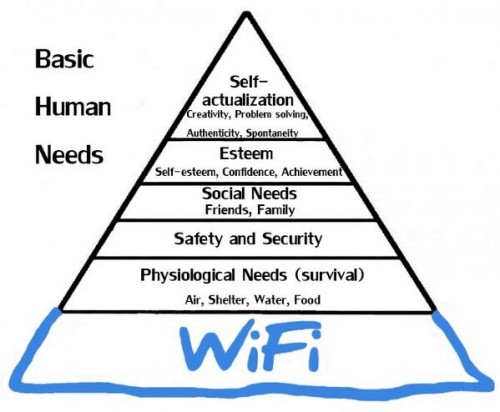
On Internet and Investing Psychology

And … Wi-Fi Doctor Investors

[By ME-P Staff Reporters]

***

wifi

Sourcehttp://www.xkcd.com

***

OVER HEARD IN THE DOCTOR’S LOUNGE

***

Of course you don’t need a human financial advisor … until you do.

Today, we’ve had unfettered internet access to a wide range of investments, opinions and models for at least two decades. So, why the bravado to go it alone; five straight positive years for equities, since 2009!

The financial advisor’s role is to remove the human element and emotion from investing decisions for something as personal as your wealth. Emotion drives the retail investor to sell low (fear) and buy high (greed). This is the reason why the average equity returns for retail investors is less than half of the S&Ps returns.

No, of course you don’t need a human financial advisor … until you do. And when you do, it may be too late.

***

Dan Ariely PhD

[The Irrational Economist]

WiFi

OUR TEXT BOOK

[BY DOCTORS – FOR DOCTORS – PEER REVIEWED]

[Chapter One]

UNIFYING THE PHYSIOLOGIC AND PSYCHOLOGIC FINANCIAL PLANNING DIVIDE  [Holistic Life Planning, Behavioral Economics, Trading Addiction and the Art of Money]

  • Dr. Brad Klontz PhD CFP
  • Dr. Ted Klontz PsyD
  • Dr. Eugene Schmuckler PhD MBA MEd
  • Dr. Kenneth Shubin-Stein MD CFA
  • Dr. David Edward Marcinko MBA CMP MBBS [Hon]

More:

COACH

Channel Surfing the ME-P

Have you visited our other topic channels? Established to facilitate idea exchange and link our community together, the value of these topics is dependent upon your input. Please take a minute to visit. And, to prevent that annoying spam, we ask that you register. It is fast, free and secure.

Conclusion

Your thoughts and comments on this ME-P are appreciated. Feel free to review our top-left column, and top-right sidebar materials, links, URLs and related websites, too. Then, subscribe to the ME-P. It is fast, free and secure.

Speaker: If you need a moderator or speaker for an upcoming event, Dr. David E. Marcinko; MBA – Publisher-in-Chief of the Medical Executive-Post – is available for seminar or speaking engagements. Contact: MarcinkoAdvisors@msn.com

OUR OTHER PRINT BOOKS AND RELATED INFORMATION SOURCES:

Financial Planning MDs 2015

Comprehensive Financial Planning Strategies for Doctors and Advisors: Best Practices from Leading Consultants

***

DAILY UPDATE: Dell, Palantir and the Markets with Fewer Jobs

MEDICAL EXECUTIVE-POST TODAY’S NEWSLETTER BRIEFING

***

Essays, Opinions and Curated News in Health Economics, Investing, Business, Management and Financial Planning for Physician Entrepreneurs and their Savvy Advisors and Consultants

Serving Almost One Million Doctors, Financial Advisors and Medical Management Consultants Daily

A Partner of the Institute of Medical Business Advisors , Inc.

http://www.MedicalBusinessAdvisors.com

SPONSORED BY: Marcinko & Associates, Inc.

***

http://www.MarcinkoAssociates.com

Daily Update Provided By Staff Reporters Since 2007.
How May We Serve You?
© Copyright Institute of Medical Business Advisors, Inc. All rights reserved. 2024

REFER A COLLEAGUE: MarcinkoAdvisors@msn.com

SPONSORSHIPS AVAILABLE: https://medicalexecutivepost.com/sponsors/

ADVERTISE ON THE ME-P: https://tinyurl.com/ytb5955z

Your Referral Count -0-

Dell and Palantir are poised to be added to the S&P 500 index, replacing Etsy and American Airlines, respectively.

CITE: https://www.r2library.com/Resource

Markets: September has been around for one week, and it’s already taking a toll on the market. Stocks dipped yesterday after new government data showed the labor market continuing to cool, capping off the S&P 500’s worst week since March 2023 and the NASDAQ’s worst since 2022. Nvidia had another rough day as investors fretted about tech stocks.

CITE: https://tinyurl.com/2h47urt5

The Labor Department said that the economy added 142,000 jobs in August, which was fewer than economists expected, bringing the three-month job creation average to its lowest since mid-2020.

CITE: https://tinyurl.com/tj8smmes

Visualize: How private equity tangled banks in a web of debt, from the Financial Times.

COMMENTS APPRECIATED

PLEASE SUBSCRIBE: MarcinkoAdvisors@msn.com

Thank You

***

***

***

***

EDUCATIONAL TEXTBOOKS: https://tinyurl.com/4zdxuuwf

***

A Brief Look at Level Life Insurance Sales Commissions

Of Interest to All Insurance Agents

https://medicalexecutivepost.com/wp-content/uploads/2018/06/david-edward-marcinko.png

By Dr. David Edward Marcinko MBA MEd CMP™

Sponsored: http://www.CertifiedMedicalPlanner.org

CMP logo

According to colleague David K. Luke MIM, MS-PFP, CMP™ the current structure of the life insurance industry regarding cash-value life insurance policies with most major insurance companies is to reward the selling agent with the entire commission upfront on a newly issued policy. The criticism to this practice is that this of course reduces the needed client-agent reviews and interaction and generates more “churning” and “flipping”. Unscrupulous agents are tempted to sell physician-clients another policy for another commission rather than encourage them to maintain and keep their existing policy, which most likely would have lower costs than any new policy considering the client was younger and most likely in better health with the existing contract. A model in which the insurance agent would have a financial incentive for their client’s continued patronage could create a win-win for both parties. We see this “pay as you” model currently operating successfully with wealth advisors and property/casualty agents, why not life insurance agents [personal communication]?

There are some flaws to this argument. The reality is that the captive life insurance industry and their agents prefer this form of lump compensation. The claim is that selling an individual a life insurance policy (the ultimate intangible product) is hard work, and likewise the 70% – 110% of the first year premium is fair compensation for the efforts. For existing agents to reduce their current income to a fraction of this commission upfront, but convert it into a trail over a multiyear period is actually quite distasteful. Therefore, this change will likewise not be initiated from the Insurance agent or insurance industry side unless other forces prevail.

The drive by the consumer to change this up front lump form of compensation has not yet presented itself in full force. After all, why does the consumer care about how the agent is paid if the consumer is satisfied with the end result? One must acknowledge that the drive to reduce commissions and up front loads in the investment advisory business was driven by the consumer that insisted on lower fees and costs.

However, the relevant costs of a life insurance policy are not quite as obvious. Only by comparing a quote from different companies can a consumer compare costs, and even then it is unknown and not understood how the pricing mechanisms used by the insurance company work. The advent of non-agent sold policies however is decreasing the cost of life insurance (there is no big commission check written to the selling agent) and is hitting the radar of consumers. The consumer can notice this difference if the consumer compares the proposed agent sold policy premium with one sold directly by a financial institution such as USAA or AARP. These companies have a work force of sales people that are compensated primarily on salary. Likewise the company can structure more competitive pricing, and in effect offers a levelized cost (in place of commission) insurance product.

https://images.routledge.com/common/jackets/crclarge/978149872/9781498725989.jpg

Textbook Order: https://www.routledge.com/Risk-Management-Liability-Insurance-and-Asset-Protection-Strategies-for/Marcinko-Hetico/p/book/9781498725989

For example, Mark Maurer CFP® of Low Load Insurance Services believes that a levelized compensation basis will not occur unless all the insurance companies were to go to such a plan all at once. If an agent can “pick and choose” he/she may use a “levelized compensation” policy when in a competitive situation, as such a policy should in theory make a policy more inexpensive. An agent would then use the higher “front-end” policy when there is a large up-front premium or in a scenario with limited competition. Mark believes the answer to the whole argument is full disclosure. Both agents and home offices would not want the purchaser to know that 100% or more of their premium is going to sales costs and then products would then get better [personal communication].

The insurance industry has a powerful lobby in Washington. Only market pressure will cause a change in this decades old insurance industry practice that has made many life insurance policies expensive and inefficient. Pricing from non-agent sold life insurance companies will be the impetus that drives the old-line Insurance companies to restructure their commissions to agents.

Insurance agents also remember the days of 8% load mutual fund commissions and minimum $60 dollar commissions on stock trades in the late 1980’s! That is an inflation equivalent of more than $130 per trade, minimum commission, today. The current investing world would laugh at these costs [charges] today. When the physician-consumer realizes, through full disclosure and outside competitive market pressures, that life insurance protection can be more affordable from other non-traditional channels, then s/he will insist on a better, more affordable product.

https://images.routledge.com/common/jackets/crclarge/978148224/9781482240283.jpg

Textbook Order: https://www.amazon.com/Comprehensive-Financial-Planning-Strategies-Advisors/dp/1482240289/ref=sr_1_1?ie=UTF8&qid=1418580820&sr=8-1&keywords=david+marcinko

Ultimately, the big agent driven life insurance companies will have to change their commission structure. The transition is currently in process. Only time will tell now [personal communication].

Your thoughts are appreciated.

Please subscribe.

THANK YOU

***

DAILY UPDATE: Nvidia DOJ and Nippon Steel as Stocks Sill Slide

MEDICAL EXECUTIVE-POST TODAY’S NEWSLETTER BRIEFING

***

Essays, Opinions and Curated News in Health Economics, Investing, Business, Management and Financial Planning for Physician Entrepreneurs and their Savvy Advisors and Consultants

Serving Almost One Million Doctors, Financial Advisors and Medical Management Consultants Daily

A Partner of the Institute of Medical Business Advisors , Inc.

http://www.MedicalBusinessAdvisors.com

SPONSORED BY: Marcinko & Associates, Inc.

***

http://www.MarcinkoAssociates.com

Daily Update Provided By Staff Reporters Since 2007.
How May We Serve You?
© Copyright Institute of Medical Business Advisors, Inc. All rights reserved. 2024

REFER A COLLEAGUE: MarcinkoAdvisors@msn.com

SPONSORSHIPS AVAILABLE: https://medicalexecutivepost.com/sponsors/

ADVERTISE ON THE ME-P: https://tinyurl.com/ytb5955z

Your Referral Count -0-

A bad day for Nvidia got even worse on Tuesday when Bloomberg reported that the Department of Justice subpoenaed the chipmaker as part of its investigation into whether the world’s hottest company unfairly wields its industry dominance. Yesterday, Nvidia denied it was technically subpoenaed. Bloomberg followed up to say that Nvidia was merely splitting hairs about the type of request it received from the DOJ but that it was in fact asked to answer questions about its empire.

CITE: https://www.r2library.com/Resource

What’s up

What’s down
  • C3.ai, which sounds like the name of a new Star Wars droid, sank 8.21% after the enterprise software company announced that subscription revenue fell short of expectations last quarter.
  • Hewlett Packard Enterprise staggered 6.02% after posting record AI revenue but paying the price for it.
  • Copart dropped 6.67% once the online car auctioneer reported solid revenue growth but missed earnings expectations last quarter.
  • ChargePoint plummeted 17.75% thanks to an absolutely terrible quarter for the EV charging network company.
  • Toro Company, makers of your dad’s favorite lawnmower, fell 10.09%. Sales to residential customers rose last quarter, but sales to professionals, who buy more expensive equipment, fell.

CITE: https://tinyurl.com/2h47urt5

Here’s where the major benchmarks ended:

  • The SPX fell 16.66 points (–0.30%) to 5,503.41; the Dow Jones Industrial Average® ($DJI) dropped 219.22 points (–0.54%) to 40,755.75; the NASDAQ Composite® ($COMP) added 43.36 points (0.25%) to 17,127.66.
  • The 10-year Treasury note yield (TNX)slid to 3.73%, its lowest close since August 5 following today’s jobs-related data. 
  • The CBOE Volatility Index® (VIX)fell to just above 20, near its historic average.

CITE: https://tinyurl.com/tj8smmes

The president is gearing up to block Japan’s Nippon Steel from acquiring US Steel, according to the Washington Post—a move that could end the highly politicized deal.

Visualize: How private equity tangled banks in a web of debt, from the Financial Times.

COMMENTS APPRECIATED

PLEASE SUBSCRIBE: MarcinkoAdvisors@msn.com

Thank You

***

***

***

***

EDUCATIONAL TEXTBOOKS: https://tinyurl.com/4zdxuuwf

***

DAILY UPDATE: Pfizer and Eli Lilly as Stock Fall Again!

MEDICAL EXECUTIVE-POST TODAY’S NEWSLETTER BRIEFING

***

Essays, Opinions and Curated News in Health Economics, Investing, Business, Management and Financial Planning for Physician Entrepreneurs and their Savvy Advisors and Consultants

Serving Almost One Million Doctors, Financial Advisors and Medical Management Consultants Daily

A Partner of the Institute of Medical Business Advisors , Inc.

http://www.MedicalBusinessAdvisors.com

SPONSORED BY: Marcinko & Associates, Inc.

***

http://www.MarcinkoAssociates.com

Daily Update Provided By Staff Reporters Since 2007.
How May We Serve You?
© Copyright Institute of Medical Business Advisors, Inc. All rights reserved. 2024

REFER A COLLEAGUE: MarcinkoAdvisors@msn.com

SPONSORSHIPS AVAILABLE: https://medicalexecutivepost.com/sponsors/

ADVERTISE ON THE ME-P: https://tinyurl.com/ytb5955z

Your Referral Count -0-

Pfizer is stepping out from the pharmacy aisle and into the living room with a new website called PfizerForAll. The platform helps patients find information about migraines, Covid, flu, or other seasonal respiratory viruses, the pharma giant said in a Tuesday press release.

Eli Lilly is slashing the price of its blockbuster weight loss drug, Zepbound, offering new, single-dose vials, the company announced on August 27th. Self-pay patients with an on-label prescription can purchase 2.5-mg and 5-mg single-dose vials of Zepbound at roughly 50% off the drug’s list price through the pharma giant’s direct-to-consumer website, LillyDirect, which launched in January. This is the first time the drug maker has offered the drug in single-dose vials rather than an auto-injector.

CITE: https://www.r2library.com/Resource

What’s up

What’s down

  • Dollar Tree plummeted 22.16%, its biggest selloff in 23 years, after the discount retailer posted a terrible earnings report.
  • Zscaler plunged 18.67% after issuing much lower guidance for the coming quarters than shareholders expected, despite the cybersecurity company beating estimates this quarter.
  • Dick’s Sporting Goods fell 4.89% in spite of management projecting strong sales growth in the rest of the year. Investors thought that forecasts would be higher.
  • Asana sank 4.97% due to today’s theme: The software management company’s growth projections didn’t meet shareholder expectations.
  • Super Micro Computer dropped 4.14% after it was downgraded by Barclays analysts as the fallout from short seller Hindenburg Research’s latest report continues.

CITE: https://tinyurl.com/2h47urt5

Here’s where the major benchmarks ended:

  • The S&P 500® index (SPX) fell 8.86points (–0.16%) to 5,520.07; the Dow Jones Industrial Average® ($DJI) added 38.04 points (0.09%) to 40,974.97; the NASDAQ Composite® ($COMP) declined 52.00 points (–0.30%) to 17,084.30. 
  • The TNX dropped to just under 3.77%, the lowest since August 21st.
  • The CBOE Volatility Index® (VIX) closed higher at 21.05 but down from intra-day peaks.

And, the market’s defensive pose continued, with utilities, staples, and real estate leading sector gains, while energy dove again amid weak commodity prices. Info tech, the last place finisher Tuesday, fell again, but only 0.35%, helped by slight gains in the semiconductor sector.

CITE: https://tinyurl.com/tj8smmes

Stat: 19%. That’s how much lower your risk of developing heart disease could be if you caught up on sleep during the weekend, according to a recent study. (CNN)

Visualize: How private equity tangled banks in a web of debt, from the Financial Times.

COMMENTS APPRECIATED

PLEASE SUBSCRIBE: MarcinkoAdvisors@msn.com

Thank You

***

***

***

***

EDUCATIONAL TEXTBOOKS: https://tinyurl.com/4zdxuuwf

***

DAILY UPDATE: Berkshire Hathaway & the “September Effect” Stock Market Collapse

MEDICAL EXECUTIVE-POST TODAY’S NEWSLETTER BRIEFING

***

Essays, Opinions and Curated News in Health Economics, Investing, Business, Management and Financial Planning for Physician Entrepreneurs and their Savvy Advisors and Consultants

Serving Almost One Million Doctors, Financial Advisors and Medical Management Consultants Daily

A Partner of the Institute of Medical Business Advisors , Inc.

http://www.MedicalBusinessAdvisors.com

SPONSORED BY: Marcinko & Associates, Inc.

***

http://www.MarcinkoAssociates.com

Daily Update Provided By Staff Reporters Since 2007.
How May We Serve You?
© Copyright Institute of Medical Business Advisors, Inc. All rights reserved. 2024

REFER A COLLEAGUE: MarcinkoAdvisors@msn.com

SPONSORSHIPS AVAILABLE: https://medicalexecutivepost.com/sponsors/

ADVERTISE ON THE ME-P: https://tinyurl.com/ytb5955z

Your Referral Count -0-

The September Effect refers to the historically weak stock market returns observed during the month of September. In fact, September has been the worst performing month, on average, going back nearly a century.

Stat: $1 trillion. That’s how much Berkshire Hathaway is now worth. The Warren Buffet-led company is the first outside of tech to join the trillion-dollar club, joining behemoths like Apple, Amazon, and Microsoft. (the Washington Post)

CITE: https://www.r2library.com/Resource

What’s up

What’s down

CITE: https://tinyurl.com/2h47urt5

Here’s where the major benchmarks ended:

  • The S&P 500® index (SPX)dropped 119.47points (–2.12%) to 5,528.93; the Dow Jones Industrial Average® ($DJI) fell 626.15 points (–1.51%) to 40,936.93; the $COMP plummeted 577.32 points (–3.26%) to 17, 136.30.
  • The 10-year Treasury note yield gave back seven basis points to 3.84%.
  • The VIX soared to 20.72, the highest since August 13.

CITE: https://tinyurl.com/tj8smmes

Visualize: How private equity tangled banks in a web of debt, from the Financial Times.

COMMENTS APPRECIATED

PLEASE SUBSCRIBE: MarcinkoAdvisors@msn.com

Thank You

***

***

***

***

EDUCATIONAL TEXTBOOKS: https://tinyurl.com/4zdxuuwf

***

DAILY UPDATE: Softening U.S. Labor Market

MEDICAL EXECUTIVE-POST TODAY’S NEWSLETTER BRIEFING

***

Essays, Opinions and Curated News in Health Economics, Investing, Business, Management and Financial Planning for Physician Entrepreneurs and their Savvy Advisors and Consultants

Serving Almost One Million Doctors, Financial Advisors and Medical Management Consultants Daily

A Partner of the Institute of Medical Business Advisors , Inc.

http://www.MedicalBusinessAdvisors.com

SPONSORED BY: Marcinko & Associates, Inc.

***

http://www.MarcinkoAssociates.com

Daily Update Provided By Staff Reporters Since 2007.
How May We Serve You?
© Copyright Institute of Medical Business Advisors, Inc. All rights reserved. 2024

REFER A COLLEAGUE: MarcinkoAdvisors@msn.com

SPONSORSHIPS AVAILABLE: https://medicalexecutivepost.com/sponsors/

ADVERTISE ON THE ME-P: https://tinyurl.com/ytb5955z

Your Referral Count -0-

CITE: https://www.r2library.com/Resource

Recent data suggest that the US labor market is softening, and the Federal Reserve appears to be taking notice. The Fed gave a strong signal in July that it was prepared to cut the federal funds rate target by 25 basis points in September. And so, Vanguard RIA is anticipating an additional second 25-basis-point cut this year and a target range of 3.25%–3.5% at the end of 2025.

CITE: https://tinyurl.com/2h47urt5

  • The U.S. economy created 114,000 jobs in July, and the unemployment rate rose to 4.3%. The unemployment rate increase is attributable to labor force growth exceeding job growth rather than an increase in job losses.
  • Broad consumer prices rose in July at the slowest year-over-year pace since early 2021. The Consumer Price Index (CPI) rose by 2.9% compared with July 2023, with shelter price increases accounted for nearly 90% of the monthly increase. The report reaffirms our view that shelter inflation will remain sticky through the rest of the year as supply expands only slowly and demand remains steady.
  • The Fed’s preferred inflation measure to guide policymaking, the core Personal Consumption Expenditures (PCE) price index, held steady year-over-year in June, rising by 2.6%. We foresee the pace of core PCE rising to 2.9% by year-end because of challenging comparisons with year-earlier data.
  • The U.S. economy displayed continued resilience in the second quarter, with real GDP growth increasing by an annualized 2.8%, with support from increases in consumer spending, nonresidential fixed investment, and government spending. Through midyear, GDP growth is tracking largely in line with our 2% outlook for the year. 

CITE: https://tinyurl.com/tj8smmes

Visualize: How private equity tangled banks in a web of debt, from the Financial Times.

COMMENTS APPRECIATED

PLEASE SUBSCRIBE: MarcinkoAdvisors@msn.com

Thank You

***

***

***

***

EDUCATIONAL TEXTBOOKS: https://tinyurl.com/4zdxuuwf

***

LABOR DAY: 2024 Message from the Editor


Dear Medical Executive-Post Readers and Subscribers

To give my health a boost, I’m taking a complete break from alcohol, sugar, cookies, ice cream, coffee and tea for the entire month of September. Besides that, I’ll also prioritize sleep and increase my exercise from 7 to at least 10 times [hours] a week. This will allow me to focus on my diet and mental well-being. It’s essentially a month of health and wellness rejuvenation.

I’ve chosen to focus on alcohol and sugar because I want to challenge the idea that moderate drinking is part of a healthy lifestyle. In reality, only those who maintain a healthy lifestyle can afford to enjoy alcohol in moderation. But, sugar is everywhere and must be minimized for Type II diabetes and weight control.

Moreover, the long-term and excessive intake of sugary beverages and refined sugars can negatively impact your overall caloric intake and create a domino effect on your health. For example, excess sugar in the body can turn into fat deposits and lead to fatty liver disease.

A low sugar diet can help you lose weight and also help you manage and/or prevent diabetes, heart disease5 and stroke, reduce inflammation, and even improve your mood and the health of your skin. That’s why the low sugar approach is a key tenet of other well-known healthy eating patterns, such as the Mediterranean diet and the DASH diet.

And so, do you also commit to such “factory resets” now and then? Please comments. Do, enjoy the Labor Day Weekend, Bar-B-Ques with friends, family and colleagues.

I hope you continue to find the Medical Executive-Post useful!

Many thanks for your referrals.

***

Best regards,
Dr. David Edward Marcinko MBA MEd CMP
Editor and Chief

***

ChatGPT: Considers Changing Corporate Structure

By Staff Reporters

SPONSOR: http://www.MarcinkoAssociates.com

***

***

The Financial Times reports that the ChatGPT-maker is discussing changing its corporate structure, which currently has it governed by a nonprofit entity, to make it more attractive to investors as the company works to complete a funding round that values it at $100 billion.

CITE: https://www.r2library.com/Resource

Apple, Nvidia, and Microsoft (which is already a big OpenAI backer) are said to be considering participating in the investment round.

COMMENTS APPRECIATED

Thank You

***

***

DAILY UPDATE: Medicare Part D Drugs, Kidney Donor Tax Credits, UnitedHealth and the Robust Stock Markets with DJIA at Record High

MEDICAL EXECUTIVE-POST TODAY’S NEWSLETTER BRIEFING

***

Essays, Opinions and Curated News in Health Economics, Investing, Business, Management and Financial Planning for Physician Entrepreneurs and their Savvy Advisors and Consultants

Serving Almost One Million Doctors, Financial Advisors and Medical Management Consultants Daily

A Partner of the Institute of Medical Business Advisors , Inc.

http://www.MedicalBusinessAdvisors.com

SPONSORED BY: Marcinko & Associates, Inc.

***

http://www.MarcinkoAssociates.com

Daily Update Provided By Staff Reporters Since 2007.
How May We Serve You?
© Copyright Institute of Medical Business Advisors, Inc. All rights reserved. 2024

REFER A COLLEAGUE: MarcinkoAdvisors@msn.com

SPONSORSHIPS AVAILABLE: https://medicalexecutivepost.com/sponsors/

ADVERTISE ON THE ME-P: https://tinyurl.com/ytb5955z

Your Referral Count -0-

CITE: https://www.r2library.com/Resource

What’s up

  • Dell Technologies rose 4.33% after beating analyst estimates on both the top and bottom lines thanks to strong AI demand.
  • Marvell Technology popped 9.16% after beating analyst estimates on both the top and bottom lines thanks to, believe it or not, strong AI demand.
  • MongoDB gained 18.34% after beating analyst estimates on both the top and bottom lines thanks to, you’re never going to guess, strong AI demand.

What’s down

  • After accidentally announcing earnings earlier than it intended, Gap fell 1.67%, despite earnings actually looking pretty good.
  • Super Micro Computer sank another 2.48% as the fallout from short seller Hindenburg Research’s latest report continues.
  • Elastic NV plummeted 26.49% after the software maker announced a weak quarterly report and forecast worse quarters ahead.
  • Alnylam Pharmaceuticals stumbled 8.47% in spite of announcing positive Phase 3 trial results for its new heart disease drug. Shareholders don’t think the new drug is as groundbreaking as it could’ve been compared to offerings from competitors like BridgeBio, which popped 13.12% on the news.

CITE: https://tinyurl.com/2h47urt5

Here’s where the major benchmarks ended:

  • The SPX climbed 56.44 points (1.01%) to 5,648.40, roughly flat for the week; the $DJI rose 228.03 points (0.55%) to 41,563.08, up almost 1% for the week; the NASDAQ Composite®($COMP) added 197.19 points (1.13%) to 17,713.62, down nearly 1% from a week ago.
  • The 10-year Treasury note yield (TNX) climbed three basis points to 3.91% but fell about 20 basis points in August.
  • The CBOE Volatility Index® (VIX) fell moderately to 14.96, well below levels above 30 recorded earlier this month.

CITE: https://tinyurl.com/tj8smmes

The Centers for Medicare and Medicaid Services (CMS) has been doing victory laps since announcing discounts on August 15 for 10 of the most expensive Medicare Part D drugs, a change that is set to go into effect in 2026. These discounts, called maximum fair prices (MFPs), kick off annual negotiations between the CMS and drug manufacturers. The negotiations were made possible by the Inflation Reduction Act (IRA), which also brings other changes such as Medicare Part D benefit redesign.

Visualize: How private equity tangled banks in a web of debt, from the Financial Times.

And, Remember NFTs? This is an excellent history of OpenSea, the largest NFT marketplace, and all the chaos within its walls.

COMMENTS APPRECIATED

PLEASE SUBSCRIBE: MarcinkoAdvisors@msn.com

Thank You

***

***

***

***

EDUCATIONAL TEXTBOOKS: https://tinyurl.com/4zdxuuwf

***

DAILY UPDATE: Record DJIA High

MEDICAL EXECUTIVE-POST TODAY’S NEWSLETTER BRIEFING

***

Essays, Opinions and Curated News in Health Economics, Investing, Business, Management and Financial Planning for Physician Entrepreneurs and their Savvy Advisors and Consultants

Serving Almost One Million Doctors, Financial Advisors and Medical Management Consultants Daily

A Partner of the Institute of Medical Business Advisors , Inc.

http://www.MedicalBusinessAdvisors.com

SPONSORED BY: Marcinko & Associates, Inc.

***

http://www.MarcinkoAssociates.com

Daily Update Provided By Staff Reporters Since 2007.
How May We Serve You?
© Copyright Institute of Medical Business Advisors, Inc. All rights reserved. 2024

REFER A COLLEAGUE: MarcinkoAdvisors@msn.com

SPONSORSHIPS AVAILABLE: https://medicalexecutivepost.com/sponsors/

ADVERTISE ON THE ME-P: https://tinyurl.com/ytb5955z

Your Referral Count -0-

CITE: https://www.r2library.com/Resource

What’s up

What’s down

CITE: https://tinyurl.com/2h47urt5

Here’s where the major benchmarks ended:

An early rally lost steam, once again victimized by selling in semiconductors and mega caps despite signs of progress elsewhere. That progress helped lead the Dow Jones Industrial Average® ($DJI) to a new all-time high for the third time in four sessions.

  • The SPX fell 0.22 points (0.00%) to 5,591.96; the $DJI rose 243.63 points (0.59%) to 41,335.05; the NASDAQ Composite®($COMP) dropped 39.59 points (–0.23%) to 17,516.43.
  • The 10-year Treasury note yield (TNX) climbed two basis points to 3.86%.
  • The CBOE Volatility Index® (VIX) eased to 15.99.

CITE: https://tinyurl.com/tj8smmes

Visualize: How private equity tangled banks in a web of debt, from the Financial Times.

COMMENTS APPRECIATED

PLEASE SUBSCRIBE: MarcinkoAdvisors@msn.com

Thank You

***

***

***

***

EDUCATIONAL TEXTBOOKS: https://tinyurl.com/4zdxuuwf

***

DAILY UPDATE: McKesson, CMS and Epic as Stocks Lost Ground

MEDICAL EXECUTIVE-POST TODAY’S NEWSLETTER BRIEFING

***

Essays, Opinions and Curated News in Health Economics, Investing, Business, Management and Financial Planning for Physician Entrepreneurs and their Savvy Advisors and Consultants

Serving Almost One Million Doctors, Financial Advisors and Medical Management Consultants Daily

A Partner of the Institute of Medical Business Advisors , Inc.

http://www.MedicalBusinessAdvisors.com

SPONSORED BY: Marcinko & Associates, Inc.

***

http://www.MarcinkoAssociates.com

Daily Update Provided By Staff Reporters Since 2007.
How May We Serve You?
© Copyright Institute of Medical Business Advisors, Inc. All rights reserved. 2024

REFER A COLLEAGUE: MarcinkoAdvisors@msn.com

SPONSORSHIPS AVAILABLE: https://medicalexecutivepost.com/sponsors/

ADVERTISE ON THE ME-P: https://tinyurl.com/ytb5955z

Your Referral Count -0-

McKesson plans to grow its oncology platform by investing nearly $2.5 billion for a 70% stake in Community Oncology Revitalization Enterprise Ventures (Core Ventures), which was launched earlier this year by Florida Cancer Specialists & Research Institute (FCS). The institute is a group practice of more than 250 physicians, 280 advanced practice providers and almost 100 Florida locations that will remain independent following the deal’s close. The deal will bring advanced treatments and improved care to patients while reducing the overall cost of care, McKesson’s chief executive said.


The Centers for Medicare & Medicaid Services (CMS) issued a new report detailing total complaints related to the No Surprises Act and Affordable Care Act compliance. Providers and consumers earned $4.18 million in relief. More than 12,000 complaints were tied to the No Surprises Act compliance, 10,300 of which were against providers, facilities and air ambulance services. Most of such complaints were about surprise billing for non-emergency services at an in-network facility, followed by surprise billing for emergency services and good faith estimates.


And…Electronic health records giant Epic recently announced plans to transition its customers to TEFCA, the Trusted Exchange Framework and Common Agreement, a nationwide network to exchange patient data that was mandated by the 21st Century Cures Act back in 2016. On the same day, Carequality, an interoperability network that Epic belongs to, also announced that it plans to align with TEFCA. As one of the largest health IT vendors in the industry, Epic’s commitment to moving customers over to TECFA is noteworthy and will likely help to drive adoption, health IT experts say.  

CITE: https://www.r2library.com/Resource

What’s up

  • Chewy gained 11.06% today as profits at the online pet supplies retailer surged last quarter, easily beating projections.
  • Ambarella, a semiconductor company, jumped 10.63% after topping Q2 revenue estimates.
  • Box rose 10.83% with the cloud company upping its sales outlook for the year.
  • AeroVironment was up 9.06% after the defense firm secured a $990 million five-year contract with the US Army.

What’s down

  • Super Micro Computer plunged 19.02% after announcing it would delay filing its annual financial disclosures with the SEC. Yesterday, short-seller Hindenburg Research accused the high-flying server maker of “glaring accounting red flags” and other sketchy business practices.
  • Abercrombie & Fitch’s 21% revenue growth last quarter wasn’t enough to impress investors, who sent the retailer’s stock down 16.99%. They got spooked when CFO Fran Horowitz mentioned the “increasingly uncertain environment” in the second half of the year.
  • Trump Media stock dipped below $20/share for the first time since the Truth Social owner went public in March. It’s down more than 75% from its intraday peak set that month.
  • Foot Locker beat top and bottom line estimates for the second quarter. But its stock dropped 10.24% when it kept its full-year outlook steady and announced store closures in Asia and Europe.

CITE: https://tinyurl.com/2h47urt5

Here’s where the major benchmarks ended:

  • The S&P 500® index (SPX) fell 33.62 points (–0.60%) to 5,592.18; the Dow Jones Industrial Average® ($DJI) declined 159.08 (–0.39%) to 41,091.42; the NASDAQ Composite®($COMP) dropped 198.79 points (–1.12%) to 17,556.03.
  • The 10-year Treasury note yield (TNX) rose about one basis point to 3.84%.
  • The CBOE Volatility Index® (VIX) climbed to 16.95, back toward levels seen nearly a week ago.

CITE: https://tinyurl.com/tj8smmes

Visualize: How private equity tangled banks in a web of debt, from the Financial Times.

COMMENTS APPRECIATED

PLEASE SUBSCRIBE: MarcinkoAdvisors@msn.com

Thank You

***

***

***

***

EDUCATIONAL TEXTBOOKS: https://tinyurl.com/4zdxuuwf

***

DAILY UPDATE: Apple, Uber, Temu, Papa John’s, Icahn Enterprises & NFL Private Equity as Stock Markets Nudge Upward

MEDICAL EXECUTIVE-POST TODAY’S NEWSLETTER BRIEFING

***

Essays, Opinions and Curated News in Health Economics, Investing, Business, Management and Financial Planning for Physician Entrepreneurs and their Savvy Advisors and Consultants

Serving Almost One Million Doctors, Financial Advisors and Medical Management Consultants Daily

A Partner of the Institute of Medical Business Advisors , Inc.

http://www.MedicalBusinessAdvisors.com

SPONSORED BY: Marcinko & Associates, Inc.

***

http://www.MarcinkoAssociates.com

Daily Update Provided By Staff Reporters Since 2007.
How May We Serve You?
© Copyright Institute of Medical Business Advisors, Inc. All rights reserved. 2024

REFER A COLLEAGUE: MarcinkoAdvisors@msn.com

SPONSORSHIPS AVAILABLE: https://medicalexecutivepost.com/sponsors/

ADVERTISE ON THE ME-P: https://tinyurl.com/ytb5955z

Your Referral Count -0-

The National Football League is expected to vote to allow private equity ownership of franchises, marking a significant change to its ultra-exclusive ownership club. The vote, all but guaranteed to pass, is a historic softening by the NFL, which will be the last of the major sports leagues in North America to permit private equity ownership. The NBA, MLB and NHL currently allow PE to own up to 30% of a team, while the NFL’s expected cap is 10%.

And, the stock of PDD Holdings, parent company of the fast-growing Temu shopping app, sank more than 30% on Monday, losing more than $50 billion in market value, after the e-commerce giant posted disappointing revenue results and executives warned of rapid competition and non-business challenges that may dampen growth and profits going forward.

CITE: https://www.r2library.com/Resource

What’s up

  • Costco (+1.84%) hit an all-time high and topped $900/share for the first time. Don’t be surprised if it becomes the latest retailer to announce a stock split after Chipotle, Walmart, and Williams-Sonoma, according to Barron’s.
  • Hain Celestial Group, the better-for-you food company that makes those veggie straw snacks in your office pantry, popped 18.59% after beating profit expectations for the latest quarter.

What’s down

  • Hims & Hers, the direct-to-consumer provider of generics, fell 7.51% after Eli Lilly announced a cheaper version of its weight loss drug Zepbound.
  • Paramount Global dropped 7.15% after billionaire Edgar Bronfman Jr. decided he wouldn’t pursue an acquisition of the legacy media company. That leaves Skydance Media poised for an $8 billion takeover.
  • Cannabis stocks including Curaleaf Holdings (-13.52%), Canopy Growth (-9.56%), and Green Thumb Industries (-10.76%) went up in smoke when the DEA said it would hold its hearing over changing the classification of cannabis on Dec. 2—after the election.
  • Cava got bowled over 6.10% after its CEO and other insiders revealed stock sales.

CITE: https://tinyurl.com/2h47urt5

Here’s where the major benchmarks ended:

  • The S&P 500® index (SPX) rose 8.96 points (0.16%) to 5,625.80; the Dow Jones Industrial Average® ($DJI) rose 9.98 (0.02%) to 41,250.50; the NASDAQ Composite®($COMP) added 29.05 points (0.16%) to 17,754.82.
  • The 10-year Treasury note yield (TNX) increased nearly two basis points to 3.83%.
  • The CBOE Volatility Index® (VIX) slipped to 15.42.

About half of S&P 500 sectors finished in the green today. Financials have been on a roll lately amid rate cut hopes and continued their solid performance Tuesday, while energy did a 180 Tuesday as crude oil lost ground.

Treasury yields remained in their recent trading range, with the gap narrowing further between the 2-year and 10-year Treasury note yields to roughly seven basis points. The inversion, in which two-year yields hold a premium to 10-year yields, reached 100 basis points a year ago as the Fed rapidly raised rates. The 10-year yield got some traction today from a solid Consumer Confidence report.

CITE: https://tinyurl.com/tj8smmes

Apple has announced “it’s glowtime” for a Sept. 9th event during which the company is expected to debut the iPhone 16.

And, Uber was fined 290 million euros ($347 million) by Dutch regulators for transferring driver data from the EU to the US. It’s one of the biggest fines ever issued under the EU’s data privacy law.

Icahn Enterprises L.P.’s stock tumbled 11.5% Monday to close at a roughly 21-year low, after billionaire Carl Icahn’s publicly traded investing arm filed to sell up to $400 million of its depositary units in an “at-the-market offering.” The news comes after Icahn and his company agreed last week to pay $2 million in civil penalties for failing to make required disclosures relating to personal margin loans worth billions of dollars. The stock closed at $14.07, its lowest level since it closed at $14.04 on Nov. 25, 2003.

Papa John’s (NASDAQ:PZZA) rose 4% and then surged amid some takeover speculation concerning Restaurants Brands (QSR), the parent of Burger King and Tim Hortons. 

Visualize: How private equity tangled banks in a web of debt, from the Financial Times.

COMMENTS APPRECIATED

PLEASE SUBSCRIBE: MarcinkoAdvisors@msn.com

Thank You

***

***

***

***

EDUCATIONAL TEXTBOOKS: https://tinyurl.com/4zdxuuwf

***

DAILY UPDATE: Nvidia Delayed and Covid Tests Mailed as Dow Rises and Technology Stocks Lag

MEDICAL EXECUTIVE-POST TODAY’S NEWSLETTER BRIEFING

***

Essays, Opinions and Curated News in Health Economics, Investing, Business, Management and Financial Planning for Physician Entrepreneurs and their Savvy Advisors and Consultants

Serving Almost One Million Doctors, Financial Advisors and Medical Management Consultants Daily

A Partner of the Institute of Medical Business Advisors , Inc.

http://www.MedicalBusinessAdvisors.com

SPONSORED BY: Marcinko & Associates, Inc.

***

http://www.MarcinkoAssociates.com

Daily Update Provided By Staff Reporters Since 2007.
How May We Serve You?
© Copyright Institute of Medical Business Advisors, Inc. All rights reserved. 2024

REFER A COLLEAGUE: MarcinkoAdvisors@msn.com

SPONSORSHIPS AVAILABLE: https://medicalexecutivepost.com/sponsors/

ADVERTISE ON THE ME-P: https://tinyurl.com/ytb5955z

Your Referral Count -0-

Nvidia will drop its Q2 numbers on Wednesday. Investors will also look for an update from CEO Jensen Huang about reported delays in production of the company’s highly anticipated new Blackwell chips.

CITE: https://www.r2library.com/Resource

Andersen, the US unit of Andersen Global, is considering an IPO in 2025, the Wall Street Journal reported. Andersen Global, an association of consulting firms, was formed in the wake of the 2002 collapse of Big Five accounting firm Arthur Andersen. The parent company has more than 17,000 employees worldwide and earned around $1.9 billion in revenue last year.

CITE: https://tinyurl.com/2h47urt5

What’s up

  • Kroger gained 1.6% as the antitrust trial began over its plan to merge with rival Albertsons in a $25 billion deal.
  • XPeng ADRs (American Depositary Receipts) spiked 7.90% on news that the Chinese EV maker’s CEO bought more than 2 million of the company’s shares. Those ADRs are still down nearly 50% this year. Here’s what an ADR is, by the way.

What’s down

  • Nvidia (-2.25%), Super Micro Computer (-8.27%), and Broadcom (-4.05%) stunk up the joint today. Investors are biting their nails ahead of Nvidia’s earnings report on Wednesday.
  • Uber dropped 2.30% on a day it was hit with a record $324 million fine by the Dutch data protection regulator for violating EU personal data rules.
  • Intel plopped 2% after CNBC reported on Friday that the chipmaker has hired advisors to help defend the castle against activist investors.

CITE: https://tinyurl.com/tj8smmes

Here’s where the major benchmarks ended:

  • The SPX dropped 17.77 points (–0.32%) to 5,616.84; the Dow Jones Industrial Average® ($DJI) rose 65.44 points (0.16%) to 41,240.52; the NASDAQ Composite®($COMP) fell 152.02 points (–0.85%) to 17.725.77.
  • The 10-year Treasury note yield (TNX) inched up about one basis point to nearly 3.82%.
  • The CBOE Volatility Index® (VIX) edged up to 16.09 but remains below its historic average.

Americans can receive free Covid-19 tests through the mail beginning next month.

COMMENTS APPRECIATED

PLEASE SUBSCRIBE: MarcinkoAdvisors@msn.com

Thank You

***

***

***

***

EDUCATIONAL TEXTBOOKS: https://tinyurl.com/4zdxuuwf

***

DAILY UPDATE: Nvidia, Medical Practice and Healthcare Costs

MEDICAL EXECUTIVE-POST TODAY’S NEWSLETTER BRIEFING

***

Essays, Opinions and Curated News in Health Economics, Investing, Business, Management and Financial Planning for Physician Entrepreneurs and their Savvy Advisors and Consultants

Serving Almost One Million Doctors, Financial Advisors and Medical Management Consultants Daily

A Partner of the Institute of Medical Business Advisors , Inc.

http://www.MedicalBusinessAdvisors.com

SPONSORED BY: Marcinko & Associates, Inc.

***

http://www.MarcinkoAssociates.com

Daily Update Provided By Staff Reporters Since 2007.
How May We Serve You?
© Copyright Institute of Medical Business Advisors, Inc. All rights reserved. 2024

REFER A COLLEAGUE: MarcinkoAdvisors@msn.com

SPONSORSHIPS AVAILABLE: https://medicalexecutivepost.com/sponsors/

ADVERTISE ON THE ME-P: https://tinyurl.com/ytb5955z

Your Referral Count -0-

Every medical practice, clinic or healthcare business needs cost and financial organization. We provide it through our detailed annual reports. When starting out, the pre-construction phase of a medical practice is crucial, because it sets the course for a successful project. It includes business and financial assessments, in which we learn about your goals, vision, financial realities and current and future facility needs.

***

CITE: https://www.r2library.com/Resource

Employers are Bracing for Healthcare Costs to Spike in 2025. Employers are up against escalating healthcare costs driven by mounting prescription drug expenses, inflation, and worsening chronic conditions, a new survey shows. The Business Group on Health released its annual Employer Health Care Strategy Survey, which examines the trends that large employers are watching and their plans to address the healthcare challenges they may face. The survey projects that healthcare cost trends will jump to 8% in 2025, growing from 6% in 2022. Actual healthcare costs have increased by 50% since 2017, according to the report.

Source: Paige Minemyer, Fierce Healthcare [8/20/24]

CITE: https://tinyurl.com/2h47urt5

  • Markets: Jerome Powell spoke in Jackson Hole on Friday and finally confirmed that interest rate cuts are on the way. The news set stocks up for a big finish to the week.
  • Stock spotlight: Nvidia was among the stocks that jumped, and investors will be keeping an eye on it this week, when the AI chipmaker reports earnings.

CITE: https://tinyurl.com/tj8smmes

Visualize: How private equity tangled banks in a web of debt, from the Financial Times.

COMMENTS APPRECIATED

PLEASE SUBSCRIBE: MarcinkoAdvisors@msn.com

Thank You

***

***

***

***

EDUCATIONAL TEXTBOOKS: https://tinyurl.com/4zdxuuwf

***

DAILY UPDATE: Telehealth and the RealPage

MEDICAL EXECUTIVE-POST TODAY’S NEWSLETTER BRIEFING

***

Essays, Opinions and Curated News in Health Economics, Investing, Business, Management and Financial Planning for Physician Entrepreneurs and their Savvy Advisors and Consultants

Serving Almost One Million Doctors, Financial Advisors and Medical Management Consultants Daily

A Partner of the Institute of Medical Business Advisors , Inc.

http://www.MedicalBusinessAdvisors.com

SPONSORED BY: Marcinko & Associates, Inc.

***

http://www.MarcinkoAssociates.com

Daily Update Provided By Staff Reporters Since 2007.
How May We Serve You?
© Copyright Institute of Medical Business Advisors, Inc. All rights reserved. 2024

REFER A COLLEAGUE: MarcinkoAdvisors@msn.com

SPONSORSHIPS AVAILABLE: https://medicalexecutivepost.com/sponsors/

ADVERTISE ON THE ME-P: https://tinyurl.com/ytb5955z

Your Referral Count -0-

CITE: https://www.r2library.com/Resource

Telehealth has taken more hits lately than a piñata at a birthday party. For example:

In April, UnitedHealth Group announced it was shutting down its Optum Virtual Care program. Days later, Walmart announced it would shutter both Walmart Health and Walmart Health Virtual Care.

And in July, Teladoc posted a net loss of $838 million in Q2. The drop was largely driven by an impairment charge of ~$800 million for BetterHelp, the virtual mental health platform it acquired in 2015, Fierce Healthcare reported. Executives attributed the decline to increased customer acquisition costs, among other factors.

CITE: https://tinyurl.com/2h47urt5

  • The Justice Department and the attorneys general of eight states sued RealPage, an apartment-pricing tool widely used by corporate landlords, alleging that it lowers competition by allowing property owners to coordinate higher rents.

CITE: https://tinyurl.com/tj8smmes

Visualize: How private equity tangled banks in a web of debt, from the Financial Times.

COMMENTS APPRECIATED

PLEASE SUBSCRIBE: MarcinkoAdvisors@msn.com

Thank You

***

***

***

***

EDUCATIONAL TEXTBOOKS: https://tinyurl.com/4zdxuuwf

***

DAILY UPDATE: Medicare Part C and CON Laws as Stocks Drift Higher

MEDICAL EXECUTIVE-POST TODAY’S NEWSLETTER BRIEFING

***

Essays, Opinions and Curated News in Health Economics, Investing, Business, Management and Financial Planning for Physician Entrepreneurs and their Savvy Advisors and Consultants

Serving Almost One Million Doctors, Financial Advisors and Medical Management Consultants Daily

A Partner of the Institute of Medical Business Advisors , Inc.

http://www.MedicalBusinessAdvisors.com

SPONSORED BY: Marcinko & Associates, Inc.

***

http://www.MarcinkoAssociates.com

Daily Update Provided By Staff Reporters Since 2007.
How May We Serve You?
© Copyright Institute of Medical Business Advisors, Inc. All rights reserved. 2024

REFER A COLLEAGUE: MarcinkoAdvisors@msn.com

SPONSORSHIPS AVAILABLE: https://medicalexecutivepost.com/sponsors/

ADVERTISE ON THE ME-P: https://tinyurl.com/ytb5955z

Your Referral Count -0-

Read: Georgia’s bipartisan effort to amend its “certificate of need” system to bring back shuttered rural hospitals. (KFF Health News)

CITE: https://www.r2library.com/Resource

Here’s where the major benchmarks ended:

  • The S&P 500® index (SPX) rose 63.97 points (1.15%) to 5,634.61, up 1.5% on the week; the Dow Jones Industrial Average® ($DJI) added 462.30 points (1.14%) to 41,175.08, up 1.3% for the week; the NASDAQ Composite®($COMP) advanced 258.43 points (1.47%) to 17,877.79, up 1.4% for the week.
  • The 10-year Treasury note yield (TNX) fell nearly six basis points to just under 3.81%.
  • The CBOE Volatility Index® (VIX) dropped sharply to 15.79, the lowest close since Monday.

CITE: https://tinyurl.com/2h47urt5

As Medicare Advantage (MA) enrollment grows, hospitals are breaking up with MA [Part C] insurance plans. Becker’s Healthcare reported that, so far in 2024, at least 17 systems ended a contract with an MA insurer.

CITE: https://tinyurl.com/tj8smmes

COMMENTS APPRECIATED

PLEASE SUBSCRIBE: MarcinkoAdvisors@msn.com

Thank You

***

***

***

***

EDUCATIONAL TEXTBOOKS: https://tinyurl.com/4zdxuuwf

***

TRANSACTIONAL STOCK ANALYSIS: What Is It?

Versus Technical Analysis

By Staff Reporters

***

***

In traditional finance transaction data is guarded by exchanges, brokers, banks and regulators. It’s not accessible to everyone and big players pay a fortune for it.

But, in crypto, Transaction Data is public and on-chain – but it’s not usable by everyone. So, manually making sense of raw blockchain data is practically impossible. The data needs to be processed and analyzed to be made useful. That’s what sophisticated blockchain analytics tools are doing.

The combination of on-chain data and transaction analysis is something that hasn’t been before – in crypto or traditional finance. Getting access to transaction data and tools for searching and analyzing it will unlock a goldmine of potential insight.

People who have been on the inside of projects and see how the sausage is made know that the explanations for price movements are often simple and based on key players buying and selling. When the biggest holders are dumping the price is likely to go down. When a major new buyer takes a position prices are likely to go up.

That’s insight traditional Technical Analysis cannot provide, because it’s limited to looking at price movements. Transaction data, instead, is the underlying activity that generates prices in crypto.

CITE: https://www.r2library.com/Resource/Title/0826102549

Technical Analysis: https://medicalexecutivepost.com/2022/06/23/the-technicians/

Related: https://medicalexecutivepost.com/2022/09/25/what-is-sentimental-stock-market-analysis/

***

ORDER: https://www.amazon.com/Dictionary-Health-Information-Technology-Security/dp/0826149952/ref=sr_1_5?ie=UTF8&s=books&qid=1254413315&sr=1-5

ORDER MORE: : https://www.amazon.com/Financial-Management-Strategies-Healthcare-Organizations/dp/1466558733/ref=sr_1_3?ie=UTF8&qid=1380743521&sr=8-3&keywords=david+marcinko

***

COMMENTS APPRECIATED

Thank You

****

DAILY UPDATE: Stock Markets Drop!

MEDICAL EXECUTIVE-POST TODAY’S NEWSLETTER BRIEFING

***

Essays, Opinions and Curated News in Health Economics, Investing, Business, Management and Financial Planning for Physician Entrepreneurs and their Savvy Advisors and Consultants

Serving Almost One Million Doctors, Financial Advisors and Medical Management Consultants Daily

A Partner of the Institute of Medical Business Advisors , Inc.

http://www.MedicalBusinessAdvisors.com

SPONSORED BY: Marcinko & Associates, Inc.

***

http://www.MarcinkoAssociates.com

Daily Update Provided By Staff Reporters Since 2007.
How May We Serve You?
© Copyright Institute of Medical Business Advisors, Inc. All rights reserved. 2024

REFER A COLLEAGUE: MarcinkoAdvisors@msn.com

SPONSORSHIPS AVAILABLE: https://medicalexecutivepost.com/sponsors/

ADVERTISE ON THE ME-P: https://tinyurl.com/ytb5955z

Your Referral Count -0-

CITE: https://www.r2library.com/Resource

What’s up

  • Zoom Video Communications zoomed 12.97% higher after beating earnings estimates and raising its revenue forecast for the year.
  • Crocs gained 1.04% after Williams Trading upgraded the company from Hold to Buy and boosted its price target to $163 from $135.
  • Deutsche Bank climbed 3.38% thanks to an announcement that it has reached a settlement with the majority of plaintiffs in its long-running case regarding its Postbank acquisition a decade ago.
  • Paramount Global rose 0.81% after its special committee extended its “go shop” period ahead of its potential merger with Skydance.

What’s down

  • Advance Auto Parts plummeted 17.47% thanks to a massive earnings miss this quarter and management’s prediction that earnings will drop for the rest of the year.
  • Nvidia fell 3.70% after it came to light that investors and insiders like CEO Jensen Huang keep selling their shares of the company.
  • Charles Schwab dropped 0.46% after TD Bank announced it will sell part of its stake in the company to cover recent fines.
  • Williams-Sonoma sank 9.21% due to a poor earnings report as consumers slow their spending with the home goods retailer.
  • Wolfspeed declined 5.38% after the chipmaker revealed that slowing EV sales had hurt its bottom line and that it’s closing one of its manufacturing plants to cut costs.

CITE: https://tinyurl.com/2h47urt5

Here’s where the major benchmarks ended:

  • The S&P 500 index (SPX) lost 50.21 points (–0.89%) to 5,570.64; the Dow Jones Industrial Average® ($DJI) fell 177.71 points (–0.43%) to 40,712.78; the NASDAQ Composite®($COMP) dropped 299.63 points (–1.67%) to 17,619.35. 
  • The 10-year Treasury note yield rose about eight basis points to 3.86%, roughly the midpoint of its recent range.
  • The CBOE Volatility Index® (VIX) climbed moderately to 17.66, the highest close since August 13.

CITE: https://tinyurl.com/tj8smmes

COMMENTS APPRECIATED

PLEASE SUBSCRIBE: MarcinkoAdvisors@msn.com

Thank You

***

***

***

***

EDUCATIONAL TEXTBOOKS: https://tinyurl.com/4zdxuuwf

***

DAILY UPDATE: Covid, Medicaid, DNC, Tesla, UAW, Boeing and the Roller-Coaster Stock Markets

MEDICAL EXECUTIVE-POST TODAY’S NEWSLETTER BRIEFING

***

Essays, Opinions and Curated News in Health Economics, Investing, Business, Management and Financial Planning for Physician Entrepreneurs and their Savvy Advisors and Consultants

Serving Almost One Million Doctors, Financial Advisors and Medical Management Consultants Daily

A Partner of the Institute of Medical Business Advisors , Inc.

http://www.MedicalBusinessAdvisors.com

SPONSORED BY: Marcinko & Associates, Inc.

***

http://www.MarcinkoAssociates.com

Daily Update Provided By Staff Reporters Since 2007.
How May We Serve You?
© Copyright Institute of Medical Business Advisors, Inc. All rights reserved. 2024

REFER A COLLEAGUE: MarcinkoAdvisors@msn.com

SPONSORSHIPS AVAILABLE: https://medicalexecutivepost.com/sponsors/

ADVERTISE ON THE ME-P: https://tinyurl.com/ytb5955z

Your Referral Count -0-

Stat: 2.4%. That’s the percentage of US emergency department visits that involved patients positive with Covid during the week ending August 16th, down from the prior week (but still high). (Becker’s Clinical Leadership)

Quote: “The pandemic was destructive and concerning and clearly demonstrated that Medicaid is so crucially important for our national safety net.”—Jennifer Babcock, SVP for Medicaid policy at the Association for Community Affiliated Plans, on state efforts to expand Medicaid (KFF Health News)

Read: Here are the healthcare-related topics to keep tabs on during the Democratic National Convention. (Stat)

CITE: https://www.r2library.com/Resource

What’s up

  • Target popped 11.25% thanks to an impressive earnings report that included a 36% increase in earnings.
  • Toll Brothers rose 5.59% after beating earnings estimates and raising its projections for home deliveries this year.
  • TJX Companies gained 6.06% and hit a new record high thanks to a strong beat-and-raise earnings report.
  • Ford climbed 1.54% after overhauling its EV plans, including canceling production of a new EV SUV and delaying a new EV plant.
  • Keysight Technologies soared 13.91% after beating earnings expectations and projecting an even stronger second half of the year ahead.
  • BigBear.ai skyrocketed 27.07% thanks to a new contract with the Federal Aviation Administration to provide IT and tech solutions.

What’s down

CITE: https://tinyurl.com/2h47urt5

Here’s where the major benchmarks ended:

  • The S&P 500® index (SPX) rose 23.73 points (0.42%) to 5,620.85; the Dow Jones Industrial Average® ($DJI) advanced 55.22 points (0.14%) to 40,890.49; the NASDAQ Composite®($COMP) added 102.04 points (0.57%) to 17,918.99.
  • The 10-year Treasury note yield (TNX) fell three basis points to just under 3.78%, near recent lows.
  • The CBOE Volatility Index® (VIX) increased to 16.27.

CITE: https://tinyurl.com/tj8smmes

Tesla cars manufactured in China were slapped with a new tariff by the European Union as part of the group’s crackdown on Chinese green-energy exports.

And, The UAW threatened to strike against Stellantis for allegedly reneging on its promise to reopen an Illinois factory, which the carmaker denies.

Finally, Boeing was forced to pause progress on its oft-delayed 777X aircraft after discovering a structural problem during test flights.

Visualize: How private equity tangled banks in a web of debt, from the Financial Times.

COMMENTS APPRECIATED

PLEASE SUBSCRIBE: MarcinkoAdvisors@msn.com

Thank You

***

***

***

***

EDUCATIONAL TEXTBOOKS: https://tinyurl.com/4zdxuuwf

***

FAIR MARKET VALUATION DETERMINATION: Medical Practices or Clinics

MEDICAL PRACTICE OR AMBULATORY SURGERY CENTER

MARCINKO ASSOCIATES, Inc.

http://www.MARCINKOASSOCIATES.com

***

FAIR MARKET VALUATION DETERMINATION

There are a Myriad of Reasons for Obtaining a Medical Practice Valuation and Appraisal Engagement:

  • Outright selling-buying
  • Partnership and Associate buy-in / buy-out
  • Mergers and Acquisitions
  • Organic growth tracking
  • Hospital integrations
  • Private and public reporting
  • Financing and Venture Capital
  • Estate and tax planning

Our Capability

We have the ability to provide extensive analysis of value components in healthcare practices and provide appraisals based on business, economic, and market conditions. This involves detailed examination of financials and clinical data in the context of numerous factors including medical specialty, physician supply and demand, payer mix, regulatory environment, regional dynamics, and risk premium.

CITE: https://www.r2library.com/Resource

***

READ MORE: https://marcinkoassociates.com/welcome-medical-colleagues/

THANK YOU

***

***

***

DAILY UPDATE: Medicare Part C & Healthcare Bankruptcies as Stock Market Volatility Rises

MEDICAL EXECUTIVE-POST TODAY’S NEWSLETTER BRIEFING

***

Essays, Opinions and Curated News in Health Economics, Investing, Business, Management and Financial Planning for Physician Entrepreneurs and their Savvy Advisors and Consultants

Serving Almost One Million Doctors, Financial Advisors and Medical Management Consultants Daily

A Partner of the Institute of Medical Business Advisors , Inc.

http://www.MedicalBusinessAdvisors.com

SPONSORED BY: Marcinko & Associates, Inc.

***

http://www.MarcinkoAssociates.com

Daily Update Provided By Staff Reporters Since 2007.
How May We Serve You?
© Copyright Institute of Medical Business Advisors, Inc. All rights reserved. 2024

REFER A COLLEAGUE: MarcinkoAdvisors@msn.com

SPONSORSHIPS AVAILABLE: https://medicalexecutivepost.com/sponsors/

ADVERTISE ON THE ME-P: https://tinyurl.com/ytb5955z

Your Referral Count -0-

Unlike previous election cycles, members of both political parties are skeptical of Medicare Advantage, prompting former HHS Secretary Alex Azar to say plans need to engage in “myth busting.”


Mass General Brigham is showing a slight year-over-year financial improvement across the first half of 2024.


And … a decline in healthcare bankruptcies appears to be driven by middle-market companies.

CITE: https://www.r2library.com/Resource

What’s up

What’s down

  • Lowe’s sank 1.18% after beating earnings expectations but missing on sales and, more importantly, announcing weaker sales lie ahead.
  • Paramount Global stumbled 1.08% after a new $4.3 billion bid to acquire the company came out of left field.
  • Boeing fell 4.24% on the announcement that the company is grounding its test fleet of the new 777X airplane due to, what else, maintenance issues.

CITE: https://tinyurl.com/2h47urt5

Here’s where the major benchmarks ended:

  • The SPX fell 11.13 points (–0.20%) to 5,597.12; the Dow Jones Industrial Average® ($DJI) dropped 61.56 points (–0.15%) to 40,834.97; the NASDAQ Composite®($COMP) ended 59.83 points lower (–0.33%) to 17,816.94.
  • The 10-year Treasury note yield (TNX) fell five basis points to 3.82%.
  • The CBOE Volatility Index® (VIX) climbed 8% to 15.84

CITE: https://tinyurl.com/tj8smmes

Visualize: How private equity tangled banks in a web of debt, from the Financial Times.

COMMENTS APPRECIATED

PLEASE SUBSCRIBE: MarcinkoAdvisors@msn.com

Thank You

***

***

***

***

EDUCATIONAL TEXTBOOKS: https://tinyurl.com/4zdxuuwf

***

DAILY UPDATE: NAR Commissions Down as Stock Markets Rise

MEDICAL EXECUTIVE-POST TODAY’S NEWSLETTER BRIEFING

***

Essays, Opinions and Curated News in Health Economics, Investing, Business, Management and Financial Planning for Physician Entrepreneurs and their Savvy Advisors and Consultants

Serving Almost One Million Doctors, Financial Advisors and Medical Management Consultants Daily

A Partner of the Institute of Medical Business Advisors , Inc.

http://www.MedicalBusinessAdvisors.com

SPONSORED BY: Marcinko & Associates, Inc.

***

http://www.MarcinkoAssociates.com

Daily Update Provided By Staff Reporters Since 2007.
How May We Serve You?
© Copyright Institute of Medical Business Advisors, Inc. All rights reserved. 2024

REFER A COLLEAGUE: MarcinkoAdvisors@msn.com

SPONSORSHIPS AVAILABLE: https://medicalexecutivepost.com/sponsors/

ADVERTISE ON THE ME-P: https://tinyurl.com/ytb5955z

Your Referral Count -0-

On last Saturday, a class-action settlement with the National Association of Realtors (NAR) went into effect, ripping up the playbook on how real estate agents are compensated. The NAR was accused of artificially inflating commission rates, which have historically ranged from 5% to 6%, a higher fee than the rest of the world. Consumer advocates hope the new rules will lead to lower commissions, shift power away from agents, and add transparency into what’s been an opaque system.

CITE: https://www.r2library.com/Resource

What’s up

  • AMD rose 4.52% on the news that it will acquire server manufacturer ZT Systems for $4.9 billion. While this escalates the AI arms race, competitor Nvidia rose 4.35% regardless.
  • FuboTV soared yet another 17.65% after a judge temporarily blocked the launch of a sports streaming service created by Disney, Warner Bros. Discovery, and Fox last week.
  • McDonald’s climbed 3.25% after Evercore ISI analysts raised their price target for the stock to $320 per share.
  • Zim Integrated Shipping Services rocketed 16.74% higher after the marine shipping company posted impressive earnings and raised its full-year guidance.

What’s down

  • Trump Media & Technology Group fell 3.56% as the Democratic National Convention kicks off in Chicago today, with investors fretful that the stock could be more volatile than usual during the event.
  • HP sank 3.65% after Morgan Stanley analysts downgraded the stock from Equal Weight to Overweight, though they kept their price target the same.
  • Sweetgreen dropped 6.82% thanks to Piper Sandler analysts downgrading the stock from Overweight to Neutral after the company’s big pop last week made shares too pricey.

CITE: https://tinyurl.com/2h47urt5

Here’s where the major benchmarks ended:

  • The S&P 500 index rose 54.00 points (0.97%) to 5,608.25; the Dow Jones Industrial Average® ($DJI) added 236.77 points (0.58%) to 40,896.53; the NASDAQ Composite®($COMP) points increased 245.05 (1.39%) to 17, 876.77.
  • The 10-year Treasury note yield (TNX) fell about two basis points to just under 3.87%.
  • The CBOE Volatility Index® (VIX) fell to 14.61, near one-month lows.

CITE: https://tinyurl.com/tj8smmes

Stat: 12%. That’s how much mpox vaccine maker Bavarian Nordic’s stock shot up after the WHO declared a global health emergency. (Fortune)

COMMENTS APPRECIATED

PLEASE SUBSCRIBE: MarcinkoAdvisors@msn.com

Thank You

***

***

***

***

EDUCATIONAL TEXTBOOKS: https://tinyurl.com/4zdxuuwf

***

DAILY UPDATE: Monkey-Pox is Up but Health Insurance is Down

MEDICAL EXECUTIVE-POST TODAY’S NEWSLETTER BRIEFING

***

Essays, Opinions and Curated News in Health Economics, Investing, Business, Management and Financial Planning for Physician Entrepreneurs and their Savvy Advisors and Consultants

Serving Almost One Million Doctors, Financial Advisors and Medical Management Consultants Daily

A Partner of the Institute of Medical Business Advisors , Inc.

http://www.MedicalBusinessAdvisors.com

SPONSORED BY: Marcinko & Associates, Inc.

***

http://www.MarcinkoAssociates.com

Daily Update Provided By Staff Reporters Since 2007.
How May We Serve You?
© Copyright Institute of Medical Business Advisors, Inc. All rights reserved. 2024

REFER A COLLEAGUE: MarcinkoAdvisors@msn.com

SPONSORSHIPS AVAILABLE: https://medicalexecutivepost.com/sponsors/

ADVERTISE ON THE ME-P: https://tinyurl.com/ytb5955z

Your Referral Count -0-

CITE: https://www.r2library.com/Resource

The World Health Organization declared monkey-pox a global health emergency last Wednesday, about two years after pulling the same alarm on a different variant that infected almost 100,000 people worldwide and 32,000+ in the US, according to the New York Times.

CITE: https://tinyurl.com/2h47urt5

The number of people in the US without health insurance has been steadily rising since the official end of the Covid-19 public health emergency was declared in May 2023. The uninsured rate rose to 8.2% (or roughly 27 million people) in Q1 2024 after falling to a record low of 7.2% in Q2 2023, CDC data shows. That low was largely thanks to the Medicaid continuous enrollment policy that allowed all beneficiaries to keep their coverage until May 2023, according to Daniel Polsky, a health economist and professor at Johns Hopkins Carey Business School.

CITE: https://tinyurl.com/tj8smmes

Stocks: Global equities just scored their best week of 2024. Keep reading for a full breakdown of the bullish wave sweeping Wall Street and beyond.

Visualize: How private equity tangled banks in a web of debt, from the Financial Times.

COMMENTS APPRECIATED

PLEASE SUBSCRIBE: MarcinkoAdvisors@msn.com

Thank You

***

***

***

***

EDUCATIONAL TEXTBOOKS: https://tinyurl.com/4zdxuuwf

***

DAILY UPDATE: Telehealth Down but Stock Markets Up for the Week

MEDICAL EXECUTIVE-POST TODAY’S NEWSLETTER BRIEFING

***

Essays, Opinions and Curated News in Health Economics, Investing, Business, Management and Financial Planning for Physician Entrepreneurs and their Savvy Advisors and Consultants

Serving Almost One Million Doctors, Financial Advisors and Medical Management Consultants Daily

A Partner of the Institute of Medical Business Advisors , Inc.

http://www.MedicalBusinessAdvisors.com

SPONSORED BY: Marcinko & Associates, Inc.

***

http://www.MarcinkoAssociates.com

Daily Update Provided By Staff Reporters Since 2007.
How May We Serve You?
© Copyright Institute of Medical Business Advisors, Inc. All rights reserved. 2024

REFER A COLLEAGUE: MarcinkoAdvisors@msn.com

SPONSORSHIPS AVAILABLE: https://medicalexecutivepost.com/sponsors/

ADVERTISE ON THE ME-P: https://tinyurl.com/ytb5955z

Your Referral Count -0-

CITE: https://www.r2library.com/Resource

In April, UnitedHealth Group announced it was shutting down its Optum Virtual Care program. Days later, Walmart announced it would shutter both Walmart Health and Walmart Health Virtual Care.

CITE: https://tinyurl.com/2h47urt5

And in July, Teladoc posted a net loss of $838 million in Q2. The drop was largely driven by an impairment charge of ~$800 million for BetterHelp, the virtual mental health platform it acquired in 2015, Fierce Healthcare reported. Executives attributed the decline to increased customer acquisition costs, among other factors.

CITE: https://tinyurl.com/tj8smmes

Finally, Stocks are way out of whack with reality, the WSJ argues. Nevertheless, a slew of encouraging economic data helped propel the S&P 500 to its best week of the year—a welcome change from the whiplash volatility of the week before. Bayer jumped after scoring an appeals court victory in a case over claims its Roundup weed killer causes cancer.

Visualize: How private equity tangled banks in a web of debt, from the Financial Times.

COMMENTS APPRECIATED

PLEASE SUBSCRIBE: MarcinkoAdvisors@msn.com

Thank You

***

***

***

***

EDUCATIONAL TEXTBOOKS: https://tinyurl.com/4zdxuuwf

***

DAILY UPDATE: Medicare Drug Price Negotiations as Stock Markets Hold Steady

MEDICAL EXECUTIVE-POST TODAY’S NEWSLETTER BRIEFING

***

Essays, Opinions and Curated News in Health Economics, Investing, Business, Management and Financial Planning for Physician Entrepreneurs and their Savvy Advisors and Consultants

Serving Almost One Million Doctors, Financial Advisors and Medical Management Consultants Daily

A Partner of the Institute of Medical Business Advisors , Inc.

http://www.MedicalBusinessAdvisors.com

SPONSORED BY: Marcinko & Associates, Inc.

***

http://www.MarcinkoAssociates.com

Daily Update Provided By Staff Reporters Since 2007.
How May We Serve You?
© Copyright Institute of Medical Business Advisors, Inc. All rights reserved. 2024

REFER A COLLEAGUE: MarcinkoAdvisors@msn.com

SPONSORSHIPS AVAILABLE: https://medicalexecutivepost.com/sponsors/

ADVERTISE ON THE ME-P: https://tinyurl.com/ytb5955z

Your Referral Count -0-

CITE: https://www.r2library.com/Resource

Here’s where the major stock market benchmarks ended:

  • The S&P 500® index (SPX) rose slightly, up 11 points (0.2%) to end the day at 5,554.25, finishing up 3.9% for the week; the Dow Jones Industrial Average® ($DJI) jumped 96.7 points (0.24%) to close the week at 40,659.76, up 2.9% from last Friday; the NASDAQ Composite®($COMP) gained 37.2 points (0.21%) to 17,631.72, up 5.3% for the week.
  • The 10-year Treasury note yield (TNX) fell three basis points to just above 3.89%.
  • The Cboe Volatility Index (VIX) dropped to 14.74, the lowest in three weeks.

CITE: https://tinyurl.com/2h47urt5

What’s up

  • Bavarian Nordic, which makes an m-pox vaccine, jumped 15.64%, continuing its surge after the World Health Organization on Wednesday declared a public emergency over the disease’s spread in Africa.
  • Bayer popped 8.36% after the firm won a legal dispute against claims that its weedkiller Roundup causes cancer.
  • Rocket Lab rose 12.52% after the aerospace company announced it shipped two spacecraft to Cape Carnival in preparation for a launch to Mars.
  • H&R Block had its best day since 2022 (up 12.24%) after raising its dividend by 17% and announcing a $1.5 billion share buyback.
  • Maravai LifeSciences leaped 21.46% on reports that the drugmaker received a takeover offer from Repligen Corp.

What’s down

  • On the flip side of that last gainer, Repligen Corp. plummeted 9.26% on the takeover news.
  • Astera Labs dropped 5.52% after several investment firms, including Evercore and JPMorgan, lowered their price target for the chipmaker.
  • ReNew Energy Global dropped 5.91% after the company reported it missed earnings and revenue expectations yesterday.

CITE: https://tinyurl.com/tj8smmes

The Biden administration announced yesterday that Medicare used its newfound power to negotiate with drug makers to win landmark discounts for 10 widely prescribed drugs to treat ailments like heart disease, cancer, and diabetes. The Inflation Reduction Act, signed into law two years ago, allows the federal health insurance program to directly bargain with pharma companies for the first time.

Visualize: How private equity tangled banks in a web of debt, from the Financial Times.

COMMENTS APPRECIATED

PLEASE SUBSCRIBE: MarcinkoAdvisors@msn.com

Thank You

***

***

***

***

EDUCATIONAL TEXTBOOKS: https://tinyurl.com/4zdxuuwf

***

DAILY UPDATE: Cisco Lays Off as Stock Markets Blast Off

MEDICAL EXECUTIVE-POST TODAY’S NEWSLETTER BRIEFING

***

Essays, Opinions and Curated News in Health Economics, Investing, Business, Management and Financial Planning for Physician Entrepreneurs and their Savvy Advisors and Consultants

Serving Almost One Million Doctors, Financial Advisors and Medical Management Consultants Daily

A Partner of the Institute of Medical Business Advisors , Inc.

http://www.MedicalBusinessAdvisors.com

SPONSORED BY: Marcinko & Associates, Inc.

***

http://www.MarcinkoAssociates.com

Daily Update Provided By Staff Reporters Since 2007.
How May We Serve You?
© Copyright Institute of Medical Business Advisors, Inc. All rights reserved. 2024

REFER A COLLEAGUE: MarcinkoAdvisors@msn.com

SPONSORSHIPS AVAILABLE: https://medicalexecutivepost.com/sponsors/

ADVERTISE ON THE ME-P: https://tinyurl.com/ytb5955z

Your Referral Count -0-

CITE: https://www.r2library.com/Resource

What’s up

What’s down

  • T-Mobile US fell 0.95% after the Committee on Foreign Investment in the US fined the company after sensitive customer data was exposed.
  • Dillard’s slid 10.85% after reporting lower earnings and sales than expected as the retailer struggles to lure customers through its doors.
  • AT&T stumbled 2.78% on the news that a major shareholder sold off a large portion of its stake in the company last quarter.
  • Pilgrim’s Pride dropped 3.28% thanks to a re-rating from Bank of America analysts pushing the company from Buy to Neutral.
  • Grab Holdings sank 7.42% after the app maker reported a terrible quarter.

CITE: https://tinyurl.com/2h47urt5

Here’s where the major benchmarks ended:

  • The S&P 500 index rose 88.02 points (1.61%) to 5,543.23; the Dow Jones Industrial Average® ($DJI) added 554.67 points (1.39%) to 40,563.06; the NASDAQ Composite advanced 401.89 points (2.34%) to 17,594.50. 
  • The 10-year Treasury note yield (TNX) rebounded about 10 basis points to nearly 3.93%, lifted by strong U.S. data. 
  • The CBOE Volatility Index® (VIX) finished at 15.45, the lowest since July 23 and back under the historic average near 19.

CITE: https://tinyurl.com/tj8smmes

Cisco will lay off 7% of its workforce to cut costs, although it projects an improvement in sales.

COMMENTS APPRECIATED

PLEASE SUBSCRIBE: MarcinkoAdvisors@msn.com

Thank You

***

***

***

***

EDUCATIONAL TEXTBOOKS: https://tinyurl.com/4zdxuuwf

***

DAILY UPDATE: Hospital Private Equity and AI with Upbeat DJIA

MEDICAL EXECUTIVE-POST TODAY’S NEWSLETTER BRIEFING

***

Essays, Opinions and Curated News in Health Economics, Investing, Business, Management and Financial Planning for Physician Entrepreneurs and their Savvy Advisors and Consultants

Serving Almost One Million Doctors, Financial Advisors and Medical Management Consultants Daily

A Partner of the Institute of Medical Business Advisors , Inc.

http://www.MedicalBusinessAdvisors.com

SPONSORED BY: Marcinko & Associates, Inc.

***

http://www.MarcinkoAssociates.com

Daily Update Provided By Staff Reporters Since 2007.
How May We Serve You?
© Copyright Institute of Medical Business Advisors, Inc. All rights reserved. 2024

REFER A COLLEAGUE: MarcinkoAdvisors@msn.com

SPONSORSHIPS AVAILABLE: https://medicalexecutivepost.com/sponsors/

ADVERTISE ON THE ME-P: https://tinyurl.com/ytb5955z

Your Referral Count -0-

Private equity (PE) firms might make it rain cash for investors, but hospitals under their ownership are facing an asset drought, according to a research letter published in JAMA on July 30th. While fans of PE argue it can bring much-needed financial resources to struggling hospitals, the data disagrees. “Private equity acquisitions appear to have depleted, rather than augmented, hospital assets,” the authors, a group of physicians from medical institutions across the US, wrote.

CITE: https://www.r2library.com/Resource

What’s up

What’s down

  • Peloton Interactive stumbled 4.64% on the news of a deal allowing Google’s Fitbit users to have access to Peloton classes.
  • Brinker International sank 10.51% after the parent company of Chili’s announced lower-than-expected earnings last quarter.
  • Ouster plummeted 27.44% after the lidar manufacturer reported disappointing revenue last quarter and forecast for worse to come next quarter.
  • Starbucks fell 2.09% as investors took some profits after yesterday’s gigantic pop.

CITE: https://tinyurl.com/2h47urt5

Here’s where the major benchmarks ended:

  • The S&P 500 rose 20.78 points (0.38%) to 5,455.21; the Dow Jones Industrial Average® ($DJI) added 242.75 points (0.61%) to 40,008.39; the NASDAQ Composite®($COMP) squeaked out a slight gain of 4.99points (0.03%) to 17,192.60.
  • The 10-year Treasury note yield (TNX) dropped three basis points to 3.82%, the lowest close in more than a week.
  • The Cboe Volatility Index® (VIX) fell to 16.22, the lowest since July 23.

CITE: https://tinyurl.com/tj8smmes

Stat: 21%. That’s the percentage of US physicians who are still paying off student loan debt. (Becker’s Hospital Review)

Quote: “The federal government is particularly ineffective and slow these days.”—Rep. Brianna Titone, a Colorado Democrat, on why states need to “step up” and make their own laws regulating the use of artificial intelligence in healthcare (Axios)

Read: A US Olympic athlete is taking advantage of free healthcare to catch up on preventive care while in Paris. (the Washington Post)

Visualize: How private equity tangled banks in a web of debt, from the Financial Times.

COMMENTS APPRECIATED

PLEASE SUBSCRIBE: MarcinkoAdvisors@msn.com

Thank You

***

***

***

***

EDUCATIONAL TEXTBOOKS: https://tinyurl.com/4zdxuuwf

***

DAILY UPDATE: United Health, CVS, Talkspace, Health Catalyst and the Rocketing Stock Markets

MEDICAL EXECUTIVE-POST TODAY’S NEWSLETTER BRIEFING

***

Essays, Opinions and Curated News in Health Economics, Investing, Business, Management and Financial Planning for Physician Entrepreneurs and their Savvy Advisors and Consultants

Serving Almost One Million Doctors, Financial Advisors and Medical Management Consultants Daily

A Partner of the Institute of Medical Business Advisors , Inc.

http://www.MedicalBusinessAdvisors.com

SPONSORED BY: Marcinko & Associates, Inc.

***

http://www.MarcinkoAssociates.com

Daily Update Provided By Staff Reporters Since 2007.
How May We Serve You?
© Copyright Institute of Medical Business Advisors, Inc. All rights reserved. 2024

REFER A COLLEAGUE: MarcinkoAdvisors@msn.com

SPONSORSHIPS AVAILABLE: https://medicalexecutivepost.com/sponsors/

ADVERTISE ON THE ME-P: https://tinyurl.com/ytb5955z

Your Referral Count -0-

CITE: https://www.r2library.com/Resource

The Fierce Healthcare team recapped second quarter earnings for the country’s biggest payers and health tech companies. See how UnitedHealth, CVS, Talkspace and Health Catalyst fared.


Walgreens could sell its stake in VillageMD and Roche may sell health tech startup Flatiron Health.


And … Texas Children’s Hospital reduced its workforce by 5%, or approximately 1,000 jobs. Keep up with other cuts with Fierce Healthcare’s layoff tracker.

CITE: https://tinyurl.com/2h47urt5

What’s up

What’s down

  • Trump Media & Technology Group sank 3.62% following the Donald Trump and Elon Musk interview on X.
  • Tencent Music Group plummeted 15.18% thanks to a mixed quarter with lower revenue but a higher subscriber count.
  • ViaSat tanked 22.57% after the company revealed that some of its biggest shareholders plan to sell 11.2 million shares of the satellite company.
  • Baxter International slid 6.53% after it struck a deal with The Carlyle Group to sell its kidney-care unit for $3.8 billion.

CITE: https://tinyurl.com/tj8smmes

Here’s where the major benchmarks ended:

  • The S&P 500® index (SPX)rose 90.04points (1.68%) to 5,434.43; the Dow Jones Industrial Average® ($DJI) added 408.63 points (1.04%) to 39,765.64; the NASDAQ Composite®($COMP)rallied406.99points (2.43%) to 17,187.61.
  • The 10-year Treasury note yield (TNX) fell about six basis points to 3.85%.
  • The CBOE Volatility Index dropped nearly 13% to 18.04, its lowest close since July 31.

Every S&P sector besides energy finished higher today, with info tech and consumer discretionary in the lead and both gaining more than 2%.

Visualize: How private equity tangled banks in a web of debt, from the Financial Times.

COMMENTS APPRECIATED

PLEASE SUBSCRIBE: MarcinkoAdvisors@msn.com

Thank You

***

***

***

***

EDUCATIONAL TEXTBOOKS: https://tinyurl.com/4zdxuuwf

***

Why I Hate Non-Publicly Traded REITS

On Product Frustration

Lon JefferiesBy Lon Jefferies MBA CFP® CMP®

As my experience in the financial planning and investment advisory industries has grown over the years, there is one investment that I’ve seen no logical reason to own — non-publicly traded real estate investment trusts.

Josh Brown, one of my favorite analysts and author of TheReformedBroker.com nailed each of my frustrations with these products. Here is a significant excerpt from his post:

 ***

I consider non-traded REITs or nREITS to be part of the group of investments that are just absolute murderholes for clients – they pay the brokers so much that they cannot possibly work out (and they rarely do without all kinds of aggravation and additional costs). Further, I have yet to hear a single credible explanation as to why a broker would recommend a non-traded REIT over a public REIT other than compensation. The only explanation that makes sense to me is that 7% is a lot more than the 1% commission you get doing an agency trade on a NYSE-traded REIT. A reader with experience in the industry sent this to me and I found it hilarious. Below, a fictional, transparent conversation between an indie broker and his “client” that would never occur…

If Brokers Were Transparent:

Rep:

Before we wrap up our quarterly portfolio review I would like to talk to you about a new investment I think you might be interested in.  You have been looking for more income and this is an investment vehicle that pays a 7% dividend.

Client:

Sounds great, give me the details.

Rep:

With your portfolio size and risk tolerance I would recommend a $100,000 investment.  Given that amount let’s first go over the fees. If you invest $100,000 I will be paid a commission of $7,000. My firm is going to get $1,500 – $2,000 in revenue share. My wholesaler, the salesman that works for the investment’s sponsor company, will get $1,000. He is a great guy, buys me dinner and takes me golfing. The sponsor company is going to get around $3,000 to pay for some of the costs they incurred in setting up the investment. So after Day 1 there will be around $87,000 left over to actually invest.  I bet you are getting excited.

Client:

Are you on drugs? Why would I pay 13% in fees on anything?

Rep:

Don’t worry, it won’t feel like you are paying $13,000 in fees. The rules allow my firm to report your investment at $100,000 on your statement. You never really know what its worth but you will think you never lost money. Pretty sweet huh?

Client:

You have to be kidding.

Rep:

No, this is a really good investment. Let me tell you about the income component before you jump to any conclusions. Like I said this investment pays a 7% dividend and the dividend won’t change.

Client:

That sounds high and how do you know it won’t change?

Rep:

You see, the sponsor just picks the 7% dividend number out of thin air. Here’s how it works. You see the vehicle you are going to invest in is new and it’s going to take the firm a while before your net $87,000 is actually invested. Later on, maybe 2-4 years from now they will have the money fully invested and it will generate actual cash flow. So they just pay a quarterly dividend of 7% by giving you your money back. This is great from a tax perspective because return of capital isn’t taxed as income.

Client:

Are we on hidden camera or something?

Rep:

Ha, you are funny. I bet this next benefit will change your mind.

Client:

I hope so or I should start looking for another financial advisor.

Rep:

This is the best feature. You can’t sell your investment until the sponsor has the opportunity to create liquidity. You might be locked up in this investment for 7-10 years.

Client:

This feels like the Twilight Zone. Your firm allows you to sell this crap?

Rep:

Oh yeah, our firm sells a ton of it. In fact independent broker dealer firms like mine sold over $20 billion of these investments in 2013. Think about that. Reps like me made over $140 million dollars and our firms pocketed $20-$30 million.

Client:

This is crazy, what is this investment?

Rep:

Non-traded REITs. $100,000 sound about right?

***

Currency

***

Josh touched on every part of these investments that I despise — excessive commission paid to the so-called “financial advisor” (salesman), a supposed “dividend” that is really just paying the investor his own money back (essentially providing an interest-free loan), and a complete lack of liquidity and transparency.

When I begin working with a new client who owns one of these products, it is impossible to obtain accurate, current information on the investment (not even a true value is apparent). Even worse, if the client wants to sell the investment he would need to do so at pennies on the dollar. For the most part, once an investor purchases one of these products he just needs to forget about it and hope that one day he can get his money back.

Assessment

The bottom line is that if your advisor ever recommends a non-publicly traded REIT, I’d strongly recommend you walk out the door and start searching for a true financial advisor with a fiduciary responsibility to act in your best interest.

Conclusion

Your thoughts and comments on this ME-P are appreciated. Feel free to review our top-left column, and top-right sidebar materials, links, URLs and related websites, too. Then, subscribe to the ME-P. It is fast, free and secure.

Speaker: If you need a moderator or speaker for an upcoming event, Dr. David E. Marcinko; MBA – Publisher-in-Chief of the Medical Executive-Post – is available for seminar or speaking engagements. Contact: MarcinkoAdvisors@msn.com

OUR OTHER PRINT BOOKS AND RELATED INFORMATION SOURCES:

Product Details  Product Details

***

DAILY UPDATE: Aetna Ratings Down as Stock Markets Flatten

MEDICAL EXECUTIVE-POST TODAY’S NEWSLETTER BRIEFING

***

Essays, Opinions and Curated News in Health Economics, Investing, Business, Management and Financial Planning for Physician Entrepreneurs and their Savvy Advisors and Consultants

Serving Almost One Million Doctors, Financial Advisors and Medical Management Consultants Daily

A Partner of the Institute of Medical Business Advisors , Inc.

http://www.MedicalBusinessAdvisors.com

SPONSORED BY: Marcinko & Associates, Inc.

***

http://www.MarcinkoAssociates.com

Daily Update Provided By Staff Reporters Since 2007.
How May We Serve You?
© Copyright Institute of Medical Business Advisors, Inc. All rights reserved. 2024

REFER A COLLEAGUE: MarcinkoAdvisors@msn.com

SPONSORSHIPS AVAILABLE: https://medicalexecutivepost.com/sponsors/

ADVERTISE ON THE ME-P: https://tinyurl.com/ytb5955z

Your Referral Count -0-

Aetna, CVS’s health insurance arm and the third largest payer in the US, is struggling amid higher medical costs and lower Medicare Advantage star ratings. After CVS reported a nearly 40% YoY drop in operating income in its Q2 2024 earnings released on August 7th, President and CEO Karen Lynch announced the company will replace Aetna’s president, Brian Kane, and initiate a $2 billion cost-savings plan.

CITE: https://www.r2library.com/Resource

What’s up

  • Nvidia jumped 4.08% after it was named a top “rebound” stock by Bank of America.
  • Keycorp leaped 9.24% on the news that the Bank of Nova Scotia will invest $2.8 billion in the company.
  • Robinhood Markets rose 3.46% due to an upgrade from Piper Sandler analysts who say the company’s sudden decline gives it an attractive entry point.
  • Monday.com popped 14.78% thanks to a strong earnings report from the software maker, due in no small part to sealing the largest deal in company history.
  • Barrick Gold soared 9.36% after beating earnings estimates on both the top and bottom lines thanks to the rising price of gold.

What’s down

Here’s where the major stock benchmarks ended:

  • The S&P 500®  index (SPX)added 0.23(0.00%) to 5,344.39; the Dow Jones Industrial Average® ($DJI) fell 140.53 points (–0.36%) to 39,357.01; the NASDAQ Composite rose 35.30points (0.21%) to 16,780.61.
  • The 10-year Treasury note yield (TNX) fell three basis points to just under 3.91%.
  • The CBOE Volatility Index® (VIX) increased 0.34 points (1.67%) to 20.71.

CITE: https://tinyurl.com/2h47urt5

Stat: 8.2%. That’s the percentage of people in the US without health insurance in the first quarter of 2024. (Healthcare Dive)

CITE: https://tinyurl.com/tj8smmes

Visualize: How private equity tangled banks in a web of debt, from the Financial Times.

COMMENTS APPRECIATED

PLEASE SUBSCRIBE: MarcinkoAdvisors@msn.com

Thank You

***

***

***

***

EDUCATIONAL TEXTBOOKS: https://tinyurl.com/4zdxuuwf

***

DAILY UPDATE: Consumer Spending with Spotlight on Intel

MEDICAL EXECUTIVE-POST TODAY’S NEWSLETTER BRIEFING

***

Essays, Opinions and Curated News in Health Economics, Investing, Business, Management and Financial Planning for Physician Entrepreneurs and their Savvy Advisors and Consultants

Serving Almost One Million Doctors, Financial Advisors and Medical Management Consultants Daily

A Partner of the Institute of Medical Business Advisors , Inc.

http://www.MedicalBusinessAdvisors.com

SPONSORED BY: Marcinko & Associates, Inc.

***

http://www.MarcinkoAssociates.com

Daily Update Provided By Staff Reporters Since 2007.
How May We Serve You?
© Copyright Institute of Medical Business Advisors, Inc. All rights reserved. 2024

REFER A COLLEAGUE: MarcinkoAdvisors@msn.com

SPONSORSHIPS AVAILABLE: https://medicalexecutivepost.com/sponsors/

ADVERTISE ON THE ME-P: https://tinyurl.com/ytb5955z

Your Referral Count -0-

***

CITE: https://www.r2library.com/Resource

US consumers in the spotlight: How much have you been shopping? We’ll find out this week when crucial July retail sales data is released on Thursday, and Walmart and Home Depot report earnings. The resilience of the US consumer is at the heart of recent concerns over a potential downturn since consumer spending drives 70% of the US economy. So far this earnings season, companies have given more mixed signals than a menu offering jumbo shrimp.

CITE: https://tinyurl.com/2h47urt5

Tech giant Intel will be shedding more than 15% of its workforce—or over 19,000 employees—as part of a plan to cut $10 billion in costs after it failed to meet quarterly expectations.

Intel reported revenue of $12.83 billion on expectations of $12.94 billion in revenue in its second quarter 2024 earnings, reported CNBC. The company reported plunging from a net income of $1.48 billion in Q2 2023 to a net loss of $1.61 billion YOY.

CITE: https://tinyurl.com/tj8smmes

Visualize: How private equity tangled banks in a web of debt, from the Financial Times.

COMMENTS APPRECIATED

PLEASE SUBSCRIBE: MarcinkoAdvisors@msn.com

Thank You

***

***

***

***

EDUCATIONAL TEXTBOOKS: https://tinyurl.com/4zdxuuwf

***

DAILY UPDATE: MDMA, Stellantis & Zelle While Correlation is not Causation

MEDICAL EXECUTIVE-POST TODAY’S NEWSLETTER BRIEFING

***

Essays, Opinions and Curated News in Health Economics, Investing, Business, Management and Financial Planning for Physician Entrepreneurs and their Savvy Advisors and Consultants

Serving Almost One Million Doctors, Financial Advisors and Medical Management Consultants Daily

A Partner of the Institute of Medical Business Advisors , Inc.

http://www.MedicalBusinessAdvisors.com

SPONSORED BY: Marcinko & Associates, Inc.

***

http://www.MarcinkoAssociates.com

Daily Update Provided By Staff Reporters Since 2007.
How May We Serve You?
© Copyright Institute of Medical Business Advisors, Inc. All rights reserved. 2024

REFER A COLLEAGUE: MarcinkoAdvisors@msn.com

SPONSORSHIPS AVAILABLE: https://medicalexecutivepost.com/sponsors/

ADVERTISE ON THE ME-P: https://tinyurl.com/ytb5955z

Your Referral Count -0-

CITE: https://www.r2library.com/Resource

The FDA declined to approve MDMA as a PTSD treatment, which would have been a big step forward for psychedelics use in mental health care, saying further study is needed. But the agency did approve a nasal spray to treat severe allergic reactions as an alternative to shots like EpiPen.

Stellantis will lay off 2,450 factory workers this year as it phases out an older version of its Ram pickup truck.

CITE: https://tinyurl.com/2h47urt5

Scams via Zelle, the payment service you turn to when you run out of wedding gift ideas, are the subject of an ongoing inquiry by the Consumer Financial Protection Bureau (CFPB), the Wall Street Journal reported this week. Zelle was founded in 2017 by seven of the biggest US banks to compete with peer-to-peer payment apps like Venmo and Cash App. It outgrew its rivals but became a magnet for scams, which customers typically don’t get reimbursed for.

CITE: https://tinyurl.com/tj8smmes

Correlate: A website that shows spurious correlations.

Visualize: How private equity tangled banks in a web of debt, from the Financial Times.

COMMENTS APPRECIATED

PLEASE SUBSCRIBE: MarcinkoAdvisors@msn.com

Thank You

***

***

***

***

EDUCATIONAL TEXTBOOKS: https://tinyurl.com/4zdxuuwf

***

Appreciating the Six Types of Investment Fees

dr-marcinkoDR. DAVID EDWARD MARCINKO MBA MEd CMP

SPONSOR: http://www.MARCINKOASSOCIATES.com

investing

Investment fees matter. They can make a big difference to your financial health in the long run. Before you put money into any investment, it’s vital to uncover the real costs.They typically include these six types of fees:

1. An up-front commission earned by the salesperson or their firm. Don’t rely on a vague assurance or a verbal answer: get a specific number in writing.If you have trouble getting a number, ask, “If I buy this investment today and want to get out tomorrow, how much do I get back?” If the answer is not “all your money,” the difference is probably the upfront fees and commissions.

I don’t recommend purchasing financial products with significant upfront commission or costs. I have seen investments where these fees run as high as 30% of the money invested. If you were to earn 5% a year on the investment, it would take 8 years just to break even.

2. Ongoing advisory fees. These are monthly, quarterly, or annual fees you pay advisors for their investment advice and oversight. This includes working with you to pick the asset classes, set the diversification, select the managers, tax optimization, rebalancing, and other periodic tasks.

This fee can have many names including wrap fee or investment advisory fee. The normal “rule of thumb” is 1% of the assets the advisor is managing, although fees can range from 0 to 7%. This fee can be charged to you even if the advisor receives an upfront commission. It can be easy to see or hidden away in the fine print of the investment.

3. Additional fees for services. Find out specifically what services are included in the advisor fee. Additional fees for financial planning or ancillary services are rarely disclosed or discussed.

Services can range from minimal hand-holding only focused on your investments to comprehensive, holistic financial planning. Amazingly, there is no correlation between price and the breadth of services. That’s illogical, but the financial services industry gets away with this, in part because consumers don’t do their homework.

4. Ongoing fees charged by the managers of the specific funds or investment products. These fees are referred to as the fund’s expense ratio. This comes out of the profits generated by the manager, and it is one of the hardest fees to find. Only the most transparent advisor or salesperson will disclose it. It is incredibly well hidden; you will never see it in your brokerage statements or your advisor’s invoices. The only way to know the amount of this fee is to read the prospectus or some other third party analysis of the investment, like Morningstar.

These fees can vary greatly for the same investment, depending on the class of share you buy. For example, American Fund’s New Perspective Fund’s expense ratio ranges from0.45% to 1.54%.  The average expense ratio of a mutual fund that invests in stocks is 1.35%. Conversely, the average expense ratio of a Vanguard S&P 500 fund is 0.10%. The difference of 1.25% is staggering over time.

5. Miscellaneous fees. These are also rarely talked about and hard to find. Many advisors charge $50 to $100 a year per account, hundreds of dollars to open or close an account, and even fees to dollar cost average your funds into the market.

6. Transaction fees. Every time you buy or sell a fund, a fee is typically paid to a custodian. These can range from $5 to hundreds of dollars per transaction.

Assessment

Remember, it’s your job to persist until you find out the total costs of an investment. Next week I’ll suggest ways to ask the tough questions about fees.

Conclusion

Your thoughts and comments on this ME-P are appreciated. Feel free to review our top-left column, and top-right sidebar materials, links, URLs and related websites, too. Then, subscribe to the ME-P. It is fast, free and secure. 

Speaker: If you need a moderator or speaker for an upcoming event, Dr. David E. Marcinko; MBA – Publisher-in-Chief of the Medical Executive-Post – is available for seminar or speaking engagements. https://medicalexecutivepost.com/dr-david-marcinkos-bookings/ 

Contact: MarcinkoAdvisors@msn.com

***

Risk Management, Liability Insurance, and Asset Protection Strategies for Doctors and Advisors: Best Practices from Leading Consultants and Certified Medical Planners™8Comprehensive Financial Planning Strategies for Doctors and Advisors: Best Practices from Leading Consultants and Certified Medical Planners™

ETFs: Happy 31st. Birthday

EXCHANGE TRADED FUNDS

By Staff Reporters

SPONSOR: http://www.MarcinkoAssociates.com

***

***

Thirty one years ago yesterday, the first exchange-traded fund (ETF) in the US launched. In the decades since, these once-niche investment products have become ubiquitous on Wall Street, disrupting the mutual fund industry and transforming people’s relationship with the stock market.

CITE: https://www.r2library.com/Resource/Title/0826102549

Exchange Traded Funds

On January 29th, 1993, a spider decoration hanging in the American Stock Exchange heralded the arrival of the first US ETF—what’s now called the SPDR S&P 500 ETF Trust. It had a measly $6.5 million in assets and no one really paid much attention to it. The first US ETF is now the world’s biggest, with $375 billion in assets, and the ETF sector in total had amassed $6.5 trillion in assets by the end of 2022. While mutual funds still have 3x the amount of assets that ETFs have, the tide is turning: Investors poured $600 billion into US ETFs on a net basis last year, but pulled out almost $1 trillion from mutual funds.

ETFs and Tax Efficiency

Definition: An ETF is simply a security that tracks the performance of a particular basket of investments, like stocks. The SPDR S&P 500 ETF, for example, tracks the performance of companies in the S&P 500. Many other ETFs also track indexes, allowing people to park their money in funds that follow the ebbs and flows of the broader market.

If that sounds like a mutual fund…it’s similar. But ETFs have a few advantages over its stuffy, older cousin.

  • ETFs generally have lower fees than mutual funds.
  • They have built-in tax benefits.
  • They’re accessible to anyone with a brokerage account—you can buy or sell them like you would a stock.

CITE: https://www.r2library.com/Resource/Title/0826102549

Finally, all these advantages aside, the rise of ETFs has been also fueled by the growing recognition that trying to invest in individual stocks is foolish. Passive index funds, which aren’t designed for frequent trading, have surged to represent almost half of US fund assets, compared to less than 2% in the early ’90s.

COMMENTS APPRECIATED

Thank You

***

ORDER: https://www.routledge.com/Comprehensive-Financial-Planning-Strategies-for-Doctors-and-Advisors-Best/Marcinko-Hetico/p/book/9781482240283

***

DAILY UPDATE: Medicare, Google & Meta, FTX and the Rising Markets

MEDICAL EXECUTIVE-POST TODAY’S NEWSLETTER BRIEFING

***

Essays, Opinions and Curated News in Health Economics, Investing, Business, Management and Financial Planning for Physician Entrepreneurs and their Savvy Advisors and Consultants

Serving Almost One Million Doctors, Financial Advisors and Medical Management Consultants Daily

A Partner of the Institute of Medical Business Advisors , Inc.

http://www.MedicalBusinessAdvisors.com

SPONSORED BY: Marcinko & Associates, Inc.

***

http://www.MarcinkoAssociates.com

Daily Update Provided By Staff Reporters Since 2007.
How May We Serve You?
© Copyright Institute of Medical Business Advisors, Inc. All rights reserved. 2024

REFER A COLLEAGUE: MarcinkoAdvisors@msn.com

SPONSORSHIPS AVAILABLE: https://medicalexecutivepost.com/sponsors/

ADVERTISE ON THE ME-P: https://tinyurl.com/ytb5955z

Your Referral Count -0-

FTX was ordered to pay $12.7 billion to customers. All customers will recoup their deposits that were locked when the crypto exchange went under in 2022, the Commodity Futures Trading Commission just said last Thursday.

CITE: https://www.r2library.com/Resource

Read: How one-hour patient home visits allowed insurers to collect $15 billion from Medicare between 2019 and 2021. (the Wall Street Journal)

CITE: https://tinyurl.com/2h47urt5

What’s up

  • Sweetgreen popped 33.33% after a strong earnings report coupled with forecasts of higher-than-expected sales in 2024.
  • Doximity soared 38.70% thanks to a beat-and-raise quarter from the medical platform that has been investing in its own DoximityGPT AI model.
  • Nikola rose 8.21% after a surprisingly strong quarter in which sales soared 318%.
  • Unity Software jumped 8.22% despite revenue coming in lower year over year, but it was still higher than Wall Street expected.
  • Take-Two Interactive Software surged 4.35% after it beat earnings estimates last quarter, but no word yet on how its Gearbox acquisition is helping its bottom line, nor when GTA 6 is going to be released.
  • Expedia traveled 10.21% higher due to an earnings beat, with the company sidestepping a consumer spending slowdown quite nicely.

What’s down

CITE: https://tinyurl.com/tj8smmes

Here’s where the major benchmarks ended:

  • The S&P 500® index (SPX) rose 25 points (0.5%) to 5,344.16, ending the week little changed; the Dow Jones Industrial Average® ($DJI) rose 51 points (0.1%) to 39,497.54 to end the week down about 0.6%; the NASDAQ Composite® ($COMP) ended 85 points higher (0.5%) at 16,745.30, leaving it about 0.2% lower for the week.
  • The 10-year Treasury note yield (TNX) dropped five basis points to 3.944%.
  • The Cboe Volatility Index (VIX) declined three points (13%) to 20.7.

Google and Meta teamed up to target teens with ads for Instagram on YouTube, going against Google’s own rules, the Financial Times reported.

COMMENTS APPRECIATED

PLEASE SUBSCRIBE: MarcinkoAdvisors@msn.com

Thank You

***

***

***

***

EDUCATIONAL TEXTBOOKS: https://tinyurl.com/4zdxuuwf

***

What is Financial – Tech?

The Definition of Fin-Tech

cropped-dem

By Dr. David E. Marcinko MBA MEd CMP

Fintech is a portmanteau of financial technology that describes an emerging financial services sector in the 21st century.

Originally, the term applied to technology applied to the back-end of established consumer and trade financial institutions. Since the end of the first decade of the 21st century, the term has expanded to include any technological innovation in the financial sector, including innovations in financial literacy and education, retail banking, investment and even crypto-currencies like bitcoin.

BREAKING DOWN ‘Fintech’

The term financial technology can apply to any innovation in how people transact business, from the invention of money to double-entry bookkeeping. Since the internet revolution and the mobile internet revolution, however, financial technology has grown explosively, and fintech, which originally referred to computer technology applied to the back office of banks or trading firms, now describes a broad variety of technological interventions into personal and commercial finance.

Fintech’s Expanding Horizons

Already technological innovation has up-ended 20th century ways of trading and banking. The mobile-only stock trading app Robinhood charges no fees for trades, and peer-to-peer lending sites like Prosper and Lending Club promise to reduce rates by opening up competition for loans to broad market forces. Technologies being designed that should reach fruition by 2020 include mobile banking, mobile trading on commodities exchanges, digital wallets (like Apple (AAPL) and Google’s (GOOG) developing mobile wallet systems), financial advisory and robo-advisor sites like LearnVest and Betterment, and all-in-one money management tools like Mint and Level.

***

2f436b72-e961-4350-90cf-38293b834eb0-original

***

New Tech in Fintech

In the olden days, individuals and institutions used the invisible hand of the market – represented by the signaling function of price – to make financial decisions. New technologies, like machine learning, predictive behavioral analytics and data-driven marketing, will take the guess work and hocus pocus out of financial decisions. “Learning” apps will not only learn the habits of users, often hidden to themselves, but will engage users in learning games to make their automatic, unconscious spending and saving decisions better. On the back end, improved data analytics will help institutional clients further refine their investment decisions and open new opportunities for financial innovation.

Fintech Users

Who uses fintech? There are four broad categories: 1) B2B for banks and 2) their business clients; and 3) B2C for small businesses and 4) consumers. Trends toward mobile banking, increased information, data and more accurate analytics and decentralization of access will create opportunities for all four groups to interact in heretofore unprecedented ways.

Conclusion

Your thoughts and comments on this ME-P are appreciated. Feel free to review our top-left column, and top-right sidebar materials, links, URLs and related websites, too. Then, subscribe to the ME-P. It is fast, free and secure.

Speaker: If you need a moderator or speaker for an upcoming event, Dr. David E. Marcinko; MBA – Publisher-in-Chief of the Medical Executive-Post – is available for seminar or speaking engagements. Contact: MarcinkoAdvisors@msn.com

OUR OTHER PRINT BOOKS AND RELATED INFORMATION SOURCES:

Risk Management, Liability Insurance, and Asset Protection Strategies for Doctors and Advisors: Best Practices from Leading Consultants and Certified Medical Planners™8Comprehensive Financial Planning Strategies for Doctors and Advisors: Best Practices from Leading Consultants and Certified Medical Planners™

***

What is Risk Adjusted Stock Market Performance?

Update on Some Interesting and Important Financial Calculations

By Timothy J. McIntosh MBA CFP® MPH

By Dr. David Edward Marcinko MBA MEd CMP™

By Jeffrey S. Coons PhD CFA

TMDr. Jeff Coons

dr-david-marcinko9

-INTRODUCTION-

Performance measurement, like an annual physical, is an important feedback loop to monitor progress towards the goals of the medical professional’s investment program.  Performance comparisons to market indices and/or peer groups are a useful part of this feedback loop, as long as they are considered in the context of the market environment and with the limitations of market index and manager database construction.

Inherent to performance comparisons is the reality that portfolios taking greater risk will tend to out-perform less risky investments during bullish phases of a market cycle, but are also more likely to under-perform during the bearish phase.  The reason for focusing on performance comparisons over a full market cycle is that the phases biasing results in favor of higher risk approaches can be balanced with less favorable environments for aggressive approaches to lessen/eliminate those biases.

So, as physicians and other investors, can we eliminate the biases of the market environment by adjusting performance for the risk assumed by the portfolio?  While several interesting calculations have been developed to measure risk-adjusted performance, the unfortunate answer is that the biases of the market environment still tend to have an impact even after adjusting returns for various measures of risk.

However, medical professionals and their advisors will have many different risk-adjusted return statistics presented to them, so understanding the Sharpe ratio, Treynor ratio, Jensen’s measure or alpha, Morningstar star ratings, etc. and their limitations should help to improve the decisions made from the performance measurement feedback loop.

[a] The Treynor Ratio

The Treynor ratio measures the excess return achieved over the risk free return per unit of systematic risk as identified by beta to the market portfolio.  In practice, the Treynor ratio is often calculated using the T-Bill return for the risk-free return and the S&P 500 for the market portfolio.

[b] The Sharpe Ratio

The Sharpe ratio, named after CAPM pioneer William F. Sharpe, was originally formulated by substituting the standard deviation of portfolio returns (i.e., systematic plus unsystematic risk) in the place of beta of the Treynor ratio.  Thus, a fully diversified portfolio with no unsystematic risk will have a Sharpe ratio equal to its Treynor ratio, while a less diversified portfolio may have significantly different Sharpe and Treynor ratios.

***

8Comprehensive Financial Planning Strategies for Doctors and Advisors: Best Practices from Leading Consultants and Certified Medical Planners™

***

[c] The Jensen Alpha Measure

The Jensen measure, named after CAPM research Michael C. Jensen, takes advantage of the CAPM equation discussed in the Portfolio Management section to identify a statistically significant excess return or alpha of a portfolio.  The essential idea is that to investigate the performance of an investment manager you must look not only at the overall return of a portfolio, but also at the risk of that portfolio.

For instance, if there are two mutual funds that both have a 12 percent return, a lucid investor will want the fund that is less risky. Jensen’s gauge is one of the ways to help decide if a portfolio is earning the appropriate return for its level of risk. If the value is positive, then the portfolio is earning excess returns. In other words, a positive value for Jensen’s alpha means a fund manager has “beat the market” with his or her stock picking skills compared with the risk the manager has taken.

[d] Database Ratings

The ratings given to mutual funds by databases, such as Morningstar, and various financial magazines are another attempt to develop risk-adjusted return measures.  These ratings are generally based on a ranking system for funds calculated from return and risk statistics.

A popular example is Morningstar’s star ratings, representing a weighting of three, five and ten year risk/return ratings.  This measure uses a return score from cumulative excess monthly fund returns above T-Bills and a risk score derived from the cumulative monthly return below T-Bills, both of which are normalized by the average for the fund’s asset class.  These scores are then subtracted from each other and funds in the asset class are ranked on the difference.  The top 10 percent receive five stars, the next 22.5 percent get four stars, the subsequent 35 percent receive three stars, the next 22.5 percent receive two stars, and the remaining 10 percent get one star.

***

Risk Management, Liability Insurance, and Asset Protection Strategies for Doctors and Advisors: Best Practices from Leading Consultants and Certified Medical Planners™

***

Assessment

Unfortunately, these ratings systems tend to have the same problems of consistency and environmental bias seen in both non-risk adjusted comparisons over 3 and 5 year time periods and the other risk-adjusted return measures discussed above.  The bottom line on performance measurement is that the medical professional should not take the easy way out and accept independent comparisons, no matter how sophisticated, at face value.  Returning to our original rules-of-thumb, understanding the limitations of performance statistics is the key to using those statistics to monitor progress towards one’s goals.

This requires an understanding of performance numbers and comparisons in the context of the market environment and the composition/construction of the indices and peer group universes used as benchmarks.

Another important rule-of-thumb is to avoid projecting forward historical average returns, especially when it comes to strong performance in a bull market environment.  Much of an investment or manager’s performance may be environment-driven, and environments can change dramatically.

Channel Surfing

Have you visited our other topic channels? Established to facilitate idea exchange and link our community together, the value of these topics is dependent upon your input.

ABOUT

Timothy J. McIntosh is Chief Investment Officer and founder of SIPCO.  As chairman of the firm’s investment committee, he oversees all aspects of major client accounts and serves as lead portfolio manager for the firm’s equity and bond portfolios. Mr. McIntosh was a Professor of Finance at Eckerd College from 1998 to 2008. He is the author of The Bear Market Survival Guide and the The Sector Strategist.  He is featured in publications like the Wall Street Journal, New York Times, USA Today, Investment Advisor, Fortune, MD News, Tampa Doctor’s Life, and The St. Petersburg Times.  He has been recognized as a Five Star Wealth Manager in Texas Monthly magazine; and continuously named as Medical Economics’ “Best Financial Advisors for Physicians since 2004.  And, he is a contributor to SeekingAlpha.com., a premier website of investment opinion. Mr. McIntosh earned a Bachelor of Science Degree in Economics from Florida State University; Master of Business Administration (M.B.A) degree from the University of Sarasota; Master of Public Health Degree (M.P.H) from the University of South Florida and is a CERTIFIED FINANCIAL PLANNER® practitioner. His previous experience includes employment with Blue Cross/Blue Shield of Florida, Enterprise Leasing Company, and the United States Army Military Intelligence.

Dr. Jeffrey S. Coons is the Co-Director of Research at Manning & Napier Advisors, Inc. with primary responsibilities focusing on the measurement and management of portfolio risk and return relative to client objectives.  This includes providing analysis across every aspect of the investment process, from objectives setting and asset allocation to on-going monitoring of portfolio risk and return.  Dr. Coons is also member of the Investment Policy Group, which establishes and monitors secular investment trends, macroeconomic overviews, and the investment disciplines of the firm. Dr. Coons holds a doctoral degree in economics from Temple University, graduated with distinction from the University of Rochester with a B.A. in Economics, holds the designation of Chartered Financial Analyst, and is one of the employee-owners of Manning and Napier.

Conclusion

Your thoughts and comments on this ME-P are appreciated. Feel free to review our top-left column, and top-right sidebar materials, links, URLs and related websites, too. Then, subscribe to the ME-P. It is fast, free and secure.

Speaker: If you need a moderator or speaker for an upcoming event, Dr. David E. Marcinko; MBA – Publisher-in-Chief of the Medical Executive-Post – is available for seminar or speaking engagements. Contact: MarcinkoAdvisors@msn.com

OUR OTHER PRINT BOOKS AND RELATED INFORMATION SOURCES:

Risk Management, Liability Insurance, and Asset Protection Strategies for Doctors and Advisors: Best Practices from Leading Consultants and Certified Medical Planners™8Comprehensive Financial Planning Strategies for Doctors and Advisors: Best Practices from Leading Consultants and Certified Medical Planners™

Sponsors Welcomed

And, credible sponsors and like-minded advertisers are always welcomed.

Support Medical Executive-Post

DAILY UPDATE: Data Breach Up, Novo Nordisk Down as Stock Markets Stumble

MEDICAL EXECUTIVE-POST TODAY’S NEWSLETTER BRIEFING

***

Essays, Opinions and Curated News in Health Economics, Investing, Business, Management and Financial Planning for Physician Entrepreneurs and their Savvy Advisors and Consultants

Serving Almost One Million Doctors, Financial Advisors and Medical Management Consultants Daily

A Partner of the Institute of Medical Business Advisors , Inc.

http://www.MedicalBusinessAdvisors.com

SPONSORED BY: Marcinko & Associates, Inc.

***

http://www.MarcinkoAssociates.com

Daily Update Provided By Staff Reporters Since 2007.
How May We Serve You?
© Copyright Institute of Medical Business Advisors, Inc. All rights reserved. 2024

REFER A COLLEAGUE: MarcinkoAdvisors@msn.com

SPONSORSHIPS AVAILABLE: https://medicalexecutivepost.com/sponsors/

ADVERTISE ON THE ME-P: https://tinyurl.com/ytb5955z

Your Referral Count -0-

CITE: https://www.r2library.com/Resource

You might be affected by one of the biggest data breaches ever and not even know it. A recent class action lawsuit filed against Jerico Pictures Inc., a background check company that does business under the name National Public Data, claims that the company was breached by hackers earlier this year.

CITE: https://tinyurl.com/2h47urt5

Here’s where the major benchmarks ended:

  • The SPX dipped 40.5 points (0.8%) to 5,199.5; the Dow Jones Industrial Average® ($DJI) fell 234.2 points (0.6%) to 38,763.45 the NASDAQ Composite ($COMP) fell 171 points (1.1%) to 16,195.8. 
  • The 10-year Treasury note yield (TNX) rose to 3.96%.
  • The Cboe Volatility Index® (VIX) inched up to 27.8, still very elevated.

What’s Up

What’s down

  • Super Micro Computer dropped 20.14% thanks to an earnings miss, as well as the announcement of a 10-for-1 stock split.
  • AirBnB tumbled 13.38% after not only missing analyst estimates last quarter, but warning of slowing demand in the coming quarter.
  • Lyft drove 17.23% lower in spite of strong ridership in the second quarter. Shareholders, however, did not like management’s dour financial forecast for the third quarter.
  • CVS Health sank 3.19% after it slashed its profit guidance for the full year, though it also announced a new cost-cutting program.
  • TripAdvisor took a trip south today, falling 16.61% due to a mixed earnings report and dire warnings of lower revenue in the coming quarter.
  • Amgen stumbled 5% after the biotech company missed Wall Street forecasts in the second quarter.

CITE: https://tinyurl.com/tj8smmes

Novo Nordisk sales thinned on Ozempic earnings miss. Shares of Danish pharmaceutical giant Novo Nordisk sank 8.27% today after the company missed expectations on its sales of popular weight-loss drugs Ozempic and Wegovy. Novo reported $1.7 billion in Wegovy sales, below the $2 billion analysts expected, while Ozempic sales came in $0.2 billion lower than analyst estimates. Overall, the company reported a net profit of $1.86 billion in the second quarter.

COMMENTS APPRECIATED

PLEASE SUBSCRIBE: MarcinkoAdvisors@msn.com

Thank You

***

***

***

***

EDUCATIONAL TEXTBOOKS: https://tinyurl.com/4zdxuuwf

***

About Securities Order and Position Types

A Primer for Physician Investors and Medical Professionals

By: DR. David Edward Marcinko; MBA, MEd, CMP™

[Editor-in-Chief] http://www.CertifiedMedicalPlanner.org

[PART 6 OF 8]

BC Dr. Marcinko

NOTE: This is an eight part ME-P series based on a weekend lecture I gave more than a decade ago to an interested group of graduate, business and medical school students. The material is a bit dated and some facts and specifics may have changed since then. But, the overall thought-leadership information of the essay remains interesting and informative. We trust you will enjoy it.

Introduction

At this point  in our long ME-P essay, it is important to understand the different types of orders and positions that can be used to buy and sell securities from the specialist.

Market Order:

A market order is an order to be executed at the best possible price at the time the order reaches the floor. Market orders are the most common of all orders. The greatest advantage of the market order is speed. The doctor specifies no price in this type of order, he merely orders his broker to sell or buy at the best possible price, regardless of what it may be. The best possible price on a buy is the lowest possible price. The best possible price on a sell is the highest possible price. In other words, if a medical professional customer is buying, he logically wants to pay as little as possible, but he is not going to quibble over price. He wants the stock now, whatever it takes to get it. If he’s a seller, the doctor client wants to receive as much as possible, but will not quibble, he wants out, and will take what he can get, right now. No other type of order can be executed so rapidly.

Some market orders are executed in less than one minute from the time the broker phones in the order. Because the investor has specified no price, a market order will always be executed. The doctor is literally saying, “I will pay whatever it takes, or accept whatever is offered”.

Limit Order:

The chief characteristic of a limit order is that the doctor decides in advance on a price at which he decides to trade. He believes that his price is one that will be reached in the market in reasonable time. He is willing to wait to do business until he has obtained his price even at the risk his order may not be executed either in the near future or at all. In the execution of a limit order, the broker is to execute it at the limit price or better. Better, means that a limit order to buy is executed at the customer’s price limit or lower, in a limit order to sell, at price limit or higher. If the broker can obtain a more favorable price for his doctor customer than the one specified, he is required to do so.

Order Length:

Now, even though the doctor has given his price limit, we need to know the length of effectiveness of the order. Is the order good for today only? If so, it is a day order, it automatically expires at the end of the day.  Alternatively, the doctor may enter an open or, “good until canceled” order. This type of order is used when the doctor believes that the fluctuations in the market price of the stock in which he’s interested will be large enough in the future that they will cause the market price to either fall to, or rise to, his desired price, i.e. his limit price. He is reasonably sure of his judgment and is in no hurry to have/his order executed. He knows what he wants to pay or receive and is willing to wait for an indefinite period.

Years ago, such orders were carried for long periods of time without being reconfirmed. This was very unsatisfactory for all parties concerned.  A doctor would frequently forget his order existed and, if the price ever reached his limit and the order was executed, the resulting trade might not be one he wished to make. To avoid the problem, open (GTC) orders must be reconfirmed by the doctor customer each six months. Does that mean six months after the order is entered? …No! The exchange has appointed the last business day of April and the last business day of October as the two dates per year when all open orders must be reconfirmed.

Example: Dr. Smith wants to buy 100 shares of XYZ. The price has been fluctuating between 50 and 55. He places a limit order to buy at 51, although the current market price is 54. Limit orders to buy (buy limit orders) are always placed below the current market. To do otherwise makes no sense. It is possible that, within a reasonable time, the price will drop to 51 and his broker can purchase the stock for him at that price. If the broker can purchase the stock at less that 51, that would certainly be fine with the doctor customer since he wants to pay no more than 51. A sell limit order works in reverse and is always placed above the current market price.

Example: Dr. Smith wants to sell 100 shares of XYZ stock. The order is 54. A sell limit order is place at 56. Sell limit orders are always placed above the market price. As soon as the pride rises to 56, if it ever does, the broker will execute it at 56 or higher. In no case will it be executed at less than 56.

The advantage of the limit order is that the doctor has a chance to buy at less or to sell at more than the current market price prevailing when he placed the order. He assumes that the market price will become more favorable in the future than it is at the time the order is placed. The word” chance ” is important. There is also the “chance” that the order will not be executed at all. The doctor just mentioned, who wanted to buy at 51, may never get his order filled since the price may not fall that low.  If he wanted to sell at 56, the order may also not ever be executed since it might not rise that high during the time period the order is in effect.

Stop Orders:

A very important type of order is the stop order, frequently called a stop-loss order. There are two distinct types of stop orders. One is the stop order to sell, called a sell stop, and the other is a stop order to buy, called a buy stop. Either type might be thought of as a suspended market order; it goes into effect only if the stock reaches or passes through a certain price.

The fact that the market price reaches or goes through the specified stop price does not mean the broker will obtain execution at the exact stop price. It merely means that the order becomes a market order and will be executed at the best possible price thereafter. The price specified on a stop order bears a relationship to the current market price exactly opposite to that on a limit order. Whereas a sell limit is placed at a price above the current market, a sell stop is placed at a price below the current market. Similarly, while a buy limit is placed at a price below the current market, a buy stop is placed at a price above the current market. Why would a doctor investor use a stop order?

There are two established uses for stop orders. One of them might be called protective, the other might be called preventive.

Protective: This order protects a doctors’ existing profit on a stock currently owned.

For example, a doctor purchases a stock at 60. It rises to 70. He has made a paper profit of $10 per share. He realizes that the market may reverse itself. He therefore gives his broker a stop order to sell at 67. If the reversal does occur and the price drops to 67 or less, the order immediately becomes a market order. The stock is disposed of at the best possible price. This may be exactly 67, or it may be slightly above or below that figure. Why? …Because what happened at 67 was that his order became a market order; the price he actually received was dependent upon the next activity in the market. Let us suppose that the sale was made at 66 1/2. The doctor customer made a gross profit of 6 1/2 points per share on his original purchase. Without the stop order, the stock may have dropped considerably below that before the customer could have placed a market order and his profit might have been less or, in fact, he might have even sold at a loss.

Preventive:

A doctor purchases 100 shares of a stock at 30. He obviously anticipates that the price of the stock will rise in the near future (why else would he buy?). However, he realizes that his judgment may be faulty. He therefore, at the time of purchase, places a sell stop order at a price somewhat below his purchase price, for example, at 28. As yet, he has made neither profit nor loss; he’s merely acting to prevent a loss that might follow if he made the wrong bet and the stock does fall in price. If the stock does drop, the doctor knows that once it gets as low as 28, a market order will be turned in for him and, therefore, he will lose only 2 points or thereabout. It might have been much more had he not used the sell stop.

***

  Risk Management, Liability Insurance, and Asset Protection Strategies for Doctors and Advisors: Best Practices from Leading Consultants and Certified Medical Planners™8Comprehensive Financial Planning Strategies for Doctors and Advisors: Best Practices from Leading Consultants and Certified Medical Planners™

***

Miscellaneous Orders and Positions

Beside market, limit  and stop orders, there are some other miscellaneous orders to know.

A stop limit order is a stop order that, once triggered or activated, becomes a limit order. Realize that it is possible for a stop limit to be triggered and not executed, as the limit price specified by the doctor may not be available.

In addition, there are all or none and fill or kill orders, and even though both require the entire order to be filled, there are distinct differences. An all or none (AON) is an order in which the broker is directed to fill the entire order or none of it. A fill or kill (FOK) is an order either to buy or to sell a security in which the broker is directed to attempt to fill the entire”‘ amount of the order immediately and in full, or that it be canceled.

The difference between an all or none and a fill or kill order is that with an all or none order, immediate execution is not required, while immediate execution is a critical component of the fill or kill. Be cause of the immediacy requirement, FOK orders are never found on the specialist’s book. Another difference is that AON orders are only permitted for bonds, not stocks, while FOK orders may be used for either.

Also, there exists an immediate or cancel order (IOC), which is an order to buy or sell a security in which the broker is directed to attempt to fill immediately as much of the order as possible and cancel any part remaining. This type of order differs from a fill or kill order which requires the entire order to be filled. An IOC order will permit a partial fill. Because of the immediacy requirement, IOC and FOK orders are never found on the specialist’s book.

Long and Short Positions

A long buy position means that shares are for sale from a market makers inventory, or owned by the medical investor, outright. Market makers take long positions when customers and other firms wish to sell, and they take short positions when customers and other firms want to buy in quantities larger than the market maker’s inventory. By always being ready, willing, and able to handle orders in this way, market makers assure the investing public of a ready market in the securities in which they are interested. When a security can be bought and sold at firm prices very quickly and easily, the security is said to have a high degree of liquidity, also known as marketability.

A short position investor seeks to make a profit by participating in the decline in the market price of a security.

Now, let’s see how these terms, long and short, apply to transactions by medical investors, rather than market makers, in the securities markets.

When a doctor buys any security, he is said to be taking a long position in that security. This means the investor is an owner of the security. Why does a doctor take a long position in a security? Beside, receiving dividend income, to make a profit from an increase in the market price. Once the security has risen sufficiently in price to satisfy the investor’s profit needs, the investor will liquidate his long position, or sell his stock. This would officially be known as a long sale of stock, though few people in the securities business use the label “long sale”. This is the manner in which the above investor had made a profit is the traditional method used; buy low, sell high.

Let’s look at an actual investment in General Motors to investigate this principle further. A medical investor has taken a long position in 100 shares of General Motors stock at a price of $70 per share. This means that the manner in which he can do that is by placing a market order which will be executed at the best “available market price at the time, or by the / placing of a buy limit order with a limit price of $70 per share. The investor firmly believes, on the basis of reports that he has read about the automobile industry and General Motors specifically, that at $70 a share, General Motors is a real bargain. He believes that based on its current level of performance, it should be selling for a price of between $80 and $85 per share. But, the doctor investor has a dilemma. He feels certain that the price is going to rise but he cannot watch his computer, or call his broker, every hour of every day. The reason he can’t watch is because patients have to be seen in the office. The only people who watch a computer screen all day are those in the offices of brokerage firms (stock broker registered representatives), and doctor day traders, among others.

In the above example, with a sell limit order, if the doctor investor was willing to settle for a profit of $12 per share, what order would he place at this time? If you said, “sell at $82 good ’til canceled”, you are correct. Why GTC rather than a day order? Because our doctor investor knows that General Motors is probably not going to rise from $70 to $82 in one day. If he had placed an order to sell at $82 without the GTC qualification, his order would have been canceled at the end of this trading day. He would have had to re-enter the order each morning until he got an execution at 82. Marking the order GTC (or open) relieves him of any need to replace the order every morning. Several weeks later, when General Motors has reached $82 per share in the market, his order to sell at 82 is executed. The medical investor has bought at 70 and sold at 82 and realized a $12 per share profit for his efforts.

Let’s suppose that the medical investor, who has just established a $12 per share profit, has evaluated the performance of General Motors common stock by looking at the market performance over a period of many years. Let’s further assume that the investor has found by evaluating the market price statistics of General Motors is that the pattern of movement of General Motors is cyclical. By cyclical, we mean that it moves up and down according to a regular pattern of behavior. Let’s say the investor has observed that in the past, General Motors had repeated a pattern of moving from prices in the $60 per share range as a low, to a high of approximately $90 per share. Further, our investor has observed that this pattern of performance takes approximately 10 to l2 months to do a full cycle; that is, it moves from about 60 to about 90 and back to about 60 within a period of roughly l2 months. If this pattern repeats itself continually, the investor would be well advised to buy the stock at prices in the low to mid 60’s hold onto it until it moves well into the 80’s, and then sell his long position at a profit. However, what this means is that our investor is going to be invested in General Motors only 6 months of each year. That is, he will invest when the price is low and, usually within half a year, it will reach its high before turning around and going back to its low again. How can the doctor investor make a profit not only on the rise in price of General Motors in the first 6 months of the cycle, but on the fall in price of General Motors in the second half of the cycle? One technique that is available is the use of the short sale.

The Short Sale

If a doctor investor feels that GM is at its peak of $ 90 per share, he may borrow 100 shares from his brokerage firm and sell the 100 shares of borrowed GM at $ 90. This is selling stock that is not owned and is known as a short sale. The transaction ends when the doctor returns the borrowed securities at a lower price and pockets the difference as a profit. In this case, the doctor investor has sold high, and bought low.

Odd Lots

Most of the thousands of buy and sell orders executed on a typical day on the NYSE are in 100 share or multi-100 share lots. These are called round lots. Some of the inactive stocks traded at post 30, the non-horseshoe shaped post in the northwest corner of the exchange, are traded in 70 share round lots due to their inactivity. So, while a round lot is normally 700 shares, there are cases where it could be 10 shares. Any trade for less than a round lot is known as an odd lot. The execution of odd lot orders is somewhat different than round lots and needs explanation.

When a stock broker receives an odd lot order from one of his doctor customers, the order is processed in the same manner as any other order. However, when it gets to the floor, the commission broker knows that this is an order that will not be part of the regular auction market. He takes the order to the specialist in that stock and leaves the order with the specialist. One of the clerks assisting the specialist records the order and waits for the next auction to occur in that particular stock. As soon as a round lot trade occurs in that particular stock as a result of an auction at the post, which may occur seconds later, minutes later, or maybe not until the next day, the clerk makes a record of the trade price.

Every odd lot order that has been received since the last round lot trade, whether an order to buy or sell, is then executed at the just noted round lot price, the price at which the next round lot traded after receipt of the customer’s odd lot order, plus or minus the specialist’s “cut “.  Just like everything else he does, the specialist doesn’t work for nothing. Generally, he will add 1/8 of a point to the price per share of every odd lot buy order and reduce the proceeds of each odd lot sale order by 1/8 per share. This is the compensation he earns for the effort of breaking round lots into odd lots. Remember, odd lots are never auctioned but, there can be no odd lot trade unless a round lot trades after receipt of the odd lot order.

Part 5 of 8: About Securities “Shelf Registration”

Conclusion

Your thoughts and comments on this ME-P are appreciated. Feel free to review our top-left column, and top-right sidebar materials, links, URLs and related websites, too. Then, subscribe to the ME-P. It is fast, free and secure.

Speaker: If you need a moderator or speaker for an upcoming event, Dr. David E. Marcinko; MBA – Publisher-in-Chief of the Medical Executive-Post – is available for seminar or speaking engagements. Contact: MarcinkoAdvisors@msn.com

OUR OTHER PRINT BOOKS AND RELATED INFORMATION SOURCES:

Product DetailsProduct DetailsProduct Details

  Risk Management, Liability Insurance, and Asset Protection Strategies for Doctors and Advisors: Best Practices from Leading Consultants and Certified Medical Planners™8Comprehensive Financial Planning Strategies for Doctors and Advisors: Best Practices from Leading Consultants and Certified Medical Planners™

Product DetailsProduct Details

Product Details

***

DAILY UPDATE: New Coronavirus Variant and Stock Markets Both Up

MEDICAL EXECUTIVE-POST TODAY’S NEWSLETTER BRIEFING

***

Essays, Opinions and Curated News in Health Economics, Investing, Business, Management and Financial Planning for Physician Entrepreneurs and their Savvy Advisors and Consultants

Serving Almost One Million Doctors, Financial Advisors and Medical Management Consultants Daily

A Partner of the Institute of Medical Business Advisors , Inc.

http://www.MedicalBusinessAdvisors.com

SPONSORED BY: Marcinko & Associates, Inc.

***

http://www.MarcinkoAssociates.com

Daily Update Provided By Staff Reporters Since 2007.
How May We Serve You?
© Copyright Institute of Medical Business Advisors, Inc. All rights reserved. 2024

REFER A COLLEAGUE: MarcinkoAdvisors@msn.com

SPONSORSHIPS AVAILABLE: https://medicalexecutivepost.com/sponsors/

ADVERTISE ON THE ME-P: https://tinyurl.com/ytb5955z

Your Referral Count -0-

Health tech startup Guidehealth, which assists health systems with value-based care coordination, has raised $14 million in its seed round to make further investments in technology.


Clover Health reported a net income of $7.2 million during the second quarter and raised its full-year guidance.


And … Tenet Healthcare is selling five Alabama hospitals to Orlando Health and is entering into a new revenue cycle management arrangement through Conifer Health Solution

CITE: https://www.r2library.com/Resource

What’s up

What’s down

CITE: https://tinyurl.com/2h47urt5

Here’s where the major stock market benchmarks ended:

  • The S&P 500 index (SPX) rose 53.7 points (1%) to 5,240.03; the Dow Jones Industrial Average® ($DJI) climbed 294.39 points (0.76%) to 38,997.66; the NASDAQ Composite ($COMP) advanced 166.77 points (1%) to 16,366,85.
  • The 10-year Treasury note yield (TNX) increased about 10 basis points to 3.88%.
  • The CBOE Volatility Index® (VIX) ended at 27.7, well above lows below 11 last month.

CITE: https://tinyurl.com/tj8smmes

A new coronavirus variant named KP.3.1.1 has risen to dominance in the U.S., almost doubling in prevalence in just two weeks, the Centers for Disease Control and Prevention reports. Experts are warning that the new variant—which, as of August 3, accounts for more than 1 in 4 U.S. COVID-19 cases—is “more of a challenge” to our immune systems compared to previous variants.

COMMENTS APPRECIATED

PLEASE SUBSCRIBE: MarcinkoAdvisors@msn.com

Thank You

***

***

***

***

EDUCATIONAL TEXTBOOKS: https://tinyurl.com/4zdxuuwf

***

DAILY UPDATE: Google Monopoly, Mag 7 Still Down as VIX “Fear Index” Rises and Stock Markets Plunge!

MEDICAL EXECUTIVE-POST TODAY’S NEWSLETTER BRIEFING

***

Essays, Opinions and Curated News in Health Economics, Investing, Business, Management and Financial Planning for Physician Entrepreneurs and their Savvy Advisors and Consultants

Serving Almost One Million Doctors, Financial Advisors and Medical Management Consultants Daily

A Partner of the Institute of Medical Business Advisors , Inc.

http://www.MedicalBusinessAdvisors.com

SPONSORED BY: Marcinko & Associates, Inc.

***

http://www.MarcinkoAssociates.com

Daily Update Provided By Staff Reporters Since 2007.
How May We Serve You?
© Copyright Institute of Medical Business Advisors, Inc. All rights reserved. 2024

REFER A COLLEAGUE: MarcinkoAdvisors@msn.com

SPONSORSHIPS AVAILABLE: https://medicalexecutivepost.com/sponsors/

ADVERTISE ON THE ME-P: https://tinyurl.com/ytb5955z

Your Referral Count -0-

CITE: https://www.r2library.com/Resource

A federal judge ruled that Google engaged in illegal practices to preserve its search engine monopoly, delivering a major antitrust victory to the Justice Department in its effort to rein in Silicon Valley technology giants. Google, which performs about 90 percent of the world’s internet searches, exploited its market dominance to stomp out competitors, U.S. District Judge Amit P. Mehta said in the long-awaited ruling.

CITE: https://tinyurl.com/2h47urt5

Stat: $900 billion. That’s the potential market value loss of the Magnificent Seven tech companies as investors shed tech stocks. The selloff comes as investors are looking for safer bets in the event of a recession. (Reuters)

CITE: https://tinyurl.com/tj8smmes

Here’s where the major benchmarks ended:

  • The S&P 500 index tanked 160.23 points (–3.00%) to 5,186.33; the Dow Jones Industrial Average® ($DJI) plunged 1,033.99 points (–2.60%) to 38,703.27; the NASDAQ Composite plummeted 576.08 points (–3.43%) to 16,200.08.
  • The 10-year Treasury note yield (TNX) dropped to 3.78%, the lowest close since June 2023.
  • The CBOE Volatility Index® (VIX) ended at 37.04, a four-year high but well-off intraday peaks above 60.

Today, the VIX reached levels not seen since early 2020 during the pandemic panic. This type of volatility can suggest oversold conditions. A higher VIX, sometimes called the “fear index,” reflects uncertainty and can suggest quicker, more intense market swings.

What’s up

What’s down

  • Apple stumbled 4.82% after Warren Buffett’s Berkshire Hathway revealed it has cut its position in the tech company by nearly 50%.
  • Nvidia fell 6.36% after a report this weekend revealed that its brand new chips will be delayed by three months or more due to design flaws.
  • Tesla sank 4.23% due to concerns about the auto maker’s global growth, despite Elon Musk’s recent positivity.
  • Intel continued to crumble, sliding 6.38% as the after-effects of its terrible second-quarter earnings report continue to be felt.
  • Bitcoin-related stocks plummeted today as cryptocurrencies were unable to avoid a major selloff. Coinbase plunged 7.32%, while MicroStrategy dropped 9.60%, and even Robinhood tumbled 8.17%.

Visualize: How private equity tangled banks in a web of debt, from the Financial Times.

COMMENTS APPRECIATED

PLEASE SUBSCRIBE: MarcinkoAdvisors@msn.com

Thank You

***

***

***

***

EDUCATIONAL TEXTBOOKS: https://tinyurl.com/4zdxuuwf

***