PODCAST: PBM Money Flow Explained

***
PHARMACY BENEFITS MANAGER

By Eric Bricker MD

***

***

COMMENTS APPRECIATED

Thank You

***

HOSPITALS: https://www.amazon.com/Financial-Management-Strategies-Healthcare-Organizations/dp/1466558733/ref=sr_1_3?ie=UTF8&qid=1380743521&sr=8-3&keywords=david+marcinko

***

What President Biden’s Student Loan Forgiveness Means for Doctors

By Joe Hannan

***

Key Takeaways

President Biden’s student loan forgiveness plan may offer some relief to residents, but many attending physicians will not be eligible.

  • Residents may see $10,000 to $20,000 in debt cancellation, plus a reduction in their monthly payments if they are on an income-driven repayment plan.
  • Clinicians should review the requirements to see if they are eligible. They should also keep tabs on developments with the Public Service Loan Forgiveness (PSLF) program, which could also help eliminate their debt.

Source: Joe Hannan, MD Linx [8/26/22] 

COMMENTS APPRECIATED

Thank You

***

CITE: https://www.r2library.com/Resource/Title/082610254

***

PODCAST: Amazon Pharmacy VS. GoodRx Drug Prices

A HEAD-2-HEAD COMPARISON

By Eric Bricker MD

****

***

YOUR COMMENTS ARE APPRECIATED.

MORE: https://www.amazon.com/Financial-Management-Strategies-Healthcare-Organizations/dp/1466558733/ref=sr_1_3?ie=UTF8&qid=1380743521&sr=8-3&keywords=david+marcinko

***

The NATIONAL Emergency Fund!

How Much?

By Staff Reporters

***

Grant Cardone is a self-made millionaire, author and sales training expert. He recommends hitting a lofty savings goal — $100,000 — and then investing any money earned after you hit that amount. “You need to prove to yourself that you can go out and get money,” he wrote in a 2018 post for CNBC. “Saving $100,000 shows that you have an ability to make money and then to keep it. Most people can’t do either of those things. Once you can earn and save, then you can start building wealth.”

***

***

NEF: https://www.aol.com/finance/much-cash-stashed-national-emergency-113034956.html

READ HERE: https://www.msn.com/en-us/money/personalfinance/how-much-should-you-have-in-your-emergency-fund-3-financial-experts-weigh-in/ar-AAZZ8e3?cvid=87320afb8c6649f38290bea7b3da7b7e

PHYSICIANS: https://medicalexecutivepost.com/2007/12/05/emergency-funds/

***

COMMENTS APPRECIATED

Thank You

***

PODCAST: Medicare Part D [Rx Drugs]

LATE ENROLLMENT PENALTY CALCULATIONS

Medicare – CMS

CITE: https://www.r2library.com/Resource/Title/0826102549

****

***

YOUR COMMENTS ARE APPRECIATED.

STRATEGIES: https://www.amazon.com/Financial-Management-Strategies-Healthcare-Organizations/dp/1466558733/ref=sr_1_3?ie=UTF8&qid=1380743521&sr=8-3&keywords=david+marcinko

Thank You

DHIMC: https://www.amazon.com/Dictionary-Health-Insurance-Managed-Care/dp/0826149944/ref=sr_1_4?ie=UTF8&s=books&qid=1275315485&sr=1-4

THE END

FIVE CONDITIONS: Total 50% of Healthcare Financial Costs

By Staff Reporters

***

***

5 Conditions Total 50% of Healthcare Costs

 •  Cancer makes up nearly 15% of all healthcare spending with employers in the study paying $533 million for nearly 103,000 cancer claims.
 •  Musculoskeletal conditions (including joint wear, knee injuries, hip pain, etc.) makes up 13% of healthcare spending with employers spending $477 million for 317,000 musculoskeletal claims.
 •  Cardiovascular conditions (including heart rhythm issues, stroke, heart attack, and heart failure) makes up 9% of healthcare spending with employers paying $357 million towards 169,000 claims.
 •  Gastrointestinal conditions (including colitis, irritable bowel system, celiac disease, etc.) makes up 7% of healthcare spending with employers paying $284 million for 136,000 claims.
 •  Neurological conditions (including Parkinson’s disease, migraines, epilepsy, etc.) makes up 6% of total health care spending with employers paying $225 million for 240,000 claims.

Source: HAC and UHC via ACDIS, April 14, 2022

CITE: https://www.r2library.com/Resource/Title/082610254

HOSPITALS: https://www.amazon.com/Financial-Management-Strategies-Healthcare-Organizations/dp/1466558733/ref=sr_1_3?ie=UTF8&qid=1380743521&sr=8-3&keywords=david+marcinko

MANAGED CARE: https://www.amazon.com/Dictionary-Health-Insurance-Managed-Care/dp/0826149944/ref=sr_1_4?ie=UTF8&s=books&qid=1275315485&sr=1-4

***

HOME VALUES: Appraised vs. Assessed vs. Fair Market Value

KNOW THE THE DIFFERENCE

By Staff Reporters

***

As doctors, nurses and medical professionals try to get an idea of what their home is worth, please go into the process with the knowledge that the concept of “value” can carry a different definition depending on who’s assigning it.

***

Home Value Estimator | What Is Your House Worth?

For example:

  • Appraised value – The appraised value of your home is the number assigned to it by a professional appraiser. This value is especially important when a home buyer is getting a mortgage. The lender will typically require a professional appraisal to verify that the borrower hasn’t agreed to an unrealistic valuation.
  • Assessed value – The assessed value of your home is the figure assigned to it by the county where it’s located for property tax purposes. While an appraisal involves someone inspecting the interior and exterior of your home, assessments are often conducted in a mass approach by using pricing trends.
  • Fair market value – The fair market value of your home doesn’t involve a professional. Instead, it involves other people just like you who might be willing to pay more because they love a home or a certain neighborhood. So, for example, an appraised value might be $300,000, but a recent surge in buying activity and limited supply might motivate a buyer to go above that price. On the flip side, keep in mind that those buyers might be willing to pay less than what you believe it’s worth, too.
  • CITE: https://www.r2library.com/Resource/Title/082610254

***

MORTGAGES: https://medicalexecutivepost.com/2022/01/23/manual-mortgage-underwriting-what-is-it-really/

RENT v. BUY: https://medicalexecutivepost.com/2017/03/14/the-apartment-rent-vs-home-buy-decision/

MORTGAGE CALCULATOR: https://www.msn.com/en-us/money/personalfinance/use-this-calculator-to-find-out-how-much-house-you-really-can-afford/ar-AATkoSK?li=BBnb7Kz

***

COMMENTS APPRECIATED

Thank You

Subscribe to the Medical Executive-Post

MORE: https://www.amazon.com/Comprehensive-Financial-Planning-Strategies-Advisors/dp/1482240289/ref=sr_1_1?ie=UTF8&qid=1418580820&sr=8-1&keywords=david+marcinko

***

UPDATE: Cuban’s Crypto, Celsius Network, JPMorgan Chase, and Job Payrolls

By Staff Reporters

***

***

Mark Cuban, the billionaire entrepreneur, has been facing a torrent of criticism for several days linked to a partnership forged with a crypto firm. Indeed, Cuban, an evangelist of the crypto industry in which he has invested, signed an agreement linking his NBA team, the Dallas Mavericks, to the crypto lender Voyager Digital last October. The contract, signed on October 28, is for five years and has a mission to promote cryptocurrencies by making coins more accessible through educational and digital programs.

Beleaguered crypto lender Celsius Network operated as a classic “Ponzi scheme,” the former head of the company’s key investment strategy alleged in a lawsuit, claiming the company used customer deposits to cover huge liabilities caused by reckless mismanagement.

The closely watched criminal trial of three former JPMorgan Chase & Co employees just commenced, with a prosecutor saying they “ripped off” the precious metals futures market with fake orders and defense attorneys saying the orders were genuine. The bank’s former global precious metals desk head Michael Nowak, precious metals trader Gregg Smith and salesperson Jeffrey Ruffo are charged with racketeering and conspiracy in the U.S. Justice Department’s most aggressive case to date targeting the manipulative trading tactic known as spoofing.

Finally, job payrolls grew by 372,000 in June, according to the Labor Department, easing fears over a potential recession while clearing the way for another round of interest rate hikes by the Federal Reserve later this month and beyond.

***

COMMENTS APPRECIATED

Thank You

***

***

UPDATE: The Markets, SS COLAS, EY, and Monkey-Pox?

***

***

Markets: Stocks sagged for the second straight day, with technology chip stocks taking some of the biggest blows. A new consumer report showed that Americans are not confident in the economy, but are confident that inflation will be remain for the next year.

A Social Security official earlier this month said he expects a COLA bump of about 8%, based on the current inflationary trends. But if inflation continues at its current pace — the cost of goods and services in May accelerated to 8.6% — seniors could receive a COLA hike of 10.8% in early 2023, according to a new analysis from the non-partisan Committee for a Responsible Federal Budget. If inflation grinds to a halt over the final months of 2022, seniors would receive a COLA increase of 7.3%, the group predicted. 

Ernst and Young (EY), one of the world’s largest auditing firms, has agreed to pay a $100 million SEC fine after admitting hundreds of its accountants have cheated on their ethics exams between 2017 and 2021.

US health officials ramped up their fight against the Monkeypox outbreak, expanding the group eligible to get vaccines and deploying more doses and testing capabilities.

***

COMMENTS APPRECIATED

Thank You

***

***

The SAFE-HAVEN Demand

By Staff Reporters

***

***

Stocks are riskier than bonds. But the reward for investing in stocks over the long haul is greater. Still, bonds can outperform stocks over short periods. Safe Haven Demand shows the difference between Treasury bond and stock returns over the past 20 trading days.

Bonds do better when investors are scared. The Fear & Greed Index uses increasing safe haven demand as a signal for Fear.

CITE: https://www.r2library.com/Resource/Title/082610254

***

COMMENTS APPRECIATED

Thank You

***

***

GO FUND ME: Medical Campaigns Reveal a Big Problem with Health Care

***

By Jules Lipoff, MD: Senior fellow at the Leonard Davis Institute of Health Economics and an assistant professor of clinical dermatology at Perelman School of Medicine, both of the University of Pennsylvania. Erica Mark, medical student at the University of Virginia, contributed to this article. The opinions expressed in this article do not necessarily represent those of the University of Pennsylvania Health System or the Perelman School of Medicine.

***

If you follow the news or your social media feed, you know that crowdsourcing medical expenses is increasingly popular for financing health care costs. In fact, you might have contributed to one; 22 percent of American adults report donating to GoFundMe medical campaigns.

CITE: https://www.r2library.com/Resource/Title/082610254

As of 2021, approximately $650 million, or about one-third of all funds raised by GoFundMe, went to medical campaigns. That staggering amount of money highlights how dysfunctional our health care system is, forcing people to resort to crowdsourcing to afford their medical care — but it’s not surprising. In the United States, 62 percent of bankruptcies are related to medical costs. This should be a wake-up call to address and reform the system further.

Related: https://medicalexecutivepost.com/2021/12/30/does-crowd-sourcing-democratize-the-health-care-insurance-system/

***

***

ESSAY: https://www.msn.com/en-us/news/politics/gofundme-medical-campaigns-reveal-a-big-problem-with-health-care/ar-AAXabGB?li=BBnbfcL

***

COMMENTS APPRECIATED

Thank You

***

***

***

What Really is a STABLECOIN?

Types with Guide

By Staff Reporters

***

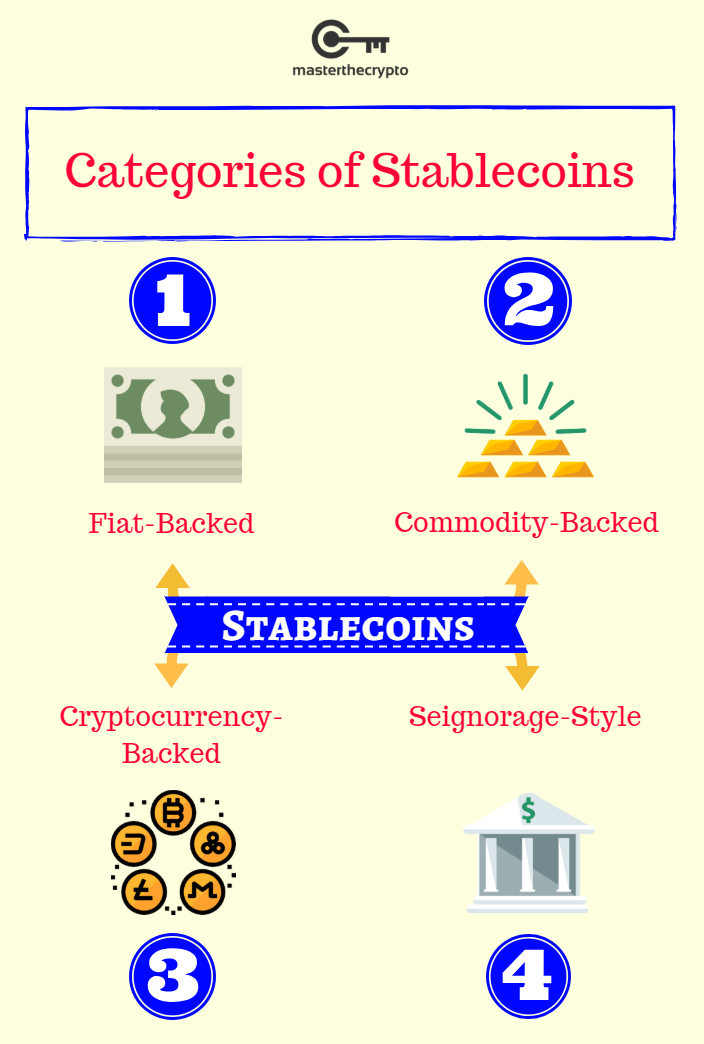
According to Investopedia, a stablecoin is a class of cryptocurrencies that attempt to offer price stability and are backed by a reserve asset. Stablecoins have gained traction as they attempt to offer the best of both worlds—the instant processing and security or privacy of payments of cryptocurrencies, and the volatility-free stable valuations of fiat currencies.

***

***

Stablecoins are cryptocurrencies where the price is designed to be pegged to a cryptocurrency, fiat money, or to exchange-traded commodities (such as precious metals or industrial metals).

CITE: https://www.r2library.com/Resource/Title/082610254

***

Key Points

  • Stablecoins are cryptocurrencies that attempt to peg their market value to some external reference.
  • Stablecoins may be pegged to a currency like the U.S. dollar or to a commodity’s price such as gold.
  • Stablecoins achieve their price stability via collateralization (backing) or through algorithmic mechanisms of buying and selling the reference asset or its derivatives.

***

***

COMMENTS APPRECIATED

Thank You

***

***

Lifelong Learning for Entrepreneurs: 5 Books For Business Success — Jolly Innopreneur

The great vizier of Persia, Abdul Qassim Ismail (who lived in the 10th century), never parted with his library. If he went anywhere, the library “followed” him. The library was made up of 117,000 volumes of books and was transported by 400 camels. And the books (together with the camels) were arranged in alphabetical order. […]
Lifelong Learning for Entrepreneurs: 5 Books For Business Success — Jolly Innopreneur

Common Entrepreneurial Mistakes

BY JONATHAN MASE R.N.

***

***

Being an entrepreneur is not necessarily easy, and many people that try to become entrepreneurs wind up failing. It’s important to recognize the risk of failure before you decide to walk down this path. Being an entrepreneur is very rewarding, and you can find success if you can do things right.

Keep reading to learn about common entrepreneurial mistakes that you can avoid to give yourself a better chance of realizing your entrepreneurial goals. 

READ: https://jonathanmase.wordpress.com/2021/08/06/common-entrepreneurial-mistakes/

Your comments are appreciated.

THANK YOU

MD Entrepreneurs: https://medicalexecutivepost.com/2021/07/29/minnovation-for-physician-entrepreneurs/

***

****

PODCAST: Medicare Re-Admission Penalty Explained

As part of the Affordable Care Act of 2010

CMS changed its hospital readmission penalty methodology

BY ERIC BRICKER MD

****

***

COMMENTS APPRECIATED

Thank You

SUBSCRIBE TO THE MEDICAL EXECUTIVE-POST

***

https://www.amazon.com/Financial-Management-Strategies-Healthcare-Organizations/dp/1466558733/ref=sr_1_3?ie=UTF8&qid=1380743521&sr=8-3&keywords=david+marcinko

***

https://www.amazon.com/Hospitals-Healthcare-Organizations-Management-Operational/dp/1439879907/ref=sr_1_4?s=books&ie=UTF8&qid=1334193619&sr=1-4

***

Health Consumption Expenditures Per Capita

By Staff Reporters

***

KFF: Health Consumption Expenditures Per Capita

 •  United States: $11,946
 •  Switzerland: $7,138
 •  Germany: $6,731
 •  Netherlands: $6,299
 •  Austria: $5,899
 •  Sweden: $5,754
 •  France: $5,564
 •  Belgium: $5,458
 •  Canada: $5,370
 •  United Kingdom: $5,268
 •  Australia: $4,919
 •  Japan: $4,691

Notes: U.S. value obtained from National Health Expenditure data. Data from Australia, Belgium, Canada, Japan and Switzerland are from 2019. Data for Australia, France, and Japan are estimated. Data for Austria, Canada, Germany, Netherlands, and Sweden are provisional. Health consumption does not include investments in structures, equipment, or research. Data for 2020 except as noted.
Source: KFF analysis of National Health Expenditure (NHE) and OECD data, January 21, 2022

CITE: https://www.r2library.com/Resource/Title/0826102549

***

COMMENTS APPRECIATED

Thank You

Subscribe to the Medical Executive-Post

***

***

ALPHABET GOOGLE: Stock Splitting!

By Staff Reporters

***

DEFINITION: A stock split or stock divide increases the number of shares in a company. For example, after a 2-for-1 split, each investor will own double the number of shares, and each share will be worth half as much. A stock split causes a decrease of market price of individual shares, but does not change the total market capitalization of the company: stock dilution does not occur.

CITE: https://www.r2library.com/Resource/Title/082610254

***

EXAMPLE:

Google parent company Alphabet said it would split its stock 20–1. That means in July 2022, Alphabet shareholders will receive 19 more shares for every one that they own. It doesn’t mean they’ll be 20x richer—the price of the stock they hold will drop a proportional amount. If the stock split were to happen now, Alphabet’s share price would fall from $2,865 to $143.

Image result for stock split

Why does it matter?

In many ways, it doesn’t. A stock split does not change the value of the company. It’s simply a way to increase the number of shares outstanding.

Think of it like slicing a pizza. At a share price of almost $3,000, Alphabet’s slices were a wide a monstrosity. With the stock split, it’s cutting company ownership into smaller portions. But, in the end, the pizza isn’t growing—there are just more slices to be shared.

So why do it? By making the slices of its company smaller, it hopes that more people will look at them and say, “Well I guess one couldn’t hurt.” Alphabet said the goal of the stock split is to attract more small-time investors who might have been intimidated by buying in at such a steep share price.

  • Only 27 other stocks in the S&P 500 have share prices above $500 besides Alphabet.

And, there’s evidence this bit of corporate inception can be effective. To see why, let’s look at what happened when two other tech giants, Tesla and Apple, split their stock recently.

  • When Apple split its stock 4–1 in July 2020, retail investors upped their purchases from $150 million per week to nearly $1 billion, according to Vanda Research.
  • When Tesla split its stock 5–1 in August 2020, retail investing jumped from $30–$40 million/week to $700 million.

There may be another play for Alphabet here—and that is to pad its resume for inclusion in the iconic Dow Jones Industrial Average. Because the Dow is weighted by share price (an antiquated system, to be sure), Alphabet at its current price would overwhelm all of the companies. It would become the Alphabet Industrial Average. At $247, it becomes a much more attractive candidate for the Dow.

***

COMMENTS APPRECIATED

Thank You

Subscribe to the Medical Executive-Post

***

***

SPIKE: Hospitals Suing Patients for Unpaid Medical Bills

By Staff Reporters

***

Spike in Hospitals Suing Patients for Unpaid Medical Bills

 •  Lawsuits over unpaid bills for hospitals rose by 37% in Wisconsin from 2001 to 18.
 •  Wage garnishments from the lawsuits rose 27% in that time period.
 •  5% of hospitals account for 25% of lawsuits. Nonprofit hospitals and critical access hospitals are more likely to sue patients, according to the study.
 •  There were 1.86 lawsuits per 1,000 Black residents in 2018, compared to 1.32 per 1,000 white residents.

Source: YaleNews, December 6, 2021

HEALTH ECONOMICS CITE: https://www.r2library.com/Resource/Title/0826102549

***

***

COMMENTS APPRECIATED.

Thank You

Subscribe to the MEDICAL EXECUTIVE-POST

***

***

PODCAST: Ray Dalio on How the Healthcare Economy Works

Economy Works’ Applied to Healthcare … Credit Cycles and Healthcare Policy

By Eric Bricker MD

***

***

COMMENTS APPRECIATED

Subscribe to the ME-P

Thank You

HEALTH ECONOMICS CITE: https://www.r2library.com/Resource/Title/0826102549

RICARDIAN DEMAND HEALTH ECONOMICS: https://medicalexecutivepost.com/2021/12/14/ricardian-derived-demand-economics-in-medicine/

RISING HEALTH CARE COSTS: https://medicalexecutivepost.com/2018/03/11/medical-treatment-costs-becoming-expensive-25-factors/

***

***

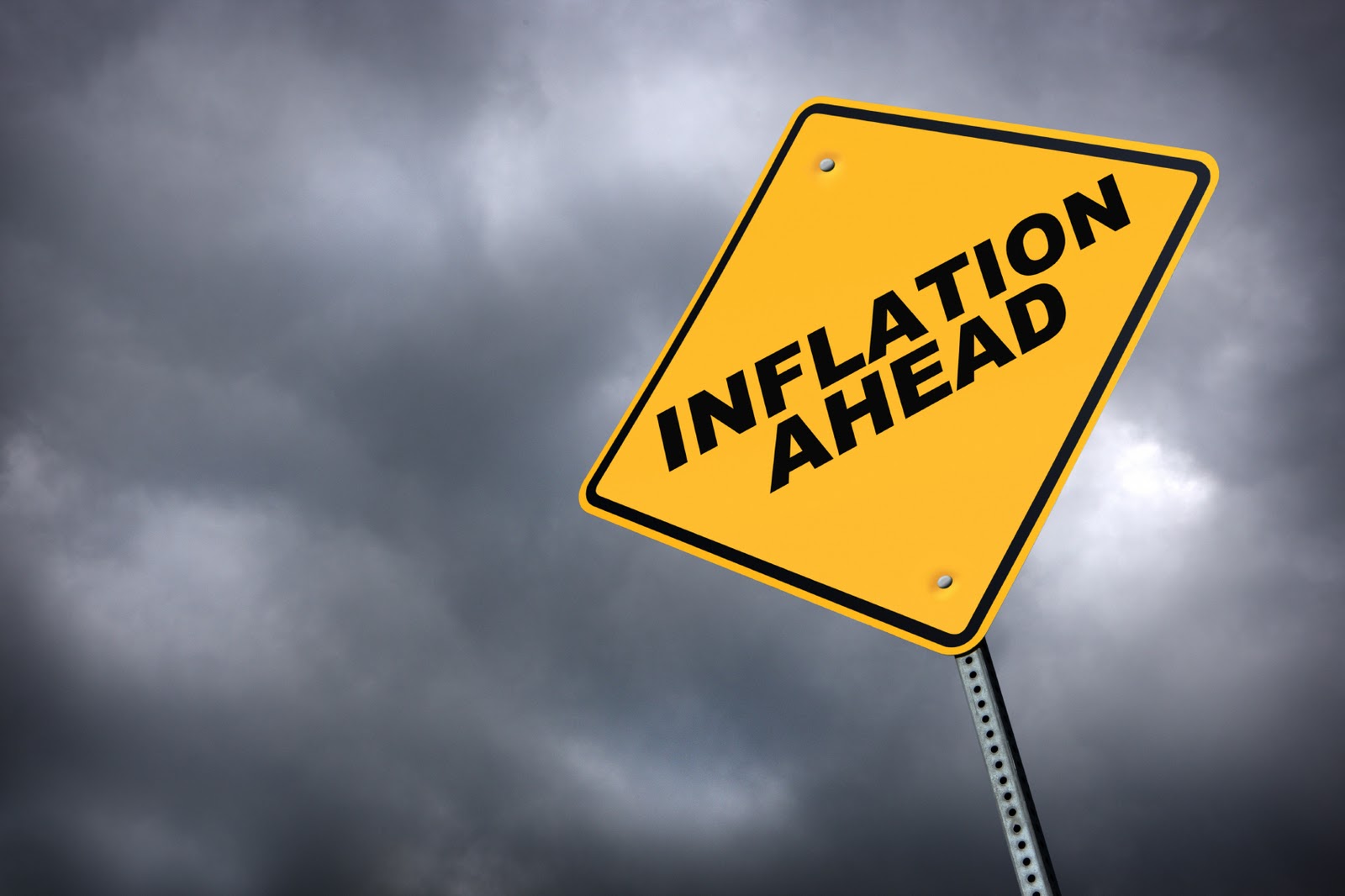
INFLATION Is Here – UPDATE?

But for How Long?

See the source image

Vitaliy N. Katsenelson, CFA

[CEO & Chief Investment Officer]

READERS

DEFINITION: In economics, inflation (or less frequently, price inflation) is a general rise in the price level of an economy over a period of time. When the general price level rises, each unit of currency buys fewer goods and services; consequently, inflation reflects a reduction in the purchasing power per unit of money – a loss of real value in the medium of exchange and unit of account within the economy. The opposite of inflation is deflation, a sustained decrease in the general price level of goods and services. The common measure of inflation is the inflation rate, the annualized percentage change in a general price index, usually the consumer price index, over time.

CITATION: https://www.r2library.com/Resource/Title/0826102549

***

See the source image

***

DEAR READERS

This essay is going to be long.
I blame inflation, be it transitory or not, for inflating its length. 

The number one question I am asked by clients, friends, readers, and random strangers is, are we going to have inflation? 

I think about inflation on three timelines: short, medium, and long-term

The pandemic disrupted a well-tuned but perhaps overly optimized global economy and time-shifted the production and consumption of various goods. For instance, in the early days of the pandemic automakers cut their orders for semiconductors. As orders for new cars have come rolling back, it is taking time for semiconductor manufacturers, who, like the rest of the economy, run with little slack and inventory, to produce enough chips to keep up with demand. A $20 device the size of a quarter that goes into a $40,000 car may have caused a significant decline in the production of cars and thus higher prices for new and used cars. (Or, as I explained to my mother-in-law, all the microchips that used to go into cars went into a new COVID vaccine, so now Bill Gates can track our whereabouts.)

Here is another example. The increase in new home construction and spike in remodeling drove demand for lumber while social distancing at sawmills reduced lumber production – lumber prices spiked 300%. Costlier lumber added $36,000 to the construction cost of a house, and the median price of a new house in the US is now about $350,000.

The semiconductor shortage will get resolved by 2022, car production will come back to normal, and supply and demand in the car market will return to the pre-pandemic equilibrium. High prices in commodities are cured by high prices. High lumber prices will incentivize lumber mills to run triple shifts. Increased supply will meet demand, and lumber prices will settle at the pre-pandemic level in a relatively short period of time. That is the beauty of capitalism! 

Most high prices caused by the time-shift in demand and supply fall into the short-term basket, but not all. It takes a considerable amount of time to increase production of industrial commodities that are deep in the ground – oil, for instance. Low oil prices preceding the pandemic were already coiling the spring under oil prices, and COVID coiled it further. It will take a few years and increased production for high oil prices to cure high oil prices. Oil prices may also stay high because of the weaker dollar, but we’ll come back to that.

Federal Reserve officials have told us repeatedly they are not worried about inflation; they believe it is transitory, for the reasons I described above. We are a bit less dismissive of inflation, and the two factors that worry us the most in the longer term are labor costs and interest rates. 

Let’s start with labor costs 

During a garden-variety recession, companies discover that their productive capacity exceeds demand. To reduce current and future output they lay off workers and cut capital spending on equipment and inventory. The social safety net (unemployment benefits) kicks in, but not enough to fully offset the loss of consumer income; thus demand for goods is further reduced, worsening the economic slowdown. Through millions of selfish transactions (microeconomics), the supply of goods and services readjusts to a new (lower) demand level. At some point this readjustment goes too far, demand outstrips supply, and the economy starts growing again.

This pandemic was not a garden-variety recession 

The government manually turned the switch of the economy to the “off” position. Economic output collapsed. The government sent checks to anyone with a checking account, even to those who still had jobs, putting trillions of dollars into consumer pockets. Though output of the economy was reduced, demand was not. It mostly shifted between different sectors within the economy (home improvement was substituted for travel spending). Unlike in a garden-variety recession, despite the decline in economic activity (we produced fewer widgets), our consumption has remained virtually unchanged. Today we have too much money chasing too few goods– that is what inflation is. This will get resolved, too, as our economic activity comes back to normal.

But …

Today, though the CDC says it is safe to be inside or outside without masks, the government is still paying people not to work. Companies have plenty of jobs open, but they cannot fill them. Many people have to make a tough choice between watching TV while receiving a paycheck from big-hearted Uncle Sam and working. Zero judgement here on my part – if I was not in love with what I do and had to choose between stacking boxes in Amazon’s warehouse or watching Amazon Prime while collecting a paycheck from a kind uncle, I’d be watching Sopranos for the third time. 

To entice people to put down the TV remote and get off the couch, employers are raising wages. For instance, Amazon has already increased minimum pay from $15 to $17 per hour. Bank of America announced that they’ll be raising the minimum wage in their branches from $20 to $25 over the next few years. The Biden administration may not need to waste political capital passing a Federal minimum wage increase; the distorted labor market did it for them. 

These higher wages don’t just impact new employees, they help existing employees get a pay boost, too. Labor is by far the biggest expense item in the economy. This expense matters exponentially more from the perspective of the total economy than lumber prices do. We are going to start seeing higher labor costs gradually make their way into higher prices for the goods and services around us, from the cost of tomatoes in the grocery store to the cost of haircuts.

Only investors and economists look at higher wages as a bad thing. These increases will boost the (nominal) earnings of workers; however, higher prices of everything around us will negate (at least) some of the purchasing power. 

Wages, unlike timber prices, rarely decline. It is hard to tell someone “I now value you less.” Employers usually just tell you they need less of your valuable time (they cut your hours) or they don’t need you at all (they lay you off and replace you with a machine or cheap overseas labor). It seems that we are likely going to see a one-time reset to higher wages across lower-paying jobs. However, once the government stops paying people not to work, the labor market should normalize; and inflation caused by labor disbalance should come back to normal, though increased higher wages will stick around.

There is another trend that may prove to be inflationary in the long-term: de-globalization.  Even before the pandemic the US set plans to bring manufacturing of semiconductors, an industry deemed strategic to its national interests, to its shores. Taiwan Semiconductor and Samsung are going to be spending tens of billions of dollars on factories in Arizona.  

The pandemic exposed the weaknesses inherent in just-in-time manufacturing but also in over reliance on the kindness of other countries to manufacture basic necessities such as masks or chemicals that are used to make pharmaceuticals.  Companies will likely carry more inventory going forward, at least for a while.  But more importantly more manufacturing will likely come back to the US. This will bring jobs and a lot of automation, but also higher wages and thus higher costs.  

If globalization was deflationary, de-globalization is inflationary  

We are not drawing straight-line conclusions, just yet. A lot of manufacturing may just move away from China to other low-cost countries that we consider friendlier to the US; India and Mexico come to mind.  

And then we have the elephant in the economy – interest rates, the price of money. It’s the most important variable in determining asset prices in the short term and especially in the long term. The government intervention in the economy came at a significant cost, which we have not felt yet: a much bigger government debt pile. This pile will be there long after we have forgotten how to spell social distancing
 
The US government’s debt increased by $5 trillion to $28 trillion in 2020 – more than a 20% increase in one year! At the same time the laws of economics went into hibernation: The more we borrow the less we pay for our debt, because ultra-low interest rates dropped our interest payments from $570 billion in 2019 to $520 billion in 2020. 

That is what we’ve learned over the last decade and especially in 2020: The more we borrow the lower interest we pay. I should ask for my money back for all the economics classes I took in undergraduate and graduate school.

This broken link between higher borrowing and near-zero interest rates is very dangerous. It tells our government that how much you borrow doesn’t matter; you can spend (after you borrow) as much as your Republican or Democratic heart desires. 

However, by looking superficially at the numbers I cited above we may learn the wrong lesson. If we dig a bit deeper, we learn a very different lesson: Foreigners don’t want our (not so) fine debt. It seems that foreign investors have wised up: They were not the incremental buyer of our new debt – most of the debt the US issued in 2020 was bought by Uncle Fed. Try explaining to your kids that our government issued debt and then bought it itself. Good luck.

Let me make this point clear: Neither the Federal Reserve, nor I, nor a well-spoken guest on your business TV knows where interest rates are going to be (the total global bond market is bigger even than the mighty Fed, and it may not be able to control over interest rates in the long run). But the impact of what higher interest rates will do the economy increases with every trillion we borrow. There is no end in sight for this borrowing and spending spree (by the time you read this, the administration will have announced another trillion in spending). 

Let me provide you some context about our financial situation 


The US gross domestic product (GDP) – the revenue of the economy – is about $22 trillion, and in 2019 our tax receipts were about $3.5 trillion. Historically, the-10 year Treasury has yielded about 2% more than inflation. Consumer prices (inflation) went up 4.2% in April. Today the 10-year Treasury pays 1.6%; thus the World Reserve Currency debt has a negative 2.6% real interest rate (1.6% – 4.2%). 

These negative real (after inflation) interest rates are unlikely to persist while we are issuing trillions of dollars of debt. But let’s assume that half of the increase is temporary and that 2% inflation is here to stay. Let’s imagine the unimaginable. Our interest rate goes up to the historical norm to cover the loss of purchasing power caused by inflation. Thus it goes to 4% (2 percentage points above 2% “normal” inflation). In this scenario our federal interest payments will be over $1.2 trillion (I am using vaguely right math here). A third of our tax revenue will have to go to pay for interest expense. Something has to give. It is not going to be education or defense, which are about $230 billion and $730 billion, respectively. You don’t want to be known as a politician who cut education; this doesn’t play well in the opponent’s TV ads. The world is less safe today than at any time since the end of the Cold War, so our defense spending is not going down (this is why we own a lot of defense stocks). 

The government that borrows in its own currency and owns a printing press will not default on its debt, at least not in the traditional sense. It defaults a little bit every year through inflation by printing more and more money. Unfortunately, the average maturity of our debt is about five years, so it would not take long for higher interest expense to show up in budget deficits. 

Money printing will bring higher inflation and thus even higher interest rates

If things were not confusing enough, higher interest rates are also deflationary 

We’ve observed significant inflation in asset prices over the last decade; however, until this pandemic we had seen nothing yet. Median home prices are up 17% in one year. The wild, speculative animal spirits reached a new high during the pandemic. Flush with cash (thanks to kind Uncle Sam), bored due to social distancing, and borrowing on the margin (margin debt is hitting a 20-year high), consumers rushed into the stock market, turning this respectable institution (okay, wishful thinking on my part) into a giant casino. 

It is becoming more difficult to find undervalued assets. I am a value investor, and believe me, I’ve looked (we are finding some, but the pickings are spare). The stock market is very expensive. Its expensiveness is setting 100-year records. Except, bonds are even more expensive than stocks – they have negative real (after inflation) yields.

But stocks, bonds, and homes were not enough – too slow, too little octane for restless investors and speculators. Enter cryptocurrencies (note: plural). Cryptocurrencies make Pets.com of the 1999 era look like a conservative investment (at least it had a cute sock commercial). There are hundreds if not thousands of crypto “currencies,” with dozens created every week. (I use the word currency loosely here. Just because someone gives bits and bytes a name, and you can buy these bits and bytes, doesn’t automatically make what you’re buying a currency.)

“The definition of a bubble is when people are making money all out of proportion to their intelligence or work ethic.”

By Mike Burry MD
[The Big Short]

I keep reading articles about millennials borrowing money from their relatives and pouring their life savings into cryptocurrencies with weird names, and then suddenly turning into millionaires after a celebrity CEO tweets about the thing he bought. Much ink is spilled to celebrate these gamblers, praising them for their ingenious insight, thus creating ever more FOMO (fear of missing out) and spreading the bad behavior.

Unfortunately, at some point they will be writing about destitute millennials who lost all of their and their friends’ life savings, but this is down the road. Part of me wants to call this a crypto craziness a bubble, but then I think, Why that’s disrespectful to the word bubble, because something has to be worth something to be overpriced. At least tulips were worth something and had a social utility. (I’ll come back to this topic later in the letter).

But ….

When interest rates are zero or negative, stocks of sci-fi-novel companies that are going to colonize and build five-star hotels on Mars are priced as if El Al (the Israeli airline) has regular flights to the Red Planet every day of the week except on Friday (it doesn’t fly on Shabbos). Rising interest rates are good defusers of mass delusions and rich imaginations. 

In the real economy, higher interest rates will reduce the affordability of financed assets. They will increase the cost of capital for businesses, which will be making fewer capital investments. No more 2% car loans or 3% business loans. Most importantly, higher rates will impact the housing market. 

Up to this point, declining interest rates increased the affordability of housing, though in a perverse way: The same house with white picket fences (and a dog) is selling for 17% more in 2021 than a year before, but due to lower interest rates the mortgage payments have remained the same. Consumers are paying more for the same asset, but interest rates have made it affordable.

At higher interest rates housing prices will not be making new highs but revisiting past lows. Declining housing prices reduce consumers’ willingness to improve their depreciating dwellings (fewer trips to Home Depot). Many homeowners will be upside down in their homes, mortgage defaults will go up… well, we’ve seen this movie before in the not-so-distant past. Higher interest rates will expose a lot of weaknesses that have been built up in the economy. We’ll be finding fault lines in unexpected places – low interest has covered up a lot of financial sins.

And then there is the US dollar, the world’s reserve currency. Power corrupts, but the unchallenged and unconstrained the power of being the world’s reserve currency corrupts absolutely. It seems that our multitrillion-dollar budget deficits will not suddenly stop in 2021. With every trillion dollars we borrow, we chip away at our reserve currency status (I’ve written about this topic in great detail, and things have only gotten worse since). And as I mentioned above, we’ve already seen signs that foreigners are not willing to support our debt addiction. 

A question comes to mind.
Am I yelling fire where there is not even any smoke? 

Higher interest rates is anything but a consensus view today. Anyone who called for higher rates during the last 20 years is either in hiding or has lost his voice, or both. However, before you dismiss the possibility of higher rates as an unlikely plot for a sci-fi novel, think about this. 

In the fifty years preceding 2008, housing prices never declined nationwide. This became an unquestioned assumption by the Federal Reserve and all financial players. Trillions of dollars of mortgage securities were priced as if “Housing shall never decline nationwide” was the Eleventh Commandment, delivered at Temple Sinai to Goldman Sachs. Or, if you were not a religious type, it was a mathematical axiom or an immutable law of physics. The Great Financial Crisis showed us that confusing the lack of recent observations of a phenomenon for an axiom may have grave consequences. 

Today everyone (consumers, corporations, and especially governments) behaves as if interest rates can only decline, but what if… I know it’s unimaginable, but what if ballooning government debt leads to higher interest rates? And higher interest rates lead to even more runaway money printing and inflation? 

This will bring a weaker dollar 

A weaker US dollar will only increase inflation, as import prices for goods will go up in dollar terms. This will create an additional tailwind for commodity prices. 

If your head isn’t spinning from reading this, I promise mine is from having written it. 

To sum up: A lot of the inflation caused by supply chain disruption that we see today is temporary. But some of it, particularly in industrial commodities, will linger longer, for at least a few years. Wages will be inflationary in the short-term and will reset prices higher, but once the government stops paying people not to work, wage growth should slow down. Finally, in the long term a true inflationary risk comes from growing government borrowing and budget deficits, which will bring higher interest rates and a weaker dollar with them, which will only make inflation worse and will also deflate away a lot of assets.

THE END
UPDATE: https://www.msn.com/en-us/news/us/how-us-inflation-rate-is-impacting-americans-wallets-before-the-holiday-season/vi-AAROG5J

CURRENT: https://www.msn.com/en-us/money/markets/us-treasury-yields-tick-lower-on-fears-omicron-will-dent-recovery/ar-AARYSKy?li=BBnbfcL

Your thoughts are appreciated.

THANK YOU

***
See the source image

PODCASTS: How Prescription [Rx] Coverage Works

Formulary Tiers, PBM, Rebates, Spread-Pricing Explained

By Dr. Eric Bricker MD

***

***

CITE: https://www.r2library.com/Resource/Title/082610254

***

***

***
YOUR COMMENTS ARE APPRECIATED.

Thank You

***

What is QUANTITATIVE EASING?

Q.E.

By Dr. David E. Marcinko MBA CMP®

CMP logo

SPONSOR: http://www.CertifiedMedicalPlanner.org

QE (Quantitative Easing = compound noun)

Although standard definitions will tell you that it is a ‘monetary policy’ used by central banks to stimulate the national economy, in reality it is more as follows:

– A cleverly disguised word that simply means ‘money printing’.

CITE: https://www.r2library.com/Resource/Title/0826102549

Central banks use QE as a disguise for increasing the money supply, as to monetize its increasing debt.

For a more technical analysis of the actual mechanics of QE, I invite you to read the article entitled QE for Dummies.

Examples:

1. The Central Bank embarked on another round of QE in hopes that it can kick-start the economy.

2. Ben Bernanke is set to begin the Fed’s taper of QE as soon as next month.

***
YOUR COMMENTS ARE APPRECIATED.

***

THANK YOU

***

US DEBT BUSTERS: The 1 TRILLION DOLLAR Coin

***

BY MORNING BREW

The Legend of the $1 Trillion Platinum Coin

****

See the source image

***

You may have heard that a deadline to suspend the debt ceiling is rapidly approaching, and if lawmakers don’t do anything it could lead to “economic catastrophe,” in the words of Treasury Secretary Janet Yellen.

But what if we told you there was a solution to the debt ceiling fiasco so crazy…it just might work?

The solution: Yellen could have the Treasury mint a $1 trillion platinum coin, deposit it at the Fed to “retire” loads of US federal debt, and then enable the government to carry on with business as usual without having to worry about defaulting on its existing debt.

But can the Treasury really do that? Yes. According to Section 31 US Code § 5112

  • “The Secretary may mint and issue platinum bullion coins and proof platinum coins in accordance with such specifications, designs, varieties, quantities, denominations, and inscriptions as the Secretary, in the Secretary’s discretion, may prescribe from time to time.”

The law is crystal clear, and has been deemed kosher by numerous academics. “The statute clearly does authorize the issuance of trillion-dollar coins,” Laurence Tribe, a Harvard Law professor, told Washington Monthly back in 2013.

In fact, nothing says we have to stop at $1 trillion. Yellen could go big with a $10 trillion coin, hypothetically. As Bloomberg’s Joe Weisenthal explains, none of this would lead to inflation because it’s merely an “accounting trick”—not an influx of money into the economy.

Have we tried this before? The $1 trillion platinum coin idea seems to pop up every time the US faces a debt ceiling crunch. It was first introduced by a Georgia lawyer in 2010 and gained traction during the debt-ceiling crisis of 2011.

Things really turned up in 2013, when the government was…you guessed it, facing another debt ceiling deadline. The hashtag #MintTheCoin became popular on Twitter, and economists like Paul Krugman advocated for unleashing the coin. “If we have a crisis over the debt ceiling, it will be only because the Treasury Department would rather see economic devastation than look silly for a couple of minutes,” he wrote.

But each time the $1 trillion coin is mentioned as a way of resolving debt ceiling problems, the people in charge dismiss it as a distraction from Congress doing its job. “Neither the Treasury nor the Federal Reserve believes that the law can or should be used to produce platinum coins for the purpose of avoiding an increase in the debt limit,” The Treasury wrote during…well, yes, another debt ceiling emergency in 2015.

As for our current predicament, the Biden administration rejected the minting of the $1 trillion coin yet again last week.

CITE: https://www.r2library.com/Resource/Title/0826102549

Bottom line: Perhaps some enterprising future Treasury Secretary will manifest the platinum coin into existence, but for now it remains as mythical as Camelot.

MORE: https://medicalexecutivepost.com/2021/09/21/what-is-the-us-debt-ceiling/

COINS: https://www.msn.com/en-us/news/politics/2-democrats-say-they-want-to-mint-a-coin-to-solve-the-debt-ceiling-showdown-and-save-the-us-from-catastrophic-default/ar-AAOXLcU?li=BBnb7Kz

GOVERNMENT Rxn: https://www.msn.com/en-us/news/politics/heres-what-would-happen-if-washington-doesnt-prevent-a-government-shutdown/ar-AAODYi5?li=BBnb7Kz

Your comments are appreciated.

****

THANK YOU

***

What is the US DEBT CEILING?

IN BRIEF

***

Invite Dr. Marcinko | The Leading Business Education Network for Doctors,  Financial Advisors and Health Industry Consultants

By Dr. David E. Marcinko MBA CMP®

CMP logo

SPONSOR: http://www.CertifiedMedicalPlanner.org

What is the domestic national debt ceiling? 

A cap on how much the US government can borrow to finance its operations. 

  • It was introduced during World War I so that Congress wouldn’t have to approve every bond issuance by the Treasury Department as it had done previously—freeing up more time for name-calling. 
  • The debt ceiling has been suspended dozens of times over the years, including 3x during the Trump administration. 

CITE: https://www.r2library.com/Resource/Title/0826102549

****

Debt Ceiling: Definition, Current Status

***

Without suspending the debt ceiling, the US wouldn’t be able to borrow money to pay its bills—and things would get ugly if that happened. The federal government would have to slash spending for programs like Medicaid, local governments would find it harder to borrow, and financial markets could go haywire.

In short, a failure to act would “produce widespread economic catastrophe,” Treasury Secretary Janet Yellen wrote in the Wall Street Journal. 

Important note: The debt ceiling doesn’t account for new spending, like the $3.5 trillion proposal the Democrats have on the table. Instead, it’s about spending Congress has already authorized, such as paying out Social Security. Over the years, the debt ceiling has become a “political weapon,” according to the AP, as each party tries to blame the other for their spending habits and for heaping more debt on the US. 

IRS: https://home.treasury.gov/policy-issues/financial-markets-financial-institutions-and-fiscal-service/debt-limit

YOUR COMMENTS ARE APPRECIATED.

***

CITE: https://www.r2library.com/Resource/Title/0826102549

Product Details

INVITE DR. MARCINKO: https://medicalexecutivepost.com/dr-david-marcinkos-

Thank You

***

PODCASTS: Surgery Safety Checklists

ATUL GAWANDE MD

Medical Culture

BY ERIC BRICKER MD

***

***

***

YOUR COMMENTS ARE APPRECIATED.

***

***

RISK MANAGEMENT TEXTBOOK: https://www.routledge.com/Risk-Management-Liability-Insurance-and-Asset-Protection-Strategies-for/Marcinko-Hetico/p/book/9781498725989

Thank You

***

Study Finds COVID-19 Accelerated Physician Practice Acquisitions

Study Finds COVID-19 Accelerated Physician Practice Acquisitions

By Health Capital Consultants, LLC


A recent study from Physicians Advocacy Institute (PAI), prepared by Avalere Health, associated the growing number of both physician practice acquisitions and employed physicians between 2019 and 2021 with the COVID-19 pandemic.

To study COVID-19’s impact on physician employment trends, the June 2021 study evaluated the IQVIA OneKey database that contains physician practice and health system ownership information.

HC Topics Banner Image

To assess these trends at a national and regional level, Avalere researchers studied the two-year period from January 1, 2019 to January 1, 2021. (Read more…)

YOUR COMMENTS ARE APPRECIATED.

Thank You

***

The BUSINESS of Medical Practice

BY DR. David Edward Marcinko MBA

***

RELATED TEXTS: https://medicalexecutivepost.com/2021/04/29/why-are-certified-medical-planner-textbooks-so-darn-popular/

INVITE DR. MARCINKO: https://medicalexecutivepost.com/dr-david-marcinkos-

Second Opinions: https://medicalexecutivepost.com/schedule-a-consultation/

THANK YOU!

***

HOSPITAL OPERATIONS: Organizations, Strategies, Techniques, Tools, Templates and Case Models

YOUR COMMENTS ARE APPRECIATED.

RELATED TEXTS: https://medicalexecutivepost.com/2021/04/29/why-are-certified-medical-planner-textbooks-so-darn-popular/

INVITE DR. MARCINKO: https://medicalexecutivepost.com/dr-david-marcinkos-

THANK YOU!

***

Hospitals and Healthcare Organizations

INVITE DR. MARCINKO: https://medicalexecutivepost.com/dr-david-marcinkos-bookings/

Thank You

***

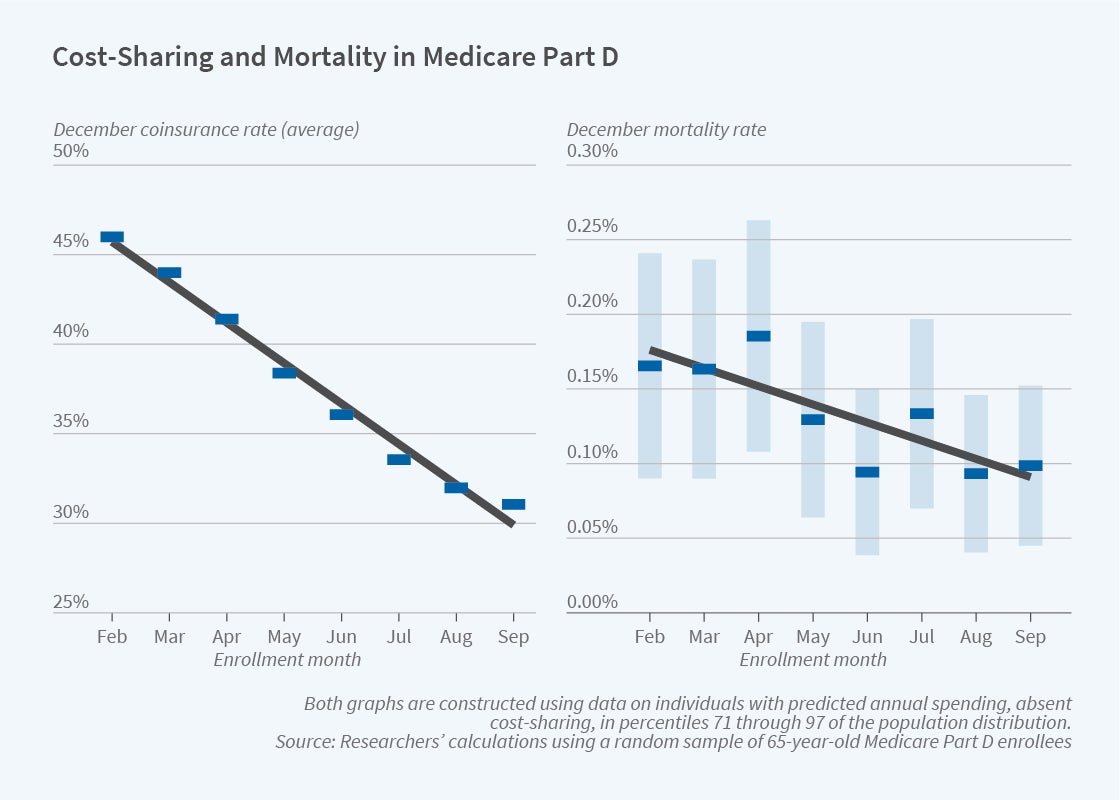
On Higher Prescription Drug Cost-Sharing and Mortality?

Raises Mortality among Medicare PART D Beneficiaries

QUERY: What are the health consequences when patients reduce their use of prescribed medications in response to higher out-of-pocket costs?

w28439.jpg

In The Health Costs of Cost-Sharing (NBER Working Paper 28439), researchers Amitabh Chandra, Evan Flack and Ziad Obermeyer use the distinctive out-of-pocket cost-sharing features of Medicare Part D to demonstrate that such reductions can increase mortality.

ASSESSMENT: Your thoughts are appreciated.

THANK YOU

***

CMS: Open Payment Data

OPEN PAYMENTS DATA SEARCH TOOL

By Dr. David Edward Marcinko MBA

The Open Payments Search Tool is used to search payments made by drug and medical device companies to physicians and teaching hospitals.

CMS releases star ratings; nearly 10% of hospitals earn ...

WEBSITE: https://openpaymentsdata.cms.gov/

INVITE DR. MARCINKO: https://medicalexecutivepost.com/dr-david-marcinkos-

Your thoughts are appreciated.

THANK YOU

***

MEDICARE: Safe Harbor Regulations

Medicare “Safe Harbor” Regulations

Invite Dr. Marcinko | The Leading Business Education ...

The Medicare Safe Harbor rules were passed in an effort to identify areas of practice that would not lead to a conviction under the anti-fraud statute.  The Safe Harbor regulations provide for eleven areas where providers may practice without violating the anti-fraud statute. 

CITE: https://www.amazon.com/Dictionary-Health-Insurance-Managed-Care/dp/0826149944/ref=sr_1_4?ie=UTF8&s=books&qid=1275315485&sr=1-4

Areas of safe practice under these regulations are briefly highlighted below:

  • Large Entity Investments – Investment in entities with assets over $50 million. The entity must be registered and traded on national exchanges.
  • Small Entity Investments – Small entity investment entities must abide by the 40-40 rule.  No more than 40% of the investment interests may be held by investors in a position to make referrals. Additionally, no more than 40% of revenues can come through referrals by these investors.
  • Space and Equipment Rentals – Such lease agreements must be in writing and must be for at least a one year term. Furthermore, the terms must be at fair market value.
  • Personal Services and Management Contracts – These contracts are allowable as long as certain rules are followed. Like lease agreements, these personal service and management contracts must be in writing for at least a one-year term, and the services must be valued at fair market value.
  • Sale of a medical practice – There are restrictions if the selling practitioner is in a position to refer patients to the purchasing practitioner.
  • Referral services– Referral services (such as hospital referral services) are allowed. However, such referral services may not discriminate between practitioners who do or do not refer patients.
  • Warranties – There is certain requirements if any item of value is received under a warranty.
  • Discounts – Certain requirements must be met if a buyer receives a discount on the purchase of goods or services that are to be paid for by Medicare or Medicaid.
  • Payments to Bona Fide Employees – Payments made to bona fide employees do not constitute fraud under the Safe Harbor Regulations.
  • Group Purchasing Organizations – Organizations that purchase goods and services for a group of entities or individuals are allowed; provided certain requirements are met.
  • Waiver of Beneficiary Co-Insurance and Deductible – Routine waiver would not come under the safe harbor.

A physician’s actions that come under the Safe Harbor Regulations will not violate the Medicare Fraud and Abuse Statutes.  However, the provider must still abide by the Stark amendments and must also abide by applicable state law.

STARK UPDATE: https://medicalexecutivepost.com/2018/08/03/cms-to-review-stark-law-relevance-once-again/

Your thoughts are appreciated.

THANK YOU

***

ORDER TEXTBOOK [3rd]: https://www.amazon.com/Business-Medical-Practice-Transformational-Doctors/dp/0826105750/ref=sr_1_9?ie=UTF8&qid=1448163039&sr=8-9&keywords=david+marcinko

***

Financing LONG-TERM CARE Needs?

AGING AND RETIREMENT

Long-term care (LTC) may not be the first thing individuals or couples think about as they approach retirement, but the costs for those who needs it can disrupt and derail retirement security. A good plan for long-term care requires many decisions over an extended period of time, and well before retirement.

In this article, Milliman consultant Robert Eaton discusses the major considerations and options for financing LTC needs in retirement.

***

ASSESSMENT: Your thoughts are appreciated.

THANK YOU

Risk Management, Liability Insurance, and Asset Protection Strategies for Doctors and Advisors: Best Practices from Leading Consultants and Certified Medical Planners™

ORDER: https://www.routledge.com/Risk-Management-Liability-Insurance-and-Asset-Protection-Strategies-for/Marcinko-Hetico/p/book/9781498725989

***

Effect of Negative Credit Shocks on Hospital Quality

A STUDY OF the National Bureau of Economic Research

BY HEALTH CAPITAL CONSULTANTS, LLC


A recent study from the National Bureau of Economic Research (NBER) indicates that quality and patient outcomes suffer in hospitals that cannot maintain their relationships with banks and their lines of credit.

The NBER study measured quality and cost data in Medicare-certified hospitals from 2010 to 2016, during which banks were undergoing annual stress tests. Regulatory “stress tests” are annual assessments from the Federal Reserve, put in place after the Great Recession in 2008, to examine a bank’s ability to survive an impending economic crisis. (Read more…) 

ASSESSMENT: Your thoughts are appreciated.

ORDER TEXTBOOK: https://www.amazon.com/Business-Medical-Practice-Transformational-Doctors/dp/0826105750/ref=sr_1_9?s=books&ie=UTF8&qid=1287563112&sr=1-9

Product Details
Product Details

ORDER TEXTBOOK: https://www.amazon.com/Financial-Management-Strategies-Healthcare-Organizations/dp/1466558733/ref=sr_1_3?ie=UTF8&qid=1380743521&sr=8-3&keywords=david+marcinko

THANK YOU

****

Tele-Medicine Valuation and Reimbursement

***
By Health Capital Consultants, LLC
***
The second installment in this five-part Health Capital Topics series on the valuation of telemedicine will focus on the reimbursement environment for telemedicine.
***
Telemedicine is reimbursed based on the services provided through this medium and includes many restrictions on where, how, and by whom services can be conducted. The first installment in this series introduced telemedicine and its increasing importance to, and popularity among, providers and patients. It also discussed the current and future challenges related to telemedicine, many of which hinge upon reimbursement restrictions and regulations. (Read more…)
***

***

Financial Stress in Times of Transition

Financial Stress Adaptation

By Rick Kahler CFP®

Stress is what happens when something you care about is at stake. This definition comes from Susan Bradley, CFP, author of Sudden Money and a specialist in the financial aspect of life transitions.

The stress around these transitions is a common reason that people seek out financial advice. We tend to be driven to consult advisors as a result of stressful changes in our lives, such as a divorce, a sudden money event like an inheritance or insurance settlement, an investment or job loss, retirement, or the death of a loved one.

While all these life events certainly have financial components, it’s almost always the emotional components of the change—how we respond to them—that are the cause of the stress.

Any change includes three stages: an ending, a period of passage while we relate and adapt to the change, and a new beginning. This period of transition can be fraught with emotion and behaviors that can trip us up in many ways, including financially.

Susan identifies nine such emotions and behaviors that she sees commonly in people in transition.

1. Lack of identity. If the transition results in the loss of a familiar role—spouse or employee, for example—you may struggle with “Who am I now? “There is often confusion and ambivalence about the future, and an inability to make decisions.

2. Confusion/Overwhelm/Fog. There is a sense of defeat by everything. You may physically slump, have a glazed-over look, and ask others to repeat a lot. It’s hard to understand, be present, respond, focus, or move forward.

3. Hopelessness. You may have a sense of having given up, not being in control of your fate, or being a victim. It may seem that there is nothing you can do to change yourself or the outcome. Financial decision-making is very difficult.

4. Invincibility. This can happen with a big positive change in your finances. You may think everything is going to turn out fine. You may feel euphoric, confident, and smarter than your advisors. You may spend more and take greater investment risks.

5. Mental and Physical Fatigue. Change can be exhausting, and the exhaustion can go undetected by others and even yourself. You may have difficulty following an agenda and tasks.

6. Numb/Withdrawn. You may feel ambivalent about and indifferent to exploring the changes in your life, what you want, and what the future may hold. You don’t give much feedback and are withdrawn and non-expressive. You may miss or not return phone calls or emails. The planning process often comes to a standstill.

7. Narrow or Fractured Focus. You may either be preoccupied with one area that excludes everything else or have an inability to focus on anything. In either case, focusing on what’s important becomes difficult or impossible.

8. Inconsistent Behavior. This is the inability to hold to one position. Instead, you may change your mind repeatedly or switch between opposite positions. You are uncertain and often embrace opposites in your wants and desires in the same breath. Making decisions become impossible.

9. Combative. You may hold on to feelings of anger, resentment, victimization, and rage regardless of the facts. You are outwardly emotionally expressive and challenging. You don’t respond well to logic and practicality. A combative person doesn’t have problems making decisions, but does have difficulty making good decisions that are in their best interests.

Assessment

Emotions and behaviors like these are generally temporary. Financial decisions made in the midst of transition-based stress, though, can have lasting negative consequences. The support of trustworthy advisors can be invaluable in navigating through both painful and joyful life changes.

***

Risk Management, Liability Insurance, and Asset Protection Strategies for Doctors and Advisors: Best Practices from Leading Consultants and Certified Medical Planners™8Comprehensive Financial Planning Strategies for Doctors and Advisors: Best Practices from Leading Consultants and Certified Medical Planners™

***

The Surprising Spending Patterns of High Earners

If you want to guess someone’s income level, look at what they buy

By Rick Kahler CFP®

***

Obviously, the rich and the poor will spend their available funds on different things.  Just what those things are, however, is less obvious. To illustrate, here is a pop quiz: Since 1992, what two products most consistently indicated that those using them were in the top 25% of all income earners in the U. S.?

Guessing a new car or a house would be logical, but wrong. The top two products indicative of being in that top one-fourth were dishwashers and dishwashing detergent. According to a fascinating study done by Marianne Bertrand and Emir Kamencia, “Coming Apart? Cultural Distances in the United States Over Time,” published in June 2018, if you use either there is about a 70% chance you are in the highest-earning 25%.

The study’s broader focus was on cultural differences, but what I couldn’t stop reading was the economic information. The products indicating affluence were nowhere near what I would have guessed.

Let’s start with 1992. The top product purchased by the rich was a dishwasher. If you owned one, there was a 70.4% chance you were in the top quartile of income earners. If you used dishwasher detergent, the chances were 70.2% you earned a high income. If you took a vacation where you traveled away from home, the chances were 67.0% you were high income. The top brands purchased by the affluent/rich were Grey Poupon Dijon mustard (62.2%), Kodak film (61.6%), and Thomas English muffins (61.5%). The top TV shows watched were Autoworks 200 (57.3%), Bush Clash (57.1%), and Tour du Pont (56.7%). Sorry, but I’ve never heard of any of these shows.

Moving on to 2004, the preferences of high income earners shifted slightly. The top product purchased by the affluent was a new vehicle (73.6%), followed by dishwashing detergent (71.6%), and owning a dishwasher (70.8%). A vacation was in fourth place with 70.5%. The top brands indicating affluence were Land O’ Lakes butter (59.2%), Kikkoman soy sauce (58.7%), and people who did not use a BIC lighter (58.7%). The top TV shows were the Super Bowl (58.5%), NFL Monday Night Football (56.1%), and NFL Regular Season Football (55.9%).

Jaguar Touring sedan XJ-V8-LWB

What about today? In 2016—the last year of data studied—the top product was a vacation (70.9%), owning a passport (70.3%), and having a Bluetooth in your vehicle (70.2%). Eight of the top 10 items related to travel or technology. The other two? Numbers five and six were owning a dishwasher and using dishwasher detergent. The top brand indicative of a high income was far and away Apple, with an iPhone first (69.1%) and an iPad second (66.9%). Across all years in their data, no individual brand was as predictive of being high-income than these two products. Other brands high on the list were Verizon Wireless (61.0%), an Android phone (59.5%), and Kikkoman soy sauce. Top TV shows were the Super Bowl (57.1%), Love It Or List It (55.9%), and Property Brothers (55.7%).

Keep in mind that the study showed seven out of 10 people who own iPhones, travel on vacation, or use dishwashers are in the top 25% of income earners. Not all people who do these things are affluent. Still, the odds that they are high earners are far better than the odds of winning any game of chance in Deadwood.

Assessment

So next time you want to size up the chances of someone being high income, ask them where they went on vacation this year and whether they took vacation photos with an iPhone or iPad. Or just ask how often they run their dishwasher.

Conclusion

Your thoughts and comments on this ME-P are appreciated. Feel free to review our top-left column, and top-right sidebar materials, links, URLs and related websites, too. Then, subscribe to the ME-P. It is fast, free and secure.

Speaker: If you need a moderator or speaker for an upcoming event, Dr. David E. Marcinko; MBA – Publisher-in-Chief of the Medical Executive-Post – is available for seminar or speaking engagements.

Book Marcinko: https://medicalexecutivepost.com/dr-david-marcinkos-bookings/

Subscribe: MEDICAL EXECUTIVE POST for curated news, essays, opinions and analysis from the public health, economics, finance, marketing, IT, business and policy management ecosystem.

MORE FOR DOCTORS AND NURES:

“Insurance & Risk Management Strategies for Doctors” https://tinyurl.com/ydx9kd93

“Financial Management Strategies for Hospitals” https://tinyurl.com/yagu567d

“Operational Strategies for Clinics and Hospitals” https://tinyurl.com/y9avbrq5

***

Risk Management, Liability Insurance, and Asset Protection Strategies for Doctors and Advisors: Best Practices from Leading Consultants and Certified Medical Planners™8Comprehensive Financial Planning Strategies for Doctors and Advisors: Best Practices from Leading Consultants and Certified Medical Planners™

Poverty in the USA

Fewer people in the US are living in poverty

By Rick Kahler CFP®

According to the October 2017 annual report of the Hamilton Project of the Brookings Institute, the number of Americans living in poverty declined by 13%, or 6 million people, in the two years from 2014 to 2016. That’s encouraging news.

Not so encouraging is that 40.6 million people still live under the government poverty level. This is about one out of every eight Americans. The department of Health and Human Services sets the poverty rate at $32,580 or less for a family of six and $16,020 or less for two people.

Who are those officially classified as poor?

According to IPUMS, an organization associated with the University of Minnesota which integrates worldwide census data, 33% are children under age 18 and 11% are seniors over age 65. So 56% of those living in poverty are of working age, ages 18-65.

Of those who are working age, 21% are disabled, 15% are caregivers, 13% are students, and 10% are early retirees or unclassified, which leaves 41% available to work full time. This is 24% of all people who are in poverty, or about 9.8 million people.

Of that 9.8 million, 65% work part time, 25% work full time, and 10% don’t work. This means just under one million of the 40.6 million people in poverty are actually able to work but unemployed.

Something I found interesting was that of the 65% who work part time, two-thirds (4.3 million) choose to do so and only one-third (2.1 million) would like to work full time. If we add the one million who are unemployed and the 2.1 million part time workers who want full time employment, we have 3.1 million people in poverty who would like to work full time, but can’t find work. This is just 7.4% of all people considered to be below the poverty level.

That leads me to wonder what might change if the 4.3 million choosing to work part time actually worked full time. Might a significant portion of them pull themselves and their families out of poverty? Is it possible that many of these people choose to live in poverty? Or might some of them choose to work part time because earning more would be countered by factors like higher child care costs or losses in government benefits? While I don’t have any statistics on this, I have a hunch it is both.

Keven Winder, a life coach who blogs at thriveinexile.com, has a post from June 2017 titled “The Poverty of the Poor.” He says, “The cause of poverty is not solely education, politics, or the need for jobs. It’s not mental illness, addiction, housing, or food programs,” which he contends are by-products of poverty. “Poverty is deeper. Poverty is disengagement from that which powers us.”

It seems to me that Winder is using “disengagement” to mean what might be described as emotional poverty. The type of emotional disengagement that helps keep people in poverty may be no different from that of a person who earns a comfortable income but chooses not to save for retirement. Or someone who loses a job but has too much false pride to take a lesser one even temporarily.

We know the cure for financial behaviors based in emotional disengagement is not more information. Those choosing to work part time and live in poverty don’t need budget figures on how earning more would increase their standard of living. The behavior goes much deeper and is emotionally entrenched.

Assessment

Certainly, financial therapy might make a difference. Unfortunately, it’s still unavailable for too many of those who need it the most.

Conclusion

Your thoughts and comments on this ME-P are appreciated. Feel free to review our top-left column, and top-right sidebar materials, links, URLs and related websites, too. Then, subscribe to the ME-P. It is fast, free and secure.

Speaker: If you need a moderator or speaker for an upcoming event, Dr. David E. Marcinko; MBA – Publisher-in-Chief of the Medical Executive-Post – is available for seminar or speaking engagements.

Book Marcinko: https://medicalexecutivepost.com/dr-david-marcinkos-bookings/

Subscribe: MEDICAL EXECUTIVE POST for curated news, essays, opinions and analysis from the public health, economics, finance, marketing, IT, business and policy management ecosystem.

https://www.crcpress.com/Comprehensive-Financial-Planning-Strategies-for-Doctors-and-Advisors-Best/Marcinko-Hetico/p/book/9781482240283

***

About USAFACTS.com

About the Website: USAFACTS.com

By Staff Reporters

Principles

USAFacts is a new data-driven portrait of the American population, our government’s finances, and government’s impact on society. They are a non-partisan, not-for-profit civic initiative and have no political agenda or commercial motive. They provide this information as a free public service and are committed to maintaining and expanding it in the future.

USA FACTS rely exclusively on publicly available government data sources. They don’t make judgments or prescribe specific policies. Whether government money is spent wisely or not, whether our quality of life is improving or getting worse – that’s for you to decide. They hope to spur serious, reasoned, and informed debate on the purpose and functions of government. Such debate is vital to our democracy. They hope that USAFacts will make a modest contribution toward building consensus and finding solutions.

More

There’s more to USAFacts than their website. They also offer an annual report, a summary report, and a “10-K” modeled on the document public companies submit annually to the SEC for transparency and accountability to their investors.

***

***

Innspiration

USAFacts was inspired by a conversation Steve Ballmer [former CEO Microsoft Corporation] had with his wife, Connie. She wanted him to get more involved in philanthropic work. He thought it made sense to first find out what government does with the money it raises.

Assessment

Where does the money come from and where is it spent? Whom does it serve? And most importantly, what are the outcomes?

Visit: http://www.USAFACTS.com

Conclusion

Your thoughts and comments on this ME-P are appreciated. Feel free to review our top-left column, and top-right sidebar materials, links, URLs and related websites, too. Then, subscribe to the ME-P. It is fast, free and secure.

Speaker: If you need a moderator or speaker for an upcoming event, Dr. David E. Marcinko; MBA – Publisher-in-Chief of the Medical Executive-Post – is available for seminar or speaking engagements. Contact: MarcinkoAdvisors@msn.com

OUR OTHER PRINT BOOKS AND RELATED INFORMATION SOURCES:

Comprehensive Financial Planning Strategies for Doctors and Advisors: Best Practices from Leading Consultants and Certified Medical Planners™

***

CEO Compensation is Down

Join Our Mailing List 

NO, IT’S UP – YOU BETTER JUDGE FOR YOURSELF        

ArtBy Arthur Chalekian GEPC

[Financial Consultant]

The New York Times reported the 200 most-highly-paid CEOs in the United States collectively experienced a pay cut last year!

CEOs’ average compensation – all CEOs compensation added together and then divided by 200 – fell by 15 percent from 2014 to 2015.

Of course, you know what they say about lies and statistics

Equilar, the company responsible for the study, reported CEO pay grew modestly in 2015. They looked at median CEO pay – the number in the middle. It was $16.6 million for fiscal 2015. That’s up 5 percent from the previous year.

No matter how you interpret the results, not one CEO earned more than $100 million. CEOs in the technology industry had the highest median pay while those in basic materials (which includes oil and gas companies) had the lowest, according to Equilar.

Many people have argued company performance should inform CEO pay, but there wasn’t much evidence this was the case. Although there may have been a basis for CEO pay changes, there was no clear correlation to shareholder returns or company revenues.

For instance:

  • A 702 percent increase in pay was awarded when total shareholder return was down 5 percent, and company revenues were down 1 percent.
  • A 286 percent increase in pay was awarded when total shareholder return was up 16 percent, and company revenues were up 9 percent.
  • A 48 percent reduction in pay occurred when total shareholder return was up 25 percent, and company revenues were up 4 percent.

Assessment

The portion of 2015 corporate budgets allotted to pay hikes for employees increased by 2.8 percent, on average, according to Mercer. The report said, “… the highest-performing employees received average base pay increases of 4.8 percent in 2015 compared to 2.7 percent for average performers and 0.2 percent for the lowest performers …”

Conclusion

Your thoughts and comments on this ME-P are appreciated. Feel free to review our top-left column, and top-right sidebar materials, links, URLs and related websites, too. Then, subscribe to the ME-P. It is fast, free and secure.

Speaker: If you need a moderator or speaker for an upcoming event, Dr. David E. Marcinko; MBA – Publisher-in-Chief of the Medical Executive-Post – is available for seminar or speaking engagements. Contact: MarcinkoAdvisors@msn.com

OUR OTHER PRINT BOOKS AND RELATED INFORMATION SOURCES:

Risk Management, Liability Insurance, and Asset Protection Strategies for Doctors and Advisors: Best Practices from Leading Consultants and Certified Medical Planners™ Risk Management, Liability Insurance, and Asset Protection Strategies for Doctors and Advisors: Best Practices from Leading Consultants and Certified Medical Planners™

***

On Income Inequality

Join Our Mailing List

A Passionate Discussion

Rick Kahler MS CFP

By Rick Kahler MS CFP®

Income inequality is a topic of passionate discussion today in many of the circles I move in. The discussion typically starts with a foregone conclusion that income inequality is a huge problem in the US. Some solutions I hear include increasing the top income tax bracket to 90%, initiating an annual wealth tax, or increasing the estate tax to 100%.

While leveling the playing field will certainly solve income inequality, it won’t solve the real problem. When I say that, I often get stares of bewilderment and disdain. It isn’t unusual for people to slowly distance themselves as if I had shapeshifted into Donald Trump.

How bad is it?

First, how bad is income inequality in the US? It’s certainly no worse today than it’s been in the last 80 years. The CIA World Factbook 2015 Gini Index, a rating where 0 is equal income and 100 is completely unequal income, finds the US rates a 45.0, exactly what it was in 1929. That puts us in 38th place, slightly above the global median, which is 39.4. The worst 30 countries have ratings of 46.8 to 63.2.

Regardless of the fact that it has not increased over the last 80 years, what is the real problem with income inequality? A common assumption is that it has created an America where most people don’t have enough to afford a minimal quality of life.

But is that true?

In a column from October 2015, George Will cites a new book, On Equality, by Harry G. Frankfurt, a Princeton emeritus professor of philosophy. Frankfurt drives home a main contention that economic inequality is not inherently morally objectionable and that “doing worse than others does not entail doing badly.” His alternative to economic egalitarianism is the “doctrine of sufficiency,” which is that the moral imperative should be that everyone have enough.

Now, consider this

If you are a US citizen with an income of over $32,400, you are in the world’s top 1%. Globally, you are considered “rich.” Indeed, the poorest 1% of US citizens have more wealth than two-thirds of the world’s people. Clearly, income inequality in the US doesn’t inherently mean everyone in society doesn’t have enough. This would suggest that complaints about US income inequality may be in response to something other than having enough.

***

budget

***

Perhaps the real problem is more of a “discontent of those who are comfortable but envious,” as George Will suggests. Consider this: to be in the top 1% in income in the US you need to earn over $380,000 a year. Someone earning $32,400 a year, even though they are in the global top 1%, may easily lose that perspective when viewing someone earning over $380,000. The comparison could foster discontent by stirring up feelings of envy, jealousy, unworthiness, shame, and guilt. Rather than taking responsibility for and exploring these difficult emotions, instead we often shove them deep within and demonize others.

Will suggests that the biggest underlying producer of income inequality is freedom. Freedom includes the power to choose careers, such as opting to be a teacher rather than an engineer with full knowledge that teachers generally earn substantially less than engineers. The economic and non-economic benefits of each profession are dictated by market forces, rather than those in government deciding the winners and losers.

Assessment

Envy of the rich is almost timeless and universal. Properly reframed, it also can be motivating. Contrary to common perception, 85% of the top 1% did not inherit wealth but are first-generation millionaires or billionaires. Perhaps envy didn’t drive them to try to tear down what others had achieved. Instead, it motivated them to build their own success. 

Conclusion

Your thoughts and comments on this ME-P are appreciated. Feel free to review our top-left column, and top-right sidebar materials, links, URLs and related websites, too. Then, subscribe to the ME-P. It is fast, free and secure.

Speaker: If you need a moderator or speaker for an upcoming event, Dr. David E. Marcinko; MBA – Publisher-in-Chief of the Medical Executive-Post – is available for seminar or speaking engagements. Contact: MarcinkoAdvisors@msn.com

OUR OTHER PRINT BOOKS AND RELATED INFORMATION SOURCES:

Comprehensive Financial Planning Strategies for Doctors and Advisors: Best Practices from Leading Consultants and Certified Medical Planners™

***

The Central Banks are at it Again!

Join Our Mailing List
Central banks were at it again – and markets loved it!
Art
 ***
By Arthur Chalekian GEPC [Elite Financial Partners]
 ***
Several weeks ago, European Central Bank (ECB) President Mario Draghi surprised markets when he indicated the ECB’s governing council was considering cutting interest rates and engaging in another round of quantitative easing.
The Economist explained European monetary policy was heavily tilted toward growth before the announcement:
 ***
“The ECB is already delivering a hefty stimulus to the Euro area, following decisions taken between June 2014 and early 2015. It has introduced a negative interest rate, of minus 0.2%, which is charged on deposits left by banks with the ECB. It has also been providing ultra-cheap, long-term funding to banks provided that they improve their lending record to the private sector. And, most important of all, in January it announced a full-blooded program of quantitative easing (QE) – creating money to buy financial assets – which got under way in March with purchases of €60 billion ($68 billion) of mainly public debt each month until at least September 2016.”
***
Despite these hefty measures, recovery in the Euro area has been anemic, and deflation remains a significant issue. According to Draghi, Euro area QE is expected to continue until there is “a sustained adjustment in the path of inflation.” Europe is shooting for 2 percent inflation, just like the United States.
***
The People’s Bank of China (PBOC) eased monetary policy last week, too. On Monday, data showed the Chinese economy grew by 6.9 percent during the third quarter, year-over-year. Projections for future growth remain muted, according to BloombergBusiness. On Friday, the PBOC indicated it was cutting interest rates for the sixth time in 12 months.
***
stock-exchange
 ***
U.S. markets thrilled to the news. The Dow Jones Industrial Average, Standard & Poor’s 500 Index, and NASDAQ were all up more than 2 percent for the week. Many global markets delivered positive returns for the week, as well.
***
Conclusion
Your thoughts and comments on this ME-P are appreciated. Feel free to review our top-left column, and top-right sidebar materials, links, URLs and related websites, too. Then, subscribe to the ME-P. It is fast, free and secure.

Speaker: If you need a moderator or speaker for an upcoming event, Dr. David E. Marcinko; MBA – Publisher-in-Chief of the Medical Executive-Post – is available for seminar or speaking engagements. Contact: MarcinkoAdvisors@msn.com

OUR OTHER PRINT BOOKS AND RELATED INFORMATION SOURCES:

***

[PHYSICIAN FOCUSED FINANCIAL PLANNING AND RISK MANAGEMENT COMPANION TEXTBOOK SET]

  Risk Management, Liability Insurance, and Asset Protection Strategies for Doctors and Advisors: Best Practices from Leading Consultants and Certified Medical Planners™ Comprehensive Financial Planning Strategies for Doctors and Advisors: Best Practices from Leading Consultants and Certified Medical Planners™

 ***

Do you Want to be a Millionaire?

Join Our Mailing List

Millionaire versus Billionaire

By Rick Kahler MS CFP®  http://www.KahlerFinancial.com

Rick Kahler MS CFP

Doctor – Would you like to build up a million-dollar nest egg by the time you retire?

For middle-class earners, that goal is challenging but possible if you start at age 25 and save $1750 a month. Many married couples could do this by maxing out their 401(k) contributions. Or; you could take the route that many people follow and build a small business – or medical practice – into a million-dollar asset.

FREE WHITE PAPER [Is Medical Practice a New Asset Class?] from iMBA, Inc

Billion … with a “B”

What if you want to accumulate a billion-dollar nest egg instead? Starting at the same age of 25, you would need to save $21 million a year. Good luck with getting any employer match on that.

There’s a vast difference between a million and a billion. It’s completely misleading when activists, politicians, and the media refer glibly to “millionaires and billionaires” as if the two are almost interchangeable. Someone with a net worth of one million dollars isn’t even close to being in the same category as someone worth one billion.

Here are a few more examples to clarify the difference:

  • One million seconds from now is about 11 and a half days away. One billion seconds from now is about 31 and a half years in the future.
  • A million hours ago was 114 years in the past, early in the 20th century; our ancestors were using electricity and telephones. A billion hours ago was over 114,155 years in the past; our ancestors had evolved into Homo sapiens but were still using primitive stone tools.
  • Put one million ants on one side of a scale and a female Asian elephant on the other side. The million ants, at around six pounds, would hardly register against the elephant’s three tons. Put a billion ants on the scale, however, and they would balance or even outweigh the elephant.
  • One million pennies stacked on top of each other would make a tower nearly a mile high. One billion pennies stacked on top of each other would make a tower almost 870 miles high.
  • If you earned $45,000 a year and stashed it all under your mattress, you’d have one million dollars at the end of 22 years. To accumulate one billion dollars at that same rate, you’d need the help of your many-times-great grandchildren, because it would take 22,000 years.

Security versus Wealth

In today’s world, being a millionaire represents financial security, not vast wealth. At a withdrawal rate of 3%—the amount most experts consider sustainable—an investment portfolio of one million dollars will provide an income of $30,000 a year. Combined with Social Security, that would be enough to live comfortably but not lavishly in retirement.

Three percent of one billion dollars, on the other hand, will furnish an income of $30 million a year; definitely private jet and gated estate territory.

If millions and billions aren’t challenging enough, here’s a quick look at trillions. One trillion is a million millions, or a thousand billions. It would take one thousand elephants to balance the weight of one trillion ants. Astronomers estimate the number of stars in our Milky Way galaxy between 100 billion and 400 billion; not even close to a trillion. No wonder it’s so hard for most of us to wrap our minds around information like, “The current US national debt is more than 16.7 trillion dollars.”

***

how-much-is-a-trillion

***

Assessment

Becoming a millionaire? It’s not only achievable, but wise if you want financial security in old age. Becoming a billionaire? You’d better plan to invent something amazing, write several dozen international best-sellers, or build an incredibly successful business. Becoming a trillionaire? Don’t waste your time thinking about it. For good reason, the word isn’t even in the dictionary.

Speaker: If you need a moderator or speaker for an upcoming event, Dr. David E. Marcinko; MBA – Publisher-in-Chief of the Medical Executive-Post – is available for seminar or speaking engagements. Contact: MarcinkoAdvisors@msn.com

OUR OTHER PRINT BOOKS AND RELATED INFORMATION SOURCES:

 Risk Management, Liability Insurance, and Asset Protection Strategies for Doctors and Advisors: Best Practices from Leading Consultants and Certified Medical Planners™8Comprehensive Financial Planning Strategies for Doctors and Advisors: Best Practices from Leading Consultants and Certified Medical Planners™

Personal financial success in the PP-ACA era will be more difficult to achieve than ever before. It requires the next generation of doctors to rethink frugality, delay gratification, and redefine the very definition of success and work–life balance. And, they will surely need the subject matter medical specificity and new-wave professional guidance offered in this book.

This book is a ‘must-read’ for all health care professionals, and their financial advisors, who wish to take an active role in creating a new subset of informed and pioneering professionals known as Certified Medical Planners™.

Dr. Mark D. Dollard FACFAS [Private Practice, Tyson Corner, Virginia

http://www.CertifiedMedicalPlanner.org

Invite Dr. Marcinko

Physician Couples and Money Management

Join Our Mailing List 

On Cash Management Techniques

By Rick Kahler MS CFP® www.KahlerFinancial.com

Rick Kahler MS CFPMoney is just one of many challenges to becoming part of a couple; especially for physicians. Probably the most common question couples ask me concerns the best way to handle their cash management.

Specifically, they wonder if they should combine all their cash flow into one joint checking account, keep everything separate, or have some combination of both.

Stock Answers

My stock answer is “yes.” It seems that, the older I become, the fewer right answers there are and the more often I say, “It depends.” This is one of those situations where there is no one best method.

Future Physicians

Let’s consider the advantages and disadvantages of each approach.

  1. Combining everything in one joint account

The plus side of this scenario is that there is total financial transparency as to where the money comes from and goes to. Each party has full access to and opportunity to be fully aware of the money flow. It’s easy to track. There are no secrets.

Which brings us to the downside: there are no secrets, no autonomy. Each party can see the other’s spending and spend the other’s money. This works well in some relationships where the shared belief is, “My money is your money and your money is my money.” It doesn’t work well absent that philosophy. I find this scenario is often problematic when one or both of the parties want autonomy over how they spend their money without the watchful (often critical) eye of the other. Often this arrangement doesn’t work well in second marriages or where both parties have careers.

  1. Keeping everything completely separate

The positive of this scenario is that each party has complete autonomy and control over his or her money. This often works well for two-career couples or second marriages where both partners came into the union with significant pensions or assets. It may also be a good fit for unmarried couples. If one partner is a spendthrift, it can protect the other partner from unauthorized purchases.

The negatives are that it can be more difficult to manage joint expenses like housing costs and that neither party has any specifics into the spending of the other. If a partner has any type of addiction, separate accounts can serve to enable the addiction by hiding the extent of the problem from the other partner.

  1. Combination of joint and separate accounts

The advantage to this scenario is that it provides more autonomy than putting everything into a joint account, yet it offers an easier way to manage joint expenses. It can often result in a clear agreement on what is mine, yours, and ours. Some couples have a system where each one’s earnings are their own, and they each contribute put fixed amounts into joint account. Another method is to deposit all the income into the joint account and give each partner a periodic allowance.

The disadvantages to this are the need to manage three accounts and to decide who writes the checks from the joint account.

Spouses

Case Example:

Personally, my wife and I use the third option. As the major breadwinner, I deposit most of my income into the joint account, from which she pays all the family bills. A smaller amount of my income goes into my separate account that I use to pay for private schooling, funding 529 plans, and personal care like massages and haircuts.

Assessment

Problems often arise when partners assume the money should be managed (or is being managed) in a certain way. No matter which approach couples use, the most important factor is to discuss it and agree, as equal partners, to a system that works for them.

Channel Surfing the ME-P

Have you visited our other topic channels? Established to facilitate idea exchange and link our community together, the value of these topics is dependent upon your input. Please take a minute to visit. And, to prevent that annoying spam, we ask that you register. It is fast, free and secure.

More:

  1. Physician Cash Maximization Rules
  2. On Emergency Funds for Physicians
  3. Essential Insights on Successful Physician Budgeting

Conclusion

Your thoughts and comments on this ME-P are appreciated. Feel free to review our top-left column, and top-right sidebar materials, links, URLs and related websites, too. Then, subscribe to the ME-P. It is fast, free and secure.

Speaker: If you need a moderator or speaker for an upcoming event, Dr. David E. Marcinko; MBA – Publisher-in-Chief of the Medical Executive-Post – is available for seminar or speaking engagements. Contact: MarcinkoAdvisors@msn.com

OUR OTHER PRINT BOOKS AND RELATED INFORMATION SOURCES:

Comprehensive Financial Planning Strategies for Doctors and Advisors: Best Practices from Leading Consultants and Certified Medical Planners™

Some Financial Health Insurance Hardships and Concerns of Adults

Join Our Mailing List

Privately Insured

By http://www.MCOL.com

***

123

***

Assessment

Conclusion

Your thoughts and comments on this ME-P are appreciated. Feel free to review our top-left column, and top-right sidebar materials, links, URLs and related websites, too. Then, subscribe to the ME-P. It is fast, free and secure.

Speaker: If you need a moderator or speaker for an upcoming event, Dr. David E. Marcinko; MBA – Publisher-in-Chief of the Medical Executive-Post – is available for seminar or speaking engagements. Contact: MarcinkoAdvisors@msn.com

OUR OTHER PRINT BOOKS AND RELATED INFORMATION SOURCES:

Product DetailsProduct Details

About Theranos

What is Is – How it Works

[By Staff Reporters]

The next time your doctor recommends a blood test, you may be able to swing by your local Walgreens. You can have your finger pricked and receive results within four hours. The process of blood testing has remained the same since the 1960s. Doctors and nurses drawing vials of blood, from you, that are sent to labs leaving patients waiting for results for days or weeks.

***

theranos

***

Enter Theranos

Theranos is a privately held health technology and medical laboratory services company based in Palo Alto, California that provides blood tests. The company’s blood testing platform uses a few drops of blood obtained via a fingerstick rather than vials of blood obtained via traditional venipuncture, using microfluidics technology.

Link: http://en.wikipedia.org/wiki/Theranos

Founder Elizabeth Holmes

At 30, Elizabeth Holmes makes her debut on the Forbes 400 as the youngest self-made woman billionaire. She dropped out her sophomore year of Stanford University to found Palo Alto, Calif.-based blood testing company Theranos in 2003 with money she saved for college. With a painless prick, her labs can quickly test a drop of blood at a fraction of the price of commercial labs which need more than one vial. Theranos has raised $400 million from venture capitalists, valuing the company at $9 billion, and Holmes’ 50% stake at $4.5 billion. She has assembled a stellar board that includes elder statesmen George Shultz and Henry Kissinger. Last year, Walgreens, the largest U.S. retail pharmacy chain, with more than 8,100 stores, announced plans to roll out Theranos Wellness Centers inside its pharmacies.

Link: http://news.therawfoodworld.com/walgreens-implements-new-technology-uses-just-one-drop-blood-run-dozens-tests/

***

blood test

***

Conclusion

Your thoughts and comments on this ME-P are appreciated. Feel free to review our top-left column, and top-right sidebar materials, links, URLs and related websites, too. Then, subscribe to the ME-P. It is fast, free and secure.

Speaker: If you need a moderator or speaker for an upcoming event, Dr. David E. Marcinko; MBA – Publisher-in-Chief of the Medical Executive-Post – is available for seminar or speaking engagements. Contact: MarcinkoAdvisors@msn.com

OUR OTHER PRINT BOOKS AND RELATED INFORMATION SOURCES:

Product DetailsProduct Details