BOARD CERTIFICATION EXAM STUDY GUIDES Lower Extremity Trauma
[Click on Image to Enlarge]
ME-P Free Advertising Consultation
The “Medical Executive-Post” is about connecting doctors, health care executives and modern consulting advisors. It’s about free-enterprise, business, practice, policy, personal financial planning and wealth building capitalism. We have an attitude that’s independent, outspoken, intelligent and so Next-Gen; often edgy, usually controversial. And, our consultants “got fly”, just like U. Read it! Write it! Post it! “Medical Executive-Post”. Call or email us for your FREE advertising and sales consultation TODAY [678.779.8597] Email: MarcinkoAdvisors@outlook.com
Medical & Surgical e-Consent Forms
ePodiatryConsentForms.com
iMBA Inc., OFFICES
Suite #5901 Wilbanks Drive, Norcross, Georgia, 30092 USA [1.678.779.8597]. Our location is real and we are now virtually enabled to assist new long distance clients and out-of-town colleagues.
ME-P Publishing
SEEKING INDUSTRY INFO PARTNERS?
If you want the opportunity to work with leading health care industry insiders, innovators and watchers, the “ME-P” may be right for you? We are unbiased and operate at the nexus of theoretical and applied R&D. Collaborate with us and you’ll put your brand in front of a smart & tightly focused demographic; one at the forefront of our emerging healthcare free marketplace of informed and professional “movers and shakers.” Our Ad Rate Card is available upon request [678-779-8597].
Informational essays of most current interest to healthcare professionals. Check back periodically for practical updates. Our catalogue library of major books, texts, case models and dictionaries is suggested for additional financial, economic, business and medical practice management information and education.
CVS reported strong results for its healthcare segment in 2023, showing a 10.2% increase in revenue compared to the prior year. Still, executives lowered the segment’s 2024 guidance in anticipation of rising medical costs, according to earnings released this month.
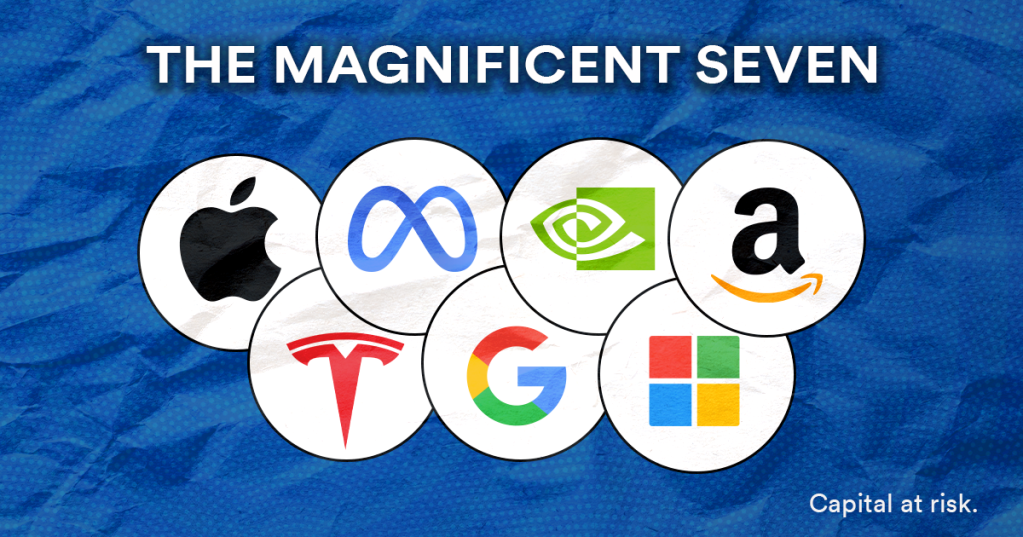
Finally, the US stock market reopens today after the long weekend, and everyone’s still talking about the Magnificent Seven. That’s because, according to a new report from Deutsche Bank, profits at these seven tech giants are greater than the profits of all publicly traded companies in nearly every G20 country. And in terms of market value, they’d be the second-largest national stock exchange in the world. Goldman Sachs sees this party lasting all night: It raised its 2024 target for the S&P 500 for the second time.
Posted on February 19, 2024 by Dr. David Edward Marcinko MBA MEd CMP™
Get ’em … While They are Hot!
By Ann Miller RN MHA
[ME-P Executive Director]
Just click on the book icon to order; get any one or all three! You’ll be glad you did.
Speaker: If you need a moderator or speaker for an upcoming event, Dr. David E. Marcinko; MBA – Publisher-in-Chief of the Medical Executive-Post – is available for seminar or speaking engagements. Contact: MarcinkoAdvisors@msn.com
Bank of America just acknowledged that the personal information of 57,028 of its customers has been compromised. This breach, attributed to a failure at Infosys McCamish Systems (IMS), a provider of insurance business process solutions engaged by the bank, poses a substantial risk of identity theft to the affected individuals.
The data breach notification, filed in Maine, reveals that sensitive information related to Bank of America’s deferred compensation plans was inadvertently accessed. IMS, in a notification letter to customers, disclosed that the compromised data encompasses a range of critical personal details. The accessed information includes customers’ names, addresses, business email addresses, dates of birth, Social Security numbers, and other account specifics. Such data is typically all required for an identity thief to execute fraudulent activities under another person’s name.
IMS’s admission that it might never be able to precisely identify what information was accessed underscores the severity and potential long-term consequences of the breach. This uncertainty adds an additional layer of anxiety for customers, highlighting the challenges in mitigating the aftermath of such security failures.
Finally, Walmart and Home Depot will be the star of the show this week they report their earnings for the holiday quarter. Nvidia will also try to keep its historic hot streak going when it reports on Wednesday—expectations are through the roof.
Posted on February 19, 2024 by Dr. David Edward Marcinko MBA MEd CMP™
ON MEDICAL WORKPLACE VIOLENCE
By Eugene Schmuckler PhD, MBA CTA
By Dr. David E. Marcinko MBA
1. What Is Workplace Violence?
Workplace violence is more than physical assault — it is any act in which a person is abused, threatened, intimidated, harassed, or assaulted in his or her employment. Swearing, verbal abuse, playing “pranks,” spreading rumors, arguments, property damage, vandalism, sabotage, pushing, theft, physical assaults, psychological trauma, anger-related incidents, rape, arson, and murder are all examples of workplace violence. The Registered Nurses Association of Nova Scotia defines violence as “any behavior that results in injury whether real or perceived by an individual, including, but not limited to, verbal abuse, threats of physical harm, and sexual harassment.” As such, workplace violence includes:
threatening behavior — such as shaking fists, destroying property, or throwing objects;
verbal or written threats — any expression of intent to inflict harm;
harassment — any behavior that demeans, embarrasses, humiliates, annoys, alarms, or verbally abuses a person and that is known or would be expected to be unwelcome. This includes words, gestures, intimidation, bullying, or other inappropriate activities;
verbal abuse — swearing, insults, or condescending language;
muggings — aggravated assaults, usually conducted by surprise with intent to rob; or
physical attacks — hitting, shoving, pushing, or kicking.
Workplace violence can be brought about by a number of different actions in the workplace. It may also be the result of non-work related situations such as domestic violence or “road rage.” Workplace violence can be inflicted by an abusive employee, a manager, supervisor, co-worker, customer, family member, or even a stranger. The University of Iowa Injury Prevention Research Center classifies most workplace violence into one of four categories.
Type I Criminal Intent — Results while a criminal activity (e.g., robbery) is being committed and the perpetrator had no legitimate relationship to the workplace.
Type II Customer/Client — The perpetrator is a customer or client at the workplace (e.g., healthcare patient) and becomes violent while being assisted by the worker.
Type III Worker on Worker — Employees or past employees of the workplace are the perpetrators.
Type IV Personal Relationship — The perpetrator usually has a personal relationship with an employee (e.g., domestic violence in the workplace).
2. Effects of Workplace Violence
The healthcare sector continues to lead all other industry sectors in incidents of non-fatal workplace assaults. In 2000, 48% of all non-fatal injuries from violent acts against workers occurred in the healthcare sector. Nurses, nurses’ aides, and orderlies suffer the highest proportion of these injuries. Non-fatal assaults on healthcare workers include assaults, bruises, lacerations, broken bones, and concussions. These reported incidents include only injuries severe enough to result in lost time from work. Of significance is that the median time away from work as a result of an assault or other violent act is 5 days. Almost 25% of these injuries result in longer than 20 days away from work. Obviously, this is quite costly to the facility as well as to the victim.
A study undertaken in Canada found that 46% of 8,780 staff nurses experienced one or more types of violence in the last five shifts worked. Physical assault was defined as being spit on, bitten, hit, or pushed.
Both Canadian and U.S. researchers have described the prevalence of verbal threats and physical assaults in intensive care, emergency departments, and general wards. A study in Florida reported that 100% of emergency department nurses experience verbal threats and 82% reported being physically assaulted. Similar results were found in a study undertaken in a Canadian hospital. Possible reasons for the high incidence of violence in emergency departments include presence of weapons, frustration with long waits for medical care, dissatisfaction with hospital policies, and the levels of violence in the community served by the emergency department.
Similar findings have been reported in studies of mental health professionals, nursing home and long-term care employees, as well as providers of service in home and community health.
Violence in hospitals usually results from patients, and occasionally family members, who feel frustrated, vulnerable, and out of control. Transporting patients, long waits for service, inadequate security, poor environmental design, and unrestricted movement of the public are associated with increased risk of assault in hospitals and may be significant factors in social services workplaces as well. Finally, lack of staff training and the absence of violence prevention programming are associated with elevated risk of assault in hospitals. Although anyone working in a hospital may become a victim of violence, nurses and aides who have the most direct contact with patients are at higher risk. Other hospital personnel at increased risk of violence include emergency response personnel, hospital safety officers, and all healthcare providers. Personnel working in large medical practices fall into this category as well. Although no area is totally immune from acts of violence it most frequently occurs in psychiatric wards, emergency rooms, waiting rooms, and geriatric settings.
Many medical facilities mistakenly focus on systems, operations, infrastructure, and public relations when planning for crisis management and emergency response: they tend to overlook the people. Obviously, no medical facility can operate without employees who are healthy enough to return to work and to be productive. Individuals who have been exposed to a violent incident need to be assured of their safety.
The costs associated with workplace violence crises are not limited to healthcare dollars, absenteeism rates, legal battles, or increased insurance rates. If mishandled, traumatic events can severely impair trust between patients, employees, their peers, and their managers. Without proper planning, an act of violence can disrupt normal group processes, interfere with the delivery of crucial information, and temporarily impair management effectiveness. It may also lead to other negative outcomes such as low employee morale, increased job stress, increased work turnover, reduced trust of management and co-workers, and a hostile working environment.
Data collected by the U.S. Department of Justice shows workplace violence to be the fastest growing category of murder in the country. Homicide, including domestic homicides, is the leading cause of on-the-job death for women, and is the second leading cause for men. The National Institute of Occupational Safety and Health (NIOSH) found that an average of 20 workers is murdered each week in the U.S. In addition, an estimated 1 million workers — 28,000 per week — are victims of non-fatal workplace assaults each year. Workplace attacks, threats, or harassment can include the following monetary costs:
$13.5 billion in medical costs per year;
500,000 employees missing 1,750,000 days of work per year; with a 41% increase in stress levels with the concomitant related costs!
Dr. Eugene Schmuckler was Coordinator of Behavioral Sciences at a Public Training Center before accepting his current position as Academic Dean for iMBA, Inc. He is an international expert on personal re-engineering and coaching whose publications have been translated into Dutch and Russian. He now focuses on career development, change management, coaching and stress reduction for physicians and financial professionals. Behavioral finance, life planning and economic risk tolerance assessments are additional areas of focus. Formerly, Dr. Schmuckler was a senior adjunct faculty member at the Keller Graduate School of Management, Atlanta. He taught courses in Organizational Behavior and Leadership, Strategic Staffing, Training and Development, and the capstone course in human resources management. He is a member of a number of professional organizations including the American Psychological Association, the Academy of Management, and the Society for Human Resource Management. A native of Brooklyn New York, he received his BS degree in Psychology from Brooklyn College. He earned his MBA and PhD degrees in Industrial and Organizational Psychology from Louisiana State University. Currently, he serves on the executive BOD for: www.MedicalBusinessAdvisors.com and is the Dean of Admissions for www.CertifiedMedicalPlanner.org
Conclusion
Your thoughts and comments on this ME-P are appreciated. Feel free to review our top-left column, and top-right sidebar materials, links, URLs and related websites, too. Then, subscribe to the ME-P. It is fast, free and secure.
Speaker: If you need a moderator or speaker for an upcoming event, Dr. David E. Marcinko; MBA – Publisher-in-Chief of the Medical Executive-Post – is available for seminar or speaking engagements. Contact: MarcinkoAdvisors@msn.com
OUR OTHER PRINT BOOKS AND RELATED INFORMATION SOURCES:
Running a business involves a constant learning curve. And that applies whether you’re a rookie entrepreneur just starting out with a great idea for a new business or a more established small business owner with a quickly growing business that needs to expand. You should always be learning as a business owner, no matter where you are in your career—there’s always a new tool to master, new problems to solve, and new vocabulary to understand.
In order to not get totally overwhelmed, it’s helpful to take things one segment at a time. For instance, feeling confident when discussing the business’s financial needs should be a priority for every small business owner. After all, you represent the heart and soul of your business in the marketplace. So knowing the “language” of business finance is an integral part of your job as the owner.
The good news is that you don’t have to be an accountant or a financial planner to negotiate in the world of business finance. Here are some business terms and finance terms that will help you find your way to successful small business funding. https://www.youtube.com/embed/0kD4X2fgxGs
Business and Finance Terms to Know
From accounting, to business loans, to general business financial operations, here’s the ultimate list to all the business finance terms and definitions you need to know:
1. Accounts Payable
Accounts payable is a business finance 101 term. This represents your small business’s obligations to pay debts owed to lenders, suppliers, and creditors. Sometimes referred to as A/P or AP for short, accounts payable can be short or long term depending upon the type of credit provided to the business by the lender.
2. Accounts Receivable
Also known as A/R (or AR, good guess), accounts receivables is another business finance 101 term that means the money owed to your small business by others for goods or services rendered. These accounts are labeled as assets because they represent a legal obligation for the customer to pay you cash for their short-term debt.
3. Accrual Basis
The accrual basis of accounting is an accounting method of recording income when it’s actually earned and expenses when they actually occur. Accrual basis accounting is the most common approach used by larger businesses to record and maintain financial transactions.
4. Accruals
A business finance term and definition referring to expenses that have been incurred but haven’t yet been recorded in the business books. Wages and payroll taxes are common examples.
5. Asset
This business finance key term is anything that has value—whether tangible or intangible—and is owned by the business is considered an asset. Typical items listed as business assets are cash on hand, accounts receivable, buildings, equipment, inventory, and anything else that can be turned into cash.
6. Balance Sheet
Along with three other reports relating to the financial health of your small business, the balance sheet is essential information that gives a “snapshot” of the company’s net worth at any given time. The report is a summary of the business assets and liabilities.
7. Bookkeeping
A method of accounting that involves the timely recording of all financial transactions for the business.
8. Capital
Refers to the overall wealth of a business as demonstrated by its cash accounts, assets, and investments. Often called “fixed capital,” it refers to the long-term worth of the business. Capital can be tangible, like durable goods, buildings, and equipment, or intangible such as intellectual property.
9. Working Capital
Not to be confused with fixed capital, working capital is another business finance 101 term. It consists of the financial resources necessary for maintaining the day-to-day operation of the business. Working capital, by definition, is the business’s cash on hand or instruments that you can convert to cash quickly.
10. Cash Flow
Every business needs cash to operate. The business finance term and definition cash flow refers to the amount of operating cash that “flows” through the business and affects the business’s liquidity. Cash flow reports reflect activity for a specified period of time, usually one accounting period or one month. Maintaining tight control of cash flow is especially important if your small business is new, since ready cash can be limited until the business begins to grow and produce more working capital.
11. Cash Flow Projections
Future business decisions will depend on your educated cash flow projections. To plan ahead for upcoming expenditures and working capital, you need to depend on previous cash flow patterns. These patterns will give you a comprehensive look at how and when you receive and spend your cash. This info is the key to unlock informed, accurate cash flow projections.
12. Depreciation
The value of any asset can be said to depreciate when it loses some of that value in increments over time. Depreciation occurs due to wear and tear. Various methods of depreciation are used by businesses to decrease the recorded value of assets.
13. Fixed Asset
A tangible, long-term asset used for the business and not expected to be sold or otherwise converted into cash during the current or upcoming fiscal year is called a fixed asset. Fixed assets are items like furniture, computer equipment, equipment, and real estate.
14. Gross Profit
This business finance term and definition can be calculated as total sales (income) less the costs (expenses) directly related to those sales. Raw materials, manufacturing expenses, labor costs, marketing, and transportation of goods are all included in expenses.
15. Income Statement
Here is one of the four most important reports lenders and investors want to see when evaluating the viability of your small business. It is also called a profit and loss statement, and it addresses the business’s bottom line, reporting how much the business has earned and spent over a given period of time. The result will be either a net gain or a net loss.
16. Intangible Asset
A business asset that is non-physical is considered intangible. These assets can be items like patents, goodwill, and intellectual property.
17. Liability
This business finance key term is a legal obligation to repay or otherwise settle a debt. Liabilities are considered either current (payable within one year or less) or long-term (payable after one year) and are listed on a business’s balance sheet. A business’s accounts payable, wages, taxes, and accrued expenses are all considered liabilities.
18. Liquidity
Liquidity is an indicator of how quickly an asset can be turned into cash for full market value. The more liquid your assets, the more financial flexibility you have.
19. Profit & Loss Statement
See “Income Statement” above.
20. Statement of Cash Flow
One of the important documents required by lenders and investors that shows a summary of the actual collection of revenue and payment of expenses for your business. The statement of cash flow should reflect activity in the areas of operating, investing, and financing and should be an integral part of your financial statement package.
21. Statement of Shareholders’ Equity
If you have chosen to fund your small business with equity financing and you have established shares and shareholders as part of the controlling interests, you are obligated to provide a financial report that shows changes in the equity section of your balance sheet.
22. Annual Percentage Rate
The business finance term and definition APR represents the yearly real cost of a loan including all interest and fees. The total amount of interest to be paid is based on the original amount loaned, or the principal, and is represented in percentage form. When shopping for the right loan for your small business, you should know the APR for the loan in question. This figure can be very helpful in comparing one financial tool with another since it represents the actual cost of borrowing.
23. Appraisal
Just like your real estate appraisal when buying a house, an appraisal is a professional opinion of market value. When closing a loan for your small business, you will probably need one or more of the three types of appraisals: real estate, equipment, and business value.
24. Balloon Loan
A loan that is structured so that the small business owner makes regular repayments on a predetermined schedule and one much larger payment, or balloon payment, at the end. These can be attractive to new businesses because the payments are smaller at the outset when the business is more likely to be facing strict financial constraints. However, be sure that your business will be capable of making that last balloon payment since it will be a large one.
25. Bankruptcy
This federal law is used as a tool for businesses or individuals who are having severe financial challenges. It provides a plan for reduction and repayment of debts over time or an opportunity to completely eliminate the majority of the outstanding debts. Turning to bankruptcy should be given careful thought because it will have a negative effect on the business credit score.
26. Bootstrapping
Using your own money to finance the start-up and growth of your small business. Think of it as being your own investor. Once the business is up and running successfully, the business finance term and definition bootstrapping refers to the use of profits earned to reinvest in the business.
27. Business Credit Report
Just like you have a personal credit report that lenders look at to determine risk factors for making personal loans, businesses also generate credit reports. These are maintained by credit bureaus that record information about a business’s financial history.
Items like how large the company is, how long has it been in business, amount and type of credit issued to the business, how credit has been managed, and any legal filings (i.e., bankruptcy) are all questions addressed by the business credit report. Lenders, investors, and insurance companies use these reports to evaluate risk exposure and financial health of a business.
28. Business Credit Score
A business credit score is calculated based on the information found in the business credit report. Using a specialized algorithm, business credit scoring companies take into account all the information found on your credit report and give your small business a credit score. Also called a commercial credit score, this number is used by various lenders and suppliers to evaluate your creditworthiness.
29. Collateral
Any asset that you pledge as security for a loan instrument is called collateral. Lenders often require collateral as a way to make sure they won’t lose money if your business defaults on the loan. When you pledge an asset for collateral, it becomes subject to seizure by the lender if you fail to meet the requirements of the loan documents.
30. Credit Limit
When a lender offers a business line of credit it usually comes with a credit limit, or a maximum amount that you can use at any given time. It is said that you reach your credit limit or “max out” your credit when you borrow up to or exceed that number. A business line of credit can be especially useful if your business is seasonal or if the income is extremely unpredictable. It is one of the fastest ways to access cash for emergencies.
31. Debt Consolidation
If your small business has several loans with various payments, you might want to consider a business debt consolidation loan. It is a process that lets you combine multiple loans into a single loan. The advantages are possibly reducing the interest rates on the borrowed funds as well as lowering the total amount you repay each month. Businesses use this tool to help improve cash flow.
32. Debt Service Coverage Ratio
The business finance term and definition debt service coverage ratio (DSCR) is the ratio of cash your small business has available for paying or servicing its debt. Debt payments include making principal and interest payments on the loan you are requesting. Generally speaking, if your DSCR is above 1, your business has enough income to meet its debt requirements.
33. Debt Financing
When you borrow money from a lender and agree to repay the principal with interest in regular payments for a specified period of time, you’re using debt financing. Traditionally, it has been the most common form of funding for small businesses.
Debt financing can include borrowing from banks, business credit cards, lines of credit, personal loans, merchant cash advances, and invoice financing. This method creates a debt that must be repaid but lets you maintain sole control of your business.
34. Equity Financing
The act of using investor funds in exchange for a piece or ”share” of your business is another way to raise capital. These funds can come from friends, family, angel investors, or venture capitalists.
Before deciding to use equity financing to raise the cash necessary for your business, decide how much control you are willing to share when it comes to decision-making and philosophy. Some investors will also want voting rights.
35. FICO Score
A FICO score is another type of credit score used by potential lenders for evaluating the wisdom of entering a contract with you and your business. FICO scores comprise a substantial part of the credit report that lenders use to assess credit risk. It was created by the Fair Isaac Corporation, hence the name FICO.
36. Financial Statements
An integral part of the loan application process is furnishing information that shows your business is a good credit risk. The standard financial statement packet includes four main reports: the income statement, the balance sheet, the statement of cash flow, and the statement of shareholders’ equity, if you have shareholders.
Lenders and investors want to see that your business is well-balanced with assets and liabilities, has positive cash flow, and will have capital to make expected repayments.
37. Fixed Interest Rate
The interest rate on a loan that is established in the beginning and does not change for the lifetime of the loan is said to be fixed. Loans with fixed interest rates are appealing to small business owners because the repayment amounts are consistent and easier to budget for in the future.
38. Floating Interest Rate
In contrast to the business finance term and definition fixed rate, the floating interest rate will change with market fluctuations. Also referred to as variable rates or adjustable rates, these amounts may often start out lower than the fixed rate percentages. This makes them more appealing in the short term if the market is trending down.
39. Guarantor
When starting a new small business, lenders might want you to provide a guarantor. This is an individual who guarantees to cover the balance owed on a debt if you or your business cannot meet the repayment obligation.
40. Interest Rate
All loans and other lending instruments are assigned the business finance key term interest rates. This is a percentage of the principal amount charged by the lender for the use of its money. Interest rates represent the current cost of borrowing.
41. Invoice Factoring or Financing
If your business has a significant amount of open invoices outstanding, you may contact a factoring company and have them purchase the invoices at a discount. By raising capital this way, there is no debt, and the factoring company assumes the financial responsibility for collecting the invoice debts.
42. Lien
This business finance term and definition is a creditor’s legal claim to the collateral pledged as security for a loan is called a lien.
43. Line of Credit
A lender may offer you an unsecured amount of funds available for your business to draw on when capital is needed. This line of credit is considered a short-term funding option, with a maximum amount available. This pre-approved pool of money is appealing because it gives you quick access to the cash.
44. Loan-to-Value
The LTV comparison is a ratio of the fair-market value of an asset compared to the amount of the loan that will fund it. This is another important number for lenders who need to know if the value of the asset will cover the loan repayment if your business defaults and fails to pay.
45. Long-Term Debt
Any loan product with a total repayment schedule lasting longer than one year is considered a long-term debt.
46. Merchant Cash Advance
A merchant may offer a funding method through a loan based on the business’s monthly sales volume. Repayment is made with a percentage of the daily or weekly sales. These tend to be short-term loans and are one of the costliest ways to fund your small business.
47. Microloan
Microloans are loans made through nonprofit, community-based organizations and they are most often for amounts under $50,000.
48. Personal Guarantee
If you’re seeking financing for a very new business and don’t have a high value asset to offer as collateral, you may be asked by the lender to sign a statement of personal guarantee. In effect, this statement affirms that you as an individual will act as guarantor for the business’s debt, making you personally liable for the balance of the loan even in the event that your business fails.
49. Principal
Any loan instrument is made of three parts—the principal, the interest, and the fees. The principal is a business finance key term and is the original amount that is borrowed or the outstanding balance to be repaid less interest. It is used to calculate the total interest and fees charged.
50. Revolving Line of Credit
This business finance term and definition is a funding option is similar to a standard line of credit. However, the agreement is to lend a specific amount of money, and once that sum is repaid, it can be borrowed again.
51. Secured Loan
Many lenders will require some form of security when loaning money. When this happens, this business finance term and definition is a secured loan. The asset being used as collateral for the loan is said to be “securing” the loan. In the event that your small business defaults on the loan, the lender can then claim the collateral and use its fair-market value to offset the unpaid balance.
52. Term Loan
These are debt financing tools used to raise needed funds for your small business. Term loans provide the business with a lump sum of cash up front in exchange for a promise to repay the principal and interest at specified intervals over a set period of time. These are typically longer term, one-time loans for start-up expenses or costs for established business expansion.
53. Unsecured Loans
Loans that are not backed by collateral are called unsecured loans. These types of loans represent a higher risk for the lender, so you can expect to pay higher interest rates and have shorter repayment time frames. Credit cards are an excellent example of unsecured loans that are a good option for small business funding when combined with other financing options.
54. Articles of Incorporation
This is legal documentation of the business’s creation, including name, type of business, and type of business structure or incorporation. This paperwork is one of the first tasks you will complete when you officially start your business. Once submitted, your articles of incorporation are kept on file with the appropriate governmental agencies.
55. Business Plan
Here is your tool for demonstrating how you want to establish your small business and how you plan to grow it into good financial health. When writing a business plan, it should include financial, operational, and marketing goals as well as how you plan to get there. The more specific you are with your business plan, the better prepared you will be in the long run.
56. Employer Identification Number (EIN) Certificate
In order to be more easily identified by the Internal Revenue Service, every business entity is assigned a unique number called an EIN. When you start your small business, an EIN will be assigned and mailed to the business address. This number never changes, and you will be asked to furnish it for many reasons.
57. Franchise Agreement
For a small business entrepreneur, entering into a franchise agreement with a larger company can be a way to enter the marketplace. The agreement made between you and the larger company gives you the right to operate as a satellite of the larger company in a certain territory for a given period of time. This lets you, the business owner, take advantage of a brand name that’s already familiar in the marketplace and a process or operation that has already been tested.
58. Net Worth
This business finance term and definition is an expression of your business’s total value, as determined by your total current assets less the total liabilities currently owed by the business. With your business’s most recent balance sheet in hand, you can calculate the net worth using a simple formula: Assets – Liabilities = Net Worth.
59. Retained Earnings
Just like it sounds, this term represents any profits earned that are retained in the business. This can also be referred to as bootstrapping.
60. Tax Lien
If your business fails to pay taxes owed to the designated government entity, namely the IRS, you may find your assets seized by the claim of a tax lien. The government can not only seize your assets for liquidation to resolve the tax debt, but they can also charge you penalties on the amount you owe.
Don’t Be Overwhelmed by Health Economics, Business and Finance Terms
As a small business owner, physicians are required to wear many different hats—often including that of chief financial officer or bookkeeper. Before you let yourself get intimidated by all the business terms and definitions, just remember that knowledge is power.

You can serve your small practice business, clinic, out-patient center or hospital most effectively by becoming familiar with terms used in business and finance and how they will affect your financial health. Armed with a basic understanding of business finance key terms, you will be prepared to face the financial challenges that go along with being a modern doctor, today!
Posted on February 18, 2024 by Dr. David Edward Marcinko MBA MEd CMP™
By Staff Reporters
***
***
Nike is planning to restructure and lay off 2% of its staff, more than 1,500 people, as consumers pull back on spending.
***
If the total U.S. debt were divided by every household in the country, each household would get about $252,000, according to a September tweet from The Kobeissi Letter.
And, Jerome Powell, the Chair of the Federal Reserve, shared his concerns regarding the fiscal direction of the United States during a “60 Minutes” interview with Scott Pelley.
Powell said, “The U.S. is on an unsustainable fiscal path,” emphasizing that the growth of the national debt is outstripping the growth of the economy.
Despite the convenience of avoiding probate, a TOD account does not inherently provide tax benefits or protections against estate or inheritance taxes.
Upon your death, estate taxes may apply if the total value of your estate exceeds the federal exemption threshold, which is $13.61 million in 2024. Most people won’t come anywhere close to this level. However, a handful of states do impose inheritance taxes, which are paid by beneficiaries, though these exemption amounts are also generously high.
For capital gains, beneficiaries get a step-up in basis to the fair market value of the assets at the date of your death, which can provide significant tax benefits if the assets have appreciated in value.
“”Medical economics and finance is an integral component of the health care industrial complex. Its language is a diverse and broad-based concept covering many other industries: accounting, insurance, mathematics and statistics, public health, provider recruitment and retention, Medicare, health policy, forecasting, aging and long-term care, are all commingled arenas.
The Dictionary of Health Economics and Finance will be an essential tool for doctors, nurses and clinicians, benefits managers, executives and health care administrators, as well as graduate students and patients? With more than 5,000 definitions, 3,000 abbreviations and acronyms, and a 2,000 item oeuvre of resources, readings, and nomenclature derivatives? it covers the financial and economics language of every health care industry sector.”” – From the Preface byDavid Edward Marcinko “
Posted on February 17, 2024 by Dr. David Edward Marcinko MBA MEd CMP™
By Staff Reporters
***
***
The CDC may update Covid-19 isolation guidelines from five days to 24 hours if an individual is fever-free without medication—standardizing the protocol for the disease with the same rule for the flu and RSV. (the New York Times)
Here’s where the major benchmarks ended:
Stocks slumped into the long weekend yesterday, snapping a five-week weekly winning streak when they fell in the wake of wholesale price data that shows inflation is probably not as tamed as the Fed would like it to be. But Coinbase gave the latest indication that the crypto winter has thawed. The crypto exchange’s stock rose after it reported its first quarterly profit in two years.
The S&P 500 index fell 24.16 points (0.5%) to 5,005.57, down 0.4% for the week; the Dow Jones Industrial Average® (DJI) lost 145.13 points (0.4%) to 38,627.99, down 0.1% for the week; the NASDAQ Composite® (COMP) declined 130.52 points (0.8%) to 15,775.65, down 1.3% for the week.
The 10-year Treasury note yield (TNX) rose over 4 basis points to 4.285%.
The CBOE Volatility Index® (VIX) rose 0.23 to 14.24.
Communications services and transportation shares were among the market’s weakest performers Friday, while energy companies firmed behind strength in crude oil futures. The small-cap Russell 2000® Index (RUT) fell 1.4% Friday but still ended the week with a gain of 1.1%, its second straight weekly advance.
Posted on February 17, 2024 by Dr. David Edward Marcinko MBA MEd CMP™
Beneficial Ownership Information Report
IMPORTANT FOR DOCTORS, CONSULTANTS AND ADVISORS
By Staff Reporters
***
***
The BOI E-Filing System supports the electronic filing of the Beneficial Ownership Information Report (BOIR) under the Corporate Transparency Act (CTA). The CTA requires certain types of U.S. and foreign entities to report beneficial ownership information to the Financial Crimes Enforcement Network (FinCEN), a bureau of the U.S. Department of the Treasury.
This notice is given under the Privacy Act of 1974 (Privacy Act) and the Paperwork Reduction Act of 1995 (Paperwork Reduction Act). The Privacy Act and Paperwork Reduction Act require that FinCEN inform persons of the following when requesting and collecting information in connection with this collection of information.
This collection of information is authorized under 31 U.S.C. 5336 and 31 C.F.R. 1010.380. The principal purpose of this collection of information is to generate a database of information that is highly useful in facilitating national security, intelligence, and law enforcement activities, as well as compliance with anti-money laundering, countering the financing of terrorism, and customer due diligence requirements under applicable law. Pursuant to 31 U.S.C. 5336 and 31 C.F.R. 1010.380, reporting companies and certain other persons must provide specified information. The provision of that information is mandatory and failure to provide that information may result in criminal and civil penalties. The provision of information for the purpose of requesting a FinCEN Identifier is voluntary; however, failure to provide such information may result in the denial of such a request.
Generally, the information within this collection of information may be shared as a “routine use” with other government agencies and financial institutions that meet certain criteria under applicable law. The complete list of routine uses of the information is set forth in the relevant Privacy Act system of record notice available at https://www.federalregister.gov/documents/2023/09/13/2023-19814/privacy-act-of-1974-system-of-records.
According to the Paperwork Reduction Act of 1995, no persons are required to respond to a collection of information unless it displays a valid OMB control number. The valid OMB control number for this information collection is 1506-0076. It expires on November 30, 2026.
The estimated average burden associated with this collection of information from reporting companies is 90 to 650 minutes per respondent for reporting companies with simple or complex beneficial ownership structures, respectively. The estimated average burden associated with reporting companies updating information previously provided is 40 to 170 minutes per respondent for reporting companies with simple or complex beneficial ownership structures, respectively. The estimated average burden associated with this collection of information from individuals applying for FinCEN identifiers is 20 minutes per applicant. The estimated average burden associated with individuals who have obtained FinCEN identifiers updating information previously provided is 10 minutes per individual.
***
***
Comments regarding the accuracy of this burden estimate, and suggestions for reducing the burden should be directed to the Financial Crimes Enforcement Network, P. O. Box 39, Vienna, VA 22183, Attn: Policy Division.
Posted on February 16, 2024 by Dr. David Edward Marcinko MBA MEd CMP™
Understanding the Litigation Process
By Dr. Jay S. Grife; Esq, MA
There are two types of trials, trial by jury and trial by judge. It is the task of the judge to determine the law, while the jury determines the facts. In a trial by judge—called a “bench” trial—the judge determines both the law and the facts. The U.S. Constitution guarantees a trial by jury. If a party does not request a jury trial, however, the right to a jury trial can be waived.
The Statistics
Most civil cases in the United States are tried by jury. Of the 3 percent of all cases that go to trial, the Department of Justice reports about two-thirds are jury trials, and one-third are bench trials. Whether to try a case to the judge or to a jury is strictly a matter of choice by the litigants. If either party timely requests a jury trial, however, the case must be tried to a jury. Because of the constitutional implications, in most cases both parties must waive their right to a jury trial in order for the case to be tried to a judge. In a few instances, such as trials for injunctions and family law matters, a jury trial is not an option and a judge must hear the case. However, the majority of civil issues offer the litigants a choice between bench or jury trials.
Notions and Perceptions
So why would anyone choose to have a case heard by a judge as opposed to a jury, or vice versa? The reasons are mainly based on preconceived notions about judge and juror biases. Generally, most litigants favor a jury over a judge because the decision is put into the hands of many rather than in the hands of one. Plaintiffs usually like juries because lay individuals are believed to be more sympathetic, and a plaintiff can appeal to the emotions of a jury. Conversely, defendants usually prefer bench trials because a judge is thought to be more objective in deciding a case. Requesting a bench trial can also result in a much quicker trial date. Since court dockets in most large cities are becoming increasingly congested, the time difference between a jury trial date and a bench trial date can be literally years.
Assessment
None of the perceptions about the benefits of a jury trial or a bench trial apply to all situations—every case is different. There is at least some empirical evidence that some of the commonly held conceptions about bench and jury trials are actually misconceptions. For example, while it is almost universally believed that juries tend to favor plaintiffs and award much higher monetary amounts, a recent study by the Department of Justice suggests that judges favor plaintiffs and return higher verdicts. Still, jury trials outnumber bench trials by about two to one [1].
Conclusion
Your thoughts and comments on this ME-P are appreciated. Feel free to review our top-left column, and top-right sidebar materials, links, URLs and related websites, too. Then, subscribe to the ME-P. It is fast, free and secure.
Speaker: If you need a moderator or speaker for an upcoming event, Dr. David E. Marcinko; MBA – Publisher-in-Chief of the Medical Executive-Post – is available for seminar or speaking engagements. Contact: MarcinkoAdvisors@msn.com
OUR OTHER PRINT BOOKS AND RELATED INFORMATION SOURCES:
Posted on February 16, 2024 by Dr. David Edward Marcinko MBA MEd CMP™
By Staff Reporters
***
***
The U.S. Securities and Exchange Commission allowed Donald Trump’s media and technology company to merge with a blank-check acquisition [SPAC] vehicle in a deal that currently values the parent of his social media app Truth Social at as much as $10 billion.
The S&P 500 index rose 29.11 points (0.6%) to 5,029.73; the Dow Jones Industrial Average® (DJI) gained 348.85 points (0.9%) to 38,773.12; the NASDAQ Composite® (COMP) added 47.03 points (0.3%) to 15,906.17.
The 10-year Treasury note yield (TNX) fell more than 2 basis points to 4.242%.
The CBOE Volatility Index® (VIX) lost 0.37 to 14.01.
Bank shares were among the market’s strongest performers with an assist from Wells Fargo (WFC), whose shares jumped more than 7% following reports a bank industry regulator had ended a penalty it imposed after a fake accounts scandal.
Energy companies also posted outsized gains behind a rebound in crude oil prices. Also, small-cap shares extended a sharp upswing as the Russell 2000® Index (RUT) gained 2.5% and ended at its highest level since late December.
Posted on February 16, 2024 by Dr. David Edward Marcinko MBA MEd CMP™
Understanding the Trial Process
[By Dr. Jay S. Grife; Esq, MA]
The selection process for a jury begins with what is called the jury pool. A number of citizens are selected as potential jurors, usually several times the number of jurors needed for a trial. From this pool of potential jurors, the jury panel is selected.
Jury Size and Constituency
The size of the jury panel varies by state and locale. Most juries consist of about six to twelve individuals on a panel. In addition, one or more alternate jurors may also be selected. Alternate jurors sit with the jury and hear evidence just as all the other jurors. In some states, they also sit in on jury deliberations, though they are not allowed to participate. If for some reason a member of the panel is unable to continue with the trial or other deliberations, the alternate juror fills in. The number of alternate jurors varies, and determining the number is usually left to the discretion of the judge. Generally; longer trials require more alternate jurors.
Pre-Trial Questionnaires
Before any potential juror appears at the courthouse for a trial, usually a questionnaire form is mailed for the individual to complete and return to the court. Such forms request information such as name, age, occupation, educational background, participation as a party or witness in previous litigation, previous jury service, etc. Attorneys for the parties are able to obtain and review these questionnaires in advance of the trial date.
More Questions
On the day of trial, when the potential jurors arrive at the courthouse, the judge typically asks some generic questions about their ability to serve. The judge may ask whether any potential juror has a problem staying for the duration of the trial, or whether the potential jurors know any of the parties or their attorneys. The purpose of these questions is for the judge to determine which, if any, of the potential jurors will be excused immediately from service.
Assessment
Many juries tend to be comprised of citizens with little or no college education. One of the possible reasons for this result is that many professionals, especially medical professionals, request to be excused from jury service, citing their professional commitments as justification. Ironically, professionals are usually the first to complain when juries who lack any representatives with advanced education hear their own cases. Once the judge is finished with the preliminary screening of the jury pool; attorney questioning of the jurors and voir dire begins.
Conclusion
Your thoughts and comments on this ME-P are appreciated. Feel free to review our top-left column, and top-right sidebar materials, links, URLs and related websites, too. Then, subscribe to the ME-P. It is fast, free and secure.
Speaker: If you need a moderator or speaker for an upcoming event, Dr. David E. Marcinko; MBA – Publisher-in-Chief of the Medical Executive-Post – is available for seminar or speaking engagements. Contact: MarcinkoAdvisors@msn.com
OUR OTHER PRINT BOOKS AND RELATED INFORMATION SOURCES:
Posted on February 15, 2024 by Dr. David Edward Marcinko MBA MEd CMP™
By Staff Reporters
***
***
A stock buyback is when a public company uses cash to buy shares of its own stock on the open market. A company may do this to return money to shareholders that it doesn’t need to fund operations and other investments
Share buybacks can create value for investors in a few ways: Repurchases return cash to shareholders who want to exit the investment. With a buyback, the company can increase earnings per share, all else equal. The same earnings pie cut into fewer slices is worth a greater share of the earnings.
A stock buyback typically means that the price of the remaining outstanding shares increases. This is simple supply-and-demand economics: there are fewer outstanding shares, but the value of the company has not changed, therefore each share is worth more, so the price goes up.
But, the practice has faced criticism from labor unions, the SEC, and even President Biden, who proposed stricter stock buyback regulations for company execs last week.
Nevertheless,
Stock buybacks from S&P 500 companies are expected to pass $1 trillion this year, after hitting a record $882 billion in 2021, according to Goldman Sachs.
In recent years, Starbucks spent $13.5 billion repurchasing shares.
Posted on February 15, 2024 by Dr. David Edward Marcinko MBA MEd CMP™
By Staff Reporters
***
***
Stocks rose yesterday after they plunged following Tuesday’s unexpectedly hot inflation report. And, investors hit the gas pedal on Uber when the company revealed it would buy back $7 billion worth of shares in its first-ever repurchase plan.
Here’s where the major benchmarks ended:
The S&P 500 index rose 47.45 points (1.0%) to 5,000.62; the Dow Jones Industrial Average® (DJI) gained 151.52 points (0.4%) to 38,424.27; the NASDAQ Composite® (COMP) added 203.55 points (1.3%) to 15,859.15.
The 10-year Treasury note yield (TNX) fell almost 5 basis points to 4.269%.
The CBOE Volatility Index® (VIX) fell 1.47 to 14.38.
Small-cap shares were among the upside leaders Wednesday as the Russell 2000® Index (RUT) surged 2.4% to erase over half of its 4% nosedive on Tuesday. Banks and semiconductors were also among the strongest sectors. Energy companies were under pressure after WTI crude oil (/CL) futures dropped 1.6% in the wake of a larger-than-expected increase in U.S. inventories.
Posted on February 14, 2024 by Dr. David Edward Marcinko MBA MEd CMP™
By Staff Reporters
***
***
Off-the-charts inflation may be a distant 2022 phenomenon, but we’re not entirely over it. Price growth is still not back to levels that would satisfy Jerome Powell, and shoppers continue to deal with the fallout. Prices grew faster than economists expected last month, according to the consumer price index data the government released yesterday.
They climbed 0.3% in January (slightly more than in December) and 3.1% from a year prior. Excluding food and energy prices, January’s inflation was 0.4%, a bit over December’s reading, and 3.9% more than the prior January. And we point out that things aren’t so bad, since inflation isn’t too far from the Fed’s 2% annual target. But shoppers might argue that just because prices are growing more slowly doesn’t mean things are costing them less.
Here’s where the major benchmarks ended:
The S&P 500® index (SPX) fell 68.67 points (1.4%) to 4,953.17, its lowest close since February 5; the Dow Jones Industrial Average lost 524.63 points (1.4%) to 38,272.75; the NASDAQ Composite® (COMP) dropped 286.94 points (1.8%) to 15,655.60.
The 10-year Treasury note yield gained nearly 15 basis points to 4.316%.
The CBOE Volatility Index® (VIX) rose 1.89 to 15.82.
Bank shares were among the worst performers Tuesday amid concerns the CPI numbers suggested the Fed will maintain a higher-for-longer interest rate tack that could crimp lenders’ margins. The KBW Regional Banking Index (KRX) plunged 4.5%. Small-cap stocks, another group sensitive to interest rates, also fell sharply, with the Russell 2000® Index (RUT) sinking 4%.
In other markets, the U.S. Dollar Index (DXY) rallied about 0.7% to its strongest level in nearly three months, reflecting expectations interest rates will remain elevated.
The stock markets crashed yesterday after the new CPI report and update.
Nevertheless, with displays of Valentine candy in every store, February is the perfect time to talk about chocolate. A creative financial planner might even steal Forrest Gump’s analogy and say, “Diversification is like a box of chocolates.”
Except that it isn’t.
True, a box of chocolates might have a lot of variety. Cream centers. Caramels. Nougats. Nuts. Dark chocolate. Milk chocolate. Truffles. Yet it’s all still chocolate.
Retirement Savings
Buying that box would be like investing your retirement savings in a variety of US stocks. Even if you had a dozen different companies, they would all be the same basic category of investment, or asset class.
For example, suppose you gave your true love a slightly more diversified Valentine gift made up of chocolates, Girl Scout cookies, baklava, and apple pie. That would compare to investing in different types of stocks like US, international, or emerging markets. But, everything would still be dessert.
Wiser Physician-Investors
You would be a wiser doctor-investor if you took your true love out for dinner and had a meat course, a salad, vegetables, bread, dessert, and wine. Now you’d start to see real diversification.
In addition to US, international, and emerging market stocks (all dessert), you might have some other asset classes like US and international bonds (meat), real estate (bread), cash (salad), commodities (veggies), and absolute return strategies (wine).
***
***
Long Term Growth Generator
This kind of asset class diversification is the best investment strategy for long-term growth. My preference is eight or nine different classes. For many clients, I recommend a mix of US and international stocks and bonds, real estate investment trusts, a commodities index fund, market neutral funds like merger arbitrage and managed futures, junk bonds, and Treasury Inflation Protected Securities (TIPS).
Market Fluctuations
Fluctuations in the market will tend to affect the various securities within a given asset class in the same way. Most US stocks, for example, would generally move up or down at the same times. So, owning shares of several different stocks wouldn’t protect you against changes in the market. When a portfolio is well-diversified, the volatility is reduced even during times when the markets are moving strongly up or down.
When I talk about investing in a variety of asset classes, I don’t mean owning stocks, real estate, gold, or other assets directly. For individual investors, mutual funds are a much better choice. Occasionally, someone will ask me, “But why should I have everything in mutual funds? That isn’t diversified, is it?”
Mutual Funds
Mutual funds are not an asset class. A mutual fund isn’t like a type of food; it’s like the plate you put the food on. A single plate might hold one food item or servings from several different food groups. More specifically, mutual funds are pools of money invested by managers. One fund might invest in real estate investment trusts (REITS). Another might have international stocks chosen for their high returns. Still others invest in a diversified mix of asset classes. The mutual fund is just the container that holds the investments.
[Courtesy GE Healthcare]
Annuities
Annuities and IRAs aren’t asset classes, either, but are also examples of different types of containers that hold investments. If you use your IRA to purchase an annuity, all you’re doing is stacking one plate on top of another. It doesn’t give you another asset class, it just costs you more for the second plate.
Assessment
Having a box of chocolates for dinner might seem more appealing in the short term than eating a balanced meal. Investing in the “get-rich-now” flavor of the month might seem tempting, too. Yet in the long run, asset class diversification is the best way to make sure you have a healthy investment diet.
***
February 14th, 2024
***
Conclusion
Your thoughts and comments on this ME-P are appreciated. Feel free to review our top-left column, and top-right sidebar materials, links, URLs and related websites, too. Then, subscribe to the ME-P. It is fast, free and secure.
Speaker: If you need a moderator or speaker for an upcoming event, Dr. David E. Marcinko; MBA – Publisher-in-Chief of the Medical Executive-Post – is available for seminar or speaking engagements. Contact: MarcinkoAdvisors@msn.com
OUR OTHER PRINT BOOKS AND RELATED INFORMATION SOURCES:
Posted on February 14, 2024 by Dr. David Edward Marcinko MBA MEd CMP™
By Staff Reporters
***
***
Crypto may not be back to having celebs hawk it during the Super Bowl after a series of scams and bankruptcies rocked the industry, but yesterday, the price of bitcoin rose higher than $50,000 for the first time since December 2021.
Last month’s decision by US regulators to allow spot bitcoin ETFs, which pushes the digital currency toward the mainstream by making it easier for people to access, didn’t initially significantly drive up prices, but interest in the ETFs helped spur the recent rise.
For example, a new government inflation reading just dropped this morning, and 61 companies in the S&P 500 reported earnings.
Inflation cooled again in January, but the declines may have paused. The Labor Department reported Tuesday that consumer prices rose 3.1% in January from a year earlier, versus a December gain of 3.4%. That marked the lowest reading since June. Core prices, which exclude food and energy items in an effort to better track inflation’s underlying trend, were up 3.9%. That was equal to December’s gain, which was the lowest since mid-2021.
And, Nvidia kept inching up and at one point overtook Amazon, briefly becoming the fourth-most-valuable company listed in the US.
Posted on February 13, 2024 by Dr. David Edward Marcinko MBA MEd CMP™
The Medical Practice Walk-through – A Necessity?
Dr. David E. Marcinko MBA
The most effective means for any professional appraiser to confirm his or her understanding of business value, and how internal controls over financial and managerial reporting is designed and operated in a medical practice, is to evaluate and test its effectiveness.
This includes making inquiries about and observing the personnel who actually perform the managerial duties and controls; reviewing documents that are used in – and that result from – the application of the controls; and comparing supporting documentation to the accounting records.
In performing an onsite office walkthrough, professional valuators examine and review transactions in a medical practices information system to the point where it is reflected in the company’s financial reports.
Practice onsite walkthroughs provide the valuator with evidence to:
·Confirm the medical process flow of transactions
·Understand the management design components of a medical practice valuation related to the prevention or detection of fraud, over utilization, excessive expenses, etc
·Learn about office workforce processes by determining whether points at which misstatements related to each relevant financial statement assertion that could occur have been identified
·Document whether office controls have been placed in operation.
Of course, an onsite walk-through is the premier component of any comprehensive medical practice valuation engagement.
CONCLUSION: What are your thoughts on onsite valuation visits; pro or con?
Speaker: If you need a moderator or speaker for an upcoming event, Dr. David E. Marcinko; MBA – Publisher-in-Chief of the Medical Executive-Post – is available for seminar or speaking engagements. Contact: MarcinkoAdvisors@msn.com
Posted on February 13, 2024 by Dr. David Edward Marcinko MBA MEd CMP™
HAPPY MARDI GRAS
By Staff Reporters
***
***
In welcome news for physicians, a bipartisan group of senators will get to work on Medicare payment reform. The lawmakers plan to propose changes to the physician fee schedule and updates to the 2015 MACRA law.
***
Stat: $3+ billion. That’s how much restitution New York State Attorney General Letitia James is now seeking from Digital Currency Group, Genesis Global Capital, and Gemini, the crypto exchange run by the Winklevoss twins, for allegedly defrauding more than 230,000 investors, after initially suing in October (CNBC).
The S&P 500 index fell 4.77 points (0.1%) to 5,021.84; the Dow Jones Industrial Average gained 125.69 points (0.3%) to 38,797.38; the NASDAQ Composite lost 48.12 points (0.3%) to 15,942.55.
The 10-year Treasury note yield (TNX) dropped more than 1 basis point to 4.173%.
The CBOE Volatility Index® (VIX) rose 1.00 to 13.93.
Despite the mixed performance of large-cap stock indexes, several other market sectors got off to a strong start this week. Banking and retail were among the strongest performers, and the small-cap Russell 2000® Index (RUT) surged 1.8% to end at its highest level since late December.
Tech shares erased early gains, with the Philadelphia Semiconductor Index (SOX) fading to a 0.2% loss after earlier rising to a record intra-day high.
Peterson noted shares of many semiconductor companies are well into technically overbought territory, which often can lead to sharp pullbacks, though the timing of such a move is difficult to pinpoint. He cited unusually elevated Relative Strength Index (RSI) readings, at 90-plus, for two AI darlings: Arm Holdings (ARM) and Super Micro Computer (SMCI).
Posted on February 12, 2024 by Dr. David Edward Marcinko MBA MEd CMP™
By Staff Reporters
***
Wall Street eyes earnings, inflation report: It’s another big earnings week with Shopify, Coca-Cola, Airbnb, Coinbase, and Crocs among the companies scheduled to report. Investors will also be locked into tomorrow’s consumer price index report, which is expected to show more good news about inflation and raise hopes of a Fed rate cut.
***
***
Cathie Wood and her team have purchased over $160 million worth of Tesla stock since the start of the year. Wood’s flagship fund, the ARK Innovation ETF (NYSEMKT: ARKK), now owns about $640 million of Tesla stock, making the company the fund’s second-largest holding behind Coinbase.
***
Palantir reported 20% revenue growth to $608.4 million, ahead of the consensus at $602.4 million. Once again, the company delivered strong profitability with its fifth straight quarter of profitability according to generally accepted accounting principles (GAAP), coming in at $93 million, or a 15% profit margin.
The company experienced particularly strong growth in its U.S. commercial segment, where revenue was up 70% to $131 million, making up nearly a quarter of total sales. U.S. commercial total contract value jumped 107% to $343 million, and for 2024, it forecast 40% growth in U.S. commercial revenue to at least $640 million, showing that companies are starting to adopt an Automated Investment Plan.
On the bottom line, adjusted earnings per share doubled to $0.08, beating analyst estimates, as the company nearly held operating expenses flat once again, and guidance was solid as well.
Posted on February 12, 2024 by Dr. David Edward Marcinko MBA MEd CMP™
ByStaff Reporters
***
***
Viamedis did not state how many people were affected by the breach, but it did confirm that it manages third-party payments for 84 complementary health insurance companies which when combined, service 20 million people. As soon as the data breach was spotted, Viamedis disconnected its third-party payment management platform.
“Beneficiaries will be able to continue to use their carte vitale and their third-party payment card, the temporary disconnection from the Viamedis platform will only have an impact on certain health professionals, in particular opticians and audio-prosthetists,” it said.
Speaking to Agence France-Presse (AFP), Viamedis General Director, Christophe Cande, said the attack wasn’t ransomware, but rather a successful phishing attack against one of the company’s employees.
“To date, we do not have the number of insured individuals impacted; we are still in the process of investigation,” Cande said.
Viamedis filed a complaint with the public prosecutor, and notified other relevant authorities. For healthcare professionals, it said it would notify them on the details of exposed data later.
Posted on February 11, 2024 by Dr. David Edward Marcinko MBA MEd CMP™
By Staff Reporters
***
***
US Economists just polled by The Wall Street Journal forecast a mild 0.2% in increase in consumer prices in the first month of 2024. The inflation rate in the past 12 months would decelerate to 2.9% from a prior 3.4%. If forecasters are right, it would mark the first time the CPI has fallen below 3% in almost three years.
The drama in the report, if there’s any, is likely to come from the more closely followed core CPI that omits food and energy prices. The core rate is viewed as a better predictor of future inflation. Wall Street expects the core rate to rise 0.3% — the upper limit of what the Fed would find tolerable in the short run. The 12-month increase in the core rate could also dip to 3.7% from 3.9%.
UPS, the shipping giant, which forecast weak demand for parcel delivery in 2024, has said it plans to lay off 12,000 employees to save $1 billion in costs. It’s also mulling a sale of its Coyote brokerage unit.
This shocking announcement was made on January 30th and comes just six months after unionized UPS workers landed a “lucrative” new labor deal, which will see delivery drivers earning an average of $170,000 in annual pay and benefits by the end of the five years. “2023 was a unique, and quite candidly, difficult and disappointing year,” said UPS CEO Carol Tomé during the company’s earnings call. “We experienced declines in volume, revenue and operating profits and all three of our business segments.”
Three healthcare industry groups—America’s Health Insurance Plans (AHIP), the American Medical Association (AMA), and the National Association of Accountable Care Organizations (NAACOS)—released the 36-page playbook on July 25th, 2023. Adoption of the best practices in the playbook is voluntary; the playbook is intended to encourage the adoption of value-based care arrangements in the private sector, according to a news release from the three groups.
Under a value-based care model, providers are reimbursed based on patient outcomes rather than the quantity of services provided like in the traditional fee-for-service model. The value-based care model has been around since the late 1960s. But, widespread adoption has been slow—less than half of the primary care physicians said in a 2022 survey from the Commonwealth Fund that they had received any value-based payments.
Posted on February 10, 2024 by Dr. David Edward Marcinko MBA MEd CMP™
By Staff Reporters
***
***
The S&P 500 index closed above 5,000 for the first time ever, as investors reflected on robust company earnings and data showing inflation rose even less than was previously thought in December. One stock that wasn’t going places: Expedia, which fell after reporting earnings that took a hit from low airfares.
Here’s where the major benchmarks ended:
The S&P 500 index rose 28.70 points (0.6%) to 5,026.61, up 1.4% for the week; the Dow Jones Industrial Average lost 54.64 points (0.1%) to 38,671.69, up 0.04% for the week; the NASDAQ Composite® (COMP) surged 196.95 points (1.3%) to 15,990.66, up 2.3% for the week.
The 10-year Treasury note yield (TNX) rose less than 1 basis point to 4.175%.
The CBOE Volatility Index® (VIX) rose 0.14 to 12.93.
Technology sector strength was highlighted by chip makers, as the Philadelphia Semiconductor Index (SOX) gained 2%. Regional banks also ended the week on a firm note after slumping in recent days, and small-cap stocks also firmed. The small-cap Russell 2000® Index (RUT) jumped 1.5% Friday and ended the week with a gain of 2.4%, ending just below its high for the year.
In other markets, WTI crude oil (/CL) futures gained for the fifth straight day, completing a 7.2% gain for the week amid growing concern the Middle East conflict may disrupt supplies.
ACOs are groups of doctors, hospitals, and other health care providers, who come together voluntarily to give coordinated high-quality care to their Medicare patients. The goal of coordinated care is to ensure that patients get the right care at the right time, while avoiding unnecessary duplication of services and preventing medical errors.
When an ACO succeeds both in delivering high-quality care and spending health care dollars more wisely, the ACO will share in the savings it achieves for the Medicare program.
Now, suppose that in a new Accountable Care Organization [ACO] contract, a certain medical practice was awarded a new global payment or capitation styled contract that increased revenues by $100,000 for the next fiscal year. The practice had a gross margin of 35% that was not expected to change because of the new business. However, $10,000 was added to medical overhead expenses for another assistant and all Account’s Receivable (AR) are paid at the end of the year, upon completion of the contract.
Cost of Medical Services Provided (COMSP):
The Costs of Medical Services Provided (COMSP) for the ACO business contract represents the amount of money needed to service the patients provided by the contract. Since gross margin is 35% of revenues, the COMSP is 65% or $65,000. Adding the extra overhead results in $75,000 of new spending money (cash flow) needed to treat the patients. Therefore, divide the $75,000 total by the number of days the contract extends (one year) and realize the new contract requires about $ 205.50 per day of free cash flows.
Assumptions
Financial cash flow forecasting from operating activities allows a reasonable projection of future cash needs and enables the doctor to err on the side of fiscal prudence. It is an inexact science, by definition, and entails the following assumptions:
All income tax, salaries and Accounts Payable (AP) are paid at once.
Durable medical equipment inventory and pre-paid advertising remain constant.
Gains/losses on sale of equipment and depreciation expenses remain stable.
Gross margins remain constant.
The office is efficient so major new marginal costs will not be incurred.
Physician Reactions:
Since many physicians are still not entirely comfortable with global reimbursement, fixed payments, capitation or ACO reimbursement contracts; practices may be loath to turn away short-term business in the ACA era. Physician-executives must then determine other methods to generate the additional cash, which include the following general suggestions:
1. Extend Account’s Payable
Discuss your cash flow difficulties with vendors and emphasize their short-term nature. A doctor and her practice still has considerable cache’ value, especially in local communities, and many vendors are willing to work them to retain their business
2. Reduce Accounts Receivable
According to most cost surveys, about 30% of multi-specialty group’s accounts receivable (ARs) are unpaid at 120 days. In addition, multi-specialty groups are able to collect on only about 69% of charges. The rest was written off as bad debt expenses or as a result of discounted payments from Medicare and other managed care companies. In a study by Wisconsin based Zimmerman and Associates, the percentages of ARs unpaid at more than 90 days is now at an all time high of more than 40%. Therefore, multi-specialty groups should aim to keep the percentage of ARs unpaid for more than 120 days, down to less than 20% of the total practice. The safest place to be for a single specialty physician is probably in the 30-35% range as anything over that is just not affordable.
The slowest paid specialties (ARs greater than 120 days) are: multi-specialty group practices; family practices; cardiology groups; anesthesiology groups; and gastroenterologists, respectively. So work hard to get your money, faster. Factoring, or selling the ARs to a third party for an immediate discounted amount is not usually recommended.
3. Borrow with Short-Term Bridge Loans
Obtain a line of credit from your local bank, credit union or other private sources, if possible in an economically constrained environment. Beware the time value of money, personal loan guarantees, and onerous usury rates. Also, beware that lenders can reduce or eliminate credit lines to a medical practice, often at the most inopportune time.
4. Cut Expenses
While this is often possible, it has to be done without demoralizing the practice’s staff.
5. Reduce Supply Inventories
If prudently possible; remember things like minimal shipping fees, loss of revenue if you run short, etc.
6. Taxes
Do not stop paying withholding taxes in favor of cash flow because it is illegal.
Hyper-Growth Model:
Now, let us again suppose that the practice has attracted nine more similar medical contracts. If we multiple the above example tenfold, the serious nature of potential cash flow problem becomes apparent. In other words, the practice has increased revenues to one million dollars, with the same 35% margin, 65% COMSP and $100,000 increase in operating overhead expenses. Using identical mathematical calculations, we determine that $750,000 / 365days equals $2,055.00 per day of needed new free cash flows! Hence, indiscriminate growth without careful contract evaluation and cash flow analysis is a prescription for potential financial disaster.
Posted on February 10, 2024 by Dr. David Edward Marcinko MBA MEd CMP™
By Staff Reporters
***
***
Walgreens tapped Mary Langowski, a former CVS Health executive, to lead its U.S. healthcare segment. The move comes as the retail pharmacy giant looks to boost profitability in its healthcare business.
CVS Health cut its outlook for 2024 on the back of higher medical costs in the fourth quarter. The drugstore chain, which owns Aetna, joins other healthcare companies to see a spike in utilization.
Posted on February 9, 2024 by Dr. David Edward Marcinko MBA MEd CMP™
By Staff Reporters
***
***
Stat: $1.43 billion. That’s Uber’s first full-year profit since 2018. And, it’s the first time the rides hare giant has shown a profit from its operations. The company has had $30 billion in operating losses since 2016. (the Wall Street Journal)
Stocks ticked up, putting the S&P 500over the 5,000-point milestone for the first time, as more strong company earnings poured in. And, Arm soared 48% after it surprised investors with record computer chip sales.
Here’s where the major benchmarks ended:
The S&P 500 index added 2.85 points (0.1%) to 4,997.91, after briefly rising to 5,000.40, breaching the 5,000 level for the first time; the Dow Jones Industrial Average gained 48.97 points (0.1%) to 38,726.33; the NASDAQ Composite climbed 37.07 points (0.2%) to 15,793.71.
The 10-year Treasury note yield (TNX) rose more than 5 basis points to 4.154%.
The CBOE Volatility Index® (VIX) fell 0.04 to 12.79.
Semiconductor shares were among the strongest performers Thursday behind Arm Holdings (ARM), which soared 48% after the chip maker reported a better-than-expected quarter profit. The Philadelphia Semiconductor Index (SOX) gained 1.6%. Energy shares were also firm as WTI crude oil (/CL) futures surged 3.6% to a high for the month above $76 per barrel, reflecting growing concern the Middle East conflict may disrupt supplies.
Posted on February 9, 2024 by Dr. David Edward Marcinko MBA MEd CMP™
By Staff Reporters
***
***
2022 was a rough year for Meta. Inflation and high interest rates dinged the company, and Apple made changes to its operating system that made it harder for brands to target customers, and rival TikTok kept on growing. Meta’s stock price fell more than 60%.
But the company saw a dramatic turnaround of its fortunes in 2023. Its full-year net income rose 69% over 2022 to $39.1 billion. Its diluted earnings per share went from $8.59 to $14.87, a 73% YoY jump. Q4 2023 was especially good for Meta: Its net income more than tripled and its revenue rose 25%.
And for the first time, the company gave out cash dividends to investors. Technology analyst Ben Barringer described the move to CNBC as a “symbolic moment” that showed Meta viewed itself as a “mature, grown-up business.”
Meta’s success, though, required paring down. It reduced operating expenses in 2023 by laying off some 20,000 people, slashing its headcount by 22%. It spent $2.5 billion on “facilities consolidation,” or reducing its office footprint. The changes were part of a plan to make the company “leaner” so it would be better able to weather volatility over the next five to 10 years, CEO Mark Zuckerberg said.
Posted on February 8, 2024 by Dr. David Edward Marcinko MBA MEd CMP™
By Staff Reporters
***
***
Billionaire Michael Bloomberg is taking a swing at the healthcare staffing shortage. His philanthropy arm recently dedicated $250 million to create high schools that move grads straight into healthcare jobs. The schools plan to partner directly with big-name health systems, including Mass General Brigham and Northwell Health.
Stocks climbed as investors got good news from companies reporting their quarterly earnings, including Chipotle and Ford. NY Community Bancorp continued its wild ride since reporting surprise Q4 losses, finishing on an upward swing yesterday after reassuring investors about its liquidity and deposits—though it’s still down 31% from the beginning of the month.
Here’s where the major benchmarks ended:
The S&P 500 index rose 40.83 points (0.8%) to 4,995.06; the Dow Jones Industrial Average gained 156.00 points (0.4%) to 38,677.36; the NASDAQ Composite® (COMP) added 147.65 points (1.0%) to 15,756.64.
The 10-year Treasury note yield (TNX) rose slightly more than 2 basis points to 4.117%.
The CBOE Volatility Index® (VIX) fell 0.23 to 12.83.
Transportation shares were among the strongest performers behind gains in trucking companies like XPO, Inc. (XPO), which rallied 18% after reporting stronger-than-expected earnings before Wednesday’s open. The Dow Jones Transportation Average (DJT) rose 0.4% and hit its highest level since mid-August. Consumer discretionary and semiconductor shares also ranked among the strongest sectors.
Posted on February 7, 2024 by Dr. David Edward Marcinko MBA MEd CMP™
By Staff Reporters
***
***
According to Wikipedia, Snapchat is an American multimediainstant messaging app and service developed by Snap Inc., originally Snapchat Inc. One of the principal features of Snapchat is that pictures and messages are usually only available for a short time before they become inaccessible to their recipients. The app has evolved from originally focusing on person-to-person photo sharing to presently featuring users’ “Stories” of 24 hours of chronological content, along with “Discover”, letting brands show ad-supported short-form content. It also allows users to store photos in a password-protected area called “my eyes only”. It has also reportedly incorporated limited use of end-to-end encryption, with plans to broaden its use in the future.
Snapchat was created by Evan Spiegel, Bobby Murphy, and Reggie Brown, former students at Stanford University. It is known for representing a mobile-first direction for social media, and places significant emphasis on users interacting with virtual stickers and augmented reality objects. In July 2021, Snapchat had 293 million daily active users, a 23% growth over a year. On average more than four billion Snaps are sent each day. Snapchat is popular among the younger generations, particularly those below the age of 16, leading to many privacy concerns for parents.
***
So yesterday, Snap laid off 10% of its staff. The job cuts, which amount to roughly 540 people, are Snap’s largest since 2022. Ad revenue at the social media giant has slowed since Apple changed its privacy policy, making it harder for advertisers to access user data.
Meta also suffered from the changes but has rebounded after the company laid off thousands of workers as part of CEO Mark Zuckerberg’s “year of efficiency.” Snap’s layoffs prolong a ghastly start to 2024 for the tech industry, which has endured 32-K job cuts already this year, as per the Layoffs.
Posted on February 7, 2024 by Dr. David Edward Marcinko MBA MEd CMP™
By Staff Reporters
***
***
Stocks rose yesterday as investors mulled earnings reports that beat expectations from companies like Palantir and Spotify. But not every company had good news to share: Snap plunged after hours when it reported less revenue than expected and said the Middle East conflict was a headwind to growth. Meanwhile, New York Community Bancorp fell to its lowest since 1997, and Moody’s downgraded it to junk.
***
Here’s where the major benchmarks ended:
The S&P 500® index (SPX) rose 11.42 points (0.2%) to 4,954.23; the Dow Jones Industrial Average® (DJI) gained 141.24 points (0.4%) to 38,521.36; the NASDAQ Composite® (COMP)added 11.32 points (0.1%) to 15,609.00.
The 10-year Treasury note yield (TNX) fell about 7 basis points to 4.089%.
The CBOE Volatility Index® (VIX) dropped 0.60 to 13.07.
Transportation shares were among the strongest performers Tuesday behind strength in United Parcel Service (UPS), which jumped 4.8% following an analyst upgrade. The Dow Jones Transportation Average (DJT) rose 2.1% to end at its highest level since late December. Energy shares also firmed as WTI Crude Oil (/CL) futures gained 1%.
Posted on February 7, 2024 by Dr. David Edward Marcinko MBA MEd CMP™
THE FUTURE OF ELDER CARE FOR ENTREPRENEURIAL DOCTORS?
By Dr. David Edward Marcinko MBA
***
***
I was delighted to read a scientific paper that goes beyond just detailing a complex topic and encourages us to broaden our horizons, imagine what the future of elder care could hold and define our roles in shaping it’s future.
It was sent to me my colleague Bertalan Meskó, MD PhD [The Medical Futurist]
Posted on February 6, 2024 by Dr. David Edward Marcinko MBA MEd CMP™
By Staff Reporters
***
***
As Jerome Powell goes, so goes the market. Stocks tumbled yesterday after Federal Reserve Chairman Jerome Powell went on 60 Minutes over the weekend and said he’s in no rush to cut interest rates. Meanwhile, shares of Estée Lauder jumped ~12% after the cosmetics company announced it was laying off 5% of its employees amid weak demand in Asia.
Here’s where the major benchmarks ended:
The S&P 500 index fell 15.80 points (0.3%) to 4,942.81; the Dow Jones Industrial Average dropped 274.30 points (0.7%) to 38,380.12; the NASDAQ Composite® (COMP) declined 31.28 points (0.2%) to 15,597.68.
The 10-year Treasury note yield surged nearly 14 basis points to 4.166%.
The CBOE Volatility Index® (VIX) fell 0.18 to 13.67.
Materials and real estate sector shares were among the market’s weakest performers Monday, and banks and utilities were also under pressure. Semiconductors were one of the few sectors to post gains. In other markets, the U.S. Dollar Index (DXY) strengthened to its highest level since mid-November amid expectations interest rates will remain elevated.
Posted on February 6, 2024 by Dr. David Edward Marcinko MBA MEd CMP™
By Staff Reporters
***
***
Operating margins at not-for-profit hospitals are expected to “gradually improve” in 2024 but will still lag far behind pre-pandemic levels, according to a January report from credit rating agency Fitch Ratings.
Median operating margins for not-for-profit hospitals dipped to record lows during the pandemic, falling to 0.2% in 2022, according to the agency, which has yet to report numbers for 2023. In 2019, the median not-for-profit hospital operating margin was 2.4%, according to Moody’s.
Despite signs that margins are improving, they’re still “nowhere near” where they were pre-2020, and a “larger expense base will keep huge gains unlikely,” according to Fitch.
“2024 will not be markedly better and certainly not the V-shaped recovery we’re hoping for,” Kevin Holloran, senior director and sector head at Fitch, said in a statement.
Posted on February 5, 2024 by Dr. David Edward Marcinko MBA MEd CMP™
By Staff Reporters
***
***
As the federal government seeks to rein in drug prices, pharmaceutical companies this year have been raising prices on hundreds of name-brand drugs. A new analysis by the drug research firm 46brooklyn Research found that companies increased prices on 910 branded drugs in January, although the median increase was 4.7% – the lowest drug inflation rate in more than a decade, the analysis shows.
Whether you’re into (McDonald’s), (Disney), (Ford), (Chipotle), or paying extra for medicine (Eli Lilly), there’s an earnings report for you this week. A strong earnings season so far has helped push the major stock indexes to four straight weekly gains.
And, while Meta’s historic stock-pop hosted the headlines last week, Nvidia has quietly put together a phenomenal start to 2024. The chip-making giant added nearly $300 billion in market value in January, its biggest monthly gain ever. That’s one reason the S&P 500 is kicking off the week at a record high.
The Marcinko & Associates case study and white-paper compendium is a teaching vehicle that presents potential clients with a critical management issue that serves as a spring board to lively debate in which participants present and defend their analysis and prescriptions. The average case is 2 to 100 pages long (prose, tables, graphs, charts, spread sheets and figures, etc).
Our two main types of cases are actual “field cases” based on onsite research, and “library cases”, written from public reference sources. We also write “Marcinko & Associates “armchair cases” based entirely on our general knowledge and subject matter experience.
Unfortunately and regardless of specialty, most doctors quickly realize there are few case model guidelines available to steer them through the day-to-day management maze. One solution is to discuss best-of-breed practices with leading practitioners in order to discern what successful doctors are doing [coaching concept].
Posted on February 4, 2024 by Dr. David Edward Marcinko MBA MEd CMP™
By Staff Reporters
***
***
Apple, Amazon, and Meta just released their latest earnings season financials and the vibes were good. All three beat Wall Street’s revenue expectations, with Amazon reporting a gargantuan $170 billion for Q4 2023. Meta [FB] announced it will pay out its first-ever dividend to shareholders, sending its stock soaring in after-hours trading.
And Apple reported a revenue increase for the first time in a year as it prepares to launch the Vision Pro mixed-reality device today. Apple, however, also revealed a 13% sales decline in China amid local competition with Huawei.
Posted on February 3, 2024 by Dr. David Edward Marcinko MBA MEd CMP™
By Staff Reporters
***
***
Anew set of rules from the Biden administration seeks to rein in private health insurance companies’ use of prior authorization – a byzantine practice that requires people to seek insurance company permission before obtaining medication or having a procedure. The cost-containment strategy often delays care and forces patients, or their doctors, to navigate opaque and labyrinthine appeals.
The S&P 500 index rose 52.42 points (1.1%) to 4,958.61, up 1.4% for the week; the Dow Jones Industrial Average gained 134.58 points (0.4%) to 38,654.42, up 1.4% for the week; the NASDAQ Composite rallied 267.31 points (1.7%) to 15,628.95, up 1.1% for the week.
The 10-year Treasury note yield (TNX) surged about 16 basis points to 4.024%.
The CBOE Volatility Index® (VIX) fell 0.04 to 13.84.
The market’s strength continued to be driven by the biggest companies, while smaller names lagged. The small-cap Russell 2000® Index (RUT) fell 0.6% Friday and posted a drop of 0.8% for the week. In other markets, the U.S. dollar index (DXY) rose 0.8%, reaching its strongest level in nearly two months, amid expectations interest rates will remain elevated, which boosted demand for dollar-denominated assets, such as Treasuries.