BOARD CERTIFICATION EXAM STUDY GUIDES Lower Extremity Trauma
[Click on Image to Enlarge]
ME-P Free Advertising Consultation
The “Medical Executive-Post” is about connecting doctors, health care executives and modern consulting advisors. It’s about free-enterprise, business, practice, policy, personal financial planning and wealth building capitalism. We have an attitude that’s independent, outspoken, intelligent and so Next-Gen; often edgy, usually controversial. And, our consultants “got fly”, just like U. Read it! Write it! Post it! “Medical Executive-Post”. Call or email us for your FREE advertising and sales consultation TODAY [678.779.8597] Email: MarcinkoAdvisors@outlook.com
Medical & Surgical e-Consent Forms
ePodiatryConsentForms.com
iMBA Inc., OFFICES
Suite #5901 Wilbanks Drive, Norcross, Georgia, 30092 USA [1.678.779.8597]. Our location is real and we are now virtually enabled to assist new long distance clients and out-of-town colleagues.
ME-P Publishing
SEEKING INDUSTRY INFO PARTNERS?
If you want the opportunity to work with leading health care industry insiders, innovators and watchers, the “ME-P” may be right for you? We are unbiased and operate at the nexus of theoretical and applied R&D. Collaborate with us and you’ll put your brand in front of a smart & tightly focused demographic; one at the forefront of our emerging healthcare free marketplace of informed and professional “movers and shakers.” Our Ad Rate Card is available upon request [678-779-8597].
Posted on February 25, 2022 by Dr. David Edward Marcinko MBA MEd CMP™
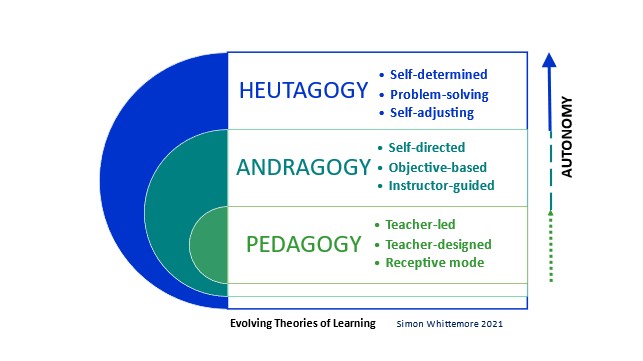
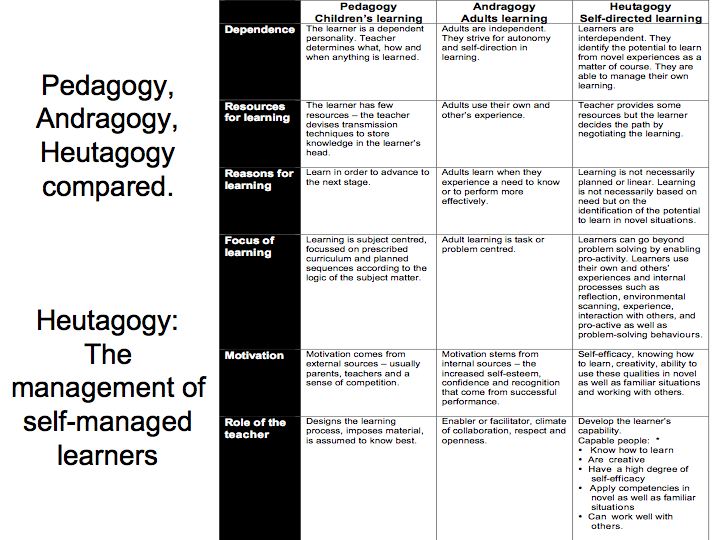
ON EDUCATION – The Difference Among Pedagogy, Andragogy, And Heutagogy
[By David E. Marcinko and Terry Heick]
***
Jackie Gerstein’s passionate thinking about learning is some of my favorite to read. She is rarely pulled down by trend or fad, but is unquestionably progressive and forward-thinking in her approaches to learning and thinking about learning.
She and I also share a passion: self-directed learning. (As does the original summarizer/author of the thinking embedded in table below, Lindy, McKeown Orwin).
I’m embarrassingly interested in any kind of learning at all–formal or informal, self-directed or teacher-centered, authentic or academic. Doesn’t mean I regard them all equally, but I do see a role for almost any system or approach that can cause, support, or glorify the processes of understanding.
Gerstein’s presentation, “Education 3.0 and the Pedagogy of Mobile Learning” uses the concept of mobile learning as a spearhead into a broader discussion of how people learn–different approaches, different domains, and different technologies.
With the progress of technology and the rise in mobile learning, now more than ever Self-Directed Learning–or Heutagogy–isn’t just possible, but natural, and almost awkward to not use, something Gerstein capture’s thoroughly and with her characteristic passion in the presentation below.
Your thoughts and comments on this ME-P are appreciated. Feel free to review our top-left column, and top-right sidebar materials, links, URLs and related websites, too. Then, subscribe to the ME-P. It is fast, free and secure.
Speaker: If you need a moderator or speaker for an upcoming event, Dr. David E. Marcinko; MBA – Publisher-in-Chief of the Medical Executive-Post – is available for seminar or speaking engagements.
Subscribe: MEDICAL EXECUTIVE POST for curated news, essays, opinions and analysis from the public health, economics, finance, marketing, IT, business and policy management ecosystem.
QUERY: But, did you ever wonder what to say when you’re standing next to a senior physician colleague who could help further your academic and educational work?
Now, for some granular specificity; let’s cue the elevator pitch with David Acosta MD and Daniel Hashimoto MD MS who demonstrate what to do (and what not to do) to successfully deliver your medical educator’s elevator pitch.
Posted on February 23, 2022 by Dr. David Edward Marcinko MBA MEd CMP™
***
By Staff Reporters
***
***
A recent American College of Healthcare Executives’ survey of 310 hospital CEOs shows:
• 94% have personnel shortages in registered nursing field • 85% have personnel shortages in technicians field • 67% have personnel shortages in therapists field • 45% have personnel shortages in primary care physicians field • 43% have personnel shortages in physician specialists field • 31% have personnel shortages in physician extenders and specially certified nurses field
The Physician Executive Summary is always included at the beginning of a formal business plan and represents a brief synopsis of the medical prarctice entire plan. Its appearance, grammar and style should be sharp and crisp as it represents an enticement for the reader to maintain interest and contribute intelligent or economic input into the new venture.
It should contain information about the practice, advertising and marketing opportunities, physician management, proposed financing with four Pro Forma financial statements, business operations and exit strategy. This last point, while unpleasant is often overlooked by naive practitioners. Business experts however, look favorably upon an escape plan and view it as the mark of mature professional that realizes the possibility of success as well as failure.
****
***
Ultimately, the plan must explain to potential investors how you will make the practice profitable and produce the required Return on Investment (ROI) for them. It must describe medical services, patient acceptance and benefits, provider qualifications and accomplishments, the amount of capital required, market size, potential practice growth rate, and market niche.
Additional information may include office location, proximity to labor, transportation, license requirements, business entity status, proprietary technology and potential working agreements with various insurance, managed care, ACA and HMO plans. If all of the above seems bewildering to the uninitiated, you are correct.
Remember however, that if you do not have, or can’t borrow the funds to begin a private practice, you will just have to become an employed practitioner until you can. It is therefore imperative to start off on the right foot, with a sound business plan, as you begin your medical career.
Posted on February 16, 2022 by Dr. David Edward Marcinko MBA MEd CMP™
Berkeley’s Lester Center for Entrepreneurship
Entrepreneurship is a Calling
***
By Steve Blank
During the Cold War with the Soviet Union, science and engineering at both Stanford and U.C. Berkeley were heavily funded to develop Cold War weapon systems. Stanford’s focus was Electronic Intelligence and those advanced microwave components and systems were useful in a variety of weapons systems. Starting in the 1950’s, Stanford’s engineering department became “outward facing” and developed a culture of spinouts and active faculty support and participation in the first wave of Silicon Valley startups.
At the same time Berkeley was also developing Cold War weapons systems. However its focus was nuclear weapons – not something you wanted to be spinning out. So Berkeley started a half century history of “inward facing innovation” focused on the Lawrence Livermore nuclear weapons lab. (See the presentation here.)
Given its inward focus, Berkeley has always been the neglected sibling in Silicon Valley entrepreneurship. That has changed in the last few years.
Today the U.C. Berkeley Haas Business School is a leader in entrepreneurship education. It has replaced how to write a business plan with hands-on Lean Startup methods. It’s teaching the LaunchPad® and the I-Corps for the National Science Foundation and National Institutes of Health, as well as corporate entrepreneurship courses.
We are in the middle of a shift in entrepreneurship education from teaching the waterfall model of startup development (enshrined in business plans) to teaching the lean startup model
The Lean LaunchPad process works across a wide range of domains – from science and engineering to healthcare, energy, government, the social sector and for corporate innovation
Customer Development works outside Silicon Valley. In fact, it works globally
The Lean LaunchPad is a business process that teaches entrepreneurs and innovators to make business-focused, evidence-based decisions under conditions of chaos and uncertainty. It’s a big idea.
Your thoughts and comments on this ME-P are appreciated. Feel free to review our top-left column, and top-right sidebar materials, links, URLs and related websites, too. Then, subscribe to the ME-P. It is fast, free and secure.
Speaker: If you need a moderator or speaker for an upcoming event, Dr. David E. Marcinko; MBA – Publisher-in-Chief of the Medical Executive-Post – is available for seminar or speaking engagements. Contact: MarcinkoAdvisors@msn.com
OUR OTHER PRINT BOOKS AND RELATED INFORMATION SOURCES:
“When a practicing physician thinks about their risk exposure resulting from providing patient care, medical malpractice risk immediately comes to mind. But; malpractice and liability risk is barely the tip of the iceberg, and likely not even the biggest risk in the daily practice of medicine. There are risks from having medical records to keep private, risks related to proper billing and collections, risks from patients tripping on your office steps, risks from medical board actions, risk arising from divorce, and the list goes on and on. These liabilities put a doctor’s hard earned assets and career in a very vulnerable position.
These new books from Dr. David Marcinko and Prof. Hope Hetico show doctors the multiple types of risk they face and provides examples of steps to take to minimize them. They are written clearly and to the point, and are a valuable reference for any well-managed practice. Every doctor who wants to take preventive action against the risks coming at them from all sides needs to read these books.”
Richard Berning MD FACC [New Haven, Connecticut, USA]
DEFINITION: The Medicare Payment Advisory Commission is an independent, non-partisan legislative branch agency headquartered in Washington, D.C. MedPAC was established by the Balanced Budget Act of 1997.
*** In a January 2022 meeting of MedPAC, commissioners reviewed various recommendations related to the Medicare fee schedule for various health sectors, and unanimously agreed to update Medicare payments to hospitals and keep physician payment rates the same for 2023. This Health Capital Topics article will review the recommendations made by MedPAC for each of the health sectors and their respective payment systems. (Read more…)
Posted on February 10, 2022 by Dr. David Edward Marcinko MBA MEd CMP™
By Staff Reporters
***
SYNOPSIS: The home office deductionallows qualified taxpayers to deduct certain home expenses when they file taxes. And, now that some doctors and many of us are working remotely, you may be wondering whether working from home will yield any tax breaks. If your small medical or healthcare consulting or other business qualifies you for a home office tax deduction, should you be concerned about triggering an audit? How does a business qualify in the first place; etc?
Well, to claim the home office deduction on their 2021 tax return, taxpayers generally must exclusively and regularly use part of their home or a separate structure on their property as their primary place of business.
***
If I work from home, do I qualify for a home office tax deduction?
If you’re an employee working remotely rather than an employer or business owner, you unfortunately don’t qualify for the home office tax deduction (however, please note that it is still available to some as a state tax deduction). Prior to the Tax Cuts and Job Acts (TCJA) tax reform passed in 2017, employees could deduct unreimbursed employee business expenses, which included the home office deduction. However, for tax years 2018 through 2025, the itemized deduction for employee business expenses has been eliminated.
If I’m self-employed, should I take the home office tax deduction?
You may have heard that taking the home office deduction sends a red flag to the IRS and ups your chances of being audited. Although there may have been some merit to this advice in the past, changes in the tax rules in the late 1990s made it easier for people who work out of their homes to qualify for these write-offs. So if you qualify, by all means, take it.
Do I qualify for the home office tax deduction?
Generally speaking, to qualify for the home office deduction, you must meet one of these criteria:
Exclusive and regular use: You must use a portion of your house, apartment, condominium, mobile home, boat or similar structure for your business on a regular basis. This also includes structures on your property, such as an unattached studio, barn, greenhouse or garage. It doesn’t include any part of a taxpayer’s property used exclusively as a hotel, motel, inn, or similar business.
Principal place of business: Your home office must be either the principal location of your business or a place where you regularly meet with customers or clients. Some exceptions to this rule include day care and storage facilities.
What is “exclusive use”?
The biggest roadblock to qualifying for these deductions is that you must use a portion of your home exclusively and regularly for your business.
The law is clear and the IRS is serious about the exclusive-use requirement. Say you set aside a room in your home for a full-time business and you work in it ten hours a day, seven days a week. If you let your children use the office to do their homework, you violate the exclusive-use requirement and forfeit the chance for home office deductions.
The exclusive-use rule doesn’t mean:
You’re forbidden to make a personal phone call from the office.
You have to rush outside whenever a family member needs a moment of your time.
Although individual IRS auditors may be more or less strict on this point, some advisers say you meet the spirit of the exclusive-use test as long as personal activities invade the home office no more than they would be permitted to in an office building. The office can also be a section of a room if the division is clear — thanks to a partition, for example — and you can show that personal activities are excluded from the business section.
What is “regular use”?
There’s no specific definition of what constitutes regular use. Clearly, if you use an otherwise empty room only occasionally and its use is incidental to your business, you’d fail this test. If you work in the home office a few hours or so each day, however, you might pass. This test is applied to the facts and circumstances of each case the IRS challenges.
What does “principal place of business” mean?
In addition to passing the exclusive- and regular-use tests, your home office must be either the principal location of that business or a place for regular customer or client meetings.
If your home office is in a separate, unattached structure — a detached garage converted into an office, for example — you don’t have to meet the principal-place-of-business or the deal-with-clients test. As long as you pass the exclusive- and regular-use tests, you can qualify for home business write-offs.
What if your business has just one home office, but you do most of your work elsewhere?
Remember that the requirement is that your home office is your principal place of business, not your principal workplace. As long as you use the home office to conduct your administrative or management chores and you don’t make substantial use of any other fixed location to conduct those tasks, you can pass this test.
If you’re an employee of another company but also have your own part-time business based in your home, you can pass this test even if you spend much more time at the office where you work as an employee.
This rule makes it much easier to claim home office deductions for individuals who conduct most of their income-earning activities somewhere else (such as outside salespeople or tradespeople).
***
***
What qualifies as a business?
As with the regular-use test, whether your endeavors qualify as a business depends on the facts and circumstances. The more substantial the activities, in terms of time and effort invested and income generated, the more likely you are to pass the test.
Making money from your efforts is a prerequisite, but for purposes of this tax break, profit alone isn’t necessarily enough. If you use your den solely to take care of your personal investment portfolio, for example, you can’t claim home office deductions because your activities as an investor don’t qualify as a business.
Taxpayers who use a home office exclusively to manage rental properties may qualify for home office tax status but as property managers rather than investors.
What if I operate a child care or storage facility?
The exclusive-use test doesn’t apply if you use part of your house to:
Provide day care services for children, older adults or individuals with disabilities. If you care for children in your home between 7 a.m. and 6 p.m. each day, for example, you can use that part of the house for personal activities the rest of the time and still claim business deductions. To qualify for the tax break, your home care business must meet any applicable state and local licensing requirements.
Store product samples or inventory you sell in your business. Assume your home-based business is the retail sale of home-cleaning products and that you regularly use half of your basement to store inventory. Occasionally using that part of the basement to store personal items wouldn’t cancel your home office deduction. To qualify for this exception, your home must be the principal location of your business.
How do I calculate the home office tax deduction?
Your home office business deductions are based on either the percentage of your home used for the business or a simplified square footage calculation.
The most exact way to calculate the business percentage of your house is to measure the square footage devoted to your home office as a percentage of the total area of your home. If the office measures 150 square feet, for example, and the total area of the house is 1,200 square feet, your business percentage would be 12.5%.
An easier calculation is acceptable if the rooms in your home are all about the same size. In that case, you can figure out the business percentage by dividing the number of rooms used in your business by the total number of rooms in the house.
Special rules apply if you qualify for home office deductions under the day care exception to the exclusive-use test.
Your business-use percentage must be reduced because the space is available for personal use part of the time.
To do that, you compare the number of hours the child care business is operated, including preparation and cleanup time, to the total number of hours in the year (8,760).
Assume you use 40% of your house for a nursing daycare business that operates 12 hours a day, five days a week for 50 weeks of the year.
12 hours x 5 days x 50 weeks = 3,000 hours per year.
3,000 hours ÷ 8,760 total hours in the year = 0.34 (34%) of available hours.
34% of available hours x 40% of the house used for business = 13.6% business write-off percentage.
Simplified square footage method
Beginning with 2013 tax returns, the IRS began offering a simplified option for claiming the deduction. This new method uses a prescribed rate multiplied by the allowable square footage used in the home.
For 2021, the prescribed rate is $5 per square foot with a maximum of 300 square feet.
If the office measures 150 square feet, for example, then the deduction would be $750 (150 x $5).
The space must still be dedicated to business activities.
With either method, the qualification for the home office deduction is determined each year. Your eligibility may change from one year to the next. Finally, please note that only certain expenses such as rent, mortgage interest and property taxes qualify for the deduction, and the deduction is limited to $10,000.
Posted on February 9, 2022 by Dr. David Edward Marcinko MBA MEd CMP™
By Staff Reporters
***
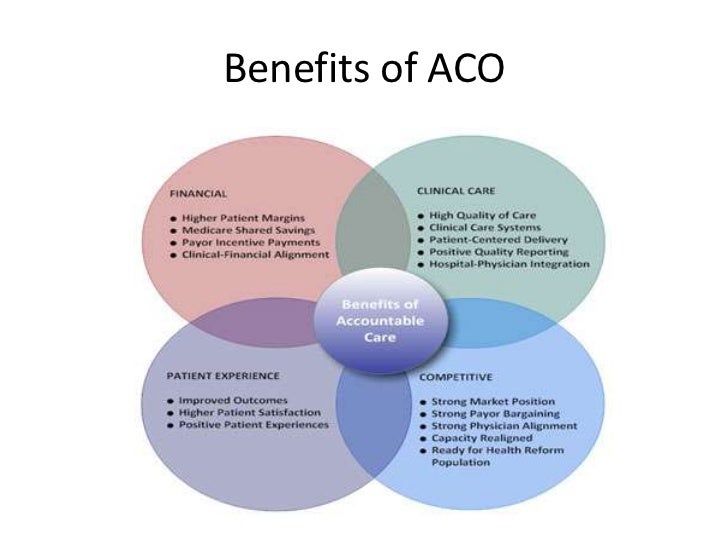
DEFINITION: An accountable care organization is a healthcare organization that ties provider reimbursements to quality metrics and reductions in the cost of care. ACOs in the United States are formed from a group of coordinated health-care practitioners. They use alternative payment models, normally, capitation.
The International Franchise Association (IFA) estimates that that about $1 trillion in sales, or 40% of all retail sales, were made through franchised establishment last year. On the positive side, franchises offer a branded practice concept with management training and access to proprietary methods, marketing and advertising campaigns and a host of support.
Moreover, there are franchises available for virtually every healthcare product or service, including: diet, weight loss and fitness; vein care and laser surgery; vitamins, nutriceuticals and pharmaceuticals; plastic and cosmetic surgery; dermatology, tanning and skin care; home healthcare and extended, etc. Some well know established healthcare and medical franchises are: Doctors Express, Being There Senior Care, Home Care Assistance, Personal Training Institute, Inches-A-Weigh, Remedy Intelligent Staffing, Visiting Angels, Unlimited MedSearch, prnYourHealth and Any Lab Test Now, etc.
On the downside, franchises incur high start-up costs, rules and obligations, payment of franchise percentages and many contractual obligations. Questions to consider when contemplating this business entity include:
Franchise stability, track record, licensing and costs.
Training, support and proximity of other franchises.
Independence, ownership laws, contracts and dispute resolutions,
Screening methods, market size and potential market share.
Replacement cost and transferability?
For more information on Uniform Franchise Offerings Circulars (UFOCs) contact www.FranChoice.com or:
Posted on February 7, 2022 by Dr. David Edward Marcinko MBA MEd CMP™
By Staff Reporters
***
***
Markets: Major stock market indexes, the S&P 500 and NASDAQ posted their best week so far this year. And, potential buyers for Peloton include Amazon, Nike, Apple, Google, Netflix, Microsoft, or a private equity firm.
Inflation: The monthly inflation report will drop on Thursday, and consumer prices are projected to have jumped 0.5% from the previous month and 7.3% over the past year—the biggest increase since 1982.
Earnings: From Snap’s 59% gain to Meta’s 26% wipeout. the companies reporting this week—Pfizer, Disney, Coca-Cola, Pepsi, Twitter and Zillow know that any small stain on their financials could lead to a stock plunge.
Oil: The big news is that US oil prices topped $90 for the first time since 2014, despite attempts by the Biden administration to keep them down. Gas prices are back up to their highest levels in more than seven years.
Covid: The US death toll from Covid-19 has now surpassed 900,000. And, Omicron has gotten more people around the world sick at the same time than at any point since the 1918–1919 flu pandemic, the WSJ points out.
Economy: The jobs report stunned experts by adding 467,000 jobs last month, far more than expected and a sign of an extraordinarily strong labor market.
Posted on February 4, 2022 by Dr. David Edward Marcinko MBA MEd CMP™
By Staff Reporters
***
***
A recent Johns Hopkins analysis of 676 U.S. health systems found that these 4 health systems contributed to healthcare overuse the most:
• St. Dominic Health Services in Jackson, Mississippi • USMD Health System in Irving, Texas • Community Medical Centers in Clovis, California • Care New England Health System in Providence, Rhode Island
Posted on February 3, 2022 by Dr. David Edward Marcinko MBA MEd CMP™
Decentralized Autonomous Organizations in Health Care?
By Staff Reporters
****
DEFINITION: A decentralized autonomous organization (DAO), sometimes called a decentralized autonomous corporation (DAC), is an organization represented by rules encoded as a computer program that is transparent, controlled by the organization members and not influenced by a central government. A DAO’s financial transaction record and program rules are maintained on a blockchain.
Posted on February 3, 2022 by Dr. David Edward Marcinko MBA MEd CMP™
By Staff Reporters
***
***
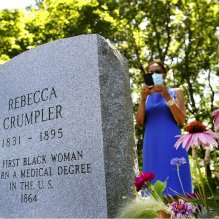
This is just the fourth National Women Physicians Day, on February 3rd . The event celebrates Elizabeth Blackwell’s birthday; she was the first female medical doctor in the U.S. It’s a time to honor women doctors across the country, and the progress they’ve made since Blackwell’s time.
***
Nationally, there are still fewer female doctors than male doctors, but the progress is steady. In 2017, for the first time in history, women made up more than half of all those in medical schools.
Posted on February 2, 2022 by Dr. David Edward Marcinko MBA MEd CMP™
***
By Richard Helppie
***
We’re posting this episode of The Common Bridge, with Henry Ford Health System President and CEO, Wright Lassiter, III complete with written transcript, along with the podcast and video links because there were technical difficulties with Mr. Lassiter’s audio. This way, you can read along, or refer back to us.
Posted on February 1, 2022 by Dr. David Edward Marcinko MBA MEd CMP™
By Staff Reporters
***
The IRS Tax Letter 6419 has been sent out to families who received the Child Tax Credit in 2021 and it explains how the advance tax credit will affect your filing this year. This may be of special importance to young physicians, nurses and all younger medical professionals.
Posted on January 31, 2022 by Dr. David Edward Marcinko MBA MEd CMP™
By Ann Miller RN MHACMP®
Executive Director
***
ME-P Free Advertising Consultation
The “Medical Executive-Post” is about connecting doctors, health care executives and modern consulting advisors. It’s about free-enterprise, business, practice, policy, personal financial planning and wealth building capitalism.
We have an attitude that’s independent, outspoken, intelligent and so Next-Gen; often edgy, usually controversial.
And, our consultants “got fly”, just like U.
Read it! Write it! Post it! “Medical Executive-Post”.
Call or email us for your FREE advertising and sales consultation TODAY [770.448.0769]
Data Platform: Their health provider members care for tens of millions of people and operate thousands of care facilities, providing more than 15% of all care in the United States. Clinical data from this care is de-identified daily and brought together in the Truveta platform to advance patient care and accelerate development of new therapies.
Posted on January 28, 2022 by Dr. David Edward Marcinko MBA MEd CMP™
By Staff Reporters
***
***
According to reporter Neal Freyman, Tech giant Oracle said it’s paying $28.3 billion to buy electronic medical records company Cerner, because anything that makes paperwork less excruciating seems like a savvy business play.
Oracle is known for being aggressive with acquisitions (it even rallied a group to try and buy TikTok last year), but Cerner is Oracle’s biggest purchase in its history. The deal is further evidence that health care is “on par with banking in terms of the importance to our future,” as cofounder Larry Ellison told analysts earlier this month.
In Cerner, Oracle will get the Klay Thompson of the electronic medical records market—a very influential player, but in second place behind Epic, which owns a 31% market share.
Bottom line: Big tech companies see a golden opportunity in bringing the health care industry to the cloud, given its size (health care spending accounts for almost 20% of US GDP), and its old-school record-keeping process. A Mayo Clinic study cited by Oracle showed that doctors and nurses spend an average of 1–2 hours on desk work for every hour they take to see patients.
Whether you do contract work or have your own small business, tax deductions for the self-employed physician consultant and/or medical executive or nurse consultant, etc., can add up to substantial tax savings.
With self-employment comes freedom, responsibility, and a lot of expense. While most self-employed people celebrate the first two, they cringe at the latter, especially at tax time. They might not be aware of some of the tax write-offs to which they are entitled.
When it comes time to file your returns, don’t hesitate to claim the benefits you get for being the boss. As a self-employed success story, you’ve earned them.
FORM 1099NEC: Form 1099 NEC is one of several IRS tax forms used in the United States to prepare and file an information return to report various types of income other than wages, salaries, and tips. The term information return is used in contrast to the term tax return although the latter term is sometimes used colloquially to describe both kinds of returns.
“Many times an overlooked deduction is educational expenses. If one is taking courses or buying research material to be more effective in their work, this can be deductible.”
Individual Retirement Plans (IRAs)
One of the best tax write-offs for the self-employed physician consultant is a retirement plan. A person with no employees can set up an individual 401 (k). “You can contribute $19,500 in 2021 as a 401(k) deferral, plus 25 percent of net income.”
If you have employees, consider a SIMPLE (Savings Incentive Match Plan for Employees) IRA—an IRA-based plan that gives small employers a simplified method to make contributions to their employees’ retirement. As of 2021, an employee may defer up to $13,500 and employees over 50 may contribute an additional $3,000.
“A third retirement plan is Simplified Employee Pension IRA (SEP IRA).” The employer may contribute the lesser of 25 percent of income or $58,000 in 2021. If the employer has eligible employees, an equal percentage of their income must be contributed.
Recall that retirement plans are “absolutely the No. 1 tax deduction. The government is helping fund retirement.”
Business use of home or dwelling
Now, most self-employed taxpayers’ businesses start as home-based businesses. These people need to know portions of business costs are deductible and so “It is very important that you keep track of expenses relating to your housing costs.”
If your gross income from your business exceeds your total expenses, then you can deduct all of your expenses related to the business use of your home. If your gross income is less than your total expenses, your deduction will be limited to the difference between your gross income and the sum of all business expenses you would pay if the business was not in your home. Those expenses could include telephone lines, the Internet, and other costs to do business.
You must also have a home office that is truly used for work and the Internal Revenue Service may require you to document this.
***
Deducting automobile expenses
If you travel for business, even short distances within your own city, you may deduct the dollar value of business miles traveled on your tax return. The taxpayer may file the actual expense s/he incurred, or use the standard mileage rate prescribed by the IRS, which is 56 cents as of 2021. The IRS allowable mileage rates should be checked every year as they can change.
“If you decide to use actual car expenses, be sure to include payments, depreciation, registration, insurance, garage rent, licenses, repairs and maintenance, and parking and toll fees.” AND, “If you decide to use the standard mileage rate, it would be in your best interest to keep a log—daily, weekly or monthly—of miles driven to distinguish personal use from business use.”
Depreciation of property and equipment
Some self-employed people may purchase property and equipment for a business. If they expect that property to last longer than one year, it should be depreciated on the tax return.
Claims regarding property, according to the IRS, must meet the following criteria: You must own the property and it must be used or held to generate income. The property should have an estimated useful life, meaning you should be able to guess how long you can generate income with it. It may not have a useful life of one year or less, and may not be purchased and disposed of in the same year.
Certain repairs on property used for business may also be deducted.
Educational expenses
Any educational expense is potentially tax-deductible.
“Many times an overlooked deduction is educational expenses. “If one is taking courses or buying research material to be more effective in their work, this can be deductible.”
Think about any books, web courses, local college courses, or other classes or materials that you have purchased to improve your job or business. It’s easy to forget a work-related webinar or business e-book that was purchased online, so remember to save e-receipts.
Also recall that subscriptions to trade or professional publications and donations to business organizations, both of which are frequently necessary for the continuation and growth of your business.
Other areas to explore
Other deductions that can be easily missed are advertising and promotional expenses, banking fees, and air, bus, or train fare. Restaurant meals and other entertainment costs may be written off as long as they are necessary business expenses.
And, consider health insurance premiums, which in most cases represent a credit rather than a tax deduction. “A credit goes directly against one’s taxes, rather than a reduction of income.”
Regardless of which expenses you discover that you may write off, the most important thing is to keep accurate records throughout the year. Save receipts, including e-mail receipts, and file or log them so you have easy access to them at tax time. Not only does keeping receipts, mileage logs, and other expense records make filing taxes easier, but it also facilitates a system that allows you to track changes from year to year.
***
Long-term tax-saving strategies
Don’t just look at last-minute write-offs when considering self-employment tax deductions. Think about laying down some long-term strategies for money savings from year to year—particularly if you are a high earner.
“Accountants typically tell you what you have to pay but they don’t always tell you strategies to reduce your payments.”
To reduce your gross taxable income, consider setting up a defined-benefit pension plan. This plan is based on your age and income: The older you are and the higher your earnings, the more you are allowed to contribute. An alternative plan is an age-weighted profit-sharing plan, which is similar and can benefit those who have several employees.
Another strategy for high-earning business owners who own their own building through a limited liability company or similar business structure is to pay themselves rent. This rent is used to pay down the mortgage, but it is also considered a business expense for tax purposes.
Self-employed professionals required to have liability insurance should consider setting up their own insurance company. A captive insurance company is one that insures the risks of the business—or businesses, in the case of a cooperative. Its premiums can be tax-deductible.
But, if money accumulates and claims are minimal, the money taken out is taxable under capital gains. This is not a retirement strategy, but that it can save you money by allowing you to “pay yourself” instead of an insurance company and still deduct the premiums.
Assessment
With any of these more complicated, long-term strategies, consult with a business attorney, CPA/EA or financial planner to ensure you have the best plan possible for your business.
Posted on January 24, 2022 by Dr. David Edward Marcinko MBA MEd CMP™
BY STAFF REPORTERS
Optum recently conducted a survey of 500 senior health care executives. Respondents said they are excited about the potential for AI in improving patient outcomes in multiple ways:
• Virtual patient care (41%) • Diagnosis and predicting outcomes (40%) • Medical image interpretation (36%)
Posted on January 23, 2022 by Dr. David Edward Marcinko MBA MEd CMP™
By Staff Reporters
Medical education in the U.S. and Canada has changed considerably in the last several decades.
***
According to the AMA, the major changes are the following:
Reducing medical school programs leading to the medical degree to three years. Since graduate medical education (i.e., residency) is many years in duration and includes virtually all the information, that would be part of the typical fourth year..
Introducing clinical medicine early in the curriculum.
Including medical information and activities into the basic science component of the curriculum.
De-emphasizing inactive learning by markedly reducing the number of lectures and employing problem-based learning (PBL) which typically takes place in small groups (e.g., 6-8 students led by a single faculty member).
Employing objective structured clinical examinations (OSCE) in which students are asked to solve a problem in which they are faced with a simulated patient and are asked to solve a clinical problem. Students are evaluated as to how well they communicate/interact with patients, take a medical history, arrive at a clinical diagnosis, and come up with a treatment plan. The simulated patients are trained to act as if they were actual patients. The OSCE includes individual students interacting with a single patient, emulating a real patient-doctor interaction. How well the student performs is evaluated by a faculty member observing the activity via video and by the simulated patient who evaluates the student doctor for such activities as his/her communication skills.
Posted on January 22, 2022 by Dr. David Edward Marcinko MBA MEd CMP™
ACCOUNTABLE CARE ORGANIZATIONS
By Staff Reporters
***
42.7% of physicians in practices that participated in a commercial ACO
An AMA survey of 3,500 physicians finds steady growth of physician participation in accountable care organizations (ACO) and medical homes:
• Nearly one-third of doctors worked in practices participating in medical homes in 2020, up from 23.7% in 2014 • 42.7% of physicians were in practices that participated in a commercial ACO in 2020, up from 31.7% in 2016 • 29.5% of physicians were in practices took part in a Medicaid ACO, up from 20.9% in 2016 • Share of physicians in practices involved in Medicare ACOs has risen from 28.6% in 2014 to 36.7% in 2020 • 32.3% of doctors worked in practices participating in medical homes in 2020, up from 23.7% in 2014
Posted on January 18, 2022 by Dr. David Edward Marcinko MBA MEd CMP™
By Staff Reporters
***
75% of Hospitals Seeking Temporary Allied Healthcare Professionals
• 96% have used allied healthcare professionals of various types to fill temporary assignments during the last 12 months. • 75% of hospitals and other healthcare facilities currently are seeking temporary allied health care professionals. • 73% of facilities surveyed, cited a need to fill gaps while permanent workers are being sought. • 71% of facilities surveyed, cited that it is to prevent the burnout of existing staff.
Posted on January 12, 2022 by Dr. David Edward Marcinko MBA MEd CMP™
By Staff Reporters
A survey that Redpoint Global conducted with Dynata of more than 1,000 US healthcare consumers found:
• 57% of healthcare consumers think retailers and/or financial services are better at providing personalized omnichannel experiences than healthcare • 29% said they expect frictionless check-in experiences across apps/phone calls/in-office • 34% expect data inputs in a healthcare portal (health history, surveys, insurance information, etc.) to reach providers • 24% of respondents said they did not utilize any sort of digital communication with providers during the pandemic • 14% said they had no contact with any healthcare provider during the same timeframe
Thank you for your interest in sponsoring the Medical Executive-Post, the web’s only site integrating medical practice management with personal financial planning for all health care and financial services professionals.
Why should your company sponsor an ad, text message or banner on the ME-P?
Reader loyalty. Not only does the ME-P receive a mind-boggling number of page views and visits each month, its readers are loyal.
Reader stature. ME-P readers are experienced industry pros, executives and decision-makers.
Selective advertising. The ME-P is a free read that’s off the radar of the big-ad companies. Your ad here stands out as personal and different.
Supporting the ME-P makes a big difference and costs only a fraction of other online publications with far fewer readers.
Cost. CPM is ridiculously low compared to other sites.
E-mail us for a full packet, but give a look to these results from the ME-P’s annual reader survey:
89% of readers said the ME-P influences their perception of products and companies
34% said that ME-P sponsorship alone give them a higher interest or appreciation for those companies
75% said the ME-P has some, a good bit, or a lot of industry influence.
Contact me and I’ll e-mail you a rate card. Your support makes a difference!
Text Ads
We have great sponsor packages, but maybe you want to run a short-term ad — a position listing, an announcement, or your booth number at an upcoming conference. Or, perhaps your company is between budget cycles and can’t commit to sponsorship yet. We’ve got an answer – ME-P text ads.
Text ads are up to five lines long and are highly cost-effective. You’ll get about 25-35,000 impressions per week, reaching the ME-P’s highly targeted and loyal audience of healthcare professionals and financial services decision-makers. Think small text ads don’t work? They’ve made two Google kids billionaires!
PayPal Certified
All ME-P text ad costs are for one month, payable in advance via PayPal. We’ll post it quickly and you’ll see results almost immediately.
Assessment
Why waste money on magazines that never get read and with months of lead time required? The best way to quickly reach the critical mass of the healthcare management and financial services industry is right here on the ME-P.
Speaker: David E. Marcinko; MBA – Publisher-in-Chief of the Medical Executive-Post – is available for seminar or speaking engagements. Contact: MarcinkoAdvisors@msn.com
Our Other Print Books and Related Information Sources:
Subscribe Now: Did you like this Medical Executive-Post, or find it helpful, interesting and informative? Want to get the latest ME-Ps delivered to your email box each morning? Just subscribe using the link below. You can unsubscribe at any time. Security is assured.
Posted on December 31, 2021 by Dr. David Edward Marcinko MBA MEd CMP™
Bond Markets to Close Early Friday
By Staff reporters
***
The stock market, buoyed by a Santa Claus rally and a banner year, will have one more day to extend its gains.
Both the New York Stock Exchange and NASDAQ will be open on New Year’s Eve. Bond markets will close early at 2 p.m. Friday.
The markets typically close on New Year’s Day but this year the holiday falls on a Saturday, when they would have shuttered anyway. Last week, the New York Stock Exchange and Nasdaq closed on Friday, Christmas Eve, in observance of Christmas, which also fell on a Saturday.
Posted on December 29, 2021 by Dr. David Edward Marcinko MBA MEd CMP™
By staff reporters
***
66% of Nurses Expressed Consideration to Leave The Profession
A survey of 570 nurses between May and June 2021 found:
• 66% of nurses expressed some level of consideration to leave the profession. • 97% of polled participants agree, that increases to pay rates and other incentives would attract and retain nurses. • 58% agree that tele-health should be a cornerstone of care delivery. • 85% believe that we must improve cross training to adapt to crisis events. • 85% strongly believe national licensure would have greatly benefited the country during the pandemic.
Posted on December 29, 2021 by Dr. David Edward Marcinko MBA MEd CMP™
Wendell Potter is a Famous Ex-Executive from Cigna Who Left His High Paying PR Job in 2007 to Reveal the True Story Behind Health Insurance Carrier Public Relations.
On December 2, 2021, the U.S. Department of Justice (DOJ) announced that it had entered into an $18.2 million settlement with Flower Mound Hospital, a 91-bed hospital located northwest of Dallas, to resolve claims that the hospital had violated the Stark Law, the Anti-Kickback Statute (AKS), and the False Claims Act (FCA) by making improper inducements to referring physicians. This Health Capital Topics article will review the facts underlying the settlement. (Read more…)
Utilizing data from FAIR Health, the Urban Institute conducted an October 2021 study which reviewed commercial insurance claims across the U.S. (for approximately 60 insurers and third-party administrators covering over 150 million Americans under age 65) from March 2019 through February 2020.
This study assessed the gap between commercial insurance payments and Medicare payments for professional physician services to determine whether the payment gap between Medicare and commercial insurance differs by specialty. (Read more…)
When President Joe Biden was elected in 2020, there was much anticipation and speculation regarding what his election would mean for the U.S. healthcare industry in the coming years.
As an ardent supporter of the Patient Protection and Affordable Care Act (ACA) who campaigned on offering a public insurance option similar to Medicare, many in the healthcare industry assumed that the Biden Administration would be a strong proponent of continuing the shift to value-based care, which shift was largely spurred by his predecessor and former boss, Barack Obama, with the passage of the ACA. (Read more…)






 Support our online development, and advance our onground research initiatives in free market economics, as we seek to showcase the brightest Next-Gen minds.
THE ME-P DISCLAIMER: Posts, comments and opinions do not necessarily represent iMBA, Inc., but become our property after submission. Copyright © 2006 to-date. iMBA, Inc allows colleges, universities, medical and financial professionals and related clinics, hospitals and non-profit healthcare organizations to distribute our proprietary essays, photos, videos, audios and other documents; etc. However, please review copyright and usage information for each individual asset before submission to us, and/or placement on your publication or web site. Attestation references, citations and/or back-links are required. All other assets are property of the individual copyright holder.
Support our online development, and advance our onground research initiatives in free market economics, as we seek to showcase the brightest Next-Gen minds.
THE ME-P DISCLAIMER: Posts, comments and opinions do not necessarily represent iMBA, Inc., but become our property after submission. Copyright © 2006 to-date. iMBA, Inc allows colleges, universities, medical and financial professionals and related clinics, hospitals and non-profit healthcare organizations to distribute our proprietary essays, photos, videos, audios and other documents; etc. However, please review copyright and usage information for each individual asset before submission to us, and/or placement on your publication or web site. Attestation references, citations and/or back-links are required. All other assets are property of the individual copyright holder.




 8
8






































 The Leading Business Education Network for Doctors, Financial Advisors and Health Industry Consultants