


PHYSICIANS: Why Some May Practice for Free

By Dr. David Edward Marcinko; MBA MEd

By Eugene Schmuckler; PhD MBA MEd CTS

SPONSOR: http://www.MarcinkoAssociates.com

***

***

The phenomenon of physicians choosing to provide medical care without financial compensation is one of the most profound expressions of altruism within modern society. In an era where healthcare is increasingly institutionalized, commercialized, and driven by complex insurance reimbursement models, the decision of a doctor to work for free stands as a stark contrast. This practice manifests in various forms, including local community free clinics, international humanitarian missions, disaster response efforts, and pro bono care within private practices. Understanding why physicians willingly forgo financial reward requires looking beyond economic incentives to explore the deeply rooted ethical, psychological, systemic, and historical motivations that define the medical profession.

At the core of a physician’s decision to work for free is the foundational ethos of medicine itself: the historical and moral commitment to heal. When entering the profession, doctors take an oath—most traditionally the Hippocratic Oath—which binds them to a duty of service and the preservation of human life. For many practitioners, this oath is not a mere formality or a historical artifact; it is a living moral compass. In daily modern practice, however, systemic pressures can obscure this primary purpose. Administrative burdens, electronic health record charting, and billing negotiations often distance doctors from direct patient care. Offering free care allows physicians to strip away these bureaucratic layers and return to the purest form of the doctor-patient relationship, where the sole objective is to alleviate suffering regardless of a patient’s financial status.

Furthermore, providing free care serves as a powerful mechanism to combat healthcare disparities and systemic failures. In many nations, despite legislative efforts, large segments of the population remain uninsured, underinsured, or marginalized due to socioeconomic status, legal status, or geography. Physicians working in free clinics or community health centers witness firsthand the devastating consequences of untreated chronic conditions and delayed care. Driven by a sense of social justice, these doctors view their medical skills not just as a source of income, but as a public resource. By volunteering their time, they attempt to patch the holes in a fractured safety net, ensuring that vulnerable populations—such as the homeless, undocumented immigrants, and the working poor—receive the dignity of medical attention.

***

***

The motivation to work without pay is also deeply linked to the psychological and emotional well-being of the physicians themselves. Professional burnout is a pervasive crisis in contemporary healthcare, characterized by emotional exhaustion, depersonalization, and a reduced sense of personal accomplishment. Many doctors report that the commercial pressures of productivity metrics, such as seeing a specific number of patients per hour, erode their sense of professional fulfillment. Engaging in volunteer medical work often acts as an antidote to this burnout. Free from the constraints of insurance guidelines and time clocks, physicians can practice medicine at a slower, more compassionate pace. The gratitude of a patient who has been ignored by the formal healthcare system provides a profound psychological reward that financial compensation cannot replicate, effectively reigniting the doctor’s original passion for the calling.

On a global scale, international humanitarian work draws physicians to volunteer in conflict zones, refugee camps, and developing countries. Organizations like Doctors Without Borders or various surgical missions rely entirely on the willingness of medical professionals to donate their expertise under hazardous and resource-limited conditions. The drive to participate in these initiatives often stems from a desire to face unique clinical challenges and to make a high-impact difference where medical infrastructure is non-existent. In these environments, a single surgical procedure or a basic course of antibiotics can be entirely life-altering. The chance to save lives on such a fundamental level provides an intense sense of purpose and perspective that alters a clinician’s outlook for the rest of their career.

Finally, the culture of mentorship and education within medicine encourages volunteering. Senior physicians frequently work for free in teaching clinics to train medical students and residents. Through this practice, they model empathetic care and instill a sense of civic responsibility in the next generation of healers. This legacy of giving back ensures that the tradition of humanitarian medicine is passed down, reinforcing the idea that a doctor’s worth is measured by their impact on human health rather than their financial accumulation.

In conclusion, physicians work for free because medicine, at its heart, remains a vocation rather than merely a career. While financial compensation is necessary to sustain the infrastructure of healthcare and reward years of rigorous training, it is the intangible rewards that sustain the soul of the practitioner. Whether driven by ancient ethical vows, a pursuit of social justice, a desire to reconnect with the pure joy of healing, or a urge to help global populations in crisis, these doctors demonstrate that the true currency of medicine is compassion. In doing so, they provide a vital reminder of the enduring humanity that underpins the art of healing.

EDUCATION: Books

SPEAKING: Dr. Marcinko will be speaking and lecturing, signing and opining, teaching and preaching, storming and performing at many locations throughout the USA this year! His tour of witty and serious pontifications may be scheduled on a planned or ad-hoc basis; for public or private meetings and gatherings; formally, informally, or over lunch or dinner. All medical societies, financial advisory firms or Broker-Dealers are encouraged to submit an RFP for speaking engagements: CONTACT: Ann Miller RN MHA at MarcinkoAdvisors1738@outlook.com -OR- http://www.MarcinkoAssociates.com

Like, Refer and Subscribe

SEND IN YOUR TOPIC IDEAS, TODAY!

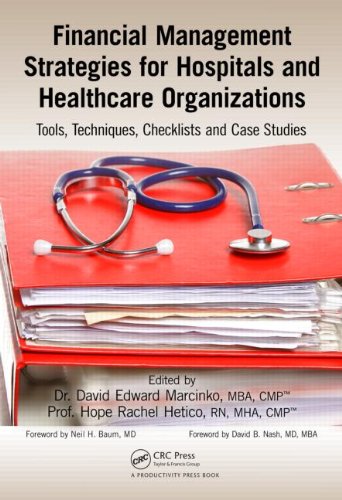
HOSPITALS: http://www.crcpress.com/product/isbn/9781466558731

CLINICS: http://www.crcpress.com/product/isbn/9781439879900

ADVISORS: www.CertifiedMedicalPlanner.org

FINANCE:Financial Planning for Physicians and Advisors

INSURANCE:Risk Management and Insurance Strategies for Physicians and Advisors

Dictionary of Health Economics and Finance

Dictionary of Health Information Technology and Security

Dictionary of Health Insurance and Managed Care

***

PODCAST: Physician Specialties

40 DOCTOR SPECIALTIES

BY ERIC BRICKER MD

***

***

YOUR COMMENTS ARE APPRECIATED.

Thank you

***

***

***

Useful Managed Care Patterns and Procedural Utilization Trends

Join Our Mailing List

Part One of Two

By Dr. David Edward Marcinko MBA

[Publisher-in-Chief]

If you read this ME-P regularly or have read my earlier blogs, you know that I am writing a book on practice management for the private medical practitioner.

The Business of Medical Practice [Transformational Health 2.0 Skills for Doctors]; third edition: www.BusinessofMedicalPractice.com

Link: Front Matter BoMP – 3

And, a recent story in the Chicago Tribune on the difficult business life of private practitioners today reminds me that I need to keep my nose to the grindstone.

For example, knowing your medical contract negotiation objectives, gathering information on the choices of contracts and discount payment systems, and understanding the pitfalls to watch for when evaluating a contract are the keys to any successful negotiation process.

Reimbursement Contract Negotiations

According to the sanofi-aventis Pharmaceutical Company Managed Care Digest Series, for 2008-10, the following pattern and trend comparative information has been empirically determined and may provide a basic starting point for practitioners to share business management, facilities, personnel, and other records for enhanced contract negotiation success.

www.managedcaredigest.com

hos

Procedural Utilization Trends

  • Among all physicians in a single-specialty group practice, invasive cardiologists averaged the most encounters with total hospital inpatient admissions down from the prior year. However, encounters rose for cardiologists in multispeciality group practices.
  • Echocardiography was the most commonly performed procedure on HMO seniors, followed by coronary artery bypass graft surgery. Group practices performed cardiovascular stress tests for circulatory problems most often.
  • CT studies of the brain and chest were the most common studies for HMO seniors, while MRI head studies were the most common diagnostic test on commercial HMO members.
  • Colonoscopy was the most common digestive system procedure on senior HMO members, while barium enemas were more common on commercial members.
  • Hospital admission volume decreased for allergists, family practitioners, internists, OB/GYNs, pediatricians, and general surgeons.
  • Internists ordered more in-hospital laboratory procedures than any other physicians in single-specialty groups.
  • Non-hospital MD/DOs used in-hospital radiology services most frequently, continuing a three-year upward trend.
  • Pediatricians averaged the most ambulatory encounters, down from the prior year.
  • Non-hospitalist internists ordered a higher number of in-hospital laboratory procedures than any other single medical specialty group, but allergists and immunologists increased their laboratory usage.
  • The number of ambulatory encounters increased for general surgeons, while group surgeons had the most cases. Capitated surgeons, of all types, had a lower mean number of surgical cases than surgeons in groups without capitation. Surgeons in internal medical groups also had more cases than those in multi-specialty groups.
  • The average number of total office visits per commercial and senior HMO visits fell, along with the number of institutional visits for both commercial and senior HMO members.
  • The average length of hospital stay for all commercial HMO members increased to 3.6 days but decreased to 6 days for all HMO members.
  • The total number of births increased for commercial HMO members served by medical group practices, and decreased for solo practitioners.
  • More than one-third of all medical groups use treatment protocols, rising from the year before. Multi-specialty groups were more likely to use them than single-specialty groups, who often develop their own protocols. The use of industry benchmarks to judge the quality of healthcare delivery also increased.
  • Outcome studies are most common at larger medical groups, and multi-specialty groups pursue quality assurance activities more often than single-specialty groups.
  • Provider interaction during office visits is increasingly coming under scrutiny. Patients approve of cardiologists more frequently than allergists and ophthalmologists.

Assessment

Obviously, the above information is only a gauge since regional differences, and certain medical sub-specialty practices and carve-outs, do exist.

Part Two: Useful Managed Care Provider, Staffing, Activity and Financial Trends

Conclusion

Your thoughts and comments on this ME-P are appreciated. Feel free to review our top-left column, and top-right sidebar materials, links, URLs and related websites, too. Then, subscribe to the ME-P. It is fast, free and secure.

Speaker: If you need a moderator or speaker for an upcoming event, Dr. David E. Marcinko; MBA – Publisher-in-Chief of the Medical Executive-Post – is available for seminar or speaking engagements. Contact: MarcinkoAdvisors@msn.com

OUR OTHER PRINT BOOKS AND RELATED INFORMATION SOURCES:

Product DetailsProduct DetailsProduct Details

Product Details  Product Details

   Product Details 

Become a Published Print Author with Us

Join Our Mailing List

The Business of Medical Practice [3rd Edition]

By Hope Rachel Hetico RN, MHA, CMP™

[Managing Editor]biz-book5

Dear Colleagues and ME-P Champions

As you may know, we are commencing work on the third edition of our best selling book: The Business of Medical Practice

TOC 1st: http://www.amazon.com/Business-Medical-Practice-Maximizing-Doctors/dp/0826113117/ref=sr_1_8?ie=UTF8&s=books&qid=1231111232&sr=1-8

TOC 2nd: http://www.springerpub.com/prod.aspx?prod_id=23759

Invitation to Contribute

Accordingly, we would be honored for you to consider contributing a new or revised chapter, in your area of expertise, for a low-effort but high-yield contribution. Our goal is to help physician colleagues and management executives benefit from nationally known experts, as an essential platform for their success in the healthcare industry. Many topics are still available: [health accounting; law, policy and administration; Medicare fraud and abuse; cloud computing; and finance and economics, etc].

Support Always Available

Editorial support is available, and you would enjoy increasing subject-matter notoriety, exposure and public relations in an erudite and credible fashion. As a reader, or preferably a subscriber to the ME-P, your synergy in this space may be ideal. Time line for submission of a 5,000-7,500 word chapter is ample, and in a prose writing style that is “wide, not deep.” 

A Health 2.0 Initiative

And, be sure to address health 2.0 modernity. Update chapters from the second edition are also available. 

Definition: https://healthcarefinancials.wordpress.com/2008/09/12/emerging-healthcare-20-initiatives

Assessment

Please contact me for more details [MarcinkoAdvisors@msn.com], if interested [770.448.0769]. A best selling-book is rare; while a third-edition volume even more so. Join us in this project. Regardless, we trust you will remain apostles of our core ME-P vision, “uniting medical mission and financial profit margin”, and promoting it whenever possible.

Front Matter Link: frontmatter1advancedbusinessmedicine

Channel Surfing the ME-P

Have you visited our other topic channels? Established to facilitate idea exchange and link our community together, the value of these topics is dependent upon your input. Please take a minute to visit. And, to prevent that annoying spam, we ask that you register. It is fast, free and secure.

Conclusion

Your thoughts and comments on this ME-P are appreciated. Feel free to review our top-left column, and top-right sidebar materials, links, URLs and related websites, too. Then, subscribe to the ME-P. It is fast, free and secure.

Speaker: If you need a moderator or speaker for an upcoming event, Dr. David E. Marcinko; MBA – Publisher-in-Chief of the Medical Executive-Post – is available for seminar or speaking engagements. Contact: MarcinkoAdvisors@msn.com

OUR OTHER PRINT BOOKS AND RELATED INFORMATION SOURCES:

Product Details

Become a Published Print Author with Us

The Business of Medical Practice [3rd Edition]

By Hope Rachel Hetico RN, MHA, CMP™

[Managing Editor]biz-book7

Dear Colleagues,

As you may know, we are commencing work on the third edition of our best selling book: The Business of Medical Practice

TOC 1st: http://www.amazon.com/Business-Medical-Practice-Maximizing-Doctors/dp/0826113117/ref=sr_1_8?ie=UTF8&s=books&qid=1231111232&sr=1-8

TOC 2nd: http://www.springerpub.com/prod.aspx?prod_id=23759

Invitation to Contribute

Accordingly, we would be honored for you to consider contributing a new or revised chapter, in your area of expertise, for a low-effort but high-yield contribution. Our goal is to help physician colleagues and management executives benefit from nationally known experts, as an essential platform for their success in the healthcare 2.0 business industry. Many topics are still available: [health accounting and costing; law, policy and administration; Medicare fraud and abuse; coding and insurance; HIT, grid and cloud computing; finance and economics, competitive models, collaboration and leadership, etc].

Support Always Available

Editorial support is available, and you would enjoy increasing subject-matter notoriety, exposure and public relations in an erudite and credible fashion. As a reader, or preferably a subscriber to the ME-P, your synergy in this space may be ideal. Time line for submission of a 5,000-7,500 word chapter is ample, and in a prose writing style that is “wide, not deep.” 

A Health 2.0 Initiative

And, be sure to address health 2.0 modernity. Update chapters from the second edition are also available. 

Definition: https://healthcarefinancials.wordpress.com/2008/09/12/emerging-healthcare-20-initiatives

Assessment

Please contact me for more details, if interested. A best selling-book is rare; while a third-edition volume even more so. Join us in this project. Regardless, we trust you will remain apostles of our core ME-P vision, “uniting medical mission and financial profit margin”, promoting it whenever possible.

Front Matter Link: frontmatter1advancedbusinessmedicine4 

Contact Info:

MarcinkoAdvisors@msn.com

770.448.0769

Conclusion

Your thoughts and comments on this ME-P are appreciated. Feel free to review our top-left column, and top-right sidebar materials, links, URLs and related websites, too. Then, subscribe to the ME-P. It is fast, free and secure.

Link: http://feeds.feedburner.com/HealthcareFinancialsthePostForcxos

Speaker: If you need a moderator or speaker for an upcoming event, Dr. David E. Marcinko; MBA – Publisher-in-Chief of the Medical Executive-Post – is available for seminar or speaking engagements. Contact: MarcinkoAdvisors@msn.com

OUR OTHER PRINT BOOKS AND RELATED INFORMATION SOURCES: