







 Support our online development, and advance our onground research initiatives in free market economics, as we seek to showcase the brightest Next-Gen minds.
THE ME-P DISCLAIMER: Posts, comments and opinions do not necessarily represent iMBA, Inc., but become our property after submission. Copyright © 2006 to-date. iMBA, Inc allows colleges, universities, medical and financial professionals and related clinics, hospitals and non-profit healthcare organizations to distribute our proprietary essays, photos, videos, audios and other documents; etc. However, please review copyright and usage information for each individual asset before submission to us, and/or placement on your publication or web site. Attestation references, citations and/or back-links are required. All other assets are property of the individual copyright holder.


By Dr. David Edward Marcinko; MBA MEd
http://www.DavidEdwardMarcinko.com
SPONSOR: http://www.MarcinkoAssociates.com
***
***
How a U.S. Stock Market Correction Impacts International Markets
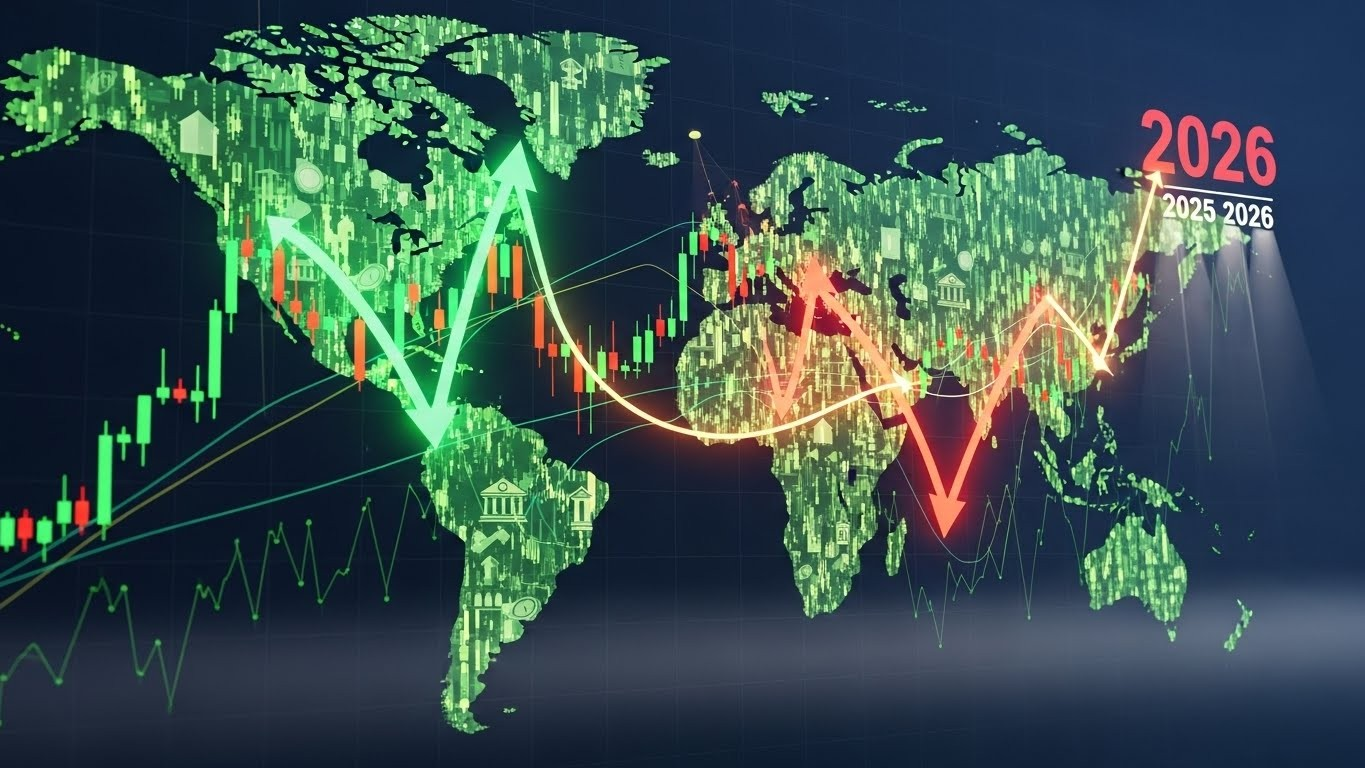
The United States sits at the center of the global financial system. Because the U.S. economy is the largest in the world and its stock exchanges account for nearly half of global equity market capitalization, movements on Wall Street rarely stay within American borders. When the U.S. stock market enters a correction—defined as a decline of 10 percent or more from a recent peak—the shockwaves quickly travel across oceans, affecting international markets, currencies, and economic policies worldwide.
The most immediate impact of a U.S. market correction is financial contagion, driven by investor psychology and algorithmic trading. Global financial markets are deeply interconnected, operating around the clock across different time zones. When major U.S. indices like the S&P 500 or the Nasdaq Composite experience a sharp sell-off, panic and risk aversion often spread to Asian markets as they open, followed by European exchanges a few hours later. Institutional investors, hedge funds, and sovereign wealth funds hold globally diversified portfolios. To cover margin calls or reduce overall risk exposure during a U.S. downturn, these large players frequently liquidate their holdings in foreign equities. Consequently, international stock markets often fall in tandem with Wall Street, even if the underlying domestic economies of those countries remain fundamentally healthy.
Beyond immediate market sentiment, a U.S. correction significantly alters global capital flows, particularly in emerging markets. During periods of market stress, international investors tend to seek safety, a phenomenon known as a “flight to quality.” Paradoxically, even when a financial downturn originates in the United States, investors often pull capital out of riskier emerging economies—such as Brazil, India, or South Africa—and move it into U.S. Treasury bonds or cash held in U.S. dollars. This sudden outflow of foreign capital causes stock prices in developing nations to plummet while simultaneously weakening their local currencies against the dollar. A depreciating currency makes it more expensive for emerging-market governments and corporations to service debt denominated in U.S. dollars, creating a cycle of financial strain that extends far beyond the equity markets.
Developed economies in Europe and Asia face distinct but equally serious challenges. Many multinational corporations listed on European and Japanese exchanges rely heavily on the U.S. consumer market for a substantial portion of their revenue. A steep decline in U.S. stock prices erodes household wealth among American consumers, who hold a high percentage of their net worth in equities. As Americans feel less wealthy, they tend to cut back on discretionary spending. This reduction in U.S. demand directly hurts the earnings outlook for foreign exporters, from German automakers to Taiwanese semiconductor manufacturers, placing sustained downward pressure on their respective stock markets.
Furthermore, a U.S. market correction complicates monetary policy for central banks around the globe. If the Federal Reserve responds to a severe market downturn and slowing economic growth by cutting interest rates, other central banks are often forced to adjust their own policies to prevent their currencies from appreciating too rapidly, which would harm their export competitiveness. Conversely, if the U.S. correction is triggered by persistent inflation and rising U.S. interest rates, foreign central banks may feel compelled to hike their own rates to defend their currencies against capital flight, even if their domestic economies are sluggish and in need of stimulus.
Major International Indices (Nov 20, 2026 Close)
- Nikkei 225 (Japan): 56,436.65 (-5.06%)
- Hang Seng (Hong Kong): 22,410.80 (-3.79%)
- S&P/TSX Composite (Canada): 33,189.85 (-2.47%)
- DAX (Germany): 24,802.78 (-2.60%)
- CAC 40 (France): 7,927.75 (-1.89%)
- FTSE 100 (UK): 10,346.34 (-1.02%)
- S&P/ASX 200 (Australia): 8,592.60 (-1.58% / -2.60% per Yahoo)
- Shanghai Composite (China): 3,533.79 (-1.22%)
Despite these widespread negative effects, a U.S. market correction can occasionally create long-term opportunities for international markets. When U.S. equities become overvalued prior to a correction, a downturn prompts global asset managers to re-evaluate their geographic allocations. Once the initial panic subsides, investors often look for undervalued assets outside the United States, directing fresh capital into European, Asian, or emerging-market stocks that offer more attractive valuations and stronger growth prospects.
In conclusion, a U.S. stock market correction acts as a powerful catalyst across the international financial landscape. Through immediate sentiment contagion, shifts in global capital flows, reduced consumer demand, and central bank policy dilemmas, Wall Street’s downturns inevitably test the resilience of foreign markets. While no major economy is fully insulated from American market volatility, the ultimate severity of the global impact depends on the underlying economic health of individual nations and their ability to manage external financial shocks.
SPEAKING: Dr. Marcinko will be speaking and lecturing, signing and opining, teaching and preaching, storming and performing at many locations throughout the USA this year! His tour of witty and serious pontifications may be scheduled on a planned or ad-hoc basis; for public or private meetings and gatherings; formally, informally, or over lunch or dinner. All medical societies, financial advisory firms or Broker-Dealers are encouraged to submit an RFP for speaking engagements: CONTACT: Ann Miller RN MHA at MarcinkoAdvisors1738@outlook.com -OR- http://www.MarcinkoAssociates.com
Like, Refer and Subscribe
(©) Copyright USA. All rights reserved.
SEND IN YOUR ME-Ps & TOPIC IDEAS, TODAY!
HOSPITALS: http://www.crcpress.com/product/isbn/9781466558731
CLINICS: http://www.crcpress.com/product/isbn/9781439879900
ADVISORS: www.CertifiedMedicalPlanner.org
FINANCE: Financial Planning for Physicians and Advisors
INSURANCE: Risk Management and Insurance Strategies for Physicians and Advisors
Dictionary of Health Economics and Finance
Dictionary of Health Information Technology and Security
Dictionary of Health Insurance and Managed Care
***
Share this:

Filed under: iMBA, Inc. | Tagged: asia, brazil, cac-40, central banks, copper, DAX, DJIA, dollar, economics, economy, Europe, FDIC, Federal Reserve, finance, Financial Markets, FOMC, german, global, global markets, gold, hang seng, india, interest rates, Investing, japan, Marcinko, money, NASDAQ, news, Nikkei, politics, S&P 500, shanghai-composite, silver, south africa, stock market, time-zones, US Treasury, Wall Street |


Leave a Reply