SPECIAL PURPOSE VEHICLE: What it Is – When is It Needed?

***

A SPECIAL MEDICAL-EXECUTIVE-POST GUEST PRESENTATION

***

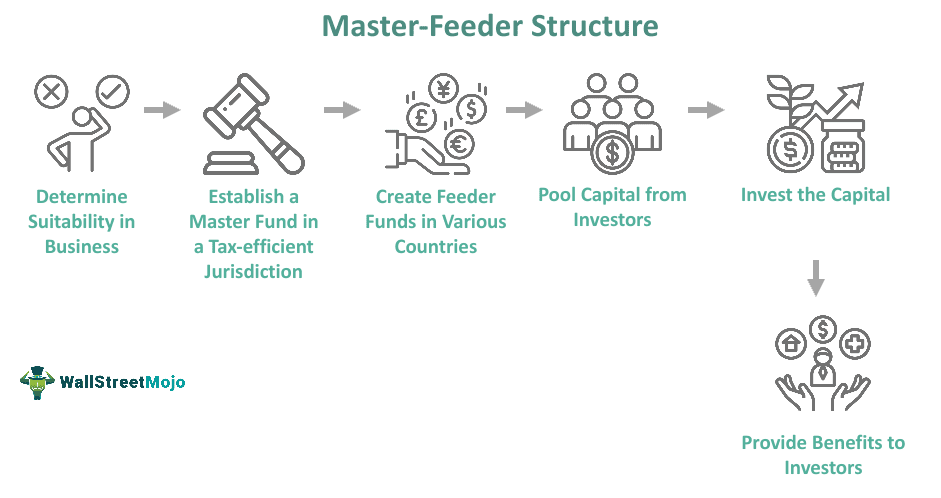
What Is a Special Purpose Vehicle (SPV)?

A special purpose vehicle is a subsidiary created by a parent company to isolate financial risk. It’s also called a special purpose entity (SPE). Its legal status as a separate company makes its obligations secure even if the parent company goes bankrupt. A special purpose vehicle is sometimes referred to as a bankruptcy-remote entity for this reason.

These vehicles can become a financially devastating way to hide company debt if accounting loopholes are exploited, as seen in the 2001 Enron scandal.

COMMENTS APPRECIATED

EDUCATION: Books

Like and Refer

***

***

Stocks, Technology and FOMC Drama

By A.I. and Staff Reporters

***

***

  • Technology: Fears of an A.I. bubble continue to climb after MIT published a report that 95% of companies using generative A.I. programs have nothing to show for it, despite pouring billions of dollars into this space.
  • Stocks: Another day of technology stocks selling off pulled the S&P 500 and NASDAQ lower yesterday, with investors rotating out of some of the hottest names and sectors in the market.
  • FOMC Drama: President Trump demanded the resignation of Fed Governor Lisa Cook for allegations of mortgage fraud. Meanwhile, the minutes from the July FOMC meeting revealed a growing divide between central bankers.

COMMENTS APPRECIATED

EDUCATION: Books

Like and Subscribe

***

***

EQ: Emotional Intelligence Defined

LEADERSHIP versus MANAGEMENT

***

***

By Dr. David Edward Marcinko MBA MEd

By Professor Gary A. Cook PhD

By Professor Eugene Schmuckler PhD MBA MEd CTS

Many of us have encountered a person who may intellectually be at upper levels, but whose ability to interact with others appears to that of one who is highly immature. This is the individual who is prone to becoming angry easily, verbally attacks co-workers, is perceived as lacking in compassion and empathy, and cannot understand why it is difficult to get others to cooperate with them and their agendas.

THINK: Sheldon Cooper PhD D.Sc MA BA of the The Big Bank Theory TV show.

The concept of Emotional Intelligence [EQ] was brought into the public domain when Daniel Goleman authored a book entitled, Emotional Intelligence.” According to Goleman, emotional intelligence consists of four basic non-cognitive competencies: self awareness, social awareness, self management and social skills. These are skills which influence the manner in which people handle themselves and their relationships with others.  Goleman’s position was that these competencies play a bigger role than cognitive intelligence in determining success in life and in the workplace.  He and others contend that emotional intelligence involves abilities that may be categorized into five domains:

  1. Self awareness: Observing and recognizing a feeling as it happens.
  2. Managing emotions: Handling feelings so that they are appropriate; realizing what is behind a feeling; finding ways to handle fears and anxieties, anger and sadness.
  3. Motivating oneself; Channeling emotions in the service of a goal; emotional self control; delaying gratification and stifling impulses.
  4. Empathy: Sensitivity to others’ feelings and concerns and taking their perspective appreciating the differences in how people feel about things.
  5. Handling relationships: Managing emotions in others; social competence & social skills. 

In 1995, Goleman then expanded on the works of Howard Gardner, Peter Salovey and John Mayer. He further defined Emotional Intelligence as a set of competencies demonstrating the ability one has to recognize his or her behaviors, moods and impulses and to manage them best, according to the situation. Mike Poskey, in “The Importance of Emotional Intelligence in the Workplace.” continued this definition by stating that emotional intelligence is considered to involve emotional empathy; attention to, and discrimination of one’s emotions; accurate recognition of one’s own and others’ moods; mood management or control over emotions; response with appropriate emotions and behaviors in various life situations (especially to stress and difficult situations); and balancing of honest expression of emotions against courtesy, consideration, and respect. 

Source: Emotional Intelligence: what is and why it matters” – Cary Cherniss, PhD, presented at the annual conference of the Society of Industrial and Organizational Psychology, April 2000.

EQ differs from what has generally been considered intelligence which is described in terms of one’s IQ.

Traditional views of intelligence focused on cognition, memory and problem solving. Even today individuals are evaluated on the basis of cognitive skills. Entrance tests for medical, law, business, undergraduate and graduate schools base admissions in large part on the scores of the SAT, GMAT, LSAT, MCAT, etc. Without question, cognitive ability is critical but has been demonstrated, it is not a very good predictor of future direct job performance and indirect liability management. In fact, in 1940, David Wechsler the developer of a widely used intelligence test made reference to “non-intellective” elements. By this Wechsler meant affective, personal and social factors.

Source: Non-Intellective factors in intelligence. Psychological Bulletin, 37, 444-445.  

Goleman became aware of the work of Salovey and Mayer having trained under David McClelland and was influenced by McClelland’s concern with how little traditional tests of cognitive intelligence predicted success in life. In fact, a study of 80 PhDs in science underwent a battery of personality tests, IQ tests and interviews in the 1950s while they were graduate students at Berkeley. Forty years later they were re-evaluated and it turned out that social and emotional abilities were four times more important than IQ in determining professional success and prestige.

Source: Feist & Barron: Emotional Intelligence and academic intelligence in career and life success. Paper presented at the Annual Convention of the American Psychological Society, San Francisco, 1996.

Undoubtedly, we want to have individuals work with us who have persistence which enables to them have the energy, drive, and thick skin to develop and close new business, or to work with the patients and other members of the staff. It is important to note that working alongside one with a “good” personality may be fun, energetic, and outgoing.

However, a “good personality does not necessarily equate to success. An individual with a high EQ can manage his or her own impulses, communicate effectively, manage change well, solve problems, and use humor to build rapport in tense situations. This clarity in thinking and composure in stressful and chaotic situations is what separates top performers from weak performers. 

INVESTOR’S EQ: https://medicalexecutivepost.com/2025/04/06/emotional-intelligence-how-eq-can-make-you-a-better-investor/

Poskey outlined a set of five emotional intelligence competencies that have proven to contribute more to workplace achievement than technical skills, cognitive ability, and standard personality traits combined.

***

***

A. Social Competencies: Competencies that Determine How We Handle Relationships

Intuition and Empathy – Our awareness of others’ feelings, needs, and concern. He suggested that this competency is important in the workplace for the following reasons:

  1. Understanding others: an intuitive sense of others’ feelings and perspectives, and showing an active interest in their concerns and interests
  2. Patient service orientation: the ability to anticipate, recognize and meet customer’s’ (patients) needs
  3. People development: ability to sense what others need in order to grow, develop, and master their strengths
  4. Leveraging diversity: cultivating opportunities through diverse people.

B. Political Acumen and Social Skills: Our adeptness at inducing desirable responses in others. This competency is important for the following reasons:

  1. Influencing: using effective tactics and techniques for persuasion and desired results.
  2. Communication: sending clear and convincing messages that are understood by others
  3. Leadership: inspiring and guiding groups of people
  4. Change catalyst: initiating and/or managing change in the workplace
  5. Conflict resolution: negotiating and resolving disagreements with people
  6. Collaboration and cooperation: working with coworkers and business partners toward shared goals
  7. Team capabilities: creating group synergy in pursuing collective goals.

C. Personal Competencies: Competencies that determine how we manage ourselves

D. Self Awareness: Knowing out internal states, preferences, resources, and intuitions. This competency is important for the following reasons.

  1. Emotional awareness: recognizing one’s emotions and their effects and impact on those around us
  2. Accurate self-assessment: knowing one’s strengths and limits
  3. Self-confidence: certainty about one’s self worth and capabilities
  4. Self-Regulation: managing one’s internal states, impulses, and resources. This competency is important in  the workplace for the following reasons.
  5. Self-control: managing disruptive emotions and impulses
  6. Trustworthiness: maintaining standards of honesty and integrity
  7. Conscientiousness: taking responsibility and being accountable for personal performance
  8. Adaptability: flexibility in handling change
  9. Innovation: being comfortable with an openness to novel ideas, approaches, and new information.

E. Self-Expectations and Motivation: Emotional tendencies that guide or facilitate reaching goals. This competency is important in the workplace for the following reasons.

  1. Achievement drive: striving to improve or meet a standard of excellence we impose on ourselves
  2. Commitment: aligning with the goals of the group or the organization
  3. Initiative: readiness to act on opportunities without having to be told
  4. Optimism: Persistence in pursuing goals despite obstacles and setbacks

A note of caution is necessary. Goleman and Salovey both stated that emotional intelligence on its own is not a strong predictor of job performance. Instead they contend that it provides the bedrock for competencies that are predictors. 

Obviously, EQ is an important attribute and it behooves each of us to promote emotional intelligence in the workplace. A number of guidelines have been developed for the Consortium for Research on Emotional Intelligence in Organizations by Goleman and Cherniss. The guidelines cover 21 phases which include preparation, training, transfer and evaluation.

  1. Assess the organization’s needs: Determine the competencies that are most critical for effective job performance in a particular type of job. In doing so, us a valid method, such as the comparison of the behavioral interviews of superior performs and average performers. Also make sure the competencies to be developed are congruent with the organization’s culture and overall strategy.
  2.  Assess the individual: This assessment should be based on the key competencies needed for a particular job, and the data should come from multiple sources using multiple methods to maximize credibility and validity.
  3.  Deliver assessments with care: Give the individual information on his/her strengths and weaknesses. In doing so, try to be accurate and clear. Also, allow plenty of time for the person to digest and integrate the information.  Provide feedback in a safe and supportive environment in order to minimize resistance and defensiveness. Avoid making excuses or downplaying the seriousness of deficiencies.
  4.  Maximize choice: People are motivated to change when they freely choose to do so. As much as possible, allow people to decide whether or not they will participate in the development process, and have them change goals themselves.
  5.  Encourage people to participate: People will be more likely to participate in development efforts if they perceive them to be worthwhile and effective. Organizational policies and procedures should encourage people to participate in development activity, and supervisors should provide encouragement and the necessary support. Motivation will be enhanced if people trust the credibility of those who encourage them to undertake the training.
  6.  Link learning goals to personal values: People are most motivated to pursue change that fits with their values and hopes. If a change matters little to people, they won’t pursue it. Help people understand whether a given change fits with what matters most to them.
  7.  Adjust expectations: Builds positive expectations by showing learners that social and emotional competence can be improved and that such improvement will lead to valued outcomes. Also, make sure that the learner has a realistic expectation of what the training process will involve.
  8.  Gauge readiness: Assess whether the individual is ready for training. If the person is not ready because of insufficient motivation or other reasons, make readiness the focus of intervention efforts.
  9.  Foster a positive relationship between the trainers and learners: Trainers who are warm, genuine, and empathic our best able to engage the learners in the change process. Select trainers who have these qualities, and make sure that they use them when working with the learners.
  10.  Make change self-directed: Learning is more effective when people direct their own learning program, tailoring it to their unique needs and circumstances. In addition to allowing people to set their own learning goals, let them continue to be in charge of their learning throughout the program, and tailor the training approach to the individual’s learning style.
  11.  Set clear goals: People need to be clear about what the competence is, how to acquire it, and how to show it on the job. Spell out the specific behaviors and skills that make up the target competence. Make sure that the goals are clear, specific, and optimally challenging.
  12.  Break goals into manageable steps: change. That is more likely to occur if the change process is divided into manageable steps. Encourage both trainers and trainees to avoid being overly ambitious.
  13.  Provide opportunities to practice: Lasting change requires sustained practice on the job and elsewhere in life. An automatic habit is being unlearned and different responses are replacing it. Use naturally occurring opportunities for practice at work, and in life. Encourage the trainees to try the new behaviors repeatedly and consistently over a period of months.
  14.  Give performance feedback: Ongoing feedback encourages people and direct change. Provide focused and sustained feedback as the learners practice new behaviors. Make sure that supervisors, peers, friends, family members-or some combination of these- give periodic feedback on progress.
  15.  Rely on experiential methods: Active, concrete, experiential methods tend to work best for learning social and emotional competencies. Development activities that engage all the senses and our dramatic and powerful can be especially effective.
  16.  Build in support: Change is facilitated through ongoing support of others who are going through similar changes. Programs should encourage the formation of groups where people give each other support, throughout the change effort. Coaches and mentors also can be valuable in helping support the desired change.
  17.  Use models: Use modern webinars, patient portals, live or videotaped models that clearly show how the competency can be used in realistic situations. Encourage learners to study, analyze, and emulate the models.
  18.  Enhance insight: Self-Awareness is the cornerstone of emotional and social competence. Help learners acquire greater understanding about how their thoughts, feelings, and behavior affect themselves and others.
  19.  Prevent relapse: Use relapse prevention, which helps people use lapses and mistakes as lessons to prepare themselves for further efforts.

Moreover:

  • Encourage use of skills on the job: Supervisors, peers and subordinates should reinforce and reward learners for using their new skills on the job. Coaches and mentors also can serve this function. Also, provide prompts and cues, such as through periodic follow-ups. Change also is more likely to indoor. When high status persons, such as supervisors and upper-level management model it.
  •  Develop an organizational culture that supports learning: Change will be more enduring if the organization’s culture and tone support the change and offer a safe atmosphere for experimentation.

Finally, see if the development effort has lasting effects evaluated. When possible, find a true set of measures of the competence or skill, as shown on the job, before and after training, and also at least two months later. One-year follow-ups also are highly desirable. In addition to charting progress on the acquisition of competencies, also assess the impact on important job related outcomes, such as performance measures, and indicators of adjustments such as absenteeism, grievances, health status, etc.

Managers V. Leaders

These abilities are important for one to be successful as a manager and even more so as a leader, or physician executive. But, before we begin an examination of strategic leadership, it is necessary to make a deeper distinction between a manager and a leader. There are many different definitions as well as descriptions regarding leadership and management.

BRAND MANAGEMENT: https://medicalexecutivepost.com/2025/07/07/brand-management-7-approaches-for-doctors-and-financial-advisors/

Many people talk as though leadership and management is the same thing. Fundamentally, they are quite different. Management focuses on work. We manage work activities such as money, time, paperwork, materials, equipment, and personnel, among other things.  As can be found in any basic book on management, management focuses on planning, organizing, controlling, coordinating, budgeting, finance and money management as well as decision making. In effect, managers are generally those individuals who have been given their authority by virtue of their role. It is the function of a manager to ensure that the work gets done as well as to oversee the activities of others. In many healthcare organizations we find that those individuals elevated to a managerial position occur as a result of being a high performer on their previous assignment. A manager receives authority on the basis of role; while a leader’ authority is more innate in nature.

HEALTHCARE LEADERSHIP: https://medicalexecutivepost.com/2025/05/01/healthcare-leadership-on-the-brink-executives-eyeing-the-exits/

COMMENTS APPRECIATED

***

***

EDUCATION: Books

SPEAKING: Dr. Marcinko will be speaking and lecturing, signing and opining, teaching and preaching, storming and performing at many locations throughout the USA this year! His tour of witty and serious pontifications may be scheduled on a planned or ad-hoc basis; for public or private meetings and gatherings; formally, informally, or over lunch or dinner. All medical societies, financial advisory firms or Broker-Dealers are encouraged to submit an RFP for speaking engagements: CONTACT: Ann Miller RN MHA at MarcinkoAdvisors@outlook.com -OR- http://www.MarcinkoAssociates.com

Like, Subscribe and Refer

***

INTEL: The USA and Softbank’s Acquistion?

By A.I. and Staff Reporters

SPONSOR: http://www.MarcinkoAssociates.com

***
***

US government mulls 10% stake in Intel as Softbank invests $2b.

According to Morning Brew, Bloomberg and the Wall Street Journal reported recently that the government is considering becoming one of the beleaguered chipmaker’s biggest shareholders by converting grants the company was given under the Biden-era Chips Act into an equity stake.

At Intel’s current valuation, a 10% stake would be worth ~$10.5 billion—though the exact size of the stake and whether the government will move forward with the plan remains to be determined.

Meanwhile, over in the private sector, Softbank agreed to buy $2 billion worth of Intel stock, giving it a ~2% stake. Intel has been trying to turn itself around after losing ground to other semiconductor companies

COMMENTS APPRECIATED

EDUCATION: Books

Like and Subscribe

***

***

PHYSICIANS: Side Gigs and Hustles?

By Dr. David Edward Marcinko MBA MEd

***

***

In today’s dynamic economic landscape, the concept of a “side hustle” has evolved from a mere trend to an essential component of personal financial strategy for many individuals; even doctors.

BROKE DOCTORS: https://medicalexecutivepost.com/2025/08/02/doctors-going-broke-and-living-paycheck-to-paycheck/


What Is a Side Hustle?

A side hustle is a way to earn extra income outside of your primary job or main source of employment. It typically involves part-time work, freelancing, small businesses, or gig-based activities that can be pursued flexibly in your free time. Unlike traditional employment, side hustles often offer more autonomy, creative freedom, and the potential to monetize skills, hobbies, or passions.

***

***

Doctor Gigs?

So, if you’re a doctor, dentist or podiatrist considering a side hustle, focus on something sustainable and long-term. Ask yourself: What am I already good at? What do people already ask me to help with? The best side hustles don’t require reinventing the wheel — just monetizing the one you’ve already been pushing uphill.

EXAMPLES: https://www.physiciansidegigs.com/side-gigs

But, avoid gigs that require a huge upfront investment or promise overnight success. Instead, look for something that offers flexibility, ideally something that works with your schedule, not against your sanity.

MONEY ADDICTION: https://medicalexecutivepost.com/2025/08/07/moiney-addicted-physicians-the-investing-and-trading-personality-of-doctors/

Track your earnings and how much time you’re putting in. Side income should support your goals, whether that’s paying off debt, saving for a trip or just breathing easier when office rent comes due.

But, if it’s draining your energy from your medical practice with little to show for it, it might be time to rethink the hustle.

COMMENTS APPRECIATED

EDUCATION: Books

SPEAKING: Dr. Marcinko will be speaking and lecturing, signing and opining, teaching and preaching, storming and performing at many locations throughout the USA this year! His tour of witty and serious pontifications may be scheduled on a planned or ad-hoc basis; for public or private meetings and gatherings; formally, informally, or over lunch or dinner. All medical societies, financial advisory firms or Broker-Dealers are encouraged to submit an RFP for speaking engagements: CONTACT: Ann Miller RN MHA at MarcinkoAdvisors@outlook.com -OR- http://www.MarcinkoAssociates.com

Refer, Like and Subscribe

***

***

RFID: Defined for Hospital Inventory Tracking

A Supply Chain Management Strategy

By Staff Reporters

***

***

RADIO FREQUENCY IDENTIFICATION

RFID refers to a device attached to an object that transmits data to an RFID receiver. A device can be a large piece of hospital hardware the size of a small book like those attached to ocean containers, or a very small device inserted into a label on a package. RFID has advantages over bar codes such as the ability to hold more data, and to change the stored data as processing occurs. Moreover, it does not require line-of-sight to transfer data, and is very effective in harsh environments where bar-code labels will not work. RFID is not without its own problems, however, as RF signals can be compromised by materials such as metals and liquids.

SCM: https://medicalexecutivepost.com/2011/06/09/supply-chain-management-in-healthcare/

Although RFID technology is receiving much current attention, it still tends to be cost-prohibitive for some hospital inventory tracking applications. As chip prices go down, there will be continued growth in the application of RFID, but, as in the case of 2D bar codes, many hospital warehouse applications simply do not require this added functionality. The low-cost 1D bar code may continue to be the technology of choice for many hospital inventory tracking applications in the short term.

Smart labels are labels with integrated RFID chips. The idea is to produce labels (probably with bar codes) as well as programming the RFID chips embedded in the label. This would provide all current functionality (human- and machine-readable text and bar codes) as well as adding RFID functionality.

Slap-and-ship describes an approach to complying with vendor requirements for physical identification of shipped goods. More recently, slap-and-ship has been used to describe complying With RFID requirements (such as those from large health care systems); however, it is also applicable to any compliance labeling requirement (such as compliance bar-code labels). Slap-and-ship implies meeting the customer’s requirement by applying the bar-code labels or RFID tags, but not utilizing the technology internally.

SCM PODCAST: https://medicalexecutivepost.com/2022/03/16/podcast-medical-supply-chain-management/

Finally, anti-skimming bills were first approved by California and Washington State relative to RFID privacy and are focused on making it illegal for criminals or businesses (or criminal businesses) to read and use personal information from RFID-enabled items such as driver’s licenses and credit cards without the owner’s consent.

COMMENTS APPRECIATED

Like and Subscribe

***

***

INVESTMENTS: Four Firm Updates

By A.I.

SPONSOR: http://www.MarcinkoAssociates.com

***

***

UnitedHealth Group soared almost 12%, its biggest one-day gain in nearly five years, after getting the “Buffett Bounce.” Buffett’s Berkshire Hathaway revealed it bought ~5 million shares worth nearly $1.6 billion, giving a much-needed vote of confidence to the struggling health giant.

The White House is considering buying part of Intel, Bloomberg reported this week, which would be the latest big business deal the president pursues on behalf of the government. The Trump administration might acquire a stake in the struggling computer chip-maker using CHIPS Act funding—nearly $11 billion of which was already earmarked for Intel.

Saudi Arabia’s Public Investment Fund took an $8 billion write-down on five mega-projects it’s building, due to lower oil prices and higher costs.

Pimco, the asset management giant, warned that President Trump’s plan to IPO Fannie Mae and Freddie Mac could push mortgage rates higher.

COMMENTS APPRECIATED

EDUCATION: Books

Like and Subscribe

***

***

PHYSICIAN GENDER FINANCIAL DIFFERENCES: In Marriage and Divorce

By Dr. David Edward Marcinko MBA MEd

***

SPONSOR: http://www.MarcinkoAssociates.com

***

Whatever the statistics regarding physician standard of living, the reality is that within most marriages the husband more frequently takes responsibility for understanding and managing the finances.  Additionally, women are more likely to remain in the marital home following a separation, thus inheriting a large fixed expense that may prove be an excessive, albeit short-term burden to them.  At the time the decision is made to separate or divorce, many women do not have an understanding of how to manage their household budget, or how to manage their assets and liabilities. 

But, this is changing over time.

DIVORCE MONTH: https://medicalexecutivepost.com/2024/01/31/january-doctors-beware-divorce-month/

An issue many divorcing physicians face is that the other spouse (in the past the wife), may have concentrated their energies on managing the home, while the physician concentrated on earning and managing the finances.  The problems of the spouse of a physician are often compounded in divorce; not only do they not understand their personal finances, but that their absence from the work force has made them financially dependent on the other. 

At what probably be the most emotionally taxing time in their lives, they are forced to play catch-up.

***

***

Taking a more active role in their own financial planning during the marriage may help the spouse of a physician avoid some of the financial pitfalls of separation and divorce. 

***

***

NOTE: Barbara Stanny provides an excellent overview and reading bibliography on how people can get smart about money in her book Prince Charming Isn’t Coming. [1]


[1] Penguin USA (paper), 1999.

COMMENTS APPRECIATED

EDUCATION: Books

SPEAKING: Dr. Marcinko will be speaking and lecturing, signing and opining, teaching and preaching, storming and performing at many locations throughout the USA this year! His tour of witty and serious pontifications may be scheduled on a planned or ad-hoc basis; for public or private meetings and gatherings; formally, informally, or over lunch or dinner. All medical societies, financial advisory firms or Broker-Dealers are encouraged to submit an RFP for speaking engagements: CONTACT: Ann Miller RN MHA at MarcinkoAdvisors@outlook.com -OR- http://www.MarcinkoAssociates.com

Like and Subscribe

***

***

Stocks, Bonds and Commodities

By A.I.

***

***

  • Stocks: The Dow climbed thanks to UnitedHealth and Warren Buffett while the rest of the market sank as the stock rally slowed. But, despite Friday’s decline, both the S&P 500 and NASDAQ wrapped up winning weeks.
  • Bonds: Both 10-year and 2-year Treasury yields continued to climb after Thursday’s PPI reading and Friday’s consumer confidence and retail sales data.
  • Commodities: All eyes were on Anchorage, Alaska as President Trump concluded talks with President Putin—discussions that will be crucial for crude’s future.

EDUCATION: Books

COMMENTS APPRECIATED

Like and Subscribe

***

***

ESSENTIALITY: Hospital Credit Analysis

By Dr. David Edward Marcinko MBA MEd

***

SPONSOR: http://www.MarcinkoAssociates.com

Why Hospital Essentiality?

An important component of hospital credit analysis is essentiality. Hospitals are unusual businesses that many times possess some form of essentiality to their communities. Health care is important to the economic vitality of every community. Many hospitals have served their communities for many years; it is not uncommon to find hospitals that have been continuously operating for more than 100 years in the same community.

Most hospitals are not-for-profit. In not-for-profit hospitals, no private party actually “owns” the hospital; control is vested in various boards, but no one explicitly owns a not-for-profit hospital. In a broad sense, communities own not-for-profit hospitals. They are considered “charities” with a “charitable purpose.” Though a not-for-profit hospital may not have owners, it has many “stakehold-ers,” parties that have vested interests in the continuing success of the hospital.

HOSPITAL TYPES: https://medicalexecutivepost.com/2025/08/06/hospitals-understanding-different-types/

***

***

Many hospitals have broad and vast webs of stakeholders. Stakeholders are why hospitals rarely close or are shut down. Too many stakeholders have interests in the continuing successful operation of hospitals.

Another dimension of the essentiality analysis is service analysis. How significant are the hospital’s services? If the hospital shuts down, what population segments would suffer? How significant is the population that would suffer? How much would they suffer?

HOSPITAL ROI: https://medicalexecutivepost.com/2024/10/09/the-dupont-decomposition-equation-for-roi/

Assessment

And so, hospital stakeholder relationships need to be considered in the analysis of essentiality. How strong are these relations? How many are there? How important is the continuing success of this hospital to these stakeholders?

Analysis of hospital’s stakeholders and services should provide a credible view of the degree of essentiality associated with a hospital. Higher degrees of essentiality suggest higher likelihoods that hospitals, one way or another, will meet their commitments, particularly their payment
commitments.

***

***

COMMENTS APPRECIATED

EDUCATION: Books

SPEAKING: Dr. Marcinko will be speaking and lecturing, signing and opining, teaching and preaching, storming and performing at many locations throughout the USA this year! His tour of witty and serious pontifications may be scheduled on a planned or ad-hoc basis; for public or private meetings and gatherings; formally, informally, or over lunch or dinner. All medical societies, financial advisory firms or Broker-Dealers are encouraged to submit an RFP for speaking engagements: CONTACT: Ann Miller RN MHA at MarcinkoAdvisors@outlook.com -OR- http://www.MarcinkoAssociates.com

Like and Subscribe

OB-GYN V. Obstetrician V. Gynecologist V. Mid-Wife V. Doula

DEFINITIONS

A.I. and Staff Reporters

SPONSOR: http://www.CertifiedMedicalPlanner.org

***

***

OB-GYN

An obstetrician-gynecologist, or OB-GYN, has expertise in female reproductive health, pregnancy, and childbirth. Some OB-GYNs offer a wide range of general health services similar to a primary care doctor. Others focus on the medical care of the female reproductive system. OB-GYNs also provide routine medical services and preventive screenings. This type of doctor has studied obstetrics and gynecology. The term “OB-GYN” can refer to the doctor, an obstetrician-gynecologist, or to the sciences that the doctor specializes in, which are obstetrics and gynecology.

Obstetrician

Obstetrics is the branch of medicine related to medical and surgical care before, during, and after a woman gives birth. Obstetrics focuses on caring for and maintaining a woman’s overall health during maternity. This includes:

  • pregnancy
  • labor
  • childbirth
  • the postpartum period

OB-GYNs can conduct office visits, perform surgery, and assist with labor and delivery. Some OB-GYNs provide services through a solo or private practice. Others do so as part of a larger medical group or hospital.

***

***

Gynecologist

Gynecology is the branch of medicine that focuses on women’s bodies and their reproductive health. It includes the diagnosis, treatment, and care of women’s reproductive system. This includes the:

  • vagina
  • uterus
  • ovaries
  • fallopian tubes

This branch of medicine also includes screening for and treating issues associated with women’s breasts. Gynecology is the overarching field of women’s health from puberty through adulthood. It represents most of the reproductive care received during a lifetime. If pregnant, one goes to an obstetrician.

Mid-Wife

Midwives are registered nurses who specialize in midwifery. As such, they’re trained healthcare providers who can oversee low-risk pregnancies, labor, and birth. They can provide other obstetric and gynecological services too. They can do exams and help with basic gynecological concerns like sexually transmitted infections, urinary tract infections, or yeast infections. They help support during labor and in the postpartum period with breastfeeding and birth control.

Doula

Doulas aren’t clinical professionals and can’t give medical advice. They can’t prescribe medicines, and they can’t deliver a baby. But they can offer physical and emotional support during labor—and sometimes during and after pregnancy. Doulas can help with breathing techniques, positional changes, and relaxation strategies during labor. Studies show doulas are associated with fewer C-sections and more vaginal births.

COMMENTS APPRECIATED

Like and Subscribe

***

***

WHY? Agents and Consultants Can’t Help With Startup Fundraising

ENTREPRENEURSHIP

SPECIAL REPRINT FOR THE MEDICAL EXECUTIVE-POST

***

***

COMMENTS APPRECIATED

***

***

Like and Subscribe

PHYSICIAN DIVORCE: Within the Medical Profession

By Dr. David Edward Marcinko MBA MEd

***

SPONSOR: http://www.MarcinkoAssociates.com

***

DIVORCE WITHIN THE MEDICAL PROFESSION

A Johns Hopkins University study, by Michael J. Klag MD in 1997, found that physicians in some specialties — chiefly psychiatry and surgery — are at higher risk for divorce than their medical brethren in other fields. But, the results did not support the common view that job-related anxiety and depression are linked to marital breakup. Alerting medical students to the risks of divorce in some specialties may influence their career choices and strengthen their marriages whatever field they choose. The study, supported by the National Institutes of Health [NIH], was published in the March 13th issue of The New England Journal of Medicine. Results also strongly suggested that the high divorce risk in some specialties may result from the inherent demands of the job as well as the emotional experiences of physicians who enter those fields.

***

***

Divorce Prone Medical Specialties*

For example, the Hopkins team assessed the specialty choices, marriage histories, psychological characteristics, and other career and personal factors of 1,118 physicians who graduated from The Johns Hopkins University School of Medicine from 1948 through 1964. Over 30 years of follow-up, the divorce rate was 51 percent for psychiatrists, 33 percent for surgeons, 24 percent for internists, 22 percent for pediatricians and pathologists, and 31 percent for other specialties. The overall divorce rate was 29 percent after three decades of follow-up and 32 percent after nearly four decades of follow-up.

Physicians who married before medical school graduation had a higher divorce rate than those who waited until after graduation (33 percent versus 23 percent). The year of first marriage was linked with divorce rates: 11 percent for marriages before 1953, 17 percent for those from 1953 to 1957, 24 percent for those from 1958 to 1962 and 21 percent for those after 1962. Those who had a parent die before medical school graduation had a lower divorce rate.

Female physicians had a higher divorce rate (37 percent) than their male colleagues (28 percent). Physicians who were members of an academic honor society in medical school had a lower divorce rate, although there was no difference in divorce rates according to class rank. Religious affiliation, being an only child, having a parent who was a physician and having a divorced parent were not associated with divorce rates. Physicians who reported themselves to be less emotionally close to their parents and who expressed more anger under stress also had a significantly higher divorce rate, but anxiety and depression levels were not associated with divorce rates.

MEDIATION: https://medicalexecutivepost.com/2024/09/15/financially-egalitarian-dating-marriages-and-divorce-mediation-for-doctors/

*Cite: Co-authors of the study, which was part of the Johns Hopkins Precursors Study, an ongoing, prospective study of physicians from the Hopkins medical school graduating classes of 1948 through 1964, were lead author Bruce L. Rollman, M.D., Lucy A. Mead, Sc.M., and Nae-Yuh Wang, M.S.

***

***

The Painful Truth

In their article “The Painful Truth: Physicians Are Not Invincible” [1] Miller and McGowen state that divorce rates among physicians have been reported to be 10% to 20% higher than those in the general population. They explain that for many years in pre-med college, medical school, and residency, physicians focus on getting through the next hurdle. They may postpone the pleasures of life that others enjoy.  Compulsive traits that allow them to postpone enjoyment may have the unwanted consequence of leading to more distant relationships., thus placing strain on intimate relationships.

A 2002 study looking at dual physician marriages found they have a relatively low divorce rate of 11%. “They’re a happily married cohort,” says Dr Wayne Sotile of the Sotile Cetner for Resilience (www.sotile.com). “They’re more compassionate about the passion for the career — they understand the calling because they share it.”

A study published in The New England Journal of Medicine in 1997 with Bruce L. Rollman as the lead researcher [2] found that physicians in some specialties — chiefly psychiatry and surgery — are at higher risk for divorce than their medical brethren in other fields. Alerting medical students to the risks of divorce in some specialties may influence their career choices and strengthen their marriages whatever field they choose.

The study suggested that the high divorce risk in some specialties may result from the inherent demands of the job as well as the emotional experiences of physicians who enter those fields. The divorce rate was 51 percent for psychiatrists, 33 percent for surgeons, 24 percent for internists, 22 percent for pediatricians and pathologists, and 31 percent for other specialties.

The overall divorce rate was 29 percent after three decades of follow-up and 32 percent after nearly four decades of follow-up. Physicians who married before medical school graduation had a higher divorce rate than those who waited until after graduation (33 percent versus 23 percent). Female physicians had a higher divorce rate (37 percent) than their male colleagues (28 percent).

***

***

References:


  1. Miller, M. N., McGowen, R., 2000, “The painful truth: Physicians are not invincible,” Southern Medical Journal, 93: 966-973.
  2. Rollman BL, Mead LA, Wan NY, Klag MJ. Medical specialty and the incidence of divorce. N Engl J Med. 1997;336:800–3

COMMENTS APPRECIATED

EDUCATION: Books

SPEAKING: Dr. Marcinko will be speaking and lecturing, signing and opining, teaching and preaching, storming and performing at many locations throughout the USA this year! His tour of witty and serious pontifications may be scheduled on a planned or ad-hoc basis; for public or private meetings and gatherings; formally, informally, or over lunch or dinner. All medical societies, financial advisory firms or Broker-Dealers are encouraged to submit an RFP for speaking engagements: CONTACT: Ann Miller RN MHA at MarcinkoAdvisors@outlook.com -OR- http://www.MarcinkoAssociates.com

Like and Subscribe

***

PHYSICIANS: Beware “Zombie” Debt and “Phantom” Debt Collectors

By Staff Reporters

SPONSOR: http://www.MarcinkoAssociates.com

***

***

According to Wikipedia, Phantom debt or zombie debt is a debt that is old, defaulted, or not owed and is somehow still being pursued for collection to be paid by the presumed debtor. It generally refers to debt that is more than 3 years old, is long forgotten about or belonged to someone else – like someone with the same name or a deceased parent. The amount owed can grow to hundreds or thousands of dollars more than what was originally owed.

BROKE DOCTORS: https://medicalexecutivepost.com/2025/08/02/doctors-going-broke-and-living-paycheck-to-paycheck/

An example of this is from George Miller. George missed an 11 cent Verizon bill and seven years later it had grown to $4,000.00.

Sometimes it was never owed, was owed by a deceased parent, or that was previously owed by the presumed debtor, but was previously paid in full, settled, discharged via bankruptcy or a dismissed court case, is beyond the statute of limitations, or is otherwise not legally collectible, but that a collection agency or other similar service is aggressively attempting to collect, often fraudulently.

***

***

While the concept of phantom debt is quite old, it has gotten a lot of attention since the 1990s.

Very often, collectors of phantom debt use intimidating, abusive, or otherwise illegal tactics in an attempt to collect phantom debt that include frequent phone calls, calls to the victim’s place of employment, or threats of scary consequences against the victim that sometimes include arrest and/or criminal prosecution. In the USA, such tactics violate the Fair Debt Collection Practices Act [FDCPA]

The source of phantom debt may be from collectors who buy the debt from other collectors for pennies on the dollar, some of which take action that is not legal in order to collect that debt. Unlawful techniques used include suing or threatening to sue, re-aging the debt on the victim’s credit report to circumvent limits on reporting, or falsely promising to remove a negative credit report entry in exchange for a partial payment.

PSYCHOLOGY MONEY: https://medicalexecutivepost.com/2025/04/08/psychology-a-money-relationship-questionnaire-for-doctors/

COMMENTS APPRECIATED

EDUCATION: Books

SPEAKING: Dr. Marcinko will be speaking and lecturing, signing and opining, teaching and preaching, storming and performing at many locations throughout the USA this year! His tour of witty and serious pontifications may be scheduled on a planned or ad-hoc basis; for public or private meetings and gatherings; formally, informally, or over lunch or dinner. All medical societies, financial advisory firms or Broker-Dealers are encouraged to submit an RFP for speaking engagements: CONTACT: Ann Miller RN MHA at MarcinkoAdvisors@outlook.com -OR- http://www.MarcinkoAssociates.com

Like and Subscribe

***

***

PHARMACY BENEFITS MANAGER: The Business Model Explained?

By A.I. and Dr. David Edward Marcinko MBA MEd CMP

SPONSOR: http://www.CertifiedMedicalPlanner.org

***

***

Business Model Defined

Doctors and dentists earn money by treating patients. CPAs and Attorneys have clients, and retail stores buy items low and sell them at higher prices. This is called a business model.

More formally, a business model identifies the products or services the business plans to sell, the target market, and any anticipated expenses, in order to outline how to generate a profit. Business models are important for both new and established businesses. They help companies attract investment, recruit talent, and motivate management and staff.

Businesses should regularly update their business model, or they’ll fail to anticipate trends and challenges ahead. Business models also help investors to evaluate companies that interest them and employees to understand the future of a company they may aspire to join.

***

The Business Model of Pharmacy Benefits Managers

In the United States, health insurance providers often hire a third party to handle price negotiations, insurance claims, and distribution of prescription drugs. Providers that use such pharmacy benefit managers include commercial health plans, self-insured employer plans, Medicare Part D [drug] plans, the Federal Employees Health Benefits Program, and state government employee plans. PBMs are designed to aggregate the collective buying power of en-rollees through their client health plans, enabling plan sponsors and individuals to obtain lower prices for their prescription drugs. PBMs negotiate price discounts from retail pharmacies, rebates from pharmaceutical manufacturers, and mail-service pharmacies which home-deliver prescriptions without consulting face-to-face with a pharmacist.

PBMs DEFINED: https://medicalexecutivepost.com/2019/01/18/on-pbms-pharmacy-benefits-management/

Pharmacy benefit management companies can make revenue in several ways.

First, they collect administrative and service fees from the original insurance plan.

Then, they can also collect rebates from the manufacturer.

Traditional PBMs do not disclose the negotiated net price of the prescription drugs, allowing them to resell drugs at a public list price (also known as a sticker price), which is higher than the net price they negotiate with the manufacturer. This practice is known as “spread pricing”. The industry argues that savings are trade secrets. Pharmacies and insurance companies are often prohibited by PBMs from discussing costs and reimbursements. This leads to lack of transparency.

***

***

Therefore, states are often unaware of how much money they lose due to spread pricing, and the extent to which drug rebates are passed on to en-rollees of Medicare plans. In response, states like Ohio, West Virginia, and Louisiana have taken action to regulate PBMs within their Medicaid programs.

For instance, they have created new contracts that require all discounts and rebates to be reported to the states. In return, Medicaid pays PBMs a flat administrative fee.

PBM PODCAST: https://medicalexecutivepost.com/2023/08/26/podcast-cvs-replaces-its-pbm/

COMMENTS APPRECIATED

EDUCATION: Books

SPEAKING: Dr. Marcinko will be speaking and lecturing, signing and opining, teaching and preaching, storming and performing at many locations throughout the USA this year! His tour of witty and serious pontifications may be scheduled on a planned or ad-hoc basis; for public or private meetings and gatherings; formally, informally, or over lunch or dinner. All medical societies, financial advisory firms or Broker-Dealers are encouraged to submit an RFP for speaking engagements: CONTACT: Ann Miller RN MHA at MarcinkoAdvisors@outlook.com -OR- http://www.MarcinkoAssociates.com

Like and Subscribe

***

***

Stocks, Commodities and Trade

By A.I.

***

***

  • Stocks: Markets struggled to pick a direction as investors took a wait-and-see approach ahead of today’s CPI reading—even as Wall Street worries about the data’s reliability.
  • Trade: President Trump asked China, the world’s largest soybean buyer, to quadruple its soybean purchases from the US. He also extended the trade war truce with China by 90 days
  • Commodities: Gold had its worst day in three months as traders waited for the White House to clarify its new tariffs on the key commodity—only for Trump to announce that it won’t be tariffed at all. Meanwhile, Chinese battery giant CATL halted operations at a mine that produces 4% of the world’s lithium, sending prices of the precious metal soaring.

COMMENTS APPRECIATED

Like and Subscribe

***

***

Ophthalmologist V. Optometrist V. Optician V. Ocularist

A.I. and Staff Reporters

SPONSOR: http://www.CertifiedMedicalPlanner.org

***

Difference-between-Optometrist-and-Ophthalmologist

***

An ophthalmologist is a physician [MD, DO] who undergoes sub-specialty training in medical and surgical eye care. Following a medical degree, a doctor specializing in ophthalmology must pursue additional postgraduate residency training specific to that field. In the United States, following graduation from medical school, one must complete a four-year residency in ophthalmology to become an ophthalmologist. Following residency, additional specialty training (or fellowship) may be sought in a particular aspect of eye pathology.

Ophthalmologists prescribe medications to treat ailments, such as eye diseases, implement laser therapy, and perform surgery when needed. Ophthalmologists provide both primary and specialty eye care—medical and surgical. Most ophthalmologists participate in academic research on eye diseases at some point in their training and many include research as part of their career. Ophthalmology has always been at the forefront of medical research with a long history of advancement and innovation in eye care.

Optometrist

Optometrists focus on regular vision care and primary health care for the eye. After college, they spend 4 years in a professional program and get a doctor of optometry degree. But they don’t go to medical school. Some optometrists get additional clinical training or complete a specialty fellowship after optometry school. They:

  • Perform eye exams and vision tests
  • Prescribe and fit eyeglasses and contact lenses
  • Monitor eye conditions related to diseases like diabetes
  • Manage and treat conditions like dry eye and glaucoma
  • Provide low-vision aids and vision therapy

There are specialties among optometrists. They include:

Pediatric optometry. These providers work with babies, toddlers, and children, using special techniques to test their vision.

Neuro-optometry. If you have vision problems that result from a brain injury, this is the type of optometrist you might visit.

Low-vision optometry. If you have low vision—that means you can’t see well enough to perform your daily activities and your sight can’t be corrected by glasses or contact lenses, medicine, or surgery—low-vision optometrists offer devices and strategies that can improve your quality of life.

***

***

Optician

An optician is an eye care specialist who helps you choose the right eyeglasses, contact lenses or other vision correction devices. They can’t diagnose or treat conditions that affect your eyes or vision. They’ll work with you to get the right corrective lenses after your optometrist or ophthalmologist gives you a prescription.

Ocularist

An ocularist is an eye care specialist who provides care for people needing prosthetic eyes due to injury, infection or congenital disease (present at birth). Losing or damaging an eye can be a traumatic experience, and the need for a prosthetic can be overwhelming. Ocularists offer long-term care. They collaborate with your healthcare team to create or restore a more natural facial appearance with the goal of enhancing your health-related quality of life.

A former term for this medical branch is oculism.

***

***

COMMENTS APPRECIATED

Like and Subscribe

***

***

DOJ-HHS FCA Working Group Revived

By Health Capital Consultants, LLC

***

***

On July 2, 2025, the Department of Justice (DOJ) and Department of Health & Human Services (HHS) announced during the American Health Law Association (AHLA) Annual Meeting that the agencies have reestablished a Working Group to “strengthen” their ongoing collaboration, specifically as relates to the False Claims Act (FCA).

This Health Capital Topics article discusses the Working Group’s priorities and the implications for providers. (Read more…)

COMMENTS APPRECIATED

Like and Subscribe

***

***

ALTERNATE INVESTMENTS: 401[k] Accounts

By A.I. and Staff Reporters

***

***

President Trump is set to sign an executive order allowing alternative assets such as cryptocurrency, private equity investments, and real estate in 401(k) accounts. Those accounts are a veritable gold mine—Americans have stashed approximately $12.5 trillion away for retirement, and alternative asset managers have been chomping at the bit to get a piece of that pie.

WIND ENERGY: https://medicalexecutivepost.com/2012/08/20/wind-energy-alternate-investments/

According to Brew Markets, the changes have been a long time coming. All the way back in his first term, Trump ordered the Labor Department to review how to incorporate private equity investments into retirement accounts, an effort that was later reversed under President Biden. This latest move expands beyond private equity, coinciding with Trump’s push to bring crypto mainstream.

REAL ESTATE: https://medicalexecutivepost.com/2013/09/10/financial-freedom-through-commercial-real-estate-education-and-investing/

Proponents argue that alternative assets in 401(k) accounts will enhance investment diversification and could provide retirees with greater profits. Detractors note that these assets are less liquid, less transparent, and generally more risky than investing retirement funds into publicly traded stocks and bonds.

HEDGE FUNDS: https://medicalexecutivepost.com/2024/07/09/hedge-funds-understanding-fees-and-costs/

COMMENTS APPRECIATED

Like and Subscribe

***

***

PHARMACEUTICALS: Trump Tariff Plans

By A.I. and Staff Reporters

SPONSOR: http://www.CertifiedMedicalPlanner.org

***

***

Trump says pharma tariffs could be as high as 250%

The president revealed that he plans to formally announce tariffs on the pharmaceutical industry “within the next week or so” in an attempt to force drug manufacturing to the US, he told CNBC several days ago.

PBMs: https://medicalexecutivepost.com/2019/01/18/on-pbms-pharmacy-benefits-management/

It would start with a “small” tariff, Trump said, before rising to 150% in a year to a year and a half, and eventually to 250%.

Pharma companies have argued that tariffs could drive up costs and threaten their ability to fund research for new medicines.

COMMENTS APPRECIATED

Like and Subscribe

***

***

PROSPECT THEORY: In Client Empowerment and Financial Decision Making

By Dr. David Edward Marcinko MBA MEd

SPONSOR: http://www.MarcinkoAssociates.com

***

***

PROSPECT THEORY

In the early 1980s, Daniel Kahneman and Amos Tverskey proved in numerous experiments that the reality of decision making differed greatly from the assumptions held by economists. They published their findings in Prospect Theory: An analysis of decision making under risk, which quickly became one of the most cited papers in all of economics.

KAHNEMAN: https://medicalexecutivepost.com/2024/03/28/rip-daniel-kahneman-phd/

To understand the importance of their breakthrough, we first need to take a step back and explain a few things. Up until that point, economists were working under a normative model of decision making. A normative model is a prescriptive approach that concerns itself with how people should make optimal decisions. Basically, if everyone was rational, this is how they should act.

INVESTING PSYCHOLOGY: https://medicalexecutivepost.com/2025/02/21/investing-psychology/

***

***

REAL-LIFE EXAMPLE

Amanda, an RN client, was just informed by her financial advisor that she needed to re-launch her 403-b retirement plan. Since she was leery about investing, she quietly wondered why she couldn’t DIY. Little does her Financial Advisor know that she doesn’t intend to follow his advice, anyway! So, what went wrong?

The answer may be that her advisor didn’t deploy a behavioral economics framework to support her decision-making. One such framework is the “prospect theory” model that boils client decision-making into a “three step heuristic.”
 
According to colleague Eugene Schmuckler PhD MBA MEd CTS, Prospect theory makes the unspoken biases that we all have more explicit. By identifying all the background assumptions and preferences that clients [patients] bring to the office, decision-making can be crafted so that everyone [family, doctor and patient] or [FA, client and spouse] is on the same page.

INVESTING MIND TRAPS: https://medicalexecutivepost.com/2025/06/12/psychology-common-finance-and-investing-mind-traps/

Briefly, the three steps are:

1. Simplify choices by focusing on the key differences between investment [treatment] options such as stock, bonds, cash, and index funds. 

2. Understanding that clients [patients] prefer greater certainty when it comes to pursuing financial [health] gains and are willing to accept uncertainty when trying to avoid a loss [illness].

3. Cognitive processes lead clients and patients to overestimate the value of their choices thanks to survivor bias, cognitive dissonance, appeals to authority and hindsight biases.

 CITE: Jaan E. Sidorov MD [Harrisburg, PA] 

Assessment

Much like in healthcare today, the current mass-customized approaches to the financial services industry fall short of recognizing more personalized advisory approaches like prospect theory and assisted client-centered investment decision-making.  

COMMENTS APPRECIATED

EDUCATION: Books

SPEAKING: Dr. Marcinko will be speaking and lecturing, signing and opining, teaching and preaching, storming and performing at many locations throughout the USA this year! His tour of witty and serious pontifications may be scheduled on a planned or ad-hoc basis; for public or private meetings and gatherings; formally, informally, or over lunch or dinner. All medical societies, financial advisory firms or Broker-Dealers are encouraged to submit an RFP for speaking engagements: CONTACT: Ann Miller RN MHA at MarcinkoAdvisors@outlook.com -OR- http://www.MarcinkoAssociates.com

Like and Subscribe

***

***

MONEY ADDICTED PHYSICIANS: The Investing and Stock Trading Personality of Doctors

By Dr. David Edward Marcinko MBA MEd CMP

SPONSOR: http://www.CertifiedMedicalPlanner.org

***

***

THE ADDICTIVE INVESTING / TRADING PERSONALITY OF DOCTORS

Dr. Donald J. Mandell, a pediatrician, always needs to leave the office fifteen minutes ahead of schedule. The reason is because it takes that long to make the necessary number of trips to ensure the front door is truly locked.

Dr. Kamela A. Shaw, a general surgeon, is constantly rushing to the bath room so that she can wash her hands. As far as she is concerned, it is not possible to get one’s hands clean enough considering the COVID pandemic or recent influenza outbreak.

Although the behaviors displayed by these two doctors are different, they are consistent in that each, to some degree, display behavior that might be called an obsessive-compulsive disorder [OCD].

COGNITIVE BIAS: https://medicalexecutivepost.com/2025/06/22/investing-cognitive-biases-for-financial-advisors-to-know-and-understand/

[A] When Investing or Trading In No Longer Fun

An obsession is a persistent, recurring preoccupation with an idea or thought. A compulsion is an impulse that is experienced as irresistible.

Obsessive-compulsive individuals feel compelled to think thoughts that they say they do not want to think or to carry out actions that they say are against their will. These individuals usually realize that their behavior is irrational, but it is beyond their control. In general, these individuals are preoccupied with orderliness, perfectionism, and mental and interpersonal control, at the expense of flexibility, openness, and efficiency. Specifically, behaviors such as the following may be seen:

  • Preoccupation with details.
  • Perfectionism that interferes with task completion.
  • Excessive devotion to work and office productivity.
  • Scrupulous and inflexible about morality (not accounted for by cultural or religious identification);
  • Inability to discard worn-out or worthless objects without sentimental value;
  • Reluctance to delegate tasks or to work with others.
  • Adopts a miserly spending style toward both self and others.
  • Demonstrates a rigid, inflexible and stubborn nature.

Most people resort to some minor obsessive-compulsive patterns under severe pressure or when trying to achieve goals that they consider critically important. In fact, many individuals refer to this as superstitious behavior. The study habits required for medical students entail a good deal of compulsive behavior.

As the above examples suggest, there are a variety of addictions possible. Recent news accounts have pointed out that even high-level governmental officials can experience sex addiction. The advent of social-media has led to what is referred to as Internet addiction where an individual is transfixed to a computer, tablet PC or smart-phone, “working” for hours on end without a specific project in mind. The simple act of “surfing”, “tweeting-X”, “texting” or merely posting opinions offers the person afflicted with the addiction some degree of satisfaction.

Still another form of addictive behavior is that of the individual with gambling disorder (GD).

GD is recognized as a mental disorder in the American Psychiatric Association’s Diagnostic and Statistical Manual of Mental Disorders-V. This is the behavior of an individual who is unable to resist the impulse to gamble. Many reasons have been posited for this type of behavior including the death instinct; a need to lose; a history of trauma; a wish to repeat a big win; identification with adults the “gambler” knew as an adolescent; and a desire for action and excitement. There are other explanations offered for this form of compulsive behavior. The act of betting allows the individual to express an immature bravery, courage, manliness, and persistence against unfavorable odds. By actually using money and challenging reality, he puts himself into “action” and intense emotion. By means of gambling, the addicted individual is able to pretend that he is favored by “lady luck,” specially chosen, successful, able to beat the system and escape from feelings of discontent.

Greed can also have addictive qualities. In fact, a poll conducted by the Chicago Tribune revealed that folks who earned less than $30,000 a year, said that $50,000 would fulfill their dreams, whereas those with yearly incomes of over $100,000 said they would need $250,000 to be satisfied. More recent studies confirm that goals keep getting pushed upward as soon as a lower level is reached.

PHYSICIAN IPS: https://medicalexecutivepost.com/2025/07/30/investment-policy-statement-construction-for-physicians-and-medical-professionals/

***

***

Question: So how much money is enough?

Answer: Just a little bit more.

Edward Looney, executive director of the Trenton, New Jersey based Council on Compulsive Gambling (CCG) reports that the number of individuals calling with trading-associated problems is doubling annually. In the mid 1980s, when the council was formed, the number of people calling the council’s hotline (1 – 800 Gambler) with stock-market gambling problems was approximately 1.5 percent of all calls received. In 1998 that number grew to 3 percent, and rose to 8 percent by 2012. Today, that number is largely unknown because of its pervasiveness, but Dr. Robert Custer, an expert on compulsive gambling reported, that stock market gamblers represent over 20 percent of the gamblers that he has diagnosed. It is evident that on-line trading presents a tremendous risk to the speculator.

The CCG describes some of the consequences:

  • Dr. Fred B. is a 43-year-old Asian male physician with a salary above $150,000 and in debt for more than $150,000. He is married with two children. He was a day trader.   
  • Michael Q. is a 28-year-old Hispanic male registered nurse. He is married and the father of one (7 month old) child. He earns $65,000 and lost $50,000 savings in day trading and is in debt for $30,000. He has suicidal ideation.

[B] A Question of Suitability

Since online traders are in it for many reasons, investment suitability rarely enters the picture, according to Stuart Kaswell, general counsel of the Securities Industry Association, in Washington, DC.  The kind of question that has yet to be confronted, by day or online trading firms, is a statement, such as: “Equities look good this year. We favor technology stocks. We have a research report on our Web page that looks at the social media industry.” Those kinds of things are seldom considered because they do not involve a specific recommendation of a specific stock, like Apple, Google, Groupon, Facebook or Twitter.

However, if a firm makes a specific recommendation to an investor, whether over the cell-phone, iPad®, fax machine, face-to-face, instagram or over the Internet, or Twitter-X, suitability rules should apply. Opining similarly on the “know your customer” requirements is Steven Caruso, of Maddox, Koeller, Harget & Caruso of New York City. “The on-line firms obviously claim that they do not have a suitability responsibility because they do not want the liability for making a mistake as far as determining whether the investor was suitable or buying any security. I think that ultimately more firms are going to be required to make a suitability, [or eventually fiduciary] determination on every trade”.

[C] On-line Traders and Stock Market Gamblers

Some of the preferred areas of stock market gambling that attract the interest of compulsive gamblers include options, commodities, penny stocks and bit-coins, index investing, new stock offerings, certain types of CAT bonds, crowd-sourcing initiatives,  and some contracts for government securities. These online traders and investment gamblers think of themselves as cautious long-term investors who prefer blue chip or dividend paying varieties. What they fail to take into consideration is that even seemingly blue chips can both rise and precipitously drop in value again, as seen in the summer of 2003, the “crash” of 2008, or the “flash crash” of May 6, 2010.  On this day, the DJIA plunged 1000 points (about 9%) only to recover those losses within minutes. It was the second largest point swing 1,010.14 points, and the biggest one-day point decline, 998.5 points, on an intraday basis in Dow Jones Industrial Average history.

Regardless of investment choice, the compulsive investment gambler enjoys the anticipation of following the daily activity surrounding these investments. Newspaper, hourly radio and television reports, streaming computer, tablet and smart phone banners and hundreds of periodicals and magazines add excitement in seeking the investment edge. The name of the game is action. Investment goals are unclear, with many participating simply for the feeling it affords them as they experience the highs and lows and struggles surrounding the play.  And, as documented by the North American Securities Administrators Association’s president, and Indiana Securities Commissioner, Bradley Skolnik, most day or online traders lose money. “On-line brokerage was new and cutting edge and we enjoyed the best stock market in generations, until the crashes. The message of most advertisements was “just do it”, and you’ll do well. The fact is that research and common sense suggest the more you trade, the less well you’ll do”.

Most day or online traders are young males, some who quit their day jobs before the just mentioned debacles; or more recently with the dismal economy. Many ceased these risky activities but there is some anecdotal evidence that is re-surging again with 2013-14 technology boom and market rise. Most of them start every day not owning any stock, then buy and sell all day long and end the trading day again without any stock – – just a lot of cash. Dr. Patricia Farrell, a licensed clinical psychologist states that day traders are especially susceptible to compulsive behaviors and addictive personalities. Mark Brando, registered principal for Milestone Financial, a day trading firm in Glendale, California states, “People that get addicted to trading employ the same destructive habits as a gambler. Often, it’s impossible to tell if a particular trade comes from a problem gambler or a legitimate trader.”

VALUE STOCKS: https://medicalexecutivepost.com/2025/02/28/value-stocks-bargain-hunting-investing-for-physicians/

Arthur Levitt, former Chairman of the Securities and Exchange Commission (SEC) in discussing the risks and misconceptions of investing are only amplified by on-line trading. In a speech before the National Press Club a few years ago, he attempted to impress individuals as to the risks and difficulties involved with day trading. Levitt cited four common misconceptions that knowledgeable medical professionals, and all investors, should know: 

  • Personal computers, tablets, mobile devices and smart-phones are not directly linked to the markets – Thanks to Level II computer software, day traders can have access to the same up-to-the-second information available to market makers on Wall Street.  “Although the Internet makes it seem as if you have a direct connection to the securities market, you don’t. Lines may clog; systems may break; orders may back-up.” 
  • The virtue of limit orders – “Price quotes are only for a limited number of shares; so only the first few investors will receive the currently quoted price. By the time you get to the front of the line, the price of the stock could be very different.” 
  • Canceling an order – “Another misconception is that an order is canceled when you hit ‘cancel’ on your computer. But, the fact is it’s canceled only when the market gets the cancellation. You may receive an electronic confirmation, but that only mean your request to cancel was received – not that your order was actually canceled”. 
  • Buying on margin – “if you plan to borrow money to buy a stock, you also need to know the terms of the loan your broker gave you. This is margin. In volatile markets, investors who put up an initial margin payment for a stock may find themselves required to provide additional cash if the price of the stock falls.

How then, can the medical professional or financial advisor tell if he or she is a compulsive gambler? A diagnostic may be obtained from Gamblers Anonymous. It is designed to screen for the identification of problem and compulsive gambling.

But, it is also necessary to provide a tool to be used by on-line traders. This questionnaire is as follows:

1. Are you trading in the stock market with money you may need during the next year?

2. Are you risking more money than you intended to?

3. Have you ever lied to someone regarding your on-line trading?

4. Are you risking retirement savings to try to get back your losses?

5. Has anyone ever told you that spend too much time on-line?

6. Is investing affecting other life areas (relationships, vocational pursuits, etc.)?

7. If you lost money trading in the market would it materially change your life?

8. Are you investing frequently for the excitement, and the way it makes you feel?

9. Have you become secretive about your on-line trading?

10. Do you feel sad or depressed when you are not trading in the market?

ALPHA: https://medicalexecutivepost.com/2025/07/02/managing-for-endowment-portfolio-alpha/

NOTE: If you answer to any of these questions you may be moving from investing to gambling.

***

***

The cost of compulsive gambling and day trading is high for the individual medical or lay professional, the family and society at large. Compulsive gamblers, in the desperation phase of their gambling, exhibit high suicide ideation, as in the case of Mark O Barton’s the murderous day-trader in Atlanta who killed 12 people and injured 13 more in July 29th 1999. His idea actually became a final act of desperation.

Less dramatically, for doctors, is a marked increase in subtle illegal activity. These acts include fraud, embezzlement, CPT® up-coding, medical over utilization, excessive full risk HMO contracting, Stark Law aberrations and other “white collar crimes.”  Higher healthcare and social costs in police, judiciary (civil and criminal) and corrections result because of compulsive gambling. The impact on family members is devastating. Compulsive gamblers cause havoc and pain to all family members. The spouses and other family members also go through progressive deterioration in their lives.

In this desperation phase, dysfunctional families are left with a legacy of anger, resentment, isolation, and in many instances, outright hate.    

[D] Day Trading Assessment

Internet day trading, like the Internet and telecommunications sectors, become something of a investment bubble a few years ago, suggesting that something lighter than air can pop and disappear in an instant. History is filled with examples: from the tulip mania of 1630 Holland and the British South Sea Bubble of the 1700’s; to the Florida land boom of the roaring twenties and the Great Crash of 1929; to the collapse of Japans stock and real estate market in early 1990’s; and to an all-time high of $1,926 for an ounce of commodity gold a few years ago. 

Today it is Ask: $3,388.30 USD Bid: $3,367.30 USD

CONCLUSION

To this list, one might again include smart-phone or mobile day trading.

Cite: Eugene Schmuckler PhD MBA MEd CTS

COMMENTS APPRECIATED

EDUCATION: Books

SPEAKING: Dr. Marcinko will be speaking and lecturing, signing and opining, teaching and preaching, storming and performing at many locations throughout the USA this year! His tour of witty and serious pontifications may be scheduled on a planned or ad-hoc basis; for public or private meetings and gatherings; formally, informally, or over lunch or dinner. All medical societies, financial advisory firms or Broker-Dealers are encouraged to submit an RFP for speaking engagements: CONTACT: Ann Miller RN MHA at MarcinkoAdvisors@outlook.com -OR- http://www.MarcinkoAssociates.com

Like and Subscribe

***

***

MENTAL HEALTH: Artificial Intelligence Regulated

By A.I and Staff Reporters

***

***

Illinois just became the first US state to regulate AI mental health services this week when Gov. JB Pritzker signed a law banning AI therapy.

The law forbids chatbots from acting as therapists and limits how human mental health professionals can use AI to aid their work. Companies face up to $10,000 in fines if they violate the law, according to Morning Brew.

The move comes as ChatGPT users—particularly younger ones—increasingly turn to the app for what amounts to free therapy. OpenAI recently made updates to its model to encourage users to use ChatGPT in a healthier way.

COMMENTS APPRECIATED

Like and Subscribe

***

***

HOSPITALS: Understanding Different Types

By Dr. David Edward Marcinko MBA MEd CMP

SPONSOR: http://www.CertifiedMedicalPlanner.org

***

***

HOSPITAL TYPES DEFINED FOR MODERNITY

Acute Care Inpatient Hospital

An acute care inpatient hospital is a health care organization or “anchor hospital” in which a patient is treated for an acute (immediate and severe) episode of illness or the subsequent treatment of injuries related to an accident or trauma, or during recovery from surgery. Specialized personnel using complex and sophisticated technical equipment and materials usually render acute professional care in a hospital setting. Unlike chronic care, acute care is often necessary for only a short time. Measures of acute health care utilization are represented by three separate rates:

  1. Rate of admissions per 1000 patients.
  2. Average length of stay per admission.
  3. Total days of care per 1000 patients.

***

***

Psychiatric Hospital

A psychiatric hospital (behavioral health, mental hospital, or asylum) specializes in the treatment of patients with mental illness or drug-related illness or dependencies. Psychiatric wards differ only in that they are a unit of a larger hospital.

Specialty Hospital

A specialty hospital is a type of health care organization that has a limited focus to provide treatment for only certain illnesses such as cardiac care, orthopedic or plastic surgery, elder care, radiology / oncology services, neurological care, or pain management cases. These organizations are often owned by doctors who refer patients to them. In recent years, single-specialty hospitals have emerged in various locations in the United States. Instead of offering a full range of inpatient services, these hospitals focus on providing services relating to a single medical specialty or cluster of specialties.


Long-Term Care Hospital

A long-term care hospital is an entity that provides assistance and patient care for the activities of daily living (ADLs), including reminders and standby help for those with physical, mental, or emotional problems. This includes physical disability or other medical problems for 3 months or more (90 days). The criteria of five ADLs may also be used to determine the need for help with the following: meal preparation, shopping, light housework, money management, and telephoning. Other important considerations include taking medications, doing laundry, and getting around
outside.

Rural Hospital

The parameters of a rural hospital are determined based on distance. A rural hospital is defined as a hospital serving a geographic area 10 or more miles from the nexus of a population center of 30,000 or more.

More specifically, a rural hospital means an entity characterized by one of the following:

  1. Type A rural hospital—small and remote, has fewer than 50 beds, and is more than 30
    miles from the nearest hospital
  2. Type B rural hospital—small and rural, has fewer than 50 beds, and is 30 miles or less from
    the nearest hospital
  3. Type C rural hospital—considered rural and has 50 or more beds

COMMENTS APPRECIATED

EDUCATION: Books

SPEAKING: Dr. Marcinko will be speaking and lecturing, signing and opining, teaching and preaching, storming and performing at many locations throughout the USA this year! His tour of witty and serious pontifications may be scheduled on a planned or ad-hoc basis; for public or private meetings and gatherings; formally, informally, or over lunch or dinner. All medical societies, financial advisory firms or Broker-Dealers are encouraged to submit an RFP for speaking engagements: CONTACT: Ann Miller RN MHA at MarcinkoAdvisors@outlook.com -OR- http://www.MarcinkoAssociates.com

Like and Subscribe

***

***

Why Your Startup Needs to be a C-Corporation

A SPECIAL MEDICAL EXECUTIVE-POST PRESENTATION

***

***

COMMENTS APPRECIATED

Like and Subscribe

***

SPONSOR: http://www.MarcinkoAssociates.com

***

***

PHYSICIANS: Determine Your Retirement Vision

By Dr. David Edward Marcinko; MBA MEd CMP™

***

***

SPONSOR: http://www.CertifiedMedicalPlanner.org

Determining Retirement Vision

There’s an aspect to retirement that many physicians do not plan for … the transition from work and practice to retirement.  Your work has been an important part of your life.  That’s why the emotional adjustments of retirement may be some of the most difficult ones.

For example, what would you like to do in retirement? Your retirement vision will be unique to you. You are retiring to something not from something that you envisioned. When you have more time, you would like to do more traveling, play golf or visit more often, family and friends. Would you relocate closer to your kids?  Learn a new art or take a new class? Fund your grandchildren’s education? Do you have philanthropic goals? Perhaps you would like to help your church, school or favorite charity? If your net worth is above certain limits, it would be wise to take a serious look at these goals. With proper planning, there might be some tax benefits too. Then you have to figure how much each goal is going to cost you.

If you have a list of retirement goals, you need to prioritize which goal is most important. You can rate them on a scale of 1 to 10; 10 being the most important. Then, you can differentiate between wants and needs. Needs are things that are absolutely necessary for you to retire; while wants are things that still allow retirement but would just be nice to have.

RETIREMENT SCAMS: https://medicalexecutivepost.com/2025/04/15/online-scams-retirement-accounts/

Recent studies indicate there are three phases in retirement, each with a different spending pattern [Richard Greenberg CFP®, Gardena CA, personal communication]. The three phases are:

  1. The Early Retirement Years. There is a pent-up demand to take advantage of all the free time retirement affords. You can travel to exotic places, buy an RV and explore forty-nine states, go on month-long sailing vacations. It’s possible during these years that after-tax expenses increase during these initial years, especially if the mortgage hasn’t been paid off yet. Usually the early years last about ten years until most retirees are in their 70’s.
  • Middle Years. People decide to slow down on the exploration.  This is when people start simplifying their life.  They may sell their house and downsize to a condo or townhouse.  They may relocate to an area they discovered during their travels, or to an area close to family and friends, to an area with a warm climate or to an area with low or no state taxes.  People also do their most important estate planning during these years.  They are concerned about leaving a legacy, taking care of their children and grandchildren and fulfilling charitable intent. This a time when people spend more time in the local area.  They may start taking extension or college classes.  They spend more time volunteering at various non-profits and helping out older and less healthy retirees. People often spend less during these years. This period starts when a retiree is in his or her mid to late 70’s and can last up to 20 years, usually to mid to late-80’s.
  • Late Years. This is when you may need assistance in our daily activities.  You may receive care at home, in a nursing home or an assisted care facility.  Most of the care options are very expensive.  It’s possible that these years might be more expensive than your pre-retirement expenses.  This is especially true if both spouses need some sort of assisted care. This period usually starts when the retiree is their 80’s; however they can sometimes start in the middle to the late 70’s.

***

***

[A] Planning issues – early career

Most retirement lifestyle issues do not have to be addressed at this point.  Keeping a healthy, balanced lifestyle will help to ensure a more productive retirement.  This is the time to focus on the financial aspects of retirement planning.

[B] Planning issues – mid career

If early retirement is a major objective, start thinking about activities that will fill up your time during retirement.  Maintaining your health is more critical, since your health habits at this time will often dictate how healthy you will be in retirement

 [C] Planning issues – late career

Three to five years before you retire, start making the transition from work to retirement. 

  • Try out different hobbies;
  • Find activities that will give you a purpose in retirement;
  • Establish friendships outside of the office or hospital;
  • Discuss retirement plans with your spouse.
  • If you plan to relocate to a new place, it is important to rent a place in that area and stay for few months and see if you like it. Making a drastic change like relocating and then finding you don’t like the new town or state might be very costly mistake. The key is to gradually make the transition.

RETIREMENT INCOME: https://medicalexecutivepost.com/2024/10/18/fast-facts-retirement-income-in-the-usa/

Conclusion

For physicians, like most folks, retirement is the stage in life when one chooses to leave the workforce and live off sources of income or savings that do not require active work. The age at which a person retires, their lifestyle during retirement, and the way they fund that lifestyle, will vary from one person to the next, depending on individual preferences and financial planning. Usually it is age 65.

Some doctors may opt for early retirement to enjoy their hobbies and travel, while others may continue working part-time to stay engaged and supplement their income. Effective retirement planning often involves a combination of savings, investments, and possibly pension benefits to ensure a comfortable and secure post-work life.

COMMENTS APPRECIATED

EDUCATION: Books

SPEAKING: ME-P Editor Dr. David Edward Marcinko MBA MEd will be speaking and lecturing, signing and opining, teaching and preaching, storming and performing at many locations throughout the USA this year! His tour of witty and serious pontifications may be scheduled on a planned or ad-hoc basis; for public or private meetings and gatherings; formally, informally, or over lunch or dinner. All medical societies, financial advisory firms or Broker-Dealers are encouraged to submit an RFP for speaking engagements: CONTACT: Ann Miller RN MHA at MarcinkoAdvisors@outlook.com -OR- http://www.MarcinkoAssociates.com

Like and Subscribe

***

***

Stock Markets, Commodities and International Trade

By A.I. and Staff Reporters

SPONSOR: http://www.CertifiedMedicalPlanner.org

***

***

  • Trade: President Trump signed an executive order late Friday unleashing a wave of new tariffs on 69 US trading partners that will go into effect on August 7th. Here’s a handy list of tariffs and their economic effects for readers of this ME-P.
  • Markets: Stocks opened lower Friday and kept falling thanks to a double whammy of new tariff rates and a shocking slowdown in the labor market, while bond yields tumbled.
  • Commodities: Gold jumped as the likelihood of a rate cut rose due to the latest jobs report, while oil sank on reports that OPEC+ may announce a crude production boost as soon as this weekend.
  • More Markets: Stocks may want to stop reading the news for a while after tanking Friday in response to President Trump laying out sweeping new global tariffs, as well as a jobs report that showed the labor market has been cooling down more than we realized. The dip left all three major averages down for the week.
  • Stock spotlight: Reddit, that platform that has once again been propping up meme stocks, managed to buck the trend and soar, following its report of better-than-expected quarterly earnings results.
  • INCENTIVE OPTIONS: https://medicalexecutivepost.com/2025/07/15/incentive-stock-options-defined/

COMMENTS APPRECIATED

Like and Subscribe

***

***

DIRECT TO PHYSICIAN [D-2-P] INVESTOR ADVISORY PLATFORMS

Enter Artificial Intelligence and the “Robo-Advisors”

By Dr. David Edward Marcinko; MBA MED CMP

SPONSOR: http://www.CertifiedMedicalPlanner.org

***

***

DIRECT TO INVESTOR ONLINE ADVISORY PLATFORMS

Since the financial crisis in 2008, several start-up companies from Silicon Valley and Boston [Learn Vest, Betterment, Financial Guard, Quovo, WealthFront, Nest Egg Wealth. Wealth-Front and Personal Capital] have emerged with the mantra that individual investors, younger and informed clients will receive portfolio strategies, financial advice and performance metrics directly from various internet and online advisory platforms. Termed “robo-advisors” by some, their existence heralds the doom of financial advisors; or at least drives down the value of Financial Advisory guidance; reduces fees and holds them more accountable to clients.

STOCK MARKET HELL: https://medicalexecutivepost.com/2025/01/30/escaping-stock-market-double-hell/

On the other hand, detractors say the financial advice may not be as good because the personalization will not be there; but pricing fees will be more competitive, at least initially. Going forward price will get even lower and service better. And ultimately, as consumers get more information on line, product and service will improve and be delivered to them faster than thru traditional human channels of distribution. The era of quarterly client meetings with TAMPs is fading. Clients will have access to their portfolios; in real time, all the time.

Turnkey Asset Management Program (TAMP) Defined

A turnkey asset management program offers a fee-account technology platform that financial advisers, broker-dealers, insurance companies, banks, law firms, and CPA firms can use to oversee their clients’ investment accounts.

Turnkey asset management programs are designed to help financial professionals save time and allow them to focus on providing clients with service in their areas of expertise, which may not include asset management tasks like investment research and portfolio allocation. In other words, TAMPs let financial professionals and firms delegate asset management and research responsibilities to another party that specializes in those areas.

Conclusion

The growth of more traditional direct to investment platforms like E-Trade and Schwab has outpaced Financial Advisors and recently human advisors must have the technology and niche space specificity to survive in the future. Realistically, robo-advisors, Artificial Intelligence and traditional flesh-and-blood FAs will seamlessly merge into a hybrid platform indistinguishable to most all.

COMMENTS APPRECIATED

EDUCATION: Books

SPEAKING: Dr. Marcinko will be speaking and lecturing, signing and opining, teaching and preaching, storming and performing at many locations throughout the USA this year! His tour of witty and serious pontifications may be scheduled on a planned or ad-hoc basis; for public or private meetings and gatherings; formally, informally, or over lunch or dinner. All medical societies, financial advisory firms or Broker-Dealers are encouraged to submit an RFP for speaking engagements: CONTACT: Ann Miller RN MHA at MarcinkoAdvisors@outlook.com -OR- http://www.MarcinkoAssociates.com

Like and Subscribe

***

***

Commodities, Stock Markets and International Trade

By A.I.

SPONSOR: http://www.CertifiedMedicalPlanner.org

***

***

Trade: President Trump signed an executive order late yesterday unleashing a wave of new tariffs on 69 US trading partners that will go into effect on August 7th. Here’s a handy list of tariffs and their economic effects for anyone else having trouble keeping track of all these new numbers.

Markets: Stocks opened lower and kept falling thanks to a double whammy of new tariff rates and a shocking slowdown in the labor market, while bond yields tumbled.

Commodities: Gold jumped as the likelihood of a rate cut rose due to the latest jobs report, while oil sank on reports that OPEC+ may announce a crude production boost as soon as this weekend.

COMMENTS APPRECIATED

Like and Subscribe

***

***

PHYSICIAN INVESTING: Understanding Risk and Return

By Dr. David Edward Marcinko; MBA MEd CMP™

SPONSOR: http://www.MarcinkoAssociates.com

***

***

Investment Risk and Return

One of the major concepts that most investors should be aware of is the relationship between the risk and the return of a financial asset. It is common knowledge that there is a positive relationship between the risk and the expected return of a financial asset. In other words, when the risk of an asset increases, so does its expected return. What this means is that if an investor is taking on more risk, he/she is expected to be compensated for doing so with a higher return. Similarly, if the investor wants to boost the expected return of the investment, he/she needs to be prepared to take on more risk.

PORTFOLIO ALPHA: https://medicalexecutivepost.com/2025/07/02/managing-for-endowment-portfolio-alpha/

Harry Max Markowitz (August 24, 1927 – June 22, 2023) was an American economist who was a professor of finance at the Rady School of Management at UCSD. He is best known for his pioneering work in modern portfolio theory, studying the effects of asset risk, return, correlation and diversification on probable investment portfolio returns.

One important thing to understand about Modern Portfolio Theory (MPT) is Markowitz’s calculations treat volatility and risk as the same thing. In layman’s terms, Dr. Markowitz uses risk as a measurement of the likelihood that an investment will go up and down in value – and how often and by how much. The theory assumes that investors prefer to minimize risk. The theory assumes that given the choice of two portfolios with equal returns, investors will choose the one with the least risk. If investors take on additional risk, they will expect to be compensated with additional return.

MARKOWITZ: https://medicalexecutivepost.com/2011/01/19/the-living-legacy-of-dr-harry-markowitz/

According to MPT, risk comes in two major categories:

  • Systematic risk – the possibility that the entire market and economy will show losses negatively affecting nearly every investment; also called market risk
  • Unsystematic risk – the possibility that an investment or a category of investments will decline in value without having a major impact upon the entire market.

***

***

Diversification generally does not protect against systematic risk because a drop in the entire market and economy typically affects all investments. However, diversification is designed to decrease unsystematic risk. Since unsystematic risk is the possibility that one single thing will decline in value, having a portfolio invested in a variety of stocks, a variety of asset classes and a variety of sectors will lower the risk of losing much money when one investment type declines in value. Thus putting together assets with low correlations can reduce unsystematic risks.

DIVERSIFICATION: https://medicalexecutivepost.com/2024/08/13/the-negative-short-term-implications-of-diversification/

a.   Understanding the Risk

Although broad risks can be quickly summarized as “the failure to achieve spending and inflation-adjusted growth goals,” individual assets may face any number of other subsidiary risks:

  • Call risk – The risk, faced by a holder of a callable bond that a bond issuer will take advantage of the callable bond feature and redeem the issue prior to maturity. This means the bondholder will receive payment on the value of the bond and, in most cases, will be reinvesting in a less favorable environment (one with a lower interest rate)
  • Capital risk – The risk an investor faces that he or she may lose all or part of the principal amount invested.
  • Commodity risk – The threat that a change in the price of a production input will adversely impact a producer who uses that input.
  • Company risk – The risk that certain factors affecting a specific company may cause its stock to change in price in a different way from stocks as a whole.
  • Concentration risk – Probability of loss arising from heavily lopsided exposure to a particular group of counterparties
  • Counterparty risk – The risk that the other party to an agreement will default.
  • Credit risk – The risk of loss of principal or loss of a financial reward stemming from a borrower’s failure to repay a loan or otherwise meet a contractual obligation.
  • Currency risk – A form of risk that arises from the change in price of one currency against another.
  • Deflation risk – A general decline in prices, often caused by a reduction in the supply of money or credit.
  • Economic risk – the likelihood that an investment will be affected by macroeconomic conditions such as government regulation, exchange rates, or political stability.
  • Hedging risk – Making an investment to reduce the risk of adverse price movements in an asset.
  • Inflation risk – The uncertainty over the future real value (after inflation) of your investment.
  • Interest rate risk – Risk to the earnings or market value of a portfolio due to uncertain future interest rates.
  • Legal risk – risk from uncertainty due to legal actions or uncertainty in the applicability or interpretation of contracts, laws or regulations.
  • Liquidity risk – The risks stemming from the lack of marketability of an investment that cannot be bought or sold quickly enough to prevent or minimize a loss.

COMMENTS APPRECIATED

EDUCATION: Books

SPEAKING: Dr. Marcinko will be speaking and lecturing, signing and opining, teaching and preaching, storming and performing at many locations throughout the USA this year! His tour of witty and serious pontifications may be scheduled on a planned or ad-hoc basis; for public or private meetings and gatherings; formally, informally, or over lunch or dinner. All medical societies, financial advisory firms or Broker-Dealers are encouraged to submit an RFP for speaking engagements: CONTACT: Ann Miller RN MHA at MarcinkoAdvisors@outlook.com -OR- http://www.MarcinkoAssociates.com

Like and Subscribe

***

***

PROPOSED: 2026 Physician Fee Schedule Payment Increases

***

On July 14, 2025, the Centers for Medicare & Medicaid Services (CMS) released its proposed Medicare Physician Fee Schedule (MPFS) for calendar year (CY) 2026.

In addition to the agency’s suggested increase to physician payments, the proposed rule also announces a new payment model and more tele-health flexibilities.

According to CMS, the “proposed rule is one of several proposed rules that reflect a broader Administration-wide strategy to create a health care system that results in better quality, efficiency, empowerment, and innovation for all Medicare beneficiaries.” (Read more…)

COMMENTS APPRECIATED

Like and Subscribe

***

***

INVESTMENT POLICY STATEMENT CONSTRUCTION: For Physicians and Medical Professionals

THE ESSENTIAL DOCUMENT

By Dr. David Edward Marcinko MBA MEd CMP™

SPONSOR: http://www.MarcinkoAssociates.com

***

***

In order to create and monitor an investment portfolio for personal or institutional use, the physician executive, financial advisor, wealth manager, or healthcare institutional endowment fund manager, should ask three questions:

  1. How much do we have invested?
  2. How much did we make on our investments?
  3. How much risk did we take to get that rate of return?

Introduction to the IPS

Most doctors, and hospital endowment fund executives, know how much money they have invested.  If they don’t, they can add a few statements together to obtain a total. But, few can answers the questions above or actually know the rate of return achieved last year; or so far this year. Everyone can get this number by simply subtracting the ending balance from the beginning balance and dividing the difference.  But, few take the time to do it. Why? A typical response to the question is, “We’re doing fine.”

POOR DOCTORS: https://medicalexecutivepost.com/2025/07/29/why-too-many-physician-colleagues-dont-get-rich/

Now, ask how much risk is in the portfolio and help is needed [risk adjusted rate of return]. In fact, Nobel laureate Harry Markowitz, Ph.D. said, “If you take more risk, you deserve more return.” Using standard deviation, he referred to the “variability of returns;” in other words, how much the portfolio goes up and down, its volatility [Markowitz, H: Portfolio Selection. Journal of Finance, March, 1952].

***

COMMENTS APPRECIATED

EDUCATION: Books

SPEAKING: Dr. Marcinko will be speaking and lecturing, signing and opining, teaching and preaching, storming and performing at many locations throughout the USA this year! His tour of witty and serious pontifications may be scheduled on a planned or ad-hoc basis; for public or private meetings and gatherings; formally, informally, or over lunch or dinner. All medical societies, financial advisory firms or Broker-Dealers are encouraged to submit an RFP for speaking engagements: CONTACT: Ann Miller RN MHA at MarcinkoAdvisors@outlook.com -OR- http://www.MarcinkoAssociates.com

Like and Subscribe

***

***

Why [Too Many] Physician Colleagues Don’t Get Rich?

Subscribe to continue reading

Subscribe to get access to the rest of this post and other subscriber-only content.

DAILY UPDATE: Stocks, Commodities and Trade as Stock Markets End Mixed

MEDICAL EXECUTIVE-POST TODAY’S NEWSLETTER BRIEFING

***

Essays, Opinions and Curated News in Health Economics, Investing, Business, Management and Financial Planning for Physician Entrepreneurs and their Savvy Advisors and Consultants

Serving Almost One Million Doctors, Financial Advisors and Medical Management Consultants Daily

A Partner of the Institute of Medical Business Advisors , Inc.

http://www.MedicalBusinessAdvisors.com

SPONSORED BY: Marcinko & Associates, Inc.

***

http://www.MarcinkoAssociates.com

Daily Update Provided By Staff Reporters Since 2007.
How May We Serve You?
© Copyright Institute of Medical Business Advisors, Inc. All rights reserved. 2025

REFER A COLLEAGUE: MarcinkoAdvisors@outlook.com

SPONSORSHIPS AVAILABLE: https://medicalexecutivepost.com/sponsors/

ADVERTISE ON THE ME-P: https://tinyurl.com/ytb5955z

Your Referral Count -0-

CITE: https://www.r2library.com/Resource

  • Stocks: Investors cheered the news of an EU & US trade deal over the weekend, pushing the S&P 500 above 6,400 for the first time ever. But the index gave up most of its gains late in the day as attention turned to a huge week of data ahead (more on that in a minute).
  • Trade: Today was the first day of discussions between US and Chinese negotiators in Stockholm to keep the trade war truce alive. Elsewhere, President Trump foresees a baseline 15% to 20% tariff rate for the rest of the world.
  • Commodities: Gold fell as trade deal hopes heightened investors’ risk appetite, while oil spiked higher after Trump gave Russia a 10- to 12-day deadline to sign a truce with Ukraine.

CITE: https://tinyurl.com/2h47urt5

According to Bloomberg, 83% of the S&P 500 companies that have reported earnings have outpaced Wall Street’s estimates, putting the index on pace for its best season of beats since the second quarter of 2021.

CITE: https://tinyurl.com/tj8smmes

Visualize: How private equity tangled banks in a web of debt, from the Financial Times.

COMMENTS APPRECIATED

PLEASE SUBSCRIBE: MarcinkoAdvisors@outlook.com

Thank You

***

***

***

***

EDUCATIONAL TEXTBOOKS: https://tinyurl.com/4zdxuuwf

***

EMOTIONAL INTELLIGENCE & ORGANIZATIONAL BEHAVIOR: Economic Risk Management Classification for Medical Professionals

BY DR. DAVID EDWARD MARCINKO, MBA MEd CMP®

***

SPONSOR: http://www.MarcinkoAssociates.com

ORGANIZATIONAL BEHAVIOR AND CLASSIFICATION OF RISKS

DEFINITION EMOTIONAL INTELLIGENCE: Emotional intelligence [EI] refers to the ability to identify and manage one’s own emotions, as well as the emotions of others. Emotional intelligence is generally said to include a few skills: namely emotional awareness, or the ability to identify and name one’s own emotions; the ability to harness those emotions and apply them to tasks like thinking and problem solving; and the ability to manage emotions, which includes both regulating one’s own emotions when necessary and helping others to do the same.

DEFINITIONAL ORGANIZATIONAL BEHAVIOR: Organizational behavior (OB) is the study of how individuals, groups, and organizations interact and influence one another. Though it is largely used within the field of business management as means to understand–and more effectively manage–groups of people. The reason businesses look to OB is because it can help organizations increase employee performance, while also creating a positive working environment.

CITE: Eugene Schmuckler; PhD MBA MEd CTS®

***

***

And so, as we review the concept of Emotional Intelligence and Organizational Behavior, it is possible to set up five EI/OB risk classes, based on the economic consequences of the occurrence of specific individual risks:

1. Prevented risks: Risks whose cost of occurrence is higher than their cost of management and whose occurrence may invoke additional legal sanctions. This class would include intentional torts and injuries caused by gross negligence.

2. Normally prevented risks: Risks whose cost of occurrence is greater than the cost of their management but whose occurrence will be considered only as negligent. This class includes most negligent injuries
and most types of product liability actions.

3. Managed risks: Risks whose cost of occurrence is only slightly greater than their cost of management. The plaintiff usually has the burden of showing that the defendant owed the plaintiff a special duty to recover for one of these risks.

4. Un-Prevented risks: Risks whose cost of occurrence is less than their cost of management. The classic example of this class is the cost of railroad crossing barriers compared to the cost of people being hit by
trains.

5. Un-Preventable risks: Risks whose occurrence is unmanageable. The assignment of a risk to one of these classes is a major problem in medical and healthcare quality control, because the class of a risk determines how much effort must be expended to prevent the risk. The misclassification of a prevented or normally prevented risk as a managed or un-prevented risk can result in large financial losses.

***

For example: A medical clinic that does not update obsolete equipment, such as inaccurate oxygen monitors, would be liable for any injuries attributable to the obsolete equipment. The classifications of risk must be reviewed periodically to determine if the cost of the risk-taking behavior has changed, thereby altering the classification.

***

***

For example: A small hospital in a rural area would not be expected to have the sophisticated equipment as a major hospital in a city. If an accident victim is brought into the rural facility, the hospital’s duty may be to transfer the patient to a better-equipped facility. The patient will face the risk of dying because of the delay in treatment, but the risk of insufficient treatments outweighs the risk of transfer. If the same victim were brought into a hospital in a major metropolitan center, the duty would be to treat the patient without a transfer. The risk of transfer has not changed, but the risk of insufficient treatment has disappeared.

COMMENTS APPRECIATED

EDUCATION: Books

SPEAKING: Dr. Marcinko will be speaking and lecturing, signing and opining, teaching and preaching, storming and performing at many locations throughout the USA this year! His tour of witty and serious pontifications may be scheduled on a planned or ad-hoc basis; for public or private meetings and gatherings; formally, informally, or over lunch or dinner. All medical societies, financial advisory firms or Broker-Dealers are encouraged to submit an RFP for speaking engagements: CONTACT: Ann Miller RN MHA at MarcinkoAdvisors@outlook.com -OR- http://www.MarcinkoAssociates.com

Like, Refer and Subscribe

***

***

PODIATRIST: Types, Specialization and Salary

THE FOOT & ANKLE DOCTORS

By A.I.

***

***

Podiatry offers a promising career with a balanced mix of specialization and income. By understanding the factors that influence salaries—such as location, experience, and practice type—a doctor can strategically enhance his/er earning potential. Staying informed about healthcare policies and market trends is crucial for maximizing income.

With an aging population and advancements in technology, the demand for podiatrists is expected to grow, making it a rewarding field both professionally and financially. Investing in specialized training and adapting to policy changes will help doctors remain competitive and successful in the evolving healthcare landscape.

MORE: https://medicalexecutivepost.com/2024/12/03/12-investing-mistakes-of-physicians/

Frequently Asked Questions

What is a podiatrist?

A podiatrist is a healthcare professional specialized in diagnosing and treating conditions related to the feet and ankles. Their responsibilities include performing surgeries, prescribing orthotics, and providing preventive care.

MORE: https://medicalexecutivepost.com/2024/03/20/is-a-podiatrist-a-physician/

What education is required to become a podiatrist?

To become a podiatrist, one must complete a Doctor of Podiatric Medicine (DPM) degree, which typically takes four years after earning a bachelor’s degree. Following this, a residency program lasting 2-3 years is required for practical training.

What factors influence the salary of a podiatrist?

Geographic location, level of experience, specialization, and type of practice significantly affect a podiatrist’s salary. Areas with a higher cost of living or demand for services usually offer higher salaries.

How does the salary of a podiatrist compare to other medical professions?

Podiatrists generally earn more than general practitioners but less than specialty surgeons. This disparity is due to differences in training length, specialization, and practice complexity among these professions.

Can the salary of a podiatrist increase over time?

Yes, a podiatrist’s salary can increase with additional experience, further specialization, and strategic practice location choices. Continuing education and staying updated on healthcare policies can also enhance earning potential.

What impact do healthcare policies have on podiatrist salaries?

Healthcare policies, including changes in insurance reimbursement rates and government health initiatives, can affect podiatrist salaries. Adapting to these policy shifts is crucial for maximizing earning potential in the field.

What are the future trends in podiatry salaries?

Future trends suggest potential salary growth due to increasing demand from an aging population, technological advancements, and geographic disparities in healthcare access. Keeping informed about these trends can help podiatrists plan their careers strategically.

MORE: https://medicalexecutivepost.com/2011/09/22/is-the-mutual-fund-company-invesco-dis-respecting-podiatrists/

COMMENTS APPRECIATED

http://www.MarcinkoAssociates.com

Like and Subscribe

EDUCATION: Books

SPEAKING: Dr. Marcinko will be speaking and lecturing, signing and opining, teaching and preaching, storming and performing at many locations throughout the USA this year! His tour of witty and serious pontifications may be scheduled on a planned or ad-hoc basis; for public or private meetings and gatherings; formally, informally, or over lunch or dinner. All medical societies, hospitals, financial advisory firms, RIAs, or Broker-Dealers are encouraged to submit an RFP for speaking engagements: CONTACT: Ann Miller RN MHA at MarcinkoAdvisors@outlook.com -OR- http://www.MarcinkoAssociates.com

***

***

PHYSICIANS: Do You Use A Financial Planner?

***

***

TO: All Physicians and Dentists

QUESTION?

Do you use a financial advisor?

What has been your experience with him or her?

THANK YOU

EDUCATION: Books

SPEAKING: Dr. Marcinko will be speaking and lecturing, signing and opining, teaching and preaching, storming and performing at many locations throughout the USA this year! His tour of witty and serious pontifications may be scheduled on a planned or ad-hoc basis; for public or private meetings and gatherings; formally, informally, or over lunch or dinner. All medical societies, financial advisory firms or Broker-Dealers are encouraged to submit an RFP for speaking engagements: CONTACT: Ann Miller RN MHA at MarcinkoAdvisors@outlook.com -OR- http://www.MarcinkoAssociates.com

PARADOX of Financial Health

By Dr. David Edward Marcinko MBA MEd

SPONSOR: http://www.CertifiedMedicalPlanner.org

***

***

FINANCIAL HEALTH

Classic Definition: Research from Ernst-Young [Nikhil Lele and Yang Shim] uncovered a chasm between how consumer patients think they’re doing financially, and the actual state of their finances. Even more striking, their study suggested that improving consumers’ financial health will become one of the top imperatives in reframing consumer financial services.

Modern Circumstance: For example, the study asked consumers to rate their own financial health, and 83 percent rated themselves “good,” “very good” or “excellent.”  Now, contrast this figure with what is known about their actual situation:

  • 60 percent of Americans say they are financially stressed.
  • 56 percent of Americans have less than $10,000 saved for retirement.
  • 40 million American families have no retirement savings at all.
  • 40 percent of Americans are not prepared to meet a $400 short-term emergency.

Paradox Example: Fortunately, even though the vast majority of consumers rate themselves as financially healthy, the study found that most still want to improve. Importantly for health economists, the attractive 25-34 and 35-49 year-old age groups were most likely to be extremely or very interested in improving their financial and economic health.

Paradox Example: Massively affluent consumer patients are even more interested in improving this paradox than their mass market counterparts.

COMMENTS APPRECIATED

Like and Subscribe

***

***

FORENSIC BODY FARMS: Defined

By A.I.

***

A decaying body at the University of Tennessee’s Anthropological Research Facility known as the The Body Farm in Knoxville, where up to 80 bodies at a time are studied as they decay in a variety of different scenarios. (Photo by David Howells/Corbis via Getty Images)

***

The term “body farm” refers to a type of outdoor research facility in which human remains are left to decompose in a variety of environmental conditions naturally. While some individuals may find the concept of a body farm unsettling, these facilities are very useful for forensic science research.

Body farms facilitate the hard (or sometimes outright impossible) research on the various stages of human decomposition, aiming to gain a deeper understanding of how the process can differ under various conditions. This new-found knowledge can then be utilized to assist forensic investigators in determining the time and cause of death and potentially even more information.

Body farms in the US include: California University of Pennsylvania, Sam Houston State University, Texas State University, University of Tennessee at Knoxville, and Western Carolina University.

Cite: Segen’s Medical Dictionary ©2012Farlex, Inc. All rights reserved.

COMMENTS APPRECIATED

Like and Subscribe

***

***

PHYSICIANS: Do You Use A Financial Advisor?

By Staff Reporters

***

***

TO: All Physicians and Dentists

QUESTION?

Do you use a financial advisor?

What has been your experience with him or her?

THANK YOU

CMS Proposes Updates to the OPPS

By Health Capital Consultants, LLC

***

***

On July 15, 2025, the Centers for Medicare & Medicaid Services (CMS) released the proposed rule for the Outpatient Prospective Payment System (OPPS) and Ambulatory Surgical Center (ASC) Payment System for calendar year (CY) 2026.

Among other items, the agency proposes increasing payments to all outpatient providers, eliminating the Inpatient Only (IPO) List, and changing quality reporting programs.

This Health Capital Topics article reviews the proposed updates and changes to outpatient reimbursement. (Read more…) 

COMMENTS APPRECIATED

Like and Subscribe

***

***

DAILY UPDATE: United Health Investigated as Stock Markets Climb

MEDICAL EXECUTIVE-POST TODAY’S NEWSLETTER BRIEFING

***

Essays, Opinions and Curated News in Health Economics, Investing, Business, Management and Financial Planning for Physician Entrepreneurs and their Savvy Advisors and Consultants

Serving Almost One Million Doctors, Financial Advisors and Medical Management Consultants Daily

A Partner of the Institute of Medical Business Advisors , Inc.

http://www.MedicalBusinessAdvisors.com

SPONSORED BY: Marcinko & Associates, Inc.

***

http://www.MarcinkoAssociates.com

Daily Update Provided By Staff Reporters Since 2007.
How May We Serve You?
© Copyright Institute of Medical Business Advisors, Inc. All rights reserved. 2025

REFER A COLLEAGUE: MarcinkoAdvisors@outlook.com

SPONSORSHIPS AVAILABLE: https://medicalexecutivepost.com/sponsors/

ADVERTISE ON THE ME-P: https://tinyurl.com/ytb5955z

Your Referral Count -0-

CITE: https://www.r2library.com/Resource

UnitedHealth confirmed it’s being investigated. The healthcare giant said in a securities filing that it’s cooperating with the Justice Department in civil and criminal investigations following recent reports from the Wall Street Journal that the DOJ was looking into the company’s Medicare billing practices. WSJ reported that UnitedHealth had added unnecessary diagnoses to Medicare patients’ records that increased payments. It’s the latest setback for a company that ousted its CEO in May after its stock price cratered.

CITE: https://tinyurl.com/2h47urt5

What’s up

  • Tesla arrested its latest decline and gained 3.52% on the news that it will roll out its new robotaxi program in San Francisco as soon as this weekend.
  • Palantir rose 2.54% to become the 20th most valuable company in the country by market value.
  • Deckers Outdoor, the maker of Hoka and Ugg shoes, soared 11.35% on the back of stronger-than-expected earnings thanks to impressive international sales.
  • Newmont climbed 6.89% after a quarter of surging gold prices helped propel the miner’s earnings to new heights.
  • Managed care provider Centene added 6.09% despite marked declines in its Medicaid and Medicare membership, as well as soaring costs.
  • Boston Beer rose 6.54% as shareholders raised a toast to management’s effort to keep tariff costs low.

What’s down

  • Intel fell 8.53% on the news that it’s cutting costs by laying off 15% of its workforce and scaling back its chip foundry plans.
  • Puma plummeted 15.67% after the European footwear company warned of the high cost of tariffs.
  • Charter Communications plunged 18.49% in its worst day of trading ever after reporting that it lost 117,000 broadband subscribers last quarter. It was so bad that other cable stocks like Comcast sank 4.78% and Altice lost 9.46%.
  • Lyft announced it’s rolling out new autonomous shuttles, but shares still fell 0.56% as shareholders realized it’s just trying to keep up with Uber.

CITE: https://tinyurl.com/tj8smmes

Visualize: How private equity tangled banks in a web of debt, from the Financial Times.

COMMENTS APPRECIATED

PLEASE SUBSCRIBE: MarcinkoAdvisors@outlook.com

Thank You

***

***

***

***

EDUCATIONAL TEXTBOOKS: https://tinyurl.com/4zdxuuwf

***

Stocks & Commodities

By A.I.

***

***

  • Stocks: President Trump said there’s a “50/50 chance” of a deal with the EU ahead of next week’s deadline. Investors decided they like those odds, and pushed the NASDAQ and S&P 500 to yet another new closing record high—in fact, the S&P 500 set a new record every day this week. Meanwhile, trade deal talks with Brazil have reportedly stalled.
  • Commodities: Oil fell to a three-week low today as Iran signaled a willingness to come to the negotiating table with European powers for nuclear talks.
  • Hopes of trade deals and less need for a safe haven investment pushed gold prices lower.

COMMENTS APPRECIATED

Like and Subscribe

***

***

AGREE: Consistency and Group-Think Commitment Tendency

“lemming effect” or “group-think”

By Staff Reporters

***

***

According to psychologist and colleague Dan Ariely PhD, human beings have evolved – probably both genetically and socially – to be consistent.  It is easier and safer to deal with others if they honor their commitments and if they behave in a consistent and predictable manner over time. This allows people to work together and build trust that is needed for repeat dealings and to accomplish complex tasks. 

In the jungle, this trust was necessary to for humans to successfully work as a team to catch animals for dinner, or fight common threats.  In business and life it is preferable to work with others who exhibit these tendencies.  Unfortunately, the downside of these traits is that people make errors in judgment because of the strong desire not to change, or be different (“lemming effect” or “group-think”).  So the result is that most people will seek out data that supports a prior stated belief or decision and ignore negative data, by not “thinking outside the box”. 

Additionally, future decisions will be unduly influenced by the desire to appear consistent with prior decisions, thus decreasing the ability to be rational and objective.  The more people state their beliefs or decisions, the less likely they are to change even in the face of strong evidence that they should do so.  This bias results in a strong force in most people causing them to avoid or quickly resolve the cognitive dissonance that occurs when a person who thinks of themselves as being consistent and committed to prior statements and actions encounters evidence that indicates that prior actions may have been a mistake.  It is particularly important therefore for advisors to be aware that their communications with clients and the press clouds the advisor’s ability to seek out and process information that may prove current beliefs incorrect. 

Since this is obviously irrational, one must actively seek out negative information, and be very careful about what is said and written, being aware that the more you shout it out, the more you pound it in.

COMMENTS APPRECIATED

Subscribe Today!

***

***

DAILY UPDATE: Medicare Advantage Payment Delays as Stock Markets Split

MEDICAL EXECUTIVE-POST TODAY’S NEWSLETTER BRIEFING

***

Essays, Opinions and Curated News in Health Economics, Investing, Business, Management and Financial Planning for Physician Entrepreneurs and their Savvy Advisors and Consultants

Serving Almost One Million Doctors, Financial Advisors and Medical Management Consultants Daily

A Partner of the Institute of Medical Business Advisors , Inc.

http://www.MedicalBusinessAdvisors.com

SPONSORED BY: Marcinko & Associates, Inc.

***

http://www.MarcinkoAssociates.com

Daily Update Provided By Staff Reporters Since 2007.
How May We Serve You?
© Copyright Institute of Medical Business Advisors, Inc. All rights reserved. 2025

REFER A COLLEAGUE: MarcinkoAdvisors@outlook.com

SPONSORSHIPS AVAILABLE: https://medicalexecutivepost.com/sponsors/

ADVERTISE ON THE ME-P: https://tinyurl.com/ytb5955z

Your Referral Count -0-

CITE: https://www.r2library.com/Resource

Stat: $3+ million. That’s how much Medicare and Medicare Advantage drug plans have been ordered to pay for “inappropriately delaying or denying” services in the first four months of this year—more than the past four years combined, one analysis finds. (Healthcare Dive)

CITE: https://tinyurl.com/2h47urt5

What’s up

  • Las Vegas Sands added 4.31% after crushing analyst estimates last quarter.
  • Deutsche Bank rose 7.83% to a decade high after shareholders applauded the financial firm’s turnaround efforts.
  • T-Mobile US gained 5.8% thanks to a better-than-expected quarter for the telecom giant.
  • Bloom Energy popped 22.95% on the news that it made a deal with Oracle to provide the tech company’s AI data centers with power.
  • Enterprise software maker ServiceNow jumped 4.16% on management’s promise of more AI growth ahead.
  • West Pharmaceutical Services soared 22.78% on the news that demand for GLP-1 products remains strong.

What’s down

  • IBM dropped 7.62% despite beating analysts expectations on the top and bottom lines last quarter. Shareholders didn’t like to hear management warn of slowing software sales.
  • UnitedHealth Group fell 4.76% on reports that the health insurer is cooperating with the DOJ’s investigation into its Medicare billing practices.
  • Tough day for airlines: American Airlines sank 9.62% after lowering its forward guidance, and Southwest Airlines lost 11.16% after missing analyst earnings estimates.
  • Luxury goods maker LVMH sank 3.66% after sales fell 4% last quarter as the high-fashion industry gets hit with tariff turmoil.
  • Union Pacific fell 4.43% after it confirmed it’s in talks to acquire smaller rival Norfolk Southern, which also lost 0.81%.
  • Honeywell International beat-and-raised earnings last quarter, but the stock still stumbled 6.18% lower.

CITE: https://tinyurl.com/tj8smmes

Visualize: How private equity tangled banks in a web of debt, from the Financial Times.

COMMENTS APPRECIATED

PLEASE SUBSCRIBE: MarcinkoAdvisors@outlook.com

Thank You

***

***

***

***

EDUCATIONAL TEXTBOOKS: https://tinyurl.com/4zdxuuwf

***

Commodities, Stocks and Bonds

By A.I.

SPONSOR: http://www.CertifiedMedicalPlanner.org

***

***

  • Stocks: Investors were pleased to hear about the trade deal with Japan yesterday and reports of an agreement with the EU coming soon kept the stock rally alive through market close. The S&P 500 notched its 12th new closing record this year, and the NASDAQ ended the day above 21,000 for the first time.
  • Bonds: Treasury yields rose a bit after an auction of 20-year notes was met with strong demand, indicating investor appetite for longer-term US debt.
  • Commodities: Oil inched higher while gold edged lower as investors hedge their bets in anticipation of more trade deals before the August 1st deadline.

COMMENTS APPRECIATED

Like and Subscribe

***

***

DAILY UPDATE: Both ACA Premiums and Stock Markets Rise

MEDICAL EXECUTIVE-POST TODAY’S NEWSLETTER BRIEFING

***

Essays, Opinions and Curated News in Health Economics, Investing, Business, Management and Financial Planning for Physician Entrepreneurs and their Savvy Advisors and Consultants

Serving Almost One Million Doctors, Financial Advisors and Medical Management Consultants Daily

A Partner of the Institute of Medical Business Advisors , Inc.

http://www.MedicalBusinessAdvisors.com

SPONSORED BY: Marcinko & Associates, Inc.

***

http://www.MarcinkoAssociates.com

Daily Update Provided By Staff Reporters Since 2007.
How May We Serve You?
© Copyright Institute of Medical Business Advisors, Inc. All rights reserved. 2025

REFER A COLLEAGUE: MarcinkoAdvisors@outlook.com

SPONSORSHIPS AVAILABLE: https://medicalexecutivepost.com/sponsors/

ADVERTISE ON THE ME-P: https://tinyurl.com/ytb5955z

Your Referral Count -0-

CITE: https://www.r2library.com/Resource

What’s up

  • Krispy Kreme and GoPro got caught up in the new meme stock craze—the donut maker jumped 4.60%, while the wearable camera company leaped 12.41%.
  • Nintendo rose 2.36% after the company’s new Switch 2 console sold 1.6 million units in June, making it the fastest-selling console in US history.
  • GE Vernova gained 14.58% thanks to an impressive beat-and-raise earnings report for the power equipment manufacturer.
  • USANA Health Sciences soared 12.37% after the nutritional supplement maker crushed earnings estimates.
  • Cal-Maine Foods, the biggest egg producer in the country, added 13.80% after profiting from the high cost of eggs over the previous quarter.
  • Lamb Weston sizzled 16.31% higher as shareholders applauded the french fry giant’s strong earnings report and new cost-cutting program.

What’s down

  • Texas Instruments tumbled 13.34% after the semiconductor company revealed a disappointing third-quarter earnings forecast.
  • Enphase Energy plunged 14.16% thanks to weak earnings guidance, with the solar company’s management blaming tariffs for squeezing its margins.
  • SAP lost 5.03% after the enterprise software company missed Q2 revenue estimates.
  • Fiserv may have beaten analyst forecasts last quarter, but the fintech still sank 13.85% due to weaker-than-expected financial guidance.
  • Going down: Otis Worldwide dropped 12.38% after the elevator manufacturer lowered its fiscal guidance due to weak demand.

CITE: https://tinyurl.com/2h47urt5

Insurers selling plans on ACA exchanges are expected to hike premiums next year as subsidies on them are set to expire, with the average person expected to be paying 75% more, according to an analysis from the nonpartisan research group KFF.

CITE: https://tinyurl.com/tj8smmes

Visualize: How private equity tangled banks in a web of debt, from the Financial Times.

COMMENTS APPRECIATED

PLEASE SUBSCRIBE: MarcinkoAdvisors@outlook.com

Thank You

***

***

***

***

EDUCATIONAL TEXTBOOKS: https://tinyurl.com/4zdxuuwf

***

Individual Up and Down Stocks

By A.I.

SPONSOR: http://www.CertifiedMedicalPlanner.org

***

***

What’s up

  • Medpace isn’t a meme stock, but it still soared 54.67% yesterday. It was all thanks to a seriously impressive beat-and-raise earnings report for the clinical researcher.
  • It was also a great day for healthcare stocks: IQVIA climbed 17.92% after beating Wall Street forecasts last quarter.
  • DR Horton popped 17.02% after the homebuilder crushed Q3 earnings expectations.
  • It was also a great day for other homebuilders: Pultegroup rose 11.52% despite lower home closings last quarter, and management is optimistic that sales will bounce back next quarter.
  • Northrop Grumman gained 9.41% after a strong quarter, including an 18% increase in international sales for the defense contractor.

What’s down

  • Lockheed Martin dropped 10.81% after the legacy defense contractor revealed big losses in its classified aeronautics program.
  • It wasn’t that great a day for defense contractors in general: RTX fell 1.58% after the company cut its earnings guidance.
  • General Motors may have beaten earnings expectations last quarter and kept its fiscal forecast intact, but investors didn’t like to hear about the $1.1 billion in tariff costs. Shares of the automaker stumbled 8.12%
  • Coca-Cola lost 0.59% after strong European sales helped the soft drink titan beat earnings estimates, but shareholders weren’t happy about weakness everywhere else.
  • Equifax tumbled 8.18% thanks to disappointing guidance for the current quarter from the consumer credit company.

COMMENTS APPRECIATED

Like and Subscribe

***

***

Stocks, the FOMC and Trade Deals

SPONSOR: http://www.CertifiedMedicalPlanner.org

By A.I.

***

***

  • Stocks: The multi-day rally wavered this afternoon as investors turned their attention to big tech earnings tomorrow. The S&P 500 closed at a record high, while the NASDAQ finally broke its hot streak.
  • FOMC: Treasury Secretary Scott Bessent sees no reason for Jerome Powell to step down, while President Trump tempered his outrage against the Fed chair. Instead, well-known economist Mohamed El-Erian took up the gauntlet.
  • Trade: Bessent said China may get an extension to make a true trade deal, while promising a “rash of trade deals” in the coming days. Speaking of, Trump declared the US has made a deal with the Philippines capping import levies at 19%.

COMMENTS APPRECIATED

Like and Refer

***

***

When Economic Facts Become Political Opinions: A Financial Advisor’s Dilemma

By Rick Kahler MSFP CFP

***

***

QUESTION: “How will this administration’s trade policies affect my retirement savings?” “What does it mean for our plans to travel internationally if the value of the dollar declines?” “Is it wise to borrow right now to expand my business?”

Clients who ask questions like these expect and deserve honest answers from their financial advisors. Their financial and retirement planning depend on accurate information. Yet in the current polarized and chaotic climate, every economic explanation carries potential political interpretations.

Historically, political parties and administrations debated policies on taxes, spending, and regulation. Yet they shared a basic understanding of core mechanisms. Both parties recognized that central banks fight inflation, that tariffs raise prices, and that court rulings are binding. Disagreements focused on applications and political philosophies, not fundamental aspects of our governmental system and the rule of law.

That consensus has collapsed.

This distortion creates a professional bind for advisors. To fulfill their fiduciary duty to clients, advisors must explain economic realities like the link between tariffs and increased consumer costs. They owe it to clients to consider the impact on the U.S. dollar when a president threatens the independence of the Federal Reserve. They should be aware of information such as a CNBC survey that found 66% of small business owners reported being or expecting to be impacted by tariffs. They cannot ignore the difficulties of making business and investment decisions when policies change almost daily and legal rulings are delayed or ignored.

Considering the ramifications of political decisions on clients’ affairs is not an abstract concern. When international confidence in American institutions is wavering and U.S. business owners are uncertain, the consequences affect real money in the accounts of real people.

Yet talking about such issues may trigger accusations of partisanship. Many people get the bulk of their political and economic information from social media and from competitive news outlets that may be as much entertainment as journalism. The biases in some of these sources go so far beyond partisan leanings that they offer conflicting information purporting to be factual. What was once a neutral middle ground where essential facts were agreed upon has become harder to find, particularly when reporting covers politics and the economy.

That neutral territory is exactly where responsible financial advisors need to get the facts on which they base their advice. It’s challenging to stay there if clients are getting their news from outlets that are strongly biased toward either end of the political spectrum. Nuanced explanations can be interpreted as bias or context seen as spin. For the advisor whose information is questioned, remaining silent fails the client. Speaking truthfully risks the relationship with the client.

I have seen advisors lose clients, on both ends of the political spectrum, when advisors and clients held different views. The professional cost of maintaining standards has become substantial.

The financial planning profession faces an unprecedented challenge. Our traditional advisory principles assume a shared understanding of economic fundamentals. That foundation is no longer solid, and trust in advisors’ expertise is eroding.

These disruptions raise a core question. Should financial advisors prioritize economic truth over client comfort or client retention? Or should they accommodate clients’ political sensitivity and compromise the integrity of the advice they provide? Either path risks the loss of clients and revenue.

The choice is not theoretical. It defines the advisor’s professional identity and the quality of financial guidance itself. When economic mechanisms are politicized, the profession’s standards weaken and client service suffers.

The stakes are clear. This is a conflict over whether facts still function as the basis of financial advice.

The resolution will determine whether financial planning remains a profession or becomes another form of political posturing.

COMMENTS APPRECIATED

Like and Subscribe

***

***