PODCAST: Hospital SUPPLY CHAIN Status

By Staff Reporters

***

Hospital Supply Chain Optimization Status: Survey Results

A recent survey from Syft of 100 hospital and supply chain leaders found:

 •  65% said better supply chain management could improve margins by 1-3%, with 23% of respondents believing margins can improve by more than 3%.
 •  94% agreed that supply chain analytics can reduce supply chain costs. 76% said it can improve quality.
 •  24% said their organizations identify supply standardization opportunities very well.
 •  32% said it would cost their organizations more than $500,000 annually to meet new supply chain regulations like California Assembly Bill 2357.

Source: Syft via. PRNewswire, December 8, 2021

***

PODCAST: https://medicalexecutivepost.com/2021/08/04/podcast-medical-supply-chain-management/

COMMENTS APPRECIATED.

***

MORE: https://www.amazon.com/Hospitals-Healthcare-Organizations-Management-Operational/dp/1439879907/ref=sr_1_4?s=books&ie=UTF8&qid=1334193619&sr=1-4

***

HOSPITALS https://www.amazon.com/Financial-Management-Strategies-Healthcare-Organizations/dp/1466558733/ref=sr_1_3?ie=UTF8&qid=1380743521&sr=8-3&keywords=david+marcinko

***

THANK YOU

UPDATE: The Markets, Gasoline, Recession and the Bear

By Staff Reporters

***

***

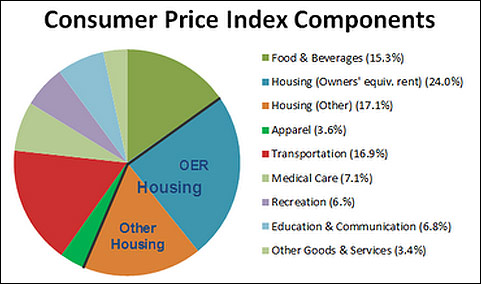
For the domestic markets, the S&P 500 closed down 151 points, or 3.88%. It’s down nearly 22% since January. The Dow was down 876 points (2.79%) and the NASDAQ dropped 530 points (4.68%). And, investors were disappointed to learn that inflation is moving in the wrong direction. U.S. consumer prices surged 8.6% year-over-year in May, to a fresh 40-year high, led by higher prices for energy, food and housing.

For the first time in history, a gallon of regular gasoline now costs $5 on average nationwide, according to AAA, and experts predict gas prices could average $6 a gallon by August.

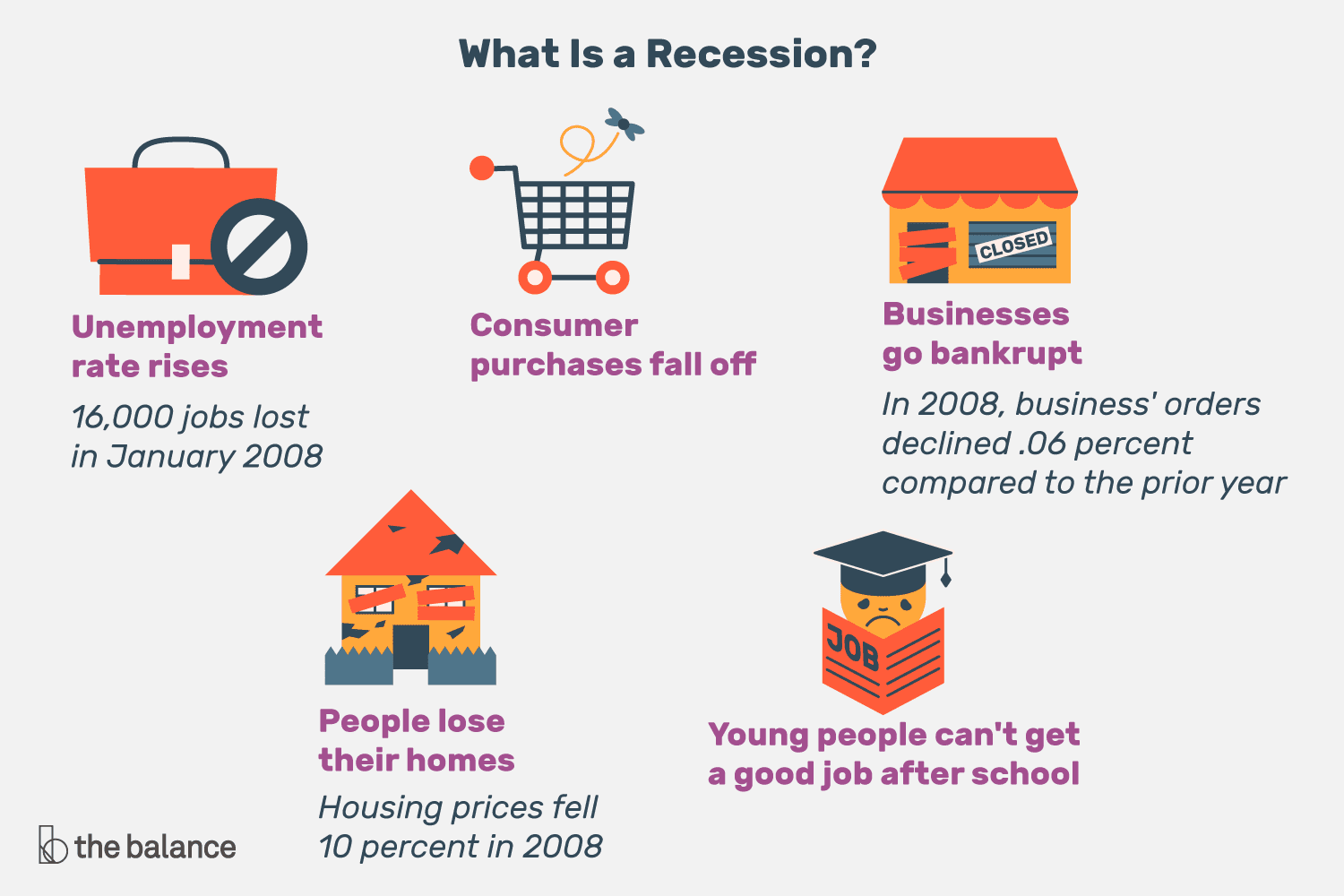
Moreover, nearly 70% of leading economists expect the US to tumble into a recession as the country grapples with inflation. In a Financial Times poll, the bulk of economists said they expect a recession to be declared in the first half of 2023. The poll comes after US inflation soared to 8.6% in May, outstripping economists’ expectations and piling the pressure on the Fed.

Finally, S&P Global says a 20% decline in the S&P 500 on a closing basis from its previous peak is all it takes to define a bear market. Which means that this bear market is already more than five months old, since the S&P 500 all-time high came on January 3rd, 2022.

***

***

COMMENTS APPRECIATED

Thank You

***

***

What is an [Famous] ECONOMIST?

The Top 15 Most Famous?

By Staff Reporters
***

***

15 Famous Economists and Their Contributions That’ll Truly Amaze You

According to Wikipedia, an economist is a professional and practitioner in the social science discipline of economics. The individual may also study, develop, and apply theories and concepts from economics and write about economic policy. Within this field there are many sub-fields, ranging from the broad philosophical theories to the focused study of minutiae within specific markets, macroeconomic analysis, microeconomic analysis or financial statement analysis, involving analytical methods and tools such as econometrics, statistics, economics computational models, financial economics, mathematical finance and mathematical economics.

CITE: https://www.r2library.com/Resource/Title/082610254

***

The Famous 15

READ: https://historyplex.com/famous-economists

***

COMMENTS APPRECIATED

Thank You

***

***

Is the Economy and Stock Market Entering a “Minsky Moment”?

The different phases leading to a “Minsky Moment”

[By Dr. David E. Marcinko MBA]

With all the stock market volatility lately, and the recent declines signaling a potential bear market from both fundamentalists and chartists, I have to ask this question:

Q = Are we entering a stock market Minsky Moment?

DEFINITION

A Minsky moment is a sudden major collapse of asset values which is part of the credit cycle or business cycle. Such moments occur because long periods of prosperity and increasing value of investments lead to increasing speculation using borrowed money. The spiraling debt incurred in financing speculative investments leads to cash flow problems for investors. The cash generated by their assets is no longer sufficient to pay off the debt they took on to acquire them. Losses on such speculative assets prompt lenders to call in their loans. This is likely to lead to a collapse of asset values. Meanwhile, the over-indebted investors are forced to sell even their less-speculative positions to make good on their loans.

However, at this point no counterparty can be found to bid at the high asking prices previously quoted. This starts a major sell-off, leading to a sudden and precipitous collapse in market-clearing asset prices, a sharp drop in market liquidity, and a severe demand for cash.

CITE: https://www.r2library.com/Resource/Title/082610254

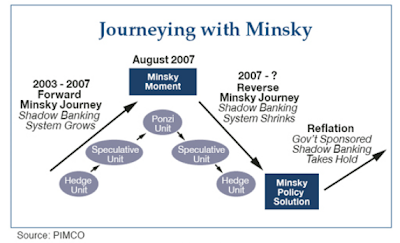
A  more general meaning is to say that a “Minsky Cycle” features a series of Minsky Moments … in which a period of stability encourages risk taking, which leads to a period of instability, which causes more conservative and risk-averse (de-leveraging) behavior, until stability is restored, continuing the cycle. In this more general view, the Minsky Cycle may apply to a wide range of human activities, beyond investment economics.

History

The term was coined by Paul McCulley of PIMCO in 1998, to describe the 1998 Russian financial crisis,and was named after economist Dr. Hyman Minsky, who noted that bankers, traders, and other financiers periodically played the role of arsonists, setting the entire economy ablaze. Minsky opposed the deregulation that characterized the 1980s.

Some, such as McCulley, have dated the start of the financial crisis of 2007–2010 to a Minsky moment, and called the following crisis a “reverse Minsky journey”; McCulley dates the moment to August 2007, while others date the start to some months earlier or later, such as the June 2007 failure of two Bear Stearns funds.

***

***

Assessment

The concept has some parallels with Austrian business cycle theory although Minsky himself was known as a Keynesian and is identified as a post-Keynesian—as is McCulley.

Conclusion

Your thoughts and comments on this ME-P are appreciated. Feel free to review our top-left column, and top-right sidebar materials, links, URLs and related websites, too. Then, subscribe to the ME-P. It is fast, free and secure.

Speaker: If you need a moderator or speaker for an upcoming event, Dr. David E. Marcinko; MBA – Publisher-in-Chief of the Medical Executive-Post – is available for seminar or speaking engagements.

Book Marcinko: https://medicalexecutivepost.com/dr-david-marcinkos-bookings/

Subscribe: MEDICAL EXECUTIVE POST for curated news, essays, opinions and analysis from the public health, economics, finance, marketing, IT, business and policy management ecosystem.

DOCTORS:

“Insurance & Risk Management Strategies for Doctors” https://tinyurl.com/ydx9kd93

“Fiduciary Financial Planning for Physicians” https://tinyurl.com/y7f5pnox

“Business of Medical Practice 2.0” https://tinyurl.com/yb3x6wr8

HOSPITALS:

“Financial Management Strategies for Hospitals” https://tinyurl.com/yagu567d

“Operational Strategies for Clinics and Hospitals” https://tinyurl.com/y9avbrq5

***

Risk Management, Liability Insurance, and Asset Protection Strategies for Doctors and Advisors: Best Practices from Leading Consultants and Certified Medical Planners™8Comprehensive Financial Planning Strategies for Doctors and Advisors: Best Practices from Leading Consultants and Certified Medical Planners™

UPDATE: Sentient GOOGLE, Corporate Earnings, the Markets and Cryptocurrency

By Staff Reporters

***

***

Blake Lemoine, an engineer for Google’s responsible AI organization, described an AI system that he has been working on since last fall as sentient, with a perception of, and ability to express thoughts and feelings that was equivalent to a human child. He was promptly suspended.

Earnings Are Under Threat. Companies from Target to Microsoft have warned their results will be lower than expected, while analysts have trimmed earnings forecasts across industries. Investors will get further clarity next month when companies begin reporting results for the second quarter.

The S&P is in a historic slump having fallen in nine out of the past 10 weeks for just the third time since 1980. And cryptocurrencies, which trade 24/7, tumbled following another red-hot inflation report.


***

COMMENTS APPRECIATED

Thank You

***

***

PODCAST: The “Medical Trend”?

By Eric Bricker MD

***

***

COMMENTS APPRECIATED

Thank You

***

MORE: https://medicalexecutivepost.com/2022/01/25/global-medical-trends-healthcare-cost-increases/

***

***

Become a CERTIFIED MEDICAL PLANNER™

Course Description and Information

 www.CertifiedMedicalPlanner.org

 Now accepting applications!

 “Live” On-Line Matriculation Leading to a Chartered Professional Designation

CMP logo

Become a Certified Medical Planner™

AND

Help Doctor Clients Succeed

***

***

How [DOCTORS] Construct Investment Portfolios That Protect Them

***

ASK AN ADVISOR

***

Vitaliy N. Katsenelson, CFA - YouTube

By Vitaliy N. Katsenelson, CFA

***

Question: How do you construct investment portfolios and determine position sizes (weights) of individual stocks?

I wanted to discuss this topic for a long time, so here is a very in-depth answer.
CITE: https://www.r2library.com/Resource/Title/082610254

Answer
For a while in the value investing community the number of positions you held was akin to bragging on your manhood– the fewer positions you owned the more macho an investor you were. I remember meeting two investors at a value conference. At the time they had both had “walk on water” streaks of returns. One had a seven-stock portfolio, the other held three stocks. Sadly, the financial crisis humbled both – the three-stock guy suffered irreparable losses and went out of business (losing most of his clients’ money). The other, after living through a few incredibly difficult years and an investor exodus, is running a more diversified portfolio today.

Under-diversification: Is dangerous, because a few mistakes or a visit from Bad Luck may prove to be fatal to the portfolio.

On the other extreme, you have a mutual fund industry where it is common to see portfolios with hundreds of stocks (I am generalizing). There are many reasons for that. Mutual funds have an army of analysts who need to be kept busy; their voices need to be heard; and thus their stock picks need to find their way into the portfolio (there are a lot of internal politics in this portfolio). These portfolios are run against benchmarks; thus their construction starts to resemble Noah’s Ark, bringing on board a few animals (stocks) from each industry. Also, the size of the fund may limit its ability to buy large positions in small companies.

There are several problems with this approach. First, and this is the important one, it breeds indifference: If a 0.5% position doubles or gets halved, it will have little impact on the portfolio. The second problem is that it is difficult to maintain research on all these positions. Yes, a mutual fund will have an army of analysts following each industry, but the portfolio manager is the one making the final buy and sell decisions. Third, the 75th idea is probably not as good as the 30th, especially in an overvalued market where good ideas are scarce.

Then you have index funds. On the surface they are over-diversified, but they don’t suffer from the over-diversification headaches of managed funds. In fact, index funds are both over-diversified and under-diversified. Let’s take the S&P 500 – the most popular of the bunch. It owns the 500 largest companies in the US. You’d think it was a diversified portfolio, right? Well, kind of. The top eight companies account for more than 25% of the index. Also, the construction of the index favors stocks that are usually more expensive or that have recently appreciated (it is market-cap-weighted); thus you are “diversified” across a lot of overvalued stocks.

If you own hundreds of securities that are exposed to the same idiosyncratic risk, then are you really diversified?

Our portfolio construction process is built from a first-principles perspective. If a Martian visited Earth and decided to try his hand at value investing, knowing nothing about common (usually academic) conventions, how would he construct a portfolio?

We want to have a portfolio where we own not too many stocks, so that every decision we make matters – we have both skin and soul in the game in each decision. But we don’t want to own so few that a small number of stocks slipping on a banana will send us into financial ruin.

In our portfolio construction, we are trying to maximize both our IQ and our EQ (emotional quotient). Too few stocks will decapitate our EQ – we won’t be able to sleep well at night, as the relatively large impact of a low-probability risk could have a devastating impact on the portfolio. I wrote about the importance of good sleep before (link here). It’s something we take seriously at IMA.

Holding too many stocks will result in both a low EQ and low IQ. It is very difficult to follow and understand the drivers of the business of hundreds of stocks, therefore a low IQ about individual positions will eventually lead to lower portfolio EQ. When things turn bad, a constant in investing, you won’t intimately know your portfolio – you’ll be surrounded by a lot of (tiny-position) strangers.

Portfolio construction is a very intimate process. It is unique to one’s EQ and IQ. Our typical portfolios have 20–30 stocks. Our “focused” portfolios have 12–15 stocks (they are designed for clients where we represent only a small part of their total wealth). There is nothing magical about these numbers – they are just the Goldilocks levels for us, for our team and our clients. They allow room for bad luck, but at the same time every decision we make matters.

Now let’s discuss position sizing. We determine position sizing through a well-defined quantitative process. The goals of this process are to achieve the following: Shift the portfolio towards higher-quality companies with higher returns. Take emotion out of the portfolio construction process. And finally, insure healthy diversification.

Our research process is very qualitative: We read annual reports, talk to competitors and ex-employees, build financial models, and debate stocks among ourselves and our research network. In our valuation analysis we try to kill the business – come up with worst-case fair value (where a company slips on multiple bananas) and reasonable fair value. We also assign a quality rating to each company in the portfolio. Quality is absolute for us – we don’t allow low-quality companies in, no matter how attractive the valuation is (though that doesn’t mean we don’t occasionally misjudge a company’s quality).

The same company, at different stock prices, will merit a higher or lower position size. In other words, if company A is worth (fair value) $100, at $60 it will be a 3% position and at $40 it will be a 5% position. Company B, of a lower quality than A but also worth $100, will be a 2% position at $60 and a 4% position at $40 (I just made up these numbers for illustration purposes). In other words, if there are two companies that have similar expected returns, but one is of higher quality than the other, our system will automatically allocate a larger percentage of the portfolio to the higher-quality company. If you repeat this exercise on a large number of stocks, you cannot but help to shift your portfolio to higher-quality, higher-return stocks. It’s a system of meritocracy where we marry quality and return.

Let’s talk about diversification. We don’t go out of our way to diversify the portfolio. At least, not in a traditional sense. We are not going to allocate 7% to mining stocks because that is the allocation in the index or they are negatively correlated to soft drink companies. (We don’t own either and are not sure if the above statement is even true, but you get the point.) We try to assemble a portfolio of high-quality companies that are attractively priced, whose businesses march to different drummers and are not impacted by the same risks.  Just as bank robbers rob banks because that is where the money is, value investors gravitate towards sectors where the value is. To keep our excitement (our emotions) in check, and to make sure we are not overexposed to a single industry, we set hard limits of industry exposure. These limits range from 10%–20%. We also set limits of country exposure, ranging from 7%–30% (ex-US).

CONCLUSION

In portfolio construction, our goal is not to limit the volatility of the portfolio but to reduce true risk – the permanent loss of capital. We are constantly thinking about the types of risks we are taking. Do we have too much exposure to a weaker or stronger dollar? To higher or lower interest rates? Do we have too much exposure to federal government spending? I know, risk is a four-letter word that has lost its meaning. But not to us. Low interest rates may have time-shifted risk into the future, but they haven’t cured it.

***

COMMENTS APPRECIATED

Thank You

Subscribe to the Medical Executive-Post

***

***

PODCAST: Optum – The $101 Billion Division of United Health Group Explained

By Eric Bricker MD

***

PODCAST: https://www.youtube.com/watch?v=dHAr0s33Gns

RELATED: https://www.youtube.com/watch?v=-21-h5lZBEU

***

***

***

COMMENTS APPRECIATED

Thank You

***

How Much Do You Earn Dr. Dad … or Dr. Mom?

Join Our Mailing List

Your Children and Your Money

Rick Kahler MS CFPBy Rick Kahler CFP

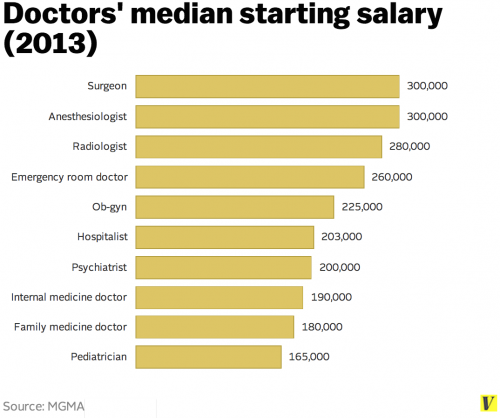
As a doctor – Do your kids know how much money you make? If not, and they asked, would you feel comfortable telling them?

My hunch is that the most common answer to both these questions is “No.” Talking about money is such a strong taboo that it often keeps us from sharing information about our earnings and net worth even with members of our immediate families.

Yet being honest with children about what we earn and how we spend it is a perfect opportunity to teach them important life lessons about money.

Here are a few suggestions to foster those conversations:

  1. Take advantage of teachable moments. As with many other big questions, like where babies come from or whether cats go to heaven (personally, I doubt it, but that may say more about my prejudices than my theology), the ideal time to answer money questions is when the kids ask.
  2. Provide context for numbers. To a child who gets an allowance of five bucks a week, either $10,000 or $100,000 a year can seem huge. One way to put those numbers into context is with comparisons: “I earn about the same amount as your teachers do,” or, “Most doctors probably earn about twice as much as our family does.”
  3. Talk about expenses as well as income. This is huge. It’s another important way of providing context. Plus it helps open kids’ eyes to the realities of earning and spending. When my kids, at about age 10 and 14, first asked about my income, they were impressed with how high the number was. Then we looked at the family expenses: house payment, health insurance, food, college savings, and everything else. They were even more impressed. Seeing what things cost and where the money goes is a good start to educating kids about spending, saving, and creating healthy money habits.
  4. Share appropriately for kids’ ages and understanding. Seven-year-olds and 13-year-olds aren’t ready for the same information. Don’t underestimate your kids’ comprehension, however; if you encourage them to ask questions and are willing to explain and clarify, they may understand more than you expect.
  5. Tell the truth. If you have financial difficulties that stem from your own money mistakes or other bad choices, being honest with your kids can be a powerful teaching opportunity. If you don’t earn a lot but are managing to take care of the family, that’s something to be proud of. If your kids may inherit substantial amounts, it’s wise to start teaching them early how to deal with wealth. Whether you have a net worth in the millions or are barely getting by from month to month, clean honesty about the family finances is a good policy.
  6. Remember that you’re the adult. Over-sharing about financial challenges can frighten your kids. It’s more useful to be matter-of-fact about problems and focus on what you’re doing to solve them.
  7. Keep in mind that when parents don’t talk about money, kids will make up their own stories. Typically this will be either that you earn and have more than you do, or that the family is on the brink of bankruptcy and homelessness.
  8. Look at your own shame and secrecy about money. If parents never talk about money, kids may never ask money questions. Either the topic is simply not on their radar, or they have internalized the unspoken message that it is off limits. In either case, parents can change the family culture by becoming more open about their finances. Those teachable moments for kids begin to happen when money is no longer a secret.

***

Doctor salary

***

More:

Conclusion

Your thoughts and comments on this ME-P are appreciated. Feel free to review our top-left column, and top-right sidebar materials, links, URLs and related websites, too. Then, subscribe to the ME-P. It is fast, free and secure.

Speaker: If you need a moderator or speaker for an upcoming event, Dr. David E. Marcinko; MBA – Publisher-in-Chief of the Medical Executive-Post – is available for seminar or speaking engagements. Contact: MarcinkoAdvisors@msn.com

OUR OTHER PRINT BOOKS AND RELATED INFORMATION SOURCES:

[PHYSICIAN FOCUSED FINANCIAL PLANNING AND RISK MANAGEMENT COMPANION TEXTBOOK SET]

  Risk Management, Liability Insurance, and Asset Protection Strategies for Doctors and Advisors: Best Practices from Leading Consultants and Certified Medical Planners™ Comprehensive Financial Planning Strategies for Doctors and Advisors: Best Practices from Leading Consultants and Certified Medical Planners™

***

More on Concierge, Retail, Cash Pay and Boutique Medicine; etc [SAM’S CLUB]

Sam’s Club Launches Innovative Pilot to Help Make Healthcare More Affordable


cropped-dem

By Dr. David E. Marcinko MBA CMP

I devoted a full chapter of my book; “The Business of Medical Practice” to concierge and boutique medicine, retail medicine, direct, cash and private pay medicine; etc. We included terms and definitions, process and methodologies, marketing and advertising, and examples, etc. In fact, who knew I was so prescient and the landscape would finally begin evolving.

For example, we recently learned about Sam’s Club offering targeted “bundles” of health care services collaborating with Humana. https://lnkd.in/ejHGGzk

And, earlier, we learned of Amazon’s new virtual / primary care clinic model. And of course, in the past couple of weeks, Walmart’s (Sam’s affiliate) opening their freestanding clinics, along with new behavioral health services, as well.

 ******

Assessment: Your thoughts are appreciated.

THANK YOU

Product DetailsProduct Details

***

The DOT.com Bubble HAS Burst!

What is NEXT?

U.S. equities closed lower as losses in the Technology, Consumer Services and Financials sectors propelled shares lower. At the close, the Dow Jones Industrial Average fell 2.73%, while the S&P 500 index lost 2.91%, and the NASDAQ Composite index fell 3.52%.

***

By Vitaliy N. Katsenelson CFA

***

What a Day – TODAY!

READ: https://tinyurl.com/2r8zaftk

COMMENTS APPRECIATED

Thank You

***

***

Passive Investing, Like Buying Used Cars, Is a Wise Strategy

More on Passive Investing

By Rick Kahler MS CFP®

***

Need a car? Buy used. It’s what I always do. My sweet spot is a low-mileage vehicle two or three years old, which I routinely can find for 25% to 35% less than the original cost. I recommend this strategy to my clients, staff, and friends.

If everyone followed this advice, you’d think the approach would eventually fail dismally. After all, someone has to buy new cars. No worries, though; there are millions of people who will continue to buy new cars. Financial planners have recommended this strategy for decades, and nothing has changed in the supply of great deals on low-mileage cars.

The same applies to investors who invest “passively” in index mutual funds. Passive investors embrace a philosophy that extremely few investors can beat the average return of the stock market. Research by Dalbar, Inc. shows that over a 20-year-period, 97% of fund managers who tried to beat the market actually ended up doing worse than the market average. They suggest that, instead of paying a manager to try and beat the market, you pocket that money yourself and beat them by investing in low cost index mutual funds that simply earn average market returns.

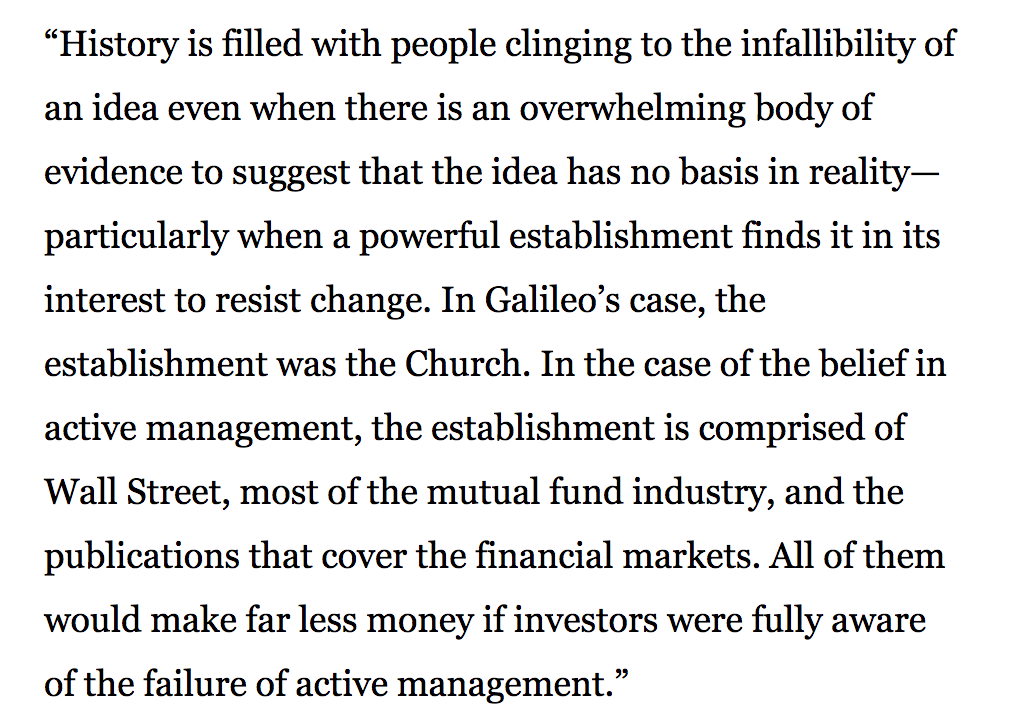
As you might guess, those pushing the high-fee mutual funds that are actively trying to beat the market returns are the big Wall Street firms that need your money to keep their companies thriving. Not surprisingly, these firms regularly attempt to dissuade investors from passive investing.

***

active mamt

***

An article at ETF.com by Larry Swedroe, the director of research for The BAM Alliance, lists a few of these attempts. Representatives for two large brokerage firms call passive investing “worse than Marxism” and those that do it “parasites.” Another, however, gives a more reasoned warning that is worth exploring. Tim O’Neill, global co-head of Goldman Sach’s investment management division, says “if passive investing gets too big, the market won’t function.”

Up to a point, this idea has some validity. Swedroe says, “Active managers play an important societal role. Specifically, their actions determine security prices, which in turn determine how capital is allocated. And it is the competition for information that keeps markets highly efficient, both in terms of information and capital allocation.”

Passive investors get a free ride at the expense of active investors. As Swedroe notes, they receive all the benefits from the role that active managers play without having to pay their costs. Passive investors need active investors to continue to believe they can beat the markets, just as used car buyers need new car buyers to supply them with used cars.

Just how likely is it that all the people who invest with active investors will figure out that paying active managers is not in their best interests and will shift to passive investing? About the same chance everyone will stop buying new cars.

Consider this. A study by Vanguard, one of the largest passive fund managers, found that $10 trillion, or 20% of the global market equity, is invested in index funds. More importantly, this 20% accounted for only 5% of all the trading. It’s the trading that drives market prices and makes markets efficient and liquid. Swedroe says “we are nowhere near” the chance that passive investing will become so dominant that the efficiency of the markets would be threatened.

Just as there is no immediate threat of the used car supply drying up because no one is buying new cars, there is also little chance that the majority of investors will give up the delusional dream of beating the market. That means wise used-car buyers and wise passive investors can keep on following their wise wealth-building strategies.

***

Conclusion

Your thoughts and comments on this ME-P are appreciated. Feel free to review our top-left column, and top-right sidebar materials, links, URLs and related websites, too. Then, subscribe to the ME-P. It is fast, free and secure.

Speaker: If you need a moderator or speaker for an upcoming event, Dr. David E. Marcinko; MBA – Publisher-in-Chief of the Medical Executive-Post – is available for seminar or speaking engagements.

Book Marcinko: https://medicalexecutivepost.com/dr-david-marcinkos-bookings/

Subscribe: MEDICAL EXECUTIVE POST for curated news, essays, opinions and analysis from the public health, economics, finance, marketing, IT, business and policy management ecosystem.

DOCTORS:

“Insurance & Risk Management Strategies for Doctors” https://tinyurl.com/ydx9kd93

“Fiduciary Financial Planning for Physicians” https://tinyurl.com/y7f5pnox

“Business of Medical Practice 2.0” https://tinyurl.com/yb3x6wr8

HOSPITALS:

“Financial Management Strategies for Hospitals” https://tinyurl.com/yagu567d

“Operational Strategies for Clinics and Hospitals” https://tinyurl.com/y9avbrq5

***

Risk Management, Liability Insurance, and Asset Protection Strategies for Doctors and Advisors: Best Practices from Leading Consultants and Certified Medical Planners™8Comprehensive Financial Planning Strategies for Doctors and Advisors: Best Practices from Leading Consultants and Certified Medical Planners™


SURVEY: Surgical Cost Spending

By MCOL

***

***

EHIR was started nearly a decade ago out of a need for objective support in identifying and assessing emerging solutions to sift through the noise and stay ahead of the curve amid a rapidly changing competitive landscape. EHIR provides a streamlined and efficient innovation intake and evaluation process along with valuable insights to the world’s leading employers.

CITE: https://www.r2library.com/Resource/Title/082610254

Employer Health Innovation Roundtable, LLC

4 KEY Findings

 •  The survey found that 59% indicated lowering costs was a very high, or high, priority – up from 52% prior to the pandemic.
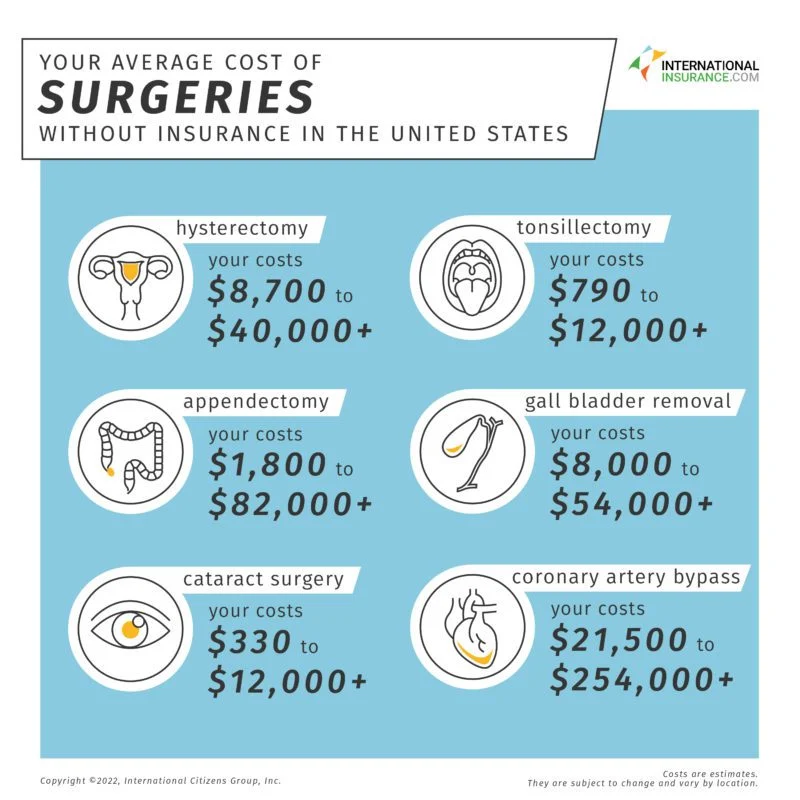
 •  Over half of the employers surveyed indicated that surgical costs were a significant issue, with surgery accounting for 34% of their total healthcare spend. About 75% noted that by controlling surgery costs, they can largely reduce their total spend.

***

*  Even though 69% of employers have a COE (Center of Excellence), the majority of them have been implemented within the past two years, and not with an eye to specifically reducing surgical costs.
 *  Only 9% of respondents rely on carrier-sponsored COEs, which suggests that they are seeking out third-party vendors for this benefit, as either the sole COE provider or as a partner with the employer’s health plan carrier.

Source: EHIR and Carrum Health via PRNewswire, May 4, 2022

***

COMMENTS APPRECIATED

Thank You

***

***

***

COVID, Inflation and Value Investing

Millennial Investing

***

By Vitaliy Katsenelson, CFA

***

***

COVID, Inflation, and Value Investing: Millennial Investing
I was recently interviewed by Millennial Investors podcast. They sent me questions ahead of time that they wanted to ask me “on the air”. I found some of the questions very interesting and wanted to explore deeper. Thus, I ended up writing answers to them (I think through writing). You can listen to the podcast here

By the way, I often get asked how I find time to write. Do I even do investment research? Considering how much content I’ve been spewing out lately, I can understand these questions. In short – I write two hours a day, early in the morning (usually from 5–7am), every single day. I don’t have time-draining hobbies like golf. I rarely watch sports. I have a great team at IMA, and I delegate a lot. I spend the bulk of my day on research because I love doing it. 

This is not the first time I was asked these questions. If you’d like to adapt some of my daily hacks in your life, read this essay.

How has Covid-19 changed the game of value investing?

Value investing has not changed. Its fundamental principles, which I describe in “The Six Commandments of Value Investing,” (one-click sign up here to receive it in your inbox) have not changed one iota. The principles are alive and well. What has changed is the environment – the economy. 

I learned this from my father and Stoic philosophers: You want to break up complex problems into smaller parts and study each part individually. That way you can engage in more-nuanced thinking. 

Let’s start with what has not changed. Our desire for in-person human interaction has not changed. At the beginning of the pandemic, we (including yours truly) were concerned about that. We were questioning whether we were going to ever be able to shake hands and hug again. However, the pandemic has not changed millions of years of human evolution – we still crave human warmth and personal interaction. We need to keep this in mind as we think about the post-pandemic world. 

What we learned in 2021 is that coronavirus mutations make predicting the end of the pandemic an impossible exercise. From today’s perch it is safe to assume that Covid-19 will become endemic, and we’ll learn how to live with it. I am optimistic on science. 

Let’s take travel, for example. Our leisure travel is not going to change much – we are explorers at heart, and as we discovered during the pandemic, we crave a change in scenery. However, I can see business travel resetting to a lower base post-pandemic, as some business trips get resolved by simple Zoom calls. Business travel is about 12% of total airline tickets, but those revenues come with much higher profit margins for airlines. 

Work from home. I am still struggling with this one. The norms of the 20th-century workplace have been shaken up by the pandemic. Add the availability of new digital tools and I don’t need to be a Nostradamus to see that the office environment will be different. 

By how much? 

The work from home genie is out of the bottle. It will be difficult to squeeze it back in. My theory right now is that customer support, on-the-phone types of jobs may disproportionately get decentralized. The whole idea of a call center is idiotic – you push a lot of people into a large warehouse-like office space, where they sit six feet apart from each other and spend eight hours a day on the phone talking to customers without really interacting with each other. Current technology allows all this work to be done remotely.

On another hand, I can see that if you have a company where creative ideas are sparked by people bumping into each other in hallways, then work from home is less ideal. But again, I don’t think about it in binary terms, but more like it’s a spectrum. Even for my company. Before the pandemic, half of our folks worked outside of the IMA main office in Denver. Most of our future hires will be local, as I believe it is important for our culture. However, we provide a certain number of days a year of remote work as a benefit to our in-office employees. 

From an investment perspective, we are making nuanced bets on global travel normalizing. We don’t own airlines – never liked those businesses, never will. Most of their profitability comes from travel miles – they became mostly flying banks. 

Office buildings I also put into a too-difficult-to-call pile. There was already plenty overcapacity in office real estate before the pandemic, and office buildings were priced for perfection. The pandemic did not make them more valuable. Maybe some of that overcapacity will get resolved through conversion of office buildings into apartments. By the way, this is the beauty of having a portfolio of 20–30 stocks: I don’t need to own anything I am not absolutely head over heels in love with.

What is the importance of developing a process to challenge your own beliefs?

My favorite quote from Seneca is “Time discovers truth.” My goal is to discover the truth before time does. I try to divorce our stock ownership from our feelings. 

Let me give you this example. If you watch chess grandmasters study their past games, they look for mistakes they have made, moves they should have made, so in the future they won’t make the same mistake twice. I have also noticed they say “white” and “black,” not “I” and “the opponent.” This little trick removes them from the game so that they can look for the best move for each side. They say “This is the best move for white”; “This is the best move for black.”

You hear over and over again from people like Warren Buffett and other value investors that we should buy great companies at reasonable prices, and I’d like to dig deeper on that idea and its two key parts, great companies and reasonable prices. Could you tell us what it takes for a company to qualify as a “great” company?

This question touches on Buffett’s transformation away from Ben Graham’s “statistical” approach, i.e., buying crappy companies that look numerically cheap at a significant discount to their fair value, to buying companies that have a significant competitive advantage, a high return on capital, and a growth runway for their earnings. 

The first type of companies often will not be high-quality businesses and will most likely not be growing earnings much. Let’s say the company is earning $1. Its earnings power will not change much in the future – it is a $5 stock trading at 5 times earnings. If its fair value is $10, trading at 10 times earnings, And if this reversion to fair value happens in one year, you’ll make 100%. If it takes 5 years then your return will be 20% a year (I am ignoring compounding here). So time is not on your side. If it takes 10 years to close the fair value gap, your return halves. Therefore you need a bigger discount to compensate for that. Maybe, instead of buying that stock at a 50% discount, you need to buy a company that is not growing at a 70% discount, at $3 instead of $5. This was pre-Charlie Munger, “Ben Graham Buffett.” 

Then Charlie showed him there was value in growth. If you find a company that has a moat around its business, has a high return on capital, and can grow earnings for a long time, its statistical value may not stare you in the face. But time is on your side, and there is a lot of value in this growth. If a company earns $1 today and you are highly confident it will earn $2 in five years, then over five years, if it trades at 10 times earnings, a no-growth company may be a superior investment if the valuation gap closes in less than 5 years, while one with growing earnings is a superior investment past year 5. 

Both stocks fall into the value investing framework of buying businesses at a discount to their fair value, looking for a margin of safety. With the second one, though, you have to look into the future and discount it back. With the first one, because the lack of growth in the future is not much different from the present, you don’t have to look far.

There is a place for both types of stocks in the portfolio – there are quality companies that can still grow and there are companies whose growth days are behind them. In our process we equalize them by always looking four to five years out. 

What qualifies as a “reasonable price”? 

We are looking for a discount to fair value where fair value always lies four to five years out. In our discounted cash flow models, we look a decade out. Our required rate of return and discount to fair value will vary by a company’s quality. There are more things that can go wrong with lower-quality companies than with the better ones. High-quality companies are more future-proof and thus require lower discount rates. We are incredibly process-driven. We have a matrix by which we rate all companies on their quality and guestimate their fair value five years out, and this is how we arrive at the price we want to pay today. 

Why do you believe that buying great companies sometimes isn’t a great investing strategy?

Because that is first-level thinking, which only looks at what stares you in the face – things that are obvious even to untrained eyes and thus to everyone. First-level thinking ignores second-order effects. If everyone knows a company is great, then its stock price gets bid up and the great company stops being a great investment. With second-level thinking you need to ask an additional question, which in this case is, what is the expected return? Being a great company is not enough; it has to be undervalued to be a good stock. 

We are looking for great companies that are temporarily (key word) misunderstood and thus the market has fallen out of love with them. Over the last decade, when interest rates only declined, first-level thinking was rewarded. It almost did not matter how much you paid for a stock. If it was a great company, its valuations got more and more inflated. 

You’re a big advocate of having a balanced investment approach that is able to weather all storms. What investments have you found that you expect will be able to hold their buying power if inflation persists through 2022 and 2023?


There are many different ways to answer this question. In fact, every time I give an answer to this question I arrive at a new answer. You want to own companies that have fixed costs. You want assets that have a very long life. I am thinking about pipeline companies, for instance. They require little upkeep expense, and their contracts allow for CPI increases (no decreases); thus higher inflation will add to their revenue while their costs will mostly remain the same. 

We own tobacco companies, too. I lived in Russia in the early ’90s when inflation was raging. I smoked. I was young and had little money. I remember one day I discovered that cigarette prices had doubled. I had sticker shock for about a day. I gave up going to movies but somehow scraped up the money for cigarettes. 

Whatever answer I give you here will be incomplete. It’s a complex problem, and so each stock requires individual analysis. In all honesty, you have to approach it on a case-by-case basis. 

With higher inflation, you’d expect bond yields to rise, since bond investors will demand a higher return to keep pace with inflation. However, CPI inflation is currently over 6%, and the 10-year Treasury is sitting at 1.5%. Why haven’t we seen Treasury yields rise more, and what does it mean for investors if a spread this wide persists?

I am guessing here. My best guess is that so far investors have bought into the Fed’s rhetoric that inflation is transitory due to the economy’s rough reopening and supply chain problems. I wrote a long article on this topic. To sum up, part of the inflation is transitory but not all of it. 

I am somewhat puzzled by the labor market today. I’ve read a few dozen very logical explanations for the labor shortage, from early retirement of baby boomers to the pandemic triggering a search for the meaning of life and thus people quitting dead jobs and all becoming Uber drivers or starting their own businesses. Labor is the largest expense on the corporate income statement, and if it continues to be scarce then inflation will persist. 

I read that employees are now demanding to work from home because they don’t want to commute. The labor shortages are shifting the balance of power to employees for the first time in decades. This will backfire in the long run, as employers will be looking at how to replace employees with capital, in other words, with automation. If you run a fast-food restaurant and your labor costs are up 20–30% or you simply cannot hire anyone, you’ll be looking for a burger flipping machine. 

If we continue to run enormous fiscal deficits, then the US dollar will crack. The pandemic has accelerated a lot of trends that were in place. We were on our way to losing our reserve currency status. Let me clarify: That is going to be a very slow, very incremental process. It will be slow because currency pricing is not an absolute but a relative endeavor, and the alternatives out there are not great. But two decades ago the US dollar was a no-brainer decision and today it is not. So we’ll see countries slowly diversifying away from it. A weaker US dollar means higher, non transitory inflation. 

You wrote The Little Book of Sideways Markets, in which you point out that history shows that a sideways market typically occurs after a secular bull market. With the role that the Federal Reserve plays in the financial markets, do you still anticipate that valuations will normalize in the coming years?

I say yes, in part because declining interest rates have pushed all assets into stratospheric valuations. Rising bond yields and valuations pushed heavenward are incompatible. Yes, I expect valuations to do what they’ve done every time in history: to mean revert. In big part this will depend on interest rates, but if rates stay low because the economy stutters, then valuations will decline – this is what happened in Japan following their early-1990s bubble. Interest rates went to zero or negative, but valuations declined. 

The stock market today is very much driven by the Federal Reserve’s monetary policy. Is there a point at which they are able to take the gas off the pedal and allow markets to normalize?

I am really puzzled by this. We simply cannot afford higher interest rates. Going into the pandemic our debt-to-GDP was increasing steadily despite the growing economy. In fact, you could argue that most of our growth has come from the accumulation of debt (the wonders of being the world’s reserve currency). Our debt has roughly equaled our GDP, and all of our economic growth in some years equaled the growth in government debt.

During the pandemic we added 40% to our debt in less than two years. We have higher debt-to-GDP than we had during WWII. After the war we reduced our debt. Also, we were a different economy then – we were rebuilding both the US and Europe. As a society we had a high tolerance for pain. 

Just like debt increases stimulate growth, deleveraging reduces growth. Also, I don’t think politicians or the public care about high debt levels. So far debt has only brought prosperity. However, higher interest rates would blow a huge hole in government budgets. If the 10-year Treasury rises a few percentage points, interest rates will increase by the amount we spend on national defense. One thing I am certain about is that our defense spending will not decline, so higher interest rates will lead to money printing and thus inflation. 

I am also puzzled by the impact of higher interest rates on the housing market. Housing will simply become unaffordable if interest rates go up a few percentage points. Loan-to-income requirements will price a huge number of people out of the market, and housing prices will have to decline. This Higher rates will also reduce the number of transactions in the real estate market, because people will be locked into their 2.5% mortgages, and if they sell they’d have to get 4-5-6% mortgages. There are a lot of second-order effects that we are not seeing today that will be obvious in hindsight. Housing prices drive demand in adjacent sectors such as home improvement. And think of the impact of higher rates on any large purchase, for example a car. 

We’re seeing the continuing rise of China has a big player in the global economy, and I know you like to invest internationally. As a value investor, how do you think about China’s rise as a global powerhouse and how it might affect the financial markets?

During the Cold War there were two gravitational centers, and as a country you had to choose one – you were either with the Soviets or with the West. Something similar will likely transpire here, too. I have to be careful using the Cold War analogy, because the Cold War was driven by ideology – it was communism vs. capitalism. Now the tension is driven by economic competition and our unwillingness to pass the mantle of global leader to another country. 

We are drawing red lines in technology. Data is becoming the new oil. China is using data to control people, and we want to make sure they don’t have control over our data. Therefore, the West wants to make sure that our technology is China-free. The US, Europe, and India will likely be pursuing a path where Chinese technology and Chinese intellectual property are largely disallowed. We have already seen this happening with Huawei being banned from the US and Western Europe. Other countries, including Russia, will have to make a choice. Russia will go with China.

Also, we are concerned that most chip production is centered in Taiwan, which at some point may be grabbed by China. The technological ecosystem would then have to undergo a significant transformation. This has already started to happen as we begin to bring chip production back to the US and Europe. 

The pandemic made us realize that globalization had made us reliant on the kindness of strangers, and we found we could not even get facemasks or ventilators. 

Globalization was deflationary; deglobalization will be inflationary.

This increased tension between countries has led to your investing in the defense industry. Could you tell us how you think about this industry? 

Despite the rise of international tensions, the global defense industry has been one of sectors that still had reasonable (sometimes unreasonably good) valuations. We have invested in half a dozen US and European defense companies. The US defense budget is unlikely to decline in the near future. There is a common misperception that Republicans love defense and Democrats hate it. Those may be party taglines, but history shows that defense spending has been driven by macro factors – it did not matter who was the occupant of the White House. 

There are a lot of things to like about defense businesses. They are an extension of the US or European governments. Most of them are friendly monopolies or duopolies. They have strong balance sheets, good returns on capital, and predictable and growing (maybe even accelerating) demand. They are noncyclical. They have inflation escalators built into their contracts. I don’t have to worry about technological disruptions. They are also a good macro hedge.

We added to our European defense stocks recently for several reasons. Europe has underinvested in defense, relying on the US Yet we have shown time and again that we may not be as dependable as we once were. 

***

COMMENTS APPRECIATED

Thank You

Subscribe to the Medical Executive-Post

***

***

PODCAST: In-Patient Psychiatric Care

By Eric Bricker MD

***

***

RELATED: https://medicalexecutivepost.com/2013/02/13/a-review-of-mental-healthcare-provider-types/

***

COMMENTS APPRECIATED

Thank You

***

ORDER: https://www.barnesandnoble.com/w/risk-management-liability-insurance-and-asset-protection-strategies-for-doctors-and-advisors-david-edward-marcinko/1137103900?ean=9781498725989

***

***

BUSINESS MANAGEMENT STUDY: Physician Vertical Integration

***

BY HEALTH CAPITAL CONSULTANTS, LLC.

DEFINITION: Vertical integration is an arrangement in which the supply chain of a company is integrated and owned by that company. Usually each member of the supply chain produces a different product or service, and the products combine to satisfy a common need.

CITE: https://www.r2library.com/Resource/Title/0826102549

***

Study: Vertical Integration Not Financially Beneficial for Physicians


A study released in the December 2021 issue of Health Affairs examined the correlation between hospital/health system ownership of physician practices and physician compensation. While a number of studies have analyzed the “rapidly growing trend” of vertical integration from the hospital/health system perspective, this is the first study to evaluate vertical integration from the physician practice perspective.

This Health Capital Topics article will discuss the study’s findings and potential implications. (Read more…) 

***

***

COMMENTS APPRECIATED

Thank You

Subscribe to the Medical Executive-Post

***

***

The RETURN of Paper Dental Records?

By Darrell Pruitt DDS

***

***

More reasons to stick with paper if you haven’t yet become paperless, Doc 

“Paying Ransomware Paints Bigger Bullseye on Target’s Back – Ransomware attackers often strike targets twice, regardless of whether the ransom was paid. Paying ransomware attackers doesn’t pay off and often paints a bigger target on a victim’s back. Eighty percent of ransomware victims that paid their attackers were hit a second time by the malware scourge.” – Threatpost, June 8, 2022.

A dentist can avoid the second ransomware attack by returning to paper … What? Yeah. I said it.

“New ransomware numbers come from a Cybereason’s April ransomware survey of 1,456 cybersecurity professionals. According to the gated report (registration required), victims that were successfully extorted were not only targeted a second time, but frequently data encrypted by criminals later became unusable during the decryption process because of corruption issues.”

OR – one can retire!

***

***

COMMENTS APPRECIATED

Thank You

***

***

***

SURVEY: Tele-Health Weekly Visits

By MCOL

***

***

% Providing Video Telehealth Visits to 5+ Patients Per Week

 •  Primary Care Physician: 74%
 •  Behavioral Health Provider: 88%
 •  Registered Nurse: 62%
 •  Medical Assistant: 80%

Source: RAND, “Experiences of Health Centers in Implementing Telehealth Visits for Underserved Patients During the COVID-19 Pandemic,” May 2022

***

COMMENTS APPRECIATED

Thank You

***

***

***

Understanding Hospital Financial Net Working Capital

Lower is Better

[By Staff Reporters]

Join Our Mailing List 

Net working capital is the difference between current assets and current liabilities. The lower the net working capital, the more economically efficient the medical care provided. Some important definitions and ratios for hospitals include those immediately below:

  • Days Sales Outstanding: AR/(net sales/365)

Year-end receivables net of allowances for doubtful accounts, plus financial receivables divided by net sales per day. A decrease in days sales outstanding (DSO) represents an improvement in cash flows while an increase represents deterioration. The hospital industry average is 30 days.

  • Days Payable Outstanding: AP/(total expenses [less depreciation and amortization] / 365)

Year-end payables divided by expenses per day. An increase in days payable outstanding (DPO) is an improvement, while a decrease is not. Payables exclude accrued expenses. Hospital industry average is 20 days.

  • Days Inventory Outstanding: Inventory/(net sales/365)

Year-end inventories divided by sales per day. A decrease in days inventory outstanding (DIO) is an improvement, while an increase may be a sales deterioration. Hospital industry average is 4 days.

  • Days Working Capital: (AR + inventory – AP)/net sales/365)

Year-end net working capital (service receivables plus inventory, minus AP) divided by sales per day. The lower the better. Hospital industry average is 14 days.

Assessment

For more health economics and finance terms and definitions, please review the following:

Product DetailsProduct DetailsProduct Details

Product Details  Product Details

    Product Details

Conclusion

Your thoughts and comments on this ME-P are appreciated. Feel free to review our top-left column, and top-right sidebar materials, links, URLs and related websites, too. Then, subscribe to the ME-P. It is fast, free and secure.

Link: http://feeds.feedburner.com/HealthcareFinancialsthePostForcxos

Speaker: If you need a moderator or speaker for an upcoming event, Dr. David E. Marcinko; MBA – Publisher-in-Chief of the Medical Executive-Post – is available for seminar or speaking engagements. Contact: MarcinkoAdvisors@msn.com

OUR OTHER PRINT BOOKS AND RELATED INFORMATION SOURCES:

DICTIONARIES: http://www.springerpub.com/Search/marcinko
PHYSICIANS: www.MedicalBusinessAdvisors.com
PRACTICES: www.BusinessofMedicalPractice.com
HOSPITALS: http://www.crcpress.com/product/isbn/9781466558731
CLINICS: http://www.crcpress.com/product/isbn/9781439879900
BLOG: www.MedicalExecutivePost.com
FINANCE: Financial Planning for Physicians and Advisors
INSURANCE: Risk Management and Insurance Strategies for Physicians and Advisors

Product DetailsProduct Details

Product Details

SURVEY: Resources Offered by Health Insurance Plan Transparency Tool

By MCOL

***

***

Percentage of Resources

 •  Finding in-network providers: 72%
 •  Telehealth: 55%
 •  Ability to select PCP online: 53%
 •  Help navigating benefits and healthcare options: 50%
 •  Cost estimates for healthcare services: 50%
 •  Status of deductible: 49%
 •  Reviews of doctors and facilities: 46%
 •  Online appointment scheduling: 41%
 •  Financial incentives/rewards for choosing cost-effective care: 25%

Source: Health Sparq, “2022 Annual Consumer Sentiment Benchmark Report,” January 2022

CITE: https://www.r2library.com/Resource/Title/082610254

***

COMMENTS APPRECIATED

Thank You

***

***

***

UPDATE: ARK Innovation, Dr. Burry, the Yield/Equity Push-Pull and Monkeypox

By Staff Reporters

***

***

Cathie Wood’s ARK Innovation fund composed of high-growth tech stocks is up 17% since hitting rock bottom on May 11th compared to the S&P’s 4.4% gain over the same period.

Americans are burning through their savings and might virtually exhaust them within months. Colleague Michael Burry MD warned the US economy could suffer once consumers empty out their savings accounts. “The Big Short” investor expects rising debt and reduced savings to hit growth and company profits.

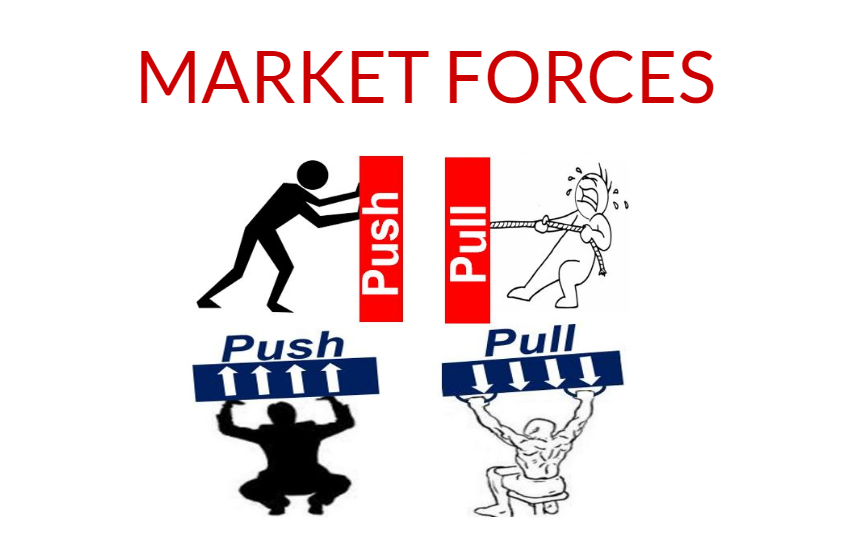
The push and pull between bond yields and equities continue with stock gains kept in check by a drop in Treasuries that pushed a swath of rates above 3%.

The CDC raised its alert level for Monkeypox to level 2 recommending that travelers wear masks, among other health measures.

***

COMMENTS APPRECIATED

Thank You

***

***

Organizational Economics and Physician Practices

N.B.E.R.

By James B. Rebitzer & Mark E. Votruba

Economists seeking to improve the efficiency of health care delivery frequently emphasize two issues: the fragmented structure of physician practices and poorly designed physician incentives. This decade old paper analyzes these issues from the perspective of organizational economics.

We begin with a brief overview of the structure of physician practices and observe that the long anticipated triumph of integrated care delivery has largely gone unrealized. We then analyze the special problems that fragmentation poses for the design of physician incentives. Organizational economics suggests some promising incentive strategies for this setting, but implementing these strategies is complicated by norms of autonomy in the medical profession and by other factors that inhibit effective integration between hospitals and physicians. Compounding these problems are patterns of medical specialization that complicate coordination among physicians.

We conclude by considering the policy implications of our analysis – paying particular attention to proposed Accountable Care Organizations.

***

READ HERE: https://www.nber.org/papers/w17535

ASSESSMENT: What has changed this past decade; if anything? Your thoughts are appreciated.

***

***

CONTACT: Ann Miller RN MHA

INVITATIONS: https://medicalexecutivepost.com/dr-david-marcinkos-bookings/

MarcinkoAdvisors@msn.com

Ph: 770-448-0769

Second Opinions: https://medicalexecutivepost.com/schedule-a-consultation/

THANK YOU

***

PODCASTS: Health Economics and the AMA

By Professor Jon

***

***

PODCAST: https://www.youtube.com/watch?v=fwYYae_U1OI

PODCAST: https://medicalexecutivepost.com/2022/05/30/ama-to-teach-medical-students-about-health-economics/

***

***

***

***

COMMENTS APPRECIATED

Thank You

***

Risk Aversion and Investment Alternatives

Join Our Mailing List

Understanding Financial Tolerance in the New Era

[By Dr. David E. Marcinko MBA and Staff Reporters]

Some physicians and financial planners prefer to use a specific approach in determining these difficult-to-determine areas, in lieu of one of several psychological tests that are currently available.

Examples of this specific approach follow.

Investment Temperament

Which statement best describes your investment temperament? Please indicate by ranking the items below from 1 to 4, with 1 being the most descriptive and 4 being the least descriptive. Also, please indicate the extent of your risk aversion by indicating what percentage of your assets you would feel comfortable investing in each category (for example, 50% in the first category, 25% in the second, etc.).

***

Numerical   Percentage  
ranking   allocation  
* I prefer only the safest of investments.
* I am interested only in “blue-chip” investments.
* An occasional risk is worth the effort for above-average potential reward.
* I’m willing to put everything on the line if the potential reward is large enough.

Listed below are various forms of investments. Please indicate your familiarity with each.

  Familiarity
Description High   Low
Certificates of deposit 5 4 3 2 1
Treasury bills 5 4 3 2 1
Other short-term fixed income 5 4 3 2 1
Stocks 5 4 3 2 1
U.S. government bonds 5 4 3 2 1
Corporate bonds 5 4 3 2 1
Municipal bonds 5 4 3 2 1
Mutual funds 5 4 3 2 1
Real estate—direct ownership 5 4 3 2 1
Real estate—limited partnerships 5 4 3 2 1
Oil and gas 5 4 3 2 1
Collectibles 5 4 3 2 1
Precious metals 5 4 3 2 1
Insurance products 5 4 3 2 1

Assessment

Any other thoughts on behavioral finance topics, like this?

Conclusion

Your thoughts and comments on this ME-P are appreciated. Feel free to review our top-left column, and top-right sidebar materials, links, URLs and related websites, too. Then, subscribe to the ME-P. It is fast, free and secure.

Link: http://feeds.feedburner.com/HealthcareFinancialsthePostForcxos

Speaker: If you need a moderator or speaker for an upcoming event, Dr. David E. Marcinko; MBA – Publisher-in-Chief of the Medical Executive-Post – is available for seminar or speaking engagements. Contact: MarcinkoAdvisors@msn.com

OUR OTHER PRINT BOOKS AND RELATED INFORMATION SOURCES:

DICTIONARIES: http://www.springerpub.com/Search/marcinko
PHYSICIANS: www.MedicalBusinessAdvisors.com
PRACTICES: www.BusinessofMedicalPractice.com
HOSPITALS: http://www.crcpress.com/product/isbn/9781466558731
CLINICS: http://www.crcpress.com/product/isbn/9781439879900
BLOG: www.MedicalExecutivePost.com
FINANCE: Financial Planning for Physicians and Advisors
INSURANCE: Risk Management and Insurance Strategies for Physicians and Advisors

Product Details  Product Details

Risk Management, Liability Insurance, and Asset Protection Strategies for Doctors and Advisors: Best Practices from Leading Consultants and Certified Medical Planners™8Comprehensive Financial Planning Strategies for Doctors and Advisors: Best Practices from Leading Consultants and Certified Medical Planners™

ACO Home-Visit Initiatives

ACCOUNTABLE CARE ORGANIZATIONS

By MCOL and Charlene Ice

***

ACOs That Offer 6 Primary Care Services

  • home-based primary care: 37%
  • care coordination: 24%
  • care transitions support: 13%
  • addressing social needs: 13%
  • acute hospital-level services: 11%
  • palliative care services: 2%

Notes: From an article entitled, “Characteristics of Home-Based Care Provided by Accountable Care Organizations,” by Robert E. Mechanic, MBA, Jennifer Perloff, PhD, Amy R. Stuck, PhD, RN, Christopher Crowley, PhD. In a 2019 ACO survey, 40 out of 151 responding ACOs reported formal home-visit initiatives serving high-need, high-cost patients.

Source: The American Journal of Managed Care, May 12, 2022
Source URL: https://www.ajmc.com/view/characteristics-of-home-based-care…

***

COMMENTS APPRECIATED

Thank You

***

***

***

Prioritizing Mental Health Care In America

By NIHCM Infographics

***

Data Insights

***

***

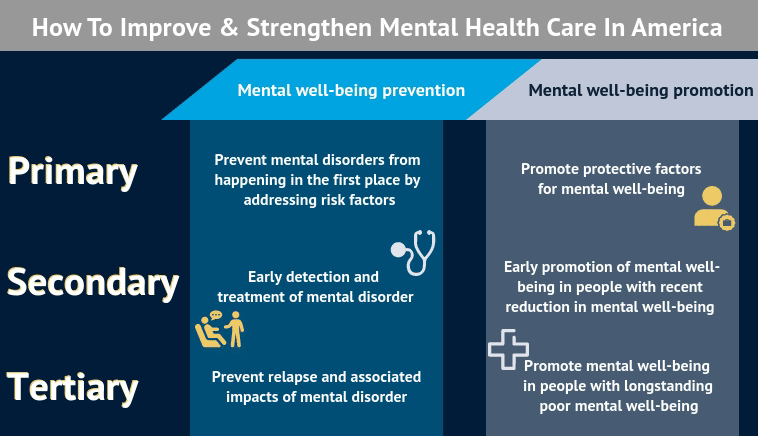
By the end of 2021, Americans found themselves in one of the worst nationwide mental health crises in years. Nearly 1 in 5 U.S. adults experience a mental illness each year, or more than 50 million people. Unfortunately, less than half of the people in need ever receive the mental health care they require. Due to physician burnout, a workforce shortage, and poor funding, this country has long struggled with handling the growing mental health crisis and providing equitable access to behavioral health care.

The mental health system in America may be largely broken, but conditions are ideal for transforming the system with scientific advances, improved coverage, and political consensus on the importance of mental health. Goals once thought to be long out of reach may soon be possible.

CITE: https://www.r2library.com/Resource/Title/082610254

This NIHCM infographic highlights the many challenges contributing to America’s mental health crisis as well as steps to improve and strengthen mental health care and the behavioral health industry and promote individual resiliency.

NIHCM: https://tinyurl.com/3whz69vk

ME-P: https://medicalexecutivepost.com/2022/06/02/medical-workplace-violence-prevention-guidelines/

***

***

****

Capitalism Blame Does Nothing to Offer Solutions

Join Our Mailing List

Blaming it on capitalism does nothing to offer any real solutions

Rick Kahler MS CFP

By Rick Kahler MSFS CFP®

http://www.KahlerFinancial.com

Recently, a respected colleague noted that the “capitalistic goal of accumulation, consumption, and collecting” is responsible for a collective mindset in Americans that “I consume, therefore I am” and “more is better.” He passionately feels the “more is better capitalistic mentality” assures a predictable future of dwindling resources. He is not alone in his views.

Certainly, identifying our self-worth by what we accumulate or spend does not produce emotional, physical, or financial well-being.

Those who embrace a money script of “I consume, therefore I am” are likely to eventually encounter financial and emotional pain. Either they will run out of money to spend, lack products to buy, or discover the futility of trying to use money and possessions as a substitute for genuine self-worth.

More is Better?

What I found curious was my colleague’s attribution of the money script “more is better” as the product of capitalism. That money script has been around a lot longer than capitalism, which according to Investopedia originated during the Middle Ages when a variety of factors, including a labor shortage caused by the Black Plague, caused the collapse of the manorial system. More is better” was part of the human condition much earlier.

For example, in the Hebrew Scriptures, Ecclesiastes 5:10 says, “Whoever loves money never has money enough; whoever loves wealth is never satisfied with his income.”

Greed

Greed, whether for money or food or anything else, is not produced by an economic model. Whether people live under a capitalistic, socialistic, or communist system—or in a Stone Age tribal group—greed is alive and well in all of them. Every human being experiences it in some way and on some level. It has been considered one of the seven deadly sins since the early days of the Christian church.

Definition

“Capitalism” is defined by Merriam-Webster as “an economic system characterized by private or corporate ownership of capital goods, by investments that are determined by private decision, and by prices, production, and the distribution of goods that are determined mainly by competition in a free market.”

There is nothing in that definition about greed or any goals of “accumulation, consumption, and collecting.”

Core to capitalism is a method of distributing limited resources in the most efficient manner possible, where the dynamics of the free market and competition drive down prices and improve quality. I find no other economic system that delivers this outcome. In fact, systems controlled by central planning have a track record of producing the opposite: economies where shortages prevail and those in charge prosper on the backs of the masses.

Research

Research shows capitalism has lifted more people out of poverty than any other economic system. Since 1945 the number of those living below the poverty line has decreased 57%, from 35% to 15%, while income inequality has risen just 15%. Any American earning over $30,600 is in the top 1% of income earners globally. Even the bottom 1% of Americans are in the top 33% of income earners globally.

Certainly there are business owners and wealthy people who are greedy, selfish, and materialistic, because such people are found in every walk of life. These traits are not tied to any particular economic system. They are signs of people who are trying to satisfy spiritual and emotional needs with material things that can never meet those needs.

***

buy-sell-merge

***

Assessment

Because one of the qualities that helps people create financial security is frugality, I actually agree with my colleague that excess consumption is often destructive and can be a genuine problem. Blaming it on capitalism, however, does nothing to offer any real solutions.

Conclusion

Your thoughts and comments on this ME-P are appreciated. Feel free to review our top-left column, and top-right sidebar materials, links, URLs and related websites, too. Then, subscribe to the ME-P. It is fast, free and secure.

Speaker: If you need a moderator or speaker for an upcoming event, Dr. David E. Marcinko; MBA – Publisher-in-Chief of the Medical Executive-Post – is available for seminar or speaking engagements. Contact: MarcinkoAdvisors@msn.com

OUR OTHER PRINT BOOKS AND RELATED INFORMATION SOURCES:

Comprehensive Financial Planning Strategies for Doctors and Advisors: Best Practices from Leading Consultants and Certified Medical Planners™

***

The SAFE-HAVEN Demand

By Staff Reporters

***

***

Stocks are riskier than bonds. But the reward for investing in stocks over the long haul is greater. Still, bonds can outperform stocks over short periods. Safe Haven Demand shows the difference between Treasury bond and stock returns over the past 20 trading days.

Bonds do better when investors are scared. The Fear & Greed Index uses increasing safe haven demand as a signal for Fear.

CITE: https://www.r2library.com/Resource/Title/082610254

***

COMMENTS APPRECIATED

Thank You

***

***

Whatever Happened to the Invisible Hand of Capitalism?

Join Our Mailing List

The Invisible Hand of Capitalism?

vitaly

By Vitaliy Katsenelson CFA

Just as the well-meaning economist of the Soviet Union didn’t know the correct price of sugar, nor do the good-intentioned economists of our global central banks know where interest rates should be.

***

246_1

***

Assessment

Even more important, they can’t predict the consequences of their actions.

Here’s why?

http://contrarianedge.com/2016/03/16/whatever-happened-to-the-invisible-hand-of-capitalism/

Conclusion

Your thoughts and comments on this ME-P are appreciated. Feel free to review our top-left column, and top-right sidebar materials, links, URLs and related websites, too. Then, subscribe to the ME-P. It is fast, free and secure.

Speaker: If you need a moderator or speaker for an upcoming event, Dr. David E. Marcinko; MBA – Publisher-in-Chief of the Medical Executive-Post – is available for seminar or speaking engagements. Contact: MarcinkoAdvisors@msn.com

OUR OTHER PRINT BOOKS AND RELATED INFORMATION SOURCES:

Comprehensive Financial Planning Strategies for Doctors and Advisors: Best Practices from Leading Consultants and Certified Medical Planners™

***

SURVEY: On Nurse Caregivers and Unions

By MCOL

***

***

Nurses Survey: The 4 Takeaways

 •  87% of patients or their caregivers feel some level of stigma associated with their or the person in their care’s current health condition.
 •  44% reported feeling embarrassed to talk about their current health condition.
 •  43% felt their health condition isn’t something that’s regularly talked about and is rarely represented in the media.
 •  99% patients and their caregivers say that stigma can negatively impact or slow perceived healing of a patient with a current health condition.

Source: Convatec Group Plc via PRNewswire, May 18, 2022

UNIONS: https://www.msn.com/en-us/health/medical/unions-tempt-nurses-to-change-their-principles/ar-AAY2cUg?li=BBnb7Kz

***

COMMENTS APPRECIATED

Thank You

***

***

***

PODCAST: Ten Largest Medical Device Companies

By Eric Bricker MD

***

***

COMMENTS APPRECIATED

Thank You

***

***

***

Transformational Business Skills for Doctor Entrepreneurs

THE BUSINESS OF MEDICAL PRACTICE [Health 2.0]

Textbook Review

***

SECOND OPINIONS: https://medicalexecutivepost.com/schedule-a-consultation/

INVITE DR. MARCINKO: https://medicalexecutivepost.com/dr-david-marcinkos-bookings/

SPONSOR: http://www.CertifiedMedicalPlanner.org

***

About Medical Workplace Violence

Join Our Mailing List

UPDATE

At least three people are dead and multiple people are injured following a shooting at the Natalie Building at St. Francis Hospital in Tulsa, Oklahoma.

Link: https://www.msn.com/en-us/news/crime/at-least-3-dead-multiple-people-injured-in-shooting-at-oklahoma-medical-office/ar-AAXYITO?li=BBnb7Kz

More than Physical Assault

[By Staff Reporters and Dr. David E. Marcinko MBA]

Business Med PracticeWorkplace violence is more than physical assault.

According to trauma specialist Eugene Schmuckler; PhD, MBA, CTS opining and writing in www.BusinessofMedicalPractice.com; workplace violence is any act in which a person is abused, threatened, intimidated, harassed, or assaulted in his or her employment. Swearing, verbal abuse, playing “pranks,” spreading rumors, arguments, property damage, vandalism, sabotage, pushing, theft, physical assaults, psychological trauma, anger-related incidents, rape, arson, and murder are all examples of workplace violence.

The RNANS

The Registered Nurses Association of Nova Scotia [RNANS], a leading study group, defines violence as “any behavior that results in injury whether real or perceived by an individual, including, but not limited to, verbal abuse, threats of physical harm, and sexual harassment.” As such, medical workplace violence includes:

· threatening behavior — such as shaking fists, destroying property, or throwing objects;

· verbal or written threats — any expression of intent to inflict harm;

· harassment — any behavior that demeans, embarrasses, humiliates, annoys, alarms, or verbally abuses a person and that is known or would be expected to be unwelcome. This includes words, gestures, intimidation, bullying, or other inappropriate activities;

· verbal abuse — swearing, insults, or condescending language;

· muggings — aggravated assaults, usually conducted by surprise and with intent to rob; or

· physical attacks — hitting, shoving, pushing, or kicking.

Cause and Affect

Workplace violence can be brought about by a number of different actions in the workplace. It may also be the result of non-work related situations such as domestic violence or “road rage.” Workplace violence can be inflicted by an abusive employee, a manager, supervisor, co-worker, customer, family member, patient, physician, nurse, or even a stranger.

The UI-IPRC 

The University of Iowa – Injury Prevention Research Center [UI-IPRC] classifies most workplace violence into one of four categories.

· Type I Criminal Intent — Results while a criminal activity (e.g., robbery) is being committed and the perpetrator had no legitimate relationship to the workplace.

· Type II Customer/Client — The perpetrator is a customer or client at the workplace (e.g., healthcare patient) and becomes violent while being assisted by the worker.

· Type III Worker on Worker — Employees or past employees of the workplace are the perpetrators.

· Type IV Personal Relationship — The perpetrator usually has a personal relationship with an employee (e.g., domestic violence in the workplace).

Conclusion

Your thoughts and comments on this ME-P are appreciated. Feel free to review our top-left column, and top-right sidebar materials, links, URLs and related websites, too. Then, subscribe to the ME-P. It is fast, free and secure.

Link: http://feeds.feedburner.com/HealthcareFinancialsthePostForcxos

Speaker: If you need a moderator or speaker for an upcoming event, Dr. David E. Marcinko; MBA – Publisher-in-Chief of the Medical Executive-Post – is available for seminar or speaking engagements. Contact: MarcinkoAdvisors@msn.com

OUR OTHER PRINT BOOKS AND RELATED INFORMATION SOURCES:

DICTIONARIES: http://www.springerpub.com/Search/marcinko
PHYSICIANS: www.MedicalBusinessAdvisors.com
PRACTICES: www.BusinessofMedicalPractice.com
HOSPITALS: http://www.crcpress.com/product/isbn/9781466558731
CLINICS: http://www.crcpress.com/product/isbn/9781439879900
ADVISORS: www.CertifiedMedicalPlanner.org
PODIATRISTS: www.PodiatryPrep.com
BLOG: www.MedicalExecutivePost.com
FINANCE: Financial Planning for Physicians and Advisors
INSURANCE: Risk Management and Insurance Strategies for Physicians and Advisors

Product Details 

PODCAST: The “Economy” – How it Affects Everyone

By Rich Helppie

THE COMMON BRIDGE

The Second of a Two-Part Episode with Beata Kirr

***

***

PODCAST LINK: https://tinyurl.com/zrxdxzya

***

COMMENTS APPRECIATED

Thank You

***

PODCAST: Health Insurance Carrier Stock Market Performance

By Eric Bricker MD

***

***
CITE: https://www.r2library.com/Resource/Title/082610254

***

COMMENTS APPRECIATED

Thank You

***

***

***