PANDEMIC “versus” EPIDEMIC: A Review

PANDEMIC “versus” EPIDEMIC

Dr. David E. Marcinko MBA

Courtesy: www.CertifiedMedicalPlanner.org

Is there a Difference? – Know the Difference!

A Pandemic (from Greek πᾶν pan “all” and δῆμος demos “people”) is an epidemic of disease that has spread across a large region; for instance multiple continents, or even worldwide. A widespread endemic disease that is stable in terms of how many people are getting sick from it is not a pandemic.

Further, flu pandemics generally exclude recurrences of seasonal flu. Throughout history, there have been a number of pandemics, such as smallpox and tuberculosis. One of the most devastating pandemics was the Black Death, which killed an estimated 100 million people in the 14th century. Some recent pandemics include: HIV, Spanish flu, 2009 flu pandemic and H1N1.

LINK: https://www.amazon.com/Dictionary-Health-Insurance-Managed-Care/dp/0826149944/ref=sr_1_4?ie=UTF8&s=books&qid=1275315485&sr=1-4

An Epidemic is the rapid spread of infectious disease to a large number of people in a given population within a short period of time, usually two weeks or less.

For example, in meningococcal infections, an attack rate in excess of 15 cases per 100,000 people for two consecutive weeks is considered an epidemic.

***
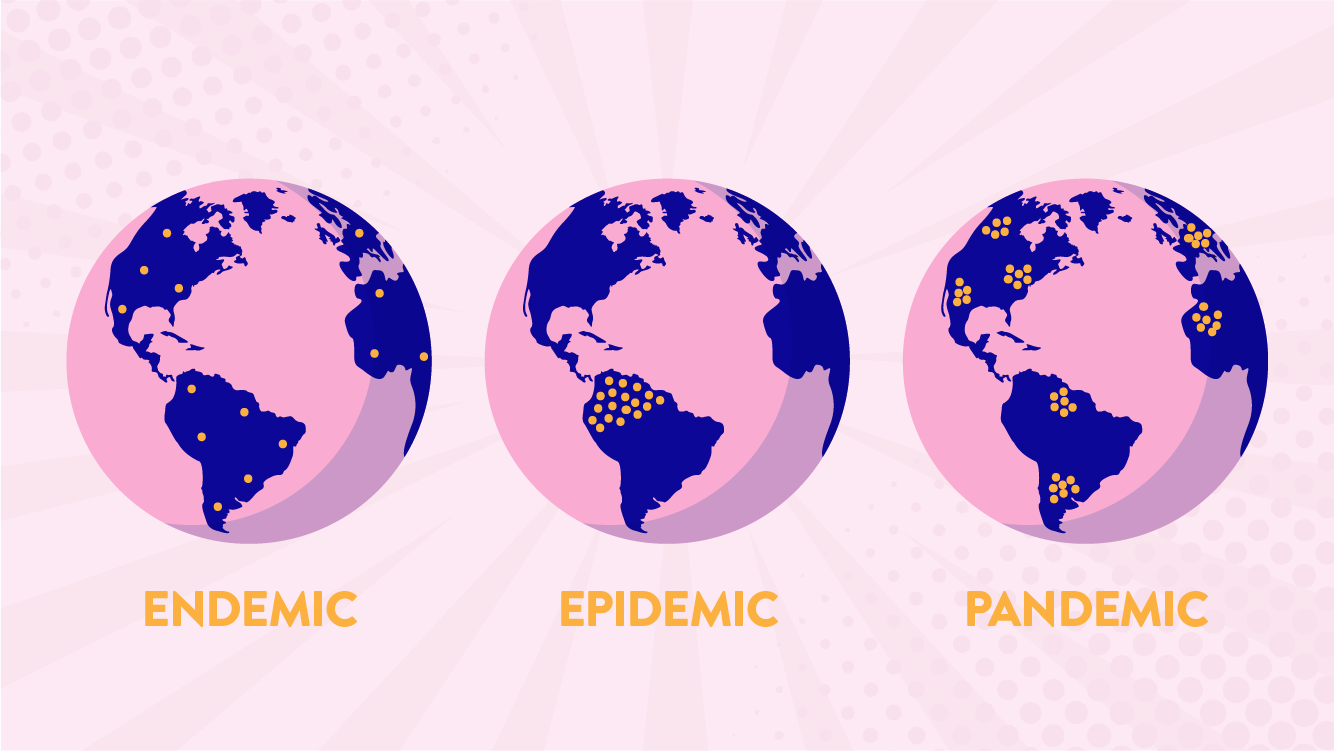
Epidemic vs Pandemic | Technology Networks

***

LINK: https://www.amazon.com/Dictionary-Health-Insurance-Managed-Care/dp/0826149944/ref=sr_1_4?ie=UTF8&s=books&qid=1275315485&sr=1-4

Key Differences

  • Epidemics is the outbreak of the disease in a community while pandemic is the outbreak of the disease globally.
  • SARS was an epidemic while AIDS was an pandemic.
  • Pandemic disease has the same origin or source where so ever it gets spread while the same disease is spreading with different sources in each country, it refers to epidemic.
  • Epidemic when extending to greater levels becomes a pandemic.

MORE: https://www.verywellhealth.com/difference-between-epidemic-and-pandemic-2615168

ENDEMIC: If you translate it literally, endemic means “in the population.” It derives from the Greek endēmos, which joins en, meaning “in,” and dēmos, meaning “population.” “Endemic” is often used to characterize diseases that are generally found in a particular area; malaria, for example, is said to be endemic to tropical and subtropical regions. This use differs from that of the related word epidemic in that it indicates a more or less constant presence in a particular population or area rather than a sudden, severe outbreak within that region or group.

Conclusion: Your thoughts are appreciated.

***

Product DetailsProduct DetailsProduct Details

THANK YOU

PODCAST: What is a Medication Formulary?

***

About First Stop Health | Telemedicine

By Eric Bricker MD

***

Why Are Certain Medications Non-Formulary?

What Are Formulary Tiers and Its Rules?

Formularies Have Many Rules Associated With Them:

1) Prior Authorization – Approval Must Be Given by the Health Insurance Company/PBM Before They Agree to Pay for a Medication.

2) Step Therapy – Certain Less Expensive Generic Medications Have to Be ‘Tried’ First and Fail Before a Doctor Can Prescribe a More Expensive Brand-Name Medication.

3) Mandatory Generics – If a Brand Name Medication Has A Direct Generic Equivalent, Then the Insurance May Only Agree to Pay for the Generic and Not the Brand.

4) Mandatory Mail Order – Certain Chronic Medications That Are Filled for 90 Day Supplies Must Be Filled via Mail Order and Not at the Retail Pharmacy.

***

PODCAST: https://www.youtube.com/watch?v=kEjDBp9HdBk

***

COMMENTS APPRECIATED.

Subscribe to the Medical Executive-Post

Thank You

HEALTH ECONOMICS CITE: https://www.r2library.com/Resource/Title/0826102549

***

***

***

Healthcare Consumers Want Personalized Experiences

By Staff Reporters

A survey that Redpoint Global conducted with Dynata of more than 1,000 US healthcare consumers found:

 •  57% of healthcare consumers think retailers and/or financial services are better at providing personalized omnichannel experiences than healthcare
 •  29% said they expect frictionless check-in experiences across apps/phone calls/in-office
 •  34% expect data inputs in a healthcare portal (health history, surveys, insurance information, etc.) to
    reach providers
 •  24% of respondents said they did not utilize any sort of digital communication with providers during
    the pandemic
 •  14% said they had no contact with any healthcare provider during the same timeframe

Source: Redpoint Global, December 7, 2021

***

COMMENTS APPRECIATED.

Thank You

Subscribe to the Medical Executive-Post

***

***

UPDATE: Stock Market and Retail Banks

BY STAFF REPORTERS

***

Stock Markets: Stocks ticked higher as investors zeroed in on Senate testimony from Fed Chair Jerome Powell, who is up for a second term. Powell said the Fed would do what’s necessary to get inflation back to normal levels.

Banks: Bank of America decided to make life a little less difficult for account holders without piles of cash. The bank—America’s second largest—announced on Tuesday that it would reduce overdraft fees by around 70%, from $35 to $10. BofA is also scrapping a $12 non-sufficient funds fee (for bouncing a check or making an automated overdraft) and will eliminate transfer fees for its overdraft protection service.The decision comes on the recently shined heels of similar moves by other large banks.

  • Capital One announced last month that it was eliminating overdraft fees altogether.
  • In August, JPMorgan increased its charge-incurring overdraft amount to $50 (it was previously $5).
  • PNC Bank introduced a 24-hour grace period on overdraft penalties.

***

COMMENTS APPRECIATED

Subscribe to the Medical Executive-Post

Thank You

***

***

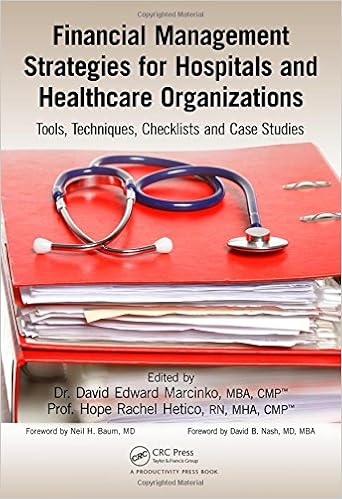
Financial Management Strategies for Hospitals and Healthcare Organizations

SPONSOR: http://www.CertifiedMedicalPlanner.org

CMP logo

TEXTBOOK ORDER: https://www.amazon.com/Financial-Management-Strategies-Healthcare-Organizations/dp/1466558733/ref=sr_1_3?ie=UTF8&qid=1380743521&sr=8-3&keywords=david+marcinko

SECOND OPINIONS: https://medicalexecutivepost.com/schedule-a-consultation/

INVITE DR. MARCINKO: https://medicalexecutivepost.com/dr-david-marcinkos-bookings/

THANK YOU

***

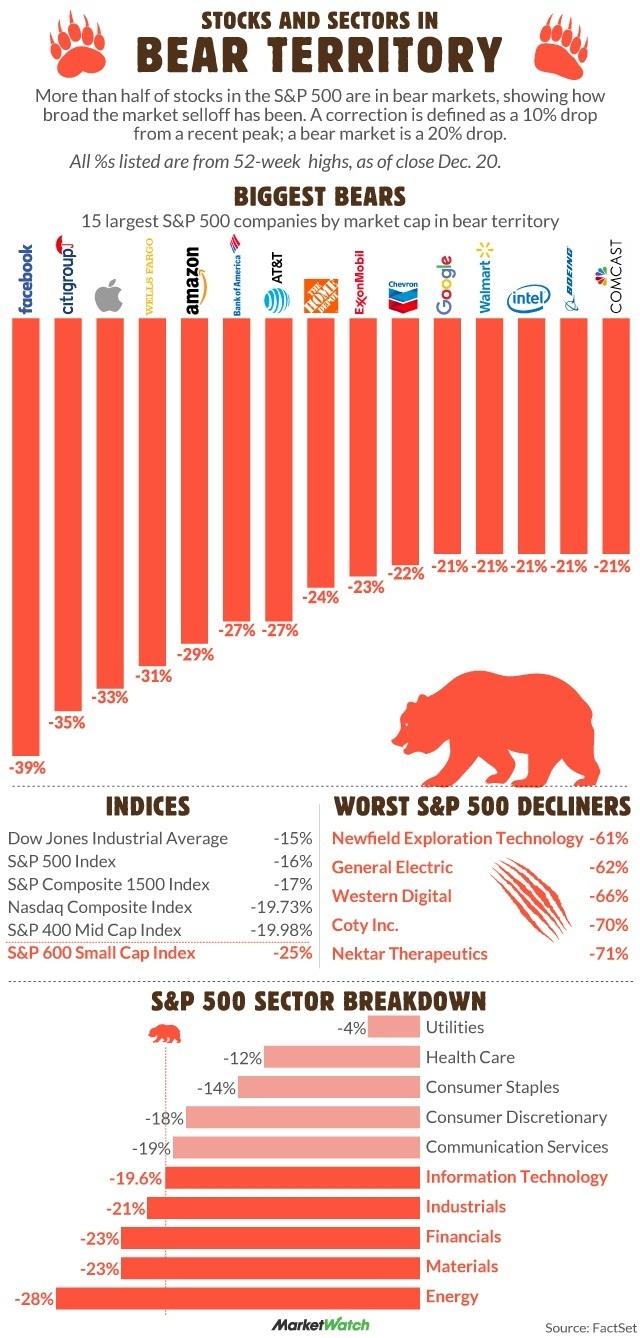
REVIEW: Stocks and Sectors in Bear Territory

A Historic Review

***

 ***

Assessment

A correction is typically defined as a 10% drop for a stock or an index from a recent peak, while a bear market is a 20%-plus decrease.

Conclusion

Your thoughts and comments on this ME-P are appreciated. Feel free to review our top-left column, and top-right sidebar materials, links, URLs and related websites, too. Then, subscribe to the ME-P. It is fast, free and secure.

Speaker: If you need a moderator or speaker for an upcoming event, Dr. David E. Marcinko; MBA – Publisher-in-Chief of the Medical Executive-Post – is available for seminar or speaking engagements.

Book Marcinko: https://medicalexecutivepost.com/dr-david-marcinkos-bookings/

Subscribe: MEDICAL EXECUTIVE POST for curated news, essays, opinions and analysis from the public health, economics, finance, marketing, IT, business and policy management ecosystem.

DOCTORS:

“Insurance & Risk Management Strategies for Doctors” https://tinyurl.com/ydx9kd93

“Fiduciary Financial Planning for Physicians” https://tinyurl.com/y7f5pnox

“Business of Medical Practice 2.0” https://tinyurl.com/yb3x6wr8

HOSPITALS:

“Financial Management Strategies for Hospitals” https://tinyurl.com/yagu567d

“Operational Strategies for Clinics and Hospitals” https://tinyurl.com/y9avbrq5

***

 Risk Management, Liability Insurance, and Asset Protection Strategies for Doctors and Advisors: Best Practices from Leading Consultants and Certified Medical Planners™8Comprehensive Financial Planning Strategies for Doctors and Advisors: Best Practices from Leading Consultants and Certified Medical Planners™

PODCAST: Prescription Patient Assistance Programs

BY ERIC BRICKER MD

With 43 Million Americans Having Lost Their Job at Some Point During the Pandemic and About 1/2 Those Jobs Providing Health Insurance… the 1st Group–People Who Do Not Have Health Insurance–Needs to Be Aware of How These Programs Work.

In this Video You Will Learn the Patient Assistance Program Process for:

1) 2 of the Most Common Types of Insulin

2) The Highest-Revenue Medication in America: Humira

**Note: At the Time of the Video’s Recording, the Unemployment Rate in the US was 15%. As of November 2021, the Unemployment Rate is 4.2%.

***

***

COMMENTS APPRECIATED

Subscribe to the Medical Executive-Post

***

***

CITE: https://www.r2library.com/Resource/Title/082610254

***

Understanding Hobson’s Choice in Medicine

Join Our Mailing List

Hobson’s choice  in Public Health

DEM white shirt

By Dr. David Edward Marcinko MBA

[From Wikipedia, the free encyclopedia]

A Hobson’s choice is a free choice in which only one thing is offered. Because a person may refuse to accept what is offered, the two options are taking it or taking nothing. In other words, one may “take it or leave it.”

The phrase is said to have originated with Thomas Hobson (1544–1631), a livery stable owner in Cambridge, England, who offered customers the choice of either taking the horse in his stall nearest the door or taking none at all.

***

An oil portrait of Thomas Hobson, in the National Portrait Gallery, London. He looks straight to the artist and is dressed in typical Tudor dress, with a heavy coat, a ruff, and tie tails

[Thomas Hobson, the National Portrait Gallery, London]

***

In Medicine

One of the first examples that springs readily to mind in trying to look for examples of Hobson’s Choice in Medicine is the issue of defensive medicine. While the physician actually has the option of not “shotgunning” a patient (that is, shooting randomly large number of tests in order to cover legal liability and prevent medicolegal backlashes), the risk of missing a diagnosis and the fall outs thereof are so large, that it basically degenerates into a Hobson’s Choice.

The idiosyncrasies of medicine and the way the body reacts to them always leaves us open to the risk of working within the constraints of Hobson’s Choice.

***

pills+capsules+other

***

For example, antibiotics have saved more lives than we can count, yet, an idiosyncratic, unpredictable reaction may just be waiting for us around the corner.

In Public Health

In the Indian Public Health scenario, all that the patients are offered in a primarily paternalistic system is the choice Hobson had offered all those years ago. Much like Henry Ford, who told customers lining up to buy his revolutionary Ford Model T that they could have their cars in “any color so long as it is black”, the Indian system, hobbled by the lack of an empowered public, and a patient choice scheme, functions on the basis of Hobson’s choice.

***

untitled

***

Assessment

Even in the clinical sciences, with shared decision making and user driven healthcare still in their infancy in the nation, a paternalistic physician offers naught but “this or none” choice to their patients. While one can say that the lack of general awareness of the public tends to spawn this issue, we cannot shake off our personal stake in this matter just by hiding behind the façade of moral determinism!

Conclusion

Your thoughts and comments on this ME-P are appreciated. Feel free to review our top-left column, and top-right sidebar materials, links, URLs and related websites, too. Then, subscribe to the ME-P. It is fast, free and secure.

Speaker: If you need a moderator or speaker for an upcoming event, Dr. David E. Marcinko; MBA – Publisher-in-Chief of the Medical Executive-Post – is available for seminar or speaking engagements. Contact: MarcinkoAdvisors@msn.com

OUR OTHER PRINT BOOKS AND RELATED INFORMATION SOURCES:

Risk Management, Liability Insurance, and Asset Protection Strategies for Doctors and Advisors: Best Practices from Leading Consultants and Certified Medical Planners™

***

Invite Dr. Marcinko

***

Medical FINANCIAL PLANNING “Holistic” STRATEGIES

BY AND FOR PHYSICIANS AND THEIR ADVISORS

INVITE DR. MARCINKO: https://medicalexecutivepost.com/dr-david-marcinkos-

***

SPONSOR: http://www.CertifiedMedicalPlanner.org

CMP logo

***

PODCAST: Hospital Charity Care Explained

BY ERIC BRICKER MD

***

YOUR COMMENTS ARE APPRECIATED.

CITE: https://www.r2library.com/Resource/Title/082610254

Subscribe to the Medical Executive-Post

***

***

***

***

PODCAST: Healthcare Re-Imagined

COMMON BRIDGE” WITH RICH HELPPIE

Richard Helppie's Common Bridge

Colleague Richard Helppie interviews Dean Clancy

Dean Clancy is a senior health care policy fellow at Americans for Prosperity and a nationally known health care freedom advocate and domestic policy expert with more than twenty years’ high-level policy experience in Congress, the White House, and the U.S. health care industry.

EDITOR’S NOTE: I first met Rich in B-school, when I was a student, back in the day. He was the Founder and CEO of Superior Consultant Holdings Corp. Rich graciously wrote the Foreword to one of my first textbooks on financial planning for physicians and healthcare professionals. Today, Rich is a successful entrepreneur in the technology, health and finance space.

-Dr. David E. Marcinko MBA CMP®

***

PODCAST: https://richardhelppie.com/dean-clancy/

ASSESSMENT: Your thoughts are appreciated.

***

THANK YOU

***

The Crypto-future through Bitcoin, Ethereum, Ripple XRP and IOTA

Peering into the Crypto-Future 

By Phil Baumann RN

In order to gain a clearer view of the impacts of the incoming future of technologies and their economic, behavioral, cultural, political and other impacts, categorization can perform useful veil-lifting.

I’ll let the reader do the deep-dive research into the technologies underlying each of these currencies, but here is a peeled-away breakdown of their respective categories:

Whether these specific “coins” succeed the slaughtering rapidity of techno-culture shocks remains to be seen.

Yes, they are traded assets that can make you rich or poor. That’s certainly interesting. What matters much more than their capital markets is that each has attempted to confront crucial problems that can liberate the ramifying “potential energies” of other technologies that can plug in to them.

Their premises spur economy-generating economies.

***

***

Don’t feel bad if you missed the Bitcoin gold-rush. That’s in the past. Sometimes understanding the world confers its own wealth (insert Latin aphorism here). If you run the currency of knowledge through the circuitry of imagination you gain the power of foresight.

Assessment:

That’s my two cents: take them and spread the wealth.

Disclosure: I hold Bitcoin (BTC), Ethereum (ETH), Ripple XRP and IOTA (MIOTA). But this post is not about finance per se nor is it about promoting these currencies as investments. Rather this post is about envisioning the four kinds of markets that the respective technologies underlying each of these four cryptocoins can help grow and power. These aren’t simply currencies and stores of monetary value – they are technologies.

Conclusion

Your thoughts and comments on this ME-P are appreciated. Feel free to review our top-left column, and top-right sidebar materials, links, URLs and related websites, too. Then, subscribe to the ME-P. It is fast, free and secure.

Speaker: If you need a moderator or speaker for an upcoming event, Dr. David E. Marcinko; MBA – Publisher-in-Chief of the Medical Executive-Post – is available for seminar or speaking engagements. Contact: MarcinkoAdvisors@msn.com

OUR OTHER PRINT BOOKS AND RELATED INFORMATION SOURCES:

Risk Management, Liability Insurance, and Asset Protection Strategies for Doctors and Advisors: Best Practices from Leading Consultants and Certified Medical Planners™8Comprehensive Financial Planning Strategies for Doctors and Advisors: Best Practices from Leading Consultants and Certified Medical Planners™

***

Understanding Crypto Currencies & Bitcoins

Join Our Mailing List

Understanding Risks and Benefits

By Timothy J. McIntosh CFP® MPH CFA CMP®

TMMedical professionals might not know rupees from ringgits, but any investor should consider the benefits of currency investing.  Buying currencies allow for a hedge against the U.S. dollar and also permit for an investor to take advantage of major movements of foreign currencies for profit.

Today, it is easier than ever to invest in currencies through mutual funds or exchange traded funds.  U.S. investors are impacted by foreign currency fluctuations through international stock and bond exposure.

Advantages

The advantage of investing in currencies is the investment generally has limited correlation with other real or liquid assets.  Medical professionals can initiate the process of currency investing by starting a forex account.  In many instances, an account can be opened with minimal investment.

Taxation

One caveat is the tax consequences, as currency-based profits are taxed as ordinary income rather than the more favorable capital gains rate.

Digital Currency

Bitcoin is an open sourcepeer-to-peer payment network and digital currency pioneered in 2009 by pseudonymous developer “Satoshi Nakamoto“. Bitcoin has been called a cryptocurrency because it utilizes public-key cryptography for protection. Users send payments by broadcasting digitally signed messages that reassign ownership of bitcoins. A decentralized network of specialized computers verifies and timestamps all transactions using a proof-of-work system. The operators of these computers, known as “miners“, are satisfied with transaction fees and newly minted bitcoins.

Commercial Use

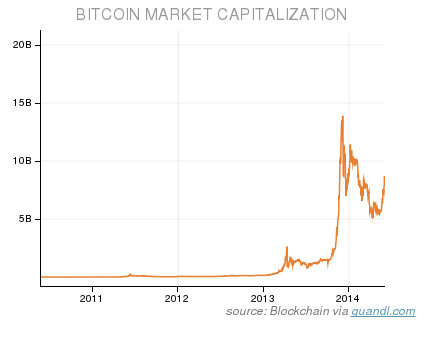
The commercial use of Bitcoin, illicit or otherwise, is currently diminutive compared to its use by speculators, which has led to extreme price volatility.  Companies and merchants have an enticement to recognize the currency because transaction fees are lower than the 2 to 3% classically imposed by the major credit card companies like Visa®.

Bitcoin Graph

Assessment

Given the fact that Bitcoin is a new currency with extreme volatility, medical professionals should be very cautious with any potential investment.

UPDATE: 2017

Conclusion

Your thoughts and comments on this ME-P are appreciated. Feel free to review our top-left column, and top-right sidebar materials, links, URLs and related websites, too. Then, subscribe to the ME-P. It is fast, free and secure.

Link: http://feeds.feedburner.com/HealthcareFinancialsthePostForcxos

Speaker: If you need a moderator or speaker for an upcoming event, Dr. David E. Marcinko; MBA – Publisher-in-Chief of the Medical Executive-Post – is available for seminar or speaking engagements. Contact: MarcinkoAdvisors@msn.com

OUR OTHER PRINT BOOKS AND RELATED INFORMATION SOURCES:

DICTIONARIES: http://www.springerpub.com/Search/marcinko
PHYSICIANS: www.MedicalBusinessAdvisors.com
PRACTICES: www.BusinessofMedicalPractice.com
HOSPITALS: http://www.crcpress.com/product/isbn/9781466558731
CLINICS: http://www.crcpress.com/product/isbn/9781439879900
BLOG: www.MedicalExecutivePost.com
FINANCE: Financial Planning for Physicians and Advisors
INSURANCE: Risk Management and Insurance Strategies for Physicians and Advisors

Product DetailsProduct DetailsProduct Details

Product Details  Product Details

***

Risk Management, Liability Insurance, and Asset Protection Strategies for Doctors and Advisors: Best Practices from Leading Consultants and Certified Medical Planners™8Comprehensive Financial Planning Strategies for Doctors and Advisors: Best Practices from Leading Consultants and Certified Medical Planners™

Crypto-Currency “GAS” FEES: Ethereum Network

***

By Staff Reporters

According to Wikipedia, a cryptocurrency, crypto-currency, or crypto is a collection of binary data which is designed to work as a medium of exchange. Individual coin ownership records are stored in a ledger, which is a computerized database using strong cryptography to secure transaction records, to control the creation of additional coins, and to verify the transfer of coin ownership. Cryptocurrencies are generally fiat currencies, as they are not backed by or convertible into a commodity. Some crypto schemes use validators to maintain the cryptocurrency. In a proof-of-stake model, owners put up their tokens as collateral. In return, they get authority over the token in proportion to the amount they stake. Generally, these token stakers get additional ownership in the token over time via network fees, newly minted tokens or other such reward mechanisms.

***

Product Details

CITE: https://www.r2library.com/Resource/Title/0826102549

Cryptocurrency does not exist in physical form (like paper money) and is typically not issued by a central authority. Cryptocurrencies typically use decentralized control as opposed to a central bank digital currency (CBDC). When a cryptocurrency is minted or created prior to issuance or issued by a single issuer, it is generally considered centralized. When implemented with decentralized control, each cryptocurrency works through distributed ledger technology, typically a blockchain, that serves as a public financial transaction database.

A cryptocurrency is a tradable digital asset or digital form of money, built on blockchain technology that only exists online. Cryptocurrencies use encryption to authenticate and protect transactions, hence their name. There are currently over a thousand different cryptocurrencies in the world, and many see them as the key to a fairer future economy.

Bitcoin, first released as open-source software in 2009, is the first decentralized cryptocurrency. Since the release of bitcoin, many other cryptocurrencies have been created.

***

***

Enter GAS

Gas refers to the unit that measures the amount of computational effort required to execute specific operations on the cryptocurrency Ethereum network. Since each Ethereum transaction requires computational resources to execute, each transaction requires a fee. Gas refers to the fee required to conduct a transaction on Ethereum successfully.

READ: https://www.morningbrew.com/daily/stories/ethereum-gas-fees?utm_campaign=etb&utm_medium=newsletter&utm_source=morning_brew&mid=349b552221c994e2540a304649746d7c

CITE: https://www.r2library.com/Resource/Title/082610254

Gas fees are paid in Ethereum’s native currency, ether (ETH). Gas prices are denoted in gwei, which itself is a denomination of ETH – each gwei is equal to 0.000000001 ETH (10-9 ETH).

NFT: https://www.morningbrew.com/emerging-tech/stories/2021/02/22/nft-market-tripled-last-year-gaining-even-momentum-2021?email=marcinkoadvisors@msn.com&mid=349b552221c994e2540a304649746d7c&uid=jotgRJS1MLYGk2SSdfbR4b5r

***

See the source image

***

For example: Instead of saying that your gas costs 0.000000001 ether, you can say your gas costs 1 gwei. The word ‘gwei’ itself means ‘giga-wei’, and it is equal to 1,000,000,000 wei. Wei itself (named after Wei Dai, creator of b-money) is the smallest unit of ETH

MORE: https://swyftx.com/learn/what-are-ethereum-gas-fees/

COMMENTS APPRECIATED.

Subscribe to the Medical Executive-Post

THANK YOU

***

***

PODCASTS: What is a STABLECOIN?

HEDGE AGAINST INFLATION

By Dr. David E. Marcinko MBA CMP®

CMP logo

SPONSOR: http://www.CertifiedMedicalPlanner.org

***

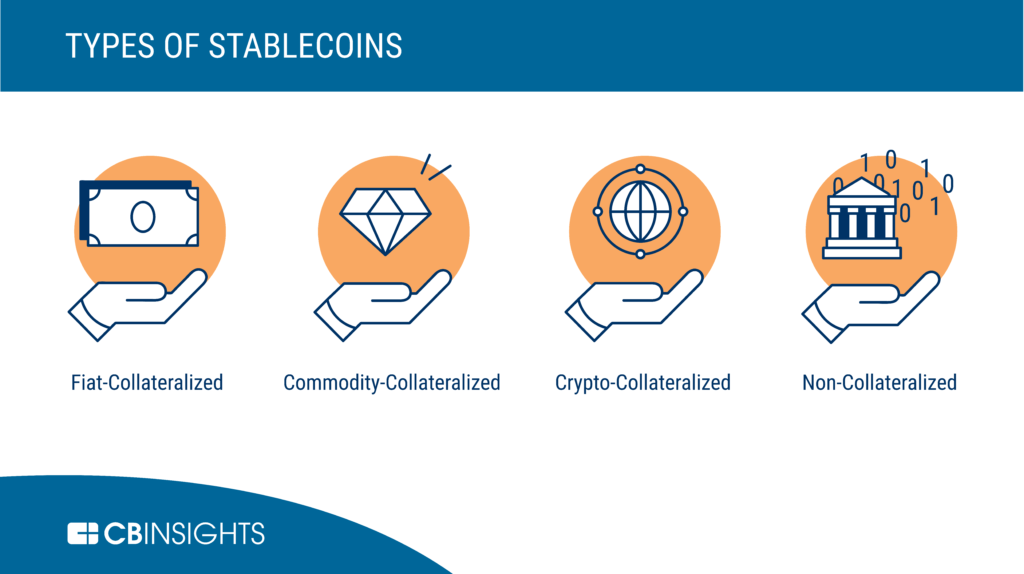
What Are Stablecoins? - CB Insights Research

***

DEFINITION: Stablecoins are blockchain-based digital currencies that have been created with the aim to have a stable value. Stablecoins achieve price-stability through various different methods such as a peg against a fiat currency or a commodity, through collateralization against other cryptocurrencies or through algorithmic coin supply management.

CITE: https://www.r2library.com/Resource/Title/0826102549

Every stable coin includes a specific set of mechanisms that mostly behave in the same way. In general, stable coins keep collateral of the asset and manage the supply. In this way, they incentivize the market, which allows trade of the coin for no more or less than $1.

A stable coin can be considered the best depending on several factors: It should be stable. PAX is one the most stable stablecoin. It should be liquid and available on most exchanges. It should be backed by FIAT. PAX is 100% collateralized in US bank accounts. It should be regulated. It should be redeemable.

MORE: https://www.msn.com/en-us/money/markets/treasury-fed-fear-stablecoins-could-disrupt-financial-system/ar-AAOE7lO?li=BBnb7Kz

PODCAST #1: https://www.youtube.com/watch?v=O3rVWLhBIPo

PODCAST #2: https://www.youtube.com/watch?v=GsSSLDzKCOE

YOUR COMMENTS ARE APPRECIATED.

Thank You

***

Asset Protection Issues For [Physician] Crypto Investors

***

Ike Z. Devji J.D. - Tempe, Arizona - Lawyer | Lawyer Directory

By Ike Devji, J.D.

Crypto currency is all the rage and continues to make some coin investors small fortunes even as prices swing widely and scams emerge. These are some basic defensive measures to keep your digital wallet safe.

READ MORE: https://www.proassetprotection.com/asset-protection-for-crypto-investors/

EDITOR’S NOTE: Ike Devji contributed to our textbook on Risk Management for Doctors and Advisors. We appreciated his important chapter contribution.

Risk Management, Liability Insurance, and Asset Protection Strategies for Doctors and Advisors: Best Practices from Leading Consultants and Certified Medical Planners™

ORDER TEXTBOOK: https://www.routledge.com/Risk-Management-Liability-Insurance-and-Asset-Protection-Strategies-for/Marcinko-Hetico/p/book/9781498725989

Your comments are appreciated.

THANK YOU

***

PODCAST: Curmudgeon On “Crypto-Currency”

Curmudgeon on Crypto-currency


Vitaliy Katsenelson, CFA

Your thoughts and comments are appreciated.

THANK YOU

***

***

DENTISTS: Don’t Write Many Prescriptions / Ransomware and Cyber News

A Personal Op-Ed Perspective

***

pruitt

By Darrell Pruitt DDS

***

Dentists simply don’t write that many prescriptions.

Henry Schein employees are not defending Stanley Bergman’s venture into e-prescription software. That is because they know it stinks. Digital prescriptions not only endanger patients and dental practices, but they offer no tangible benefits over paper. None!

Digital only increases the profits for Stanley Bergman and pharmaceutical interests – who eliminate data entry personnel from their payroll.

“First do no harm”

Ancient Greek physician Hippocrates.

EDITOR’S NOTE: We welcome back the op-eds of colleague Dr. Pruitt and trust he remains well in 2022.

***

Ransomware and Dentistry – Recent News

“Why Healthcare Will Remain a Top Cyberattack Target in 2022 – one of the main reasons criminals are interested in healthcare data is that it contains a lot of details, such as date of birth, Social Security numbers – the active ingredients for identity theft. You can get those data points from any number of places, but healthcare organizations are the richest sources.” Healthcare Info Security, December 28, 2021.https://www.govinfosecurity.com/interviews/healthcare-will-remain-top-cyberattack-target-in-2022-i-4999

“Ransomware in 2022: You May Be Screwed, but Without Insurance It Could Always Be Worse – A commentator recently summed up the risk of ransomware attack in 2022: ‘we’re all screwed.’ True enough. But that’s all the more reason to prepare right now. After all, the only thing worse than a ransomware attack is not having adequate insurance coverage when it occurs. The time to prepare is now.” National Law Review, Wednesday, January 5, 2022.
https://www.natlawreview.com/article/ransomware-2022-you-may-be-screwed-without-insurance-it-could-always-be-worse

“Insurers run from ransomware cover as losses mount” Summary:
– Lloyd’s of London discourages cyber expansion-sources
– Ransomware as profitable as Colombian cocaine cartels
– Some insurers asking policyholders to pay half of ransoms
– Attackers change strategy from scattergun to focused.Reuters, November 19, 2021.
https://www.reuters.com/markets/europe/insurers-run-ransomware-cover-losses-mount-2021-11-19/

Yep.  We’re all screwed. Well, not all of us.

 Paper remains the best deterrent to ransomware. 

COMMENTS APPRECIATED.

Subscribe to the Medical Executive-Post

Thank You

***

***

***

STOCK MARKET Update: NASDAQ Composite

By Staff Reporters

***

NASDAQ Markets: The good news—if you own tech stocks—is that they didn’t fall as much yesterday as they had in the previous two days. NASDAQ comp: 15,080.87 at the close.

READ: https://www.msn.com/en-us/money/markets/the-nasdaq-is-quietly-being-shredded-new-data/ar-AASxgzA?li=BBnb7Kz

All eyes are on the December jobs report due this morning; analysts expect the economy to have added 422,000 jobs last month.

COMMENTS APPRECIATED.

Subscribe to the Medical Executive-Post

THANK YOU

***

***

31% of Americans Don’t Know How They’d Pay for Severe Illness

By Staff Reporters

***

31% of Americans Don’t Know How They’d Pay for Severe Illness

A recent survey by HealthcareInsider that polled 1,062 adults aged 18 and up asked, “If you were to experience a severe illness how would you pay for treatment?”

 •  Don’t know: 31%
 •  Credit card: 26%
 •  Non-retirement savings: 17%
 •  Borrow money from family: 16%
 •  Retirement savings: 11%
 •  Health Savings Account: 9%
 •  Borrow from a finance institution: 8%
 •  Crowdfund online: 6%

Source: HealthCareInsider, December 2nd, 2021COMMENTS APPRECIATED.

Thank You

Subscribe to the Medical Executive-Post

***

***

***

PODCAST: Explaining Relative Value Units As a Physician

By Business Savvy Physician

****

***

HEALTH ECONOMICS CITE: https://www.r2library.com/Resource/Title/0826102549

***

COMMENTS APPRECIATED

Thank You

***

***

***

***

18% of Patients Surveyed Skipped Prescriptions to Save Money

By Staff Reporters

****

18% Surveyed Skipped Prescriptions to Save Money

A recent Gallup survey asked “Thinking about the last 12 months, have you or a family member skipped a prescribed pill, dose, or other type of medication in order to save money?”. The amount of prescriptions in the household of those who answered yes varied as follows:

 •  8+: 25%
 •  5-7: 22%
 •  1-4: 17%
 •  0: 8%
 •  Total that answered yes: 18%

Source: West Health-Gallup 2021 Healthcare in America Report, December 2021

CITE: https://www.r2library.com/Resource/Title/082610254

COMMENTS APPRECIATED.

Subscribe to the Medical Executive-Post

THANK YOU

***

****

New 2022 Mileage Tax Rates

Automobile Business Deductions

2022 IRS Mileage Reimbursement Rate

Here are the 2022 IRS mileage reimbursement rates for businesses, individuals, and other organizations:

  • 58.5 cents per mile driven for business use. This is an increase of 2.5 cents from the 2021 rate.
  • 18 cents per mile driven for medical or moving purposes for qualified active-duty members of the Armed Forces. This is up by 2 cents from the 2021 rate.
  • 14 cents per mile driven in service of charitable organizations. Because the rate is set by statute it hasn’t changed from the 2021 rate.

***

Waxed Jaguar

***

Conclusion

Your thoughts and comments on this ME-P are appreciated. Feel free to review our top-left column, and top-right sidebar materials, links, URLs and related websites, too. Then, subscribe to the ME-P. It is fast, free and secure.

Link: http://feeds.feedburner.com/HealthcareFinancialsthePostForcxos

Speaker: If you need a moderator or speaker for an upcoming event, Dr. David E. Marcinko; MBA – Publisher-in-Chief of the Medical Executive-Post – is available for seminar or speaking engagements. Contact: MarcinkoAdvisors@msn.com

OUR OTHER PRINT BOOKS AND RELATED INFORMATION SOURCES:

DICTIONARIES: http://www.springerpub.com/Search/marcinko
PHYSICIANS: www.MedicalBusinessAdvisors.com
PRACTICES: www.BusinessofMedicalPractice.com
HOSPITALS: http://www.crcpress.com/product/isbn/9781466558731
CLINICS: http://www.crcpress.com/product/isbn/9781439879900
BLOG: www.MedicalExecutivePost.com
FINANCE: Financial Planning for Physicians and Advisors
INSURANCE: Risk Management and Insurance Strategies for Physicians and Advisors

Product Details


UPDATE: Stock Market and the Economy

By Staff Reporters

***

The stock market was very sharply mixed yesterday, and the NASDAQ Composite took the brunt of the damage. Even as the Dow Jones Industrial Average was up triple digits, the NASDAQ fell almost 2% as of 1:45 p.m. ET; and finishing down 210.08 points or (‎-1.33%).

Physicians and other investors looking at the biggest stocks in the NASDAQ would have to go through three dozen stocks on the list before finding a single one that rose more than 1%. Many of the top tech giants were down 1% to 5% or more on the day. Yet there were some winning NASDAQ stocks, and a few in particular might seem surprising to those used to seeing more popular names among top performers.

Bond yields gained thanks to bullish attitudes around economic growth.

Economy: The Great Resignation rolls on as a record 4.5 million Americans quit their jobs in November. That’s equivalent to 3% of the workforce.

COMMENTS APPRECIATED.

Thank You

Subscribe to the Medical Executive Post.com

***

***

On Hobson’s Economics “Choice”

The Philosophical Tradeoff

By Dr. David Edward Marcinko; MBA

[Publisher-in-Chief]

In economics, Hobson’s choice is a free choice in which only one option is offered, and one may refuse to take that option. The philosophical choice is therefore between taking the option; and not taking it. 

A False Choice 

The phrase is said to originate from Thomas Hobson [1544-1630], a livery stable owner who, in order to rotate the use of his horses, offered customers the choice of either taking the horse in the stall nearest the door – or taking none at all. It is analogous to the expression “my way or the highway”. 

In other words, it is in many respects a faux choice – or no choice at all. 

Financial Tradeoff 

Some retired physicians and other retired people live on a fixed income and many of them live right on the edge of their financial capability.  At some time in their life, they may have to make a choice regarding many purchases.  

In this case, we will illustrate “choice” using a couple’s purchase of Long Term Care Insurance. Of course, economics is the study of choice; wants, needs and scarcity, etc. 

In our case, if they decide to make the purchase they commit to a lifetime of premium payments. 

The financial tradeoff is this; if they make the commitment to purchase LTCI, they must give up something else.

Example: 

In order to maintain a monthly premium of $100 ($1,200per year), an elderly doctor, retired layman or couple must essentially relegate about $30,000 of financial assets to generate the $100 necessary to make an average premium payment (assumes a 7% rate of return with 4% withdrawal rate) or [4% X $30,000 = $1,200 year]. 

Thus, if the monthly premium cost is $500 per month, the elder must give up the use of $150,000 of retirement asset just to generate enough cash flow to pay for the LTC insurance. 

The married elder couple has to make the choice between lifestyle (dinners, vacations, gifts to children, prescription drugs, medical care or food and shelter) versus paying an insurance premium to provide for nursing home coverage for a need, which may be very real, but will not occur until sometime in the ambiguous future. 

Assessment 

When faced with such a tough economics – Hobsonian – choice, neither of which delivers peace of mind or a respectable solution; many will simply decide that, in either case, they may already end up impoverished. 

Thus, many will often opt for the better lifestyle now … while they can enjoy it … together. 

Conclusion 

A health economist or financial advisor often has to dispel the myths, hopes and misconceptions of clients and deal with the realities they face. Alternative risk management strategies are important, and health economic choices must be considered in any comprehensive financial plan. 

And so, what are your thoughts and comments on Hobson’s choice [dilemma]? 

Speaker: If you need a moderator or a speaker for an upcoming event, Dr. David Edward Marcinko; MBA – Editor and Publisher-in-Chief – is available for speaking engagements. Contact him at: MarcinkoAdvisors@msn.com 

***

Risk Management, Liability Insurance, and Asset Protection Strategies for Doctors and Advisors: Best Practices from Leading Consultants and Certified Medical Planners™  Risk Management, Liability Insurance, and Asset Protection Strategies for Doctors and Advisors: Best Practices from Leading Consultants and Certified Medical Planners™

***

Invite Dr. Marcinko

***

Get Smart [Advertise on the ME-P]

Reach Industry Pros, Executives and Decision-Makers with Ease

By Ann Miller RN MHA

[Executive-Director]

MarcinkoAdvisors@msn.com

Thank you for your interest in sponsoring the Medical Executive-Post, the web’s only site integrating medical practice management with personal financial planning for all health care and financial services professionals.

Why should your company sponsor an ad, text message or banner on the ME-P?

  • Reader loyalty. Not only does the ME-P receive a mind-boggling number of page views and visits each month, its readers are loyal.
  • Reader stature. ME-P readers are experienced industry pros, executives and decision-makers.
  • Selective advertising. The ME-P is a free read that’s off the radar of the big-ad companies. Your ad here stands out as personal and different.
  • Supporting the ME-P makes a big difference and costs only a fraction of other online publications with far fewer readers.
  • Cost. CPM is ridiculously low compared to other sites.
  • E-mail us for a full packet, but give a look to these results from the ME-P’s annual reader survey:
  • 89% of readers said the ME-P influences their perception of products and companies
  • 34% said that ME-P sponsorship alone give them a higher interest or appreciation for those companies
  • 75% said the ME-P has some, a good bit, or a lot of industry influence.

Contact me and I’ll e-mail you a rate card. Your support makes a difference!

Text Ads

We have great sponsor packages, but maybe you want to run a short-term ad — a position listing, an announcement, or your booth number at an upcoming conference. Or, perhaps your company is between budget cycles and can’t commit to sponsorship yet. We’ve got an answer – ME-P text ads.

Text ads are up to five lines long and are highly cost-effective. You’ll get about 25-35,000 impressions per week, reaching the ME-P’s highly targeted and loyal audience of healthcare professionals and financial services decision-makers. Think small text ads don’t work? They’ve made two Google kids billionaires!

PayPal Certified

All ME-P text ad costs are for one month, payable in advance via PayPal. We’ll post it quickly and you’ll see results almost immediately.

Assessment

Why waste money on magazines that never get read and with months of lead time required? The best way to quickly reach the critical mass of the healthcare management and financial services industry is right here on the ME-P.

Speaker: David E. Marcinko; MBA – Publisher-in-Chief of the Medical Executive-Post – is available for seminar or speaking engagements. Contact: MarcinkoAdvisors@msn.com

Our Other Print Books and Related Information Sources:

Health Dictionary Series: http://www.springerpub.com/Search/marcinko

Practice Management: http://www.springerpub.com/product/9780826105752

Physician Financial Planning: http://www.jbpub.com/catalog/0763745790

Medical Risk Management: http://www.jbpub.com/catalog/9780763733421

Healthcare Organizations: www.HealthcareFinancials.com

Physician Advisors: www.CertifiedMedicalPlanner.com

Subscribe Now: Did you like this Medical Executive-Post, or find it helpful, interesting and informative? Want to get the latest ME-Ps delivered to your email box each morning? Just subscribe using the link below. You can unsubscribe at any time. Security is assured.

Link: http://feeds.feedburner.com/HealthcareFinancialsthePostForcxos

Sponsors Welcomed: And, credible sponsors and like-minded advertisers are always welcomed.

Link: https://healthcarefinancials.wordpress.com/2007/11/11/advertise

Product DetailsProduct DetailsProduct Details

Product Details  Product Details

   Product Details

An Open Letter to the ME-P from Alfredo Morabia, MD, PhD

***

Dear Dr. David Marcinko, 

With warm wishes for a joyful holiday, we are please to announce that the layout of AJPH is almost back on schedule, following COVID-19 related impacts to our production team. To keep these monthly highlight emails synched, we are going to highlight articles in two issues of AJPH
The December issue of AJPH features multiple articles focused on surveillance, surveys and COVID-19, along with articles discussing physical and mental health of home health care workers, racial and ethnic disparities in the impact of COVID-19 in the active U.S. military and firearm injury & gun violence.   Here are a few of the many articles in the December 2021 issue:  
Reaffirming the Foundations of Public Health in a Time of Pandemic Impact of the COVID-19 Pandemic on Public Health Surveillance and Survey Data Collections in the United StatesNational Health Interview Survey, COVID-19, and Online Data Collection Platforms: Adaptations, Tradeoffs, and New DirectionsPrevalence and Predictors of Home Health Care Workers’ General, Physical, and Mental Health: Findings From the 2014‒2018 Behavioral Risk Factor Surveillance SystemOral Histories of Civic Action to Address HIV/AIDS

The mission of AJPH is to advance public health research, policy, practice and education. Toward that goal, the journal also produces monthly podcasts available in English and Chinese at ajph.org. The monthly podcasts are also on iTunes and Google Play.
 
Be on the lookout for more timely research from AJPH, and consider subscribing or becoming an APHA member for full access.
 
AJPH and the Centers for Disease Control and Prevention are seeking papers for an issue on “Ubiquitous Lead: Risks, Prevention-Mitigation Programs and Emerging Sources of Exposure.” Manuscripts must be submitted to AJPH by Jan. 30. For additional information about the supplement, contact T. LeBlanc.
 
Happy Holidays!


Alfredo Morabia, MD, PhD
Editor-in-Chief, AJPH

@AlfredoMorabia
@AMJPublicHealth

Join APHA and get full access to AJPH, the official journal of the American Public Health Association.

COMMENTS APPRECIATED.

Thank You

Personal Financial Planning for Physicians and Medical Colleagues

ME Inc = Going it Alone but with a Team

BY DR. DAVID EDWARD MARCINKO MBA CMP®

CMP logo

SPONSOR: http://www.CertifiedMedicalPlanner.org

The physician, nurse, or other medical professional should easily recognize that there are a vast array of opportunities, obstacles, and pitfalls when it comes to managing one’s finances.  Still, with some modicum of effort, the basic aspects of insurance, investments, taxes, accounting, portfolio management, retirement and estate planning, debt reduction, asset protection and practice management can be largely self-taught. Yet, it is realized that nuances and subtleties can make a well-intentioned financial plan fall short.  The devil truly is in the details.  Moreover, none of these areas can be addressed in isolation. It is common for a solution in one area to cause a new set of problems in another. 

Accordingly, most health care practitioners would be well served to hire [independent, hourly compensated and prn] financial help. Unlike some medical problems, financial issues may not cause any “pain” or other obvious symptoms.  Medical professionals tend to have far more complex financial situations than most lay people. Despite the complexities of the new world of health reform, far too many either do nothing; or give up all control totally, to an external advisor. This either/or mistake can be costly in many ways, and should be avoided. 

In reality, and at various time in their careers, the medical professional needs a team comprised of at least a financial analyst, lawyer, management consultant, risk manager [actuary, mathematician or insurance counselor] and accountant. At various points in time, each member of the team, or significant others, will properly assume a role of more or less importance, but the doctor must usually remain the “quarterback” or leader; in the absence of a truly informed other, or Certified Medical Planner™.

This is necessary because only the doctor has the personal self-mandate with skin in the game, to take a big picture view.  And, rightly or wrongly, investments dominate the information available regarding personal finance and the attention of most physicians.  One is much more likely to need or want to discuss the financial markets with their financial advisor than private letter rulings by the IRS, or with their estate planning attorney or tax accountant. While hiring for expertise is a good idea, there is sinister way advisors goad doctors into using all their retail services; all of the time. That artifice is – the value of time. 

True integrated physician focused and financial planning is at its core a service business, not a product or sales endeavor. And, increasingly money is more likely to be at the top of the list for providers as the healthcare environment is contracting.

So, eschewing the quarterback model of advice, and choosing to self-educate thru this book and elsewhere, may be one of the best efforts a smart physician can make.

ASSESSMENT: Your thoughts are appreciated.

Comprehensive Financial Planning Strategies for Doctors and Advisors: Best Practices from Leading Consultants and Certified Medical Planners™

ORDER TEXTBOOK: https://www.routledge.com/Comprehensive-Financial-Planning-Strategies-for-Doctors-and-Advisors-Best/Marcinko-Hetico/p/book/9781482240283

RELATED TEXTS: https://medicalexecutivepost.com/2021/04/29/why-are-certified-medical-planner-textbooks-so-darn-popular/

INVITE DR. MARCINKO: https://medicalexecutivepost.com/dr-david-marcinkos-

THANK YOU!

*****

PODCAST: Hospital Financial Cross Subsidization Explained

BY ERIC BRICKER MD

***

***

COMMENTS APPRECIATED.

Subscribe to the ME-P

Thank You

***

***

***

***

Physician Retirement Portfolio Real Estate?

Join Our Mailing List 

Inefficient and Illiquid … But?

By Rick Kahler MS CFP® http://www.KahlerFinancial.com

Rick Kahler MS CFPWhat’s the best way to hold real estate in a retirement portfolio? For many investors, the answer seems to be “not at all.” That’s not the right answer. This asset class, appropriately owned, can help support you well in retirement.

Not like Stocks

Unlike stocks, which trade on a highly efficient and liquid exchange, trading real estate is inefficient and illiquid. The ease of buying and selling stocks is one of the major reasons the asset class is over-represented in most portfolios.

Based on the fascination of the financial press with the stock market, it’s easy to get the impression that stocks comprise the largest financial asset class. According to Matthew Yglesias, author of The Rent Is Too Damn High, the total value of commercial real estate in the US as of December 2013 was $20 trillion. This equals the value of publicly traded stock. (The largest asset class is bonds with $37 trillion.)

While one could make a strong argument for owning equal amounts of real estate and stocks in most retirement portfolios, very few hold any real estate at all.

Direct Ownership

Probably the worst way to hold real estate is to own it directly. The only popular retirement plan that allows direct ownership of real estate is the self-directed IRA. Unfortunately, the government discourages holding real estate this way by taxing it unfavorably. As I’ve described in a previous column, it’s not a good idea.

RLPs

Registered Limited Partnerships [RLPs] were a popular way to own real estate in the 1980’s. While someone must have made money on these investments, I don’t think it was the investors. I don’t know an investor who made a dime, but I do know some distributors and promoters who got very rich with them. The problem wasn’t the real estate but the lack of transparency inherent in a limited partnership. This allowed promoters and distributors to hide high fees and commissions that didn’t give the investors a chance of profiting.

REITs

Gradually, the real estate investment trust gained popularity as another investment vehicle for owning real estate. A publicly traded REIT is similar to an ETF (a form of a mutual fund) that trades on the major exchanges and invests directly in real estate. REITs receive beneficial tax breaks, must pass through 90% of their cash flow to investors, have a high degree of transparency, and are highly liquid. They also tend to specialize in certain types of real estate, so rather than hold REITs individually; I prefer to own a mutual fund that owns a diversified assortment.

The fees and commissions associated with REITs are very low, which helps make them a good choice for investment portfolios. It is also another reason they don’t often show up there, since most financial vehicles are sold, not bought. Mutual funds, annuities, and cash value insurance pay much higher commissions than exchange traded REITs.

Wall Street solved that problem by creating the non-traded REIT, which does not trade on a securities exchange and therefore is highly illiquid. The benefits touted by salespeople are the potential for higher dividends, plus lower volatility than publicly traded REITs. Here’s the downside: Their lower volatility is an illusion created by their high illiquidity. They also lack transparency, which gives cover to charging high fees and commissions. The non-traded REIT is scarily like its older cousin of the 1980’s, the registered limited partnership.

USA

Assessment

Including real estate in a retirement portfolio can be a good idea as long as the ownership is properly structured. A mutual fund that holds a broad diversification of publicly traded REITS is one way to help you build a strong foundation for retirement.

Channel Surfing the ME-P

Have you visited our other topic channels? Established to facilitate idea exchange and link our community together, the value of these topics is dependent upon your input. Please take a minute to visit. And, to prevent that annoying spam, we ask that you register. It is fast, free and secure.

Conclusion

Your thoughts and comments on this ME-P are appreciated. Feel free to review our top-left column, and top-right sidebar materials, links, URLs and related websites, too. Then, subscribe to the ME-P. It is fast, free and secure.

Speaker: If you need a moderator or speaker for an upcoming event, Dr. David E. Marcinko; MBA – Publisher-in-Chief of the Medical Executive-Post – is available for seminar or speaking engagements. Contact: MarcinkoAdvisors@msn.com

OUR OTHER PRINT BOOKS AND RELATED INFORMATION SOURCES:

Comprehensive Financial Planning Strategies for Doctors and Advisors: Best Practices from Leading Consultants and Certified Medical Planners(TM)

GOLD Investing for Physicians

WHAT IT IS – HOW IT WORKS – WHY?

By Staff Reporters

***

What it is: With its use as a commodity tracing back to Ancient Lydian merchants over 2,500 years ago, gold has the most staying power of any indicator on this list. When investors talk about gold prices today, they’re most likely referring to the price per ounce of gold bullion (those gold bars bad guys keep in briefcases).

How it works: Gold is priced in U.S. dollars around the world. Investors can buy physical gold in the form of bullion or coins or go for more intangible gold securities, such as futures, ETF shares, or investments in gold mining companies.

Why it matters: In a 21st century economy where currencies aren’t pegged to the gold standard and credit cards are the medium of exchange, some investors argue gold is a relic. But others turn to the metal for diversification or as a “safe-haven asset”—something to buy during times of geopolitical or economic uncertainty because it holds onto its value.

CITE: https://www.r2library.com/Resource/Title/082610254

RELATED; https://www.forbes.com/advisor/investing/how-to-invest-in-gold/

***

***

COMMENTS APPRECIATED.

Thank You

***

Round-Up on MARKETS and MEDICINE: 2022

By Staff Reporters

***

  • Stock Markets: The three major equity indexes begin 2022 near record highs after closing out their best 3-year performance since 1999. The top-performing S&P sectors: Energy, whose 48% annual gain was its best ever (thank you, soaring oil prices). Real estate was the second-best performing sector at 42%, while tech and financials both rose 33%. The biggest winner in the S&P was Devon Energy, which gained nearly 190%. Ford, Moderna, and nine others in the index more than doubled their stock price. Microsoft rose 51%, and Apple’s 34% gain has it sitting close to a $3 trillion market capitalization.
  • Covid Medicine: Omicron has caused a rapid explosion of Covid cases in the US—the 7-day rolling average of nearly 400,000 new cases on Saturday was more than double the number from one week before. With hospitalizations also ticking higher, officials are warning that health systems will be overloaded before the Omicron wave is expected to peak in mid-January. And, Dr. Anthony Fauci said yesterday that health officials are looking at adding a negative test requirement after five days of quarantine. Under existing guidance, you can emerge from isolation without showing a negative test.
  • CITE: https://www.r2library.com/Resource/Title/082610254

COMMENTS ARE APPRECIATED

Subscribe to the Medical Executive-Post

***

***

Understanding Commodities Investing

Join Our Mailing List

Investing in Raw Materials

[By Staff Writers]

According to Jeff Coons, PhD, CFP™, a commodity is a standardized asset that is typically used as an input for production of one or more products.  Almost any raw material or product that has very consistent characteristics irrespective of the producer (i.e., little to no differentiation between producers) may be considered a commodity.

Commodity Examples:

Examples of commodities that are traded broadly in the financial markets include food products, such as wheat and pork bellies, and metals, such as gold and aluminum.  In most cases, the trading of commodities is done through futures.

A Supply / Demand Hedge

Commodities do not have ongoing cash payments associated with them. Instead, a commodity’s value is a result of supply and demand for the asset as a consumable or as an input for other goods. 

Thus, while some physician-investors use commodity futures as a hedge to offset changes in the value of the commodity between now and the date the commodity is needed by the investor, others will make commodity investments based upon a belief that the supply/demand relationship will change in their favor. 

GOLD: https://medicalexecutivepost.com/2021/12/18/gold-investing/

Assessment

In the latter case, commodities represent a knowledge-based market in which an investor must believe that he/she has a better perspective on the future price of the commodity than other speculators. Consequently, if a physician-investor does not have superior information regarding the future supply and demand for the commodity, then commodity investments become generally less attractive as compared to investments providing ongoing cash payments.

Conclusion

Your thoughts and comments on this ME-P are appreciated. Feel free to review our top-left column, and top-right sidebar materials, links, URLs and related websites, too. Then, subscribe to the ME-P. It is fast, free and secure.

Link: http://feeds.feedburner.com/HealthcareFinancialsthePostForcxos

Speaker: If you need a moderator or speaker for an upcoming event, Dr. David E. Marcinko; MBA – Publisher-in-Chief of the Medical Executive-Post – is available for seminar or speaking engagements. Contact: MarcinkoAdvisors@msn.com

OUR OTHER PRINT BOOKS AND RELATED INFORMATION SOURCES:

DICTIONARIES: http://www.springerpub.com/Search/marcinko
PHYSICIANS: www.MedicalBusinessAdvisors.com
PRACTICES: www.BusinessofMedicalPractice.com
HOSPITALS: http://www.crcpress.com/product/isbn/9781466558731
CLINICS: http://www.crcpress.com/product/isbn/9781439879900
BLOG: www.MedicalExecutivePost.com
FINANCE: Financial Planning for Physicians and Advisors
INSURANCE: Risk Management and Insurance Strategies for Physicians and Advisors

Product Details  Product Details

PODCAST: Ray Dalio on How the Healthcare Economy Works

Economy Works’ Applied to Healthcare … Credit Cycles and Healthcare Policy

By Eric Bricker MD

***

***

COMMENTS APPRECIATED

Subscribe to the ME-P

Thank You

HEALTH ECONOMICS CITE: https://www.r2library.com/Resource/Title/0826102549

RICARDIAN DEMAND HEALTH ECONOMICS: https://medicalexecutivepost.com/2021/12/14/ricardian-derived-demand-economics-in-medicine/

RISING HEALTH CARE COSTS: https://medicalexecutivepost.com/2018/03/11/medical-treatment-costs-becoming-expensive-25-factors/

***

***

PODCAST: Technology Enabled Behavioral Healthcare in 2022?

A Critical Strategy for Population Health Management

By Michael Vergare MD

***

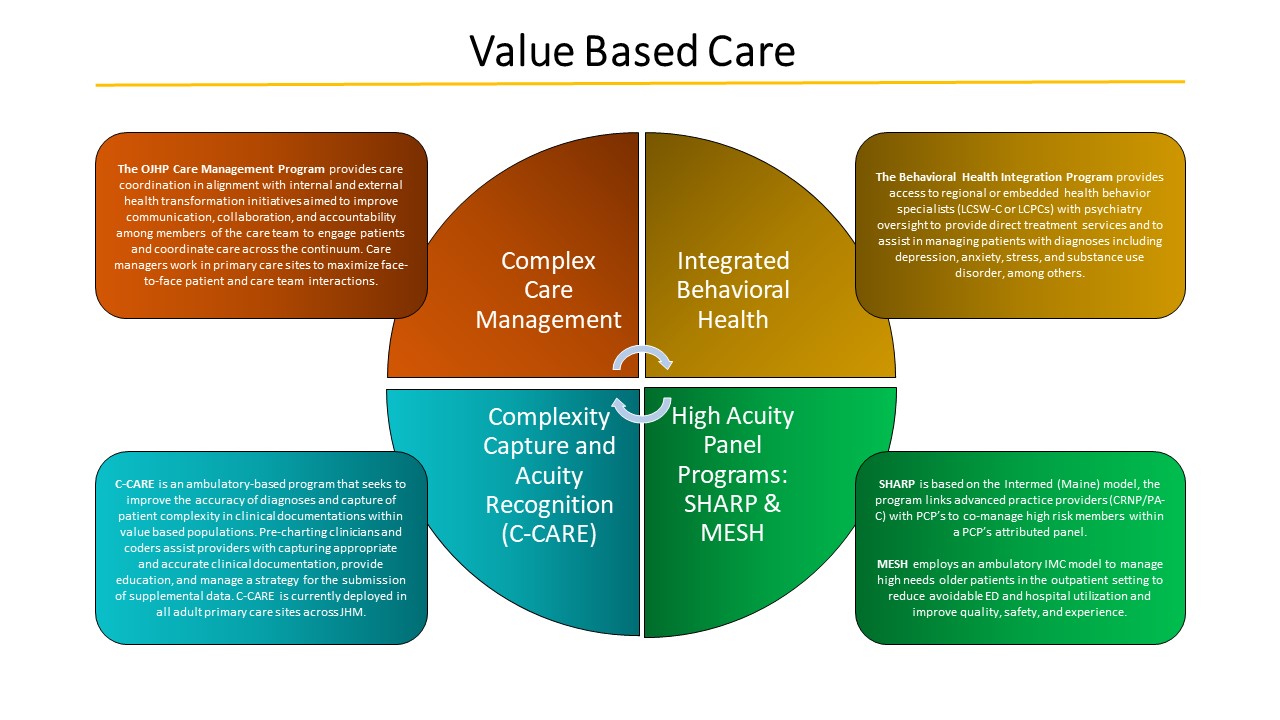
Value Based Care Definitions: https://www.r2library.com/Resource/Title/0826102549

High Value Care & Value-Based Care

PODCAST: https://www.healthsharetv.com/content/technology-enabled-behavioral-health-care-critical-strategy-population-health-management

YOUR COMMENTS ARE APPRECIATED.

***

Thank You

***

***

PODCAST: Future Hospital “Profit Pool” in 2022?

McKinsey Healthcare Industry Analysis – Future Sources of Hospital Profit

BY ERIC BRICKER MD

***

Many thanks

***

***

***
COMMENTS APPRECIATED.

Please subscribe to the ME-P

Thank You

***

How We INVEST IN INFLATION?

STRATEGIES AND MITIGATION

Finding investments to weather the storm. Strategies and ways to mitigate inflation risk, including investing in businesses with pricing power, capital intensity, and investing abroad.

By Vitaliy Katsenelson CFA

COMMENTS ARE APPRECIATED.

Thank You

***

***

PODCAST: Inflation Update

NOT TRANSITORY … YET!

imausa-vitaliy-katsenelson

By Vitaliy Katsenelson CFA

Here is my advice to you

Instead of straining your eyes, you can strain your ears and listen to the following articles. I’m providing links to my pieces on the inflation landscape (read, listen) and how we invest in inflation (read, listen).

***

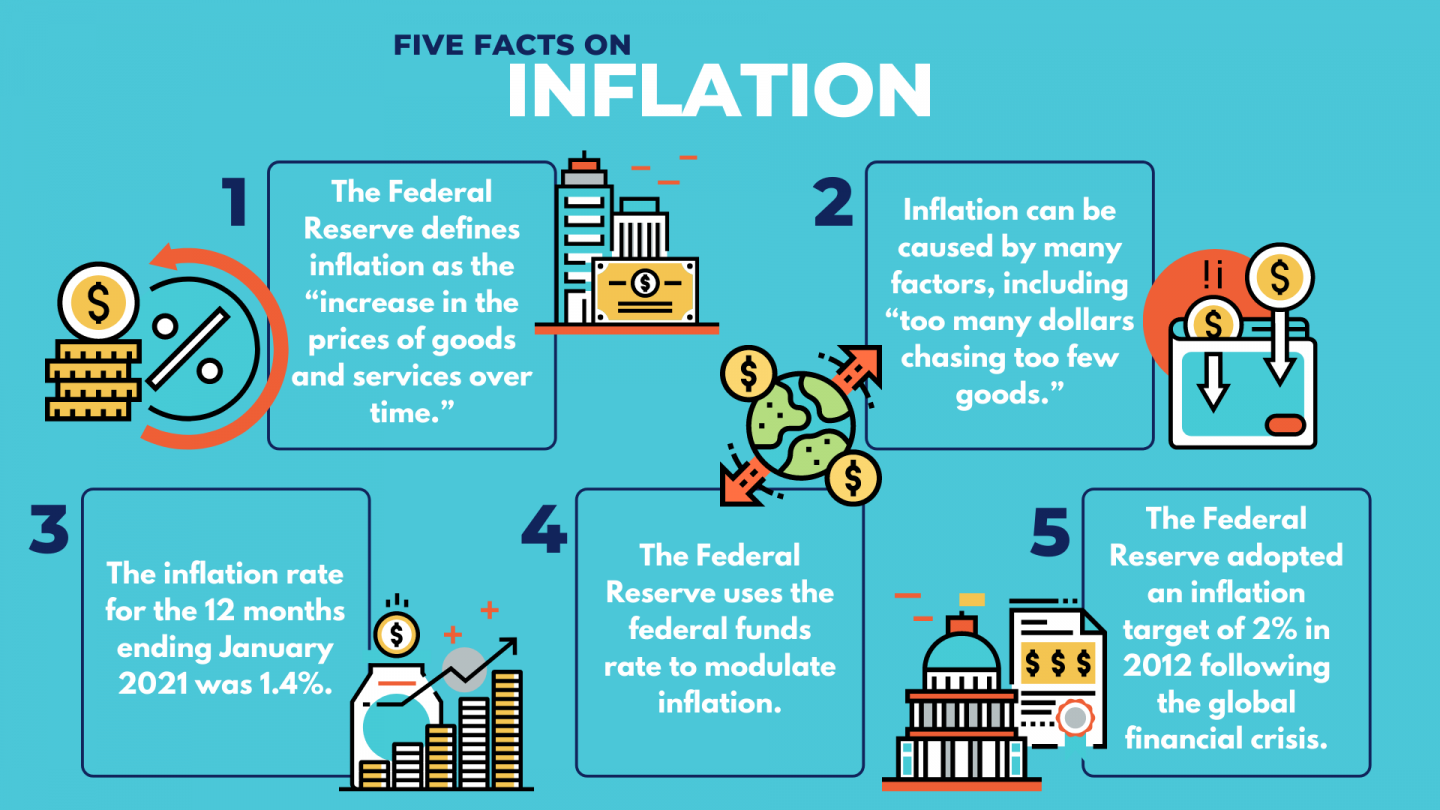
Five Facts On Inflation | RealClearPolicy

***
YOUR COMMENTS ARE APPRECIATED.

Thank You

CITE: https://www.r2library.com/Resource/Title/0826102549

***

***

HAPPY 2022: Story of the New Year = INFLATION

INFLATION – Did we say [Health Care] Inflation?

****

Inflation Definition

***

Why? Inflation, which is the rate of price increases over time, affects all of us on a personal level. We pay electric bills, go grocery shopping, decorate our houses, buy cars—and this year all of those things got more expensive. Especially health care.

Thanks to a nefarious mix of soaring demand for goods and snarled supply chains, US consumer prices jumped the most in 39 years in November, and the 6.8% inflation rate marked the sixth straight month inflation grew by 5% or more. Producer prices, which can eventually trickle down to individuals, also increased at their fastest pace on record last month.

Of course, some inflation is good for the economy when wages keep up with rising prices (the Fed aims for a 2% inflation rate over time). But, so far in the pandemic, that hasn’t happened. While many Americans have gotten a raise in 2021, wage gains haven’t been sufficient to offset inflation, resulting in the erosion of purchasing power—especially for folks on a more or less fixed income.

Where do we go from here?

After months of claiming inflation was “transitory,” the Fed has dropped that term and adopted a more hawkish monetary policy to tamp down surging prices. The central bank is winding down its bond-buying stimulus program faster than originally planned, and also plans to hike interest rates three times in 2022.

In its inflation-fighting efforts, the Fed isn’t alone on the front lines. The Bank of England became the first major central bank to raise interest rates during the pandemic in order to combat the biggest annual jump in consumer prices in 10 years. Russia has raised rates seven times this year. Mexico, Chile, Costa Rica, Pakistan, and Hungary are among other countries which are tightening monetary policy to combat higher prices.

Looking ahead…as if economic policymakers needed another inflation curveball, Omicron has taken the mound. Central banks generally don’t expect the new variant to significantly dent economic growth, but they do think it may prolong inflation by exacerbating the supply–demand imbalance that fueled higher prices in the first place.

***

RICARDIAN DEMAND HEALTH ECONOMICS: https://medicalexecutivepost.com/2021/12/14/ricardian-derived-demand-economics-in-medicine/

RISING HEALTH CARE COSTS: https://medicalexecutivepost.com/2018/03/11/medical-treatment-costs-becoming-expensive-25-factors/

Elderly CPI: https://medicalexecutivepost.com/2019/06/13/what-is-the-elderly-cpi/

***

HEALTH ECONOMICS CITE: https://www.r2library.com/Resource/Title/0826102549

COMMENTS APPRECIATED.

Thank You

***

***