BOARD CERTIFICATION EXAM STUDY GUIDES Lower Extremity Trauma
[Click on Image to Enlarge]
ME-P Free Advertising Consultation
The “Medical Executive-Post” is about connecting doctors, health care executives and modern consulting advisors. It’s about free-enterprise, business, practice, policy, personal financial planning and wealth building capitalism. We have an attitude that’s independent, outspoken, intelligent and so Next-Gen; often edgy, usually controversial. And, our consultants “got fly”, just like U. Read it! Write it! Post it! “Medical Executive-Post”. Call or email us for your FREE advertising and sales consultation TODAY [678.779.8597] Email: MarcinkoAdvisors@outlook.com
Medical & Surgical e-Consent Forms
ePodiatryConsentForms.com
iMBA Inc., OFFICES
Suite #5901 Wilbanks Drive, Norcross, Georgia, 30092 USA [1.678.779.8597]. Our location is real and we are now virtually enabled to assist new long distance clients and out-of-town colleagues.
ME-P Publishing
SEEKING INDUSTRY INFO PARTNERS?
If you want the opportunity to work with leading health care industry insiders, innovators and watchers, the “ME-P” may be right for you? We are unbiased and operate at the nexus of theoretical and applied R&D. Collaborate with us and you’ll put your brand in front of a smart & tightly focused demographic; one at the forefront of our emerging healthcare free marketplace of informed and professional “movers and shakers.” Our Ad Rate Card is available upon request [678-779-8597].
Posted on March 8, 2025 by Dr. David Edward Marcinko MBA MEd CMP™
MEDICAL EXECUTIVE-POST–TODAY’SNEWSLETTERBRIEFING
***
Essays, Opinions and Curated News in Health Economics, Investing, Business, Management and Financial Planning for Physician Entrepreneurs and their Savvy Advisors and Consultants
“Serving Almost One Million Doctors, Financial Advisors and Medical Management Consultants Daily“
A Partner of the Institute of Medical Business Advisors , Inc.
Walgreens Boots Alliance says it has agreed to be acquired by private equity firm Sycamore Partners as the struggling retailer looks to turn itself around after years of losing money. Walgreens said Thursday that Sycamore will pay $11.45 per share, giving the deal an equity value just under $10 billion. Shareholders could eventually receive up to an
Posted on March 5, 2025 by Dr. David Edward Marcinko MBA MEd CMP™
MEDICAL EXECUTIVE-POST–TODAY’SNEWSLETTERBRIEFING
***
Essays, Opinions and Curated News in Health Economics, Investing, Business, Management and Financial Planning for Physician Entrepreneurs and their Savvy Advisors and Consultants
“Serving Almost One Million Doctors, Financial Advisors and Medical Management Consultants Daily“
A Partner of the Institute of Medical Business Advisors , Inc.
Despite high flu cases, vaccine this season looks overall like a good match. Early season laboratory testing by the CDC suggested this year’s flu vaccine was 100% match for the strain influenza A (H1N1), which accounts for 48% of cases this year, and a 100% match for influenza B, which accounts for just under 3% of cases so far. For targeting influenza A (H3N1), which makes up 49% of cases so far, the CDC said the vaccine is a 51% match.
The Dow Jones Industrial Average (^DJI) fell about 1.5%, or over 650 points, as losses escalated into the close, while the benchmark S&P 500 dropped around 1.2%, hitting its lowest level in four months. The tech-heavy NASDAQ Composite (^IXIC), which traded in the green at one point of the trading day, closed down about 0.4% but was able to avoid entering correction territory.
Posted on March 4, 2025 by Dr. David Edward Marcinko MBA MEd CMP™
MEDICAL EXECUTIVE-POST–TODAY’SNEWSLETTERBRIEFING
***
Essays, Opinions and Curated News in Health Economics, Investing, Business, Management and Financial Planning for Physician Entrepreneurs and their Savvy Advisors and Consultants
“Serving Almost One Million Doctors, Financial Advisors and Medical Management Consultants Daily“
A Partner of the Institute of Medical Business Advisors , Inc.
Independent pharmacies and pharmacy benefit managers (PBMs) are at odds over a proposed rule change from the Centers for Medicare and Medicaid Services (CMS) over the Medicare Part D program. Pharmacies vs. PBMs
US stocks plummeted on Monday afternoon, as selling accelerated in the last hour of trading after President Trump indicated there was “no room left” for tariff negotiations with Canada and Mexico, with levies against both countries set to go into effect tomorrow.
The S&P 500 (^GSPC) fell 1.7% while the tech-heavy NASDAQ Composite (^IXIC) dropped 2.6%. The Dow Jones Industrial Average (^DJI) fell more than 600 points, or almost 1.5%, as the major US indexes came off a volatile week and a losing February.
Tech led the sell-off with shares of Nvidia (NVDA) tanking more than 8%. All of the “Magnificent 7” stocks declined.
Posted on March 2, 2025 by Dr. David Edward Marcinko MBA MEd CMP™
By Staff Reporters
***
***
What is Honeypot?
A Honeypot is a network-attached system used as a trap for cyber-attackers to detect and study the tricks and types of attacks used by hackers. It acts as a potential target on the internet and informs the defenders about any unauthorized attempt at the information system.
Honeypots are mostly used by large companies and organizations involved in cybersecurity. It helps cybersecurity researchers to learn about the different types of attacks used by attackers. It is suspected that even cyber criminals use these honeypots to decoy researchers and spread wrong information. The cost of a honeypot is generally high because it requires specialized skills and resources to implement a system such that it appears to provide an organization’s resources while still preventing attacks at the back end and access to any production system.
Advantages of Honeypot
Acts as a rich source of information and helps collect real-time data.
Identifies malicious activity even if encryption is used.
Wastes hackers’ time and resources.
Improves security.
Disadvantages of Honeypot
Being distinguishable from production systems, it can be easily identified by experienced attackers.
Having a narrow field of view, it can only identify direct attacks.
A honeypot once attacked can be used to attack other systems.
Fingerprinting(an attacker can identify the true identity of a honeypot ).
What is Honeynet?
A honeynet is made up of two or more honeypots connected via a network. Having a linked network of honeypots can be beneficial. It allows organizations to trace how an attacker interacts with a single resource or network point while also monitoring how a hacker moves between network points and interacts with numerous points at the same time.
The goal is to induce hackers to believe that they have successfully breached the network. Having more false network destinations makes the arrangement appear more realistic.
In 1972, Nobel Laureate Kenneth J. Arrow, PhD shocked academe’ by identifying health economics as a separate and distinct field. Yet, the seemingly disparate insurance, tax, risk management and financial planning principles that he also studied are just now becoming transparent to some medical professionals and their financial advisors. Despite the fact that a basic, but hardly promoted premise of this new wave financial planning era, is imprecision.
Nevertheless, to informed cognoscenti like Certified Medical Planners™, the principles served as predecessors to the modern physician-focused financial advisory niche sector. In 2004, Arrow was selected as one of eight recipients of the National Medal of Science for his innovative views.
And now, as a long bull market may be over, and if the current “new-normal” prevails – meaning a 4.5% real annualized rate of return on equities and a 1.5% real rate on bonds – wealth accumulation for all may be reduced.
An Imprecise Science
There is a major variable, dominant in any marketplace that pushes an economy in a forward direction. It is called consumerism. This became apparent while waiting in a doctor’s office one recent afternoon.
Scenario:
The front office receptionist, who appeared to be about 21 years old, was breaking for lunch and her replacement, who appeared not much older, came over to assist. Realizing the propensity for a long wait, one was taken by the size of waiting room and the number of patients coming in and out of the office. [Americans consume healthcare and a lot of it]. There was another notable peculiarity. The sample prescription bags being carried out the door were no match for the bags under everyone’s eyes, including the doctor’s. The office staff was probably working overtime, if not two jobs, and the doctor was working harder and faster in a managed care system.
Assessment
Why? So they all could afford to buy and voraciously consume for their children and themselves. Americans indeed work longer hours than any other industrialized nation.
Conclusion
Finally, as women medical professionals entered the workforce in unprecedented numbers, the stock markets reached an all time high in 2025, even as money was spent at a feverish pace as the Federal Reserve pumped out money in inflammatory fashion.
SPEAKING: Dr. Marcinko will be speaking and lecturing, signing and opining, teaching and preaching, storming and performing at many locations throughout the USA this year! His tour of witty and serious pontifications may be scheduled on a planned or ad-hoc basis; for public or private meetings and gatherings; formally, informally, or over lunch or dinner. All medical societies, financial advisory firms or Broker-Dealers are encouraged to submit a RFP for speaking engagements: CONTACT: MarcinkoAdvisors@outlook.com
Posted on March 1, 2025 by Dr. David Edward Marcinko MBA MEd CMP™
MEDICAL EXECUTIVE-POST–TODAY’SNEWSLETTERBRIEFING
***
Essays, Opinions and Curated News in Health Economics, Investing, Business, Management and Financial Planning for Physician Entrepreneurs and their Savvy Advisors and Consultants
“Serving Almost One Million Doctors, Financial Advisors and Medical Management Consultants Daily“
A Partner of the Institute of Medical Business Advisors , Inc.
US stocks gained ground Friday following a key inflation reading that largely met expectations and as fresh tariff threats added to uncertainty over Big Tech prospects. The S&P 500 (^GSPC) gained 1.6%%, while the tech-heavy NASDAQ Composite (^IXIC) was up about 1.5% after suffering a Nvidia-led (NVDA) sell-off on Thursday. The Dow Jones Industrial Average (^DJI) climbed 1.3%. All three major averages reversed earlier losses, sending February off with a relief rally.
Markets wrapped the month February with sharp weekly and monthly losses after suffering the buffets of tariff moves. The NASDAQ shed close to 5% in February, while the S&P 500 and Dow suffered drops of around 2%.
While health care is not “do-it-yourself,” an informed patient can be an asset. A poorly informed patient, on the other hand, clearly complicates treatment. Assume the responsibility of being the primary information source and educator for your patient. To help deal with a self-diagnosing patient, consider the following as suggested by: David B. Troxel, MD, Medical Consultant to The Doctors Company:
Encourage patients to always check with you about the accuracy of information obtained from external sources. Use the intake time to find out what Internet information the patient has found.
Directly discuss what the patient has read, even if the patient’s external source is a good one in your professional opinion. The exchange enhances your relationship with the patient and can increase treatment compliance. Welcome questions, and help put the patient’s information in the appropriate context.
Provide your patient with a list of Web sites that provide accurate information, such as the Centers for Disease Control and Prevention (www.cdc.gov). Make sure the patient understands the limitations of the Internet.
Document in the patient’s chart your diagnosis, your treatment management plan, and medication prescribed, as well as the reasons behind your decisions.
SPEAKING: Dr. Marcinko will be speaking and lecturing, signing and opining, teaching and preaching, storming and performing at many locations throughout the USA this year! His tour of witty and serious pontifications may be scheduled on a planned or ad-hoc basis; for public or private meetings and gatherings; formally, informally, or over lunch or dinner. All medical societies, financial advisory firms or Broker-Dealers are encouraged to submit a RFP for speaking engagements: MarcinkoAdvisors@outlook.com
Posted on February 26, 2025 by Dr. David Edward Marcinko MBA MEd CMP™
MEDICAL EXECUTIVE-POST–TODAY’SNEWSLETTERBRIEFING
***
Essays, Opinions and Curated News in Health Economics, Investing, Business, Management and Financial Planning for Physician Entrepreneurs and their Savvy Advisors and Consultants
“Serving Almost One Million Doctors, Financial Advisors and Medical Management Consultants Daily“
A Partner of the Institute of Medical Business Advisors , Inc.
In great news for investors, a new study found that major healthcare companies have paid out $2.6 trillion to shareholders over the past 20 years in the form of dividends and share buybacks, and those payments are increasing. Bad news for patients: Some of that money could’ve been spent on, well, healthcare. The study, published Februrary 10th in JAMA, found that publicly traded S&P 500 healthcare companies paid shareholders a total of $170.2 billion in 2022, up 315% from payouts of just $54 billion in 2001.
The S&P 500 fell 0.5%. The NASDAQ 100 slid 1.2%. A gauge of the “Magnificent Seven” mega-caps sank 2.2%. Nvidia Corp.’s shares slid 2.8% on the eve of the company’s results, while Tesla slumped 8.4% to fall below $1 trillion in market value. The DJIA was up.
Posted on February 24, 2025 by Dr. David Edward Marcinko MBA MEd CMP™
FULL ARTICLE WITH TAKE AWAY POINTS
By Vitaliy Katsenelson CFA
***
***
Key Take Away Points
The Consumer Electronics Show revealed that robotaxis are expanding beyond just Waymo, with multiple players entering the market – this fragmentation could actually benefit Uber’s switchboard system and transform sectors like school transportation.
Chinese EV manufacturers have leapfrogged traditional auto manufacturing much like Africa skipped landlines for mobile phones – their fresh designs and cost advantages could seriously challenge Western incumbents if tariffs weren’t a factor.
Autonomous and remote-controlled equipment is set to revolutionize traditional industries like construction, mining, and farming – transforming physically demanding jobs into office work and potentially reshaping immigration policy needs.
The path to cracking the US market has fundamentally changed – companies no longer need traditional retail gatekeepers like Best Buy or Costco, just a product and Amazon advertising budget, as demonstrated by companies like Renpho.
Brand value remains crucial in an era of rapid technology commoditization – your observations of the 15 Oura ring competitors and the GoPro story demonstrate that without strong brand differentiation, even good products can’t command premium pricing in today’s market.
***
***
Full Article
I wrote this from Las Vegas, where my son Jonah and I were at CES (the Consumer Electronics Show).
In investing and life, it’s very easy to get tunnel vision – doing what works and staying in your comfort zone. I wanted to attend CES to shake myself out of this pattern.
It’s hard to describe how massive this event is. It sprawls through five enormous pavilions at the Las Vegas Convention Center and takes up two floors of the Venetian Hotel. It is attended by over one hundred thousand people.
Here are my initial, off-the-cuff, somewhat random thoughts from CES.
Robotaxis There were several robotaxi companies here, in addition to Alphabet’s Waymo. Multiple robotaxis are going to hit the market over the next few years; it won’t be just Waymo. Most will start geofenced (they’ll work in specific areas), just like Waymo did.
This is good news for Uber: The more fragmented the robotaxi market, the more players are in this market, the more valuable is Uber’s switchboard system (which will bring higher utilization to robotaxi operators).
This will also hugely transform public transportation. Think about school buses – that market is primed for disruption since most buses follow the same route every day in a relatively small area.
Chinese EVs Chinese electric cars are awesome. This reminds me of what happened in Africa. Most of Africa skipped phone landlines completely and went straight to wireless phones. Similarly, Chinese automakers weren’t great at making regular gas-powered cars (everyone else had dominated that space), so they just leapfrogged straight to electric cars. And leapfrog they did – they’ll make even Tesla work hard.
I can’t speak for their reliability, but their designs are fresh; and without labor unions mandating how many workers need to screw in a single lightbulb, they’re much cheaper than Western alternatives.
If they hit the US market without tariffs, they would decimate the incumbents – similar to what Japanese carmakers did in the early 80s to the Big Three.
Machines on Autopilot Autonomous and remote-controlled equipment is going to change construction, mining, and farming completely. Imagine excavators digging dirt on a project in the middle of nowhere, operated remotely from air-conditioned urban offices – maybe even by experienced operators brought out of retirement.
Jobs that were physically demanding and that pulled workers away from their families are going to become regular nine-to-five office jobs. This means workers can have normal family lives and work longer – way past when they’d normally have to retire due to the physical demands of the job.
Or picture a colony of Caterpillar trucks working autonomously 24/7 at a mine site. The efficiency and safety gains would be huge. You’ll still need workers, but different workers, and fewer of them.
Think about agriculture. All those jobs that “Americans don’t want to do” will be done by tractors or other farm equipment going through strawberry fields, using AI to spray pesticides only where needed and collecting apples and oranges.
Here’s an economic observation with slight policy overtones: The nature of the job market will change. This is one of those turning points in history where our immigration policy should be forward-thinking, adjusted for the world where AI will be playing a larger role in it (that is inevitable), not just focused on the past and today’s needs.
***
***
Cracking the US Market China has a significant competitive advantage in manufacturing; it has a very robust ecosystem and well-oiled supply chain – nothing new here. Its labor is no longer the cheapest, but Chinese manufacturing is getting more automated.
We talked to one of the chief designers of Renpho, a Hong Kong company that makes digital scales (among other gadgets) and is the number one seller of those scales on Amazon. They outsource all manufacturing to China, and the factory that manufactures their scales is completely automated.
What’s also interesting is that in the past, to break into the US market, you had to have relationships with Best Buy and Costco. They were the gatekeepers and also the quality-control testers. Today, all you need is a product. You have direct access to the US consumer through Amazon – you just have to be willing to spend on Amazon advertising to promote your product.
Brand or Bust It’s incredible how fast technology gets commoditized. There are literally fifteen (!) companies selling Oura-like rings (sleep-tracking biometric devices worn as a ring; I’ve been wearing one for five years).
In technology, you need to keep moving all the time or you’ll be eaten by the competition (true in life in general), but you also need a strong brand. I couldn’t tell the difference between my Oura ring and the fifteen replicas, most of them sold at a fraction of Oura’s price. But I trust Oura, and that’s the power of the brand.
I remember researching GoPro stock after it got bombed out (down 80%). During our research, I found that GoPro was selling their cameras for $300-400, while Chinese-made, no-name replicas were sold on Amazon for $40. These replicas didn’t have GoPro’s brand, but they had tens of thousands of five-star (hard to fake) reviews on Amazon. GoPro may have been exceptional (loved by pros), and these no-name cameras were just okay, but they were 10 times cheaper.
I put GoPro stock into the “too hard” pile and moved on – thank God I did; after declining 80%, the stock fell another 80%.
This brings me back to the value of a brand. GoPro wasn’t worth 10x more to consumers than Chinese no-name alternatives. Can Oura command 10x pricing over its no-name competitors? I don’t know. That’s the beauty of investing – I don’t have to have an actionable opinion on everything. With time I have become very comfortable saying “I don’t know.” Investing is one of the few professions where you don’t have to have an answer for everything. “I don’t know” should be the default answer, unless you do know. Which isn’t that often.
Global Tech Showdown Korean companies are really dominating screen technology. LG and several other Korean companies showed off transparent, glass-like LCD screens at CES. Imagine sitting in your self-driving car, and your windows are both regular see-through glass and LCD screens at the same time. Our lives are slowly becoming what we used to see in sci-fi movies, and these screens are definitely a leap in that direction.
CES is a truly global show, with technology on display that spans every aspect of our future. There were a lot of companies from Asia (especially China). In certain pavilions focused on consumer or business hardware, China completely dominated the exhibits. There were quite a few large American companies and many American startups, mostly focused on software (though all their hardware was manufactured in Asia). America still dominates in software.
A few, mainly Chinese, companies were showcasing their humanoid robots. One robot was slowly but accurately moving and stacking boxes in a defined area. Others were roaming more freely and were good at avoiding objects. At this point, these robots have the IQ of a smart dog, an average cat (now cat lovers will love me), or Siri. I bet in a few years this will have changed.
I was only mildly surprised by how few European companies were at the show. It’s a very broad generalization, but Europe seems to be running on fumes of past glory. Western Europe has become a pro at regulation and mastered the redistribution of wealth (activities that don’t help innovation or economic growth), and not much else. Yes, there are exceptions, but that’s the point – they are exceptions. If Europe doesn’t change course, eventually it will run out of fumes.
The beauty of learning is that you don’t always know everything you’ve learned at the moment of learning. Often, you’re just depositing data points that will crystallize into insights at a much later date. I don’t know if CES will become an every-year tradition or something I do sporadically, but it’s definitely fertile ground for learning.
Posted on February 21, 2025 by Dr. David Edward Marcinko MBA MEd CMP™
MEDICAL EXECUTIVE-POST–TODAY’SNEWSLETTERBRIEFING
***
Essays, Opinions and Curated News in Health Economics, Investing, Business, Management and Financial Planning for Physician Entrepreneurs and their Savvy Advisors and Consultants
“Serving Almost One Million Doctors, Financial Advisors and Medical Management Consultants Daily“
A Partner of the Institute of Medical Business Advisors , Inc.
The Dow Jones Industrial Average (^DJI) fell roughly 450 points, or around 1%. The S&P 500 (^GSPC) dropped 0.5%, pulling back after its second record close in a row on Wednesday, while the tech-heavy NASDAQ Composite (^IXIC) also lost about 0.5%.
Worries grew about coming headwinds for corporate America after Walmart beat on quarterly profit but issued cautious 2026 fiscal year guidance. Shares of the retail giant tumbled more than 6%. Walmart’s decline combined with more roughly 4% drops in Goldman Sachs (GS) and JPMorgan (JPM) weighed on the Dow.
Posted on February 20, 2025 by Dr. David Edward Marcinko MBA MEd CMP™
MEDICAL EXECUTIVE-POST–TODAY’SNEWSLETTERBRIEFING
***
Essays, Opinions and Curated News in Health Economics, Investing, Business, Management and Financial Planning for Physician Entrepreneurs and their Savvy Advisors and Consultants
“Serving Almost One Million Doctors, Financial Advisors and Medical Management Consultants Daily“
A Partner of the Institute of Medical Business Advisors , Inc.
FDA recently approved the first new kind of painkiller since 1998. The drug, called Journavx and made by Vertex Pharmaceuticals, is a non-opioid medication, and the company says it comes with “no evidence of addictive potential.” One downside? At $15.50 per pill, it’s not cheap, and it’s not clear yet how much insurers will cover.
US stocks closed higher on Wednesday as investors weighed President Trump’s latest 25% tariff salvo and digested the Federal Reserve minutes for insight into future policy.
Wednesday’s minutes from the Fed’s January meeting revealed most central bank officials supported holding policy at restrictive levels amid concerns about persistent inflation.
Posted on February 19, 2025 by Dr. David Edward Marcinko MBA MEd CMP™
MEDICAL EXECUTIVE-POST–TODAY’SNEWSLETTERBRIEFING
***
Essays, Opinions and Curated News in Health Economics, Investing, Business, Management and Financial Planning for Physician Entrepreneurs and their Savvy Advisors and Consultants
“Serving Almost One Million Doctors, Financial Advisors and Medical Management Consultants Daily“
A Partner of the Institute of Medical Business Advisors , Inc.
US stocks were mixed on Tuesday to begin a holiday-shortened week of trading, with potential policy moves by the Federal Reserve and President Donald Trump in focus.
The benchmark S&P 500 (^GSPC) rose nearly 0.2%, with most of the games coming in the final 10 minutes of trading, to hit a fresh record close of 6,129.58. Meanwhile, the Dow Jones Industrial Average (^DJI) and NASDAQ Composite (^IXIC) finished barely in the green.
Stocks on Wall Street were largely cautious after Monday’s closure for Presidents Day as investors debate the future path of interest rates. Fed officials over the long weekend signaled a firm belief that rates should stay at current levels to combat rising inflation.
Treasury yields stepped higher as investors sought more clues to the chances of rate cuts this year, given recent data failed to give a clear steer. The benchmark 10-year yield (^TNX) rose to trade around 4.54%.
Posted on February 17, 2025 by Dr. David Edward Marcinko MBA MEd CMP™
DEFINITIONS
By SBA and Staff Reporters
***
***
Acquisition
The acquiring of supplies or services by the federal government with appropriated funds through purchase or lease.
Affiliates
Business concerns, organizations, or individuals that control each other or that are controlled by a third party. Control may include shared management or ownership; common use of facilities, equipment, and employees; or family interest.
Best and Final Offer
For negotiated procurements, a contractor’s final offer following the conclusion of discussions.
Certificate of Competency
A certificate issued by the Small Business Administration (SBA) stating that the holder is “responsible” (in terms of capability, competency, capacity, credit, integrity, perseverance, and tenacity) for the purpose of receiving and performing a specific government contract.
Certified 8(a) Firm
A firm owned and operated by socially and economically disadvantaged individuals and eligible to receive federal contracts under the Small Business Administration’s 8(a) Business Development Program.
Contract
A mutually binding legal relationship obligating the seller to furnish supplies or services (including construction) and the buyer to pay for them.
Contracting
Purchasing, renting, leasing, or otherwise obtaining supplies or services from nonfederal sources. Contracting includes the description of supplies and services required, the selection and solicitation of sources, the preparation and award of contracts, and all phases of contract administration. It does not include grants or cooperative agreements.
Contracting Officer
A person with the authority to enter into, administer, and/or terminate contracts and make related determinations and findings.
Contractor Team Arrangement
An arrangement in which (a) two or more companies form a partnership or joint venture to act as potential prime contractor; or (b) an agreement by a potential prime contractor with one or more other companies to have them act as its subcontractors under a specified government contract or acquisition program.
Defense Acquisition Regulatory Council (DARC)
A group composed of representatives from each Military department, the Defense Logistics Agency, and the National Aeronautics and Space Administration and that is in charge of the Federal Acquisition Regulation (FAR) on a joint basis with the Civilian Agency Acquisition Council (CAAC).
Defense Contractor
Any person who enters into a contract with the United States for the production of material or for the performance of services for the national defense.
Electronic Data Interchange
Transmission of information between computers using highly standardized electronic versions of common business documents.
Emerging Small Business
A small business concern whose size is no greater than 50 percent of the numerical size standard applicable to the Standard Industrial Classification code assigned to a contracting opportunity.
Equity
An accounting term used to describe the net investment of owners or stockholders in a business. Under the accounting equation, equity also represents the result of assets less liabilities.
Fair and Reasonable Price
A price that is fair to both parties, considering the agreed-upon conditions, promised quality, and timeliness of contract performance. “Fair and reasonable” price is subject to statutory and regulatory limitations.
Federal Acquisition Regulation (FAR)
The body of regulations which is the primary source of authority governing the government procurement process. The FAR, which is published as Chapter 1 of Title 48 of the Code of Federal Regulations, is prepared, issued, and maintained under the joint auspices of the Secretary of Defense, the Administrator of General Services Administration, and the Administrator of the National Aeronautics and Space Administration. Actual responsibility for maintenance and revision of the FAR is vested jointly in the Defense Acquisition Regulatory Council (DARC) and the Civilian Agency Acquisition Council (CAAC).
Full and Open Competition
With respect to a contract action, “full and open” competition means that all responsible sources are permitted to compete.
Intermediary Organization
Organizations that play a fundamental role in encouraging, promoting, and facilitating business-to-business linkages and mentor-protégé partnerships. These can include both nonprofit and for-profit organizations: chambers of commerce; trade associations; local, civic, and community groups; state and local governments; academic institutions; and private corporations.
Joint Venture
In the SBA Mentor-Protégé Program, an agreement between a certified 8(a) firm and a mentor firm to perform a specific federal contract.
Mentor
A business, usually large, or other organization that has created a specialized program to advance strategic relationships with small businesses.
Negotiation
Contracting through the use of either competitive or other-than-competitive proposals and discussions. Any contract awarded without using sealed bidding procedures is a negotiated contract.
Partnering
A mutually beneficial business-to-business relationship based on trust and commitment and that enhances the capabilities of both parties.
Prime Contract
A contract awarded directly by the Federal government.
Protégé
A firm in a developmental stage that aspires to increasing its capabilities through a mutually beneficial business-to-business relationship.
Request for Proposal (RFP)
A document outlining a government agency’s requirements and the criteria for the evaluation of offers.
SCORE
Counselors to America’s Small Business is a 12,400-member volunteer association sponsored by the SBA. SCORE matches volunteer business-management counselors with present prospective small business owners in need of expert advice.
Small Business
A business smaller than a given size as measured by its employment, business receipts, or business assets.
Small Business Development Centers (SBDC)
SBDCs offer a broad spectrum of business information and guidance as well as assistance in preparing loan applications.
Small Business Innovative Research (SBIR) Contract
A type of contract designed to foster technological innovation by small businesses with 500 or fewer employees. The SBIR contract program provides for a three-phased approach to research and development projects: technological feasibility and concept development; the primary research effort; and the conversion of the technology to a commercial application.
Small Disadvantaged Business Concern
A small business concern that is at least 51 percent owned by one or more individuals who are both socially and economically disadvantaged. This can include a publicly owned business that has at least 51 percent of its stock unconditionally owned by one or more socially and economically disadvantaged individuals and whose management and daily business is controlled by one or more such individuals.
Standard Industrial Classification (SIC) Code
A code representing a category within the Standard Industrial Classification System administered by the Statistical Policy Division of the U.S. Office of Management and Budget. The system was established to classify all industries in the US economy. A two-digit code designates each major industry group, which is coupled with a second two-digit code representing subcategories.
Subcontract
A contract between a prime contractor and a subcontractor to furnish supplies or services for the performance of a prime contract or subcontract.
Posted on February 15, 2025 by Dr. David Edward Marcinko MBA MEd CMP™
MEDICAL EXECUTIVE-POST–TODAY’SNEWSLETTERBRIEFING
***
Essays, Opinions and Curated News in Health Economics, Investing, Business, Management and Financial Planning for Physician Entrepreneurs and their Savvy Advisors and Consultants
“Serving Almost One Million Doctors, Financial Advisors and Medical Management Consultants Daily“
A Partner of the Institute of Medical Business Advisors , Inc.
Although Berkshire-Hathaway sold 203,091 shares on Friday, it still owns 45 percent of DaVita, Inc. The stake, valued at $6.4 billion, has been part of Berkshire’s portfolio since 2011. The sell-off Friday was after the sale was disclosed to Wall Street after markers closed on Thursday. When Wall Street shut at 4pm in New York, DaVita was down 11.1 percent – the stock’s biggest one-day selloff in almost two years for the kidney dialysis provider company.
The S&P 500 barely budged and slipped by less than 0.1%, a day after rallying within 0.1% of its record set last month. The Dow Jones Industrial Average dipped 165 points, or 0.4%, while the NASDAQ composite rose 0.4%.
A century ago, one fifth of the country was involved in agriculture. Due to the transformation of farming technology, only 1% of the country is now involved in farming, while our supermarkets are flooded with cheap food. I could be wrong, but I don’t see the 19% of the country who used to farm wandering around unemployed. They have retrained to do other things.
Innovation disrupts, but it also creates new jobs and improves the standard of living of society. A century ago, you could not have imagined most of the jobs we have today. I’m not just talking about social media celebrities; think about software engineers, data scientists, cybersecurity experts, etc. In fact, most white-collar jobs you see today did not exist 100 years ago. Yes, if you specialized in driving horse-powered carriages, you had to acquire new skills.
AI will displace many jobs, but it will also empower people with new productivity tools. Microsoft Excel replaced jobs that required people to add up rows of numbers with calculators, but it created many more. In the 1960s, corporations had departments filled with typists. A photocopier and then the personal computer put these hardworking folks out of a job, but they retrained to do other things.
If we have a victim mentality, AI will run us over; if we embrace it and adapt it to our lives, it may become our best friend to do the jobs we are doing, while our soon-to-be-unemployed coworkers complain about AI.
AI may have a similar impact on our lives as electricity did. Unless it becomes sentient and just like the Terminator, it turns against us (smarter people than me cannot agree on this, especially on a reasonable time frame, so I withhold my opinion on it), it will likely improve our lives significantly. One industry that immediately comes to mind is healthcare – we need major disruption in that sector.
AI may disrupt and completely reshuffle the power dynamics in some industries. Travel, for example, comes to mind; we may start looking for trips and booking tickets with the help of our AI assistant without going to the travel websites. Some companies will adapt and become winners, while others won’t and will become market-share donors.
As I am typing this, I realize (again, something I do daily now) how important management is. In our analysis, we should pay close attention to how companies are embracing AI. Are they giving it lip service or are they really adopting it and changing the business to take advantage of it?
ChatGPT is a statistical representation of things found on the web, which will increasingly include ITS OWN output (directly and secondhand). You post something picked up from it and it will use it to reinforce its own knowledge. Progressively a self-licking lollipop.
If you want to see ChatGPT creating art, for the fun of it, spend some time on myfavoriteclassical.com, where I post music articles. Every single picture there is created by AI. I love impressionist artists, and thus I love these little AI creations. However, if you zoom in closer, you’ll find violinists playing with toothpicks, pianists with three hands and cellists with multiple arms and legs.
This self-licking lollipop is impressive, but it still has a lot to learn. (By the way, if you have not signed up to receive my classical music-only articles, you have an opportunity to do it here).
Finally, the more we rely on AI and the more content it creates, the less creative it and we become.
Posted on February 1, 2025 by Dr. David Edward Marcinko MBA MEd CMP™
MEDICAL EXECUTIVE-POST–TODAY’SNEWSLETTERBRIEFING
***
Essays, Opinions and Curated News in Health Economics, Investing, Business, Management and Financial Planning for Physician Entrepreneurs and their Savvy Advisors and Consultants
“Serving Almost One Million Doctors, Financial Advisors and Medical Management Consultants Daily“
A Partner of the Institute of Medical Business Advisors , Inc.
US stocks lost ground on Friday after the White House said tariffs against Mexico, Canada, and China will take effect on Saturday, reigniting fears of a coming trade war with the nation’s closest trading partners. White House Press Secretary Karoline Leavitt said the president would impose 25% tariffs on goods from Mexico and Canada, as well as a 10% tariff on goods from China.
All three major gauges fell into the red Friday. The S&P 500 (^GSPC) lost 0.5% at the closing bell, while the Dow Jones Industrial Average (^DJI) shed 0.8%. The tech-heavy NASDAQ Composite (^IXIC) gave up 0.3%, reversing earlier gains.
The dramatic tariff news pushed aside more optimistic updates from earlier in the day, which had buoyed stocks. Solid earnings from Apple (AAPL) and an inflation reading that matched expectations lifted market sentiment for much of the day.
Finally, the S&P and the Nasdaq posted losses for the week of 1% and 1.6%, respectively. The Dow, meanwhile, recorded a weekly gain of 0.3%.
I’ve received emails from readers asking my thoughts on DeepSeek. I need to start with two warnings. First, the usual one: I’m a generalist value investor, not a technology specialist (last week I was analyzing a bank and an oil company), so my knowledge of AI models is superficial. Second, and more unusually, we don’t have all the facts yet.
But this story could represent a major step change in both AI and geopolitics. Here’s what we know: DeepSeek—a year-old startup in China that spun out of a hedge fund—has built a fully functioning large language model (LLM) that performs on par with the latest AI models. This part of the story has been verified by the industry: DeepSeek has been tested and compared to other top LLMs. I’ve personally been playing with DeepSeek over the last few days, and the results it spit out were very similar to those produced by ChatGPT and Perplexity—only faster.
This alone is impressive, especially considering that just six months ago, Eric Schmidt (former Google CEO, and certainly no generalist) suggested China was two to three years behind the U.S. in AI. But here’s the truly shocking—and unverified—part: DeepSeek claims they trained their model for only $5.6 million, while U.S. counterparts have reportedly spent hundreds of millions or even billions of dollars. That’s 20 to 200 times less.
The implications, if true, are stunning. Despite the U.S. government’s export controls on AI chips to China, DeepSeek allegedly trained its LLM on older-generation chips, using a small fraction of the computing power and electricity that its Western competitors have. While everyone assumed that AI’s future lay in faster, better chips—where the only real choice is Nvidia or Nvidia—this previously unknown company has achieved near parity with its American counterparts swimming in cash and datacenters full of the latest Nvidia chips. DeepSeek (allegedly) had huge compute constraints and thus had to use different logic, becoming more efficient with subpar hardware to achieve a similar result. In other words, this scrappy startup, in its quest to create a better AI “brain,” used brains where everyone else was focusing on brawn—it literally taught AI how to reason.
Enter the Hot Dog Contest
Americans love (junk) food and sports, so let me explain with a food-sport analogy. Nathan’s Famous International Hot Dog Eating Contest claims 1916 as its origin (though this might be partly legend). By the 1970s, when official records began, winning competitors averaged around 15 hot dogs. That gradually increased to about 25—until Takeru Kobayashi arrived from Japan in 2001 and shattered the paradigm by consuming 50 hot dogs, something widely deemed impossible. His secret wasn’t a prodigious appetite but rather his unique methodology; He separated hot dogs from buns and dunked the buns in water, completely reimagining the approach.
Then a few years later came Joey Chestnut, who built on Kobayashi’s innovation to push the record well beyond 70 hot dogs and up to 83. Once Kobayashi broke the paradigm, the perceived limits vanished, forcing everyone to rethink their methods. Joey Chestnut capitalized on it.
DeepSeek may be the Kobayashi of AI, propelling the whole industry into a “Joey Chestnut” era of innovation. If the claims about using older chips and spending drastically less are accurate, we might see AI companies pivot away from single-mindedly chasing bigger compute capacity and toward improved model design.
I never thought I’d be quoting Stoics to explain future GPU chip demand, but Epictetus said, “Happiness comes not from wanting more, but from wanting what you have.” Two millennia ago, he was certainly not talking about GPUs, but he may as well have been. ChatGPT, Perplexity, and Google’s Gemini will have to rethink their hunger for more compute and see if they can achieve more with wanting (using) what they have.
If they don’t, they’ll be eaten by hundreds of new startups, corporations, and likely governments entering the space. When you start spelling billions with an “M,” you dramatically lower the barriers to entry.
Until DeepSeek, AI was supposed to be in reach for only a few extremely well-funded companies, (the “Magnificent Ones”) armed with the latest Nvidia chips. DeepSeek may have broken that paradigm too.
The Nvidia Conundrum
The impact on Nvidia is unclear. On one hand, DeepSeek’s success could decrease demand for its chips and bring its margins back to earth, as companies realize that a brighter AI future might lie not in simply connecting more Nvidia processors but in making models run more efficiently. DeepSeek may have reduced the urgency to build more data centers and thus cut demand for Nvidia chips.
On the other hand (I’m being a two-armed economist here), lower barriers to entry will lead to more entrants and higher overall demand for GPUs. Also, DeepSeek claims that because its model is more efficient, the cost of inference (running the model) is a fraction of the cost of running ChatGPT and requires a lot less memory—potentially accelerating AI adoption and thus driving more demand for GPUs. So this could be good news for Nvidia, depending on how it shakes out.
My thinking on Nvidia hasn’t materially changed—it’s only a matter of time before Meta, Google, Tesla, Microsoft, and a slew of startups commoditize GPUs and drive down prices.
Likewise, more competition means LLMs themselves are likely to become commoditized—that’s what competition does—and ChatGPT’s valuation could be an obvious casualty.
Geopolitical Shockwaves
The geopolitical consequences are enormous. Export controls may have inadvertently spurred fresh innovation, and they might not be as effective going forward. The U.S. might not have the control of AI that many believed it did, and countries that don’t like us very much will have their own AI.
We’ve long comforted ourselves, after offshoring manufacturing to China, by saying that we’re the cradle of innovation—but AI could tip the scales in a direction that doesn’t favor us. Let me give you an example. In a recent
interview with the Wall Street Journal, OpenAI’s product chief revealed that various versions of ChatGPT were entered into programming competitions anonymously. Out of roughly 28 million programmers worldwide, these early models ranked in the top 2–3%. ChatGPT-o1 (the latest public release) placed among the top 1,000, and ChatGPT-o3 (due out in a few months) is in the top 175. That’s the top 0.000625%! If it were a composer, ChatGPT-o3 would be Mozart.
I’ve heard that a great developer is 10x more valuable than a good one—maybe even 100x more valuable than an average one. I’m aiming to be roughly right here. A 19-year-old in Bangalore or Iowa who discovered programming a few months ago can now code like Mozart using the latest ChatGPT. Imagine every young kid, after a few YouTube videos, coding at this level. The knowledge and experience gap is being flattened fast.
I am quite aware that I am drastically generalizing (I cannot stress this enough), and but the point stands: The journey from learning to code to becoming the “Mozart of programming” has shrunk from decades to months, and the pool of Mozarts has grown exponentially. If I owned software companies, I’d become a bit more nervous—the moat for many of them has been filled with AI.
Adapting, changing your mind, and holding ideas as theses to be validated or invalidated—not as part of your identity—are incredibly important in investing (and in life in general). They become even more crucial in an age of AI, as we find ourselves stepping into a sci-fi reality faster than we ever imagined. DeepSeek may be that catalyst, forcing investors and technologists alike to question long-held assumptions and reevaluate the competitive landscape in real time.
I’d love to hear your thoughts, so please leave your comment and feedback here. Also, if you missed my previous article “Escaping Stock Market Double Hell”, you can read it and leave a comment here.
Posted on January 29, 2025 by Dr. David Edward Marcinko MBA MEd CMP™
MEDICAL EXECUTIVE-POST–TODAY’SNEWSLETTERBRIEFING
***
Essays, Opinions and Curated News in Health Economics, Investing, Business, Management and Financial Planning for Physician Entrepreneurs and their Savvy Advisors and Consultants
“Serving Almost One Million Doctors, Financial Advisors and Medical Management Consultants Daily“
A Partner of the Institute of Medical Business Advisors , Inc.
Bellwether Nvidia (NVDA) finished the day up nearly 9% after it shaved off a record $589 billion from its market cap on Monday.
Aided by Nvidia’s gains, the tech-heavy NASDAQ Composite (^IXIC) surged over 2%, coming off a closing loss of more than 3%. The S&P 500 (^GSPC) rose around 0.9%, while the Dow Jones Industrial Average (^DJI) gained roughly 0.3%.
Posted on January 24, 2025 by Dr. David Edward Marcinko MBA MEd CMP™
MEDICAL EXECUTIVE-POST–TODAY’SNEWSLETTERBRIEFING
***
Essays, Opinions and Curated News in Health Economics, Investing, Business, Management and Financial Planning for Physician Entrepreneurs and their Savvy Advisors and Consultants
“Serving Almost One Million Doctors, Financial Advisors and Medical Management Consultants Daily“
A Partner of the Institute of Medical Business Advisors , Inc.
At the closing bell, the blue-chip Dow Jones Industrial Average was up 0.9% to 44,565.
And a late-day surge carried the NASDAQ Composite into positive territory in the aftermath of Wednesday’s prodigious AI-driven rally, the tech-heavy index rising 0.2% to 20,053.
Posted on January 23, 2025 by Dr. David Edward Marcinko MBA MEd CMP™
MEDICAL EXECUTIVE-POST–TODAY’SNEWSLETTERBRIEFING
***
Essays, Opinions and Curated News in Health Economics, Investing, Business, Management and Financial Planning for Physician Entrepreneurs and their Savvy Advisors and Consultants
“Serving Almost One Million Doctors, Financial Advisors and Medical Management Consultants Daily“
A Partner of the Institute of Medical Business Advisors , Inc.
Tech stocks led the market on Wednesday as Netflix (NFLX) stock surged to a record, while President Donald Trump’s boost to AI demand hopes outweighed fresh tariff worries.
The NASDAQ Composite (^IXIC) rose nearly 1.3%, bolstered by a jump in Netflix shares on the heels of surprisingly strong earnings. The S&P 500 (^GSPC) climbed more than 0.6% to close just shy of its record high of 6,090.
Posted on January 13, 2025 by Dr. David Edward Marcinko MBA MEd CMP™
MEDICAL EXECUTIVE-POST–TODAY’SNEWSLETTERBRIEFING
***
Essays, Opinions and Curated News in Health Economics, Investing, Business, Management and Financial Planning for Physician Entrepreneurs and their Savvy Advisors and Consultants
“Serving Almost One Million Doctors, Financial Advisors and Medical Management Consultants Daily“
A Partner of the Institute of Medical Business Advisors , Inc.
Healthcare insurance plans could undergo major changes under the incoming Trump administration thanks to a new bill being introduced this week seeking to reform health savings accounts. Rep. Chip Roy (R-TX) introduced the Healthcare Freedom Act on Thursday seeking to reform the healthcare system by expanding health savings accounts to broaden coverage for U.S. taxpayers and “give Americans the quality of care they deserve.”
Barron’s estimates that Bank of America’s paper losses on a portfolio of $568 billion of bonds, mostly U.S. agency mortgage securities, could widen to $111 billion or more, compared with $86 billion at the end of September.
US stocks plunged Friday as investors digested a better-than-expected jobs report that soured expectations of future rate cuts from the Federal Reserve. The Dow dropped by 697 points, closing at 41,938, while the S&P 500 fell by 1.5% and the tech-heavy NASDAQ index was lower by 1.6%. The three indices all finished the week in the red as Friday’s selloff erased the week’s previous gains.
The selloff comes as the economy added 256,000 jobs in December, far outpacing expectations of around 153,000 jobs. While strong job growth signals a healthy economy, it raises the question of how soon the central bank needs to cut interest rates again. Traders now expect just a 2.7% chance the Fed will cut rates at its policy meeting later this month, according to the CME FedWatch Tool.
Posted on January 8, 2025 by Dr. David Edward Marcinko MBA MEd CMP™
MEDICAL EXECUTIVE-POST–TODAY’SNEWSLETTERBRIEFING
***
Essays, Opinions and Curated News in Health Economics, Investing, Business, Management and Financial Planning for Physician Entrepreneurs and their Savvy Advisors and Consultants
“Serving Almost One Million Doctors, Financial Advisors and Medical Management Consultants Daily“
A Partner of the Institute of Medical Business Advisors , Inc.
Three UnitedHealth-owned insurance companies must pay over $165 million for misleading thousands of customers in Massachusetts into paying for additional health insurance, a state judge has ruled.
Nvidia stock (NVDA) tumbled more than 6% Tuesday, a day after shares closed at a record high in anticipation of CEO Jensen Huang’s keynote at the tech industry’s annual CES trade show in Las Vegas.
The Biden administration’s Consumer Financial Protection Bureau (CFPB) issued a new rule Tuesday that will hide an estimated $49 billion in medical debt from credit reports. The rule, which is slated to affect 15 million Americans, prohibits the inclusion of medical bills on credit reports and bars creditors from using medical information in making lending decisions. The policy specifically targets national credit-reporting companies Equifax, Experian and Transunion, which provide detailed evaluations of consumer finances to banks, employers and landlords.
Posted on January 7, 2025 by Dr. David Edward Marcinko MBA MEd CMP™
MEDICAL EXECUTIVE-POST–TODAY’SNEWSLETTERBRIEFING
***
Essays, Opinions and Curated News in Health Economics, Investing, Business, Management and Financial Planning for Physician Entrepreneurs and their Savvy Advisors and Consultants
“Serving Almost One Million Doctors, Financial Advisors and Medical Management Consultants Daily“
A Partner of the Institute of Medical Business Advisors , Inc.
US stocks largely rose on Monday as chip names popped and investors awaited the release of key monthly jobs data later this week.
The S&P 500 (^GSPC) was up about 0.5%, while the Dow Jones Industrial Average (^DJI) fell about 0.1% after being higher for most of the session. The tech-heavy NASDAQ Composite (^IXIC) led the gains, adding about 1.2%, after a tech-led rally on Friday.
Posted on January 4, 2025 by Dr. David Edward Marcinko MBA MEd CMP™
MEDICAL EXECUTIVE-POST–TODAY’SNEWSLETTERBRIEFING
***
Essays, Opinions and Curated News in Health Economics, Investing, Business, Management and Financial Planning for Physician Entrepreneurs and their Savvy Advisors and Consultants
“Serving Almost One Million Doctors, Financial Advisors and Medical Management Consultants Daily“
A Partner of the Institute of Medical Business Advisors , Inc.
Nvidia stock (NVDA) led gains among the “Magnificent Seven” tech stocks to start the new year after a group-wide sell-off in the last days of 2024. Shares of the AI chip-maker rose 4.5% Friday after gaining roughly 3% the prior day.
Quote: “If your credit card gets compromised, your bank will alert you, cancel it and send you get a new one. But your medical records have a long lifespan. They can be misused without detection for long periods of time, because it’s harder to identify malicious activity. That makes them very valuable.”—Geetha Thamilarasu, associate professor at the University of Washington Bothell, on why hackers want healthcare information (the Wall Street Journal)
That upswing followed a 4% dip between Christmas Eve and New Year’s Eve as megacap tech stocks dropped across the board in the absence of a “Santa Claus” rally, where the stock market typically enjoys a surge between December 24th and January 2nd. Tesla (TSLA) stock plunged nearly 13% over that time frame, while Amazon (AMZN) and Microsoft (MSFT) dropped more than 4%. Meanwhile, Meta (META) and Google (GOOG) fell just under 4%, and Apple (AAPL) dropped 3%.
Even with its December decline, Nvidia shares still ended 2024 up more than 150%. Wall Street analysts have remained bullish on the stock, estimating shares will rise to roughly $173 over the next year from their current level of $138, according to Yahoo Finance data.
Posted on January 3, 2025 by Dr. David Edward Marcinko MBA MEd CMP™
By Staff Reporters
***
***
Outcome bias is judging a decision based on its result rather than the quality of the decision at the time it was made.
It’s like saying a bad poker play was smart because you won the hand. Or, a bad stock picker or financial advisor was good because the price went up!
According to psychologist and colleague Dan Ariely PhD, this bias ignores the process and focuses solely on the outcome. It’s why we celebrate lucky breaks and criticize thoughtful risks that didn’t pan out.
So, the next time you’re evaluating a decision, focus on the reasoning behind it, not just the end result.
Posted on December 22, 2024 by Dr. David Edward Marcinko MBA MEd CMP™
By Staff Reporters
***
The European Union Paradox is the perceived failure of European countries to translate scientific advances into marketable innovations.
The root of this issue remains debated: is it due to the scientific output being distant from the cutting-edge, or is it because the European innovation system lacks the capacity to harness the potential of groundbreaking research?
And so, this study reveals that, compared to similar European research, the European Research Council has a similar probability of being cited in patents, although it garners a larger number of patent citations. Moreover, patents that do draw upon ERC research are often of superior quality, measured by forward citations.
Compared to similar European research, inventive activities arising from ERC science are predominantly housed within universities and public research organizations. In absolute terms, however, US organizations, especially US companies, still lead in deriving the greatest benefit from ERC science.
Posted on December 18, 2024 by Dr. David Edward Marcinko MBA MEd CMP™
MEDICAL EXECUTIVE-POST–TODAY’SNEWSLETTERBRIEFING
***
Essays, Opinions and Curated News in Health Economics, Investing, Business, Management and Financial Planning for Physician Entrepreneurs and their Savvy Advisors and Consultants
“Serving Almost One Million Doctors, Financial Advisors and Medical Management Consultants Daily“
A Partner of the Institute of Medical Business Advisors , Inc.
Stat: 97%. That’s how many healthcare leaders think A.I. will become important in healthcare over the next five years.
***
Pharmacy benefit managers (PBMs) are once again under pressure from federal leaders. A group of Democratic and Republican congresspeople proposed legislation that would attempt to prevent pharmacies from also owning PBMs. The three largest PBMs—CVS Health’s Caremark, Cigna’s Express Scripts, and UnitedHealth Group’s Optum Rx—currently operate pharmacies and administer more than 80% of the prescriptions in the US, and officials have linked this practice to drug price increases.
US stocks fell across the board on Tuesday, with the Dow logging its biggest losing streak in 46 years. The Dow Jones Industrial Average (^DJI) finished the session down roughly 0.6%, registering its ninth straight day of losses. The last 9-day losing streak for the Dow was Feb. 1978. Prior to that, the index suffered an 11-day losing streak in 1974 and another in 1971.
The other major indexes dropped in tandem on Tuesday, with the benchmark S&P 500 (^GSPC) falling around 0.4% and the NASDAQ Composite (^IXIC) losing about 0.3% after the tech-heavy index closed at a record high on Monday.
Posted on December 14, 2024 by Dr. David Edward Marcinko MBA MEd CMP™
MEDICAL EXECUTIVE-POST–TODAY’SNEWSLETTERBRIEFING
***
Essays, Opinions and Curated News in Health Economics, Investing, Business, Management and Financial Planning for Physician Entrepreneurs and their Savvy Advisors and Consultants
“Serving Almost One Million Doctors, Financial Advisors and Medical Management Consultants Daily“
A Partner of the Institute of Medical Business Advisors , Inc.
Stocks ended the session little changed on Friday despite Broadcom’s (AVGO) jump to all-time highs driven by the chipmaker’s bullish AI-fueled sales forecast.
The S&P 500 (^GSPC) closed flat while the tech-heavy NASDAQ Composite (^IXIC) gained 0.1%. The Dow Jones Industrial Average (^DJI) slipped 0.1%
The fight between payers and anesthesiologists isn’t over, despite Anthem Blue Cross Blue Shield (BCBS) reversing plans for a policy that would put time limits on commercial claims for anesthesia coverage. The policy would have set a time limit for claims by procedure, with the exception of maternity and pediatric care, in New York, Connecticut, and Missouri starting next year. It called for providers “requiring more time than set or recommended by these standards” to undergo the insurance company’s claim dispute process in order to get paid, according to a statement Anthem provided to FOX61 in November.
The plan received backlash from everyone, from anesthesiologists to New York Governor Kathy Hochul.
Posted on December 3, 2024 by Dr. David Edward Marcinko MBA MEd CMP™
MEDICAL EXECUTIVE-POST–TODAY’SNEWSLETTERBRIEFING
***
Essays, Opinions and Curated News in Health Economics, Investing, Business, Management and Financial Planning for Physician Entrepreneurs and their Savvy Advisors and Consultants
“Serving Almost One Million Doctors, Financial Advisors and Medical Management Consultants Daily“
A Partner of the Institute of Medical Business Advisors , Inc.
The CEO Intel has been forced out after failing to return the American microchip company to the cutting edge, despite promises of billions from Joe Biden’s administration. Pat Gelsinger, who joined the Silicon Valley icon 45 years ago, said he had retired with immediate effect, three years after returning to the company with a pledge to resurrect US leadership in microchip technology.
Super Micro Computer has been declared innocent of financial wrongdoing by…Super Micro Computer. Shares popped 26.86% on news that the company’s internal investigation revealed nothing wrong with its finances.
Gap continues its hot streak, rising 6.45% today thanks to an upgrade from JPMorgan analysts who think the retailer could gain another 20% from here.
Dana isn’t just the name of your favorite dental hygiene technician—it’s also an auto parts manufacturer that received an upgrade from Barclays analysts today. Shares gained 13.30%.
XPeng announced record car deliveries last month. Shares of the Chinese automaker jumped 5.31%.
STOCKS DOWN
Archer Aviation is a company that makes flying taxis. If that doesn’t sound like a good investment, a lot of investors would agree: Short interest is mounting, pushing shares down 23.72% today. Competitor Joby Aviation dropped 9.39% as well.
Upstart Holdings sank 14.47% after the AI-powered lending company received a downgrade from JPMorgan analysts. LendingClub was downgraded as well, and fell 4.93%.
Not all Chinese automakers had a great Monday: Li Auto fell 3.72% after announcing car deliveries dropped 5.25% month over month.
The S&P 500® index (SPX) rose 14.77 points (0.24%) to 6,047.15; the Dow Jones Industrial Average®($DJI) fell 128.65 points (–0.29%) to 44,782.00; and the NASDAQ Composite®($COMP) added 185.78 points (0.97%) to 19,403.95.
The 10-year Treasury note yield added two basis points to 4.20%.
Chrysler-parent Stellantis said CEO Carlos Tavares is stepping down, effective immediately, after the automaker’s sales and profit sharply declined this year. Shares dropped about 7% in Monday trading. Stellantis’s shares have fallen more than 40% this year. The company said Sunday that it wasn’t changing the financial guidance that it gave in October.
Posted on November 30, 2024 by Dr. David Edward Marcinko MBA MEd CMP™
MEDICAL EXECUTIVE-POST–TODAY’SNEWSLETTERBRIEFING
***
Essays, Opinions and Curated News in Health Economics, Investing, Business, Management and Financial Planning for Physician Entrepreneurs and their Savvy Advisors and Consultants
“Serving Almost One Million Doctors, Financial Advisors and Medical Management Consultants Daily“
A Partner of the Institute of Medical Business Advisors , Inc.
Computer company Intel didn’t just lower its dividend; it suspended it entirely earlier this year. The company’s CEO Pat Gelsinger said that the move was necessary due to liquidity needs and for the business to be able to “support the investments needed to execute our strategy.” Intel has been investing heavily in its foundry business, which has been a challenge. In the company’s most recent quarter, which ended on September 28th, the foundry business incurred an operating loss of $5.8 billion — more than four times the $1.4 billion loss it reported a year earlier.
The SPX gained 33.64 points (0.6%) to 6,032.38; the $DJI rose 188.59 points (0.4%) to 44,910.65; and the NASDAQ Composite® ($COMP) advanced 157.69 points (0.8%) to 19,218.17.
The 10-year Treasury note yield fell five basis points to 4.19%.
The CBOE Volatility Index® (VIX) gave back 0.59 points to 13.51.
Posted on November 27, 2024 by Dr. David Edward Marcinko MBA MEd CMP™
By Staff Reporters
***
***
The S&P 500 and NASDAQ stayed in the green all day, with the S&P 500 hitting yet another new all-time high, while the Dow clawed its way out of negative territory to reach a new high as well.
The minutes from the last Federal Reserve meeting revealed that central bankers feel rate cuts are still warranted, though they’ll need to be gradual. Treasuryyields rose on the news.
Bitcoin continues to fall further away from the promised land of $100,000 as traders begin logging off ahead of the holiday—though bulls believe this is just a pullback to gather momentum ahead of the final push.
Posted on November 25, 2024 by Dr. David Edward Marcinko MBA MEd CMP™
MEDICAL EXECUTIVE-POST–TODAY’SNEWSLETTERBRIEFING
***
Essays, Opinions and Curated News in Health Economics, Investing, Business, Management and Financial Planning for Physician Entrepreneurs and their Savvy Advisors and Consultants
“Serving Almost One Million Doctors, Financial Advisors and Medical Management Consultants Daily“
A Partner of the Institute of Medical Business Advisors , Inc.
Amazon invests $4 billion more in Anthropic. The deal marks the second time in a year that Amazon has earmarked $4 billion for Anthropic as it seeks to keep pace with its main rival, OpenAI, which raised $6.6 billion in October.
Morningstar Inc. has announced a change to the methodology for its Morningstar Medalist Rating system that it says provides a more precise assessment of investment alpha. The change, which will take effect on October 29th, will alter the medalist ratings of about 20% of the 200,000 funds Morningstar has rated, with most of those changes downgrades. For example, Morningstar expects around 40% of funds currently assigned Bronze ratings globally will be assigned Neutral ratings after the change.
Posted on November 22, 2024 by Dr. David Edward Marcinko MBA MEd CMP™
MEDICAL EXECUTIVE-POST–TODAY’SNEWSLETTERBRIEFING
***
Essays, Opinions and Curated News in Health Economics, Investing, Business, Management and Financial Planning for Physician Entrepreneurs and their Savvy Advisors and Consultants
“Serving Almost One Million Doctors, Financial Advisors and Medical Management Consultants Daily“
A Partner of the Institute of Medical Business Advisors , Inc.
The DOJ asked a judge to force Google to sell its Chrome browser, following his ruling that Google maintained an illegal monopoly in search. Ford said it is cutting 4,000 jobs in Europe, about 14% of its workforce on the continent, citing weak demand for EVs and competition from Chinese cars.
Data analytics firm Snowflake soared 32.71% after posting impressive earnings, including a 28% increase in revenue last quarter.
BJ’s Wholesale Club has had an okay year, but its latest earnings report gave shareholders plenty to cheer. The big news: BJ’s is increasing its membership fee for the first time in seven years. Shares rose 8.24%.
Despite the fact that the world’s largest farming equipment manufacturer sees a big slowdown ahead, Deere beat earnings estimates last quarter, which was enough to help shares climb 8.12%.
STOCKS DOWN
It took a second, but it’s finally registering that Alphabet may be forced by the Department of Justice to divest its popular Chrome browser. Shares fell 4.74% as investors digest this stark reality.
Speaking of search engines, Baidu sank 5.90% after the Chinese tech stock missed analyst estimates on both earnings and revenue last quarter.
Speaking of Chinese companies, PDD Holdings, parent company of online retailer Temu, reported higher earnings and revenue last quarter—but it still fell short of analyst forecasts. Shares dropped 10.64%.
Speaking of struggling retailers, Beyond Inc., the company that owns Bed, Bath & Beyond and Overstock.com, was supposed to invest $40 million into struggling retailer The Container Store. Unfortunately for both, the deal fell through. Shares of Beyond sank 2.87%, while The Container Store dropped 9.79%.
The SPX buoyed 31.60 points (0.53%) to 5,948.71; the Dow Jones Industrial Average® ($DJI) rose 461.88 points (1.06%) to 43,870.35; and the NASDAQ Composite®($COMP) stayed relatively flat, up 6.28 points (0.03%) to 18,972.42.
The 10-year Treasury note yield added two basis points to 4.42%, staying rangebound.
The CBOE Volatility Index® (VIX) slipped to 16.87, still above last week’s levels.
Posted on November 18, 2024 by Dr. David Edward Marcinko MBA MEd CMP™
MEDICAL EXECUTIVE-POST–TODAY’SNEWSLETTERBRIEFING
***
Essays, Opinions and Curated News in Health Economics, Investing, Business, Management and Financial Planning for Physician Entrepreneurs and their Savvy Advisors and Consultants
“Serving Almost One Million Doctors, Financial Advisors and Medical Management Consultants Daily“
A Partner of the Institute of Medical Business Advisors , Inc.
Spirit Airlines said Monday it has filed for Chapter 11 bankruptcy protection after struggling with losses, growing debt and a failed merger during the post-pandemic travel lull. The company said in a stock market statement that it had secured a prearranged deal with bondholders that includes £300 million in financing to keep it afloat, with the business planning to end its bankruptcy in the first quarter of 2025.
Analysts are expectingNvidia, the world’s largest publicly traded company, to show quarterly sales of ~$33 billion, up 10% from the previous quarter and 83% year over year, but they also warn the mind-blowing growth of the chip maker could begin to slow.
Posted on November 13, 2024 by Dr. David Edward Marcinko MBA MEd CMP™
MEDICAL EXECUTIVE-POST–TODAY’SNEWSLETTERBRIEFING
***
Essays, Opinions and Curated News in Health Economics, Investing, Business, Management and Financial Planning for Physician Entrepreneurs and their Savvy Advisors and Consultants
“Serving Almost One Million Doctors, Financial Advisors and Medical Management Consultants Daily“
A Partner of the Institute of Medical Business Advisors , Inc.
The operator of the longest-running money laundering machine in dark web history, Bitcoin Fog, has been sentenced to 12 years and six months in US prison. Roman Sterlingov, 36, a Russian-Swedish national, was also ordered to repay more than half a billion dollars accrued from the cryptocurrency mixing service that he ran for a decade between 2011 and 2021.
r Elliott Investment Management is at it again, this time with a $5 billion stake in industrial conglomerate Honeywell. Shares gained 3.87% on the news.
Shopify announced its ninth consecutive quarter of beating analyst revenue expectations, pushing shares up 21.04%.
Bad news is good news: 40% of the workforce at 23andMe is getting laid off to cut costs. Shareholders cheered, and shares climbed 2.17%.
Where’s the beef? Tyson Foods popped 6.55% after announcing strong earnings thanks to higher beef and chicken prices last quarter.
Sentinel One climbed 2.01% after Deutsche Bank analysts upgraded the cybersecurity stock from “hold” to “buy,” noting it should profit from CrowdStrike’s outage earlier this year.
Holding company IAC is considering a spinoff of home improvement services platform Angi (formerly Angie’s List). Nobody liked that: Shares of IAC fell 12.56%, and Angi plummeted 26.34%.
Payments processor Shift4 Payments sank 5.69% after crushing revenue expectations but missing on earnings.
Mosaic dropped 7.74% thanks to Hurricane Milton, which disrupted the fertilizer company’s business across the board.
The S&P 500® index (SPX) fell 17.36 points (–0.29%) to 5,983.99; the Dow Jones Industrial Average® ($DJI) lost 382.15 points (–0.86%) to 43,910.98; and the NASDAQ Composite®($COMP) decreased 17.36 points (–0.09%) to 19,281.40.
The 10-year Treasury note yield added 12 basis points to 4.43%.
The CBOE Volatility Index® (VIX) fell to 14.81, unusual on a day when stocks lost ground.
According to Wikipedia, a fundamental tenet of the paradox is that the customer, i.e. the potential purchaser of the information describing a technology (or other information having some value, such as facts), wants to know the technology and what it does in sufficient detail as to understand its capabilities or have information about the facts or products to decide whether or not to buy it. Once the customer has this detailed knowledge, however, the seller has in effect transferred the technology to the customer without any compensation. This has been argued to show the need for patent protection [HIPPA].
If the buyer trusts the seller or is protected via contract, then they only need to know the results that the technology will provide, along with any caveats for its usage in a given context. A problem is that sellers lie, they may be mistaken, one or both sides overlook side consequences for usage in a given context, or some unknown-unknown affects the actual outcome.
Posted on November 6, 2024 by Dr. David Edward Marcinko MBA MEd CMP™
MEDICAL EXECUTIVE-POST–TODAY’SNEWSLETTERBRIEFING
***
Essays, Opinions and Curated News in Health Economics, Investing, Business, Management and Financial Planning for Physician Entrepreneurs and their Savvy Advisors and Consultants
“Serving Almost One Million Doctors, Financial Advisors and Medical Management Consultants Daily“
A Partner of the Institute of Medical Business Advisors , Inc.
First-time homebuyers in 2024 had a median income of $97,000, and their median age was 38. OpenAI and Jeff Bezos invested in Physical Intelligence, a robot startup with the aim of “bringing general-purpose AI into the physical world.”
Cybersecurity darling Palantir soared 23.38% to a record high thanks to strong earnings, high AI demand, and big spending from the Department of Defense.
Astera Labs skyrocketed 37.70% after the semiconductor parts maker (and one of Nvidia’s key suppliers) announced strong earnings.
Crypto stocks had a great day thanks to a widespread cryptocurrency rally. Coinbase rose 4.13%, MicroStrategy gained 2.16%, and RiotPlatforms jumped 8.13%.
Stocks Down
Trump Media & Technology Grouparrested its recent downturn and popped 12% at one point today, but gave all those gains up and ended the day down 1.16%.
You’d think the end of a multi-week labor dispute costing billions of dollars would be a relief for shareholders, but Boeing still sank 2.62% on news that it’s reached an agreement with striking machinists.
It’s a me, lower revenue forecasts! Nintendo fell 1.68% after announcing that sales of its Switch console are starting to sag.
Some of the smaller semiconductor stocks on the market took a beating today. NXP Semiconductor dropped 5.17% after announcing weaker-than-expected Q4 guidance, Lattice Semiconductor tumbled 1.37% after missing on sales forecasts and announcing job cuts, and while Cirrus Logic beat expectations this quarter, it still fell 7.09% on lower forecasts.
The S&P 500®index (SPX) rose 70.07 points (1.23%) to 5,782.76; the Dow Jones Industrial Average® ($DJI) added 427.28 points (1.02%) to 42,221.88; and the NASDAQ Composite®($COMP) increased 259.19 points (1.43%) to 18,439.17.
The 10-year Treasury note yield (TNX) dropped two basis points to 4.29%.
The CBOE Volatility Index® (VIX) slipped to 20.72.
In what some are calling the next iteration of the internet, the metaverse is an unfamiliar digital world where you could be an avatar navigating computer-generated places and interacting with others in real time. In this space, the constraints of our physical, bricks and mortar world and travel habits fade. And new opportunities and challenges emerge.
Google in healthcare: The search giant has repeatedly successfully transferred its in-depth knowledge of algorithms in the field of medicine, particularly since it acquired DeepMind.
Apple in healthcare: Apple will keep on working on expanding the health features of its devices, Apple Watch and iPhones included.
Microsoft in healthcare: Microsoft’s cloud solutions provide integrated capabilities that make it easier to improve the healthcare experience.
Amazon in healthcare: Amazon will make further use of its vast knowledge of online shopping trends and behavior and will keep on providing what people need, from medicine to wearables.
IBM in healthcare: IBM has a lot to offer in federated learning, blockchain, and quantum computing.
Nvidia in healthcare: NVIDIA seems incredibly focused on its approach to healthcare. We can expect NVIDIA to be a leader in the use of artificial intelligence in healthcare.
Facebook in healthcare: The Metaverse developed by Facebook/Meta has incredible potential to revolutionize healthcare.
All this technology has huge potential because it uses both virtual reality (VR) and augmented reality (AR) technology to work in virtual spaces: All signs point to the metaverse being widely used as a disruptive change in healthcare, from better surgical precision to therapeutic uses to social-distance accommodations and more.
But along with these improvements come new problems that will change what we know about modern healthcare. The metaverse is a paradigm shift in healthcare that everyone involved needs to be aware of. This is because it changes how medical infrastructure is built, how startup costs are covered, and how data security and privacy are handled.
Posted on November 5, 2024 by Dr. David Edward Marcinko MBA MEd CMP™
By Staff Reporters
***
***
After its AI-related earnings disappointed Wall Street last quarter, Big Tech doubled down in the latest period:
Amazon spent $22.6 billion on property and equipment like data centers and chips. That’s an 81% spike from the same time last year.
Meta raised its low-end guidance for capex (capital expenditures), which could reach $40 billion by the end of the year. It beat earnings estimates, even with AR glasses subsidiary Reality Labs costing $4.4 billion in operating losses.
Apple is still betting on Apple Intelligence to boost sales. Most revenue came from the new iPhone 16, Apple Watch, and AirPods, but Apple services like TV+ and iCloud also grew massively to account for a quarter of the business.
Google crushed earnings estimates and revealed that more than 25% of all new code it writes is generated by AI (and reviewed by engineers).
Posted on October 19, 2024 by Dr. David Edward Marcinko MBA MEd CMP™
MEDICAL EXECUTIVE-POST–TODAY’SNEWSLETTERBRIEFING
***
Essays, Opinions and Curated News in Health Economics, Investing, Business, Management and Financial Planning for Physician Entrepreneurs and their Savvy Advisors and Consultants
“Serving Almost One Million Doctors, Financial Advisors and Medical Management Consultants Daily“
A Partner of the Institute of Medical Business Advisors , Inc.
CVS Health may be breaking up…with itself. The board of directors at CVS Health—the parent company of CVS Pharmacy, pharmacy benefit managerCVS Caremark, and insurance unit Aetna—are working with a group of bankers to review the company’s strategy, which according to Reuters, may lead to a split between its pharmacy division and Aetna.
Apple climbed 1.23% on a Bloomberg report that iPhone 16 demand has been shockingly strong in China.
Verizon Communications will purchase $1 billion worth of US Cellular’s wireless spectrum licenses. Verizon rose just 0.34%—but it’s a huge deal for US Cellular, which popped 7.22%, and Telephone and Data Systems, which owns 82% of US Cellular, and soared 15.40%.
Intuitive Surgical rose to a new all-time high, climbing 10.01% on strong earnings powered by sales of its da Vinci device.
Lamb Weston, the company behind the french fries you overindulge in every time you go out to dinner, is being pushed by activist investor Jana Partners toward exploring a sale. Shareholders rejoiced, and the stock rose 10.17%.
Stocks Down
CVS Health sank 5.23% on the news that CEO Karen Lynch will be replaced by David Joyner after three years at the helm of the struggling pharmacy/retailer. Joyner ran the company’s pharmacy service business for the last two years.
WD-40 seems like the staple of all consumer staples, but the company missed on both revenue and earnings estimates last quarter. Shares fell 4.79% on the news.
American Express dropped 3.15% after the credit card company reported a rare miss today, beating bottom-line estimates but missing revenue forecasts last quarter.
MGP Ingredients makes all the booze you drink under different brand names, but people aren’t drinking enough. The beverage maker issued preliminary earnings that included a 24% drop in sales. Shares tanked 24.16%.
Here’s where the major stock market benchmarks ended:
The S&P 500® index (SPX)rose 23.20 points (0.40%) to 5,864.67, a new record high close, to end the week up 0.85%; the Dow Jones Industrial Average® ($DJI) added 36.86 points (0.09%) to 43,275.91, also another record high finish, to end the week up 0.96%; and the $COMP gained 115.94 points (0.63%) to 18,489.55 to end the week up 0.80%.
The 10-year Treasury note yield (TNX) fell two basis points to 4.07%.
The CBOE Volatility Index® (VIX) fell to 18.17, the lowest since September 30.
A new survey results may prompt health systems to second-guess some of their future plans. A recent University of Michigansurvey found 74% of adults ages 50+ have “very little or no trust” in health info generated by AI. Maybe it’s not time to roll out chatbots on patient portals just yet.
Posted on October 18, 2024 by Dr. David Edward Marcinko MBA MEd CMP™
By Staff Reporters
***
***
Are doctors using publicly available tools like ChatGPT? The answer, Fierce Healthcare finds, is yes. In the first in-depth look of its kind into physician use of public genAI tools, Fierce Healthcare spoke with nearly two dozen doctors, students, AI experts and regulators, and helped conduct a survey of more than 100 physicians. The reporting confirms that some doctors are turning to tools intended for non-clinical uses to make clinical decisions.
A collaborative survey between Fierce Healthcare and physician social network Sermo found that 76% of respondents reported using general-purpose LLMs in clinical decision-making. With no standardized guidelines, lagging physician training and regulators racing to try to keep up with rapidly changing technology, guardrails to protect patients appear to be years behind current rates of utilization.
Posted on October 16, 2024 by Dr. David Edward Marcinko MBA MEd CMP™
IDENTIFIABLE PERPETRATOR EFFECT
By Staff Reporters
***
***
According to colleague Dan Ariely PhD, the The Identifiable Victim Effect [IVE] is why we’re more moved by one person’s story than by statistics. It’s easier to empathize with a single, identifiable victim than with a faceless group. Charities know this and often highlight individual stories to tug at our heartstrings. It’s a powerful reminder that our compassion is wired for personal connections.
The identifiable victim effect has two components. People are more inclined to help an identified victim than an unidentified one, and people are more inclined to help a single identified victim than a group of identified victims. Although helping an identified victim may be commendable, the identifiable victim effect is considered a cognitive bias. From a consequential point of view, the cognitive error is the failure to offer N times as much help to N unidentified victims.
The identifiable victim effect has a mirror image that is sometimes called the identifiable perpetrator effect. Research has shown that individuals are more inclined to mete out punishment, even at their own expense, when they are punishing a specific, identified perpetrator.
So, when you hear a touching story that makes you want to help, remember: it’s your brain responding to the power of a single, human face.
Posted on October 12, 2024 by Dr. David Edward Marcinko MBA MEd CMP™
MEDICAL EXECUTIVE-POST–TODAY’SNEWSLETTERBRIEFING
***
Essays, Opinions and Curated News in Health Economics, Investing, Business, Management and Financial Planning for Physician Entrepreneurs and their Savvy Advisors and Consultants
“Serving Almost One Million Doctors, Financial Advisors and Medical Management Consultants Daily“
A Partner of the Institute of Medical Business Advisors , Inc.
Fastenal climbed 9.76% after the construction and hardware equipment manufacturer posted stronger-than-expected revenue last quarter.
Symbotic popped 8.80% on news of a deal with the Walmart division of Mexico and Central America for its AI-powered robots to help with warehouse automation.
Affirm soared 12.07% after Wells Fargo analysts upgraded the buy now, pay later company thanks to its partnership with Apple Pay.
Ferrari raced 3.54% higher thanks to an upgrade from JPMorgan analysts, citing the carmaker’s EV division and hopes of a Chinese market recovery.
Stocks down
Stellantis continued to tumble today, falling another 2.22% after the carmaker announced its CEO will step down in early 2026.
A.O. Smith probably doesn’t ring a bell, but there’s a good chance they made the water heater in your basement. Unfortunately, they’re not selling too many these days, and shares sank 6.25% after the company cut its full-year outlook.
The SPX rose 34.98 points (0.61%) to 5,815.03 to end the week up 1.11%; the $DJI added 409.74 points (0.97%) to 42,863.86 to end the week up 1.21%; and the $COMP gained 60.88 points (0.33%) to 18,342.94 to end the week up 1.13%.
The 10-year Treasury note yield (TNX) fell two basis points to 4.07% but rose nine basis points this week.
The CBOE Volatility Index® (VIX) slipped to 20.41, still up slightly for the week.
Fidelity Investments has notified 77,099 people that their personal information was stolen in an August data breach. he mega asset manager has not disclosed what data the digital crooks nabbed, but assured customers that the security snafu “did not involve any access to your Fidelity account(s).” But hey, no worries, the firm claimed no evidence of data misuse.
Posted on October 7, 2024 by Dr. David Edward Marcinko MBA MEd CMP™
MEDICAL EXECUTIVE-POST–TODAY’SNEWSLETTERBRIEFING
***
Essays, Opinions and Curated News in Health Economics, Investing, Business, Management and Financial Planning for Physician Entrepreneurs and their Savvy Advisors and Consultants
“Serving Almost One Million Doctors, Financial Advisors and Medical Management Consultants Daily“
A Partner of the Institute of Medical Business Advisors , Inc.
The FDA just approved FluMist from AstraZeneca for self- or caregiver administration for the prevention of influenza virus subtypes A and B.
Plus, August’s revised jobs report showed the US actually created 159,000 jobs, up from 142,000 initially reported last month.
People in CA will have explicit rights to their own “neural data”—covering anything a person thinks or physically/emotionally feels—which is designed to prevent companies from gathering and selling that type of personal info
Posted on October 5, 2024 by Dr. David Edward Marcinko MBA MEd CMP™
DUMB PHONES ANYONE?
By Anonymous Reporter[s]
***
***
Allow us [me] to suggest the use of Android and iOS shortcuts that disable bio-metric unlocking on your cell phone.
“If you use a bio-metric phone sensor [eye scan or fingerprint], you can be compelled to decrypt your device for law enforcement because a bio-metric is something you are,” lawyer Riana Pfefferkorn said in a 2019 talk at the Defcon security conference.
But, “If you use a pass-code to decrypt, typically, you can’t be compelled to unlock, because a pass-code is something that you know.” Her talk did not cover how claiming to have forgotten a pass-code would affect those issues.
In either case, if your cell phone becomes in possession of federal investigators, you may faces the risk of them determining the unlock code through other means, like using such third-party tools as Cellebrite’s unlocking kits to defeat the phone’s security.
Stay Legal! Or simply invoked your Fifth Amendment right against self-incrimination; if needed.
In conclusion: I [we] advise the awareness of cell phone privacy risks involved in having so much of your life stored on personal smart cell phone devices that you take almost everywhere. Stay Safe!
Posted on October 5, 2024 by Dr. David Edward Marcinko MBA MEd CMP™
MEDICAL EXECUTIVE-POST–TODAY’SNEWSLETTERBRIEFING
***
Essays, Opinions and Curated News in Health Economics, Investing, Business, Management and Financial Planning for Physician Entrepreneurs and their Savvy Advisors and Consultants
“Serving Almost One Million Doctors, Financial Advisors and Medical Management Consultants Daily“
A Partner of the Institute of Medical Business Advisors , Inc.
PayPal completed its first transaction using its proprietary stablecoin to pay an invoice to Ernst & Young. It’s a milestone for the payments company’s advance into cryptocurrency.
The free IRS tax filing software, which was piloted in 12 states for the 2024 tax season, will be available in 24 states for 2025.
Your loss is our gain: Shares of airline stocks popped on the news of Spirit’s problems. Delta Air Lines ascended 3.84%, United Airlines climbed 6.47%, and Frontier Group Holdings soared 16.43%.
Albemarle popped 8.25% on the rumor that mining behemoth Rio Tinto may try to make an acquisition of the lithium miner. Other potential takeover targets rose as well, including Arcadium (up 10%) and SQM (up 3%).
Abercrombie & Fitch rose 9.10% thanks to an upgrade from JP Morgan analysts, who are bullish about the fashion retailer’s recent momentum.
Ubisoft Entertainment skyrocketed 29.87% on the news that the video game maker’s parent company and founders are considering a buyout.
Homebuilder stocks sank on today’s strong jobs report, which propelled treasury yields higher, which means that mortgage rates aren’t getting any lower. D.R. Horton dropped 2.91%, Lennar fell 2.52%, and Toll Brothers lost 2.57%.
Transportation stocks fell thanks to an agreement between port owners and longshoremen to put the recent strike on pause. Moller-Maersk lost 5.37%, while Zim IntegratedShipping Services stumbled 12.55%.
The S&P 500® index (SPX) climbed 51.13 points (0.9%) to 5,751.07 up 0.22% for the week;the Dow Jones Industrial Average® ($DJI) added 341.16 points (0.81%) to 42,352.75, up 0.09% for the week; and the NASDAQ Composite® ($COMP) rose 219.37 points (1.22%) to 18,137.85, up 0.1% for the week.
The 10-year Treasury note yield (TNX) soared 13 basis points to 3.98%, finishing the week up 23 basis points. The 2-year yield rose 37 basis points this week.
The CBOE Volatility Index® (VIX)fell to 18.58 but remains elevated from last month’s lows, likely on geopolitical concerns.
Only 2% of the homes hit by Hurricane Helene in Georgia, North Carolina, and South Carolina had a policy protecting them against catastrophic flooding, according to an analysis by Politico and E&E News.
The US Hiring Pace picked up strongly in September and the unemployment rate ticked down to 4.1%, signs the U.S. economy had continued momentum in a month the Federal Reserve delivered its first interest-rate cut in four years. U.S. employers added 254,000 jobs last month, the Labor Department said Friday.
Posted on July 23, 2024 by Dr. David Edward Marcinko MBA MEd CMP™
MEDICAL EXECUTIVE-POST–TODAY’SNEWSLETTERBRIEFING
***
Essays, Opinions and Curated News in Health Economics, Investing, Business, Management and Financial Planning for Physician Entrepreneurs and their Savvy Advisors and Consultants
“Serving Almost One Million Doctors, Financial Advisors and Medical Management Consultants Daily“
A Partner of the Institute of Medical Business Advisors , Inc.
Here’s where the major stock market benchmarks ended:
The Cboe Volatility Index® (VIX) fell sharply to 14.91.
The S&P 500® index (SPX) rose 59.41 points (1.1%) to 5,564.41; the Dow Jones Industrial Average® ($DJI) climbed 127.91 points (0.3%) to 40,415.44; the NASDAQ Composite®($COMP)jumped 280.63 points (1.6%) to 18,007.57.
The 10-year Treasury note yield (TNX) added two basis points to 4.26%.
Crowdstrike withered another 13.46% as the fallout from what’s being hailed as the largest IT outage in history continues to punish the stock.
Trump Media & Technology Group dipped 0.83% during the trading session after President Biden’s announcement that he’s dropping out of the presidential race.
Verizon sank 6.04% after whiffing on its earnings report, missing on revenue thanks to customers holding on to their old phones for longer.
Ryanair crumbled 15.41% following an earnings report that revealed the company’s earnings after taxes sank an eye-watering 46% last quarter.
Starbucks dropped 3.43% on a report by the Wall Street Journal late last week that activist investor Elliott Investment Management has taken a stake in the coffee chain.
The US House of Representatives Committee on Oversight and Accountability is holding a hearing tomorrow, bringing in PBMs from around the US to testify on “their role in rising healthcare costs.” The hearing comes soon after an FTC report found PBMs to have an “outsized influence” on drug pricing.
The February cyberattack on a UnitedHealth Group subsidiary may have exposed the health data of one in three Americans, but the nation’s largest health insurance company by market cap and revenue returned to profitability in the second quarter, beating Wall Street expectations and reporting net income of $4.2 billion.
Posted on February 2, 2024 by Dr. David Edward Marcinko MBA MEd CMP™
By Staff Reporters
LEAP YEAR: This February month is a Leap Year. It’s stuffed with 29 days for 2024. If we didn’t have leap years, then our seasons would completely flip every ~750 years!
GROUND HOG DAY: A tradition observed in the United States and Canada on February 2nd of every year. It derives from the Pennsylvania Dutchsuperstition that if a ground hog emerges from its burrow on this day and sees its shadow, it will retreat to its den and winter will go on for six more weeks; if it does not see its shadow, spring will arrive early.
The S&P 500® index (SPX) rose 60.54 points (1.3%) to 4,906.19; the Dow Jones Industrial Average (DJI) gained 369.54 points (1.0%) to 38,519.84; the NASDAQ Composite® (COMP) added 197.63 points (1.3%) to 15,361.64.
The 10-year Treasury note fell over 10 basis points to 3.86%.
The CBOE Volatility Index® (VIX) fell 0.47 to 13.88.
Regional bank shares remained under pressure in the wake of poorly received quarterly results earlier this week from New York Community Bancorp (NYCB), which took over the failed Signature Bank in 2023. The bank’s shares fell another 11% on top of a 38% drop Wednesday while the KBW Regional Banking Index (KRX) sank 2.3% to a two-month low. The bank weakness was offset by strength in several other sectors, including retail and consumer discretionary.
Markets: The Magnificent Seven technology mega-cap stocks—Microsoft, Apple, Alphabet, Nvidia, Tesla, Meta, and Amazon—have surged 75% this year, while the other 493 companies in the S&P 500 have gained 12%. The Magnificent Seven now account for nearly 30% of the entire index’s value, per the WSJ.
Stock spotlight: Speaking of the S&P 500, it’s getting a prominent new member—Uber will join the index today. With a market cap of $127 billion, Uber is the most valuable company that hadn’t yet been included in the S&P 500, and it celebrated by notching a 52-week high last week.
Apple regains a $3 trillion market cap and is on track to end the year as the world’s most valuable company for the 5th time in a row.
Today marks the 82nd anniversary of the attack on Pearl Harbor that drew the US into WWII.
Here’s where the major benchmarks ended:
The S&P 500® index (SPX) was down 17.84 points (0.4%) at 4,549.34; the Dow Jones Industrial Average® (DJI) was down 70.13 points (0.2%) at 36,054.43; the NASDAQ Composite® (COMP) was down 83.20 points (0.6%) at 14,146.71.
The 10-year Treasury note yield (TNX) was down about 5 basis points at 4.117%.
The CBOE® Volatility Index (VIX) was up 0.10 at 12.95.
Energy shares were again among the market’s weakest performers as crude oil futures extended a slump, closing below $70 per barrel for the first time since late June on concerns over slowing global demand. And, Liz Ann Sonders of Schwab said a “somewhat stealthy” rotation continued under the market’s surface, with the S&P 500® Equal Weight (SPXEW) and Russell 2000®(RUT) indexes outperforming both the S&P 500 and NASDAQ over the past month or so. She also noted a defensive tone to Wednesday’ trading, illustrated by strength in utilities and weakness in technology.







 Support our online development, and advance our onground research initiatives in free market economics, as we seek to showcase the brightest Next-Gen minds.
THE ME-P DISCLAIMER: Posts, comments and opinions do not necessarily represent iMBA, Inc., but become our property after submission. Copyright © 2006 to-date. iMBA, Inc allows colleges, universities, medical and financial professionals and related clinics, hospitals and non-profit healthcare organizations to distribute our proprietary essays, photos, videos, audios and other documents; etc. However, please review copyright and usage information for each individual asset before submission to us, and/or placement on your publication or web site. Attestation references, citations and/or back-links are required. All other assets are property of the individual copyright holder.
Support our online development, and advance our onground research initiatives in free market economics, as we seek to showcase the brightest Next-Gen minds.
THE ME-P DISCLAIMER: Posts, comments and opinions do not necessarily represent iMBA, Inc., but become our property after submission. Copyright © 2006 to-date. iMBA, Inc allows colleges, universities, medical and financial professionals and related clinics, hospitals and non-profit healthcare organizations to distribute our proprietary essays, photos, videos, audios and other documents; etc. However, please review copyright and usage information for each individual asset before submission to us, and/or placement on your publication or web site. Attestation references, citations and/or back-links are required. All other assets are property of the individual copyright holder.
























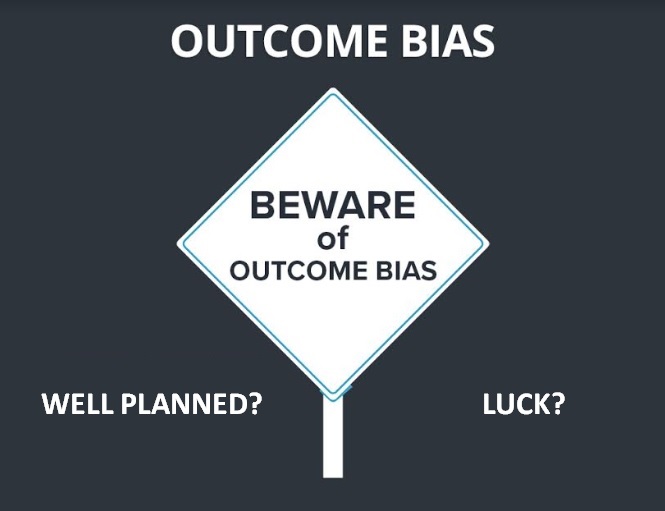

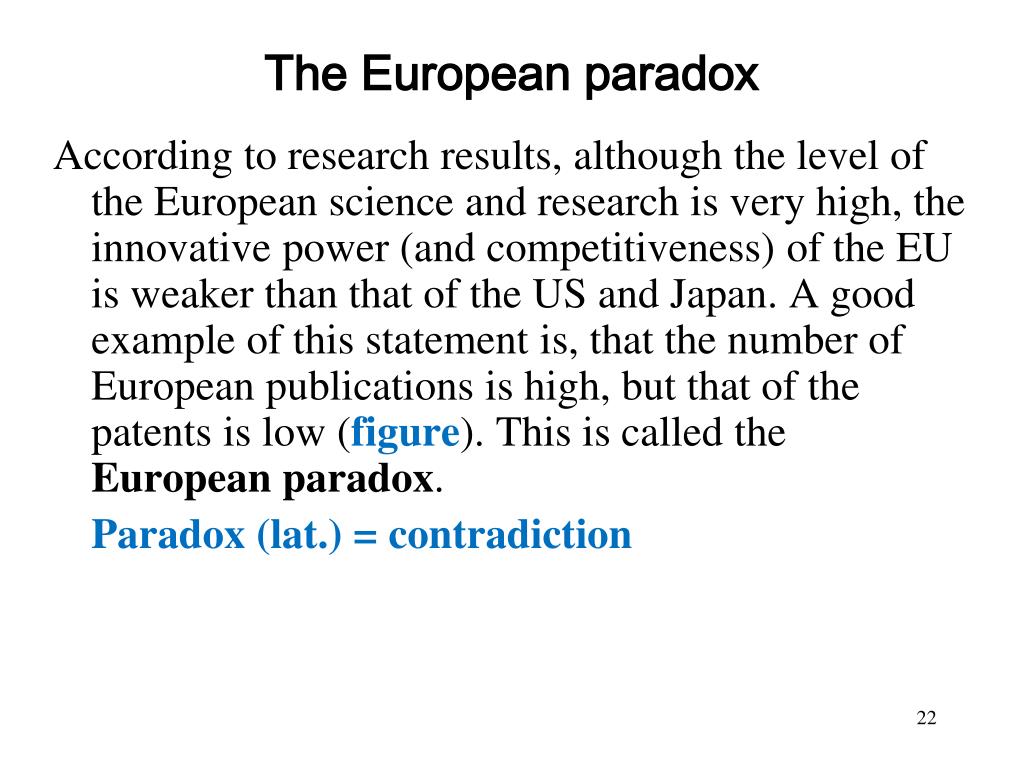








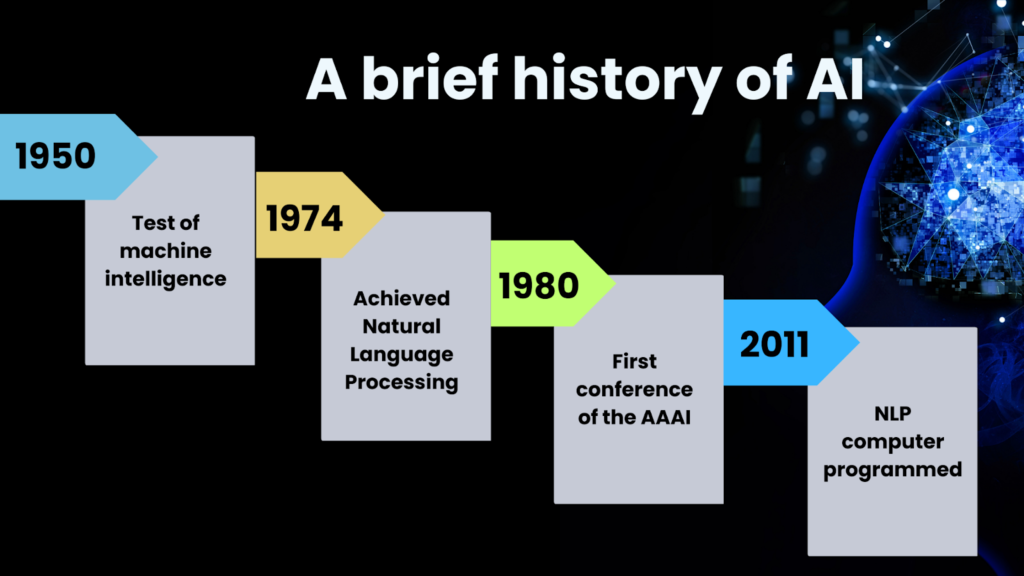












 The Leading Business Education Network for Doctors, Financial Advisors and Health Industry Consultants